Twenty Watts of Boutique Thunder: The Friedman Runt-20 Head Does Everything the Big Dogs Do and Then Some
Friedman Runt-20: 20W EL84 head with built-in silent recording, boutique transformer design, and honest player history. Specs and tone recipes.
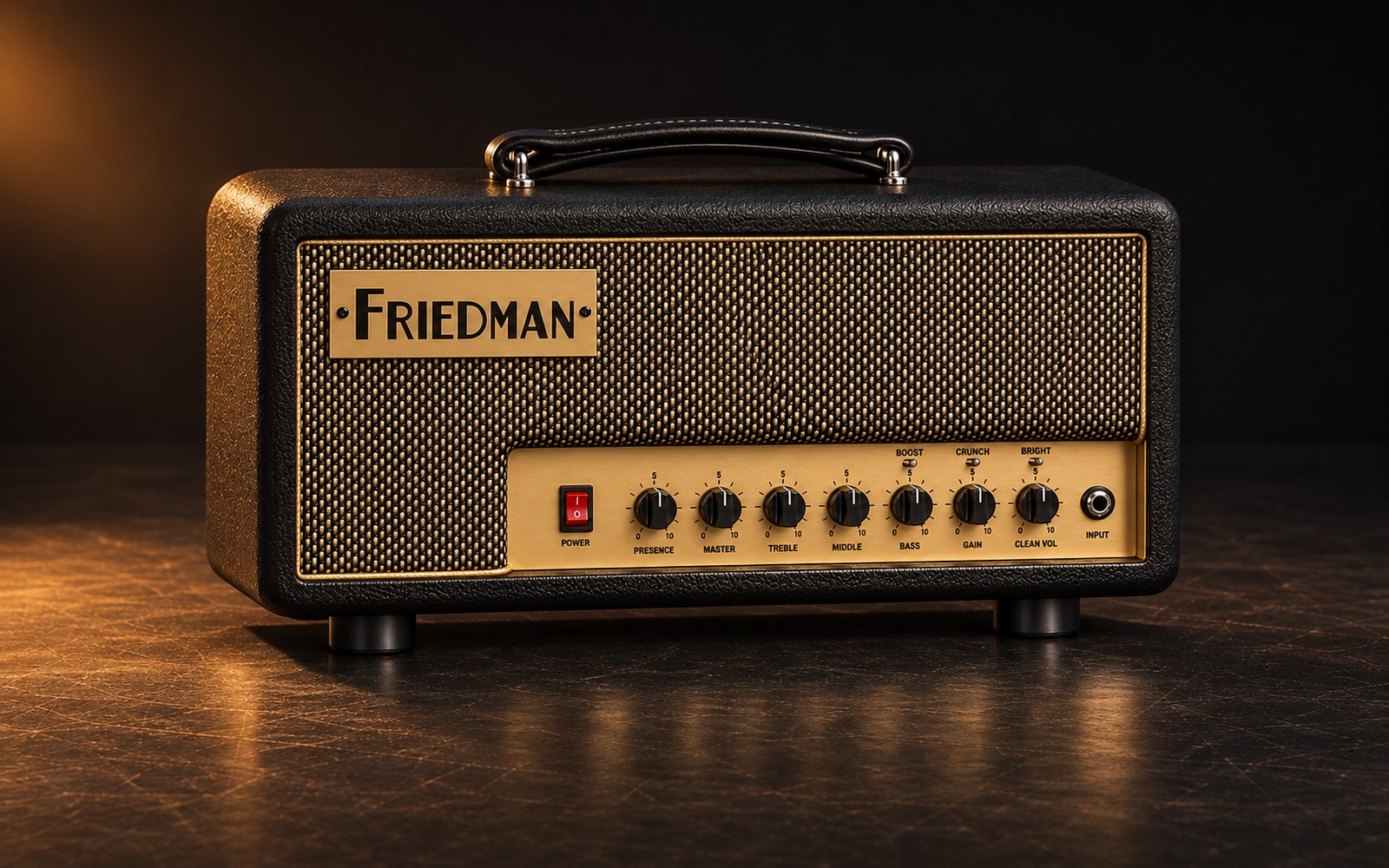
There is a specific kind of amplifier that the boutique market invented and the gear world immediately fell in love with: the compact head that sounds like it should weigh 60 pounds but actually tips the scale at 22. The Friedman Runt-20 is that amp. In a lineup that includes the 100-watt BE-100 Deluxe and the powerhouse Dirty Shirley 40, the Runt-20 occupies a different quadrant entirely — smaller, quieter, built around European EL84 output tubes instead of EL34s or 6L6s, and the first amp Dave Friedman ever shipped with a built-in silent recording output. It is not a stripped-down version of the flagship. It is a genuinely different design philosophy wearing the same black Tolex.
At $1,499.99 list, the Runt-20 sits in a market with real competition — boutique is no longer a niche word. But few rivals at this price combine Friedman’s technical pedigree, the EL84’s unique tonal envelope, and a cab-simulated XLR output in a single compact head. This is the amp for the working guitarist who wants Friedman tone at bedroom volume, in a touring backline at small venues, or running direct into a studio interface at midnight without waking anyone up.
Dave Friedman, the Runt Lineage, and the Silent Recording Breakthrough
Dave Friedman’s origin story is one of the guitar world’s cleaner rags-to-boutique tales. He grew up in Detroit, moved to Los Angeles at eighteen, and found work at a shop renting high-end instruments to studio musicians. A customer brought in a Soldano SLO-100 that had been modified by Bruce Egnater of Egnater Amplification. Friedman was struck by the work, contacted Egnater directly, and the two developed a preamp circuit together that became popular with LA studio players. By the early 1990s Friedman was modifying amplifiers — mostly Marshalls — with circuits he had developed during his Egnater collaboration, building a client roster that would eventually include Eddie Van Halen, Steve Stevens, and George Pajon Jr.
The custom-build reputation led to a company. He called it Marsha Amps, received a cease-and-desist from Marshall Amplification, and rechristened it Friedman Amplification in 2008. Jerry Cantrell of Alice in Chains became one of his earliest production amp customers and eventually received his own JJ-100 signature. The BE-100, designed to capture the feel of a 1968 50-watt Marshall Plexi circuit running through a Variac, became the flagship. Boutique Amps Distribution signed on to build and distribute the line in 2014, with Dave Friedman continuing to personally approve each completed amplifier. The design philosophy, in Friedman’s own words: “Guitar players generally don’t want to hear completely new sounds. They want to hear tones based on a set of sounds from the past but with some variation.”

The Runt-20 emerged from that context as something genuinely new inside the Friedman range — not a Marshall-inspired high-gain machine, but an EL84-powered compact head aimed at the player who wants boutique build quality and Friedman’s attention to transformer design in a format that fits in an overhead bin. Crucially, it was the first amp Dave Friedman had ever designed with an internal load resistor and a cab-simulated XLR direct output. That detail is not a marketing footnote; it changes what the amp can do. The Runt-20 can run without a speaker cabinet connected at all. It can go from a miked cab on stage to a direct feed into a recording interface without a reamp, without an external loadbox, without switching rigs. The cab simulation circuit was compared by Friedman himself against leading digital IR solutions, and the result was an analog output he described as competitive with the best computer-based simulations available.
The Runt-50 shares the same two-channel topology and the EL84 tube family but runs four EL84s instead of two, delivering 50 watts and considerably more headroom. It does not carry the internal load and XLR cab-sim feature — making the silent recording capability a genuine Runt-20 exclusive within the family. A Runt-20 Combo version exists as well, pairing the same head circuit with a 1×12 enclosure loaded with a Celestion G12M 65 Creamback.
Specifications
The EL84 Power Section: Why This Amp Sounds Different from Every Other Friedman
The choice of EL84 output tubes is the single most important tonal decision in the Runt-20’s design, and it separates this head from everything else in the Friedman catalogue. The BE-100 Deluxe uses EL34s. The Dirty Shirley 40 uses 5881s (the 6L6 family). The EVH 5150III lineup uses 6L6 or EL34 depending on the variant. The Runt-20 is the only current-production Friedman head built around the EL84, and the sonic consequences are significant enough that players who know the brand from its higher-wattage heads should expect a genuinely different experience.
The EL84 is a small noval-pinned pentode that has been the defining output tube of British low-wattage amplification since the 1950s. It is the tube in every Vox AC30 and AC15, in countless early British combo amps, and in the classic Marshall 18-watt designs. Its characteristics relative to the EL34 or 6L6 are consistent and well-documented: the EL84 compresses earlier, sags in a more pronounced and musical way as the output stage is pushed, produces a glassier and more crystalline high-end, and typically rolls off faster in the low frequencies when the power section reaches clipping. The result in a conventional EL84 design is an amp that naturally breaks up sooner, feels more “bouncy” and responsive to pick dynamics, and trades some low-end authority for upper-midrange sweetness.
Friedman addressed the EL84’s traditional bass limitation directly. The Runt-20 uses custom-wound transformers designed specifically to reproduce the tight bottom end and defined midrange more commonly associated with much higher-wattage amplifiers. This transformer work is where the “Friedman” in the amp’s character lives. The EL84 provides the feel — the early compression, the sag, the glassy top — and the custom iron forces the low end into a shape the tubes alone would not naturally produce. The result is an amp that sounds British in its texture and feel but more muscular in its low-frequency response than a stock AC30 running the same tubes at the same volume.
At 20 watts, the Runt-20 can achieve real power-tube saturation at volumes the player can speak over in a home studio. This is not the same as attenuating a 100-watt head — power-tube compression at 20 watts is happening because the tubes are genuinely working, not because a resistor is pretending to be a speaker. The difference in feel between those two states is not subtle.
Channel Architecture: Simple Where It Counts, Deep Where It Matters
The clean channel is deliberately minimal: a single Volume knob and a three-position Bright switch. There is no Bass/Mid/Treble EQ on the clean side. This is a design statement, not an oversight. Friedman voiced the clean channel to break up naturally as the Volume knob climbs, giving the player access to pristine sparkle at lower settings and a progressively thicker, harmonically richer tone as the volume goes up. The Bright switch shifts the high-frequency response — essential for single-coil players who find the clean side too dark at lower volumes, and useful for managing the crystalline quality of the EL84s with different guitars.
The lead channel is where the architecture opens up. Gain controls the drive level, and the range runs from a gentle edge-of-breakup crunch through to genuinely high-gain territory — more than enough for hard rock and most metal applications. Bass, Mid, and Treble provide a conventional three-band passive EQ that shapes the overdrive character. The Boost switch engages a fixed-level gain increase within the lead channel, functioning less like a channel switch and more like stepping from rhythm to lead without moving the master Volume. The Gain and Volume controls interact in the usual boutique way: lower Gain with higher Volume pushes the power tubes harder; higher Gain with lower Volume keeps most of the saturation in the preamp section.
Global Presence sits at the far right of the panel and operates in the power section’s negative feedback loop, controlling how the amp reacts to high-frequency information from the speaker. High Presence adds bite and edge in the upper midrange; low Presence rolls that back for a rounder, thicker character. Because Presence affects the power section rather than the preamp, its feel changes depending on how hard the power tubes are being driven — a behavior that makes it worth re-dialing when switching from lower-gain clean tones to higher-gain lead sounds.

The impedance selector is worth flagging explicitly: the Runt-20 offers 8Ω and 16Ω outputs only. There is no 4Ω setting. Players pairing the head with a 4Ω cabinet need either a different head or a transformer-switching cabinet — running the head into a 4Ω load without the correct tap risks output transformer damage over time. The most common boutique and vintage cabinets (Marshall 1960A, Orange PPC412, most handwired 1×12 and 2×12 designs) are available in both 8Ω and 16Ω configurations, so this limitation rarely causes practical problems, but it is worth confirming before ordering a cab to match.
Famous Players: Honest Sources Only
Jerry Cantrell has his own Friedman JJ-100 signature amplifier; he is a Friedman brand ambassador, not a Runt-20 player. Steve Stevens plays the SS-100 V2, Friedman’s first-ever signature model from 2011. Phil X has the Phil X Signature 100W head. Dave Grohl is primarily a drummer; the Friedman user in Foo Fighters is guitarist Chris Shiflett, documented on a custom two-channel Brown Eye head, not a Runt-20. None of these four players are documented on the Runt-20 in any primary source — rig rundown, interview, manufacturer demo, or their own published accounts.
What the primary sources actually show is a pair of players from a different part of the guitar world entirely.
Takayoshi Ohmura is a Japanese guitar virtuoso known for his fusion-metal playing and his extensive YouTube catalog of technique-focused content. In a November 2017 Instagram post, Ohmura documented a recording session with a Runt-20 head running through a Shure SM57 microphone into a Bogner 2×12 cabinet — a textbook miked-cab recording setup that gave the amp’s EL84 power section a real speaker to work against. Ohmura’s primary touring and studio amp is a Kemper Profiler loaded with profiles from various boutique heads including Friedman models. The Runt-20 appearance is a recording-session document, not a permanent stage rig, but the documentation is clear: own photo, own words, own session.
Jun Senoue is the lead guitarist of Crush 40 and one of the most listened-to game composers in history, having written and recorded the guitar-driven soundtracks of the Sonic the Hedgehog franchise at Sega for the past three decades. Senoue posted a photo on Twitter of the Runt-20 in a recording context, consistent with his history of working in home and studio environments with a rotating collection of high-gain heads. His primary studio amps during the Sonic Adventure and Sonic Adventure 2 era were a Soldano SLO-100R and a Line 6 POD Pro; the Runt-20 is a more recent addition to a studio toolkit that has always prioritized whatever produces the right tone for a specific track. The Crush 40 sound — crisp, hard-rock aggressive, immediately recognizable to anyone who grew up on Sonic games — is not a single amp. It is a series of carefully chosen configurations, and the Runt-20 appears to be one of the options Senoue reaches for in that environment.
The broader honest framing for the Runt-20 is this: it is an amp that sells to serious working guitarists, home-studio players, and gear enthusiasts who value Friedman’s build quality and transformer work in a compact format. It is not an amp that touring stadium acts have had to reach for because it lacks the headroom their monitor system demands. That is not a knock on the Runt-20. It is a correct reading of what 20 watts is designed to do, and Friedman designed it for precisely the market that uses it.
Tone Recipes and Settings
1. Single-Coil Sparkle Clean (Vintage Bright)
Clean channel. Volume at 3–4 (enough to push the EL84s very slightly). Bright switch to the highest position. Presence at 4. Keep the guitar’s volume on full and let the Bright switch do the tonal shaping. With a Strat or Tele in a single-coil position, the EL84 character produces a glassy, chiming clean that has more upper-harmonic content than a 6L6 clean at the same power level — this is the amp’s most distinctive clean sound. Back off the guitar’s volume to 7–8 for a slightly thicker, more rounded tone with the same basic character.
2. Pushed Vintage Crunch (Blues/Classic Rock Clean Channel)
Clean channel. Volume at 6–7 (genuine power-tube saturation at this wattage). Bright switch to middle position. Presence at 5–6. The clean channel at this volume begins to compress and break up in the way a vintage 18-watt British amp does — note density increases, pick attacks bloom, single-note lines sustain. This is not a high-gain lead tone; it is the natural saturation of two EL84s working hard. Pairs well with a Les Paul in a humbucker position for a warm, compressed classic rock rhythm. Use the guitar’s volume knob to clean up.
3. Lead Channel Classic Rock Crunch (Low Gain)
Lead channel. Gain at 3–4. Boost off. Volume at 5. Bass at 5, Mid at 6, Treble at 5. Presence at 5. This gives you the lead channel’s textural control over a breakup that is still more classic-rock than high-gain — AC/DC rhythm territory, 1970s British rock lead lines, anything that wants a defined pick attack with sustain behind it. Engage the Boost switch to add the extra push needed for lead passages without changing any other knobs.
4. Hard Rock Lead (Medium Gain, Boost Engaged)
Lead channel. Gain at 6. Boost on. Volume at 4. Bass at 5, Mid at 6–7, Treble at 6. Presence at 6. The mid-forward EQ reflects the EL84’s natural voicing and keeps the lead tone from getting muddy as the gain climbs. Smooth, fluid lead tone with enough compression to sustain across the fretboard without pinching. Keep Treble below 7 to prevent the EL84’s top end from becoming harsh — the tube compresses rather than clips when pushed, but the preamp stack can get edgy if Treble is cranked with high Gain.
5. Direct Silent Recording (Studio, No Cabinet)
Lead channel, your preferred gain and EQ settings. Master Volume to your target level. XLR output to interface. Set the Axis switch to center-cone position for a fuller, warmer character (edge-of-cone for a thinner, more presence-heavy sound — useful for high-gain rhythm guitars that need cutting clarity in a dense mix). Set Level to taste and engage Ground Lift if you hear hum in the recording chain. The internal load handles the output stage safely; the cab-simulation circuit shapes the frequency response to approximate a miked cab. This is not a full IR capture system, but for recording direct without setup time, the Runt-20’s XLR out is a serious tool.
Comparisons
Friedman BE-100 Deluxe
The BE-100 Deluxe is the Runt-20’s bigger, more elaborate sibling: 100 watts, three channels (Smallbox Plexi clean plus BE and HBE overdrive channels), 4× EL34 power tubes, and a list price of $3,999.99. It is Friedman’s flagship and the amp most associated with the brand’s reputation. The EL34 power section gives the BE-100 Deluxe a different fundamental character from the Runt-20 — more headroom, more bass slam, the specific kind of high-gain compression that EL34s produce rather than the earlier, bouncier saturation of the EL84. The BE-100 Deluxe has no internal load and no cab-sim XLR. If you need silent recording or a compact, EL84-voiced head with Friedman transformer quality, the Runt-20 is not a budget substitute for the flagship — it is a different instrument.
Friedman Dirty Shirley 40 Head
The Dirty Shirley 40 uses 5881 tubes (a 6L6 variant), runs 40 watts through a single channel, and is Friedman’s interpretation of a late-1960s JTM 45 circuit modified for more gain and tighter response. At $2,699.99, it sits between the Runt-20 and the BE-100 Deluxe. The 5881’s character is American warmth with British midrange — rounder on the bottom, less glass on top compared to the EL84. The Dirty Shirley 40 is a one-channel amp with a gain structure switch; the Runt-20 has two distinct channels with footswitching. For a player who wants a clean-to-lead system rather than a single voiced channel, the Runt-20 is the more versatile design despite its lower power output.
Marshall JTM45/2245
The Marshall JTM45 is the historical ancestor of the entire genre the Runt-20 inhabits — a low-to-medium wattage British head built around cathode-biased power tubes (original KT66s, later variants using EL34s), clean to natural overdrive without a dedicated gain stage. The JTM45’s tone is softer, more harmonically complex on the clean side, and saturates in a more forgiving way than the Runt-20’s lead channel — which has decades of preamp gain design behind it. The Runt-20 is a modern boutique interpretation of what that low-wattage British ethos produces when you add a proper gain circuit, a serious transformer spec, and silent recording capability. Both amps reward being driven hard; the Runt-20 does it with more gain range and more features.
Soldano SLO-100
The Soldano SLO-100 is one of the boutique amps that defined what “high-gain boutique” means in the first place — a two-channel 100-watt EL34 head built for the kind of saturated, fluid lead tone that 1980s and 1990s rock guitar demanded. The SLO-100 was also Jun Senoue’s primary studio amp during the early Sonic Adventure recordings. The SLO-100 and the Runt-20 share a boutique build philosophy and a commitment to feel over raw output, but they are at opposite ends of the power and headroom spectrum. The SLO-100 is a full-gig, big-venue amp. The Runt-20 is a studio-and-small-venue design. Both are serious instruments. Neither replaces the other.
Marshall 1962 Bluesbreaker
The Marshall 1962 Bluesbreaker is the definitive low-wattage vintage British combo — two channels, 30 watts, no gain control in the modern sense, the sound of Eric Clapton’s 1966 recordings with John Mayall built into its circuit. Like the Runt-20, it achieves its best tones when pushed, relies on the power stage for character rather than a gain channel, and rewards the player who understands how the volume knob controls the instrument rather than just the loudness. The Runt-20 has a lead channel with genuine gain range that the Bluesbreaker does not; the Bluesbreaker has the specific physical resonance of a loaded wooden cab built into the sound in ways a standalone head cannot replicate. Both are arguing for the same position in a player’s rig — the amp that gets real at volumes you can actually use — but from different eras and architectures.
Buying Guide
The Runt-20 lists at $1,499.99 new at Sweetwater, Guitar Center, and major online retailers. Used pricing on Reverb starts around $900 for clean examples and climbs toward $1,100–$1,200 for near-mint units with original packaging. The amp holds its value reasonably well given the Friedman brand positioning and the limited-scale manufacturing that keeps supply constrained.
The used market for the Runt-20 is relatively thin — fewer units exist than for the BE-100 family — which means deals are less frequent but asking prices are also more predictable. An $850 used example with a few cosmetic scuffs is a sound purchase if the tubes test well. Significant tube wear at that price is not — a full retube with quality EL84s and matched 12AX7s runs $80–$120, which starts to close the gap on new pricing.
When buying used, confirm the impedance selector (8Ω/16Ω) clicks into both positions cleanly and that the XLR cab-sim output passes audio without hum. The internal load is a passive resistor network — it is not a point of common failure, but verifying the silent-recording path works before purchase is straightforward and worth the thirty-second test. Check that the footswitch jack is functional and that channel switching is noise-free. The effects loop return can be used as a direct power-amp input for preamp pedals and multi-effects units — test this if that feature matters to your workflow.
The Runt-20 Combo version (1×12 with Celestion G12M 65 Creamback) trades the head’s flexibility for a self-contained unit that is easier to carry to a rehearsal without owning a matching cabinet. The combo’s open-back cabinet adds natural room to the sound in ways a sealed head into a closed-back cab will not produce — a tonal distinction worth considering if you tend to play in smaller spaces where room interaction matters.
Ownership Notes
EL84 tubes are readily available and tube rolling is a legitimate tonal experiment on this amp. The stock tubes are adequate; JJ ECC83S preamp tubes and JJ EL84 power tubes are the most common boutique replacement, producing a slightly warmer midrange and smoother top end compared to some Chinese-sourced alternatives. Mullard reissue EL84s are another popular choice, adding a specific kind of smooth compression that suits the clean channel particularly well. Tube rolling on this amp will not transform its fundamental character — the custom transformers and circuit topology are the dominant variables — but it will tune the EQ and feel in ways that may suit different guitars or styles.
The impedance selector bears repeating in the ownership context: 8Ω and 16Ω only. Most boutique 1×12 cabinets are 8Ω or 16Ω and will match correctly. Most boutique 2×12 cabinets wired in parallel are 8Ω; wired in series, 16Ω. Standard closed-back 4×12 cabinets are typically 4Ω or 16Ω — the 16Ω setting works perfectly with a 16Ω 4×12. Confirm your cabinet’s impedance before connecting.
Running the amp without a cabinet using the internal load is safe and well-engineered. The XLR out has three switches: Ground Lift (eliminates hum loops when connected to a mixing desk or interface), Level (sets the output to match your interface’s input), and Axis (center of speaker cone vs. edge — center is fuller and bassier, edge is brighter and more present). These controls are enough to shape the direct tone for most recording applications without needing an external IR loader, though players who prefer specific speaker cabinet simulations can add an IR unit after the XLR if they choose.
The Runt-20 is built in the Boutique Amp Distribution facility in Huntington Park, California, with Dave Friedman signing off on completed units. The Baltic Birch cabinet is well-constructed and should handle road use without problems, though the tolex corners are vulnerable to impact damage as with any boutique head. A fitted hard case or a well-padded bag is the sensible long-term investment.
FAQ
Why does the Runt-20 use EL84 tubes instead of EL34s like the rest of the Friedman lineup?
Dave Friedman chose EL84s for a specific tonal goal: the earlier compression, natural sag, and glassy upper-midrange character that the tube produces, which differs from the EL34’s higher headroom and more aggressive low-end punch. The custom transformers compensate for the EL84’s typical bass weakness, giving the Runt-20 a tighter low-end response than most EL84 designs while retaining the tube’s distinctive feel.
Can I run the Runt-20 without a speaker cabinet connected?
Yes — this was the key innovation Friedman built into the Runt-20. The internal load handles the output stage safely without a connected cabinet, and the cab-simulated XLR output feeds a direct signal suitable for recording or front-of-house use. The Runt-20 was the first amp Dave Friedman ever designed with this capability built in.
What is the 4Ω situation — can I use my 4Ω cabinet?
The Runt-20 does not have a 4Ω output tap. It offers 8Ω and 16Ω only. Running the amp into a 4Ω load from the 8Ω tap creates a mismatch that stresses the output transformer over time and may affect tone. Most boutique and vintage cabinets are available in 8Ω or 16Ω; check your cabinet’s specification before connecting.
How does the Runt-20 compare to the Runt-50?
The Runt-50 uses 4× EL84s instead of 2×, producing 50 watts and significantly more headroom before the power section saturates. The two-channel architecture and the EL84 tube character are shared. Critically, the Runt-20 has the internal load and cab-simulated XLR output; the Runt-50 does not carry this feature, making silent recording a Runt-20 exclusive within the family.
Is 20 watts enough for a live gig?
With a miked cabinet at any serious live venue, yes — 20 tube watts into a 1×12 or 2×12 is louder than the monitor mix in most club and theatre environments when miced. The limitation is unmiked volume on large stages or rehearsals with loud drummers. The Runt-20 is designed for venues where the PA carries the room, not for pushing sound to the back of an arena with its own air pressure.
The amp sounds fizzy on the lead channel at high gain — how do I fix this?
EL84 preamp interaction at high gain can produce a harsh top end that manifests as fizz. First, lower the Treble knob on the lead channel (try 4–5 rather than 7+). Second, reduce Presence — the power-section feedback loop amplifies high-frequency information that reads as fizz when gain is high. Third, check tube age: worn 12AX7s in the first preamp position are a known source of harsh fizz that fresh tubes resolve. If the issue persists, verify that the Boost switch is not engaged unintentionally — the Boost adds gain that can push the top end past musical saturation.
Do Jerry Cantrell, Phil X, and Steve Stevens play the Runt-20?
No. All three have their own Friedman signature amplifiers — the JJ-100 for Cantrell, the SS-100 V2 for Stevens, the Phil X Signature 100W for Phil X — and none is documented on the Runt-20 in any primary source. This is the same recycled Friedman brand artist list that appears against multiple Friedman products. The Runt-20’s documented users are players like Takayoshi Ohmura and Jun Senoue, both confirmed in their own posts using the amp for recording work.
What cabinets does Friedman recommend for the Runt-20?
Friedman produces companion Runt cabinets: the Runt-112 (1×12, 65 watts) and the Runt-212 (2×12, 120 watts), both sold as bundles with the head through Sweetwater. These are purpose-voiced to complement the Runt-20’s EL84 character and transformer design. Players pairing the head with third-party cabinets report good results with Bogner, Mesa, and Orange 1×12 and 2×12 designs in the 8Ω or 16Ω configuration. A Celestion-loaded 2×12 at 8Ω is the most common user-reported pairing outside the official Friedman cabs.
Image credits
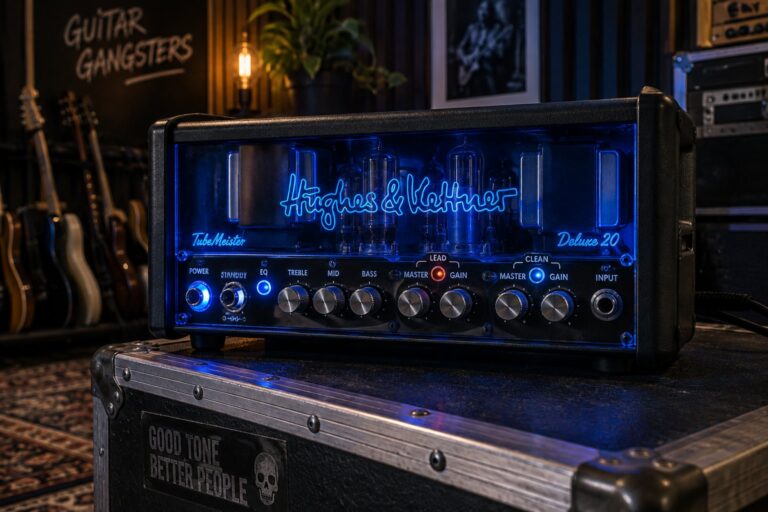
- Top image: GuitarGangsters AI-generated reference illustration, not a photograph.
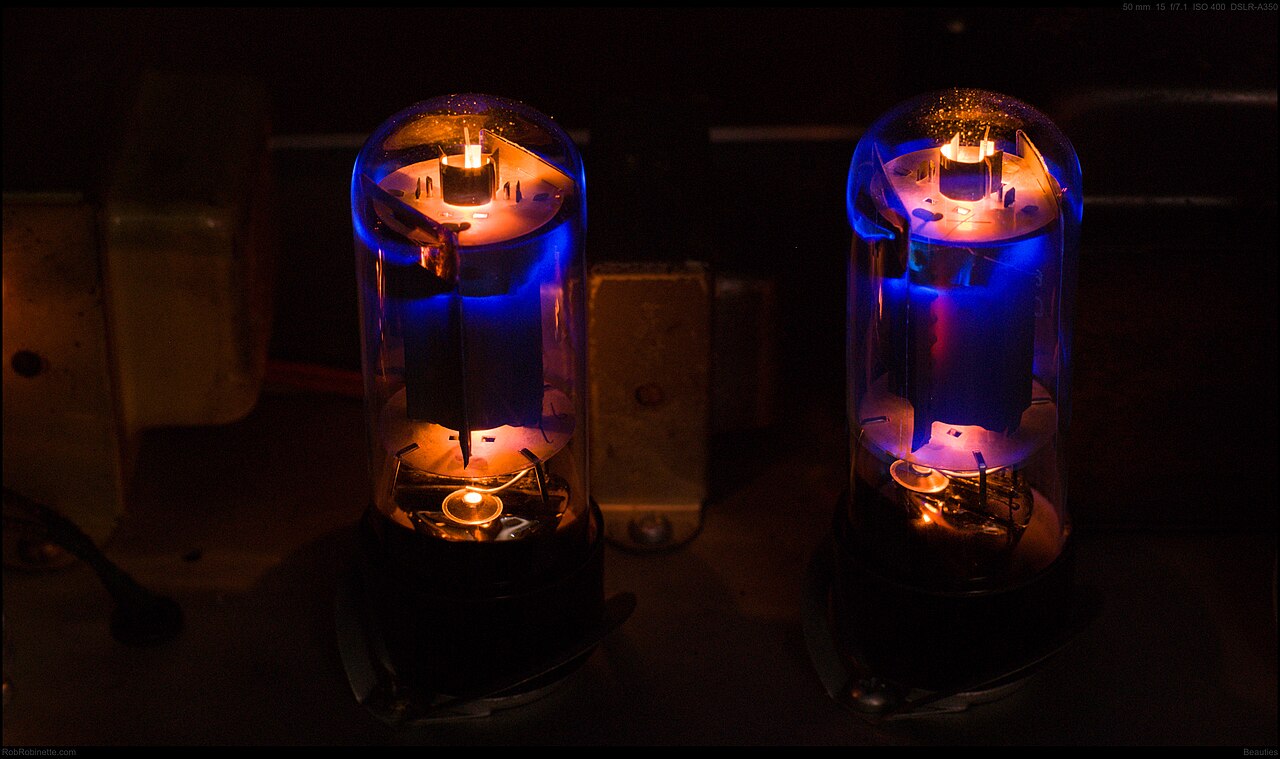
- Two glowing power tubes in an amp: Rob Robinette, Wikimedia Commons, CC BY-SA 4.0.
- Jerry Cantrell: Morten Jensen, Wikimedia Commons, CC BY 2.0.
- Steve Stevens: Stefan Brending (2eight), Wikimedia Commons, CC BY-SA 4.0.
Latest News
Related

On This Day
Monday 9 November
From this week: