Jerry Cantrell Built This Amp to Kill at Twenty Watts — and It Does
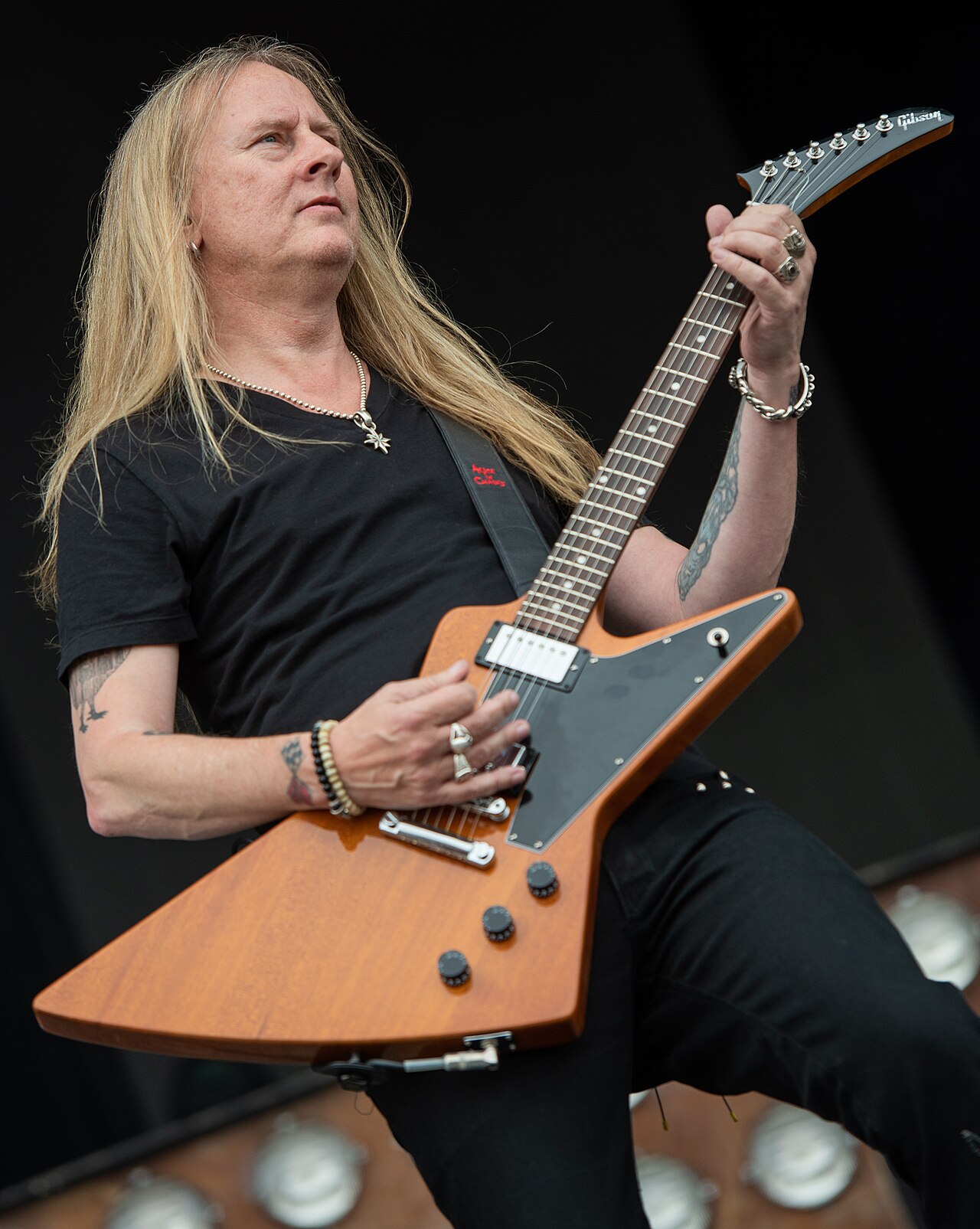
Jerry Cantrell at Roskilde Festival. Photo: Morten Jensen, CC BY 2.0, via Wikimedia Commons.
The Friedman JJ Junior Head brings Jerry Cantrell's signature 20-watt EL84 tone with cab-sim XLR output, two channels, and hand-wired USA build at $1,499.99.
Most signature amps tell you what an artist used. The Friedman JJ Junior Head tells you something rarer: what an artist was willing to put their name on at a fraction of the power. When Jerry Cantrell — the man whose guitar tone helped define a decade of American heavy music — signed off on a 20-watt EL84 head derived from his own 100-watt flagship, he wasn’t slumming it. He was solving a problem that every working guitarist eventually faces: how do you get that sound when the stage, the studio, or the rehearsal room won’t tolerate a wall of 100 watts?
The Friedman JJ Junior Head is the answer Cantrell and Dave Friedman arrived at together. It is a two-channel, hand-wired, EL84-powered boutique head with a built-in cab-simulated XLR output, an effects loop lifted directly from the BE-100, and enough gain on tap to satisfy anyone who grew up playing along to Dirt at unreasonable volumes. It is not a toy version of the JJ-100. It is a different amp that shares DNA and design intent — and understanding exactly where they converge and where they diverge is the whole story of what the JJ Junior is for.
How Jerry Cantrell Ended Up with Friedman’s Name on His Amp
The JJ Junior’s lineage doesn’t start with the JJ-100 — it starts with Bogner. For the better part of two decades, Jerry Cantrell’s live sound ran through custom Bogner amplification: first a Bogner-modified Marshall JCM800 during the Facelift sessions, then a Bogner Fish rackmount preamp that became his defining studio workhorse. Producer Dave Jerden documented the Dirt recording setup in clinical detail: the Fish preamp driving a VHT power amp and a Marshall cabinet loaded with Vox Bulldog speakers handled the low end; a Bogner Ecstasy sat in the mid lane; a Rockman Pocket amp went direct for the top. Three amps, tripled and panned, six tracks of rhythm guitar per song. That is the record. Bogner shaped the blueprint.
Dave Friedman entered the picture through a different door. Friedman — who had spent years modding Marshalls for players including Eddie Van Halen and Steve Stevens out of his shop in Los Angeles — had built a house amp known as the Marsha, a custom high-gain head that took the plexi topology somewhere considerably darker and more saturated. By the time Alice in Chains returned to active touring in 2009 for the Black Gives Way to Blue cycle, Cantrell’s rig had evolved: Premier Guitar’s Jordan Wagner caught the Milwaukee date in September 2009 and documented the backline as Bogner heads paired with Friedman Marsha heads. That combination — Bogner cleans and history, Friedman dirt and iron — is the architectural parent of everything that followed.
The JJ-100, Cantrell’s first ever signature amplifier, grew out of that ongoing collaboration. Cantrell and Friedman spent what Friedman describes publicly as “years” working on the circuit. The goal was to encode the specific gain structure, the harmonic character, and the dynamic responsiveness that Cantrell had spent decades refining through Bogner-modified stages into a single, coherent, hand-wired head. When the JJ-100 launched — a 100-watt, two-channel, EL34-powered beast — it was an immediate commercial success in the boutique market. The logical next step was obvious: a stage-friendly version that didn’t require the same staging footprint or the same ear-protection budget. The JJ Junior was announced by Friedman on May 24, 2019. It shipped from June 7, 2019, at $1,499.99.
EL84 vs. EL34: The Most Important Thing to Understand About This Amp
The JJ-100 runs four EL34 power tubes. The JJ Junior runs two EL84s. This is not a minor substitution. It is the central fact about the amp’s character, and anyone telling you the JJ Junior is just “the same amp at lower volume” is leading you wrong.
EL34s — the tube inside the JJ-100, the Marshall JCM800, the Mesa Dual Rectifier in EL34 configuration — produce a characteristic midrange aggression, a tight low end that can take high-gain punishment without turning to mush, and a compressed top-end that turns sharp attack into harmonic sustain. When you push an EL34 power section, it grabs the note and squeezes it. The result is the classic British rock sound: authoritative, punishing, focused.
EL84s — the tube inside a Vox AC30, a Matchless DC-30, and yes, the Friedman JJ Junior — compress earlier and at lower volume thresholds. Their overdrive character is glassier, more complex in the upper harmonics, quicker to react and quicker to breathe. They sag with pick attack in a way EL34s don’t. The low end is lighter — which is simultaneously a limitation and an asset depending on what the music needs. Friedman counters the EL84’s natural bass weakness here with custom transformers, adding low-end iron that a conventional AC30 doesn’t have. The result is an EL84 amp that doesn’t sound thin or wimpy, but it still has the EL84’s particular musical give in the power section.
What does this mean practically? The JJ Junior will give you the same preamp voicing Cantrell and Friedman baked into the JJ-100’s gain structure — the same EQ contours, the same JBE switch behavior, the same channel architecture. The fundamental “JJ” sound at the preamp level is intact. But the power-section feel is different. At low volumes in a rehearsal room, the JJ Junior reacts with EL84 squash and bloom; the JJ-100 pushes back with EL34 authority. At full gig volume on a small stage, the JJ Junior breaks into power-amp saturation much earlier and sweeter. That early breakup is where this amp does its best work. If you’re used to cranking a master volume on an EL34 head to get the power section involved, the JJ Junior’s 20 watts will pull you into that territory at a much more socially acceptable level.
Specifications
Famous Players
Jerry Cantrell — Primary Designer and Namesake
The name on the headstock is the right place to start. “JJ” stands for Jerry Jamison Cantrell Jr. — and his involvement in the JJ Junior’s design is the same genuine, multi-year collaboration that produced the JJ-100, not a licensing transaction or a photo-op. Friedman’s own announcement confirms that Cantrell participated in “years” of circuit development on the parent amp, and the JJ Junior was explicitly built to translate that work into a lower-power format rather than to cut corners on it.
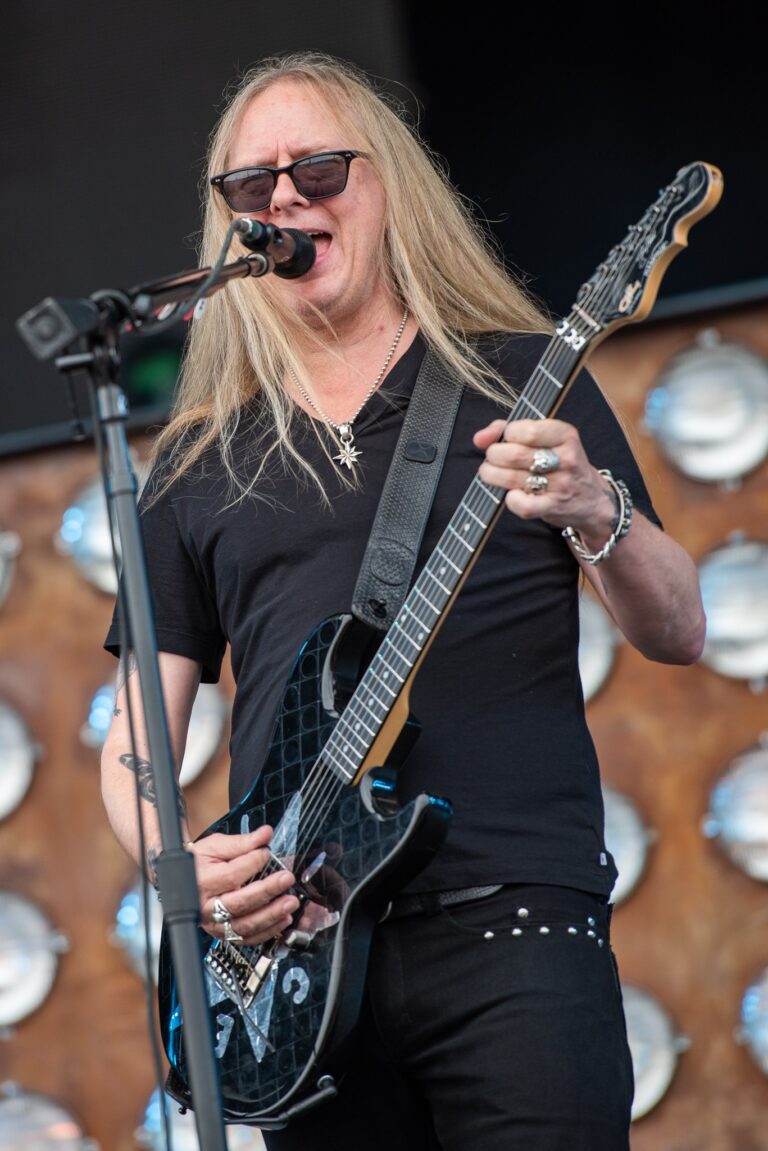
What Cantrell used on Facelift (1990), Dirt (1992), and Jar of Flies (1994) was the Bogner Fish ecosystem described above — not a Friedman product, and not this amp, which didn’t exist yet. What he used on Black Gives Way to Blue (2009) and afterward was a combination of Bogner and Friedman Marsha heads, documented in the September 2009 Premier Guitar rig rundown in Milwaukee. The JJ-100 signature came later. The JJ Junior came later still, in 2019.
This timeline matters for one practical reason: when you encounter gear databases or forum posts claiming that Jerry Cantrell recorded specific classic Alice in Chains records with a JJ Junior, that is impossible — the amp did not exist until 2019. The JJ Junior’s connection to Cantrell is one of design philosophy and tonal intent, not of historical session use. That connection is completely genuine and fully documented; it just operates at a different level than “I can hear this amp on the record.”
What is verifiable from his own words and his own rig history: Cantrell’s tone centers on thick, harmonically complex gain with a clear articulation that doesn’t collapse under heavily detuned chord work. That specific combination — gain without blur, sustain without feedback dissolution — is what Friedman built the JJ circuit around. The JJ Junior carries that forward in a power section suited to smaller stages, recording environments, and players who don’t have a production crew to manage a full 100-watt rig.
Also worth noting: Cantrell’s gear history runs through G&L Rampage and William DuVall guitars, Dunlop signature Cry Baby wahs, and an extensive rack-mounted effects setup — the JJ Junior is designed specifically to interface well with that kind of signal chain architecture. Friedman’s explicit design note that the amp “takes pedals well especially boosts, ODs, phasers, flangers, tremolos, and wahs” is not generic marketing copy. It reflects how Cantrell actually plays.
Circuit Architecture: Two Channels, One Purpose
The clean channel is what Friedman calls “AC30-like.” This description is accurate in a specific and qualified sense. The EL84 power tubes running in the JJ Junior produce harmonic overtones at a frequency distribution that resembles the classic Vox topology — complex, slightly glassy, with a characteristic bloom on pick attack. The clean channel’s single volume control and bright switch let you dial in a chimey, slightly compressed clean that occupies the same general tonal neighborhood as a Vox at modest volume. What it is not is a Vox AC30 — the custom transformers, the cab construction, the cab-sim circuit, and the overall Friedman voicing push it somewhere with more low-end authority and more “American” tightness than a genuine AC30 would produce. Think of it as Vox-flavored rather than Vox-replicated: useful when you need single-coil chime, useful as a headroom platform for clean-channel boost, and genuinely musical rather than sterile.
The dirty channel is where the “JJ” part of the name earns its keep. The three-band EQ (Bass, Middle, Treble) operates on a voicing that Cantrell and Friedman tuned together: the midrange is thick without being honky, the treble rolls off harmonic harshness before it becomes ice-pick painful, and the bass stays tight rather than tubby even under heavy left-hand palm muting. The Gain and Master Volume controls interact the way a properly designed two-stage preamp should — lower Gain with higher Master puts you in the zone where single-coil attack is preserved; higher Gain with lower Master saturates the preamp stage more completely, reducing note-to-note definition in exchange for sustained harmonic compression. Either approach can serve a Cantrell-style sound depending on the passage.
The JBE switch deserves its own explanation. Friedman describes it as delivering “a higher gain, more saturated sound” with greater “harmonic content.” In practice, the JBE switch tightens the low end slightly, increases preamp gain, and shifts the compression point earlier — the result is a wall of harmonics that responds to pick attack and guitar volume with more drama and less linearity. Cantrell’s playing leans into pick dynamics and guitar-volume technique: the JBE switch is calibrated for the point in a song where the riff needs to stop sounding like guitar and start sounding like a physical force.
The XLR Direct Output: Recording Without a Cabinet
The JJ Junior includes a balanced XLR output with cab simulation and three dedicated switches: Ground Lift (removes hum loops in multi-equipment studio setups), Axis (simulates the classic recording technique of choosing between the center of the speaker cone for brightness/attack and the edge for warmth/smoothness), and Level (output level trim). Critically, Friedman designed the JJ Junior to operate safely with NO speaker cabinet connected — the internal load handles the power section output when no cab is plugged in. This is a feature the JJ-100 does not share with the JJ Junior in the same integrated form.
What this means practically: you can run the JJ Junior into a DAW at 2 a.m., adjust the Axis switch until the cab-sim sounds right in your headphones, and track rhythm guitars that have the JJ circuit’s actual preamp response — not a plugin emulation of it. Friedman, describing the analog cab-simulation circuit, noted that he benchmarked it against “some of the most intricate computer-based IRs.” The claim is that the analog cab-sim output is genuinely competitive with modern impulse-response solutions rather than a compromise you tolerate when you can’t mic a real cabinet.
The same XLR also serves a live function: it provides a balanced direct feed to front-of-house with the cab simulation engaged, meaning a sound engineer who knows what they’re doing can blend the JJ Junior’s DI signal with a mic’d cabinet (or replace the mic entirely in monitor-critical environments where stage volume must be kept minimal).
Tone Recipes and Settings
Recipe 1: Classic Cantrell Crunch — “Would?” Rhythms
Start on the dirty channel. Set Gain at 6, Master at 5, Bass at 5, Middle at 6, Treble at 5, Presence at 5. JBE off. Pair with a G&L Rampage or any hard-tail solidbody with humbuckers, bridge pickup selected. Palm-muting should chunk tightly with clear note separation. Dial Presence up slightly (6–7) if the room is eating top-end. This setting is the home base: mid-forward, tight, defined. Roll the guitar volume to 8 to clean up the attack while the amp’s preamp saturation holds the sustain.
Recipe 2: JBE Engaged — “Them Bones” Attack Mode
Same channel, now engage JBE. Pull Gain back slightly to 5 (the switch adds effective gain — you don’t need to compensate forward). Keep Middle at 6, push Bass to 6 and Treble down to 4 — the JBE’s tighter low-end character can handle the extra bass without blooming. The result is a tighter, more compressed, more harmonically saturated wall of sound. Good for rhythm tracks that need to sit behind a vocal without fighting it in the 2–4 kHz range.
Recipe 3: Clean Channel with Boost — Single-Coil Edge
Switch to the clean channel. Set Volume at 4–5, Bright switch on, Presence at 6. Feed a Tube Screamer or Timmy clone set with the Drive at 9 o’clock (minimum) and Volume high, Tone at noon. The clean channel’s EL84 character compresses lightly under the boosted signal in a way that feels musical rather than clipped. Useful for leads that need to float above a mix without the full saturation of the dirty channel.
Recipe 4: Studio Direct — 2 a.m. Tracking
No cabinet connected. Dirty channel, Gain at 7, Master at 8 (let the power section work into the internal load), Bass at 5, Middle at 6, Treble at 5. JBE on. XLR Axis switch toward edge-of-cone (warmer). Level trimmed to match your interface input. Guitar volume at 7–8. Track the part, then layer a clean-channel direct take with the Bright switch on at low volume — combine them in the DAW at roughly 3:1 dirty/clean to get the presence bloom without full-on saturation on every note.
Recipe 5: EL84 Headroom — Low-Gain Americana
Clean channel, Volume at 6–7, Bright switch off, Presence at 5. Guitar on neck pickup, volume at 9. No overdrive pedal. The EL84 power section is doing the mild compression work here — this is the Vox-adjacent clean that the clean channel was built for. Fingerpicking or light pick attack sounds full and dimensional. Useful when the set includes passages that need tonal contrast with the dirty channel’s more aggressive character.

Comparisons
The natural first comparison is the parent: the Friedman BE-100 Deluxe. The BE-100 Deluxe is a three-channel, 100-watt EL34 machine with a Smallbox Plexi clean, a BE overdrive, and an HBE overdrive — versatile, authoritative, and genuinely different in character from the JJ circuit. The BE family is more modern-aggressive, with a voicing that tracks closer to high-gain Plexi modding lineage. The JJ circuit (both Junior and full JJ-100) sits in a more “natural” heavy-rock place: less clinical precision, more harmonic depth in the mids, a gain structure that rewards pick attack and guitar volume as performance variables rather than just tone-setting parameters. If you want maximum channel switching flexibility for cover-band work, the BE-100 Deluxe is the stronger choice. If you want a amp that has one deep voice and rewards the playing style built around it, the JJ Junior is more focused and arguably more musical.
The Friedman Dirty Shirley 40 Head is the closest tonal neighbor in the Friedman range. Both draw on British-influenced circuit topologies; both emphasize harmonically complex gain rather than modern tight-scooped saturation. The DS 40 uses 5881 tubes (6L6-family, historically closer to the JTM45 original than the later EL34 versions) and delivers a somewhat warmer, earthier gain character with a harder low-mid punch. At 40 watts it also breaks up in the power section differently than the JJ Junior’s 20-watt EL84 section. The DS 40 leans toward classic-rock and vintage-heavy applications; the JJ Junior leans toward the specific post-grunge Seattle-influenced gain palette that Cantrell defined. Price is identical at $1,499.99 — the choice between them is purely about tonal direction.
The Friedman Runt-20 Head shares the same EL84 power section and price point as the JJ Junior, and the comparison is illuminating. The Runt-20 is a two-channel amp (clean + lead) with internal load and XLR direct output — structurally similar. But the Runt-20’s clean channel has more headroom and a Bright switch architecture oriented toward sparkle, while its lead channel is voiced in the BE/Runt lineage rather than the JJ lineage. The JJ Junior’s dirty channel has more midrange emphasis and a different gain structure — thicker, less scooped, more oriented toward chord definition under distortion. The Runt-20 has an 8/16Ω output only (no 4Ω); the JJ Junior matches that. If you’re a Cantrell devotee, the JJ Junior’s gain circuit is not duplicated by the Runt-20.
The Friedman Pink Taco V2 Head is also 20 watts EL84 at the same price, but single-channel with the three-switch S-Switch/Sat/Fat system. The Pink Taco V2 is more aggressive and BE-adjacent in voicing — intended for players who want the full Friedman high-gain sound in a small package without a clean channel. The JJ Junior’s clean channel is a genuine strength that the Pink Taco doesn’t replicate. For players who need channel switching between clean and dirty, the JJ Junior is the better choice in this price tier.
Buying Guide
The JJ Junior head lists at $1,499.99 new from Sweetwater, Guitar Center, and authorized Friedman dealers. Used examples appear on Reverb and eBay in the $900–$1,200 range — the amp was released in 2019, so supply is reasonable but not abundant. The Friedman warranty does not transfer to second owners in most territories, so used purchase means accepting whatever tube life remains in the EL84 complement. EL84 retube (pair) from a reputable source runs $30–$80 depending on brand; the 12AX7 trio adds another $30–$60. Full retube every three to five years of regular playing is reasonable maintenance.
The combo version ($1,799.99 new, approximately) is heavier at 52 lbs and pairs the head section with a Celestion G12M 65 Creamback in a closed-back Baltic Birch cabinet. The Creamback choice is well-matched to the EL84 power section — medium-magnet efficiency, warm mids, controlled top-end — but some players report that the 65-watt power handling leaves headroom overhead that allows the cabinet to not fully color the sound until very high volumes. The optional Friedman Vintage-112 speaker cabinet (sold separately, also Baltic Birch, closed-back, G12M 65 Creamback) gives head buyers the matching enclosure without the combo format.
The JJ Junior’s 8/16Ω output selector is fairly limiting: no 4Ω tap means many third-party cabinets will require a nominal impedance check before connection. A 4Ω cabinet can be driven at 8Ω on most solid-state output stages, but tube amps take impedance mismatch more seriously. Verify cabinet specs before plugging anything unfamiliar in.
Ownership Notes
The JJ Junior is hand-wired in the USA, which means two things: it is built to a standard that will respond well to professional tube swaps and routine maintenance, and it is built to a standard where any internal fault should be addressed by a qualified amp technician rather than DIY probing. Friedman amps carry a Limited Lifetime Warranty for the original owner covering workmanship defects — tubes are a consumable and not covered, but build-quality issues are.
EL84 cathode-biased operation (Friedman’s approach here, as with the Runt-20 and Pink Taco) means you do not need to rebias the amp after a tube swap. Pull the old EL84s, install matched pairs, power up, and play. This is a meaningful convenience over fixed-bias EL34 designs where any power tube change requires professional adjustment.
The internal load is a genuine amp-protection feature, not just a marketing checkbox. Running a tube amp without a speaker load connected will damage the output transformer — the JJ Junior’s built-in load prevents this, and it means the XLR direct output is never an “emergency workaround.” It’s a first-class recording option that the amp was designed around from the beginning.
Pedal compatibility: Friedman’s note that the JJ Junior “was specifically designed to take pedals well” matches what user reports confirm. The buffered series FX loop — identical in topology to the BE-100’s — handles time-based effects without tone loss or impedance mismatch artifacts. The front-end clean channel responds to low-gain overdrives and boosts in the Timmy/Klon family better than many high-gain heads, which often have too much headroom differential for those pedals to do useful work.
FAQ
What does JJ stand for in the JJ Junior?
JJ stands for Jerry Jamison Cantrell Jr. — the full legal name of Alice in Chains guitarist Jerry Cantrell. The JJ-100 was Cantrell’s first-ever signature amplifier; the JJ Junior is the 20-watt version of that collaboration.
Is the JJ Junior the same amp as the JJ-100, just quieter?
No. The JJ-100 uses four EL34 power tubes at 100 watts; the JJ Junior uses two EL84 power tubes at 20 watts. EL84s and EL34s produce genuinely different tonal and dynamic characters — the preamp voicing and channel architecture are related, but the power-section feel differs meaningfully. The JJ Junior is its own instrument, not a volume-reduced copy.
Does Jerry Cantrell actually use the JJ Junior on tour?
Cantrell’s touring backline is built around the JJ-100 (100-watt EL34 version). The JJ Junior is designed for smaller stages, studios, and rehearsals — Friedman’s marketing explicitly frames it as a “stage-friendly 20-watt monster” rather than a replacement for the full rig. Cantrell was directly involved in designing it, but his main touring instrument is the larger head.
What is the JBE switch?
The JBE switch on the dirty channel engages a voicing that adds gain, saturation, and harmonic content to the gain channel’s output. It tightens the low end, pushes preamp compression earlier, and shifts the amp into a more harmonically dense, walls-of-grind mode. Dialing back the Gain knob slightly after engaging JBE is good practice — the switch adds effective gain, so the interaction of the switch with higher Gain settings can push the signal into less-controllable territory.
Can I run the JJ Junior with no cabinet connected?
Yes. The JJ Junior has an internal load that handles the power section’s output when no cabinet is connected. This allows completely silent recording via the balanced XLR output with its cab simulation engaged. This is a designed feature, not a workaround — you can operate safely with no cab connected indefinitely.
What speakers work best with the JJ Junior head?
The Friedman Vintage-112 cabinet (closed-back, Baltic Birch, 16Ω G12M 65 Creamback) is the matching enclosure. The Celestion G12M 65 Creamback’s medium-magnet character pairs well with EL84 power sections — warm mids, controlled highs, efficient enough to let the 20 watts breathe at stage volumes. Alternative choices that work well: Celestion Vintage 30 (adds a harder 3kHz presence peak — more British), Celestion G12H-30 Anniversary (tighter low end than the Creamback — works well for rhythm-focused players). Note: the JJ Junior outputs at 8Ω or 16Ω only — confirm cabinet impedance before connecting.
How does the JJ Junior compare to the Friedman Runt-20?
Both are 20-watt EL84 heads at $1,499.99 with buffered series FX loops and XLR direct outputs. The Runt-20’s lead channel follows the BE/Runt voicing lineage — more modern, slightly more scooped. The JJ Junior’s dirty channel follows the JJ voicing — thicker mids, more harmonic depth, more sensitive to pick dynamics. The Runt-20 has an internal load as well. The JJ Junior’s clean channel is more Vox-flavored; the Runt-20 clean has more headroom and sparkle. Neither is universally superior — the choice is about which gain character serves the music.
Is $1,499.99 fair value for a 20-watt head?
For a hand-wired, USA-built boutique head with custom transformers, a designed-in XLR direct output with internal load, and a genuine artist collaboration at the design level — yes. The comparable segment includes Friedman’s own Pink Taco V2 and Runt-20 at the same price, and third-party boutique alternatives from Two-Rock, Carr, and Matchless in the $1,500–$2,500 range. The JJ Junior is competitively positioned within its category. Budget-oriented alternatives in the $500–$900 range (Laney Lionheart, Mesa/Boogie Mark Five:25) exist but are fundamentally different in construction approach.
Image credits
- Jerry Cantrell: Stefan Brending (2eight), Wikimedia Commons, CC BY-SA 4.0.
- Jerry Cantrell: Morten Jensen, Wikimedia Commons, CC BY 2.0.
- Top image: Jerry Cantrell at Roskilde Festival, Morten Jensen, Wikimedia Commons, CC BY 2.0.
- Jerry Cantrell: Stefan Brending (2eight), Wikimedia Commons, CC BY-SA 4.0.
Latest News
Related
On This Day
Tuesday 10 November
From this week: