The Other Diezel: How the Herbert MKIII Became the Boutique World’s Best-Kept Open Secret
The Diezel Herbert MKIII packs 180W of KT77 tube power into three independent channels. Full specs, verified famous players, tone recipes, and buying guide.
Every tone nerd knows the VH4. The four-channel EL34 beast with Adam Jones’ Tool riffs and Hetfield’s dual-head wall of death has claimed its place in the high-gain canon so thoroughly that “Diezel” and “VH4” have become almost interchangeable shorthand. But Peter Diezel built a second amp — one that started from a completely blank page, aimed at a different kind of player, and arguably achieved something the VH4 wasn’t designed to do. The Herbert MKIII delivers 180 watts of KT77 power through three channels that can go from piano-clean shimmer to percussive, bone-crushing rhythm without breaking a sweat, all while retaining enough picking clarity at full gain that you can hear every string in a six-note chord. That’s not a marketing claim. That’s the structural reason a 2023 Premier Guitar rig rundown found Myles Kennedy running a Herbert and a VH4 simultaneously into the same Diezel cabinet stack — not because one backs up the other, but because they do different things.
The Herbert MKIII is the third major revision of an amplifier that’s been in production, in various forms, since the mid-1990s. Peter Diezel designed it as a “clean sheet of paper” project — no shared circuit topology with the VH4, no components recycled from earlier designs. The brief was specific: an extraordinary performance amp that sounds great with the knobs at noon, transitions effortlessly between crystal-clean and ferocious gain, and retains note articulation at the kind of output levels that fill arenas. The MKIII refines that brief with KT77 power tubes instead of the earlier EL34, a black anodized faceplate, full MIDI control over Channel 2’s dual voicing modes, and a pair of independent series effects loops that didn’t exist in the same form on its predecessors. It’s a working guitarist’s amp engineered to the standard of custom-shop instrument building, priced at $4,299 new and routinely found on the used market between $2,700 and $3,200.
Peter Diezel, Bad Steben, and the Second Amp
Diezel Amplification was founded in 1992 by Peter Diezel and Peter Stapfer in Bad Steben, Bavaria. The VH4 arrived in 1994 and established the company’s reputation for four-channel, all-tube boutique heads capable of covering clean jazz through wall-of-death high gain. But the VH4 was, by design, a saturated and dense-sounding amplifier — a modern-voiced, high-gain tool that compressed and bloomed in a very particular way. Peter Diezel’s goal with the Herbert was to build something tonally different: tighter, more percussive, with better headroom at the bottom end, and a clean channel that could compete with the best stand-alone clean amps ever made.
The Herbert’s design brief took on particular relevance in the context of extended-range guitar. As seven- and eight-string guitars became increasingly common in progressive metal circles through the 2000s, the Herbert’s ability to stay articulate at high gain — tight on the low B string, punchy in the mids, never flubby regardless of how hard you dig in — gave it a built-in competitive advantage that the VH4’s different voicing didn’t match. Diezel’s own current marketing copy notes that the Herbert was “Originated in the time of 7- and 8-string guitars” and remains “more contemporary than ever.” That’s not posturing. The amp’s structural design — 180 watts through six KT77 tubes, three completely independent channels with separate EQs, a mid-cut control assignable across all channels — addresses problems that tight rhythmic players actually face.
The MKIII designation reflects a significant evolutionary step, not a cosmetic refresh. Moving from EL34 to KT77 power tubes changes the amp’s fundamental character: KT77 is an octal power pentode that combines EL34 warmth with improved low-end definition and tighter note separation. It’s a tube with audiophile-grade lineage, and in the Herbert’s power section it means the bottom end stays controlled even when Channel 3 is cranked. The black anodized face replaced the standard silver panel of earlier models. Most significantly for live use, Channel 2’s (+) and (-) voicing modes became fully MIDI-switchable — meaning you can recall specific channel-and-voicing combinations as patches from a single MIDI footswitch rather than having to manually toggle between crunch voices mid-song. For a touring player, that’s not a convenience feature; it’s a fundamental change in how the amp operates in a live context.
Specifications
The Three Channels: What They Actually Do
Channel 1: Clean
Channel 1 is the reason many players buy the Herbert over the VH4. Diezel’s own copy calls it “as solid and pure as a piano” — that’s accurate enough to be useful. This is not a clean channel that gets interesting only at high volume, nor one that becomes politely bright and compressed and stops responding. The mid-cut switch is assignable here, and the EQ points are selected specifically to let you reach any clean voice without fighting the amp’s natural character. Crystalline sparkle and articulate mids coexist without one cancelling the other. At 180 watts, you also have more headroom than you will physically ever need in a club or theatre, which means the clean stays clean at performance volume — a practical advantage over lower-wattage boutique amps that break up under live conditions whether you want them to or not.

Channel 2: Crunch
Channel 2 is the amp’s most architecturally interesting section, and the MKIII’s MIDI-switchable (+) and (-) modes make it dramatically more useful in performance than on earlier versions. The (-) mode runs from barely-touched vintage cleans up through Plexi territory into JCM800 snap — a range that spans roughly 1963 to 1983 in British amp history, on a single channel, without touching a knob. The (+) mode keeps the same general voicing but adds substantially more gain, arriving at what Diezel describes as “tight, punchy and fast attack” — the Diezel trademark rhythm crunch that sounds right at moderate output because it’s not artificially compressed. The ability to store a specific (+) or (-) setting as a MIDI patch, and recall it instantly along with your channel, loop, and mute state, means a player can use both voicings as effectively independent channels in a live set. With the Herbert’s three main channels plus two CH2 sub-modes, you have up to five distinct amp voices accessible by footswitch.
Channel 3: Lead
Channel 3 is where the Herbert makes its most emphatic argument. It begins, as Diezel puts it, “in high gain territory” and doesn’t apologize for it — but the word that matters in their description is “percussive.” The Herbert’s Channel 3 is not the gain-saturated, compressed, single-note-friendly lead channel that most modern high-gain amps optimise for. Pick attack translates. Individual strings in a chord remain individually identifiable. Mids above noon add bite rather than mud. The second master volume works as a solo boost. At high gain, the amp has what forum consensus consistently calls “tightness” — specifically on low strings, where the bass control behaves and doesn’t add flub. This is what makes it an extended-range instrument’s best friend: a low B or dropped A at full gain on Channel 3 stays defined rather than becoming a wall of indistinguishable low-frequency energy.
Famous Players: Honest Source Assessment
Adam Jones (Tool) is one of the most documented Diezel users in rock history — on the VH4. Two VH4 Blueface heads are his confirmed touring amps, documented in a Mixdown Magazine rig rundown (Will Brewster, Oct 2025) and corroborated by engineer Joe Barresi’s studio credits. The Herbert and the VH4 are made by the same company and share no circuit topology. No primary source — no rig rundown, no interview, no tech quote — places Jones on a Herbert. He belongs in a VH4 article, where he has already been covered in depth. Listing him here is a brand-level conflation, not a SKU-level fact.
James Hetfield (Metallica) is similarly confirmed on the VH4 — dual heads, with guitar tech Chad Zaemisch’s confirmation and Guitar World’s March 2026 documentation. Hetfield’s documented Diezel relationship is entirely with the VH4 and its Mesa IIC+ partner. No primary source places him on a Herbert. Same reason, same conclusion: a VH4 player, not a Herbert player.
Peter Stapfer is a co-founder of Diezel Amplification alongside Peter Diezel, established since the Bad Steben founding in 1992. He is a builder and business partner, not a touring or recording guitarist. His appearance on player lists is a data artefact — likely generated by his name appearing in Diezel company literature — not a reflection of guitar playing. This is the same correction made for the VH4 article and remains accurate here.
Billy Corgan (Smashing Pumpkins) is a confirmed Herbert user, though with an important timeline caveat. Corgan’s Diezel history begins with the VH4 — he purchased his first VH4 in 1999 or 2000 for the Machina tour, documented on Reverb’s listing of a 1998 Diezel VH4 owned by Corgan and on SPFC.org’s gear database. The Herbert enters his documented rig during the Zeitgeist era (2007): Rig-Talk forum discussion from that period documents a Diezel Herbert appearing in studio footage of the Zeitgeist sessions, and Corgan is quoted describing it as one of the best amps he has played and noting its prominent role on the album. This predates the MKIII designation (the MKIII revision dates to approximately 2015–2018) — so Corgan’s confirmed Herbert use was on an earlier variant. The Herbert MKIII is the current production form of the instrument he used; the architecture and voicing philosophy are continuous.
Myles Kennedy (Alter Bridge) is the most recently and cleanly documented Herbert user in this research. Premier Guitar’s Rig Rundown (John Bohlinger, September 27, 2023, Orpheum Theater Memphis) explicitly states: “Kennedy runs two Diezel heads: a Diezel VH4 and a Diezel Herbert.” Both heads run into two Diezel 4×12 cabinets loaded with green Tone Tubby Hempcone 40/40 Ceramic speakers. Kennedy was touring on that Alter Bridge run and the rig was documented during a sold-out show — this is a working touring setup, not a studio experiment.
Mick Thomson (Slipknot) used a Diezel Herbert during the recording of All Hope Is Gone (2008). Multiple sources, including Equipboard’s album documentation, confirm he blended the Herbert with an Orange Rockerverb 100 using a Little Labs PCP Instrument Distro box — a studio recording choice that uses the two amps’ different frequency characters to build a composite rhythm tone. Thomson has also referenced a Herbert-plus-Rivera combination in live contexts. His documented use is on earlier Herbert variants, not the MKIII specifically, and his later live rig moved toward Rivera signature models and Omega amplifiers.
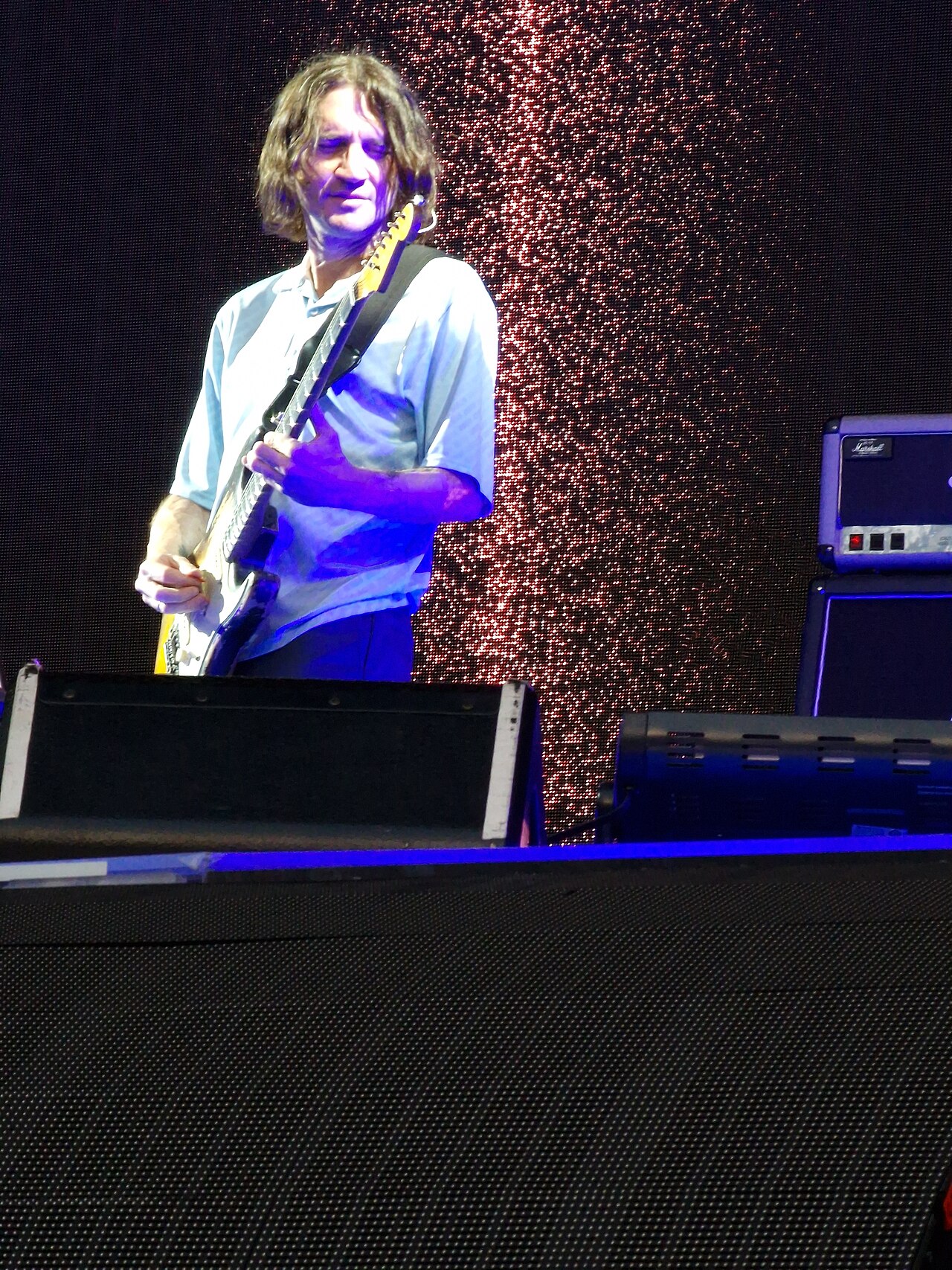
John Frusciante (Red Hot Chili Peppers) has Equipboard documentation as a Herbert user, and the amp is visible in video footage of Frusciante recording. The same Little Labs PCP blending technique documented for Mick Thomson — Herbert blended with an Orange Rockerverb 100 — appears in sources discussing Frusciante’s studio approach as well. His Herbert use, like Thomson’s, appears to be primarily a studio tool for combining with other amps. John Frusciante is noted as a probable Herbert user with the caveat that no specific primary-source interview confirms it with a direct quote. Photo and video evidence in his documented sessions is the strongest form of corroboration available.
Joe Duplantier (Gojira) has a Diezel Herbert documented as part of his studio setup at Silver Cord Studio, where Gojira records. Duplantier has stated the band’s approach to gear is deliberately non-obsessive — they use what sounds right rather than building brand relationships — and the Herbert appears in this context as a studio tool rather than a touring centerpiece. His recent touring rig has moved toward EVH amplification.
Five Tone Recipes
1. Archtop Clean for Session Work (CH1)
Channel 1, Volume at 7, Treble at 5, Mid at 5.5, Bass at 4.5. Mid-Cut engaged, level matched to unity. Presence at 4. This produces the Herbert’s showpiece clean: wide, transparent, and articulate enough to make an archtop or semi-hollow sound genuinely alive without any compression artefact. Works for jazz, country, and the kind of clean guitar bed that doesn’t fight a vocal in a mix. Add a compressor into the loop if you need more sustain; the clean channel’s own sustain character is organic rather than padded.
2. British Rhythm Crunch, 1970s Reference (CH2 -)
Channel 2 in (-) mode. Gain at 5, Treble at 6, Mid at 5, Bass at 5. Master Volume 1 at performance level. This is the amp in Plexi territory — harmonically complex but still dynamic, responsive to pick attack, not pre-compressed into a wall. An Ibanez TS9 or a clean boost in front sharpens the attack without adding fizz. For a Myles Kennedy kind of rock-anthem tone, this is the starting point: musical, sustaining, with enough hair to feel electric but enough headroom that chord changes ring individually.
3. Tight Rhythm for Extended-Range Guitar (CH2 +)
Channel 2 in (+) mode. Gain at 6, Treble at 5.5, Mid at 4.5, Bass at 4. Mid-Cut engaged, level 0.5 below unity (to control the midrange push). Deep at 3. This is where the Herbert separates itself from most boutique amps in the extended-range context: tight, percussive, fast attack, with the bass staying defined rather than building up into a low-frequency blur. On a seven-string in B standard or a six-string in drop C, the low notes remain individually articulate. Works for progressive metal, djent, and the kind of rhythmically precise playing where note definition matters more than harmonic density.
4. High-Gain Lead with Bloom (CH3)
Channel 3. Gain at 7.5, Treble at 6, Mid at 6.5, Bass at 4.5. Master Volume 2 as a +3dB solo boost on top of Master Volume 1’s rhythm level. Mids above noon add the bite that makes leads cut through a mix without becoming shrill. The Herbert’s Channel 3 is percussive by nature — for a smoother, more singing lead tone, pull the treble back toward 5 and let the mid carry the character. A Strymon Flint or TC Electronic Hall of Fame in the parallel loop adds depth without clouding the pick articulation.
5. Two-Amp Studio Blend (Herbert + Second Amp)
This is the Mick Thomson approach and the John Frusciante studio technique: run the Herbert’s Channel 3 in parallel with a second amp — an Orange Rockerverb, a Marshall plexi, a Mesa Dual Rectifier — using a Little Labs PCP Instrument Distro or a similar passive splitter. The Herbert contributes its tight, defined low-mid foundation; the second amp adds whatever harmonic character and frequency colour it carries naturally. The result is a recorded rhythm tone with more dimensional complexity than either amp alone. Mic each cab separately, blend at the console, and align phase before committing to a mix bus. This technique explains why the Herbert appears in so many studio session rigs as a partner rather than a solo solution.
How the Herbert MKIII Compares
vs Diezel VH4
The Diezel VH4 is the same company’s flagship and a different philosophy in every meaningful way. The VH4 runs four channels at 100 watts through EL34 power tubes; the Herbert runs three channels at 180 watts through KT77s. The VH4 is harmonically dense, saturated, and compressed — designed for the kind of high-gain modern metal that Adam Jones, Hetfield, and Corgan’s earlier Diezel era represent. The Herbert is tighter, more percussive, more dynamically responsive to picking intensity. Both are extraordinary boutique amps. The choice between them is genuinely about what your playing requires: if you want maximum harmonic saturation and four independent channels, the VH4; if you want headroom, articulation, and percussive clarity in a high-gain context, the Herbert. Myles Kennedy uses both simultaneously because they contribute different things to the same rig.
vs Bogner Ecstasy 101B
The Bogner Ecstasy 101B is the Herbert’s nearest boutique competitor in the three-channel EL34 world, and the comparison is instructive. The Ecstasy’s sound is more layered and complex — harmonically rich in a way that rewards single-note playing and smooth lead tones. The Herbert is tighter and more immediate; it responds more directly to pick attack and less to how long you let a note sustain. Players who want a creamy, organic lead tone often prefer the Ecstasy; players who want rhythmic precision and clean articulation in high-gain territory usually prefer the Herbert. The Herbert also offers more headroom at 180 watts versus the Ecstasy’s 100.
vs Mesa/Boogie Dual Rectifier
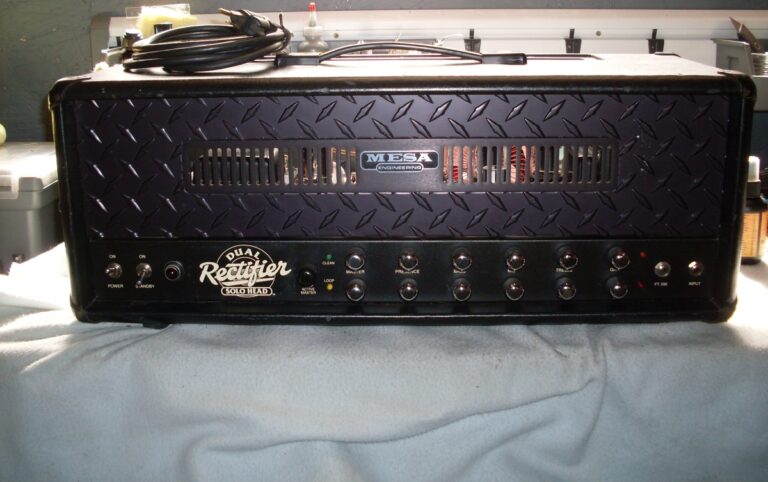
The Mesa/Boogie Dual Rectifier is the reference point for affordable American high-gain, and the contrast with the Herbert is primarily about voicing character and budget. The Rectifier’s Channel 2 and 3 are thicker, warmer, and more harmonically loaded in the mid-scoop territory that defined ’90s and 2000s heavy rock; the Herbert’s Channel 3 is tighter and more mid-present. Both take well to guitar and pick attack. The practical argument for the Rectifier is cost: it’s significantly less expensive than the Herbert, and for many players its voicing is exactly what they want. The practical argument for the Herbert is precision — if your playing requires tighter note definition, better clean-channel performance, and the MKIII’s dual-loop live architecture, the cost differential is justifiable.
vs Soldano SLO-100
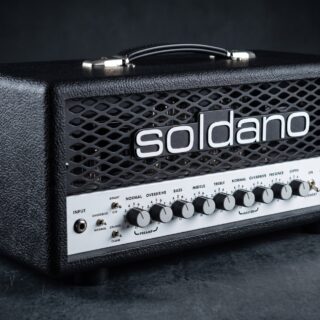
The Soldano SLO-100 is a 100-watt EL34 two-channel amp that established the vocabulary of modern high-gain boutique amplification before the Herbert existed. The SLO-100 has a more articulate, single-note-friendly high-gain character on its Lead channel — it’s an amp that rewards melodic playing and single-note runs. The Herbert’s Channel 3 is more rhythmically oriented, with tighter low-end and more percussive attack. The SLO-100 lacks the Herbert’s clean channel pedigree and offers two channels versus three. For classic rock and lead-focused playing, the SLO-100 is a strong argument; for rhythm-dominant, extended-range, or live-MIDI-routed setups, the Herbert is the more versatile tool.
vs Friedman BE-100 Deluxe
The Friedman BE-100 Deluxe is the boutique amp world’s answer to a modded plexi taken to its logical extreme: 100 watts of EL34, three channels, a voicing that prioritises British harmonic character and smooth lead compression. The Friedman has a warmer, more euphonic quality on its BE and HBE channels; the Herbert is tighter and more percussive. Many players who use both describe the Herbert as the better rhythm amp and the Friedman as the better lead amp — which lines up with the engineering intent of each. The Friedman is also approximately $1,500 less expensive than the Herbert MKIII at current pricing, making it a more accessible entry point to the boutique world.
Buying Guide
The Herbert MKIII is in current production. New units carry Sweetwater’s standard warranty and are available at approximately $4,299. At this price point, you are paying for handbuilt construction in Germany, the KT77 power section, the three independent all-tube preamp stages, and the MIDI architecture. There is no cheaper version of the Herbert MKIII; what you see on the Diezel price list is what exists.
The used market is well-stocked relative to many boutique amps, with Herbert MKIIIs and earlier MKII variants appearing regularly on Reverb at $2,700–$3,200 depending on condition and year. When evaluating a used Herbert, the version matters: the MKIII is identifiable by its black anodized faceplate and the rear-panel MIDI labeling that includes CH2+/- switching. Earlier MKIIs have a silver front panel. Both are excellent amplifiers; the MKIII adds MIDI CH2 voicing and the dual independent series loops not present in the same configuration on the MKII.
Tube maintenance follows standard boutique-amp protocol. The six KT77 power tubes are the primary replacement cost; a matched sextet from JJ Electronics runs approximately $80–$120 and should be accompanied by a bias check. Diezel’s own bias-adjustment procedure requires access to the rear panel trim pots — this is a dealer or tech job if you haven’t biased a tube amp before, not a home project. The seven 12AX7 preamp tubes have a longer service life and rarely need simultaneous replacement. An individual tube failure in the preamp section usually manifests as channel-specific distortion or loss of output rather than total failure.
Cabinets matter substantially with a 180-watt amp. The Herbert was voiced with Celestion speakers in mind — a Diezel 4×12 loaded with Vintage 30s is the reference configuration. Tone Tubby Hempcone 40/40 Ceramics, as used by Myles Kennedy, give a slightly warmer and less sharp high-frequency response than the V30. A 2×12 or efficient 4×12 is adequate for most applications; a single 1×12 will be audibly unbalanced in the low-mid response compared to what the amp is designed to drive.
Ownership Notes
At 56 lbs / 25 kg, the Herbert MKIII is a heavy amp by boutique standards. The VH4 (21 kg) is lighter despite having four channels, because the Herbert’s 180-watt power transformer is substantially larger. For touring use, a dedicated flight case is essential; the stock handles are adequate for short moves but not for extended travel. Budget for a wheel-equipped road case if the amp is going on trucks.
The Herbert’s 180-watt output is a practical consideration at home or in small studio spaces. There is no power-scaling or half-power switch — the amp runs at full output or not at all. At bedroom levels the amp sounds fine, but the KT77 power section’s characteristic bloom and dynamic behaviour doesn’t fully express itself until the power amp is working at meaningful output levels. An attenuator (the Two Notes Torpedo Studio or similar load-box-plus-IR system) between the amp and speaker solves this for studio use and allows silent recording without sacrificing the tone of a working power section.
The switchable effects loop is a feature that requires deliberate setup. The non-switchable loop is for a permanent modulation/delay/reverb unit that stays in the signal path regardless of channel. The switchable loop is intended for a secondary preamp or routing switcher that you engage on specific channels or patches via MIDI. If both loops are loaded with the same effects chain, you will create phase coherence problems; each loop is designed for a specific signal path role. Read the manual before loading both.
The Deep control on the rear panel adjusts how the power amp interacts with the speaker cabinet’s back EMF. This is not a simple bass boost — it’s a power amp damping factor control, and its effect changes depending on cabinet impedance and speaker type. Start at noon and adjust in small increments. With a high-efficiency Celestion cabinet, you may find that Deep set below noon gives tighter bass response than noon or above. With a darker or less efficient cabinet, above noon may be appropriate. The Presence control on the front panel behaves more conventionally and adds high-frequency sparkle uniformly across channels.
FAQ
What is the difference between the Diezel Herbert MKIII and the VH4?
They are both Diezel-built all-tube boutique heads, but they share no circuit architecture. The VH4 runs four channels at 100 watts through EL34 power tubes and is voiced for saturated, dense, harmonically complex high gain. The Herbert MKIII runs three channels at 180 watts through KT77 power tubes and is voiced for percussive, articulate, tight high gain with exceptional clean-channel performance. The VH4 compresses and blooms under heavy playing; the Herbert stays more dynamically responsive. Both are appropriate choices depending on playing style and tonal priorities.
What power tubes does the Herbert MKIII use, and can I substitute other types?
The Herbert MKIII uses six KT77 tubes, with JJ Electronics KT77 as the factory-recommended match. EL34 tubes are geometrically compatible and can be biased into the Herbert — some players prefer them for a slightly warmer, more compressed character — but the MKIII’s voicing is designed around KT77 and will behave differently with EL34s. KT77 offers improved low-end definition and tighter bass response; EL34 adds more harmonic bloom at the cost of some articulation. Bias after any power tube change.
Does the Herbert MKIII have a half-power or power-scaling mode?
No. The Herbert MKIII runs at 180 watts continuously with no power scaling or half-power switch. For home use or silent recording at studio quality, a load box and IR speaker simulator (Two Notes Torpedo Live, Fryette Power Station, or similar) is the standard solution. The power section’s characteristic behaviour — the KT77 tubes working under load — requires meaningful output levels to express fully.
How many effects loops does the Herbert MKIII have, and what are they for?
Three loops total. One parallel loop — for effects like reverb and delay where a blend between wet and dry signal is desirable. One non-switchable insert series loop — intended for permanent signal chain effects that stay active regardless of channel or MIDI state. One switchable insert series loop — intended for a secondary preamp, outboard channel, or effects device that you engage on specific patches via MIDI. Using all three simultaneously is possible but requires careful impedance and gain staging to avoid signal degradation or phase issues.
Is the Diezel Herbert MKIII good for metal?
Yes, and specifically for rhythmic precision metal. Channel 3’s tight, percussive high gain and the amp’s natural bottom-end control make it an excellent choice for technical rhythm playing, including downtuned or extended-range guitar. It is not primarily a saturated-leads amp — that characteristic belongs more to the VH4 or a Mesa Rectifier. If your metal playing is more about riff definition and note articulation than harmonic saturation and lead compression, the Herbert is the right tool.
Did Adam Jones or James Hetfield use the Herbert MKIII?
No. Both are documented Diezel VH4 users, confirmed by multiple independent primary sources including engineer statements, guitar tech interviews, and published rig rundowns. The VH4 and the Herbert are different amplifiers made by the same company. The confusion is a natural consequence of how both amps are marketed under the Diezel name, but there is no primary-source documentation placing either player on a Herbert.
What cabinets does the Diezel Herbert MKIII pair best with?
The Herbert was voiced primarily with Celestion Vintage 30-loaded 4×12 cabinets. Myles Kennedy’s documented stage rig pairs it with Diezel 4×12 cabs loaded with Tone Tubby Hempcone 40/40 Ceramic speakers, which have a warmer midrange and softer high-frequency character than the V30. An efficient 4×12 is the recommended pairing given the amp’s 180-watt output; a 2×12 works but delivers less of the low-end authority the KT77 power section is capable of. Impedance matching at 8 ohms per cabinet is standard; consult the Herbert’s manual for multi-cabinet wiring options.
How does the Herbert MKIII handle pedals in front of the amp?
Well, with a caveat specific to Channel 2 and 3. A clean boost (Xotic EP Booster, MXR Micro Amp) into Channel 2 or 3 sharpens attack and adds output without significantly altering the amp’s voicing — a useful live tool. A tube screamer type (Ibanez TS9, Maxon OD808) in front of Channel 2 in (-) mode adds the classic British crunch compression. Into Channel 3, a tube screamer can tighten the bass and focus the midrange, but the Herbert’s Channel 3 is already voiced for tightness and doesn’t need a pedal to control flub — use a boost rather than an overdrive if you just want more volume. Wah pedals work well in front of all channels.
Image credits
- John Frusciante: Hel Davies, Wikimedia Commons, CC BY-SA 2.0.
- Diezel VH4: GuitarGangsters AI-generated reference illustration, not a photograph.
- Mesa/Boogie Dual Rectifier Solo Head: Roadside Guitars, Flickr, CC BY-SA 2.0.
Latest News
Related
On This Day
Monday 9 November
From this week: