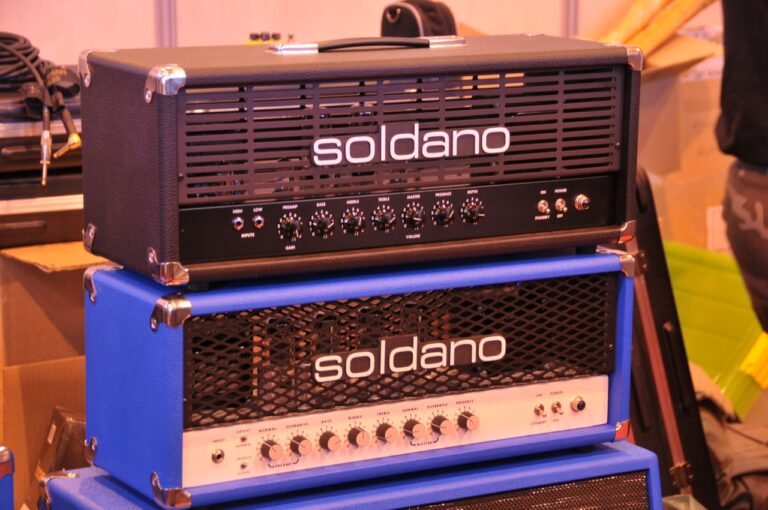
The Basement That Built a Boutique Empire: Revv Generator 120 MKIII Deep Dive
Complete guide to the Revv Generator 120 MKIII — specs, four-channel breakdown, verified players, Two Notes direct out, tone recipes, and buying advice.
In December 2013, a screen-printer and ex-touring musician named Derek Eastveld walked into an electrical engineer’s basement in Winnipeg, Manitoba, expecting to discuss a faceplate job. What he heard instead stopped him cold. “I said, ‘Where did you build this, and how did you do it? If you could build me one of these, I’d buy it,'” he recalled later. The engineer — Dan Trudeau — started laughing and noted he hadn’t mentioned a price yet. Eastveld told him that was fine, because he hadn’t mentioned the cost of the printing either. By the end of that month, they had agreed to form a company. The amp that blew Eastveld away in that basement would eventually become the Revv Generator 120, and the MKIII version of that design — with four years of artist-driven R&D behind it — is what you’re reading about right now.
The Revv Generator 120 MKIII is Canada’s answer to the question the boutique amp world has been arguing about for thirty years: what does an amplifier look like if you design every channel from scratch rather than iterating on a British or American template? The answer, as it turns out, is a 120-watt four-channel all-tube head with color-coded channels, embedded Two Notes reactive-load technology, a precision noise gate, a digital reverb, Bluetooth connectivity, and a price tag of $3,499. It is the flagship product of a company that started in a basement and reached every major stage in rock, metal, pop-punk, and country within a decade, and it earns that flagship status the hard way: by being a genuinely different amplifier from everything else in its class.
How Revv Went From a Basement to a Boutique Powerhouse
Dan Trudeau’s path to amp-building ran through electrical engineering and a love of high-gain metal that no commercially available amp was quite scratching. He spent years repairing and modifying amps for local Winnipeg players before constructing his own design from the ground up — the prototype Generator. The sound he was chasing was distinct: not a British-voiced Marshall derivative, not an American-voiced Mesa clone, but something tighter, more responsive, and more versatile across a wider gain range.
When Eastveld heard the prototype and came aboard as VP of sales and marketing, the company incorporated and began hand-wiring Generators at the rate Trudeau could manage around his day job — roughly one per month. Their debut at the NAMM trade show in 2015 was sobering: they expected 50 to 100 amp orders and got nowhere close. Rather than doubling down on the trade-show circuit, they made a pivotal decision. They shipped amps to a small network of YouTube guitarists — channels with modest subscriber counts at the time — and let those players put the amp in front of their audiences without editorial interference. The resulting word-of-mouth built brand awareness that print advertising at that budget level never could have achieved.
The G3 pedal launch in 2018 crystallized the approach. Eastveld ran what he called a YouTube blitz, blanketing the platform with G3 demos over a single month. When he landed in Europe and opened his email, Revv had sold nearly 200 pedals. They had expected 500 units over two years. The company was suddenly a name people knew. The Generator 120 — the original version, then the MKII — built a loyal following in hard rock, metal, and djent circles on the same organic trajectory. Touring artists started requesting them. Nashville session players discovered the clean channel. The artist roster on Revv’s own website today ranges from Adam Gontier and Barry Stock of Three Days Grace to Simple Plan’s Jeff Stinco and Sébastien Lefebvre, from Arch Enemy’s Michael Amott to the guitarists of Counterparts, Ingested, and Pennywise.
The Generator MKIII was announced on November 12, 2020, with a launch price of $3,299. Revv described it as the product of four years of research and development incorporating feedback from touring artists, session guitarists, and audio engineers. Every channel was revoiced. A state-of-the-art noise gate and digital reverb were baked in. Most significantly, the amp became the first tube amplifier in the world to ship with embedded Two Notes Torpedo reactive-load and impulse-response technology as standard. A current Rev.B iteration — introduced after the initial MKIII run — further sharpened the high-gain channels for a more aggressive response, restoring something of the original prototype character that Eastveld first fell in love with. All current Generator 120 units ship to Rev.B specification.
Specifications
The Four Channels: What Each Color Actually Does
The color-coded channel architecture is not a marketing gimmick. Each of the Generator 120’s four channels is built on a genuinely independent circuit with its own EQ stack, voicing switches, and gain structure. They don’t share components in ways that force tonal compromise between them. This is the technical decision that makes the Generator a legitimate do-it-all amp rather than a high-gain head with a token clean channel bolted on.
The Blue channel is the clean foundation. It runs crystal clear with enormous headroom before any breakup, and Revv explicitly designed it to be a top-tier pedal platform — the kind of clean canvas that shows off dirt pedals, modulation, and time-based effects without coloring the signal. The Wide switch on the MKIII version adds a broad frequency boost that increases perceived open-ness and push without narrowing the tonal window. If you have ever been burned by a high-gain amp that sounds strangled on the clean channel because all the engineering budget went into channel three, the Blue is the answer to that problem.
The Green channel occupies the crunch zone and is the most versatile of the four. Its Drive switch toggles between three distinct voices: a sparkly near-clean with hair starting at the top, a more saturated crunch, and a pushed mode that can get into genuine overdrive territory without crossing into the high-gain characters of Purple and Red. Three different players could set up the Green for three completely different purposes in the same band context.
The Purple channel is the tighter of the two high-gain voices. It is percussive and defined — pick attack translates with unusual clarity for a channel at this gain level. The Cut switch rolls off high-end fizz without requiring EQ surgery, and the Fat switch thickens the low-mid weight when single-coil pickups or a very bright cabinet leave the sound feeling thin. The Aggression switch moves between three modes that adjust the gain structure and compression behavior, letting players dial in the exact balance of note-separation and sustain they need. Purple is the go-to for modern metal rhythm work that still needs to cut through dense band mixes without becoming a wall of compressed noise.
The Red channel is the saturated, sustaining counterpart. Where Purple emphasizes note definition and tightness, Red emphasizes harmonic content and vocal-quality sustain. The same Cut/Fat/Aggression voicing options are present. Red rewards single-note lead playing and singing mid-gain rhythm work. Importantly, Red is not simply “more gain than Purple” — it is voiced differently, with a softer onset and more compressed character that lets players dig in harder before the sound gets uncomfortable.
The global Presence and Depth controls work across all channels without affecting the independent EQ stacks. Presence acts at the high end of the frequency range; Depth controls the interaction between the power section and the speaker load, effectively adjusting the perceived tightness and bass response across the whole amp. Used together they give players a fast macro-shaping tool that supplements the per-channel EQ without overriding it. Dual Master Volume controls allow footswitch-selectable output level shifts — useful for solo boosts, for matching volume between clean and gain channels, or for cutting output when moving from stage to rehearsal context.
Famous Players: Honest Source Verification
Revv maintains a public artist roster at revvamplification.com/pages/revv-artists. The list is long and legitimately impressive — Three Days Grace, Arch Enemy, Simple Plan, Between the Buried & Me, Counterparts, Ingested, Pennywise, and many others. However, that page does not specify which Revv products each artist uses. Revv’s lineup includes the Generator 120, the smaller Generator 100P and 100R, the Generator G50 and G25, and the Dynamis series of lower-gain heads. Being a Revv artist is a brand-level relationship; per-SKU verification requires individual digging.
Jordan Buckley (Every Time I Die / Better Lovers) is the most directly documented Generator 120 MKIII user from primary sources. In the Premier Guitar Rig Rundown for Every Time I Die, Buckley used the Generator 120 MKIII, selecting channel four as his primary voice. He is also credited as a Better Lovers artist — that band includes former Every Time I Die and Knocked Loose members, and Will Putney’s involvement brought the Generator 120 MKIII into the production chain for that project as well.
Will Putney (Better Lovers) is both a guitarist and a producer, and appears explicitly on Revv’s own artist page. His role in the Better Lovers rig rundown documented Generator 120 MKIII use in a working production and live context. Putney is one of the heavier end of the rock and metal production world’s most active engineers, and the Generator’s direct-out technology is exactly the kind of workflow tool that appeals to a player who records and performs.
Kevin Skaff (A Day To Remember) is on Revv’s official artist roster and recorded a hands-on Sweetwater demo specifically for the Generator 120 MKIII. A product demo does not necessarily equal a touring rig — these are factually different things — but the combination of an official artist relationship and a specific MKIII demo provides more direct product-level evidence than the artist page alone.
Michael Amott (Arch Enemy / Carcass) appears on Revv’s official artist roster, and his amp history has moved from Peavey 5150 (1993–2003), through ENGL Savage 120 for studio work, through Randall RM100 for touring, toward Revv in recent years. However, the specific Revv product he uses in current Arch Enemy touring or recording has not been documented in a published rig rundown or primary-source interview as of the research conducted for this article. His connection to Revv is real; the connection to the Generator 120 MKIII specifically is unverified by primary source. Article links to the GuitarGangsters gear guide for his broader rig history.
Mark Tremonti (Creed / Alter Bridge / Tremonti) was among the earliest Generator supporters — the Premier Guitar feature on Revv’s history (Ryan Reed, June 2026) quotes Eastveld describing how Tremonti’s manager, Tim Tournier, called after receiving an early Generator to say “Holy shit, where did you get this thing?” and joined as one of the first Revv artists. That connection predates the MKIII and originated with the original Generator design in 2013-2014. Tremonti’s confirmed touring and recording amps in recent years have been Mesa/Boogie dominant. He is not documented specifically on a Generator 120 MKIII in a primary-source context, and the “early supporter of the original Generator” position is distinct from current endorsement of a specific model. His GuitarGangsters gear guide is linked above.
The Revv artist page also includes several notable country and session players — Dann Huff (Michael Jackson, Taylor Swift, Kane Brown) and Shawn Tubbs (Carrie Underwood, Stone Temple Pilots) — but the Premier Guitar feature explicitly states that Huff uses the Dynamis D40 for his 2025 solo record, not the Generator 120. The Dynamis line is a different amp series with different voicing and channel architecture. Dann Huff’s Revv connection is real; his Generator 120 MKIII connection is not established by any source examined.
Two Notes Technology and the Direct Signal Path
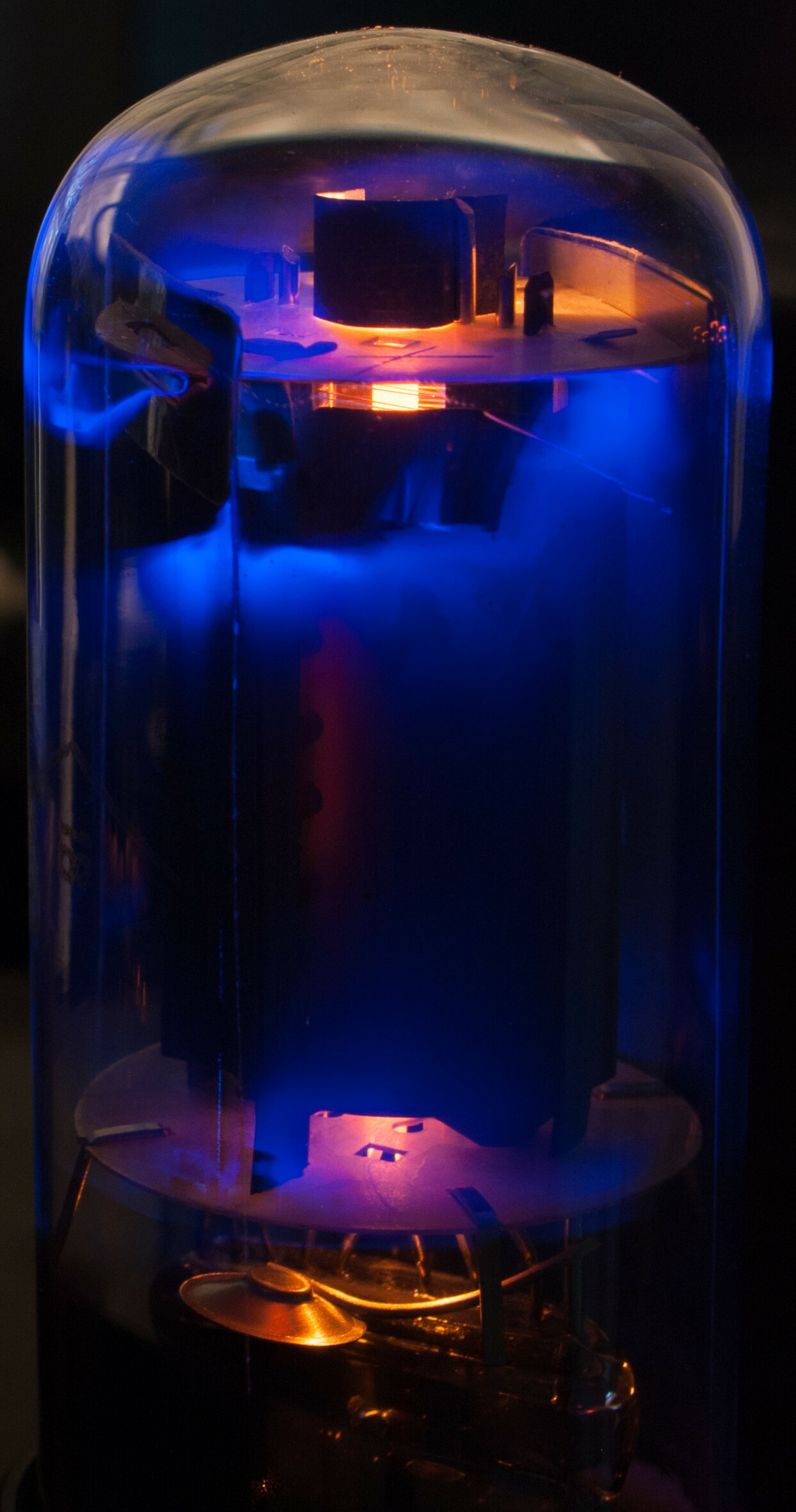
The embedded Two Notes Torpedo reactive load and DynIR impulse response system is the feature that separates the Generator 120 MKIII from every boutique head in its class built before 2019. What it means in practice: you can plug a cable directly into the Generator’s XLR output and get a signal that sounds like the amp miked through a real speaker cabinet, captured through a real microphone in a real room, without any of those physical elements being present. The reactive load means the amp’s power section sees the same electrical behavior as a real speaker, so the power tubes run correctly rather than the way they do when dumping signal into a purely resistive load. The DynIR technology goes further than standard impulse responses by capturing the way cabinet response changes with microphone position in fine spatial resolution.
Six virtual cabinet presets are accessible via a front-panel rotary selector with no additional software required. If you have access to the Two Notes Torpedo Remote app via Bluetooth or USB, that number expands to 128 MIDI-addressable presets, plus control of microphone selection, room size, EQ, and the built-in reverb in the direct signal. The headphone output runs through the same processing, giving the amp a fully functional silent practice mode at full tube output. For a gigging musician who needs the amp to function in four different contexts — large stage through a 4×12, small stage through a single 12, direct to FOH with no cabinet, and silent in a home studio — the Generator 120 MKIII handles all four without a separate load box, separate DI, separate reverb, or separate noise gate.
The noise gate deserves specific mention. High-gain players have been strapping noise gates across their signal paths forever. The Generator’s internal gate is not a simple hard gate but a precision, fully bypassable threshold-adjustable design that operates on the preamp signal. At the MKIII gain levels available on Purple and Red channels, the difference between a good gate and a mediocre one is immediately audible. Being able to set the threshold at the back panel and bypass it with a footswitch press means the gate is integrated into the instrument’s performance workflow rather than being a pedal sitting on a board that requires separate programming and power.
Tone Recipes
Modern Metal Rhythm (Purple Channel, Rev.B)
Gain at 7, Bass at 5, Mid at 5.5, Treble at 5.5, Level matched to the other channels. Bright off. Cut engaged. Fat off. Aggression in the middle position. Presence at 4. Depth at 5. Noise Gate engaged, threshold set tight. Into a 4×12 with Celestion Vintage 30s or Greenbacks. The Purple Rev.B character gives you pick attack with note separation — individual notes in palm-muted chugs stay identifiable at tempo rather than collapsing into a wall. Back off the Gain by a step if you want more clarity through the low strings on a 7-string or drop-tuned instrument.
Lead Voice (Red Channel)
Gain at 6.5. Bass at 4.5, Mid at 6, Treble at 5. Fat engaged. Aggression in the high-gain position. Master Volume 2 set 2-3dB higher than your rhythm channel for a solo lift. Presence at 5. The Red channel’s compressed sustain rewards a vocal lead approach — hold a note and let the amp carry it. Cut roll-off is optional here; leave it off if the guitar has warm pickups, engage it if a bright single-coil is making the top end stiff.
Pop-Punk Crunch (Green Channel, Drive Mode 2)
Gain at 5.5. Bass at 5, Mid at 5, Treble at 6.5. Bright switch engaged. Drive switch in the middle crunch voice. Level set to match the Blue channel. Presence at 5.5, Depth at 4.5. This is the Generator doing the job of a hot Marshall-style crunch at a more manageable output with the gate keeping the studio clean between sections. Works well with a Tube Screamer-style pedal in front to tighten the low-end further if the room is very boomy.
Pedal Platform (Blue Channel)
No gain on the channel itself. Bass at 5, Treble at 5.5, Level as loud as the gain channels. Wide switch engaged. Presence and Depth both at 5. Let your overdrive pedals or fuzz units do all the work. The Blue channel’s extreme transparency means the character of whatever pedal you put in front comes through accurately — a Klon-type does what it does, a Rat does what it does. This is also the correct channel for clean country or pop studio work; the headroom before any natural breakup is enormous at 120W.
Direct Recording (Any Channel, Stereo XLR Out)
Select a virtual cab via the front-panel rotary — Cabinet 3 or 4 tends to work well as a British 4×12 simulation for mid-heavy rock, Cabinet 1 or 2 for a tighter American 4×12 character. Set Direct Output Level so the XLR output isn’t clipping the interface input. Use Bluetooth to access Torpedo Remote and add room presence if the sound is too dry. Gate engaged, threshold to taste. The Twin Tracker function in Torpedo Remote creates a stereo doubling effect by slightly time-shifting and pitch-shifting the direct signal — useful for layered rhythm parts in a quick home studio context without tracking twice.
How It Compares
The Generator 120 MKIII’s natural comparison points are the other boutique high-gain flagship heads that have dominated this tier for the past twenty years — most of which have appeared earlier in this series.
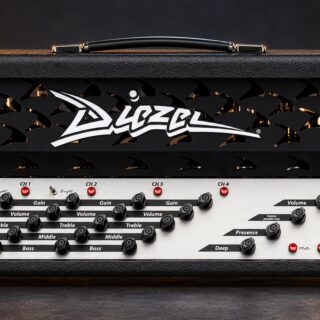
Against the Diezel VH4 ($4,499+), the Generator 120 MKIII is the more modern and more technically complete package. The VH4 is MIDI-only switching with no included footswitch; the Generator ships with a 6-button programmable unit. The VH4 has no built-in gate, no built-in reverb, and no direct-out capability of any kind without external hardware. The Generator includes all of it. The VH4 wins on sheer preamp topology complexity and the specific harmonic character of its Mega channel, which has an identifiable personality that the Generator’s Purple doesn’t precisely replicate. Both are professional touring tools; the Generator is the more self-contained one.
Against the Diezel Herbert MKIII ($4,299+), the comparison is similar. The Herbert’s three-channel architecture and KT77 power section character give it a different texture on the high-gain channels — the Herbert tends toward a more open, less compressed feel. The Generator’s two high-gain channels give players more options within the high-gain tier, and the full clean and crunch channels mean no compromise. Price advantage to the Generator at $3,499 vs. $4,299+.
Against the Bogner Ecstasy 101B ($3,818), the Generator is actually less expensive while offering more built-in features. The Ecstasy is a different-sounding amplifier — its 3-channel architecture with Plexi Mode, Old/New voicing, and dual Excursion controls serves a different tonal universe, British-inflected rather than the Generator’s own Canadian character. Both amps reward players who want genuine versatility without switching between heads. The Ecstasy doesn’t go direct without external hardware. The Generator does.
Against the Mesa/Boogie Dual Rectifier Solo Head, the Generator is more feature-rich and more analytically designed. The Recto’s legendary raw power and the specific sag of its rectifier section give it an organic quality that many players love precisely because it is less controlled. The Generator is more controlled, more precise in its note definition, and — critically — goes direct without a separate box. The Recto does not. If your sound needs the specific Recto compression and sag, you need a Recto; if you need modern versatility across a full channel range, the Generator covers the ground the Recto was designed for and adds considerably more.
Against the Friedman BE-100 Deluxe ($3,999+), the Generator offers more channels and more direct-out capability. The BE-100 Deluxe’s three channels cover clean-to-high-gain with the BE channel as its defining voice. The Generator’s four-channel architecture with two genuinely differentiated high-gain voices gives players more options without additional switching hardware, and the embedded Two Notes system is something Friedman’s flagship head lacks as standard.
Buying Guide: New, Used, and Rev.B
The Generator 120 MKIII at current pricing is $3,499 new through Revv’s website and authorized dealers. At the time of writing, the standard unit shows as out of stock on Revv’s own site, though it remains orderable through the Custom Shop (which allows customization of tolex color, chassis color, grille cloth, and piping). Check authorized Revv dealers for stock availability, as distribution fluctuates. The 10th Anniversary limited edition, listed separately on the Revv site, carries different cosmetics and limited-run status.
On the used market, Generator 120 MKIII units appear periodically on Reverb and at Guitar Center locations in guitar-dense markets. Pre-Rev.B MKIII units are functionally excellent amps and the primary difference is in the high-gain channel voicing. If you are specifically seeking the more aggressive Rev.B character, verify with the seller whether the unit has been updated. Rev.B is described by Revv’s own team as restoring the original Generator prototype’s “responsive midrange clang when you dig in” — a specific quality that Eastveld noticed was softened in some interim production runs. It is the version Revv now recommends for players chasing the most direct replication of what the company built its reputation on.
Before buying used, check that the included 6-button footswitch is present — it is not a cheap peripheral and sourcing one separately adds to the cost. Verify that the Two Notes functionality responds via Bluetooth and USB. And confirm that the bias test points are accessible and the tubes have not been substituted with mismatched replacements, as the 4 × 6L6GC configuration is the design the output section was voiced around. KT66 or EL34 substitutions are possible in theory but Revv voiced the amp around 6L6GC and the Rev.B specifically was tuned around that tube’s character.
Living With the Generator 120 MKIII
At 46 pounds, the Generator 120 MKIII is not a lightweight amp. Budget for a proper flight case or padded amp bag if the unit will travel regularly. The Baltic birch headshell is robust but deserves protection from the realities of backstage corridors. The amp’s physical size — 10.5″ tall, 26.5″ wide, 10″ deep — puts it in the range of other large-format boutique heads rather than compact alternatives.
The bias adjustment points are on the rear panel with clear labeling and straightforward access. A multimeter and the manual are sufficient for a competent player to check and adjust bias themselves after a tube change. Revv’s 5-pin cabinet lighting connector is proprietary — useful if you own a Revv cabinet, irrelevant if you do not.
Power scaling from 120W to 10W is genuinely functional for home use — at 10W the amp can operate at lower volumes without losing tube character, though “lower” is still loud by bedroom standards. The internal reactive load that protects the output section when no cabinet is connected is a significant safety feature: you can unplug the cabinet, engage direct-out mode, and practice silently through headphones without risking output transformer damage. Many high-power boutique heads require an external load or will be damaged by operating without a speaker load.
The Bluetooth editing of Two Notes parameters works reliably with Android and iOS devices. The virtual cab selection via rotary gives quick access to six presets without any app required — helpful in a live situation where you need to change a cab simulation between a soundcheck and a performance without pulling out a phone.
Frequently Asked Questions
What does “Rev.B” mean and do I need it?
Rev.B is a running update to the Generator 120 MKIII that increases the aggressiveness of the high-gain channels (Purple and Red) to more closely match the character of the original Generator prototype. All new units now ship as Rev.B. Existing MKIII owners can have their units updated by Revv or an authorized service tech. If you primarily play clean and crunch tones and never touch Purple or Red, the difference is not relevant to you. If high-gain tones are your primary use case, Rev.B is meaningfully better and worth seeking out.
Can I run the Generator 120 MKIII without a speaker cabinet?
Yes. The integrated reactive load automatically engages when no cabinet is connected, protecting the output transformer. The amp then routes the post-power-section signal through the Two Notes direct path. You can play silently through headphones or record directly to an interface via XLR. This is a designed-in feature, not a workaround.
Is the Generator 120 MKIII good for metal?
Yes, but with a qualification. It is excellent for modern high-gain metal and hard rock — the Purple channel’s tight note definition and the Red channel’s sustain handle contemporary metal production demands very well. The Rev.B update sharpened both for more extreme applications. What it is not is a scooped-mid thrash or doom amp — the channel voicings maintain mid-range presence that keeps the tone musical and defined rather than cavernous. Players who specifically need a radically mid-scooped sound will want to look elsewhere or use the Cut switches and EQ to approach that territory from this starting point.
How is the Generator 120 different from the Generator 100P and 100R?
The 120 has all four channels: Blue, Green, Purple, and Red. The 100P has a single Purple channel plus a simplified clean/utility function. The 100R has a single Red channel similarly. The 100P and 100R are designed for players who want one specific high-gain voice in a more compact and less expensive package. The 120 is the full-spectrum flagship.
What guitars pair well with the Generator 120 MKIII?
Given the Purple channel’s emphasis on note definition, high-output passive humbuckers and active pickups like EMGs both work well for the gain channels. The Blue channel’s transparency makes it ideal for single-coils and lower-output humbuckers where pedal character is the primary voice. The amp is not voiced to compensate for specific pickup types — it responds accurately to what you put into it, which is a strength for versatile players but means a dark, muddy pickup will sound dark and muddy through the Green and Red channels without correction.
Is the Two Notes technology the same as the Torpedo hardware units?
It is based on the same underlying DynIR technology that Two Notes develops for their standalone Torpedo hardware (Torpedo Captor X, Torpedo Live, etc.) and is editable through the same Torpedo Remote software. There are some functional differences in the number of features accessible and the exact hardware implementation, but for core cab simulation and reactive load purposes, the embedded version in the Generator 120 is the same technology family and produces the same quality of result.
What cabinets pair well with the Generator 120 MKIII for amplified use?
Revv makes their own cabinets (including the proprietary lighting connector that the Generator 120 supports) and these are voiced to complement the Generator’s output character. For third-party options, Celestion Vintage 30s provide the mid-focused British rock character that works well with Purple, while Greenbacks give a slightly looser, more vintage feel that suits Green and Blue. An aggressive metal player seeking the tightest response may prefer a cab loaded with speakers designed for high-definition transient response, such as the Celestion G12T-75 or Mesa/Boogie’s own Thiele-loaded cabs. The 120W output rating means speaker selection is relevant — most 30W-rated speakers will be running hard even at moderate output settings.
Is Revv still a small Canadian company or has it been acquired?
As of the research conducted for this article, Revv Amplification remains independently owned by Dan Trudeau and Derek Eastveld, based in Ile des Chênes, Manitoba, Canada. The company has grown to have a small dedicated manufacturing team but remains manufacturer-direct in its production approach. All amps are designed and manufactured in Canada. This is relevant to buyers who care about production provenance — there is no offshore manufacturing, no acquisition by a larger conglomerate, and the founders are still the faces of the company in every public-facing context.
Image credits
- The inside of a converted tube amp: Skimel, Wikimedia Commons, CC BY-SA 4.0.
- A band playing outdoors with an orange amp: Fekist, Wikimedia Commons, CC BY-SA 4.0.
- A glowing power tube: Rob Robinette, Wikimedia Commons, CC BY-SA 4.0.
Latest News
Related
On This Day
Tuesday 10 November
From this week: