The Third Amp Grows Up: Yamaha THR30II Wireless — Flagship Desktop, Full Wireless, All Fifteen Models
The Yamaha THR30II Wireless packs 30W stereo, 15 amp models and full wireless into the flagship desktop amp — complete specs, tone recipes and buying advice.
In 2011, Yamaha did something nobody else had managed: it made a practice amp that didn’t sound terrible. Not just tolerable — genuinely good. The original THR10 arrived looking like a retro toaster, sitting elegantly on a bookshelf, and producing tones that could pass for a cranked Fender Twin at neighbour-friendly volumes. Yamaha called it the “third amp” — not a gigging rig, not a recording head, but a dedicated home instrument. Players bought them by the millions, and an entirely new product category was born.
Then Yamaha went quiet for nearly a decade. Competitors built desktop amps of their own — the Boss Katana Air, the Vox Adio Air, the Positive Grid Spark — and the field caught up. When Yamaha finally returned in 2019 with the THR-II series, the stakes were higher. The THR30II Wireless is its answer to the question of what the flagship should look like when the category it invented has grown up around it. Thirty watts, stereo 3.5-inch drivers, an integrated Line 6 wireless receiver, a rechargeable lithium-ion battery, Bluetooth audio and MIDI, USB recording, stereo line outputs, and — crucially — all fifteen amp models accessible directly from the top panel. That last detail matters more than the wattage number, and we’ll explain exactly why.
The “Third Amp” Concept: A Brief History
The THR10 was conceived by Takashi Yamashiro of Yamaha’s Guitar Development Group as a response to a problem the company observed worldwide: guitarists spend most of their time at home, but their home amps sound nothing like the instruments they gig with. The practice amp market in 2010 was dominated by thin, nasally solid-state combos that sucked the life out of good guitars. Meanwhile, the amps that sounded wonderful — a Marshall JCM800, a blackface Fender Deluxe Reverb, a Mesa Boogie — were either punishingly loud or genuinely toxic at living-room volumes.
Yamaha’s solution combined two technologies. The first was Virtual Circuit Modeling (VCM), developed by a group internally nicknamed “K’s Lab” under engineer Toshifumi “Dr. K” Kunimoto. VCM models each circuit component individually rather than approximating an amp’s overall transfer function — the approach that led legendary engineer Rupert Neve to endorse the technology when it appeared in Steinberg’s RND Portico VST plugins. The second was Extended Stereo Technology, borrowed from Yamaha’s home audio division, which creates an unusually wide stereo image from a pair of closely-spaced small drivers. Together they produced an amp that sounded genuinely expansive and musically responsive at low volume, and the THR10 sold in quantities that justified the word “hit.”
The THR-II series built on those foundations. The 2019 lineup comprised three models: the base 10-watt non-wireless THR10II, the 20-watt wireless THR10II Wireless, and the flagship 30-watt wireless THR30II Wireless. All three gained a rechargeable internal battery and tripled the amp model count. But the THR30II went further: it received a larger chassis, bigger speakers, stereo line outputs, and — the feature that separates it most meaningfully from its siblings — direct top-panel access to all fifteen amp models without opening an app.
Design and Build
The THR30II Wireless looks like a slightly taller version of its smaller siblings: cream-painted steel on the front and top panels, moulded black textured plastic on the rear and sides, a minimal chrome carry handle at the top, and a row of black fluted knobs running along the top panel. The speaker grille features Yamaha’s Y-motif cut-outs, replacing the herringbone pattern of the original series — a minor cosmetic change that divides opinion. Behind the grille sit a pair of orange LEDs that glow like valve heaters, an aesthetic detail that serves no acoustic purpose but contributes to the desktop-furniture quality that made the original THR a domestic as well as musical success.
At 420mm wide, 195mm tall and 155mm deep, it is noticeably larger than the THR10II Wireless (368×183×140mm), and at 4.3kg it weighs about a kilogram more. On a desk or bookshelf the extra footprint is visible but not intrusive. On the rear panel: stereo line outs (two 1/4-inch jacks, balanced or unbalanced), USB port, aux input (3.5mm stereo mini), headphone out (3.5mm stereo mini), and the DC power socket for the laptop-style 15V adapter. Build quality throughout is solid without being precious — it’ll absorb the light knocks of home life without complaint.
Specifications
The Amp Models: Fifteen Voices, All Up Front
The THR-II series tripled the amp model count of the original THR10 by organising five tonal characters into three “flavors” each, for fifteen electric guitar voices in total. The five characters are Clean, Crunch, Lead, Hi Gain and Special. Each character is available in Classic, Modern and Boutique variants, accessed via a three-way toggle switch. The LEDs change colour to indicate which flavor is active: red for Classic, green for Modern, blue for Boutique.
In practice, Classic voices tend toward American and British amp archetypes from the 1960s and early 1970s — sparkly Fender clean tones, Marshall-adjacent crunch, smooth vintage lead voices. Modern voices push toward tighter low end, higher gain ceiling and a more forward upper midrange — what you would expect from late 1980s and 1990s high-gain American designs. Boutique voices occupy a more compressed, harmonically saturated middle ground, aimed at players who want the note-to-note detail of a well-worn single-ended amp or a carefully biased small-room recording tone.
Beyond the electric voices, the THR30II includes three acoustic amp models (simulating valve, condenser and dynamic mic preamp characters for piezo-equipped guitars), three bass amp models, and flat voicings for keyboards or any instrument that shouldn’t be passed through amp colouration. The acoustic modes, in particular, are a practical addition — if you own an acoustic-electric and want a single desktop unit that handles both instruments, the THR30II covers the ground.
Here is the detail that actually justifies choosing the THR30II over its cheaper siblings: all fifteen electric models are directly accessible from the top panel via the physical amp selector and three-way flavor switch. The THR10II Wireless — identical in most respects but running at 20 watts — defaults to five models on its top panel. The remaining ten require navigating the THR Remote app. Guitar World’s reviewer, Simon Fellows, called this distinction out directly: the THR10II’s arrangement “seems a shame” given the premium price of the wireless models. If you want to turn a knob and change between a clean Fender voice and a high-gain Mesa-style lead without reaching for your phone, the THR30II is the model that does this. Everything else in the lineup requires the app for the full fifteen.
Virtual Circuit Modeling and Extended Stereo
VCM models each individual circuit component of the source amp — capacitor, resistor, tube stage, transformer — rather than working from an input-output impulse response. This component-level approach is computationally expensive, which is why Yamaha’s desktop amps cost more than simple digital modellers. The payoff is touch responsiveness: back off your guitar’s volume and the amp cleans up; dig in harder and it breaks up. The dynamic behaviour tracks picking attack in a way that pure convolution modelling does not, and it is this quality — described by MusicRadar as “unmistakably present here” — that keeps the THR series competitive in a market now saturated with capable modellers.
Extended Stereo Technology is responsible for a disproportionately wide stereo image from two 3.5-inch drivers spaced only a few centimetres apart. The reverb and tremolo effects in particular benefit from this — a spring reverb set to even a moderate depth produces room ambience that sounds like a significantly larger enclosure. The 3.5-inch drivers in the THR30II are one step up from the 3.1-inch units in the THR10II, contributing to somewhat improved bass response at the low end. The difference is incremental rather than transformative, but reviewers across multiple outlets noted that the THR30II’s low-end response is meaningfully better suited to playing with backing tracks or loop pedals.
Wireless, Battery and Connectivity
The THR30II Wireless integrates a Line 6 Relay G10 receiver directly into the amp body. Pair it with a compatible G10T or G10TII transmitter (sold separately, roughly £90-100 street) and the guitar cable disappears entirely. The system operates on 2.4GHz and offers 24-bit/48kHz wireless performance with essentially zero audible signal degradation at normal playing distances. Latency is low enough to be imperceptible in practice use.
Two practical notes on the wireless system. First: the built-in receiver is designed for a single transmitter — this is not a multi-channel wireless rig. Second: Yamaha issued a safety advisory in 2020 regarding certain Line 6 G10T transmitters overheating during charging, following reports of four incidents internationally. The advisory recommends checking transmitter firmware before charging and names Yamaha’s own YW10T transmitter as the recommended alternative. If you buy a G10T separately, verify current firmware via the Line 6 website before first charge. The YW10T is the simplest solution and integrates without incident.
Bluetooth handles two separate functions: streaming audio from a phone or tablet (so you can play along to backing tracks without a cable), and communicating with the THR Remote app (free, iOS and Android). The app expands the amp’s editing depth significantly — sixteen cab models, two additional reverb models, compressor and noise gate with individual parameter control, third-party footswitch assignment, and full preset management. For many players the top panel controls are sufficient and the app stays off the table entirely. Guitar World’s reviewer explicitly found this to be the case: the panel is intuitive enough that you can access everything you genuinely need without menu surfing. The app is there if you want it.
The internal rechargeable lithium-ion battery delivers approximately five hours of playing time at medium volume. On battery power, the amp operates at 15 watts rather than 30 — the same halving behaviour as the THR10II Wireless. This is not fatal for home practice but does affect clean headroom and maximum volume before break-up. For any application requiring full 30W output — recording through the line outs, playing with a drummer, or using the amp via PA — connect to mains power. Battery is for portability; mains is for performance.
The two 1/4-inch stereo line outputs are a THR30II exclusive in the THRII combo lineup — the THR10II Wireless does not have them. They enable connection to a mixing desk, audio interface, or PA system, accepting both balanced and unbalanced jack plugs. Guitar World’s reviewer suggests this makes the THR30II a “super little lightweight touring amp” under the right circumstances — a solo acoustic/electric act, a quiet duo, a songwriter performing in a small venue. This is not its primary mission but it is a real capability. USB Audio Class 2.0 (driver-free on modern operating systems) lets you record directly to a DAW at the same time, with the bundled Cubase AI covering all the basic multi-track duties.
Famous Players
The THR30II Wireless is structurally a home practice and recording tool, not an artist-endorsement vehicle. Yamaha runs a large artist roster — Steve Lukather, John Frusciante, Joe Satriani, Guthrie Govan among many others — but those relationships are built around stage amplifiers, signature guitars and professional touring contexts. A 30-watt desktop amp with a rechargeable battery sits outside the artist-retainer model by design. What the THR30II does attract is genuine personal use by players who happen to be famous.
Yvette Young (Covet) is the most documented connection at the manufacturer level. Yamaha produced a dedicated promo video in which she discusses her approach to songwriting and specifically names the THR30II’s built-in chorus effect as an inspiration tool — a real quote in a first-party Yamaha production, not a brand association via logo placement. MusicRadar listed the video as a hands-on demo alongside the Andertons and Yamaha house demo videos in their review. Young’s playing style — jazz-inflected fingerpicking, unusual chord voicings, extended technique — makes the THR30II’s dynamic responsiveness and Boutique clean tones a natural fit. She is the most verified THR30II Wireless player in any publicly available source.
Johnny Marr (The Smiths, Electronic, solo) appears on Equipboard’s THR30II artist list, documented via an Instagram post from August 2023 showing the amp alongside his signature Fender Jaguar in Metallic KO. Marr’s primary endorsement relationships are with Fender, not Yamaha, so this is a personal purchase rather than a sponsorship arrangement. His connection to the amp is characteristic of the THR series in general: players who know what sounds good choose it for home use regardless of what their name is on.
Andra Ramadhan (Sheila on 7, Indonesia) is also listed on Equipboard. No primary source was found documenting the specific context of his use — the connection is Equipboard-catalogued but unverified by photo or interview at publication time.
The honest position on artist connections for the THR30II is the same as for any premium desktop amp: stage-level pro guitarists are not going to use it for their nightly Marshall stack or Divided by 13 setup. They may own one for writing at home, practicing in a hotel room, or recording direct at 2am without waking anyone. That context makes names like Marr and Young entirely plausible, and the Yvette Young connection is genuinely documented by Yamaha themselves. What the THR30II isn’t is a signature amp with a famous player’s name on the front.
Tone Recipes and Settings
1. Marr-Style Indie Clean (Classic Clean)
Amp: Clean / Classic (red). Gain at 2.5 out of 10. Master Volume to taste. Bass 5, Middle 6, Treble 7. Effect: Chorus — rate at 30%, depth at 40%, mix at 35%. Echo/Reverb: Spring Reverb, time short, mix 20%. Guitar: single-coil neck pickup (a Stratocaster or Rickenbacker 330-style guitar). Roll back the guitar volume to 7 for the classic chiming intro texture; open it up to 10 for the jangly full-chord strumming. The Classic Clean in this setting reproduces the wide stereo quality that characterises post-punk British clean tones. Johnny Marr‘s approach to clean guitar — intricate layering, open string voicings, deliberate use of reverb as a compositional element — translates directly to this voicing.
2. Boutique Crunch (Boutique Crunch)
Amp: Crunch / Boutique (blue). Gain at 5. Master Volume to taste. Bass 5, Middle 7, Treble 6. Effect: Light Tremolo — rate at 25%, depth at 30%. No echo or reverb beyond the ambience of the tremolo effect. Guitar: Les Paul or similar humbucker, bridge pickup. The Boutique Crunch voice compresses slightly more than the Classic variant, producing a rounder, more harmonically saturated overdrive — closer to a small-room tweed amp pushed into breakup than the harder British crunch of the Classic setting. Ideal for single-note blues leads, chord embellishments in a rock trio context, and any situation where you want the distortion to feel like it’s coming from the amp rather than a pedal.
3. Frusciante-Inspired Edge-of-Breakup (Classic Crunch)
Amp: Crunch / Classic (red). Gain at 3.5. Master Volume to taste. Bass 4, Middle 8, Treble 6. Effect: Chorus off, Echo/Reverb Spring Reverb, mix at 15%. Guitar: Strat, neck or middle position, guitar volume at 7-8. This setting leans on the Classic Crunch’s strong midrange presence and its response to picking dynamics. Strike hard and the amp bites; ease off and it purrs. John Frusciante’s landmark clean-crunch tones — the kind that appear throughout Blood Sugar Sex Magik rhythm tracks — depend on exactly this interplay between a crunching amp and a guitar whose volume is rolled back from ten. Plug in a Stratocaster and spend ten minutes adjusting only the guitar volume knob; the THR30II’s VCM responds with noteworthy range across that control.
4. Modern Hi Gain (Modern Hi Gain)
Amp: Hi Gain / Modern (green). Gain at 7.5. Master Volume moderate. Bass 6, Middle 4, Treble 7. Effect: Noise Gate (via THR Remote app) — threshold adjusted to taste for your guitar’s output level. Echo/Reverb: Hall Reverb at short decay, mix 10%. Guitar: humbucker at bridge, guitar volume full. Modern Hi Gain targets late-1980s to 1990s American amplifier design — tighter, more articulate low end than the Classic variant’s British character, with a higher gain ceiling and a pronounced upper-midrange presence that keeps riff definition intact under distortion. For players in the territory of Steve Vai‘s high-gain Ibanez-and-Carvin recordings, or any modern lead style requiring articulation under heavy saturation, this is the THR30II voice that delivers. Add an Ibanez TS9 Tube Screamer in front with tone high and level low if you want additional focus and sustain on the leads.
5. Acoustic Simulation (Acoustic Model)
Amp: Acoustic (mode selector past the electric voices). Choose Condenser mic model for the most balanced result. Bass 4, Middle 6, Treble 7, Gain/Master to comfortable volume. Effect: Hall Reverb, time moderate, mix 25%. Guitar: acoustic-electric with undersaddle piezo, or a thin-body semi-hollow guitar for the “recording-room acoustic” approximation. The THR30II’s acoustic models are not studio-quality acoustic guitar simulation — they are amp/DI voices designed to make a piezo-equipped instrument sound less harsh and more natural than it does through a flat input. The Condenser model flatters the midrange; the Dynamic model reduces top-end harshness; the Valve model adds the gentle compression of a vintage tube DI. For rehearsal use with an acoustic-electric this is genuinely useful, and it means one desktop unit covers both instruments.
Comparisons
The Yamaha THR10II Wireless is the obvious first comparison. At approximately $100 less, it runs at 20 watts, uses 3.1-inch speakers, and — most critically — gives you only five amp models from the top panel. The other ten require the THR Remote app. If you do most of your practice by picking a voice and sticking with it, the THR10II Wireless serves perfectly well. If you want to scroll through all fifteen voices with a physical knob while you play, only the THR30II does this. The THR30II also adds the stereo line outs, making it viable as a direct-to-PA lightweight touring solution; the THR10II Wireless has no line outs. The extra kilogram of weight and larger footprint are the only costs.
The Boss Katana-50 Gen 3 is the dominant force in practice amp modelling at the same general price tier. The Katana-50 covers more amp archetypes (six characters vs five), has a BOSS Tone Studio ecosystem with a vast library of downloadable patches, and in its EX variant adds a cabinet-simulated line out. It does not have built-in wireless, rechargeable battery, Bluetooth audio streaming, or the Extended Stereo cabinet technology. The Katana is the more versatile workhorse; the THR30II is the more integrated home appliance. They answer different questions.
The Boss Nextone Stage at roughly the same price offers genuine analogue Class A/B power stage reconfiguration for different tube-type characters, a 40W output, a 12-inch speaker, and a semi-open cabinet — all of which point toward live performance and studio monitoring. It is a proper amp in a conventional configuration. The THR30II is a desktop object for home use. These two products do not compete; they serve different contexts entirely.
The Roland Blues Cube Artist represents a different philosophy again — a 85W 1×12 combo built around Roland’s Tube Logic circuit, optimised for live performance in smaller venues. Its price is higher; its use case is explicitly live and studio. The THR30II and Blues Cube Artist might both live in the same rehearsal room, but they are not interchangeable: the Blues Cube Artist is the gigging amp, the THR30II is the practice amp.
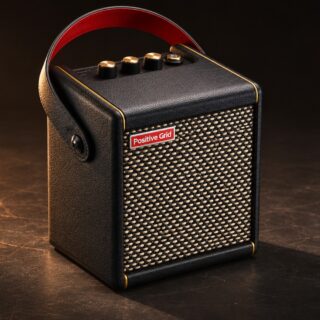
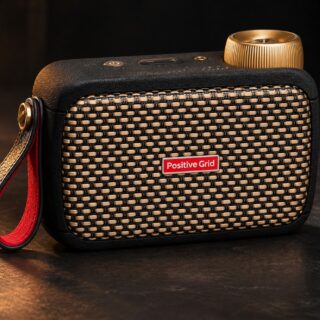
The Positive Grid Spark 40 is the closest like-for-like competitor — a 40-watt desktop amp with Bluetooth audio, an extensive app ecosystem, AI-generated backing tracks, and a chord recognition feature for learning. It costs slightly less and has a larger amp model library via the Positive Grid cloud. The Spark 40 wins on software breadth and acoustic simulation. The THR30II wins on hardware quality, build, and touch responsiveness via VCM — and for players who value playing an amp without reaching for a phone, the THR30II’s complete top-panel control is a significant advantage.
Buying Guide
New THR30II Wireless units in cream finish sell for approximately $599.99 at major US retailers (Sweetwater, Guitar Center, B&H). A black finish variant (THR30IIWLB) is available at the same price. The Equipboard meta price of “from $444” reflects used-market pricing; used examples in good condition can be found between $350 and $480 depending on condition and included accessories. The amp is fairly robust and the internal battery is the only component that degrades with time — ask any used seller how many charge cycles the battery has accumulated if you can.
The Line 6 G10T transmitter is sold separately and adds approximately $90-100 to the total. Yamaha’s own YW10T is the recommended alternative and avoids the overheating advisory that affected certain G10T units manufactured before 2020. Either way, budget for the transmitter as part of your total cost — the amp’s built-in wireless receiver is only useful if you own a compatible transmitter.
Yamaha offers a dedicated padded gigbag for the THR30II at around £63/$70. At 4.3kg with a built-in handle the amp is portable without a bag, but the bag adds worthwhile protection if you plan to move it regularly between rooms, studios or venues.
One practical check before buying: verify that any retailer stock is a genuine THR-II series unit and not leftover original THR10/THR10C stock being sold under a similar name. The model number for the wireless flagship is THR30IIWL (white) or THR30IIWLB (black). The older non-wireless non-rechargeable original models are now significantly outdated and should not be purchased at modern prices regardless of condition.
Ownership Notes
The rechargeable battery is a laptop-style lithium-ion pack and responds well to standard lithium battery care: charge it before it reaches zero, do not leave it fully depleted for extended periods, and store the amp at partial charge if you will not use it for weeks at a time. Yamaha does not currently offer a user-replaceable battery service in the consumer channel; a deeply degraded battery would require manufacturer service. This is unlikely to be a concern within the first several years of regular use.
The THR Remote app is Bluetooth-dependent and requires a device running iOS or Android. Notably, the app connects for MIDI control and parameter editing but the amp stores up to five preset memories internally, so it functions fully offline once your presets are saved. You do not need the app in the room to recall your sounds. The app’s cab model selection (sixteen choices) and additional noise gate/compressor controls are the features most worth exploring in a single focused app session; store your results in the five user memory buttons and leave the phone on the charging cable.
The USB interface operates as a two-in, two-out Class 2.0 device — two channels of guitar/amp signal into the DAW simultaneously, and DAW playback coming back through the THR30II’s speakers. It is not a full studio interface; sample rate tops out at 48kHz and bit depth at 24-bit. For demo recording, songwriting captures and direct recording of modelled tones, it is more than sufficient. For tracking records where you require 96kHz or multiple simultaneous inputs, use a dedicated interface with the THR30II’s line outs feeding an input channel.
If you use the THR30II with a looper pedal — a common application for this amp given its strong dynamic response — connect the mains power. The battery power reduction from 30W to 15W meaningfully affects clean headroom, and a looper accumulating layered parts will expose that reduction quickly. Full 30W on mains gives the THR30II headroom that is noticeably more comfortable for layered loop use than its nominal desktop amp designation suggests.
Frequently Asked Questions
What is the difference between the THR30II Wireless and the THR10II Wireless?
Three meaningful differences. First, the THR30II runs at 30 watts versus 20 watts (halving to 15W vs 10W on battery). Second, the THR30II has 3.5-inch speakers versus 3.1-inch, producing marginally better bass response. Third — and most importantly for day-to-day use — the THR30II gives you all fifteen amp models directly on the top panel via physical controls; the THR10II Wireless defaults to five top-panel models with the remaining ten accessible only through the THR Remote app. The THR30II also adds stereo line outputs (L/R 1/4-inch) for PA connection; the THR10II Wireless has no line outs.
Can I gig with the THR30II Wireless?
Not as a standalone stage amp. At 30 watts through two 3.5-inch speakers it produces volume adequate for living-room practice but not for performance with drums. However, the stereo line outs let you connect directly to a PA or mixing desk, which makes it a practical lightweight direct-in solution for solo acoustic-electric sets, songwriter gigs, or any context without a full band. Run on mains power (not battery) for any gigging application — battery power cuts output to 15W.
Does the THR30II Wireless have Bluetooth?
Yes. Bluetooth handles two functions: audio streaming (so you can play backing tracks wirelessly from a phone or tablet through the amp) and MIDI communication with the THR Remote app (which allows deep parameter editing, cab model selection, and preset management). The Bluetooth audio and the guitar input are mixed together through the amp’s output.
Which wireless transmitter works with the THR30II?
The integrated Line 6 Relay G10 receiver is compatible with the Line 6 G10T, G10TII, and Yamaha YW10T transmitters. The YW10T is the currently recommended option. If you own a G10T unit manufactured before 2020, check its firmware on the Line 6 website before charging — Yamaha issued a 2020 safety advisory regarding overheating during charging of certain older G10T units.
How long does the battery last?
Approximately five hours at medium volume. On battery power the amp runs at 15 watts rather than 30. Battery life will degrade over time as with any lithium-ion pack; a well-maintained pack should deliver usable capacity for several years of regular daily use.
What famous guitarists use the Yamaha THR30II Wireless?
Yvette Young (Covet) is the strongest documented connection — Yamaha produced a promo video in which she specifically discusses the THR30II’s chorus effect as a songwriting tool. Johnny Marr was documented using one via an Instagram post in August 2023. Andra Ramadhan (Sheila on 7) appears on Equipboard’s artist list. The THR30II attracts personal use by well-known players rather than formal artist endorsements — it is a home amp, not a stage rig.
Is the THR30II Wireless good for recording?
Yes, via USB directly into a DAW at 24-bit/48kHz, or via the 1/4-inch line outs into an external interface. The USB connection is Class 2.0 (driver-free on most operating systems) and provides two channels simultaneously. Bundled Cubase AI covers multi-track recording needs for most home studios. The line outs enable connection to a higher-specification interface for those needing better converters or higher sample rates.
How does the Yamaha VCM technology work?
Virtual Circuit Modeling simulates the individual components of the source amplifier — each transistor stage, capacitor, transformer and tube in the original circuit — rather than approximating the amp’s input-to-output transfer function as a whole. This component-level simulation is more computationally demanding but produces more musically accurate dynamic behaviour: the modelled amp responds to pick attack, guitar volume changes, and playing intensity in ways that closely track the original circuit’s response. Rupert Neve, the legendary recording engineer, endorsed the technology when it appeared in Steinberg’s Neve-licensed VST plugins, citing its accuracy relative to other modelling approaches.
Image credits
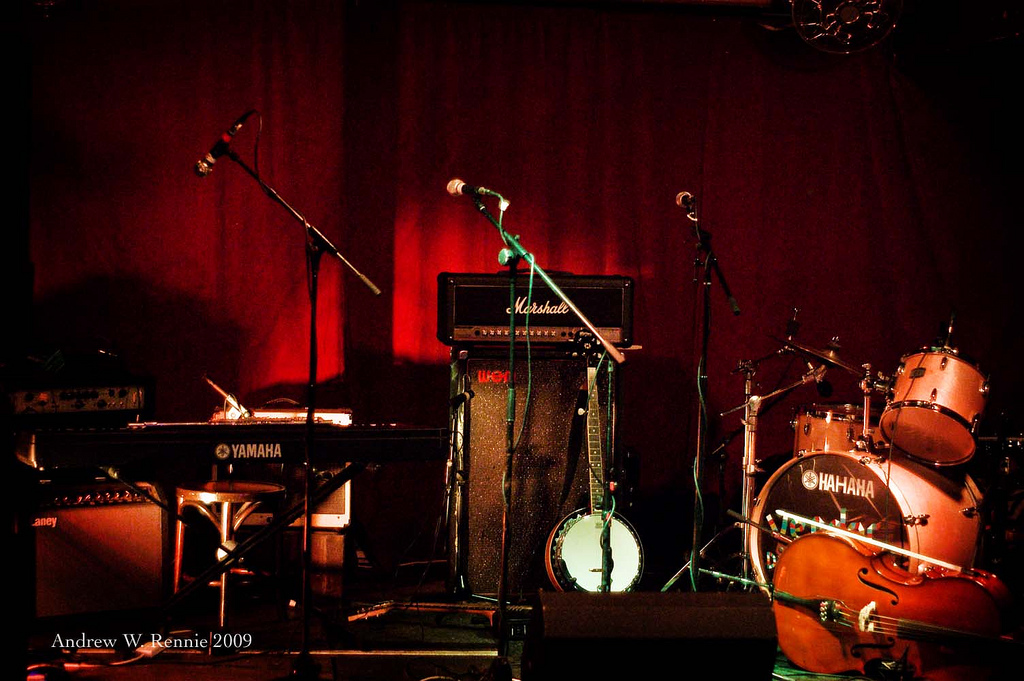
- A small band stage with amps and drums: Andy Rennie from Glasgow, Wikimedia Commons, CC BY-SA 2.0.
- Amplifiers and a speaker cabinet on a stage: Kuba Bożanowski from Warsaw, Poland, Wikimedia Commons, CC BY 2.0.
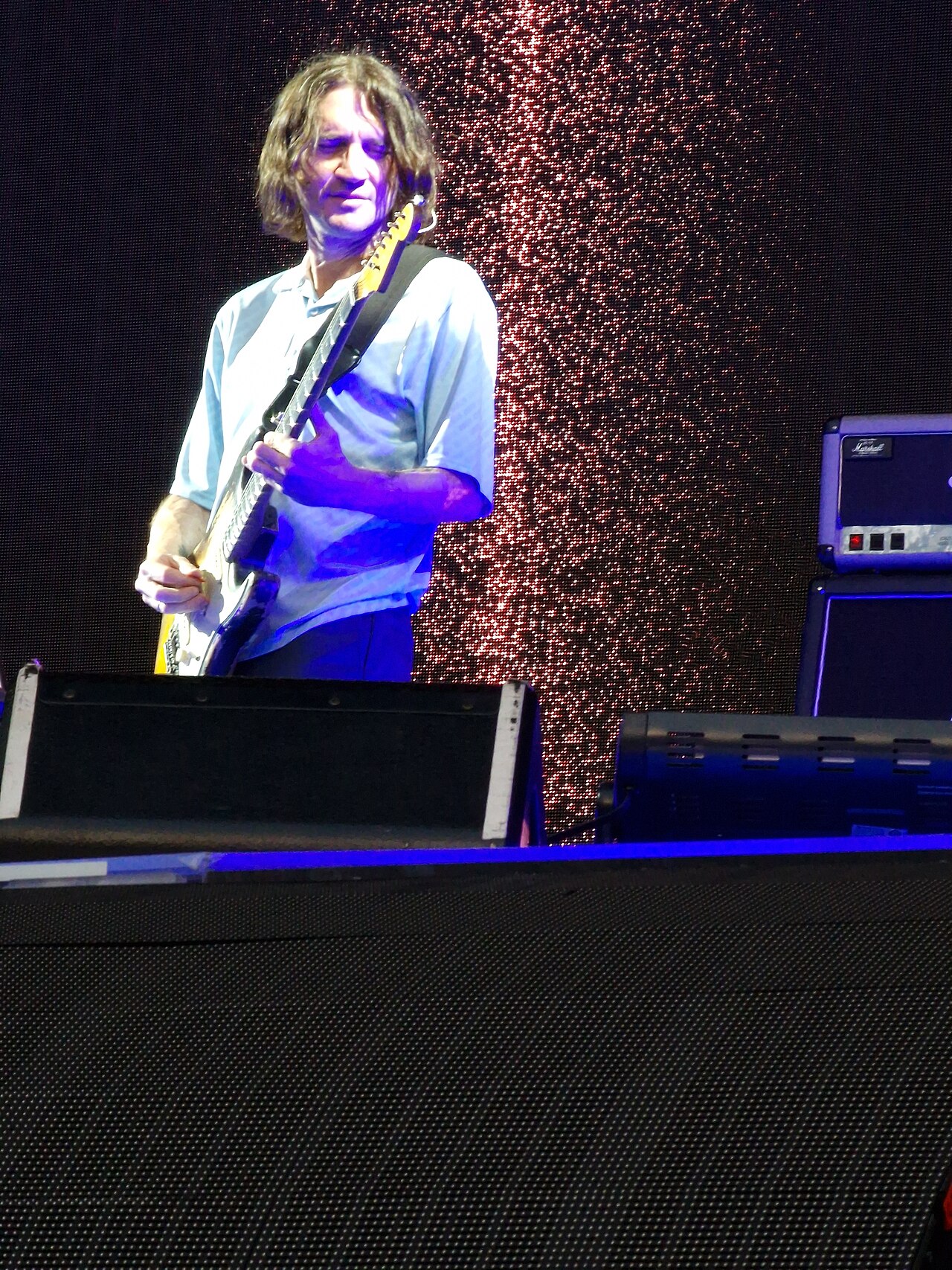
- John Frusciante: Hel Davies, Wikimedia Commons, CC BY-SA 2.0.
Latest News
Related
On This Day
Monday 9 November
From this week: