The Amp That Ate the Backline: Inside the Boss Katana-50 Gen 3
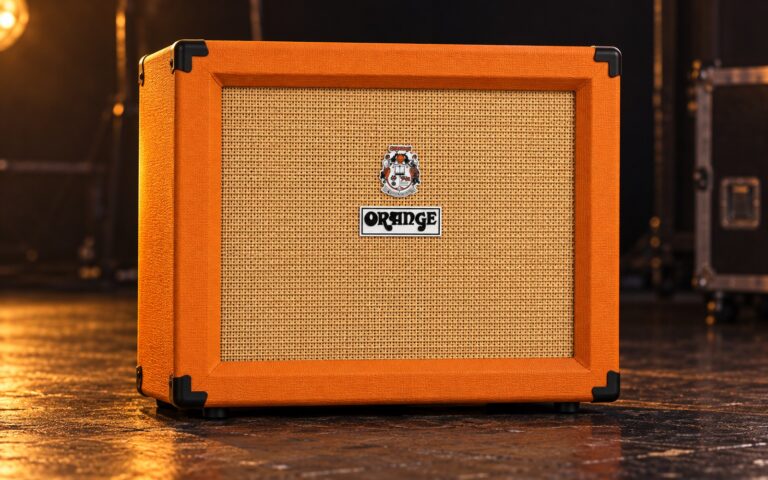
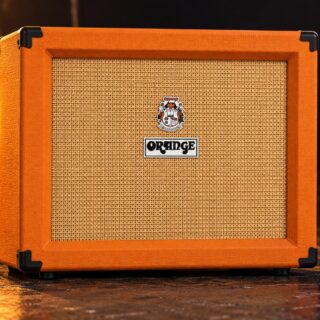
BOSS Katana-50 Gen 3 Combo. AI-generated reference illustration, not a photograph.
Boss Katana-50 Gen 3: six amp voices, 15 onboard BOSS effects and new Pushed mode in a 50W 1x12. Full specs, tone recipes and buying guide inside.
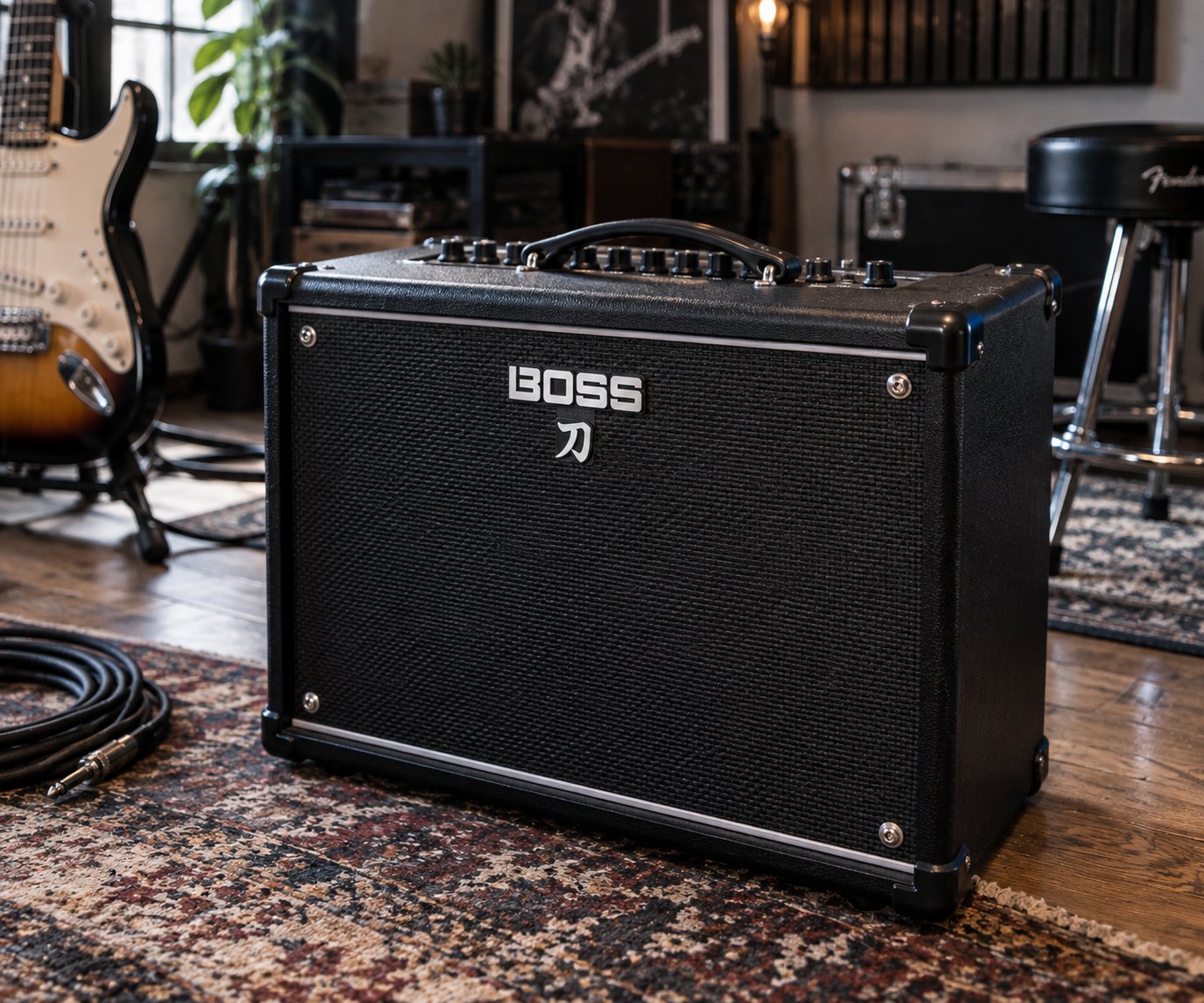
Walk into any rehearsal studio, open-mic night, pub gig, or bedroom production setup in the world today and you will find one. Black cabinet, glowing LED, the unmistakable bold typeface on the grille cloth spelling out a word borrowed from Japan’s samurai tradition. Since September 2016, the Boss Katana has quietly become the most ubiquitous amplifier in guitar history — and the third generation of the range’s entry-level 50-watt combo has refined that formula to its sharpest edge yet.
The Boss Katana-50 Gen 3 is not the amp that Van Halen ran through to get the Brown Sound. It is not the amp John Mayer obsesses over in hotel rooms, or that Kirk Hammett has racked in a flight case for thirty years. What it is — and what makes it genuinely remarkable when you think about it — is the amp that has democratised tone more completely than anything since the transistor. Six amp characters, fifteen onboard effects drawn from five decades of Boss pedal heritage, fifty watts of Class AB power through a 12-inch speaker, all for under $350. In 2024, with the Gen 3 update, it got measurably better.
This is the story of how that happened, what changed, and whether any of it matters to you.
The Sword Is Drawn: Boss, Roland and the Road to Katana
The Katana did not emerge from nowhere. To understand it, you need to understand the corporate family that built it — and specifically the line of amplifier innovation stretching back half a century to a small Japanese company operating in the early 1970s.
Roland Corporation was founded in 1972, and its first landmark product arrived in 1974 with the RE-201 Space Echo tape delay — still one of the most coveted reverb units in existence. The JC-120 Jazz Chorus followed in 1975 and secured Roland’s immortality. A 2×12 solid-state combo with onboard stereo chorus, it was conceived as a pure clean platform for jazz players who wanted their archtops uncoloured. What they got instead was a tone so crystalline, so harmonically intact, that it ended up in the rigs of everyone from Andy Summers to Metallica to Albert King. The JC-120 established a truth that the Katana would later inherit: solid-state amplification, done right, is not a compromise — it is a different kind of excellence.
Boss emerged in 1973 as Roland’s sibling brand, sharing engineers and a philosophy but developing its own speciality: the best guitar pedals in the world. The OD-1 Overdrive, the PH-1 Phaser, the DS-1 Distortion — over five decades, Boss built a library of some 140 effects units that shaped the sound of virtually every genre in modern music. The DS-1 alone appears in the recorded output of grunge, punk, indie, and rock, most famously in the hands of Kurt Cobain, who coaxed some of alternative rock’s most corroded tones from a pedal that costs less than a tank of petrol.
Roland’s CUBE series launched in 1978, proving that compact solid-state combos could serve working players seriously. For years, Boss made pedals and Roland made amps, and the two brands coexisted. But as digital modelling technology matured through the 2000s and 2010s, a product that combined Roland’s amp-building heritage with Boss’s effects DNA was inevitable.
The Waza Head arrived in 2016 as Boss’s boutique entry into amplification — a four-channel monster using Tube Logic design, priced accordingly for professional use. It wowed critics but lived above the pay grade of most working musicians. A few months later, in September 2016, Boss launched the Katana line: the Waza’s DNA in an affordable, road-ready package. Katana — named after the curved blade of the Japanese samurai — was designed to embody those same principles of precision, honour and artistry, at a price point that put it in every guitar player’s reach.
The original 2016 lineup comprised four models: the Katana-50, Katana-100, Katana-100/212, and a standalone head. Five amp characters — Clean, Crunch, Lead, Acoustic, Brown — ran through a reactive Class AB analogue power section that Boss called Tube Logic. Power Control let players crank the character at bedroom volume. Integrated access to 55 Boss effects made it simultaneously an amp and a pedalboard. Sales took off “like a rocket,” in Boss’s own words. Within a year, Katana was everywhere.
The timeline from there moved quickly. 2017 brought the Katana-Mini, a pocket-sized triple-voice amp. 2018 introduced the Katana-Air (the world’s first fully wireless guitar amp system) and the Katana-Artist, which drew in name players with its premium Waza speaker and upgraded spec. 2019’s MkII expanded each generation’s effects library to fifteen simultaneous options across five independent sections — Booster, Mod, FX, Delay, Reverb — each with three variations. 2022 extended the range to bass guitar. By 2024, when Boss announced Generation 3, the Katana was not just a product line. It was a fixture of the global guitar landscape.
What Changed in Gen 3
Boss was careful not to call the 2024 update “MkIII.” The company insists that “Generation 3” signals something more than a specification tick — and while guitar media has been measured in its agreement, the changes are real and audible.
The most important addition is the Pushed amp character. Where the original Katana offered five amp types, Gen 3 adds a sixth sitting between Clean and Crunch: an edge-of-breakup voice that evokes a valve amplifier being pushed to the edge of its headroom. If Clean is your high-headroom Fender — glassy, extended, patient — then Pushed is the moment that same amp starts to breathe. The strings feel more alive, the attack has a gentle give, and single notes bloom with a softened harmonic envelope. Reviewers at MusicRadar called it “our favourite setting on the amp” within minutes of powering up, which speaks to how immediately usable it is. It takes a Tube Screamer-style boost with exceptional grace, and — more unusually for a digital amp — responds beautifully to vintage-style fuzz pedals.
The existing amp voices have also been overhauled under the hood. The tonal character across all models has been enhanced, with improved clarity in the high frequencies, richer harmonics in the mid-range, and a tighter, more defined low end. MusicRadar’s description — “the Gen 3 feels like you are viewing the older iteration in 4K” — captures it well. The difference between MkII and Gen 3 is not a revolution; it is a resolution upgrade. Everything is sharper, more defined, more like what you hear in your head before you hit the strings.
Two hardware updates are worth flagging. First, the USB port has upgraded from Type-B to USB-C — an overdue change that makes connecting to modern laptops and phones significantly less awkward. Second, Bluetooth connectivity is now officially supported via a dedicated rear port for the Boss Bluetooth Audio MIDI Dual Adaptor. This is worth addressing directly: the Bluetooth function is not built in. You need to purchase a separate dongle for approximately $59.99/£45. Given that Positive Grid’s Spark range, the Fender Mustang, and the Yamaha THR all include Bluetooth as standard, this is a pointed omission in a whole-range upgrade for 2024 — and Guitar.com’s reviewer called it exactly what it is: strange. When your amp uses a smartphone app for deeper editing, consumers expect to connect that phone without an optional accessory. Boss has perhaps calculated that most Katana buyers will be content with desktop Tone Studio via USB-C; the dongle serves those who need wireless access. But the information is worth having before you buy.
The Boss Tone Studio app itself has been updated, offering a cleaner workflow for building and recalling presets, adjusting the full signal chain, and accessing the expanded virtual pedal library. The app experience on desktop is comparable to a full multi-effects unit; the mobile experience is lighter but functional once the Bluetooth dongle is in use. A cab simulation feature called Air Feel allows adjustment of microphone distance, placement, and ambience on the line out — a useful addition for home recording.
The Katana-50 Gen 3 shares the core platform with the wider Gen 3 range (the Katana-100 Gen 3, the 100/212, and the Katana Artist Gen 3), but some features are locked to larger or more expensive models. The effects loop is exclusive to the 100-watt versions and above — the 50W standard model does not have one. Similarly, comprehensive footswitch control via the GA-FC and GA-FC EX controllers is restricted to the Katana-50 EX Gen 3 (a premium version of the 50W at $399.99) and the 100-watt models. On the standard Katana-50 Gen 3, you are limited to switching channels and engaging the solo boost via a standard TRS footswitch.
Specifications
Famous Players
Here is where the Katana-50 Gen 3 story gets honest — and, in a way, more interesting than the usual famous-player rundown.
The Katana line has attracted artist endorsements at the premium tier. When the Katana-Artist launched in 2018 with its upgraded Waza speaker and pro-grade spec, it drew in players like Rabea Massaad (FrogLeap Studios), Andy James, and Ola Englund — guitarists with large YouTube followings and real live chops who appreciated what a top-tier modelling amp could do. These names are attached to the Artist variant, not the 50W base model.
Equipboard — the gear documentation platform that cross-references primary sources, gear photos and artist statements — lists exactly one documented professional user of the Katana-50 Gen 3: Canadian indie artist Mac DeMarco. DeMarco, known for his lo-fi pop recordings and famously lo-fi live setup philosophy, is a credible Katana endorser by aesthetic alignment if nothing else. But he is not an arena rock guitarist running the Brown channel at stadium volumes. His is a name that confirms the Katana-50 as a musician’s honest working tool rather than a “hero amp” name-checked in Guitar World interviews.
The absence of a canonical famous player is not a bug in the Katana-50’s story. It is the most revealing feature. The Katana-50 sells in quantities that make most boutique amp builders weep. It is the amp of the pub band, the rehearsal room, the home studio, the college dorm and the Sunday afternoon practice session. It belongs to every player who has ever wanted fifty watts of convincing amp tone, fifteen effects and a speaker for under $350 — which is a very large number of people. If the Fender Deluxe Reverb and Marshall JCM800 are the amps of mythology, the Katana-50 is the amp of reality.
Boss’s wider artist family includes Nita Strauss, who has worked with the Roland/Boss brand as an ambassador and is a documented user of the Boss CUBE range — though the CUBE is a separate product line from the Katana. The Katana and CUBE coexist in the Roland/Boss catalogue serving overlapping but distinct needs; no equivalence between them should be assumed.
If you want primary-source documentation of named guitarists demonstrating the Katana-50 Gen 3, the best evidence lives on YouTube: the Boss official channel, Guitar.com’s hands-on demo, and MusicRadar’s review video all provide extended playing samples. The amp does not need a celebrity to validate it. Listen to what it does on its own.
Tone Recipes and Settings
Recipe 1: The Clean Platform (Stratocaster + Everything)
The Katana’s Clean voice is the foundation of the entire amp proposition — a high-headroom, polished, neutral platform designed to let a real pedalboard breathe. Pair a Fender Stratocaster with the Clean channel (Variation off), set Volume at around 3 o’clock, Gain between 8 and 10 o’clock, Bass 12 o’clock, Middle 1 o’clock, Treble 11 o’clock. Run your favourite chorus or phaser from the Mod section (the onboard Chorus and UniVibe emulations are both strong) and let the Delay section add a clean quarter-note slapback. The result is a stage-ready, wide-open tone that lets every pedal on your board do its job without the amp fighting back. This is the Katana’s headline use case, and it delivers.
Recipe 2: Pushed — Edge of Breakup Blues and Indie Rock
The new Pushed character is the Gen 3’s defining addition. Set Gain to 12 o’clock, Volume at 2 o’clock, Bass 12 o’clock, Middle 2 o’clock, Treble 11 o’clock, Variation switch on. Add a touch of spring reverb from the Reverb section (settings 2–3 o’clock on the onboard dial). Now engage a light boost — the Booster section on its Blues Driver variation works perfectly. The result is an amp that breathes dynamically with your picking attack: dig in and it barks; feather the pick and it cleans up. Run a Gibson Les Paul through this setting and the humbuckers push it into a thick, vocal midrange that sits exactly where a rhythm guitar needs to sit in a band mix. This is the setting MusicRadar called their favourite, and they were right.
Recipe 3: Crunch — Classic Rock and Hard Blues
The Crunch character models the drive of a pushed late-1950s tweed amplifier — the architecture that the Fender Deluxe Reverb lineage was built on. Set Gain at 2 o’clock, Volume at 12 o’clock, Middle boosted slightly to 1–2 o’clock, Treble and Bass at 12 o’clock. Engage the FX section on the TS-style Tube Screamer variation to push the front end and tighten the bottom — this is the bread-and-butter blues-rock tone. Variation switch off for a slightly darker, thicker response better suited to Les Paul humbuckers; switch on for brighter single-coil territory. Add room reverb. Play harder and the Crunch voice responds with a satisfying early breakup; back off the guitar’s volume knob and it cleans up more than the Lead channel ever will.
Recipe 4: Lead — High Gain Modern Rock
For anyone who needs saturated lead tones — stadium solo sounds, heavy riff territory — the Lead voice delivers without apology. Gain at 3 o’clock, Volume at 11 o’clock (the channel is hot; manage it carefully against the master), Bass at 10 o’clock (tightens the low end, prevents mud), Middle at 1 o’clock, Treble at 12 o’clock. Add the Booster section engaged for a higher-gain lead push, and use the Delay section on a dotted-eighth setting with about 20% mix for live playing movement. The Lead voice in this configuration gives you a compressed, focused high-gain tone — not the organic interactivity of a Marshall JCM800 being wound up into power-amp saturation, but something that records cleanly and cuts without harshness at reasonable stage volumes.
Recipe 5: Brown — Smooth Solo Sustain
The Brown character is the Katana’s most compressed and sustained voice — originally designed to reference a very specific high-gain American amp tone of the 1980s. Gain at 2 o’clock, Middle scooped to 9–10 o’clock, Treble at 12 o’clock, Bass at 1 o’clock. Engage the Reverb section on a hall setting to give the sustain room to breathe. The Brown voice is less interactive than the Lead — Guitar.com reviewers noted it feels “a little too compressed” for players who want dynamic variation in their high-gain tones — but for smooth, infinite-sustain legato lines and singing solos, it is exactly the right tool. Use the Variation switch for a brighter, more articulate Brown that works better for single-coil players.
How Does It Compare?
The Boss Katana-50 Gen 3 occupies a specific corner of the solid-state and modelling amp market — feature-rich, affordable, and physically substantial — and a handful of alternatives deserve honest comparison.
The most obvious starting point within the Roland/Boss family is the Roland Cube Street EX, the battery-powered 50-watt portable PA combo. The Cube Street EX is a fundamentally different proposition — a street performer’s rig designed for outdoor use and acoustic instruments as much as electric guitar, with channels for microphone and line input. If you need to play without mains power, the Street EX is the one. If you want the best possible electric guitar tone from a home and stage amp, the Katana-50 Gen 3 is in a different class tonally.
The Roland Blues Cube Artist at approximately $1,299 occupies the premium tier of Roland’s solid-state modelling range. Its Tube Logic implementation is more deeply developed — focused on a single vintage tweed voice with exceptional depth and dynamic response — and its 80W power section has more headroom in large venues. The Blues Cube Artist is for players who want one very specific, very convincing vintage voice done to the highest possible standard. The Katana-50 Gen 3 is for players who want twelve voices and fifteen effects done very well at a quarter of the price.
The Quilter Aviator Cub ($799) is the most serious alternative at an intermediate price point. Quilter’s proprietary solid-state power section and three vintage Fender-voiced input jacks give it a slightly more organic feel than the Katana — it is genuinely designed to respond like a tube amp in the studio and on stage, and working guitarists who have tried both often prefer the Aviator Cub’s tactile response. But it offers nothing close to the Katana’s variety — no modelling engine, no effects library, no app. It is a specialist instrument where the Katana is a generalist. If you know precisely what voice you want and play through an external pedalboard, the Quilter is worth the extra outlay. If you want maximum versatility from one amp, the Katana wins.
The Positive Grid Spark 40 is the Katana’s most-discussed smartphone-era rival — app-controlled, Bluetooth-native from the factory, and smart enough to recognise the chord progression you are playing and generate appropriate backing. Its tone engine is capable, its form factor is compact, and its app experience is excellent. The Katana-50 Gen 3 beats it on raw power, speaker quality, and live-stage credibility. The Spark beats the Katana on Bluetooth convenience and AI-assist features. Users comparing both on forums consistently rate the Katana ahead on pure sound quality; the Spark ahead on ease of app integration.
Buying Guide
The first decision is which variant of the Katana-50 Gen 3 to buy. The standard model at $349.99 gives you everything described in this article — six amp characters, fifteen effects, USB-C, the Air Feel line out, and four Tone Setting memories. If you play primarily at home, record via USB, and perform live with your own pedalboard rather than switching presets mid-set, the standard model is the correct choice and you will not feel its limitations in practice.
The Katana-50 EX Gen 3 at $399.99 adds three meaningful upgrades: a cab-simulation-equipped dedicated line out with fuller cab sim options than the standard model’s Air Feel; full compatibility with the Boss GA-FC and GA-FC EX foot controllers for comprehensive live preset switching; and an upgraded speaker with enhanced response. If you play live and need to switch between radically different tones mid-set without a pedalboard, the EX is worth the $50 premium. If you play live but manage your tones through an external pedalboard, save the money.
The MkII versus Gen 3 question matters for used-market buyers. Gen 3 units became available new in May–June 2024 (reviews published), meaning MkII examples now circulate on the used market for $150–$200 in clean condition. The MkII is an excellent amp — the Pushed channel is absent but all other voices are strong. If budget is the priority and the Pushed voice is not essential to your sound, a used MkII is rational value. If you can find a Gen 3 used for $200–$250, take it.

The Bluetooth dongle question: factor in the $59.99 if you plan to edit patches from a mobile device. Boss bundles the Katana-50 Gen 3 with the dongle in some configurations (the “with Bluetooth Adapter” listings on Sweetwater and elsewhere), and those bundles represent good value at their price point. If you use the desktop Tone Studio via USB-C, the dongle is not necessary.
If you are buying new, the amp carries a standard Boss/Roland warranty. Boss’s retail distribution is wide and consistent — pricing between Guitar Center, Sweetwater, and Thomann should be compared, as regional pricing differences exist, particularly in the UK where Thomann has historically been competitive.
Ownership Notes
The Katana-50 Gen 3’s Power Control dial is the most underused feature on the amp. Variable power reduction lets you drive the amp harder — getting the compression and sensitivity characteristic of a hot amp — at dramatically reduced volume. For bedroom use this is transformative: set the master volume high, the Power Control low, and the amp behaves like a cranked combo at living-room levels. The tonal difference between 50W open and 5W with the power reduced is real and worth exploring.
The Boss Tone Studio app unlocks a meaningfully different amp from what the front panel offers. The four Tone Setting memories visible on the panel are only the beginning — Tone Studio allows deep editing of every effect parameter, arrangement of the signal chain, access to the full virtual pedal library (which is extensive and includes some excellent UniVibe, spring reverb and tape delay emulations), and adjustment of the amp’s Resonance character (Vintage, Modern, or Deep — influencing the cab response). New owners who never open the app are leaving a large portion of the amp’s capability unused. It is worth an afternoon.
The single most-reported ownership issue in forum discussions — notably on Reddit’s r/GuitarAmps and specialist amp forums — concerns the software installation experience for Tone Studio on certain operating systems: multiple download packages, occasional driver conflicts, a learning curve that some users find steep. Boss has improved this iteratively, and current versions are more stable than early Gen 3 software releases, but the process is not as frictionless as, for example, the Positive Grid Spark app. Set aside an hour for initial setup and download, ideally while connected via USB-C to a stable internet connection.
The amp’s cab back has a port that improves low-end projection in larger rooms; be aware that placing the amp directly in a corner will exaggerate bass frequencies. This is true of all ported combos and the Katana is no different. A speaker stand or slight forward tilt typically gives the most natural room sound.
Frequently Asked Questions
Is the Boss Katana-50 Gen 3 loud enough to gig with?
Yes. Fifty watts through a 12-inch speaker is enough to hold its own against a live drummer at a pub-level gig when the amp is open and not running through the PA. For larger venues you would expect to mic it or use the line out to the front-of-house system — which the Air Feel cab simulation makes excellent for clean recording and live FOH applications. Multiple Guitar.com users note that even the 50-watt model can be overkill for a full-band rehearsal if you are mic-ing to a small PA.
What is Tube Logic and does the Katana-50 Gen 3 have any tubes in it?
Tube Logic is Boss’s proprietary approach to solid-state amp design. The amp contains no actual vacuum tubes — it is fully solid-state. Tube Logic refers to a reactive Class AB analogue power section whose load behaviour mimics the interaction of a tube power amplifier with its output transformer and speaker. The result is a dynamic response — compression, harmonic enrichment, and volume-sensitivity — that conventional solid-state designs lack. Tube Logic is not the same as sounding like a specific tube amp; it is about feeling responsive and interactive under your hands in the way a tube amp does.
What is the difference between the Katana-50 Gen 3 and the Katana-50 EX Gen 3?
The EX adds three features absent from the standard model: a cab-simulation-equipped line out with fuller Air Feel options, full compatibility with the Boss GA-FC and GA-FC EX expression-controlled footswitch systems for comprehensive live use, and an upgraded speaker. The EX costs $50 more at $399.99. The core amp engine, effects, and Tube Logic platform are identical between the two.
Does the Katana-50 Gen 3 work as a USB audio interface?
Yes. The USB-C connection allows the amp to function as a basic audio interface for recording and practice. The signal can be sent direct from the amp’s modelled output — with cab simulation applied — to a DAW. This is practical for home recording without a dedicated audio interface, though its functionality is more limited than a standalone interface with multiple inputs, monitoring options, and phantom power.
Can I run my existing pedalboard through the Katana-50 Gen 3?
Yes, and many players use the Katana-50 Gen 3 as a clean pedalboard amplifier. The Clean voice with Variation off provides a neutral, high-headroom platform that lets external pedals do their work without colouration. The absence of an effects loop on the standard 50W model means your entire pedalboard goes into the input — which is fine for overdrives, distortions, compressors and modulation, though it means time-based effects (delay, reverb) run through the preamp rather than the power amp stage. For most playing situations this makes no audible difference. If you need reverb and delay post-preamp, the EX or 100-watt models with their effects loops are the appropriate choice.
How does the Katana-50 Gen 3 compare to the previous MkII?
The Gen 3’s improvements over the MkII are evolutionary rather than revolutionary: improved tonal detail and harmonic richness across all amp voices, the addition of the Pushed amp character, upgraded USB-C connectivity, and the Bluetooth infrastructure (albeit requiring an optional dongle). Guitar.com’s reviewer described the difference as noticeable but characterised the “Generation 3” naming as slightly optimistic marketing for what is, in practice, a refinement. If you own a MkII that works well, there is no urgent reason to upgrade. If you are buying new, the Gen 3 is the correct choice at the same price point.
What is the “Brown” channel modelled after?
Boss does not officially state what any of the Katana’s amp characters are modelled after — the naming convention is descriptive rather than referential. The Brown character is widely understood by amp community consensus to evoke a high-gain American amp from the 1980s in the vein of a heavily modified Marshall or early Mesa/Boogie design. Its compressed, smooth sustain and saturated top end are more suited to legato solos and smooth lead playing than the more dynamic and aggressive-feeling Lead voice. Boss’s own Waza Head, which shares Tube Logic DNA, has been described as having a “late-1950s tweed Fender” reference point for its core voicing — a useful anchoring context for understanding where the Katana family sits historically.
Is the Katana-50 Gen 3 worth buying for a beginner?
It is one of the best first amp purchases in any price category — with one important caveat. The breadth of tonal options available through the Tone Studio app can be genuinely overwhelming for a player who is still developing their ear and their sense of what they want. For some beginners, a simpler amp with fewer options and more immediate physicality is a better starting point. For a more experienced beginner — someone who knows they want versatility and plans to stay with the guitar long-term — the Katana-50 Gen 3 is exceptional value that will remain relevant for years. The four front-panel Tone Setting memories let you ignore the app entirely while you are getting started and add complexity later.
Image credits
- A tube amp head: David Hilowitz from San Antonio, USA, Wikimedia Commons, CC BY 2.0.
- A bass player on stage with an amp stack: Stéphane Gallay from Laconnex, Switzerland, Wikimedia Commons, CC BY 2.0.
- Control knobs and switches on an amplifier: Shixart1985, Wikimedia Commons, CC BY 2.0.
- Top image: GuitarGangsters AI-generated reference illustration, not a photograph.
Latest News
Related
On This Day
Monday 9 November
From this week: