Boss GT-1000: The Floor Processor That Refuses to Sound Like a Floor Processor
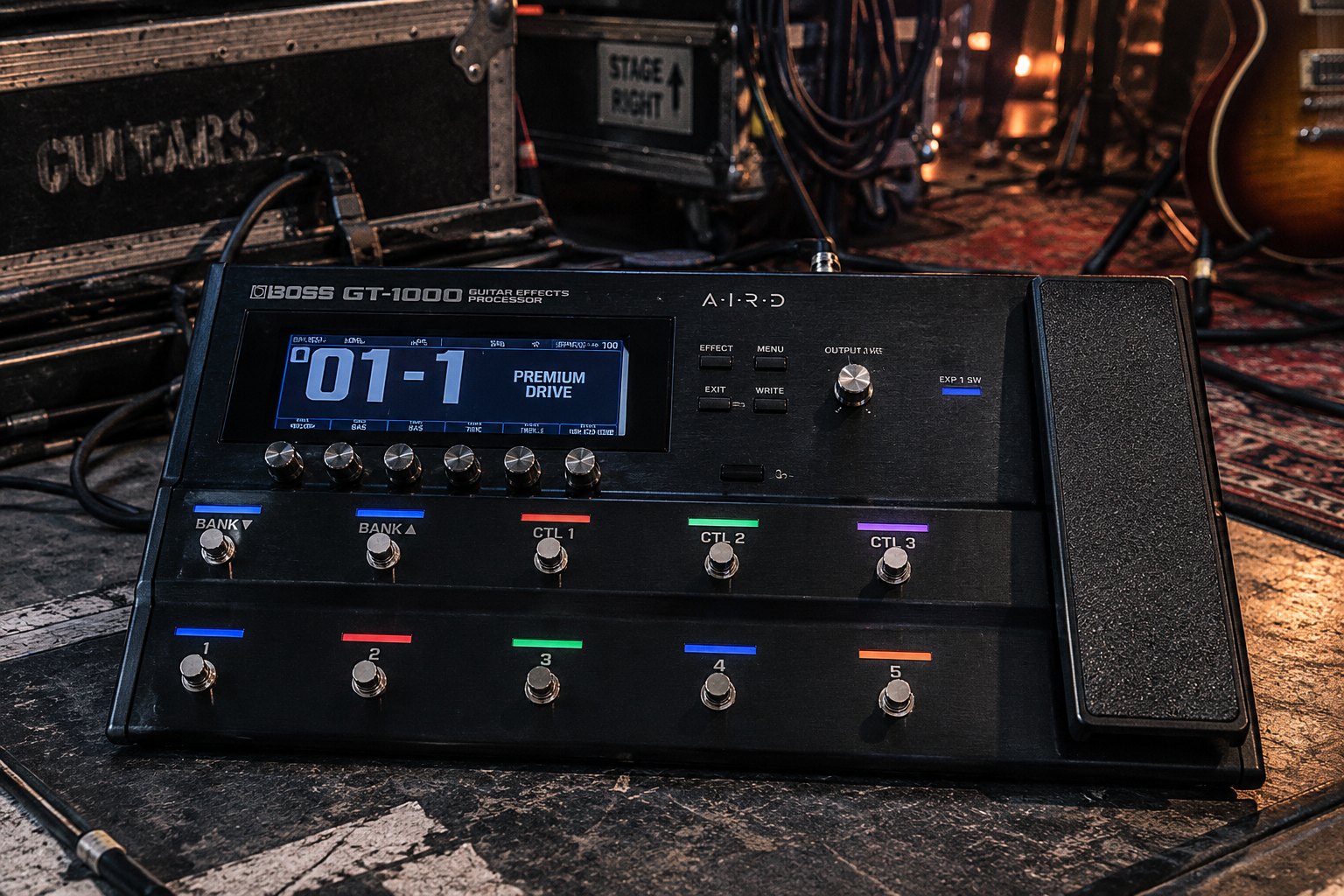
BOSS GT-1000 Guitar Effects Processor. AI-generated reference illustration, not a photograph.
The Boss GT-1000 is Boss's flagship multi-effects processor with AIRD technology, 96 kHz processing, 250 presets, and 16 IR slots. Here's the complete guide.
There is a category of guitarist who has been burned before. They bought a multi-effects unit in the early 2000s, dragged it to a rehearsal, and spent the night chasing a tone that kept slipping through their fingers — plastic-sounding amp models, reverbs that bloomed a quarter-second too late, a general sense that the unit was approximating rather than delivering. They swore off multi-effects, went back to an amp and a pedalboard, and never looked back.
The Boss GT-1000, announced at Winter NAMM 2018, is a direct argument against that prejudice. Built on Boss’s AIRD (Augmented Impulse Response Dynamics) platform — the same technology family behind the Katana and Blues Cube amplifiers — it runs at 96 kHz with 32-bit floating-point processing and produces sounds that have convinced professional guitarists to leave their amp rigs at home. It is not the cheapest way to get your guitar signal from floor to FOH. It is, however, one of the more rigorous engineering answers the industry has yet produced to the question of what a multi-effects flagship should be.
This is the guide for players who want to understand exactly what the GT-1000 does, how its approach differs from the competition, and whether it belongs in your rig.
Boss and the Multi-Effects Story
Roland Corporation established the Boss brand in 1973 specifically to produce compact, rugged effects for working musicians. The ME series of guitar multi-effects arrived in the late 1980s, and the GT (Guitar Technology) line launched in 1996 with the GT-3, positioning itself as Boss’s premium multi-effects platform. The GT series has iterated steadily ever since — GT-5, GT-6, GT-8, GT-10, GT-100 — each generation adding processing headroom and extending the effects palette.
The GT-1000 is a different kind of step. Where earlier GT units improved within a known framework, the GT-1000 introduced AIRD technology, representing a genuine architectural shift rather than an incremental upgrade. Boss had spent years developing its Tube Logic concept — a modeling approach focused on accurately reproducing the dynamic interaction between preamp, power section, and speaker rather than just capturing static frequency responses — and AIRD extends that concept into a multi-effects platform capable of running speaker simulation, effects, and routing simultaneously at 96 kHz. The result is a unit that shares lineage with the GT-6 but operates in fundamentally different territory.
The GT-1000CORE followed in 2019, offering the same processing engine in a compact desktop/pedalboard format designed for players who want the GT-1000’s brains embedded in a more traditional pedalboard layout. Both units share the same AIRD preamps, the same 96 kHz engine, the same effects library, and the same preset architecture.
What AIRD Actually Means
Every major modeler on the market takes a different engineering approach to the problem of making a digital system sound and feel like an analog circuit under varying playing conditions.
Kemper’s Profiler captures the measured response of a specific physical amp-and-cab combination, storing a snapshot that can be recalled with extraordinary fidelity but that is static by design — the profile is what it is. The Kemper Profiler excels when you need an exact copy of a known sound; it is less suited to players who want to experiment with fictional amp-and-cab combinations that have never existed physically.
Fractal Audio’s Cygnus X2 engine (used in the Axe-FX III Mark II) takes the opposite approach: component-level circuit simulation, modelling each transistor and transformer mathematically so that knob changes on a modelled Plexi respond the way knob changes on a real Plexi respond. This produces high accuracy and genuine interactive response at the cost of significant DSP overhead.
Neural DSP’s neural capture approach (seen in the Quad Cortex and the Nano Cortex) uses trained neural networks to approximate amp behaviour, achieving impressive fidelity with efficient DSP usage but inheriting the same static-snapshot limitation as traditional profiling: a capture of an amp at a given setting is not a model of that amp at all settings.
AIRD occupies different ground. Boss describes it as an evolution of the Tube Logic approach: rather than capturing or simulating specific circuits, AIRD models the dynamic response characteristics of amplifier behaviour — the way a preamp stage breaks up under harder picking, the interaction between power-section compression and sustain, the high-frequency rolloff of a speaker under load — and applies those dynamic characteristics through a processing chain that also benefits from impulse response measurement for speaker simulation. The result is not a model of a specific amp but a system designed to respond to the player’s dynamics the way amplifiers in general respond to dynamics. Whether you find this more or less convincing than Fractal’s component-level approach depends partly on your playing style; players with a highly dynamic touch tend to respond well to AIRD.
The practical implication is that the GT-1000’s twenty AIRD preamp types are not meant to be exact clones of specific amplifiers. They are voiced to cover the tonal territory those amplifiers occupy, with dynamic response that holds up under a band mix, and they are designed to behave consistently whether you’re playing into a PA, a studio interface, a guitar power amp and cab, or a combination of these.
Specifications
Verified Players: Who Actually Uses a GT-1000
The GT-1000 lacks a single dominant artist association: it is a unit that earned its reputation through adoption by working players across a wide range of styles rather than through a single high-profile endorsement. What verified primary sources do show is a consistent pattern: guitarists who prioritise reliability, portability, and consistent direct-to-FOH tone.
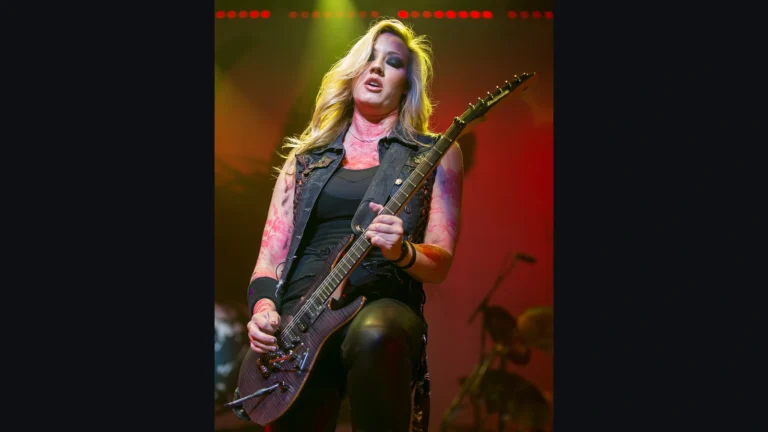
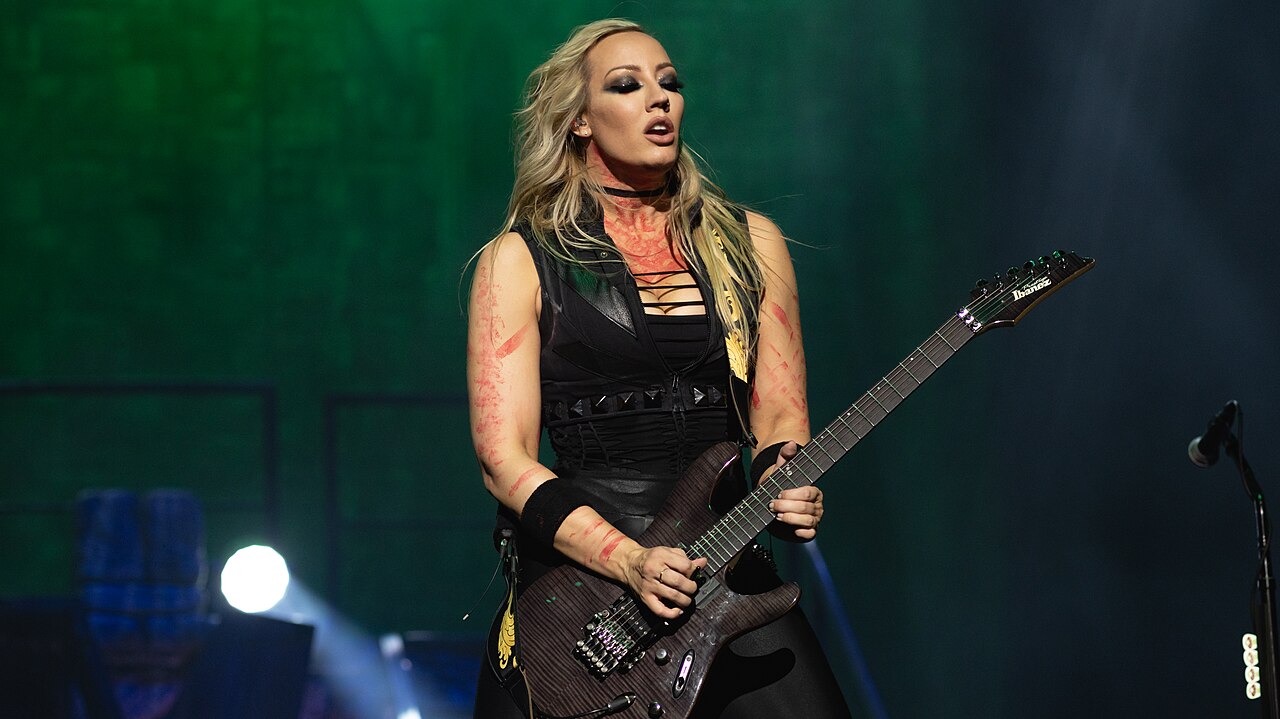
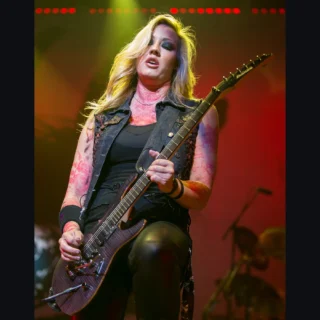
Nita Strauss is the highest-profile confirmed GT-1000 user with a direct-to-her-own-words source. In a 2022 Premier Guitar interview, Strauss stated: “Live, for my solo band, I use a BOSS GT-1000 pedalboard.” A Premier Guitar Rig Rundown video shows her complete rig: the GT-1000 running direct to front of house, four core patches covering clean, rhythm, lead, and effects-lead. The contrast with her Alice Cooper gig — where the stage is packed with a full amp and cabinet rig — is instructive: on a touring schedule where stage real estate and backline logistics vary night to night, the GT-1000 is what she trusts for her own name shows. Her full gear profile documents the wider rig context. The GT-1000 in her case is not a budget compromise; it is a deliberate professional choice made by a player who has access to any gear she wants.
Ola Englund, guitarist and YouTube gear commentator known for his work with Feared and The Haunted, appears on Equipboard as a GT-1000 user and has demonstrated the unit across several video contexts. His usage is consistently documented across multiple sources.
Andy James, British session and solo guitarist known for technically demanding instrumental work, is listed on Equipboard as a GT-1000 user. His application — high-gain precision in a compact rig — represents the unit’s strong suit for technically-oriented players.
Tyler Larson (Music Is Win), who appeared in the resonator coverage purchasing a Gretsch Boxcar with Guitar Center store credit, also appears on Equipboard as a GT-1000 user. His approach is characteristically pragmatic: he documents his own gear choices on video with specificity.
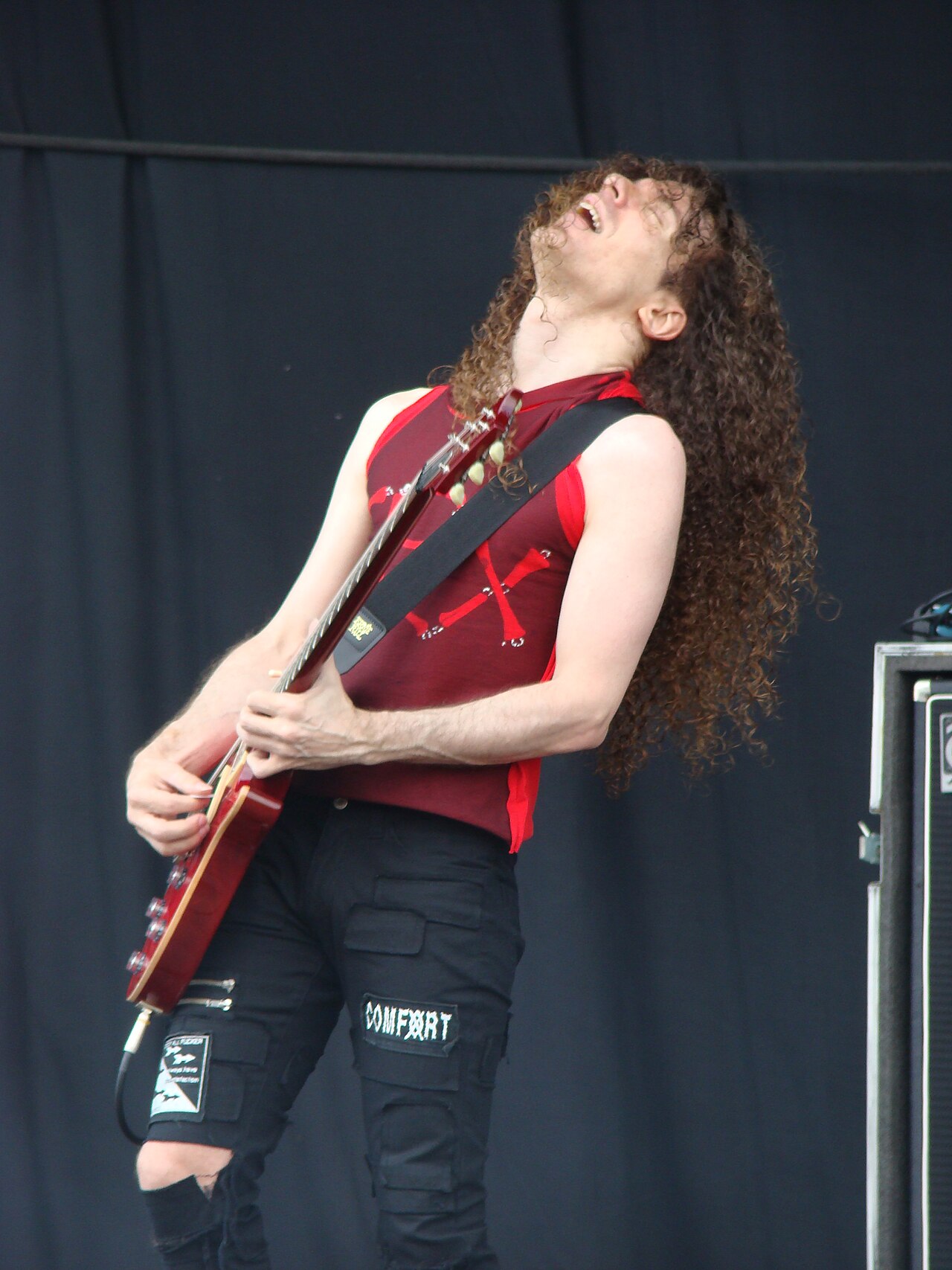
Steve Lukather and Marty Friedman both contributed artist patch collections to the BOSS Tone Central platform — downloadable live sets designed for the GT-1000 — and are listed on Boss’s own promotional materials in this context. An honest read of the evidence is that both contributed patches, not that either confirmed the GT-1000 as their touring rig. Lukather’s gear history is centred on his signature Yamaha Pacifica amplification chain; Friedman’s touring rig has been documented across several Rig Rundowns without a GT-1000 appearing. Treat Tone Central contributions as product endorsements with limited scope: they demonstrate that the platform is credible enough for working players to loan their name to, not that it replaced their live rig.
The BOSS Tone Central Ecosystem
One aspect of the GT-1000 that distinguishes it from most of its competitors is the depth of the free content ecosystem around it. BOSS Tone Central provides downloadable live sets (collections of presets) at no cost, updated over time, covering an enormous range of styles. The platform includes artist-curated collections from players like Lukather and Friedman, genre-organised collections (Rock Anthology, Jazz Essentials, Metal Masters), and extra collections that add to the factory preset library.
The workflow is straightforward: download a live set via the BOSS Tone Studio app (iOS, Android, or desktop, with Bluetooth or USB-B connectivity), load it to the unit, and audition. This matters particularly for new GT-1000 owners because the factory presets — while competent — are optimized to demo the unit through headphones or with a flat response system, not necessarily to translate to a PA or studio context. The Tone Central collections often include a broader range of starting points that are immediately usable in a band mix without extensive tweaking.
Tone Studio also provides the primary editing interface for deep parameter work. The GT-1000’s onboard controls handle patch selection, expression pedal assignment, and real-time parameter tweaking efficiently, but building patches from scratch — routing effects blocks, assigning assignable controllers, setting up parallel processing chains — is substantially easier in the software editor than navigating the hardware interface alone.
Signal Routing: Where the GT-1000 Gets Interesting
The GT-1000 supports parallel processing chains, which means you can split your signal into two paths, process them independently (different amp models, different effects chains), and recombine them at the output. This is a workflow borrowed from boutique pedalboard design — where players route clean signal to one amp and dirt signal to another — and it opens up sonic possibilities that a strictly serial processor cannot match.
The sixteen IR slots allow user-loaded impulse responses for speaker simulation. While sixteen slots is a smaller library than some competitors offer, it covers the practical range that most players use: a handful of trusted cab sounds derived from third-party IR collections, loaded once and used across many presets. The GT-1000 supports standard WAV format impulse responses up to 500ms, imported via USB and BOSS Tone Studio.
The I/O configuration handles several use cases simultaneously. The main 1/4″ outputs feed a PA or studio interface for direct recording. The XLR sub outputs provide a second stereo pair, useful for in-ear monitor feeds or secondary recording paths. The send and return jacks support a four-cable method connection, inserting the GT-1000’s effects blocks into an existing amplifier’s effects loop while using the amplifier’s own preamp for gain structure — the approach preferred by players who want the GT-1000’s effects library without using its amp models. MIDI DIN connectivity integrates with external controllers or racks.
Five Tone Recipes
1. Direct-to-PA Modern Metal (Nita Strauss Approach)
Select a high-gain AIRD preamp (the Extreme model covers Rectifier-adjacent territory). Gate threshold around -20dB with attack 0ms, release 250ms. Noise suppressor in the output chain. Bass around noon, mid slightly scooped to 40%, treble 60–65%. Assign the built-in expression pedal to output level for on-the-fly volume swells. XLR outputs to FOH, no cab in the room. This is the zero-backline approach: what comes out of the PA is what the audience hears, and the consistency is remarkable night to night because there’s no microphone placement variable.
2. Lukather-Style Clean Into Light Crunch
Start with one of the cleaner AIRD preamp models (the TWIN-based voicing). Add Boss’s Transparent OD in the dirt chain at moderate gain — enough to push the preamp into gentle clipping when picking hard, clean when playing softly. Chorus at low depth, short delay (around 370ms, one repeat). The dynamics of the AIRD engine reward this approach: single-note lines pick up edge from the OD, chords stay clear. A Tone Central Lukather patch is a reasonable starting point; tweak the drive level down from the preset to taste.
3. Andy James High-Gain Precision
Maximum gain AIRD preamp. Tight noise gate (threshold -30dB). Parametric EQ boost at 3kHz (+3dB, medium Q) for note articulation. Stereo delay at modest mix (15–20%) with dotted eighth and quarter note times synced to tempo. Cabinet sim via a user-loaded IR from a 4×12 Greenback or Vintage 30 cab. The clarity test: if single notes in the 12th-14th fret range are blurring together, pull the gain back 10–15% — the AIRD preamps have enough saturation that maximum gain is often the wrong choice for articulate leads.
4. Ambient Clean With Reverb Architecture
The GT-1000’s reverb algorithms are a strength: the Hall and Plate models in particular sound convincingly large without losing definition. Clean AIRD preamp, pre-delay on reverb set to 30–40ms (puts the direct signal slightly ahead of the wash), decay at 3–4 seconds. Add a volume swell effect or assign the expression pedal to blend the reverb return. This produces the Radiohead / Sigur Rós adjacent clean texture that a Fender with a reverb tank reaches for but cannot hold as precisely — you can modulate decay and pre-delay in real time on the GT-1000, which a spring tank cannot.
5. Marty Friedman Exotic Lead
Friedman’s Tone Central patches lean on his characteristic approach: high gain with specific mid-presence that makes melodic single-note lines cut. Select a high-gain AIRD type, pull the low mid back to reduce muddiness, boost the presence control moderately. Add a moderate pitch detune effect at low depth for string richness without obvious chorus warble. The key is the pick attack response: Friedman’s phrasing puts heavy emphasis on the initial transient of each note, and the AIRD engine’s dynamic response holds that transient distinctly. If the notes are blurring, add a fast-attack compressor before the preamp stage at 2:1 ratio to tighten the pick response.
Comparisons
Boss GT-1000 vs. Line 6 Helix Floor
The Line 6 Helix Floor is the most direct competitor and arguably the most popular floor processor in its class. The Helix uses HX Modeling — Line 6’s proprietary circuit modeling approach that does attempt to simulate specific named amplifiers rather than AIRD’s more generic dynamic-response approach. For players who want a specific Dumble, a specific Matchless, a specific Vox AC30 model they can verify against known recordings, the Helix’s named amp list provides a reference point the GT-1000 does not. The Helix also offers a deeper effects routing architecture (up to 32 effect blocks vs. the GT-1000’s 13) and a more extensive third-party IR loading system (up to 128 IR slots in the 128-preset version).
The GT-1000’s advantages: lower latency at 96 kHz vs. the Helix’s 48 kHz operation, Bluetooth wireless editing, and a generally more compact footprint for comparable functionality. At street price, the Helix typically comes in higher than the GT-1000. Pick the Helix if the named amp library matters; the GT-1000 if latency and dynamic response are the priority.
Boss GT-1000 vs. Neural DSP Quad Cortex
The Neural DSP Quad Cortex is the closest technical challenger. Both operate at 96 kHz; both support IR loading; both offer wireless editing. The QC adds on-device capture capability (profiling your own amp to the unit) and a larger touchscreen-based editing interface. It runs at a higher price point ($1,649 MSRP at launch vs. the GT-1000’s $999.99).
The GT-1000 wins on value and on the depth of the Tone Central free content library. The QC wins on capture capability and on the breadth of the Cortex Cloud community library. If you have a specific beloved amp you want to profile and carry everywhere, the QC is the correct device. If you don’t own amp-of-your-dreams and want a feature-complete floor processor at a lower cost of entry, the GT-1000 is the harder value to argue against.
Boss GT-1000 vs. Kemper Profiler Head
The Kemper Profiler is a different kind of tool. It excels at capturing and reproducing specific amp-and-cab combinations with high fidelity; it is the right device for a player who has a beloved studio amp and wants to take that exact sound on the road. The Kemper’s effects section is competent but not the strength of the platform.
The GT-1000 is the right choice for players who don’t need to start from a captured amp — who want to build sounds from AIRD-modeled preamps and a comprehensive effects library without the capture workflow. At list price, the Kemper is significantly more expensive. The GT-1000 is also physically more practical as a standalone floor unit; the Kemper head requires a separate floor controller for live use.
Boss GT-1000 vs. Fractal Audio Axe-FX III Mark II
The Axe-FX III Mark II represents the engineering peak of the amp-modeling sector: Fractal’s Cygnus X2 component-level simulation produces responses that veteran Fractal users describe as the closest thing to a real amp in the room. The Axe-FX III is also a rack preamp requiring a separate floor controller, runs at nearly $2,500 MSRP, and has a preset-building workflow with a steep learning curve.

The GT-1000 costs roughly one-third as much, comes as a self-contained floor unit, and is faster to get productive results from. The Axe-FX III is the choice for players for whom absolute accuracy is non-negotiable and who have the time and budget to commit to the platform. For the majority of working players who need great tone efficiently, the GT-1000 closes the gap considerably while asking far less in return.
Boss GT-1000 vs. a Fender Deluxe Reverb
This comparison is worth making explicit because it is the one many players actually wrestle with. A Fender Deluxe Reverb costs similar money, sounds extraordinary, has a reverb and tremolo that remain reference-standard after sixty years, and requires a microphone, a stage volume, and a room with tolerant neighbours. The GT-1000 goes direct, sounds consistent at zero stage volume, runs on Bluetooth to your phone, and fits in a gig bag with room left for cables.
These are not substitutes. A Deluxe Reverb through a good ribbon mic in a good room produces a specific sound that no processor fully replicates, and the feeling of playing through a real spring reverb tank is its own reward. But “sounds better when optimally miked in a controlled environment” is not always the relevant metric. The GT-1000 is the professional choice when the metric is “sounds consistently excellent under every condition from a bedroom to a stadium PA.”
Buying Guide
The Boss GT-1000 launched at $999.99 MSRP in 2018 and remains in production. Current street new pricing sits around $799–$899, reflecting steady but not dramatic price reductions over the product’s lifecycle. Used GT-1000 units sell in the $450–$600 range on Reverb and eBay, representing strong value for what is still a current-generation platform with ongoing firmware support.
The GT-1000CORE, the compact variant, launched in 2019 and typically sells new at $599–$699, used at $350–$500. The CORE lacks the built-in expression pedal and Bluetooth but is otherwise sonically identical. Players who intend to integrate the unit into a pedalboard and use external expression pedals find the CORE preferable for its smaller footprint; players who want a standalone floor processor in one box favour the full GT-1000.
There is no meaningful difference between units by production year for practical purposes — Boss has delivered firmware updates that expanded the effects library and refined AIRD behaviour, and all units update via the same USB/Tone Studio process. A 2018 unit with current firmware runs the same feature set as a 2024 unit. Inspect used units for pedal mechanism wear (the built-in expression pedal is a mechanical component that can develop play over heavy gigging) and check that Bluetooth pairs reliably via the Tone Studio app.
Ownership Notes
The GT-1000’s learning curve breaks into two phases. The hardware-only phase is relatively accessible: patch recall, footswitch assignments, and real-time parameter control are manageable without opening the app. The depth phase — building parallel signal chains, optimising IR placement, setting up MIDI control maps — rewards time spent in BOSS Tone Studio. The manual is thorough but dense; Boss’s official YouTube tutorials cover the key workflows more efficiently than a cold read of the documentation.
Output routing requires deliberate setup and is the most common source of confusion for new owners. The GT-1000 has separate output paths that need to be configured for your use case: recording direct (USB audio interface mode), live direct to PA (XLR sub outputs or main 1/4″ into a DI), four-cable method with an amp, or FRFR speaker monitoring. Each scenario uses different output types and cab simulation settings. Boss’s Tone Studio includes output routing templates that cover the common scenarios, but understanding which template applies to your setup is the first thing to sort before a live gig.
The sixteen IR slots are sufficient for most players but require curation. Load your most-used cab sounds (likely two to four IRs covering your core clean and gain sounds) and build presets around them. Trying to fill all sixteen slots with variety creates a management overhead that does not translate to better tone. Third-party IR producers like Celestion, Two Notes, and OwnHammer all support the GT-1000’s standard WAV format.
Bluetooth editing is a genuine quality-of-life feature for live setup: you can dial in preset parameters from the front of the stage while your guitar is plugged in, adjust output levels from FOH, and build patches without crouching over the unit. The connection range is limited and can be interrupted in RF-dense live venues; bring a USB cable as a backup for session work.
Frequently Asked Questions
What is AIRD technology and how does it differ from other modeling approaches?
AIRD (Augmented Impulse Response Dynamics) models the dynamic response characteristics of amplifier behaviour rather than capturing specific amp circuits or profiling existing amp-and-cab combinations. It combines impulse response measurement for speaker simulation with dynamic processing that responds to the player’s pick attack and dynamics. The result is not a model of a specific named amp but a system designed to respond naturally across different playing intensities. Compare this to Kemper’s static snapshot profiling, Fractal’s component-level circuit simulation, and Neural DSP’s neural network capture — AIRD occupies different ground from all three.
How many effects can I run simultaneously on the GT-1000?
Up to thirteen effects blocks can be active simultaneously in a single preset, arranged in a user-configurable signal chain. Parallel routing allows two independent chains to run simultaneously and combine at the output. This is slightly fewer than the Line 6 Helix (up to 32 blocks in some configurations) but covers the practical range for most players.
Can I use the GT-1000 with a traditional amp?
Yes, and the four-cable method is the recommended approach. Connect your guitar to the GT-1000 input, the GT-1000 send output to your amp’s input, your amp’s effects send to the GT-1000 return input, and the GT-1000 main output to your amp’s effects return. This routes your amp’s preamp through the GT-1000’s effects chain — compressors, drives, and wah before the amp, modulation, delay, and reverb in the loop. In this configuration, disable the AIRD cab simulation to avoid double-amping the signal through both the GT-1000’s models and your physical amp.
What is the difference between the GT-1000 and the GT-1000CORE?
Same DSP engine, same AIRD preamps, same 96 kHz processing, same effects library, same IR loading, same preset count. The CORE omits the built-in expression pedal, reduces the number of onboard footswitches, removes Bluetooth, and reduces the overall physical footprint significantly. The CORE is designed for pedalboard integration alongside external controllers; the full GT-1000 is a standalone floor processor. The CORE is typically priced $200–$300 lower than the GT-1000.
Can I load third-party impulse responses?
Yes, the GT-1000 supports up to sixteen user-loaded IRs in standard WAV format, imported via BOSS Tone Studio and a USB cable. Third-party IR collections from Celestion, Two Notes, OwnHammer, and others are widely compatible. Sixteen slots is a smaller library than some competitors but sufficient for most practical workflows if you curate the collection to your core sounds.
Does the GT-1000 work as a USB audio interface?
Yes. When connected to a computer via USB-B, the GT-1000 presents as a 2-in/2-out audio interface supporting 24-bit/96 kHz recording. This allows direct recording into a DAW with the full processed signal, or recording a dry signal alongside the processed signal for re-amping. It does not replace a dedicated interface for multi-track recording but is fully adequate for guitar-focused direct recording workflows.
Is the GT-1000 still worth buying in 2026 given newer competitors?
Yes. The unit continues to receive firmware updates from Boss, the Tone Central content library remains active, and the core AIRD engine has not been displaced by a successor product that outperforms it at the same price point. Used GT-1000 units at $450–$600 represent the strongest value in the floor-processor category for players who do not need on-device capture capability. If capture is a priority, consider the Neural DSP Quad Cortex instead. If you want the deepest amp-modeling accuracy available and have the budget, the Fractal Axe-FX III remains the benchmark. The GT-1000 sits between these extremes in both capability and cost, and it does so with Boss’s characteristically bulletproof build quality.
How steep is the learning curve?
Moderate. You can be making good sounds through a PA within an hour of unboxing. Building optimised presets from scratch, understanding the parallel routing architecture, and configuring MIDI control maps takes several sessions with the BOSS Tone Studio software. The initial confusion point for most players is output routing: determining whether to use the XLR sub outs, the 1/4″ main outs, or both, and where cab simulation should be enabled or disabled relative to your downstream signal path. Solve that once for your specific use case and the rest of the unit becomes progressively more intuitive.
Image credits
- Boss OD-2 Turbo Overdrive and OD-2R pedals side by side: Kuriosatempel, Wikimedia Commons, CC BY-SA 4.0.
- Marty Friedman: Shadowgate, Wikimedia Commons, CC BY 2.0.
- Nita Strauss: Raph_PH, Wikimedia Commons, CC BY 2.0.
- Top image: GuitarGangsters AI-generated reference illustration, not a photograph.
Latest News
Related
On This Day
Monday 9 November
From this week: