Steve Lukather Guitars & Gear: The Complete Guide to Toto’s Session Legend’s Rig
Steve Lukather's guitars, amps, and effects — the complete guide. Ernie Ball Music Man Luke, vintage Marshall heads, Bogner cabs, EMG SL20, over 1500 sessions, Thriller, and how to nail that Toto guitar tone.
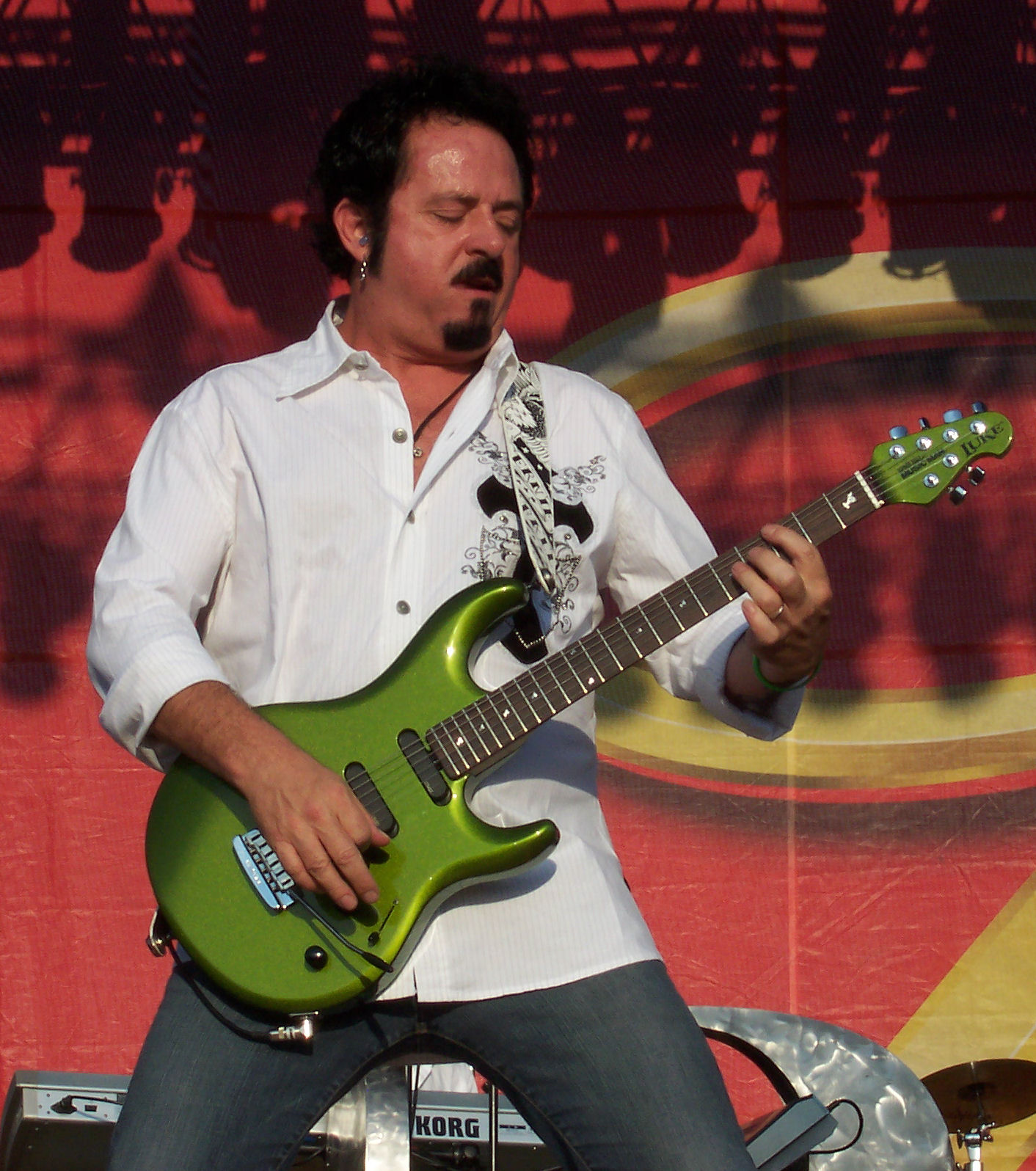
Photo by Matt Becker, licensed under CC BY-SA 3.0 (https://commons.wikimedia.org/wiki/File:Image-SteveLukather.jpg)
Guinness has nominated him as the most recorded guitarist in history. Over 1,500 albums. Michael Jackson’s Thriller. Paul McCartney. Elton John. Boz Scaggs. Olivia Newton-John. Earth, Wind & Fire. Lionel Richie. Richard Marx. Paul Simon. Don Henley. Diana Ross. Joni Mitchell. These are not background appearances; these are guitar tracks on some of the most commercially successful records in the history of the music industry. The guitar on “Beat It.” The guitar on “Human Nature.” The guitar on virtually anything that needed a specific kind of sophisticated, emotionally responsive, technically impeccable rock guitar in Los Angeles between 1975 and 1995. Steve Lukather was the guitarist who could do that, and he did it consistently enough that Guinness took notice. He was also, simultaneously, a founding member of Toto — a band whose Toto IV album won six Grammy Awards in 1983, including Album of the Year. The most recorded guitarist in history who also has a Grammy for Album of the Year. This is the resume.
Steven Lee “Luke” Lukather was born on October 21, 1957, in the San Fernando Valley, California. He began playing guitar at age seven when his father bought him a Kay acoustic guitar and a copy of Meet the Beatles. He was in session studios by his late teens. He co-founded Toto with David Paich, Jeff Porcaro, Steve Porcaro, and other high school friends in the late 1970s. He was named by Gibson Guitar Corporation as one of the Top 10 Session Guitarists of All Time. The Musicians Hall of Fame inducted him in 2009. Guitar Player magazine gave him a Lifetime Achievement Award in 2015. He has released nine solo albums, most recently Bridges in 2023. He is currently a member of Ringo Starr’s All-Starr Band. He has tinnitus from decades of studio and stage work. And his guitar work — the specific combination of jazz harmonic sophistication, blues emotional expressiveness, and rock technical facility that made him the first call for everyone from Michael Jackson to Joni Mitchell — remains one of the most influential tonal and stylistic contributions to commercial music of the last fifty years.
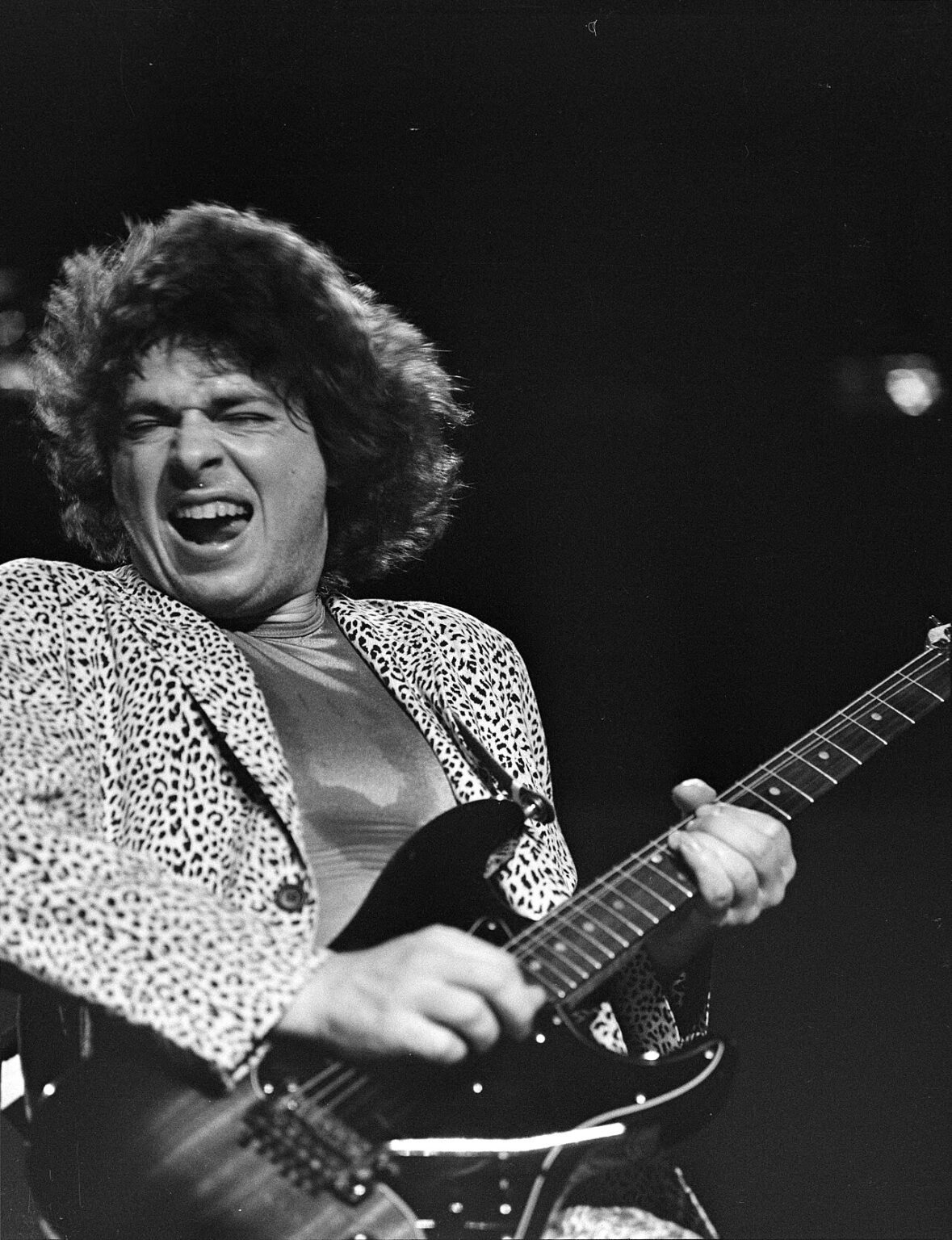
His own description of his early session approach captures the specific value he brought: “I was the guy who could get the authentic burned sound without a jazz guy using a fuzz tone, bending flat and shit. I was a teenager jumping off my ass and being a rabble-rouser, playing with all these giant heroes of mine.” This is the specific niche he occupied: neither the jazz session guitarist (technically precise but lacking rock energy) nor the hard rock guitarist (energetic but lacking harmonic sophistication), but the guitarist who could do both simultaneously — jazz harmony with rock physicality, technical precision with emotional directness. The Los Angeles session world of the 1970s and 1980s paid very well for this specific combination. And every album he played on, Lukather delivered it.
Background: From the San Fernando Valley to the Most Recorded Guitarist in History
The San Fernando Valley in the 1970s was a specific and productive environment for musicians. The Los Angeles studio system — the complex of recording studios, session musicians, music publishers, and record labels that made Hollywood the center of American popular music production — drew talent from across the country but concentrated it in the Valley and the surrounding areas. The musicians who grew up in that environment absorbed, from early childhood, a specific understanding of what professional music-making meant: the session call, the sight-reading requirement, the ability to play what the producer needed rather than what personal preference suggested. Lukather absorbed this environment from his earliest musical years.
His musical formation was specifically LA: the studio musicians he admired were people he could potentially meet, the sessions he dreamed of participating in were the ones happening in the studios around him, and the specific harmonic sophistication of the Los Angeles session world — the jazz chords under the pop melodies, the sophisticated rhythm section work, the world-class playing on chart-topping commercial records — was the ambient music of his adolescence. When Guitar Player describes him as thinking of the guitar in “chordal clusters” — a jazz-influenced approach to chord voicing that treats the guitar as a harmony instrument as much as a melody instrument — they are describing someone who grew up in the specific musical environment where jazz harmony was applied to commercial pop production as a matter of professional standard.
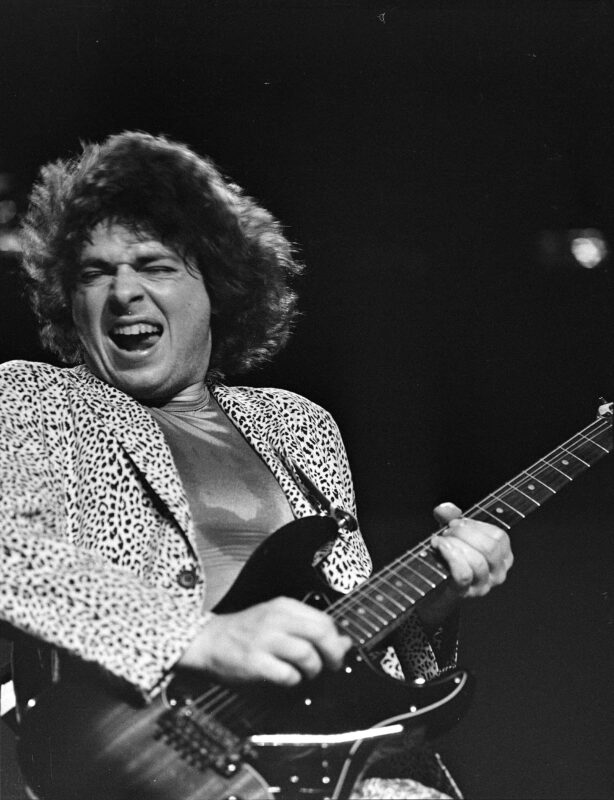
The Toto founding — with high school friends David Paich, Jeff Porcaro, and Steve Porcaro in the late 1970s — gave the session musicians a band context for their collective abilities. Toto was essentially a studio musician’s band: technically exceptional, harmonically sophisticated, sonically polished, and commercially oriented in ways that reflected the session world’s values. The debut album’s “Hold the Line” established the commercial template; Toto IV’s “Rosanna” and “Africa” delivered the Grammy results. Six Grammy Awards in 1983, including Album of the Year — at the precise moment when Lukather was also the most in-demand session guitarist in Los Angeles. The Toto work and the session work were not separate identities; they were the same musician applying the same skills in different contexts.
The “Rosanna” shuffle — the specific drum pattern that Jeff Porcaro played on Toto’s 1982 hit, a combination of the Purdie shuffle and the Bo Diddley beat that has become one of the most studied drum patterns in music education — is the most celebrated element of Toto IV in the music theory world. Lukather’s guitar work on “Rosanna” is less discussed but equally impressive: the specific chord voicings, the way the guitar parts complement the keyboard textures and the vocal performance, the specific rhythm guitar approach that makes the song feel simultaneously simple and sophisticated. The guitar work on “Rosanna” is not the most prominent element of the recording, but it is exactly right — and in the session musician’s aesthetic, “exactly right” is the highest possible achievement.
The Michael Jackson Thriller sessions — particularly the guitar on “Beat It” — represent the single most commercially impactful session work of his career. Thriller is the best-selling album in history (estimated 70 million copies sold), and Lukather’s guitar is present throughout multiple tracks. The “Beat It” guitar solo is one of the most famous in pop music — though it is specifically Eddie Van Halen who plays the guitar solo section (Lukather played the rhythm parts and the opening riff). Both Lukather and Van Halen contributed guitar to the album; both contributions are historically significant. This specific collaboration — the session player and the rock guitar hero, both contributing to the best-selling album ever made — documents Lukather’s specific position at the intersection of every major music industry tradition of his era.
The Rig: Steve Lukather’s Guitars, Amps, and Effects
Guitars
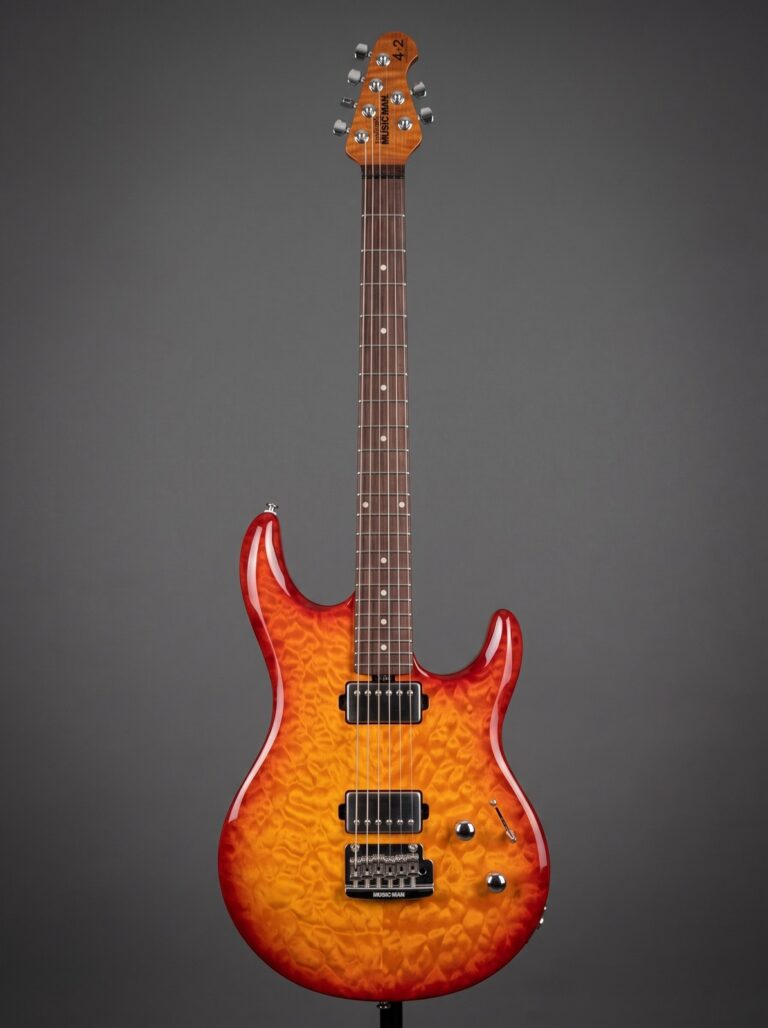
At the heart of his setup is the Ernie Ball Music Man Luke signature model guitar, which he designed in collaboration with the company. This versatile instrument features an HSS pickup configuration, a smooth-playing roasted maple neck, and a floating tremolo system, providing Lukather with the perfect foundation for his expressive playing. The Music Man Luke has been Lukather’s primary guitar for decades — one of the longer and more productive artist-manufacturer relationships in rock guitar history. The HSS configuration (humbucker-single-single) provides the bridge humbucker’s warmth and sustain for rock leads alongside the middle and neck single-coil’s clarity for clean passages. The roasted maple neck’s specific playing feel — the heat-treated maple’s enhanced stability and slightly different feel from untreated maple — suits Lukather’s specific preference for a fast, comfortable neck. EMG builds his custom SL20 active pickup set specifically for the Luke models.
The Luke’s floating tremolo system — a music-man-specific bridge design that provides tremolo arm capability while maintaining superior tuning stability compared to vintage-style floating bridges — suits Lukather’s extensive use of the tremolo arm for both subtle vibrato and more dramatic pitch effects in solos and melodic passages. His Richie Kotzen-influenced blues-rock approach to lead playing benefits from the tremolo’s expressiveness, and the locking system’s tuning stability allows him to use it aggressively without the tuning consequences that plagued older floating tremolo designs.
The Luke model has evolved through multiple generations — the Luke, Luke 2, and Luke 3 — each incorporating refinements based on Lukather’s touring and recording experience. The Luke 3 features the HSS configuration with the Music Man VTC (Vintage Tone Control) that rolls off high-frequency content for the specific round, slightly darker tone that suits specific musical contexts, alongside the standard tone controls. His roasted maple neck with its specific carve continues across generations, maintaining the playing feel that his technique has adapted to across decades of use.
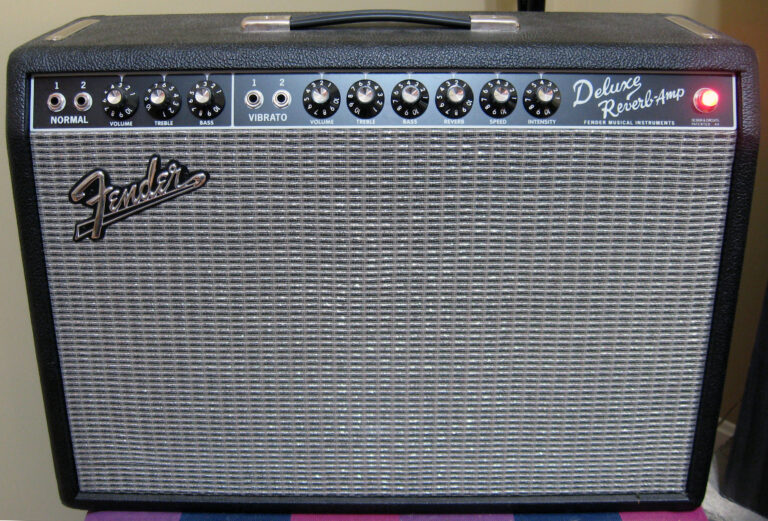
In the early session career, Lukather showed up with a Marshall and a ’59 Les Paul, or a modded Fender Deluxe Reverb — the instruments of the rock session musician before the Music Man Luke became his signature instrument. The 1959 Les Paul’s specific character — the PAF humbuckers, the maple cap, the mahogany body, the specific weight and resonance of the late-1950s construction — provided the warm, complex tone that early Lukather recordings feature. The Paul Rivera-modified Fender Deluxe Reverb (hot-rodded for higher gain capability) was specifically mentioned in a Tape Op interview as a particularly special amp from his early days. These vintage instruments were the tools of the session world; the Music Man Luke replaced them as his primary instrument when the signature relationship developed.
As a player who has made over 1,500 album appearances, Lukather has used hundreds of different instruments in recording contexts — the specific instrument chosen for each session’s requirements. His documented use includes Stratocasters, Telecasters, Gibson SGs, and various semi-hollow guitars alongside the Les Pauls and Music Man Lukes that have been his primary instruments. The session musician’s relationship with instruments is fundamentally different from the artist-performer’s: the session guitarist uses whatever produces the right sound for the specific musical context, without the visual identity or branding considerations that influence performing musicians’ instrument choices.
Amps
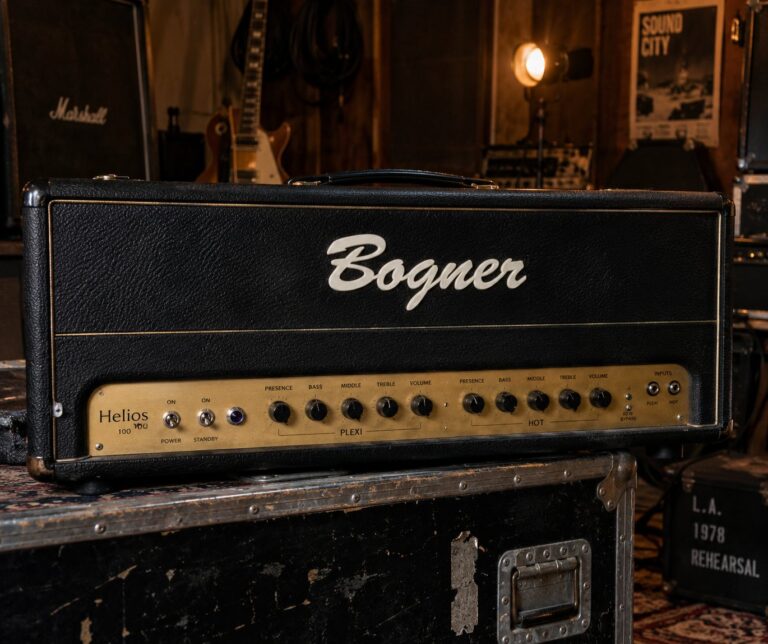
He runs vintage Marshall heads paired with Bogner cabinets. The vintage Marshall head — whether JMP 50-watt, 100-watt, or the Super Lead — provides the specific British preamp saturation that characterized Lukather’s rock session work from the 1970s onward. The Tape Op interview confirms: “I started out showing up with a Marshall and a ’59 Les Paul… I was the guy who could get the authentic burned sound.” The vintage Marshall’s natural preamp saturation — driving the input stage into harmonic richness without the harsh, compressed character of later high-gain designs — was the specific sound that made his session work distinctive. Engineers say his rhythm parts sit perfectly in a mix — the vintage Marshall’s mid-forward character providing cut and presence without the booming low-end or the piercing top-end of less well-voiced amplifiers.
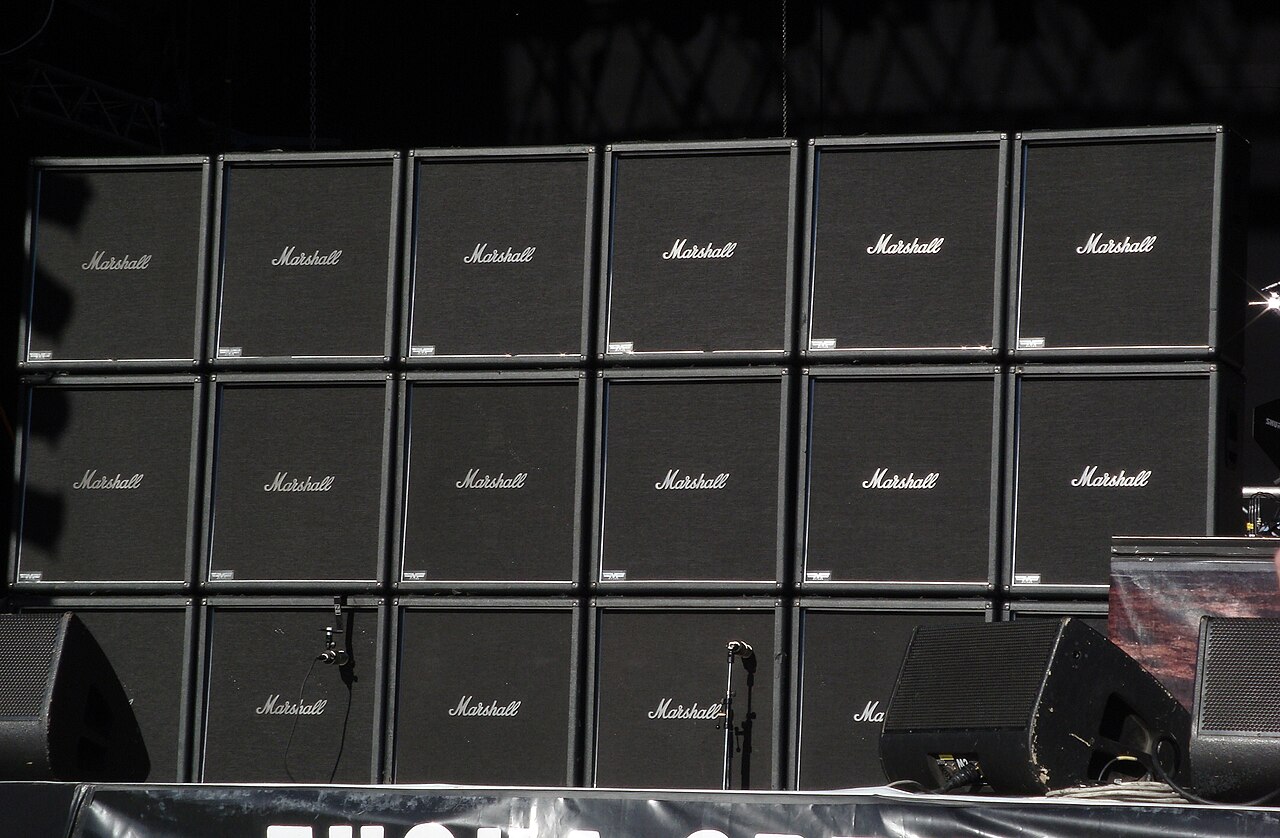
Running the vintage Marshall heads into Bogner cabinets (rather than the standard Marshall 4×12) gives Lukather’s live sound the specific tonal character of Bogner’s speaker loading and cabinet construction. Bogner cabinets are known for their specific resonance and projection characteristics, and pairing them with vintage Marshall heads provides a tonal combination that differs from the standard Marshall head-into-Marshall-cab approach that most rock guitarists use.
The Paul Rivera hot-rodded Fender Deluxe Reverb — specifically mentioned in the Tape Op interview as “a real special amp… hot-dogged by Paul Rivera back in the day” — was one of his primary early session amplifiers. Paul Rivera, the amp designer who went on to found Rivera Amplification, was known for his specific modification work on Fender amplifiers in the 1970s — increasing gain capability, modifying the preamp circuit — that produced specific tonal characteristics unavailable from stock Fenders. Lukather’s early session work was partly achieved through this specifically modified Fender Deluxe Reverb’s combination of American warmth and enhanced gain capability.
Effects
EMG makes his custom SL20 active pickup set specifically for the Luke models. The EMG SL20 — a custom specification developed for Lukather’s specific requirements — provides the active preamp system’s consistent output, noise rejection, and defined tonal character. The active pickups’ specific impedance characteristics give them a different frequency response from passive pickups at high gain levels, maintaining note definition and clarity that suits the mix-placement requirements of professional recording.
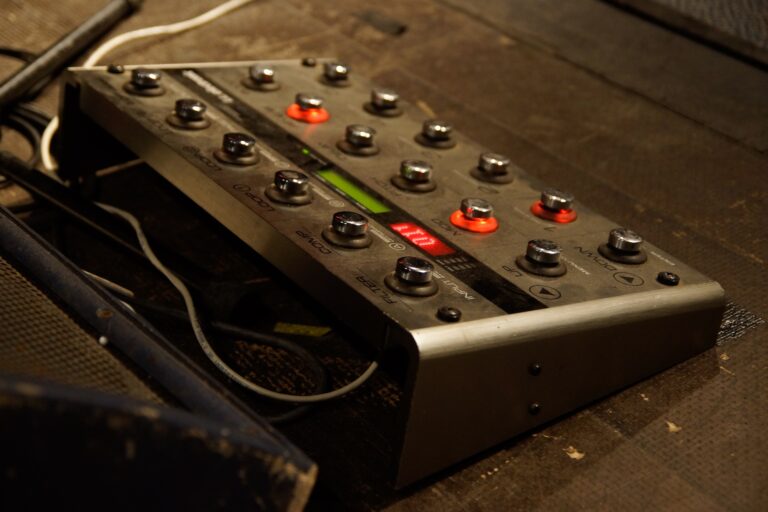
Embracing new technology, like the TC Electronic G-System, his approach balances clean, precise playing with impactful tone and expression. The TC Electronic G-System — a comprehensive floor-based effects management system with loop switching, amp channel control, and integrated effects — provides the organized, programmable effects management that professional touring requires. The G-System allows Lukather to recall specific effects combinations for specific songs without manual pedal adjustment, maintaining consistency across performances.
Reverb and delay sit on a small pedalboard. He avoids heavy processing on lead tones. This specific philosophy — minimal effects processing, letting the guitar and amplifier’s natural tonal interaction do the primary work — reflects the session musician’s understanding that processed guitar tones date while natural guitar-and-amp tones remain relevant. His preference for plate reverb plates over plug-in emulations (as noted in Classic Rock Artists) reflects the same philosophy: the analog hardware’s specific character is worth maintaining over the digital convenience.
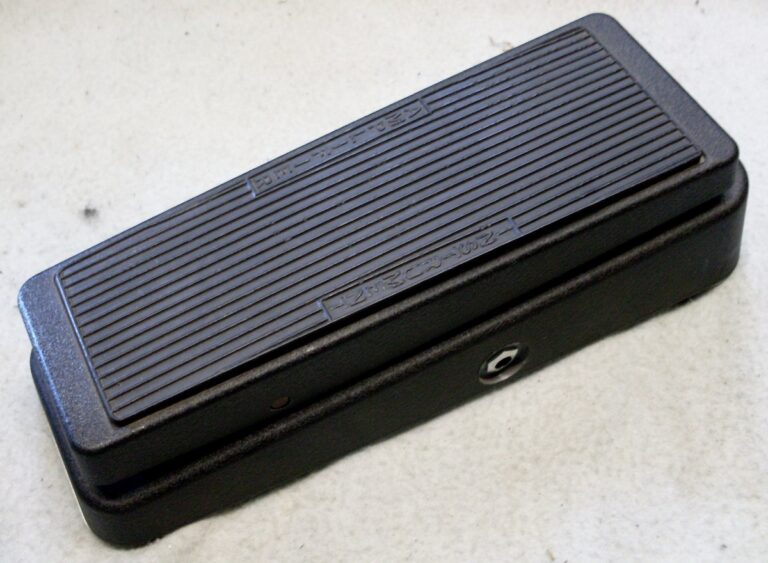
A wah pedal appears in Lukather’s live and recording setup for the expressive, vocal quality that his most dramatic lead passages benefit from. His wah use is selective — appearing in specific musical contexts where the swept filter’s expressiveness suits the music — rather than as a constant element of his tone.
Playing Style & Tone Philosophy
Steve Lukather’s playing style is built on the specific combination of technical facility, musical versatility, and harmonic sophistication that professional session work at the highest level requires. Well-versed in music theory, Lukather can follow chord charts and changes in a way typical of jazz musicians — this ability enhances his value as a session musician. In interviews, he has explained how he thinks of the guitar in a “chordal cluster” approach — the simultaneous multiple-note thinking of a jazz musician who understands the guitar as a harmony instrument rather than a melody-with-accompaniment instrument.
The jazz foundation — absorbed from the Los Angeles studio environment, from listening to the jazz musicians who were the session world’s predecessors and contemporaries, and from the specific harmonic sophistication that Toto’s David Paich and the other founders brought to the band’s compositions — is audible in his chord voicings, his approach to turnarounds in solos, and his understanding of how a guitar part should relate to the harmonic context it inhabits. The “chordal cluster” thinking means that where other guitarists hear individual notes, Lukather hears harmonic implications — the note’s relationship to the chord under it, the chord’s relationship to the progression, the progression’s function in the song’s overall structure.
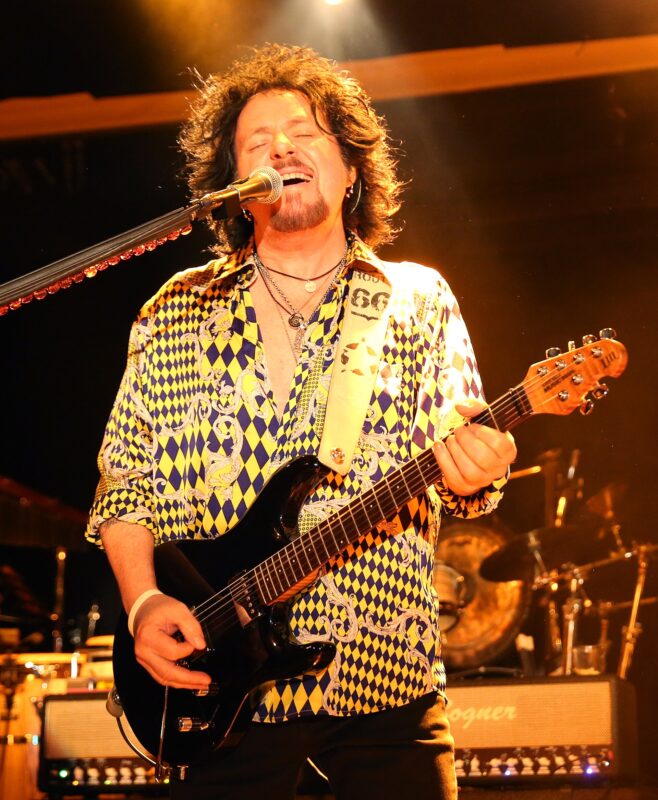
His technical approach — combining speed with melody and rhythm intricacies, using dynamic control, masterful use of volume swells and muting techniques, precision picking with clean articulation even at high speeds — reflects the requirements of professional session work where every note must be intentional and every passage must enhance the song’s commercial impact. The session musician’s standard is not “impressive” but “right” — the guitar part that is right for the specific song, the specific production, the specific artist’s needs. Over 1,500 albums of getting it right has produced the most commercially influential guitar career in the instrument’s history.
His tone philosophy is the pragmatist’s: use what produces the right sound for the specific musical context. The vintage Marshall heads and Bogner cabinets for the rock tones that Toto and solo work require; the Music Man Luke’s HSS configuration for the tonal range that contemporary playing demands; the minimal effects chain that lets the guitar and amplifier’s natural interaction be the primary tonal element. He avoids heavy processing on lead tones because heavy processing compromises the immediacy and naturalness that his specific playing approach requires. Engineers note that his rhythm parts sit perfectly in a mix — not because they have any specific EQ magic but because they were played with the mix in mind from the first note.
The specific character of his rhythm guitar work — the element that engineers describe as “sitting perfectly in a mix” — reflects the session musician’s primary technical achievement: the ability to play rhythmically complex, harmonically sophisticated guitar parts that occupy exactly the right frequency space in the recorded mix without competing with vocals, keyboards, or bass. This is not a natural consequence of good guitar playing; it requires the specific understanding of the recording process that only years of studio work produce. Lukather absorbed this understanding from his earliest professional sessions and has maintained it across fifty years of recording work. The guitar that sits perfectly in the mix is, paradoxically, less individually impressive than the guitar that dominates the mix — but it is more musically valuable, because the recording that works commercially is better than the recording that showcases the guitar at the expense of everything else.
His work with Ringo Starr’s All-Starr Band — playing “Africa” and “Rosanna” in the set every night alongside Ringo’s Beatles classics — represents one of the more charming late-career configurations available to a musician. Ringo introduces him as the busiest guitarist in Los Angeles — “playing Toto hits and Beatles songs in the same set with a former Beatle” is a specific biographical circumstance available to very few musicians on earth. The All-Starr Band is also a context in which Lukather is not the session musician but the featured artist — the guitar hero whose own band’s material is the specific draw for a portion of the audience. The transition from session anonymity to featured artist status, maintained simultaneously across the same career, is itself one of the more unusual professional trajectories in rock music.
His autobiography — published and available from major retailers, according to the Classic Rock Artists profile — represents the belated documentation of a career that has been chronically under-discussed relative to its commercial and musical significance. The session musician’s invisibility — the guitar work that is everywhere and attributed to no one — is the specific condition that the autobiography addresses: here is what it was like to be the most recorded guitarist in history, to play on Thriller and the Ringo Starr All-Starr Band and Toto IV and a thousand other records, to be simultaneously famous and invisible, the name that music professionals know and general audiences don’t. This story, told in his own voice, is a specific document of how the Los Angeles studio system worked, who occupied it, and what it felt like from the inside.
How to Sound Like Steve Lukather
Getting Steve Lukather’s tone requires the Music Man Luke’s specific HSS pickup configuration and the vintage Marshall head’s natural preamp saturation, combined with the harmonic sophistication of his playing approach.
Guitar: Ernie Ball Music Man Luke (current production) is the authentic choice. The HSS pickup configuration, the roasted maple neck, and the floating tremolo system are all specific to his preferred setup. Any HSS Stratocaster-style guitar with a high-output bridge humbucker and quality single-coils at middle and neck positions can approximate the tonal range.
Amp: Vintage Marshall 50 or 100-watt head (JMP or equivalent) for the authentic character. The natural preamp saturation — not the modern high-gain distortion of later designs — is the key tonal element. Pair with a high-quality 4×12 cabinet (Bogner for authenticity, Marshall or Mesa for accessible alternatives). The amp should stay clean at lower volumes and enter its character zone at working volume.
Amp Settings (Vintage Marshall 50/100W or equivalent):
| Control | Setting (0–10) | Notes |
|---|---|---|
| Volume (Preamp) | 6–8 | Working — natural Marshall preamp saturation at working volume |
| Bass | 5–6 | Full — warm without being boomy |
| Mid | 6–7 | Forward — the Marshall mid-forward character that sits in the mix |
| Treble | 6–7 | Bright — note definition for the precise, articulate playing |
| Presence | 5–6 | Moderate — cutting without harshness |
The harmonic approach: Practice extended chord voicings on the guitar — major sevenths, minor sevenths, dominant sevenths, and their inversions across different string combinations. Lukather’s “chordal cluster” approach treats chord shapes as melodic material, moving through positions and finding interesting voicings rather than defaulting to the open chord and barre chord positions that most rock guitarists use. Study jazz chord voicings on guitar — specifically the movable shapes that can be applied across different string groups — and listen to how those shapes function in commercial pop and rock contexts.
Influence & Legacy
Steve Lukather’s influence on guitar playing is the broadest in terms of reach and the most invisible in terms of recognition. Every listener who has heard any of the most commercially successful records of the 1970s, 1980s, and 1990s has heard his guitar playing; most of them don’t know his name. Over 1,500 albums. The most recorded guitarist in history. The guitar on Thriller. The guitar on Toto IV. The guitar on Paul McCartney’s sessions, on Elton John’s sessions, on Diana Ross and Olivia Newton-John and Earth Wind and Fire’s sessions. This is influence operating at the level of the ambient sonic environment of an entire era rather than at the level of the identifiable, branded guitar sound that most guitarists aim for.
His specific influence on subsequent guitarists — particularly the generation of younger guitarists who cite him as an influence — operates through his demonstration that technical sophistication and commercial accessibility are not in tension: that the guitarist who understands jazz harmony can also play on the most commercially successful records in history, that the musician whose playing is described as “session perfect” can also have a band (Toto) with six Grammys. Younger players from John Mayer to Mark Lettieri cite him as an influence — specifically his approach to guitar as a harmony instrument, his ability to make every note and every chord choice serve the song’s commercial purpose while maintaining musical integrity.
For context on where Lukather fits in the session guitarist tradition, the comparison with Larry Carlton’s parallel Los Angeles session career — another guitarist who built a comparable studio reputation while maintaining a personal musical identity — shows the specific tradition. Carlton and Lukather are the two most significant guitar voices of the Los Angeles studio era, each bringing a different but related set of musical skills to the session context, each maintaining a personal recording career alongside the session work. The comparison is not competitive; both figures represent what the Los Angeles studio system produced at its highest level.
The comparison with Nile Rodgers’ approach to rhythm guitar in commercial recording illuminates a parallel influence model: both Rodgers and Lukather have played on records whose combined sales represent a significant percentage of all commercial music sales since the 1970s, both operating as primarily rhythm and support musicians who also contribute lead work, and both demonstrating that the most commercially impactful guitar work is often the least visually prominent. Rodgers’ rhythm guitar and Lukather’s session lead work are both invisible influences on the commercial musical environment.
And the comparison with Mark Knopfler’s approach to guitar as a tonal voice within contemporary pop production — another guitarist who could play technically demanding lead work while also serving the commercial requirements of a polished studio production — shows the specific niche that Lukather occupied in the American context while Knopfler occupied it in the British. Both brought complete musicianship to commercial contexts that could easily have settled for less.
Steve Lukather is sixty-eight years old in 2026. Bridges (2023) was his most recent solo album. He remains a member of Ringo Starr’s All-Starr Band, playing “Africa” and “Rosanna” in the set alongside Ringo’s Beatles hits. Ringo introduces him as the busiest guitarist in Los Angeles — past tense by now, but the reputation persists. Music Man is still building his Luke model. EMG is still making the custom SL20 pickup set. The vintage Marshall heads are still in the truck. And somewhere in the 1,500-plus albums, in every record that needed a sophisticated rock guitar played with jazz harmonic intelligence and blues emotional directness, is the career that Guinness noticed and documented. The most recorded guitarist in history. The guitar started at seven. The Kay acoustic and the Meet the Beatles copy. Everything that followed from that specific beginning.
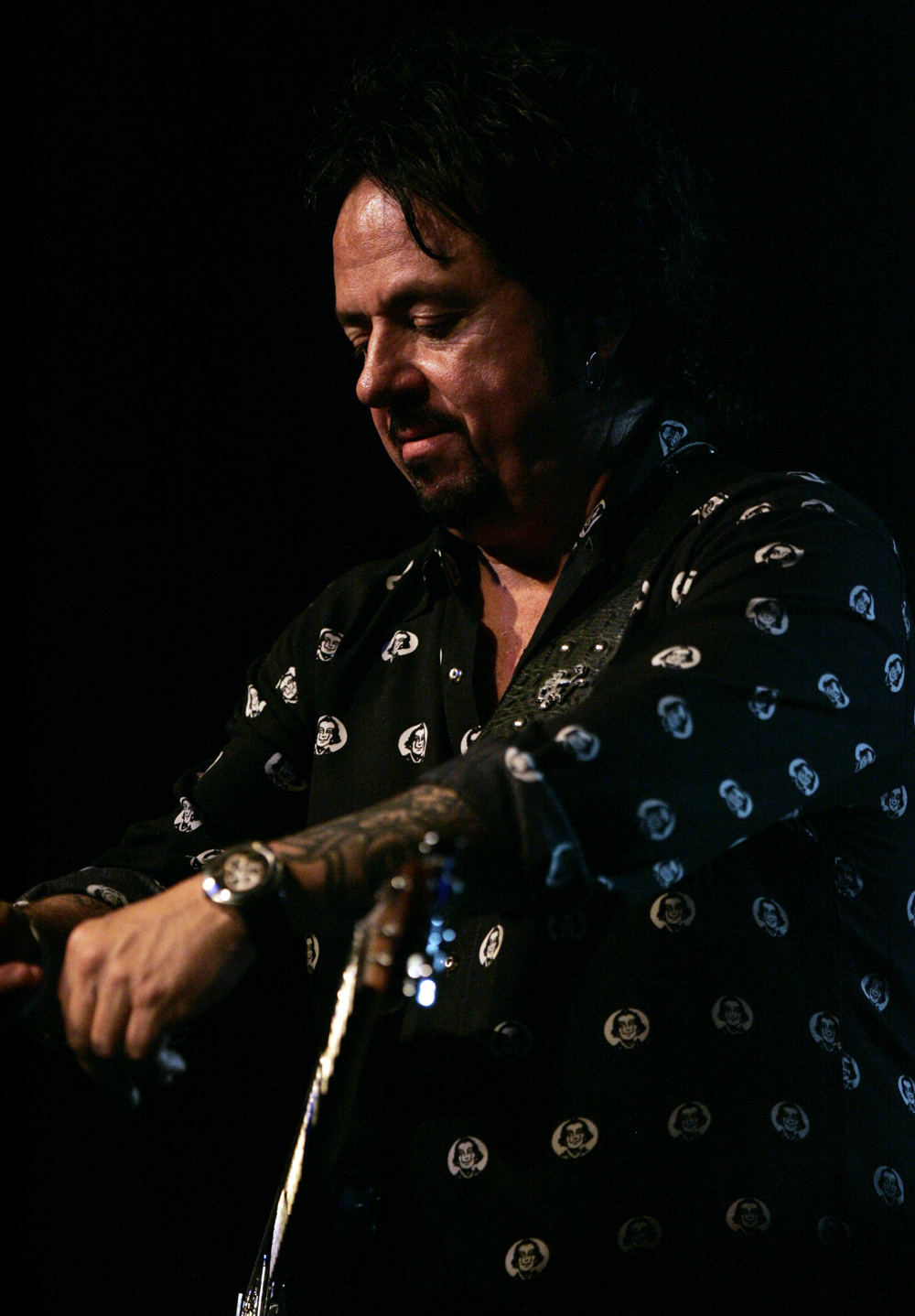
The specific sadness of tinnitus in his biography — the hearing damage that is the accumulated cost of decades of studio and stage work — is worth noting as a biographical fact that connects him to Robin Trower, Gary Clark Jr., and the broader community of guitarists for whom the instrument’s primary side effect is hearing loss. Lukather confirmed his tinnitus in the Tape Op interview through an interaction about Brad Whitford: “Brad Whitford, from Aerosmith, came to a show in Boston or somewhere. We’re friends. We started talking, and my ears — I’ve got tinnitus.” The hearing loss is not merely a personal medical condition; it is the specific occupational hazard of a career spent in the highest-volume professional music contexts for fifty years. The 1,500-plus albums include thousands of hours of loud studio and stage volume. The tinnitus is the invoice for those hours.
His ongoing relevance — the Bridges solo album in 2023, the Ringo Starr All-Starr Band appearances, the Music Man Luke model’s continued production and commercial success — documents a career that has remained active, productive, and commercially viable across five decades. The specific quality that makes long professional careers possible is not technical virtuosity (which can be maintained but typically declines with age) but musical intelligence — the ability to make the right musical choices in every context, which deepens with experience rather than declining with it. Lukather at sixty-eight makes the same kind of exactly-right guitar decisions that he made at twenty-five in the Hollywood studios; the specific technical facility is slightly reduced (the tinnitus, the years); the musical intelligence that guides its application is at its peak.
His five Grammy Awards represent the formal recognition of a career that has otherwise operated largely through informal commercial structures — the session musician’s world of the first call, the producer’s word-of-mouth recommendation, the studio head’s Rolodex. The Grammys are the most visible evidence of a recognition system that functions mostly invisibly, crediting the artist’s name on the album cover while the guitarist’s contribution is acknowledged only in the liner notes if anywhere. Lukather’s specific visibility — as Toto’s frontman and lead guitarist, not merely as a session musician — means that his Grammy recognition is attached to a named artist and a named band rather than disappearing into the general session musician’s anonymous contribution to a recording’s success. This is why the Toto IV Grammy matters beyond the simple recognition: it names Lukather specifically as a creative force, not merely a technical contributor.
Steve Lukather is sixty-eight years old in 2026. Bridges was released in 2023. The Ringo Starr All-Starr Band dates continue. The Music Man Luke model is in production. The EMG SL20 custom active pickup set is in the guitar. The vintage Marshall head is in the truck. Bogner cabinets are in the truck alongside it. The plate reverb, preferred over plug-in emulations, is somewhere in the signal chain. And somewhere in over 1,500 albums — in the guitar work that Guinness noticed and that Joni Mitchell hired and that Michael Jackson hired and that Toto made into six Grammy Awards including Album of the Year — is the career of the musician Ringo Starr calls the busiest guitarist in Los Angeles. Past tense for the “busiest” part. The music continues in every tense available.
The Kay acoustic guitar at seven years old. The Meet the Beatles copy that came with it. The San Fernando Valley session world that gave him his education by proximity. The first Marshall and Les Paul combination that started the sessions. The Paul Rivera-modified Fender Deluxe that was “a real special amp.” The Music Man Luke that replaced all earlier guitars as his primary instrument. The vintage Marshall heads that replaced all earlier amplification as his primary sound. The 1,500-plus albums. The Smithsonian guitar is Vernon Reid’s; Lukather’s career is in the Guinness records instead. Different kinds of evidence of the same thing: a guitarist who mattered, consistently, across five decades, in every commercial and musical context that hired him. The most recorded guitarist in history. The guitar started at seven. It never stopped.
Frequently Asked Questions: Steve Lukather Guitars & Gear
What guitar does Steve Lukather play?
Steve Lukather’s primary guitar is the Ernie Ball Music Man Luke signature model — designed in collaboration with Ernie Ball/Music Man and featuring an HSS pickup configuration (humbucker/single-coil/single-coil), a roasted maple neck, and a floating tremolo. The Luke has gone through multiple generations (Luke, Luke 2, Luke 3), with refinements in each iteration. His signature pickups are the EMG SL20 custom active set, built specifically for the Luke models. In his early session career, he used a 1959 Gibson Les Paul and a Paul Rivera-modified Fender Deluxe Reverb. He has also used various Stratocasters, Telecasters, and other instruments for specific session requirements across his 1,500+ album career.
What amplifiers does Steve Lukather use?
Steve Lukather runs vintage Marshall heads paired with Bogner cabinets as his primary live amplification. In the Tape Op interview, he describes his early sessions: “I started out showing up with a Marshall and a ’59 Les Paul.” He also used a Paul Rivera-modified Fender Deluxe Reverb early in his career — “hot-dogged by Paul Rivera back in the day; a real special amp.” His preference for vintage Marshall preamp saturation (the natural harmonic richness of the old design rather than modern high-gain distortion) and his avoidance of heavy processing on lead tones reflect the session musician’s preference for guitar tones that sit naturally in a mix.
How many albums has Steve Lukather played on?
Steve Lukather has played on more than 1,500 albums, earning a Guinness nomination as the most recorded guitarist in history. His session work spans the 1970s through the present, covering an extraordinary range of artists including Michael Jackson (Thriller — guitar on “Beat It,” “Human Nature,” and other tracks), Paul McCartney, Elton John, Boz Scaggs, Olivia Newton-John, Earth Wind and Fire, Lionel Richie, Richard Marx, Don Henley, Diana Ross, Joni Mitchell, and hundreds of others. Gibson Guitar Corporation named him one of the Top 10 Session Guitarists of All Time.
What is Steve Lukather’s connection to Michael Jackson’s Thriller?
Steve Lukather played guitar on multiple tracks from Michael Jackson’s Thriller (1982) — the best-selling album in music history. His contributions include guitar parts on “Beat It” (the rhythm parts and opening riff; Eddie Van Halen played the famous guitar solo), “Human Nature,” and other tracks. He was a regular presence in the Los Angeles studio sessions that produced the album, working with producer Quincy Jones on the specific guitar textures that Jones required. Lukather’s contribution to the most commercially successful album ever made is one of the most significant individual session guitar contributions in music history.
What is the Ernie Ball Music Man Luke guitar?
The Ernie Ball Music Man Luke is Steve Lukather’s signature guitar model, developed in collaboration with Ernie Ball/Music Man. It features an HSS pickup configuration (one humbucker at the bridge, two single-coils at middle and neck positions), a roasted maple neck with his preferred carve and feel, and a floating tremolo system. The EMG SL20 custom active pickup set is built specifically for the Luke models. The guitar has gone through multiple generations (Luke, Luke 2, Luke 3), with refinements incorporating feedback from Lukather’s touring and recording use. The Luke model is produced and sold by Ernie Ball/Music Man and is available in various colors and configurations.
What Grammy Awards has Steve Lukather won?
Steve Lukather has won multiple Grammy Awards as a member of Toto, most significantly at the 1983 Grammy Awards where Toto IV won six Grammys including Album of the Year and Record of the Year (for “Rosanna”). The 1983 Grammys remain Toto’s definitive commercial recognition and document the specific quality of the recording — produced by the band themselves, featuring the collective musicianship of the Los Angeles session community’s elite — that made Toto IV one of the most technically accomplished commercial albums of its era. Lukather has also won individual Grammy recognition for session and production work.
Is Steve Lukather in the Rock and Roll Hall of Fame?
As of 2026, Steve Lukather and Toto have not been inducted into the Rock and Roll Hall of Fame, despite being eligible since 2003 (twenty-five years after their 1978 debut). The discussion of Toto’s Rock and Roll Hall of Fame candidacy is ongoing — their six Grammy Awards including Album of the Year, their sustained commercial success, and Lukather’s specific individual significance as the most recorded guitarist in history all support a strong candidacy. The Musicians Hall of Fame inducted Lukather in 2009, and Guitar Player magazine gave him a Lifetime Achievement Award in 2015. Toto has been among the most regularly discussed Hall of Fame omissions in the rock guitar community.
Image credits
- A wall of Marshall speaker cabinets: Jaakonam, Wikimedia Commons, CC BY-SA 3.0.
- Steve Lukather: Eva Rinaldi, Wikimedia Commons, CC BY-SA 2.0.
- Top image: by Matt Becker, Wikimedia Commons, CC BY-SA 3.0.
- Steve Lukather: photo by Kåre Eide, via Wikimedia Commons, CC0.
- Steve Lukather: photo by Ryanhuntmuzik, via Wikimedia Commons, CC BY-SA 4.0.
- Fender Deluxe Reverb: DlxReverbFront, Wikimedia Commons, CC BY-SA 3.0.
- Dunlop Cry Baby: Roadside Guitars, Flickr, CC BY-SA 2.0.
- Steve Lukather live: Kåre Eide, Wikimedia Commons, CC0.
- TC Electronic G-System: Adam Kliczek, Wikimedia Commons, CC BY-SA 3.0.
- Ernie Ball Music Man Luke: GuitarGangsters AI-generated reference illustration, not a photograph.