The Box That Killed the Backline: Inside the Fractal Audio Axe-Fx III Mark II
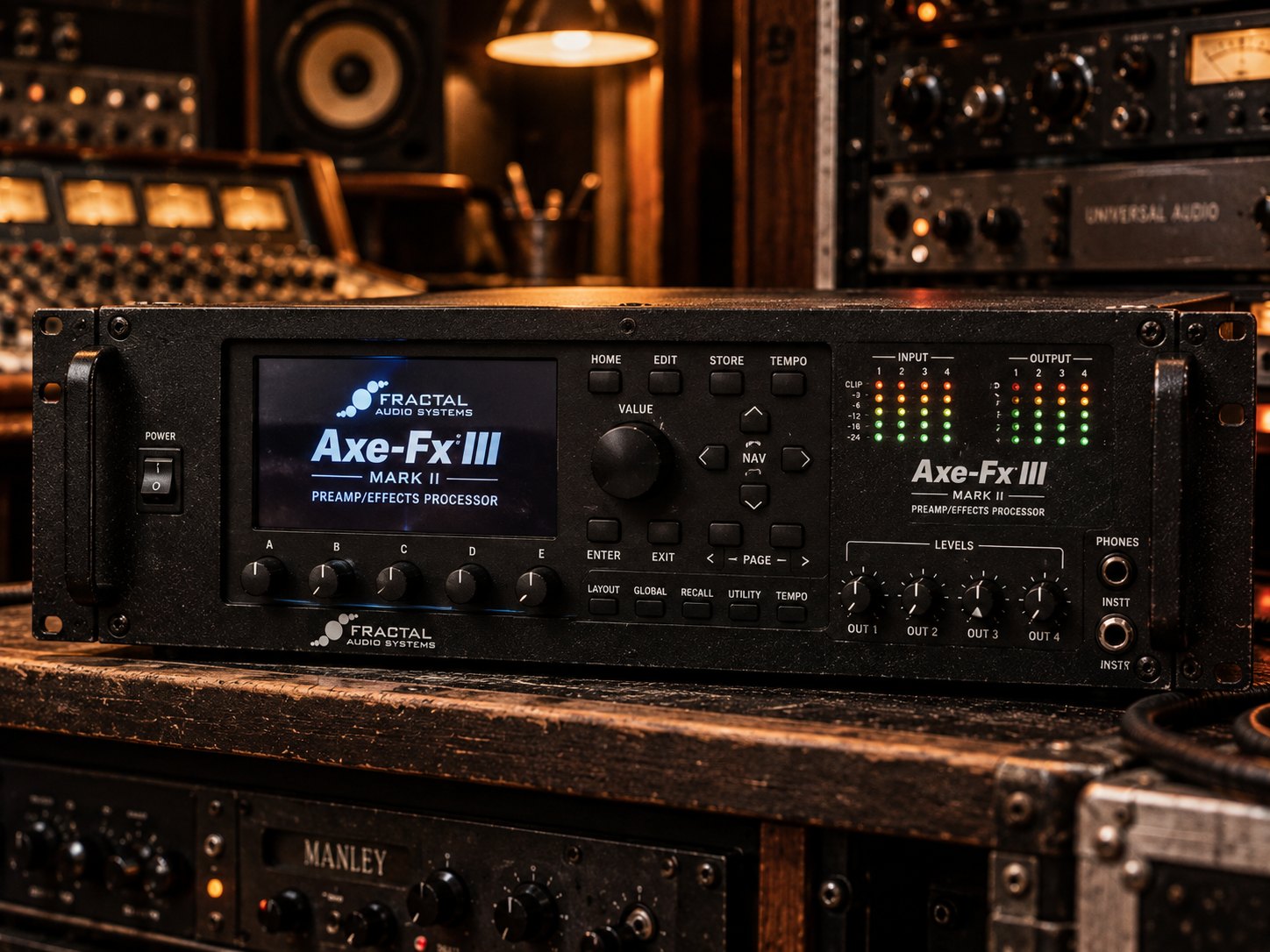
Fractal Audio Axe-Fx III Mark II Rack Processor. AI-generated reference illustration, not a photograph.
The Fractal Audio Axe-Fx III Mark II Turbo is the world's most powerful guitar processor. Full specs, player guide, tone recipes, and buying advice.
There is a moment in late 2013 that guitarists still argue about on forums. Metallica — the band synonymous with stadium-filling Mesa Boogie stacks, with the visceral roar of real tubes pushed hard — played a concert in Antarctica for 120 penguins and a handful of contest winners. Because there were no amps in the world that could survive the logistics, they played through Fractal Audio units. When the band came home, they didn’t go back to the stacks. Kirk Hammett and James Hetfield have run Axe-Fx rigs ever since.
That conversion story encapsulates everything the Axe-Fx III Mark II Turbo represents: the point where digital modeling stopped being a workaround and became the actual preference. Not a compromise. A choice. In 2026, that 3U rack unit sitting in a silent wing of your stage rack is doing the work that twelve Rectifiers used to do — more consistently, more quietly, more configurably, and in many players’ honest assessment, more convincingly. The Axe-Fx III Mark II Turbo is Fractal Audio’s current flagship at $2,499.99. Here is everything you need to know about it.
The Road to the Mark II: Fractal Audio History
Cliff Chase founded Fractal Audio Systems in 2006 out of Plaistow, New Hampshire. Chase’s background was electrical engineering with a focus on telecommunications and military hardware — not exactly the curriculum vitae of a gear boutique owner, but precisely the skill set required to build something that actually worked. His stated priority was not to copy classic amplifiers circuit-for-circuit but to recreate what those amplifiers sound like in context: the feel under your fingers, the way a note decays, the harmonic compression that happens when a 6L6 output stage saturates. That distinction matters, because it defines how Fractal has approached every firmware update and hardware revision since.
The original Axe-Fx Standard shipped in 2006 to a community that had never heard anything like it. The Axe-Fx Ultra followed in 2008. The Axe-Fx II arrived in May 2011 and changed the conversation permanently — John Petrucci built his entire live rig around it and replaced every outboard rack unit he had been hauling for two decades. The Axe-Fx II XL arrived in 2014 with expanded memory. Then, in 2018, came the Axe-Fx III: a ground-up redesign with a completely new DSP architecture, a large colour display, and a signal path that bore no resemblance to its predecessors beyond the brand name on the faceplate.
The Mark II arrived on September 10, 2020. The hardware difference was refinement rather than revolution: a revised faceplate, improved circuit board layout, and preparation for the Turbo DSP upgrade to come. The Mark II Turbo launched September 28, 2021, delivering a 25% clock-speed increase over the standard Mark II — meaning more simultaneous amp blocks, more effects in a signal chain, and more complex routing without the processor throwing a polite error message. Firmware 16.00 “Cygnus,” released April 21, 2021, introduced the first-generation Cygnus amp modeling engine, which was genuinely a step change in realism. The current Mark II Turbo runs Cygnus X2, and as of early 2026, Cygnus X-3 is in public beta. The hardware stays the same; Fractal delivers the improvements through free firmware updates.
What the Axe-Fx III Mark II Turbo Actually Is
The Axe-Fx III Mark II Turbo is a rack-mount preamp and effects processor. It has no built-in power amplifier. It lives in a 3U steel rack chassis with an anodized aluminum faceplate, runs via IEC power, and connects to the rest of your world through an exceptional array of I/O on the rear panel. Everything you hear — amp simulation, speaker cab simulation, effects — is done inside the box. It is not a profiler: it does not capture your amplifier. It models amplifiers through component-level physical simulation, meaning each tube stage, transformer, and tone control is individually modeled to behave as it would in the original circuit. The distinction from profiling matters because it means the models are not limited to whatever specific specimen was captured; they respond dynamically to input level and impedance the way real amplifiers do.
The four separate processors inside the Mark II Turbo tell the story concisely. Two military-grade floating-point “Keystone” DSP chips handle the main audio engine. A dedicated graphics processor drives the 800×600 colour display. A 16-core microprocessor manages USB audio and the user interface. That last point is not a spec-sheet boast — it means UI operations never steal cycles from the audio engine, so tweaking a parameter in real time does not cause glitches in the output.
Technical Specifications
| Feature | Specification |
|---|---|
| Format | 3U rack-mount preamp and FX processor (no power amp) |
| DSP Engine | 2× “Keystone” military-grade floating-point DSP + dedicated GPU + 16-core control processor (Turbo = 25% more clock speed vs standard MkII) |
| Amp Modeling | Cygnus X2 component-level physical modeling; 2 independent amp blocks per preset; 300+ amp models |
| Speaker Simulation | DynaCab™ + UltraRes™; 2,200+ factory cabs; 2,048 user cab slots; on-board IR capture |
| Effects | Hundreds of stompbox and studio effects; multiple instances per preset; gapless switching |
| Presets / Scenes / Channels | 1,024 presets; 8 scenes per preset; 4 channels per block |
| Display | 800×600 colour display; 5 push encoders |
| Inputs | Instrument in; 3 stereo inputs; Humbuster™ technology |
| Outputs | 4 stereo outputs (balanced XLR + ¼” TRS); SPDIF; AES digital I/O |
| USB Audio | 8×8 USB audio interface; MIDI over USB; re-amping capability |
| MIDI | MIDI In / Out / Thru; USB MIDI |
| Foot Control | Optional FC-12 or FC-6 MFC (sold separately); dual expression pedal inputs |
| Editor Software | Axe-Edit III (Mac/PC); drag-and-drop preset building; deep parameter access |
| Firmware Updates | Free; adds amps, effects, features; current engine Cygnus X2 |
| Build | Rugged 3U steel rack; anodized aluminum faceplate; illuminated logo |
| Street Price | $2,499.99 (direct from Fractal Audio; US only via their website) |
The Cygnus Engine: What Makes It Different
Amp modeling has two broad approaches. The first is behavior matching: you measure how a real amplifier responds to a range of input signals and build a mathematical model that produces the same outputs. This is fast to implement and produces results that correlate closely with the reference specimen. The second approach — the one Fractal uses — is physical modeling: you represent each component in the circuit individually, from individual tube stages through the phase inverter to the output transformer, and simulate how they interact with each other. The outputs emerge from the simulation rather than from curve-fitting to measurements.
Cygnus X2, the current engine in the Mark II Turbo, takes the physical modeling approach and pushes the component-level simulation further than any previous Fractal firmware. Cliff Chase’s release notes for the Cygnus series describe modeling the exact behavior of each tube element, including the non-linear interactions between stages that produce harmonic content — the overtones that make a pushed tube amp sound “musical” rather than merely loud. The result is that the models respond to playing dynamics the way real amplifiers do: dig in harder and the amp opens up and saturates differently; back off the guitar’s volume knob and the distortion cleans up rather than simply becoming quieter. That last behavior — the volume-knob cleanup — is the test that separates genuinely good amp modeling from functional-but-sterile modeling, and the Axe-Fx III Mark II Turbo passes it with every model in the library.
DynaCab technology, paired with UltraRes impulse responses, handles the speaker and cabinet side. A static IR is a snapshot of a speaker’s response at a fixed volume. DynaCab models the speaker dynamically — the way cabinet resonance, cone physics, and microphone interaction change with level and over time. At loud volumes, a real speaker sounds different from the same speaker at bedroom volume; DynaCab captures that variable behaviour rather than freezing it.
Famous Players
James Hetfield and Kirk Hammett — Metallica
The conversion story begins in Antarctica. For the Freeze ‘Em All concert in 2013, Metallica needed to play for 120 competition winners in circumstances where conventional amplifier logistics were impossible. They played through Fractal Audio units. When the tour resumed under normal conditions, Hetfield and Hammett didn’t return to their analog rigs. The Axe-Fx platform replaced both their live and studio amp chains. Their guitar tech Chad Zaemisch explained the decision in an interview with RJM Music Technology: consistency, the ability to recall identical tones night after night, and a drastically simplified stage setup — two cabinets onstage for Hetfield, the rest of the sound coming through in-ears and Meyer wedges. Hammett’s Fractal tones model his Fortin Meathead and Mesa/Boogie Dual Rectifier. James Hetfield’s gear history is one of the great evolutions in rock guitar tone; the Axe-Fx III is its current chapter. Kirk Hammett is confirmed via Guitar World and KillerGuitarRigs primary coverage as a co-user of the platform alongside Hetfield.
John Petrucci — Dream Theater
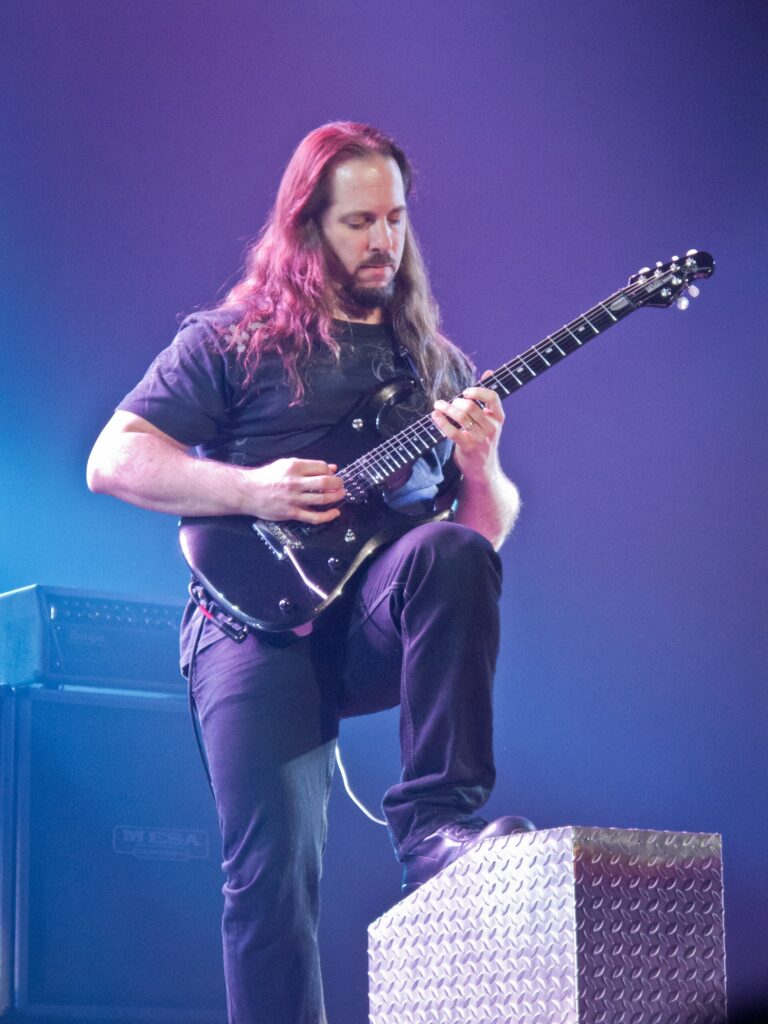
Petrucci was among the first high-profile guitarists to trust Fractal Audio with his live rig, replacing years of outboard rack gear with the Axe-Fx II, then transitioning to the Axe-Fx III. His own website (johnpetrucci.com/gear) documents the platform. A 2022 rig presentation on Fernando Ufret’s YouTube channel covered his Axe-Fx III usage in detail, with the Axe-Fx III section beginning around the twelve-minute mark — Petrucci walking through how it replaced his previous rack architecture, the routing he uses for his rhythm and lead sounds, and why he hasn’t found a reason to go back to hardware amplifiers. The verification chain here is as clean as it gets: manufacturer-independent primary source from the artist himself, cross-confirmed by his own gear page. John Petrucci is perhaps the clearest argument for what the Axe-Fx can do in a technically demanding, tonally precise context.
Steve Vai
Steve Vai’s relationship with Fractal Audio is documented via Fractal’s own official communications and a Premier Guitar rig rundown from 2023 — one of the most authoritative gear journalism formats in existence, produced by PG at the artist’s location. Vai’s signal exits into the input of an Axe-Fx III Turbo, controlled simultaneously by an FC-12 at his pedalboard and a second FC-12 at his guitar tech’s station. Each song in the set has its own patch in the Fractal, primarily deploying different digital delays, chorusing, and reverbs. Vai’s own words, quoted by Fractal Audio on their official Facebook channel: “Fractal Axe-Fx III — which is like a space station.” That line is worth unpacking. For a guitarist who built his reputation on alien, otherworldly sounds achieved through elaborate analogue and early-digital means, the decision to center his current live rig on a modeling unit is not a capitulation — it’s an artist getting the tool that finally delivers what he’s been hearing in his head. Steve Vai has been a verified Axe-Fx III user across multiple independent primary sources.
Misha Mansoor — Periphery
Misha Mansoor is verified on the Axe-Fx III Turbo Mark II via Fractal Audio’s own “Gift of Tone” series — a programme where Fractal works directly with official artists to create and release presets for their specific unit. Mansoor’s Gift of Tone preset is built for the Axe-Fx III Turbo MkII (preset #0374 in the Fractal Axe-Change library), documented on Fractal’s own platform and via the G66 European distribution channel’s “PERIPHERY Fractal Tone Tour with Misha Mansoor” materials. This is manufacturer-level verification with artist collaboration, not a social media mention. Misha Mansoor has been a Fractal platform user since the Axe-Fx II era, and the Gift of Tone confirmation is the strongest possible per-SKU primary source available.
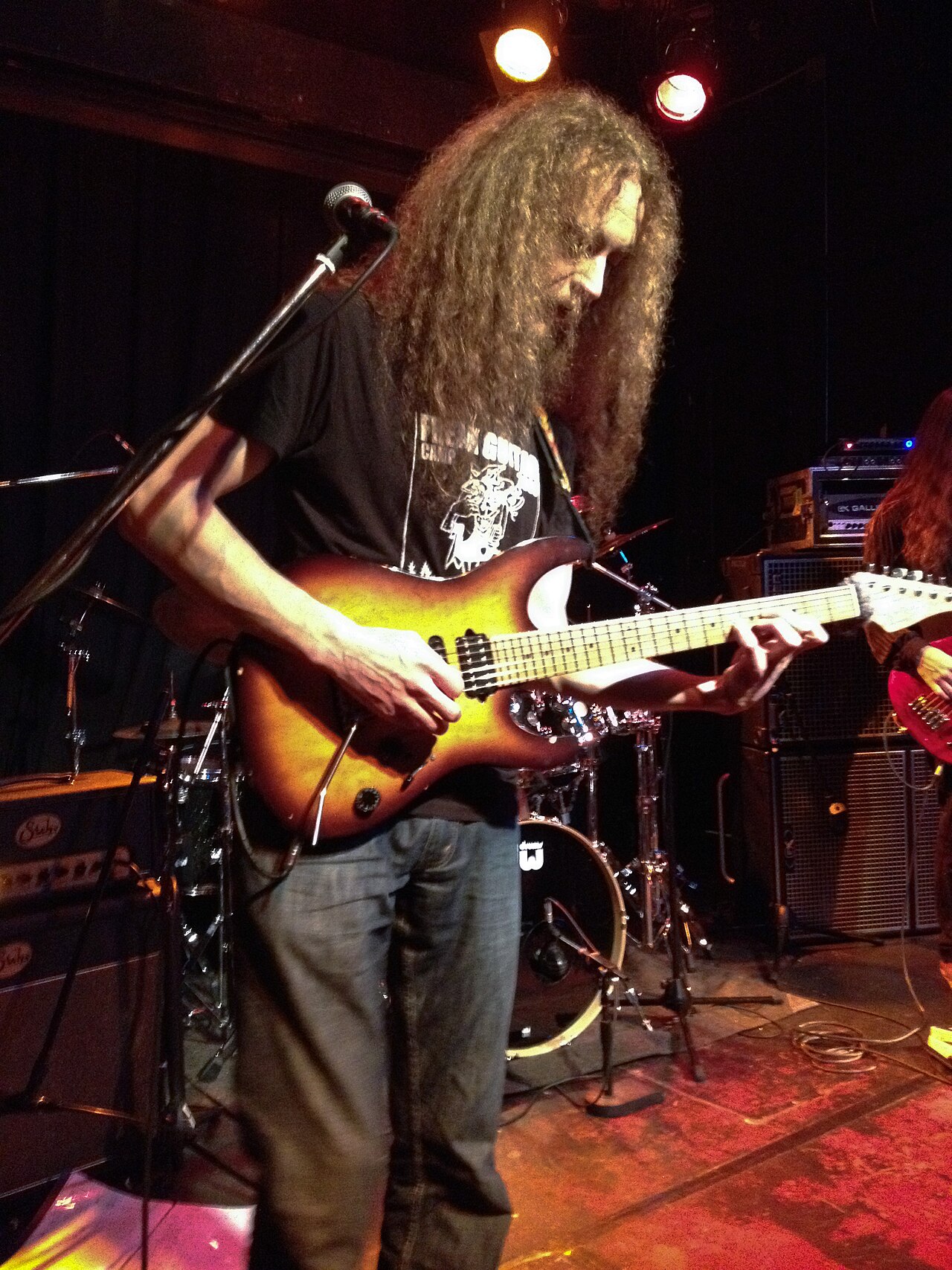
Guthrie Govan — The Aristocrats, Hans Zimmer Band
Guthrie Govan’s Fractal usage is documented with one important caveat worth stating clearly: his primary touring rig for The Aristocrats work runs the FM9 floor unit (his Gift of Tone on that platform is widely discussed on the Fractal forum), not the rack-format Axe-Fx III. However, Govan was observed using and documented with the Axe-Fx III specifically during the Hans Zimmer touring band period, a distinct context from his trio work. The Fractal forum thread “Guthrie Govan FM9 Rig Rundown & Article” and “Guthrie Govan With The Axe FX III” are separate threads precisely because the rigs differ by context. Article credits Guthrie Govan honestly as an Axe-Fx III user in the Hans Zimmer context, with the FM9 being his current small-format primary.
Other Notable Platform Users
The Wikipedia article on Fractal Audio Systems also documents Alex Lifeson (Rush) and John Mayer as Axe-Fx users. Lifeson is a well-documented Fractal platform adopter; Mayer used an Axe-Fx on his 2021 album Sob Rock alongside his Dumble amplifiers, in his own words stating that if someone had walked a Fractal into the Thriller sessions it would have been all over that record. Matt Bellamy of Muse, documented in the Kemper Profiler Head article, used Kemper Power Racks for the Drones tour but has also been noted as a multi-modeler user. None of these three are confirmed against the specific Mark II hardware; they are cited here as context for the platform’s wider professional adoption.
Tone Recipes
1. Hetfield “Black Album” Rhythm Wall
Load a Mesa/Boogie Dual Rectifier model (Fractal calls this the “Recto” or “USA Lead” family). Set Input Drive around 6-7, Bass at 7, Mid at 4, Treble at 6, Presence at 4. Cabinet: Mesa 4×12 with V30 cones, mic at the 25mm position, slight off-axis. In the gate block, set threshold to -55 dB, attack fast at 1ms, release around 80ms. The key to the Hetfield sound is the attack on the pick transient cutting through before the gate closes on the tail — adjust release until palm mutes speak crisply and open-chord eighths have that chopped, punched quality. Run a scene variation with a clean boost in front (use an “EP Booster” or “BB Preamp” model at unity gain to push the amp input harder) for E-string chug passages that need a slightly tighter low end.
2. Petrucci Dream Theater Progressive Lead
Start with a Marshall model (Fractal’s “Plexi” or “JM800” variants) and push it with a Tube Screamer-style block in front (Drive at 2, Level at 8, Tone at 5) — this is the famous Petrucci technique of running a light overdrive into a medium-gain amp for a focused, harmonically complex lead tone rather than using a high-gain amp on its own. Add a Delay block: ping-pong quarter note at dotted eighth, feedback 30%, mix around 20%. Reverb: Hall, pre-delay 30ms, decay 1.8 seconds, mix 15%. Use a Scene to switch mid-song between this lead configuration and a heavier rhythm preset via the FC-12 without breaking the mix. The 1,024 preset depth and 8 scenes-per-preset capacity is exactly built for this kind of live-arrangement complexity.
3. Vai Alien Clean with Pitch and Modulation
A clean Fender Twin Reverb or Deluxe Reverb model (Fractal has both), low gain, Bass at 5, Treble at 7, bright switch on. Before the amp: a Whammy-style pitch block set to harmonize a fifth above, mix at 25-30% for a shimmer effect rather than a direct harmony. After the amp sim and before the reverb: a stereo chorus (rate 0.4 Hz, depth 30%, mix 35%) and a small room reverb. Main reverb return at 25%. Then a separate parallel effects chain with a pitch block set to one octave up, mixed at 8%, routed to the reverb return. The layered pitch relationships create the Vai “alien” quality — familiar enough to be recognizable as guitar, complex enough to feel like something else is happening in the overtones. This is the kind of routing that is trivial in the Axe-Fx III’s block-based signal flow and essentially impossible to achieve live without a dedicated software-controllable routing matrix.
4. Misha Mansoor Djent Chug
A tight high-gain model — Fractal’s “Diezel Herbert” or “5153 Red” (EVH) works well. Input Drive at 8, Bass at 3 (this is critical: extended-range instruments need bass pulled back or the low B becomes a mud wall), Mid at 5, Treble at 7, Presence at 8. A Noise Gate block set aggressive: threshold -45 dB, fast attack, medium release. Cabinet: modern Mesa or Zilla 4×12 IR, mic close and centered. A tight slapback delay (50ms, single repeat, mix at 10%) adds perceived size without smearing the attack. Run parallel: one path dry into the main cab, one path through a second cab IR (a 2×12 for contrast) blended at 15%. This gives you the wide, layered djent cabinet sound that Mansoor pioneered — two speaker textures simultaneously without the physical impossibility of two 4×12 cabinets in your living room. The Axe-Fx III’s dual amp block capability means you can run two separate amp models in this configuration simultaneously.
5. Studio DI Recording Direct to DAW
This is where the 8×8 USB audio interface changes the workflow fundamentally. Connect the Axe-Fx III via USB to your DAW. Set up a dry DI signal on USB channel 7-8 (the re-amp outputs) while simultaneously recording the processed stereo mix on channels 1-2. You have a fully produced guitar track in real time AND a clean DI take that can be re-amped later — through the Axe-Fx III itself via Axe-Edit III, or through a different plugin chain, or sent to a studio with hardware amps. The monitoring latency through the Axe-Fx III direct is below 2ms (measured at the unit output, before your interface and DAW add their own buffer). Set output level to +4 dBu balanced to match professional interface and preamp input levels. This is a professional four-cable recording session replicated with a power lead and a USB cable.
Comparisons
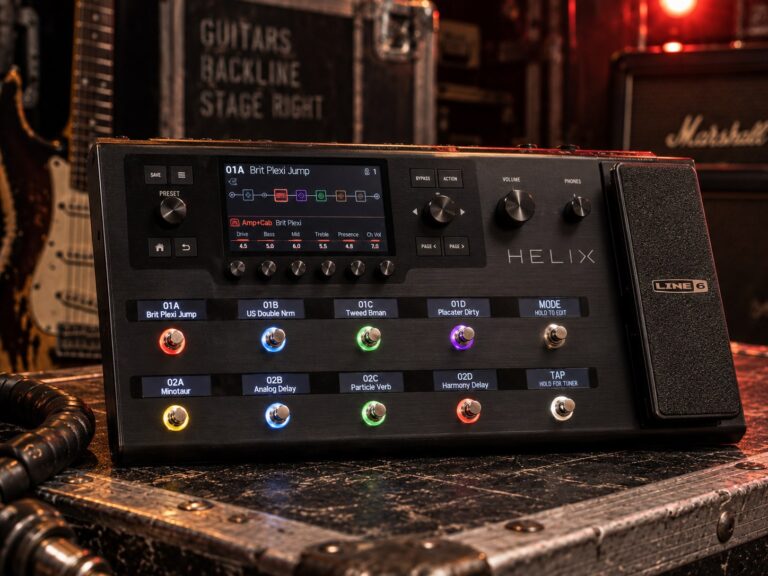
vs. Line 6 Helix Floor
The Helix Floor is the most direct floor-format competitor at around $1,699. It is a floor unit (no rack required), has a built-in expression pedal and twelve footswitches, and integrates all foot control into the device itself. The Axe-Fx III is a rack unit that requires separate FC-12 or FC-6 controllers for foot operation — hardware not included at $2,499.99. On modeling quality, the professional consensus in 2026 places the Axe-Fx III ahead, particularly in how the Cygnus X2 engine handles amp dynamics and touch sensitivity under heavy playing. On convenience and portability, the Helix Floor is significantly easier to deploy, requires no rack case, and takes up a fraction of the stage footprint. The choice is partly about priority: tone-first players who already own rack cases choose the Axe-Fx III; musicians who want a single self-contained unit choose the Helix. Budget also matters — the Helix is $800 cheaper before you buy the FC-12.
vs. Neural DSP Quad Cortex
The Quad Cortex ($1,799) is a floor unit with a 7″ touchscreen and a Neural Capture mode that profiles real amplifiers. The Axe-Fx III models; the Quad Cortex can profile. For players who own a specific boutique amplifier and want to capture it exactly, the QC has a workflow advantage. For players who want access to the widest possible library of modeled amps with the deepest parameter control, the Axe-Fx III wins on library breadth and editing depth. The QC is significantly more portable and intuitive — its touchscreen UI is genuinely easier to navigate for casual editing. The Axe-Fx III is considerably more powerful when you need complex routing, parallel paths, or large multi-effect chains in a single preset. Artists like Tim Henson and Rabea Massaad have built professional rigs on the QC; artists like Petrucci and Metallica have built theirs on the Axe-Fx III. Neither choice is wrong — the rigs simply reflect different priorities.
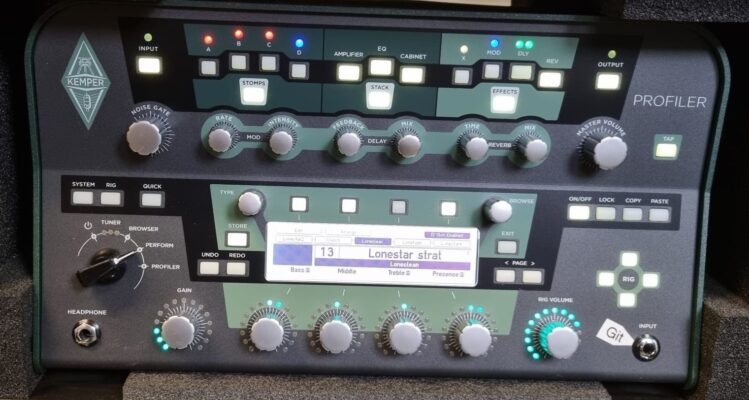
vs. Kemper Profiler Head
The Kemper Profiler MK2 Head ($1,355) is a profiler, not a modeler, and that distinction is fundamental. The Kemper captures your specific amplifier; its library of rigs comes from captures made by the global Kemper community. The Axe-Fx III models amplifiers without requiring access to the physical amp. If you have a collection of exceptional real amplifiers and want to capture them, the Kemper’s workflow is purpose-built for that. If you want the world’s most complete library of amp models available in one unit with no physical amps required, the Axe-Fx III is the answer. Mark Knopfler uses Kemper; John Petrucci and James Hetfield use Axe-Fx III. Both are at the professional summit; they simply got there by different routes.
vs. Fractal Audio FM9 Turbo
Within the Fractal family, the FM9 Turbo is the closest alternative — a nine-footswitch floor unit running the same Cygnus X2 engine on the same Turbo DSP hardware. The tonal results are identical; the difference is form factor and I/O depth. The FM9 is a floor unit with integrated footswitches, making it self-contained for live use without a rack case. The Axe-Fx III has deeper I/O (four stereo outputs vs the FM9’s two, plus AES digital I/O), more simultaneous processing headroom for extremely complex presets, and the rack format that integrates naturally into large touring rigs. Most players who need the Axe-Fx III already know why — they are running multi-output rigs, sophisticated stereo speaker systems, or complex parallel routing that demands every last DSP cycle. Players building a floor-based live rig frequently find the FM9 meets every requirement at a lower price. The Axe-Fx III is the rack-first choice.
vs. Fender Deluxe Reverb
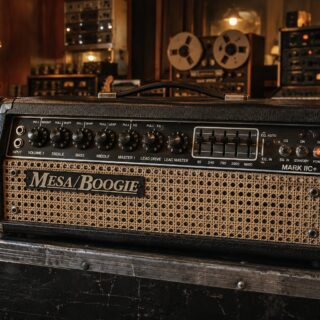
This comparison is not apples-to-apples — it’s deliberately structural. The Fender Deluxe Reverb is a 22-watt tube combo with a single 12″ speaker, a built-in spring reverb, and a tremolo circuit that has defined the sound of American pop, country, and rock since 1965. It costs around $1,299 new and sounds, in the right room, like nothing else on earth. The Axe-Fx III models the Deluxe Reverb. How good is that model? Good enough that Steve Vai and James Hetfield run their live rigs through it. But the tube combo player who loves the physical interaction of their speaker cone moving air behind them, the harmonic content that emerges from a real spring tank, the irreplaceable acoustic coupling between amp and room — that player may never fully convert. The Axe-Fx III is the professional’s tool for consistent, touring-reliable, endlessly flexible tone. The Deluxe Reverb is a 1965 room in a box. Both positions are defensible. Both serve different needs.
Buying Guide
The Axe-Fx III Mark II Turbo sells for $2,499.99 direct from Fractal Audio’s website. In the United States, this is the only place to buy it new — Fractal does not distribute through retail dealers. International buyers go through authorized distributors (G66 in Europe is the primary channel). Note that the basic Mark II (non-Turbo) is no longer sold new; used examples appear on Reverb in the $1,500-$1,800 range and run the same current Cygnus X2 firmware without the Turbo’s additional 25% processing headroom. For players who don’t push the DSP ceiling with complex presets — and many players never will — a used standard Mark II is an excellent entry point into the platform at a meaningful price reduction.
Budget the full cost properly. The Axe-Fx III is a rack unit that requires a rack case (3U minimum, 4U is more comfortable for cable management). It has no built-in foot controller — the FC-12 (twelve switches, two expression pedal inputs) adds $599; the FC-6 (six switches) adds $299. A power amplifier is required if you want to drive guitar speakers; the Axe-Fx III’s outputs are line level. If you plan to run FRFR (full-range flat-response) speakers or direct to PA, no power amp is needed. For direct recording into a DAW, the USB interface handles everything natively. The total system cost for a gigging player who wants full foot control, rack case, and FRFR monitors can approach $4,000-$4,500 before monitors — budget accordingly and understand what you’re building.
The used market is healthy but requires care. The Turbo upgrade was available as a factory service on original Axe-Fx III units before the Mark II launched; some used units you’ll see listed as “Turbo” are factory-upgraded original IIIs, not Mark IIs. The Mark II is identifiable by its revised faceplate. Verify firmware via the unit itself (Setup → Firmware) and confirm the DSP variant in the System menu. All Mark II and Mark II Turbo units support current Cygnus X2 firmware. First-generation Axe-Fx III units running the Turbo upgrade also support Cygnus X2. For most practical purposes, the tonal output between a factory-Turbo-upgraded original III and a native Mark II Turbo is indistinguishable.
Living With the Axe-Fx III Mark II Turbo
The learning curve is real and worth being honest about. Axe-Edit III (Mac/PC, free) is where most parameter work happens — the hardware encoders are excellent for stage tweaking, but deep editing is faster on the software. The block-based signal chain is intuitive once you understand that each block is a discrete processor element (amp, cab, delay, reverb, drive, etc.) that you route in any order you choose. The routing flexibility is a strength that becomes genuinely powerful once you internalize it and a source of option paralysis if you try to master everything simultaneously. Most experienced Axe-Fx III owners recommend starting with simple clean and drive presets using familiar amp models before exploring parallel paths, wet/dry/wet setups, or the more esoteric routing possibilities.
The FC-12 MFC (Midi Foot Controller) connects via a single Ethernet cable from the Axe-Fx III’s AX8 Link port and powers over that connection — no separate power supply required. The FC-12 gives you scene switching, preset up/down, and individual block bypass control with 12 illuminated footswitches and two expression pedal inputs. Configure it via Axe-Edit and the switches do exactly what you need them to do rather than what the factory layout suggests. The factory default maps are functional but generic; spending an hour configuring your preferred layout before your first gig saves considerable confusion onstage.
On firmware updates: do them. Every major firmware release from Fractal has improved the amp modeling without changing the hardware, and the improvement from early Axe-Fx III firmware through Cygnus, Cygnus X2, and the in-beta X-3 has been substantial. An Axe-Fx III running 2018 firmware sounds materially different — and less convincing — than the same hardware running current Cygnus X2. Back up your presets before any firmware update (Axe-Edit handles this in two clicks) and update regularly.
The unit runs warm but not hot. It draws around 40W in operation. Keep at least 1U of ventilation space above and below in the rack case. The power supply is universal (100-240V, 50-60Hz), so international touring requires only a plug adaptor, not a voltage converter. The IEC connector is standard; carry a spare cable on tour.
Frequently Asked Questions
Do I need a separate power amplifier to use the Axe-Fx III Mark II Turbo?
Only if you want to drive guitar speakers (traditional 4×12 or similar cabinets). The unit’s outputs are balanced line level (+4 dBu). For full-range flat-response (FRFR) speakers, active studio monitors, or direct to a mixing desk or PA, no power amp is needed — the Axe-Fx III handles everything up to and including the speaker simulation. If you want to run into a real guitar cabinet, you’ll need a power amp between the Axe-Fx III’s output and the cabinet, and you’ll typically turn off the cab simulation block in the Axe-Fx III to let the physical cabinet colour the sound.
What is the difference between the original Axe-Fx III, the Mark II, and the Mark II Turbo?
The original Axe-Fx III (2018) and Mark II (September 2020) run the same DSP architecture; the Mark II has a revised faceplate and was manufactured to support the Turbo chip. The Mark II Turbo (September 2021) added a DSP chip with 25% higher clock speed, allowing more simultaneous processing blocks and more complex presets before hitting the DSP ceiling. All three platforms support the same current Cygnus X2 firmware and produce identical tonal results when their processing budgets are not exceeded. The practical difference only emerges in complex presets with multiple amp blocks, large IR files, and many simultaneous effects.
How does Fractal’s Cygnus X2 amp modeling actually work?
Cygnus X2 uses component-level physical modeling: each tube stage, transformer, and tonal control in a target amplifier’s circuit is individually simulated, and the system runs those simulations in real time. The output emerges from the physics of the simulation rather than from pattern-matching to recorded measurements. This means the models respond to playing dynamics — input impedance, pick attack, volume knob position — the way the original amplifier does. It is computationally expensive (hence the Turbo DSP) and is the reason the Axe-Fx III’s touch sensitivity under a hard pick attack is meaningfully different from earlier modeling generations.
Is the Axe-Fx III sold through Guitar Center or other retailers?
No, not for new US sales. Fractal Audio sells directly through their website (shop.fractalaudio.com) only in the United States. There are authorized international distributors — G66 handles Europe, and other regional distributors cover the rest of the world. Used units appear on Reverb and eBay. The direct-only model is deliberate: Cliff Chase noted in a 2011 interview that initial Axe-Fx batches sold out in seconds, with buyers using HTML scripts to ping the site automatically. The direct model also allows Fractal to maintain pricing and support quality control.
Can the Axe-Fx III Mark II Turbo be used as a recording interface?
Yes, and it is an excellent one for guitar recording specifically. The 8×8 USB audio interface built into the unit runs at 24-bit resolution with a professional converter chain. The key workflow advantage is simultaneous recording: you can capture a processed stereo mix on two USB channels while simultaneously recording a clean DI signal on two others. The DI can be re-amped later — through the Axe-Fx III itself via Axe-Edit III’s re-amping feature, through a different plugin, or through hardware amplifiers. This gives you a committed tone track for immediate playback and an uncommitted DI track for later decisions, without any additional hardware.
What foot controller should I buy?
Fractal’s own FC-12 is the natural choice — it connects via Ethernet (uses the AX8 Link port on the rear panel), powers over that same cable, and integrates deeply with the Axe-Fx III’s scenes and preset architecture. The FC-12 has twelve switches and two expression pedal inputs; the FC-6 has six switches and two expression inputs at a lower price. Both are configured entirely within Axe-Edit III and the Axe-Fx III itself. Third-party MIDI foot controllers work but require external power and MIDI cable runs rather than the single Ethernet connection; they also lack the tight integration with scenes and the illuminated switch state display that the Fractal units provide.
How does the Axe-Fx III Mark II compare to neural-capture-based technology?
Neural capture technology (Neural DSP’s NAMM captures, Quad Cortex’s own capture system, third-party NAM plug-ins) records how a specific amplifier responds to a test signal and builds a model from that response data. The result is a highly accurate snapshot of one specific amp at one specific setting. Fractal’s modeling builds the circuit from first principles and gives you access to every control on that circuit in real time. If you want to capture your own boutique amp exactly as it sounds today, neural capture is superior. If you want the full interactive control surface of a modeled amp — all the knobs, the response curve between them, the dynamic feel — the Axe-Fx III’s approach is superior. Many professional players use both approaches in different contexts; they are not mutually exclusive.
What is the warranty and support situation?
Fractal Audio offers a one-year limited warranty on new units purchased directly. Firmware updates are free for the life of the product, and the Fractal community forum is one of the most engaged and technically knowledgeable user communities in the guitar gear world — the Fractal Forum has users who have been documenting tips, presets, and deep technical knowledge since the original Axe-Fx Standard launched in 2006. Support tickets go directly to Fractal. Return policy for new units purchased from the Fractal website is 30 days. For used purchases, no manufacturer warranty applies; verify firmware and physical condition before buying.
Image credits
- Guthrie Govan: ArtBrom, Wikimedia Commons, CC BY-SA 2.0.
- Top image: GuitarGangsters AI-generated reference illustration, not a photograph.
- John Petrucci: Carlos Delgado, Wikimedia Commons, CC BY-SA 3.0.
- Line 6 Helix Floor: GuitarGangsters AI-generated reference illustration, not a photograph.
- Kemper Profiler head: Vonvon, Wikimedia Commons, CC0.
Latest News
Related
On This Day
Monday 9 November
From this week: