Boss DC-2W Dimension C: The Chorus That Doesn’t Sound Like Chorus
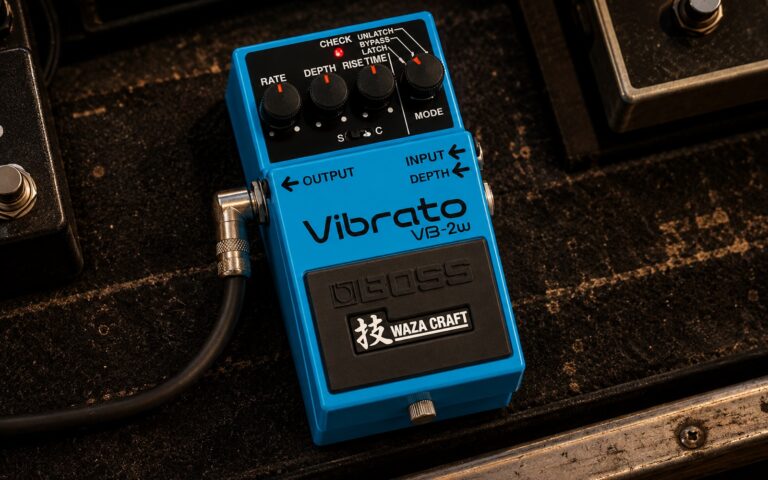
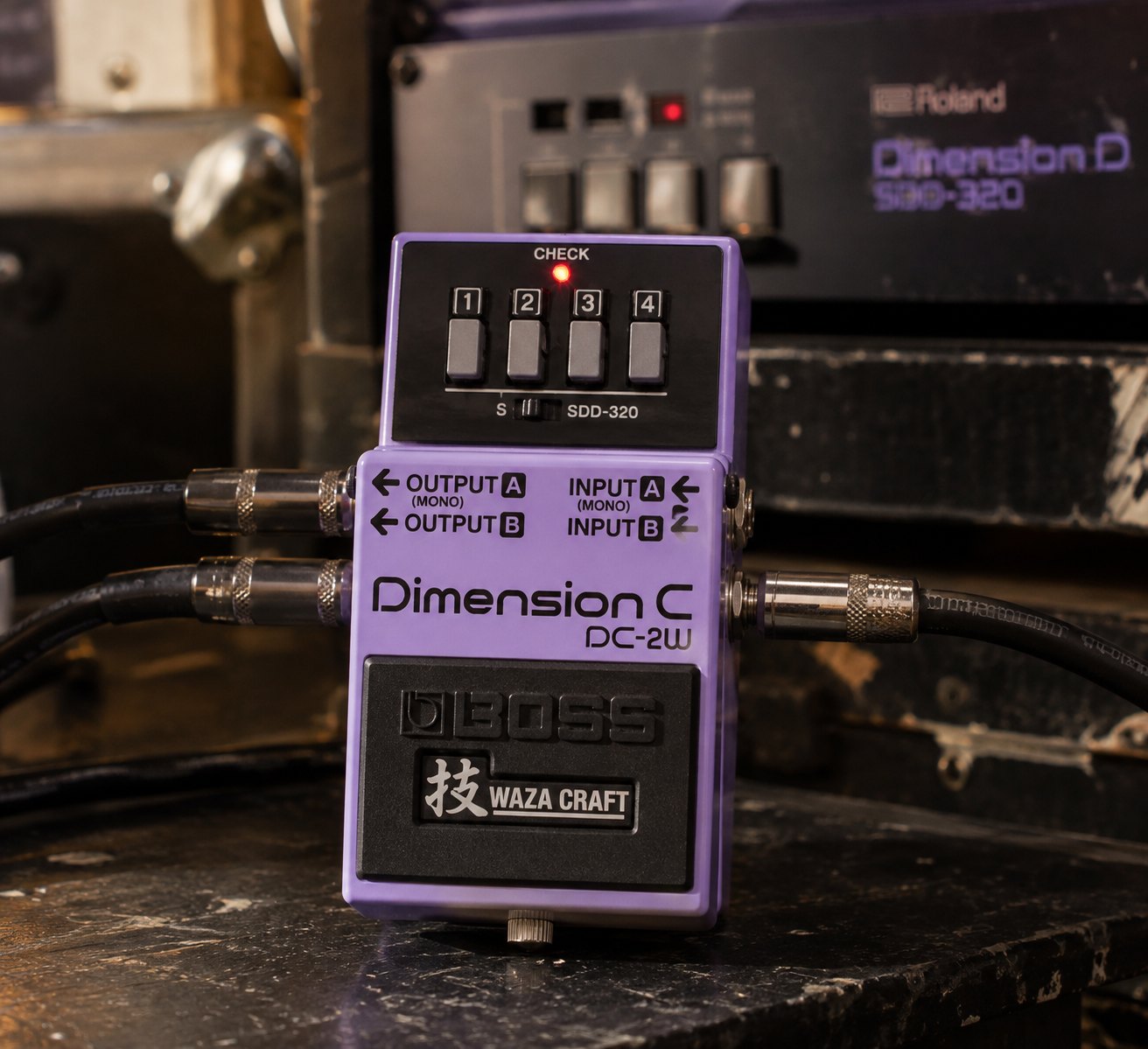
BOSS DC-2W Dimension C Waza Craft Pedal. AI-generated reference illustration, not a photograph.
The Boss DC-2W Dimension C Waza Craft recreates both the rare 1985 DC-2 pedal and the legendary Roland SDD-320 studio rack in one compact analog pedal.
Some guitar effects announce themselves the moment you engage them. Wah, flanger, ring mod — you hear them immediately, feel them working, and make room in your mix for their obvious presence. The Boss DC-2W Dimension C does the opposite. Engage it, and for a second you might wonder if anything changed. Then you turn it off. Suddenly everything sounds flat, narrow, one-dimensional. You turn it back on and realise what it was doing all along: quietly making everything a little bigger, richer, and more alive. That invisible quality — spatial enhancement without obvious modulation — is exactly why the Dimension effect has been one of the most coveted sounds in recording for nearly half a century.
From Studio Rack to Pedalboard: A History Worth Knowing
The story of the DC-2W starts in 1979 with the Roland SDD-320 Dimension D — a studio rack unit that became one of the most influential audio processors of the early 1980s. Where conventional chorus effects produce an unmistakable cyclic warble, the Dimension D took a different approach entirely. Using dual modulation sections running out-of-phase with each other, each with its own internally set depth and rate, combined with cross-feedback networks connecting the sections, it created a spatial widening effect that had no obvious tell-tale movement. The result was what engineers began calling “3D sound” — a sense of depth and width that enriched any signal without sounding like an effect at all.
Roland’s studio engineers designed the SDD-320 for professional applications from the start. It could process mono or stereo sources, and its four-button preset interface — giving engineers progressively deeper Dimension effects from button 1 through 4 — made it intuitive to use without interrupting a session to dial in settings. Very quickly, it became a studio secret weapon. Engineers discovered that pressing multiple buttons on the hardware sometimes produced unexpected additional sounds, though only two true variations were technically accessible this way on the original unit. That didn’t stop them from trying every combination.
By 1985, Boss had miniaturised the concept into the DC-2 Dimension C — a standard compact pedal format that brought the Dimension effect to guitar players. Unlike the SDD-320, the DC-2 was designed specifically for mono guitar input: its circuit was modified to produce the Dimension effect with a slightly different tonal flavour suited to a single-channel instrument signal. The same four-button interface appeared in miniaturised form. Despite players inevitably trying to press multiple buttons simultaneously on the DC-2, the original hardware produced no additional sound variations when they did — multiple presses simply engaged whichever button was most recently pressed.
The DC-2 was in production for only four years — discontinued in 1989 — making it one of the rarest pedals Boss ever manufactured in the compact format. Demand for vintage DC-2 units on the used market climbed steadily through the 2000s and 2010s as its reputation grew, eventually making original units genuinely expensive to acquire. In October 2018, Boss answered that demand with the DC-2W Dimension C Waza Craft — not simply a replica of the original, but a comprehensive reconstruction that adds the SDD-320 mode alongside the DC-2 Standard mode, plus the ability to press two buttons simultaneously in both modes for sounds that were never possible on the vintage hardware.
Inside the DC-2W: What Actually Makes It Work
The DC-2W’s audio signal path is built around charge-coupled delay-line chips — the same fundamental technology as the original Dimension D and DC-2. Two modulation sections run out-of-phase with each other, each having its own internally set depth and rate parameters, with cross-feedback networks linking the sections. This complex interaction is what creates the spatial effect: rather than a single LFO modulating a delay line up and down in an obvious sweep, multiple modulation sources working against each other produce a result that registers as width and depth rather than movement.
In a design decision Boss is transparent about, the LFOs and control circuits in the DC-2W are digital — but the audio signal path itself is entirely analog. This hybrid approach allows the dual modulation sections to be precisely controlled and reproduced with accuracy that pure analog LFOs couldn’t guarantee, while preserving the characteristic warmth and coloration of the original charge-coupled circuit in the audio path. In the original DC-2, everything was analog — both audio and control circuits — but the DC-2W’s modern refinement maintains sonic authenticity while achieving more reliable performance and the possibility of the expanded button combination sounds.
The S (Standard) mode reproduces the original DC-2’s circuit character. In SDD-320 mode, the modulation parameters change, feedback levels increase, and special filtering is added to the mix, creating a little more shimmer and sparkle compared to the DC-2 sound — capturing the tonal flavour of the rack unit with its different modulation tuning designed for studio use rather than guitar-specific application.
Specifications
| Parameter | Specification |
|---|---|
| Modes | S (Standard) / SDD-320 |
| Controls | Pedal switch, S/SDD-320 toggle, MODE SELECTOR buttons [1]–[4] |
| Total Sounds | 20 (4 presets × 2 modes + 6 two-button combos × 2 modes) |
| Inputs | INPUT A (MONO), INPUT B — both 1/4″ phone |
| Outputs | OUTPUT A (MONO), OUTPUT B — both 1/4″ phone |
| Bypass | Buffered bypass |
| Nominal Input Level | –20 dBu |
| Input Impedance | 2.2 MΩ |
| Nominal Output Level | –20 dBu |
| Output Impedance | 1 kΩ |
| Current Draw | 65 mA at 9V DC |
| Battery Life (Alkaline) | Approx. 6 hours |
| Dimensions | 73 × 129 × 59 mm (standard Boss compact) |
| Weight | 450 g (1 lb) including battery |
| Manufacture | Japan (Waza Craft) |
| Warranty | Boss 5-year warranty |
| Price (new) | ~$199–229 USD (street) |
| Price (used, excellent) | ~$130–165 USD |
The 65mA current draw is notably higher than most Boss compact pedals — driven by the complexity of the dual-section circuit. This means a dedicated isolated supply output rated 100mA or more per channel is recommended; daisy-chaining from a shared power source alongside other pedals may cause noise or instability. The 2.2MΩ input impedance is also higher than the standard 1MΩ found on most Boss compacts, making the DC-2W load pickups very lightly and contributing to its reputation for preserving the natural tone of the guitar.
Famous Players: Who Actually Uses It
The Dimension effect’s appeal spans far beyond guitar. Before looking at confirmed guitar players, it’s worth understanding how deeply the SDD-320 Dimension D infiltrated studio records of the early 1980s. Brian Eno used it as a studio processor. Peter Gabriel, Talking Heads, and Kate Bush ran tracks through it. Stevie Ray Vaughan’s engineers reached for it in the studio. David Gilmour’s Pink Floyd recordings carry its spatial signature. Andy Summers used the SDD-320 Dimension D rack unit on The Police’s Ghost in the Machine tour in 1981–82, adding its subtle dimensional quality to his clean guitar sounds. These aren’t DC-2 or DC-2W users — they’re SDD-320 users, and the DC-2W’s SDD-320 mode is designed to put that exact character in a pedalboard enclosure.
John Petrucci (Dream Theater)
John Petrucci is the most prominent confirmed guitarist to have the original DC-2 Dimension C on his pedalboard. During Dream Theater’s 2014 “Along for the Ride” tour, Petrucci’s guitar tech confirmed the original Boss DC-2 in his rig — visible on the pedalboard below his NS-2 Noise Suppressor. Petrucci’s playing demands extraordinary dynamic precision and tonal consistency across vast frequency ranges; the DC-2’s ability to add spatial richness without altering the dry tone’s character or dynamics made it a logical choice for clean and semi-clean passages where a conventional chorus would be too obvious.
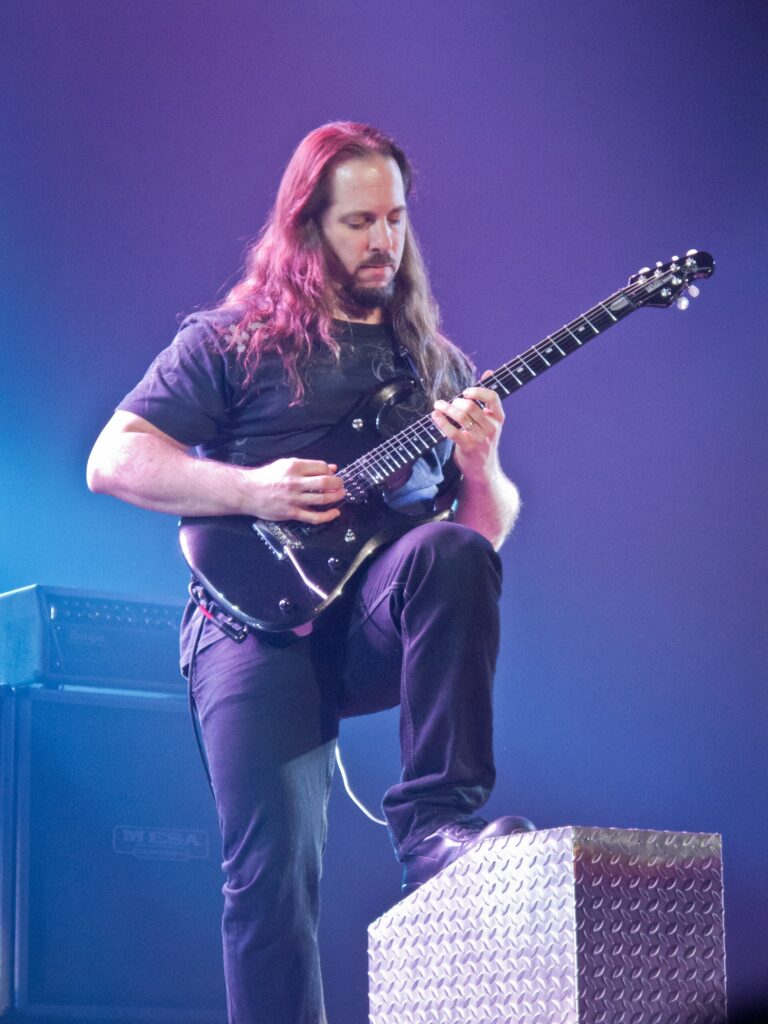
John Petrucci represents a category of player — technically demanding, dynamics-conscious, running complex multi-amp rigs — for whom the Dimension effect works precisely because it doesn’t compromise note clarity. In a rig that includes multiple gain stages, reverbs, and high-definition delay systems, adding a conventional chorus to a clean sound would compete with everything else. The DC-2 sits underneath all of it, widening the spatial image without fighting for attention.
Neil Halstead (Slowdive)
Neil Halstead of Slowdive is documented as a DC-2W user, which makes complete sonic sense given the band’s aesthetic. Slowdive’s signature sound is built on layers of modulation — chorus, phaser, reverb, tremolo — stacked with enough density that individual effects blur into textural atmosphere. The DC-2W’s ability to add width without contributing another recognisable modulation cycle to the mix makes it an ideal foundation layer: it widens the image before the more obviously cyclic effects engage. On a pedalboard already running multiple delay and reverb stages, a conventional chorus would add another identifiable sweep pattern. The DC-2W adds dimension without adding pattern.

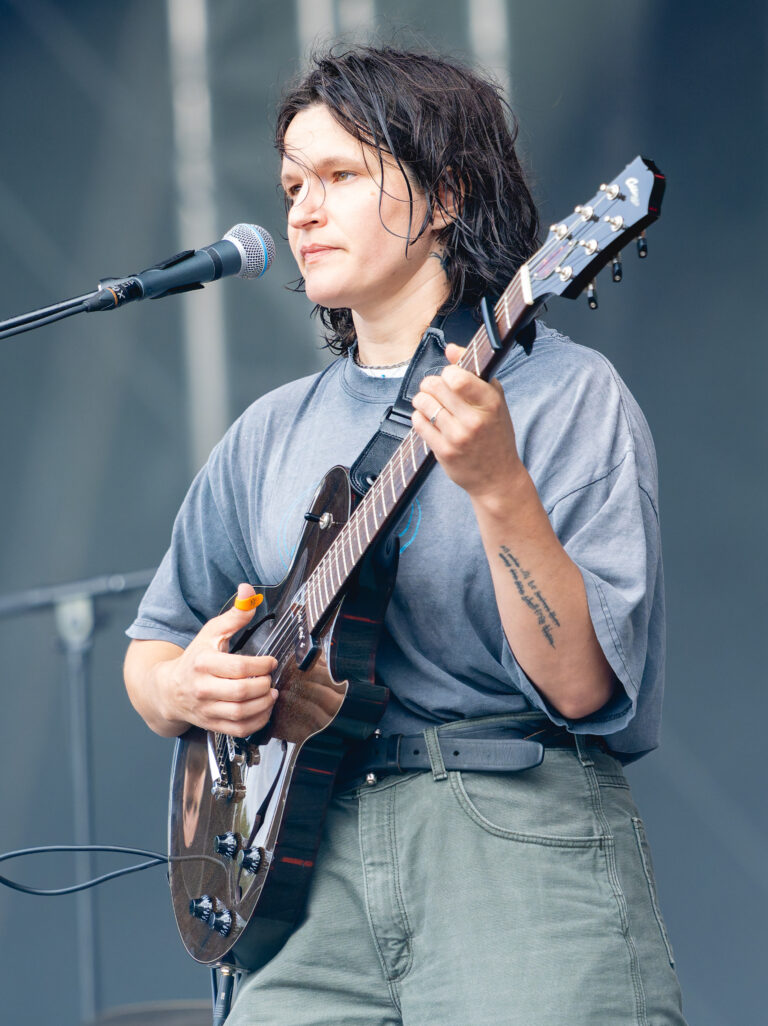
Adrianne Lenker (Big Thief)
Adrianne Lenker, guitarist and vocalist for Big Thief, is documented as a DC-2W user — a perhaps unexpected connection given Big Thief’s often stark, acoustic-leaning aesthetic. Lenker’s guitar playing favours intimacy and directness, characteristics that a heavy chorus would undermine. The DC-2W’s ability to add subtle body and depth to clean guitar without announcing itself makes it a tool for enhancing an acoustic-adjacent electric guitar sound rather than transforming it. Equipboard confirms her use of the pedal, consistent with her documented preference for effects that serve the song’s feel rather than define the sound.
Honest Note on Dimebag Darrell
The DC-2 and DC-2W are sometimes listed in connection with Dimebag Darrell of Pantera — likely because the pedal existed during Pantera’s peak years. Darrell’s documented rig, however, was built around Randall and Krank amplifier stacks with rack-mounted effects including MXR flanger, Lexicon processors, DigiTech Whammy, and Furman parametric EQ. No Boss DC-2 appears in any verified documentation of his pedalboard. This association appears to be inaccurate; Dimebag Darrell is not a confirmed DC-2 or DC-2W user, and this article makes no claim to the contrary.
Five Tone Recipes and Settings
Mode: S | Button: 1 only. The most subtle Dimension setting — often described as making guitars sound like they’re “just better” without the listener knowing why. Engage it on a clean Stratocaster into a Fender Deluxe Reverb with your usual spring reverb setting, then record a passage and compare with it engaged versus bypassed. The bypassed version sounds comparatively dull and compressed. Use as an always-on pedal at the front of a clean patch. Works on acoustic-electric pickups and electric piano sounds equally well.
Mode: S | Button: 2 only. Sound on Sound’s Paul White described buttons 1 and 2 in S mode as adding “a 12-string-like richness to the sound (but without the octave strings).” Button 2 pushes this one step further than button 1: the modulation rate and depth increase subtly, giving each note a slight shimmer and thickness that suggests doubled strings without introducing obvious chorus movement. Try this with a Telecaster bridge pickup into a clean or lightly broken-up amplifier playing arpeggios or single-note lines. The spatial widening adds body that makes single notes feel fuller.
Mode: SDD-320 | Button: 1 only. Switch to SDD-320 mode and engage button 1 for the most subtle version of the studio rack character. The SDD-320 mode adds more shimmer and sparkle compared to S mode — a filtering stage that Brian Eno and studio engineers of the era loved for sweetening vocals, piano, and guitar simultaneously. On a semi-hollow guitar into a clean tube amplifier with the DC-2W’s SDD-320 Mode Button 1 engaged, the result is a studio-polish quality that’s recognisably different from standard chorus but difficult to describe beyond “sounds like an expensive record.” This is the mode for adding depth to clean rhythm parts in a mix.
Mode: S | Button: 4 only. Button 4 is the deepest Dimension setting in S mode — still not a conventional chorus, but now unmistakably spatial and wide, wading into what Sound on Sound called “the shallow end of chorus.” This is the setting where the modulation becomes audible as movement rather than just width. Try it on lead guitar for a sound that’s wider and richer than your dry tone without the cyclic warble of a CE-2 or CE-2W. On a Les Paul into a lightly driven amplifier, button 4 in S mode adds a lush, almost reverb-like quality to sustained notes that works particularly well in studio rather than live settings.
Mode: SDD-320 | Buttons: 2 and 3 simultaneously. The DC-2W’s expanded electronic switching allows access to six “in-between” sounds per mode that were impossible on the original DC-2 or SDD-320. Pressing buttons 2 and 3 together in SDD-320 mode creates one of the most unique sounds in the pedal’s repertoire — a spatial character that falls between two presets, creating a modulation complexity that doesn’t correspond to any single original Dimension unit setting. Useful for keyboard and synthesiser processing as well as guitar; the dual-mode feedback network creates something genuinely dense and enveloping. Experiment with this combination on a Stratocaster neck pickup playing long, slow chord swells.
Comparisons: Where the DC-2W Sits in the Modulation World
The most important comparison is with the pedals the DC-2W lives alongside on most pedalboards — specifically the Boss chorus family. The Boss CE-2W Waza Craft Chorus ($199) is the direct Waza Craft sibling and addresses a completely different sonic goal. Where the CE-2W is explicitly a chorus pedal — with Rate and Depth controls, obvious cyclic modulation, and the ability to produce the sound most people think of as chorus — the DC-2W is not a chorus pedal at all. Boss’s own description is clear: it’s a spatial enhancer that uses chorus-adjacent technology but produces a fundamentally different result. You would use both on the same pedalboard for complementary purposes, not as alternatives to each other.
The Boss CH-1 Super Chorus (~$89–99) offers a more traditional chorus experience with Rate, Depth, EQ, and E.Level controls plus stereo output. The CH-1 is immediately audible as a chorus effect — great for classic ’80s clean shimmer but impossible to use as an “invisible” enhancer. The DC-2W at roughly $200 is more than double the price, but the two pedals don’t compete: the CH-1 is what you want when you want chorus; the DC-2W is what you want when you want dimension without obviously wanting an effect.
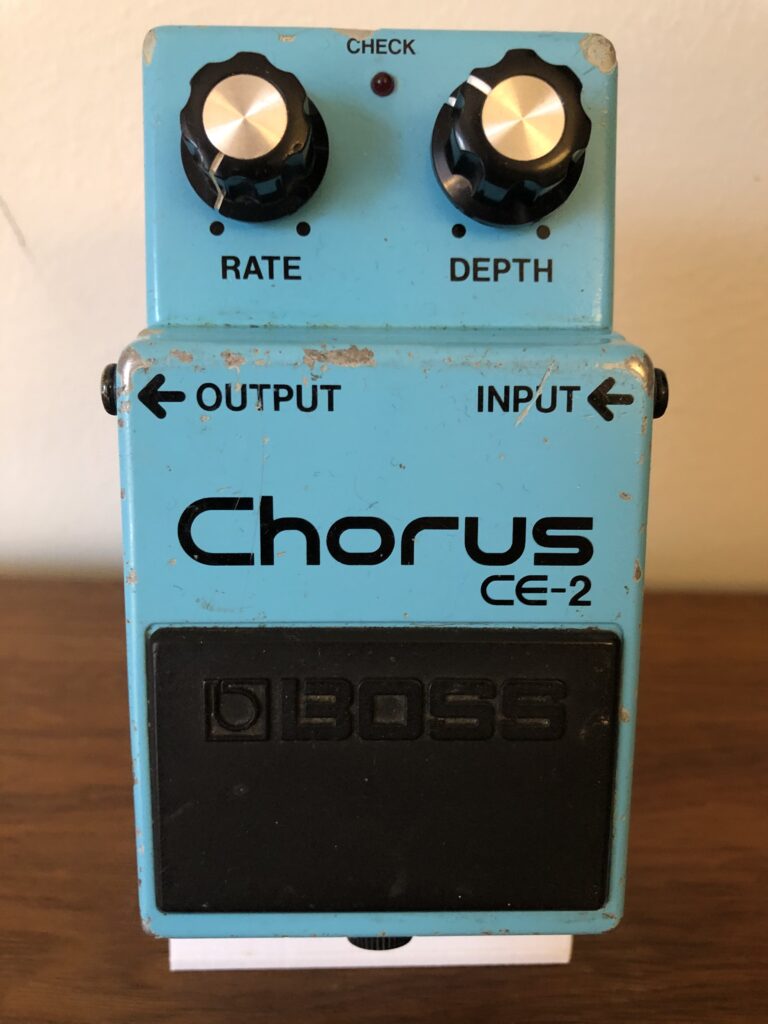
The Boss CE-2 Chorus (vintage, ~$150–250 used) is interesting to compare because the CE-2 and the original DC-2 were contemporaries — both Boss compact modulation pedals produced in the same era. The CE-2 is a conventional chorus with obvious, warm BBD modulation. The DC-2 was a completely different circuit concept. Owning both vintage units today is an expensive proposition; the DC-2W provides the Dimension character at a far more accessible price point than vintage DC-2 units now command (~$200–400+ for good examples).
TC Electronic’s 3rd Dimension Chorus is a digital approximation of the Dimension D character, available at a lower price point (~$129). It captures some of the spatial quality but implements it differently — digitally — and lacks the dual-mode S/SDD-320 flexibility of the DC-2W. For players who primarily want the general Dimension character and are on a budget, the TC Electronic option is worth investigating. For players who need the most authentic analog recreation with the expanded sound palette, the DC-2W is the reference standard.
Buying Guide: New Versus Used
The DC-2W is still in production as of 2026 and available new from authorised Boss dealers at approximately $199–229 depending on retailer and region. Unlike some Waza Craft releases, no limited editions or variants have been produced — there is one DC-2W version, and every unit manufactured is sonically identical. This simplifies the used market search considerably.
Used DC-2W units in excellent condition typically trade for $130–165 — a reasonable saving on the new price given that the unit was manufactured in Japan to Waza Craft standards and holds its value well. When buying used, check that both the S and SDD-320 modes engage correctly, that all four buttons produce their distinct settings (test each one in isolation), that the two-button combination functionality works (try pressing buttons 1+4 simultaneously in each mode — this should produce a sound distinctly different from either button alone), and that the stereo output functions correctly if you plan to use the pedal in a stereo rig.
The Boss five-year warranty transfers with the original purchase documentation; used units without documentation or outside the warranty period simply lose that coverage. Budget accordingly for any potential servicing needs, though the DC-2W has an excellent reliability record consistent with Boss Waza Craft build quality generally.
Power supply: the 65mA current draw makes it incompatible with most daisy-chain power setups. Budget for a quality isolated power supply with at least one output rated 100mA or more per isolated port. The Strymon Zuma, Cioks DC7, or Truetone 1 Spot Pro are appropriate options; the standard daisy-chain “one-spot” adapter is not, particularly if you have other complex pedals on the same chain.
Living with the DC-2W: Ownership Notes
The most common feedback from DC-2W owners is that it becomes a permanent “always-on” pedal — something that never leaves the pedalboard and is engaged at the start of every playing session. This is by design. The Dimension effect was conceived as a signal enhancer for recording sessions where it would run on a channel throughout the session, not as a special effect switched in for a solo or passage. Translating that studio philosophy to a live pedalboard means the DC-2W functions as a sound foundation rather than a sound event.
Placement in the signal chain matters less for the DC-2W than for most modulation pedals. Conventional chorus placement advice (after overdrive and distortion, before reverb and delay) doesn’t apply rigidly here because the Dimension effect doesn’t interact with gain stages the way a standard chorus does. Many players prefer it early in the chain to process the raw guitar signal before anything else; others place it after their main overdrive stages to add dimension to their driven tones. Both approaches work, and neither is “correct” — experiment with placement based on your specific rig.
The stereo output is one of the DC-2W’s most underused features in live situations. Running OUTPUT A into one amplifier and OUTPUT B into a second amplifier doesn’t create the wet/dry split of the CE-2W (OUTPUT A = wet, OUTPUT B = dry) — instead, both outputs carry the Dimension-processed signal, but with the phase relationships between the two modulation sections distributed across the stereo field. Through two amplifiers, this creates genuine physical dimensionality in the room that cannot be replicated in mono. If you run a stereo rig with two amplifiers panned apart — any combination from a clean/dirty stack to a Fender/Marshall setup — the DC-2W’s stereo output is worth engaging for the widening effect alone.
The S versus SDD-320 mode toggle is best explored with the same button setting to hear the character difference clearly. Set the pedal to button 2, then toggle between S and SDD-320 mode while playing. The S mode is smoother and more even in frequency response; the SDD-320 mode adds shimmer in the upper mid-range and slightly more complex feedback behavior. The SDD-320 mode can polarise players who prefer the more neutral S mode character — both are genuinely excellent, but they suit different applications.
Frequently Asked Questions
Is the Boss DC-2W actually a chorus pedal?
Not in the conventional sense. Boss describes it as a spatial enhancer that creates “an impression of depth and width without any prominent modulated movement.” The circuit uses charge-coupled delay lines and LFO modulation similar to a chorus, but the dual-phase, cross-feedback architecture produces a fundamentally different result — spatial enhancement rather than obvious cyclic modulation. Sound on Sound called it “the ultimate chorus effect for people who don’t like chorus.”
What’s the difference between S mode and SDD-320 mode?
S (Standard) mode reproduces the original Boss DC-2 Dimension C pedal from 1985 — a modified version of the Dimension D circuit specifically tuned for mono guitar input. SDD-320 mode reproduces the Roland SDD-320 Dimension D studio rack unit from 1979 — with different modulation parameters, higher feedback levels, and special filtering that adds shimmer and sparkle to the effect. The SDD-320 mode has a brighter, more complex character; the S mode is smoother and more neutral.
What are the two-button combinations, and how many are there?
Pressing any two buttons simultaneously in either mode accesses “in-between” sounds not available on the original hardware. The original DC-2 produced no additional sounds from multiple button presses; the DC-2W’s electronic switching enables six two-button combinations per mode (buttons 1+2, 1+3, 1+4, 2+3, 2+4, and 3+4). Combined with four single-button settings per mode across two modes, that gives 20 distinct sounds total. The two-button combinations produce sounds between adjacent presets rather than extreme combinations.
How does the 65mA current draw compare to other Boss pedals?
It’s notably high for a Boss compact. The DS-1 draws 5mA, the CE-2W draws 25mA, the CH-1 draws 55mA. The DC-2W at 65mA reflects the complexity of its dual-section circuit — two complete modulation paths with cross-feedback networks require more power than single-circuit designs. An isolated power supply rated 100mA or more per output is required; battery use is functional but gives only about 6 hours of continuous play.
Can the DC-2W be used with instruments other than guitar?
Yes, and historically this was its primary application. The original SDD-320 Dimension D was designed for studio use on any instrument — vocals, piano, synthesisers, strings, bass. The DC-2W inherits this versatility. Keyboard players and synthesiser users who want the spatial SDD-320 character without rack hardware can run the DC-2W directly in their signal chains. The stereo I/O makes it particularly practical for stereo keyboard setups.
Does the DC-2W preserve the original DC-2’s mono-only input circuit?
The S mode reproduces the DC-2’s sound — which was designed for mono input — but the DC-2W adds INPUT B for stereo input capability that the original DC-2 never had. When using INPUT A only, the pedal operates in mono and S mode replicates the original DC-2 character. Using both inputs provides stereo processing, which is more aligned with the SDD-320’s original studio application than the DC-2 pedal’s guitar-specific design.
How does the DC-2W compare in price to a vintage original DC-2?
Significantly more accessible. The original Boss DC-2, produced for only four years (1985–1989), now trades on the used market for roughly $200–400 or more in excellent condition — and sometimes higher for prime units given their rarity and demand. The DC-2W at $199–229 new provides an expanded version of that circuit with added SDD-320 mode, stereo I/O, and two-button combination sounds, for approximately the same price as a budget-condition original or less than a pristine one.
Is the audio signal path truly analog despite having digital LFOs?
Yes. Boss is explicit about this: the LFOs and control circuits are digital for precision and reliability, but the audio signal itself passes entirely through the analog charge-coupled delay-line circuit. No audio conversion to digital occurs at any point in the signal path. The Waza Craft designation requires genuine analog audio circuitry, and the DC-2W meets that standard — the digital component only controls how the analog circuit is modulated, not what happens to the audio signal itself.
Image credits
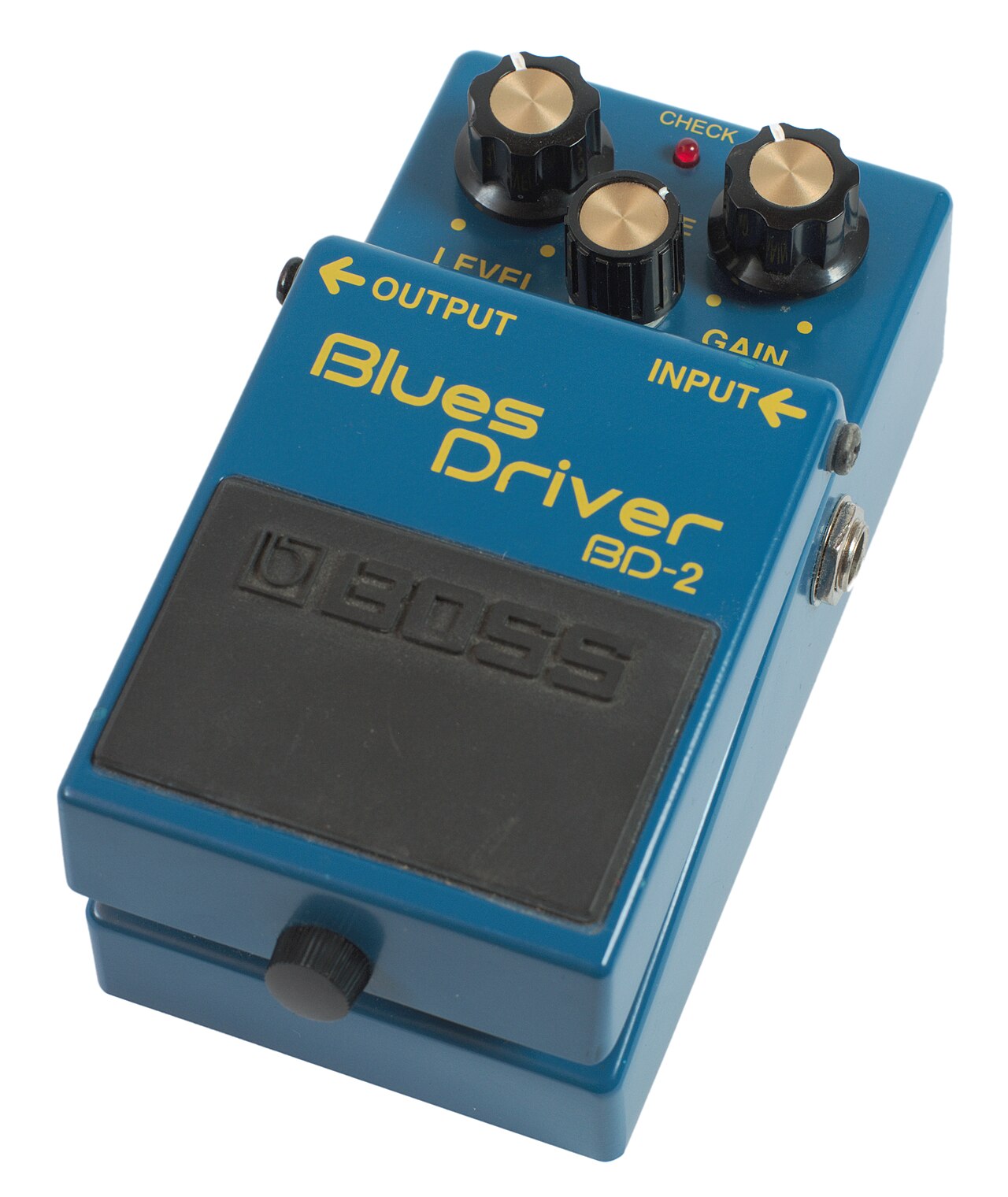
- A Boss Blues Driver BD-2 pedal: El Grafo, Wikimedia Commons, CC BY-SA 4.0.
- Top image: GuitarGangsters AI-generated reference illustration, not a photograph.
- John Petrucci: Carlos Delgado, Wikimedia Commons, CC BY-SA 3.0.
- Neil Halstead: Ralf Lotys, Wikimedia Commons, CC BY 4.0.
- Adrianne Lenker: Raph_PH, Wikimedia Commons, CC BY 2.0.
Latest News
Related
On This Day
Monday 9 November
From this week: