Boss SY-200 Synthesizer: The Polyphonic Shape-Shifter Your Pedalboard Has Been Waiting For
Boss SY-200 Synthesizer review: 171 sounds, 128 memories, polyphonic tracking for guitar and bass. Specs, tone recipes, comparisons, and honest player info.
There is a long, tangled history between the guitar and the synthesizer — a relationship defined by ambition, latency problems, hexaphonic pickups, and racks of gear that weighed more than your car. Roland launched the GR-500 in 1977, and while it sounded genuinely heavenly on David Bowie’s “Ashes to Ashes,” it required a specially wired guitar and enough rack space to fill a small studio. Decades of iteration followed: GR-300, GR-700, VG-8, SY-300 — each generation trimming the size, tightening the tracking, democratizing the dream. The Boss SY-200, released in 2022, is where that dream finally lands inside a single mid-size two-button stompbox with no hexaphonic pickup, no special guitar required, and near-zero latency that actually feels like playing a guitar.
The SY-200 sits in the middle of Boss’s evolving synth lineup — above the compact Boss SY-1 and below the full-processor SY-300 — and it finds a genuinely useful position in that space. More sounds than the SY-1. More memories. MIDI. A parallel effects loop. All in the familiar -200 series twin-button housing that players of the RE-202, RV-500, and DD-500 already know. Premier Guitar gave it a 4.6 out of 5 and a Gear Award in 2022. The SY-200 earned it.
From GR-500 to SY-200: A Brief History of Boss and Guitar Synthesis
Roland’s relationship with guitar synthesis stretches back nearly half a century. The GR-300 of 1980 — the one Carlos Santana, Pat Metheny, and Robert Fripp actually used — set the sonic template for guitar synth with its warm, violin-like sustain and distinctive fretted pitch response. It sounded like a synthesizer that breathed. The problem was everything else: the dedicated GR guitar, the floor controller, the rack unit. It was a three-piece system for a one-guitar sound.
Boss, Roland’s stompbox division, began entering the synthesis space through a different door — the standalone pedal. The SYB-3 Bass Synthesizer arrived in 1998, offering monophonic synth filtering for bassists. It tracked adequately on single notes but buckled under chords. The fundamental limitation wasn’t processing power; it was polyphony. A guitar plays chords. A monophonic synth engine fights chords. The whole enterprise felt like strapping a jet engine to a bicycle.
The Boss SY-300 (2014) changed the conversation dramatically. It was the first Boss unit to track polyphonically with genuine reliability — no hexaphonic pickup, any guitar, plug and play. It was large, expensive at over a thousand dollars, and heavy enough to anchor a pedalboard at sea. But it worked. The SY-1 (2019) took the same polyphonic tracking concept and squeezed it into a standard compact enclosure at $199, accepting the trade-off of fewer sounds and no memories. The SY-200 (2022) is the synthesis of both philosophies: SY-1 tracking fidelity, SY-300-adjacent sound count, a form factor that fits on any serious pedalboard, and memories that turn the pedal into a setlist-ready performance instrument.
The manual copyright reads © 2021 Roland Corporation, placing the SY-200’s development firmly in the pandemic era when players stuck at home were rethinking their signal chains. Its release into a world of players hungry for sonic novelty could not have been better timed.
Inside the SY-200: Architecture and Controls
Open the lid on the SY-200’s signal processing and what you find is a polyphonic synthesis engine that takes your guitar’s audio — converted at 24-bit — and transforms it in real time without requiring any pitch-to-MIDI conversion. This is the key distinction. The SY-200 doesn’t translate your guitar into MIDI note data and then trigger a synth voice. It analyzes the pitch and dynamics of your playing and generates synthesized tones that track what you play. The result is near-zero latency that actually feels like your guitar — not a 15ms gap between pick attack and synth response that destroys playing feel.
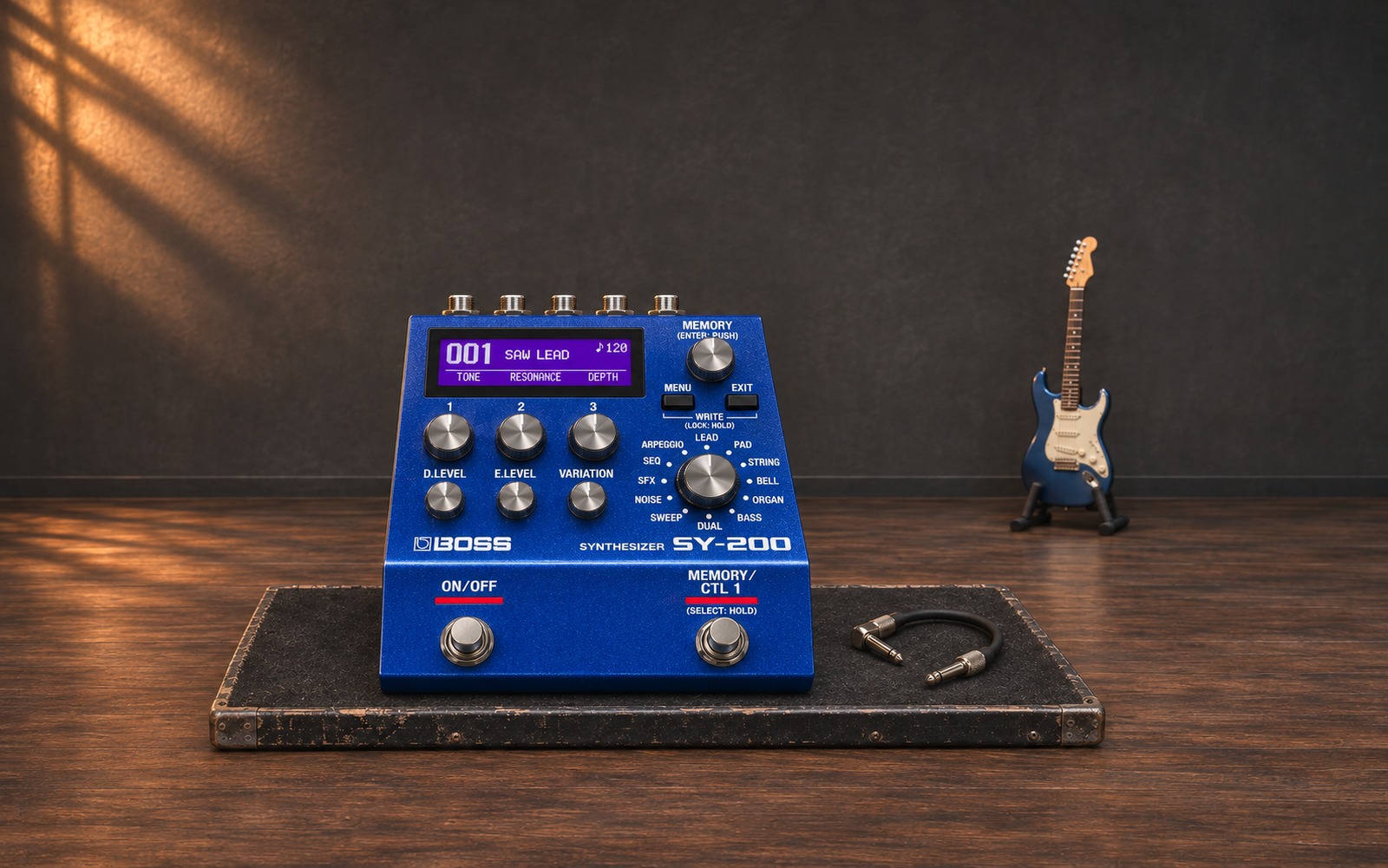
The architecture organizes 171 total sounds into 12 categories, each offering up to 30 variations dialed in via the Variation knob:
- Lead — focused, forward synth tones for solo lines
- Pad — slow-attack, lush wash sounds for layering under playing
- String — orchestral string emulations from chamber to section swell
- Bell — bright, metallic, attack-forward tones
- Organ — drawbar-style organ voices from clean through driven
- Bass — low-register synth tones optimized for bass-register playing
- Dual — combined thick voices with harmonically rich stacking
- Sweep — filter-sweep and auto-wah style envelopes
- Noise — textural, unpredictable modulation sounds
- SFX — octave shifts and abstract modulated effects
- Sequence — rhythmic step-sequenced synth patterns
- Arpeggio — auto-arpeggiator voices that animate sustained chords
Each sound has three tweakable parameters: Depth (modulation intensity or envelope amount), Tone (brightness and character), and Resonance (the classic synth filter resonance peak). These are complemented by D.Level (dry guitar volume) and E.Level (effect/synth volume), letting you blend organic guitar tone with synthesized voice across the full range from 100% dry to 100% wet. The Variation dial selects among the sub-voices within each category, with the LCD screen showing the current preset name and number at all times.
The control surface is eight rotary encoders and two footswitches. The Memory/CTL1 switch scrolls through and confirms the 128 preset memory slots, and doubles as a tap tempo for Arpeggio and Sequence category timing. CTL2 provides additional assignable control. Two external control inputs accept expression pedals (for real-time parameter sweeping) or additional footswitches. This is where the SY-200 becomes genuinely configurable: an expression pedal on the EXP input can morph depth, tone, resonance, or effect level in real time — turning a static synth voice into a living, responsive texture.
The SEND/RETURN parallel effects loop is the SY-200’s most underrated feature. By routing external pedals into the loop — an overdrive, a fuzz, a ring modulator — you can process the synthesized voice independently of the dry guitar signal. The result: a distorted organ sound running into a tube-screamer-style overdrive in the loop while your clean guitar tone passes through unaffected. High-gain synth bass voices become genuinely aggressive through a fuzz in the loop without destroying the polyphonic tracking, because the tracking reads the clean input before the loop processes the output.
MIDI connectivity via 3.5mm TRS jacks (standard Boss mini-TRS format, requiring adapters for 5-pin DIN) allows patch recall via program change messages and integration into MIDI-controlled rigs. USB provides a firmware update path and access to Boss Tone Studio software for patch management.
Build and Specs
| Specification | Details |
|---|---|
| Released | 2022 |
| Series position | Boss -200 twin-button (between SY-1 compact and SY-300 full-processor) |
| Sound categories | 12 (Lead, Pad, String, Bell, Organ, Bass, Dual, Sweep, Noise, SFX, Sequence, Arpeggio) |
| Total sounds | 171 (across 12 categories with up to 30 variations each) |
| User memories | 128 |
| Tweakable parameters per sound | 3 (Depth, Tone, Resonance) |
| Polyphonic tracking | Yes — no hexaphonic pickup required |
| Latency | Near-zero (not discernible while playing per MusicRadar review) |
| Guitar/Bass mode | Yes — optimizes tracking algorithm for instrument range |
| SEND/RETURN loop | Yes — parallel effects loop for independent synth processing |
| Footswitches | 2 (Memory/CTL1 + CTL2) |
| External control | Two inputs — expression pedal + external footswitch assignable |
| MIDI | IN/OUT via 3.5mm TRS mini jacks (adapter needed for 5-pin DIN) |
| USB | Yes — firmware updates + Boss Tone Studio |
| Display | LCD (approx. 1″ x 2.5″) |
| Bit depth | 24-bit |
| Power | 3×AA alkaline batteries or PSA-series AC adapter (500mA) |
| Dimensions (W×D×H) | 101 × 138 × 63mm / 4″ × 5-7/16″ × 2-1/2″ |
| Weight | 630g / 700g with batteries |
| Price new (2022 street) | ~$299 USD |
| Price new (2026) | ~$285–$293 USD (Sweetwater / various) |
| Price used (excellent) | ~$170–$220 USD |
| Warranty | Boss 5-year |
Famous Players: An Honest Report
The Boss SY-200 launched in 2022, which means its famous-player roster is still forming relative to older pedals with decades of documented use. Equipboard lists 2 professional artists using the SY-200, a small number that honestly reflects both the pedal’s newness and the niche nature of guitar synthesizer adoption among touring players.
The most compelling documented SY-200 user is Henrik Linder, the bassist of Dirty Loops — the Swedish jazz-fusion trio known for producing technically staggering arrangements of pop songs that shouldn’t work at anything other than face-melting tempos, and somehow do. Linder’s bass playing is among the most technically demanding in contemporary music, and his pedalboard was documented in depth via Scott’s Bass Lessons’ YouTube video “The most INSANE Pedalboard w/ HENRIK LINDER (Dirty Loops)” — a real-world pedalboard walkthrough that confirms the SY-200 as part of his live rig. Linder uses the SY-200 for synthesized bass voices and, critically, for the lead synth sound on “Follow the Light” — an octave-up Lead voice that runs into an amp simulator with Whammy, delay, and a noise gate. In his hands the SY-200 becomes a solo instrument voice, not just a color layer behind his bass tone. His FM9 handles approximately 85% of his sounds, with the SY-200 handling specific synth bass textures that his primary rig doesn’t cover as naturally. This is community-video confirmed usage — not a Premier Guitar Rig Rundown primary source, but real-world documented and substantial.
Jonathan Hischke (The Sound of Animals Fighting) appears on Equipboard as an SY-200 user, sourced via TalkBass.com community forum documentation. This is community-level attribution — not a primary source such as a manufacturer page, Premier Guitar Rig Rundown, or verified interview. Given the nature of the source, Hischke is mentioned here as an Equipboard-listed community-documented user without confirmed primary-source verification.
Beyond these two, the SY-200’s real user base lives in the working-musician tier: producers, session players, and live performers who don’t necessarily have Premier Guitar rig rundowns but who have integrated it into gigging rigs for exactly the reasons the pedal exists — an instant polyphonic synth voice without the complexity of a full synthesis system. The Guitar World, Premier Guitar, MusicRadar, and Sound on Sound coverage all point to a pedal aimed at exactly this player: someone who wants to expand their sonic vocabulary in a live context without a keyboard rig or a module rack.
Tone Recipes and Real-World Settings
1. Slow-Attack Pad Layer (Atmospheric Clean Channel)
Category: Pad. Variation: 5–10 (Slow Sweep range). D.Level: 70 (guitar audible in the mix). E.Level: 40–50. Resonance: 55–65. Tone: 45 (darker, less fizz). Depth: 60. This setting creates a slow-attack synth wash that blooms behind your guitar tone. Ideal for clean-channel passage work where you want orchestral dimensionality without the guitar getting swallowed. Works beautifully through a clean Fender platform like the Fender Deluxe Reverb.
2. Lead Synth Solo Voice (Octave Lead)
Category: Lead. Variation: 1 (Oct Lead 1). D.Level: 63. E.Level: 30. All other controls at noon. This is close to the setting documented in the Premier Guitar review and similar to what Henrik Linder uses on “Follow the Light” before the signal hits downstream processing. Focused, forward, tight tracking. Adds a synth octave voice above your guitar note. Works on single-note lines; chord passages get dense quickly, which is sometimes exactly what you want.
3. Layered Organ Rhythm Voice (Jon Lord Mode)
Category: Organ. Variation: 8 (Layered Organ — the PG reviewer specifically called out hearing key-click character here). D.Level: 50. E.Level: 70. Tone: 55. Resonance: 45. Depth: 50. A beefy Hammond-style chord accompaniment voice. Run it through a Marshall JCM800 on the clean input with the preamp barely cooking and you get an extraordinarily convincing organ grind. Don’t use high gain — the organ voice needs amp headroom to bloom rather than compress.
4. Bass Synth Octave (Low-End Augmentation)
Category: Bass. Variation: 1–5. Switch to Bass mode. D.Level: 40. E.Level: 75. Tone: 35 (dark and round). Resonance: 50. Depth: 65. This is the SY-200’s native territory for bass guitar players — a fundamental-reinforcing sub-octave voice that sits below the natural bass tone and thickens the low end dramatically. Route the synth output to a keyboard amp or PA for full-range reproduction; a guitar cabinet will roll off the bottom end of the Bass voice prematurely.
5. SEND/RETURN Fuzz Organ (Dirty Synth)
Category: Organ or Dual. Place a fuzz pedal (a Big Muff works well) in the SEND/RETURN loop. D.Level: 30. E.Level: 60. Fuzz gain: moderate to high. The SY-200 reads your clean input for tracking, then sends the synthesized organ voice into the fuzz. The result is a gnarly, overdriven organ character that would be impossible to achieve by placing fuzz after the SY-200 (which would kill the polyphonic tracking). This technique is the SY-200’s dirty secret for players who want aggressive synthesized tones.
6. Arpeggio Texture (Sequenced Ambient)
Category: Arpeggio. Set tap tempo via Memory/CTL1 hold to match your track tempo. Variation: 2–5. D.Level: 55. E.Level: 50. Resonance: 60. Depth: 65. Hold a chord. The SY-200 arpeggiates the notes within the chord at the tapped tempo, creating a step-sequencer effect driven by your chord voicing rather than programmed MIDI data. Adding a long reverb after the SY-200 — say, from the Boss RV-6 — transforms this into a shimmering ambient texture with genuine rhythmic pulse.
7. Sweep Filter Auto-Wah (Dynamics-Responsive)
Category: Sweep. Variation: 6–12. D.Level: 65. E.Level: 55. Depth: 70. Tone: 60. Resonance: 65. Connect an expression pedal to the EXP input and assign it to Resonance. The Sweep category responds to pick attack dynamics, making the filter open harder when you dig in. Layering expression pedal control over resonance as you play turns a static auto-wah into a fully live, responsive filter instrument. Works well into a clean Fender Stratocaster signal with the SY-200 early in the chain.
Comparisons: How the SY-200 Stacks Up
SY-200 vs. Boss SY-1
The SY-1 is the SY-200’s compact sibling and natural predecessor. The SY-1 has 121 sounds (11 types × 11 variations), no memories, no MIDI, no effects loop, and a single footswitch. The SY-200 has 171 sounds, 128 memories, MIDI, a parallel SEND/RETURN loop, and two footswitches. For players who use the SY-1 on a single patch and never move, the SY-200’s additional features are unnecessary overhead. For anyone who wants to recall different synth voices per song, integrate with a MIDI rig, or route effects through the loop independently — the SY-200 is categorically a different instrument.
SY-200 vs. Source Audio C4 Synth
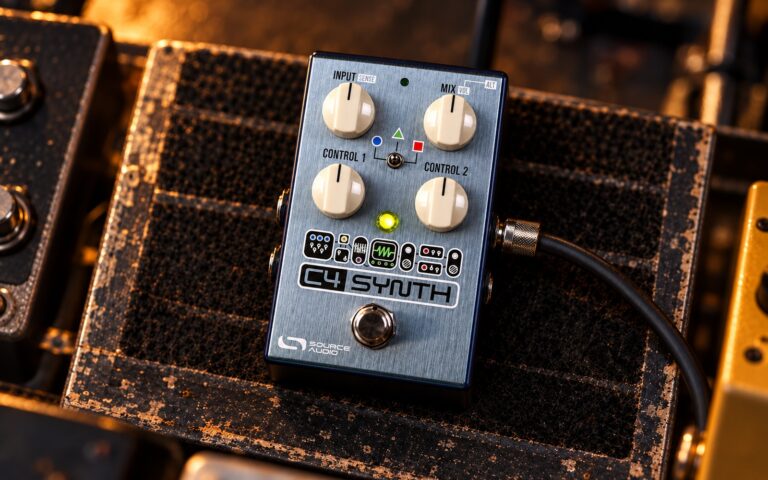
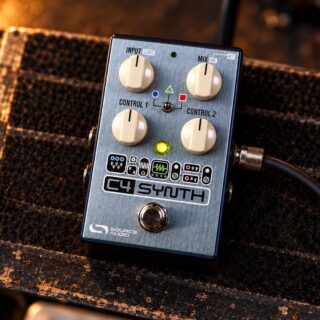
The Source Audio C4 Synth is the deep-programming alternative. The C4 offers genuine oscillator and filter control via the Neuro app, allowing envelope, LFO, and filter architecture to be configured from scratch. It is a more powerful synthesis engine for players willing to invest in programming time. The SY-200 wins on immediacy, build quality, SEND/RETURN loop, and the 128-memory preset system that stores complete sound settings without software required at gig time. The C4 wins on synthesis depth. They are complementary tools aimed at different workflow preferences.
SY-200 vs. Electro-Harmonix POG2
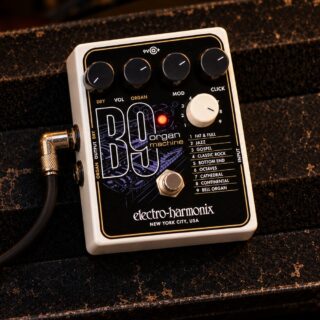
The EHX POG2 is not a synthesizer — it is an octave generator. The comparison still comes up because both occupy the “making your guitar sound like something else” territory. The POG2 creates organ-like textures by stacking sub-octave and octave-up voices. It does not do pads, arpeggios, sequences, or the full synthesis vocabulary of the SY-200. Players using a POG2 as an organ voice supplement sometimes find the SY-200’s Organ and Dual categories more convincing and more versatile, though the POG2’s analog-adjacent character has its own signature warmth that the SY-200’s digital engine does not precisely replicate.
SY-200 vs. Boss SY-300
The SY-300 (2014) is Boss’s full-processor guitar synthesizer — a large unit closer in size to the DD-500 or RV-500 but more complex, with three DSP blocks, deep modulation routing, and onboard effects. It is available used for $350–$500 and represents a categorically deeper dive into guitar synthesis than the SY-200. The SY-300 wins on programming depth, routing flexibility, and the density of its modulation architecture. The SY-200 wins on pedalboard real estate, ease of use, and fast live operation. The SY-300 is a studio and deep-editing tool; the SY-200 is a gigging instrument.
SY-200 vs. Roland GR-55
The GR-55 represents Roland’s hexaphonic pickup-based synthesis approach — a full guitar synthesizer system requiring a GK-equipped guitar. It offers modeling, COSM guitar sounds, and polyphonic synthesis that goes far beyond what the SY-200 does. It is also larger, more expensive, and requires a dedicated instrument to use properly. The SY-200 is the answer for players who want synthesis from their existing guitar without the GK system. They coexist in completely different product philosophies.
Buying Guide: Who the SY-200 Is For
The SY-200 makes most sense for a specific player profile: someone who plays guitar or bass, wants to expand into synthesis territory in live performance, doesn’t want to add a keyboard rig or dedicate a rack slot to the task, and values reliable polyphonic tracking over deep synthesis programming. If those criteria describe you, the SY-200 is one of the most direct paths to that goal in 2026.
It also makes sense as an upgrade from the SY-1 for players who have outgrown a single patch. If you’re running your SY-1 on the same setting every night and wish you could recall different voices for different songs, the SY-200’s 128 memories address that limitation directly without requiring you to learn a new tracking engine.
The SY-200 is less suited to players who want to dig deep into synthesis programming — adjusting oscillator wave shapes, envelope timing at millisecond precision, building filter modulation chains from scratch. Those players should look at the Source Audio C4, the Roland GR-55 ecosystem, or software synthesis solutions. The SY-200’s three parameters per sound are deliberately approachable, not exhaustively programmable.
On the power supply front: the SY-200 requires a PSA-series AC adapter (500mA, sold separately) or three AA alkaline batteries. Battery life is adequate for rehearsal use but the adapter is practical necessity for any sustained gigging. The 500mA requirement means that standard 100mA or 200mA isolated outputs on most pedalboard power supplies will not work — check that your power supply has at least one 500mA isolated output before buying.
Owning and Operating the SY-200
The SY-200 rewards one practical habit: spend time with the manual’s preset list (Boss provides a downloadable PDF listing all 171 sounds since they are not in the physical manual — a notable omission in the physical documentation) before your first gig rather than scrolling through sounds under stage lights. The LCD is genuinely legible, but knowing that your go-to sound lives at preset 074 “Layered Organ” means you’re navigating with purpose rather than browsing.
Signal chain position matters more than with most pedals. Because the SY-200 reads your raw guitar signal for polyphonic tracking, heavy distortion or compression before it can affect tracking accuracy. Mild compression before the SY-200 (leveling pick attack) can actually improve tracking consistency, but hard clipping or heavy fuzz placed before the SY-200 will degrade tracking quality. Boss recommends — and practice confirms — that drives and gain effects belong in the SEND/RETURN loop for processing the synth voice, not before the SY-200 in the main chain.
The Guitar/Bass mode switch on the rear panel is not cosmetic. Bass players running through the SY-200 in Guitar mode get suboptimal tracking — the algorithm is calibrated for the fundamental frequency range of guitar and struggles with the lower register. Bass players should run Bass mode. Guitarists should run Guitar mode. Simple rule, consistent benefit.
One creative technique worth building into your workflow: use the SEND/RETURN loop as a recording tool by routing the SY-200 into an audio interface with the loop’s SEND jack feeding a separate input. You can record the synthesized voice on one track and the dry guitar on another, mixing them in post with independent processing on each. The SY-200 becomes a dual-output performance recorder in this configuration — something its architecture supports naturally even though it’s not marketed that way.
Frequently Asked Questions
Does the Boss SY-200 require a special guitar or hexaphonic pickup?
No. Connect any electric guitar or bass with a standard 1/4-inch cable to the SY-200 input and polyphonic tracking begins immediately. No GK pickup, no special wiring, no modified instrument required. This is one of the SY-200’s primary selling points versus older Roland guitar synthesis systems.
How does the SY-200 differ from the SY-1?
The SY-200 has 171 sounds (vs. SY-1’s 121), 128 user memories (SY-1 has none), MIDI in/out (SY-1 has none), a parallel SEND/RETURN effects loop (SY-1 has none), two footswitches (SY-1 has one), and external control inputs for expression pedals. The SY-200 is a larger, more expensive, and significantly more feature-rich pedal. The SY-1 is simpler, cheaper, and smaller. Both use the same polyphonic tracking engine.
What is the 500mA power requirement about?
The SY-200 requires a PSA-series 500mA AC adapter (sold separately) or three AA batteries. Most isolated pedalboard power supply outputs are rated at 100mA, 200mA, or 300mA — none of which are sufficient. You need a dedicated 500mA output. Check your power supply’s output specifications before purchase. Strymon Zuma, Cioks DC7, and similar multi-output supplies with 500mA+ isolated outputs can handle the SY-200 without issue.
Can the SY-200 work with bass guitar?
Yes, explicitly. Switch the Guitar/Bass selector on the rear to Bass mode. The tracking algorithm recalibrates for the lower fundamental frequency range of bass guitar. The Bass category sounds in particular are optimized for this use case. Henrik Linder of Dirty Loops uses the SY-200 with bass guitar in his live pedalboard, confirming real-world performance viability.
Is the polyphonic tracking reliable on chords?
Yes, with the caveat that chord complexity and playing style affect results. Clean playing with clear articulation — standard fretting, consistent pick attack — produces reliable polyphonic tracking across most sounds. Fast runs and complex chord clusters in some of the more abstract categories (Noise, SFX) can produce occasional inconsistencies, which can usually be managed by reducing the E.Level control. The Lead and Pad categories track most cleanly; Sequence and Arpeggio categories are less dependent on perfect tracking because their rhythmic character is tolerant of minor variations.
How do the 128 memories work?
Each memory slot stores a complete snapshot of all SY-200 settings: sound category, variation, depth, tone, resonance, D.Level, E.Level, Guitar/Bass mode, and external control assignments. To save, hold the Menu and Exit buttons simultaneously, then press the Memory/CTL1 dial. Memories are recalled in performance by pressing the Memory/CTL1 footswitch and scrolling. This makes it genuinely practical to use different synth voices per song in a live set — a capability the SY-1 simply does not have.
Does the SY-200 have MIDI patch recall?
Yes. MIDI Program Change messages received on the MIDI IN jack (3.5mm TRS, requiring a TRS-to-DIN adapter for standard MIDI cables) will recall the corresponding memory slot. This allows the SY-200 to be integrated into a MIDI-controlled rig where patch changes are handled by a MIDI controller or switcher. The 128 memories align with standard MIDI program change numbering.
What’s the difference between SY-200 and SY-300?
The SY-300 (2014) is a full guitar synthesizer processor with three independent DSP blocks, deep modulation routing, onboard reverb and delay, and a programming architecture that approaches software synthesis flexibility. It is physically much larger, available used for $350–$500, and aimed at players who want to build synthesis patches from the oscillator level up. The SY-200 is plug-and-play by design — three parameters per sound, no deep modulation architecture, built for immediate results. SY-300 is for the synthesizer enthusiast who happens to play guitar; SY-200 is for the guitarist who wants synthesis without becoming a synthesizer programmer.
Image credits
- Top image: GuitarGangsters AI-generated reference illustration, not a photograph.
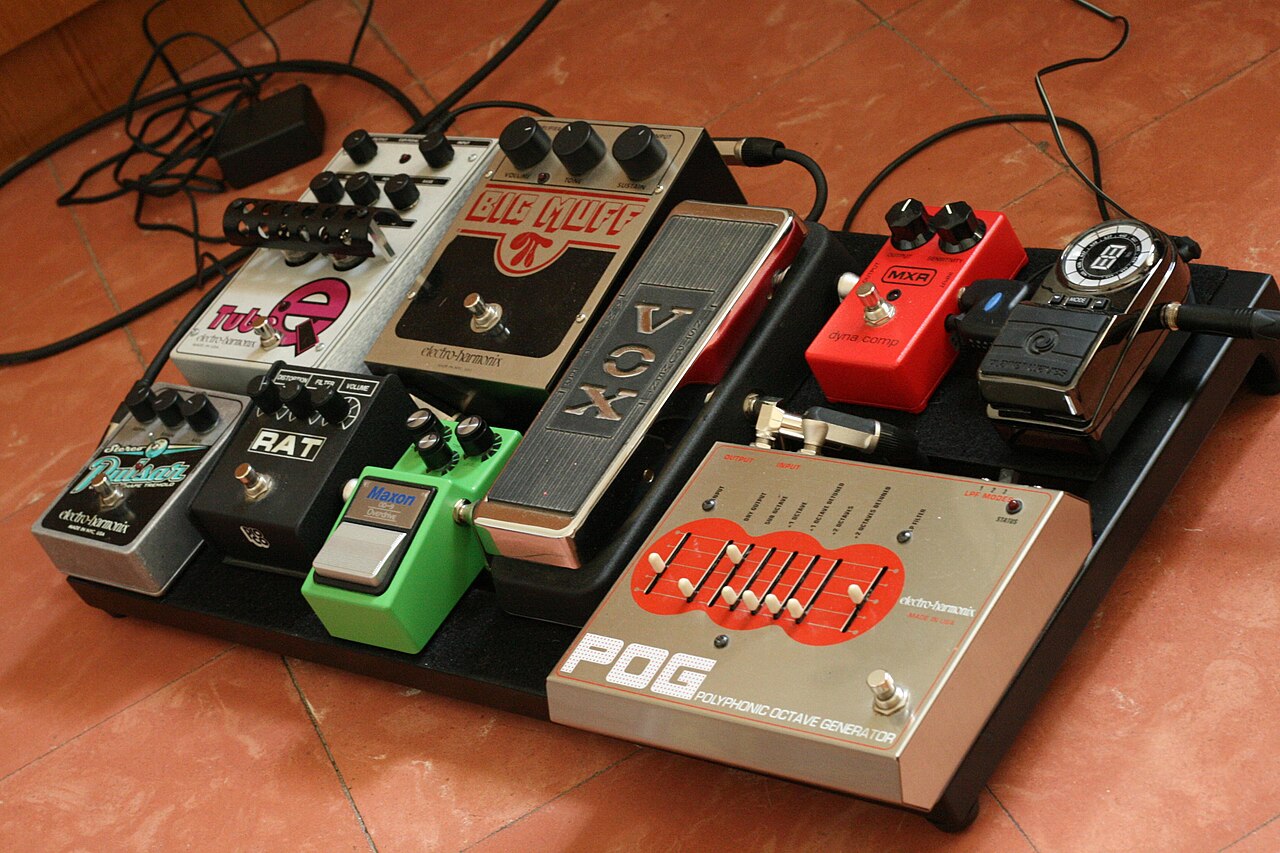
- A pedalboard with overdrive, wah and fuzz pedals: Michael Morel from Barcelona, Spain, Wikimedia Commons, CC BY 2.0.
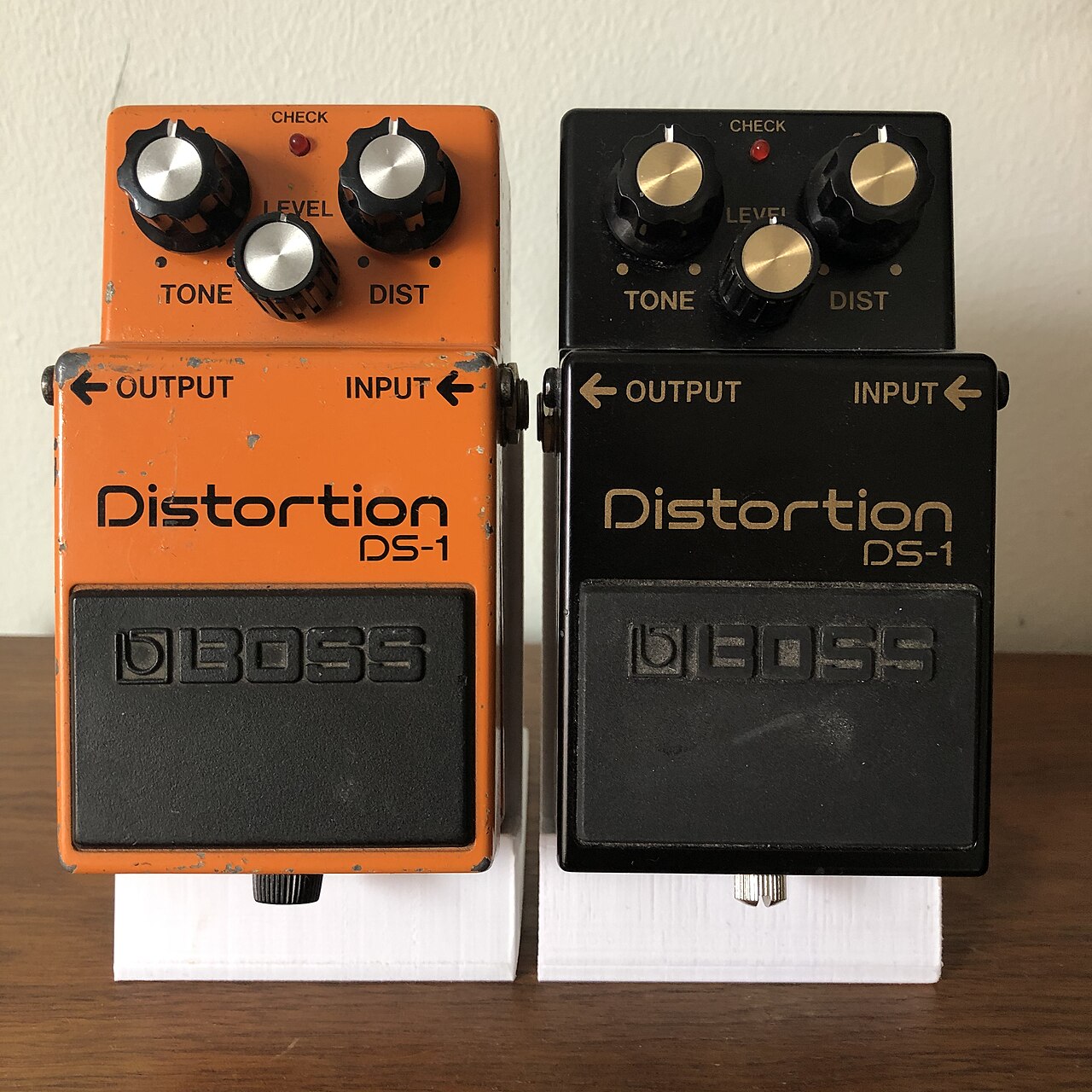
- A Boss DS-1 distortion pedal beside a DS-1-4A: Kuriosatempel, Wikimedia Commons, CC BY-SA 4.0.
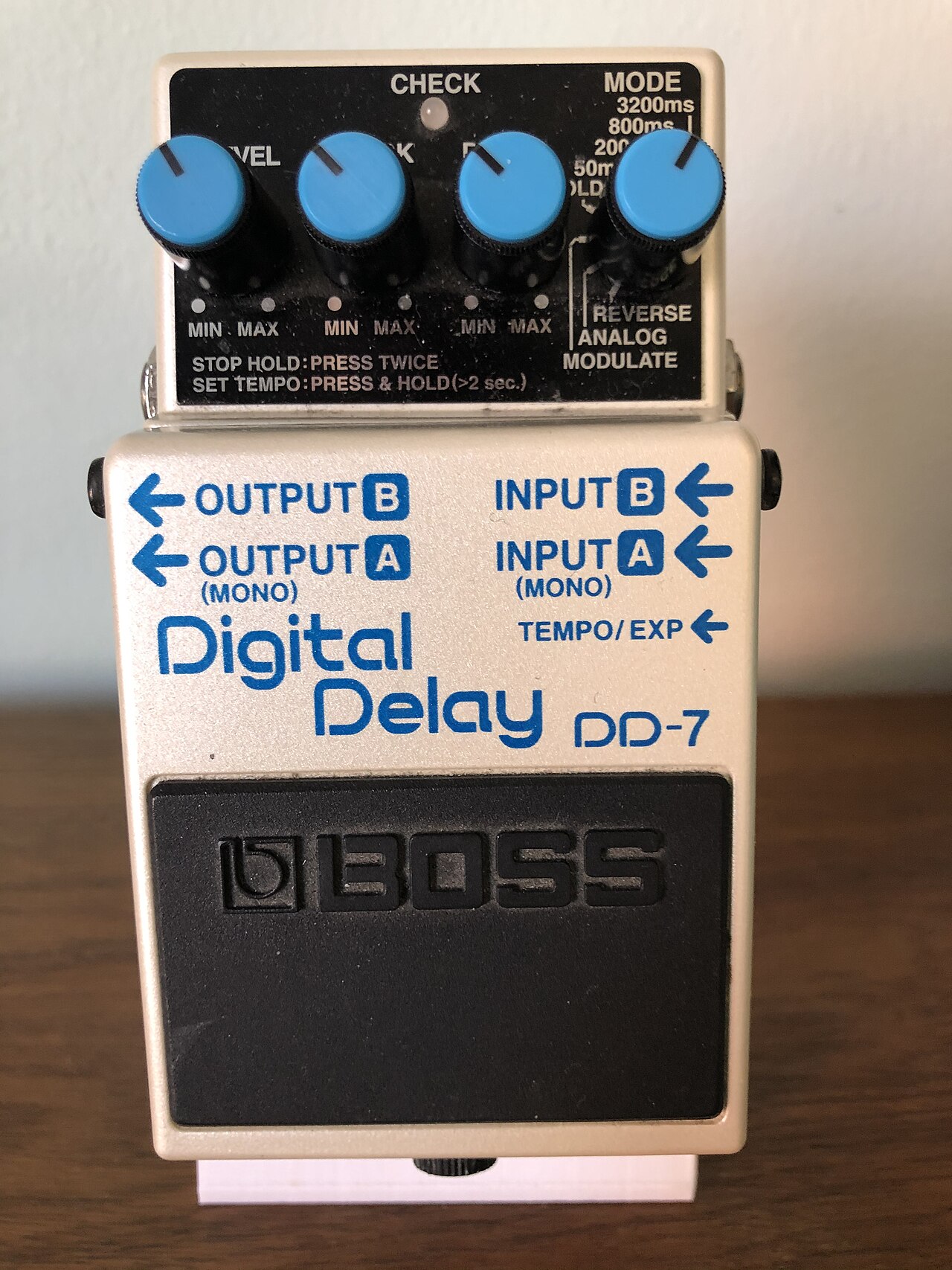
- A Boss DD-7 Digital Delay pedal: Kuriosatempel, Wikimedia Commons, CC BY-SA 4.0.
Latest News
Related
On This Day
Monday 9 November
From this week: