Ibanez TS10 Tube Screamer Classic: The Pedal That Closed Out Stevie Ray Vaughan’s Career
The TS10 Tube Screamer Classic powered SRV's final recordings and Gilmour's Division Bell sessions. History, verified players, settings, and buying guide.
Most Tube Screamer lore circles endlessly around the TS808 and the TS9, treating them as the only chapters worth reading. But there’s a third chapter — quieter, less celebrated, and considerably more honest about its role in history. The Ibanez TS10 Tube Screamer Classic was the pedal on Stevie Ray Vaughan’s board when he made his most polished recordings, the one David Gilmour reached for during the Division Bell sessions at Olympic Studios, and the overdrive Kirk Hammett had onstage in the Metallica footage nobody expects to contain a green Tube Screamer. It’s a polarizing piece of the Tube Screamer story — cheaper construction than what came before, a different circuit, and a market price today that seems almost absurd given those facts — and getting it right means understanding exactly what it is and what it isn’t.
This is not a review. GuitarGangsters doesn’t do reviews. This is the feature the TS10 deserves: the history, the verified players, the signal-chain logic, and the honest comparison to its relatives so you can decide whether that $400 vintage asking price makes sense for your specific situation or whether a modern alternative does the same job for a fraction of the cost.
From the 9 Series to the 10 Series: What Changed and Why
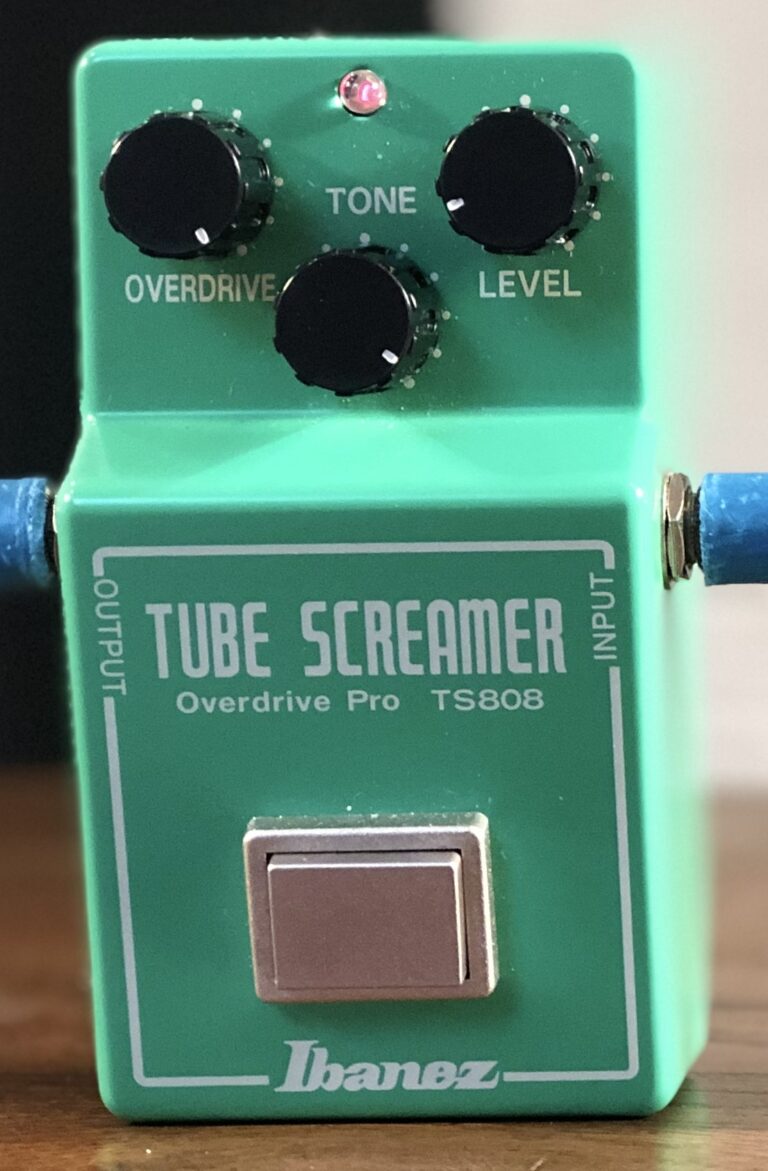
The Ibanez Tube Screamer lineage runs like a family tree with contested inheritance. The original TS808 Tube Screamer Pro appeared in the late 1970s, hand-wired and bearing the JRC4558D chip that would become an obsession among tone hunters for decades to come. Around 1982 Ibanez repackaged the entire effects lineup into the 9 Series, and the TS9 Tube Screamer emerged as the new face of green overdrive. The 9 Series era lasted through roughly 1985, and it generated the TS9 units that Stevie Ray Vaughan ran from mid-1982 through mid-1988, logging thousands of stage hours and appearing on the lion’s share of his peak-career recordings.
Between the 9 Series and the 10 Series there was a brief transitional moment — Ibanez produced the L Series (Master Series) around 1985, which included the STL Super Tube, a four-knob variant closer to the earlier ST-9 Super Tube Screamer. This was a niche product that most players never encountered. Then around 1986 the Power Series — the 10 Series — arrived, and with it came the TS10 Tube Screamer Classic.
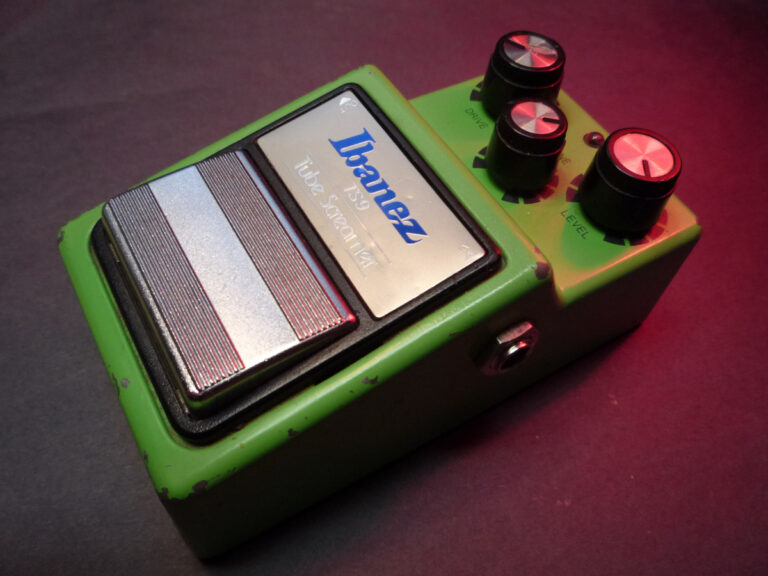
The 10 Series represented a deliberate shift in Ibanez’s production strategy. Where the TS808 and TS9 were hand-wired units built in Japan with pots and jacks physically attached to the chassis, the TS10 moved to a board-mounted construction. Jacks, pots, and the switching components were all soldered to the circuit boards rather than wired individually to the case, and a ribbon cable connected the pot board to the main board inside. This approach was faster and cheaper to manufacture, but it introduced a critical practical problem: when components fail or jacks wear out, they often cannot be replaced the way a hand-wired pedal can. The internal architecture of the TS10 is more fragile than the TS808 or TS9 and significantly harder to service.
Analog Man, whose documentation of the Tube Screamer family is among the most thorough in the industry, put it plainly: the TS10 made “about three times more circuit changes than the TS-9 had” compared to the TS808 baseline. The output section, clipping characteristics, and overall voicing moved further from the original TS808 design than the TS9 had. The result was an overdrive that was brighter, with more accessible high-gain territory, and a different tonal character that some players preferred for certain applications — and others found less musical than the smooth warmth of the TS808 or the focused mid-push of a well-chipped TS9.
Production of the Japan-made TS10 units ran from approximately 1986 through 1990. Starting around 1988 to 1989, some units were assembled in Taiwan using an MC4558 chip. The Japan-manufactured examples used either the MC4558 or in some cases the JRC4558D, the chip that collectors fixate on. Whether a given TS10 has the JRC4558D or the MC4558 comes down to production batch — not to any easily visible external marking — and the sonic difference between the two is subtle enough that even experienced builders often concede it requires careful A/B testing at high drive settings to detect.
By the early 1990s the TS10 was discontinued and replaced by the TS5 Soundtank, a plastic-enclosured pedal made in Taiwan by Daphon with a circuit closely related to the TS9. The Soundtank era was the budget phase of the Tube Screamer story, and the TS10 sits exactly at the hinge point — the last metal-enclosure Tube Screamer before Ibanez moved to plastic, and the first to step away from hand-wired construction.
Controls, Circuit, and What the Knobs Actually Do
Three knobs. That’s the TS10’s entire interface, unchanged from the TS808 and TS9 before it: Drive, Tone, and Level. Each one does exactly what the name says, and the simplicity is part of what has kept every Tube Screamer variant alive for half a century.
Drive controls the amount of overdrive gain in the clipping stage. The characteristic Tube Screamer behavior — a smooth, compressed overdrive with a natural ceiling on gain — means the TS10 never sounds harsh the way a fuzz or a high-gain distortion circuit can. At minimum Drive settings with Level pushed high, the TS10 functions as a clean boost with subtle compression and the pedal’s inherent midrange character added to the signal. This is the classic “push the amp” application that SRV favored. At higher Drive settings the overdrive becomes thicker and more sustained, still clipping symmetrically and smoothly rather than with the asymmetric bite of a transistor fuzz.
Tone is a one-knob EQ that sweeps between brighter and darker voicings within the overdrive signal. The TS10’s brighter character compared to the TS808 means the Tone knob’s center position sits in a slightly different place sonically than on the older pedal. Players coming from a TS808 often find they need to back the Tone off a bit more on the TS10 to land in familiar territory. Single coil users frequently find the Tone between 9 and noon works well; humbucker players sometimes push it slightly past noon to compensate for the additional warmth the pickup itself contributes to the signal.
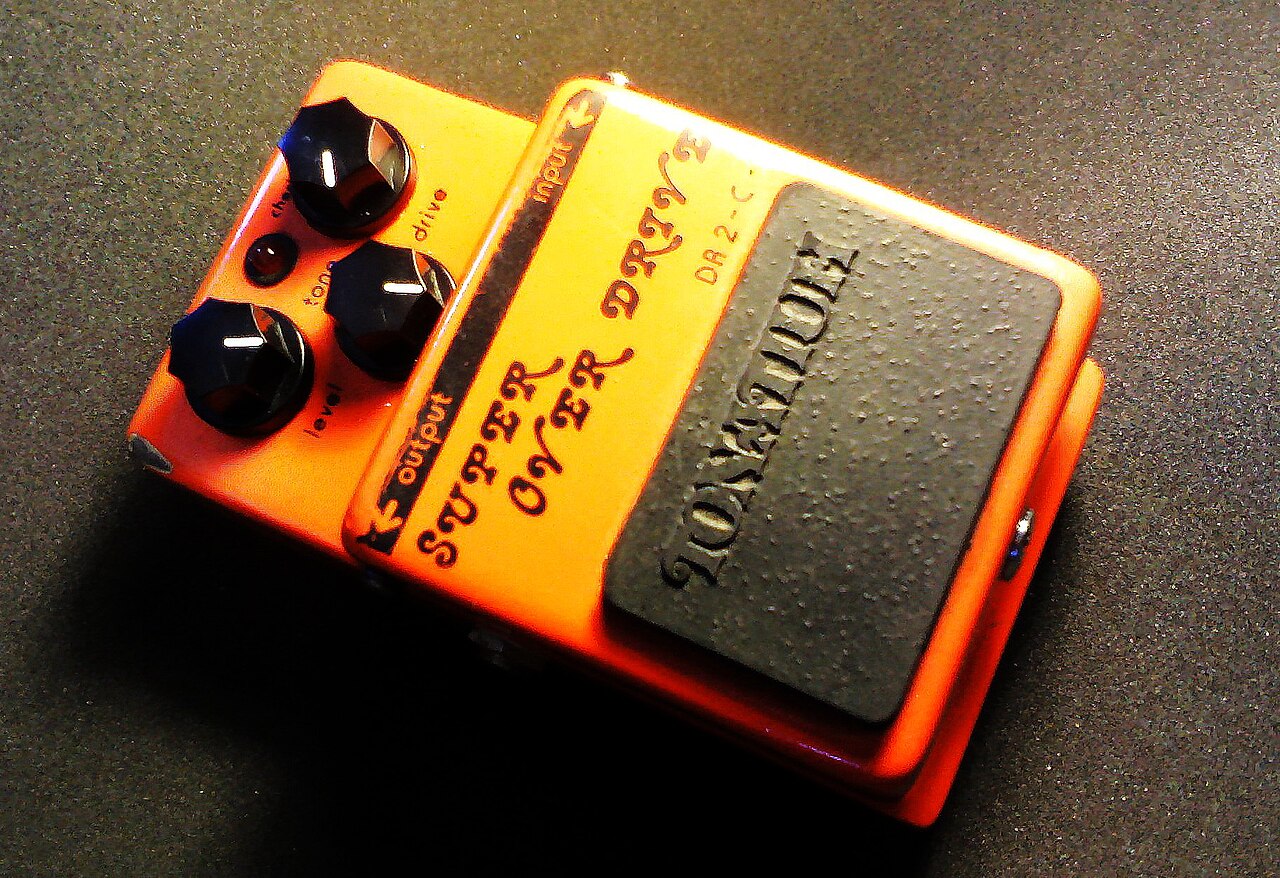
Level sets the output volume. In boost applications — the most musically effective way to use any Tube Screamer with a good tube amp — Level runs high and Drive runs low, so the pedal is adding clean volume and compression to push the amp’s preamp stage rather than generating overdrive within the pedal circuit itself. In standalone overdrive applications, Level needs to be set to match the bypassed signal at unity, then adjusted to taste for lead or rhythm work.
Famous Players: Who Actually Used the TS10
The Tube Screamer family attracts more roster mythology than almost any other pedal category. Because every Tube Screamer variant shares a name and a green enclosure, artists get attributed to the wrong model constantly. The TS10 is a particularly common victim of this confusion — players who built their entire sound around the TS808 or TS9 get listed as TS10 users because someone found a photo of a green pedal on their board. What follows is the verified picture, as sourced as possible from primary documents, performance footage, and authoritative secondary sources.
Stevie Ray Vaughan
Stevie Ray Vaughan is the central figure of the Tube Screamer story, but the specifics matter enormously. Guitar World published a definitive 2024 feature by Chris Gill establishing the timeline precisely: Vaughan used the TS808 only briefly, from late 1981 through early 1982, and it never appeared on any of his officially released recordings. His primary Tube Screamer — the one on virtually everything people think of as the SRV sound — was the TS9, which he ran consistently from mid-1982 through mid-1988.
The TS10 entered the picture in the later stages of Vaughan’s career. According to the Guitar World documentation, the TS10 units replaced the TS9s on his board starting around mid-1988. The albums on which Vaughan demonstrably used the TS10 are In Step (1989), Family Style (1990, recorded with his brother Jimmie Vaughan), and the studio version of “Boot Hill” that appeared on the posthumous The Sky Is Crying compilation. A 1989 live performance from the “One Night in Texas” footage also shows Vaughan with the TS10 in active use.
SRV’s documented TS10 settings, consistent with how he approached every Tube Screamer he used, kept the Drive control very low — around the 2-3 o’clock position on a scale of 0-10 — with the Tone set in the 3-5 range and the Level pushed high, often near maximum. He was using the pedal to boost his amp into its natural overdrive rather than generating distortion within the pedal itself. On smaller Fender amps that were already pushing toward overdrive naturally, the TS10 on these settings added compression and focus. On larger, cleaner-running rigs it contributed the lower-midrange character and sustained push that he needed for his lead work.
What this means for the TS10’s reputation is honest but often glossed over: the recordings most associated with the SRV Tube Screamer sound — Texas Flood, Couldn’t Stand the Weather, Soul to Soul, Live Alive — were all made with the TS9. The TS10 is the late-career chapter, the pedal of In Step and its cleaner, more produced approach to blues-rock. That’s still extraordinary company for any piece of gear, but it’s a different chapter than the SRV mythology usually acknowledges.
David Gilmour
David Gilmour is a meticulous gear documentarian’s subject — his tech Phil Taylor has kept records, and the Gilmourish resource maintained by Bjorn Riis is among the most carefully sourced gear archives for any artist. That archive documents Gilmour using the Ibanez TS10 Tube Screamer Classic during the 1993 recording sessions at Olympic Studios in London for the Division Bell album (released 1994). The TS10 appears in the studio documentation as part of the specific signal chain assembled for those sessions, separate from the Colorsound Power Boost and other overdrives more commonly associated with his live tone of that era.
Gilmour’s overdrive palette has always been broader than headlines suggest — he has run everything from Electro-Harmonix Big Muffs to Boss Blues Drivers to ProCo Rats at various points, and the TS10 fits within a period when he was experimenting with different flavors of overdrive for studio work. The fact that it appears specifically in the Division Bell session documentation rather than his live rig gives it a historically specific context rather than a general “Gilmour plays Tube Screamers” attribution.
Kirk Hammett
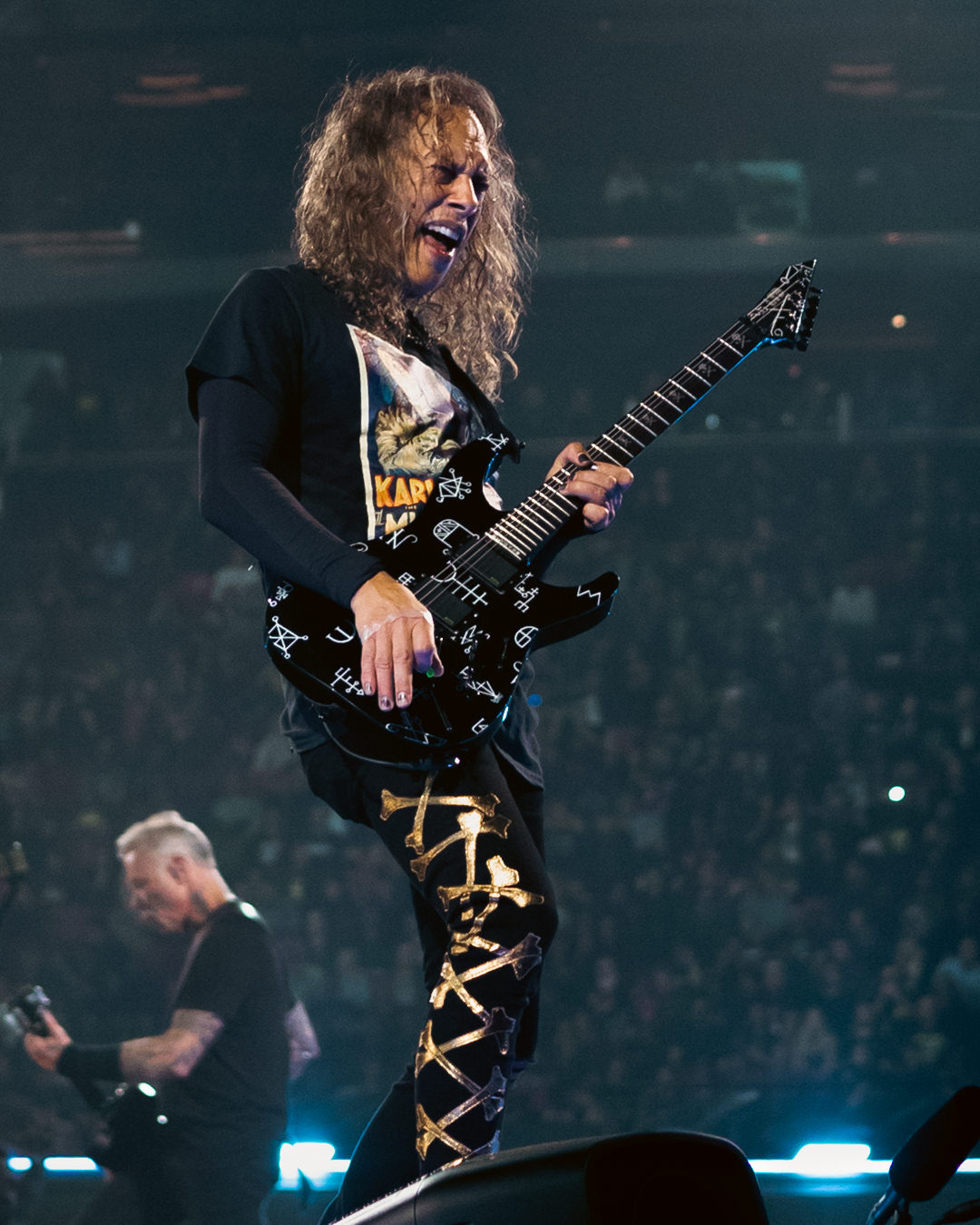
The documentary A Year and a Half in the Life of Metallica, which captured the recording of the Black Album in 1991, includes footage of Kirk Hammett’s pedalboard and effects setup during those sessions. The Ibanez TS10 Tube Screamer Classic is visible in that footage — an unexpected entry in the rig of a guitarist who built his reputation on high-gain Marshall stacks, Mesa/Boogie amplification, and outright distortion rather than mid-range overdrive textures. The TS10’s application in a metal context most likely functioned as a boost or a tightening tool before a high-gain amp — the same “amp push” principle SRV used, applied to a very different genre and output-stage destination. Constitutes a credible visual confirmation of the pedal’s presence in his recording rig.
Mike McCready (Pearl Jam)
Mike McCready is one of the more directly quoted TS10 advocates in the record. In a Premier Guitar feature, McCready explained his relationship with the pedal in straightforward terms: “I’ve got the tried-and-true original Ibanez Tube Screamer because Stevie Ray Vaughan used one and I’ve been using it ever since. I love the fuzz from it.” McCready has been explicit across multiple interviews about building his lead tone on the SRV template, and his adoption of the TS10 — the specific model Vaughan was using during McCready’s formative years in the late 1980s — follows directly from that lineage. The compression, the mid-push, and the sustained quality he describes as “fuzz” is the TS10’s clipping behavior rather than true fuzz-circuit distortion, but it’s that smooth, saturated quality that distinguishes a Tube Screamer in the mid-to-high Drive range from a cleaner overdrive.

Gary Moore
Gary Moore‘s Tube Screamer connection runs deep — he was one of the most SRV-influenced British players of the 1980s, having also absorbed the Albert King and Peter Green traditions that shaped the same blues vocabulary. The YouTube video titled “Gary Moore’s Guitars — plugging into history” shows Moore’s personal collection and effects, and at the 0:33 mark an Ibanez TS10 Tube Screamer Classic is visible, reportedly marked by Moore himself. This is consistent with the mid-to-late-period Moore rig documentation that shows a range of overdrive pedals feeding his Marshall and Hiwatt amplifiers.
Billy Gould (Faith No More)
Billy Gould of Faith No More ran an Ibanez TS-10 from 1987 through 1991, and the pedal was part of the recording rig for The Real Thing — an album that might not intuitively seem like Tube Screamer territory but demonstrates the pedal’s versatility beyond blues contexts. Footage from a December 1990 performance of “Epic” on Yo! MTV Raps shows the TS-10 visible alongside a DOD Bass Flanger in Gould’s rig during the bridge and guitar solo section. This is a bass guitar application of the TS10, illustrating the pedal’s range well outside its usual single-coil blues guitar context. The Real Thing is also listed among the album documentations for TS10 usage on Equipboard. Gould is a bassist, and the MTV Raps performance footage constitutes visual confirmation.

John Mayer
The Equipboard documentation for the TS10 includes a YouTube rig rundown video featuring Rene Martinez — the guitar tech who worked with Stevie Ray Vaughan throughout his career and subsequently with John Mayer — showing the TS10 in Mayer’s collection at the 3:06 mark. Mayer’s SRV influence on his tone is thoroughly documented, and his working relationship with Martinez, who knew exactly which pedals SRV used and when, makes the presence of a TS10 in his collection logical rather than surprising. This is community-documented via the YouTube source rather than a Premier Guitar Rig Rundown, so it belongs in the well-documented-but-secondary-source tier.
Equipboard Context: 31 Pro Artists
Beyond the individually verified players, Equipboard documents 31 professional artists using the TS10 Tube Screamer Classic, reflecting a breadth of adoption that crosses genre lines — Rock (59 instances), Blues (26), Pop (23), and Jazz (14) according to their genre usage data. Additional documented users include Brian Setzer (via Reverb.com ownership documentation), Dean Ween (photo from the Stompbox Book feature on his collection), and Michael Schenker (photo documentation). The Equipboard album usage section also documents the TS10’s appearances on Pink Floyd’s The Division Bell (1994, confirming the Gilmour usage), Faith No More’s The Real Thing (1989), and Death’s Spiritual Healing (1990).
Tone Recipes and Settings
The SRV Clean Boost Setting
Drive: 2. Tone: 4. Level: 9–10. This is the documented SRV approach, running the Drive nearly off and the Level near maximum. The result is a compressed, mid-forward volume push that drives the amplifier’s preamp stage into its natural overdrive. With a good single-coil guitar into a Fender blackface-style amp, this setting adds the body, focus, and sustained quality that defines the late-career SRV tone on In Step. The Tone at 4 keeps the presence clear without getting shrill. This setting does not sound like much through a solid-state amp or a cold tube amp — it needs a tube amp that is already warm and responsive to give the Screamer its context.
Mid-Gain Blues Standalone
Drive: 5. Tone: 5. Level: 5–6. At these settings the TS10 functions as a standalone overdrive without needing the amp to do heavy lifting. The mid-hump character shapes the overdrive toward vocal, expressive territory — this is where the pedal produces the creamy sustain on bends that makes players compare it to the “fuzz” quality McCready described. Works well with a clean amp for players who want overdrive from the pedal rather than the amp.
High-Gain Amp Tightening Boost
Drive: 1. Tone: 5. Level: 8. Placed before a high-gain amp channel, this setting does what Kirk Hammett’s application suggests: it adds compression and tightens the amp’s low-end response, making chunky palm-muted rhythm work more defined without muddying the distortion. The Drive at minimum means the TS10 is contributing almost no overdrive of its own — only the midrange character, the compression, and the volume boost. Metal players who use this approach swear by it; those who have never tried a Tube Screamer before a high-gain amp are often surprised by how much more focused the amp sounds with it engaged.
Single Coil High-Definition Cut
Drive: 3. Tone: 3. Level: 6. With a Strat or Tele through a bright amp, rolling the Tone back on the TS10 while keeping Drive moderate creates a warm, focused overdrive that removes some of the high-frequency bite that can get harsh in a live mix. The TS10’s naturally brighter character compared to the TS808 means this Tone-backed-off approach lands in a similar place to where the TS808 sits at Tone noon. This is the setting for cutting through a band mix without causing ear fatigue.
Humbucker Articulation Enhancer
Drive: 4. Tone: 6–7. Level: 5. With humbuckers, the TS10’s Tone needs to be pushed above noon to avoid the warmth of the pickup compounding with the Screamer’s mid-character and making the result sound congested. This setting opens up the top-end response of a Les Paul or SG through the pedal, keeping note definition on complex chord voicings while the Drive adds enough overdrive for rhythm work. David Gilmour’s application during the Division Bell sessions likely involved similar Tone adjustments given his use of various guitar types.
Stacked with a Second Tube Screamer
Drive both low. Level on the first TS high, Level on the second TS moderate. Trey Anastasio and Kenny Wayne Shepherd are both documented two-Tube-Screamer practitioners, though their confirmed units are the TS9 and its relatives. The stacking principle applies to the TS10 in exactly the same way: running two Tube Screamers in series with both Drives low and both Levels contributing creates a different sonic result than running one TS with high Drive — more compression, a different harmonic profile from the double-clipping stage, and a sustained, sustain-saturated tone that a single TS can’t replicate. The TS10’s brighter character means it stacks interestingly with a warmer TS808 or TS9 in front of it.
Neck Pickup Lead Warmth
Drive: 4. Tone: 3–4. Level: 6. Engaged on the neck pickup of any single-coil guitar, this setting turns the TS10 into a warm, vocal lead device. The neck pickup’s natural warmth plus the Tone rolled back plus the Screamer’s mid-push creates a sustained, rounded tone with singing quality on long bends. This is particularly effective at lower amplifier volumes where you need the pedal to carry more of the overdrive character rather than the amp.
The TS10 rewards clear thinking about what a Tube Screamer circuit actually does. It is an overdrive built for pushing a tube amplifier, not for standalone distortion, though it can do both. The recipes below are organized by application.
Comparisons: Where the TS10 Sits in the Family
TS10 vs. TS9 Tube Screamer
The TS9 is hand-wired with jacks and pots mounted to the chassis — it can be serviced, repaired, and modified with the precision of a well-built analog device. The TS10 uses board-mounted components and a ribbon cable, making it significantly harder to maintain and repair when components fail. Sonically, the TS9 with a JRC4558D chip is warmer and smoother than the TS10; the TS10 is brighter and has more accessible high-gain character. For the classic SRV tone of 1982-1988, the TS9 is the correct reference. For the 1988-1990 late SRV period, the TS10. Original TS9 prices run from around $150-250 used in good condition — considerably less than the TS10’s current $400+ vintage asking price, making the TS9 the more value-rational choice for most players.
TS10 vs. TS808 Tube Screamer
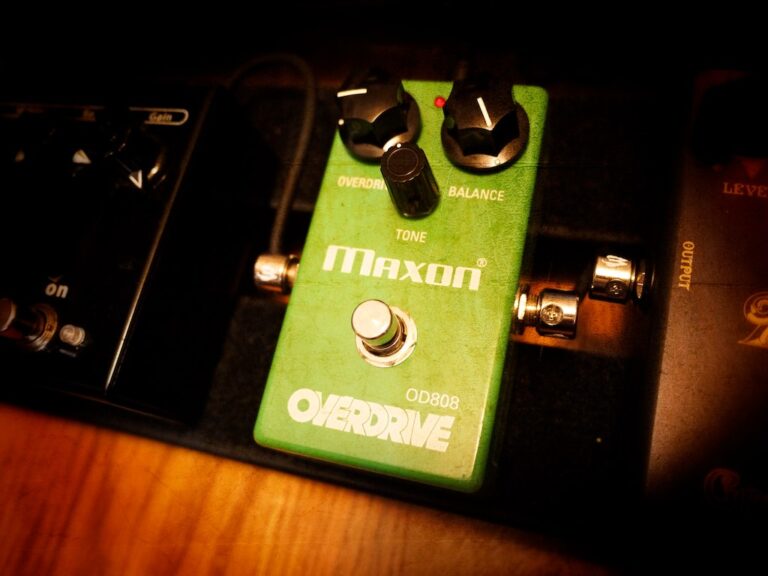
The TS808 is the warmest, smoothest, and most mid-focused of the original Tube Screamers — three times fewer circuit changes from the baseline compared to the TS10, hand-wired, and genuinely rare at this point. Original TS808 prices range from $400 to over $1,000 depending on condition, chip, and provenance. The TS808 sounds rounder and less bright than the TS10, and its clipping character is smoother under high gain. For pure tonal beauty in a low-Drive boost application, most players prefer the TS808. For the specific TS10 character that Vaughan’s late recordings display — slightly crisper, more forward — the TS10 is the accurate reference. But at $400+ for the TS10 versus the TS808’s market, the TS808 reissue or a Maxon OD808 often makes more sense economically.
TS10 vs. Ibanez Tube Screamer Mini
The TS Mini is modern, in production, compact, and true bypass — all things the TS10 is not. It uses the JRC4558D chip with a circuit close to the TS9. It retails for around $89-99 new. If your goal is playing in the SRV tonal universe rather than playing the specific vintage unit SRV used, the TS Mini is a completely rational tool for a fraction of the price. It won’t have the TS10’s specific voicing or the collector’s legitimacy of owning the actual model, but it will produce musically excellent results in the same genre.
TS10 vs. TS9 Reissue
Ibanez reissued the TS9 starting in 1993, and the current reissue is produced to essentially the same spec as the late original TS9 units, with a Toshiba TA75558 chip rather than the JRC4558D. At around $89-99 new, the TS9 reissue delivers the TS9 circuit in a hand-wired chassis at a tenth the cost of a vintage TS10. For the vast majority of players, the TS9 reissue is the correct modern answer to the question the TS10 raises. The one exception is collectors and historians who need the specific TS10 for documentation, period accuracy, or because the TS10’s brighter voicing is precisely what they’re after.
The TS10 as a Collector’s Piece: Buying Guide and Practical Ownership
The TS10’s market reality in 2026 is shaped entirely by the SRV connection and vintage scarcity. Reverb shows asking prices of $412+ for a TS10 in good condition. This is a significant premium over any modern Tube Screamer that will produce similar musical results, and it’s worth being honest about what you’re buying at that price point.
What you are buying is historical legitimacy — the specific circuit on Vaughan’s board for In Step, the pedal in Gilmour’s Division Bell session rig, the physical artifact that carries a documented lineage. If that matters to you and your budget accommodates it, the TS10 is one of the most reasonably priced ways to own a piece of that lineage — original TS9 and TS808 units often cost more for equivalent condition. If it doesn’t matter — if what you want is the Tube Screamer sound rather than the Tube Screamer history — a TS9 reissue or TS Mini at under $100 will serve you better in practical terms.
What to check when buying used: Because of the board-mounted jacks and pots, TS10 units are vulnerable to broken jacks (the input and output jacks bear stress that on a hand-wired pedal gets distributed to the chassis). Test both jacks before completing a purchase — a TS10 with a broken jack is not a simple repair. Check the ribbon cable connection by playing through the pedal while gently pressing on the enclosure; signal dropouts indicate a failing ribbon cable, which again is not a field-repairable component the way a loose jack wire would be on a TS9. Also verify that the pot board taper is consistent — scratchy pots are a common TS10 failure mode and affect all three controls.
Power: The TS10 takes a standard 9V center-negative DC supply, identical to the TS9 and TS808. Current draw is minimal. Any modern pedalboard power supply will handle it without issue.
Signal chain position: Like all Tube Screamers, the TS10 goes before modulation, delay, and reverb. Its position relative to other overdrives and drives depends on the desired result. In a classic SRV-style chain, it typically goes before any wah — Vaughan famously liked how the Tube Screamer enhanced the vocal quality of his Vox wah, and the same principle applies with the TS10. Before an already-overdriving amp, it goes directly in front of the amplifier’s input or as the last drive pedal before the amp. In front of a high-gain amp for tightening purposes, same position.
FAQ
What’s the difference between the TS10 and the TS9?
The TS9 is hand-wired with components attached to the chassis, making it fully serviceable and repairable. The TS10 uses board-mounted components and a ribbon cable, making repairs significantly harder. Sonically, the TS9 with a JRC4558D chip is warmer and smoother; the TS10 is brighter with more available high-gain character. Analog Man documents “about three times more circuit changes” in the TS10 compared to the TS808 baseline, whereas the TS9 had fewer modifications from the original design.
Did Stevie Ray Vaughan use the TS10?
Yes, but specifically in the later part of his career. Guitar World’s 2024 Chris Gill feature establishes that Vaughan used the TS9 as his primary Tube Screamer from mid-1982 through mid-1988, covering the bulk of his peak career recordings. The TS10 replaced the TS9s in his rig around mid-1988 and appears on In Step (1989), Family Style (1990), and “Boot Hill” on The Sky Is Crying. The recordings most people associate with the SRV Tube Screamer sound — Texas Flood, Couldn’t Stand the Weather — were made with the TS9, not the TS10.
What op-amp does the TS10 use?
Japan-manufactured units from approximately 1986-1990 used the MC4558 chip, with some units containing the JRC4558D depending on production batch. Taiwan-manufactured units from around 1988-1989 also used the MC4558. There is no reliable external method to determine which chip a specific unit contains without opening it. The sonic difference between the MC4558 and JRC4558D is subtle and most detectable only at high Drive settings, which is not how most players use the pedal anyway.
Why is the TS10 so expensive now for a pedal with cheaper construction than the TS9?
The SRV connection drives the premium. The TS10 is the pedal Vaughan used for his final recordings, which creates collector demand regardless of build quality. It’s also relatively rare compared to the TS9 reissue (which has been in continuous production since 1993) and the TS808 reissue. The combination of scarcity and iconic association is the whole story. The market is rational from a collector’s perspective, but from a pure player’s perspective, the TS9 reissue produces equivalent or better musical results for a tenth of the price.
Can the TS10 be repaired if something breaks?
With difficulty. Unlike the TS9 and TS808, which were hand-wired with components attached to the chassis, the TS10’s jacks, pots, and switches are board-mounted. A failed jack or pot requires desoldering from the circuit board rather than simple disconnection of wires from a chassis-mounted component. Ribbon cable failures are even more problematic. Qualified technicians can perform TS10 repairs, but they’re more labor-intensive than equivalent TS9 work, and the parts for exact-spec replacement are not always available. If you’re buying a TS10, budget for the possibility that if something breaks, the repair cost could be significant.
What’s the best modern alternative to the TS10?
For most players, the Ibanez TS9 reissue or the Ibanez Tube Screamer Mini covers the practical musical ground the TS10 occupies. Both retail under $100 new. The TS9 reissue has the closest historical relationship to the original hand-wired design; the TS Mini adds true bypass in a smaller form factor. For the TS10’s specific brighter voicing, some boutique Tube Screamer variants — particularly those from Analog Man (who offers several TS808 and TS9 modifications) or the JHS Bonsai, which replicates eight Tube Screamer variants — can approximate or surpass it tonally while remaining serviceable and new.
How do you dial in the TS10 for the SRV tone specifically?
Drive: 2–3. Tone: 3–5. Level: 9–10. These are the documented SRV settings, consistent across all the Tube Screamer models he used. The Drive nearly off, the Level pushed to maximum, the Tone in the lower-middle range. The pedal is acting as a compressed volume boost with midrange character added to the signal, pushing the tube amplifier into natural overdrive. The result depends enormously on the amp — this setting sounds best through a tube amplifier that is already running warm, like a Fender blackface or tweed in its natural operating range. Through a cold or solid-state amp, the effect is minimal.
Did David Gilmour use the TS10 on any Pink Floyd albums?
Yes, the TS10 is documented in Gilmour’s rig during the 1993 Olympic Studios recording sessions for The Division Bell (1994), according to the Gilmourish resource maintained by Bjorn Riis, which draws on technical documentation and studio records for Gilmour’s tone. This represents a specific studio application rather than a long-term live-rig relationship with the pedal, consistent with Gilmour’s practice of assembling customized signal chains for different recording projects.
Image credits
- An orange overdrive pedal: Andrés Galeotti, Wikimedia Commons, CC BY 2.0.
- Kirk Hammett: Kreepin Deth, Wikimedia Commons, CC BY-SA 4.0.
- Mike McCready: GabboT, Wikimedia Commons, CC BY-SA 2.0.
- Mike McCready: Lugnuts, Wikimedia Commons, CC BY-SA 3.0.
Latest News
Related
On This Day
Monday 9 November
From this week: