David Gilmour Guitars & Gear: The Complete Guide to Pink Floyd’s Voice of the Cosmos
Complete gear guide to David Gilmour — the Black Strat bought for $900, sold twice for $5.2M then $14.55M, Hiwatt DR103, Binson Echorec, Big Muff, and the guitar solo that needed 12 takes.
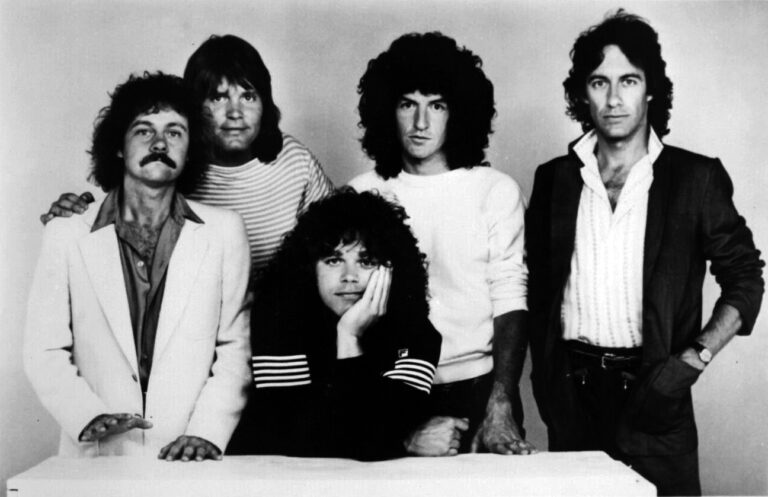
Jean-Pierre Jeannin / Wikimedia Commons / CC BY-SA 2.0
Both of his Stratocasters were stolen while on tour in New Orleans.
It was May 1970. Pink Floyd were on their North American tour — the dates that would cement their reputation as a live act capable of something beyond the conventions of rock performance. Three weeks in, the van containing their gear was stolen in New Orleans. The police tracked it down, but some items were missing, including the Stratocaster Gilmour had bought at Manny’s Music on 48th Street in New York at the beginning of the tour.
Back in New York waiting to fly home, he stopped at Manny’s again. He bought a 1969 Stratocaster — black body sprayed over sunburst, fitted with a maple neck, with the large headstock of the era. He brought it home to England. It became the Black Strat.
The Black Strat appeared on The Dark Side of the Moon, Wish You Were Here, Animals, The Wall, and The Final Cut. It appeared at Live 8 in Hyde Park in 2005 when Pink Floyd played together for the first time in over a decade. It appeared on Gilmour’s solo albums and on countless tours. It was modified so extensively over the decades that the only original part remaining — apart from the body — is possibly the bridge plate. Phil Taylor — Gilmour’s guitar tech since 1974 — wrote an entire book documenting the modifications chronologically.
In June 2019, Gilmour auctioned the Black Strat at Christie’s, with proceeds going to the environmental law charity ClientEarth. Indianapolis Colts owner Jim Irsay bought it for $5.245 million — the most expensive guitar ever sold at public auction at that time. Then in March 2026, following Irsay’s death, the guitar was auctioned again as part of Christie’s Jim Irsay Collection sale in New York. This time it sold for $14.55 million — making it the most expensive guitar ever sold, surpassing the $6 million paid for Kurt Cobain’s 1959 Martin D-18E in 2020.

A guitar that cost approximately $900 in 1970. Bought because the first one was stolen in New Orleans. Now the most expensive guitar in history.
“Comfortably Numb.” “Shine on You Crazy Diamond.” “Wish You Were Here.” “Time.” “Money.”
$14.55 million. For a guitar that cost $900 because the first one was stolen.
Background: Cambridge, Syd Barrett, and the Space Between Notes
David Jon Gilmour was born March 6, 1946, in Cambridge, England. He grew up in the same neighborhood as Syd Barrett — the two were childhood friends, both playing guitar, both absorbing the blues and rock and roll records that were defining the cultural landscape of mid-1960s Britain.
He spent time in Europe as a young musician, busking and playing in bands across France, before returning to England. In 1967, Roger Waters and Nick Mason asked him to join Pink Floyd as a second guitarist alongside the increasingly unstable Syd Barrett. By 1968, Barrett’s psychological deterioration was complete — he was quietly removed from the band, and Gilmour became sole lead guitarist and co-vocalist, a role he would inhabit for the next five decades.
The Pink Floyd that Gilmour shaped — from Meddle (1971) through The Division Bell (1994) and beyond — is the Pink Floyd that most of the world knows: the progressive, atmospheric, sonically ambitious band that made The Dark Side of the Moon (the album that spent longer on the Billboard chart than any other in history) and The Wall (which sold over 30 million copies). Gilmour’s guitar was the emotional center of all of it.
He rejoined Syd Barrett’s circle in his final years — visiting his old friend in Cambridge, providing quiet support for someone who had largely withdrawn from public life. When Barrett died in 2006, Gilmour spoke about him with consistent respect and sadness. The friendship that had begun in childhood Cambridge ended that way too.
Tone note: “Comfortably Numb” contains two guitar solos. The first is restrained, questioning, melodically simple. The second — the one that begins with the sustained bend at the 22nd fret — is one of the most celebrated guitar performances in rock history. Gilmour’s approach to that solo: he recorded twelve versions and selected the one that felt most right. Not the most technically perfect. Not the fastest or the most elaborate. The one that felt most right. That is the complete David Gilmour guitar philosophy in one recording decision.
The Rig: David Gilmour’s Guitars, Amps & Gear
Guitars: The Black Strat and Its World
The Black Strat (1969 Fender Stratocaster) — The Most Expensive Guitar in History
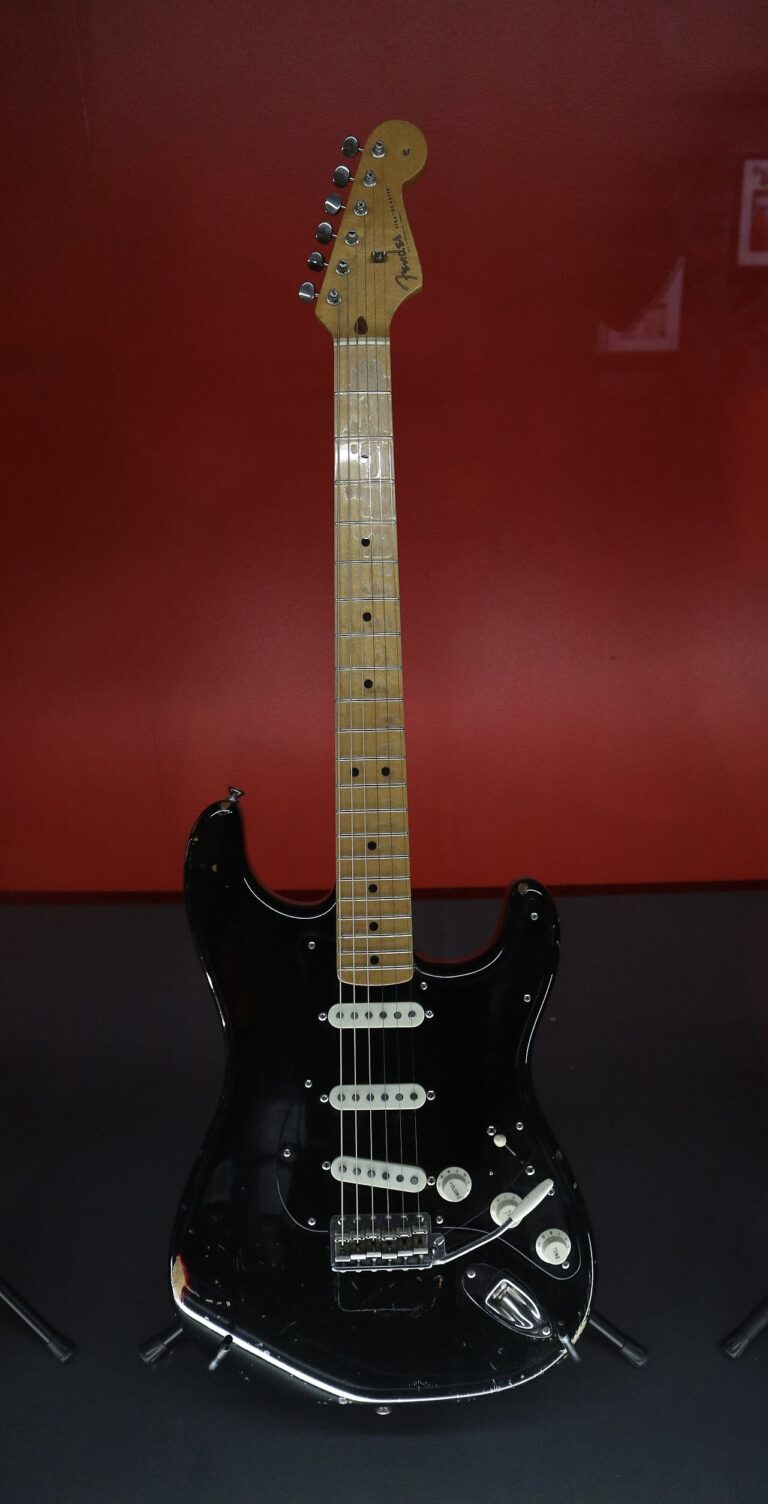
David Gilmour bought a 1969 Fender Stratocaster at Manny’s Music on 48th Street in New York in May 1970 — after his previous Stratocaster had been stolen in New Orleans three weeks earlier. The guitar had a black body sprayed over its original sunburst finish and was fitted with a maple neck. He played it at the Bath Festival in June 1970, and it quickly became his main instrument.
His description: “I believe it was made in 1969, and I bought it at Manny’s on 48th Street in New York in 1970. It’s been on pretty much, well, most Pink Floyd recordings from then up until the 80s when I put it out to pasture for a while. But then I brought it back again, and it’s still the guitar I play more than any other.”
The Black Strat’s modification history is so extensive that Phil Taylor — Gilmour’s guitar tech since 1974 — wrote a complete book documenting it chronologically. Key modifications over the decades:
- Neck changes: The original maple neck was swapped for a 1963 rosewood fingerboard neck for The Dark Side of the Moon recordings. Multiple neck swaps followed over the years — including Charvel flamed maple and Fender ’57 reissue maple necks at various points. The specific neck determined the guitar’s tonal character at each period
- Pickups: The guitar’s pickups changed multiple times. By The Wall sessions it had stock Fender single-coils in neck and middle positions (dated 1971) and a DiMarzio FS-1 in the bridge. The Fender Custom Shop signature model features custom hand-wound neck and middle pickups matched to the 1971 originals and a Seymour Duncan bridge pickup replicating the SSL-1C installed in late 1979
- Additional pickup selector switch: Wiring modified to include an extra switch for neck/bridge combination or all three pickups simultaneously — giving more tonal options than a standard Strat
- Various hardware changes: Volume knobs, tremolo components, tuning pegs — all changed at various points as Gilmour and Taylor experimented with the instrument
- What remains original: After all modifications, the body and possibly the bridge plate are the only original components remaining
The guitar’s auction history: Gilmour first sold it at Christie’s in June 2019 for $5.245 million — the most expensive guitar ever sold at that time, with proceeds going to ClientEarth. Jim Irsay, owner of the Indianapolis Colts, bought it. Following Irsay’s death, it was included in Christie’s Jim Irsay Collection sale in New York in March 2026, where it sold for $14.55 million — the most expensive guitar ever sold at public auction, surpassing the $6 million paid for Kurt Cobain’s 1959 Martin D-18E in 2020.
Gilmour described parting with it: “For me, I can let go of it. It’s going to bring a lot of people to have a look at this sale, and it’s going to do that job. It’s a lovely guitar. It has been on pretty much all the Pink Floyd albums through the Seventies… Fender have made replica ones that they sell, and I have two or three of those that are absolutely perfect.”
Tone note: The Black Strat was retired in the 1980s when Gilmour moved to other Stratocasters and had been displayed at a Hard Rock Cafe. When it was returned in the late 1990s it had sustained significant damage and the theft of many parts. After repair and restoration, Gilmour played it again — at Live 8 in 2005 and on his subsequent tours and recordings. The guitar that had been displayed in a restaurant, damaged, stripped of parts, came back and played “Comfortably Numb” at Live 8. The guitar that survives everything. Now the most expensive guitar in history. Bought for $900 because the previous one was stolen in New Orleans.
Another significant Gilmour Stratocaster is the guitar designated #0001 — also auctioned at Christie’s in June 2019 as part of the same collection. This white Stratocaster, used extensively in his later career and on recording sessions, was part of the collection that Gilmour auctioned for charity alongside the Black Strat.
Bill Lewis Custom Guitar (Canada, 1970)
During a tour of Canada in 1970, Gilmour visited a guitar shop belonging to luthier Bill Lewis and tried out one of his custom guitars. The Bill Lewis guitar had 24 frets spanning two full octaves (compared to the Stratocaster’s 21) and featured humbuckers — offering both upper register access and tonal variety unavailable from his Strat. He used it on several Pink Floyd recordings and is believed to still own it, as it was not part of the 2019 auction.
Key Vintage Stratocasters and Other Electrics
- 1983 Candy Apple Red Stratocaster (EMG pickups) — His primary guitar after the Black Strat was retired in the 1980s; EMG active pickups gave it a different character from the passive single-coil Black Strat
- 1984 Fender Stratocasters (from Fender warehouse in Enfield, UK) — Gilmour visited the warehouse to try guitars and selected the best examples for the About Face tour
- 1959 Fender Telecaster Custom (rosewood neck, Strat pickup in neck) — Used on The Wall sessions; the Telecaster’s single-coil bridge character added tonal variety
- Fender Bass VI — Also used on The Wall recordings for specific bass-register guitar parts
- Gibson Les Paul Custom — Occasional use for specific tonal applications requiring humbuckers
- Jedsen lap steel and ZB 10-string pedal steel — Used on The Wall for slide parts; ZB built by renowned builder Zane Beck
- Fender 1000 Twin Neck Pedal Steel — Used on Dark Side of the Moon for the slide guitar on “Breathe” and “The Great Gig in the Sky,” tuned to Open G

Acoustic Guitars
- Martin D-35 — Primary acoustic; used across multiple Pink Floyd albums and solo work
- Martin D12-28 12-string — Used on The Wall and other recordings
- Ovation Custom Legend 1619-4 — Used on The Wall, particularly for the Nashville (high octave) tuning on “Comfortably Numb”
- Ovation 1613-4 nylon string — Also used on The Wall sessions
- Guild acoustic — Used in various periods
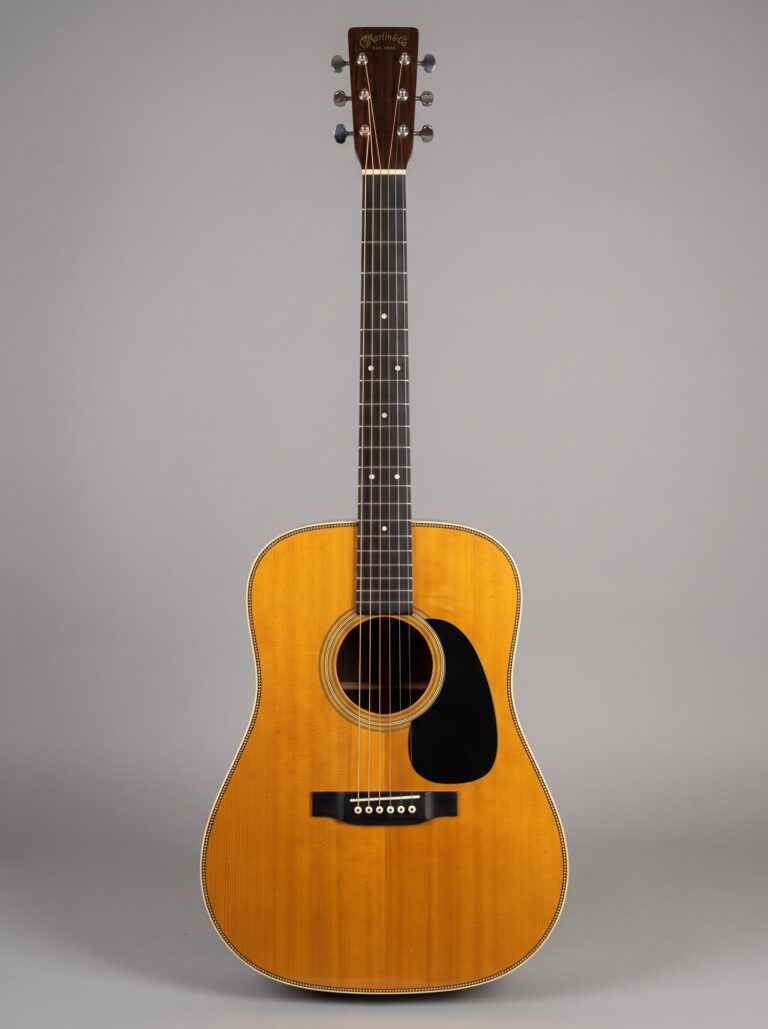
Complete Guitar List (Key Instruments)
- 1969 Fender Stratocaster “Black Strat” — Bought Manny’s Music 1970; primary through 1980s, retired, returned; The Dark Side of the Moon, Wish You Were Here, Animals, The Wall, Endless River; first sold 2019 for $5.245M; resold 2026 for $14.55M — most expensive guitar ever sold
- Fender #0001 Stratocaster (white) — Later career primary; 2019 Christie’s auction
- Bill Lewis custom (Canada, 1970, 24-fret, humbuckers) — Still owned; not at 2019 auction
- 1983 Candy Apple Red Stratocaster (EMG pickups) — Post-Black Strat primary 1980s
- 1959 Fender Telecaster Custom — Wall sessions
- Fender 1000 Twin Neck Pedal Steel (Open G) — Dark Side of the Moon slide
Amps: Hiwatt DR103 Through WEM Cabinets
David Gilmour’s primary amplification from 1969 through 1987, and again from 1994 to the present, has been the Hiwatt DR103 Custom 100 — the British-made 100-watt tube amplifier that provides his clean, powerful, tonally responsive platform. The DR103’s clean headroom, powerful output, and distinctive British EQ character make it ideal for Gilmour’s approach: he shapes his tone primarily through effects pedals, with the amplifier providing the clean power and projection needed for large venues.

The DR103’s specific qualities that suit Gilmour: it remains clean at very high volumes while still responding dynamically to playing nuances. This clean platform allows the Big Muff’s fuzz, the Electric Mistress’s flanging, and the Binson’s delays to operate without the amp’s own saturation interfering with the pedals’ character.
For The Wall recordings, the Hiwatt was run through an Alembic F-2B tube preamp — a studio console preamp module used as a signal processor — and was equipped with four Mullard EL34 power tubes, adding another layer of tonal shaping before the signal reached the speakers.
His speaker cabinets: WEM 4×12 Super Starfinder 200 cabinets, loaded with Fane Crescendo speakers (his primary cabinet choice) alongside Celestion 75s in separate cabinets for specific tonal applications. The Fane/Celestion combination — different speakers in different cabinets — produced the specific frequency blend of his live sound.
The Hiwatt DR103 is one of the most powerful and most robust British amplifiers ever made — its reliability and consistency made it ideal for the massive Pink Floyd live productions where equipment failure would be catastrophic.
During the Division Bell tour, he ran six Hiwatt heads in two separate racks. In recent years he uses three heads — his original 1974 Hiwatts with well-used but still functional tubes, serviced by Pete Cornish.
Other Amplifiers
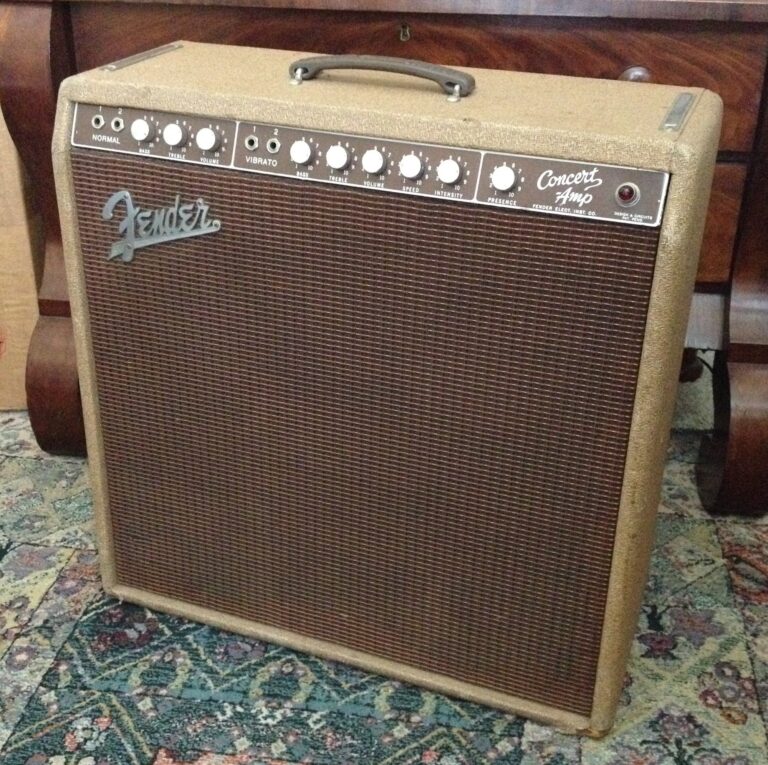
- Fender Concert combo amplifiers — Used at Live Aid 1985 with Bryan Ferry’s band; four stacked on top of four Fender cabinets; the clean channel sounded similar to a blackface Twin Reverb
- Yamaha RA-200 rotating speaker — Used for Leslie-type effects on Animals and other recordings; a rotating speaker that produces the specific Doppler effect of a Leslie cabinet without the physical size requirement
- Marshall amplifiers — Used in early Pink Floyd periods before the Hiwatt became primary
Pedals: The Gilmour Effect Arsenal
David Gilmour’s pedalboard is one of the most extensively documented in rock history — the Pete Cornish custom units, the vintage effect collection, and his specific approach to each effect have been analyzed in dedicated websites and books. His philosophy: effects serve the music. They are not gratuitous additions but specific tools for specific musical purposes.
The Binson Echorec is the most distinctive and most discussed effect in Gilmour’s arsenal. Unlike tape delay units, the Binson used a metal recording wheel — a rotating magnetic drum — to produce its echoes. The resulting delay character is different from any tape or digital delay: warmer, with a specific slightly degraded, organic quality as the repeats fade.
Gilmour’s description: “It was strange because it didn’t utilize tape loops. Instead, it used a metal recording wheel. You could get some wonderful delay effects that aren’t attainable on anything that’s been made since. ‘One of these Days’ evolved from some of my experiments with the Binson, as did ‘Echoes.'”
He used the Echorec on “Shine on You Crazy Diamond,” “Echoes,” and “Time” — and the specific multi-head nature of the Binson (multiple playback heads at different distances from the recording point) allowed him to create complex, self-generating delay patterns that simple single-head tape echoes couldn’t produce. The Binson’s tonal contribution to the early Pink Floyd sound is irreplaceable.
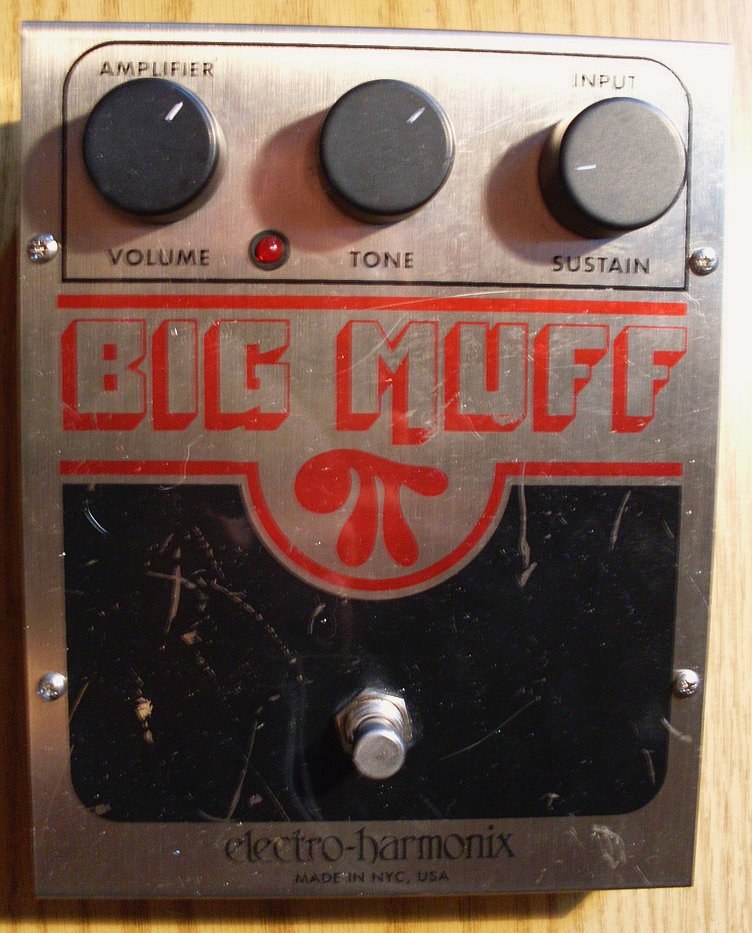
The Electro-Harmonix Big Muff Pi was introduced to Gilmour in 1974 by Pete Cornish and became a key element of his sound from that point forward. The Big Muff’s massive, sustained fuzz — with its characteristic mid-scoop and singing sustain — is the specific character of the “Comfortably Numb” solo tone and the saturated guitar sections of Animals and The Wall.
He used the Big Muff consistently through the Dark Side of the Moon follow-ups, and it remains a cornerstone of his live and studio sound. For specific periods he also used custom Pete Cornish fuzz units (the P-1 Custom Fuzz) built specifically for his signal chain.
Electro-Harmonix Electric Mistress — The Flanging Voice
The Electric Mistress flanger — used extensively from 1976 to 1983 — produced the specific liquid, watery flanging character heard throughout Gilmour’s playing in the Animals, The Wall, and The Final Cut era. “One of the most unique flanger pedals that have ever hit the market, and unfortunately, the vintage units are hard to find and very expensive. Gilmour was one of the first players to make the most out of its sound.”
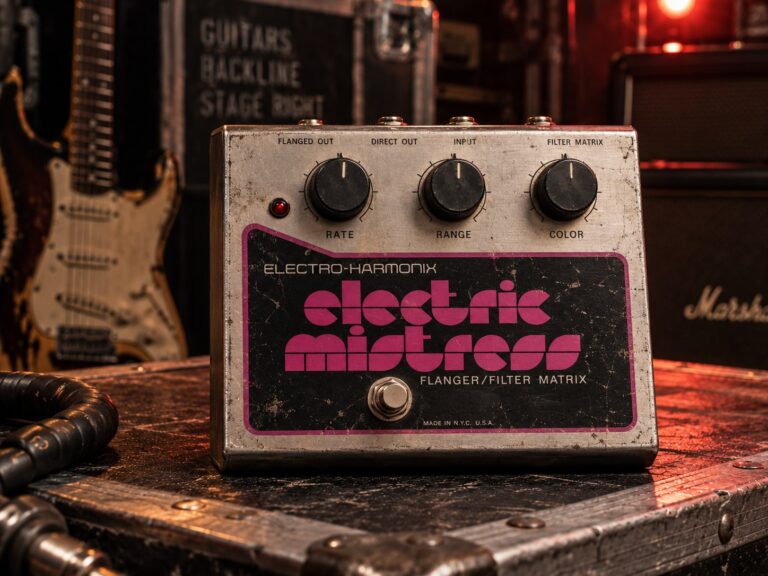
The Electric Mistress’s filter matrix mode (a specific setting that engages the flanger without the sweep, producing a fixed comb filter effect) gives certain Gilmour tones — the opening of “Dogs,” for instance — their specific texture.
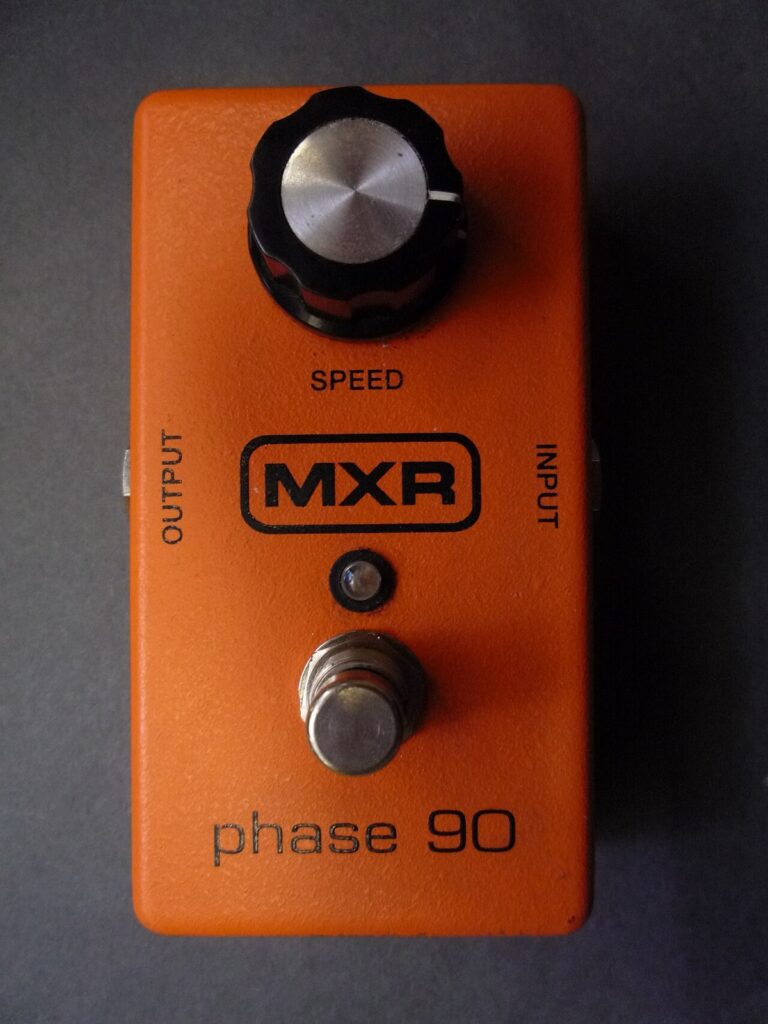
MXR Phase 90 — The Phase Shifter
Gilmour started using the MXR Phase 90 in early 1972, using it on Dark Side of the Moon, Wish You Were Here, and Animals. The Phase 90’s four-stage phase shifting produces a warm, vocal sweep that Gilmour used both as a continuous tonal color and as a specific effect on individual passages. The same pedal that Eddie Van Halen used on “Eruption” appeared on “Time” and “Breathe.”
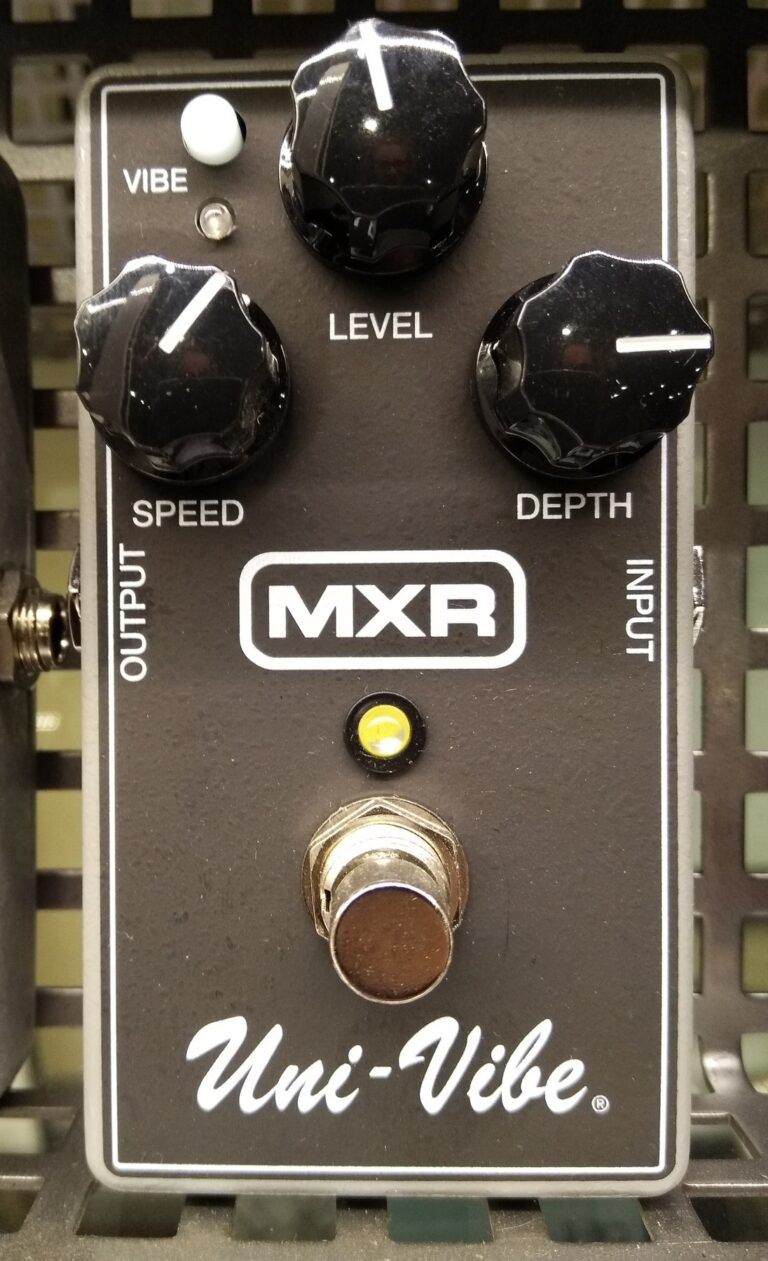
Uni-Vibe — The Rotary Sound
The Uni-Vibe — the rotating-speaker simulation pedal used by Hendrix on “Machine Gun” — appeared in Gilmour’s rig for specific applications. He almost certainly used it on “Breathe” and “Time” from Dark Side of the Moon. The Uni-Vibe’s specific three-dimensional modulation suited the psychedelic, spatial quality of Gilmour’s playing better than a conventional chorus.
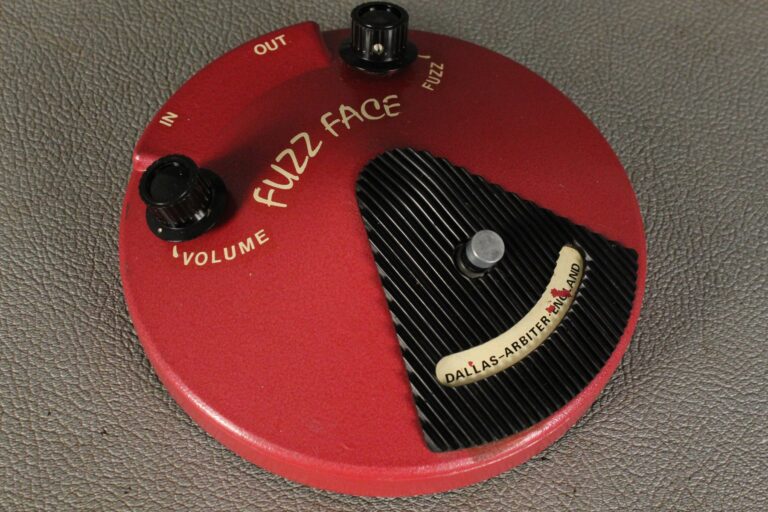
In his earlier Pink Floyd period, Gilmour used the Dallas Arbiter Fuzz Face — the germanium transistor fuzz that Hendrix had also used. This was part of his pre-Big Muff approach, and the Fuzz Face’s cleanup response (it cleans up as the guitar volume is rolled back) suited his dynamic approach to the guitar volume knob.
The Pete Cornish Custom Systems
From the mid-1970s onward, Pete Cornish — who also built Brian May’s stage system — designed and built custom effects units and switching systems for Gilmour. The Cornish “studio board” completed in February 1979 contained: Dallas Arbiter Fuzz Face, Electro-Harmonix Big Muff, Electro-Harmonix Electric Mistress, MXR Phase 90, various EQ and utility units. Custom Cornish units included the Tone pedal and the P-1 Custom Fuzz.
The Pete Cornish system allowed Gilmour to have complex effects routing — multiple effects in specific signal chains, true bypass switching, signal buffering over long cable runs — at a time when off-the-shelf solutions for this level of complexity didn’t exist.
BK Butler Tube Driver — The Later Overdrive
From the late 1980s and 1990s, the BK Butler Tube Driver became Gilmour’s primary overdrive — a tube-driven overdrive pedal that provided the warm, harmonically complex drive he wanted as an alternative to the Big Muff’s extreme fuzz. The Tube Driver’s specific warmth and responsiveness suited the more refined, controlled overdrive of his later playing.
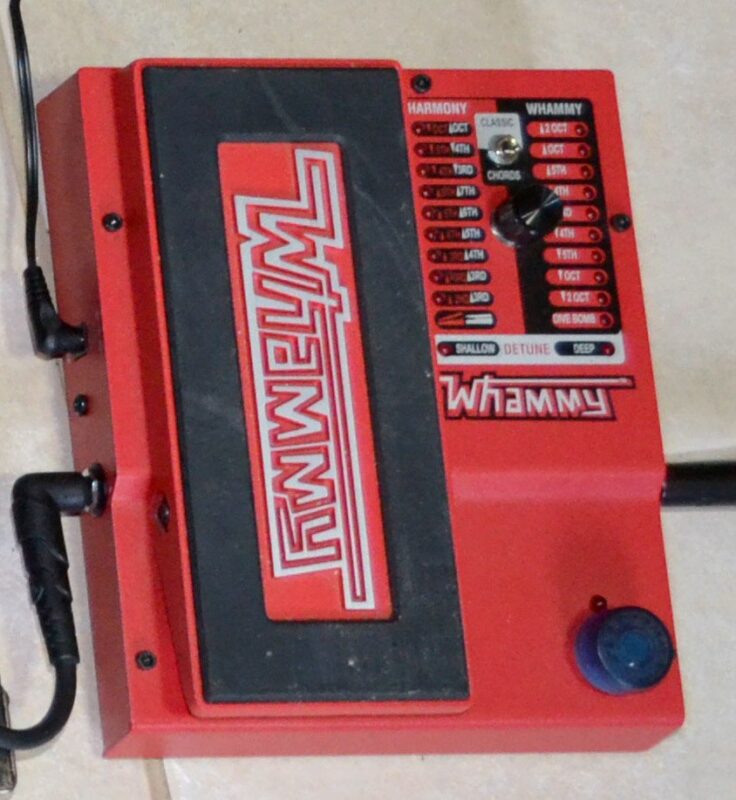
Gilmour began using the DigiTech Whammy pitch shifter in the early 1990s — using it on “Marooned” from The Division Bell, which won a Grammy for Best Rock Instrumental. He continued using the Whammy on his solo albums On an Island and Rattle That Lock. The Whammy’s real-time pitch shifting allowed him to access interval effects and glissando sweeps unavailable from standard guitar techniques.
Complete Pedal List (Key Effects by Era)
Early Floyd (1969-1972):
- Dallas Arbiter Fuzz Face (germanium)
- Binson Echorec 2 (metal wheel delay)
- Uni-Vibe
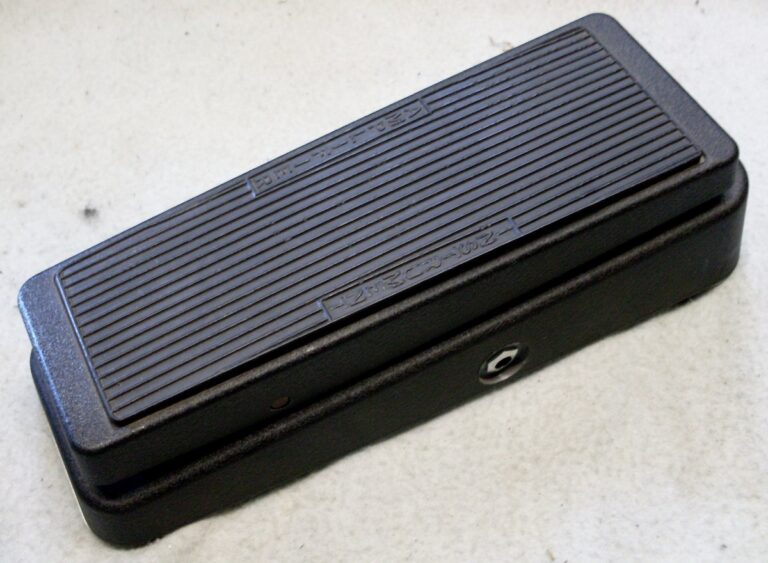
- Cry Baby Wah / Colorsound Wah
Peak Floyd (1973-1979):
- Electro-Harmonix Big Muff Pi (from 1974)
- Electro-Harmonix Electric Mistress (from 1976)
- MXR Phase 90 (from 1972)
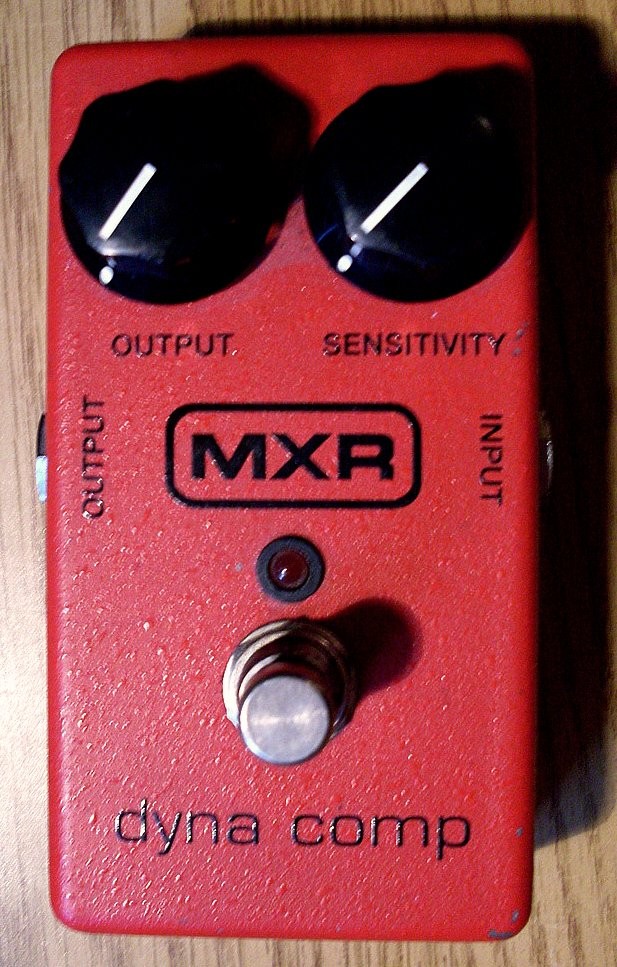
- MXR Dynacomp compressor
- Pete Cornish custom fuzz (P-1)
- Pete Cornish Tone pedal
- Alembic F-2B preamp (studio/The Wall)
- MXR Digital Delay
- Heil Talk Box (Animals “Pigs”)
Later career (1980s-2010s):
- BK Butler Tube Driver
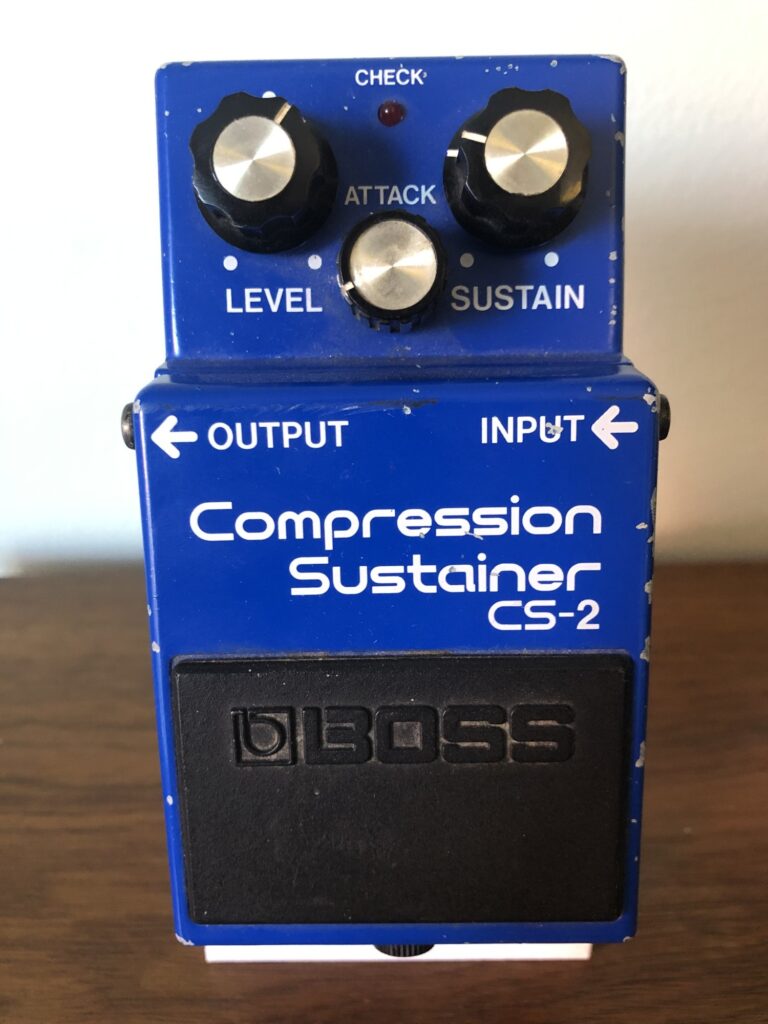
- Boss CS-2 Sustainer
- Boss Hyper Fuzz
- Boss Graphic EQ (×3)
- MXR Dynacomp
- Ibanez CP9 Compressor-Limiter
- DigiTech Whammy
- Chandler Industries Tube Driver (×2)
- TC Electronic various units
Strings, Picks & Setup
Strings: GHS Nickel Rockers, custom gauge: .010, .012, .016, .028, .038, .048. He has used GHS strings since The Wall era in the early 1980s. The custom gauge — with a relatively light high-E (.010) but heavier wound strings than standard — produces the specific tension balance for his bending approach.
Picks: Dunlop medium picks in standard thickness. Gilmour uses standard picks rather than anything exotic — his specific tone comes from the amplifier, effects, and his technique rather than from pick material or thickness.
Setup philosophy: His guitar setup prioritizes the ability to perform wide string bends with control — the sustain and resonance that his clean-platform Hiwatt setup requires comes from the guitar’s own acoustic qualities rather than from amp saturation. The Black Strat’s modified fret configuration and pickup height were specifically set for his technique.
The Jimi Hendrix guitar strap: Gilmour received a Jimi Hendrix guitar strap as a 60th birthday gift from his wife Polly — she bought it at an auction. The strap had faded from its original purple to brown with light brown lacings. He wears it in the opposite orientation from how Hendrix wore it.
Playing Style & Tone Philosophy: Every Note Must Mean Something
David Gilmour’s guitar philosophy is the most economical in classic rock. He has said in interviews that he’s not capable of playing fast — and he jokes about this with what seems like genuine self-deprecation. But the specificity is the point: in a world where more notes are generally considered to equal more skill, Gilmour demonstrates that fewer notes, chosen with absolute precision and executed with maximum emotional commitment, produce more impact than any amount of technical display.
The Space Between Notes
Gilmour’s most distinctive compositional quality is his use of space — the silence between notes, the rests that give the notes that follow them emotional weight. The “Comfortably Numb” solo is the canonical demonstration: sustained bends that last for bars, single notes that hang in the air, silence that builds tension. The notes are simple — mostly pentatonic minor with occasional chromatic coloring. The architecture is the mastery.
He recorded twelve versions of the “Comfortably Numb” second solo and selected the one that felt most right — not the technically perfect one, not the most elaborate, but the most emotionally honest. This selection process is his complete philosophy applied to a single choice.

The Sustain Philosophy
Gilmour’s tone is built around sustain — notes that hang, breathe, and develop over time rather than attacking and decaying quickly. The Hiwatt’s clean headroom, the Big Muff’s singing sustain, the Binson’s long delays, the specific pickup heights on the Black Strat — every element of his rig serves the single goal of maximum sustainable note duration without loss of clarity or articulation.
The Vibrato Technique
His finger vibrato — applied to sustained notes — is one of the most recognizable elements of his playing. The specific width and speed of his vibrato, combined with the sustained notes that precede it, gives his solos their vocal quality. It sounds less like a guitar being played than like a voice singing — which is, in the blues tradition he absorbed, exactly what the guitar is supposed to sound like.
The Pedal Steel Influence
Gilmour’s slide and string bending vocabulary was partly influenced by the pedal steel guitar — he played pedal steel on Dark Side of the Moon and absorbed the pedal steel’s specific bending vocabulary and sustain approach into his electric guitar playing. The “Breathe” slide work and the bending approach throughout his career reflect this absorption.
How to Sound Like David Gilmour
The Guitar
Fender Stratocaster — the David Gilmour Signature model is the most direct approach, with its custom-wound pickups and specific neck profile.
- Fender David Gilmour Signature Stratocaster (NOS or Relic) — Custom-wound pickups matched to the 1971 originals; Seymour Duncan SSL-1C bridge; specific neck profile
- Any Stratocaster with hot single-coil pickups — The single-coil clarity is essential for the Big Muff and Electric Mistress to work correctly
The Amp
Hiwatt DR103 through WEM 4×12 cabinets — or any high-headroom clean British amp. The cleaner the better: the pedals do the work, not the amp.
| Control | Setting | Notes |
|---|---|---|
| Volume | High (clean throughout) | The Hiwatt stays clean at high volume; the pedals provide all the saturation |
| Treble | 5–7 | Balanced; the Strat single-coils provide natural brightness |
| Middle | 5–6 | Present; the Big Muff scoops mids, the amp middle restores balance |
| Bass | 4–5 | Controlled; the Big Muff adds significant low-end thickness |
| Presence | 5–6 | Balanced; the Strat’s treble extension is already significant |
The Essential Pedals (by priority)
- Electro-Harmonix Big Muff Pi — The sustain foundation; set for maximum sustain with the tone control balanced between bright and dark
- Binson Echorec (or equivalent multi-head delay) — The Binson’s specific metallic quality is unique; modern alternatives include the Catalinbread Echorec pedal or Strymon TimeLine set to multi-tap
- MXR Phase 90 — Always-on or available; the warm, vocal phase sweep
- Electro-Harmonix Electric Mistress — For the Animals/Wall era flanging character
- BK Butler Tube Driver — Light overdrive for cleaner lead tones where the Big Muff is too extreme
Budget vs Authentic
Budget:
- Guitar: Fender Player Stratocaster or Squier Classic Vibe 60s Stratocaster
- Amp: Fender Blues Junior or Laney Lionheart (clean British character at accessible price)
- Pedals: EHX Big Muff Pi + MXR Phase 90 + Boss DD-3 (as Echorec alternative) + EHX Electric Mistress (current production)
Authentic:
- Guitar: Fender David Gilmour Signature Stratocaster (NOS or Relic version)
- Amp: Hiwatt DR103 (vintage 1974 if possible) through WEM 4×12 with Fane Crescendo speakers
- Pedals: Vintage Binson Echorec 2 + vintage EHX Big Muff Pi + MXR Phase 90 (block logo) + vintage EHX Electric Mistress + BK Butler Tube Driver + Pete Cornish custom switching system
The Essential Technique
Use space. Play fewer notes. Every note you choose should be the note that needs to be there — not the fastest note, not the most technically demanding note, but the right note. Practice sustaining single bent notes for as long as possible, controlling the vibrato speed and width consciously. Study the “Comfortably Numb” second solo not for its notes but for its architecture: what happens before each note, how long each note sustains, where the silences fall.
Influence & Legacy: The Sound That Defined an Era
David Gilmour’s influence on guitar playing is the influence of someone who demonstrated that emotional directness and compositional architecture are greater virtues than technical complexity. The guitarists he has influenced don’t all sound like him — they sound like themselves, because his specific influence was philosophical rather than technical: think about what you’re saying, not how fast you’re saying it.
The documented connections:
- Pink Floyd’s sonic identity — Gilmour’s guitar is the emotional voice of one of the most commercially and critically successful bands in history; the specific quality of his tone — the sustain, the space, the vibrato — is inseparable from what Pink Floyd sounds like
- The Hiwatt DR103’s legacy — His use of the Hiwatt established it as a premier clean-platform amplifier; subsequent guitarists seeking extremely clean headroom for pedal-heavy setups regularly cite the Hiwatt as the standard
- The Big Muff’s rehabilitation — The Big Muff Pi, originally associated with early Electro-Harmonix experimentation, became a must-have fuzz pedal partly through its prominent use in Gilmour’s Wish You Were Here and Animals-era recordings
- The Black Strat’s auction legacy — The guitar sold for $5.245 million in 2019 (world record at that time) and $14.55 million in 2026 (current world record); its auction history reflects the monetary value that a single musician’s relationship with a specific instrument can accumulate
- The “less is more” guitar philosophy — His specific approach to solos — maximum sustain, minimum notes, maximum emotional impact — has been the most widely taught and widely misunderstood principle in rock guitar pedagogy
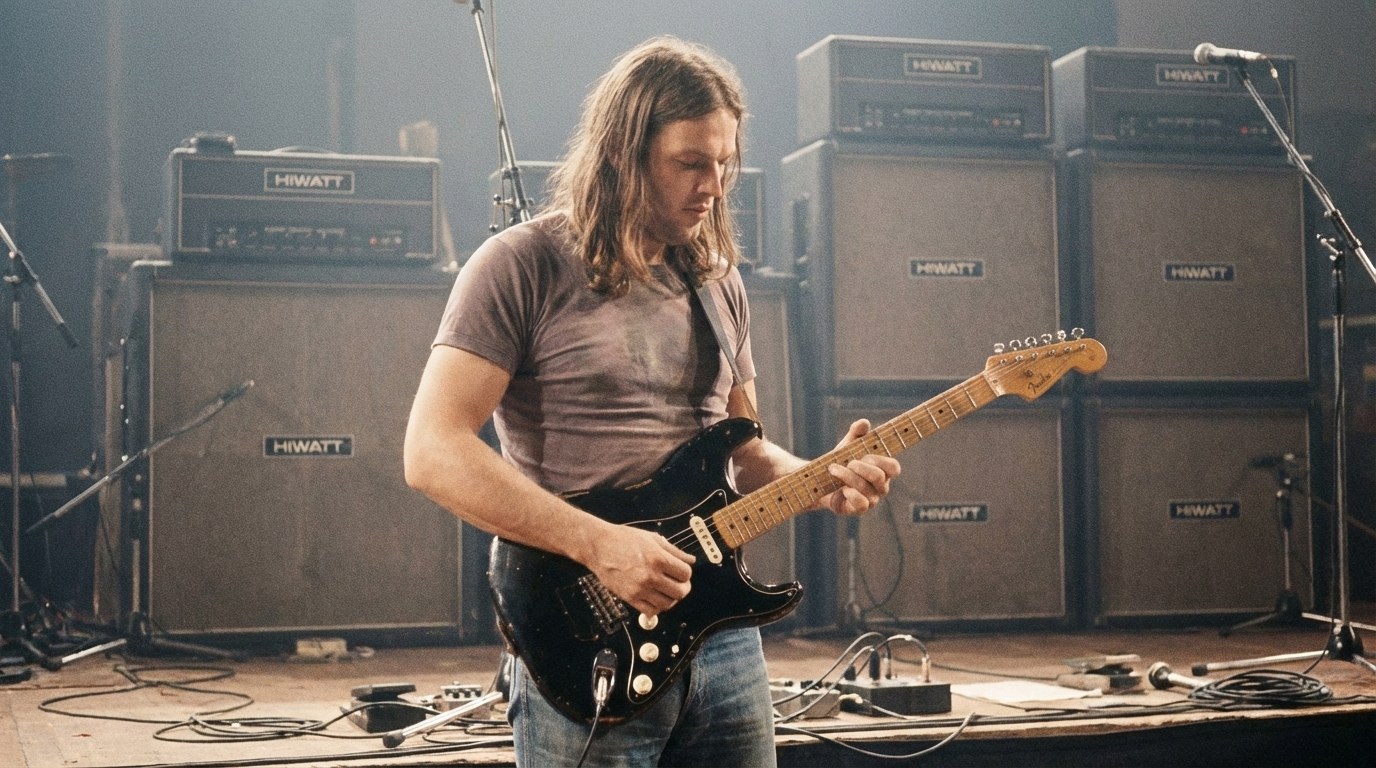
He bought the Black Strat at Manny’s Music in 1970 because the previous one had been stolen in New Orleans. It played on the most celebrated albums of the 1970s. It was retired, damaged, returned, restored. He sold it in 2019 for $5.245 million for charity. It was resold in March 2026, from Jim Irsay’s collection, for $14.55 million — the most expensive guitar ever sold.
He recorded twelve versions of the “Comfortably Numb” second solo and chose the one that felt most right. He plays fewer notes than almost any other guitarist of his stature. Every note he plays means something.
The Black Strat started as a $900 guitar bought because the first one was stolen. It is now the most expensive guitar in history. The music played on it is the reason why.
Tone note: He has two or three Fender Custom Shop replica Black Strats that he describes as “absolutely perfect.” The guitar that sold for $14.55 million is now in a collection. The guitar he plays is a replica. The music he plays on the replica is the same music he played on the original. The tone was never in the object; it was always in the player. The $14.55 million is for the history. The tone costs considerably less.
He bought the Black Strat in 1970 because the first one was stolen. He modified it continuously for twenty years. He retired it, damaged it through careless display, restored it, and brought it back. He sold it in 2019 for $5.245 million for charity. In March 2026 it sold again for $14.55 million — the most expensive guitar ever sold at public auction.
Hiwatt DR103 through WEM 4×12 cabinets. Binson Echorec on a metal recording wheel. Big Muff Pi from 1974. Electric Mistress from 1976. MXR Phase 90 from 1972. Pete Cornish custom switching. GHS custom gauge strings. Dunlop picks.
Twelve takes of “Comfortably Numb.” He chose the one that felt most right.
Every note means something. That is the whole philosophy.
For the guitarist whose own foundational influence on Gilmour, and whose Stratocaster tradition Gilmour most directly absorbed, check our complete guide to Jimi Hendrix’s guitars and gear. Gilmour owns Hendrix’s guitar strap and carries the tradition forward.
For the guitarist who operated in the same British progressive rock space in the same era — using different instruments and different approaches but equally focused on the guitar as a complete musical voice — check our complete guide to Jimmy Page’s guitars and gear.
And for the next guitarist in this series — whose Gibson Les Paul and Marshall amp combination is the foundational hard rock alternative to Gilmour’s clean Hiwatt approach — don’t miss our breakdown of Slash’s complete gear guide.
FAQ: David Gilmour Guitars & Gear
How much did the Black Strat sell for?
The Black Strat has sold at auction twice. In June 2019, Gilmour sold it at Christie’s for $5.245 million — the most expensive guitar ever sold at that time — with proceeds going to the environmental law charity ClientEarth. Jim Irsay, owner of the Indianapolis Colts, bought it. Following Irsay’s death, it was included in Christie’s Jim Irsay Collection sale in New York in March 2026, where it sold for $14.55 million — the most expensive guitar ever sold at public auction, surpassing the $6 million paid for Kurt Cobain’s 1959 Martin D-18E in 2020. Gilmour bought the guitar at Manny’s Music in New York in 1970 for approximately $900, after his previous Stratocaster was stolen in New Orleans.
What is the Black Strat?
The Black Strat is a 1969 Fender Stratocaster that David Gilmour purchased at Manny’s Music on 48th Street in New York in May 1970. Originally a sunburst Stratocaster refinished in black, it became his primary instrument from the Bath Festival 1970 onward, appearing on The Dark Side of the Moon, Wish You Were Here, Animals, The Wall, and many other recordings. It was extensively modified over the decades — neck changes, pickup changes, hardware changes — until the only original components are the body and possibly the bridge plate. Phil Taylor, his guitar tech since 1974, wrote a complete book documenting its modification history. Gilmour now plays Fender Custom Shop replica versions, which he describes as “absolutely perfect.”
What amplifier does David Gilmour use?
The Hiwatt DR103 Custom 100 — a British-made 100-watt tube amplifier that has been his primary choice from 1969 through 1987, and again from 1994 to the present. The DR103 stays clean at very high volumes while responding dynamically to playing nuances, making it the ideal clean platform for Gilmour’s effects-heavy signal chain. He runs multiple DR103 heads simultaneously — six during the Division Bell tour, typically three in recent years — through WEM 4×12 Super Starfinder 200 cabinets with Fane Crescendo speakers. For The Wall recordings, he ran the Hiwatt through an Alembic F-2B preamp and equipped it with four Mullard EL34 power tubes.
What is the Binson Echorec?
The Binson Echorec is an Italian-made delay unit that Gilmour used extensively throughout Pink Floyd’s classic period. Unlike tape delay units, the Binson used a metal recording wheel — a rotating magnetic drum — rather than tape loops. The delay character is unique: warm, with a specific organic quality as repeats fade, and with multiple playback heads at different distances that allow complex multi-tap delay patterns. Gilmour described it: “You could get some wonderful delay effects that aren’t attainable on anything that’s been made since. ‘One of these Days’ evolved from some of my experiments with the Binson, as did ‘Echoes.'” It was a key element of his “Shine on You Crazy Diamond,” “Echoes,” and “Time” recordings. Modern approximations include the Catalinbread Echorec pedal.
What fuzz pedal does David Gilmour use?
The Electro-Harmonix Big Muff Pi, introduced to Gilmour by Pete Cornish in 1974. The Big Muff’s massive, sustained fuzz with its characteristic mid-scoop is the core of the “Comfortably Numb” second solo tone and the saturated guitar sections of Animals and The Wall. For specific albums he also used custom Pete Cornish fuzz units (the P-1 Custom Fuzz) and in his early career used the Dallas Arbiter Fuzz Face (the same germanium transistor fuzz Hendrix used). The BK Butler Tube Driver — a tube-driven overdrive — replaced the Big Muff as his primary drive in later periods when a more refined, controlled overdrive was appropriate.
What strings and picks does David Gilmour use?
GHS Nickel Rockers in a custom gauge: .010, .012, .016, .028, .038, .048. He has used GHS strings since The Wall era in the early 1980s. The custom gauge gives a specific tension balance — lighter high strings for bending, progressively heavier wound strings for warmth and sustain. For picks, he uses Dunlop medium-thickness standard picks — nothing exotic. His specific tone comes from amplification, effects, and technique rather than from pick material. He tunes his guitars to standard pitch — unlike Hendrix and SRV who tuned down a half step to Eb.
How do I get David Gilmour’s “Comfortably Numb” guitar tone?
Fender Stratocaster with single-coil pickups (Gilmour Signature or any hot single-coil Strat). Signal chain: Electro-Harmonix Big Muff Pi (sustain high, tone balanced) → MXR Phase 90 → delay (Binson Echorec or multi-tap delay approximation like Catalinbread Echorec) → Hiwatt DR103 (or any high-headroom clean amp) at high volume. GHS strings .010 custom gauge. The critical technique: sustain notes for as long as possible before moving to the next. Practice wide vibrato on sustained bends — the width and speed should sound like a voice, not a mechanical oscillation. Record twelve versions of the solo and choose the one that feels most right. Seriously: the note selection is simple; the architecture and the emotional commitment are the hard part.
Image credits
- Top image: Pierre Jeannin, CC BY-SA 2.0.
- Hiwatt DR103 Custom 100: GuitarGangsters AI-generated reference illustration, not a photograph.
- Electro-Harmonix Big Muff Pi: Roadside Guitars, Flickr, CC BY-SA 2.0.
- Electro-Harmonix Electric Mistress: GuitarGangsters AI-generated reference illustration, not a photograph.
- MXR Uni-Vibe: Skimel, Wikimedia Commons, CC BY-SA 4.0.
- Dallas Arbiter Fuzz Face: sploshette, Wikimedia Commons, CC BY 2.0.
- DigiTech Whammy: marcelodonati, Wikimedia Commons, CC BY 2.0.
- Dunlop Cry Baby: Roadside Guitars, Flickr, CC BY-SA 2.0.
- David Gilmour’s Black Strat: TheTankman, Wikimedia Commons, CC BY-SA 4.0.
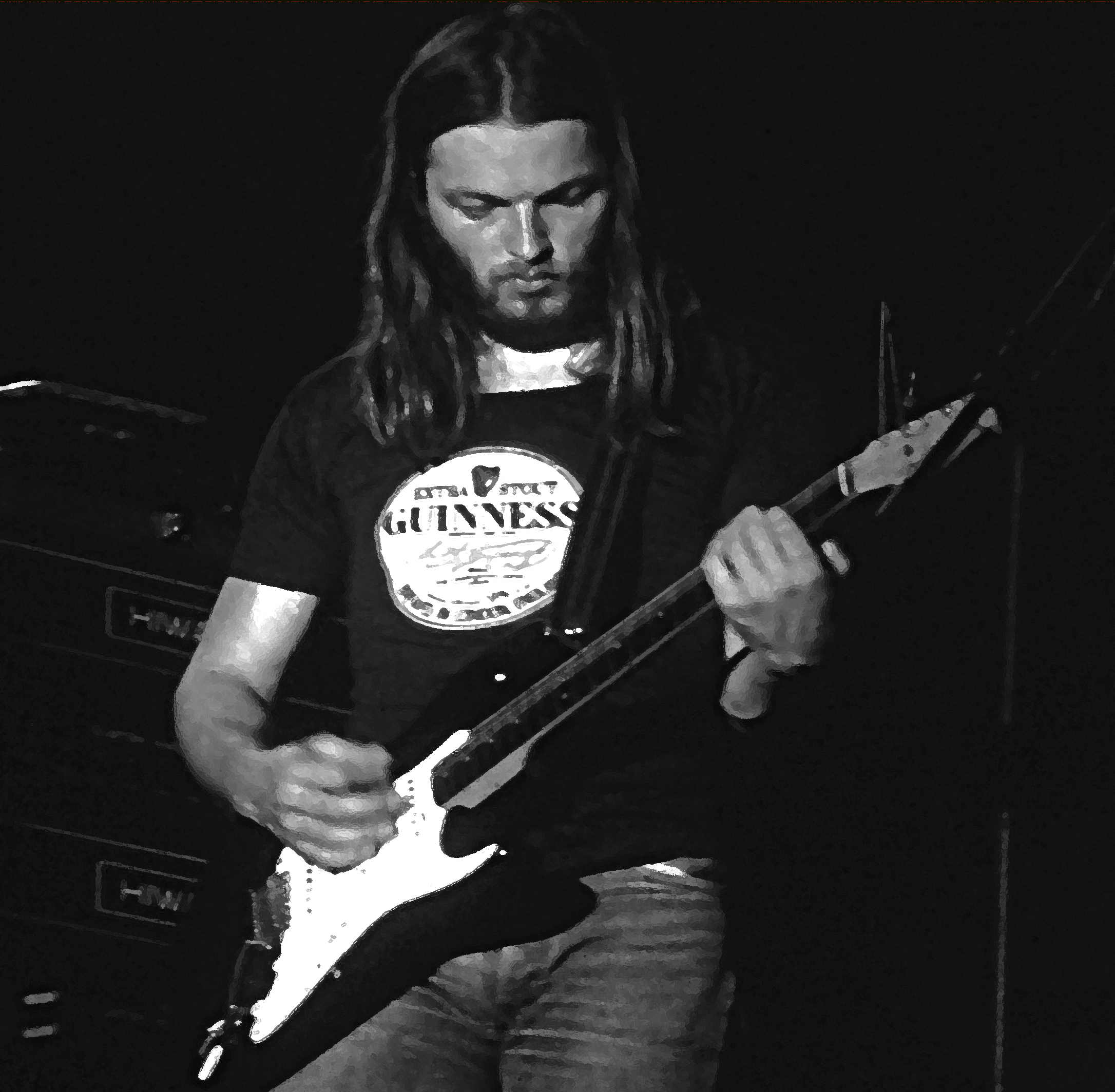
- David Gilmour live: Jan Hagelskamp, Wikimedia Commons, CC BY 4.0.
- MXR Phase 90: Roadside Guitars, Wikimedia Commons, CC BY-SA 2.0.
- Fender Bass VI: GuitarGangsters AI-generated reference illustration, not a photograph.
- David Gilmour (illustration 2): GuitarGangsters AI-generated reference illustration, not a photograph.
- David Gilmour (illustration 1): GuitarGangsters AI-generated reference illustration, not a photograph.
- Martin D-35: GuitarGangsters AI-generated reference illustration, not a photograph.
- Fender Concert: Centervolume, Wikimedia Commons, CC BY-SA 4.0.
- Boss CS-2 Compression Sustainer: Kuriosatempel, Wikimedia Commons, CC BY-SA 4.0.
- MXR M102 Dyna Comp: Roadside Guitars, Wikimedia Commons, CC BY-SA 2.0.