Robert Johnson Guitars & Gear: The Complete Guide to the King of the Delta Blues’ Rig
Robert Johnson's guitars and gear — the complete guide. Kalamazoo KG-14, Gibson L-1, open tunings, slide technique, and the recording sessions that changed music forever.
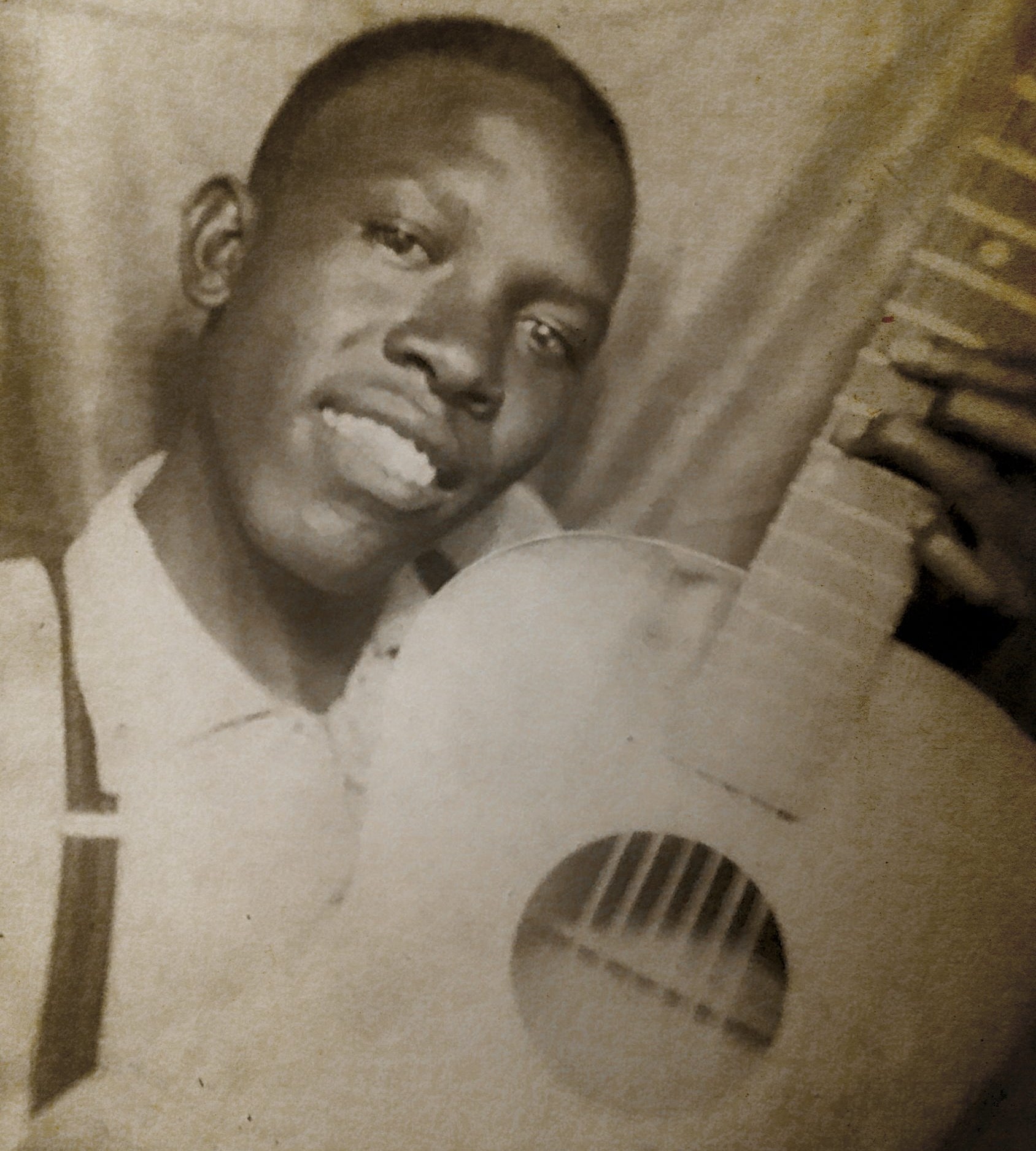
Robert Johnson in a photo-booth self-portrait with his guitar, 1937 or 1938. Photo: Robert Johnson (self-portrait), Public domain. Source: https://commons.wikimedia.org/wiki/File:Robert_Johnson_self-portrait_photo.jpg
Here is what we know for certain. In the fall of 1936, a man walked into a makeshift recording studio in a San Antonio hotel room — the Gunter Hotel, to be exact, with producer Don Law’s microphone aimed at a corner where the two walls and the ceiling created a natural acoustic sweet spot — and played twenty-nine songs over two days in November and two days in June 1937 in Dallas. The recordings were made on acetate discs, the technology of the era. They were released on 78rpm records and sold modestly. Then the man died in August 1938, poisoned, it is believed, by the husband or companion of a woman he was involved with. He was approximately twenty-seven years old.
Those twenty-nine songs are, in the judgment of most music historians, the most important body of work in the history of American popular music. They are the foundation on which rock and roll was built. Every British Invasion guitarist who came through America in the 1960s — Eric Clapton, Keith Richards, Jimmy Page, Jeff Beck — arrived having done their homework on those twenty-nine songs. The Rolling Stones named themselves after a Muddy Waters song that was itself named after a Robert Johnson song. Clapton called Johnson “the most important blues singer that ever lived.” Led Zeppelin’s entire career is, at various removes, a meditation on what those twenty-nine songs established.
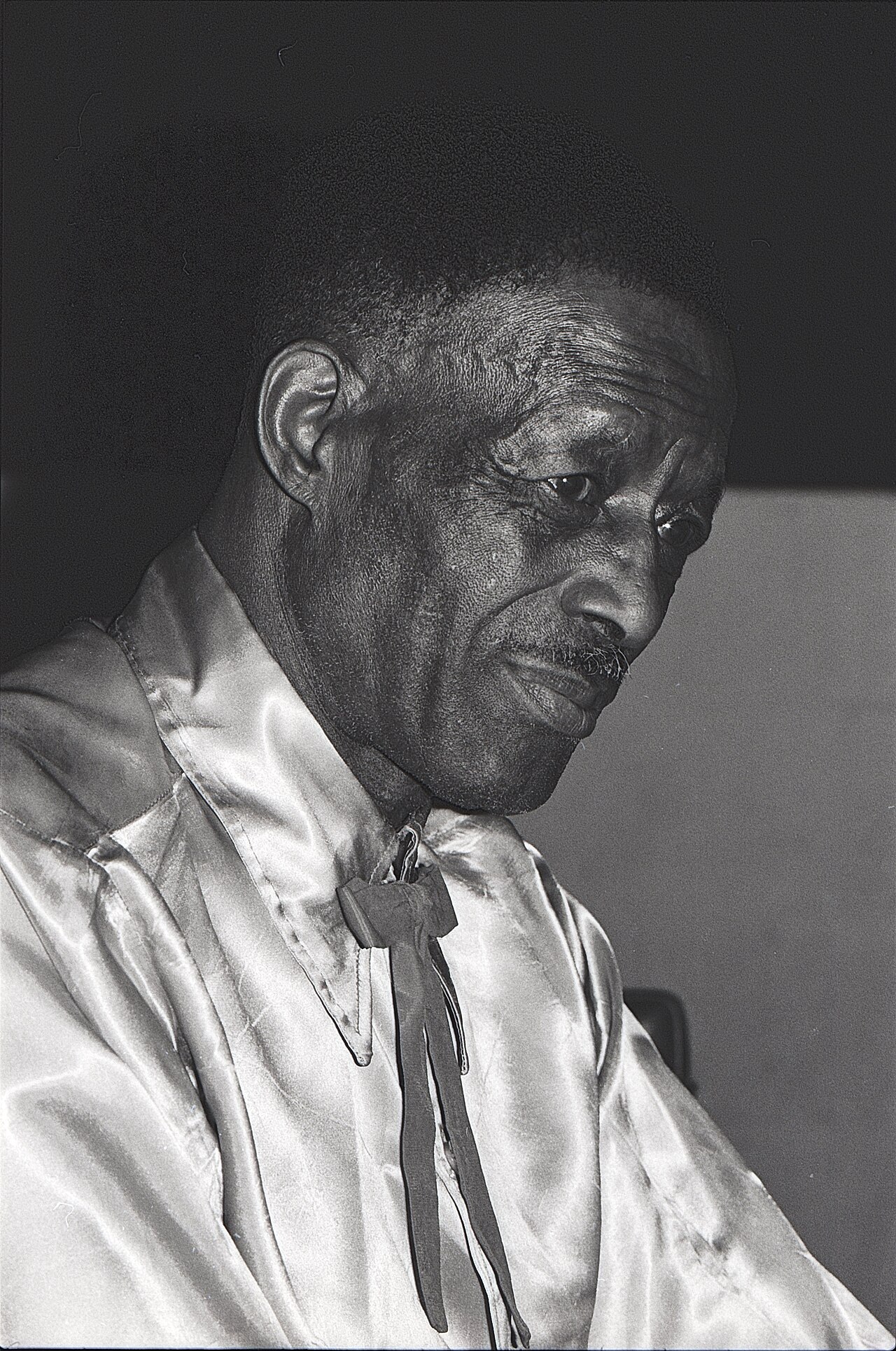
Robert Johnson was born — probably — on May 8, 1911, in Hazlehurst, Mississippi. The word “probably” is doing significant work there: documentation of Johnson’s life is fragmentary, contested, and surrounded by mythology so thick it has become impossible, in some places, to separate the historical man from the legend. The crossroads story — that Johnson disappeared for months as a mediocre guitarist and returned as a genius, having sold his soul to the Devil at a Mississippi crossroads at midnight — is almost certainly invented. Son House, who knew Johnson, told the story. The Devil himself has never confirmed or denied. What we know is that Johnson left as a mediocre guitarist and returned, after a period with musician Ike Zimmerman in Martinsville, as someone whose playing had made a qualitative leap that his contemporaries found astonishing. The most mundane explanation — intense practice with an excellent teacher — is probably correct. It is, however, considerably less interesting than the crossroads.
The gear he played, documented by two photographs and the testimony of musicians who knew him, was modest to the point of poverty. A Kalamazoo KG-14, a budget Gibson subsidiary guitar that cost $12.50 new. Possibly a Gibson L-1 — though the most famous guitar photograph, the studio portrait with the L-1, may show a studio prop rather than his own instrument. Stella guitars when nothing better was available. Perhaps a National resonator near the end. No amplification, because the era was pre-electric. No effects, because none existed in any relevant form. Two hands, a guitar, a corner of a hotel room, and the full weight of the Mississippi Delta’s musical tradition pressing through him into the microphone.
This is the complete guide to Robert Johnson’s gear — with all the uncertainty that history has bequeathed us, all the archaeology that researchers have performed on the photographs and the recordings, and the full context of what those instruments, in those conditions, produced. It is, in the end, a guide to how music’s most profound foundation was built with the simplest possible tools.
Background: The Mississippi Delta, the Legend, and the Man
The Mississippi Delta — a vast alluvial plain between the Yazoo and Mississippi rivers in northwest Mississippi — was, in the early twentieth century, one of the most productive agricultural regions in America and one of the most brutal environments for human beings. The sharecropping system that replaced slavery after Reconstruction trapped Black families in cycles of debt and dependency from which escape was extraordinarily difficult. The music that emerged from this environment — the Delta blues — was not a form of entertainment in the conventional sense. It was a form of survival, a way of processing experience too extreme for conventional language to contain, a communal expression of grief and resistance and pleasure and desire that found its vehicle in the acoustic guitar.
Robert Leroy Johnson was born into this environment, one of at least eleven children of Julia Major Dodds and a father whose identity is complicated by the circumstances of his mother’s marriage. He was shuttled between different family members during childhood, learning guitar from the musicians around him — Charley Patton, Son House, and the broader community of Delta musicians whose work was building what would become known as the blues tradition. He was, by the accounts of his contemporaries, not initially gifted: Son House, who encountered young Robert Johnson and was unimpressed, is the primary source for the “before the crossroads” assessment of his playing.
The transformation period — the months Johnson spent with guitarist Ike Zimmerman, who lived and played in Martinsville, Mississippi, and who reportedly practiced in graveyards at night (contributing further to the demonic mythology) — produced the guitarist who showed up at the San Antonio recording session in 1936. What he played was recognized by the other musicians and by the record company representatives as extraordinary: technically sophisticated beyond what most rural Delta blues guitarists were doing, harmonically inventive, and above all emotionally direct in a way that cut through whatever primitive recording technology was capturing it to reach the listener in the chest.
The biography is thin, by necessity. Johnson was an itinerant musician who moved through Mississippi, Arkansas, Texas, and various other Southern states playing juke joints, street corners, house parties, and anywhere else someone would pay for music. He traveled with other musicians, including Johnny Shines, who became the most important first-hand source on Johnson’s life and musical habits. He had multiple romantic relationships, at least some of them simultaneously. He was reportedly arrested the night after his first day of recording in San Antonio — the specific charge and circumstances have been lost. He seems to have been a charismatic, charming, and difficult man.
His death in August 1938 near Greenwood, Mississippi, was officially attributed to syphilis, but the oral tradition among people who were present or knew those who were present consistently attributes it to poisoning. The most common account has him drinking strychnine-laced whiskey provided by the jealous companion of a woman he was involved with. The specific circumstances remain unclear. He was buried in an unmarked grave — the location of which has been contested and possibly located three different times, with three different grave markers standing today in three different places in Mississippi.
The posthumous recognition was slow but eventually overwhelming. John Hammond attempted to include him in the 1938 Carnegie Hall “From Spirituals to Swing” concert, only to discover he was already dead. Columbia Records issued King of the Delta Blues Singers in 1961, which was the first widely available collection of Johnson’s recordings and the album that ignited the British blues boom. Eric Clapton, the Rolling Stones, and Led Zeppelin found Johnson through that album, and what they found in it became the foundation of rock music as it is understood today. He was inducted into the Rock and Roll Hall of Fame as an Early Influence in 1986. Rolling Stone magazine placed him at number five on their 100 Greatest Guitarists list. It is, in retrospect, impossible to overstate his importance.
The Rig: Robert Johnson’s Guitars and Equipment
Writing about Robert Johnson’s gear requires acknowledging upfront that this is the most uncertain equipment discussion in this entire series of one hundred guitar legends. Johnson lived and played in an era of minimal documentation, and even the instruments visible in the only authenticated photographs of him have been the subject of decades of scholarly debate. What follows presents the most rigorously researched historical picture available, with appropriate uncertainty noted throughout.
Guitars
The first clear photograph the world saw of Robert Johnson — discovered by estate manager Steve LaVere in the late 1970s and published in Rolling Stone magazine in 1986 — shows Johnson seated in a photo booth self-portrait, a cigarette dangling from his lip, holding a Kalamazoo KG-14 flat-top guitar. The photograph was taken in San Antonio around November 1936, immediately before Johnson’s first recording session. Guitar expert Zeke Schein of Matt Umanov Guitars has confirmed the instrument’s identification from the photograph’s visible features: “14 frets to the body, five dot markers, a single layer of binding inside the sound hole, and a black ebony nut” — characteristics specific to the KG-14 model.
The Kalamazoo brand was Gibson’s budget subsidiary, designed to produce less expensive instruments using the same factory and similar construction methods as Gibson’s higher-tier lines. The KG-14 cost $12.50 new in 1936 — equivalent to roughly $300 in contemporary terms — which was attainable for a working musician of Johnson’s economic status, unlike the more expensive Gibson L-1 ($50 in 1936, equivalent to over $1,000 today). Johnny Shines, who traveled with Johnson extensively and is the most reliable first-hand source on his everyday life, confirmed in interviews that Johnson favored Kalamazoo guitars: “It might be the one that we bought in Steele, Missouri. We bought a flat-top in Steele, Missouri.” Shines also noted that Johnson loved the Kalamazoo archtop models (the KG-21 and KG-31) in addition to the flat-top KG-14.
The KG-14’s construction was utilitarian but functional: a flat-top acoustic guitar with ladder bracing (rather than the X-bracing of more expensive instruments), typically featuring spruce or similar wood for the top, with birch or similar materials for back and sides on budget models. The bolt-on neck, plastic pickguard, open-back strip-style tuners, and masonite in various locations reflected the cost-saving approach of the budget line. Gibson master luthier Ren Ferguson later noted that “the notes decay really quick” on instruments of this era and construction — a characteristic that is audible in Johnson’s recordings, where notes have a particularly fast, percussive attack and relatively quick decay that gives his playing its distinctively urgent, forward-driven quality. This was not a sophisticated tonal choice — it was the natural acoustic behavior of budget-tier 1930s instrument construction. It happened to produce exactly the sound that defined the Delta blues.
The more famous photograph of Robert Johnson — the studio portrait taken at Hook’s Brothers photography shop on Beale Street in Memphis, where he is dressed in a suit and holding a guitar — shows what guitar experts have identified as a 1929 Gibson L-1 flat-top. Zeke Schein’s identification of this guitar from the photo: “seven dot markers, an unbound fingerboard, and slanted ‘The Gibson’ logo.” The photograph has been verified by blues researcher Gayle Dean Wardlow through archival cross-referencing with Johnson’s known travels and the studio’s records.
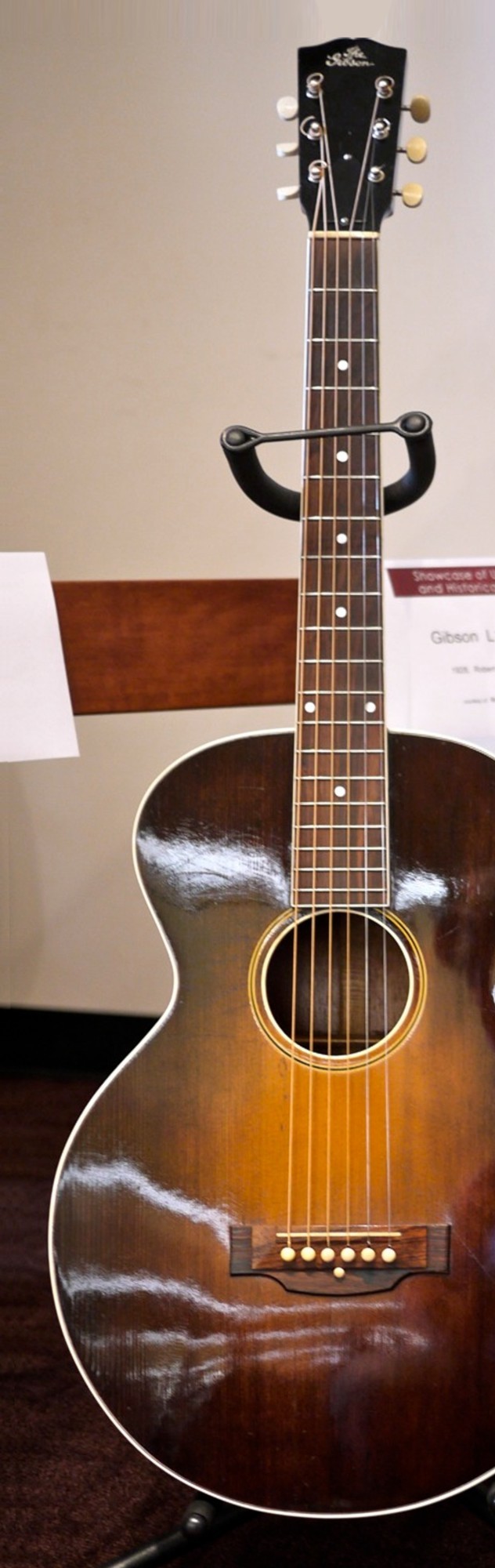
The question of whether the L-1 was Johnson’s own guitar or a studio prop has been extensively debated. Gibson master luthier Ren Ferguson stated explicitly: “the L-1 in the photo is probably a ‘studio guitar, not the guitar he actually played.'” The price argument supports this view: at $50 in 1936, the L-1 was approximately four times the cost of the Kalamazoo KG-14, and documentation of Johnson as an L-1 owner is absent from the historical record, while documentation of his Kalamazoo ownership is confirmed by Shines. Counter-arguments note that Johnson could have acquired the guitar through various means — winning it at cards, receiving it as a gift, borrowing it — and that blues musicians of the era did own quality instruments when they could get them.
Gibson’s decision to honor Johnson with the Robert Johnson Signature L-1 (introduced 1994, production through approximately 2016, produced at Gibson’s Bozeman, Montana facility) reflects the guitar’s visual association with Johnson even when the historical ownership is uncertain. The signature model features: solid Sitka spruce top with X-bracing (upgraded from the original’s fragile ladder bracing), mahogany back and sides, ebony fingerboard and bridge, 25-inch scale length, modified V neck profile, pearl inlays — incorporating modern structural improvements while maintaining the small-body parlor aesthetic of the original. Ferguson and his team tested numerous period L-1s before developing the signature model. The L-1’s small body (approximately 13.5 inches at the lower bout) produces the focused, midrange-heavy sound that became the sonic template for Delta blues.
Multiple musicians who knew Johnson — including Johnny Shines and others in his circle — mentioned Stella guitars in their accounts of his instrument use. Stella was a brand produced by the Oscar Schmidt Company, positioned even lower in the market than the Kalamazoo, with guitars of very basic construction sold through mail-order catalogs and general stores for minimal prices. Stella guitars were among the most accessible instruments for the rural poor in the South, and they appear throughout the oral histories of Delta blues musicians as the instruments of first resort when nothing better was available. The Stella’s construction — birch or similar budget woods, simple ladder bracing, very light build — produced a particularly bright, almost harsh tone that cut through noise in juke joint environments. The specific Stella models Johnson may have played are not documented.
Multiple sources report that Johnson was using a National Resonator guitar near the end of his life — around 1938, shortly before his death. The National resonator was a significantly more advanced and expensive instrument than the Stella or Kalamazoo, featuring a metal body with a resonating cone designed to project considerably louder than a standard acoustic guitar. National guitars were status instruments in the blues world of the 1930s, associated with relative success and professionalism. If Johnson had acquired a National by the time of his death, it suggests that his career had achieved sufficient commercial success to upgrade his instrument. Some accounts also mention a seven-string National — a variant that would have extended his bass range and contributed additional harmonic possibilities to his playing. The specific details of this instrument, like so much about Johnson, cannot be confirmed with certainty.
It is important to contextualize these instruments within the reality of Johnson’s life. He was an itinerant musician in the Mississippi Delta in the 1930s, traveling with his guitar on his back or over his shoulder, playing for pocket money and room and board. The instruments he used were not chosen from a collection maintained at home — they were the guitars he could carry, acquire, borrow, or win in the course of a traveling musician’s life. His relationship with instruments was pragmatic rather than sentimental: instruments were tools for making music and earning a living, not objects of attachment. Johnny Shines’s account of buying a guitar together in Steele, Missouri suggests that instrument acquisition was a casual, opportunistic process rather than a deliberate choice among available options.
Open Tunings and Slide
Open G Tuning (DGDGBD) and Open D (DADF#AD): Robert Johnson used open tunings extensively — alternative string configurations that produced a major chord when played open (no strings fretted), enabling the slide technique central to Delta blues. Open G (low to high: D, G, D, G, B, D) produces a G major chord across all strings and allows the guitarist to move a glass or metal slide up the neck to play major chords at any position. Open D (D, A, D, F#, A, D) does the same in the key of D. Johnson was documented using both tunings, as well as standard tuning for various songs. His ability to move between tunings fluently — without the extended tuning breaks that less experienced players require — is audible in recordings made on successive days, where the tonal character of different tunings is identifiable.
Slide Technique (Bottleneck Style): Johnson used a glass or metal slide — a bottleneck, literally the neck of a glass bottle, or a manufactured metal slide — to play slide guitar passages. The bottleneck rests against the strings without pressing them to the fretboard, producing notes that can be moved continuously along the string’s length to create the gliding, vocally expressive quality of slide playing. Johnson’s slide technique was more sophisticated than simple chord slides — he integrated slide and fretted passages within the same performance, using the slide for melodic and expressive statements and conventional fretting for chord changes and rhythmic patterns. The specific slide he used is not documented; virtually every Delta blues guitarist of the era used improvised or purchased slides of varying materials and dimensions.
Fingerpicking and Thumbpicking: Johnson played fingerstyle — without a flatpick — using his thumb and fingers to produce both the bass lines and the melodic content simultaneously. The characteristic Delta blues approach involves the thumb playing a steady or syncopated bass line on the lower strings while the fingers play melodic and chordal content on the upper strings, producing what sounds like two instruments played simultaneously. On recordings like “Cross Road Blues” and “Come On in My Kitchen,” the independence of bass line and treble melody is audible and extraordinary — it sounds like more than one guitar, produced by one person, on one instrument.
Recording Environment
San Antonio Sessions (November 23-27, 1936): Johnson’s first recording sessions took place at the Gunter Hotel in San Antonio, Texas, with producer Don Law recording for the American Record Corporation. The recording setup involved an acetate disc lathe, a single microphone, and the room’s acoustic properties. Don Law’s approach of positioning the guitar player facing into a corner — using the walls and ceiling to create a natural acoustic reflector — was documented by musicians who were present. The resulting sound has a particular close, intimate, slightly reverberant quality that is quite unlike contemporary recording. Johnson reportedly played facing away from the microphone into the corner, giving his recordings the slightly indirect, enveloping quality that distinguishes them from more direct recordings of the era. The specific microphone model has not been documented. This setup, along with the fast-decaying characteristics of the instruments, produced the specific recorded sound that became the sonic template for blues recording.
Dallas Sessions (June 19-20, 1937): The second set of sessions took place in Dallas, at a studio set up in a warehouse on Commerce Street. The different acoustic properties of the Dallas location are audible in comparison to the San Antonio recordings — slightly different room character, slightly different microphone placement and positioning. Some researchers have suggested that the Kalamazoo archtop models (KG-21 or KG-31) rather than the flat-top KG-14 may have been used on some Dallas recordings, based on tonal analysis. The Guitar Lobby suggests that “Cross Road Blues” and some of the second San Antonio session songs show tonal characteristics consistent with a different guitar than the KG-14 — possibly the Gibson L-1 — though this remains speculative. The recordings were made without rehearsal or second takes in most cases; Johnson apparently delivered complete performances in single attempts.
Playing Style & Tone Philosophy
Robert Johnson’s playing style is the foundation on which the entire structure of electric blues, rock and roll, and a significant portion of popular music was subsequently built. Understanding what he was doing technically — and why it sounded the way it sounded — requires approaching the music on its own terms rather than through the lens of what came after.
The most immediate thing you notice about Johnson’s playing is the simultaneity: he is playing bass lines and melody lines simultaneously on a single acoustic guitar, with a rhythmic independence between the thumb (bass) and fingers (treble) that creates the impression of a full ensemble. This is not unique to Johnson — it is the standard approach of Delta blues fingerpicking — but the fluency, speed, and musical intelligence of his version of it was extraordinary by the standards of his contemporaries. Muddy Waters, who heard Johnson play before either of them had recorded, said he was terrified — specifically that the music was too good for a human being to have made it. This is hyperbole with a factual basis: what Johnson was doing with the technical resources available to him was beyond what most musicians could do with more resources.
The harmonic vocabulary Johnson used extended the Delta blues tradition in specific ways. He incorporated chord extensions and alterations — the flattened fifth, the diminished chord, the dominant seventh in unexpected places — that gave his music a harmonic tension more complex than standard twelve-bar blues. This harmonic complexity is part of what made his music so compelling to the jazz-trained British guitarists who encountered it twenty years later: it had harmonic interest beyond simple blues changes, presented in a context of overwhelming rhythmic intensity.
His vocal approach was inseparable from his guitar playing. Johnson used a high, sometimes falsetto vocal range that sat above his guitar’s midrange presence, creating a specific separation between voice and instrument in the frequency spectrum. The guitar was not accompaniment — it was a second voice in constant conversation with the first. The interplay between voice and guitar on recordings like “Come On in My Kitchen” and “Love in Vain” demonstrates a musical intelligence that operates at a level of integration where it is impossible to say which came first: the guitar phrase that shaped the vocal, or the vocal phrase the guitar responded to.
His tone philosophy — to the extent that concept applies to a man playing in 1936 on whatever guitar he could get — was entirely practical. Volume was the primary requirement: he needed to be heard in juke joints over crowd noise and competing musicians. The instruments he used were chosen for their availability and portability. The tunings he used were chosen because they supported the slide technique that was central to his musical vocabulary. The playing position and attack were developed through years of practice in the specific conditions of Delta blues performance. None of this was theorized or deliberately designed. It was adapted, refined, and applied in the field.
How to Sound Like Robert Johnson
Getting into Robert Johnson territory requires accepting that the most important elements of his sound — the Delta environment, the specific acoustic properties of pre-war budget instruments, the primitive recording technology, and above all the specific life and musical training that shaped his technique — cannot be replicated. What can be done is to approach the music with the right instruments, the right approach, and the right understanding of what the music is actually doing.
Guitar: A small-body acoustic guitar — “parlor guitar” in contemporary terminology — with a warm, focused midrange sound is the appropriate starting point. Modern parlor guitars from Martin (000 series), Collings, or similar quality builders approximate the tonal character of period instruments. For those wanting historical fidelity, reproduction guitars based on the L-1 design are available from Gibson (Robert Johnson signature) and from smaller builders. The key characteristics: small body, relatively low output, emphasis on midrange frequencies, and fast note decay. Avoid dreadnought or jumbo body guitars — they are too large and bass-heavy for this style.
Open tunings: Learn Open G (D, G, D, G, B, D) and Open D (D, A, D, F#, A, D) as primary tuning options. Standard tuning also appears in Johnson’s work. The specific tuning for individual songs can be determined by listening carefully — the drone character of the open strings is audible in recordings.
Bottleneck slide: A glass slide (similar to a wine bottle neck cut smooth) worn on the ring or pinky finger for slide passages. The acoustic guitar context calls for a relatively heavy glass or metal slide for volume and sustain.
Acoustic setup for Delta blues tone:
| Element | Recommendation | Notes |
|---|---|---|
| Guitar Body Style | Parlor / 000 size | Small body — focused midrange, fast decay |
| String Material | Phosphor bronze or 80/20 bronze | Warm, natural acoustic character |
| String Gauge | Medium (.013-.056) | Heavy enough for the aggressive attack Johnson used |
| Action | Medium-high | Higher action for slide clearance, natural acoustic volume |
| Pick Approach | Fingerpicking — thumb and 1-2 fingers | Simultaneous bass and treble is essential to the style |
| Microphone (if amplified) | Small-diaphragm condenser | Accurate reproduction of acoustic character |
The critical practice advice: Learn the bass-treble independence of fingerpicking before attempting Johnson’s specific pieces. The thumb plays a steady or syncopated bass pattern on the lower strings while the fingers play melody above. This independence — the ability to maintain two independent rhythmic and melodic lines simultaneously on one instrument — is the foundational skill. Johnson’s specific pieces are well-documented through transcriptions and recordings, but they require this foundational independence before they become playable.
Influence & Legacy
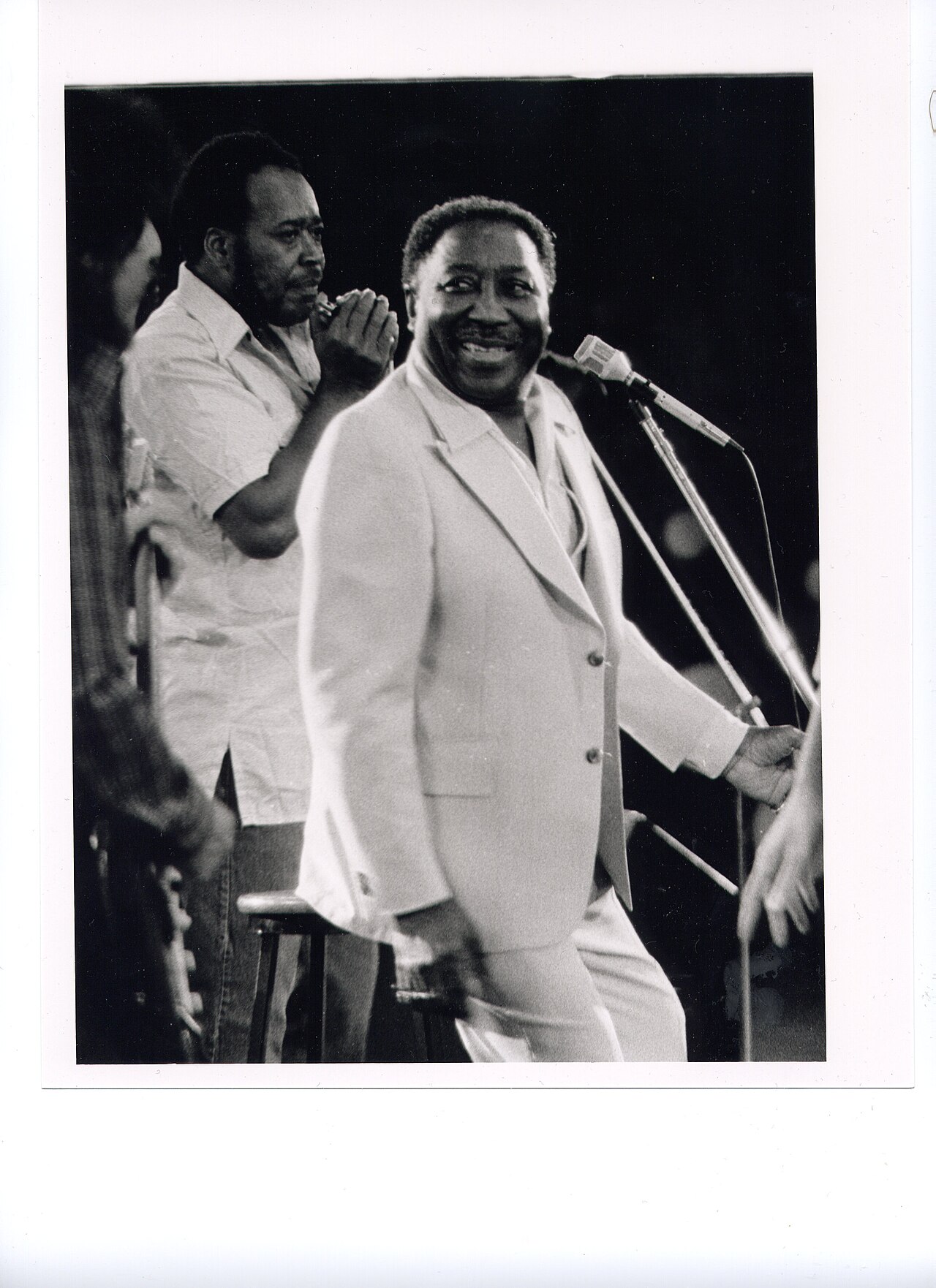
The question of Robert Johnson’s influence is not really a question — it is an acknowledgment of a fact so large and so pervasive that it has ceased to be visible as a fact and has become simply the way things are. He is the source. Everything in the mainstream of rock music traces back to him through a genealogy that is visible and specific: Johnson to Muddy Waters (who heard Johnson play and modeled his style on it, then electrified it in Chicago), Waters to the Rolling Stones and the British Invasion broadly, the British Invasion to essentially every rock band formed after 1963. This is not a metaphor for influence — it is a literal causal chain, documented in interviews with Clapton, Richards, Page, and every other architect of rock who did their homework.
The more specific transmission is through the King of the Delta Blues Singers album (Columbia 1961), which collected Johnson’s recordings and placed them in front of a generation of young British guitarists hungry for the authentic American blues that their own music scene had not produced. Clapton found Johnson through that album. Richards found Johnson through that album. The effect was described by multiple players as transformative in a way that goes beyond normal musical influence: they heard something in Johnson that showed them what the guitar could be, and they spent their careers trying to get there.
His harmonic innovations — the chord extensions and alterations he incorporated — directly influenced the approach to blues harmony that Clapton, Page, and the Stones developed, giving British blues rock its specific harmonic character as distinct from the simpler harmonies of straight twelve-bar blues. His simultaneous bass-treble playing technique influenced the approach to guitar accompaniment that appeared in rock and roll from Elvis Presley’s guitarists through the entire tradition of solo performers who needed to provide their own rhythmic and harmonic context.
The mythology — the crossroads, the Devil’s bargain, the tragic early death — became inseparable from the music and contributed to the romantic aura of the blues guitarist as a figure who operates at the intersection of profound creative power and personal destruction. This mythology has shaped how rock musicians have thought about their own relationship to their art for eighty years, and it traces directly to the stories people told about Robert Johnson.
For the fullest context of where Johnson sits in the development of the Delta blues tradition, the comparison with Muddy Waters’ approach to electric blues is essential — the direct line from Johnson’s acoustic Delta work to Waters’ Chicago electric amplification of the same tradition. Waters himself acknowledged the debt, and the technical comparison of what Johnson did acoustically with what Waters did electrically is one of the most instructive studies in musical evolution available.
The comparison with Albert King’s later blues tradition shows how the Delta vocabulary Johnson developed was absorbed and transformed by the generation that followed — King’s downward bends and extreme expressiveness are built on a foundation that Johnson’s recordings established, transmitted through the intermediate generation of Chicago electric blues. And for the deepest root of the tradition Johnson inherited, Sister Rosetta Tharpe’s foundational guitar innovations represent the parallel tradition in gospel and electric blues that intersected with Johnson’s Delta work to produce the electric guitar’s full expressive vocabulary.
Robert Johnson died without knowing he would be famous. The twenty-nine songs sold modestly in his lifetime. He was buried in an unmarked grave. His photographs — two authenticated, possibly a third — were discovered decades after his death. The recording technology that captured his sessions was primitive enough that everything we hear has passed through layers of noise, distortion, and the acoustic properties of a hotel room corner. None of this diminished the music. It is, by any serious assessment, the foundation of everything. A Kalamazoo KG-14, purchased for $12.50 in Steele, Missouri, in the hands of a man who may or may not have sold his soul at the crossroads, played into a corner microphone in a San Antonio hotel room, and the world was never quite the same.
Frequently Asked Questions: Robert Johnson Guitars & Gear
What guitar did Robert Johnson play?
Robert Johnson’s most reliably documented guitar is the Kalamazoo KG-14, a budget flat-top acoustic guitar manufactured by Gibson’s economy subsidiary brand. He is shown holding one in a photo booth self-portrait taken in San Antonio around November 1936, just before his first recording session. His traveling companion Johnny Shines confirmed in interviews that Johnson liked Kalamazoo guitars, noting they had bought one together in Steele, Missouri. Johnson is also seen in a more formal studio portrait holding what experts have identified as a 1929 Gibson L-1, but this may have been a studio prop — the L-1 cost $50 in 1936 ($1,000+ in today’s money) while the KG-14 cost only $12.50, and there is no other documentation of Johnson owning a Gibson. He also played Stella guitars (confirmed by contemporaries) and reportedly a National resonator near the end of his life.
Did Robert Johnson really sell his soul to the Devil?
No credible historical evidence supports the “sold his soul at the crossroads” story. The narrative emerged primarily from Son House — a musician who knew Johnson but was not present for whatever transformation occurred in his playing — and was amplified by the songs Johnson himself wrote (“Cross Road Blues,” “Me and the Devil Blues”). The most plausible explanation for Johnson’s dramatic improvement is that he spent an extended period (roughly six months to a year) studying and practicing intensively with guitarist Ike Zimmerman in Martinsville, Mississippi. Johnson’s rapid development as a musician, while genuinely extraordinary, is not more remarkable than what other dedicated self-taught musicians have achieved through intensive practice. The crossroads mythology, while culturally rich and lyrically embedded in the blues tradition, is most likely a myth created around an observable fact — the transformation of a mediocre guitarist into a transcendent one — that Johnson’s contemporaries found easier to attribute to the supernatural than to work.
What were Robert Johnson’s recording sessions like?
Robert Johnson recorded in two sessions: November 23-27, 1936, at the Gunter Hotel in San Antonio, Texas, and June 19-20, 1937, in Dallas. Both sessions were produced by Don Law for the American Record Corporation. Recording was on acetate discs with a single microphone. Johnson reportedly played facing a corner of the hotel room in San Antonio — the two walls creating a natural acoustic reflector — at producer Don Law’s direction. He reportedly delivered complete performances without second takes in most cases. He was arrested the night after his first recording day in San Antonio (the specific circumstances are unknown) and released in time for the second day’s sessions. The Dallas sessions took place in a warehouse on Commerce Street. The twenty-nine songs recorded in these sessions (with some duplicate takes bringing the total number of recordings higher) are the entirety of his documented output.
What tunings did Robert Johnson use?
Robert Johnson used three main tuning approaches: standard tuning (EADGBE), Open G (DGDGBD), and Open D (DADF#AD). Open G and Open D are the primary slide guitar tunings of the Delta blues tradition, allowing the guitarist to move a bottleneck slide up and down the neck and produce major chords at any position. Which specific songs used which tunings can be determined by careful listening — the drone quality of the open strings in the recording, the key of the song, and the characteristic chord voicings all provide evidence. Many of Johnson’s most famous songs — “Cross Road Blues,” “Come On in My Kitchen,” “Walking Blues” — use Open G or variants. Standard tuning appears in other pieces where the harmonic approach doesn’t require or benefit from the open tuning’s drone quality.
How did Robert Johnson influence rock music?
Robert Johnson’s influence on rock music is fundamental and traceable through a specific genealogy. Muddy Waters, who heard Johnson play in Mississippi before either had recorded, modeled his own style on Johnson’s approach and then electrified it in Chicago — the resulting Chicago electric blues directly influenced the British musicians who formed the Rolling Stones, Led Zeppelin, Cream, and the Yardbirds. Eric Clapton called Johnson “the most important blues singer that ever lived” and recorded versions of his songs. The Rolling Stones took their name from a Muddy Waters song that was itself titled after a Robert Johnson song. Led Zeppelin’s “Traveling Riverside Blues” and “Crossroads” are both Johnson songs. The harmonic language of blues rock — the chord extensions, the modal approach, the emotional expressiveness of single-note melody — comes directly from the vocabulary Johnson established in twenty-nine songs recorded in 1936 and 1937.
Where is Robert Johnson buried?
The location of Robert Johnson’s grave is one of the more tragicomic ongoing disputes in American music history. Three separate grave markers stand in three different locations in Mississippi, each claiming to mark the actual burial site: one at Mount Zion Missionary Baptist Church in Morgan City, one at Payne Chapel in Quito, and one at Little Zion Missionary Baptist Church near Greenwood. All three sites have some historical support, and the true location may never be definitively established. The circumstances of his death in August 1938 near Greenwood, Mississippi — reported by some witnesses as poisoning by strychnine-laced whiskey — are themselves uncertain, as the death certificate attributed the cause to syphilis. He died approximately twenty-seven years old, without knowing he would become, in the judgment of subsequent history, the most important figure in American popular music’s foundational tradition.
What is the “corner loading” recording technique used on Robert Johnson’s sessions?
“Corner loading” or “corner placement” refers to the practice of positioning the musician (and/or microphone) facing into a corner of a room, where the two walls and ceiling create a natural acoustic reflector that concentrates the sound waves and adds a subtle natural reverb and presence boost to the recording. Don Law reportedly used this approach in the Gunter Hotel sessions in San Antonio, positioning Johnson facing into a corner of the room to maximize the acoustic output of his unamplified acoustic guitar. The resulting recordings have a particular close, slightly enveloping quality that differs from other recordings of the era made in more open room positions. Modern engineers sometimes reference this approach when trying to capture natural acoustic presence without electronic reverb processing.
Image credits
- Muddy Waters: Jean-Luc Ourlin from Toronto ontario, Canada, Wikimedia Commons, CC BY-SA 2.0.
- A red Gibson Les Paul Classic against a dark background: Anil Öztas, Wikimedia Commons, CC BY 4.0.
- Son House: Jeff Titon, Wikimedia Commons, CC BY-SA 4.0.
- Top image: Robert Johnson (self-portrait), Wikimedia Commons, Public domain.
- Gibson L-1 (c. 1928): Moses Gunesch, Wikimedia Commons, CC BY-SA 4.0.