

Explore Rainer Ptacek guitars gear and you find the equipment of one of American music’s most quietly extraordinary figures — a Czech-born guitarist who grew up in Chicago, relocated to Tucson, Arizona, and spent two decades forging a singular vision of acoustic blues and experimental slide guitar that influenced everyone from Giant Sand to Neko Case, and who was finally gaining wider recognition when a brain tumor took him at 43. Ptacek was not a star in any conventional sense during his lifetime. He was a musician’s musician, a guitarist whose work was passed between people who cared about real things in real music, played on tape decks in apartments and car stereos on desert roads. His gear was not exotic. His approach was not systematic. But what came through the instruments was unmistakable.
This guide covers Ptacek’s complete equipment picture: the resonator guitars and acoustic instruments at the heart of his approach, the minimal amplification he used when he used any, the almost complete absence of effects, and the playing philosophy of a man for whom the slide on the strings and the human voice behind it were the only things that mattered. Understanding Rainer Ptacek’s gear is understanding that sometimes the most profound musical statements come from the most direct routes between a human being and their instrument.
Background
Rainer Ptacek was born on April 2, 1951, in Prague, Czechoslovakia, and came to the United States as a child, settling in Chicago with his family. Chicago in the 1960s was an extraordinary musical environment — the city where the electric blues had been definitively shaped, where Chess Records had captured Muddy Waters, Howlin Wolf, and Little Walter, and where the tradition was still alive as a living community practice rather than a museum exhibit. Ptacek absorbed this tradition directly and deeply, through records and through the cultural atmosphere of a city where the blues was still the vernacular music of specific communities.
He relocated to Tucson, Arizona in the late 1970s, and it was there that his specific musical identity crystallised. Tucson in this period was developing its own distinctive musical scene — rooted in the desert Southwest’s unique cultural position at the intersection of Mexican, Native American, and Anglo American traditions, with a community of musicians who were developing something genuinely new from these intersecting influences. Ptacek became a central figure in this scene, playing with and influencing the musicians who would form Giant Sand, Howe Gelb’s primary creative vehicle, and contributing to the specific Tucson sound that influenced American indie rock through the 1990s and beyond.
His recording output was relatively modest — the albums The Texas Tapes (1985), Rainer (1987), Nocturnes (1992), and the posthumous The Return of Rainer Ptacek (1997) constitute the core of his recorded legacy. None of these records achieved significant commercial success; all of them contained music of genuine and sometimes extraordinary quality. His reputation was sustained by the testimony of musicians and listeners who heard him play, and that testimony — consistent across different people and different contexts — described a guitarist whose command of acoustic slide guitar and whose ability to communicate directly and deeply through the instrument placed him in a category that his commercial profile didn’t reflect.
The brain tumor diagnosis in 1996 prompted an outpouring of support from the Tucson musical community and beyond — a benefit album produced by Howe Gelb featured contributions from Neko Case, Calexico, and others who recognised the significance of what Ptacek had contributed. He died on November 12, 1997, at the age of 46. His influence on American roots music and on the specific Tucson scene that he helped define continues to grow in the decades since his death, as his recordings have become more widely available and as musicians who encountered his work continue to carry its lessons forward.
Rainer Ptacek Guitars Gear: The Complete Rig
Guitars
Rainer Ptacek’s guitar choices were defined by a consistent preference for acoustic resonator instruments — the family of guitars that use a metal resonator cone to amplify the string vibration acoustically rather than relying on a pickup and amplifier. This preference reflected both his musical origins in the acoustic blues tradition and his specific approach to slide guitar, which was oriented toward the raw, direct sound of pre-electric blues rather than the more amplified, produced sound of the Chicago electric blues tradition.
His primary instrument was a National resonator guitar — specifically a single-cone resonator in the tricone or style-O configuration that National had been producing since the late 1920s. The National resonator’s aluminium or steel body and single or triple resonator cone configuration produced the distinctive metallic, ringing tone that characterised pre-electric Delta blues — the sound of Robert Johnson, Son House, and Tampa Red, who used similar instruments in the 1920s and 1930s. The resonator cone amplifies string vibration through acoustic means, producing significant volume without electrical amplification, and its tonal character — bright, metallic in the high frequencies, with a characteristic ringing sustain — gave Ptacek’s playing its specific atmospheric quality.
The specific National instruments he used were typically vintage examples from the late 1920s to early 1930s — instruments whose age and the specific tonal character that vintage resonator cones produce after decades of playing and resonating contributed to the sound he achieved. Vintage National resonators have a specific mellowing of the high-frequency response compared to new instruments — the metal components age and settle in ways that affect their resonant behaviour — that gives them a warmth alongside the metallic character that new instruments don’t immediately have.
He also used a Dobro resonator guitar at various points — the wooden-body resonator guitar that produces a warmer, more acoustic character than the all-metal National. The Dobro’s wooden body absorbs some of the upper frequencies that the all-metal National radiates, producing a tone that sits between a conventional acoustic guitar and a metal-body resonator — warmer than the National, more resonant than a standard acoustic, with the distinctive spider-bridge resonator’s specific midrange character. For material that required a less metallic, more earthy quality, the Dobro’s character was more appropriate than the National’s brighter, more projecting sound.
Ptacek also played conventional steel-string acoustic guitars for material that didn’t require the specific resonator character. Various Martin and Gibson acoustic instruments appeared in his playing across different recordings and performances, providing the warmer, more conventional acoustic guitar character for material that suited it. His facility on conventional acoustic guitar was as fully developed as his resonator work, though the resonator instruments were more central to his musical identity.
His slide technique used a metal slide — typically a steel or brass bottleneck — in preference to the glass slide that some other players favour. Metal slides produce a brighter, more cutting tone than glass, with a harder attack and a different sustain character that suits the resonator guitar’s own metallic brightness. The combination of metal slide and metal-body National resonator produced a specifically metallic, ringing tone that was perfectly matched — the two elements amplifying each other’s characteristic qualities rather than one moderating the other’s character.
He played in various open tunings — open G (D-G-D-G-B-D), open D (D-A-D-F#-A-D), and open E (E-B-E-G#-B-E) among them — consistent with the Delta blues tradition that used open tunings to enable the specific chord voicings and drone string possibilities that characterise the style. The open G tuning in particular — which allows simple major chord voicings with full six-string strums — was central to the Delta blues resonator tradition and formed the harmonic foundation of much of Ptacek’s playing.
Amps and Amplification
Rainer Ptacek’s amplification approach was minimal to the point of near-absence — consistent with his preference for the acoustic resonator instruments whose natural volume and projection reduced the need for amplification in most performance contexts. When amplification was required — in venues too large for the National’s natural projection or in ensemble contexts where the acoustic instrument couldn’t compete with other amplified instruments — his approach was to use the simplest, most transparent available option.
He used a simple pickup and small amplifier combination for live performance when necessary. The pickups he used with his resonator guitars were typically magnetic soundhole pickups — simple single-coil designs similar to an electric guitar pickup, mounted in the soundhole or attached to the body of the acoustic instrument. These pickups produce a signal that reflects the string vibration as the pickup’s magnetic field detects it, rather than the full acoustic character of the instrument including body resonance, which means the amplified sound is somewhat different from the natural acoustic sound. For Ptacek’s purposes, this compromise was acceptable because his primary tonal identity was in the acoustic playing rather than in the amplified sound.
The amplifiers he used when amplification was necessary were small, clean units — modest combos that provided sufficient volume without imposing their own tonal character on the acoustic instrument’s signal. Small Fender combos, clean and neutral in their character, served this purpose appropriately. The goal was always to reproduce the acoustic instrument’s natural sound at sufficient volume for the venue, not to shape or enhance that sound through amplification.
Effects
Rainer Ptacek used essentially no effects — a philosophical position as much as a practical choice. The acoustic resonator guitar’s natural tonal complexity — the metallic ring, the specific harmonic content of the resonator cone’s response, the acoustic resonance of the body — provided more tonal interest than most electric guitar players achieve through complex effects chains. Adding effects to this already complex acoustic signal would have obscured the instrument’s character rather than enhancing it.
The only significant exception was natural reverb — the acoustic reverberation of the performance or recording space, which he regarded as part of the instrument chain rather than as an electronic addition to it. Recording in spaces with appropriate acoustic character — rooms with natural reverb that complemented the resonator’s metallic sustain — was part of his recording approach, and the spatial quality of his recordings reflects this attention to room acoustics as a compositional element rather than a production problem to be solved.
His philosophy was the acoustic blues musician’s philosophy in its purest form: the instrument, the player, and the room are the complete signal chain. Any addition to this fundamental chain was a departure from the direct communication that the blues tradition at its most powerful represented.
Playing Style & Tone Philosophy
Rainer Ptacek’s playing is one of the most distinctly personal in American roots music — not technically revolutionary, not harmonically sophisticated in the academic sense, but possessed of a specific quality of direct emotional communication that is rarer and more valuable than either technical accomplishment or theoretical sophistication. He played as if the slide was an extension of his voice, and the music that came through that extension had the specific truth-telling quality of the best blues tradition.
His slide technique was rooted in the Delta blues — the pre-electric tradition of Robert Johnson, Son House, and their contemporaries, where the slide guitar was the primary melodic and emotional voice in a form of music that had no instrumental accompaniment beyond the guitar itself. This tradition demanded a specific kind of completeness from the solo guitar: the thumb maintaining a rhythmic bass pattern while the fingers and the slide provided melody, harmony, and emotional expression simultaneously. Ptacek had absorbed this tradition at a deep enough level that his playing reflected its specific logic — the way phrases built and released tension over the blues form’s twelve bars, the specific vocabulary of bent notes and sliding intervals that gave the tradition its emotional language, the rhythmic foundation that made the music dance-able even at its most introspective.
His approach to open tunings was particularly sophisticated — not merely using the standard open chord voicings available in each tuning but exploring the specific harmonic and melodic possibilities that each tuning’s unique structure provided. Open G and open D in particular gave him drone strings against which melodic lines could be played, producing the layered, polyphonic quality of Delta blues at its most harmonically rich. His understanding of these possibilities — developed through years of intensive playing rather than theoretical study — gave his music a harmonic depth that it didn’t achieve through complexity but through the specific deployment of simple means.
Tonally, his philosophy was absolute directness: the resonator guitar playing through the air to the listener’s ears, with nothing interposed that wasn’t musically necessary. This directness gave his music its specific quality of intimacy — you felt, listening to him, that you were in the same room with the instrument rather than hearing a recorded or processed version of it. The resonator’s metallic ring, the acoustic space around it, the physical reality of the slide on the strings — all of this was present in his playing in ways that more processed, more produced guitar music isn’t, and the presence of that physical reality was central to the emotional impact of what he did.
How to Sound Like Rainer Ptacek
Guitar Approach
A vintage National resonator guitar — single-cone Style O or tricone — is the authentic starting point. If a vintage instrument isn’t available, National Reso-Phonic (the modern continuation of the National tradition) produces quality resonator guitars that capture the essential character of the vintage instruments. Open G tuning (D-G-D-G-B-D) is the primary tuning; open D (D-A-D-F#-A-D) is the secondary. Use a metal slide — steel or brass — rather than glass, for the brighter, more cutting character that matches the resonator’s own metallic quality.
The right-hand technique is the most important element: the thumb maintaining an independent bass pattern while the fingers and slide handle the melody and harmony above it. This requires specific development of thumb independence — an ability to maintain a regular bass pulse in the thumb while the other fingers move freely in the melody, without either hand constraining the other. This independence is the foundation of the Delta blues solo guitar tradition and the hardest single technical element to develop.
Amp Approach
Ideally, no amplification. In contexts where amplification is necessary, the smallest, cleanest available option: a simple magnetic pickup in the soundhole, running through a small clean combo at the minimum volume the venue requires. The goal is to hear the resonator guitar, not the amplifier. Any amplification that adds its own tonal character — warmth from valve saturation, midrange coloration from specific speaker designs — is taking the sound away from the acoustic instrument rather than serving it.
| Element | Setting | Notes |
|---|---|---|
| Pickup (soundhole magnetic) | Unity gain | No boost — match natural acoustic projection level |
| Amp Volume | Minimum necessary | Loud enough for the venue, no louder |
| Amp EQ | Flat | Preserve the resonator’s natural tonal character |
| Reverb | None electronic | Let the room do the reverb work |
| Effects | None | The resonator is the effect |
| Tuning | Open G or open D | Delta blues drone tuning — essential |
Influence & Legacy
Rainer Ptacek’s legacy has grown steadily in the decades since his death — the classic pattern of an artist whose true significance is recognised more clearly in retrospect than it was in the present. The Tucson musical community he helped shape has produced an extraordinary body of work over the subsequent decades — Giant Sand, Calexico, Neko Case, and dozens of other artists who absorbed something from the specific musical culture that Ptacek was part of. His specific influence on these artists is difficult to disentangle from the broader Tucson musical environment, but the testimony of musicians who knew him consistently points to his playing as a formative experience.
The benefit album recorded when his illness was diagnosed — which brought together an extraordinary range of musicians from the Tucson scene and beyond — demonstrated the depth of the community’s recognition of his significance. The fact that Neko Case, Calexico, and others dropped what they were doing to contribute to that album was not a courtesy but an acknowledgment of genuine musical debt.
His recordings, now more widely available through reissue and digital distribution than they were during his lifetime, have found new audiences who respond to the specific qualities that made him so valued by those who encountered his work directly: the directness, the authenticity, the technical accomplishment in service of emotional communication, and the specific quality of his slide guitar on the resonator. These qualities are as vivid now as they were when the recordings were made, and they continue to attract listeners who recognise something in his music that more polished, more produced work doesn’t provide.
For players exploring the Delta blues resonator tradition that Ptacek inhabited so fully, the approaches of Sonny Sharrock — who took slide guitar in a radically different experimental direction from a similar starting point in the blues tradition — and Chris Rea, whose more commercial deployment of slide guitar reflects a different path through the same tradition, provide illuminating contrasts. The acoustic blues foundation that underpins Ptacek’s work is explored through Earl Hooker‘s slide guitar recordings, which show the tradition’s Chicago electric development that Ptacek consciously moved away from.
The Resonator Guitar: Why This Instrument, Why This Music
The National resonator guitar’s specific properties — and why those properties suited Ptacek’s musical vision so completely — deserve more detailed examination than the equipment description alone provides. The resonator guitar was invented in the 1920s to solve a specific problem: the acoustic guitar, in loud environments where it had to compete with brass instruments, fiddles, and dancing feet, was simply too quiet. The resonator cone — a spun aluminium or steel diaphragm that amplified the string’s vibration through acoustic mechanics rather than electronic means — gave the guitar the projection to be heard in these contexts without electrical amplification.
But the solution to the volume problem created a specific tonal character that was quite different from the conventional acoustic guitar’s warm, woody resonance. The metal resonator cone and the metal body (in National’s signature instruments) produced a brighter, more metallic, more sustaining tone than any wooden-body guitar could achieve. Notes rang with a distinctive ring rather than blooming and decaying in the way wooden-body acoustics do. The upper harmonics were emphasised and the lower frequencies somewhat reduced, giving the instrument a penetrating quality that made individual notes distinct and melodically clear even in dense acoustic environments.
For the Delta blues musicians who adopted the National resonator in the late 1920s — Robert Johnson, Son House, Tampa Red, Bukka White — this tonal character was not a compromise but a feature. The bright, penetrating quality of the resonator suited the specific emotional character of the music: the urgency, the tension, the specific quality of yearning that the Delta blues expressed found a natural analogue in the resonator’s insistent metallic ring. The instrument and the music developed together through the musicians who played both, and the National resonator became as inseparable from the Delta blues tradition as the twelve-bar form or the pentatonic scale.
When Ptacek chose the National resonator as his primary instrument, he was not making a retro choice or a nostalgic gesture — he was making the specific choice for the specific instrument most suited to the specific emotional and musical tradition he was working within. The resonator’s metallic ring gave his slide lines the penetrating quality that acoustic wooden-body guitars don’t achieve; the acoustic projection of the metal body allowed him to perform in intimate spaces without amplification; and the specific visual and sonic identity of the instrument connected his music unmistakably to the tradition he was drawing on. Every aspect of the instrument choice was musically correct for the musical vision it served.
The Tucson Scene: Desert Music and Its Sources
Understanding Ptacek’s musical context requires understanding what made Tucson, Arizona in the late 1970s and 1980s a distinctive and productive musical environment — because the scene he was part of was not a minor footnote to American music history but a genuine creative moment that produced music of lasting significance.
Tucson’s cultural geography is unusual: a mid-sized city in the Sonoran Desert, close to the Mexican border, with a population that included significant Mexican American, Native American, and Anglo communities whose musical traditions intersected in productive ways. The University of Arizona’s presence added a community of intellectually curious young musicians who were discovering American roots music, world music, and experimental music simultaneously. The result was a scene that valued authenticity and experimentation equally — musicians who studied the American blues and country traditions seriously while also engaging with experimental music, noise, and avant-garde approaches.
Howe Gelb and Giant Sand — who became Ptacek’s primary musical family in Tucson — embodied this combination: deeply rooted in American desert music while also exploring the fragmented, distorted, experimental side of rock and pop. Ptacek’s acoustic blues approach was one pole of the Tucson scene’s musical range; Gelb’s distorted, deconstructed rock was another; and the two poles created a creative tension that was more productive than either pole alone would have been.
For Ptacek’s equipment specifically, the Tucson context meant that the National resonator guitar was not an anachronism but a genuinely appropriate instrument for the music being made. The desert landscape — arid, ancient, vast — resonated with the specific emotional character of Delta blues music in ways that had nothing to do with geographical authenticity and everything to do with the specific emotional register the music occupied. The blues’ engagement with hardship, with longing, with the physical reality of human limitation against a landscape that dwarfed and indifferent — all of this translated naturally from the Mississippi Delta to the Sonoran Desert, and Ptacek’s National resonator gave that translation a specifically appropriate sonic vehicle.
The Acoustic Blues Tradition: Ptacek’s Sources
The specific musicians whose work most directly shaped Ptacek’s playing and his instrument choices are worth identifying precisely, because they define the tradition he was working within and illuminate what he was trying to achieve through specific equipment and technique choices.
Robert Johnson — whose recordings from 1936 and 1937 remain the most mythologised documents in the history of American music — was the central figure. Johnson played a National resonator guitar in open G and open D tunings, and his specific approach to solo guitar — the thumb maintaining a steady bass pattern while the slide created melodic lines in the treble register, with the specific vocabulary of bent notes and slipping intervals that defined the Delta blues — was the fundamental model for Ptacek’s playing. The emotional intensity of Johnson’s recordings — the urgency, the sense of being pressed by forces larger than the individual — was the emotional model as well as the technical one.
Son House — whose slide guitar playing was perhaps the most physically immediate of the Delta blues musicians, with a rawness and directness that gave the music a quality of unmediated emotional expression — was another primary influence. House’s technique was less polished than Johnson’s but arguably more emotionally direct, and his approach to the resonator guitar — the percussive slap of the thumb against the bass strings alongside the slide’s melodic voice — gave Ptacek a model of physical intensity in acoustic guitar playing that shaped his own approach.
Tampa Red — whose National resonator playing in the 1920s and 1930s helped define the urban blues style that descended from the Delta tradition — contributed a model of technical facility and melodic invention that complemented the more raw, urgent styles of Johnson and House. The combination of these influences — the raw emotional intensity of House and Johnson, the melodic sophistication of Tampa Red — shaped Ptacek’s specific approach to the resonator tradition: technically accomplished enough to serve the music’s complex demands, emotionally direct enough to communicate the tradition’s essential feeling.
The contemporary influence of Ry Cooder — whose acoustic slide guitar recordings in the 1970s showed how the Delta blues tradition could be approached with scholarly accuracy and genuine musical depth — was also significant for Ptacek, as it was for Chris Rea. Cooder’s ability to engage with the tradition from outside it while maintaining musical authenticity showed that the tradition was accessible to players who weren’t born into it, provided they approached it with the same seriousness and depth that the tradition itself demanded. Ptacek took this lesson seriously, and his playing reflects the depth of study rather than the superficiality of stylistic borrowing.
The specific equipment choices that these influences drove — the National resonator, the metal slide, the open tunings, the minimal amplification — were not arbitrary but reflected a deep understanding of the tradition’s acoustic logic. The Delta blues was made with specific instruments for specific acoustical reasons, and those acoustical reasons remained valid regardless of historical distance. Ptacek played National resonators in open G because that was the correct instrument in the correct tuning for the specific music he was making — not because it was authentic in some nostalgic sense but because it was right in every musically relevant sense.
Nocturnes: The Definitive Document
Nocturnes (1992) is widely regarded as Ptacek’s masterwork — the recording that most fully represents his playing and compositional vision in its most developed form. The album was recorded in Tucson with the acoustic intimacy that the music required, and it captures the specific combination of technical mastery and emotional directness that defined his approach at its most fully realised.
The National resonator’s sound on these recordings has a specific quality that is difficult to achieve through any other instrument: the warmth of a vintage instrument that has been played for decades, its resonator cone settled into its specific resonant character through years of use, combined with the brightness and projection that are the instrument’s defining acoustic properties. The specific vintage instruments Ptacek used — whose exact provenance is somewhat uncertain in the available documentation — had the aged, settled character that distinguishes old resonators from new ones, and this character is audible throughout the recording as a warmth within the metallic ring that gives the music its specific atmospheric quality.
The recording approach for Nocturnes — intimate, with microphone placement that captured both the direct sound of the instrument and the room’s acoustic response — preserved the specific spatial quality of the acoustic resonator guitar in an appropriate environment. The notes ring and sustain in a way that reflects both the instrument’s acoustical properties and the space around it, giving the recording the quality of being present with the instrument rather than observing it from outside. This quality — so important in acoustic music and so difficult to achieve in recording — reflects the correct combination of instrument, playing approach, room acoustic, and microphone placement that the recording engineer brought to the project.
The songs on the album are as significant as the playing — original compositions that drew on the Delta blues tradition without merely replicating it, finding new emotional and melodic territory within the established formal structures. Ptacek was not a musical historian performing museum pieces but a composer using the tradition as a living language to say new things. This creative relationship with the tradition — using it as a vehicle for personal expression rather than as a set of constraints to be reproduced accurately — gives Nocturnes its quality of genuine artistic engagement rather than scholarly exercise. The equipment served this creative engagement: the National resonator and the open tunings and the metal slide were the specific tools that allowed him to access the tradition’s emotional vocabulary while using it for his own expressive purposes.
The legacy of Nocturnes within American roots music is modest in extent and significant in depth — the record reaches fewer people than most commercially successful albums, but those it does reach tend to be affected by it in lasting ways. This is the characteristic pattern of Ptacek’s career: modest reach, deep impact, sustained influence within a community of musicians and listeners who value authenticity and emotional directness above all other musical virtues. His equipment — the National resonator played in open tuning with a metal slide in a well-chosen room — was the vehicle for this impact, and it was exactly right for the music it served.
The specific acoustic mechanics of the metal-body National resonator — how the different components interact to produce its characteristic sound — are worth understanding for anyone who wants to use this instrument with the same musical intelligence that Ptacek brought to it. The strings’ vibration is transmitted through the bridge to the resonator cone, which acts as an amplifier — vibrating in sympathy with the strings and projecting that vibration through the coverplate holes into the surrounding air. The metal body of the instrument (steel in most vintage examples, brass in some premium variants) vibrates in sympathy with the cone, adding its own resonant character to the overall sound. The specific resonant frequency of the body’s metal affects which frequencies are emphasised and which are attenuated — a characteristic that varies between individual instruments and that makes each vintage National somewhat distinct from every other in its specific tonal character. This individual variation is part of why vintage National players develop strong attachments to specific instruments: they have found, through experience, that a particular combination of cone character and body resonance produces the specific tone they need, and replacing the instrument with a superficially similar one produces a noticeably different result. Ptacek’s loyalty to his specific vintage National instruments reflected this understanding — the specific combination of acoustic properties that each instrument embodied was the foundation of his specific sound, and changing instruments would have changed the music in ways that weren’t musically desirable.
Rainer Ptacek’s legacy is the legacy of a musician who understood exactly what mattered in music and spent his career pursuing it with complete commitment, using the most direct available route between his musical imagination and the listener’s ears. The National resonator guitar, the metal slide, the open tuning, the absence of amplification and effects — these were not constraints but choices, and they were the right choices for the right music. That the music didn’t reach the widest possible audience during his lifetime is a fact about the music industry rather than about the music itself. The music deserved everything it got from the musicians who heard it, and it deserves the same from any listener who encounters it now.
One practical consideration in Ptacek’s minimal approach to amplification that deserves specific mention is the challenge this approach creates in live performance contexts where ambient noise levels require more volume than the acoustic resonator naturally provides. The Texas roadhouse and the bar gig demand a certain volume level; the concert hall and the listening room demand a different one. Ptacek’s career was primarily in the latter contexts — intimate venues, listening-audience performances, situations where the acoustic resonator’s natural volume was sufficient — but even in these contexts, the management of the acoustic guitar’s sound in the room required specific performance techniques that go beyond merely playing well. The positioning of the body relative to reflective surfaces, the awareness of where in the room the sound was projecting, the ability to adjust playing dynamics to accommodate different room acoustic responses — all of these were part of his performance approach in ways that amplified guitarists, who can simply turn up when the room requires it, never need to develop. The absence of amplification in Ptacek’s approach was not just a philosophical position but a practical discipline that developed specific performance skills that most guitarists who came of age after the electric guitar became universal never needed to acquire. Those skills — the ability to fill a room with unamplified acoustic sound, the sensitivity to room acoustics as a musical variable, the capacity to project emotional intensity at the intimate volumes that acoustic performance requires — were as much a part of his musical inheritance as the open tunings and the metal slide, and they made his performances as distinctive as his recordings in the memory of everyone who heard them.
Frequently Asked Questions: Rainer Ptacek Guitars & Gear
What guitars did Rainer Ptacek play?
Ptacek’s primary instruments were vintage National resonator guitars — single-cone Style O and tricone models from the late 1920s and early 1930s. He also played Dobro resonator guitars for material requiring a warmer character, and conventional steel-string acoustics (Martin and Gibson models) for material that didn’t require the resonator character. His resonator instruments were played with a metal slide — steel or brass — in various open tunings including open G and open D.
What amp did Rainer Ptacek use?
Ptacek used minimal amplification — the acoustic resonator guitar’s natural volume was sufficient for most performance contexts. When amplification was necessary, he used simple magnetic soundhole pickups running through small, clean Fender combos at minimum necessary volumes. His philosophy was that the acoustic instrument should be heard rather than the amplification system, and any processing that imposed its own tonal character on the acoustic signal was contrary to his musical values.
Why is Rainer Ptacek important?
Ptacek was a central figure in the development of the Tucson, Arizona musical scene that produced Giant Sand, Calexico, Neko Case, and other significant artists of the 1990s and 2000s. His specific approach to acoustic blues slide guitar — rooted in the pre-electric Delta tradition with personal experimental extensions — influenced the musical community around him in ways that continued to resonate long after his death. His recordings, though modestly distributed during his lifetime, demonstrate a level of guitar mastery and emotional authenticity that continues to attract new listeners.
What open tunings did Rainer Ptacek use?
Ptacek used several open tunings consistent with the Delta blues tradition, including open G (D-G-D-G-B-D), open D (D-A-D-F#-A-D), and open E (E-B-E-G#-B-E). These tunings allow full major chord voicings with all six strings strummed open, enable specific drone string possibilities that give Delta blues its characteristic sound, and facilitate the specific slide techniques associated with the tradition. Open G was particularly central to his playing.
What is a National resonator guitar?
A National resonator guitar is an acoustic guitar that uses one or more metal resonator cones — bowl-shaped diaphragms made from spun aluminium or steel — to amplify string vibration acoustically rather than through electronic pickups. The resonator cone vibrates in sympathy with the strings, projecting sound through coverplate holes in the guitar body. National resonators typically have metal bodies (steel or brass) that contribute their own acoustic character to the overall sound. The instruments were developed in the 1920s primarily to give guitarists playing in loud environments (dance bands, street performances) adequate volume without electrical amplification.
What effects did Rainer Ptacek use?
None, essentially. His philosophy was that the acoustic resonator guitar’s natural tonal complexity made effects unnecessary and potentially counterproductive. Natural room reverb — the acoustic reverberation of the performance or recording space — was the only “effect” he actively incorporated, regarding it as part of the instrument chain rather than as an electronic addition.
What are Rainer Ptacek’s most important recordings?
His most important recordings include Nocturnes (1992), considered by many who know his work to be his finest album — a collection of acoustic guitar pieces that show his slide playing and songwriting at their most fully developed. The Return of Rainer Ptacek (1997), released shortly after his death, presents some of his finest performances. The earlier Rainer (1987) and The Texas Tapes (1985) document his earlier development. A benefit compilation assembled after his diagnosis also provides important documentation of his work alongside the Tucson community that valued it.
Genre:
Blues / Experimental / Acoustic
Decades:
1980s | 1990s
Related stories
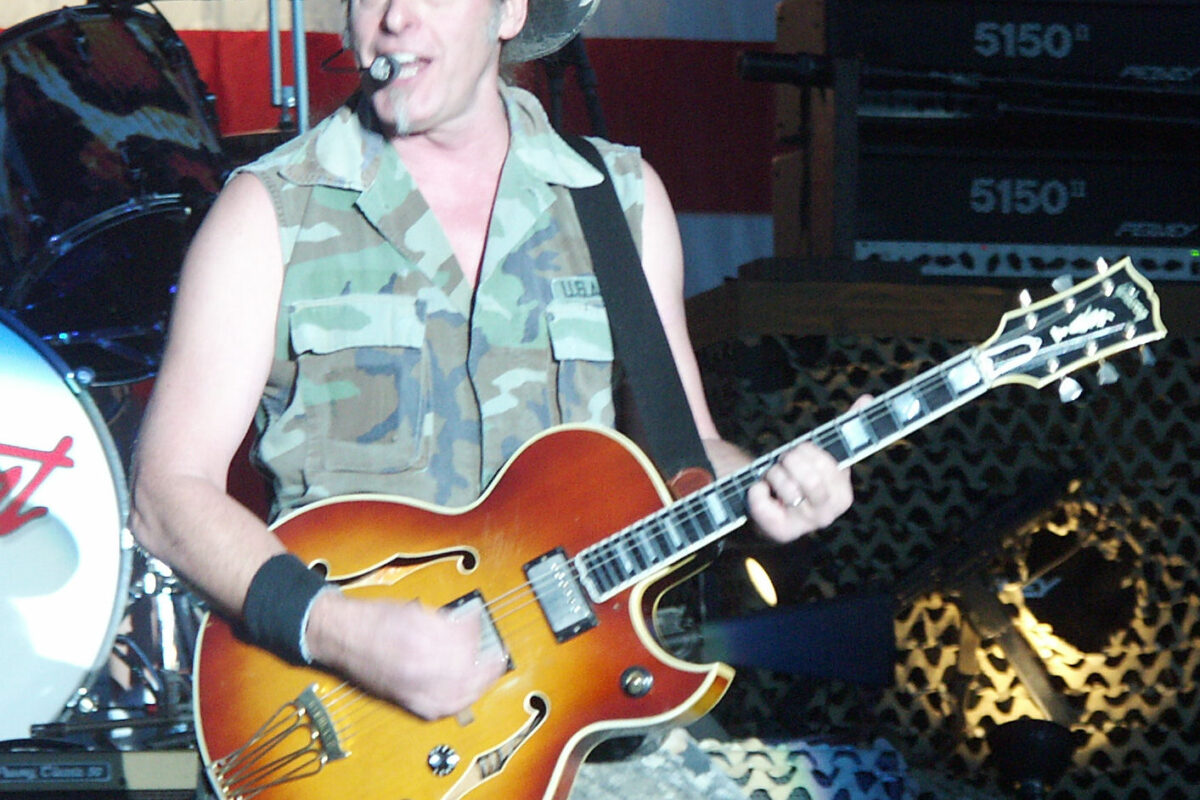
Ted Nugent Guitars & Gear: The Complete Guide to the Motor City Madman’s Byrdland Rig
Ted Nugent guitars & gear: the Motor City Madman's Byrdland rig. 12 vintage Gibson Byrdlands, Fender Twin Reverbs, Peavey 6505, zero effects, and the Stranglehold tone.
Ted Turner Guitars & Gear: The Complete Guide to Wishbone Ash’s Twin Guitar Pioneer’s Rig
Ted Turner guitars & gear: Wishbone Ash's twin-lead pioneer. Stratocasters, Firebird, Orange amps, and the Argus-era tone fully explained.
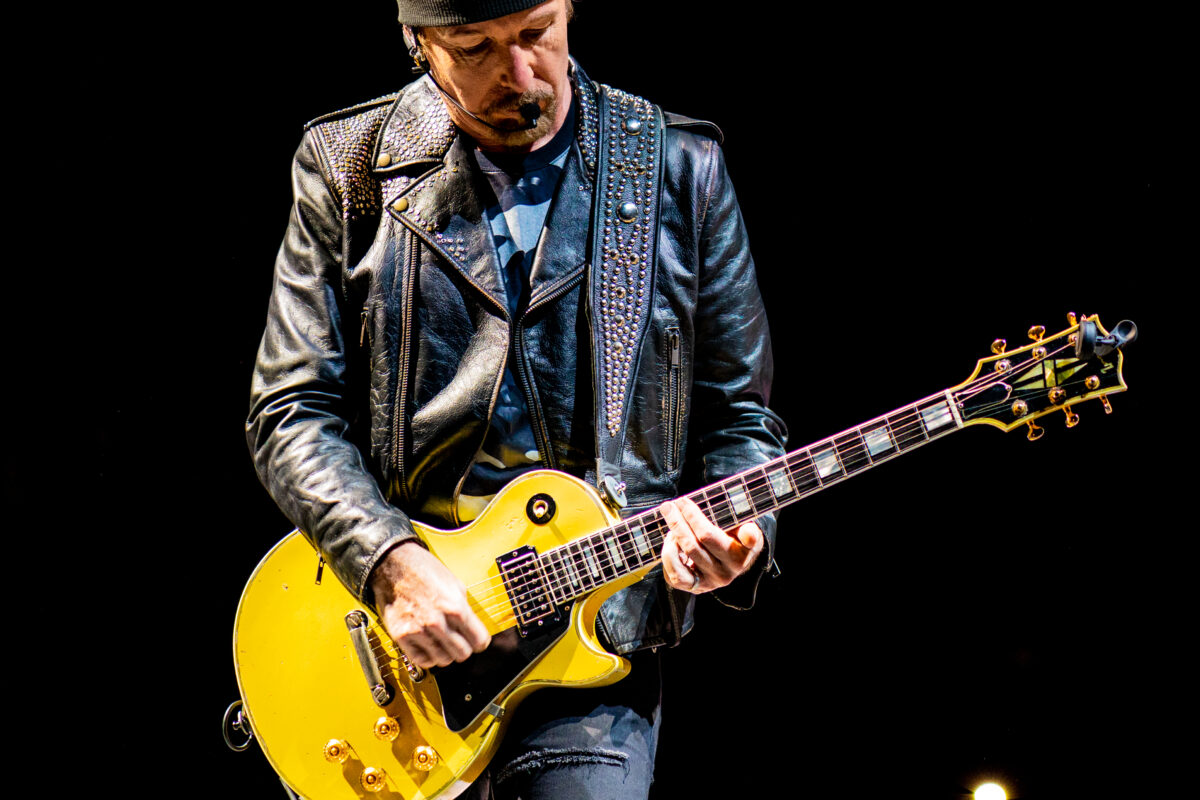
The Edge Guitars & Gear: The Complete Guide to U2’s Guitar Genius’s Rig
The Edge's guitars, amps, and effects — the complete guide. Gibson Explorer, Vox AC30, dotted eighth-note delay, Korg SDD-3000, and how to nail that massive U2 tone.