
Gear Timeline
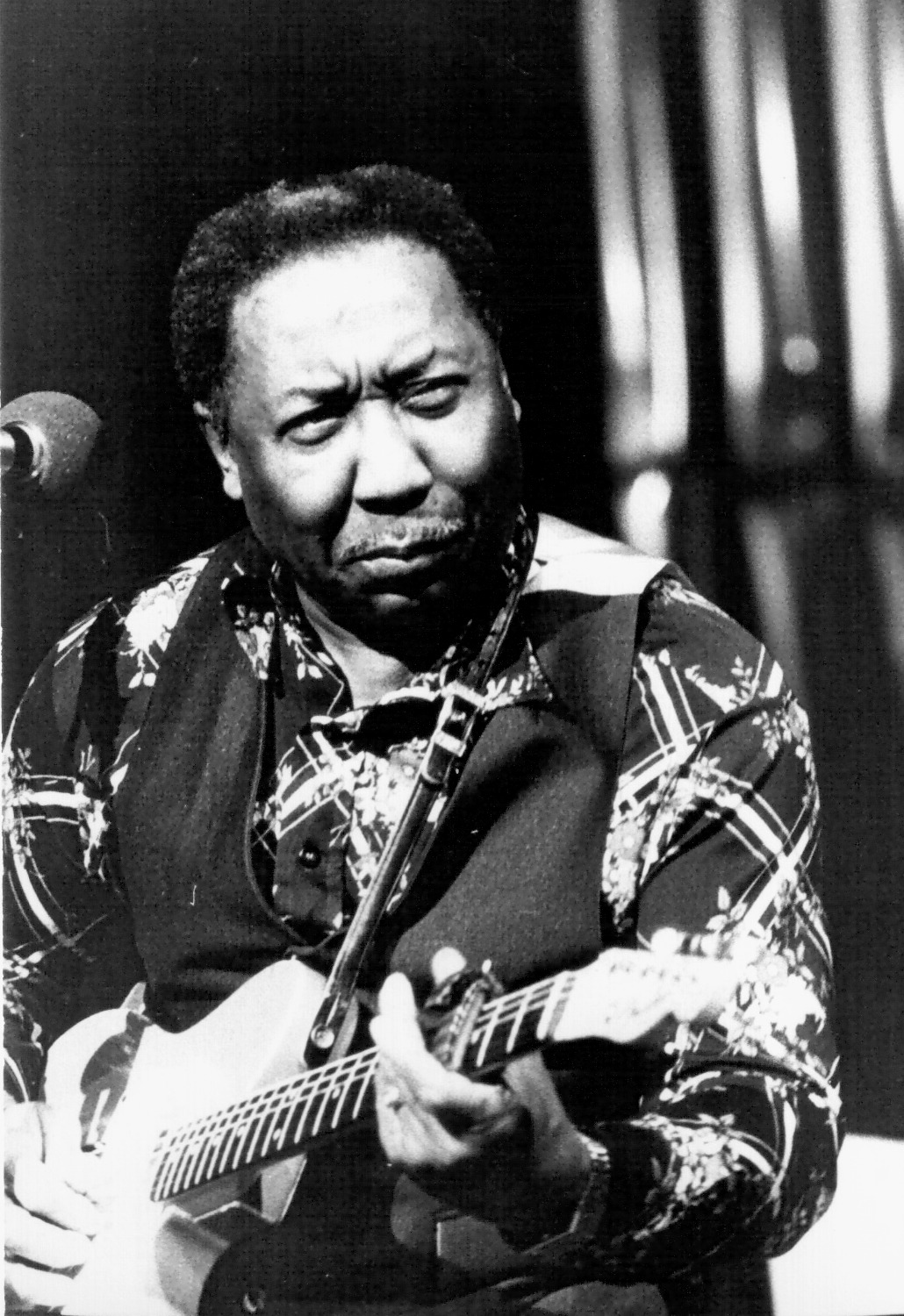
There is a red Fender Telecaster in the Metropolitan Museum of Art in New York — or was, for a time; its current whereabouts are uncertain, having traveled through several hands since its owner died in 1983. The guitar is serial number 026176. It was originally a 1958 model in blonde finish with a maple neck. Its owner painted it candy apple red, replaced the maple neck with a rosewood one, changed the control knobs to Fender amplifier parts, and played it as his primary instrument from approximately 1958 until his death on April 30, 1983. The guitar is called “The Hoss.” Its owner was McKinley Morganfield — Muddy Waters — and he was the man who took the Delta blues of Robert Johnson and Son House and Charley Patton, loaded it onto a northbound train to Chicago, plugged it into an amplifier, and created the music that the Rolling Stones named themselves after, that Jimi Hendrix absorbed before Hendrix absorbed anything else, and from which every form of electric guitar music you have ever loved can be traced.
Born McKinley Morganfield on April 4, 1913 (some sources say 1915), in Rolling Fork, Mississippi — near the Stovall Plantation where he would grow up after his mother’s early death, raised by his grandmother who gave him his nickname for playing in the muddy puddles near their home — Muddy Waters was not just a great blues musician. He was the infrastructure through which the Delta blues tradition was transmitted into the electrified, Chicago-adapted form that became the template for virtually all of rock and roll. Robert Johnson had created the acoustic foundation. Muddy Waters built the electric superstructure on top of it and invited everyone in.
The Rolling Stones took their name from his 1950 Chess recording “Rollin’ Stone.” Jimi Hendrix absorbed his slide approach before he absorbed anyone or anything else. Eric Clapton’s entire relationship with the blues runs through Muddy Waters. Keith Richards, Jimmy Page, Jeff Beck, Brian Jones, Alexis Korner, Cyril Davies — the architects of the British blues invasion, the people who built the bridge across which American blues entered global popular consciousness — all of them arrived at American music through Muddy Waters specifically. When Waters appeared at the 1958 Colston Hall concert in England, the response was volcanic; the audience, many of whom had been raised on acoustic folk-blues traditions, was overwhelmed by the volume and electricity. The next morning, the newspaper headline read “Screaming Guitar and Howling Piano.” Some younger musicians in that audience — who would later form bands called the Rolling Stones, Cream, and Fleetwood Mac — were inspired to go in the electric direction. That is what one concert by Muddy Waters and Otis Spann accomplished in Britain in 1958.
He received the Grammy Lifetime Achievement Award in 1992. He was inducted into the Rock and Roll Hall of Fame in 1987. Rolling Stone has ranked him among the greatest guitarists and greatest musicians of all time. None of these honors quite captures what he actually did, which was to invent a music that everything subsequent had to reckon with. This is the complete guide to the guitar, amplifiers, and technique that made it possible.
Background: From Stovall Plantation to Chess Records
The specific geography of Muddy Waters’ early life is not incidental to his music — it is the music’s soil. He grew up on the Stovall Plantation near Clarksdale, Mississippi, a few miles from the crossroads intersection of Routes 49 and 61 that mythology associates with Robert Johnson’s satanic bargain, a short distance from the cemetery where Johnson may be buried, in the physical center of the territory that produced the Delta blues. He worked the cotton fields as a sharecropper, learned guitar by ear in his early teens by imitating Son House and Robert Johnson, and developed his acoustic blues approach within the living tradition of the Mississippi Delta at its most vital and concentrated.
The Alan Lomax recordings of 1941 — field recordings made for the Library of Congress at the Stovall Plantation — captured Waters at twenty-six or twenty-eight, playing guitar he had borrowed from Lomax himself (a Martin acoustic), already in possession of the slide technique and the vocal authority that would define his later electric work. The Lomax recordings are the document of a fully-formed musician who hadn’t yet been given the instrument and the amplification that would let him do what he was already capable of doing. When he heard the recordings played back, he said it was the first time he had ever heard himself on record. He was astonished. He was as good as he thought he was. He moved to Chicago in 1943.
Chicago in 1943 was a city humming with wartime industry and with the cultural ferment of the Great Migration — the largest internal movement of population in American history, Black Southerners moving north to find work and a more bearable life. The blues came north with them, but in Chicago, the acoustic Delta tradition immediately confronted the noise problem: the clubs were loud, the audiences were large, and nobody could hear an acoustic guitar over the ambient din of a Saturday night crowd in a room that had no acoustic design for music performance. “When I went into the clubs, the first thing I wanted was an amplifier. Couldn’t nobody hear you with an acoustic.” He bought his first electric guitar in 1944 and formed his first electric combo.
The Chess Records connection — Leonard Chess signed him to Aristocrat Records in 1947, which became Chess Records in 1950 — gave him access to the studio infrastructure that made his influence global. The Chess studio’s approach to recording electric blues — using close-miked amplifiers in a relatively reverberant room, capturing the full presence and power of the electric guitar without softening it — produced a specific recorded sound that was, at the time, unlike anything else being produced commercially. Waters’ early Chess hits — “Rollin’ Stone” (1950), “Hoochie Coochie Man” (1954), “I’m Your Hoochie Coochie Man” (1954), “Mannish Boy” (1955), “Got My Mojo Working” (1957) — defined what Chicago electric blues sounded like and created the sonic template that the British guitarists of the 1960s would spend their careers attempting to replicate.
The band he assembled through the early 1950s became one of the greatest ensembles in blues history: Little Walter Jacobs on harmonica (widely considered the greatest blues harmonica player who ever lived), Jimmy Rogers on guitar, Elgin Evans on drums, Otis Spann on piano, and the songwriter/bassist Willie Dixon providing much of the compositional material that would become blues standards. This ensemble — specifically this configuration, with these individuals — recorded the defining documents of Chicago electric blues. The combination of Muddy’s slide guitar, Little Walter’s amplified harmonica, Spann’s rolling piano, and Dixon’s material was a musical achievement that transcended its immediate commercial context and became part of the permanent foundation of American music.
His late career revival — produced by Johnny Winter on the Blue Sky label in the late 1970s, producing the Grammy-winning Hard Again (1977) and I’m Ready (1978) — gave him a new audience and demonstrated that his musical authority remained intact into his sixties. He died in his sleep on April 30, 1983, at the age of sixty-eight or seventy (the birth year uncertainty persists in the biographical record). He was still performing until near the end, still in possession of The Hoss, still playing the music he had built from the Delta tradition forty years earlier. The red Telecaster was with him when he died, as it had been for twenty-five years.
The Rig: Muddy Waters’ Guitars, Amps, and Effects
Guitars
The Metropolitan Museum of Art, which displayed the guitar, records that it was Waters’s primary instrument from 1958 until his death in 1983 — twenty-five continuous years of primary use on an instrument that survived hundreds of concerts, dozens of recordings, and the full sweep of the electric blues tradition’s most commercially and historically important period. The Hoss is a 1958 Fender Telecaster, serial number 026176, originally delivered in blonde finish with a maple neck. Muddy transformed it into its familiar configuration over the following years: the original blonde finish was replaced by a candy apple red refinish; the maple neck was swapped out for a rosewood-fingerboard neck in 1961; the control knobs were replaced with parts from a Fender amplifier; the bridge was replaced with a brass unit. The resulting instrument — red body, rosewood neck, brass bridge — has the characteristic single-coil Telecaster bite and presence, modified by the rosewood neck’s slightly warmer response compared to maple and the brass bridge’s additional sustain and high-frequency content.
The Hoss’s tonal character in Muddy’s hands came primarily from the bridge pickup’s aggressive single-coil output, pushed into the input stage of whatever amplifier he was using at moderate to high volume. The Telecaster bridge single-coil’s aggressive upper midrange presence and the way it responds to hard picking attack — with a specific “snap” on each note before the sustain takes over — gave his slide lines and single-note passages their particular authority and cut. As the blog entry notes: “it was this, combined with the biting tone of the Telecaster’s bridge pickup that became Muddy’s signature sound, oft imitated, but never equalled.”
The fate of The Hoss after Muddy’s death is one of the more complicated stories in guitar history. It passed to Waters’ manager Scott Cameron, who was also the executor of the estate. After Cameron’s death, his widow returned it to Waters’ family on June 14, 2017, along with a second custom-made guitar that ZZ Top’s Billy Gibbons had commissioned as a gift for Muddy. The family subsequently loaned The Hoss to the Rock and Roll Hall of Fame Foundation, and it was later displayed at the Metropolitan Museum of Art, though its current location is uncertain as of this writing.
Before The Hoss, Muddy Waters’ primary instrument was a 1952 Gibson Les Paul Goldtop with P-90 single-coil pickups — the first-generation Les Paul that predated the introduction of humbuckers. This guitar, equipped with the warm, midrange-focused P-90s, was his main instrument through some of the most important recordings of the Chess Records era, including “I’m Your Hoochie Coochie Man,” “Forty Days and Forty Nights,” “Got My Mojo Working,” and many of the foundational documents of Chicago electric blues. The rumor about this guitar’s subsequent history is impossible to confirm but difficult to ignore: it is said to have passed through the hands of B.B. King, Eric Clapton, and Peter Green after leaving Waters’ possession. If accurate, this single instrument would connect the foundational recordings of Chicago electric blues to some of the most celebrated guitar work in British blues rock.
The P-90’s character through a small tweed amplifier — which is the configuration documented for the early Chess sessions — produces a specific combination of warmth and aggression: not the harsh brightness of a Telecaster single-coil, but not the smooth compression of a PAF humbucker. The P-90 sits between them, with its own midrange character and its own dynamic sensitivity. The early Chess recordings have a specific sonic quality that comes partly from this guitar/amp combination: closer to the warmth of the Delta acoustic tradition than the electric blues would become later, but already undeniably electric in its power and presence.
Before either the Les Paul or the Telecaster, Waters’ earliest significant electric instrument was a Gretsch Synchromatic hollow-body guitar to which he added a DeArmond FHC pickup — a clip-on magnetic pickup that converted the acoustic arch-top into an electrified instrument without requiring the guitar’s modification. His bandmate Jimmy Rogers suggested this electrification approach, and the resulting instrument — acoustic body, clip-on pickup, run through a small amplifier — was Waters’ primary electric guitar on his earliest Chess/Aristocrat sessions. “I Can’t Be Satisfied” and “I Feel Like Going Home” (1948), the first Aristocrat singles that connected with record buyers, were recorded on this Gretsch with D’Armond pickup. These are the foundational documents of electrified Delta blues — the moment when the acoustic tradition crossed permanently into the electric era — and they were made on an amplified arch-top, not on a purpose-built electric guitar.
Before his Chicago period, and in his acoustic work throughout his career, Waters used open G tuning (D, G, D, G, B, D) and open A tuning (E, A, E, A, C#, E) for slide guitar — the tunings traditional among Delta blues slide players that allowed a bottleneck or metal slide to produce major chords at any position on the neck. He used a small metal slide on his little finger, leaving the other fingers free for conventional fretting during non-slide passages. This technique — alternating between slide and fretted playing within the same performance — is technically demanding and was a distinctive feature of his approach compared to players who used slide exclusively.
In later life, he switched primarily to standard tuning even for slide work, which is unusual among serious slide guitarists and requires a different approach to chord-based slide playing. The combination of standard tuning and the Telecaster’s bridge pickup became his mature signature — the sound most associated with his peak Chess Records era and his late-career revival recordings with Johnny Winter.
For some of Waters’ late-1960s work, Guild electric guitars appear in the documentation — particularly in a period when he was exploring different tonal options. Guild guitars of this era were well-made American instruments with a slightly different tonal character from the Gibsons and Fenders he had previously favored. The Guild period is less well-documented than the Gibson or Fender eras and represents a transitional phase in his equipment history.
Amps
The amplifier most closely associated with Muddy Waters’ earliest Chess sessions — the recordings that defined the Chicago electric blues sound — was the Gibson GA-5 Les Paul Junior Combo, a small tube amplifier designed as an affordable accompaniment to Gibson’s budget electric guitar line. The GA-5’s modest wattage (approximately five watts) meant that at the volume levels Waters needed to cut through a club or studio mix, it was operating in significant tube saturation — its tubes compressed and overdriving, producing a warm, harmonically complex overdrive that came not from any pedal or deliberate effect but simply from the physics of a small amplifier being pushed beyond its comfortable operating range. This overdriven small-amp character is the foundation of the “Chicago blues tone” — warm, dirty, full of harmonic complexity, with a specific midrange presence that cuts through ambient noise without harsh high-frequency harshness.
For live performance, Muddy Waters used Fender amplifiers throughout much of his career — the clean, bright American character of Fender tube amps provided the headroom and presence needed for the club and concert venues where he performed. A 40-watt Fender Super Reverb (the silverface version) is documented as his live amp during the period when The Hoss was his primary guitar. The Super Reverb’s four 10-inch speakers and the specific harmonic character of its 6L6 output tubes provided the loud, clear, cutting sound that his Telecaster bridge pickup required to function as the voice of the band over Spann’s piano, the harmonica, and the rhythm section.
The combination of Fender Telecaster bridge pickup and Fender Super Reverb produces the specific tonal character most associated with his mature live sound: bright, assertive, with the natural compression of the Super Reverb’s input stage responding to the Telecaster’s aggressive single-coil output. When he dug in hard with his slide, the amp responded with more saturation; when he played more gently, it cleaned up. This dynamic range — the amp responding differently to different playing intensities — was a central element of his expressive tool kit.
For studio work at Chess Records, the ambient evidence of the recordings strongly suggests small tweed Fender combos — specifically the models that appear in Chess’s documented recording infrastructure of the early-to-mid 1950s. The specific recording qualities of the classic Chess sides — the particular warmth and presence of the guitar tone, the way it sits in the room without being either too bright or too dark — are consistent with a small tweed amp’s tonal character rather than the more powerful or more modern alternatives.
Effects
The one documented effects unit in Muddy Waters’ early signal chain is a DeArmond 601 Tremolo Control — a simple tremolo effect that produces the rhythmic amplitude modulation of the guitar signal. Dan Formosa’s article in Guitar Buyer documented its use: “One notable recording is ‘Flood’ by Muddy Waters from 1953, also recorded at Chess, with Muddy wielding a nice tremolo tone for the track’s duration.” The tremolo effect — a regular, rhythmic volume pulsing — was fashionable in 1950s American guitar music, appearing in country, rockabilly, and blues contexts. Waters used it selectively rather than consistently, as a specific color for specific songs rather than as an element of his overall tone.
Like most of the great acoustic-to-electric Delta blues transitional figures, Muddy Waters’ standard approach was guitar directly into amplifier — no effects processing, no pedals between the guitar and the amp’s input. His tone came from the guitar’s pickup character, the amplifier’s saturation, and his picking technique. The rawness and directness that distinguish his recordings from more processed electric guitar music of the same era come precisely from this absence of processing: every element of his physical relationship to the instrument — the force of the pick attack or fingerstyle touch, the slide pressure and vibrato, the specific angle and pressure of his fretting hand — transmitted directly to the amplifier and from there to the listener.
Waters initially used a combination of a metal thumb pick and a metal index finger pick for the percussive, strong attack that early electric blues required. He subsequently changed to plastic picks — a combination of plastic thumb pick and plastic index finger pick — preferring their tonal quality to the metal picks’ harder edge. The use of picks (rather than bare fingers or a flatpick) is characteristic of the Delta blues tradition as adapted to Chicago electric — the independent bass/treble approach that allows simultaneous rhythm and melody playing.
Playing Style & Tone Philosophy
Muddy Waters’ playing style is built on a specific and unusual foundation: the acoustic Delta blues tradition, played with the physical approach and the emotional expressiveness of someone who learned on acoustic guitar in the Mississippi Delta, transplanted to the electric instrument and amplified to fill a Chicago club. The result is an approach to electric guitar that sounds unlike most electric guitar playing — less like a string being vibrated and amplified, more like a voice being projected through a loudspeaker. The acoustic tradition’s vocabulary of slides, hammer-ons, pull-offs, and the specific rhythmic placement of phrases within the blues form carried over to the electric instrument without modification, and the amplification simply made it larger and louder without changing its essential character.
The slide technique is the most visually and sonically distinctive element. In his early career, the open tunings — G and A — allowed the slide to function as a harmonic device: position the slide on any fret and you have a major chord. His slide was a small metal tube worn on the little finger, leaving the other fingers for conventional fretting when needed. The combination of slide lines and fretted passages within the same performance was technically demanding and gave his early recordings their particular energy — the slide providing the keening, vocal quality of the upper register, the fretted positions providing the chord changes and rhythmic foundation.
In his mature period, the switch to standard tuning changed the harmonic demands on the slide technique: in standard tuning, the slide doesn’t automatically produce chords, and single-note lines require more precise placement and intonation control. Waters’ mature single-note slide work — particularly on the Telecaster — is notable for the cleanliness of its intonation and the expressiveness of its vibrato. The Telecaster’s bridge pickup, with its aggressive single-coil character, made the slide lines cut through the ensemble with unusual clarity and presence.
Willie Dixon’s summary of what distinguished Waters’ approach captures it precisely: “There was quite a few people around singing the blues but most of them was singing all sad blues. Muddy was giving his blues a little pep.” The rhythmic drive, the forward momentum, the refusal to let the music collapse into mere melancholy — these qualities come through in his playing as much as in his singing. His guitar parts don’t accompany the vocals; they argue with them, answer them, and propel them forward into the next phrase. This dialogue between voice and guitar is the Chicago blues template that everything subsequent — from Buddy Guy to Eric Clapton to Stevie Ray Vaughan — takes as given.
His tone philosophy was pragmatic and direct: maximum sound, minimum complication. The amplifier had to be loud enough. The guitar had to cut through. The playing had to be physically committed enough that the music’s emotional content was legible to a room full of people who were talking, dancing, and drinking. This was working music in the original sense — music that worked for the environment it inhabited, that met its audience where they were and moved them somewhere else. The gear that served this function didn’t need to be subtle or sophisticated. It needed to be reliable, present, and capable of delivering the signal from his hands to the audience’s ears with maximum fidelity.
How to Sound Like Muddy Waters
Getting into Muddy Waters’ tonal territory requires understanding that most of what you hear is playing technique — the physical approach to slide, the fingerpicking style, the blues vocabulary — rather than any specific equipment configuration. The gear helps; the hands are the real work.
Guitar: A Fender Telecaster (for the mature Hoss-era tone) or a Gibson Les Paul with P-90 pickups (for the early Chess sessions) are the historically correct choices. For the Telecaster era: bridge pickup, run hard into a clean amp. For the Les Paul era: neck or bridge P-90, same principle. Both produce the aggressive, present, midrange-forward tone that characterizes Chicago electric blues when run into a pushed tube amplifier.
Amp: Small, pushed Fender tube amp is the period-correct approach. A Fender Super Reverb or Deluxe Reverb at moderate-to-high volume approximates the live sound. A small tweed Fender combo (Champ, Deluxe) driven toward natural saturation approximates the studio sound. The key is the amp working — contributing its own harmonic complexity to the signal rather than merely transmitting it cleanly.
Amp Settings (Fender Super Reverb or Deluxe equivalent):
| Control | Setting (0–10) | Notes |
|---|---|---|
| Volume | 6–8 | High enough for natural compression and slight saturation |
| Bass | 5–7 | Full — Chicago blues needs tonal weight in the low-mids |
| Mid | 6–7 | Forward and present — the voice lives in the mids |
| Treble | 5–7 | Present but not harsh — the Tele bridge manages this |
| Reverb | 2–3 | Light spring reverb for natural room feel |
Tuning: Open G (D, G, D, G, B, D) for the early Delta slide work. Standard tuning for the mature Telecaster period. A glass or metal slide on the ring or little finger.
The technique (the real work): Learn to slide accurately in open G — the bottleneck running across all strings produces a major chord at any position; single strings produce melody. Practice the specific rhythmic placement of blues phrases within the twelve-bar form. And above all, dig in — the physical commitment that characterizes Waters’ playing is not an affectation but a direct expression of the music’s emotional content. Timid blues playing is an oxymoron. Muddy Waters played like he meant it, always.
Influence & Legacy
The influence of Muddy Waters on subsequent music is so vast and so structurally embedded in popular music history that describing it risks the same inadequacy as describing the influence of oxygen on breathing. He didn’t just influence musicians who came after him — he created the conditions in which those musicians existed and in which their music made sense. The Rolling Stones exist because of Muddy Waters. Led Zeppelin’s connection to the blues runs through Muddy Waters. Jimi Hendrix’s rhythm vocabulary traces to Muddy Waters. The entire British blues explosion of the 1960s — which produced essentially every major rock band of the subsequent decade — was built on a foundation of Muddy Waters records.
The specific mechanism of this influence is worth understanding. The young British musicians who discovered American blues in the late 1950s and early 1960s — Keith Richards, Eric Clapton, Jimmy Page, Jeff Beck, Brian Jones, John Mayall — encountered Muddy Waters through Chess Records releases, through the occasional tours he made to Britain, and through the specific cultural prestige that the Delta-to-Chicago blues tradition had acquired in British art school circles. They heard something in his music that their own culture hadn’t produced: a directness of emotional expression, a physical commitment to the instrument, a rawness of tone, and a rhythmic authority that came from a tradition with roots far older and deeper than anything in British popular music. They absorbed it, reinterpreted it through their own backgrounds and the available technologies of the mid-1960s, and produced the music we call classic rock.
The irony — which was noted at the time and has never entirely resolved — is that Muddy Waters himself, whose music launched the British invasion, was somewhat displaced by the commercial success of that invasion in his own country. American audiences in the mid-1960s often preferred the British interpretations of his music to the originals. The Rolling Stones were bigger in America than Muddy Waters was, playing music that Muddy Waters had largely created. This is the most thorough way in which one person can influence another: when the student’s work, built on the teacher’s, achieves a wider reach than the original.
The late-career revival with Johnny Winter — who, as a devoted Waters disciple, produced the Blue Sky albums with the specific intent of restoring Waters to the commercial prominence his musical achievement deserved — partly corrected this displacement. Hard Again and I’m Ready gave Waters his Grammy wins and a new generation of listeners. But the justice of recognition came, as it often does, somewhat late.
For context on how Waters’ approach to the transition from acoustic Delta blues to electric Chicago blues connects to the broader history, the comparison with Robert Johnson’s acoustic Delta foundation at #37 is the essential preceding chapter — Johnson’s acoustic vocabulary is the source material that Waters electrified and amplified and brought to Chicago. Understanding Johnson makes Waters more comprehensible; understanding Waters makes Johnson more historically legible.
The direct influence on Stevie Ray Vaughan’s approach to blues guitar at #6 runs through the specific Chicago blues vocabulary that Waters established — the rhythmic approach, the slide technique, the relationship between voice and guitar, the willingness to play at full physical commitment regardless of the musical context. SRV’s aggressive Chicago blues orientation has Muddy Waters at its root even when the instrument and the volume levels are different.
And the broader community of players that Waters assembled and nurtured — including Buddy Guy at #25, who played acoustic guitar on Waters’ Folk Singer album, and the general Chess Records ecosystem that also included Howlin’ Wolf and Chuck Berry — represents the single most consequential concentration of guitar talent in one place in one decade that American music has ever produced. Muddy Waters was at the center of it. His red Telecaster — his Hoss — was in his hands for every year of it.
He is the patriarch. Everything else is what came after the patriarch established what was possible. The candy apple red Fender Telecaster with the rosewood neck and the brass bridge is somewhere — in a museum, in storage, in someone’s hands. The music it helped make is everywhere. It always will be.
It is worth pausing on the specific humility embedded in the Muddy Waters story: a man from a sharecropping family on a Mississippi plantation, who taught himself guitar by listening to other people play, who moved north on a train with nothing much besides talent and determination, who plugged a guitar into an amplifier in Chicago and figured out how to make it speak. The Rolling Stones were named after a song he recorded in a studio on South Michigan Avenue. Jimi Hendrix practiced his slide technique by listening to Muddy Waters records. Eric Clapton became the guitarist he became by trying to understand what Muddy Waters was doing and why. The entire tradition that we call rock guitar — not just blues guitar, but the whole electric amplified guitar-driven tradition — carries Muddy Waters’ DNA in its cells. This was a man who learned to play the blues because there was nothing else to do on a Saturday night in Clarksdale, Mississippi, in 1930. The instrument was a guitar. The amplifier was whatever was available. The music was everything he had and everything he was. It turns out that was enough for everything.
Frequently Asked Questions: Muddy Waters Guitars & Gear
What guitar did Muddy Waters play?
Muddy Waters’ instruments evolved through three distinct phases. His earliest electric guitar was a Gretsch Synchromatic hollow-body archtop with a clip-on DeArmond FHC pickup, used on his first Aristocrat/Chess recordings in the late 1940s including “I Can’t Be Satisfied” (1948). From approximately 1952-1958, his primary instrument was a 1952 Gibson Les Paul Goldtop with P-90 single-coil pickups, used for his most influential Chess Records recordings including “Hoochie Coochie Man,” “Got My Mojo Working,” and “Mannish Boy.” From 1958 until his death in 1983, his primary instrument was a 1958 Fender Telecaster nicknamed “The Hoss” — originally blonde, repainted candy apple red, with the maple neck replaced by a rosewood unit in 1961. The Metropolitan Museum of Art recorded The Hoss as his primary instrument for those twenty-five years.
What is “The Hoss”?
“The Hoss” is the nickname for Muddy Waters’ primary guitar — a 1958 Fender Telecaster, serial number 026176 — which was his main instrument from 1958 until his death in 1983. Originally delivered in blonde finish with a maple neck, Waters had it repainted candy apple red, replaced the maple neck with a rosewood-fingerboard neck in 1961, swapped the original control knobs for Fender amplifier parts, and replaced the bridge with a brass unit. The guitar was displayed at the Metropolitan Museum of Art in New York and has been at the Rock and Roll Hall of Fame. After Waters’ death it passed through the hands of his manager’s estate before being returned to the Waters family in 2017. It was seen in the famous 1981 footage of the Rolling Stones jamming with Waters at Buddy Guy’s Checkerboard Lounge in Chicago.
What amps did Muddy Waters use?
Muddy Waters used small tube amplifiers throughout his career, consistent with the Chess Records recording approach and the Chicago blues tradition of driving small amps into natural saturation. His earliest Chess sessions were recorded through a Gibson GA-5 Les Paul Junior Combo — a small five-watt tube amp that, at the volumes needed for recording and performance, was operating in natural overdrive. For live performance, Fender amplifiers were his primary choice, including a 40-watt Fender Super Reverb in the silverface era. The specific combination of small-to-medium tube amp driven hard by a single-coil pickup produced the characteristic warmth and grit of the Chicago electric blues tone.
What slide technique did Muddy Waters use?
Muddy Waters used a small metal or glass slide on his little finger, leaving the other fingers free for conventional fretting. In his early career, he typically tuned to open G (D, G, D, G, B, D) or open A (E, A, E, A, C#, E), which allowed the slide to produce major chords at any fret position when laid across all strings, and single notes on individual strings for melodic lines. He alternated between slide and fretted playing within the same performance — technically demanding, as it requires rapid mental shifts between the two vocabularies. In his later career with the Telecaster, he largely switched to standard tuning even for slide work, requiring greater precision of intonation. He used fingerstyle technique (thumb and index finger picks) rather than a flatpick, giving him the ability to play simultaneous bass and treble parts.
How did Muddy Waters influence rock music?
Muddy Waters’ influence on rock music is foundational and direct. The Rolling Stones took their name from his 1950 Chess recording “Rollin’ Stone.” When Waters toured Britain in 1958 (with pianist Otis Spann), musicians in the audience who would later form the Rolling Stones, Cream, and Fleetwood Mac were inspired to pursue electric blues. Eric Clapton, Keith Richards, Jimmy Page, Jeff Beck, and Brian Jones all cite Muddy Waters as a primary influence. His Chess Records catalog established the sonic and compositional template for Chicago electric blues that British guitarists used as their primary reference point. Jimi Hendrix absorbed Waters’ approach before any other influence. The entire British blues invasion of the 1960s — which produced most of the major rock bands of the subsequent decade — was built on Muddy Waters recordings as its primary source material.
What are Muddy Waters’ most important recordings?
Muddy Waters’ most historically significant recordings are concentrated in his Chess Records work of the late 1940s through the mid-1950s. “I Can’t Be Satisfied” / “I Feel Like Going Home” (1948, on Gretsch with D’Armond pickup) were his commercial breakthrough. “Rollin’ Stone” (1950) gave the Rolling Stones their name. “Hoochie Coochie Man” (1954, written by Willie Dixon) and “I’m Your Hoochie Coochie Man” are among the most covered blues compositions. “Mannish Boy” (1955), “Got My Mojo Working” (1957), and “Forty Days and Forty Nights” round out the essential catalog. The Newport Jazz Festival live album At Newport 1960 documented his performance for a new white audience. His late-career Grammy-winning albums Hard Again (1977) and I’m Ready (1978), produced by Johnny Winter, are among the finest recordings of his career.
Is Muddy Waters in the Rock and Roll Hall of Fame?
Yes. Muddy Waters was inducted into the Rock and Roll Hall of Fame in 1987, in the same class as Chess Records boss Leonard Chess and Chess labelmate Bo Diddley. He had died four years earlier, in 1983, so the induction was posthumous. He received the Grammy Lifetime Achievement Award in 1992. Rolling Stone magazine has consistently ranked him among the greatest musicians and guitarists in history. His influence on rock music — through the Rolling Stones, through the British Invasion broadly, through every musician who learned blues from British blues players who learned blues from Muddy Waters — is considered one of the most pervasive in popular music history. The Rock and Roll Hall of Fame’s first class of inductees (1986) included Chuck Berry, Little Richard, and others who were directly influenced by Waters’ Chicago electric blues template.
Related stories
Ted Nugent Guitars & Gear: The Complete Guide to the Motor City Madman’s Byrdland Rig
Ted Nugent guitars & gear: the Motor City Madman's Byrdland rig. 12 vintage Gibson Byrdlands, Fender Twin Reverbs, Peavey 6505, zero effects, and the Stranglehold tone.
Ted Turner Guitars & Gear: The Complete Guide to Wishbone Ash’s Twin Guitar Pioneer’s Rig
Ted Turner guitars & gear: Wishbone Ash's twin-lead pioneer. Stratocasters, Firebird, Orange amps, and the Argus-era tone fully explained.
The Edge Guitars & Gear: The Complete Guide to U2’s Guitar Genius’s Rig
The Edge's guitars, amps, and effects — the complete guide. Gibson Explorer, Vox AC30, dotted eighth-note delay, Korg SDD-3000, and how to nail that massive U2 tone.