Mille Petrozza (Kreator) Guitars & Gear: The Complete Guide to Teutonic Thrash’s Reigning Champion’s Rig
Mille Petrozza's guitars, amps, and effects — the complete guide. LTD MK-EC FR signature current Floyd Rose, Jackson King V signature, B.C. Rich Mockingbird early Noise Records, Kemper Profiler live ENGL Diezel VH4 old 5150 Mesa Triple Rec profiled, Ibanez Tube Screamer studio 'most important', KHDK Deathscream signature 2024, 'don't use pedals heads cabs straight into PA nobody has complained', Essen West Germany, Endless Pain Pleasure to Kill Teutonic Big Four, and Teutonic thrash champion's complete rig.
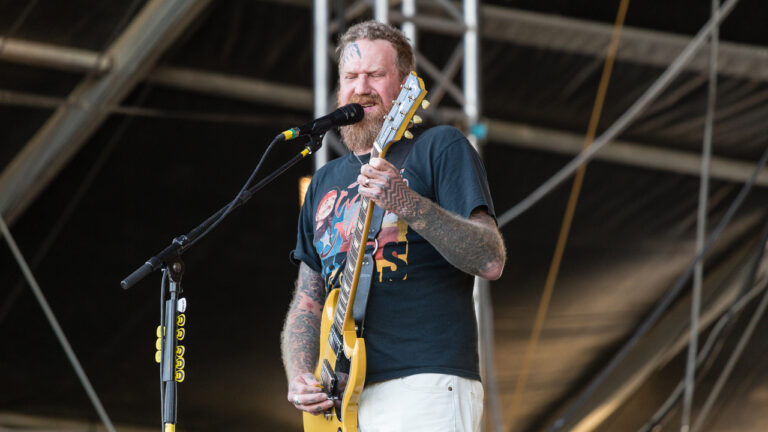
Photo by Stefan Brending (www.2eight.de), licensed under CC BY-SA 3.0 DE / 4.0
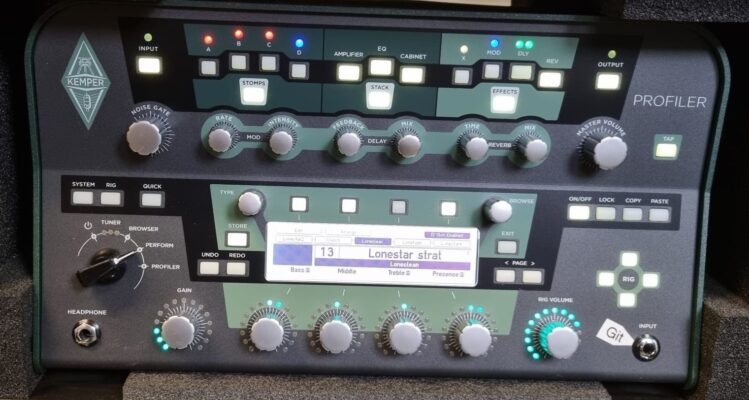
“I use Kemper Profilers because they make my life easier and my guitar tech’s life easier. In terms of logistics, the benefits really are quite amazing for any travelling band. So now I don’t use pedals, heads or cabs. I just go straight into the PA and, to be perfectly honest, nobody has complained yet.” Mille Petrozza said this to MusicRadar — and the casual confidence of “nobody has complained yet” is the specific voice of a guitarist who has been doing this for four decades and knows exactly what works. He has profiled his ENGL amps, an older Diezel VH4, an original Peavey 5150 (“the very first ones, I don’t like the latter models as much”), and a Mesa Boogie Triple Rectifier for lead parts. “But the main sound probably comes from the Diezel.” In the studio: “the old-school pedals — the most important of which, at least for me, being the Ibanez Tube Screamer.” No pedals, heads, or cabs live. Ibanez Tube Screamer in the studio. The Diezel VH4 as the main sound. He formed Kreator in Essen, North Rhine-Westphalia in 1982 as Tyrant, renamed to Tormentor in 1984, renamed to Kreator thereafter. He was a teenager — still a teenager — when he wrote the first three Kreator albums. Pleasure to Kill (1986) is regarded as a benchmark European thrash metal album. Kreator is one of the Teutonic Thrash Big Four alongside Sodom, Destruction, and Tankard. He is the only member to appear on every Kreator album. He is fifty-eight years old. Nobody has complained about the Kemper. The Diezel sound still lives in the profile. The Ibanez Tube Screamer comes out in the studio.
The Journey

Miland “Mille” Petrozza was born on December 18, 1967, in Essen, West Germany, to a family of Italian descent in the industrial Ruhr region. He grew up in a mining household environment during the 1970s — an environment that shaped his early exposure to heavy music through tape-trading communities and local punk scenes. He formed Kreator initially as the band Tyrant with drummer Jürgen “Ventor” Reil and bassist Roberto “Rob” Fioretti in 1982, releasing their debut album Endless Pain (1985) on Noise Records. The breakthrough came with Pleasure to Kill (1986) — regarded as the definitive European thrash metal album. Subsequent albums — Terrible Certainty (1987), Extreme Aggression (1989), Coma of Souls (1990), and the controversial 1990s genre-experimentation period, followed by the Teutonic thrash resurgence of Violent Revolution (2001) and the sustained quality run through Enemy of God (2005), Hordes of Chaos (2009), Phantom Antichrist (2012), Gods of Violence (2017), and Hate Über Alles (2022) — represent one of the most consistent and most prolific careers in extreme metal. He is fifty-eight years old. Kreator continues.
Background: Essen West Germany, Ruhr Region Mining Household, Tape-Trading, Tyrant/Tormentor/Kreator 1982, Endless Pain Teenager, Pleasure to Kill 1986, Teutonic Big Four
The specific cultural geography of Petrozza’s formation — Essen, the Ruhr region, the industrial mining heartland of West Germany, the tape-trading underground of early 1980s European metal — is the specific context for understanding why Kreator sounds the way it sounds: darker, grittier, more abrasive than the American thrash bands that are its direct contemporaries. The Ruhr region’s industrial identity (heavy manufacturing, mining, the specific working-class culture of the German industrial heartland) combined with the tape-trading underground’s specific international exchange of extreme metal recordings produced a guitarist and vocalist who absorbed both the American Big Four’s sophistication and the European extreme metal underground’s rawness and applied them to a specifically German cultural context.
His observation about Metallica — “I’ve got nothing against the Black Album… none of us would be here if it were not for Metallica” — reflects the specific historical honesty of a musician who knows exactly where the tradition he operates within came from. Metallica’s specific contribution to European thrash — demonstrated through the tape-trading that brought Kill ‘Em All to Essen’s underground music community in 1983 — was the foundational creative impulse for Kreator’s formation and development. Acknowledging this is not modesty but accuracy.
Creating the first three Kreator albums as a teenager — Endless Pain at seventeen, Pleasure to Kill at eighteen, Terrible Certainty at nineteen — is the biographical fact that most clearly communicates the intensity of his creative engagement with the thrash metal form. The specific rawness of those early albums reflects not naivety but the specific creative clarity of a musician who had not yet acquired the tendency to overthink that experience sometimes brings. The best of those early Kreator recordings — the specific riff energy of “Ripping Corpse,” the controlled chaos of “Pleasure to Kill” — document a musician in full possession of his creative instincts at an age when most musicians are still discovering what their instincts are.
The Rig: Mille Petrozza’s Guitars, Amps, and Effects
Guitars
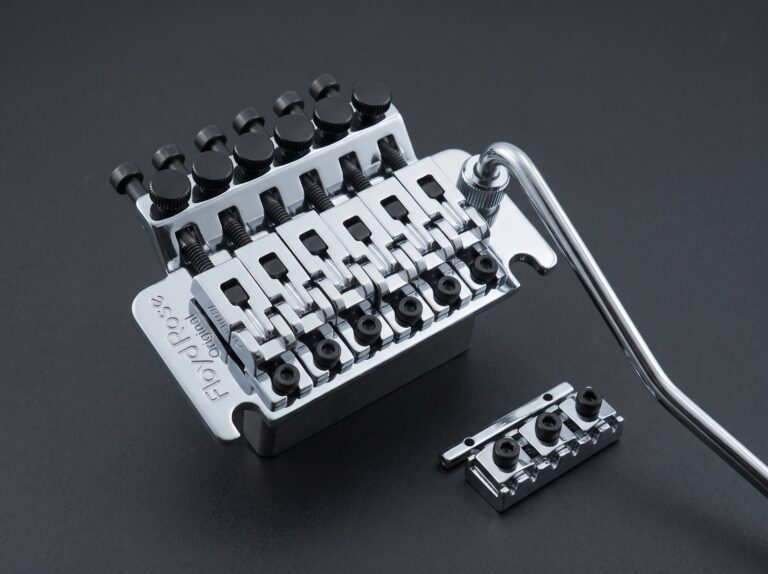
Petrozza’s current primary guitar is the LTD MK-EC FR — his latest signature model in the ESP/LTD line. ESP describes: “The LTD MK-EC FR is the latest addition to his Signature Series, and it offers all of the…” The MK-EC FR designation: MK for Mille Kreator, EC for Eclipse (the single-cutaway Les Paul-style ESP body shape), FR for Floyd Rose (the locking tremolo system). The Eclipse body shape — similar to a Les Paul in its single-cutaway, set-neck construction — provides the specific warm, sustaining character of mahogany construction, while the Floyd Rose locking tremolo provides the tuning stability his aggressive playing requires. His ESP comment: “Reliability is most important. Sometimes you play a smaller club and the air conditioning is on, and a lot of guitars go out of tune right away. Or you play an outdoor festival, and it’s raining, and the humidity is changing the tuning.” The Floyd Rose addresses this specific professional reliability requirement.
Gemtracks documents “the Jackson Mille Phobia King V” — an earlier signature model, the King V body shape (the angular Flying V-adjacent Jackson design associated with Hetfield and many 1980s metal players) with a mahogany body and neck, rosewood fingerboard, and custom inlays. The King V’s specific character: angular, through-neck (in certain configurations), and associated with the aggressive visual aesthetic of 1980s thrash metal. His Jackson signature predates the ESP endorsement in his career trajectory.
The Equipboard documentation: “Miland Petrozza used a B.C. Rich Mockingbird during the early years with Noise Records, as evidenced by a user-uploaded photo.” The B.C. Rich Mockingbird — an angular, unconventionally shaped B.C. Rich model with the distinctive reverse-scroll headstock — was his primary guitar during the 1985-1989 Noise Records period (Endless Pain through Extreme Aggression). The B.C. Rich’s specific visual identity (the aggressive angles, the distinctive headstock) placed Kreator visually within the broader 1980s thrash/metal aesthetic. The Mockingbird’s construction (through-neck, mahogany/maple, humbuckers) provides a specific warm, sustaining character suited to the down-tuned, aggressive thrash playing of the classic Kreator recordings.
The Equipboard documentation: “Mille can be often seen playing on guitars that are equipped with a Floyd Rose bridge.” The Floyd Rose Original — the locking tremolo that has been the standard professional choice for metal guitarists requiring tuning stability under aggressive tremolo use — is Petrozza’s consistent hardware preference. His ESP comment about reliability reflects the specific professional context: forty-plus years of touring, multiple shows per week, diverse climate conditions globally, and the Floyd Rose’s specific ability to maintain tuning under all these conditions.
Amps
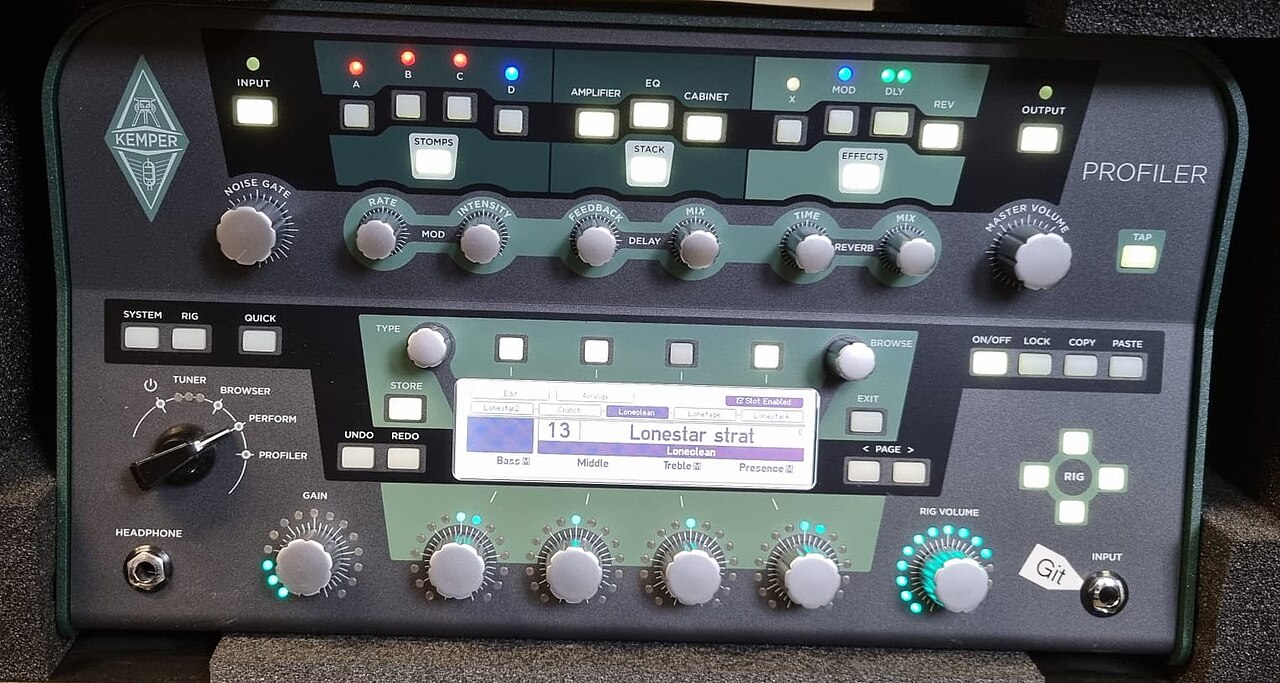
Petrozza’s current live amplification is the Kemper Profiling Amplifier in rack form — used to profile and reproduce his actual tube amplifiers for live performance. MusicRadar: “I use Kemper Profilers because they make my life easier and my guitar tech’s life easier. In terms of logistics, the benefits really are quite amazing for any travelling band. So now I don’t use pedals, heads or cabs. I just go straight into the PA and, to be perfectly honest, nobody has complained yet.” The Grokipedia documentation: “Live, he relies on a Kemper Profiler rack with profiles of his ENGL and Diezel VH4 amps for consistent direct-to-PA performance without traditional cabinets.” The specific profiled amplifiers that define his Kemper content are documented in detail.
MusicRadar: “I’ve profiled my Engl amps, as well as an older Diezel VH4, plus an old 5150 — the very first ones, I don’t like the latter models as much. I have a Mesa/Boogie Triple Rec profiled for lead parts, but the main sound probably comes from the Diezel.” The Diezel VH4 — the same German hand-wired high-gain amplifier documented for Matthew Bellamy and referenced throughout this guide — provides the “main sound” of Kreator’s live guitar tone through the Kemper’s profile. The Diezel VH4’s specific character: extremely tight low-end even at very high gain, harmonically complex midrange, exceptional clarity at all gain levels. As a German guitarist (albeit from a different musical tradition), Petrozza’s preference for a German amplifier (Diezel is from Rutesheim, Baden-Württemberg) is a coincidence, but the Diezel’s specific tight, high-gain character suits the precision of Kreator’s riff-heavy thrash approach.

MusicRadar: “I’ve profiled my Engl amps.” ENGL amplifiers — another German high-gain amplifier company (based in Freyung, Bavaria) — appear in his profiled amp collection alongside the Diezel VH4. ENGL’s amplifiers are known for their exceptional build quality and the specific modern high-gain character that suits extreme metal. His use of both German high-gain amp brands (Diezel and ENGL) reflects the specific quality of German amplifier manufacturing for extreme metal applications.
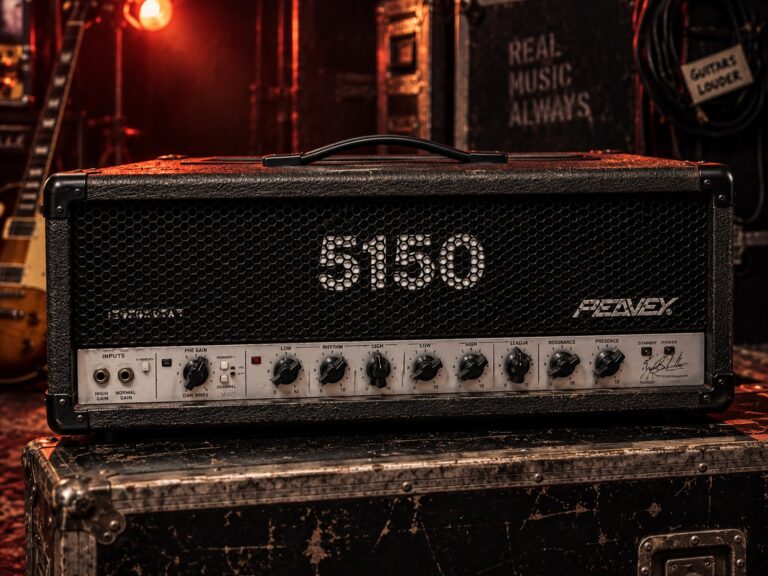
MusicRadar: “an old 5150 — the very first ones, I don’t like the latter models as much.” The original Peavey 5150 — the first Eddie Van Halen signature amplifier, whose specific circuit characteristics were modified in subsequent 5150 II and later versions — appears in his profiled collection. His preference for the “very first ones” mirrors Devin Townsend’s similar primary Peavey 5150 use — the original 5150’s specific tight, compressed, high-gain character that the later models adjusted.
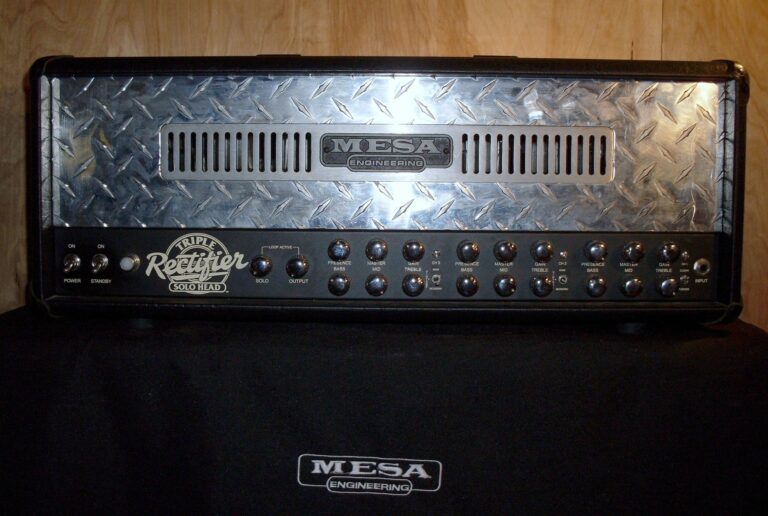
MusicRadar: “I have a Mesa/Boogie Triple Rec profiled for lead parts.” The Mesa Boogie Triple Rectifier — the three-channel, three-rectifier evolution of the Dual Rectifier — is his profiled choice for lead guitar passages, where the Triple Rec’s specific warm, harmonically complex, slightly compressed character suits melodic lead lines differently from the Diezel’s tighter rhythm tone.
Effects
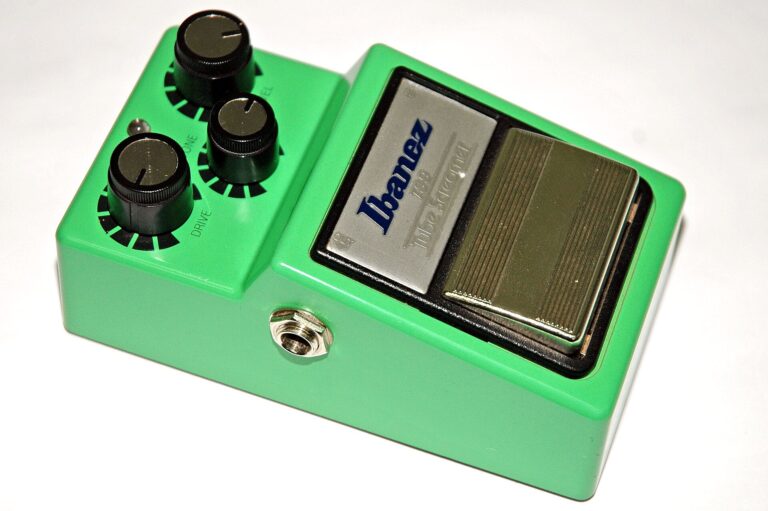
MusicRadar: “In the studio is where we get out the old-school pedals — the most important of which, at least for me, being the Ibanez Tube Screamer.” The Ibanez Tube Screamer — the same pedal documented throughout this guide (Devin Townsend’s Maxon OD808, Bob Mould’s Sky Patch/Distortion+, Marc Ribot’s OD808) — is Petrozza’s primary studio drive tool. Its specific application: before the tube amplifiers (Diezel VH4, ENGL, 5150) in the studio recording context, the Tube Screamer’s midrange-boosting, compressive character tightens the amp’s low-end response and defines the specific “punchy” mid-forward character of thrash metal rhythm guitar recording.
The Equipboard documentation: “In this Guitar World article, the founder of KHDK talks about his partnership with Petrozza to build ‘the perfect overdrive pedal.’ The Deathscream is ultra-versatile, making Mille’s digital modeling amp warmer and enhanced with real, analog harmonics,” explains KHDK. “At the same time, it creates crushing blows with a fully analog amp. We built this pedal because Mille wanted the perfect overdrive.” The KHDK Deathscream — designed specifically for Petrozza’s use with both the Kemper (adding analog harmonic warmth to digital modeling) and with real tube amplifiers (providing “crushing blows”) — is his 2024 signature overdrive pedal, the evolution of his Tube Screamer studio preference into a signature product. The Grokipedia documentation: “In 2024, he introduced the KHDK Deathscream, his signature overdrive pedal, which he uses with tube amps and the Kemper for added aggression.”
MusicRadar: “So now I don’t use pedals, heads or cabs. I just go straight into the PA.” His live approach is the most streamlined in this section — no pedalboard, no amplifier heads, no speaker cabinets. The Kemper rack directly into the PA. The Deathscream, when used live with the Kemper, provides the analog harmonics that add warmth to the digital signal, but the overall live approach reflects the maximum simplification that professional touring demands: the fewer components in the chain, the fewer potential points of failure.
The Equipboard documentation: “According to InTuneGP’s website, Kreator use InTune guitar picks.” The InTune Guitar Picks — a specific professional pick brand — appears in the documented Kreator equipment list.
Playing Style & Tone Philosophy
Mille Petrozza’s playing style is the most specifically rhythm-guitar-centered in the thrash metal section of this guide — the approach of a vocalist/guitarist whose primary creative function is the rhythm guitar foundation (the specific aggressive, tight, riff-driven thrash metal rhythm approach) over which Sami Yli-Sirniö’s lead guitar operates. His ESP characterization: “internationally respected for his super-aggressive tight rhythms, and solos that range from smoothly melodic to frantic with mind-blowing speed and precision.” The emphasis on “tight rhythms” reflects the specific virtue of his guitar approach: not speed for its own sake but the specific precision and aggression of thrash metal rhythm guitar at its most controlled.
His tone philosophy has evolved across four decades: from the raw B.C. Rich Mockingbird through a Marshall or comparable high-gain amp of the Noise Records era, through the Diezel VH4 period, to the current Kemper-based live approach with the KHDK Deathscream for added analog warmth. The specific evolution reflects a guitarist who follows the tool that best serves the music in each period — the Kemper because “nobody has complained,” the Diezel because “the main sound probably comes from the Diezel,” the Ibanez Tube Screamer in the studio because it is “the most important” of the studio pedals. Function over fashion. Pragmatism over gear orthodoxy.
How to Sound Like Mille Petrozza
Guitar: LTD MK-EC FR (Eclipse shape, Floyd Rose, current ESP signature) for the contemporary Kreator tone. Jackson King V-style (Floyd Rose, humbuckers) for the earlier Kreator character. B.C. Rich Mockingbird (through-neck, humbuckers) for the classic 1985-1989 Noise Records period. EMG or comparable active pickups for the specific high-output, defined character of thrash rhythm guitar.
Amp: Diezel VH4 (or Kemper profile of same) for the primary sound. ENGL or original Peavey 5150 as secondary. Ibanez Tube Screamer before the amp input for the studio tightening. KHDK Deathscream for added analog harmonics with both tube amps and Kemper.
Amp Settings (Diezel VH4 — Kreator Teutonic Thrash):
| Control | Setting (0–10) | Notes |
|---|---|---|
| Gain | 7–9 | High — the Diezel VH4 retains definition even at high gain |
| Bass | 4–6 | Controlled — the Tube Screamer/Deathscream tightens low-end |
| Mid | 6–7 | Present — mid-forward for the thrash rhythm guitar’s “cut” |
| Treble | 6–7 | Bright — attack definition for the precision thrash riffs |
| Presence | 6 | Moderate — projects the rhythm guitar through the mix |
Live approach: Kemper Profiler rack, Diezel VH4 profile as primary, direct to PA. No pedals, heads, or cabs. KHDK Deathscream for added analog warmth on the Kemper signal. Floyd Rose locking tuners on whatever guitar. “Nobody has complained.”
Influence & Legacy
Mille Petrozza’s influence on Teutonic thrash metal is the most foundational — specifically as the musician who founded Kreator and maintained its identity and quality across forty-plus years of metal genre evolution. The Teutonic Thrash Big Four (Kreator, Sodom, Destruction, Tankard) — the European counterpart to the American Big Four — owes its existence to the specific creative energy and persistence of Petrozza’s leadership. The dark, abrasive character of Teutonic thrash — darker and grittier than its American equivalents — influenced subsequent European extreme metal across the death metal, black metal, and melodic death metal traditions.
His connection to Jeff Hanneman as a fellow foundational thrash metal guitarist whose work defined the genre at its most extreme reflects the shared historical moment of 1985-1987 as thrash metal’s defining creative period. His connection to Devin Townsend as a fellow guitarist who made the transition from tube amplifiers to Kemper-based live performance (both for pragmatic touring reasons) reflects the shared evolution of professional live guitar rigs in the 2010s. His connection to Trey Azagthoth as a fellow pioneer of extreme metal’s most extreme expressions — Kreator and Morbid Angel both formed in 1982/1983, both defining their respective subgenres — reflects the shared generational position.
Frequently Asked Questions: Mille Petrozza Kreator Guitars & Gear
What guitar does Mille Petrozza currently play?
Petrozza’s current primary guitar is the LTD MK-EC FR — his latest ESP/LTD signature model, featuring the Eclipse (single-cutaway, Les Paul-style) body shape with a Floyd Rose locking tremolo. Previous signatures include the Jackson Mille Phobia King V. His earliest primary guitar was the B.C. Rich Mockingbird during the Noise Records years (1985-1989). He consistently uses guitars equipped with Floyd Rose locking tremolos for tuning stability: “Reliability is most important.”
What amplifier does Mille Petrozza use live?
Live: Kemper Profiler rack, direct to PA — “So now I don’t use pedals, heads or cabs. I just go straight into the PA and, to be perfectly honest, nobody has complained yet.” His Kemper contains profiles of his ENGL amps, an older Diezel VH4, an original Peavey 5150, and a Mesa Boogie Triple Rectifier (for lead parts). “The main sound probably comes from the Diezel.”
What overdrive pedal does Mille Petrozza use?
Studio: Ibanez Tube Screamer — “In the studio is where we get out the old-school pedals — the most important of which, at least for me, being the Ibanez Tube Screamer.” Current live/studio: KHDK Deathscream signature overdrive (released 2024), designed specifically for Petrozza to add “analog harmonics” to the Kemper and “crushing blows with a fully analog amp.” The KHDK Deathscream is described as making his “digital modeling amp warmer and enhanced with real, analog harmonics.”
When did Kreator form and what were their early albums?
Kreator was initially formed as Tyrant in 1982 in Essen, West Germany by Petrozza (then age fourteen) with drummer Ventor and bassist Rob Fioretti. The band was renamed Tormentor in 1984 and Kreator shortly after. Their Noise Records debut Endless Pain was released in 1985 — Petrozza was seventeen years old. Pleasure to Kill (1986) — described as “a benchmark European thrash metal album” — was released when he was eighteen. He created the first three Kreator albums as a teenager.
What is the Teutonic Thrash Big Four?
The Teutonic Thrash Big Four is Kreator, Sodom, Destruction, and Tankard — the four German thrash metal bands that defined European thrash metal in the 1980s, parallel to the American Big Four (Metallica, Slayer, Megadeth, Anthrax). Petrozza: “none of us would be here if it were not for Metallica.” The Teutonic thrash sound — darker, grittier, and more abrasive than American thrash — reflects the specific German industrial cultural environment and the tape-trading underground that gave European extreme metal its particular character.
Why does Mille Petrozza prefer the original Peavey 5150 over later models?
MusicRadar: “an old 5150 — the very first ones, I don’t like the latter models as much.” The original Peavey 5150 (produced from 1992) had specific circuit characteristics — tight bass response, compressed high-gain character — that were modified in the subsequent 5150 II and EVH 5150 III versions. This preference for the original model mirrors Devin Townsend’s documented use of the Peavey 5150 as primary amp for Strapping Young Lad — both guitarists found the original’s specific character optimal for extreme metal rhythm guitar.
What is Mille Petrozza’s background in the Ruhr region?
Petrozza was born in Essen, North Rhine-Westphalia — the Ruhr region, West Germany’s industrial heartland of coal mining and heavy manufacturing. He grew up in a mining household environment during the 1970s — an environment that shaped his early exposure to heavy music through tape-trading communities and local punk scenes. The specific gritty, industrial character of Kreator’s early recordings reflects this environment: the Ruhr region’s working-class culture translated into the specific darkness and rawness that distinguishes Teutonic thrash from its American equivalents.
Image credits
- A Kemper Profiler Mark 1: Vonvon, Wikimedia Commons, CC0.
- Top image: by Stefan Brending, CC BY-SA 3.0.
- Diezel VH4: GuitarGangsters AI-generated reference illustration, not a photograph.
- Peavey 5150: GuitarGangsters AI-generated reference illustration, not a photograph.
- Ibanez TS9 Tube Screamer: Mataresephotos, Wikimedia Commons, CC BY 3.0 US.
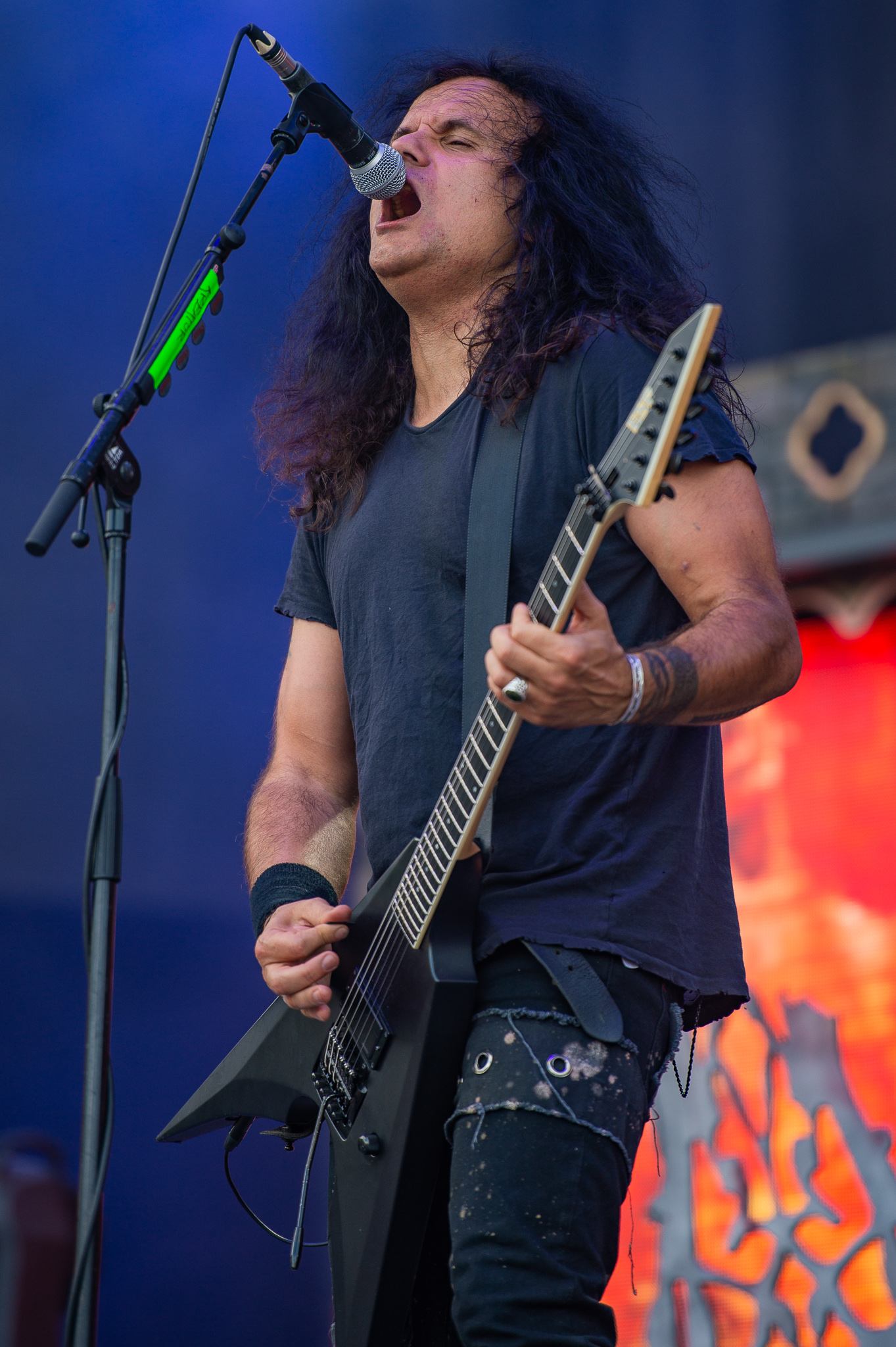
- Mille Petrozza live: Frank Schwichtenberg, Wikimedia Commons, CC BY-SA 4.0.
- Kemper Profiler: Vonvon, Wikimedia Commons, CC0.
- Mesa/Boogie Triple Rectifier Solo: Roadside Guitars, Wikimedia Commons, CC BY-SA 2.0.
- Floyd Rose Original tremolo: GuitarGangsters AI-generated reference illustration, not a photograph.