Phil Keaggy Guitars & Gear: The Fingerstyle Virtuoso’s Complete Rig Guide
Phil Keaggy guitars gear — 1961 Les Paul, Fender Deluxe Reverb, Boomerang looper deep-dive for the Glass Harp fingerstyle virtuoso's complete rig.
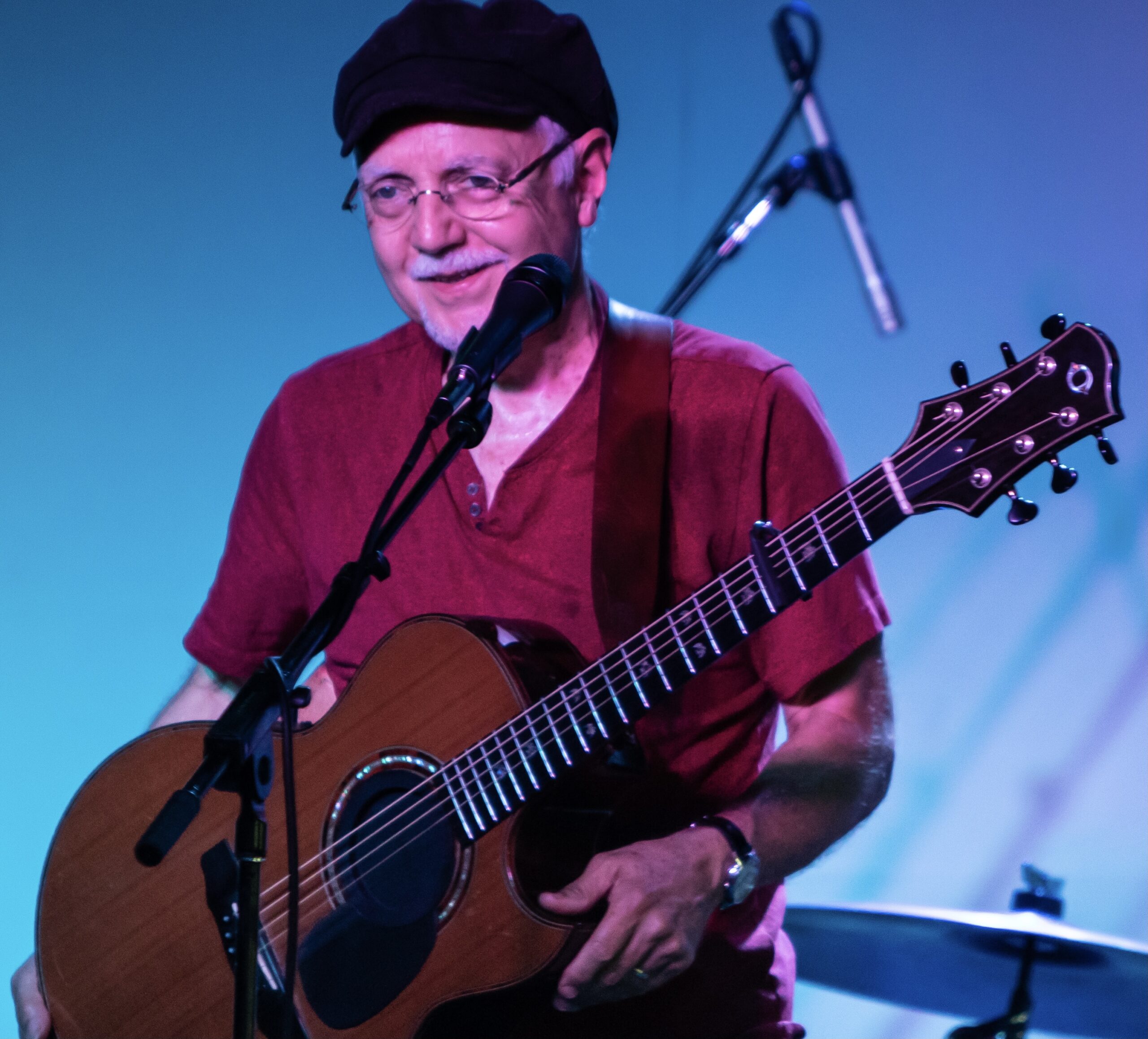
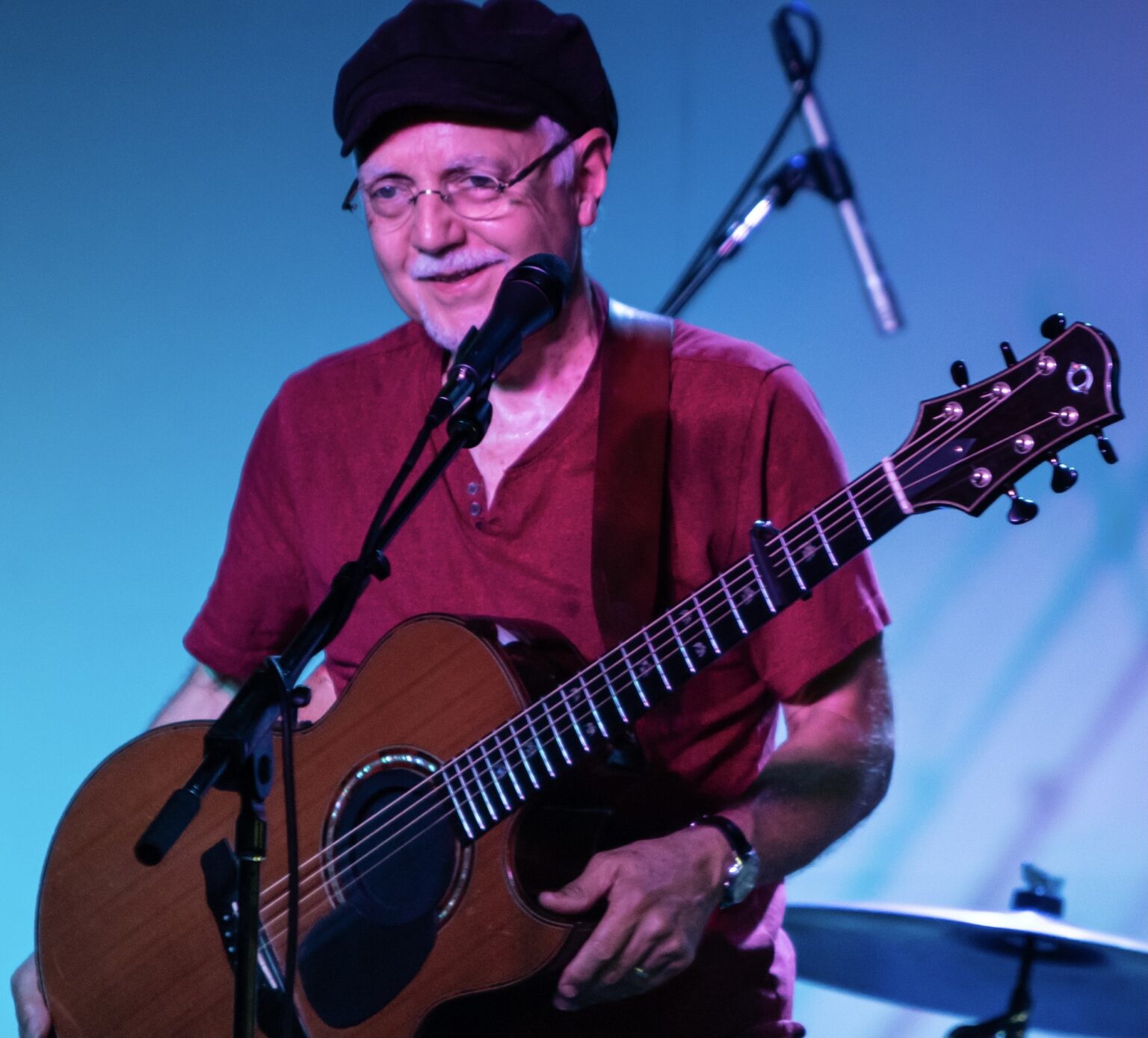
Photo by Curt Cosenza, licensed under CC BY-SA 2.0 (https://commons.wikimedia.org/wiki/File:Phil_Keaggy_2019_(48361192371).jpg)
Phil Keaggy guitars gear is a subject that puts most “best guitarist” conversations to shame — because Phil Keaggy is one of those players who exists slightly outside the normal critical framework, operating in a space where technical virtuosity, emotional depth, and genuine spiritual conviction combine into something that defies easy categorisation. The story about Jimi Hendrix being asked who the best guitarist alive was, and responding “Phil Keaggy” — probably apocryphal, possibly not — has circulated for decades because it captures something real: Keaggy’s playing, particularly his fingerstyle acoustic work and his looping-based solo performances, reaches a level of completeness and musicianship that demands the attention of anyone serious about the guitar. He is criminally underknown outside Christian rock and acoustic guitar circles, and that obscurity is the music world’s loss.
Gear Timeline
He came up in the late 1960s with Glass Harp, a trio from Youngstown, Ohio that combined psychedelic rock, progressive tendencies, and Keaggy’s already remarkable guitar work into three albums that hold up beautifully. He lost the middle finger of his right hand in a farming accident at age six — a fact that makes his technical achievements seem even more extraordinary, since he developed his entire fingerstyle vocabulary around that absence. His solo career spans over fifty albums, ranging from electric rock to fingerstyle acoustic to orchestral settings to loop-based solo guitar performance, and across all of it the playing is consistently extraordinary. This is the complete breakdown of Phil Keaggy guitars gear, technique, and tone philosophy.
Background
Phil Keaggy was born on March 23, 1951, in Youngstown, Ohio — a steel-town upbringing that provided little obvious cultural predisposition toward the kind of multi-genre guitar virtuosity he would develop. He began playing guitar as a child, absorbing rock and pop from the radio and developing his technique through the teenage years with the focused intensity of someone who had found their calling early. The loss of his right-hand middle finger in a fan belt accident at age six was a defining physical reality that shaped his entire technical approach — he developed his fingerpicking technique around the remaining four fingers and thumb of the right hand, and the result is a vocabulary that is completely his own, uninfluenced by the standard classical or folk fingerpicking conventions because those conventions assumed a different anatomical reality.
Glass Harp formed in 1968 with bassist Dan Pecchio and drummer John Sferra. The trio’s debut album Glass Harp (MCA, 1970) announced Keaggy’s guitar playing to a wider audience — the record’s combination of psychedelic blues-rock, melodic songwriting, and Keaggy’s already exceptional guitar work placed it in the front rank of early 1970s American rock debuts. Synergy (1971) and It Makes Me Glad (1972) followed, developing the formula and demonstrating Keaggy’s growing command of both the electric and acoustic guitar. Glass Harp’s relatively brief run ended in 1972 when Keaggy converted to Christianity and redirected his musical energies toward explicitly faith-based work — a decision that effectively removed him from the mainstream rock radar but opened the door to a solo career of remarkable breadth and sustained quality.
His first solo album What a Day (New Song, 1973) established the template for much of his subsequent solo work — melodic, technically accomplished, spiritually grounded, and guitar-forward in a way that made the instrument the primary expressive vehicle for the music’s emotional content. Albums including Love Broke Thru (1976), The Master and the Musician (1978), Ph’lip Side (1980), Play Thru Me (1982), Getting Closer (1985), and Find Me in These Fields (1990) built a devoted following in the Christian music world while his growing reputation as a guitarist spread through wider musical communities that cared about playing rather than genre labels.
His loop-based solo guitar performances — developed through the 1990s and 2000s using first the Boomerang phrase sampler and later more sophisticated looping systems — became one of the signature elements of his live presentation and one of the most impressive demonstrations of the guitar’s potential as a solo instrument. Playing alone on stage, Keaggy builds complete musical environments in real time — laying down bass lines, chord pads, rhythmic elements, and melodic counter-lines simultaneously, creating the impression of a full ensemble from a single guitarist with one hand missing a finger. It remains one of the most remarkable live guitar experiences available anywhere in any genre.
He has continued recording and touring into the 2020s, with an output and level of artistic engagement that demonstrates genuine, ongoing musical development rather than the nostalgia maintenance that characterises many careers of similar longevity. He was inducted into the Gospel Music Hall of Fame in 2016, a recognition of his significance within the Christian music tradition, while his broader reputation among serious guitar players continues to grow as the barriers between genre communities become more permeable.
Phil Keaggy Guitars Gear: The Complete Rig
Guitars
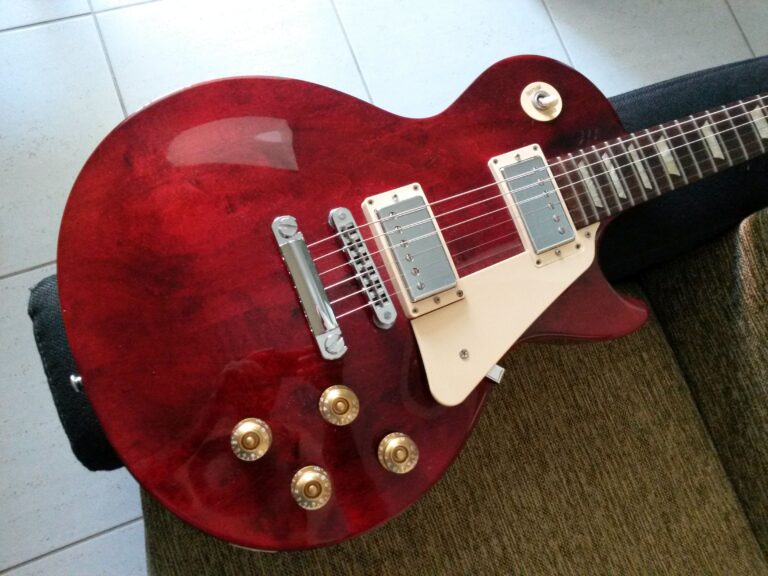
Keaggy’s primary electric guitar for much of his career — and the instrument most closely associated with his Glass Harp work and early solo recordings — was a Gibson Les Paul Standard from the early 1960s, specifically the 1961 configuration with the slim taper neck profile. The 1961 Les Paul Standard (still carrying the Les Paul name before its removal in 1963 when Les Paul severed his Gibson endorsement deal) represents the transition from the 1960 slim taper to the SG body shape that Gibson introduced as the new Les Paul design — some 1961 instruments use the Les Paul slab body while others use the new SG-style double-cutaway depending on exact production date, making 1961 a transitional year of considerable complexity. Keaggy’s specific instrument is a slab-body 1961 example — the last year of the original Les Paul body shape — with a slim taper mahogany neck, rosewood fretboard with crown inlays, and a pair of Patent Applied For (PAF) humbuckers wound to the characteristic 7.5k–8.5k ohm DC resistance with Alnico II magnets. The 1961 PAF humbuckers are late-production examples at the end of the original PAF manufacturing run (transitioning to Patent Number from approximately 1962), and individual examples vary in their exact winding characteristics — some are wound closer to 8.0k–8.5k ohms, giving a slightly hotter, more aggressive character. Keaggy’s specific instrument has been his primary electric companion for decades, and its specific tonal character — the combination of the slim neck profile, late-PAF humbuckers, and the mahogany/maple construction — is audible throughout his recorded output.
A mid-1960s Gibson SG Standard — double-cutaway mahogany body, slim taper neck joining the body at the 22nd fret, rosewood fretboard with crown inlays, chrome hardware, and Patent Number humbuckers (the production successor to the PAF, wound to similar specifications of 7.5k–8.5k ohms with Alnico II or Alnico V rod magnets) — appeared in Keaggy’s documented electric guitar setup. The SG’s lighter weight and more aggressive midrange character compared to the Les Paul provided a different tonal palette for specific electric passages, and the extended upper-fret access of the double-cutaway design suited some of Keaggy’s technically demanding lead work where the Les Paul’s single-cutaway body would have restricted access to the higher positions.
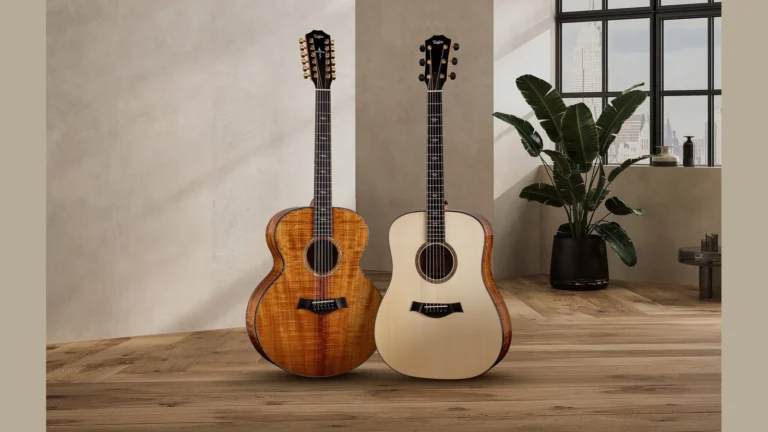
Taylor acoustic guitars — particularly the 614ce and its various iterations — have been central to Keaggy’s acoustic work through much of his career. The Taylor 614ce specification: a grand auditorium body shape (14-inch lower bout, 4.5-inch depth, slightly smaller than a standard dreadnought) with a Sitka spruce top, Indian rosewood back and sides, Taylor’s proprietary neck joint (the Taylor NT neck joint, using bolts rather than a traditional dovetail, providing remarkable precision and adjustability), and Taylor’s Expression System 2 (ES2) pickup system — a behind-the-saddle piezoelectric pickup design using three individual transducer elements rather than a single undersaddle strip, providing improved dynamic response and more natural acoustic tone when amplified. The grand auditorium body shape gives a balanced tone — sufficient low-end body for chord playing, clear midrange definition for melody, and enough treble presence for the complex fingerpicking arrangements Keaggy uses. Taylor’s bolt-on NT neck joint allows precise neck angle adjustment, giving excellent action setup across the full fretboard range and consistent playability over time as humidity conditions change.
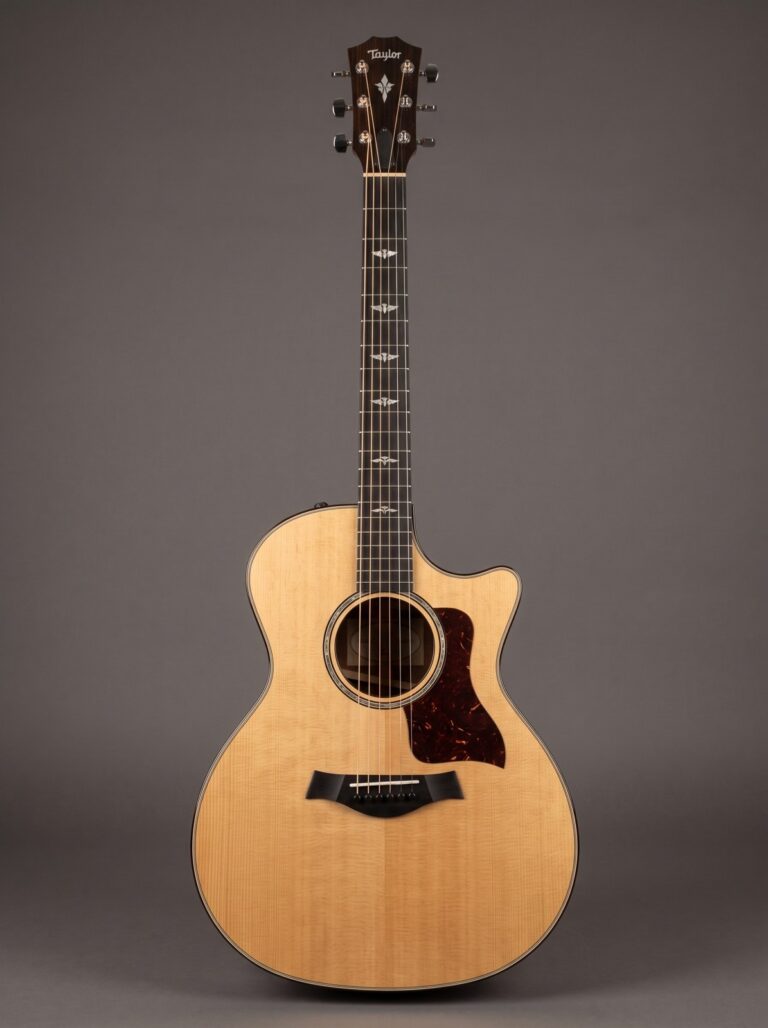
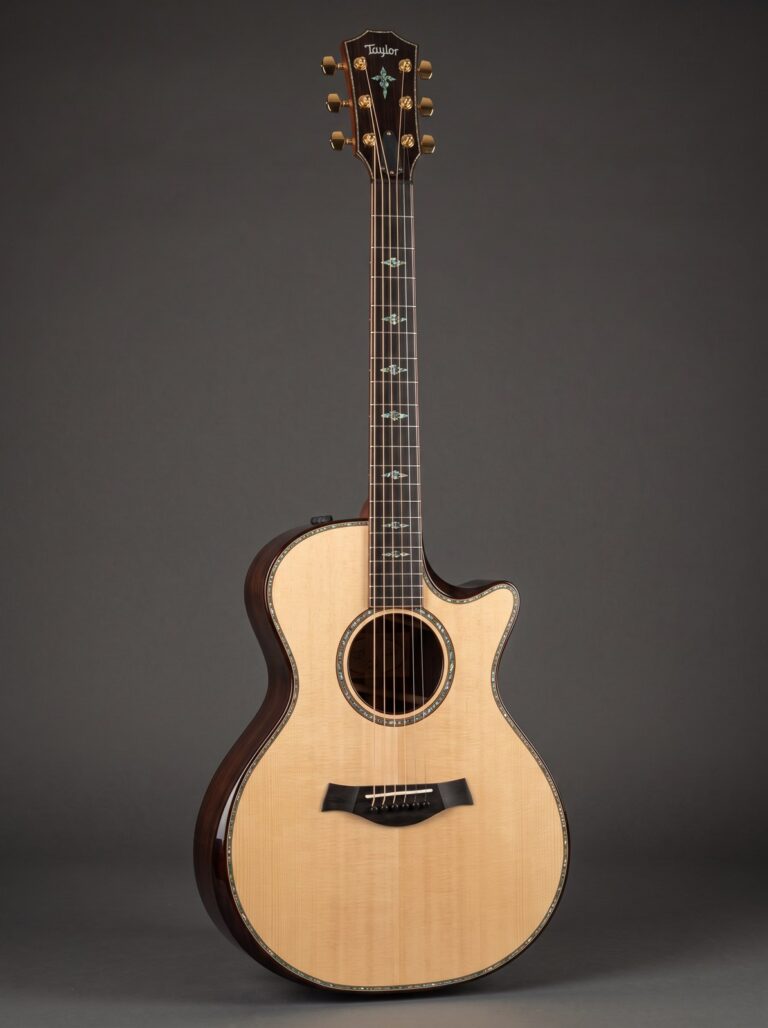
The Taylor 912ce — a grand concert body shape (slightly smaller than the 614ce’s grand auditorium) with a Sitka spruce top and Indian rosewood back and sides, Venetian cutaway for upper-fret access, and the ES2 pickup system — also appeared in Keaggy’s documented acoustic setup. The grand concert’s smaller body gives a more focused, refined acoustic tone than the grand auditorium — less low-end volume, more midrange definition, and a slightly faster note decay that suits fingerpicking arrangements requiring clear note separation. The Venetian cutaway’s upper-fret access is practically important for Keaggy’s melodically adventurous acoustic playing, which regularly ventures into positions that non-cutaway instruments cannot reach.
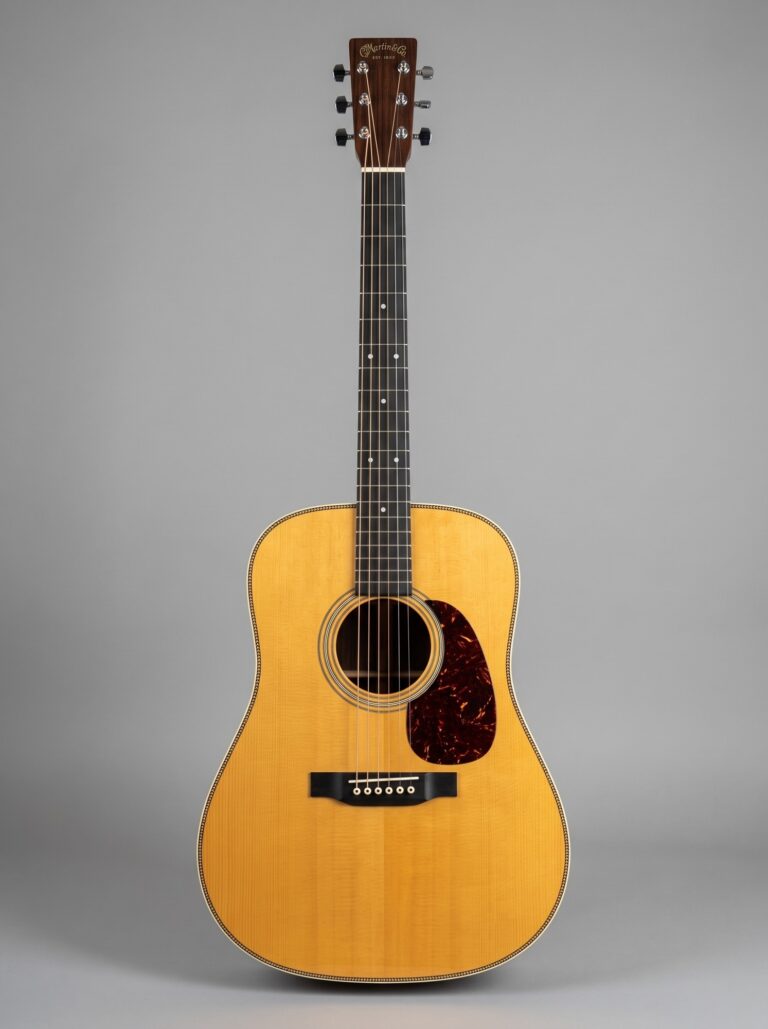
Martin HD-28 dreadnoughts — the herringbone-trimmed variant of the D-28, featuring Sitka spruce top, Indian rosewood back and sides, scalloped X-bracing (the original scalloped design providing enhanced top responsiveness and projection), and Martin’s standard low-oval neck profile — appeared in Keaggy’s acoustic arsenal for recordings requiring the dreadnought’s fuller, more projecting acoustic tone. The HD-28’s larger body gives more volume and low-end presence than Taylor’s grand auditorium or grand concert shapes, making it particularly effective for strummed chord work and for passages requiring maximum acoustic authority. The scalloped X-bracing’s thinner bracing structure allows the top to vibrate more freely, contributing to the Martin’s characteristic open, warm acoustic tone.
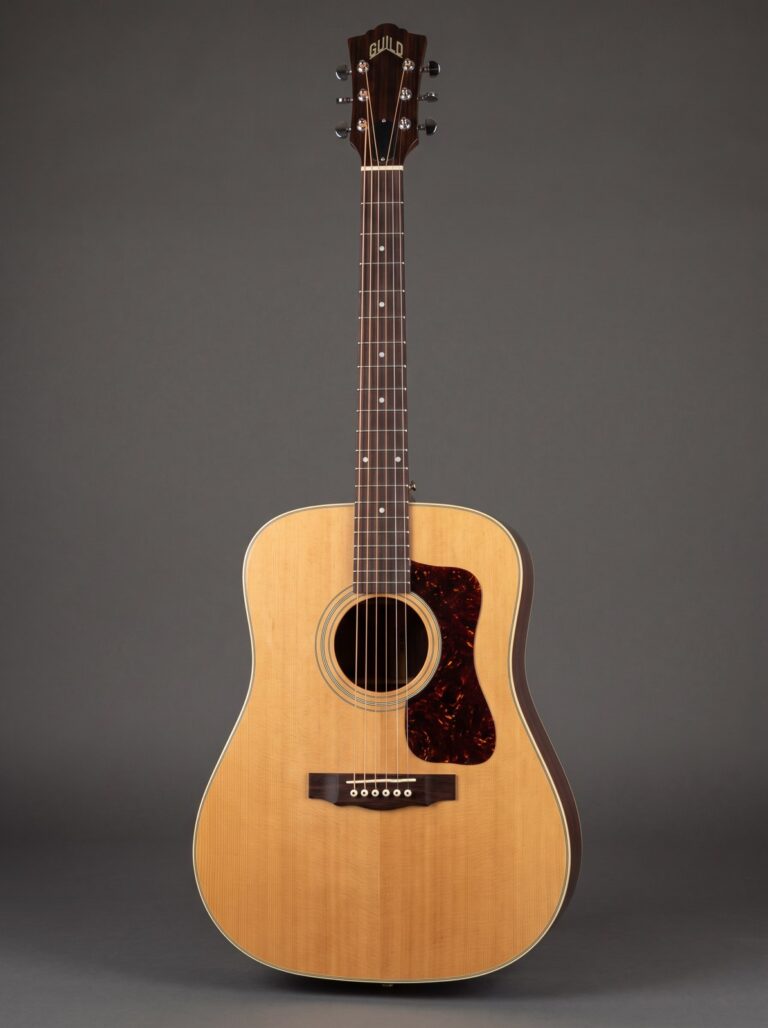
Guild dreadnoughts — specifically the D-50 model from the 1970s, featuring a Sitka or Engelmann spruce top, Indian rosewood back and sides, Guild’s proprietary X-bracing pattern, and a low-oval mahogany neck — appeared in Keaggy’s early acoustic setup. Guild’s American-made instruments of the 1970s were built to a high standard with carefully selected tonewoods, and the D-50’s balanced, full-range acoustic tone suited Keaggy’s early solo work where acoustic guitar was the primary solo instrument.
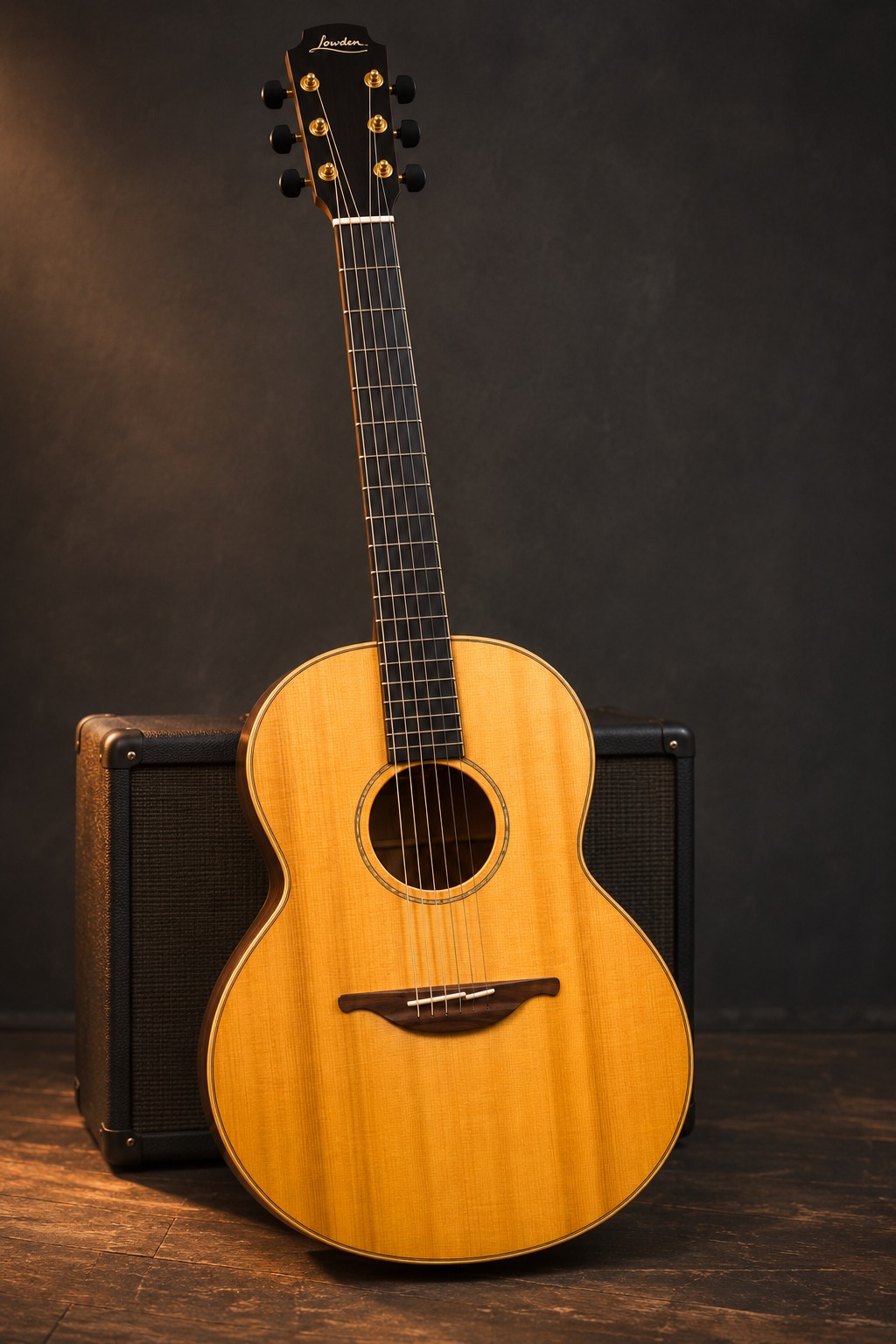
George Lowden’s Irish-made acoustic guitars — specifically the F-35 model with a Western red cedar top and Indian rosewood back and sides, Lowden’s patented “A-Frame” bracing system (a modified X-bracing design with additional triangular support elements that increase the top’s stiffness without adding significant mass, improving projection and tonal definition), and a slim mahogany neck — appeared in Keaggy’s acoustic documentation. Cedar tops have a warmer, softer tonal character than spruce — they respond to lighter touch more readily, producing a broader, less defined transient and a warmer fundamental-to-overtone balance. For Keaggy’s most delicate fingerpicking passages, the cedar top’s warmth and responsiveness to light touch gave a different tonal quality from his spruce-topped instruments. Lowden’s A-Frame bracing gives the cedar top sufficient stiffness for projection while preserving its natural warmth.
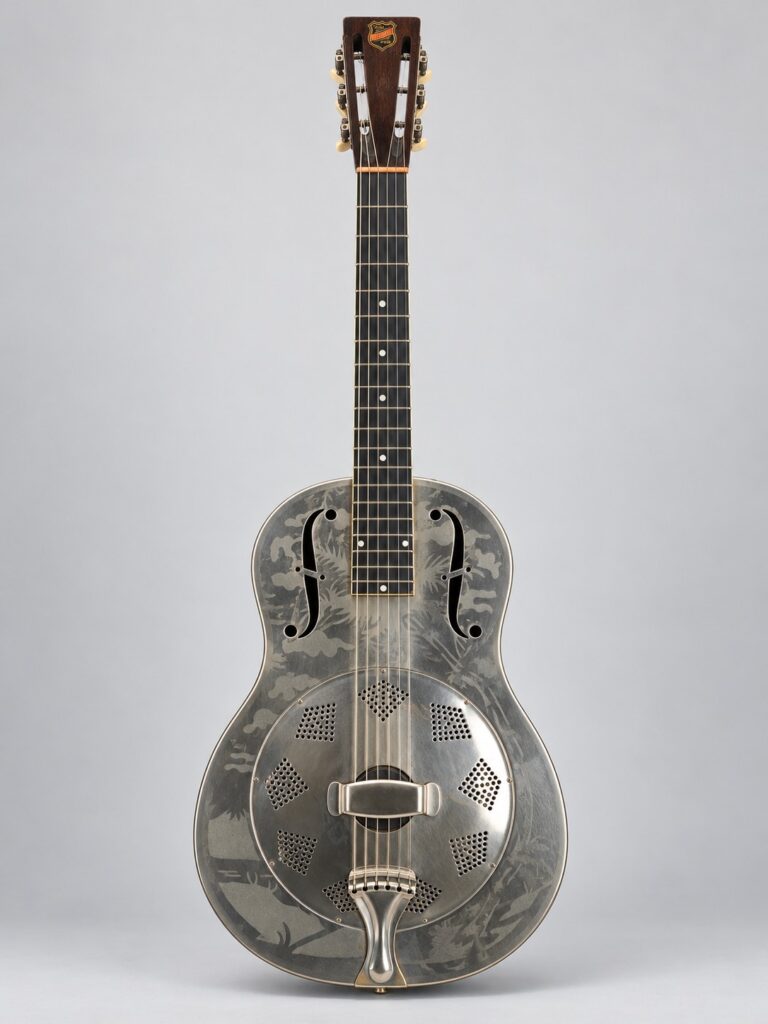
National resonator instruments — consistent with the broader Americana and roots music tradition — appeared in Keaggy’s setup for specific tonal applications. The National Style O’s single-cone biscuit-bridge resonator system, nickel-plated brass body, and metal construction give the characteristic loud, bright, percussive slide tone associated with Delta blues and early country blues traditions. Keaggy’s use of resonator instruments reflects his broad instrumental curiosity and his engagement with the full range of American guitar traditions.
Keaggy used light-gauge strings on both electric and acoustic instruments — Ernie Ball Regular Slinky (.010–.046) on electrics and light-gauge acoustic strings (.012–.053, typically phosphor bronze on steel-string acoustics) on flat-tops. The lighter electric gauges gave maximum bending ease for the expressive lead playing that characterised both his Glass Harp work and his solo recordings, while the acoustic string choice balanced playability with the tonal warmth needed for fingerpicking applications.
Amps
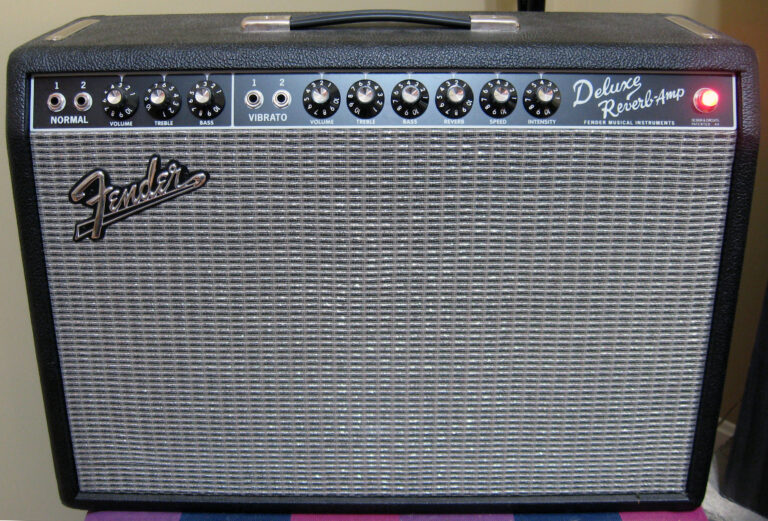
The blackface Fender Deluxe Reverb was the amplifier most consistently associated with Keaggy’s electric guitar tone throughout his career — the 22-watt, 6V6GT-powered, tube-driven spring reverb combo that represents arguably the finest balance of clean tone, natural overdrive, and practical volume in American amplifier history. The AA763 Deluxe Reverb specification: two Sylvania or GE 6V6GT output tubes producing 22 watts RMS into a single 12-inch Jensen C12N or Oxford 12L6 speaker; three 12AX7 preamp tubes; a 12AT7 reverb driver feeding a Type 4 long-spring reverb tank (three-spring configuration, approximately 1.8-second decay time at room temperature); a tube-driven tremolo circuit using a 12AX7; and the characteristic blackface tone stack (bass, treble, no middle control on the Deluxe, unlike the larger blackface models). The 6V6GT output tube’s lower headroom compared to the 6L6GC in the Twin Reverb means the Deluxe begins to overdrive naturally at moderate volume settings — this natural, touch-sensitive overdrive was precisely what Keaggy exploited for his electric lead tone. The overdrive character of two 6V6GTs running hard is distinctly different from EL34 or EL84 saturation: warmer, less aggressive in the upper midrange, with a characteristic “bloom” on sustained notes that responds beautifully to vibrato. Keaggy ran his Les Paul’s PAF humbuckers into this naturally overdriving Deluxe for a tone that was simultaneously warm and harmonically complex — not heavy rock saturation, but the specific character of a fine American valve amplifier working at the limit of its clean headroom.
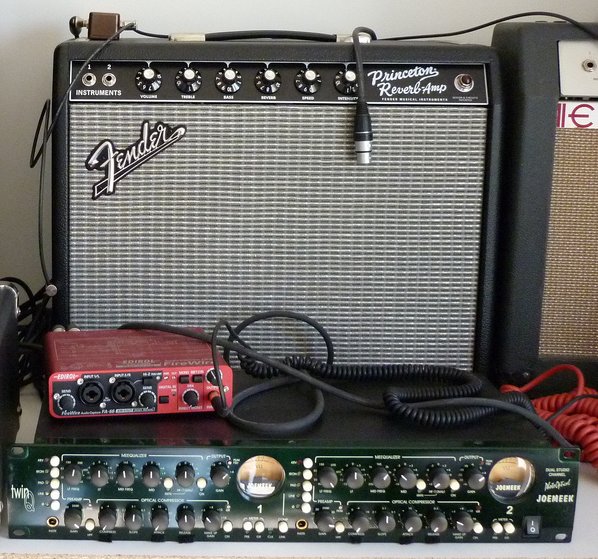
The blackface Princeton Reverb — 12 watts from two 6V6GT output tubes (like the Deluxe but at lower output), a single 10-inch Jensen C10R or Oxford speaker, tube-driven spring reverb (shorter two-spring reverb tank giving a brighter, more percussive reverb character than the Deluxe’s three-spring type), and no tremolo circuit on the AA1164 version — appeared in Keaggy’s studio setup and for smaller live performances. The Princeton Reverb’s 12-watt output level means it reaches natural valve overdrive at lower overall volume than the Deluxe — a significant advantage for studio recording where the natural compression of a working-hard output stage is desired without the volume levels that larger amplifiers require. The 10-inch Jensen C10R speaker (lighter cone, smaller magnet than the 12-inch C12N) gives a slightly brighter, more focused tone with less low-end extension — useful for cut and definition in dense arrangements.
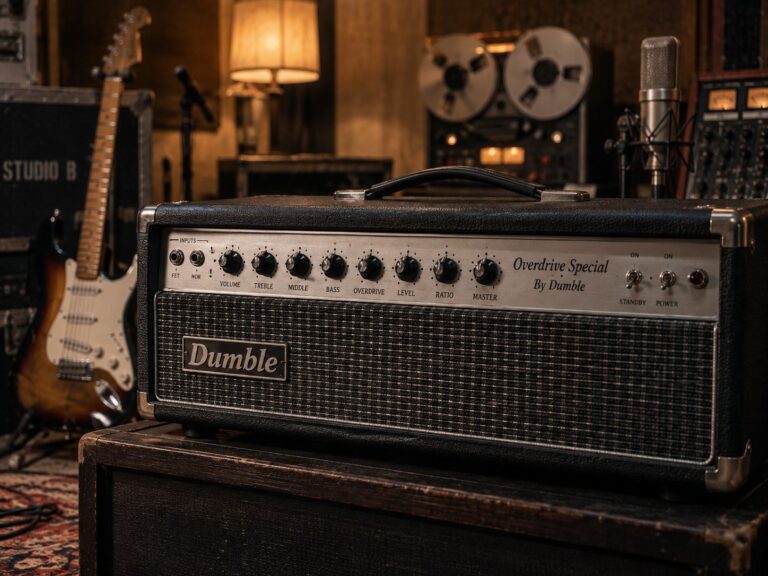
Alexander “Howard” Dumble’s hand-built Overdrive Special amplifiers — among the most sought-after and expensive amplifiers in the world, built in tiny quantities to individual specification for specific players — appeared in Keaggy’s documented setup. The Dumble ODS is built around a modified Fender Blackface circuit topology (Dumble began his career modifying Fender amplifiers) with significant additional gain staging in the preamp and a carefully voiced tone stack and overdrive channel that produces a characteristically smooth, transparent overdrive with excellent note definition and harmonic complexity. Each Dumble is hand-built to the individual player’s specifications, with Dumble voicing the amp personally for the guitar and playing style of the specific musician. The ODS’s clean channel produces one of the finest clean guitar tones in existence — warm, three-dimensional, and dynamically responsive — while the overdrive channel gives a smooth, violin-like sustain that is unlike any mass-produced amplifier’s overdrive character. Keaggy’s acquisition of a Dumble reflected both his tonal sophistication and his recognition that certain musical requirements demanded the absolute best available amplification.
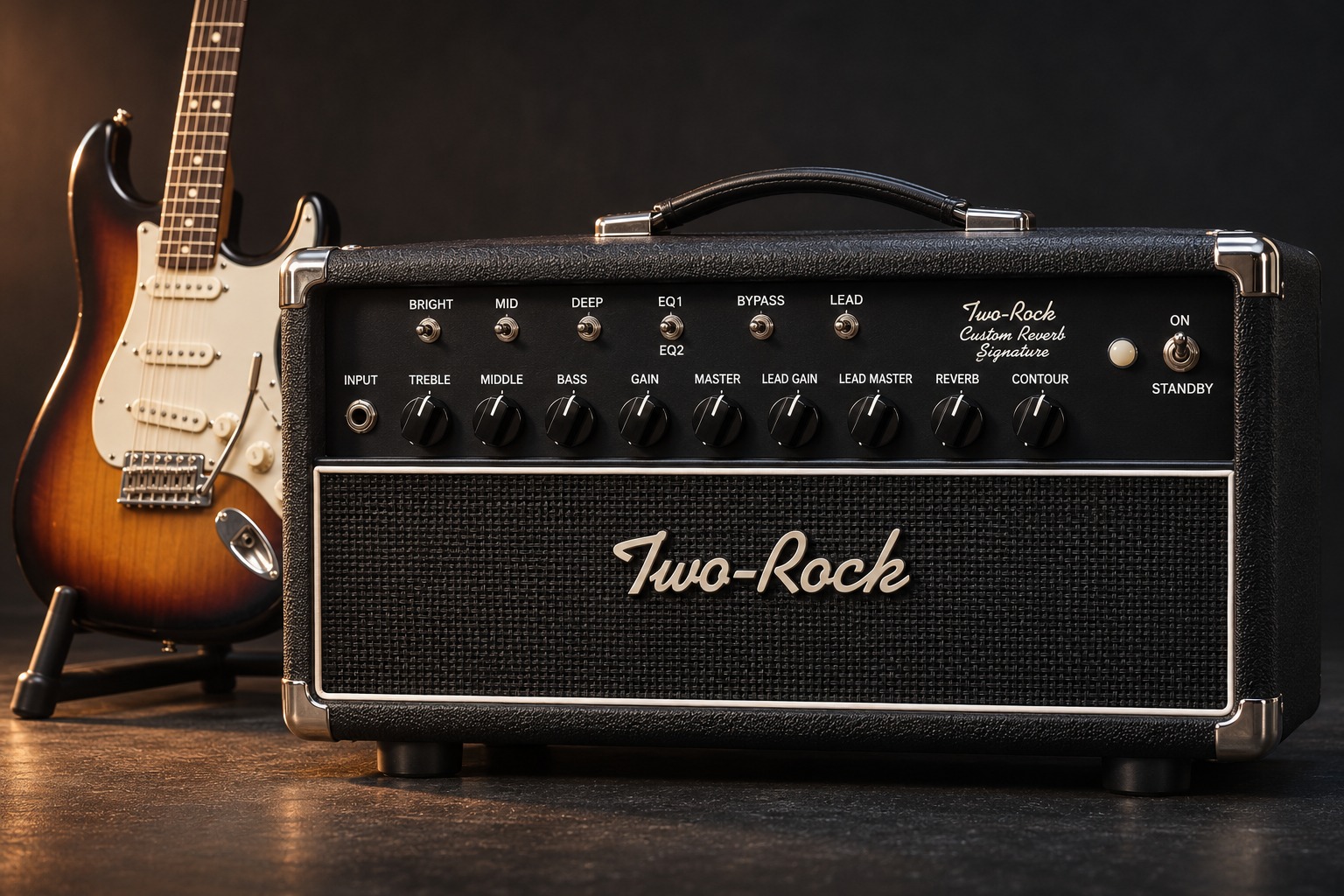
Two-Rock amplifiers — founded by Bill Krinard and Joe Mloganoski, building hand-wired boutique valve amplifiers in the Dumble-influenced tradition — appeared in Keaggy’s more recent live rig. The Two-Rock Custom Reverb Signature uses 6L6GC output tubes (producing approximately 100 watts or switchable to 50 watts), hand-wired point-to-point construction, premium components throughout, and a voicing designed to produce the warm, clean-to-just-breaking-up character of the best American valve amplifiers. The Custom Reverb Signature’s spring reverb circuit is exceptionally high quality — genuine long-spring reverb with careful voicing that avoids the thin, metallic quality of many boutique amp reverb designs. Keaggy used Two-Rock amplification as a touring and recording tool when the Dumble ODS was unavailable or impractical.
For amplified acoustic guitar performance — particularly the looping-based solo performances — Keaggy used dedicated acoustic guitar amplification systems rather than running the Taylor’s ES2 pickup through a standard electric guitar amplifier. The Fishman Loudbox series (specifically the Loudbox Artist, 120 watts, dual-channel, with a built-in three-band EQ and reverb) and the AER Compact 60 (a German-made, 60-watt solid-state acoustic amplifier with a single full-range speaker and a parametric EQ) appeared in his documented acoustic performance setup. The ES2 pickup’s behind-the-saddle design responds better to high-quality acoustic amplification than to electric guitar amplifiers, and the Fishman and AER designs are specifically voiced for the frequency range and dynamic characteristics of amplified acoustic instruments.
Effects
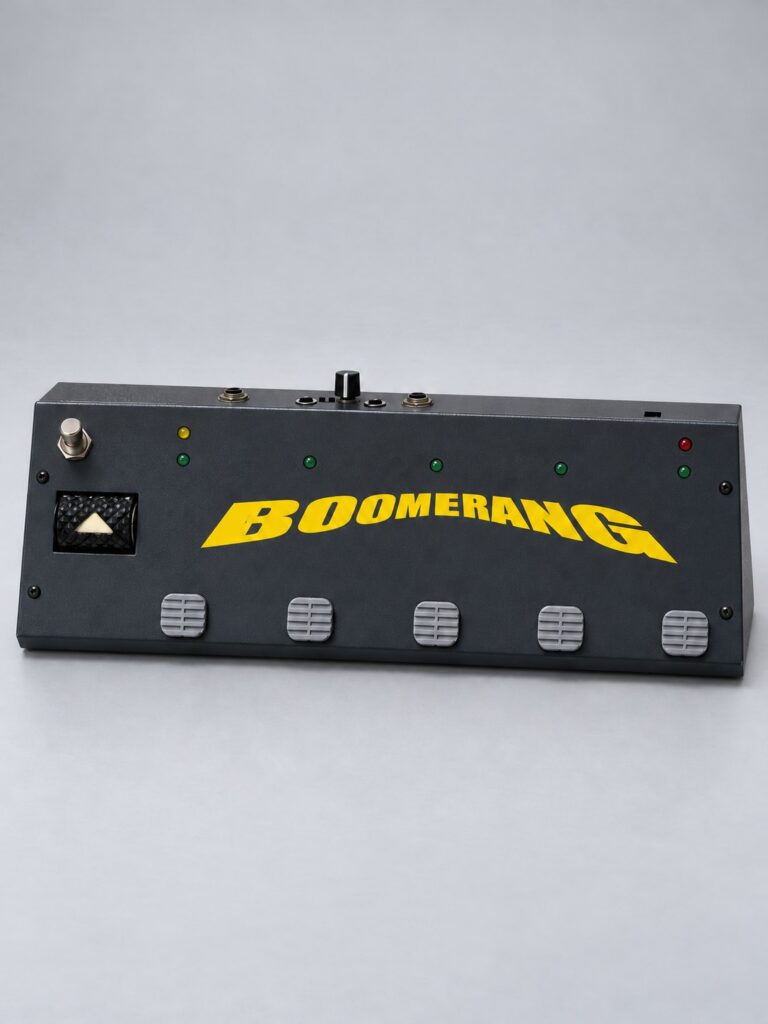
The Boomerang Phrase Sampler — introduced by Boomerang Musical Products in 1996 as one of the first purpose-built guitar loop pedals for live performance, using digital sampling to record a loop of up to approximately 16 seconds and play it back continuously — was the foundational looping tool in Keaggy’s pioneering solo loop performances. The original Boomerang’s functionality was relatively straightforward by later looper standards: a single loop layer, foot-switch record/play/overdub control, and basic erase functionality. But Keaggy’s ability to exploit even this limited functionality to create complete musical environments — building bass lines, chord accompaniments, and counter-melodies in sequence and then soloing over the composite — was extraordinary and helped establish the template for the loop-based solo guitar performance that has become a significant genre in its own right. The Boomerang’s digital sampling produced a characteristically clean, accurate loop with minimal degradation over repeated playback — unlike tape-based loop systems (like those used by early minimalist composers) which degraded progressively with each cycle.
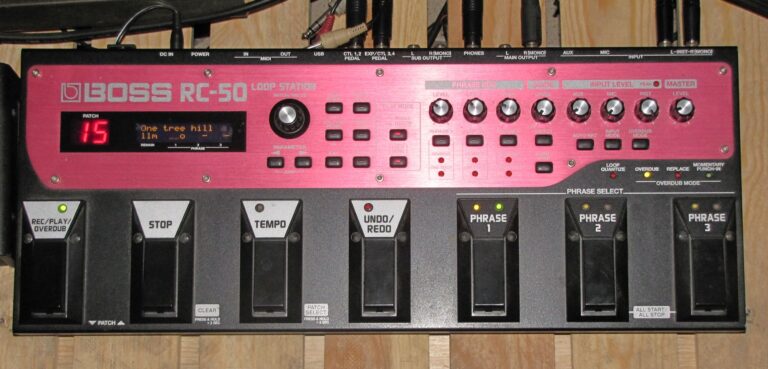
The Boss RC-50 Loop Station — three independent stereo loop tracks, each with individual level control, 99 phrase memories for saving loops, a rhythm track generator, and USB connectivity for loop import/export — replaced or supplemented the Boomerang in Keaggy’s more advanced loop performances. The RC-50’s three-track capability gave Keaggy the ability to layer bass, chord, and melodic elements on separate tracks with independent control over each, creating more complex and flexible looping structures than the single-layer Boomerang allowed. The rhythm track generator provided an optional click/drum accompaniment for live performance, and the phrase memory system allowed Keaggy to prepare specific loop structures for specific songs rather than building everything from scratch in real time.
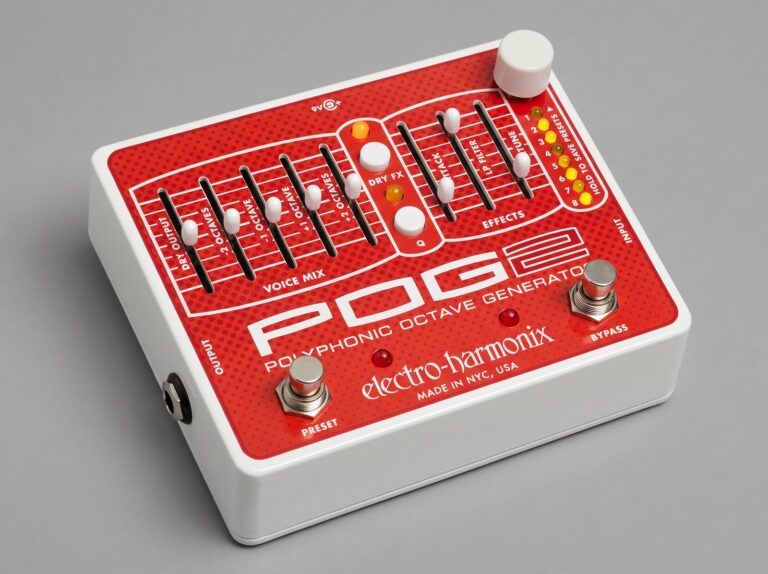
The Electro-Harmonix POG2 — a polyphonic pitch-shifting pedal using digital signal processing to add sub-octave (one octave below), octave-up, and two-octave-up signals to the input, with individual level controls for each octave voice and an integrated low-pass filter — appeared in Keaggy’s more recent electric and looping rig. The POG2’s polyphonic tracking (unlike monophonic octave pedals that only track single notes, the POG2 accurately tracks full chord voicings) gives Keaggy the ability to add bass register content to his guitar signal for looping applications — creating the bass-line equivalent from a guitar signal without a separate bass instrument. The sub-octave voice, filtered through the POG2’s low-pass filter to remove upper harmonics and approximate the tone of a bass guitar, gave Keaggy a credible bass-voice for the bass-line layers in his loop performances without requiring a separate instrument or multiple performers.
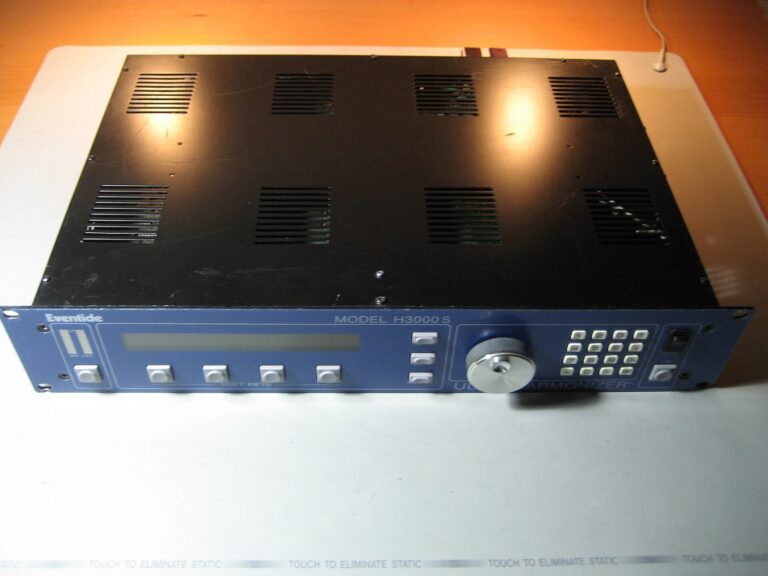
The Eventide H3000 — a rack-mounted digital multi-effects processor introduced in 1987, using Eventide’s proprietary DSP algorithms to produce harmony, pitch-shifting, flanging, chorus, reverb, and other effects — appeared in Keaggy’s studio and live rack setup. The H3000’s “diatonic pitch shifter” algorithm — which transposes the input signal by a user-specified interval within a user-specified key, producing harmonically correct diatonic intervals rather than the fixed-interval transposition of simpler pitch shifters — gave Keaggy the ability to add intelligent, key-correct harmonies to his lead guitar lines. This capability was significantly more musically useful than fixed-interval pitch shifting and produced the kind of orchestral, multi-voice lead sound that contributed to the richness of his solo recordings.
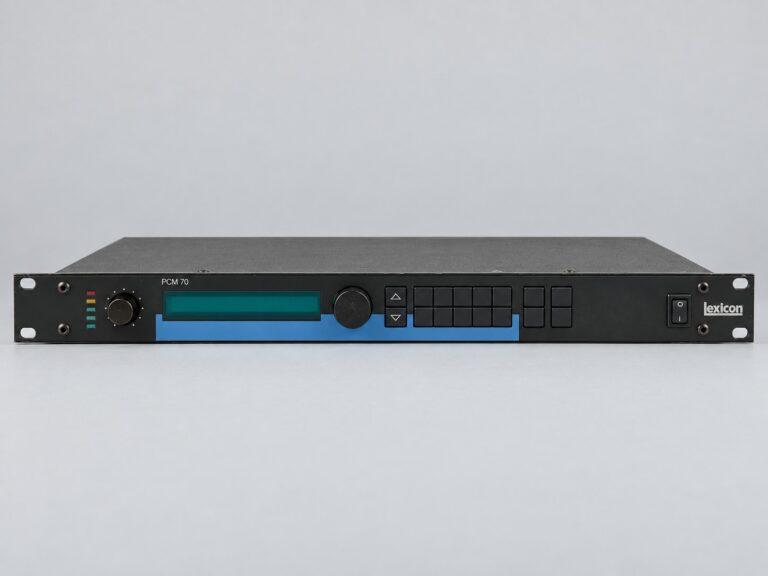
The Lexicon PCM70 — Lexicon’s professional rack reverb processor of the mid-1980s, using Lexicon’s proprietary LARC (Lexicon Acoustic Rendering Compiler) algorithm to produce room, hall, plate, and other reverb programs — appeared in Keaggy’s studio rack. The PCM70’s reverb quality — considered among the finest available at the time of its introduction and still highly regarded — gave Keaggy’s recordings the spatial dimension and depth that his melodic guitar work required. The hall programs particularly suited the more orchestral passages in his solo acoustic work, placing the guitar in a virtual acoustic space that enhanced the emotional impact of sustained melodic lines.
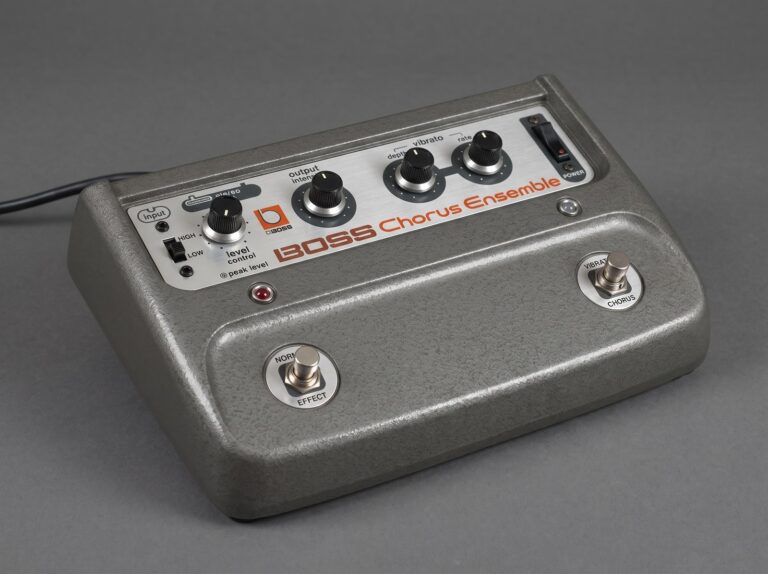
The original Boss CE-1 — based on the chorus circuit from the Roland Jazz Chorus JC-120, using MN3002 BBD chips for the 12–15ms delay line, splitting the signal into dry and BBD-delayed paths and modulating the delay time with a slow LFO — provided Keaggy with warm, organic chorus for specific electric guitar textures. The CE-1’s BBD-based chorus has a warmer, less precise character than digital chorus alternatives — the BBD’s characteristic noise floor and frequency roll-off at higher frequencies contributing to an organic quality that integrates better with valve amplifier tones than cleaner digital alternatives.
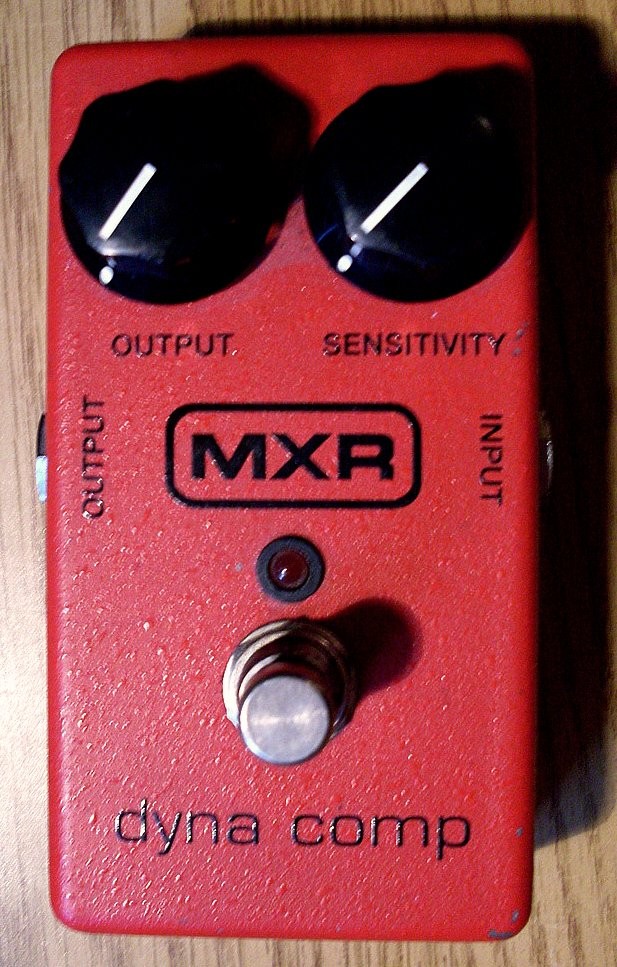
The script-logo MXR Dynacomp — CA3080 operational transconductance amplifier (OTA) chip, feed-forward compression topology, Output and Sensitivity controls — was used by Keaggy for clean compression on fingerpicked passages and for sustain on electric lead work. The Dynacomp’s CA3080-based compression gives a characteristic “squash” on transients that evens out the dynamic variation inherent in fingerpicking technique — ensuring that softly-played notes maintain sufficient presence while preventing the louder attack transients from dominating the recorded or amplified signal. Used at moderate settings (Sensitivity at 6–7, Output at unity gain), it adds sustain and tonal consistency without producing the obvious “pumping” artefacts of heavy compression.
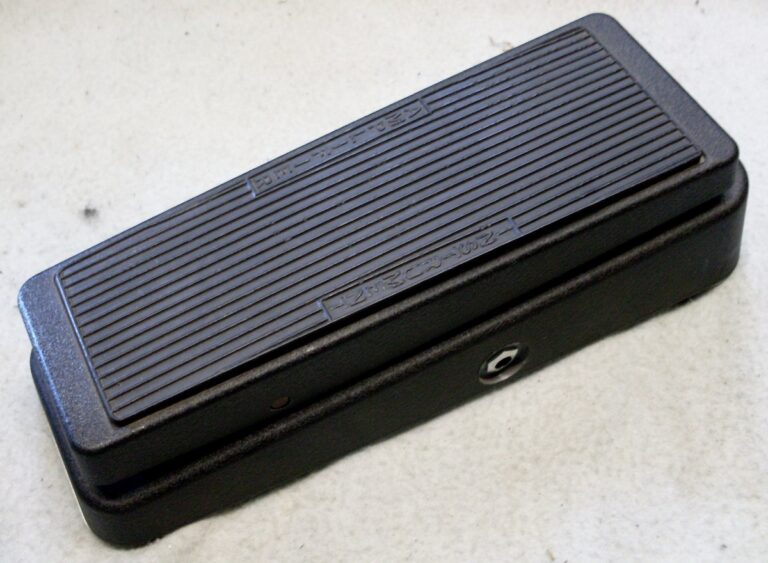
The Dunlop Cry Baby GCB95 — Hot Potz II potentiometer, Halo inductor, updated circuit topology from the original Vox V846 — appeared in Keaggy’s electric guitar setup for expressive wah work. His wah technique was melodically sophisticated — using the pedal as a precise tonal filter for lead line emphasis rather than the rhythmic strumming application typical of funk-influenced players, and exploiting the “cocked wah” position for specific note-by-note tonal shaping in extended lead passages.
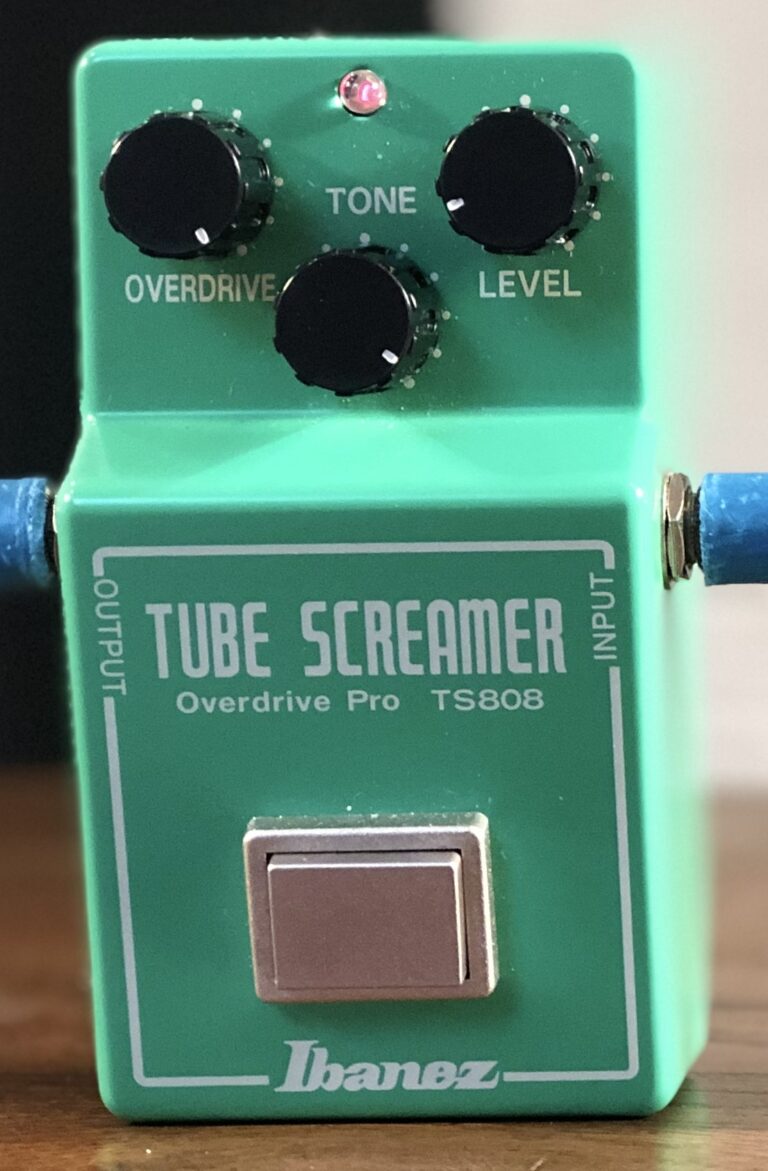
The original Ibanez TS808 Tube Screamer — JRC4558D op-amp chip, asymmetric soft clipping using a pair of 1N4148 silicon diodes in parallel with a 51pF capacitor, the characteristic 720Hz lower cutoff on the clipping stage producing the mid-forward, bass-rolled character that defines the Tube Screamer family — appeared in Keaggy’s electric rig for light overdrive applications. The TS808’s mid-boost and bass-roll characteristics interact with the blackface Fender Deluxe Reverb’s naturally warm, mid-forward tone to produce a sustained, musical lead overdrive with excellent note definition — the mid-boost compensates for any midrange loss through the amp’s tone stack while the bass roll prevents low-end muddiness through the 6V6GT’s natural low-end warmth. This is a classic pairing that appears throughout American rock guitar history, and Keaggy’s use of it reflects both its genuine effectiveness and his knowledge of what works.
Playing Style & Tone Philosophy
Phil Keaggy is, in the most fundamental sense, a musician who plays guitar rather than a guitarist who makes music — the distinction sounds subtle but it matters enormously. His relationship with the instrument is in service of musical expression rather than technical demonstration, and this quality gives even his most technically demanding playing a sense of purpose and direction that pure technique never achieves on its own. When Keaggy plays a difficult passage, you don’t think “how impressive”; you think “yes, that’s right” — which is the correct response to music and the incorrect response to mere technique.
His fingerstyle approach — developed around the absence of his right-hand middle finger — is genuinely his own invention. Classical guitar technique assumes four fingers and a thumb; folk fingerpicking assumes various combinations of thumb and two or three fingers; Keaggy’s four-finger-and-thumb approach occupies a different anatomical reality and produces a different tonal character. His thumb handles bass lines and lower-register accompaniment; his index and ring fingers handle inner voices and chordal elements; his little finger — playing a role that the missing middle finger would normally occupy — handles melodic and upper-register content. The result is an independence of voices that approaches the keyboard player’s ability to handle multiple simultaneous lines, and it gives his fingerstyle performances a polyphonic completeness that most guitarists cannot achieve.
His electric guitar playing draws from multiple traditions — the blues pentatonic vocabulary of his Ohio rock upbringing, the melodic sophistication of British progressive rock guitarists he admired, the harmonic complexity of jazz he absorbed through decades of serious listening, and the classical compositional approaches that inform his solo acoustic work. These are not deployed as distinct modes; they are integrated into a single, unified vocabulary that can move between a blues bend and a jazz-derived interval leap in a single phrase without any sense of stylistic inconsistency.
His loop-based solo performances represent one of the most original and fully-developed approaches to the guitar as a solo instrument in contemporary music. The ability to build a complete musical environment in real time — to be simultaneously bassist, rhythm guitarist, and melodic soloist while never letting any single role compromise the others — requires not only technical command of the looping technology but a musical intelligence capable of planning and executing multi-layered arrangements in the moment. Keaggy’s loop performances have a composed, intentional quality that separates them from the more improvisational loop work of many of his successors — each loop build is designed as a complete musical structure with its own arc and resolution.
Tonally, Phil Keaggy guitars gear choices reflect the same philosophy as his playing: the right tool for the musical requirement, maintained and used with maximum attention to quality and appropriateness. The Fender Deluxe Reverb’s natural 6V6GT overdrive for electric lead work, the Taylor ES2 system into dedicated acoustic amplification for fingerstyle performance, the Dumble ODS for the absolute finest clean and slightly overdriven tones — these are not random choices but the products of decades of tonal investigation and refinement. He does not change gear for its own sake; he changes when he finds something that serves the music better than what he was using, and once he finds it, he sticks with it.
How to Sound Like Phil Keaggy
Guitar Approach
For the electric side of Phil Keaggy guitars gear, a PAF-humbucker-equipped Les Paul is essential — either a Gibson Les Paul Standard with ’57 Classic pickups, a Gibson Custom Shop ’59 or ’61 Les Paul reissue, or a quality PAF-spec aftermarket pickup set (Throbak SLE-101, Seymour Duncan Seth Lover SH-55) in a mahogany-body, maple-top instrument. The slim-taper neck profile is preferable to the rounder 1959 profile for Keaggy’s technical lead work — the faster neck speeds up the lateral position shifts required for his melodically wide-ranging solos.
For acoustic fingerstyle work, a Taylor grand auditorium or grand concert with a quality undersaddle or behind-the-saddle pickup system (the Taylor ES2, L.R. Baggs Element, or K&K Pure Mini) is the appropriate starting point. Cedar tops are preferable for lighter fingerpicking touch; spruce gives more projection for stronger playing. Develop fingerpicking independence — separate bass, inner voice, and melody lines handled simultaneously — as the foundational technique, building the muscle memory for voice independence before attempting loop-based arrangements.
Amp Approach
A blackface Fender Deluxe Reverb — or its closest modern equivalent (the Fender ’65 Deluxe Reverb reissue, the Carr Rambler, the Victoria Regal II, or a hand-wired Ceriatone AA763 clone) — is the correct foundation for Keaggy’s electric tone. Set the volume between 5–7 to push the 6V6GT output tubes into natural overdrive, run the reverb at 3–4 for appropriate spatial dimension, and use the treble and bass controls to voice the amp to your specific guitar and room. The Fender Deluxe’s natural compression at working volume is the critical quality — it responds to pick attack with an immediacy that makes the guitar feel alive and connected to the player’s touch in a way that higher-headroom amplifiers don’t.
| Control | Setting (0–10) | Notes |
|---|---|---|
| Volume (Fender Deluxe Reverb) | 5–7 | Push the 6V6GT output stage — natural American valve overdrive is the target |
| Bass | 5–6 | Warm without muddiness — PAF humbuckers add low-end warmth naturally |
| Treble | 6–7 | Present enough for note definition in fingerpicked passages and lead lines |
| Reverb | 3–4 | The blackface spring reverb is beautiful — Keaggy used it generously but not excessively |
| Tube Screamer TS808 (lead boost) | Drive 3–4, Tone noon, Level 6–7 | JRC4558D mid-boost into the Deluxe — sustained, singing lead overdrive |
| Dynacomp Sensitivity | 6–7 | Moderate compression — evens fingerpicking dynamics, adds sustain to leads |
| Loop (Boomerang/RC-50) | Loop level at unity | Build bass → chords → melody in sequence; solo over composite |
| POG2 Sub-octave (bass loops) | Sub-octave 7–8, dry 5, 2-oct 0 | Low-pass filter on sub-oct at ~200Hz to approximate bass guitar tone for loop bass lines |
Add the TS808 Tube Screamer (or a quality clone — the Maxon OD808, which is essentially the same circuit in a different enclosure, or the JHS Bonsai set to the TS808 mode) with drive at 3–4 and level boosted as a lead channel switch. The Eventide H3000’s diatonic harmonizer (or a modern equivalent — the Eventide H9 or TC Electronic Quintessence) for intelligent harmony on specific lead passages. The Lexicon PCM70 reverb for studio depth (or the Strymon BigSky for a modern equivalent). For looping, the Boss RC-50 or its successor the Boss RC-300 provides the three-track capability Keaggy’s more developed loop performances require.
Influence & Legacy
Phil Keaggy’s influence operates in multiple directions simultaneously — a consequence of his multi-genre existence and the fact that different communities have encountered his work through completely different channels. Within the Christian music world, he is a foundational figure whose recordings have shaped the expectations of generations of players about what guitar playing in that context can aspire to. Within the acoustic fingerstyle community, his loop-based solo performances have been a significant creative catalyst, helping establish the template for a performance approach that has since been developed by players ranging from Michael Hedges’s successors to the entire contemporary fingerstyle loop performance world. Within the broader rock and electric guitar community, his Glass Harp work and his best solo recordings demonstrate a player operating at the absolute front rank of technical and musical achievement.
His specific contribution to the vocabulary of looping-based solo guitar performance was genuinely pioneering — the Boomerang Phrase Sampler was a new tool in the mid-1990s, and Keaggy’s application of it to create complete musical environments in real time developed before the practice had become a codified approach with established conventions. Players who came after him — Ed Sheeran, KT Tunstall, and dozens of more strictly guitar-world practitioners — work in a performance tradition that Keaggy helped establish, often without being aware of the specific lineage.
The connection to Michael Hedges — the other transformative figure in late-20th-century acoustic guitar performance, whose radical reinvention of the acoustic guitar’s technique and tonal vocabulary paralleled Keaggy’s development of the looping-based solo performance — illuminates both players’ place in the broader story of what the guitar can do when a genuinely original mind engages with it. The comparison with Pat Metheny — another player who combined jazz harmonic sophistication, technical virtuosity, and genre-defying musical vision in a career of remarkable breadth — shows how Keaggy’s multi-genre intelligence relates to the broader tradition of serious, boundary-dissolving guitarists. And the direct electric guitar lineage through Steve Howe — whose similarly broad, classical-jazz-rock synthesis provided an important reference point for Keaggy’s development of his own cross-genre guitar vocabulary — places Phil Keaggy guitars gear and playing in the context of the progressive rock guitar tradition from which some of his most important influences came.
Frequently Asked Questions: Phil Keaggy Guitars & Gear
Is it true that Jimi Hendrix called Phil Keaggy the best guitarist alive?
The story — that Hendrix, when asked who the best guitarist alive was, responded “Phil Keaggy” — is widely circulated and has never been definitively confirmed or refuted. Keaggy himself has addressed it in interviews, consistently saying he has no way to verify it and doesn’t want to make claims he can’t support. Whether the specific story is accurate or not, it captures something real about Keaggy’s playing: it is genuinely extraordinary, operating at a level that demands the attention of any serious student of the instrument. The story’s persistence reflects the fact that people who hear Keaggy play feel the need to explain his level of accomplishment in the strongest possible terms.
How does Phil Keaggy play guitar with a missing finger?
Keaggy lost the middle finger of his right hand (his picking/plucking hand) in a fan belt accident at age six. He developed his entire fingerpicking technique around this anatomical reality — his thumb handles bass lines, his index finger handles inner voices and mid-register content, his ring finger takes on roles that would normally fall to the middle finger, and his little finger handles upper-register melodic content. The result is a four-finger-plus-thumb right-hand technique that is entirely his own, producing a voice independence across bass, chord, and melodic lines that approaches keyboard-style polyphony. Rather than being a limitation, the finger loss shaped his technique into something unique and in many ways more sophisticated than standard fingerpicking approaches.
What is Phil Keaggy’s main guitar?
Keaggy’s primary electric guitar has been a 1961 Gibson Les Paul Standard — a transitional-year instrument with the slim taper mahogany neck, rosewood fretboard, and late-production PAF humbuckers wound to approximately 7.5k–8.5k ohms with Alnico II magnets. This specific guitar has been his primary companion for decades and is audible throughout his recorded output. For acoustic work, Taylor grand auditorium guitars (particularly the 614ce with the ES2 behind-the-saddle pickup system) and Lowden Irish-made acoustics (F-35, cedar/rosewood) have been central to his acoustic recordings and performances.
What amplifier does Phil Keaggy use?
The blackface Fender Deluxe Reverb — 22 watts from two 6V6GT output tubes, AA763 circuit, tube-driven spring reverb — has been the foundational amplifier in Keaggy’s electric rig throughout his career. Its natural 6V6GT overdrive at moderate volume settings and touch-sensitive response make it ideal for his dynamic, expressively nuanced playing. He has also used a Dumble Overdrive Special (one of Alexander Dumble’s hand-built, individually voiced amplifiers) for the finest clean and slightly overdriven tones, and Two-Rock Custom Reverb Signature amplifiers for touring and recording when the Dumble was unavailable.
How does Phil Keaggy use loop pedals in live performance?
Keaggy builds complete musical environments in real time using loop pedals — beginning with a bass-line layer (often using the Electro-Harmonix POG2’s sub-octave output to approximate bass register from a guitar signal), adding chord accompaniment layers, and then soloing over the composite. The process is both technically demanding and musically sophisticated: each loop layer must be rhythmically precise (any timing error accumulates across repeats), harmonically appropriate to the layers already laid down, and part of a planned musical structure with an arc and resolution. He used the original Boomerang Phrase Sampler for early loop performances and later adopted the Boss RC-50 Loop Station for its three-track capability and phrase memory system.
What are Phil Keaggy’s most important recordings?
For Glass Harp electric rock: Glass Harp (1970) and Synergy (1971) are the essential documents. For solo electric and acoustic rock: The Master and the Musician (1978), Ph’lip Side (1980), and Getting Closer (1985) represent the peak of his solo rock work. For fingerstyle acoustic guitar: Find Me in These Fields (1990) and Beyond Nature (1996) are the definitive statements. For loop-based solo performance: live recordings from the late 1990s and 2000s are the essential documents — Keaggy’s loop performances are primarily a live phenomenon that studio recordings can suggest but not fully capture.
What is Phil Keaggy’s connection to the Christian music world?
Keaggy converted to Christianity in 1972, shortly before Glass Harp’s dissolution, and has made his faith the central thematic and motivational foundation of his solo career since that point. He has been one of the defining figures of the Contemporary Christian Music (CCM) genre — not because he limited himself to that genre’s conventions but because he brought a level of musical and guitar-playing seriousness to it that elevated the genre’s standards and demonstrated that profound faith and profound musicianship were not merely compatible but mutually reinforcing. His induction into the Gospel Music Hall of Fame in 2016 recognised this contribution, while his continued reputation outside the CCM world demonstrates that the music’s quality transcends its genre classification.
Image credits
- Lowden F-35 (Irish-made, cedar/rosewood): GuitarGangsters AI-generated reference illustration, not a photograph.
- Two-Rock Custom Reverb Signature: GuitarGangsters AI-generated reference illustration, not a photograph.
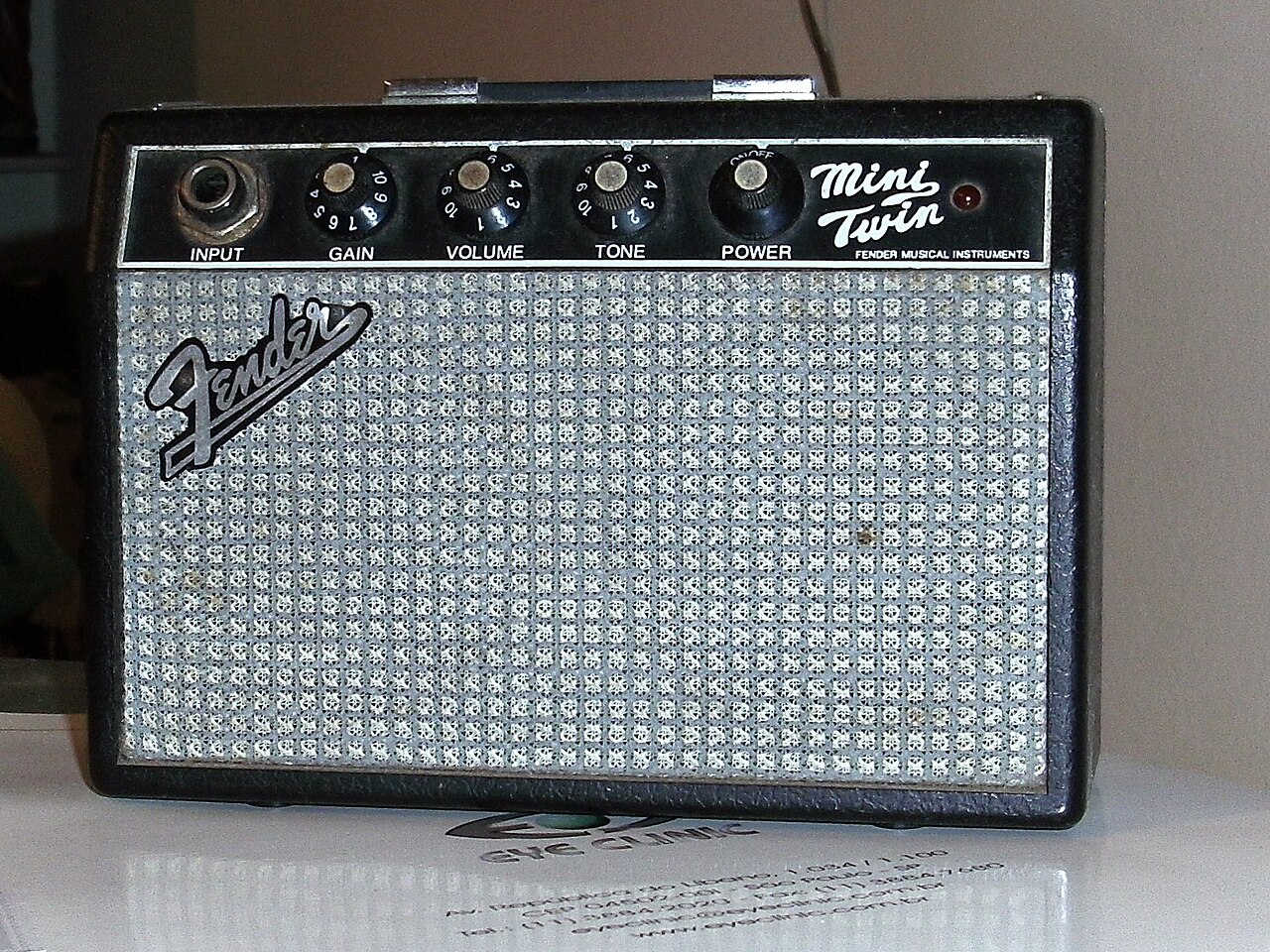
- A Fender Mini Twin amplifier: Onjacktallcuca, Wikimedia Commons, Public domain.
- Top image: by Curt Cosenza, Wikimedia Commons, CC BY-SA 2.0.
- Fender Deluxe Reverb: DlxReverbFront, Wikimedia Commons, CC BY-SA 3.0.
- Fender Princeton Reverb: sploshette, Flickr, CC BY 2.0.
- Dumble Overdrive Special: GuitarGangsters AI-generated reference illustration, not a photograph.
- Dunlop Cry Baby: Roadside Guitars, Flickr, CC BY-SA 2.0.
- Phil Keaggy live: Curt Cosenza, Wikimedia Commons, CC BY-SA 2.0.
- Eventide H3000: John R. Southern, Wikimedia Commons, CC BY-SA 2.0.
- Electro-Harmonix POG2: GuitarGangsters AI-generated reference illustration, not a photograph.
- Martin HD-28: GuitarGangsters AI-generated reference illustration, not a photograph.
- Boss RC-50 Loop Station: Massygo, Wikimedia Commons, CC BY 2.0.
- MXR M102 Dyna Comp: Roadside Guitars, Wikimedia Commons, CC BY-SA 2.0.
- Ibanez TS808 Tube Screamer: Guitar Chalk, Wikimedia Commons, CC BY 2.0.
- National Style O: GuitarGangsters AI-generated reference illustration, not a photograph.
- Boomerang Phrase Sampler: GuitarGangsters AI-generated reference illustration, not a photograph.
- Lexicon PCM70: GuitarGangsters AI-generated reference illustration, not a photograph.
- Taylor 912ce: GuitarGangsters AI-generated reference illustration, not a photograph.
- Boss CE-1 Chorus Ensemble: GuitarGangsters AI-generated reference illustration, not a photograph.
- Taylor 614ce: GuitarGangsters AI-generated reference illustration, not a photograph.
- Guild D-50: GuitarGangsters AI-generated reference illustration, not a photograph.