Jan Akkerman Guitars & Gear: Focus’s Dutch Virtuoso Complete Rig Guide
Jan Akkerman guitars gear — 1957 Les Paul Custom, antique lute, Marshall Plexi deep-dive for Focus's genre-defying Dutch virtuoso guitarist.
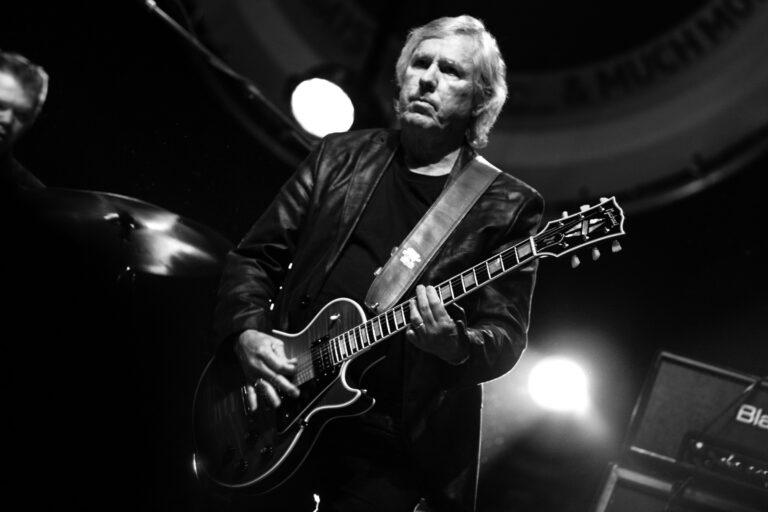
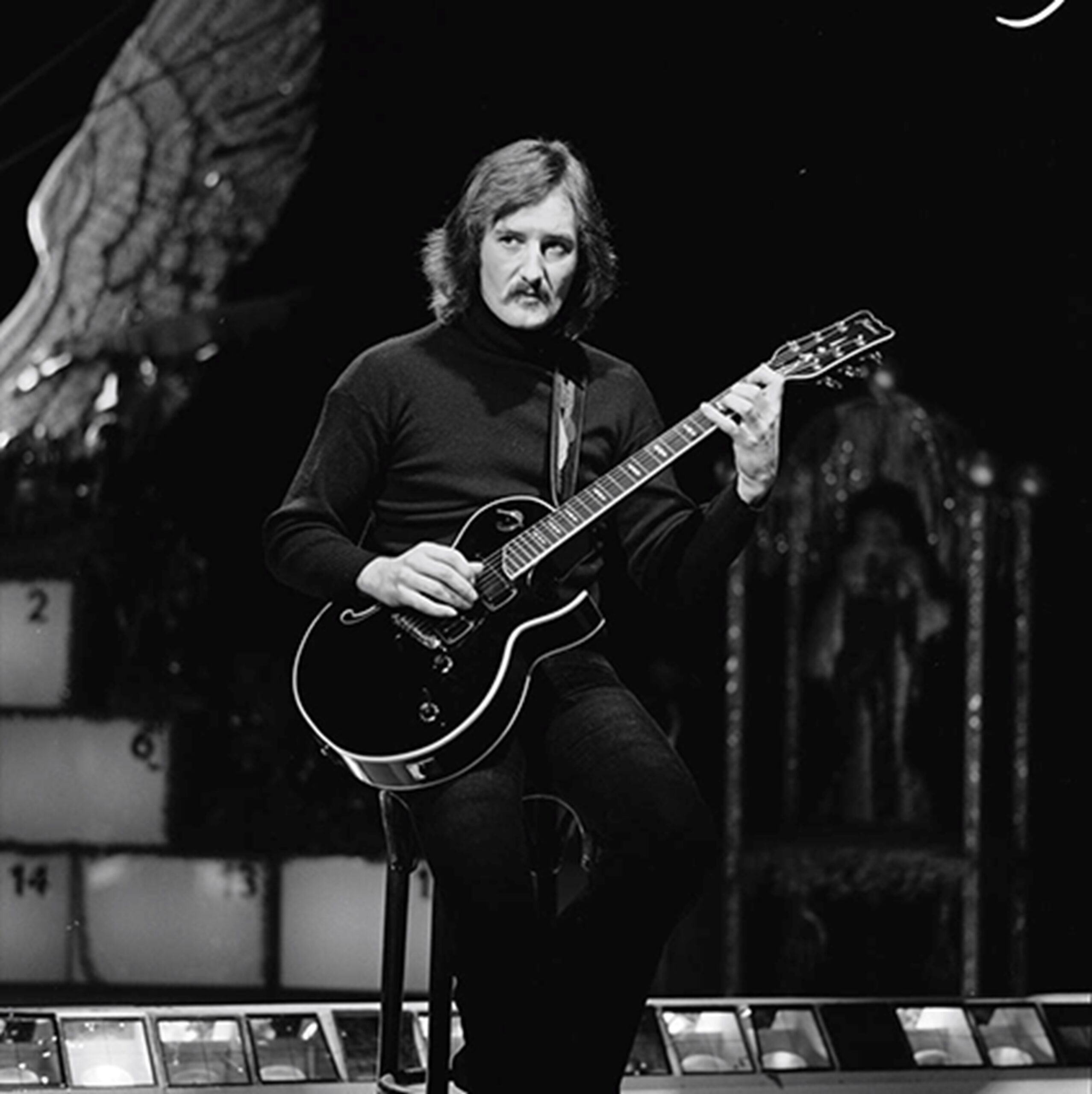
Photo: AVRO / Beeld en Geluid (Netherlands Institute for Sound and Vision), licensed under CC BY-SA 3.0
Jan Akkerman guitars gear is a subject that demands a certain reverence — because Jan Akkerman is one of the most technically accomplished, harmonically sophisticated, and tonally obsessive guitarists that European rock has ever produced. If you know Focus only from “Hocus Pocus” — that magnificently demented 1971 single with the yodelling and the time-signature chaos — then you know approximately five percent of what Akkerman was doing. The rest is a vast, intricate body of work spanning jazz, classical, baroque, hard rock, and progressive rock, executed on an extraordinary collection of vintage and custom instruments through amplification and signal chains that Akkerman spent decades refining to exact specifications. He is, in the best possible sense, a complete obsessive — the kind of musician who will spend years tracking down a specific guitar because he heard a recording from 1968 and decided that was the tone, and that tone was what he needed.
Gear Timeline
His work with Focus from 1969 through 1976 — albums including In and Out of Focus (1970), Moving Waves (1971), Focus 3 (1972), and Hamburger Concerto (1974) — placed him in the front rank of European progressive rock guitarists and earned him a reputation as one of the finest guitar technicians of his generation. Guitar Player magazine named him best guitarist of 1973, a recognition that his work richly deserved. Jan Akkerman guitars gear, playing style, and musical vision are the subject of this complete breakdown.
Background
Jan Akkerman was born on December 24, 1946, in Amsterdam, the Netherlands — a city with a rich jazz and classical music culture that would profoundly shape his musical development. He began playing guitar at age five, moving through classical instruction and absorbing jazz from an early age, and by his early teens was already a technically accomplished player with a wider musical vocabulary than virtually any of his contemporaries. The Amsterdam jazz scene of the 1960s gave him early exposure to the American jazz guitar tradition — Charlie Christian, Wes Montgomery, Django Reinhardt — while the broader European classical and baroque tradition provided harmonic and structural frameworks that would become central to his mature playing.
He played with the group Brainbox from 1967 to 1969 — a Dutch rock band whose self-titled 1969 album demonstrated Akkerman’s blues-rock credentials alongside his more virtuosic tendencies — before joining forces with flautist and vocalist Thijs van Leer to form Focus. The Focus concept was explicitly pan-stylistic: van Leer’s classical training and Akkerman’s jazz-classical-rock synthesis created a band that could move seamlessly between hard rock riffing, baroque counterpoint, jazz improvisation, and complex progressive structures within a single album or even a single track. The 1971 album Moving Waves — containing both the extraordinary suite “Eruption” and the hit single “Hocus Pocus” — demonstrated the full range of this ambition and remains one of the finest progressive rock albums of the era.
Akkerman’s relationship with Focus was not without tension. He left the band twice — the first time in 1976, returning for occasional reunions — and his solo career ran in parallel with his Focus commitments. Albums including Profile (1972), Tabernakel (1973), Jan Akkerman (1977), and Eli (1976) demonstrated his range as a solo artist and his willingness to pursue musical directions that the Focus format couldn’t accommodate. He has remained musically active through the decades, continuing to record and perform with a consistency that reflects a musician for whom the instrument and the music remain living, developing concerns rather than nostalgic exercises.
His gear obsession — particularly his relationship with the lute, the Gibson Les Paul, and various custom and modified instruments — has been documented extensively in interviews and in his own writings about the instrument. He is one of the most articulate and knowledgeable guitar players when it comes to discussing equipment, and his specific instrument choices and their tonal rationale are unusually well-documented compared to many players of his era.
Jan Akkerman Guitars Gear: The Complete Rig
Guitars
The Gibson Les Paul Custom in its 1957 three-pickup “Black Beauty” configuration is the guitar most definitively associated with Jan Akkerman and the one that produced the core of his Focus-era tone. The 1957 Custom three-pickup specification is one of the most distinctive Gibson configurations ever produced: a gloss black nitrocellulose finish over a mahogany body with no maple cap (unlike the Les Paul Standard, the Custom used a mahogany top in certain production years, though this varies by individual example), a three-piece maple neck for additional stability and tonal brightness compared to the Standard’s mahogany neck, an ebony fretboard (harder and brighter than rosewood, contributing a more focused, articulate attack), gold Grover Rotomatic tuners, and three pickups: a PAF humbucker in the neck position, a “staple” pickup (the P-490, a rectangular Alnico magnet single-coil with individual “staple” pole pieces) in the middle position, and a PAF humbucker in the bridge position. The three-pickup configuration gave Akkerman an enormous range of tonal combinations — neck PAF alone for warm jazz tones, middle staple pickup for a bright, cutting single-coil character, bridge PAF for aggressive rock tones, and various combinations of the three for intermediate tonal positions. The ebony fretboard’s hardness gave the guitar a slightly faster attack transient and more pronounced high-frequency response than rosewood, contributing to the articulate, clear quality of Akkerman’s single-note work. This specific guitar — his personal 1957 Les Paul Custom — is audible throughout the Focus recordings, and Akkerman has spoken extensively about its tonal qualities in interviews.
Akkerman also used late-1950s Les Paul Standards — the sunburst, carved maple top, mahogany body and neck, PAF humbucker configuration. The contrast between the Custom’s ebony board and three-pickup configuration and the Standard’s rosewood board and two-PAF setup gave Akkerman meaningfully different tonal options for different material. The Standard’s warmer, more compressed character (the rosewood board softening the attack transient compared to the ebony Custom) suited the more atmospheric, harmonically dense passages in Focus’s progressive arrangements, while the Custom’s greater definition and tonal variety served the more technically demanding single-note work.
One of the most remarkable and distinctive elements of Jan Akkerman guitars gear is his use of actual antique lutes — Renaissance and Baroque period instruments, typically dating from the 16th and 17th centuries — converted for electric amplification. Akkerman acquired several antique lutes and fitted them with pickups (typically small, low-output piezoelectric or magnetic designs) for live and studio use, exploiting their unique tonal qualities in the context of Focus’s classical and baroque-influenced compositions. The lute’s construction — a vaulted back made from multiple ribs of maple or fruitwood, a flat spruce soundboard, a peg box bent at a right angle to the neck, and gut or nylon strings in a course configuration (pairs of strings tuned in unison or octaves) — produces a characteristically delicate, harmonically complex tone with a rapid attack and relatively short sustain compared to conventional guitar construction. The lute’s tonal character is immediately audible on Focus recordings where classical counterpoint was required: a lighter, more transparent sound with a different harmonic envelope from any standard guitar, contributing the baroque instrumental texture that set Focus apart from contemporaries who were merely influenced by classical music rather than actively incorporating its instrumental vocabulary. Akkerman’s acquisition and conversion of genuine antique instruments for professional use is one of the more extraordinary gear decisions in progressive rock history — a statement of musical commitment that went far beyond mere aesthetic gesture.
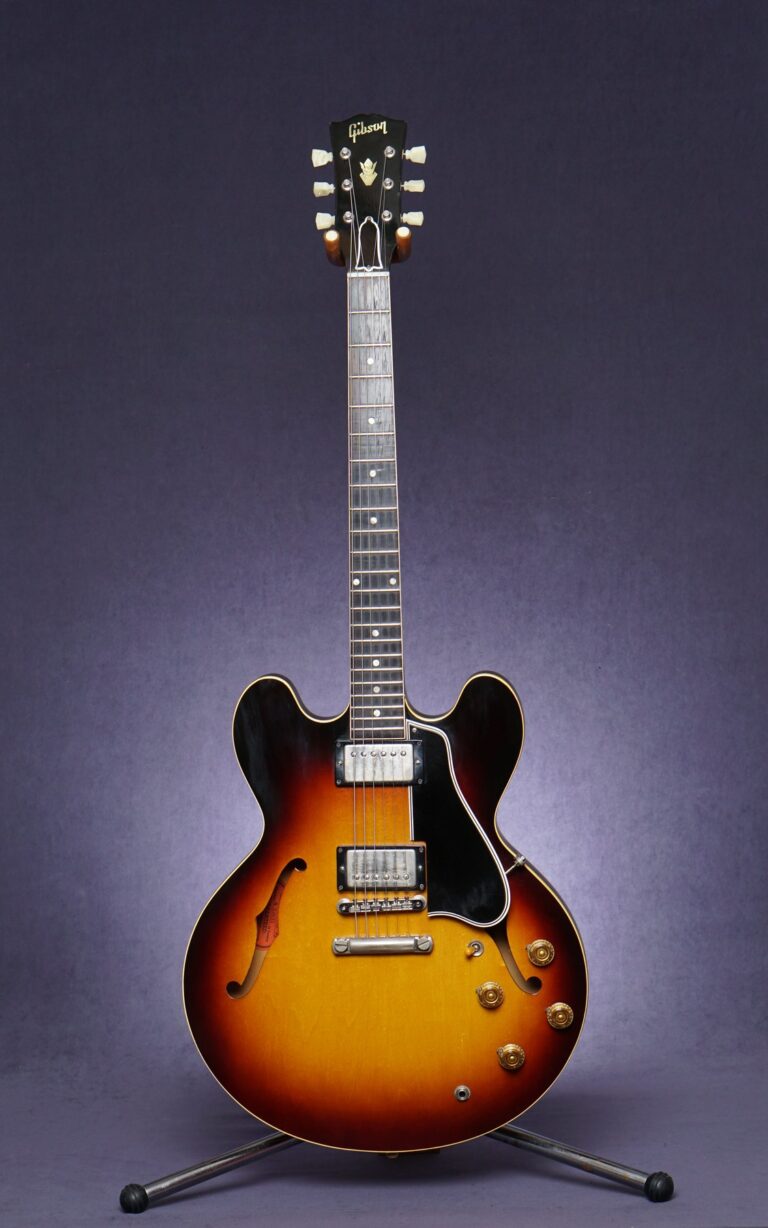
The dot-neck Gibson ES-335 — produced from 1958 through 1962 with dot fretboard inlays rather than the block inlays introduced in 1962, PAF humbuckers, and the original laminated maple semi-hollow construction with solid maple centre block — appeared in Akkerman’s setup for jazz-oriented and semi-clean work. The ES-335’s tonal combination of hollow-body warmth and solid-body sustain, filtered through PAF humbuckers with Alnico II magnets, produced the warm, full jazz guitar tone that Akkerman’s jazz-influenced playing required. The dot-neck ES-335 is particularly valued among collectors and players for the combination of its pre-block-inlay neck profile, early PAF pickup specifications, and the slight tonal differences of the earliest production examples.
Vintage Fender Stratocasters appeared in Akkerman’s documented setup for specific tonal applications. His use of Strats was less central than his Gibson relationship but nonetheless important for the bright, single-coil textures that certain Focus arrangements required — the clean, transparent quality of a vintage Strat’s Alnico V pickups gave a different textural character for passages where the Les Paul Custom’s or ES-335’s warmth would have been tonally excessive. Pre-CBS examples (pre-January 1965) with slab or round-lam rosewood fretboards and the original three-way selector (rather than the later five-way) represent the historically appropriate instrument specification.
John Veleno’s all-aluminium guitars — built by hand in Florida from the early 1970s, featuring a machined solid aluminium body, aluminium neck, rosewood fretboard, and the characteristic chrome-finished appearance that gave them a space-age visual character — appeared in Akkerman’s documented live use. The Veleno’s all-metal construction gives a fundamentally different resonant character from wood-bodied instruments: brighter, more sustaining, with a longer, more even note decay and a pronounced high-frequency component that wood bodies absorb. The guitar’s aluminium construction gives remarkable stability across temperature and humidity changes — a practical advantage for touring — while delivering a tone that is distinctive enough to be immediately recognisable. Veleno built guitars for several major rock artists of the 1970s, and Akkerman’s use of his instruments reflects both the era’s experimental approach to guitar construction and his own willingness to pursue tonal qualities unavailable from conventional instrument makers.
Akkerman has worked with various European luthiers throughout his career to develop custom instruments tailored to his specific technical and tonal requirements. Dutch instrument builders and craftsmen provided him with guitars that incorporated his preferred neck profiles, pickup configurations, and scale lengths — the specific details vary by instrument and period. His willingness to commission custom work reflects both his deep engagement with instrument design and his frustration with the limitations of mass-produced instruments for his specific musical applications.
Akkerman used light-gauge strings — typically .009–.042 or .010–.046 depending on the instrument and application — for most of his standard electric guitar work. The lighter gauges gave the bending ease and technical fluency his jazz-classical-rock synthesis required. For the lute, period-appropriate gut or modern nylon strings were used in the course configuration appropriate to the specific instrument’s tuning and construction.
Amps
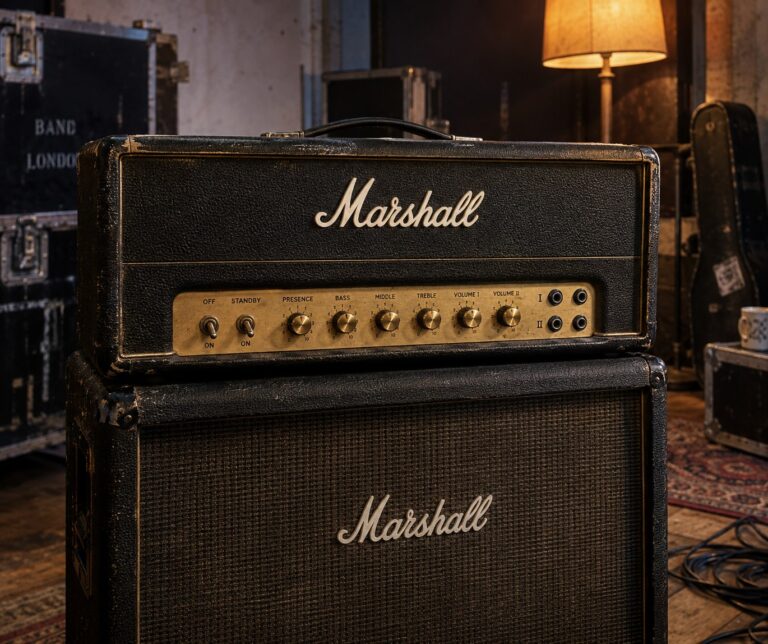
The Marshall 1959 Super Lead — in both its late-Plexi and early-JMP configurations — was Akkerman’s primary amplification for Focus’s hard rock material. The 1959’s four EL34 output tubes, three ECC83 preamp tubes, long-tailed pair phase inverter, and passive tone stack produced the British hard rock tonal foundation that Focus’s heavier material demanded. However, Akkerman’s use of the Marshall differed from typical hard rock applications: rather than cranking the input to maximum preamp saturation, he ran the amp at moderate input levels — exploiting the Marshall’s clean-to-just-breaking-up character rather than full saturation — and relied on his Les Paul Custom’s natural output and the amp’s output stage compression for tonal colour. This approach gave his rock tones a cleaner, more articulate quality than many contemporaries, consistent with the technical precision his playing required. The Celestion G12M Greenback-loaded 4×12 cabinet (20oz ceramic magnet, 75Hz resonant frequency, 25-watt power handling) provided the standard British hard rock speaker voicing.
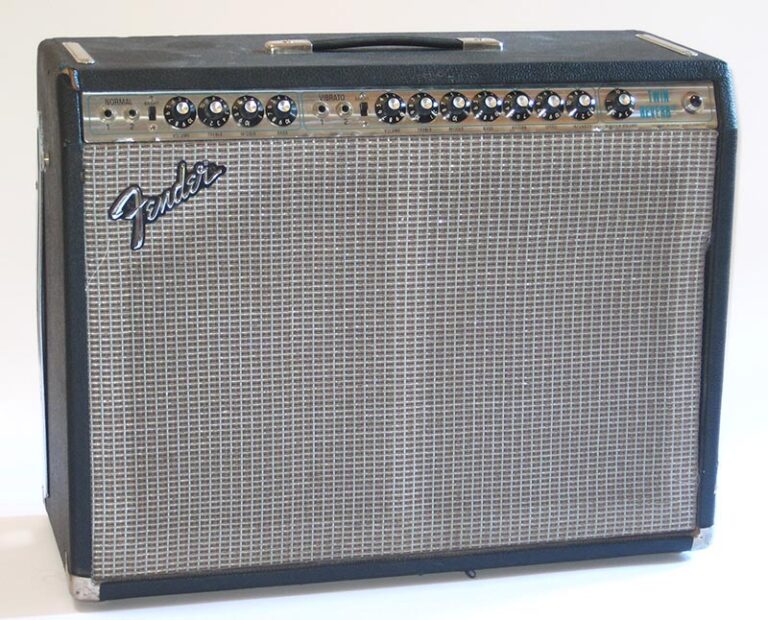
The blackface Fender Twin Reverb — 85 watts from two 6L6GC output tubes, AB763 circuit, tube-driven spring reverb (12AT7 driver, Type 4 long-spring reverb tank, 12AX7 recovery), Jensen C12N or Oxford 12L6 12-inch speakers — was Akkerman’s clean platform for jazz and classical material. The Twin’s exceptional clean headroom (the 6L6GC at standard operating voltages requires significant drive to produce natural overdrive, giving the amp a wide dynamic range at clean settings) and transparent tonal character suited the jazz and baroque passages in Focus’s arrangements where overdrive or harmonic saturation would have obscured the harmonic clarity the music required. The Twin’s spring reverb added spatial dimension to the lute’s amplified signal, giving it a more three-dimensional presence in the recording and performance environment.
The Hiwatt DR103 — Dave Reeves design, Harry Joyce hand-wiring, Partridge transformers (power and output), four EL34 output tubes producing 100 watts RMS, the cathode follower tone stage with independent normal and brilliant channel inputs — provided Akkerman with the clean headroom and definition he required for technically complex passages where the Marshall’s natural compression would have obscured note definition. The Hiwatt’s characteristic immediacy and transparency — the Partridge output transformer’s superior core material and winding technique giving more faithful reproduction of the input signal’s transients — suited Akkerman’s technically precise picking attack perfectly. The DR103’s exceptionally flat frequency response (compared to the Marshall’s more coloured, mid-forward character) also made it a useful recording tool where the recording engineer needed a more transparent amplifier signal for post-processing.

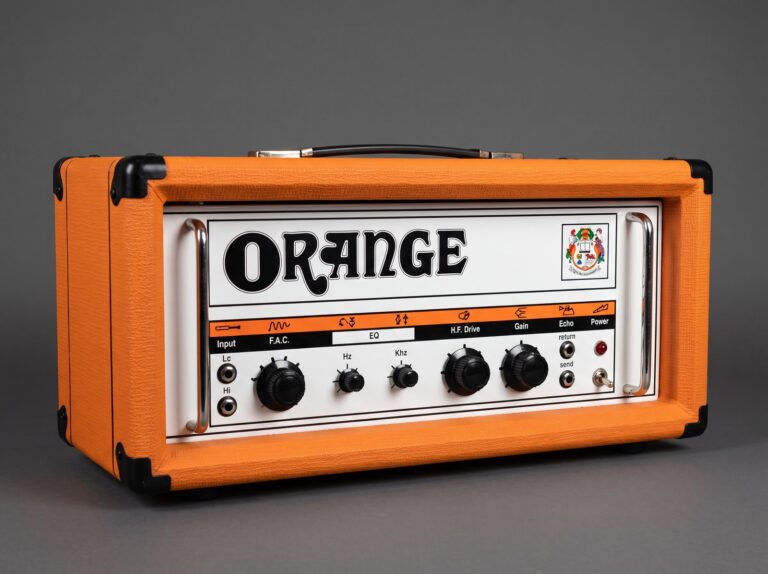
The Orange OR80 — the 80-watt version of Orange’s amplifier range, using four EL34 output tubes and the characteristic Orange graphic EQ (a fixed-frequency graphic equaliser rather than conventional bass/middle/treble controls) — appeared in Akkerman’s live setup. The OR80’s graphic EQ gave him tonal shaping capabilities beyond what the Marshall or Hiwatt’s conventional tone stacks provided, allowing him to carve specific frequency responses appropriate to the harmonic requirements of different Focus compositions. The Orange’s characteristic warm, woody overdrive — less aggressive in the upper midrange than the Marshall, with more prominent lower midrange — suited the more melodic, harmonically dense passages in Focus’s progressive arrangements.
The Roland JC-120 Jazz Chorus — introduced in 1975, solid-state (no tubes), two 12-inch speakers in a stereo configuration, with the built-in Roland chorus effect using a BBD delay line — appeared in Akkerman’s setup for specific clean applications. The JC-120’s solid-state amplification produces a characteristically clean, bright, slightly clinical tone that is completely unlike valve amplifier character — no natural compression, no harmonic saturation, a more literal reproduction of the input signal. This clinical clarity, combined with the built-in chorus effect (using a BBD delay line at approximately 15ms for the stereo chorus modulation), suited certain jazz-influenced clean passages where the valve amplifiers’ natural compression and colouration were unwanted. The JC-120 remains in production and is still widely used by jazz players for precisely this reason.

Effects
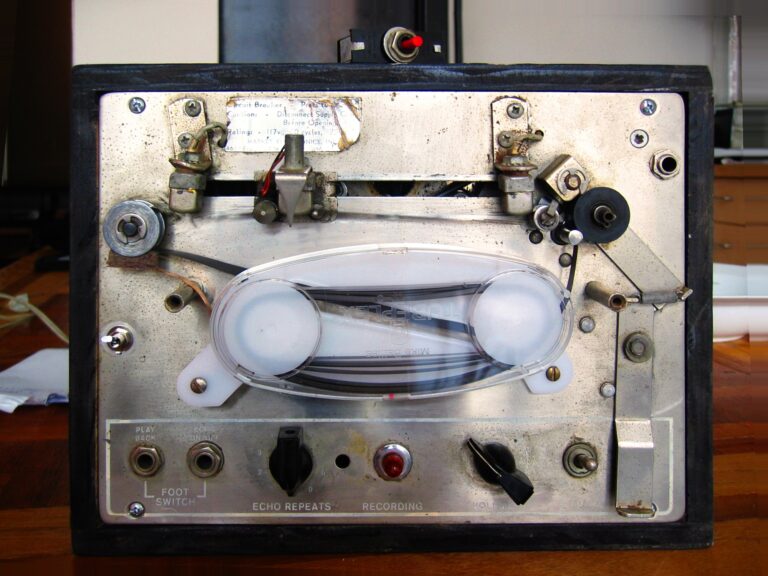
The Maestro Echoplex EP-2 — 12AX7 tube preamp, 1/4-inch recording tape loop mechanism, variable tape speed for delay time adjustment from approximately 80ms to 750ms, the characteristic tube preamp warmth adding harmonic colouration to both the dry and wet signals — was a central component of Akkerman’s studio signal chain, particularly for the extended lead passages on Focus albums. His use of the EP-2 was sophisticated and musical — not a simple repeat effect but a carefully calibrated spatial tool. For the jazz-influenced lead work, he used short delay times (80–150ms) for a subtle quasi-double-tracking effect; for the more atmospheric, progressive material, longer delays (300–500ms) with multiple repeats created a layered, orchestral quality that gave his guitar parts a depth and complexity beyond what a single-note line could achieve unaided. The EP-2’s tube preamp stage also functioned as a subtle tone-shaping device in its own right — the 12AX7’s harmonic colouration adding a gentle warmth to the signal even at minimal echo settings.
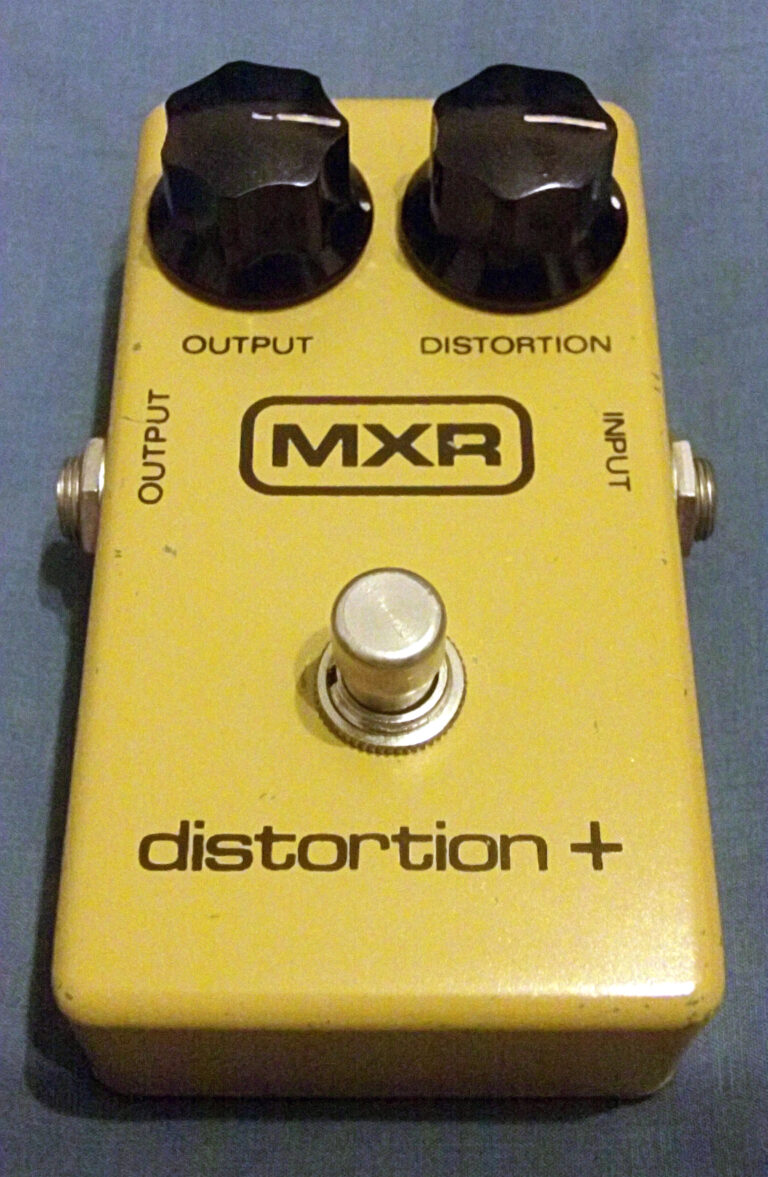
The MXR Distortion+ — introduced by MXR in 1973, using an op-amp clipping circuit (the LM741 operational amplifier in original production examples, later replaced by the UA741 or RC741) with a germanium clipping diode (1N270) for asymmetric soft clipping, producing a relatively transparent overdrive/light distortion character — appeared in Akkerman’s rig for specific overdrive applications where the fuzz-character of the Fuzz Face or the smooth saturation of the Big Muff was inappropriate. The Distortion+’s LM741 op-amp produces a fast, articulate clipping character with good note separation — important for the technically complex lines in Focus’s more difficult passages — and its relatively low gain compared to the Big Muff or Fuzz Face gave a more controlled, less saturated tone suitable for the melodically demanding lead work that constituted a significant portion of Akkerman’s playing.
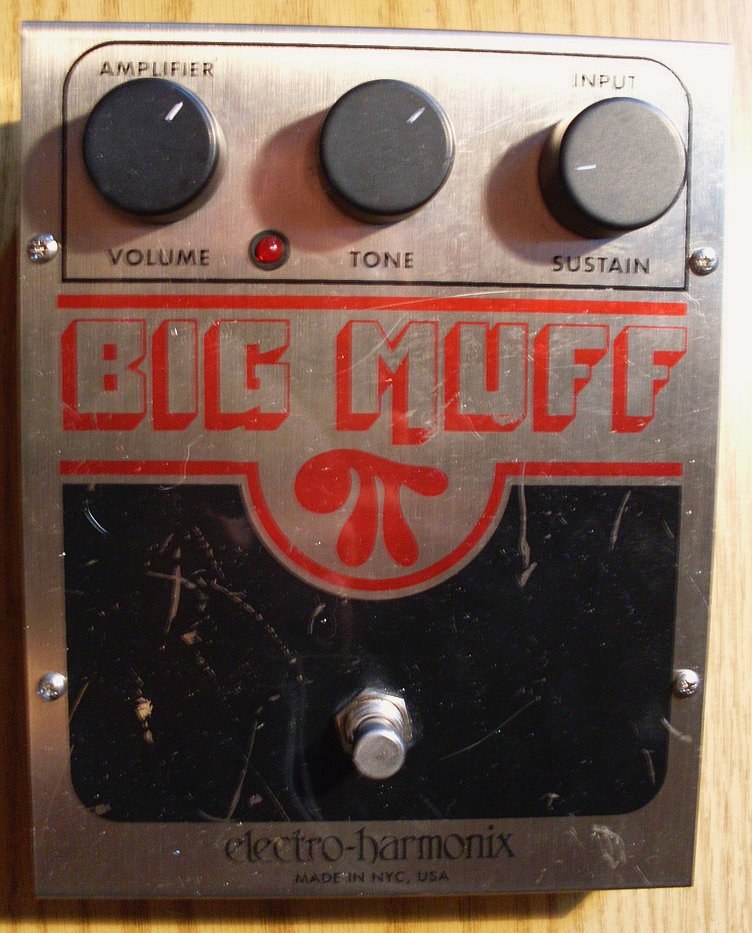
The early Electro-Harmonix Big Muff Pi — version 1 (“Triangle” knob layout, circa 1969–1971, using BC239A transistors) and version 2 (“Ram’s Head,” circa 1973, BC239C) — provided Akkerman with the smooth, sustained fuzz tone required for the more aggressively overdriven passages in Focus’s harder rock material. The Triangle-knob version 1 Big Muff has a slightly different tonal character from the later Ram’s Head — slightly warmer, with less of the pronounced mid-scoop of the version 2, and with a more gradual sustain buildup that gives it a more organic feel. Akkerman used the Big Muff selectively, for passages where the full-saturation, singing sustained fuzz gave the right dramatic impact — “Hocus Pocus’s” more aggressive guitar passages are the obvious example.
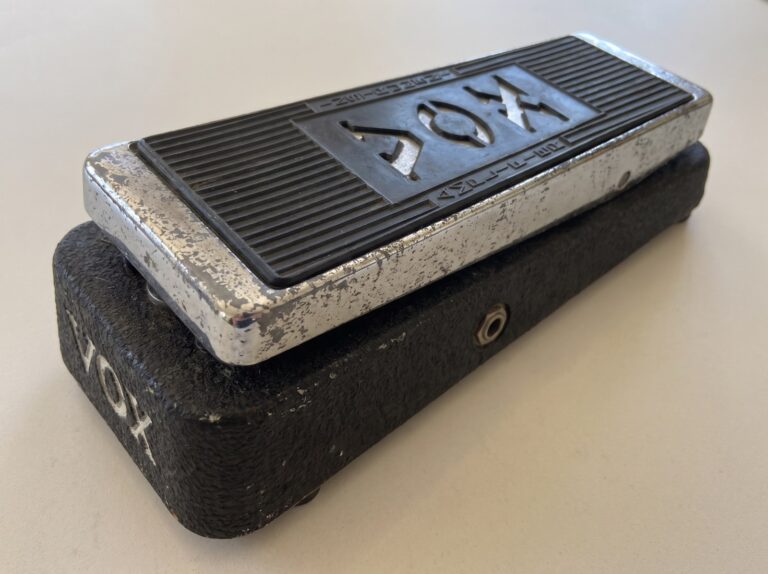
The original Vox V846 wah — Fasel hand-wound inductor, 100k audio taper pot, BC109C silicon transistor, 450Hz–1.6kHz sweep — appeared in Akkerman’s setup for expressive lead work. His wah use was characteristically sophisticated — applied as a precise tonal filter rather than an aggressive rhythmic device, using the wah to emphasise specific harmonic overtones in sustained lead lines rather than producing the dramatic rocking effect typical of blues-rock wah application. This “cocked wah at a specific position” approach — holding the pedal at the precise angle that emphasises a target frequency — is more jazz-influenced than rock-influenced, treating the wah as an EQ rather than a performance effect.
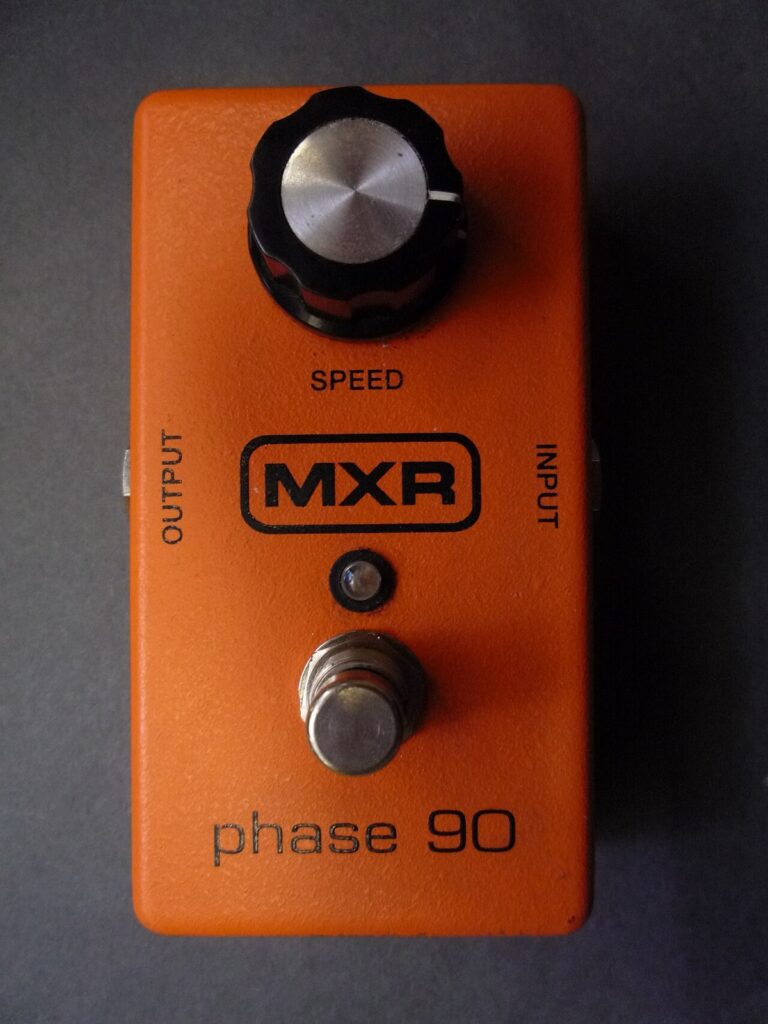
The script-logo MXR Phase 90 — four J-FET all-pass filter stages, single LFO from approximately 0.5Hz to 10Hz — was used by Akkerman for atmospheric and textural applications, particularly for the more psychedelic and progressive passages in Focus’s catalogue. Set to a slow speed (1–3Hz), the Phase 90 adds a dimensional sweeping quality to sustained chords and long notes that enhances the orchestral character of Focus’s more cinematic arrangements. At faster speeds, it produced the characteristic “rotating speaker” approximation effect useful for specific dramatic moments in live performance.
The Roger Mayer Octavia — transformer-based frequency doubling producing a signal one octave above the fundamental mixed with a fuzz signal — appeared in Akkerman’s experimental studio toolkit. The Octavia’s octave-doubling characteristic suits the baroque and classical material in Focus’s arrangements — the upper octave adds a harpsichord-like quality to single-note lines that enhances the period-instrument character of arrangements drawing on 17th and 18th century musical idioms. Akkerman’s use of electronic effects to suggest acoustic period instrument qualities is a sophisticated example of studio craft applied to progressive rock arrangement.
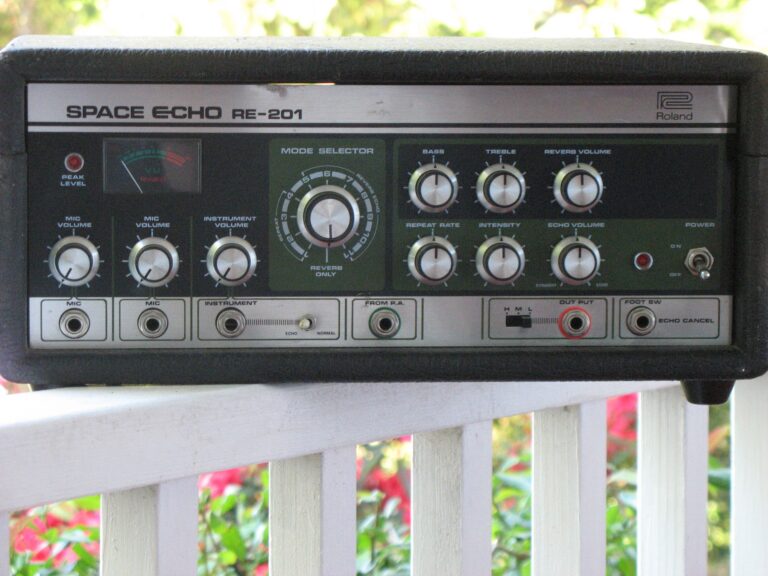
The Roland RE-201 — three playback heads on a 1/4-inch tape loop (delay times approximately 50–500ms in various head combinations), spring reverb tank, and the characteristic selector switch offering twelve combinations of the tape heads and spring reverb — provided Akkerman with both tape echo and spring reverb in a single unit for later Focus recordings and touring. The RE-201’s three-head configuration allowed complex delay patterns — dotted eighth notes, triplet echoes, and other rhythmically interesting repeat patterns — that added textural complexity to lead passages in Focus’s rhythmically sophisticated arrangements.
The Binson Echorec 2 — an Italian-made magnetic drum echo unit using a rotating steel drum rather than tape for echo storage, with four playback heads (single echo, slapback, and two longer echo settings), a tube-preamplified signal path using ECC83 and ECC81 tubes, and a spring reverb — appeared in Akkerman’s studio setup. The Binson’s magnetic drum produces a different echo character from tape-based units: the drum’s metal surface has a higher coercivity than tape oxide, giving a slightly brighter, more defined repeat with less of the progressive high-frequency roll-off that characterises tape echo. The Binson was associated primarily with Pink Floyd (David Gilmour used it extensively), but its warm, organic echo character was employed by progressive rock players across the British and European scenes.
Playing Style & Tone Philosophy
Jan Akkerman is one of the most technically complete guitarists that rock music has produced — a player whose command of the instrument spans classical technique, jazz harmony, blues phrasing, and rock power without any of these vocabularies feeling forced or incongruous. The key to understanding his playing is that these are not separate styles he switches between; they are integrated elements of a single, unified musical language that he developed through decades of obsessive, cross-disciplinary practice. When he plays a blues bend on a jazz chord progression over a baroque contrapuntal figure, it sounds natural — because for Akkerman, it is natural.
His right-hand technique is exceptionally developed. He uses a standard pick for most electric guitar work — medium to heavy gauge, approximately 1.0mm–1.2mm — but his picking mechanics are unusually precise, with a controlled economy of motion that maximises string contact and minimises unwanted movement. This precision translates directly into his tone: the attack of each note is clean and defined, even through a driven amplifier, giving his lead lines a note-by-note clarity that is unusual in a rock context. His alternate picking technique — consistent down-up-down-up picking across string changes — allows him to execute rapid passages with a rhythmic evenness that purely downstroke-based players cannot achieve.

His left-hand vibrato reflects his classical training — controlled, even, and applied from the wrist with a specific depth and rate that gives sustained notes an expressive quality without excessive pitch deviation. This is more disciplined than the wide blues vibrato typical of British rock players, and it gives his sustained notes a singing quality reminiscent of the operatic vibrato of a trained vocalist — controlled, precise, and emotionally expressive within tight parameters.
Harmonically, Akkerman operates in a theoretical framework considerably more complex than standard rock pentatonics. His jazz background gives him access to chord substitutions, altered dominant chords, tritone substitutions, and extended harmony that most rock guitarists of his era had not encountered. Over a basic rock harmonic structure, he might choose to play lines derived from a Lydian dominant scale or to use chord tones from a substituted ii-V that implies a different key centre — these choices are what give his solos their harmonic interest and unpredictability, and they are the product of serious theoretical knowledge applied with genuine musical instinct.
His tone philosophy was built around the conviction that the right instrument for the right musical context was non-negotiable — which explains both his acquisition of antique lutes for baroque material and his meticulous maintenance and modification of his Les Paul Custom for rock applications. He did not believe in a single “signature tone” that worked for everything; he believed in tonal specificity, in matching the instrument’s tonal character to the musical requirement with the same precision that a classical musician would apply to choosing between a Stradivarius and a modern instrument for different repertoire. This philosophy produced an extraordinarily diverse and instrumentally rich recorded output.
The Veleno all-aluminium guitar deserves special discussion in the context of Jan Akkerman guitars gear because it represents something philosophically significant: a willingness to step completely outside the vintage instrument orthodoxy that defined most serious players of his era. While contemporaries were competing to acquire the finest pre-CBS Fenders and late-1950s Gibsons, Akkerman was also exploring instruments made from fundamentally different materials with fundamentally different resonant properties. The Veleno’s aluminium construction means that virtually all of the guitar’s resonance comes from the strings and their interaction with the pickup’s magnetic field rather than from acoustic wood resonance — the body functions primarily as a structural element rather than a tonal contributor, in contrast to the fundamental assumption behind wooden guitar construction. Whether this produces a superior or inferior result depends entirely on the musical application, but Akkerman’s willingness to explore the question rather than simply assuming that wood was correct is characteristic of his broader musical intelligence.
His approach to the instrument’s physical setup — action, neck relief, nut slot depth, intonation — was equally rigorous. Akkerman maintained his Les Paul Custom to unusually precise specifications, with a low but buzz-free action that facilitated technical passages without compromising tone, and intonation set to accommodate both standard tuning and the slight compromises that tempered tuning requires when playing complex jazz harmony across the full range of the neck. The ebony fretboard required specific conditioning to prevent drying and cracking — a concern less pressing with rosewood but critical with the harder, less porous ebony, which Akkerman addressed with careful fretboard conditioning and humidity management on the road. The nut — cut precisely to the correct slot depth for each string gauge — was replaced periodically to maintain the consistent action and open-string tone that his playing demanded.
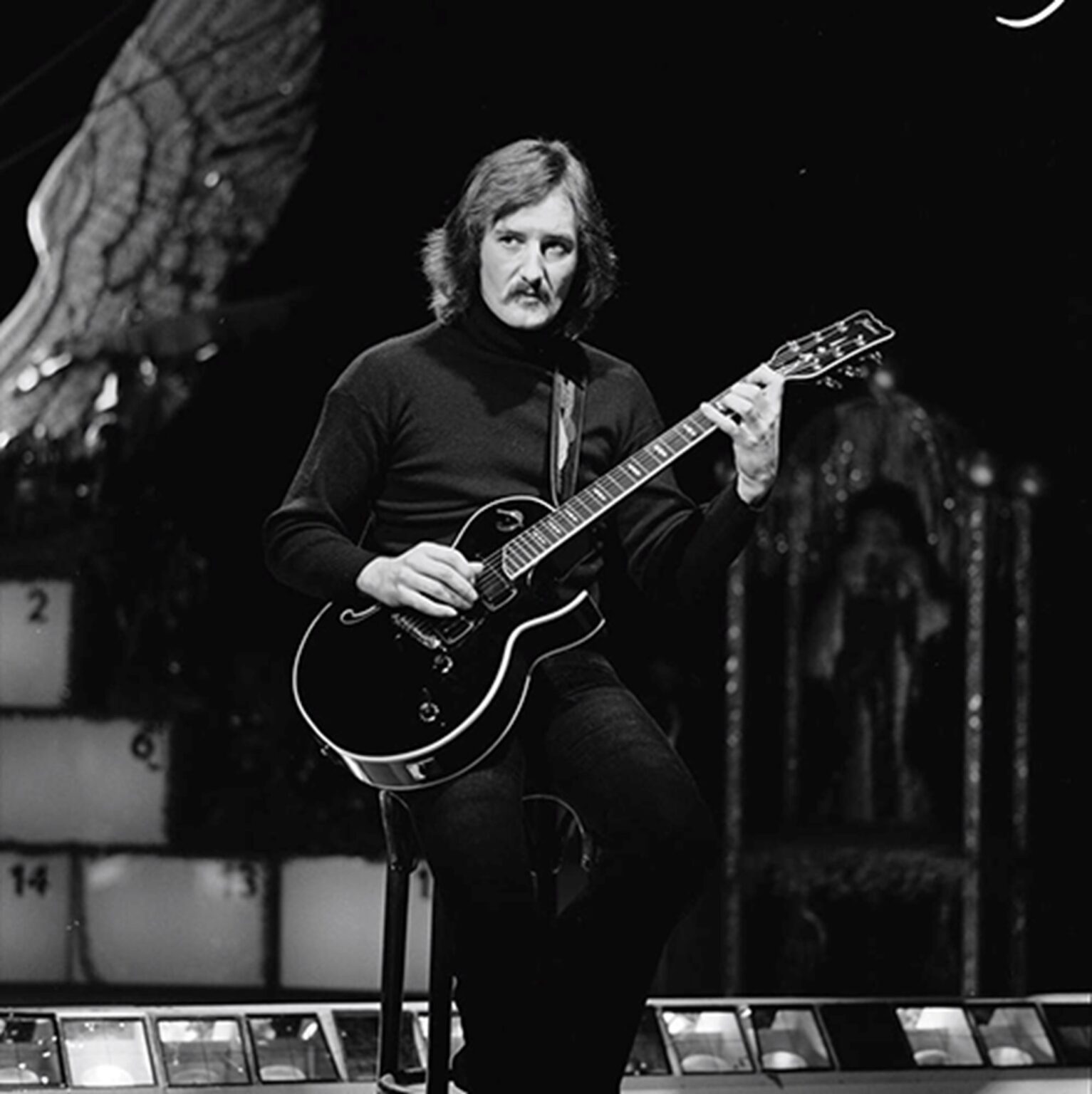
The Jan Akkerman guitars gear philosophy extended to amplification and effects with the same rigour. He used the Marshall for its natural compression and harmonic saturation in hard rock contexts, the Fender Twin for its transparent clean headroom in jazz and classical contexts, and the Hiwatt for its immediate, articulate definition in technically demanding passages. Each amplifier was a specific tool for a specific musical purpose, and switching between them was as musically deliberate as switching between the lute and the Les Paul.
How to Sound Like Jan Akkerman
Guitar Approach
The 1957 Gibson Les Paul Custom three-pickup configuration is the essential target, but achieving a genuine approximation requires either the original instrument (beyond most budgets) or a thoughtfully built substitute. A Gibson Les Paul Custom (current production, ebony fretboard) fitted with Seymour Duncan Seth Lover SH-55 humbuckers in the neck and bridge positions, and a single-coil P-90 or Seymour Duncan Antiquity P-90 in the middle position (if the routing can accommodate it), gets close to the three-pickup tonal range. The ebony fretboard is non-negotiable for Akkerman’s characteristic attack clarity — it genuinely contributes differently from rosewood to the guitar’s high-frequency transient response.
For the lute passages, a modern nylon-string classical guitar (a Ramirez 1A or Yamaha GC82 for budget-conscious alternatives) run through a light acoustic preamp into the clean amplifier chain gives a reasonable approximation. The actual lute tone is irreplaceable — but the classical guitar’s nylon-string character approaches it more closely than any steel-string alternative. Practice classical right-hand technique (thumb and first two fingers, without a pick) for authentic articulation on the baroque and classical passages.
Amp Approach
A dual-amplifier approach is recommended for authentic Jan Akkerman guitars gear tone coverage: a Marshall Plexi-type head (1959 reissue, Ceriatone Plexi, or Friedman BE-50) for the hard rock material, and a blackface Fender Twin Reverb (or reissue, or Tone King Imperial MKII) for the jazz and classical clean tones. The ability to switch between the two — either manually or with a simple A/B switch — gives access to the full tonal range of Akkerman’s Focus work.
| Control | Setting (0–10) | Notes |
|---|---|---|
| Marshall Input Volume (rock settings) | 6–7 | Moderate preamp drive — Akkerman used Marshall clean-to-just-breaking, not full saturation |
| Bass (Marshall) | 5 | Neutral — his tone was balanced, not bass-heavy |
| Middle (Marshall) | 7 | Forward mids for Les Paul Custom definition through the ebony board |
| Treble (Marshall) | 6 | Present enough for note definition, not harsh |
| Presence (Marshall) | 5 | Moderate — adds articulation without brittleness |
| Twin Reverb Volume (jazz/classical) | 4–5 | Clean — the 6L6 Twin stays clean well into moderate volumes |
| Twin Reverb Reverb | 3–4 | Light spring reverb — spatial dimension without washing out harmonic detail |
| Distortion+ (light overdrive) | Output 7, Distortion 4–5 | LM741 op-amp overdrive — articulate, fast-attacking, preserves note separation |
| Big Muff Pi (full saturation leads) | Sustain 7, Tone 2 o’clock, Volume unity | Selective use only — Akkerman’s default was cleaner than most rock contemporaries |
| Echoplex EP-2 (studio leads) | 80–300ms, 1–2 repeats, 20–30% mix | Short for quasi-doubling, longer for orchestral depth on progressive passages |
The MXR Distortion+ (original with LM741 op-amp, or a Wampler Paisley Drive for a modern equivalent with similar articulate character) is the preferred light overdrive device — its note separation and clarity suits technically demanding passages better than fuzz-based alternatives. Add the Phase 90 at slow speed for atmospheric passages. The Binson Echorec 2 (or a software simulation — the Valhalla Delay has a “magnetic drum” setting that approximates it) for studio-quality echo depth on extended lead passages.
Influence & Legacy
Jan Akkerman’s influence on European rock and progressive rock guitar is profound and multi-directional. He demonstrated that a rock guitarist could operate with the harmonic sophistication of a jazz musician, the technical precision of a classical player, and the tonal authority of a hard rock guitarist simultaneously — and that these qualities were not contradictory but complementary. This synthesis, which seems more achievable now than it did in 1972, was a genuine conceptual breakthrough at the time, and the players who absorbed it took it in multiple directions.
His influence is most directly felt in the European progressive rock guitar tradition — players like Steve Hackett, Steve Howe, and Robert Fripp were working in broadly similar territory, but Akkerman’s jazz integration was more thoroughgoing and more technically grounded than most of his British counterparts. The Dutch and broader European rock scene produced several guitarists directly influenced by his Focus-era work, and his reputation in guitar-playing communities — consistently cited as a major influence by technically ambitious players across genres — reflects the depth and breadth of his impact.
The comparison with Steve Howe is inevitable and illuminating: two European progressive rock guitarists who brought classical and jazz vocabulary into rock contexts simultaneously but through completely different instrumental and tonal approaches. Howe’s country-jazz-classical synthesis versus Akkerman’s Dutch jazz-baroque-blues fusion demonstrates how wide the progressive rock guitar tent actually was. The parallel with Allan Holdsworth — another player who took jazz harmonic complexity into rock contexts, though through a very different technical and tonal path — illuminates Akkerman’s position in the broader narrative of guitar players who refused to accept that jazz and rock were separate languages. And the connection to John McLaughlin — whose Mahavishnu Orchestra period was roughly contemporaneous with Akkerman’s Focus work and shared the same conviction that the boundaries between jazz, rock, and classical music were artificial and worth dissolving — places Akkerman in the context of the global movement toward fusion that was reshaping guitar music through the early 1970s.
Read our guide to the Gibson Les Paul Standard.
Frequently Asked Questions: Jan Akkerman Guitars & Gear
What is Jan Akkerman’s main guitar?
Jan Akkerman’s primary and most celebrated guitar is a 1957 Gibson Les Paul Custom in the three-pickup “Black Beauty” configuration — gloss black finish, ebony fretboard, gold hardware, PAF humbuckers in the neck and bridge positions, and a “staple” pickup (the P-490, a rectangular Alnico single-coil) in the middle position. This specific guitar is audible throughout the Focus recordings and has been the subject of extensive discussion in Akkerman’s own interviews about his gear. The ebony fretboard’s harder surface compared to rosewood contributes meaningfully to the guitar’s characteristic attack clarity and note definition.
Why did Jan Akkerman use a lute?
Akkerman used genuine antique lutes — Renaissance and Baroque period instruments, typically 16th–17th century examples — converted for electric amplification because Focus’s musical vision incorporated actual baroque and classical musical structures, not merely classical influences. The lute’s tonal character — delicate, harmonically complex, with a fast attack and short sustain compared to guitar — was irreplaceable for the period-instrument textures that Focus’s arrangements required. Using an actual lute rather than attempting to simulate its sound electronically was consistent with Akkerman’s general philosophy of matching the right instrument to the musical requirement with maximum precision.
What amplifier did Jan Akkerman use with Focus?
Akkerman’s primary amplification for Focus’s hard rock material was the Marshall 1959 Super Lead 100-watt head (Plexi and JMP transition-period versions), run at moderate gain settings for a cleaner, more articulate tone than typical hard rock applications. For jazz and classical material, he used the blackface Fender Twin Reverb (AB763 circuit, 6L6GC output tubes) for its clean headroom and transparent tonal character. The Hiwatt DR103 Custom 100 (Partridge transformers, four EL34 output tubes, 100 watts) provided additional clean headroom and immediate transient response for technically demanding passages.
What effects did Jan Akkerman use?
Akkerman’s core effects included the Maestro Echoplex EP-2 (tube-preamplified tape echo) for lead depth and orchestral layering; the MXR Distortion+ (LM741 op-amp, 1N270 germanium clipping diode) for articulate light overdrive; the Electro-Harmonix Big Muff Pi (Triangle and Ram’s Head versions) for full-saturation lead fuzz; the Vox V846 wah (Fasel inductor) for expressive filter applications; the MXR Phase 90 (script-logo, four-stage J-FET) for atmospheric phase effects; and the Binson Echorec 2 (magnetic drum echo, tube preamp) for studio echo applications. The Roland RE-201 Space Echo (tape loop, three heads, spring reverb) also appeared in his later recording and touring setup.
How does Jan Akkerman’s playing combine jazz and rock?
Akkerman’s jazz-rock synthesis operates at multiple levels simultaneously. Harmonically, he applies jazz vocabulary — extended chords, altered dominant scales, tritone substitutions, ii-V-I resolutions — over rock harmonic structures, creating a sophisticated harmonic language that goes far beyond standard pentatonic rock playing. Technically, his alternate picking, precise vibrato, and economy of motion come from classical and jazz technique rather than blues-derived rock technique. Tonally, he manages the transition between jazz clean tones (Fender Twin, ES-335) and rock saturation (Marshall, Les Paul Custom) as a musical choice rather than a fixed position. The result is a playing style that sounds completely integrated rather than stylistically inconsistent.
What made Focus’s “Hocus Pocus” such a guitar showcase?
“Hocus Pocus” (from Moving Waves, 1971) showcases Akkerman’s guitar in a specific and somewhat unrepresentative context — the track’s primary guitar feature is the hard-rocking riff that provides the song’s instrumental backbone, demonstrating the Les Paul Custom/Marshall Plexi combination at its most aggressive. The guitar riff’s power and rhythmic drive contrasts with van Leer’s extraordinary vocal acrobatics to create one of progressive rock’s most immediately arresting recordings. The song’s success as a single introduced Akkerman’s guitar work to a mainstream audience that then discovered the deeper, more technically elaborate playing on the album tracks — an unusually effective commercial gateway into serious progressive rock guitar.
Is Jan Akkerman still performing and recording?
Yes — Akkerman has remained musically active through the decades following Focus’s classic period. He has continued to release solo albums, reunited with Focus for various projects, and performed live throughout Europe and beyond. His playing has evolved with age — less flashy in its technical demonstration, more refined in its harmonic and expressive sophistication — while maintaining the fundamental qualities of harmonic intelligence, tonal precision, and musical seriousness that defined his early career. He remains one of the most respected and influential figures in European rock guitar history.
Image credits
- Top image: AVRO / Beeld en Geluid, CC BY-SA 3.0.
- Gibson ES-335: Lightburst, Wikimedia Commons, CC BY-SA 4.0.
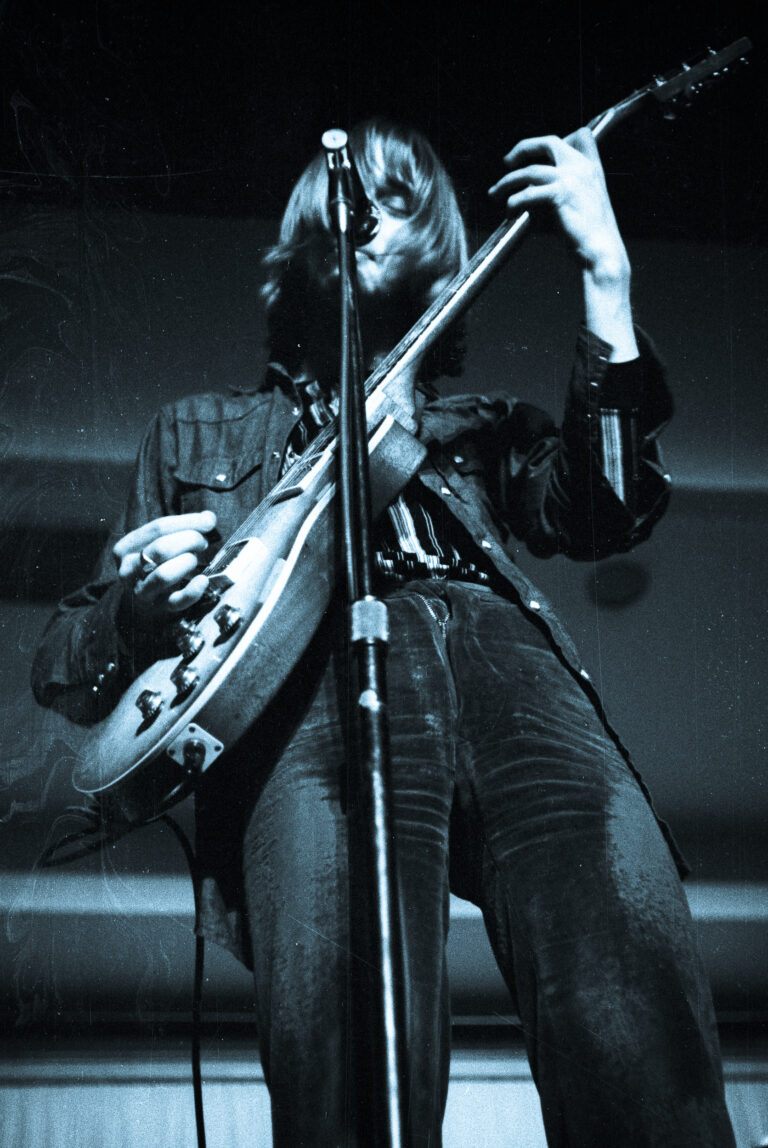
- Jan Akkerman: photo by Frank Schwichtenberg, via Wikimedia Commons, CC BY-SA 4.0.
- Marshall 1959 Super Lead Plexi: GuitarGangsters AI-generated reference illustration, not a photograph.
- Fender Twin Reverb: Micahmedia, Wikimedia Commons, CC BY 3.0.
- Roland JC-120: Solomon203, Wikimedia Commons, CC BY-SA 4.0.
- Electro-Harmonix Big Muff Pi: Roadside Guitars, Flickr, CC BY-SA 2.0.
- Hiwatt DR103 Custom 100: GuitarGangsters AI-generated reference illustration, not a photograph.
- Jan Akkerman live: AVRO, Wikimedia Commons, CC BY-SA 3.0.
- Jan Akkerman live: Superikonoskop, Wikimedia Commons, CC BY-SA 4.0.
- MXR Phase 90: Roadside Guitars, Wikimedia Commons, CC BY-SA 2.0.
- MXR Distortion+: tpeck111, Wikimedia Commons, CC BY-SA 3.0.
- Vox V846 Wah-Wah: GuitarGangsters AI-generated reference illustration, not a photograph.
- Roland RE-201 Space Echo: Bdjames, Wikimedia Commons, Public domain.
- Orange OR80: GuitarGangsters AI-generated reference illustration, not a photograph.
- Maestro Echoplex EP-2: evan p. cordes (derivative work: Clusternote), Wikimedia Commons, CC BY 3.0.