Gus G Guitars & Gear: Firewind’s Greek Metal Maestro Complete Rig Guide
Gus G guitars gear — Charvel signature, Mesa Boogie Mark V, DiMarzio Titan deep-dive for Firewind's neoclassical shred master and Ozzy Osbourne's guitarist.
Alberto Cabello
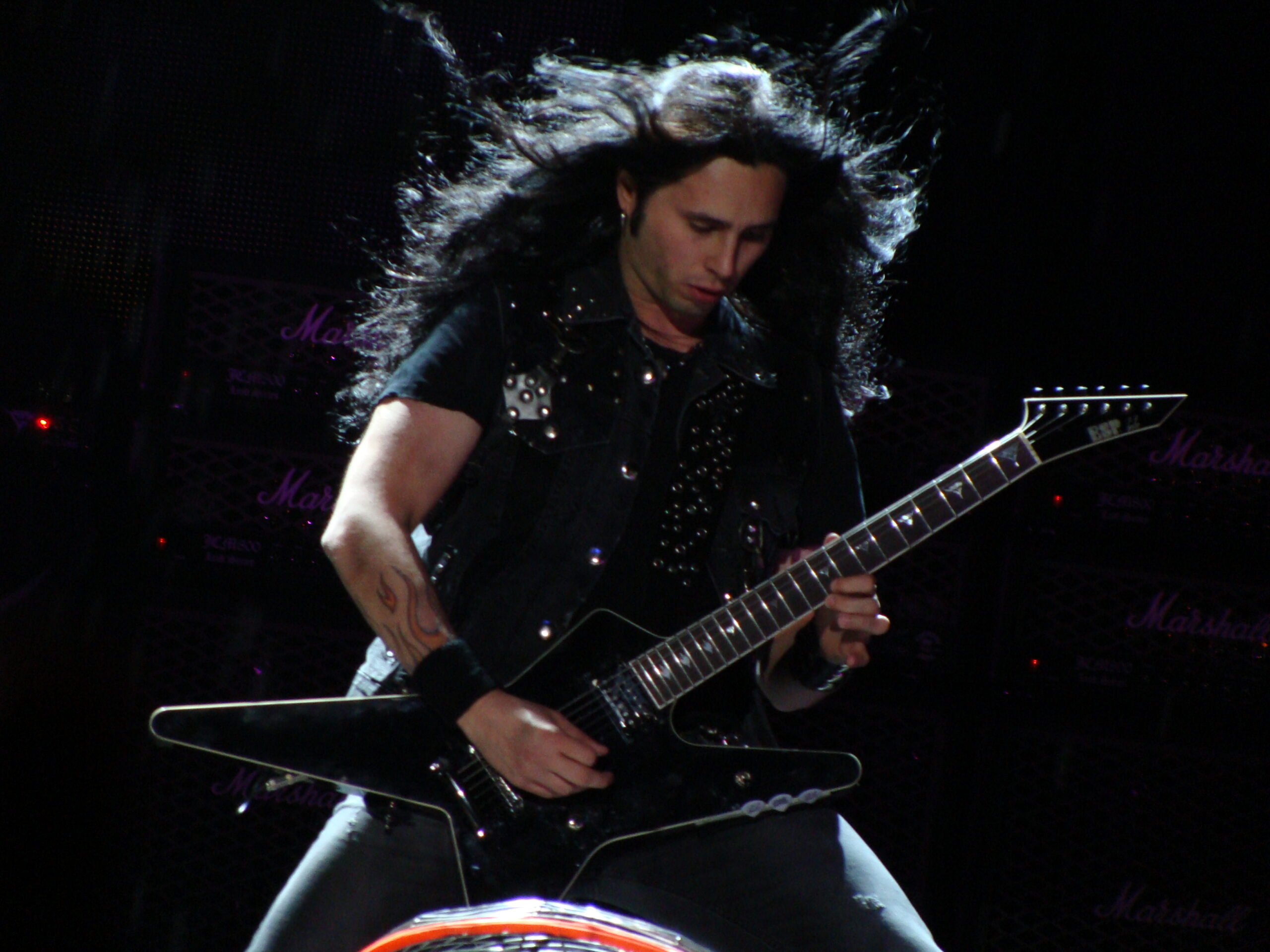
Gus G guitars gear is the story of a Thessaloniki-born guitarist who taught himself English by listening to Ozzy Osbourne albums, then ended up playing lead guitar for Ozzy Osbourne — a career arc so perfectly self-referential it sounds like a motivational poster. Gus G (born Kostas Karamitroudis) is one of contemporary heavy metal’s most technically accomplished and tonally refined players, the leader of the Greek power metal band Firewind and the guitarist who stepped into arguably the most historically significant vacancy in heavy metal after Zakk Wylde’s departure from Ozzy’s band in 2009. The fact that he has occupied that role with complete authority, releasing multiple Ozzy albums and touring the world while simultaneously maintaining Firewind as a serious creative vehicle, speaks to a level of professional accomplishment that the guitar world doesn’t always give him full credit for.
The Journey
His approach to the guitar combines the neoclassical metal vocabulary of Yngwie Malmsteen with the melodic rock sensibility of Gary Moore and the technical precision of the modern shred tradition — an unusual combination that gives his playing a musical depth that straight-ahead technical metal often lacks. Gus G guitars gear reflects this aesthetic: high-performance instruments, sophisticated amplification, and a signal chain built for both the maximum technical demands of his playing and the tonal refinement his musical sensibility requires. This is the complete breakdown.
Background
Kostas Karamitroudis was born on September 12, 1980, in Thessaloniki, Greece — Greece’s second city, situated in the north of the country with a culture shaped by its position as a historic crossroads between Eastern and Western European musical traditions. He began playing guitar at age ten, absorbing classic rock and heavy metal from recordings and developing his technique with the focused intensity of a player who understood early that the guitar would be his primary means of self-expression. By his early teens he was already at an advanced technical level, and his discovery of neoclassical metal — the genre defined by Yngwie Malmsteen’s fusion of Baroque counterpoint, diminished scale vocabulary, and heavy metal technique — gave his technical development a specific harmonic and theoretical framework that shaped his mature playing.
He moved to Berklee College of Music in Boston at age seventeen — a decision that reflected both his ambition and his seriousness about musical development, taking the formal education route that is unusual for heavy metal guitarists. His Berklee education gave him music theory, ear training, and the broader musical context that would eventually allow him to bring genuine harmonic intelligence to the technically demanding contexts of power metal and neoclassical shred.
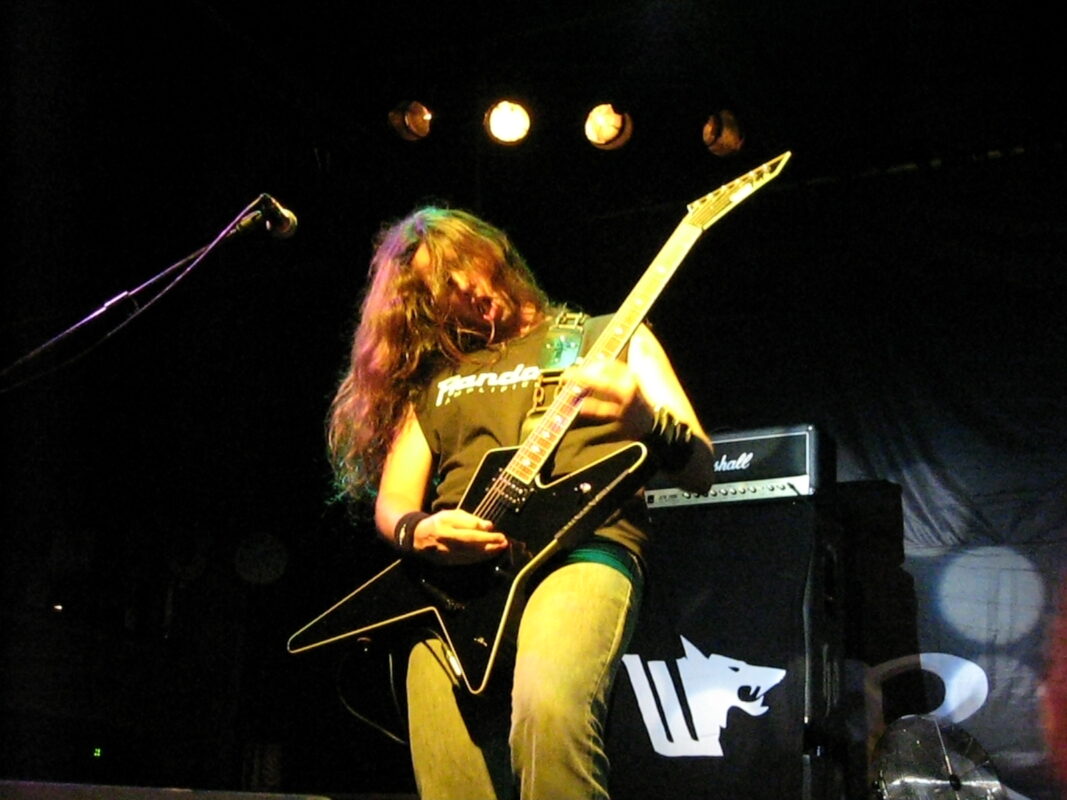
He formed Firewind in 1998 while still a teenager, gradually developing the band into one of European power metal’s most respected acts. Albums including Between Heaven and Hell (2002), Allegiance (2006), The Premonition (2008), Days of Defiance (2010), and the self-titled Firewind (2020) built the band’s reputation for technically accomplished, melodically sophisticated European power metal with exceptional guitar work at its centre. His joining Ozzy Osbourne’s band in 2009 — replacing Zakk Wylde, one of the most recognisable and beloved guitarists in heavy metal history — placed him in a context where scrutiny was intense and the standard was extraordinarily high. He met it, appearing on the Ozzy albums Scream (2010) and Ordinary Man (2020, though with limited guitar contribution).
His solo career has run in parallel with both Firewind and the Ozzy work, with albums including Brand New Revolution (2015) and Fearless (2018) demonstrating his full range as a guitarist and a developing voice as a songwriter. He has maintained a substantial educational presence through YouTube, masterclasses, and instructional materials, making his technical and musical knowledge accessible to the guitar community.
Gus G Guitars Gear: The Complete Rig
Guitars
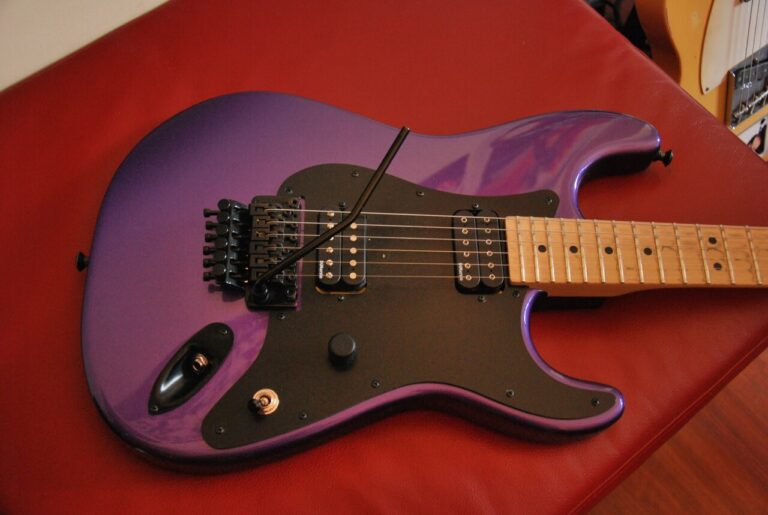
The Charvel Gus G Signature San Dimas Style 1 is Gus G’s primary instrument — the guitar that appears on virtually all Firewind and Ozzy Osbourne recordings and live performances from the mid-2010s onward and that represents the most complete realisation of his instrument requirements in a production guitar. The San Dimas Style 1 body shape — a Super-Strat format alder body with the deep, aggressive double-cutaway of the original 1980s Charvel San Dimas design — gives excellent upper-fret access and the physical balance required for the technically demanding, position-shifting lead playing that Gus G’s neoclassical and shred vocabulary requires. His signature model specification: alder body, one-piece maple neck (maple rather than rosewood or ebony, giving a brighter, more articulate attack transient and the specific “snap” of maple in a high-gain context), compound-radius fingerboard (12 to 16 inches, allowing comfortable chord playing in the lower positions and easy bending without fret-out in the upper positions), stainless steel frets (harder and more wear-resistant than standard nickel-silver frets, giving longer life and the smooth, slightly slippery feel that facilitates fast position shifts), Floyd Rose Special double-locking tremolo system, and his specific pickup configuration.
The Floyd Rose Special — a cost-reduced version of the Floyd Rose Original used on Charvel’s production instruments — uses the same knife-edge pivot, locking nut, and fine-tuner design as the Original but with slightly different alloy specifications in the cast components. The tonal difference between the Special and the Original is subtle in a high-gain context but measurable: the Original’s higher-quality steel alloys give marginally more resonance transfer from the strings to the body, contributing a barely perceptible additional sustain. For Gus G’s application — high-gain, technically demanding lead playing where sustain is already abundant from the amplifier — the distinction is academic rather than practically significant.
Gus G’s signature Charvel uses custom DiMarzio pickups developed specifically for his tonal requirements — a collaboration that reflects his deep engagement with the technical and tonal specifics of pickup design. The DiMarzio Titan (bridge position) uses an Alnico 5 magnet structure with DiMarzio’s specific winding for the Titan — a higher-output design (DC resistance approximately 17.0k ohms) that delivers the aggressive, detailed attack of a high-output humbucker while retaining more harmonic complexity than purely ceramic designs. The Deactivator (neck position) is designed to give a clean, defined sound even in high-gain contexts — a lower-output, tighter-sounding neck pickup that maintains note definition rather than the overwhelming warmth of some neck humbuckers in distorted contexts. Both pickups are passive — DiMarzio has designed them as passive alternatives that give output levels approaching active pickup territory without the active circuit’s character. The combination of the Titan’s aggressive bridge character and the Deactivator’s defined neck character gives Gus G the tonal range from heavy rhythm attack to singing melodic lead within a single passive-pickup instrument.
Before the Charvel signature relationship was fully established, Gus G used ESP guitars — both the USA Custom Shop and the LTD production series — in configurations similar to the current Charvel setup: Super-Strat body shape, Floyd Rose or equivalent tremolo, EMG or DiMarzio active or passive humbuckers. His ESP instruments from the earlier Firewind period typically featured maple necks, compound-radius fretboards, and the neck-through or bolt-on construction that suited his technical playing requirements.
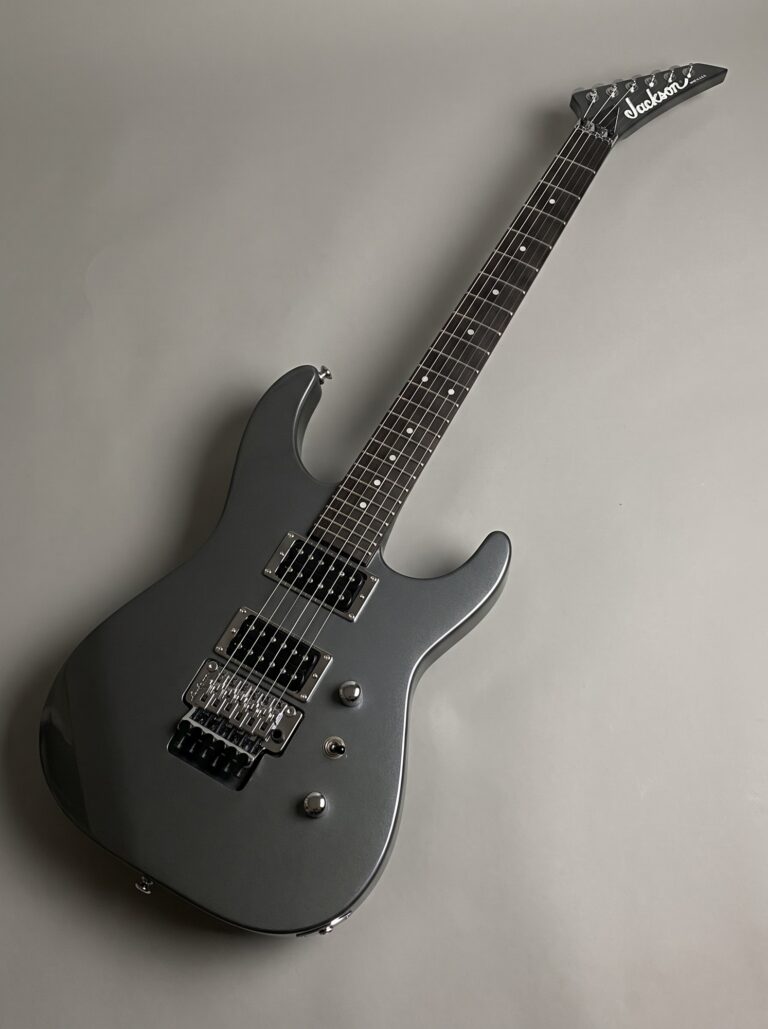
In the earliest documented Gus G setup — the pre-ESP, pre-Charvel period of Firewind’s formation — Jackson Soloist and similar high-performance guitars appeared in his setup. The Jackson’s neck-through construction and Floyd Rose specification matched the technical requirements of his playing from the beginning of his professional career.
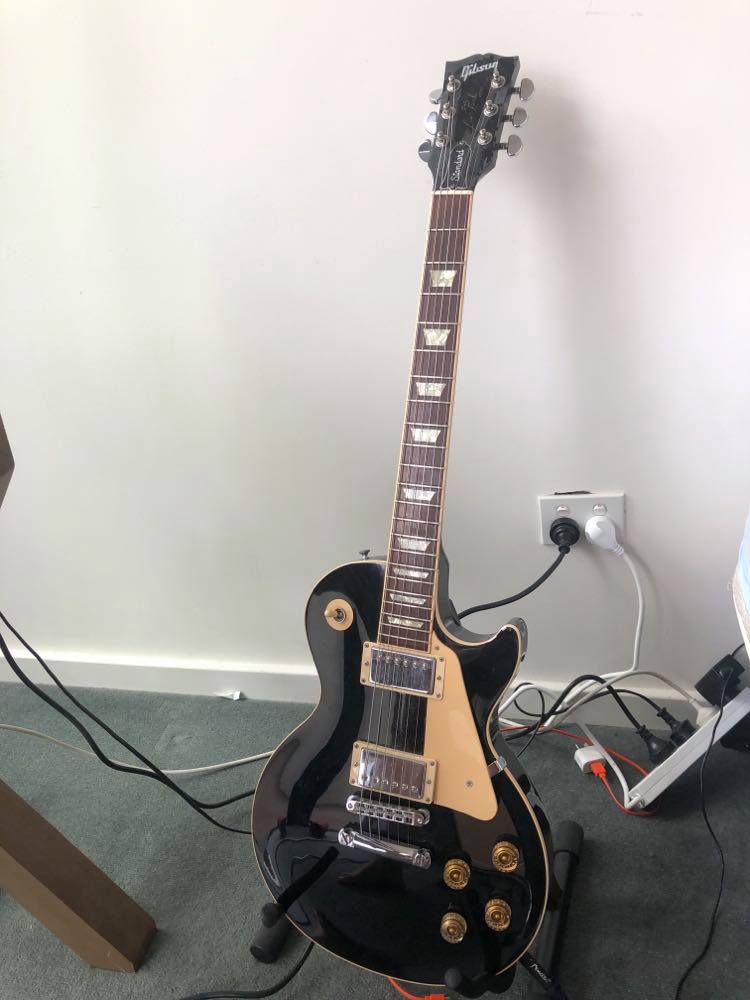
Gibson Les Paul guitars — either vintage examples or current production instruments with humbucker configurations — appeared in Gus G’s studio work for specific recording applications where the Les Paul’s warmer, more compressed tonal character suited the material better than the more aggressive, Super-Strat-derived tone of the Charvel. For passages requiring vintage humbucker warmth — particularly in the Ozzy Osbourne context, where Zakk Wylde’s Les Paul-based tone was the established reference — the Les Paul gave a more appropriate tonal character.
Steel-string acoustic flat-tops — both dreadnoughts and smaller-body instruments — appeared in Gus G’s documented setup for the acoustic-influenced passages that appear in certain Firewind and solo compositions. His acoustic work demonstrates a player with genuine acoustic technique rather than merely an electric guitarist using an acoustic as a substitute instrument.
Gus G uses Dunlop string sets — specifically the Dunlop Heavy Core strings (.010–.052 or .011–.054 gauge) for Firewind’s standard tuning and Drop D configurations. The slightly heavier string gauge compared to standard light sets gives additional string mass for the physical authority his picking technique requires, and the wound B string on some Dunlop Heavy Core configurations gives additional tonal clarity in the critical mid-register that many Gus G lead passages occupy. For the Ozzy Osbourne context, he uses standard tuning configurations appropriate to the specific songs being performed.
Amps
The Mesa/Boogie Mark V is Gus G’s primary amplification and the cornerstone of his guitar tone for both Firewind and the Ozzy Osbourne work. The Mark V represents the culmination of the Mark series that began with Randall Smith’s original modified Fender Princeton in the early 1970s, now in its fifth major iteration with a sophisticated three-channel design offering ten distinct modes across the three channels and power output switchable between 35 watts, 45 watts, and 90 watts per channel. The Mark V’s channels: Clean (three modes: Thick, Thicker, and Full — progressing from a Fender-ish clean through increasingly warm, full clean tones); Crunch (three modes: Fat, Blues, and Brit — covering warm crunch through British-flavored crunch); and Extreme (four modes: Mark I, Mark II, Mark IIb, and Mark IV — each replicating the character of the specific Mark series ancestor it’s named after). The Extreme channel’s Mark IV mode — Gus G’s primary lead tone source — produces the specific high-gain character that the Mesa/Boogie Mark IV established as a benchmark: tight in the low end, with a pronounced midrange presence peak and the characteristic smooth, singing lead sustain that distinguishes the Mark series from more abrupt Marshall-derived high-gain designs.
The Mark V uses 6L6GC output tubes (maintaining the American tonal character of the Fender-derived circuit) in standard configuration, or EL34s (for a more British character) via the internal tube selection switch — a unique feature that allows two fundamentally different output tube characters from a single amplifier without changing the tubes. Gus G uses the 6L6GC configuration for the American-character clean and crunch tones and the characteristic Mark series lead tone, which is specifically voiced around 6L6GC saturation characteristics. The 6L6GC’s extended bass response and smooth, compressed saturation give the Mark V’s high-gain channels their characteristic “smooth” quality — less aggressive in the upper midrange than EL34-based designs, with a fuller, rounder fundamental that suits the melodic lead playing of neoclassical and power metal genres. The five-band graphic EQ in the Mark V’s effects loop (individual sliders for 80Hz, 240Hz, 750Hz, 2.2kHz, and 6.6kHz) gives precise control over the amplifier’s frequency response — allowing Gus G to adjust the tonal balance for different room acoustics, different guitar and pickup combinations, and different specific tonal targets for different songs or recording sessions.
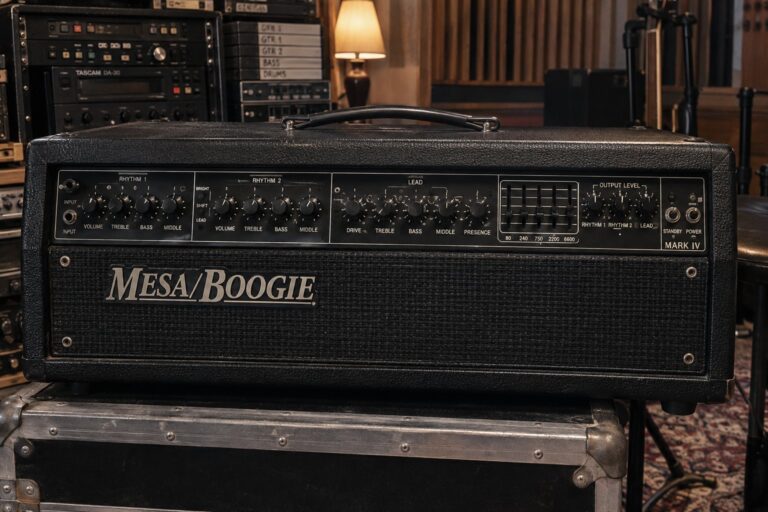
The Mesa/Boogie Mark IV — the predecessor to the Mark V, widely considered the finest realization of the Mark series lead channel before the Mark V added additional versatility — also appeared in Gus G’s setup as a studio reference and backup instrument. The Mark IV’s lead channel has a specific character that many players prefer to the Mark V’s lead channels — a slightly different midrange voicing and compression character that some describe as “more musical” or “more organic” than the Mark V’s technically superior but slightly more clinical lead tone. For studio sessions where the Mark IV’s specific character suited the recording better than the Mark V, Gus G used the older amplifier as the primary recording tool.
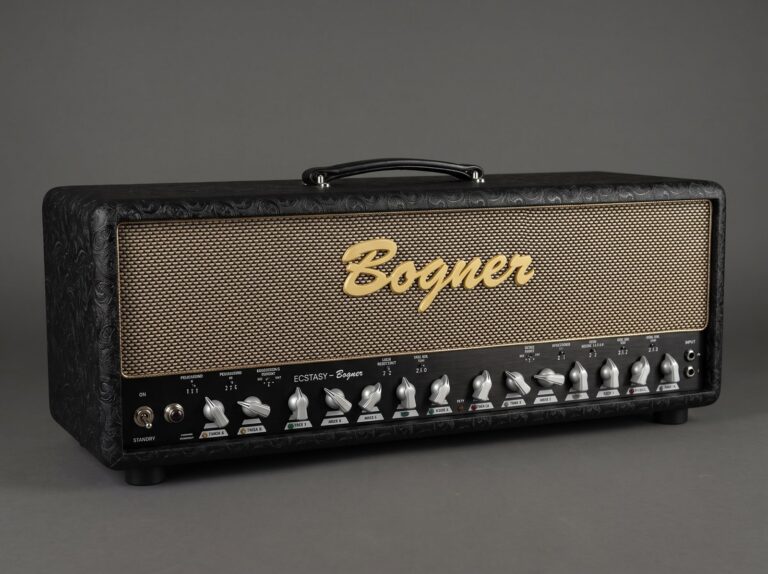
The Bogner Ecstasy — Reinhold Bogner’s flagship three-channel amplifier with EL34 output tubes and the specific “smooth” high-gain character that distinguishes Bogner designs from Marshall and Mesa/Boogie alternatives — appeared in Gus G’s setup for specific applications where the Bogner’s EL34 character gave a different tonal quality from the Mesa/Boogie’s 6L6GC-based sound. The Ecstasy’s high-gain character is often described as combining British EL34 warmth with American tonal detail — a hybrid character that suits the European power metal aesthetic of Firewind better than either a purely British or purely American amp might.
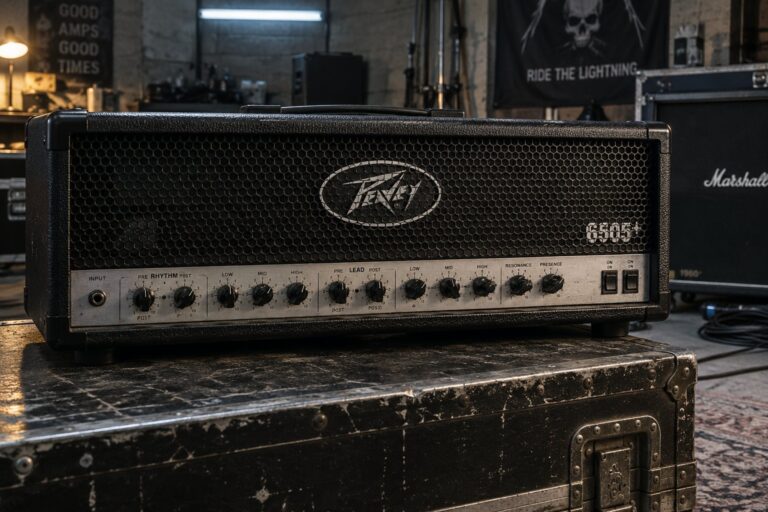
The Peavey 6505+ — the successor to the original 5150, using four 6L6GC output tubes and the 6505’s characteristic high-gain, tight low-end, aggressive midrange character — appeared in Gus G’s live backup rig and for specific studio applications. The 6505+’s lead channel gives a different high-gain character from the Mesa/Boogie Mark V: tighter, more compressed, with a more aggressive midrange cut that gives palm-muted rhythm work exceptional definition. For the heaviest, most rhythmically aggressive passages in Firewind’s catalogue, the 6505+’s character was specifically appropriate.
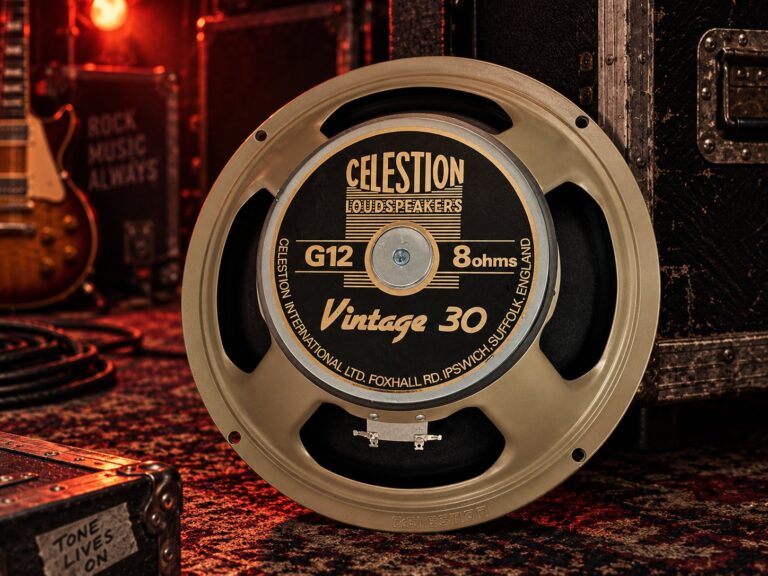
Gus G runs his amplifiers into Mesa/Boogie 4×12 cabinets loaded with Celestion Vintage 30 speakers — consistent with the V30’s upper-midrange emphasis and tight bass response that suit the Mark V’s 6L6GC output character. The V30’s measured upper-midrange peak complements the Mark V’s relatively smooth high-gain character, adding the presence and definition that the 6L6GC’s more rounded saturation might otherwise lack. Mesa/Boogie typically loads their cabinets with V30s as standard, and Gus G’s use of the factory-loaded cabinets alongside the Mark V head reflects a consistent system designed around the Mesa/Boogie tonal philosophy.
Effects
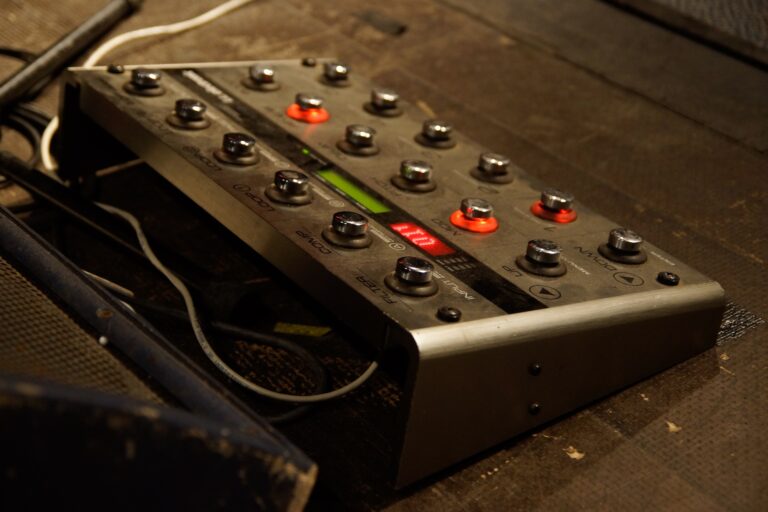
The TC Electronic G-System — professional floor-based multi-effects and amplifier switching platform with MIDI control — was central to Gus G’s live rig management for the Firewind and Ozzy Osbourne touring work. The G-System’s ability to recall complete signal chain configurations via MIDI preset changes — switching between Mesa/Boogie channels, engaging specific effects, and configuring the entire signal chain from a single floor controller — gave him the flexibility to manage the complex tonal requirements of a full live show across many different songs with different tonal characteristics. The G-System’s reverb and delay processors provided high-quality spatial effects appropriate to both Firewind’s European power metal aesthetic and Ozzy’s classic hard rock context.
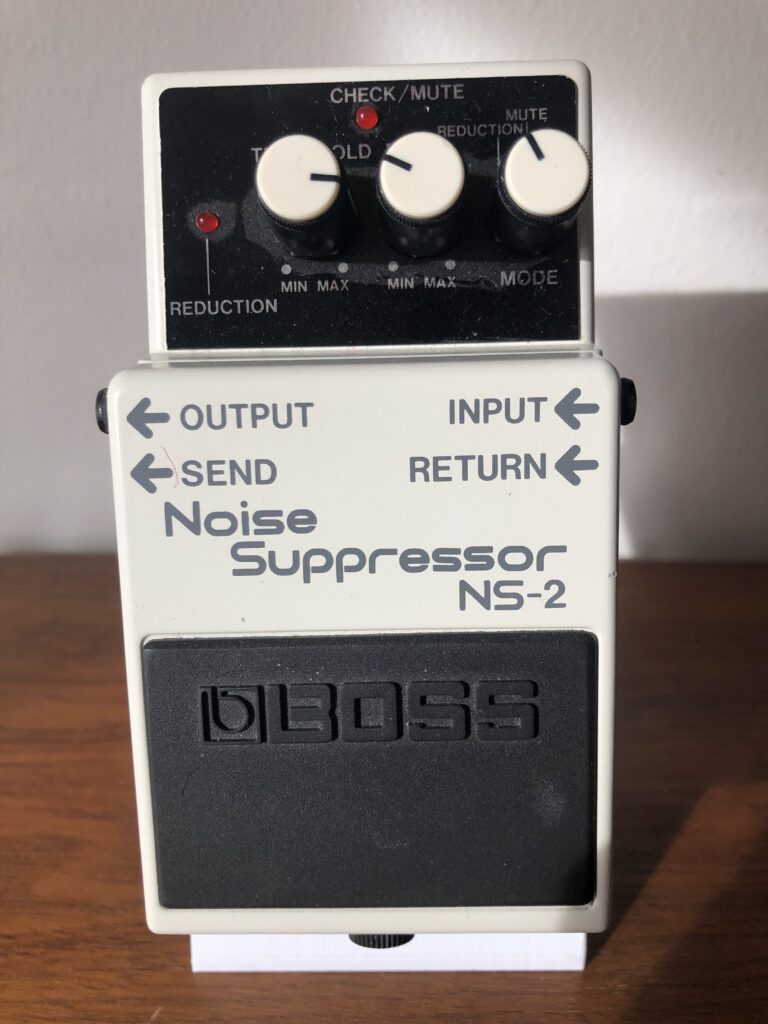
The Boss NS-2 in muting loop configuration gave essential noise control in Gus G’s high-gain signal chain. The DiMarzio passive pickups in the Charvel produce more background noise than EMG active pickups in comparable high-gain conditions — passive pickups are more susceptible to electromagnetic interference — and the NS-2’s noise gate in the muting loop configuration gave the most effective management of this noise between passages and riffs.
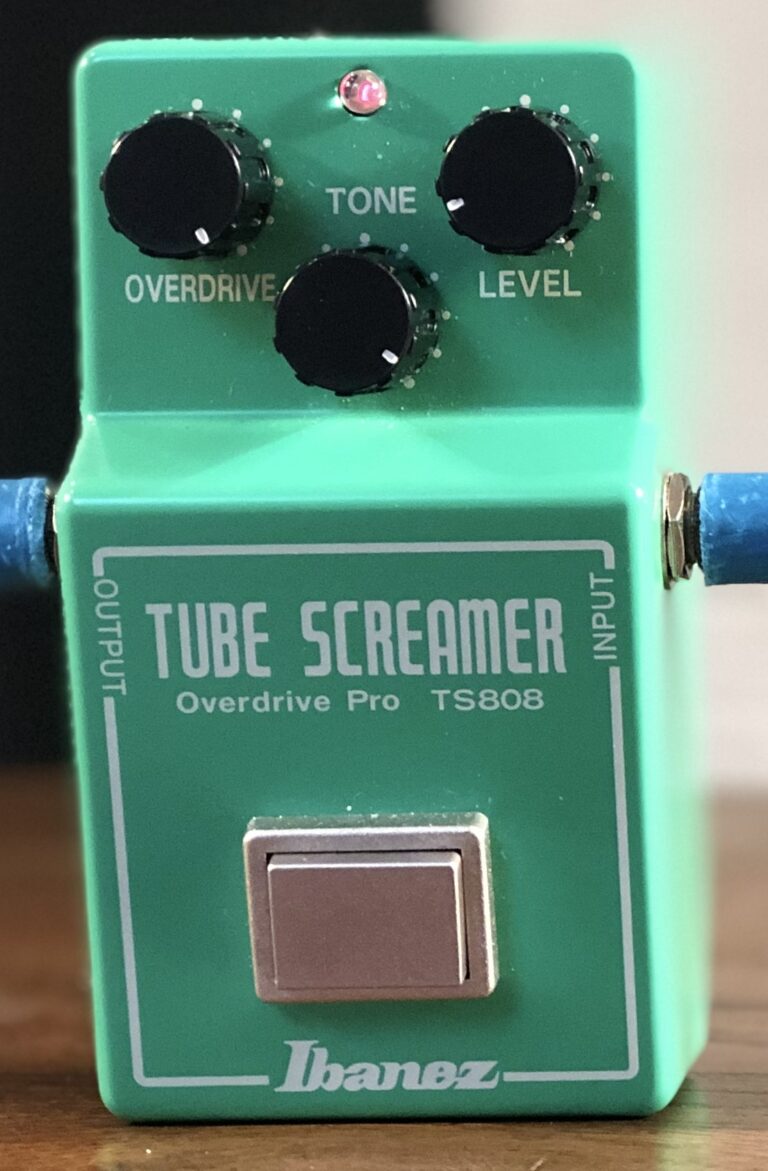
The Tube Screamer — TS808 or TS9 in low-drive, level-boosted configuration — appeared in Gus G’s signal chain as a lead boost into the Mesa/Boogie Mark V. His application: Drive at 2–4, Level at 6–7, using the TS808’s midrange emphasis and bass roll to push the Mark V’s Extreme channel input harder and give his lead tone additional presence and sustain. The Tube Screamer’s mid-boost interaction with the Mark V’s already-mid-forward Extreme channel gives a more focused, present lead tone that cuts through the rhythm section and the rhythm guitar more effectively than the Mark V’s channel alone.
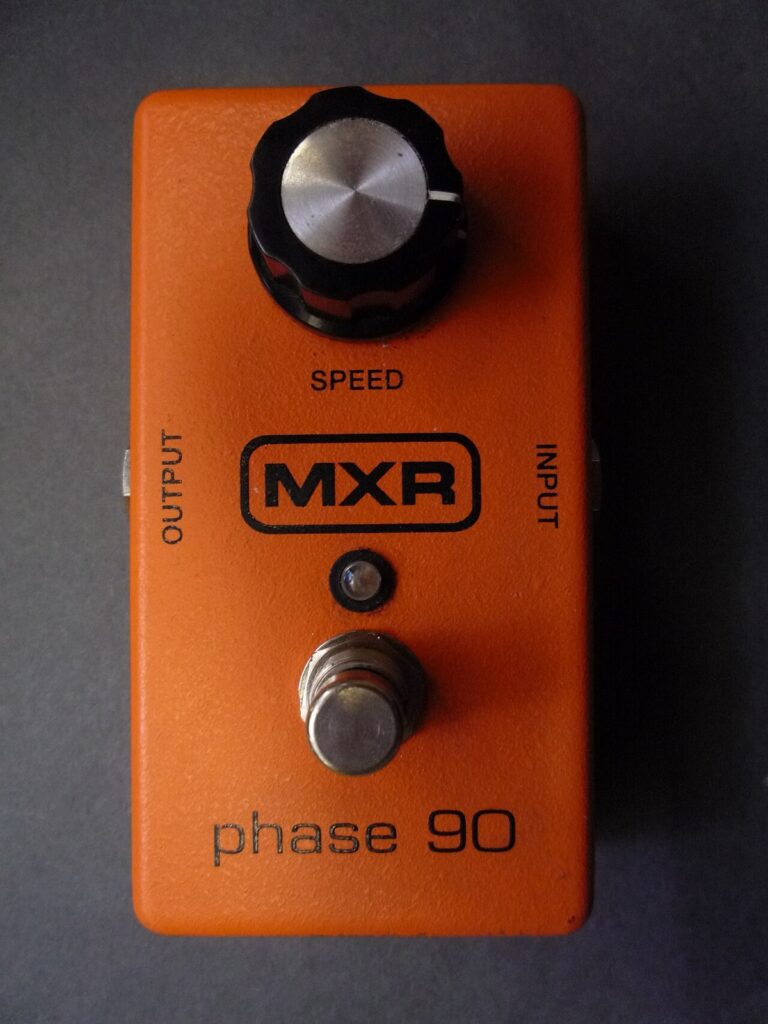
The MXR Phase 90 in EVH signature configuration — which uses the original script-logo circuit topology with the “Script” switch for toggling between the warmer, more subtle script-logo mode and a more modern, intense phase character — appeared in Gus G’s setup for atmospheric phase effects on specific passages. His Phase 90 use was selective — applied for the melodic, atmospheric passages where a gentle phase sweep added dimensional movement to sustained notes and chord voicings, rather than as a constant tonal modifier.
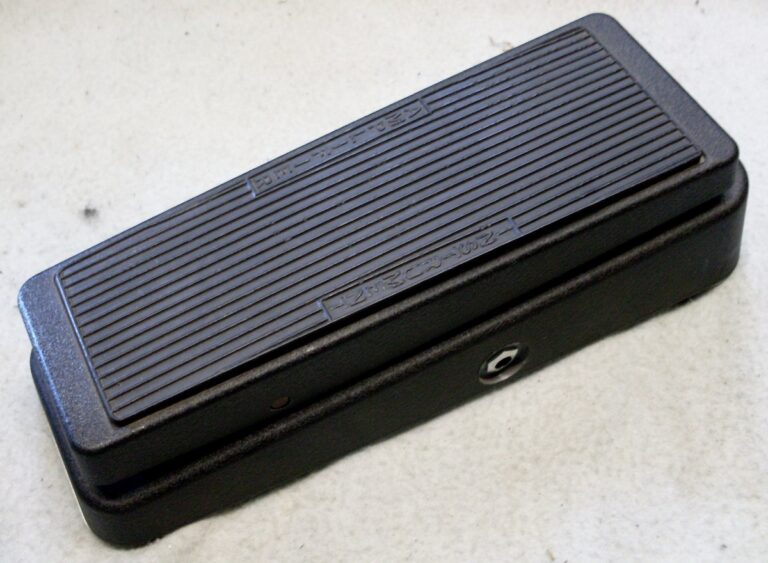
The Dunlop Cry Baby 535Q — an enhanced version of the standard Cry Baby using a variable Q (resonance peak bandwidth) control that adjusts the sharpness of the wah’s bandpass filter, and a frequency range control that adjusts the overall sweep range (from 350Hz–2kHz to 500Hz–4kHz depending on the frequency control setting) — appeared in Gus G’s live setup for expressive wah-filtered lead passages. His wah use was technically sophisticated: the 535Q’s adjustable Q allowed him to configure the wah’s vocal character specifically for each application — a narrower Q for a more dramatic, focused peak (more aggressive, rhythmically decisive wah effect) and a wider Q for a more subtle, broad sweep (more atmospheric, filter-like quality for melodic passages).
In more recent Gus G documented setups, the Fractal Audio Axe-Fx has appeared as either a supplementary effects processor or as the primary tone source. The Axe-Fx II and III use Fractal’s “Quantum” DSP modelling engine to produce high-quality models of amplifiers (including Mesa/Boogie Mark series, Bogner Ecstasy, and other amplifiers in Gus G’s physical rig), effects, and complete signal chains. For live touring, the Axe-Fx’s consistency and flexibility — the ability to instantly recall any preset for any song with perfect repeatability — gave practical advantages for the complex tonal management of a full live show. The Axe-Fx’s models of his specific amplifiers allowed him to reduce the physical amplifier rig’s complexity without sacrificing tonal quality in live contexts where direct comparison with studio recordings was not possible.
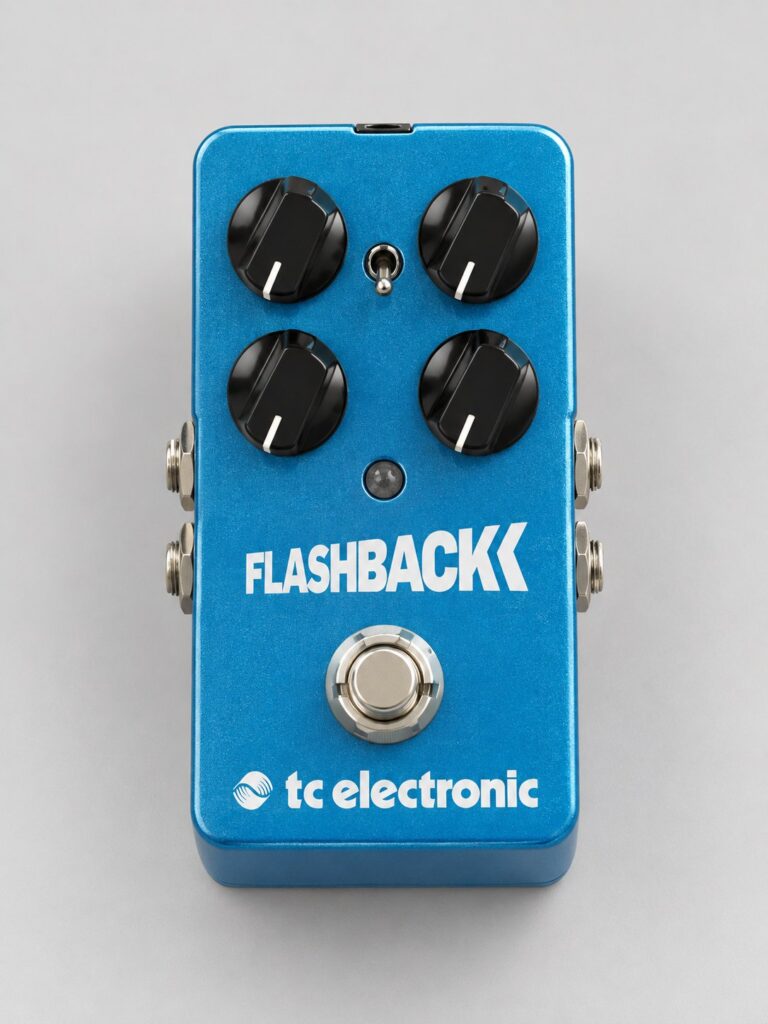
The TC Electronic Flashback — a compact digital delay pedal with multiple delay types (analog emulation, tape echo simulation, digital, and others), TonePrint compatibility (allowing user-downloadable custom delay settings), and up to 7 seconds of delay time — provided Gus G with high-quality digital delay for lead spatial enhancement. His typical delay settings: 200–350ms, one to two repeats, low mix level (15–20%) for depth without clutter in the melodic lead passages that characterise both Firewind’s power metal and the classic Ozzy Osbourne material he performs live.
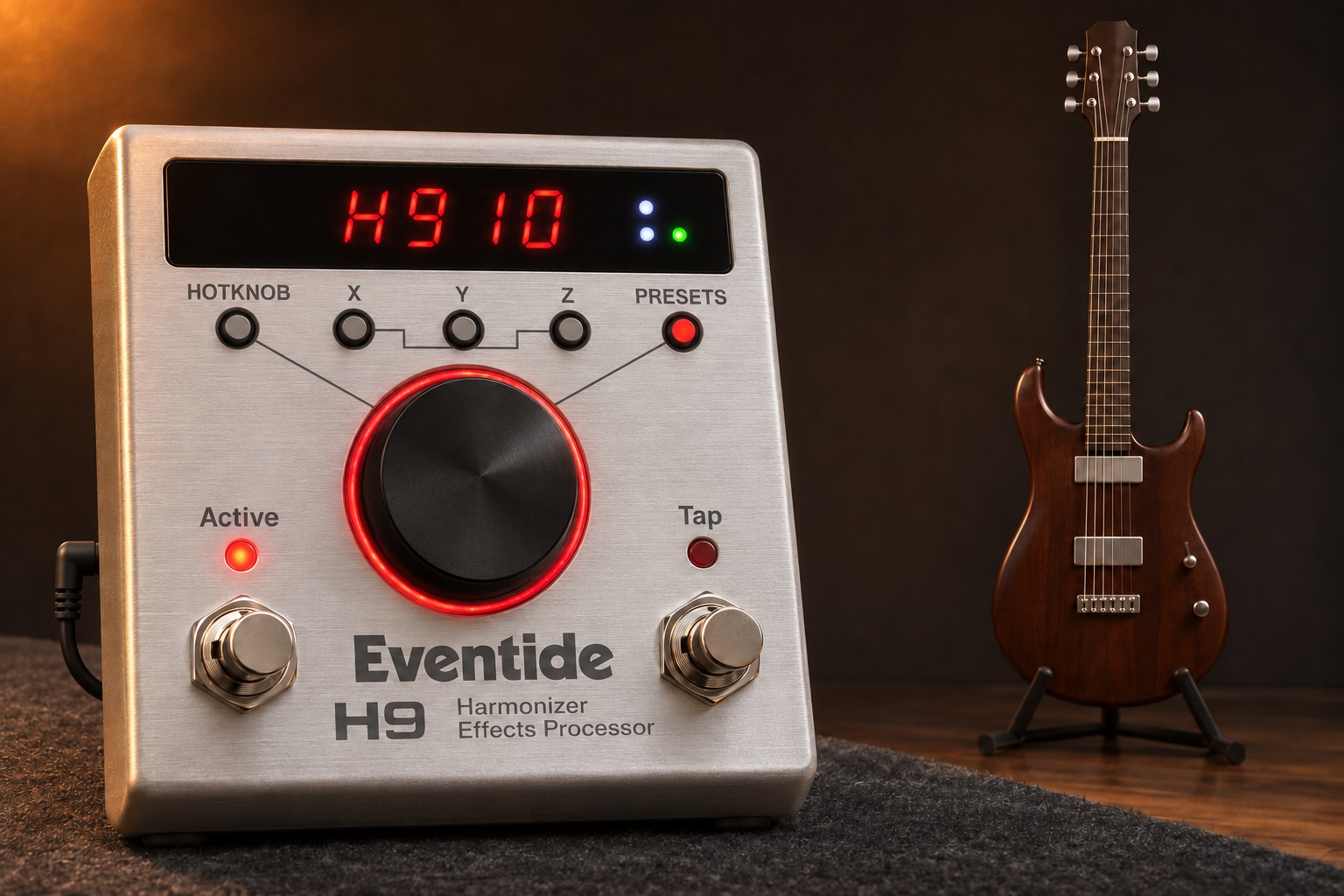
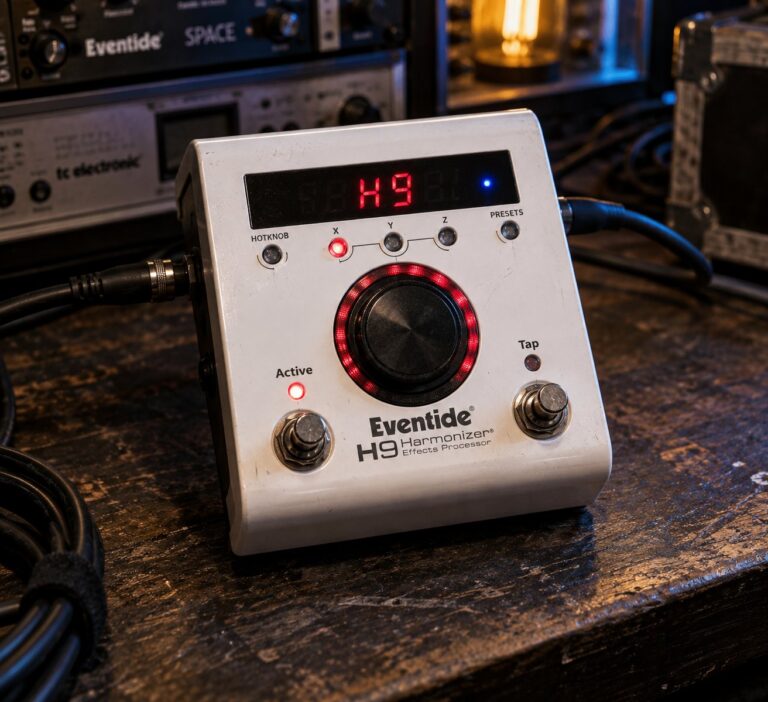
The Eventide H9 appeared in Gus G’s setup for pitch-shifting and harmonizing applications — the H9’s diatonic pitch-shifting algorithm producing key-correct harmonic intervals for specific arranged passages in Firewind’s recordings and live performances, and its crystal-clear pitch-shifting giving vibrato and other pitch effects of exceptional quality for the most technically demanding applications.
Playing Style & Tone Philosophy
Gus G is a guitarist whose playing synthesises multiple influences into a genuinely personal style — not merely a competent combination of his inspirations but a playing approach with its own specific character that is immediately identifiable to anyone familiar with his recordings. The neoclassical metal influence — Yngwie Malmsteen’s combination of Baroque diminished scale vocabulary, single-note runs derived from classical violin technique, and the physical aggression of heavy metal guitar — is present throughout his playing, but filtered through a melodic sensibility and a blues awareness that give his lines a musicality Malmsteen’s more purely technical approach can lack.
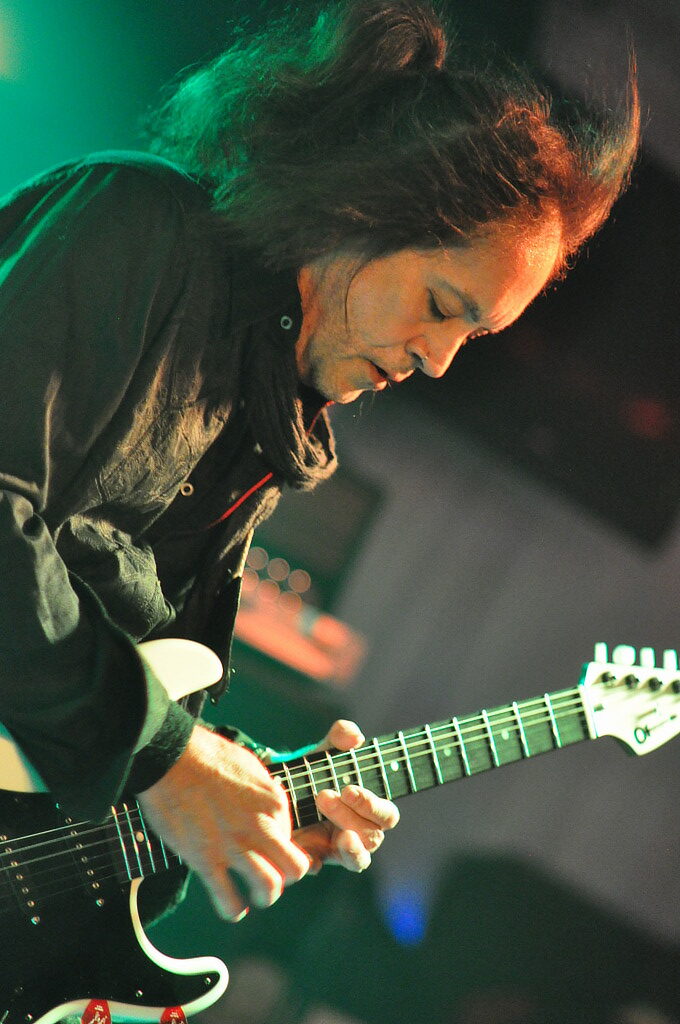
His technical foundation is extremely high. His alternate picking — strict down-up-down-up execution across string changes — is among the cleanest and most consistent in contemporary metal, allowing him to execute the fast, complex runs of neoclassical metal with a note-to-note clarity that many players who attempt the same vocabulary cannot maintain. His legato technique — using hammer-ons and pull-offs to generate notes without individual pick strokes, giving a smoother, more fluid line quality than picked playing — is equally developed, and his ability to transition between picked and legato passages within a single phrase gives his playing a textural variety that purely picked or purely legato players can’t achieve.
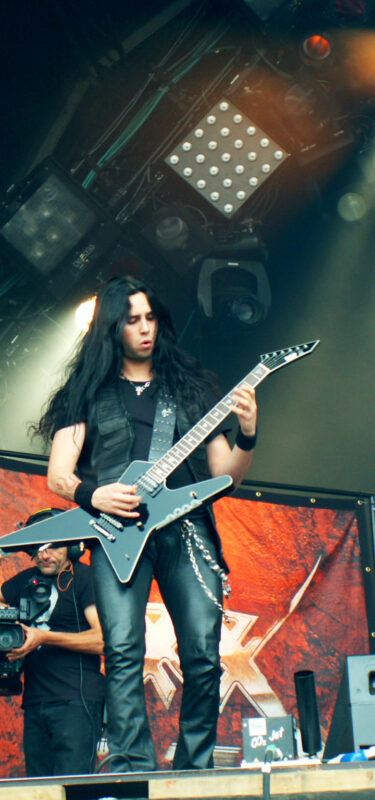
His harmonic vocabulary extends from the blues pentatonic foundation through the natural minor and harmonic minor scales that form the backbone of neoclassical metal improvisation, through the diminished scale vocabulary (symmetrical diminished scale, used extensively in neoclassical metal for its equal-interval structure that allows scale patterns to be repeated every minor third without modification), and into the Phrygian and Phrygian Dominant modes that give neoclassical metal its characteristic Spanish-flavored, tension-generating harmonic colour. This breadth of vocabulary allows him to choose appropriate scales for specific harmonic contexts rather than defaulting to a single approach — a musical intelligence that distinguishes him from technically accomplished but harmonically limited players who apply the same scale patterns regardless of harmonic context.
His vibrato technique is wide and wrist-rotated — the classic blues approach inherited through the rock tradition rather than the narrower, more controlled vibrato of the pure classical tradition that influenced neoclassical metal’s original proponents. This wider, more physical vibrato gives his sustained notes an emotional expressiveness that balances the more cerebral, technical aspects of his neoclassical vocabulary. The combination of technical neoclassical vocabulary with blues-derived vibrato and bending is one of the most distinctive elements of his playing — it gives the technically demanding passages a human, emotionally direct quality that connects them to listeners who might not intellectually engage with the theory behind the scale choices.
Tonally, Gus G guitars gear philosophy is built on the Mesa/Boogie Mark series’ specific combination of American 6L6GC warmth and the Mark-series high-gain channel’s smooth, melodically focused lead tone. He has spoken specifically about preferring the Mark series’ warmth to the more abrupt, aggressive character of purely British EL34-based designs for melodic lead playing — the 6L6GC’s character suits the sustained, singing quality of his melodic lines better than the EL34’s more aggressive, attacking quality, which suits rhythm guitar aggression more than melodic lead sustain. His Charvel’s maple neck and passive DiMarzio pickups give a brighter, more articulate fundamental than active pickups would — preserving the harmonic detail of his technique without the active preamp’s characteristic “clipping” of the very top of transient peaks.
The Mesa/Boogie Mark V’s five-band graphic EQ deserves specific technical examination because it is one of the most powerful and specific tonal shaping tools available on any production guitar amplifier, and Gus G’s systematic use of it is itself a demonstration of tonal intelligence. The five bands — 80Hz, 240Hz, 750Hz, 2.2kHz, and 6.6kHz — are positioned at specific frequency centres chosen to address the most musically significant frequency ranges of the guitar amplifier’s output. The 80Hz band controls the fundamental sub-bass energy of the lowest guitar notes — at high-gain settings, this frequency range can accumulate and produce a “woolly” bass character that reduces low-note definition; a slight cut restores tightness. The 240Hz band addresses the “warmth” region — the lower midrange that determines whether the guitar tone feels full and warm or thin and hollow; a slight boost here adds body without muddiness. The 750Hz band is the critical “presence” zone that many players describe as giving the guitar its “honk” — too much here makes the tone aggressive and unpleasant; too little makes it dull. The 2.2kHz band controls the upper midrange “attack” character that determines note definition and lead presence; boosting this frequency makes individual notes more distinct and the lead tone more present in a mix. The 6.6kHz band controls the highest audio frequencies — “air” and “sizzle” — that are present in the amplifier’s output; too much at high gain can produce harshness and listener fatigue. Gus G’s specific EQ settings for each band reflect a systematic approach to these frequency relationships that is the product of years of careful listening and adjustment, and represents a level of tonal sophistication that most guitarists who own the Mark V never develop.
The compound-radius fretboard on Gus G guitars gear — specifically the 12-to-16-inch compound radius on his Charvel signature — addresses one of the fundamental ergonomic challenges of the electric guitar fretboard. The radius of a guitar fretboard describes the curvature of the fretboard surface when viewed end-on: a lower radius number means more curvature (rounder, more barrel-shaped) and a higher radius number means less curvature (flatter). Traditional Fender instruments used a 7.25-inch radius — very round, comfortable for open chord playing in the lower positions but problematic for string bending in the upper positions because the string follows the fretboard’s curvature and frets out (the string contacts a higher fret as the bend raises the string) before reaching the desired pitch. Gibson instruments used a 12-inch radius — flatter, better for bending but less comfortable for some chord shapes in the lower positions. The compound radius of Gus G’s Charvel solves both problems simultaneously: the 12-inch radius at the nut gives comfortable chord shapes in the lower positions, while the 16-inch radius at the high frets (achieved by gradually flattening the fretboard across its length) gives the flat surface required for bending without fret-out. For Gus G’s playing — which requires both comfortable position-spanning chord shapes in the lower registers and aggressive, wide string bends in the upper registers — the compound radius is not a luxury but a functional necessity.
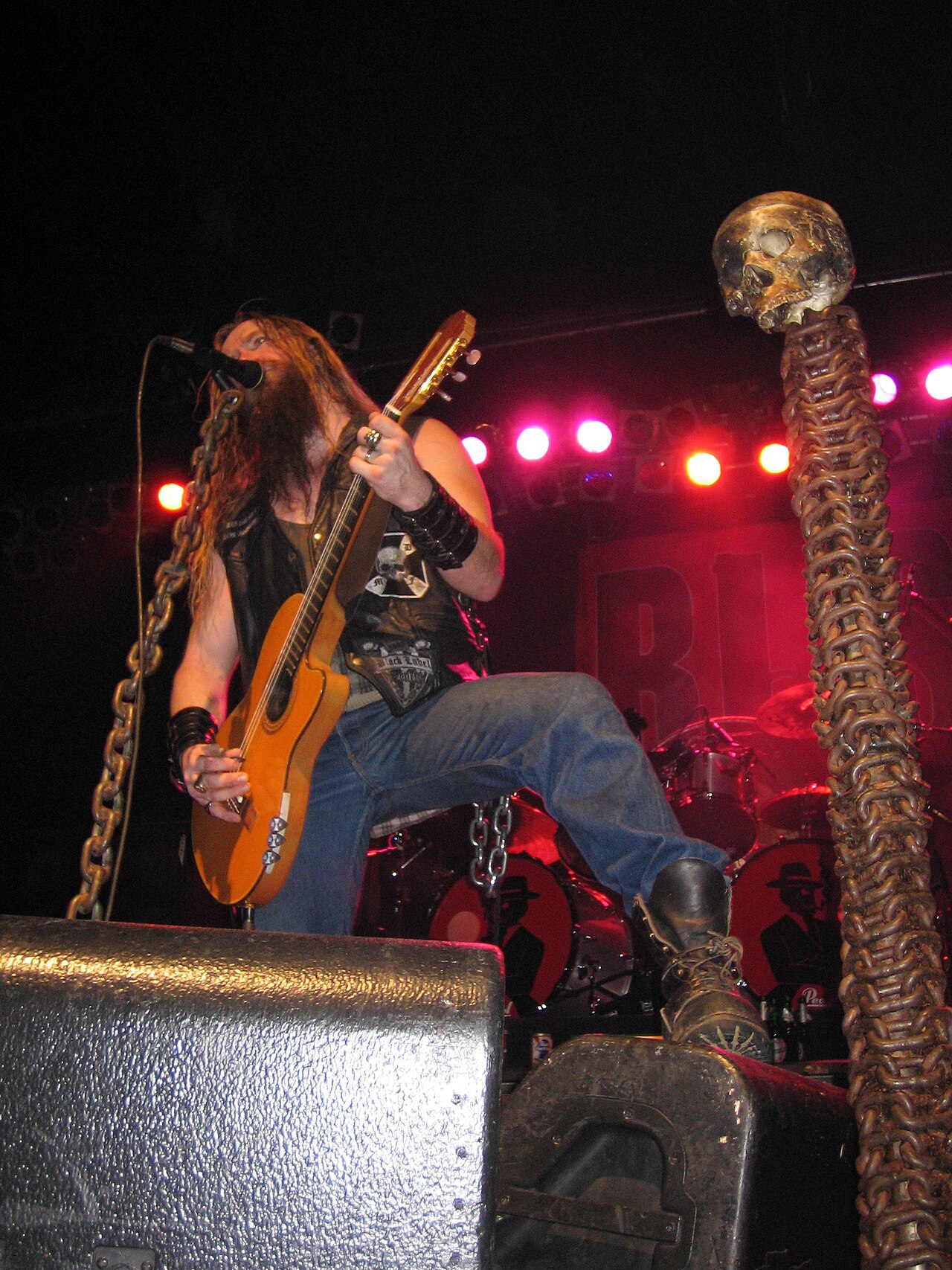
His Berklee College of Music education is worth examining in more detail in the Gus G guitars gear context because the specific skills it developed are audible in his playing in ways that purely self-taught metal guitarists’ technique typically doesn’t demonstrate. Berklee’s music theory curriculum covers jazz harmony, counterpoint, orchestration, and ear training at a level of depth that most metal guitar education does not approach — the theoretical concepts that allow a musician to hear the harmonic function of each note within a chord progression and to improvise melodic lines that navigate that harmonic function rather than merely travelling through it. Gus G’s ability to use the full range of modal scales (not just the Aeolian and Phrygian modes most metal guitarists rely on but the full range of diatonic modes and their applications over different harmonic contexts) and the more exotic scales of the neoclassical tradition (harmonic minor, Phrygian Dominant, diminished, augmented) with genuine musical intelligence — knowing when to use each and why — is the product of formal musical education. The Berklee education also gave him the ear training — the ability to hear harmonic relationships and respond to them in real time — that distinguishes genuinely improvisational lead playing from pattern-based playing, and this quality is audible in his live playing where the improvisational passages show real-time harmonic intelligence rather than the mechanical application of memorised lick patterns.
How to Sound Like Gus G
Guitar Approach
A Charvel Gus G Signature San Dimas Style 1 — or a similar Super-Strat format guitar with maple neck, compound-radius fretboard, Floyd Rose double-locking tremolo, and high-output passive humbuckers in the DiMarzio Titan/Deactivator configuration — is the foundation of Gus G guitars gear tone. Alternative instruments: a Charvel San Dimas Style 1 HH (with DiMarzio or Seymour Duncan passive humbuckers and Floyd Rose), a Jackson SL2H Soloist (similar Super-Strat format, neck-through, ebony fretboard, DiMarzio D Activator or Super Distortion), or an ESP Horizon with appropriate pickup configuration. Use Dunlop Heavy Core strings (.010–.052) for standard tuning — the additional string mass gives the tonal weight that Gus G’s Mesa/Boogie-driven tone requires.
Alternate picking is the foundational technique — develop strict down-up-down-up picking across string changes with a metronome, starting slow and building to performance tempo only when the lower tempos are completely clean. Use a heavy pick (Dunlop Tortex .88mm or 1.0mm, or Dunlop Jazz III for the smaller, stiffer tip that gives better precision on fast runs) held at a slight angle for the cleanest pick attack on the maple neck’s characteristically bright response.
Amp Approach
A Mesa/Boogie Mark V (or Mark IV, or Mark V:25 for a lower-power studio-friendly option) into a Mesa/Boogie 4×12 with Celestion Vintage 30 speakers is the correct foundation. Use the Extreme channel’s Mark IV mode as the primary lead tone — this gives the characteristic Mesa/Boogie Mark series smooth, singing high-gain character that Gus G’s melodic neoclassical playing requires. The five-band graphic EQ is critical for achieving the correct frequency balance.
| Control | Setting (0–10) | Notes |
|---|---|---|
| Mark V Extreme Channel Gain | 7–8 | High gain — smooth, singing Mark-series saturation for melodic leads |
| Bass (Mark V) | 4–5 | Controlled — 6L6GC has strong low-end; too much bass obscures note definition |
| Mid (Mark V) | 6–7 | Forward — melodic lead presence requires midrange |
| Treble (Mark V) | 6–7 | Bright enough for note definition; not harsh through V30 speakers |
| Presence (Mark V) | 5–6 | Moderate — adds articulation and upper-mid clarity |
| Graphic EQ 80Hz | -1 to -2 | Slight cut — controls sub-bass accumulation at high gain |
| Graphic EQ 240Hz | +1 to +2 | Slight boost — adds warmth and body to 6L6GC character |
| Graphic EQ 750Hz | -1 | Slight cut — reduces “honk” in the critical lower midrange |
| Graphic EQ 2.2kHz | +2 to +3 | Boost — adds lead presence and harmonic definition |
| Graphic EQ 6.6kHz | 0 to -1 | Neutral or slight cut — prevents top-end harshness at high gain |
| TS808 Drive (lead boost) | 3 | Very low — mid-boost function, additional lead sustain and presence |
| TC Flashback Delay | 200–300ms, 1 repeat, 15% mix | Subtle spatial depth — enhances melodic lines without clutter |
The TS808 Tube Screamer at minimum drive as lead boost. Boss NS-2 in muting loop for noise control. TC Electronic Flashback delay for lead spatial depth. Phase 90 at slow speed (2–3Hz) for atmospheric chord passages in Firewind’s more melodic sections. The Fractal Axe-Fx as the primary live platform for complete signal chain management with preset recall. The Eventide H9 for specific harmonized passages in Firewind’s arranged compositions.
Influence & Legacy
Gus G’s influence on European power metal guitar is substantial and specifically directional — he has demonstrated that the neoclassical metal vocabulary can be combined with genuine melodic intelligence and European power metal’s compositional ambition to produce music of real substance. In the context of a genre that can sometimes confuse technical complexity with musical depth, his Firewind work consistently demonstrates that the two qualities reinforce rather than substitute for each other when both are genuinely present.
His success with Ozzy Osbourne has also had a specific influence on the perception of European metal guitarists in the American mainstream — demonstrating that a Greek player could not only match the technical standard set by Wylde’s legendary tenure but bring genuine musical personality to the role. His presence in that position reflected well on the European metal guitar tradition and on the global reach of serious guitar education, given his Berklee background.
The comparison with Yngwie Malmsteen — whose neoclassical metal approach was Gus G’s primary formative influence and whose specific technical and harmonic vocabulary forms the basis of the tradition Gus G works within — is unavoidable and illuminating. Where Malmsteen’s approach is maximalist and uncompromising in its classical-vocabulary commitment, Gus G’s is more eclectic — incorporating the blues, the melodic rock tradition, and the European power metal aesthetic into a synthesis that is more musically versatile if less purely extreme. The parallel with Zakk Wylde — Gus G’s direct predecessor in the Ozzy Osbourne guitarist role — shows the different approaches to the same musical context: Wylde’s blues-heavy, pinch-harmonic-saturated approach versus Gus G’s cleaner, more technically refined neoclassical vocabulary. And the connection to Marty Friedman — another guitarist who combined neoclassical and exotic-scale vocabulary with genuine melodic sensibility in a metal context — places Gus G guitars gear and musical philosophy in the broader tradition of melodically sophisticated metal guitar that has always been the tradition’s most musically interesting strand.
Frequently Asked Questions: Gus G Guitars & Gear
What guitar does Gus G play?
Gus G’s primary guitar is the Charvel Gus G Signature San Dimas Style 1 — a Super-Strat format instrument with an alder body, one-piece maple neck, compound-radius fingerboard (12 to 16 inches), stainless steel frets, Floyd Rose Special double-locking tremolo, and custom DiMarzio passive humbuckers (Titan bridge, Deactivator neck). The maple neck’s brighter, more articulate attack transient is specifically important to his tone, and the stainless steel frets’ extended life and smooth feel suit the demanding technical playing the instrument is subjected to. He also uses Gibson Les Pauls for specific studio applications requiring vintage humbucker warmth.
What amplifier does Gus G use?
Gus G’s primary amplification is the Mesa/Boogie Mark V — specifically the Extreme channel’s Mark IV mode, which reproduces the high-gain character of the Mesa/Boogie Mark IV that has been a benchmark for smooth, melodic lead guitar tone since its introduction. The Mark V’s switchable power output (35/45/90 watts), the five-band graphic EQ in the effects loop, and the choice of 6L6GC or EL34 output tubes give him tonal flexibility across different musical contexts. He uses Mesa/Boogie 4×12 cabinets loaded with Celestion Vintage 30 speakers. The Bogner Ecstasy and Peavey 6505+ appear as alternatives for specific tonal requirements.
What is neoclassical metal and how does Gus G approach it?
Neoclassical metal is a heavy metal guitar style pioneered by Yngwie Malmsteen in the early 1980s that combines Baroque and classical music’s harmonic vocabulary (particularly diminished scale patterns, harmonic minor progressions, and classical-influenced note sequences) with heavy metal’s amplification, technique, and rhythm section approach. Gus G approaches neoclassical metal as one component of a broader melodic metal vocabulary rather than as a defining constraint — his playing incorporates the diminished scales, harmonic minor, Phrygian Dominant, and classical-influenced runs of the neoclassical tradition alongside blues-influenced vibrato and bending, melodic rock sensibility, and the European power metal compositional framework of Firewind. The result is technically demanding playing with more melodic accessibility and emotional directness than the pure neoclassical approach typically achieves.
What pickups does Gus G use?
Gus G uses custom DiMarzio passive humbuckers developed specifically for his Charvel signature guitar: the DiMarzio Titan (bridge position, DC resistance approximately 17.0k ohms, Alnico 5 magnets, high-output passive character) and the DiMarzio Deactivator (neck position, lower-output, designed for defined, clear lead tones in high-gain contexts). Both are passive designs — unlike the EMG active pickups used by many high-gain metal guitarists — giving a more dynamic, touch-responsive character that responds to pick attack variation more directly than active pickups’ buffered output.
How did Gus G get the Ozzy Osbourne guitar job?
Gus G was recruited to join Ozzy Osbourne’s band in 2009 following Zakk Wylde’s departure, through a combination of his established reputation as a technically accomplished and musically sophisticated metal guitarist and his international visibility through Firewind’s touring and recording activity. He appeared on Ozzy’s Scream album (2010) and toured extensively with Osbourne, demonstrating complete authority in the role. His Berklee education, technical accomplishment, and the musical intelligence evident in his Firewind work gave him the complete package that the Ozzy position required: technical ability, appropriate tonal vocabulary, and the musical sensitivity to serve the existing song catalogue faithfully while contributing his own personality.
What is Firewind and what is Gus G’s role in the band?
Firewind is a Greek power metal band that Gus G founded in 1998 and has led as guitarist and primary creative force throughout its existence. The band plays European power metal — a genre defined by melodic, often epic song structures, operatic vocal styles, technically demanding guitar work, and a production aesthetic drawing on classical and cinematic influences. Gus G writes the majority of Firewind’s music, produces or co-produces the albums, and serves as the musical director of the band’s creative output. Albums including Allegiance (2006), The Premonition (2008), and Firewind (2020) represent the band’s most fully realised statements and demonstrate Gus G’s development as both a guitarist and a songwriter.
Does Gus G play with a pick or fingers?
Gus G plays exclusively with a pick for his electric guitar work — specifically Dunlop Jazz III picks or Dunlop Tortex in medium-heavy gauges (.88mm–1.0mm). The Jazz III’s smaller, stiffer tip gives the precise attack definition required for fast alternate-picked runs in the neoclassical metal vocabulary, while the Tortex material’s grip characteristic prevents the pick slipping under aggressive playing conditions. His strict alternate picking technique — consistent down-up-down-up across string changes — is the foundation of his technical lead playing, and the pick’s specific characteristics are calibrated to support this technique with maximum precision.
Image credits
- Eventide H9 (harmonizing, pitch-shifting): GuitarGangsters AI-generated reference illustration, not a photograph.
- Zakk Wylde: Joanna Corwin, Wikimedia Commons, CC BY-SA 3.0.
- Top image: Alberto Cabello
- Gus G: photo by rjforster, via Wikimedia Commons, CC BY 2.0.
- Gus G: photo by Tilly antoine, via Wikimedia Commons, CC BY-SA 4.0.
- Gibson Les Paul Standard: DonnyBurger1974, Wikimedia Commons, CC BY-SA 4.0.
- Boss NS-2 Noise Suppressor: Johan Rosén / Kuriosatempel, CC BY-SA 4.0.
- Dunlop Cry Baby: Roadside Guitars, Flickr, CC BY-SA 2.0.
- Mesa/Boogie Mark IV: GuitarGangsters AI-generated reference illustration, not a photograph.
- Peavey 6505+: GuitarGangsters AI-generated reference illustration, not a photograph.
- Celestion Vintage 30 12-inch Guitar Speaker: GuitarGangsters AI-generated reference illustration, not a photograph.
- Eventide H9 Harmonizer Effects Processor: GuitarGangsters AI-generated reference illustration, not a photograph.
- MXR Phase 90: Roadside Guitars, Wikimedia Commons, CC BY-SA 2.0.
- Jackson Soloist: GuitarGangsters AI-generated reference illustration, not a photograph.
- TC Electronic G-System: Adam Kliczek, Wikimedia Commons, CC BY-SA 3.0.
- Ibanez TS808 Tube Screamer: Guitar Chalk, Wikimedia Commons, CC BY 2.0.
- TC Electronic Flashback Delay: GuitarGangsters AI-generated reference illustration, not a photograph.
- Bogner Ecstasy: GuitarGangsters AI-generated reference illustration, not a photograph.