Jake E. Lee Guitars & Gear: The Complete Guide to Ozzy’s Bark at the Moon Guitarist’s Rig
Jake E. Lee guitars & gear: Ozzy's Bark at the Moon guitarist. Pearl White Charvel, blue burst San Dimas, Marshall JCM800, reversed pickups, hardtail philosophy — the complete rig.
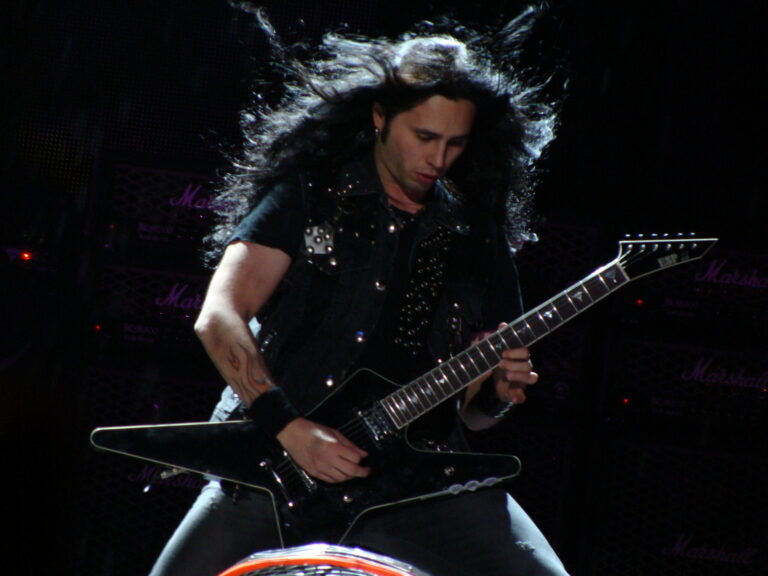
Photo by Nick Soveiko, licensed under CC BY-SA 3.0
Gear Timeline
There is a guitar in rock history that originated as a sunburst Fender Stratocaster, was repainted pearl white as a birthday present by a roommate who worked at Charvel, had a Charvel headstock decal applied as part of the same birthday gesture, then had its neck and middle single-coil pickups reversed from the standard Fender slant orientation — an idea Jake E. Lee had from hearing the tone Jimi Hendrix was getting by playing his Strat upside down — and ended up being the guitar that appears on the Bark at the Moon album cover, on the Bark at the Moon tour, on years of Badlands performances, and in the Charvel Pearl White So-Cal signature model. The guitar started life as a stock production Fender Stratocaster. It became, through a series of improvisational modifications, one of the most iconic visual symbols of 1980s hard rock guitar. Jake E. Lee didn’t have it specially built to be iconic. A roommate painted it white. Another roommate put the Charvel name on it. And Lee spent a decade trying to get a specific tonal quality out of reversed single-coil pickups because of something he’d heard Jimi Hendrix produce by holding a right-handed guitar upside down. That’s the Jake E. Lee story in one guitar: practical, accidentally iconic, technically motivated by genuine sonic curiosity.
The Journey
Jakey Lou Williams was born on February 15, 1957, in Norfolk, Virginia, to a Japanese mother and an American military father — a cross-cultural American upbringing that placed him in San Diego in the 1970s, where his older sister introduced him to the music that would define his musical formation: Jimi Hendrix, Black Sabbath, Led Zeppelin. His first serious guitar was a 1967 Gibson SG Standard — “I wanted an SG, mainly because Tony Iommi played one” — a purchase that captures both the specific cultural influence of the Iommi-Black Sabbath template and the equally specific practical intelligence of a guitarist who identifies the right instrument for the music he wants to make and acquires it. He played in various San Diego bands through the 1970s and early 1980s, including a band called Teaser — named after Tommy Bolin’s debut solo album — before a pivotal sequence that led through early versions of Ratt, the band Rough Cutt, a brief association with Ronnie James Dio’s first eponymous band (he quit shortly after joining), and finally to the audition for Ozzy Osbourne’s band in 1982.
The Ozzy chapter is one of rock’s more complex career stories. He arrived as the replacement for Randy Rhoads — the guitarist whose influence on 1980s rock guitar was (and remains) enormous, and whose death in a plane crash in March 1982 created both the vacancy in the Osbourne band and the enormous, inescapable shadow in which Lee performed for the entirety of his Ozzy tenure. “I had a lot of ‘Randy Rhoads rules, you suck,'” he told UCR in 2018. “That option is gone, you know? Randy’s gone, and it’s not like he’s gone to go play in some other band. So either you guys want Ozzy to hang up his coat and call it quits or cut me a little slack. But all the way through Ozzy, there was always a faction of ‘You suck, Randy rules.’ So, it gave me tough skin.” What he produced in that shadow — the Bark at the Moon album (1983) and The Ultimate Sin (1986), both of which he co-wrote substantially — stands entirely on its own terms: technically sophisticated, melodically inventive, with a specifically different character from both the Rhoads model and the subsequent Zakk Wylde model. He was not Rhoads’s replacement; he was his successor, developing a different approach to the same musical role.
He was fired by phone by Sharon Osbourne in 1987, after the Ultimate Sin touring — a departure that he has discussed with the philosophical equanimity of someone who has had decades to process it. He formed Badlands with vocalist Ray Gillen in 1988 — a blues-rock band that represented a deliberate departure from the pyrotechnic rock of the Ozzy years toward something deeper, more emotionally sustained, and more rooted in the American blues tradition. The Badlands self-titled album (1989) and Voodoo Highway (1991) are among the most under-celebrated hard rock albums of their era — genuinely great music that arrived in a commercial moment when grunge was about to fundamentally reorient the rock market, and that never received the commercial acknowledgment it deserved. Lee spent years in effective retirement from the music industry before returning with Red Dragon Cartel in 2013. In October 2024, he was shot three times in a random street confrontation in Las Vegas while walking his dog, sustaining injuries to his arm, back, and foot — and survived. He was sixty-seven years old. He is expected to continue playing.
His gear philosophy, across all phases of his career, is built on a consistent foundation: superstrat-style hardtail guitars (no whammy bar — hardtail for maximum sustain and tuning stability), a specifically unconventional pickup configuration with reversed single-coil orientation in the middle and neck positions, Marshall JCM800 amplification, and the minimum necessary signal processing between guitar and amplifier. The guitars changed makes — Charvel, ESP, others — but the configuration remained consistent: humbucker bridge, reversed single-coils in neck and middle, hardtail bridge, no trem. The amps changed models but remained firmly in the Marshall family. The philosophy has been continuous: play great, process minimally, let the guitar and the amp do the work.
Background: The Shadow of Randy Rhoads, the Pearl White Charvel, and the Most Underrated Ozzy Guitarist
To understand Jake E. Lee’s specific contribution to the Ozzy Osbourne legacy, it is necessary to be honest about the specific difficulty of his situation. Randy Rhoads had been Osbourne’s guitarist for two albums — Blizzard of Ozz (1980) and Diary of a Madman (1981) — that are among the most celebrated hard rock albums of their era. Rhoads’s guitar approach — the classical-influenced technique, the melodic sophistication, the specific tone of an Seymour Duncan-equipped white polka-dot Les Paul through Marshall and Quiet Riot’s Bob Daisley-era Marshall rig — had defined a specific, beloved sound. His death in March 1982 was not just a tragic loss of a young musician; it was the elimination of a specific, irreplaceable creative voice that thousands of fans identified as inseparable from Osbourne’s music.
Lee navigated this situation not by attempting to sound like Rhoads — which would have been both musically dishonest and technically impossible — but by establishing his own voice. His approach to lead guitar is fundamentally different from Rhoads’s classical-influenced approach: where Rhoads built his solos from neoclassical scale sequences and specifically organized technical phrases, Lee’s leads have a more fluid, blues-influenced quality — less formally structured, more instinctive, with the specific quality of playing that feels like it’s being discovered in real time rather than executed from a pre-composed plan. The whammy-bar avoidance that characterizes his approach — the hardtail bridge commitment that ensures every guitar stays in tune regardless of picking intensity — produces notes that speak cleanly and sustain fully rather than being affected by the tuning drift of a floating tremolo. It is a fundamentally different approach, producing a fundamentally different sound, in service of fundamentally different musical values.
The Badlands chapter is where Lee’s musical depth is most clearly audible, freed from the commercial and brand pressures of the Osbourne context. Ray Gillen’s voice — a genuinely extraordinary instrument, comparable in quality to the very best rock and soul vocalists of the era — gave Lee the musical partnership he needed to develop his blues-rock sensibility without the distraction of being “Ozzy’s guitarist.” The Badlands self-titled album’s opening track, “High Wire,” demonstrates immediately that this band was doing something more musically ambitious and emotionally honest than their commercial context allowed them to become famous for. The guitar work throughout is technically sophisticated and emotionally direct — the combination of technical ambition and feel-based expressiveness that Lee had been working toward throughout his career, finally finding the right musical context to fully realize it.
The Guitar World “$80 Marshall” story — mentioned in headlines but not fully detailed in available sources — refers to his discovery of a bargain Marshall amplifier while on tour with Ozzy Osbourne, a piece of gear serendipity that speaks to both the unpredictability of equipment acquisition in the pre-internet touring era and Lee’s genuine enthusiasm for gear hunting even at the height of his commercial career.
The Rig: Jake E. Lee’s Guitars, Amps, and Effects
Guitars
The guitar most closely associated with Jake E. Lee — the one that appears on Bark at the Moon promotional photography, in live performance footage, and on the Badlands era recordings — is a 1974-75 Fender Stratocaster that underwent a series of modifications that transformed it into one of the 1980s’ most recognizable instruments. The guitar’s origin story, per Charvel’s own documentation: Lee acquired a standard Fender Stratocaster in 1975 by working at a music store to earn trade credit. His roommate, who worked at Charvel, offered to paint the guitar as a birthday present — converting the original sunburst finish to the iridescent Pearl White that became Lee’s visual signature. The same roommate applied a Charvel headstock decal to the instrument — which is why a guitar that is, in essence, a Fender Stratocaster has been known ever since as a Charvel. The modifications went further: Lee had the middle and neck single-coil pickups reversed from the standard Fender slant orientation. This reversal was inspired by his observation of the specific tonal quality Jimi Hendrix achieved by playing a right-handed Stratocaster upside down — when a right-handed Strat is held in left-handed playing position, the pickup slant is reversed, producing more bass response on the low E and A strings and more treble response on the high E and B. By reversing the pickup angle on a normally-held right-handed guitar, Lee was able to produce a similar tonal characteristic — more bite on the low strings, more articulation on the high strings — within his conventional right-handed playing position. The Charvel Charvel Jake E. Lee USA Signature So-Cal model (and the more affordable Pro-Mod So-Cal version) are both built to this guitar’s specifications. The guitar was also described without a tremolo — hardtail bridge — which became a consistent Lee preference throughout his career: “The lack of tremolo bar is a distinguishing feature,” as the Dinosaur Rock Guitar documentation confirms, “for maximum sustain and tuning stability.”
Lee’s primary guitar for the Bark at the Moon album and associated touring — and the basis for his signature blue burst model — was a blue burst Charvel San Dimas. The San Dimas designation refers to guitars built at Charvel’s San Dimas, California facility during the era when Charvel was producing custom superstrat instruments that became the defining visual and tonal symbol of 1980s virtuoso hard rock. The blue burst finish — a gradient from deeper blue at the edges to a lighter, more transparent blue center — gave the guitar a distinctive visual identity that made it immediately recognizable in stage photographs and performance footage. Lee became a Charvel artist in 1983, shortly before the Bark at the Moon recording sessions, and the blue burst San Dimas was his primary studio instrument for that album and subsequent Ozzy work. The Charvel Jake E. Lee Pro-Mod San Dimas Style 1 HSS HT RW signature model released in 2025 is based on this guitar — celebrating “his iconic tone with Ozzy Osbourne during the ‘Bark at the Moon’ era.”
The Charvel Jake E. Lee USA Signature So-Cal is the current production version of the Pearl White “Whitey” guitar — built to its specifications: alder body, bolt-on maple neck, rosewood fingerboard, Seymour Duncan JB humbucker in the bridge, DiMarzio SDS-1 single-coils in the middle and neck positions (with the reversed slant), and a hardtail bridge. The guitar features the Pearl White finish and black pickguard that were the visual signature of the original instrument. Charvel’s product description captures the philosophy: “The distinctive white instrument the great guitarist acquired in 1975 by working at a music store to earn trade credit.” The more affordable Pro-Mod So-Cal version was released in 2022, bringing the same specifications and visual identity to a production-level price point.
The 2025 Charvel Pro-Mod San Dimas signature — released in blue burst to match the Bark at the Moon era guitar — features an alder body, bolt-on quartersawn maple neck, 12″-16″ compound radius rosewood fingerboard with 22 medium jumbo frets, Seymour Duncan JB bridge humbucker, and DiMarzio SDS-1 single-coils in the middle and neck. The hardtail bridge and the reversed single-coil orientation are maintained. Charvel describes it as providing “explosive versatility, vintage attitude, and modern performance at an accessible price” — the “accessible price” being the key element of the Pro-Mod designation, making the blue burst Bark at the Moon configuration available to players at a more accessible price point than the USA Signature model.
Toward the end of the Badlands period, Lee increasingly used ESP guitars — specifically the Jake E. Lee signature model, which he preferred for its Gibson-scale-length neck (24.75 inches rather than the 25.5-inch Fender scale of the Charvel instruments). “He liked the Gibson scale length neck and the jumbo to regular fret combination,” as the Dinosaur Rock Guitar documentation confirms. The shorter scale length reduces string tension at the same pitch, making the guitar feel lighter under the fingers and enabling wider bends with less physical effort — a characteristic that the blues-rock approach of the Badlands period specifically benefited from. He replaced the ESP’s stock pickups with his preferred combination of Seymour Duncan JB in the bridge and DiMarzio SDS-1s in the middle and neck.
Lee’s first serious guitar was a 1967 Gibson SG Standard, purchased with his own money “mainly because Tony Iommi played one” — a choice that reveals the specific Black Sabbath/Iommi influence that shaped his musical formation alongside the Hendrix, Led Zeppelin, and broader hard rock tradition his sister introduced him to. The SG’s influence is audible in his approach to the electric guitar as a fundamentally heavy, powerful instrument rather than a precision tool — the Iommi influence remains in the underlying philosophy even when the specific guitar makes have changed.
The specific pickup combination that Lee has used across all guitar makes — Charvel, ESP, and their predecessors — is Seymour Duncan JB humbucker in the bridge position with DiMarzio SDS-1 single-coil pickups in the middle and neck positions. The JB (Jazz/Blues) humbucker is one of Seymour Duncan’s most successful designs — high output, tight bass, aggressive midrange character, specifically suited for hard rock and metal bridge pickup applications. The DiMarzio SDS-1 (Strat Dual Sound-1) is a single-coil pickup with a slightly hotter output and somewhat fuller character than a standard Fender single-coil. The combination — hot humbucker bridge for rhythm and lead, slightly-hotter-than-stock single-coils in middle and neck for cleaner, brighter tones — gives Lee the tonal range from aggressive hard rock to cleaner, more articulate passages from a single guitar without requiring pickup changes. And with the reversed middle and neck pickup slant (inspired by the Hendrix upside-down Strat observation), the single-coils produce the additional bass-string bite that makes the lower-string rhythm work feel heavier than standard Fender single-coil orientation provides.
Amps
Jake E. Lee’s amplification during his Ozzy Osbourne tenure — documented specifically at the 1983 US Festival performance and throughout the Bark at the Moon tour — was the Marshall JCM800 2203, the standard single-channel 100-watt Marshall head that dominated professional hard rock touring in the early-to-mid 1980s. The JCM800’s higher-gain preamp channel provided the controlled, musical distortion that the Bark at the Moon recordings required — warm enough for sustaining lead lines, aggressive enough for the album’s harder rock moments, and with the specific Marshall EL34 character that gives the recording its particular tonal identity. The Ultimate Sin recording documentation, preserved in the Marshall Forum community records, confirms: “1-100 watt marshall head, 1-50 watt marshall head, 1-4×12 straight cab w/ EV speakers, Roland Jazz Chorus JC-120, various Boss F/X pedals, OD1 for a boost pedal, Rat distortion pedal, Rockman.” Both the 100-watt and 50-watt Marshall heads were used simultaneously for different tonal applications, with the EV (Electro-Voice) loaded cabinet providing a specifically different frequency response from the standard Celestion-loaded Marshalls.
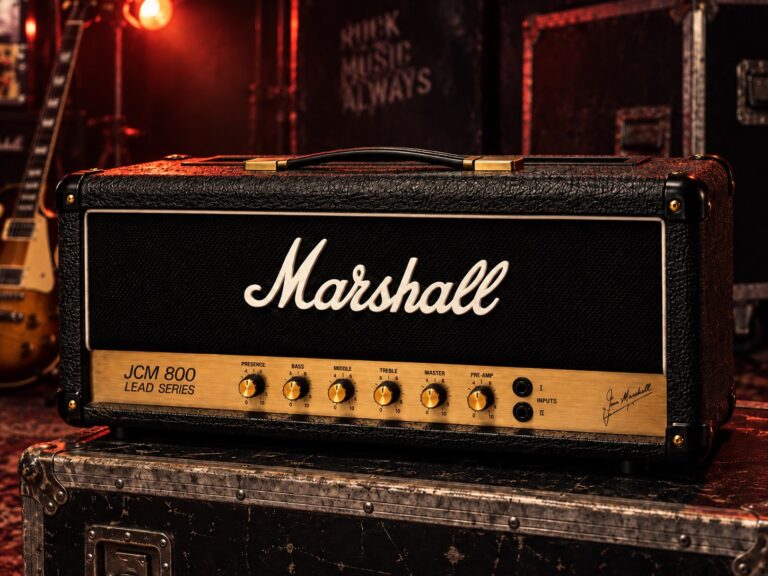
The 50-watt Marshall head in the Ultimate Sin studio setup represents the same 50-watt preference documented for many of the classic-era British rock guitarists. Used alongside the 100-watt head, the 50-watt provided a different character of power-amp saturation — more responsive, with the EL34 tubes working at a slightly different operating point than the larger amp’s output section. The combination of both head types into the same cabinet allowed Lee to blend or select between the different tonal characters depending on the specific requirement of each passage.
The Roland Jazz Chorus JC-120 appears in the Ultimate Sin studio documentation — the solid-state stereo amplifier known for its exceptionally clean headroom (the JC-120 is almost impossible to overdrive) and its built-in stereo chorus circuit. The JC-120’s role in Lee’s studio rig was primarily as a clean amplification source and as the delivery mechanism for the Roland’s built-in chorus effect — using the chorus circuit’s specific, ultra-clean, warm modulation character for atmospheric passages where the Marshall’s natural saturation would have been inappropriate. The JC-120’s built-in chorus was one of the most widely used and most celebrated chorus effects of the early 1980s — a direct, hardware-level alternative to the chorus pedals that most guitarists were using.

For his return to active performing with Red Dragon Cartel, Lee used Fryette amplifiers — specifically noted as using a Smallbox 50 with Red Dragon Cartel, as documented by Equipboard. Fryette (formerly VHT) is an American amplifier manufacturer known for high-quality, touring-reliable valve amplification with specific tonal voicing. The Smallbox 50 is a 50-watt head with Fryette’s characteristic warm, aggressive tonal character.
Effects
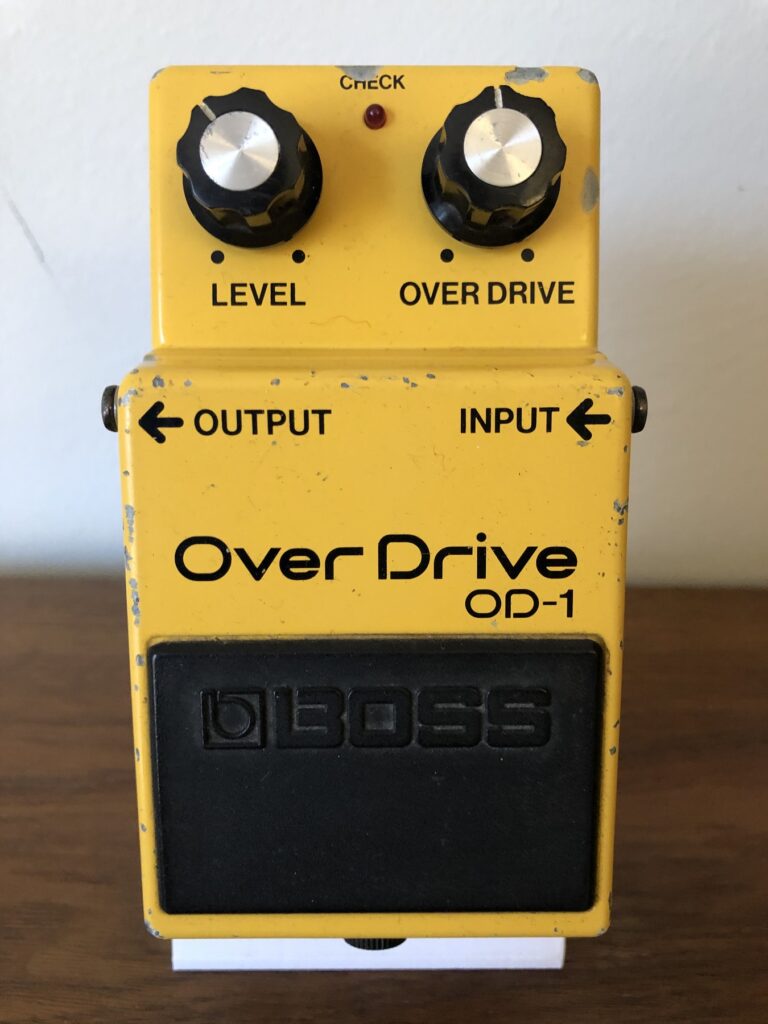
The Boss OD-1 — the original Boss overdrive pedal, predecessor to the more common OD-2 and SD-1 — appears in Lee’s Ultimate Sin studio documentation as a boost pedal. The OD-1’s specific character is warm and midrange-boosting, with a specific asymmetric clipping that produces a smooth, musical overdrive character. Used as a boost into the already-overdriven Marshall, the OD-1 increases both gain and midrange presence for lead passages without fundamentally changing the amp’s character — the classic use of an overdrive as a lead boost rather than as a primary distortion source.
The ProCo RAT distortion pedal also appears in the Ultimate Sin studio documentation — a harder, more aggressively clipping distortion unit than the OD-1, with the RAT’s specific filter control that allows the high-frequency content of the distorted signal to be smoothed or sharpened. The RAT’s harder clipping character produces a more aggressive, more compressed distortion than the OD-1’s overdrive, and its presence alongside the OD-1 in the studio rig suggests Lee was using both pedals for different musical contexts — OD-1 for warm, musical lead boost; RAT for passages requiring more aggressive distortion character.
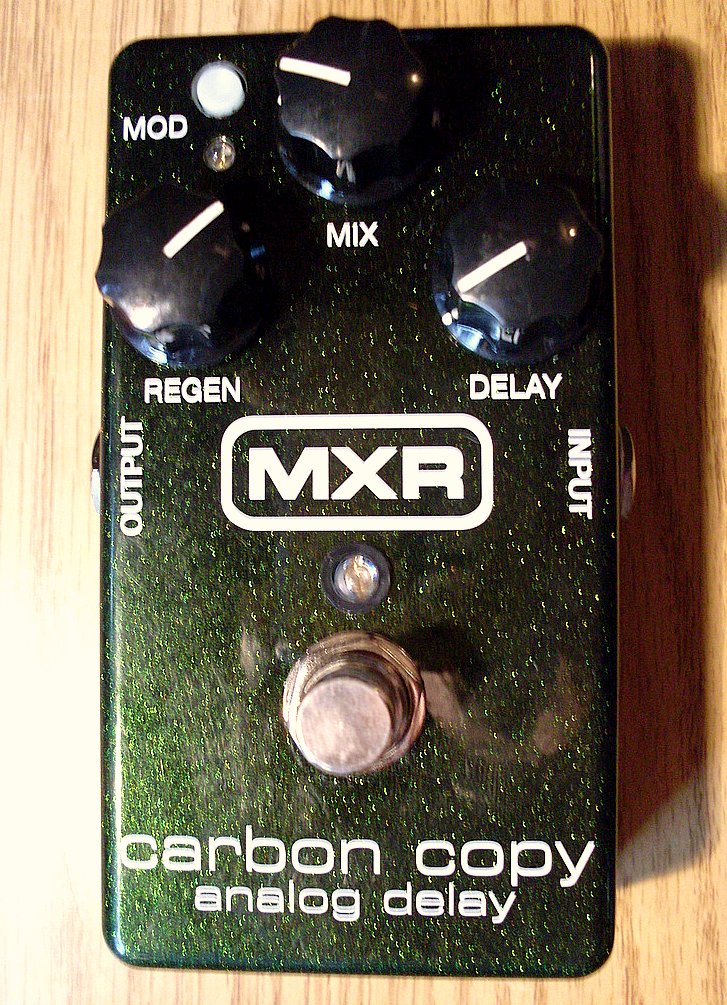
The MXR Carbon Copy Analog Delay appears in Lee’s modern documented pedalboard — specifically in a Majik Box Pedals video demonstration. The Carbon Copy is a compact, high-quality analog delay using the same BBD (Bucket Brigade Device) chip technology that produced the warm, slightly degrading delay character of classic analog delay units. Analog delay’s specific warmth — each repeat being slightly lower in fidelity than the original signal, with a warm, organic quality quite different from the pristine repeats of digital delay — suits the blues-rock and hard rock context of both the Badlands and Red Dragon Cartel material.
“Various Boss F/X pedals” are documented in the Ultimate Sin studio recording chain — a general category that covered the Boss pedal board that was standard equipment for professional studio guitarists of the era. The specific Boss pedals documented include chorus (consistent with Boss CH-1 or BF-2 flanger for atmospheric effects), delay (consistent with Boss DM-2 or DD-2 for the specific delay effects on specific album tracks), and various other standard Boss effects that provided the signal processing not addressed by the Marshall’s natural character or the Roland JC-120’s built-in effects.
The Rockman appears in the Ultimate Sin studio documentation — the Tom Scholz-designed portable headphone amplifier and effects unit that was widely used in 1980s studio recording for its consistent, high-gain character. The Rockman’s compressed, mid-forward, high-output tone was heard on countless recordings of the early-to-mid 1980s, and its presence in the Lee studio rig suggests it was used for specific tonal applications where its particular compressed, bright character provided the right sound for a specific track element.
Jake E. Lee’s most distinctive equipment preference — the consistent choice of guitars with hardtail bridges rather than floating tremolo systems — is both a technical and tonal decision. Hardtail bridges (where the bridge is fixed directly to the body, with strings inserted through the body or through a fixed tailpiece rather than through a floating tremolo block) provide maximum sustain by coupling the string vibration directly to the body without the spring-loaded floating that a tremolo system introduces. The fixed string anchor also ensures perfect tuning stability regardless of picking intensity or string bending — a characteristic that was particularly important for the precise, clean intonation of lead playing at the technical level Lee was working at in the Ozzy era. His rejection of the Floyd Rose and Kahler tremolo systems that most of his 1980s contemporaries were adopting — in an era when dive-bombing and whammy-bar effects were a primary currency of guitar showmanship — was a deliberate aesthetic decision as much as a practical one: he wanted guitars that stayed in tune, sustained fully, and communicated the specific qualities of his picking attack without the interference of a floating bridge’s constant tension adjustment.
The reversed pickup slant on Lee’s middle and neck single-coil pickups — inspired by hearing Jimi Hendrix’s reversed tonal character when playing a right-handed guitar left-handed — is one of the more genuinely original tonal modifications. Standard Fender Stratocaster single-coil pickups are angled so that the bass-side of the pickup is closer to the bridge (producing a slightly brighter, more articulate character on the low strings) and the treble side is closer to the neck (producing a slightly warmer character on the high strings). By reversing this angle, Lee changed the tonal relationship: more bass warmth on the low strings (the reversed pickup position is closer to the neck on the bass side), more treble definition on the high strings. This produced the specific “more bite on the low E and A strings” quality that the Charvel and Dinosaur Rock Guitar documentation both identify as the goal — a physical pickup modification that achieved a tonal result impossible from standard pickup orientations.
Playing Style & Tone Philosophy
Jake E. Lee plays with the specific quality of musicianship that critics sometimes undervalue when describing him primarily as a “shred” guitarist: he has genuine compositional intelligence, genuine melodic purpose in his solo construction, and genuine emotional depth in the blues-influenced passages that define his best work. The solos on “Bark at the Moon,” “So Tired,” and “Master of Disguise” are technically impressive, but the specific quality that makes them memorable is the melodic content — the way each solo tells a small musical story rather than simply demonstrating the player’s capability. The Badlands work takes this musical quality even further, with “High Wire,” “Dreams in the Dark,” and other tracks demonstrating a mature, fully realized voice that the commercial pressures of the Ozzy context hadn’t fully allowed to develop.
The hardtail philosophy — “no whammy bar, hardtail for maximum sustain and tuning stability” — is both a practical and philosophical position. In the era of the Floyd Rose, Lee’s rejection of the dive-bombing culture was itself a statement: he was not interested in the pyrotechnic effects that a floating tremolo enables, but in the clarity and sustain of a bridge that locks the string directly to the body. Every note he plays rings with the full resonance of the string’s vibration coupled directly to the guitar’s body, without the spring-loaded floating that absorbs some of that energy. The result is a tone with more presence and more sustain — qualities audible throughout the Ozzy recordings and the Badlands albums.
His approach to the reversed single-coil pickups reflects the same combination of practical problem-solving and genuine sonic curiosity that characterizes his best gear decisions. He heard a specific quality in Hendrix’s reversed guitar and wanted that quality in his own right-handed playing position. Rather than accepting that the effect was unavailable without playing left-handed, he found the mechanical modification that reproduced it. This is the guitarist’s version of scientific thinking: observe a result, identify its cause, reproduce the cause. The result is the “more bite on the low E and A strings” quality that distinguishes his Charvel tone from a stock Fender Stratocaster through the same amplification.
How to Sound Like Jake E. Lee
The Lee tone requires a superstrat with a humbucker bridge and single-coil middle and neck (ideally with reversed pickup slant), a hardtail bridge, a Marshall JCM800 or equivalent, and an OD-1-type overdrive for lead passages. The specific combination of Seymour Duncan JB bridge and DiMarzio SDS-1 middle/neck is the historically accurate pickup spec. The hardtail bridge is non-negotiable — the sustain and tonal character of Lee’s approach depend fundamentally on fixed string coupling to the body.
| Control | Setting (0–10) | Notes |
|---|---|---|
| Marshall JCM800 Gain | 7 | Moderate-to-high gain — the JCM800’s preamp driving into natural saturation, combined with the JB humbucker’s high output. The target is warm, musical crunch with sustained lead capability — not the extreme high-gain compression of modern metal, but the specifically warm, musical distortion of the classic Bark at the Moon tone. |
| Boss OD-1 Boost (Lead Passages) | Drive: 3; Level: 7 | Low drive, high level — the OD-1 functions as a midrange boost and signal level increase for lead passages rather than a primary distortion source. Engages for solos; bypasses for rhythm. The OD-1’s warm, mid-forward character adds sustain and harmonic complexity to the already-saturated Marshall signal. |
| Bass | 6 | Moderate warm bass — the JB humbucker’s tight bass character combined with moderate amp bass produces the controlled low-end of the Lee rhythm tone. Not excessively boosted; warm and present without being loose. |
| Mid | 7 | Present midrange — the character of the Bark at the Moon lead tone lives in the midrange. The JB’s aggressive midrange push combined with the amp’s mid at 7 produces the specifically vocal quality of Lee’s lead lines — the characteristic of a tone that sounds like it’s singing rather than just distorting. |
| Treble | 6–7 | Moderate treble — the JB’s natural brightness provides top-end presence; the amp treble at 6–7 supports without introducing harshness. The reversed single-coil pickups (for middle and neck positions) add brightness on the high strings; the amp treble should complement rather than double this. |
| Presence | 6 | Moderate presence for definition without harshness. The hardtail bridge’s coupling to the body already provides a specific quality of attack presence; the amp presence control complements rather than compensates for what the guitar provides naturally. |
| Master Volume | 7–9 | Push the master for EL34 output stage engagement. The specific warmth and sustain of the Bark at the Moon lead tone comes partly from the Marshall’s power amplifier stage working at significant output levels. As loud as the venue permits. |
| Roland JC-120 (Clean/Chorus passages) | Volume: 6; Presence: 5; Clean tone | Completely clean — the JC-120 stays clean at almost any volume. Use for passages where the Marshall’s saturation would be inappropriate and where the Roland’s built-in chorus adds the specific warm modulation of the Ultimate Sin era’s more atmospheric moments. No distortion; pure clean headroom and the Roland’s own chorus circuit. |
| Hardtail Bridge (Physical Setup) | Mandatory | No floating tremolo. Remove or block the trem if your guitar has one. The sustain increase from fixed string coupling to the body is audible and significant. Every note should speak with the full resonance of a string vibrating into a rigidly coupled body rather than through a floating spring system. |
Influence & Legacy
Jake E. Lee’s influence on rock guitar is most clearly seen in the specific technical innovations he developed: the reversed single-coil pickup orientation that the Charvel signature models preserve; the hardtail bridge philosophy in an era when every other guitarist was adopting Floyd Rose systems; and the specific HSS pickup configuration (humbucker bridge, single-coils in middle and neck) that the Charvel 2025 Pro-Mod signature describes as delivering “explosive versatility, vintage attitude, and modern performance” — the same functional balance Lee was seeking in 1983.
His position in the Ozzy Osbourne guitarist lineage — between the beloved Randy Rhoads and the massively commercially successful Zakk Wylde — has meant that his contribution is often undersold relative to its actual quality. The Bark at the Moon album is genuinely excellent, and Lee’s guitar work throughout is genuinely distinctive: technically impressive but melodically coherent, aggressive but never shapeless. The Badlands recordings are, for those who encounter them, revelatory in demonstrating the depth of musical intelligence that the commercial demands of the Ozzy context couldn’t fully accommodate. For the broader context of 1980s hard rock guitar technique development, Lee’s contemporary approach connects to George Lynch’s parallel Dokken-era development and to Brad Whitford’s Aerosmith rhythm guitar model that preceded and influenced the superstrat era.
He survived being shot three times in 2024. He was diagnosed with arthritis in his picking hand in the same year. He continues to play. His biography is, at this point, a specific demonstration of the same quality that makes his guitar playing distinctive: persistence in the face of circumstances that would justify stopping. The Pearl White Charvel that a roommate painted for his birthday in 1975 is now a production Charvel signature model in 2025. The blue burst San Dimas that he played on Bark at the Moon is now another production signature model. The specific reversed pickup configuration that he developed from listening to Jimi Hendrix play a guitar upside down is described in the Charvel product specifications as a feature of his signature instruments. The gear persists. The music persists. Jake E. Lee persists.
Frequently Asked Questions: Jake E. Lee Guitars & Gear
What is the story of Jake E. Lee’s Pearl White Charvel guitar?
The Pearl White guitar known as “Whitey” originated as a 1974-75 Fender Stratocaster that Lee acquired in 1975 by working at a music store to earn trade credit. His roommate, who worked at Charvel, offered to repaint the guitar as a birthday present — applying the iridescent Pearl White finish and adding a Charvel headstock decal. Further modifications included reversing the standard Fender slant orientation of the middle and neck single-coil pickups — an idea Lee derived from observing the tonal quality Jimi Hendrix produced by playing a right-handed Stratocaster in left-handed playing position. The reversed angle produces more bass bite on the low strings and more treble clarity on the high strings. The guitar was his primary instrument throughout his Ozzy Osbourne tenure and the Badlands years. Charvel produces both a USA Signature So-Cal and a Pro-Mod So-Cal version of this guitar.
Why does Jake E. Lee use hardtail bridges instead of tremolo systems?
Lee’s preference for hardtail bridges — fixed bridges with direct string-to-body coupling, without floating tremolo springs — is both practical and tonal. Practically, hardtail bridges provide complete tuning stability regardless of playing intensity or string bending; there is no floating spring system to shift and detune. Tonally, the direct coupling of string vibration to the guitar body (without the energy-absorbing floating spring system of a Floyd Rose or Kahler tremolo) produces maximum sustain and the fullest possible resonance from each note. In an era when virtually every other virtuoso 1980s guitarist was adopting Floyd Rose systems, Lee’s hardtail preference was a deliberate aesthetic rejection of the dive-bomb culture in favor of a more sustain-focused, tonally direct approach.
What amps did Jake E. Lee use on Bark at the Moon and The Ultimate Sin?
The primary amplification for both albums was the Marshall JCM800 2203 — documented specifically at the 1983 US Festival performance and throughout the Bark at the Moon tour. The Ultimate Sin recording documentation confirms a more complex studio setup: a 100-watt Marshall head, a 50-watt Marshall head, and a Roland Jazz Chorus JC-120, all used for different tonal applications. The 4×12 cabinet used with the Marshalls was loaded with EV (Electro-Voice) speakers rather than standard Celestion units, producing a different frequency response from the typical Marshall cabinet. Effects included Boss OD-1 as a boost, ProCo RAT for more aggressive distortion, various Boss effects pedals, and a Rockman for specific studio applications.
What is Jake E. Lee’s signature pickup configuration?
Lee’s consistent pickup configuration across all guitar makes is a Seymour Duncan JB humbucker in the bridge position, with DiMarzio SDS-1 single-coil pickups in the middle and neck positions. The JB provides the high output and aggressive midrange needed for hard rock rhythm and lead work; the SDS-1s provide a slightly hotter-than-stock single-coil character for cleaner, more articulate tones. Uniquely, the middle and neck single-coils are installed with a reversed slant angle compared to standard Fender Stratocaster pickup orientation — producing more bass warmth on the low strings and more treble articulation on the high strings, inspired by the tonal quality Jimi Hendrix achieved playing a right-handed guitar in a left-handed playing position.
What happened to Jake E. Lee after leaving Ozzy Osbourne?
Lee was fired by phone by Sharon Osbourne in 1987, following the Ultimate Sin touring cycle. He formed Badlands in 1988 with vocalist Ray Gillen — a blues-rock band that represented a significant departure from the pyrotechnic rock of the Ozzy years. Badlands released the self-titled debut (1989) and Voodoo Highway (1991) before dissolving. Lee spent years in effective retirement from the music industry before returning with Red Dragon Cartel in 2013. In October 2024, he was shot three times in a random street confrontation in Las Vegas while walking his dog, sustaining injuries to his arm, back, and foot but surviving and making a full recovery. In the same year, he was also diagnosed with arthritis in his picking hand. He has stated his intention to continue playing and performing.
How did Jake E. Lee handle the pressure of replacing Randy Rhoads?
Lee confronted the specific difficulty of replacing Rhoads with a combination of musical confidence and pragmatic resilience. “I had a lot of ‘Randy Rhoads rules, you suck,'” he told UCR in 2018. “That option is gone, you know? Randy’s gone, and it’s not like he’s gone to go play in some other band. So either you guys want Ozzy to hang up his coat and call it quits or cut me a little slack.” He navigated the comparison by establishing his own distinctly different voice rather than attempting to replicate Rhoads’s approach — more blues-influenced and less formally classical in his lead vocabulary, with a different tonal character from the Pearl White Charvel through the JCM800 compared to Rhoads’s polka-dot Jackson/Flying V through Marshall setup. His compositional contributions to both Bark at the Moon and The Ultimate Sin (he co-wrote virtually the entire Ultimate Sin album) established him as a creative force in Osbourne’s career rather than merely a replacement performer.
What Charvel signature guitars does Jake E. Lee currently have?
Jake E. Lee has multiple Charvel signature instruments in current or recent production. The Jake E. Lee USA So-Cal Signature is based on the Pearl White “Whitey” guitar — alder body, bolt-on maple neck, rosewood fingerboard, Seymour Duncan JB bridge, DiMarzio SDS-1 middle and neck, hardtail bridge, Pearl White finish with black pickguard. The more affordable Pro-Mod So-Cal version (released 2022) brings the same specifications to a production price point. The Charvel Jake E. Lee Pro-Mod San Dimas Style 1 HSS HT RW (released 2025, in blue burst) celebrates the Bark at the Moon era guitar — alder body, quartersawn maple neck, 12″-16″ compound radius rosewood fingerboard, same pickup configuration, hardtail bridge. All models maintain the reversed single-coil pickup orientation and hardtail bridge that are the defining characteristics of Lee’s guitar philosophy.
Image credits
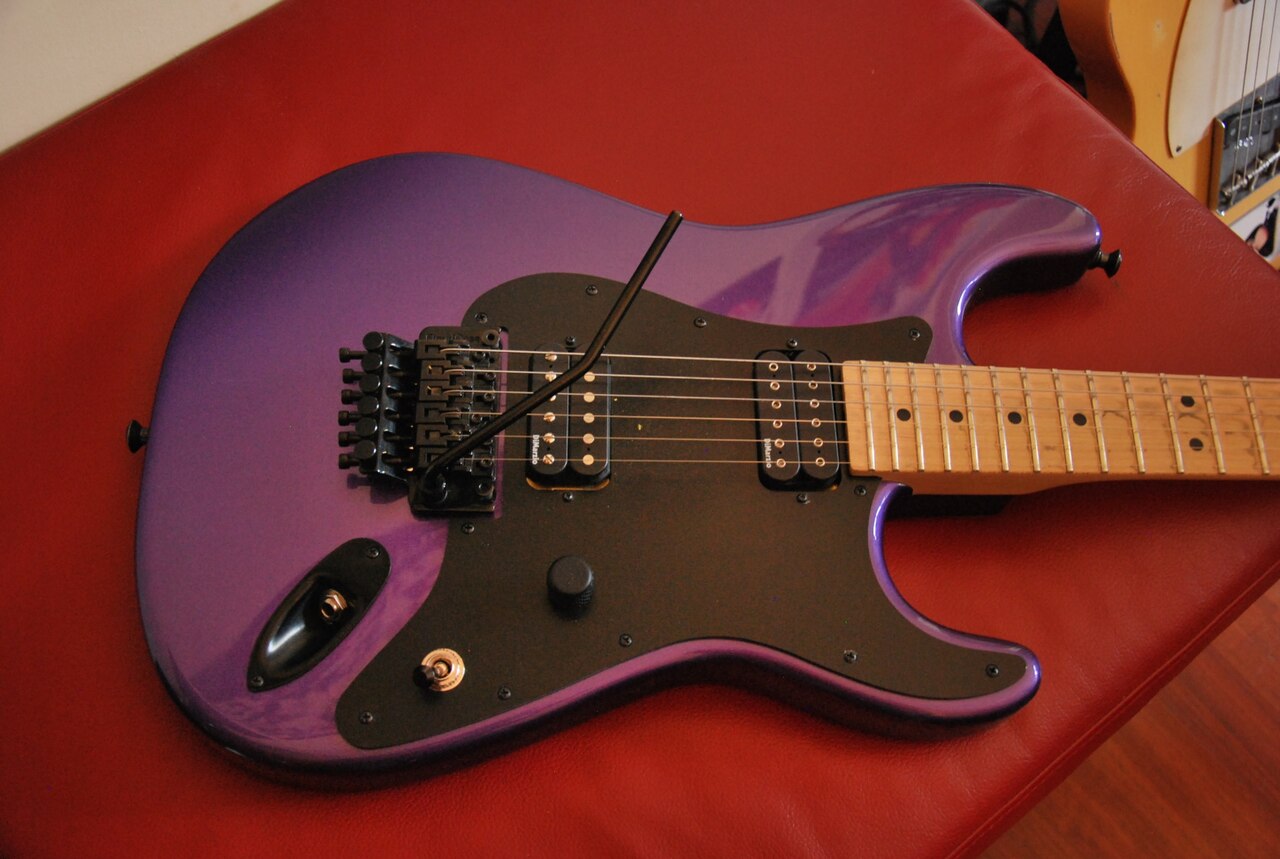
- A Charvel So-Cal Style 1 HH in Candy Plum: Freebird from Madrid, Spain, Wikimedia Commons, CC BY-SA 2.0.
- Top image: by Nick Soveiko, CC BY-SA 3.0.
- Marshall JCM800 2203: GuitarGangsters AI-generated reference illustration, not a photograph.
- Roland JC-120: Solomon203, Wikimedia Commons, CC BY-SA 4.0.
- Boss OD-1 OverDrive: Kuriosatempel, Wikimedia Commons, CC BY-SA 4.0.
- MXR Carbon Copy: MXR Carbon Copy by Roadside Guitars, Flickr, CC BY-SA 2.0.