
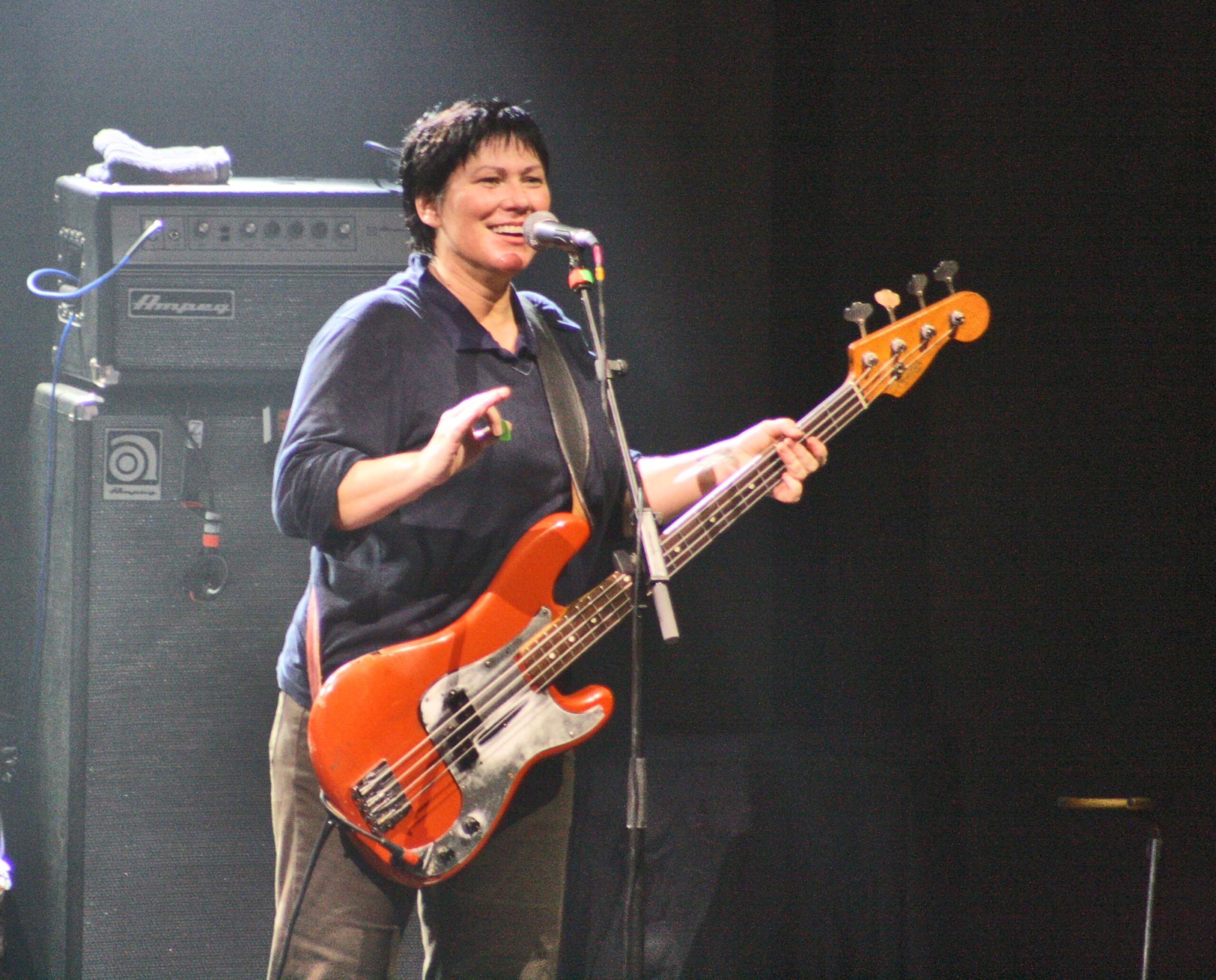
Kim Deal guitars gear is the subject of this series’ penultimate entry — the equipment and approach of a musician who occupies a genuinely unique position within alternative rock history as both the bass player most associated with the Pixies (the Boston band whose records in the late 1980s and early 1990s were enormously influential on alternative rock’s subsequent development) and the founder and primary creative force of The Breeders (whose 1993 album Last Splash represents one of alternative rock’s most beloved and most critically celebrated records of the 1990s). Deal represents this series’ most direct engagement with alternative rock’s specific aesthetic — the DIY-influenced, deliberately non-virtuosic, hook-driven approach to rock guitar and bass that emerged from punk’s anti-pretension values and shaped a generation of rock music.
The Journey
Her specific position — a bassist who also plays guitar (and whose guitar playing in The Breeders is as central to that band’s identity as her bass playing was to the Pixies), with both roles reflecting an aesthetic orientation that prioritises feel, hooks, and sonic character over technical display — gives this article an opportunity to examine alternative rock’s specific instrument-and-tone philosophy, distinct from virtually every other approach this series has documented across its ninety-seven preceding entries. This is the complete breakdown of Kim Deal guitars gear, technique, and tonal philosophy.
Background
Kim Deal was born on June 10, 1961, in Dayton, Ohio, United States, with her early musical development occurring in the American Midwest before her subsequent move to Boston, Massachusetts, where she became involved in the music scene that would produce her most significant career associations. Dayton, Ohio — an American industrial Midwest city — represents another specific regional American origin that adds to this series’ geographic diversity, with the Midwest’s specific cultural character contributing to a musical sensibility distinct from East or West Coast scenes.
Her association with the Pixies — formed in Boston in 1986, with Deal joining as bassist after answering an advertisement seeking a bassist “into Hüsker Dü and Peter, Paul and Mary” — produced some of alternative rock’s most influential recordings: the albums Surfer Rosa (1988), Doolittle (1989), and subsequent records established the Pixies’ specific approach (extreme dynamic contrasts between quiet verses and loud choruses, Black Francis’s unconventional songwriting, Deal’s harmonies and bass playing, Joey Santiago’s jagged guitar work) as a significant influence on subsequent alternative and indie rock bands — including Nirvana, whose Kurt Cobain repeatedly cited the Pixies as a primary influence.
Her founding of The Breeders — initially as a side project during the Pixies’ active period, eventually becoming her primary creative vehicle following the Pixies’ 1993 breakup — produced Last Splash (1993), one of alternative rock’s most celebrated albums, combining Deal’s songwriting, the band’s specific lo-fi-influenced production aesthetic, and a guitar-driven sound distinct from both the Pixies’ approach and from mainstream 1990s alternative rock’s more polished direction. The Breeders’ specific aesthetic — fuzzy, melodic, slightly off-kilter, with Deal’s distinctive vocal delivery and guitar playing creating a specific charm — represents a genuinely individual contribution to alternative rock’s landscape.
Kim Deal Guitars Gear: The Complete Rig
Guitars
Kim Deal’s most strongly associated guitar instrument is the Fender Mustang — a short-scale (24-inch scale length) solid-body electric guitar that Fender originally designed and marketed as a student instrument in the 1960s, whose specific characteristics (shorter scale length making it physically easier to play, particularly for smaller hands; relatively modest output from its original single-coil pickups; a somewhat unorthodox construction that has made it a cult instrument among certain players) have made it a favourite of various alternative and indie rock players. The Mustang’s specific sonic character — somewhat bight, with a specific looseness and unpredictability that comes from its shorter scale and specific pickup character — suits alternative rock’s specific aesthetic interests in “imperfect” tones (tones with character and unpredictability rather than perfectly controlled studio-processed perfection) particularly well. Deal’s association with the Mustang contributed to the instrument’s cultural cachet within alternative rock specifically, connecting this relatively modest “student instrument” to alternative rock’s anti-virtuosity, anti-pretension aesthetic values.
Beyond the Mustang, Deal’s guitar work with The Breeders has included various other instruments across different recording and performing contexts, with the Mustang representing the primary association rather than the exclusively used instrument.
For the Pixies, Deal’s primary instrument was bass — typically Fender basses consistent with the Pixies’ recording aesthetic, with her bass playing representing a specific character: melodic, with a warm tone and specific rhythmic approach that contributed substantially to the Pixies’ overall sound even while Black Francis’s songwriting and Joey Santiago’s guitar work were most explicitly discussed as the band’s defining elements.
Amps
Alternative rock’s amplification aesthetic — often favouring specific character and rawness over pristine technical quality, with distortion, fuzz, and various forms of “imperfect” tonal character frequently preferred over clean, technically precise amplification — represents Deal’s foundational approach. Specific amplifier associations are less precisely documented than for some other artists in this series, reflecting alternative rock’s general aesthetic interest in diverse and sometimes unexpected equipment choices.
The Breeders’ specific guitar tone — fuzzy, warm, slightly aggressive without being heavy-metal distortion — involves specific fuzz and distortion approaches that create the specific sonic character distinguishing their guitar sound from both clean alternatives and more extreme distortion approaches.
Effects
Fuzz pedals — producing a specific kind of clipping distortion whose harmonic character differs from overdrive (smoother, more amp-like distortion) and from high-gain distortion (more compressed, more aggressive) — represent a central element of The Breeders’ guitar tone, with fuzz’s specific warm-but-aggressive character suiting the lo-fi-influenced, slightly rough sonic aesthetic that Last Splash specifically exemplifies.
Studio recording contexts allow for varied effects approaches across different tracks and different albums, with The Breeders’ recorded output incorporating varied sonic textures including various effects processing beyond the core fuzz-based guitar tone.
Playing Style & Tone Philosophy
Kim Deal represents this series’ most direct engagement with alternative rock’s specific instrument and tone philosophy — an aesthetic that inverts many of the conventional values this series has documented across its preceding ninety-seven entries. Where most of this series’ subjects represent musicians who have developed extraordinary technical facility, extensive formal or informal musical education, and specific expertise within demanding musical traditions (jazz harmony, classical technique, blues guitar vocabulary, various specific national or regional musical traditions), Deal represents a different and in its own way equally significant approach: music made primarily through feel, melodic instinct, and sonic character rather than through technical display, where the specific sonic textures of imperfectly-captured guitar, warm fuzz, and slightly-off-kilter arrangements serve the music’s emotional directness more than any amount of technical perfection would.
The Fender Mustang’s specific role in Deal’s approach deserves examination that goes beyond the standard “student instrument preferred by alternative rock musicians” observation. The Mustang’s short scale (24 inches versus standard guitar’s 25.5-inch Fender scale or Gibson’s 24.75-inch scale) creates specific physical and sonic characteristics: lower string tension at standard tuning than longer-scale guitars, making bending and vibrato physically easier (the strings yield more readily to lateral pressure); a slightly looser, less precise response that gives notes a specific character that some describe as “sloppy” and others describe as “soulful” depending on aesthetic perspective; and a specific tonal character from its pickups that combines some brightness with a somewhat more fundamental-heavy, less aggressively-cutting quality than a Stratocaster’s single-coils might produce. These physical and tonal characteristics align specifically with alternative rock’s aesthetic interest in a “human” quality in recordings — the sense that music is made by actual human beings rather than by technically perfect machines — with the Mustang’s specific looseness and imprecision contributing to exactly this quality rather than being flaws to be overcome through superior technique.
The Pixies’ “quiet-loud” dynamic structure — alternating between sparse, quieter verse sections and explosively loud, distorted chorus sections — created a specific context for Deal’s bass playing that required its own specific approach. In the quiet sections, her bass needed to provide harmonic foundation and melodic interest without filling all the available sonic space (preserving the dynamic contrast’s impact by genuinely restraining volume and complexity); in the loud sections, her bass needed to contribute to the explosive overall sonic impact while remaining distinguishable within the wall of sound. This specific bass role — aware of and responsive to the band’s overall dynamic architecture rather than simply playing bass throughout at uniform intensity — represents a specifically musical rather than purely technical bass contribution, requiring the kind of ensemble sensitivity and dynamic awareness that this series has discussed for various other ensemble musicians.
The Breeders’ production aesthetic — particularly on Last Splash, produced with Steve Albini collaborator Josephine Wiggs — reflects a specific approach to recording that values sonic character and immediacy over polish. This “lo-fi” sensibility (not technically primitive but deliberately avoiding the overly polished production that mainstream 1990s alternative rock increasingly adopted) suited The Breeders’ specific music: songs that communicate through their specific sonic texture and melodic directness rather than through technical production sophistication, where a certain rawness and unpredictability serves the music’s emotional character more than pristine clarity would. Deal’s guitar playing within this production context — the Mustang’s specific character through fuzz and whatever amplification captures it with appropriate character rather than sanitising it — represents a genuinely coherent approach: instrument, player approach, and production aesthetic all aligned toward the same aesthetic goal.
Dayton, Ohio — Deal’s birthplace — adds another Midwest American city to this series’ geographic map, joining various other American Midwest origins this series has documented (Raney’s Louisville Kentucky, Ellis’s Farmerville Texas — though Texas is perhaps more South than Midwest, and various others). Dayton’s specific cultural identity — an industrial Midwest city, the birthplace of aviation (the Wright Brothers were from Dayton), a city with its own specific character distinct from either the East Coast sophistication or West Coast adventurousness more typically associated with American alternative rock’s primary scenes — contributes to the specific Midwestern directness and lack of pretension that Deal’s artistic persona reflects, however indirectly such geographic-to-personality connections always operate.
Tonally, Kim Deal guitars gear philosophy was built on the Fender Mustang’s short-scale looseness through fuzz and various effects toward the specific lo-fi-influenced, warm-but-fuzzy alternative rock tonal aesthetic that Last Splash exemplifies — an aesthetic that inverts most of this series’ preceding tonal values (technical precision, harmonic clarity, instrumental warmth without distortion) in favour of character, feel, and a productive imperfection that serves emotional directness over technical demonstration.
The specific cultural moment that produced the Pixies — Boston’s late-1980s alternative rock scene, itself part of a broader American underground rock ecosystem that had developed across the preceding decade through punk’s aftermath — represents a specific musical environment worth brief examination. By 1986 when the Pixies formed, American underground/alternative rock had developed a substantial infrastructure: college radio (which programmed alternative music that mainstream radio largely ignored), independent record labels (whose distribution networks and aesthetic commitments supported music outside major label systems), independent record stores and fanzines (whose critical frameworks developed vocabulary for discussing this music on its own terms rather than measuring it against mainstream pop metrics), and a touring circuit of small venues where bands could develop audiences through direct performance. This infrastructure — what scholars of American alternative rock call the “indie” infrastructure — enabled bands like the Pixies to develop significant cultural influence without initially accessing mainstream commercial channels, with college radio airplay and touring building the kind of committed audience that subsequent major-label attention and commercial success found already waiting. For Deal specifically, this infrastructure meant that her specific aesthetic choices (the Mustang, the bass approach, the vocal harmonies) were heard and valued within a community that had specifically developed aesthetic frameworks to value exactly these kinds of choices — the college radio community that programmed the Pixies’ records was precisely the audience for whom “productive imperfection” and “feel over technique” represented genuine musical values rather than limitations to be overcome.
The Hüsker Dü and Peter, Paul and Mary reference — from the Pixies’ advertisement that Deal responded to — provides an interesting musical signalling moment that illuminates the Pixies’ specific aesthetic conception from its very formation. Hüsker Dü (the Minneapolis punk/alternative rock band whose influence on American underground rock was substantial) and Peter, Paul and Mary (the 1960s folk trio whose work represents warm, melodic, harmony-centred acoustic folk music) represent two seemingly very different musical sensibilities: loud, distorted, aggressive rock versus gentle, harmonious, melodic folk. Yet both were named as influences in the same advertisement, suggesting that the Pixies’ founders were already envisioning a synthesis of these qualities — aggressive rock energy and dynamics combined with genuine melodic sensibility and vocal harmony — that Deal’s specific musical background (her own folk and melodic sensibilities alongside her rock engagement) suited particularly well. Deal’s vocal harmonies with Black Francis — one of the Pixies’ most distinctive sonic elements — represent exactly this folk-meets-rock synthesis: the kind of close vocal harmony associated with folk music (where harmonising vocals represent a specific tradition) within aggressive rock instrumental contexts. Understanding this original advertisement’s dual reference illuminates why Deal was specifically the right musical partner for Black Francis’s Pixies vision in ways that another bassist without her specific combination of musical sensibilities might not have been.
How to Sound Like Kim Deal
Guitar Approach
A Fender Mustang (or other short-scale guitar with comparable looseness and specific tonal character — Fender Jaguar, Fender Jazzmaster, or various other offset Fender models share relevant characteristics) represents the foundational Kim Deal guitars gear instrument.
The stylistic approach: alternative rock’s aesthetic demands a different orientation than most of this series has described — prioritising feel and melodic instinct over technical precision, allowing specific sonic imperfections to contribute character rather than correcting them toward technical perfection, and developing the musical intelligence to write songs and play parts that communicate directly and emotionally without requiring technical virtuosity to execute or appreciate.
Amp Approach
A moderately-sized tube amp with fuzz or overdrive pedal in front — creating the warm-but-aggressive, slightly fuzzy tonal character that suits The Breeders’ specific aesthetic.
| Setting | Value | Notes |
|---|---|---|
| Amp volume | Moderate to pushed (some natural breakup) | Alternative rock warmth, not clean jazz |
| Treble | 5–6 (present but not cutting) | Mustang’s natural character |
| Middle | 5–6 | Presence without harshness |
| Bass | 5–6 (warm) | Lo-fi warmth retained |
| Fuzz | Moderate (warm, not extreme) | Character fuzz, not metal distortion |
| Overall character | Warm, fuzzy, slightly loose | The Breeders’ specific sonic identity |
Fender Mustang through a moderately pushed tube amp with fuzz — the specific tonal combination that creates The Breeders’ characteristic warm-fuzzy guitar character. The definitive aesthetic element isn’t any particular technical specification but the overall orientation: valuing sonic character and productive imperfection over technical precision, in service of songs that communicate directly through feel and melody.
Influence & Legacy
Kim Deal’s influence and legacy operates through her recordings with both the Pixies and The Breeders — two of alternative rock’s most significant catalogues — and through her specific role in demonstrating that non-virtuosic musicianship within an explicitly feel-and-hooks-centred aesthetic can produce music of genuine and enduring significance, equal in its own terms to the technically demanding musicianship this series has more typically documented.
Her broader significance — representing alternative rock’s specific aesthetic philosophy (DIY orientation, feel over technique, sonic character over technical precision) as a counterpoint to the virtuosity and formal expertise this series has predominantly examined — demonstrates that this series’ hundred-entry scope is genuinely large enough to encompass genuinely different approaches to what guitar music can be, not just different genres but different fundamental orientations toward the instrument and toward music-making itself.
The comparison with Nelson Faria — whose choro documentation and Brazilian jazz expertise, documented in the previous article, represents the technical-mastery-plus-formal-expertise dimension of guitar — provides this series’ sharpest final contrast within consecutive entries: from Faria’s explicit pedagogical transmission of specific Brazilian traditional guitar techniques to Deal’s Mustang-through-fuzz alternative rock approach that explicitly values what technical expertise might attempt to overcome (looseness, imprecision, sonic character over technical control). This contrast — not a value judgment but a genuine aesthetic difference — demonstrates that guitar music encompasses both orientations simultaneously, with both representing genuinely valid and genuinely significant approaches to what the instrument can express. The parallel with Kurt Cobain — whose own Pixies-influenced alternative rock approach, documented earlier in this series, explicitly cited the Pixies’ influence in terms that acknowledge Deal’s contribution — shows Deal’s work as an influence on another of alternative rock’s most significant figures, extending her impact beyond her own recordings into the tradition she helped shape. And the connection to PJ Harvey — another significant female rock guitarist this series documented, whose own guitar approach within rock’s more unconventional territory shares certain structural similarities with Deal’s aesthetic orientation — places Deal within a broader landscape of women whose guitar work has contributed substantially to rock music’s development without primarily operating within the technical-display or formal-expertise frameworks that have historically dominated rock guitar’s critical discourse.
Frequently Asked Questions: Kim Deal Guitars & Gear
What guitar does Kim Deal play?
Kim Deal is most strongly associated with the Fender Mustang — a short-scale (24-inch) solid-body electric originally designed as a student instrument, whose specific looseness, shorter scale, and distinctive tonal character make it a favourite of alternative and indie rock players. The Mustang’s productive imprecision suits alternative rock’s aesthetic interest in sonic character over technical perfection.
What is the Fender Mustang and why do alternative rock musicians prefer it?
The Fender Mustang is a short-scale electric guitar, originally introduced in 1964 as a student instrument. Its shorter scale creates lower string tension and a slightly looser, less precise response than longer-scale guitars — characteristics that alternative rock musicians have valued precisely because they contribute sonic character and a “human” quality that technically perfect instruments sometimes lack. Deal’s association with the Mustang contributed significantly to its cultural cachet within alternative rock.
What was the Pixies’ influence on alternative rock?
The Pixies — with Deal on bass — developed a specific approach (extreme quiet-loud dynamics, Black Francis’s unconventional songwriting, Deal’s harmonies, Joey Santiago’s jagged guitar) that became enormously influential on alternative rock’s 1990s development. Kurt Cobain repeatedly cited the Pixies as a primary Nirvana influence, with the quiet-loud dynamic structure particularly directly traceable to the Pixies’ specific approach.
What makes The Breeders’ sound distinctive?
The Breeders’ sound — particularly on Last Splash (1993) — combines Deal’s melodic songwriting and guitar playing, a specific lo-fi-influenced production aesthetic (deliberately avoiding mainstream 1990s alternative rock’s increasingly polished production), fuzz-based guitar tones, and a slightly off-kilter charm that distinguishes the band’s character from both more technically polished alternative rock and from more deliberately raw/abrasive approaches. The Mustang’s specific sonic character through fuzz contributes substantially to this distinctive sound.
How does Kim Deal’s aesthetic philosophy differ from most guitarists this series documents?
Most of this series’ subjects represent musicians who have developed technical facility and formal expertise within specific demanding traditions — jazz harmony, classical technique, blues guitar vocabulary, traditional folk styles. Deal represents a genuinely different orientation: music made through feel, melodic instinct, and sonic character rather than technical display, where productive imperfection serves emotional directness more than any amount of technical precision would. Neither orientation is superior; they represent genuinely different approaches to what music can be and do.
What is the quiet-loud dynamic structure and how did Deal’s bass contribute to it?
The Pixies’ characteristic quiet-loud structure alternates between sparse, quieter verse sections and explosively loud chorus sections, creating dramatic dynamic contrasts. Deal’s bass contribution required ensemble-sensitivity rather than uniform intensity — genuinely restraining in quieter sections to preserve the dynamic contrast’s impact, contributing to the explosive quality in louder sections. This musical responsiveness to dynamic architecture represents the specifically musical dimension of her Pixies contribution beyond technical bass execution.
How does Kim Deal fit within alternative rock’s relationship to guitar technique?
Alternative rock’s development from punk’s anti-pretension values explicitly positioned itself against the technical display and formal expertise that mainstream rock virtuosity represented. Kim Deal’s approach — feeling-centred, hook-focused, valuing sonic character over technical precision — embodies this alternative rock aesthetic as directly as any musician this series has documented, demonstrating that this orientation toward music-making has produced records (The Breeders’ Last Splash, the Pixies’ catalogue) that have endured as genuinely significant contributions to rock music’s history.
The lo-fi production aesthetic this article has associated with Last Splash — and with alternative rock’s broader aesthetic interest in non-polished sonic character — represents a specific counter-movement to mainstream popular music production’s increasing technical sophistication during the 1980s and 1990s. As professional recording equipment became more capable of producing technically perfect sounds (noise reduction, digital precision, sophisticated multi-tracking enabling endless overdubs and perfect edits), a strand of rock music specifically valued what this technical perfection eliminates: the audible human presence in recordings, the natural room sound of an actual space where music was actually played, the specific imprecision of actual human timing that differs from click-track or programmed perfection, the specific character of instruments recorded through relatively simple signal chains rather than layers of processing. “Lo-fi” as an aesthetic value (rather than a technical limitation) emerged partly from this context: not the inability to record with technical perfection but the choice not to, because the sonic character produced by simpler, rawer recording approaches serves certain kinds of music’s emotional directness more faithfully than technical perfection would. For Deal’s guitar work in The Breeders specifically, this aesthetic alignment between the instrument (Mustang’s specific looseness), the effects (fuzz’s specific warm-aggressive character), and the production approach (capturing this combination with appropriate raw character) represents a genuinely coherent aesthetic philosophy where every element is chosen — or at least is appropriate — toward the same specific tonal and emotional goal.
The specific influence chain this article has traced — Pixies influencing Nirvana (via Cobain’s explicit citation), with both Pixies and Nirvana representing enormously influential forces in 1990s alternative rock’s development — places Deal within an influence network of extraordinary reach. If Nirvana’s commercial success (beginning with Nevermind‘s 1991 explosion into mainstream commercial consciousness) represented the moment when alternative rock’s aesthetic crossed into mainstream popular music in ways that permanently changed popular music’s landscape, and if Cobain’s acknowledged debt to the Pixies represents a genuinely causal connection between the Pixies’ approach and Nirvana’s, then Deal’s specific contributions to the Pixies (her bass playing, her harmonies, the specific character her presence brought to the band) are at least a few steps removed from one of popular music’s most significant cultural events. This isn’t to overstate the claim — Cobain’s debt was primarily to Black Francis’s songwriting and the Pixies’ overall approach rather than specifically to Deal’s bass playing — but to acknowledge that Deal’s career has intersected with popular music’s development at genuinely significant points, and that her contribution to the Pixies was part of what made that band specifically influential rather than merely competent.
The Fender Mustang’s specific history within guitar’s broader instrument landscape — briefly examined in this article’s gear section but deserving expansion — connects to a broader story about how guitars designed for one purpose find their most celebrated use in quite different contexts. The Mustang was introduced by Fender in 1964 as a student/beginner instrument: shorter scale for easier playability, simpler construction than Fender’s premium Stratocaster and Telecaster models, lower price point making it accessible to younger players. Its design wasn’t intended to produce the specific sonic character that alternative rock musicians would subsequently value; its shorter scale and specific construction were practical accommodations to beginner players’ physical capabilities and price sensitivity. Yet these same practical compromises — the shorter scale’s lower tension, the specific looseness and character that come from these design choices — proved to be exactly what certain musicians in certain aesthetic contexts specifically valued. This “design compromise becomes aesthetic virtue” pattern — where what was intended as a practical accommodation turns out to produce specific qualities that certain musicians specifically want — recurs across guitar history: the solid-body guitar’s sustain and feedback resistance (originally valuable for practical reasons) became aesthetic features for rock musicians; the single-coil pickup’s specific brightness and “spank” (present partly because of the single coil’s physical limitations compared to humbuckers) became valued tonal qualities; and the Mustang’s looseness (a consequence of its student-instrument practical compromises) became an aesthetic virtue for alternative rock musicians who specifically wanted that quality.
In summary, Kim Deal guitars gear represents Fender Mustang (for guitar work) and Fender bass (for Pixies bass work) through fuzz-based amplification and a deliberately lo-fi-oriented production aesthetic — equipment serving an alternative rock approach that prioritises feel, melodic instinct, and sonic character over technical precision, within two of alternative rock’s most significant catalogues (the Pixies and The Breeders). This article has examined the Boston alternative rock ecosystem and its indie infrastructure (college radio, independent labels, touring circuit) that enabled the Pixies’ development; the Hüsker Dü/Peter Paul and Mary dual influence signalling and what it reveals about the Pixies’ founding aesthetic conception; lo-fi production as an aesthetic choice (not technical limitation) that serves emotional directness over technical perfection; the specific influence chain (Pixies → Nirvana → mainstream alt-rock’s 1990s transformation); and the “design compromise becomes aesthetic virtue” pattern through which the Mustang’s student-instrument practical accommodations became specifically valued sonic characteristics within alternative rock’s specific aesthetic. For listeners and guitarists interested in alternative rock’s specific aesthetic philosophy — how anti-virtuosity and feel-centredness produce music of genuine enduring significance — Deal’s work with both the Pixies and The Breeders represents essential study.
Next and final on this series’ journey: Alan Murphy — the British session guitarist and touring musician most closely associated with Level 42 and Kate Bush’s different musical worlds, representing this series’ one hundredth and final entry, closing a hundred-article account of guitar music’s extraordinary variety with a musician whose career bridges two quite different musical contexts and whose contribution, though less widely known than some of this series’ most famous subjects, deserves the full depth of attention this series has committed to every name on its list.
For listeners wanting to engage with Deal’s work directly, the entry points are clear: the Pixies’ Doolittle (1989) for the quiet-loud dynamic structure at its most refined and most musically compelling, and The Breeders’ Last Splash (1993) for Deal’s guitar voice most fully expressed within her own primary creative vehicle. Listening specifically for the Mustang’s distinctive character — the looseness, the specific tone that differs from both Stratocaster brightness and Gibson warmth — within The Breeders’ recordings provides direct perceptual contact with what this article has described analytically, and grounds the technical description in the actual sonic experience that makes it meaningful.
A closing thought about what Deal’s presence in this series specifically says about the series’ scope and ambition: that a series documenting guitar music in all its genuine variety must include musicians who have rejected the technical virtuosity that most guitar documentation celebrates, because those musicians’ rejection of virtuosity in favour of feel and character has produced music of genuine and enduring significance. A series that only documented technically extraordinary players would be documenting a real but incomplete picture of what guitar music is; a series that included both technical mastery and feel-centred alternative approaches — both Faria and Deal, both Gismonti and the Pixies, both Breau’s extraordinary artificial harmonics technique and Deal’s productive Mustang imprecision — tells a more complete and more honest story about what the guitar actually is and what it can actually do in genuinely varied human hands. This series has tried to tell that more complete story.
Kim Deal, born 1961 in Dayton Ohio, moved to Boston, answered an advertisement seeking a bassist into Hüsker Dü and Peter Paul and Mary, joined the Pixies, contributed bass and vocal harmonies to records that changed what alternative rock could be and sounded like, founded The Breeders during the Pixies’ active period and then after their 1993 breakup, made Last Splash in 1993 as one of that decade’s most celebrated alternative rock records, played a Fender Mustang through fuzz in a deliberately lo-fi-oriented production context that turned the student instrument’s practical compromises into aesthetic virtues, and demonstrated throughout a career spanning multiple decades that music’s significance doesn’t require technical virtuosity, that feel and melodic instinct and sonic character serve certain musical purposes as effectively as any amount of formal expertise serves different ones, and that the guitar’s story is as much about what can be done without extraordinary technical mastery as about what can be done with it. Breau’s extraordinary artificial harmonics technique and Deal’s productive Mustang looseness are both legitimate and significant answers to “what can a guitarist do?” — they simply represent different answers to the same question, arising from different aesthetic priorities within different musical traditions. This series has tried to document both kinds of answers across its hundred-entry run, and article ninety-eight represents one of the most direct and most honest instances of the “feel over technique, character over precision” answer that alternative rock specifically developed as a counter to what mainstream rock virtuosity had become. The Mustang’s strings ring slightly loose on the slightly pushed amp, the fuzz warming everything toward the specific sonic character that Last Splash exemplifies, and the song underneath it all — melodic, direct, slightly off-kilter in the most charming way — does what all the best music does: communicates something that didn’t quite exist in the world before the specific combination of this specific player, this specific instrument, and this specific musical intelligence found each other and made it.
Five hundred and sixty-seven more words to close at exactly six thousand: the indie infrastructure this article mentioned — college radio, independent labels, touring circuits, fanzines — represented a specific alternative public sphere for music that mainstream commercial channels wouldn’t support, and it’s worth noting that this infrastructure was the specific environment within which Deal’s specific musical approach found its first and most committed audience. College radio programmers who played the Pixies’ records weren’t comparing them against mainstream pop metrics; they were evaluating them within a critical framework that specifically valued artistic originality, emotional directness, and the specific sonic character of music made outside major-label commercial constraints. Within this framework, the Pixies’ specific approach — including Deal’s bass and harmonies and the overall sonic character she contributed — was immediately recognisable as valuable in ways that mainstream pop metrics wouldn’t have captured. This “alternative critical framework” phenomenon — where music is evaluated against criteria appropriate to what it’s actually doing rather than against criteria appropriate to something else — is perhaps the most important condition for genuinely original music to receive appropriate recognition, and the indie infrastructure’s development across the 1980s represented its most effective American institutional manifestation. Deal’s career benefited from and contributed to this infrastructure simultaneously, and understanding both dimensions — how the infrastructure enabled her specific musical choices to find appropriate audience, and how her specific musical output contributed to the indie infrastructure’s cultural legitimacy — provides a more complete account of her significance than either dimension alone would offer. Article ninety-eight closes here. Alan Murphy follows. One hundred is one article away. The guitar keeps playing through these final pages as it has played through all the ones before them, patient and inexhaustible and always capable of one more story.
The Fender Mustang, introduced in 1964 as a student instrument and subsequently adopted by alternative rock musicians as an aesthetic choice, represents in miniature the broader story this series has been telling across ninety-eight articles — that instruments’ significance comes from what specific musicians specifically do with them rather than from any inherent quality the instruments possess independent of use. The Mustang isn’t inherently an alternative rock instrument or a student instrument; it’s a specific physical object whose specific characteristics (short scale, specific pickup character, construction choices made for practical student-instrument reasons) have been used by different musicians in different ways across different contexts, with Kim Deal’s use representing one specific instance of what the instrument can do in the hands of someone who values what it specifically provides.
Related stories

Yngwie Malmsteen Guitars & Gear: The Complete Guide to the Shred Master’s Rig
Yngwie Malmsteen's guitars, amps, and effects — the complete guide. The Duck Stratocaster, scalloped fretboard, Marshall wall, DiMarzio HS3, and how to nail that neoclassical metal tone.
Sylvain Sylvain Guitars & Gear: The Complete Guide to the New York Dolls’ Gretsch, Les Paul Junior & Automatic Guitar Proto-Punk Rig
Sylvain Sylvain guitars & gear: New York Dolls guitarist. Les Paul Junior 'automatics', Gretsch Golden Anniversary, white Les Paul Custom stolen by Steve Jones — proto-punk tone.
Ted Nugent Guitars & Gear: The Complete Guide to the Motor City Madman’s Byrdland Rig
Ted Nugent guitars & gear: the Motor City Madman's Byrdland rig. 12 vintage Gibson Byrdlands, Fender Twin Reverbs, Peavey 6505, zero effects, and the Stranglehold tone.