Frank Black (Pixies) Guitars & Gear: The Complete Guide to Alternative Rock’s “Just a Piece of Wood” Approach
Frank Black's guitars, amps, and effects — the complete guide. Vintage Fender Telecasters two stock 1950s live, 1950s Martin D-28 D-18 acoustic, cherry 1963 Gibson SG Junior P-90 angry tone, vintage Vox AC30 heads Weber MiniMASS, Klon Centaur overdrive, 1-knob Duh silicon fuzz Joe Gore, Healy Guitars Healer wisdom tooth 2023, 'I just play them until they break just a piece of wood', Boston Massachusetts Long Beach California, Doolittle Surfer Rosa, and Pixies frontman's complete rig.
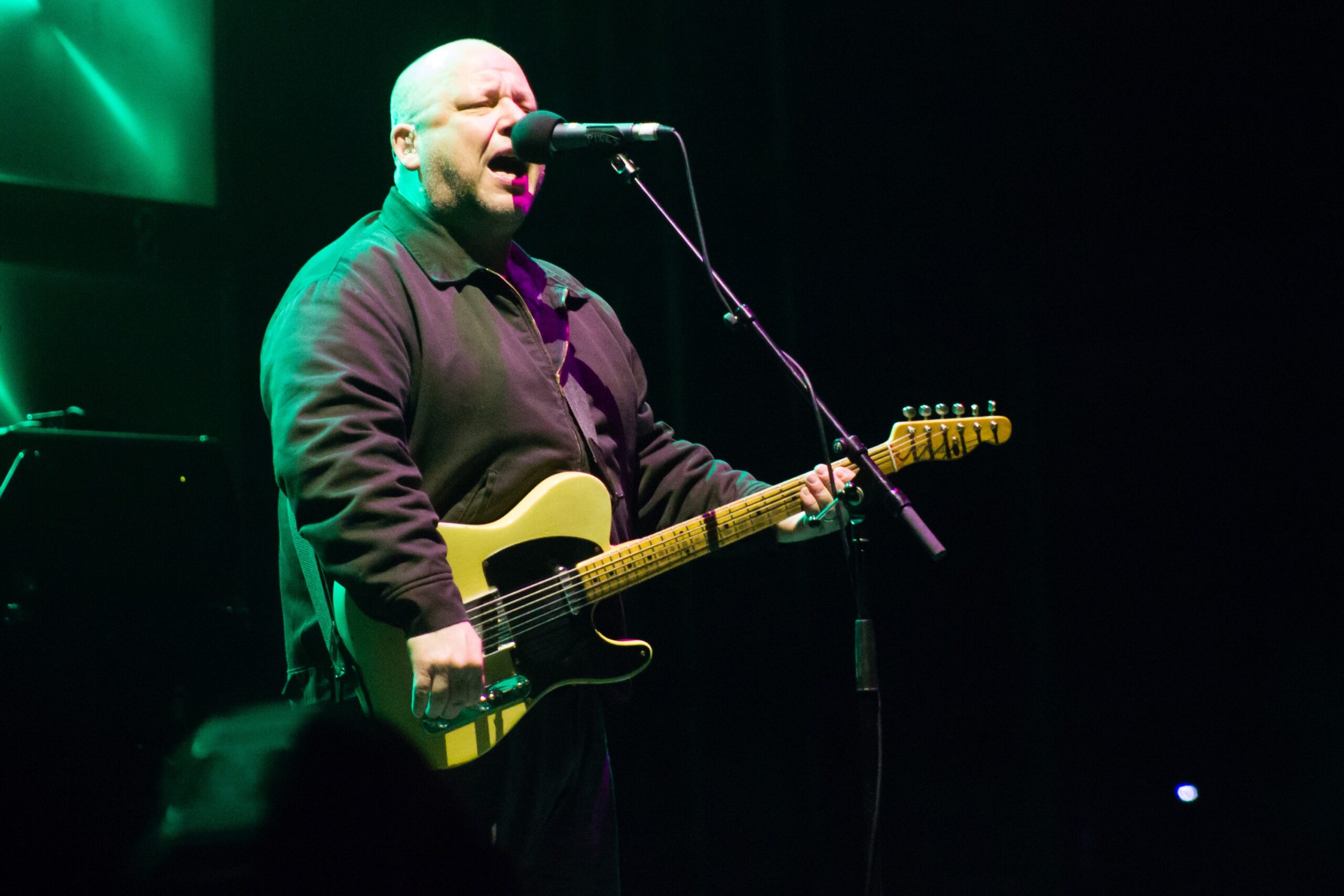
Photo by Bene Riobó, licensed under CC BY-SA 3.0 (https://commons.wikimedia.org/wiki/File:Frank_Black.jpg)
Gear Timeline
“I bring all my vintage stuff with me on the road, I don’t treat them as museum pieces. I just play them until they break and when they break, I get them fixed. And if they can’t be fixed, then I just throw it away. I don’t care how much it’s worth, it’s just a piece of wood.” Frank Black said this to Guitar.com in 2019, and it is simultaneously the most liberating and most cavalier statement about vintage instrument ownership in this entire guide. The frontman of the Pixies — one of the most critically celebrated and commercially significant alternative rock bands in history — brings his vintage 1950s Telecasters and 1950s Martin acoustics on the road, plays them until they break, gets them fixed, and would throw them away if they couldn’t be fixed. No museum cases. No velvet-lined display stands. No anxiety about depreciation or damage. Just piece of wood, just instrument, just music. The Premier Guitar 2014 Rig Rundown captures the complete rig at the Ryman Auditorium in Nashville: “Thompson keeps it single-coil simple with two stock vintage Teles and two ’50s Martins — a D-28 and a D-18. When he needs an angrier tone, he relies on the P-90 in his cherry 1963 Gibson SG Jr.” The vintage Vox AC30 heads. The Weber MiniMASS attenuator for smaller venues. The Klon Centaur for overdrive. The 1-knob Duh pedal for silicon fuzz — “built by none other than Premier Guitar senior editor Joe Gore.” In 2023, a custom Healy Guitars Healer was built for him with one of his wisdom teeth embedded in the body and maple from his property for the wood. His wisdom tooth. In the guitar. “Just a piece of wood” plus one wisdom tooth. This is the complete Frank Black gear philosophy.
The Journey
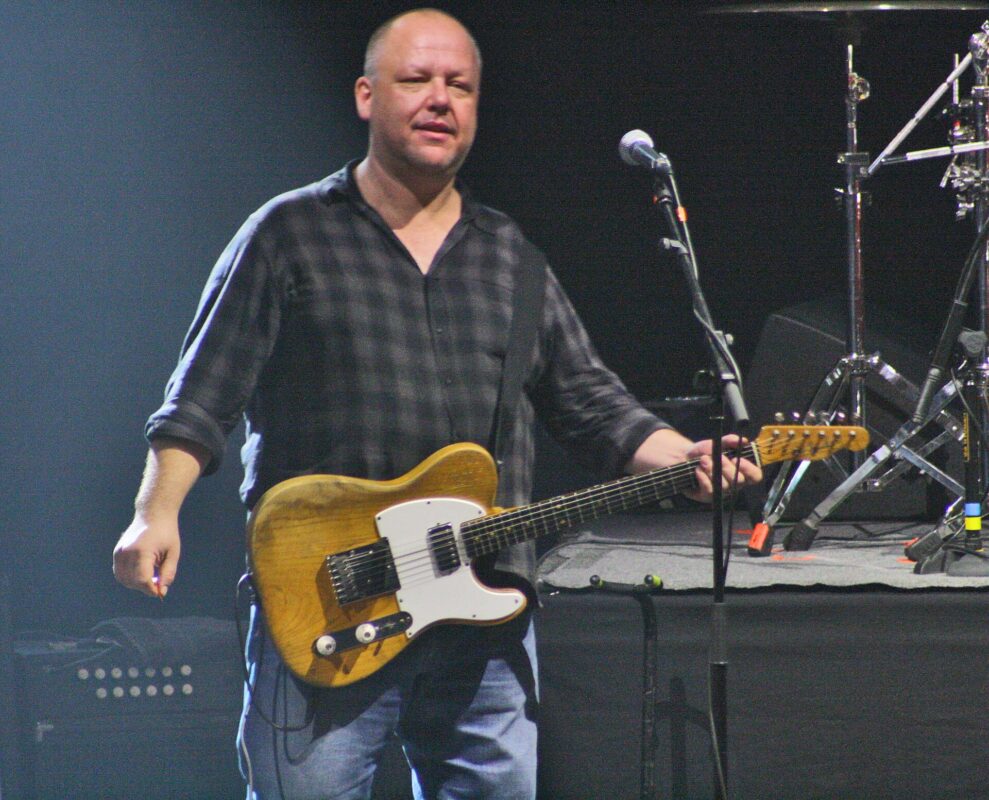
Charles Michael Kittridge Thompson IV — professionally Black Francis and formerly Frank Black — was born on April 6, 1965, in Boston, Massachusetts, and grew up primarily in Long Beach, California, after multiple childhood moves. He formed the Pixies in Boston in 1986 with guitarist Joey Santiago, bassist Kim Deal, and drummer David Lovering. The Pixies released four studio albums — Surfer Rosa (1988, produced by Steve Albini), Doolittle (1989), Bossanova (1990), Trompe Le Monde (1991) — before breaking up in 1993. He released multiple solo albums as Frank Black between 1993 and 2001 (Frank Black, Teenager of the Year, The Cult of Ray, Frank Black and the Catholics recordings) before the Pixies reformed in 2004. The reformed Pixies released Indie Cindy (2014), Head Carrier (2016), Beneath the Eyrie (2019), and Doggerel (2022). He is sixty-one years old. He is still playing the vintage Telecasters on the road. They are still just pieces of wood.
Background: Boston Massachusetts, Long Beach California, Pixies 1986, Steve Albini Surfer Rosa, Doolittle “Here Comes Your Man,” Breaking Up 1993, Solo Career, Reunion 2004
The Pixies’ specific cultural impact — as the band that Nirvana’s Kurt Cobain explicitly cited as the model for the quiet/loud dynamic that defined “Smells Like Teen Spirit” — is disproportionate to their actual commercial success during their original run. They did not have a US top-40 hit. They sold relatively modest numbers of records. But the specific approach they developed — the dynamic range from hushed, harmonically complex verse to explosive, distorted chorus; the combination of Black Francis’s oblique, literary, sometimes nonsensical lyrics with the specific guitar textures of Joey Santiago’s angular lead work; the use of Spanish-language passages alongside English-language ones; the specific production quality of Steve Albini’s Surfer Rosa — established a template for alternative rock that Nirvana, Radiohead, and dozens of other commercially successful bands drew from.
His own relationship to the guitar within the Pixies context is worth noting: he is the rhythm guitarist and primary songwriter, not the lead guitarist. Joey Santiago is the lead guitarist, providing the “angular and bent” lead lines that MTV’s Laurel Bowman called “the sonic plow” of the Pixies. Frank Black’s guitar role is the rhythmic, strummed foundation over which Santiago’s leads and Kim Deal’s bass lines operate. This is why his gear is “single-coil simple” — two stock vintage Telecasters, played until they break — rather than the elaborate lead-guitarist rigs of many musicians in this guide. He needs the right chord voicings, the right strumming attack, the right guitar-into-Vox-AC30 tone for the Pixies’ specific chordal guitar sound. That is what the vintage Teles and vintage Vox AC30 heads provide.
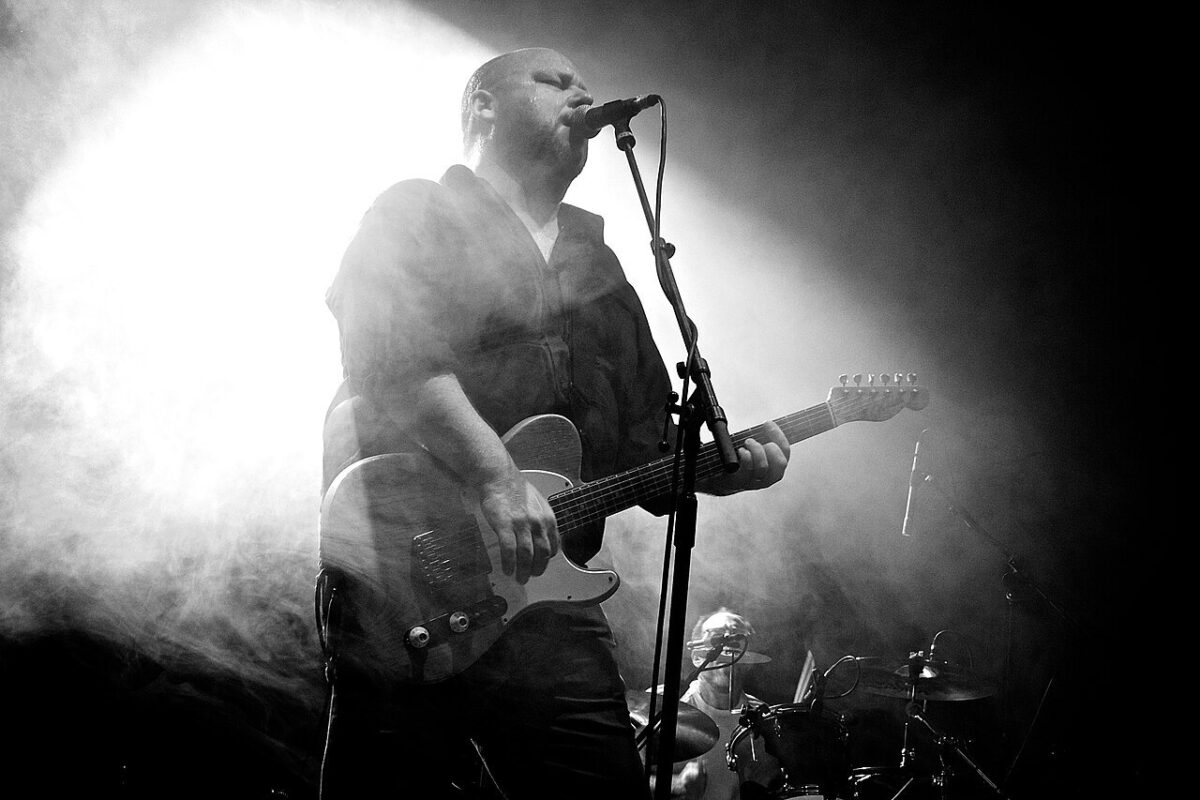
The Steve Albini relationship — Albini’s specific recording approach (live, minimal processing, natural ambience) applied to the Pixies’ specific sound on Surfer Rosa — produced the most celebrated single alternative rock recording of 1988. Albini’s philosophy: the musicians’ performances are the record; the studio is the mechanism for capturing those performances faithfully, not for creating them. Black Francis’s own approach to gear — vintage instruments played until they break, vintage amps, minimal effects — reflects the same foundational principle: the music is the thing; the instruments are the means.
The Rig: Frank Black’s Guitars, Amps, and Effects
Guitars
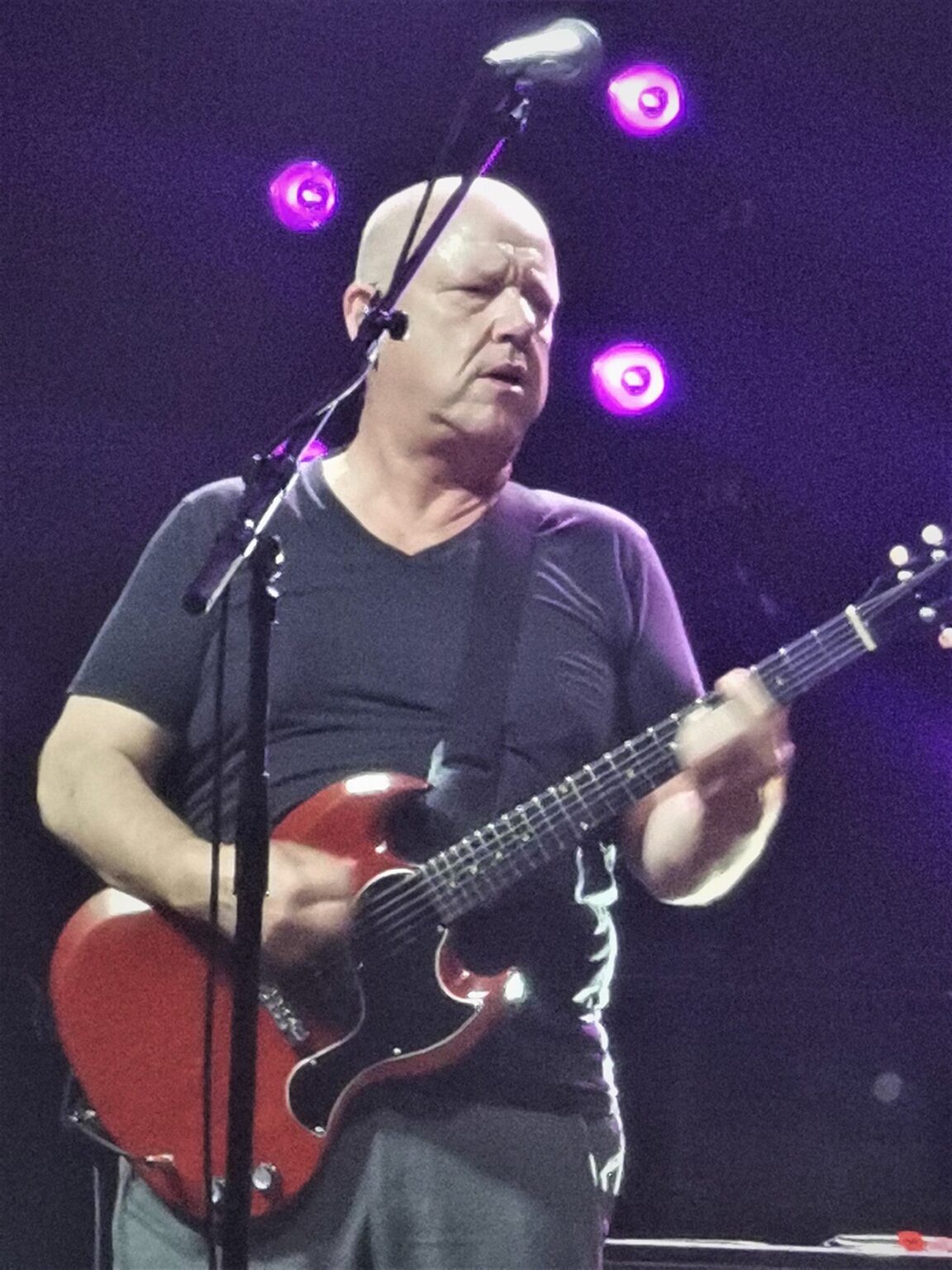
Frank Black’s primary guitars at the 2014 Ryman Auditorium Pixies show are “two stock vintage Teles” — the Premier Guitar Rig Rundown’s documentation of his live guitar setup. “Stock” is the operative word: not modified, not upgraded, not customized. Two vintage Fender Telecasters in their original configuration, played until they break, taken on tour without museum-level precaution. The Fender Telecaster — Leo Fender’s original solidbody electric guitar design — is in some ways the most utilitarian instrument in electric guitar history: a plank of wood (typically ash or alder), a bolt-on maple neck, two single-coil pickups, and minimal hardware. It is a “piece of wood” in the most literal sense. Black Francis’s choice of it as his primary live guitar is entirely consistent with his “just a piece of wood” instrument philosophy.
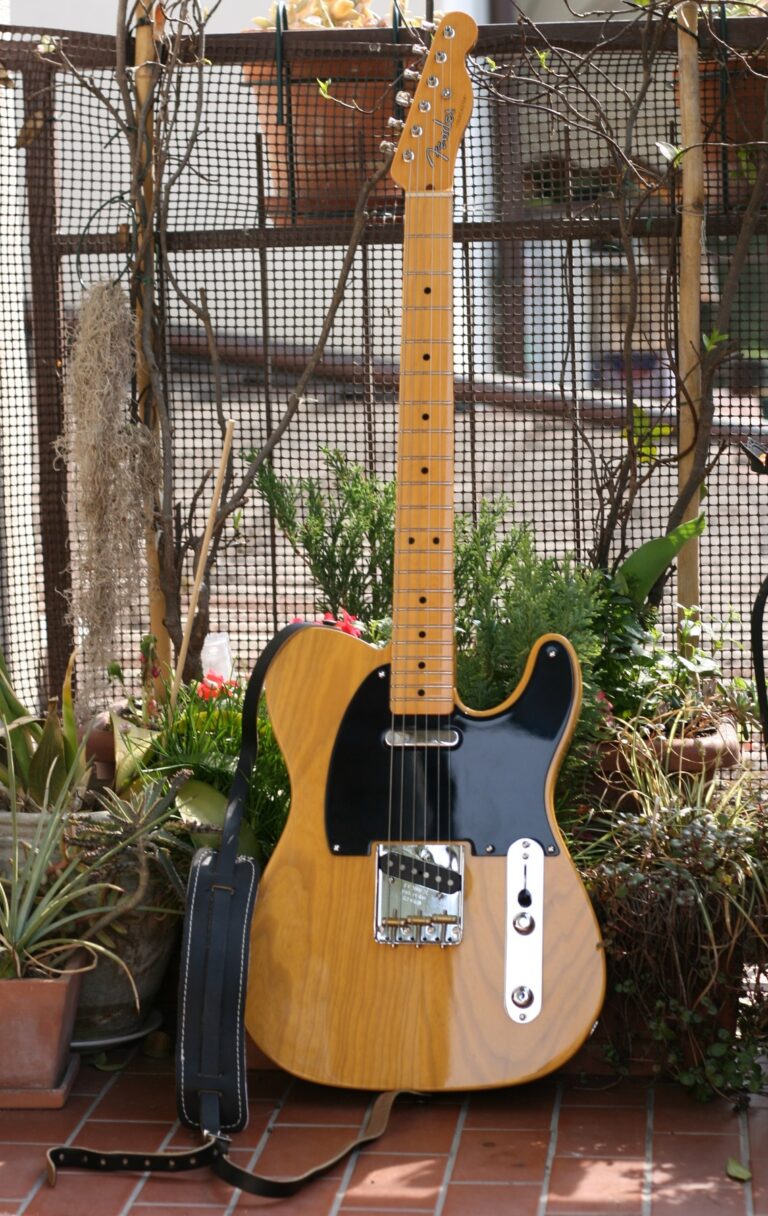
The specific vintage Telecasters he uses — the Fender American Vintage ’58 Telecaster is documented in his gear — are from the pre-CBS era, with the specific tonal character of the late-1950s construction: ash body, maple neck and fingerboard, the specific twangy, aggressive, clear single-coil character of the era’s pickups. Gemtracks confirms “Fender American Vintage ’58 Telecaster” as a documented guitar. The “two stock vintage Teles” for live use also includes a Vox AC30 head with AC50 cabinet combination (documented in Gemtracks).
The Premier Guitar Rig Rundown: “When he needs an angrier tone, he relies on the P-90 in his cherry 1963 Gibson SG Jr.” The 1963 Gibson SG Junior — the same simplified, single-pickup SG guitar that Leslie West and Dan Auerbach used for similar purposes — provides the P-90’s specific midrange-forward, aggressive single-coil character when the vintage Telecasters’ twangy brightness is not the right tonal response for a specific song. The 1963 dating places this in the early SG period (the SG design having replaced the Les Paul in 1961). The cherry finish is the period-correct SG color for the early 1960s production.
The Premier Guitar Rig Rundown: “two stock vintage Teles and two ’50s Martins — a D-28 and a D-18.” Two 1950s Martin acoustic guitars — both taken on tour, both played live. The Martin D-28 (with Brazilian rosewood back and sides in the pre-1969 production) and the Martin D-18 (with mahogany back and sides) represent two distinct acoustic tonal characters: the D-28’s brighter, more projecting rosewood warmth alongside the D-18’s warmer, more focused mahogany character. Both are pre-CBS-era vintage acoustics of significant monetary and historical value — and both go on the road with the Pixies, played until they break, treated as working instruments rather than collectibles. The Equipboard confirms the Martin D-18 with pickup in a specific NPR live performance: “Frank Black can be seen playing his pickup equipped Martin D-18.”
The Equipboard documentation: “Black Francis, the Pixies frontman, is confirmed to use the Healy Guitars Healer. This is evidenced by an Instagram post from Healy Guitars, which states they crafted a custom Healer guitar for him, incorporating unique features such as one of his wisdom teeth and maple from his property.” The Healy Guitars Healer with one of his wisdom teeth embedded in the body and maple from his own property is the most specifically personal instrument in this guide — a guitar that contains literal pieces of his body and literal wood from his land. This is the opposite of “just a piece of wood”: it is a piece of him.
Amps
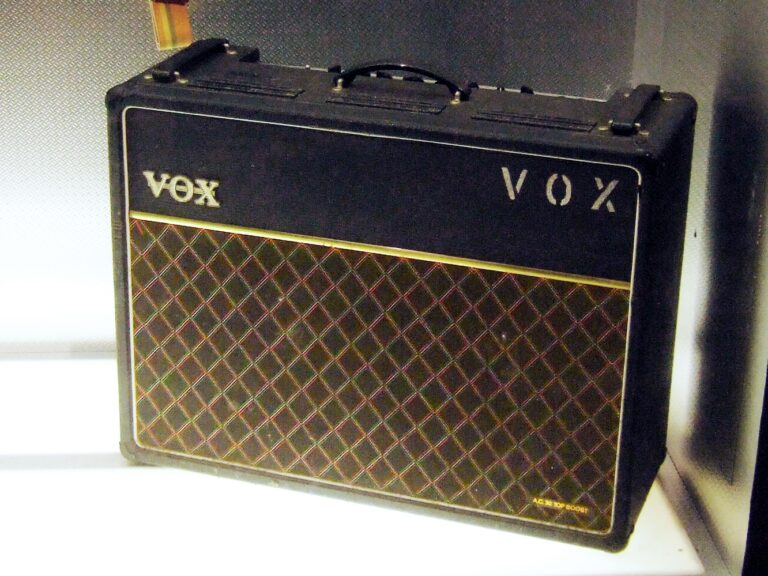
The Premier Guitar Rig Rundown: “Both Thompson’s Teles and Martins are run through vintage Vox AC30 heads driving Vox extension cabs.” Vintage Vox AC30 heads — the same 30-watt EL84 British amplifier that Steve Hillage, Matt Bellamy, Susanna Hoffs, and many other guitarists use — driving Vox extension cabinets. Running both the acoustic Martins and the electric Telecasters through the same vintage AC30 heads is the practical simplicity that defines his approach: one amplification system for all guitars, one signal chain, one consistent sound. The AC30’s specific character (EL84 warmth, the “top boost” channel’s chime, the natural compression of the British tubes) provides the specific tone of the Pixies’ rhythm guitar sound.
The Premier Guitar Rig Rundown: “Weber MiniMASS attenuators help him keep volume at reasonable levels for smaller venues such as the Ryman.” The Weber MiniMASS is a power attenuator — a device that sits between the amplifier’s speaker output and the speaker cabinet, reducing the volume of the amplifier’s output while allowing the amplifier to run at full power (and thus at full natural tube saturation). Using attenuators allows the vintage AC30 heads to run at their natural operating point — fully saturated, with all the specific harmonic richness of full-power EL84 operation — at volumes appropriate for a theater venue rather than an arena.
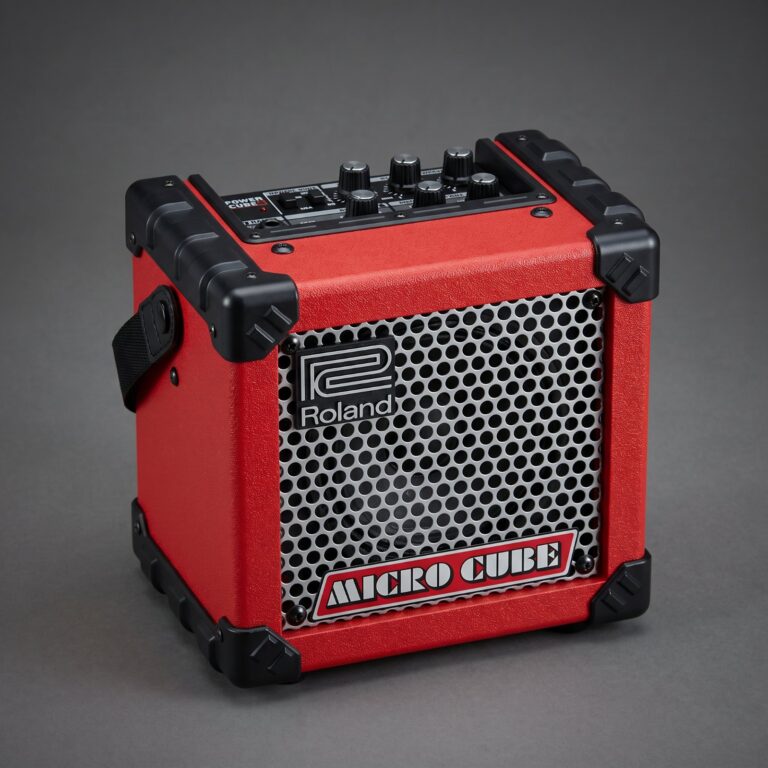
The Equipboard documentation: “The Roland Microcube in the front (definitely not a GX version, which has an extra knob) is Frank’s” — used in the NPR live performance where Joey Santiago’s amplifier handles the electric guitar sound and the small Roland Microcube serves for Frank Black’s acoustic Martin D-18 with pickup. The Roland Microcube — a battery-powered, extremely compact practice amplifier with built-in effects modeling — appearing in the context of a professionally recorded NPR broadcast is exactly the kind of pragmatic, no-nonsense choice consistent with the “just a piece of wood” philosophy. If the small Roland Microcube provides the right acoustic amplification for the specific song in the specific context, that is the right amplifier to use.
Effects
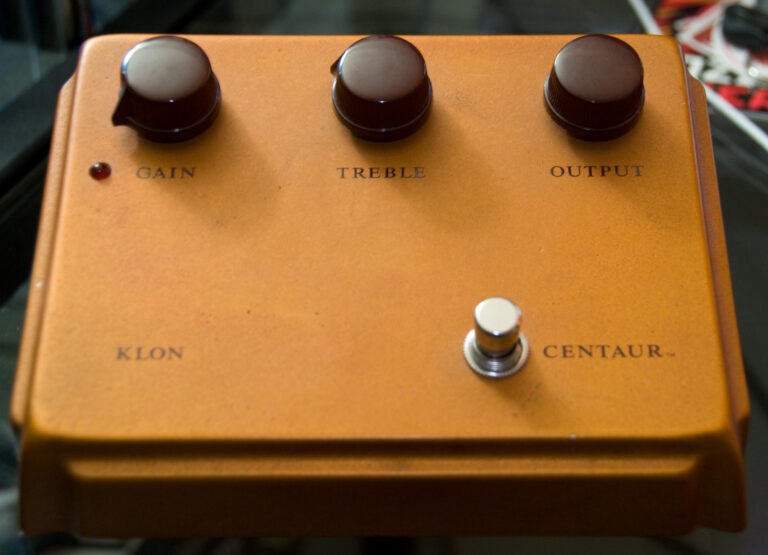
The Premier Guitar Rig Rundown: “he… uses a Klon Centaur for overdrive.” The Klon Centaur — the same celebrated boutique overdrive that Nels Cline describes as “cherished” — is Frank Black’s primary overdrive pedal. The Centaur’s transparent, clean overdrive character (adding gain without significant frequency coloring) suits his approach: the vintage Telecaster’s natural character through the vintage AC30’s natural character, with the Centaur adding drive without altering the foundational tone of either instrument or amplifier.
The Premier Guitar Rig Rundown identifies the most specifically unusual pedal in this guide: “gets some silicon-fuzz action with a 1-knob Duh pedal built by none other than Premier Guitar senior editor Joe Gore.” A fuzz pedal built by the senior editor of Premier Guitar magazine — not a boutique pedal company, but a guitar journalist who also builds pedals. The “1-knob Duh” (the name reflects the simplicity of a single-control silicon fuzz design) provides the specific silicon fuzz character for passages where the vintage Telecaster needs additional aggressive distortion beyond the Klon Centaur’s overdrive character.
The Premier Guitar Rig Rundown: “He keeps his axes in tune with a Boss TU-2.” The Boss TU-2 — the standard professional chromatic guitar tuner pedal — is the practical utility before any tonal processing. The same TU-2 that appears throughout this guide in professional guitarists’ rigs from Nels Cline to Susanna Hoffs.

The Effects Bay documentation of his pedalboard from the Premier Guitar Rig Rundown includes a Lehle Little Dual amp switcher — the same Lehle routing device that Nels Cline uses. The Lehle provides clean, true-bypass A/B switching between different signal paths or amplifiers.
The Effects Bay documentation also notes a Radial device in the rig — the Radial Engineering DI and signal routing devices that appear throughout professional live rigs for their specific signal quality and reliability.
The Premier Guitar characterization — “as with his guitars and amps, Thompson keeps his pedalboard fairly spare” — captures the complete philosophy: Klon Centaur (overdrive), 1-knob Duh (fuzz), Boss TU-2 (tuner), Lehle Little Dual, Radial. Five items on the pedalboard. A spare philosophy in service of the Pixies’ specific guitar approach: the dynamics come from the songs, not from effects processing.
Playing Style & Tone Philosophy
Frank Black’s playing style is the most song-service-oriented in this section of the guide — the approach of a frontman and rhythm guitarist whose primary creative function is to provide the harmonic foundation and rhythmic framework for the Pixies’ songs, while Joey Santiago’s lead guitar and Kim Deal’s bass provide the individual melodic and harmonic voices. His specific strumming approach — the way he inhabits the rhythm guitar role within the Pixies’ dynamic range, from the quietest whispered verse to the loudest distorted chorus — is the specific rhythm guitar technique that established the quiet/loud dynamic template for a generation of alternative rock.
His tone philosophy is the ultimate “just a piece of wood” philosophy. Guitar.com: “I just play them until they break and when they break, I get them fixed. And if they can’t be fixed, then I just throw it away. I don’t care how much it’s worth, it’s just a piece of wood.” This is not false modesty and not anti-materialism performativity. It is a specific practical relationship to instruments as working tools: the vintage Telecasters go on the road because they sound right, not because they are prestigious. If they break beyond repair, the music continues. The music is the thing. The piece of wood is the tool.
The vintage instrument approach — two stock vintage Teles, two 1950s Martins, a 1963 SG Junior, vintage Vox AC30 heads — reflects the specific tonal philosophy that the original instruments sound right for the music he makes. Not because they are expensive or historically significant but because the specific tonal character of these instruments (the Tele’s twang, the Martin’s warmth, the SG Junior’s P-90 aggression, the AC30’s EL84 chime) is the right sound for the Pixies. When a specific song requires the SG Junior’s angrier P-90 character, he uses that guitar. When the Martin’s acoustic warmth serves the song better than the Telecaster’s electric character, he uses that guitar. The instrument serves the song. The song is the point.
How to Sound Like Frank Black
Guitar: Vintage Fender Telecaster (1950s-era, stock, ash body, maple neck) for the primary rhythm character — the twangy, clear, aggressive single-coil for the Pixies’ chord-driven rhythm guitar. 1963 Gibson SG Junior with P-90 for the angrier passages. 1950s Martin D-28 or D-18 acoustic for acoustic passages.
Amp: Vintage Vox AC30 (head version, driving extension cabs) — EL84 warmth, top boost chime, natural compression at volume. Weber MiniMASS attenuator for venue-appropriate volume while maintaining full-power amp saturation.
Amp Settings (Vox AC30 — Pixies Rhythm Guitar Chime and Crunch):
| Control | Setting (0–10) | Notes |
|---|---|---|
| Volume (Top Boost) | 6–8 | High enough for natural EL84 saturation — the AC30 chime |
| Treble | 6–7 | Present — the Tele single-coil’s natural brightness needs support |
| Bass | 4–5 | Moderate — the AC30 is naturally bright; controlled bass |
| Cut | To taste | The AC30’s Cut control reduces excessive treble at high volume |
| Normal Channel | OFF or low | Top Boost channel primary for Pixies character |
Effects (spare, song-serving): Klon Centaur (transparent overdrive for slightly driven passages — medium gain, volume at unity or slightly above). 1-knob Duh silicon fuzz (maximum aggression for the loudest Pixies moments). Boss TU-2 for tuning. Nothing else needed. The Telecaster into the AC30 is the foundation; the Klon adds warmth when needed; the fuzz adds chaos when the song calls for it.
Influence & Legacy
Frank Black’s influence on alternative rock is the most foundational quiet/loud dynamic contribution in this guide — specifically, the Pixies’ template for the alternation between hushed verse and explosive chorus that Nirvana’s Kurt Cobain explicitly cited as the model for “Smells Like Teen Spirit” and that Radiohead, Weezer, and dozens of other commercially successful bands subsequently adopted. The specific Pixies formula — oblique literary lyrics, Joey Santiago’s angular lead guitar, Kim Deal’s melodic bass, the quiet/loud dynamic — was the most influential structural innovation in alternative rock between 1988 and 1991.
His connection to Bob Mould as a fellow alternative rock pioneer whose approach to guitar — the distortion pedal into the vintage Strat through the wall of sound — influenced the same generation of musicians that the Pixies influenced reflects the shared historical moment. His connection to Greg Ginn as a fellow “just play it until it breaks” guitarist whose approach to instruments and amplification is pragmatic rather than precious reflects the shared ethos. His connection to Dan Auerbach as a fellow guitarist who chooses instruments for character rather than prestige reflects the shared “piece of wood” philosophy.
Frequently Asked Questions: Frank Black Pixies Guitars & Gear
What guitar does Frank Black play?
The Premier Guitar 2014 Rig Rundown confirms: “Thompson keeps it single-coil simple with two stock vintage Teles and two ’50s Martins — a D-28 and a D-18. When he needs an angrier tone, he relies on the P-90 in his cherry 1963 Gibson SG Jr.” His most recent custom instrument: the Healy Guitars Healer (2023) — built with one of his wisdom teeth and maple from his property embedded in the body. His overall philosophy: “I don’t care how much it’s worth, it’s just a piece of wood.”
What amplifier does Frank Black use?
“Both Thompson’s Teles and Martins are run through vintage Vox AC30 heads driving Vox extension cabs. Weber MiniMASS attenuators help him keep volume at reasonable levels for smaller venues such as the Ryman.” He uses both his electric Telecasters and acoustic Martin guitars through the same vintage Vox AC30 heads. In smaller solo acoustic contexts: Roland Microcube (documented in NPR live performance).
What effects pedals does Frank Black use?
From the Premier Guitar 2014 Rig Rundown: “He keeps his axes in tune with a Boss TU-2, uses a Klon Centaur for overdrive, and gets some silicon-fuzz action with a 1-knob Duh pedal built by none other than Premier Guitar senior editor Joe Gore.” A Lehle Little Dual amp switcher and a Radial device also appear in the documented pedalboard. His pedalboard philosophy: “fairly spare” — matching the simplicity of his guitar and amp choices.
What is the Healy Guitars Healer and what makes it unusual?
Healy Guitars crafted a custom Healer guitar for Black Francis in 2023, “incorporating unique features such as one of his wisdom teeth and maple from his property.” The guitar is built from wood sourced from his own property, with one of his extracted wisdom teeth embedded in the body. This makes it simultaneously the most personal instrument in this guide (literal pieces of his body and land) and the most humorous counterpoint to his “it’s just a piece of wood” philosophy.
Why does Frank Black use vintage instruments on the road?
“I bring all my vintage stuff with me on the road, I don’t treat them as museum pieces. I just play them until they break and when they break, I get them fixed. And if they can’t be fixed, then I just throw it away. I don’t care how much it’s worth, it’s just a piece of wood.” The vintage instruments go on the road because they sound right for the Pixies’ music — not because they are valuable, not because they are prestigious, but because the specific tonal character of the 1950s Telecasters, 1950s Martins, and 1963 SG Junior is the right sound for the songs he plays. The value is irrelevant. The sound is the point.
How did the Pixies influence Nirvana?
Kurt Cobain explicitly cited the Pixies as the model for the quiet/loud dynamic that defined Nirvana’s approach. “When I heard the Pixies for the first time, I connected with that band so heavily that I should have been in that band — or at least a Pixies cover band.” The specific Pixies formula — hushed verse with clean guitar, explosive distorted chorus — became the template for “Smells Like Teen Spirit” and for alternative rock’s dominant song structure through the 1990s. The Pixies’ approach directly enabled the commercial success of the alternative rock genre that Nirvana made mainstream.
What is the “1-knob Duh” pedal?
The “1-knob Duh” is a custom silicon fuzz pedal built by Joe Gore, a senior editor at Premier Guitar magazine who also builds guitar effects. The pedal is called “Duh” because of its deliberate simplicity — a single-knob silicon fuzz circuit. Silicon fuzz (as opposed to germanium fuzz) produces a harder, more aggressive, more compressed fuzz character — the specific aggressive edge that supplements the Klon Centaur’s transparent overdrive when Black Francis needs maximum sonic aggression.
Image credits
- Top image: by Bene Riobó, Wikimedia Commons, CC BY-SA 3.0.
- Fender Telecaster: Massimo Barbieri, Wikimedia Commons, CC BY-SA 3.0.
- Black Francis: photo by Alejandro Jofré (djdroga), via Wikimedia Commons, CC BY 2.0.
- Vox AC30 Top Boost: wetwebwork; existing crop and contrast/color adjustments: Clusternote, Wikimedia Commons, CC BY-SA 2.0.
- Klon Centaur: ArtBrom, Flickr, CC BY-SA 2.0.
- Frank Black live: Aurelien Guichard, Wikimedia Commons, CC BY-SA 2.0.
- Frank Black live: Elekes Andor, Wikimedia Commons, CC BY-SA 4.0.
- Boss TU-2 Chromatic Tuner: GuitarGangsters AI-generated reference illustration, not a photograph.
- Roland Micro Cube: GuitarGangsters AI-generated reference illustration, not a photograph.