Willie Johnson Guitars & Gear: Howlin Wolf’s Ferocious Right-Hand Man’s Complete Rig
Willie Johnson guitars gear — hollowbody P-90 and overdriven amp deep-dive for Howlin Wolf's ferocious Chicago blues guitarist and the origins of rock distortion.
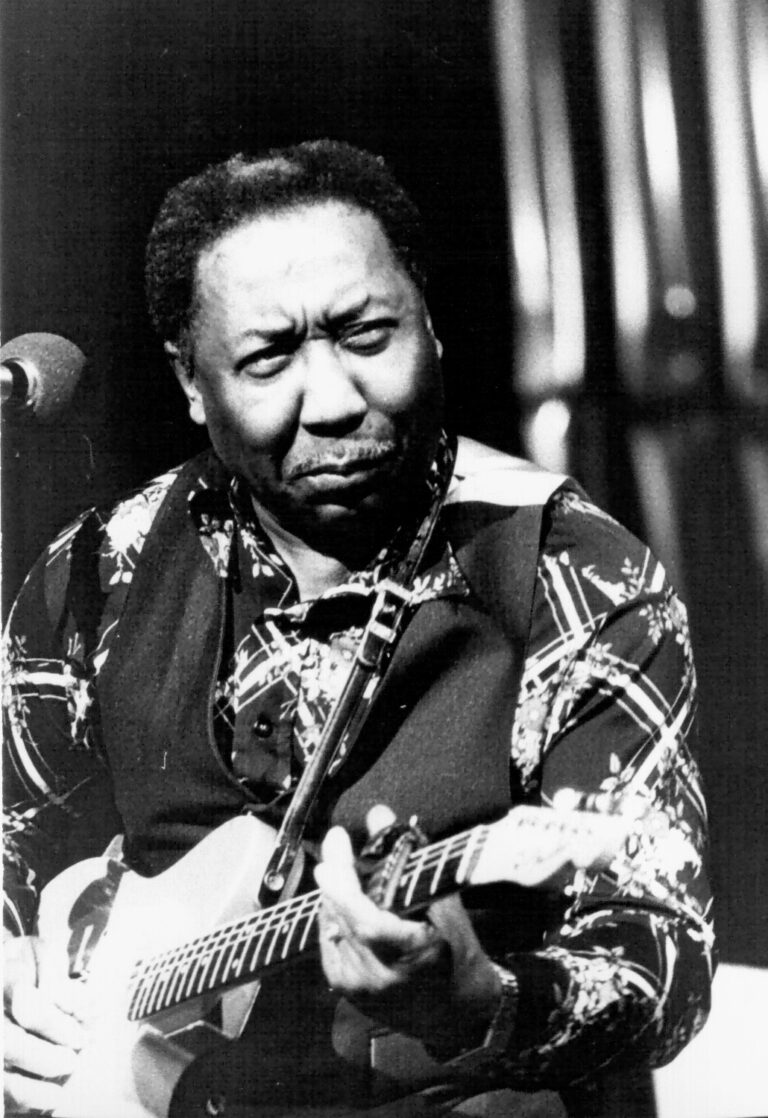
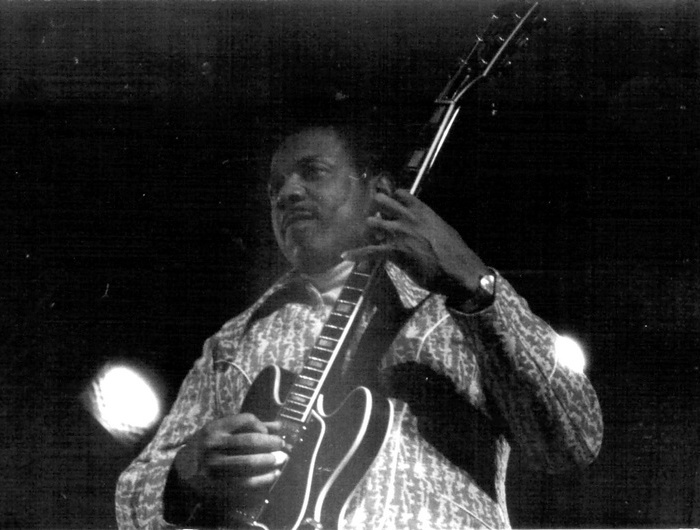
Dig into Willie Johnson guitars gear and you encounter the equipment of one of the most viscerally powerful and least celebrated guitarists in Chicago blues history — the Mississippi-born guitarist who was Chester Burnett’s (Howlin Wolf’s) primary axeman through the late 1940s and 1950s, who recorded on some of the most ferocious electric blues ever committed to tape, and whose raw, overdriven approach to the electric guitar helped invent the textural vocabulary that rock and roll would later claim as its own. Johnson played with a physical intensity and a willingness to push his equipment past its comfort zone that placed him closer to the proto-punk tradition than to any notion of polished technique, and the sounds he created — distorted, aggressive, rhythmically obliterating — were genuinely revolutionary for their time.
This guide covers Johnson’s equipment through his prime years with Howlin Wolf: the guitars he played, the amplifiers that gave his sound its ferocious distorted character, the complete absence of effects in the conventional sense (his distortion came from the amplifier being pushed past its limits), and the playing philosophy of a man for whom the electric guitar was a weapon of emotional expression rather than a vehicle for technical display. Understanding Willie Johnson’s gear is understanding the direct lineage between Mississippi Delta blues and everything that came after it.
Background
Willie Johnson was born on March 4, 1923, in Senatobia, Mississippi, into the farming communities of northern Mississippi that produced an extraordinary concentration of blues musicians across the first half of the twentieth century. The Delta region of Mississippi — flat, agricultural, with a social structure shaped by the plantation economy and the specific conditions of Black American life in the segregated South — generated a blues tradition of unusual depth and emotional intensity, and Johnson absorbed this tradition directly through cultural immersion rather than through formal study.
His connection with Chester Burnett — who would become world-famous as Howlin Wolf — began in Mississippi in the late 1940s, when Johnson joined Burnett’s working band. The Wolf was by this point already a significant regional figure: a massive, physically imposing performer whose voice and stage presence were unlike anything else in the blues world, and whose music combined Delta blues roots with the electric amplification and rhythmic intensity that West Memphis and Chicago were developing as the electric blues idiom. Johnson’s guitar was the perfect complement to the Wolf’s vocal ferocity — equally raw, equally physical, equally willing to push past the limits of what was expected.
The band relocated to Chicago in the early 1950s, signing to Chess Records — the label that was simultaneously documenting Muddy Waters, Little Walter, and the other architects of the Chicago electric blues — where they recorded the sides that established Howlin Wolf as one of the most important figures in American music. Johnson appeared on records including “Moanin’ at Midnight,” “Smokestack Lightning,” “Evil,” “Spoonful,” and others that are now considered foundational texts of the blues tradition and, through their influence on British rock, of rock music broadly conceived.
Johnson left the Wolf’s band in the late 1950s — reportedly over financial disagreements — and his subsequent career was relatively modest, including work with various Chicago blues acts and occasional recording sessions. He continued to be associated with Chicago’s blues community but never achieved significant commercial success or widespread recognition in his own right. He died on February 25, 1995, in Chicago, at the age of 72 — having outlived his moment of greatest musical significance by several decades while remaining largely unknown outside the community of serious blues students who had traced the origins of the music they loved back to his playing on those Chess Records sides.
Willie Johnson Guitars Gear: The Complete Rig
Guitars
Willie Johnson’s guitar choices during his Chess Records period reflected the pragmatic reality of a working musician in the Chicago blues world of the early 1950s — instruments chosen for availability, affordability, and the specific sonic properties that his music required, rather than for brand prestige or collector appeal.
His primary instrument during the peak Howlin Wolf Chess period was a Gibson ES-5 or similar Gibson archtop electric — one of the hollowbody electric guitars that were the standard professional electric guitar in the late 1940s and early 1950s before the solid-body designs of Fender and Gibson’s own Les Paul had fully established themselves as the dominant format. The ES-5, introduced in 1949 as Gibson’s top-of-the-line electric archtop, featured three single-coil P-90 pickups in a fully hollow laminated maple body with a carved maple top.
The P-90 pickup — Gibson’s primary single-coil design through the late 1940s and early 1950s before the humbucker replaced it in 1957 — had a specific character that made it ideal for Johnson’s approach. Measuring approximately 7.5k to 9k ohms DC resistance with Alnico V magnets, the P-90 is hotter and fuller-sounding than Fender single-coils of the same era, with a pronounced midrange emphasis and a rougher, more aggressive character than the cleaner, brighter Fender designs. This P-90 character — warm, aggressive, with a natural tendency toward gritty distortion when pushed hard — suited Johnson’s playing approach perfectly: the pickup’s own aggressive character complemented his playing’s physical intensity.
He also used various other guitars across different periods — including Kay and Harmony semi-hollow instruments that were among the most commonly available and affordable electric guitars in the Chicago blues world of the 1940s and 1950s. These budget instruments — produced in Chicago by manufacturers who understood the working musician’s need for affordable, serviceable equipment — had their own specific tonal character: somewhat rougher and less refined than premium Gibson instruments, but with a scrappy directness that actually suited the raw, aggressive blues approach of players like Johnson better than more expensive alternatives might have.
The hollowbody construction of his instruments was significant for Johnson’s specific approach to distortion. When a fully hollow guitar is played at high volume through an amplifier that is being pushed past its rated capacity — as Johnson routinely did — the hollow body’s acoustic resonance interacts with the electromagnetic feedback from the amplifier in complex ways. The result is a more complex, less predictable distortion character than solid-body guitars produce under the same conditions, with the hollow body’s resonant frequencies contributing their own character to the overall sound. Johnson’s specific distortion tone — different from the more controlled, manageable distortion of later rock players — reflects this hollow-body-pushed-to-extremes character as much as any specific amplifier or pickup choice.
String gauges were likely heavier than contemporary players typically use — medium or heavy gauge flatwound strings were the standard for electric guitar players of this era, before the widespread adoption of lighter roundwound strings in the 1960s. Flatwound strings produce a smoother, less bright tone than roundwound strings, with less upper-frequency emphasis and more fundamental warmth — a character that, through Johnson’s amplification approach, contributed to the dense, weighty quality of his distorted tone.
Amps
Willie Johnson’s amplification is the most historically significant element of his equipment story — because the specific way he used his amplifiers, pushing them far past their rated capacity and their intended operating range, produced sounds that had no precedent in commercial music and that influenced the subsequent development of electric guitar tone in ways that are still being felt.
He used various small to medium-sized valve amplifiers that were the standard equipment of working blues musicians in the late 1940s and early 1950s — primarily Fender and Valco-manufactured units that were the most widely available and affordable amplifiers in the American music market of the period. The specific models varied, but the approach was consistent: run the amplifier at the highest possible volume, pushing the output valves into severe saturation, and use this extreme distortion as a primary musical element rather than fighting against it.
The amplifiers of this era — the late-1940s and early-1950s Fender Deluxe, Fender Pro, and similar units — used 6V6 or 6L6 output valves in configurations that were designed to produce relatively clean amplification at reasonable volumes. When pushed past their intended operating range, these amplifiers produced a specific quality of distortion — rough, asymmetric, with complex harmonic content — that was fundamentally different from the more carefully engineered distortion of purpose-designed overdrive and fuzz pedals that came later. The distortion was a consequence of extreme valve saturation, speaker cone breakup, and the general behaviour of under-spec’d electronic components being asked to do more than they were designed for.
The specific character of Johnson’s amplified distortion — identifiable on the Howlin Wolf Chess recordings — reflects this multi-stage, uncontrolled distortion rather than the more precisely engineered distortion of later effects pedals and high-gain amplifiers. It is rougher, less even, and more dynamically variable than engineered distortion: louder picking produces more distortion, softer picking cleans up, and the specific character of the distortion changes unpredictably with playing dynamics and with the amplifier’s thermal state as it heats up through a performance. This dynamic, unpredictable quality is one of the things that gives the Wolf recordings their specific feeling of barely controlled intensity.
The speakers in these amplifiers — typically Jensen 8-inch or 10-inch speakers in small combos — were also being operated past their rated power capacity, contributing their own mechanical distortion to the overall sound. A speaker cone that is flexing beyond its linear range produces asymmetric distortion that adds specific harmonic content to the signal — different in character from the valve distortion that precedes it in the signal chain, and interacting with it in complex ways that produce the multi-layered tonal character of genuine speaker breakup.
Effects
Willie Johnson used no effects in the conventional sense — no pedals, no external processing, no deliberate tonal shaping between the guitar and the amplifier beyond the instrument’s own volume and tone controls. His entire tonal palette was generated by the interaction between the guitar, the amplifier, and his playing approach.
The “effects” he did use were entirely natural: the acoustic feedback between the hollow-body guitar and the overdriven amplifier, which sustained notes beyond their natural decay and added harmonic complexity; the natural reverb of the recording studios and live venues, which added spatial dimension to the dry amplified sound; and the physical characteristics of his playing itself — the pick attack, the string-bending technique, the specific way he held and struck the guitar — which shaped the distortion character of the amplifier’s response in real time.
This complete absence of external processing — the direct, unmediated chain from guitar to amplifier to air — gave Johnson’s playing its specific quality of raw immediacy. Every variation in his tone came from the playing itself or from the amplifier’s response to the playing, not from a signal processing device with its own tonal character. The result is guitar sound that has a physical, present quality that heavily processed signals rarely achieve — you can hear the strings, the pickup, the amplifier, and the room as distinct components of a single integrated acoustic event.
Playing Style & Tone Philosophy
Willie Johnson’s playing style is defined by a quality that was essentially unprecedented in commercial guitar music at the time he was making the Wolf recordings: the deliberate use of distortion as a primary musical element rather than as an unwanted byproduct of excessive amplification. Most guitar players of the era worked hard to maintain clean, clear amplified tone; Johnson leaned into the distortion, used its aggressive character as the primary expressive tool, and developed a playing approach calibrated to the specific properties of a heavily overdriven amplifier rather than to the properties of a clean one.
His rhythm playing was the foundation of the Wolf band’s sound — the rolling, churning, distorted rhythm guitar that drove songs like “Moanin’ at Midnight” and “Smokestack Lightning” with a physical urgency that the rhythm section alone couldn’t have generated. The specific rhythmic feel of his playing — the way chords were struck with physical authority, the specific timing of rhythmic accents, the interaction between his rhythm guitar and the drummer and bassist — was as sophisticated as any jazz rhythm playing of the era even though it operated with a completely different aesthetic and musical vocabulary.
His lead playing showed a directness and emotional impact that more technically polished players of the era couldn’t match precisely because Johnson didn’t worry about the niceties of tone or technique. He played hard, he played with complete physical commitment, and the distortion he was generating through his overdriven amplifier amplified (in the metaphorical sense) every aspect of his playing — the intensity of the attack, the emotional charge of each phrase, the raw urgency of the music.
Tonally, Johnson’s philosophy was the unconscious philosophy of a musician who had found a sound that suited his music and used it without theoretical analysis: push the amplifier until it screams, hit the guitar hard, and don’t worry about what it sounds like to anyone who expects conventional guitar tone. This approach produced music of extraordinary power and of genuine historical significance — sounds that had not previously existed in recorded music and that became the foundation for rock and roll’s subsequent development.
How to Sound Like Willie Johnson
Guitar Approach
A hollowbody electric guitar — Gibson ES-series or a vintage Kay or Harmony semi-hollow — with P-90 style single-coil pickups is the closest available approximation. The P-90’s specific midrange emphasis and its tendency toward gritty distortion when pushed hard were central to Johnson’s tone. Heavy flatwound strings (.012 or heavier) provide the warmth and mass of the period-correct string gauge. Play hard — Johnson’s physical intensity with the pick was as much a part of his tone as any piece of equipment.
Amp Approach
Push a small valve amplifier — a Fender Tweed Champ, Deluxe, or any comparable 5-15 watt valve combo — to maximum volume. The key is not a high-powered amplifier driven moderately but a low-powered amplifier driven into complete saturation. At maximum volume, the output valves, output transformer, and speakers all contribute their own distortion to the signal, producing the multi-stage saturation character of genuine amplifier overload. This is not comfortable to listen to at close range — it is genuinely loud and genuinely distorted — but it produces the specific quality of Johnson’s tone more accurately than any other approach.
| Control | Setting | Notes |
|---|---|---|
| Volume | Maximum (10) | Full saturation — output valves, transformer, and speaker all distorting |
| Tone | 5–7 | Moderate — the distortion character shapes the frequency response |
| Guitar Volume | Full | Maximum signal into the already-saturated amplifier |
| Guitar Tone | Full | All frequencies into the saturated amp — tone control barely matters at this level |
| Effects | None | None required and none appropriate — the amplifier IS the effect |
| Speaker condition | Well-used | A speaker that has been pushed hard produces different distortion from a new one |
Influence & Legacy
Willie Johnson’s legacy is one of the most diffuse and most consequential in the history of American music. His specific playing approach — the deliberate use of amplifier distortion as a primary expressive tool, the physical intensity of his rhythm playing, the raw, uncompromising quality of his lead work — was absorbed by the British musicians who discovered the Howlin Wolf Chess recordings in the late 1950s and early 1960s and who subsequently transmitted it to the mainstream rock world through their own recordings.
Eric Clapton, Keith Richards, Jimmy Page, Jeff Beck — all of them studied the Wolf recordings and absorbed Johnson’s distorted approach as part of their formation. The specific sounds that defined British blues rock in the 1960s — the overdriven amplifier, the physical rhythm guitar approach, the emotionally direct lead playing — trace their lineage directly to Johnson’s playing on those early Chess sides. He was, in this sense, one of the primary architects of a tonal vocabulary that dominated popular music for decades after his own commercial moment had passed.
His influence was not limited to the British rock tradition. American rock and roll from the mid-1950s — the music that Elvis Presley, Chuck Berry, and their contemporaries were making on Sun and Chess Records — was shaped by the same electric blues tradition that Johnson represented. The specific sonic freedom that rock and roll represented, the willingness to push amplifiers past their comfort zones and celebrate the resulting distortion rather than correcting it, came directly from the Chicago electric blues world in which Johnson was a central figure.
For players exploring the Chicago electric blues tradition that Johnson helped define, the rigs of Earl Hooker — whose more technically polished approach to the Chicago blues guitar idiom provides a complementary perspective on the same tradition — and Mighty Joe Young, whose work represents the later development of the Chicago blues in the 1960s and 1970s, provide essential context. The Mississippi Delta roots of Johnson’s approach connect to Rainer Ptacek‘s more recent acoustic engagement with the same tradition, showing how its essential qualities translate across wildly different instrumental and production approaches.
The Chess Recording Sessions: Capturing the Uncontrollable
The specific conditions of the Chess Records recording sessions that documented Willie Johnson’s playing with Howlin Wolf present a fascinating case study in how the recording process can either capture or suppress a musician’s specific qualities. The Chess Records studio — first at 750 East 49th Street and later at 2120 South Michigan Avenue — was a working recording facility rather than a premium audiophile environment, and its specific technical limitations shaped the character of the recordings in ways that were often productive rather than limiting.
The recording engineers at Chess — primarily Malcolm Chisholm and later Ron Malo — were working with recording technology of the early 1950s: tube-based recording consoles, single-track or very limited multi-track tape machines, and microphone preamps that were operating close to their own limits when presented with the volume levels that Johnson and the Wolf band generated. The specific distortion character of the Chess recordings — the slightly overloaded, tape-saturated quality that gives them their particular sonic texture — is partly a product of the studio equipment itself being pushed hard by the volume levels the musicians produced.
This studio equipment distortion, added to the amplifier distortion that Johnson was already generating, created a recording where multiple stages of unintended saturation produced a complex, layered tonal result that no single piece of equipment could have created alone. The guitar going into the overdriven amplifier, the overdriven amplifier going into the somewhat saturated recording console, the console output going to tape that was recording at close to its saturation level — each stage added its own harmonic content to the signal, and the interaction between all of them produced the specific sonic character of the Wolf Chess recordings.
The microphone placement for the guitar amplifier was necessarily pragmatic rather than precisely engineered — in a session context where the primary concern was capturing a performance rather than achieving a specific sonic ideal, the microphone went where it could pick up the amplifier’s output without introducing excessive feedback or competing with the other instruments. This pragmatic approach sometimes produced microphone placements that captured the room’s acoustic response alongside the direct amplifier output, adding a spatial dimension to the recordings that more carefully controlled close-miking might have eliminated.
The Mississippi Roots: Where Johnson Came From
Understanding Willie Johnson’s playing requires understanding the Mississippi blues tradition from which he emerged — a tradition whose specific characteristics shaped both the vocabulary he used and the emotional register in which he expressed it. Northern Mississippi in the 1920s and 1930s was home to a blues tradition as rich and as distinctive as the Delta blues to the south, with players like Mississippi Fred McDowell, R.L. Burnside, and Junior Kimbrough developing approaches to the electric blues that had their own character distinct from the more well-known Delta school.
The Mississippi hill country blues tradition — distinct from the Delta tradition in several specific musical ways — emphasised drone and repetition more heavily than the Delta school, with the guitar often functioning as a rhythmic and textural foundation rather than as a melodic lead voice. This emphasis on rhythmic texture, on the hypnotic quality of repeated patterns maintained over extended periods, gave Johnson’s guitar playing its specific quality of relentless forward momentum rather than the call-and-response between guitar and voice that characterised some other blues styles.
The cultural conditions of Mississippi Black American life in the 1920s and 1930s — the poverty, the violence, the specific social constraints of the segregated South — generated a blues tradition of genuine emotional intensity, and Johnson absorbed this intensity as part of his musical formation. When he played the electric guitar in Chicago with Howlin Wolf, the emotional charge of the Mississippi blues tradition was the content that the amplifier distortion was expressing, not merely a sonic property of the recording. The distortion was not an end in itself but a vehicle for communicating the specific emotional content of the tradition — the urgency, the defiance, the specific quality of feeling that the blues at its most powerful always expressed.
The Overdriven Amplifier: A Technical Revolution
Johnson’s specific approach to amplifier distortion — running amplifiers past their rated capacity to generate extreme saturation — was not a carefully calculated technical strategy but an intuitive response to the sonic requirements of the music he was making. The ferocity of Howlin Wolf’s vocal and stage presence required a guitar sound of comparable intensity, and the only way Johnson could achieve that intensity with the equipment available to him was to push it past its limits.
The physics of what happens when a valve amplifier is pushed beyond its rated capacity — specifically what happens to the EL34, 6V6, or other output valves when the signal hitting them exceeds their linear operating range — produces a specific character of distortion that Johnson was the first musician to deliberately exploit in this way on record. When a valve clips the input signal — cuts off the peaks of the waveform that exceed its linear range — it adds harmonic distortion to the signal. The specific harmonic content added depends on the valve type and the specific circuit characteristics, but in general, valve clipping adds both even-order harmonics (octaves and fifths above the fundamental, which are musically consonant) and odd-order harmonics (flatted sevenths, ninths, and higher — which are more dissonant). The mixture of these harmonics gives clipped valve distortion its specific complex character.
When multiple stages of the amplifier circuit are clipping simultaneously — when the preamp, output stage, and speaker are all operating beyond their linear range — the harmonic content becomes even more complex, with combination tones and intermodulation products adding additional frequency content that no single distortion source would generate alone. This multi-stage distortion character is what distinguishes the sound of a genuinely overdriven amplifier from the sound of a purpose-designed distortion pedal: the pedal produces precisely engineered distortion with a predictable harmonic character, while the overdriven amplifier produces emergent distortion from multiple interacting sources, with a complexity and unpredictability that no single design specification can fully control.
Johnson’s specific distortion — the sound that the British blues musicians of the 1960s heard on the Wolf recordings and that they then attempted to recreate through various means, contributing to the development of fuzz pedals, treble boosters, and eventually the entire market for guitar distortion devices — was this multi-stage, emergent distortion rather than any single designed effect. Understanding this distinction illuminates both why his recordings sound the way they do and why later musicians found it so difficult to recreate the specific quality of his tone through any single effect or equipment approach. You cannot put Willie Johnson’s sound in a pedal, because Willie Johnson’s sound was the product of an entire musical chain — from the guitar to the amplifier to the studio to the tape — operating simultaneously under specific conditions of physical stress. The only way to truly replicate it is to replicate those conditions, which is what the most historically informed players attempting to capture early electric blues tone have always understood.
The specific Kay and Harmony guitars that Johnson and his contemporaries used in the early Chicago blues scene deserve specific attention as instruments that were themselves products of a specific historical moment and geographic context. Kay Musical Instrument Company and Harmony Company were both Chicago-based guitar manufacturers in the mid-twentieth century — companies whose understanding of their market (working musicians who needed affordable, serviceable instruments) produced guitars that were pragmatically designed for professional use rather than prestige. The Kay and Harmony instruments of the 1940s and 1950s — semi-hollow electrics with single-coil pickups and construction that prioritised durability over acoustic refinement — had their own tonal character that influenced the specific quality of the Chicago electric blues sound as much as the Gibson and Fender instruments that have received more historical attention. Their slightly rougher construction, their pickups’ specific frequency response, and the specific acoustic character of their semi-hollow bodies all contributed to the sound of the musicians who used them. Johnson’s use of these instruments when premium Gibsons were unavailable or unaffordable reflected the reality of the working musician’s world, and the specific quality of tone that these affordable instruments produced through overdriven small amplifiers was part of the Chicago blues sound’s specific character rather than a compromise of it.
Willie Johnson’s name is unlikely to become widely known outside the community of dedicated blues historians and musicians who have traced the origins of their music back to its most fundamental sources. This relative obscurity is a form of historical injustice to a musician whose contribution to the development of electric guitar tone was as significant as that of more celebrated players — but it is also, in a different sense, appropriate. Johnson was not playing for recognition; he was playing because the music demanded it and because the Wolf needed a guitarist who could match his ferocity. The specific sounds he made were not ends in themselves but vehicles for the emotional and cultural content of the blues tradition he represented. That those sounds went on to shape the development of a global musical tradition is a consequence of their genuine power, not of Johnson’s commercial ambitions or his cultural strategy. The music was real, the playing was committed, and the sounds were unlike anything that had existed before. That is enough, and it is more than most musicians achieve in a lifetime.
The Howlin Wolf chess recordings on which Johnson appears — “Moanin’ at Midnight,” “Smokestack Lightning,” “Evil,” “How Many More Years,” “Spoonful,” and others — are worth examining individually as documents of his specific approach to the guitar within different musical contexts. “Moanin’ at Midnight” shows him at his most restrained — a churning, repetitive rhythm figure that maintains the song’s hypnotic momentum without overwhelming the Wolf’s vocal. “Smokestack Lightning,” perhaps the most widely known Wolf recording, demonstrates the specific combination of rhythm guitar and single-note lead that characterises Johnson’s approach: the guitar establishing a steady, rolling groove beneath the Wolf’s extended vocal howls, then breaking into brief lead figures that punctuate the vocal’s pauses. “Evil” shows the harder-driving side of his playing — a more aggressive rhythmic attack that pushed the Wolf’s dark, threatening vocal to even greater intensity. Each of these recordings documents a different facet of Johnson’s musical intelligence: his ability to serve the song’s specific emotional requirements through different approaches to the instrument, while maintaining the consistent physical intensity and the overdriven tonal character that defined his contribution to the Wolf’s sound. The specific equipment that produced these different facets — the P-90-equipped hollowbody through the pushed-to-maximum amplifier — was capable of all of them precisely because the distortion it generated was dynamic and responsive to the playing rather than uniformly applied regardless of approach. Hard playing produced more distortion and more intensity; lighter playing produced less, allowing the harmonic character of the chord to be more clearly articulated. This dynamic quality of genuine amplifier distortion — so different from the uniformly saturated character of high-gain distortion pedals — was the specific sonic characteristic that made Johnson’s approach musically expressive rather than merely loud.
The P-90 pickup’s specific contribution to Johnson’s distortion tone is worth one final technical note: the P-90’s higher output and fuller midrange response compared to Fender single-coils meant that it hit the input stage of the amplifier with a more powerful signal, pushing the amplifier into distortion at somewhat lower volume settings than a Fender single-coil would have required. The P-90’s specific midrange emphasis — the pickup’s frequency response peaks in the upper midrange rather than the high treble emphasis of Fender designs — also shaped the character of the distortion produced when the amplifier clipped this signal. P-90 distortion through a pushed valve amplifier has a specific density and warmth in the midrange that the brighter distortion of Fender single-coils through similar amplification doesn’t produce, and this warm, dense midrange distortion character is part of what distinguishes Johnson’s specific tone from the later British blues players who used Fender instruments and produced a somewhat brighter, more cutting distortion quality even when running their amplifiers comparably hard. The specific equipment choices — the Gibson P-90 hollowbody rather than a Fender single-coil solid-body — shaped the character of the distortion in ways that were as musically meaningful as any deliberate tonal decision could have been, even if Johnson himself was not consciously making these distinctions but simply using what was available and what produced the sound the music required.
The social and economic context of the Chicago blues world in the early 1950s shaped Johnson’s equipment choices in ways that went beyond simple preference or technical judgment. Chicago in this period was a city of racial segregation and economic inequality where Black musicians like Johnson played primarily for Black audiences in Black-owned or Black-frequented venues, under conditions that were both creatively fertile and economically constrained. The guitars available in this context were not the premium instruments that white musicians in mainstream pop music used; they were the affordable second-tier instruments that musicians with limited means could access. The amplifiers were similarly pragmatic choices — not the high-end Fender professional models but the working-level instruments available at prices that professional musicians with modest incomes could afford. These constraints were genuine limitations that affected what Johnson could play, but they were also, paradoxically, part of what made his music sound the way it did. The specific tonal character of a Kay or Harmony guitar through a pushed Fender Champ is different from the character of a premium Gibson through a high-powered Fender Twin, and the specific difference contributed to the rawness and immediacy of the Chicago electric blues sound that Johnson represented. The economics of racial segregation, in other words, shaped the equipment choices that shaped the music that shaped rock and roll — one more dimension of the complex historical reality that lies beneath the surface of American popular music history and that requires acknowledgment for the full picture to be accurate.
Willie Johnson deserves to be remembered not as a footnote to Howlin Wolf’s story but as a primary architect of the electric guitar’s most influential sonic development: the deliberate use of amplifier distortion as a primary expressive tool. His specific combination of hollowbody electric guitar, overdriven small valve amplifier, and physical intensity of playing created sounds that had not previously existed in recorded music and that became the foundation of rock guitar tone. The equipment was simple, the playing was committed, and the results were extraordinary. That is the complete Willie Johnson gear story, and it is one of the most important gear stories in the history of American music.
Frequently Asked Questions: Willie Johnson Guitars & Gear
Who was Willie Johnson?
Willie Johnson was a Mississippi-born electric blues guitarist who played with Howlin Wolf from the late 1940s through the 1950s, recording on the Chess Records sides that are now considered foundational texts of Chicago electric blues. He was born on March 4, 1923, in Senatobia, Mississippi, and died on February 25, 1995, in Chicago. His raw, overdriven guitar approach on recordings like “Moanin’ at Midnight” and “Smokestack Lightning” made him one of the most influential — and least celebrated — guitarists in the history of American music.
What guitar did Willie Johnson play?
Johnson used hollowbody electric guitars — primarily Gibson archtop electrics with P-90 single-coil pickups during the Chess Records period, as well as various Kay and Harmony semi-hollow instruments. The P-90’s midrange emphasis and aggressive distortion character suited his playing approach, and the hollow body construction interacted with his overdriven amplifiers in specific ways that contributed to the multi-layered distortion character of his recordings.
What amp did Willie Johnson use?
His amplification during the Chess Records period consisted of small to medium-sized valve amplifiers — Fender and Valco-manufactured units that were standard equipment for working Chicago blues musicians of the early 1950s. The specific approach was to run these amplifiers at maximum volume, pushing the output valves, output transformer, and speakers into extreme saturation. This multi-stage distortion — different in character from purpose-designed effects pedals — produced the specific rough, aggressive tone of the Howlin Wolf Chess recordings.
Why is Willie Johnson’s guitar tone historically significant?
Johnson’s deliberate use of amplifier distortion as a primary expressive tool — rather than treating it as an unwanted byproduct of excessive volume — was genuinely unprecedented in commercial music when the Wolf recordings were made. His overdriven amplifier tone created sounds that had not previously existed in recorded music, and these sounds became the foundation of the British blues rock tradition when musicians like Clapton, Richards, and Page discovered the Wolf recordings and absorbed their sonic vocabulary. Johnson’s distorted guitar is, in this sense, one of the direct ancestors of rock guitar tone as it developed through the 1960s and beyond.
What Chess Records sides did Willie Johnson play on?
Johnson played on many of Howlin Wolf’s early and defining Chess Records recordings, including “Moanin’ at Midnight,” “Smokestack Lightning,” “Evil,” “Spoonful,” “How Many More Years,” and numerous others. These recordings were made primarily between 1951 and the late 1950s, and they document the Wolf’s early Chicago electric blues sound at its most ferocious and most influential. Johnson’s guitar is central to the character of these recordings.
What happened to Willie Johnson after he left Howlin Wolf?
After leaving the Wolf’s band in the late 1950s, reportedly over financial disagreements, Johnson worked with various Chicago blues acts and participated in occasional recording sessions but never achieved significant commercial success or widespread recognition in his own right. He remained in Chicago’s blues community and continued performing into later decades. He was not rediscovered in the way that some Delta blues musicians were during the folk blues revival of the 1960s, and his contribution to the music was recognised primarily by scholars and serious blues students rather than by the mainstream music audience.
How did Willie Johnson influence British rock guitarists?
The British musicians who discovered Howlin Wolf’s Chess recordings in the late 1950s and early 1960s — Eric Clapton, Keith Richards, Jimmy Page, Jeff Beck, and others — absorbed Johnson’s specific approach to amplifier distortion as part of their formation. The overdriven, aggressive tone of his guitar on the Wolf recordings became a primary sonic reference for British blues rock, and through that tradition’s enormous influence on subsequent rock music, Johnson’s distortion approach became one of the foundations of rock guitar tone globally. He was, in effect, the original source of the distorted electric guitar sound that defines rock music.
Genre:
Chicago Blues
Decades:
1940s | 1950s
Image credits
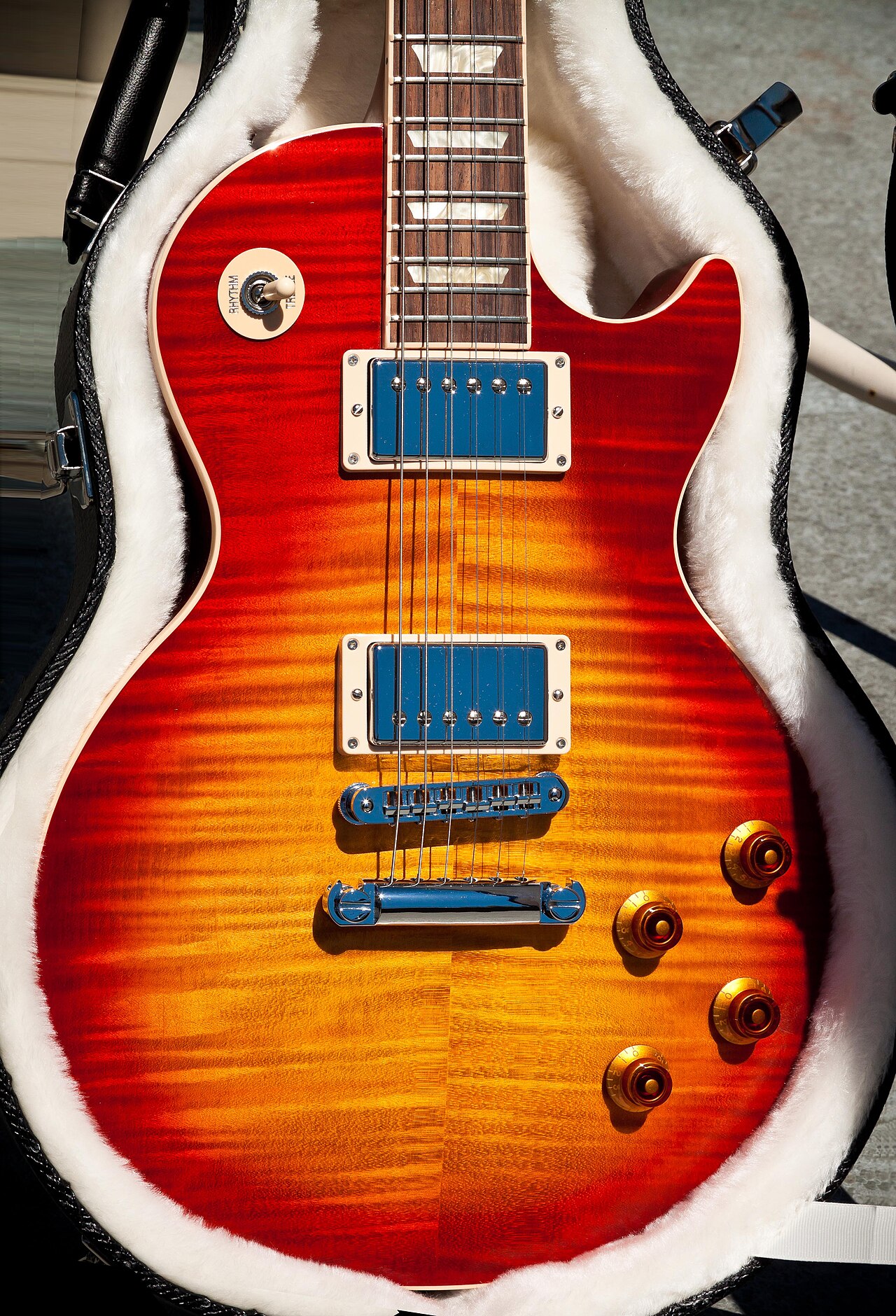
- A Gibson Les Paul Standard in its case: 2012 Gibson Les Paul Standard Plus body (by ravas51).jpg: ravas51 derived work: Clusternote (talk), Wikimedia Commons, CC BY-SA 4.0.