Jackson Browne Guitars & Gear: The California Rock Poet’s Complete Rig
Jackson Browne guitars gear — Martin acoustic and Fender Twin deep-dive for the California rock poet's direct emotional tone and complete Laurel Canyon rig.
Photo by Larry Miller, licensed under CC BY-SA 2.0 (https://commons.wikimedia.org/wiki/File:Jackson_Browne_at_the_Silver_Legacy_Resort_Casino_-_2013-02-16.jpg)
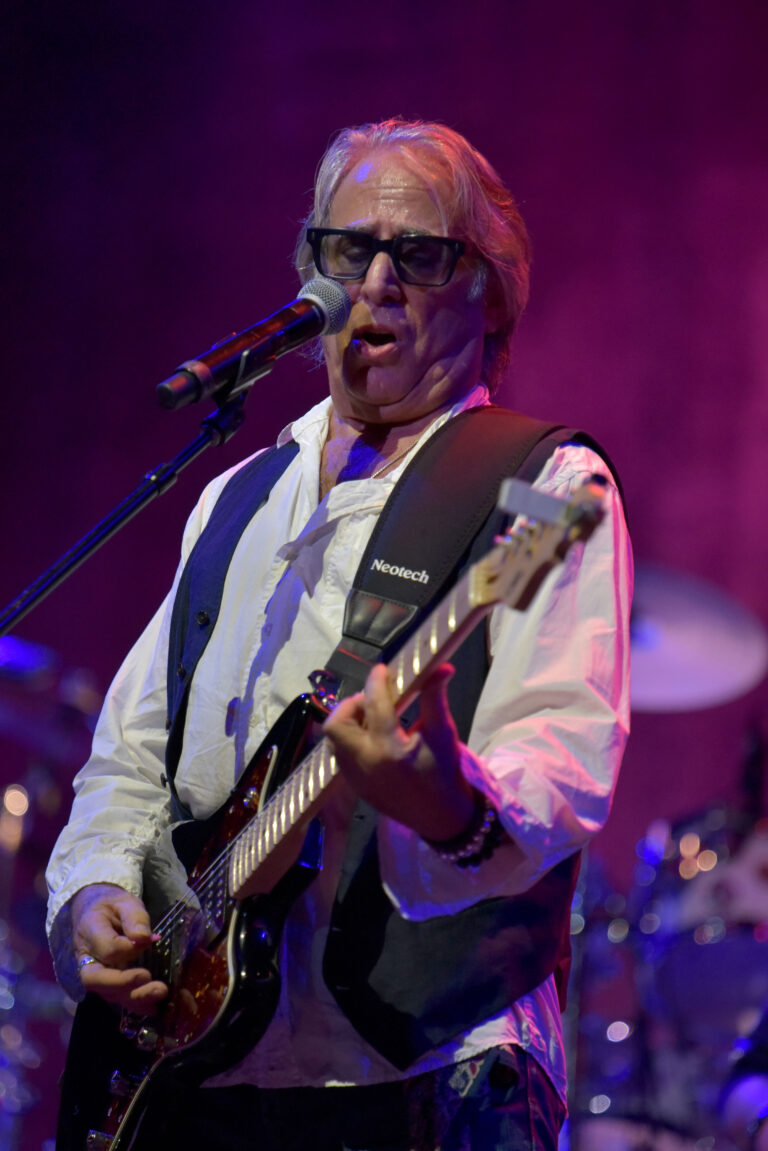
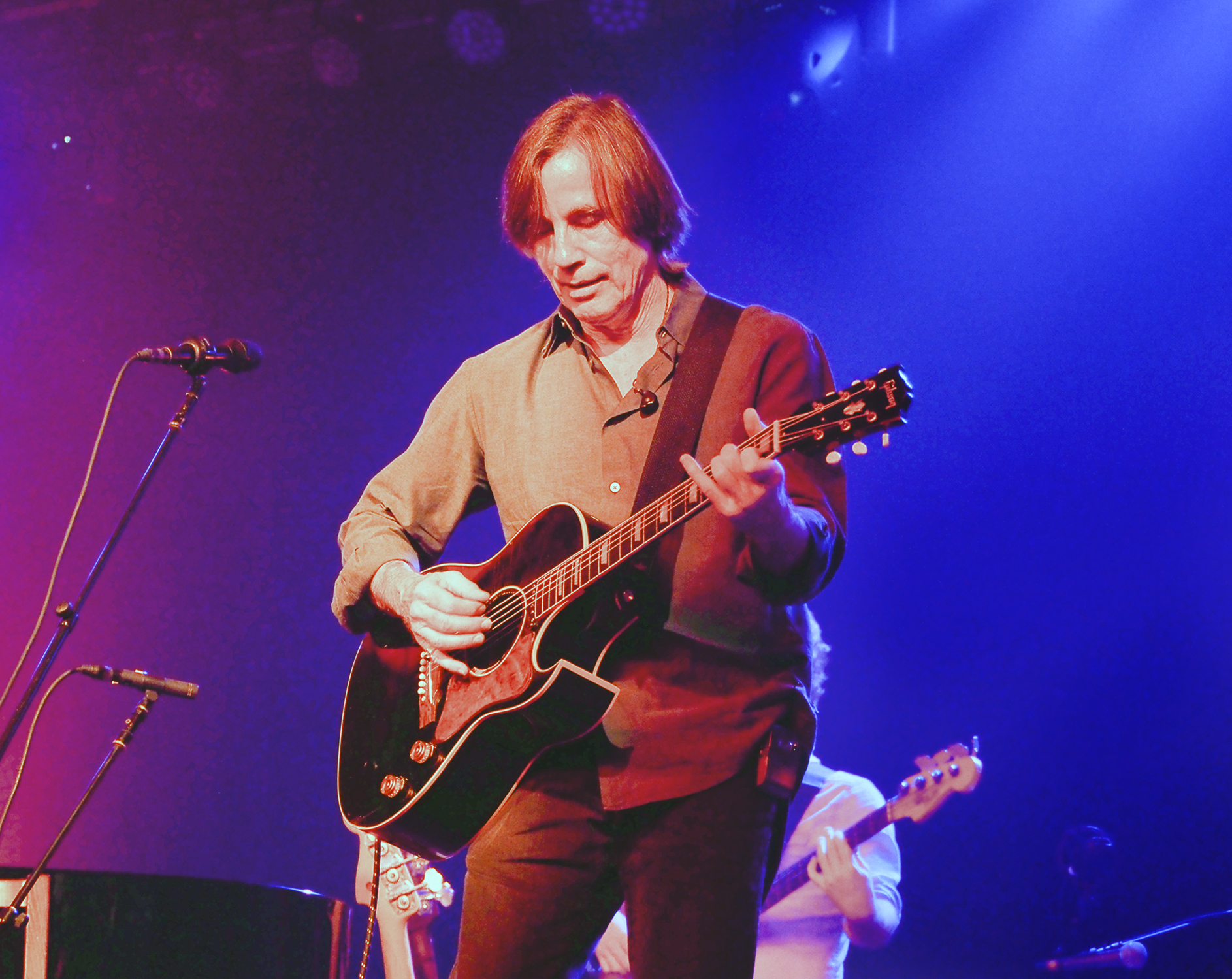
Explore Jackson Browne guitars gear and you find the equipment behind one of California rock’s most enduring and most literary voices — a Los Angeles-born singer-songwriter whose career stretches from the early 1970s Laurel Canyon scene through political activism and commercial success to a continuing contemporary presence, and whose guitar playing, while rarely discussed in the same breath as the virtuoso players of his era, has a specific character of directness and emotional intelligence that serves his songwriting with consistent and complete appropriateness. Browne is primarily known as a vocalist and lyricist, but his guitar work — on both acoustic and electric instruments — has been central to the specific character of his recordings across five decades of professional work.
This guide covers Browne’s complete equipment picture: the acoustic and electric guitars he has used throughout his career, the amplification that served his specific approach, his use of effects, and the playing philosophy of a musician for whom the song’s emotional content is always the primary value and the guitar’s role is always defined by what serves that content. Understanding Jackson Browne’s gear is understanding how guitar playing in service of song can be as musically significant as guitar playing in service of technique.
Background
Clyde Jackson Browne was born on October 9, 1948, in Heidelberg, Germany, where his father was stationed with the US Army, and grew up in Los Angeles, California. His early musical formation encompassed the full range of California folk and rock that was reshaping American popular music in the late 1960s — the singer-songwriter tradition of James Taylor and Joni Mitchell, the country rock of the Flying Burrito Brothers and Gram Parsons, and the broader Laurel Canyon community of musicians who were developing a specifically Californian approach to folk-inflected rock music.
He began his professional career as a songwriter — his songs were recorded by other artists before his own recording career began, including “These Days” (recorded by Gregg Allman) and “Shadow Dream Song” (recorded by Tom Rush). His association with Asylum Records founder David Geffen and the broader Laurel Canyon scene gave him the professional connections and the musical community that supported his development as a recording artist. His self-titled debut album (1972) established him as one of the most significant new voices in California rock, with a combination of lyrical sophistication and melodic directness that distinguished him from both the more pop-oriented singer-songwriters and the harder-rocking musicians of the era.
The subsequent albums — For Everyman (1973), Late for the Sky (1974), The Pretender (1976), Running on Empty (1977), Hold Out (1980) — built a commercial success and critical reputation that established him as one of the defining voices of 1970s California rock. His guitar work evolved across these albums from the more folk-oriented acoustic approach of the early records to the electric guitar playing that became increasingly prominent in his sound through the mid-1970s and 1980s.
His later career has been marked by both continued musical productivity and significant political engagement — particularly in the areas of environmental activism and nuclear disarmament, issues he has addressed through both his music and his direct advocacy work. His recordings have continued to show the literary intelligence and emotional directness that defined his work from the beginning.
Jackson Browne Guitars Gear: The Complete Rig
Guitars
Jackson Browne’s guitar choices reflect the dual character of his musical identity — the acoustic folk-based singer-songwriter tradition on one hand, and the electric rock and country influences on the other. His instruments span both domains, with the choice for any specific song or musical context reflecting which dimension of his musical personality that song required.
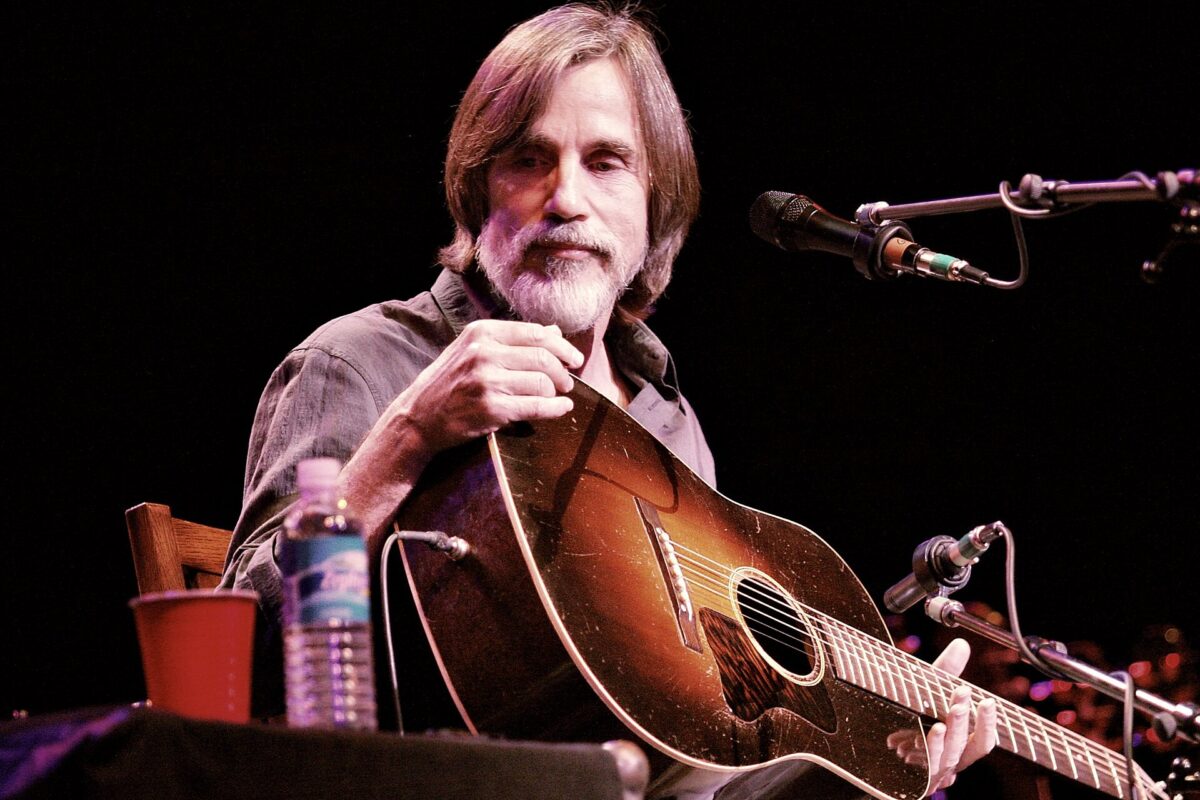
His primary acoustic guitar has been a Browning acoustic guitar — a custom instrument built by luthier William Browning in the late 1960s, which became one of his signature instruments and appeared on his most important early recordings. Custom-built acoustic guitars of this era, made by individual craftspeople rather than production manufacturers, often had specific tonal characters that standard production instruments didn’t replicate, and Browne’s relationship with this particular instrument — as the primary voice for the acoustic folk-rock material that defined his early career — shaped the specific sound of those recordings in ways that reflect the instrument’s individual acoustic character.
He has also used various Martin acoustic guitars — the American manufacturer whose instruments have been central to the folk and singer-songwriter tradition across multiple generations. Martin D-28 dreadnoughts and 000-series Orchestra Models have appeared in his playing across different recordings and performances, providing the warm, projecting acoustic guitar sound that the folk-rock and singer-songwriter traditions have always associated with Martin instruments.
His primary electric guitar has been a Fender Telecaster — the two-pickup single-coil instrument whose bright, direct character suited the country and rock influences that gave his more electric-oriented material its specific tonal identity. The Telecaster’s combination of mechanical simplicity, tonal versatility across the two-pickup configuration, and the specific bright, defined attack of its bridge single-coil pickup made it an appropriate primary electric for a musician whose approach was always more interested in musical character than in elaborate tonal shaping.
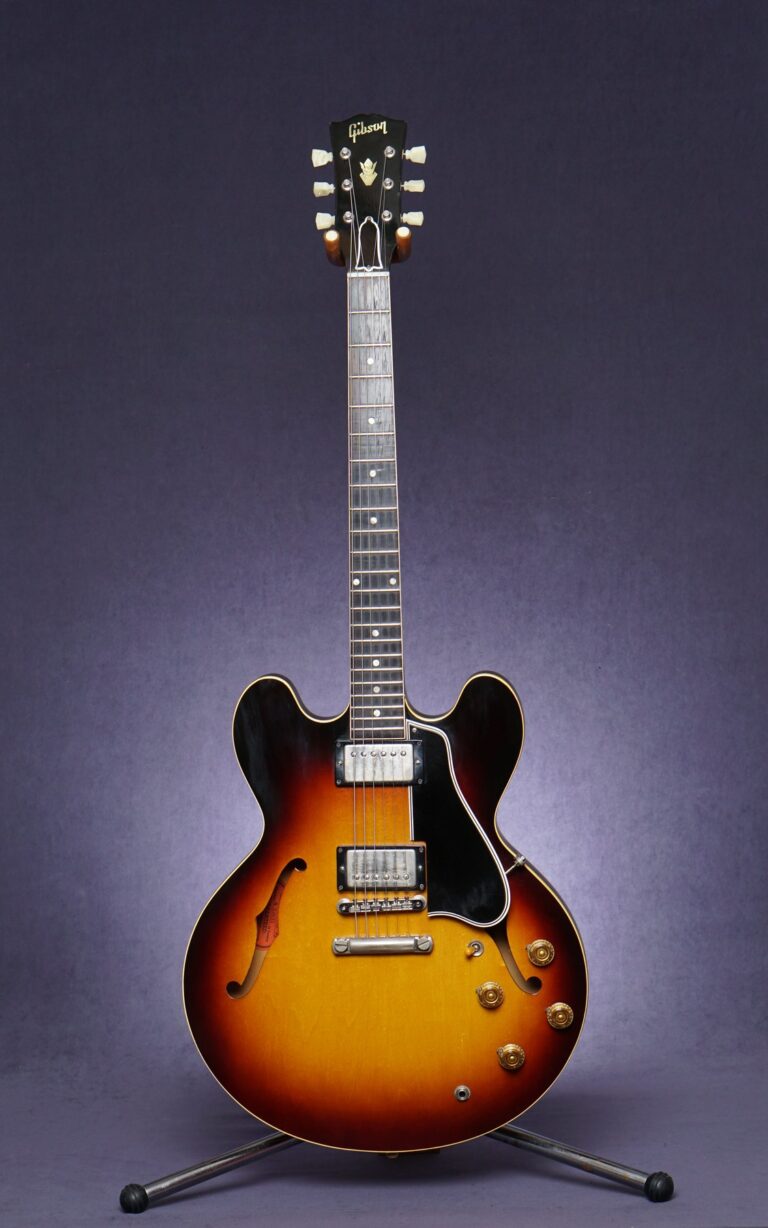
A Gibson ES-335 semi-hollow has appeared for specific applications where the warmth and acoustic dimension of the semi-hollow design were more appropriate than the Telecaster’s single-coil directness. The ES-335’s PAF-spec humbuckers (7.5k to 8.5k ohm, Alnico II or Alnico V) and its semi-hollow construction produced a warmer, more sustained tone that suited the more melodically oriented ballad and soul-influenced material in his catalogue.
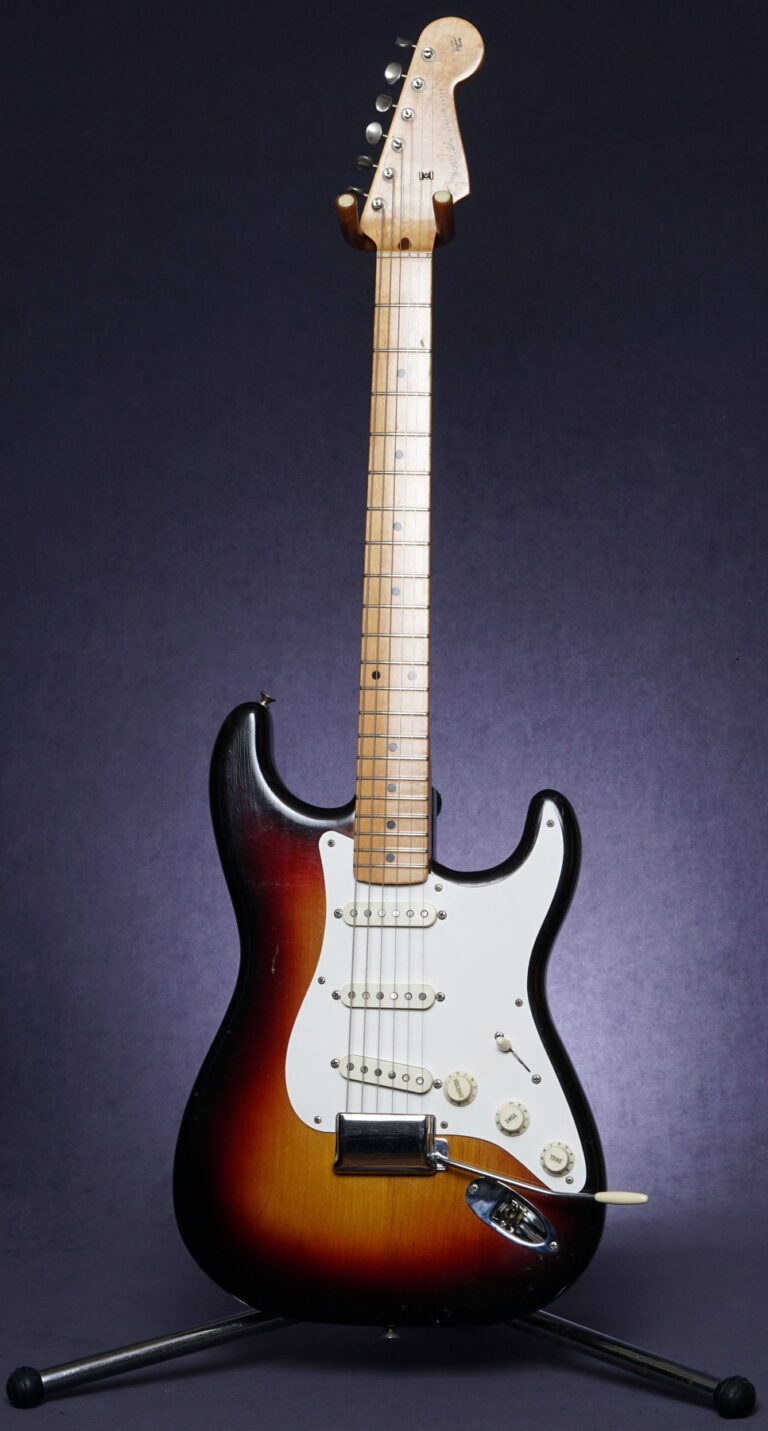
He has used a Fender Stratocaster for specific applications, and various other instruments across different periods of his career — his approach to guitars has been pragmatic rather than collector-oriented, choosing instruments for their tonal contribution to specific recordings rather than for prestige or vintage value.
String gauges on his acoustic instruments ran medium — typically .012–.053 or similar — providing the warmth and projection appropriate for folk-rock fingerpicking and strumming. Electric gauges were medium — .010–.046 — giving the appropriate balance for his varied electric technique.
Amps
Browne’s amplification reflected the same practical, music-first philosophy as his guitar choices — clean, warm amplification that served the song’s character rather than imposing its own tonal identity. His amplifier choices were consistent with the California rock aesthetic of the 1970s: American valve designs that provided clean warmth and natural drive rather than aggressive British character.
His primary amplifier was a Fender Twin Reverb — the 85-watt, 2×12 combo with Jensen C12N speakers that provided the clean, warm American character appropriate for both his Telecaster work and his semi-hollow electric playing. The Twin’s clean headroom allowed the guitar’s natural character to come through without amplifier coloration, which suited Browne’s approach: the song’s emotional content communicated through the guitar’s tonal character, not through the amplifier’s own personality.
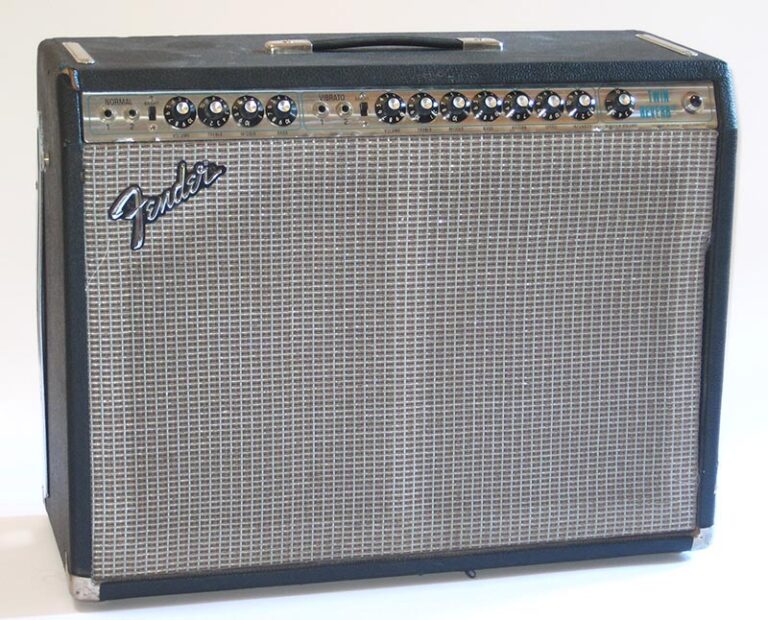
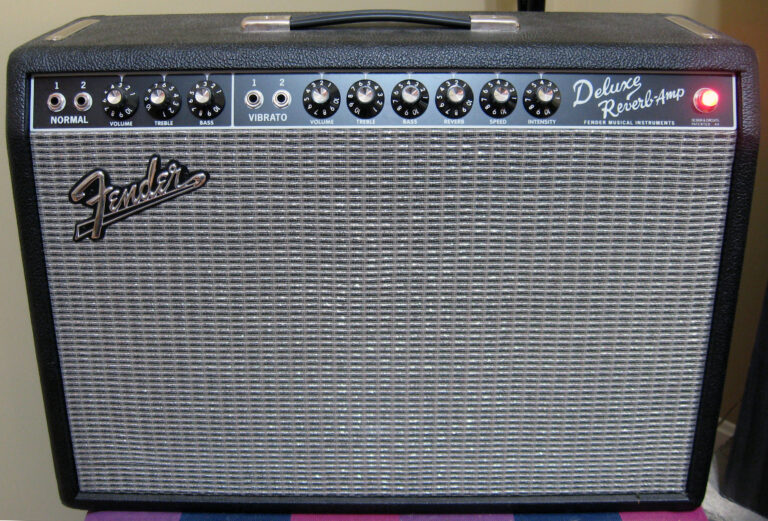
A Fender Deluxe Reverb appeared for smaller venue and studio applications where the Twin’s 85 watts was excessive. The Deluxe’s 6V6 output valves produced a warmer, slightly more compressed character at lower volume levels, with a natural breakup quality that suited the more intimate acoustic-to-electric material in his catalogue.
He has also used Mesa/Boogie amplifiers for specific applications requiring more gain and sustain — particularly for the more rock-oriented material in his catalogue. The Mesa/Boogie’s cascaded preamp gain stages produced the smooth, sustained drive character that suited the more electric rock passages without the aggressive character of British Marshall-style designs.
Effects
Browne’s effects chain was minimal — consistent with the singer-songwriter tradition’s preference for direct, unprocessed guitar sound and with his general philosophy of serving the song’s emotional content through direct communication rather than through elaborate tonal processing.
A delay pedal — typically a Boss DD series or an MXR delay unit — appeared for specific lead guitar passages where echo added appropriate atmospheric depth. His delay use was subtle and musical: adding dimension to specific passages rather than creating obvious rhythmic echo effects. The specific delay times and feedback levels he used were calibrated to the specific song’s tempo and emotional character.
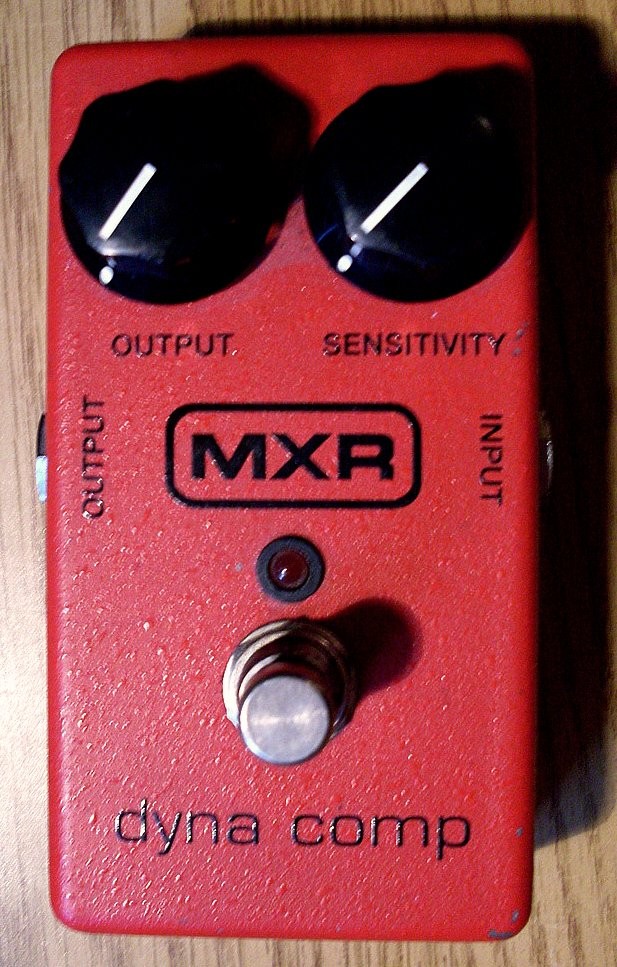
A compressor pedal — an MXR Dynacomp or similar unit — appeared for specific studio applications where evening out the dynamics of acoustic and electric guitar playing was required. The compressor’s ability to sustain quiet notes while controlling loud transients suited both acoustic guitar recording (where the natural dynamic range of the instrument can be challenging for microphone placement) and electric rhythm playing (where consistent level across different playing intensities suited specific production contexts).
The Fender Twin Reverb’s onboard spring reverb was an active element of his playing approach rather than simply a feature of the amplifier — his reverb level adjustments for different songs and different passages reflected the same musical judgment that characterised every other aspect of his equipment use. Spring reverb at modest settings added the spatial dimension that California rock recordings traditionally employed without the artificial wash of excessive reverb.
A wah pedal appeared selectively in his electric guitar work — not as a constant presence but for specific passages where the swept filter effect added appropriate expressiveness. His wah use was restrained and musical, reflecting his general preference for direct communication over effects complexity.
Playing Style & Tone Philosophy
Jackson Browne’s playing style is defined by the songwriter’s priorities rather than the guitarist’s — every technical choice, every tonal decision, and every piece of equipment is evaluated by its contribution to the song’s emotional content rather than by its own inherent interest. This orientation, which he shares with the great songwriter-guitarists of the folk and singer-songwriter tradition, gives his playing a specific quality of appropriateness that technically more spectacular playing sometimes lacks: every note and every chord is exactly right for exactly the musical moment it occupies.
His acoustic guitar technique reflects the folk-rock tradition in its most fully developed form — the Travis picking approach that allows the thumb to maintain a bass line independently of the fingers’ melody and harmony work, deployed with the specific harmonic vocabulary of the singer-songwriter tradition (extended voicings, suspended chords, the specific harmonic movement of California rock from the early 1970s). His chord voicings are more sophisticated than they initially appear — the specific inversions, the extended harmonies, the way root-position and first-inversion chords alternate to create smooth bass line movement beneath the melody — reflecting genuine harmonic intelligence deployed in service of melodic directness.
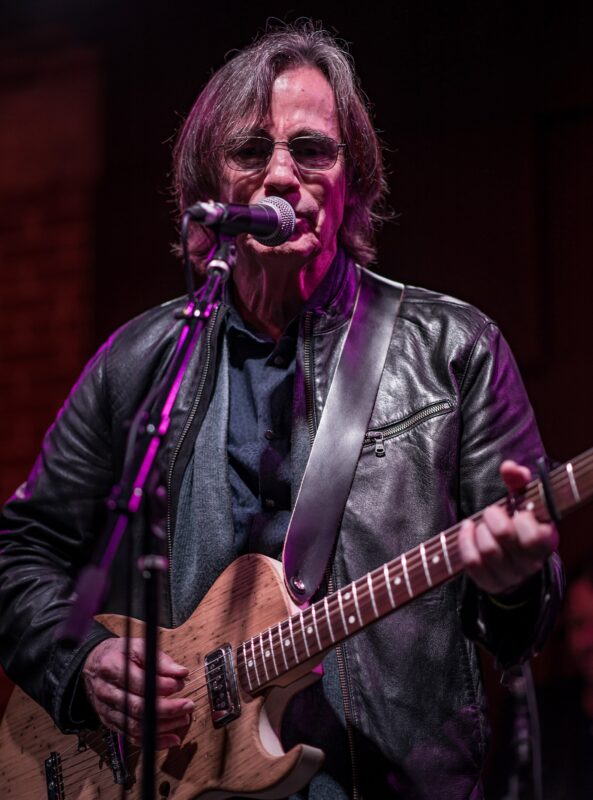
His electric playing shows the country and Laurel Canyon rock influences that shaped his formation: the Telecaster’s direct, warm country character deployed with the rhythmic intelligence of rock guitar but the harmonic sophistication of the singer-songwriter tradition. His lead guitar work — when it appears — is melodically appropriate rather than technically elaborate, reflecting the same priorities that govern every other aspect of his musical approach.
Tonally, his philosophy is absolute clarity and directness: the instrument should sound like itself, the amplifier should reproduce that sound faithfully, and effects should be used only when they contribute something specific and necessary to the musical moment. This philosophy produces recordings that sound honest — the guitar sounds like a guitar, the room sounds like a room, and the emotional content comes from the performance rather than from post-production processing.
How to Sound Like Jackson Browne
Guitar Approach
A quality acoustic guitar — Martin D-28 or 000-28, or a comparable quality instrument — is the starting point for his most characteristic acoustic work. Medium strings (.012–.053) provide the warmth and projection appropriate for his strumming and fingerpicking approach. The Travis picking technique — thumb independent, fingers providing melody and harmony — is the primary right-hand approach for the fingerpicking material. For electric work, a Fender Telecaster through a clean Fender amplifier is the appropriate combination. The harmonic vocabulary is the most important element: study the chord voicings, the specific inversions, and the harmonic movement that characterise his playing.
Amp Approach
A Fender Twin Reverb — run clean, with the onboard spring reverb at a modest setting — is the authentic amplifier. Keep the EQ neutral: the Telecaster or semi-hollow’s natural character and the 6L6 tubes’ warmth provide the tonal identity without requiring extreme amplifier EQ. A modest compressor can add sustain and even out dynamics for specific applications, but the fundamental approach is direct: guitar to amplifier to room, with the emotional content coming from the playing rather than from the processing.
| Control | Setting | Notes |
|---|---|---|
| Volume | 4–6 | Clean — Twin’s headroom preserved for natural guitar character |
| Treble | 5 | Neutral — neither bright nor warm; let the guitar do the work |
| Middle | 5 | Neutral mids for transparent character |
| Bass | 4–5 | Moderate bass for warmth without muddiness |
| Reverb | 2–3 | Light spring reverb — spatial dimension, not wash |
| Compressor | Light ratio | Even dynamics on acoustic-to-electric transitions if needed |
Influence & Legacy
Jackson Browne’s legacy is primarily the legacy of his songs — the specific combination of lyrical intelligence, melodic directness, and harmonic sophistication that makes his best recordings both immediately accessible and durably rewarding. His guitar work is part of this legacy as an enabling element: the specific sounds he produced, the specific harmonic character of his playing, and the specific emotional directness of his technique all contributed to the recordings’ overall quality without drawing attention away from the songs themselves.
His influence on subsequent California singer-songwriters and acoustic rock musicians — the generation of musicians who absorbed his records in the 1970s and 1980s and who developed their own approaches to the intersection of acoustic and electric guitar in service of sophisticated songwriting — is substantial if diffuse. The specific combination of harmonic sophistication and emotional directness that characterises his guitar work has been absorbed by musicians across the full range of American roots music and singer-songwriter traditions.
His contribution to the development of the Laurel Canyon sound — the specific California rock aesthetic that combined folk, country, and rock influences in service of sophisticated personal songwriting — was central to one of the most musically significant communities in American music history. The guitar sound he contributed to that community: clean, direct, harmonically sophisticated, always in service of the song — became part of the shared vocabulary of a tradition that continues to influence American music.
For players exploring the California singer-songwriter tradition that Browne helped define, the rigs of Mike Campbell — whose Heartbreakers work represented the more rock-oriented development of the same Laurel Canyon musical tradition — and Dave Edmunds, whose Rockpile work showed how similar British-influenced American rock values developed from a UK starting point, provide complementary perspectives. The acoustic guitar foundation connects to Gordon Giltrap‘s approach, which shows how the same folk-into-rock synthesis was being pursued in Britain.
Late for the Sky: The Guitar at the Heart of Darkness
Late for the Sky (1974) is the album that most consistently demonstrates the connection between Browne’s guitar approach and the emotional content of his music — the way specific guitar textures, chord voicings, and tonal choices create the specific atmospheric quality that makes the record one of the most emotionally intense California rock albums ever made. Understanding what the guitar does on this album — specifically and technically — illuminates both his playing approach and how his equipment served it.
The acoustic guitar on “Late for the Sky” itself — the album’s title track — demonstrates his Travis picking technique at its most fully developed: the thumb maintaining a steady bass note pattern while the fingers provide melodic fills and harmonic content above it, creating the impression of a complete musical statement from a single instrument. The specific chord voicings he uses — open-position major and minor chords with specific added notes and suspended intervals — give the harmonic language its specific quality of yearning without resolution that suits the song’s emotional content. The Martin’s warm, projecting acoustic character captures the intimacy of the performance while providing sufficient definition for the harmonic content to be heard clearly.
The electric guitar sections on the album — particularly David Lindley’s lap steel and slide work, which appeared alongside Browne’s own guitar — show the specific way that electric guitar textures functioned in the California rock production approach of this period: not as the primary voice but as an atmospheric and tonal supplement to the acoustic foundation. Browne’s own electric guitar work on the album was similarly supplementary — adding specific textures and tonal colours to specific passages rather than driving the overall sound.
The album was produced by Al Schmitt and Browne himself at the Record Plant in Los Angeles — a studio whose specific acoustic character and technical equipment shaped the recorded sound. The guitar tones on the record have a warmth and presence that reflects both the quality of the instruments and the recording environment: the Martin acoustic’s natural character captured with high-quality condenser microphones at thoughtful positions, the electric guitar’s amplifier sound captured with similar care. The production approach — allowing the instruments to sound like themselves rather than processing them into a more polished or more manufactured character — suited the emotional honesty that the material required.
The Running on Empty Live Record: Real Guitar in Real Time
Running on Empty (1977) — the live record that became Browne’s biggest commercial success — provides a different kind of documentation of his guitar approach: not the carefully crafted studio performance but the live playing that reveals how his technical approach functions in real-time performance conditions. The album was recorded on tour and backstage, capturing performances in contexts ranging from arena stage to tour bus, and the guitar work throughout the record has the specific quality of live performance that studio recordings can rarely replicate.
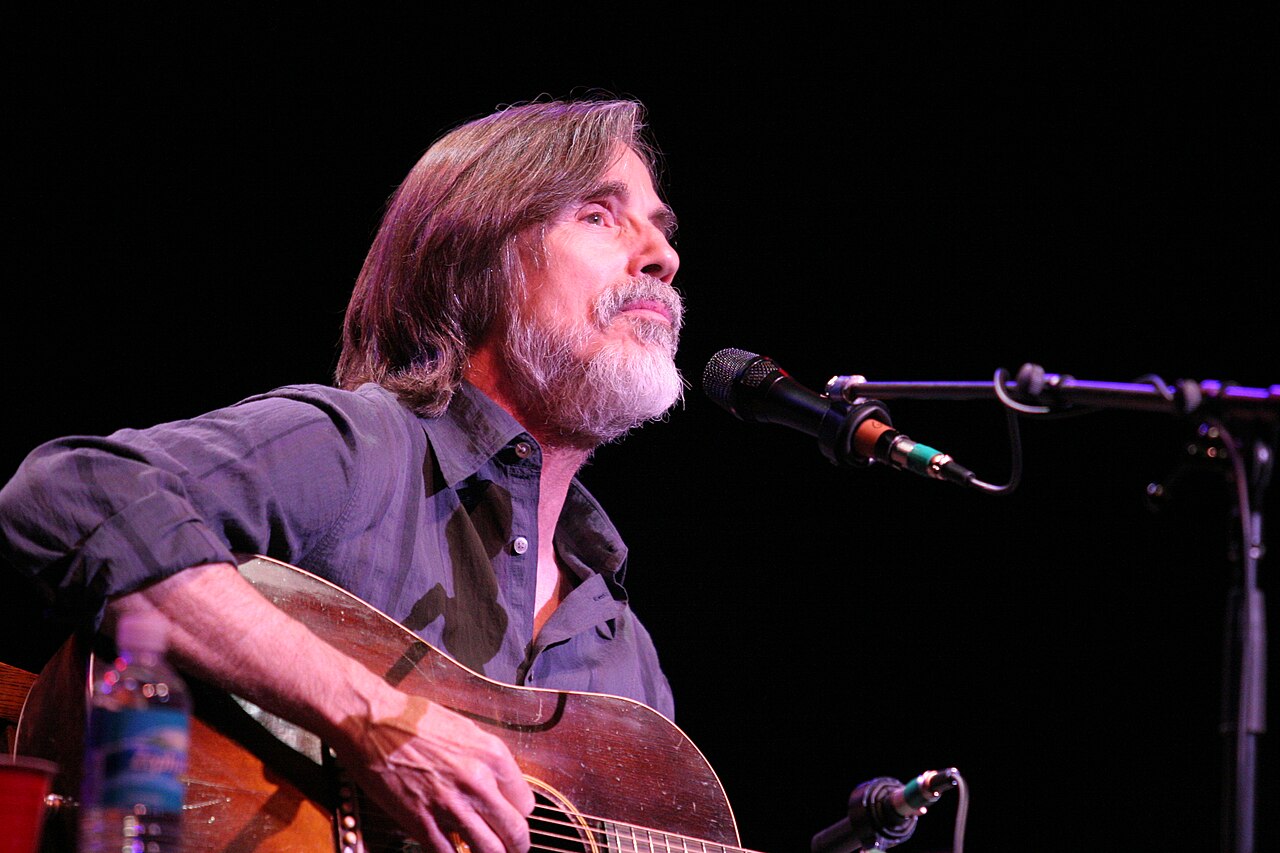
The live performances on the record show Browne’s guitar technique in the most direct form available — the physical reality of playing to an audience, without the ability to overdub or correct the performances after the fact. The acoustic guitar work is immediate and committed; the electric sections have the specific drive of live rock performance rather than the more controlled quality of studio recording. The tonal character of the instruments — the Martin acoustic’s natural warmth, the Telecaster’s brightness through the Fender Twin — is audible in the context of a live performance space rather than a recording studio, giving the sounds their specific atmospheric quality of music happening in a real space in real time.
The specific guitar tone on the electric sections reflects the Fender Twin’s clean character at performance volume — a slightly fuller, more natural quality than the dry, close-miked studio guitar sound, with the room’s acoustic response contributing to the overall sonic texture. The spring reverb, which on a studio recording can be adjusted precisely to the specific setting required, functions here as a live element — present at whatever setting Browne had dialled in before the performance, interacting with the room’s natural reverberation to produce the overall spatial character of the amplified guitar in the live venue.
The commercial success of Running on Empty — and the fact that the live, unprocessed guitar sound on the record was as commercially successful as any more polished studio production — validated the philosophy of direct, honest guitar playing in service of song. The audience responded to the directness and the authenticity of the performances, not despite the absence of studio processing but because of it. The guitar sounded like a guitar, the singer sounded like a person, and the emotional content was communicated directly and honestly. This is the ultimate validation of Browne’s equipment philosophy: the simplest possible path from the instrument to the listener, with the emotional content of the music doing the communicative work.
The Laurel Canyon Community: Musical Context and Equipment Exchange
The Laurel Canyon musical community of the late 1960s and early 1970s — the informal network of musicians, songwriters, and producers centred on the Laurel Canyon neighbourhood of Los Angeles — was one of the most productive creative communities in American music history, and understanding it provides essential context for Browne’s guitar approach and equipment choices. The specific musical aesthetic that emerged from this community — acoustic-electric, harmonically sophisticated, emotionally direct — was shaped by the interactions between its members, and those interactions included specific conversations about guitars, amplifiers, and the equipment choices that served the shared musical values.
The community included James Taylor, Joni Mitchell, Carole King, the Eagles, Crosby Stills Nash and Young, and dozens of other musicians whose specific equipment choices — acoustic guitars (Martin and Guild primarily), electric guitars (Telecasters, Stratocasters, and various Gibson instruments), and Fender amplification — converged on a shared aesthetic. The acoustic guitar’s primacy in this aesthetic — as the instrument through which the folk tradition’s harmonic and lyrical sophistication was transmitted into the electric rock world — gave Martin acoustic guitars their specific cultural weight within the community. The Fender Telecaster’s role as the primary electric guitar in this community reflected both its country and folk-rock credentials and its mechanical simplicity and directness, which suited musicians for whom the song was always the primary value.
Browne’s equipment choices — the custom Browning acoustic, the Martin guitars, the Telecaster, the Fender Twin — were coherent with this community aesthetic even as they reflected his specific individual character. The shared values of the community (acoustic foundation, clean amplification, harmonic sophistication, emotional directness) were expressed through his specific instrument and amplifier choices, and those choices in turn reflected the values back into the community through the specific character of his recordings. This two-way relationship between individual equipment choices and community aesthetic values is one of the ways that musical communities develop shared sounds rather than merely individual ones, and the Laurel Canyon community’s specific shared sound — audible on hundreds of recordings made by its members through the 1970s — reflects exactly this dynamic.
The Electric Guitar Side: Browne as Rock Player
Browne’s identity as an acoustic-oriented singer-songwriter has sometimes overshadowed his genuine capabilities as an electric guitarist — a player who, when the material requires it, can deliver the kind of rock guitar performance that drives a live set rather than merely supporting it. The more rock-oriented material in his catalogue, and his live performances in large venues, have required electric guitar playing of genuine force and authority, and his Telecaster through the Fender Twin has served these requirements consistently.
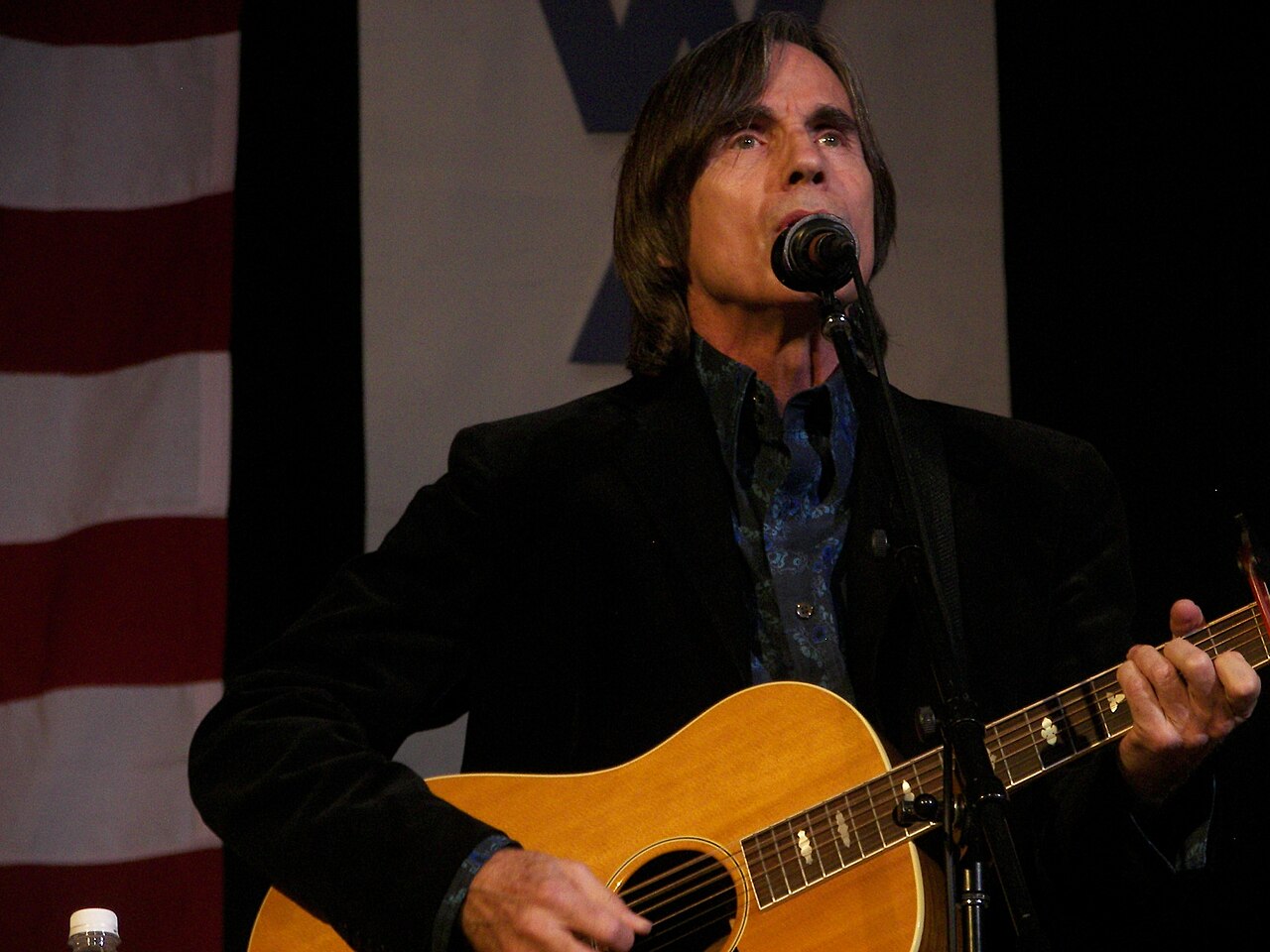
The Telecaster’s specific character in this rock context — its bridge pickup’s bright, defined attack giving chord work its rhythmic precision, its neck pickup’s warmth serving the more melodically oriented passages — made it the right instrument for a musician who needed to cover both the country-inflected clean playing of his folk-rock material and the driving rhythm guitar of his harder rock material. The ability to switch between these different tonal and technical demands within a single set — through the Telecaster’s two-pickup configuration and the amplifier’s clean headroom — was a practical necessity for live performance that Browne’s specific combination of instruments and amplification served with unusual completeness.
The soul and R&B influences that run through some of his more electric-oriented material — the specific rhythmic approach to chord playing, the way the guitar locks with the rhythm section rather than leading it — reflect the same comprehensiveness of American musical knowledge that characterises the best California rock of his era. The Telecaster through the Fender Twin in a slightly driven setting produced the specific warmth and rhythmic authority that this material required, and his technique — the specific pick attack, the chord voicings, the dynamic range from soft comping to driving rhythm — served the music with the same directness and intelligence that his acoustic work demonstrated.
Jackson Browne’s guitar equipment, ultimately, is the physical expression of a set of musical values that have been consistent throughout his career: honesty, directness, harmonic sophistication, and the complete subordination of equipment and technique to the song’s emotional content. The Martin acoustic for the folk-derived material; the Telecaster for the country and rock material; the Twin Reverb for clean, transparent amplification; the minimal effects for specific atmospheric additions — all of these choices reflect the same musical priorities that have made his recordings endure across five decades. The gear served the music; the music justified the gear; and both reflect the same coherent vision of what popular music can be at its most honest and most direct.
The collaboration with David Lindley — whose lap steel, fiddle, and various other stringed instrument contributions to Browne’s early albums gave them much of their specific atmospheric character — is worth noting as part of the guitar story even though Lindley’s instruments were his own rather than Browne’s. The specific way that Lindley’s lap steel and slide work interacted with Browne’s acoustic and electric guitar on records like Late for the Sky and The Pretender reflected a complementary approach to guitar texture within the California rock aesthetic: the acoustic foundation providing harmonic and rhythmic support, the lap steel and slide adding atmospheric and melodic colour above it. Browne’s own guitar choices — the clean, warm Telecaster or the acoustic Martin — were partly shaped by the knowledge that Lindley’s slide and lap steel would provide the more exotic tonal elements, allowing his own guitar work to focus on the harmonic foundation and rhythmic drive. This collaborative division of guitar labour — one player providing the foundation while the other provides the colour — is a specific form of musical intelligence that requires understanding both what your own playing contributes and what complementary playing can add. Browne’s consistent understanding of this dynamic, and his choice of instruments and techniques that served the foundation role with maximum effectiveness, was as important to the character of his best records as any of the more individually spectacular contributions.
The acoustic guitar tradition that shaped Browne’s formation — specifically the finger-picking and chord-melody approaches developed by folk players like James Taylor, Paul Simon, and the broader American folk revival — gave his acoustic technique a specific sophistication that distinguishes his playing from simpler strumming approaches. The Travis picking method — named after guitarist Merle Travis, who developed it from earlier country and boogie piano patterns — uses the thumb to maintain an alternating bass pattern on the low strings while the first and second fingers pick melody and harmony notes on the treble strings. This creates the simultaneous bass-and-melody texture that gives solo acoustic guitar its most complete sound, and Browne’s development of this technique within the folk-rock and singer-songwriter context gave his acoustic work a fullness and self-sufficiency that accompanied his singing with unusual musical completeness. The Martin dreadnought’s specific combination of bass warmth and treble clarity served this technique particularly well — the deep bass response giving the thumb’s bass pattern its warmth and authority, while the clear, projecting treble response gave the finger-picked melody notes their definition. The instrument and the technique were genuinely complementary, and their combination produced the specific acoustic guitar character that defined his earliest and most important recordings.
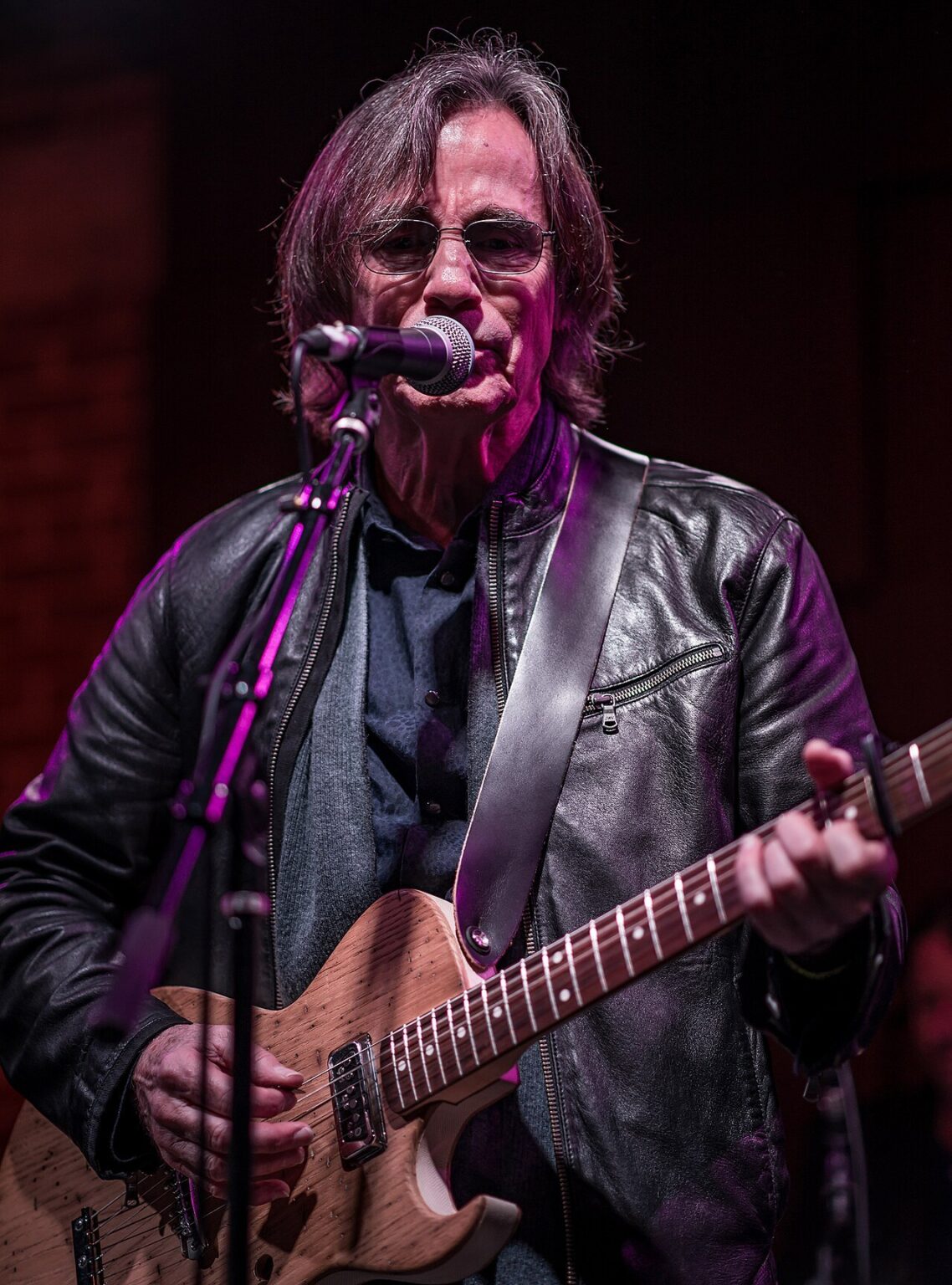
Jackson Browne’s continuing influence on American music — as a songwriter, as a performer, and as an advocate for political and environmental causes — reflects a career of unusual integrity and consistency. The guitar work at the heart of that career: warm, direct, harmonically sophisticated, always in service of the song — has been as consistent as the values it served. The equipment that produced this work was not exotic or elaborate but was chosen with genuine musical judgment and used with genuine musical commitment. That combination — correct choices made with genuine understanding, applied with sustained commitment — is the definition of a complete musician’s relationship with their gear, and Jackson Browne has exemplified it across five decades of recording and performance.
The specific harmonic vocabulary that Browne employs in his guitar playing — the chord voicings, the specific inversions, the extended harmonies — reflects an educational background that went beyond simple guitar tuition to genuine harmonic understanding. Where many rock guitarists develop their harmonic vocabulary through learning specific shapes on the fretboard without understanding the underlying harmonic logic, Browne clearly absorbed the theoretical basis of the harmony he was using — the specific reasons why major seventh chords create a sense of dreamy suspension, why suspended fourths create tension that the resolution to the major chord releases, why second-inversion chords create a particular quality of instability that suits specific emotional moments in a song. This theoretical understanding, expressed through the specific voicings and harmonic movements that characterise his playing, gives his guitar work a coherence and intention that distinguishes it from technically similar playing that lacks the harmonic foundation. The equipment — the Martin acoustic, the Fender Telecaster — served this harmonic intelligence by providing the tonal clarity and warmth that allowed the specific character of each voicing to be heard, but the intelligence itself was independent of the equipment and would have found appropriate expression through any quality instrument.
The Mesa/Boogie amplifiers that appeared in his more rock-oriented work deserve specific mention as an interesting equipment choice for a musician primarily associated with the clean, American-character Fender amplification that dominated his California rock aesthetic. The Mesa/Boogie’s cascaded preamp gain, which produced smooth, sustained overdrive at studio-appropriate volumes, suited specific passages in his harder-rocking material where the natural drive of the Fender Twin at working volume was insufficient for the required gain level without exceeding the venue’s volume constraints. For a musician who was primarily a songwriter and vocalist rather than a lead guitarist — who needed the amplifier to serve the song’s overall character rather than to showcase the guitar — the Mesa/Boogie’s ability to produce musical overdrive at controlled volumes was a practical advantage. His use of it for specific applications rather than as a primary amplifier reflected the same musical intelligence that characterised all his equipment choices: each tool deployed for the specific purpose it serves best, with no tool made to serve purposes for which it wasn’t designed.
The Martin dreadnought’s specific acoustic properties — the large body that produces the bass warmth and projection that made it the definitive singer-songwriter guitar of the twentieth century — are worth examining in the context of Browne’s recording approach. The dreadnought’s 15¾-inch body width and 4-inch depth (in the standard D-28 configuration) produces a fundamentally different acoustic character from the smaller-bodied Martin 000-series and OM-series guitars: more bass warmth, greater projection, and a different quality of sustain that suited strumming and heavy fingerpicking but was somewhat more challenging for the lighter touch fingerpicking that some of his material required. His use of both dreadnought and smaller-bodied Martin instruments across different recordings reflects an understanding of this acoustic difference and a willingness to choose the appropriate body size for the specific musical application. For the heavier, more projecting acoustic passages — the driving strummed sections of his rock-influenced material — the dreadnought’s projection and bass warmth were the right tools. For the quieter, more intimate fingerpicking passages, the smaller-bodied instrument’s clearer midrange and more focused sustain served the musical character better. This contextual specificity in acoustic guitar selection — knowing which body size suited which musical application — is part of the broader equipment intelligence that characterised his approach across every dimension of his career.
Fifty years of recordings — from the 1972 debut through the contemporary work — constitute a substantial and consistently high-quality body of guitar work that deserves more specific attention than the critical focus on his lyrics and melodies typically provides. The guitar playing on these recordings: warm, direct, harmonically sophisticated, always and completely in service of the song — represents one of the most sustained expressions of the singer-songwriter’s guitar ideal in American music, and the equipment that produced it — the Browning and Martin acoustics, the Telecaster and ES-335, the Fender Twin and Deluxe — was exactly right for exactly this music. The instruments are not exotic, the amplifiers are not rare, the effects chain is not elaborate. But the playing they served, and the recordings it produced, are lasting.
Frequently Asked Questions: Jackson Browne Guitars & Gear
What guitars does Jackson Browne play?
Jackson Browne’s primary acoustic guitar has been a custom Browning acoustic built by luthier William Browning, alongside various Martin acoustics (D-28 and 000-series). His primary electric guitar is the Fender Telecaster, with a Gibson ES-335 for warmer, more sustained applications and a Fender Stratocaster for specific contexts. His guitar choices have been pragmatic rather than collector-oriented, selecting instruments for their tonal contribution to specific recordings.
What amp does Jackson Browne use?
His primary amplifier is the Fender Twin Reverb — the clean, warm American 6L6 combo that provides transparent amplification for both Telecaster and semi-hollow electric work. He has also used the smaller Fender Deluxe Reverb for intimate contexts and Mesa/Boogie amplifiers for more driven applications. His amplification philosophy consistently prioritises clean transparency over tonal character from the amplifier itself.
What is Jackson Browne’s most important album?
Late for the Sky (1974) is widely considered his finest artistic achievement — a record of exceptional lyrical depth and melodic beauty that represents the California rock singer-songwriter tradition at its most fully realised. The Pretender (1976) and Running on Empty (1977) were his commercial peak, with Running on Empty‘s live recording format documenting his performance approach directly. His debut album (1972) and For Everyman (1973) are equally significant for understanding the development of his specific musical approach.
What effects does Jackson Browne use?
His effects chain is minimal: a delay pedal (Boss DD or MXR) for atmospheric depth on specific lead passages, a compressor for dynamics control, the Fender Twin’s onboard spring reverb as an active tonal element, and a wah pedal for selective expressiveness. His approach to effects consistently prioritises direct communication over complexity — the emotional content comes from the performance rather than from processing.
What is the Laurel Canyon sound?
The Laurel Canyon sound refers to the specific California rock aesthetic developed by a community of musicians — including Browne, Joni Mitchell, James Taylor, the Eagles, Crosby Stills Nash and Young, and others — who lived in and around the Laurel Canyon neighbourhood of Los Angeles in the late 1960s and early 1970s. The sound combined folk’s acoustic guitar foundation and lyrical sophistication with country’s harmonic language and rock’s electric energy, producing the warm, melodically direct California rock that became one of the dominant sounds of American popular music in the 1970s.
Has Jackson Browne influenced other musicians?
Browne’s influence has been significant across multiple generations of singer-songwriters, California rock musicians, and acoustic-electric players. His specific combination of harmonic sophistication, lyrical intelligence, and melodic directness became a template that subsequent musicians absorbed even when they weren’t consciously drawing on his work. His early songs — “These Days,” “Shadow Dream Song,” “Doctor My Eyes” — were widely recorded by other artists in the early 1970s, establishing his reputation as a songwriter before his recording career fully developed. His subsequent influence on the broader Americana and rock traditions has been sustained through five decades of continued recording and performance.
What is Jackson Browne’s guitar style?
His guitar style reflects the songwriter’s priority of serving the song’s emotional content. On acoustic guitar, he uses both strumming and Travis picking (independent thumb bass line with finger melody/harmony), with harmonically sophisticated chord voicings that include extensions, inversions, and suspended fourths drawn from the folk and California rock traditions. On electric guitar, his Telecaster work combines country-influenced clean playing with rock rhythm authority, while his semi-hollow work provides warmer, more sustained tones for specific melodic passages. In all contexts, his playing is defined by emotional directness and harmonic intelligence rather than technical display.
Genre:
Singer-Songwriter / Soft Rock
Decades:
1970s | 1980s | 1990s | 2000s | 2010s | 2020s
Image credits
- Jackson Browne: John Edwards, Wikimedia Commons, CC BY-SA 2.0.
- Jackson Browne: Craig ONeal, Wikimedia Commons, CC BY-SA 2.0.
- Top image: by Larry Miller, Wikimedia Commons, CC BY-SA 2.0.
- Jackson Browne: photo by Craig ONeal, via Wikimedia Commons, CC BY-SA 2.0.
- Jackson Browne: photo by Justin Higuchi, via Wikimedia Commons, CC BY 2.0.
- Jackson Browne live: Justin Higuchi, Wikimedia Commons, CC BY 2.0.
- Gibson ES-335: Lightburst, Wikimedia Commons, CC BY-SA 4.0.
- Fender Stratocaster: Lightburst, Wikimedia Commons, CC BY-SA 4.0.
- Fender Twin Reverb: Micahmedia, Wikimedia Commons, CC BY 3.0.
- Fender Deluxe Reverb: DlxReverbFront, Wikimedia Commons, CC BY-SA 3.0.
- MXR M102 Dyna Comp: Roadside Guitars, Wikimedia Commons, CC BY-SA 2.0.