
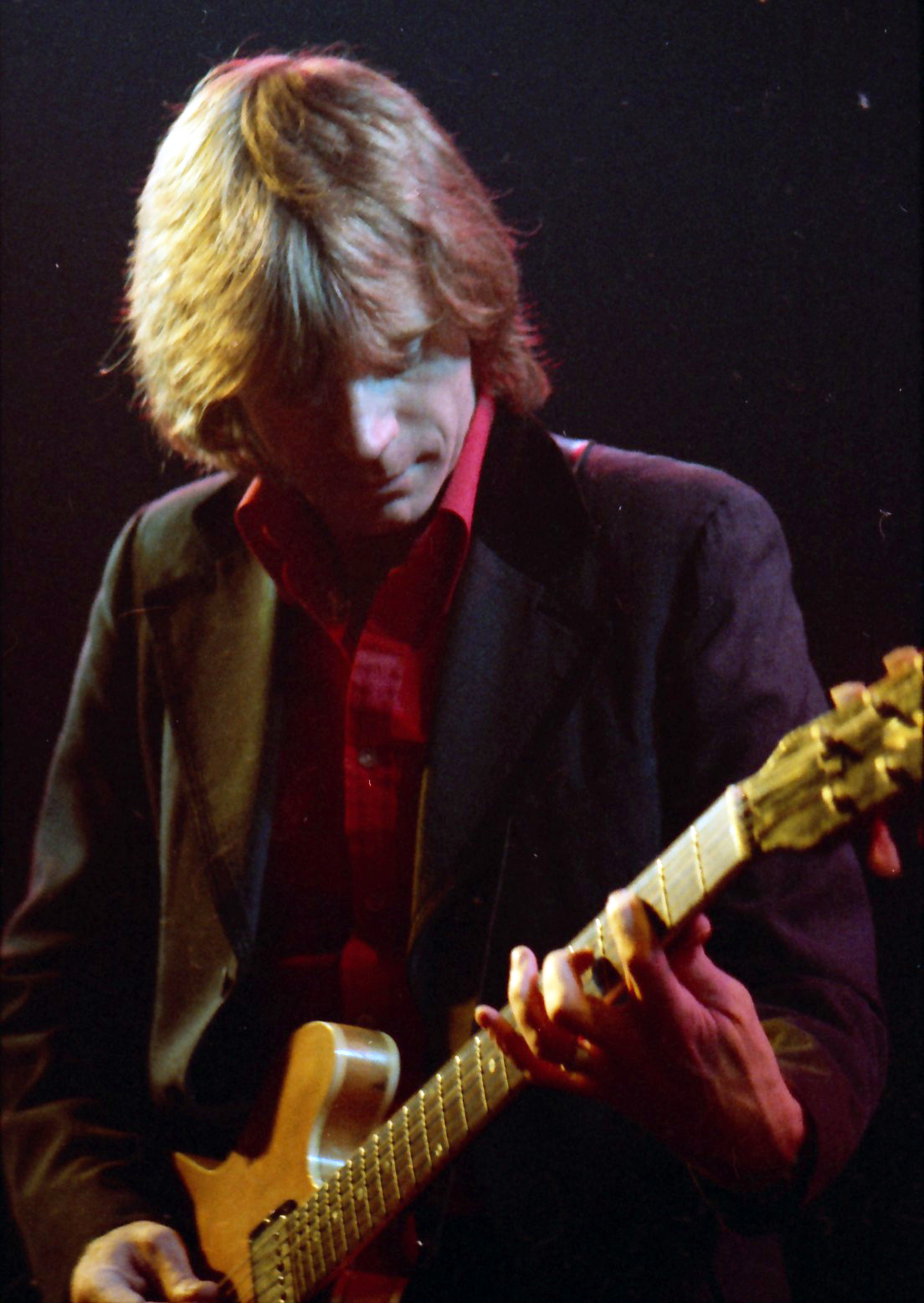
Investigate Dave Edmunds guitars gear and you discover the equipment behind one of British music’s most technically accomplished and most historically dedicated guitarists — a Cardiff-born musician who spent his entire career in passionate pursuit of the perfect rock and roll tone, who was playing genuine rockabilly and country on the Welsh club circuit before it was fashionable to do so, and who produced some of the most technically accomplished guitar recordings of the 1970s and 1980s from his Rockfield Studio in Wales. Edmunds understood the difference between playing rock and roll because it was your job and playing it because it was in your blood, and his guitar playing — fast, clean, historically informed, and physically committed — was always the latter. He is one of the finest pure rock and roll guitarists Britain has ever produced, and his gear choices reflected a deep understanding of what made the original Sun Records and Chess Records recordings sound the way they did.
The Journey
This guide covers Edmunds’ complete equipment picture: the Gibsons and Fenders that served his rock and roll revival, the amplification that recreated the specific sounds of the late-1950s originals, his approach to effects in a period-correct context, and the playing philosophy of a musician who understood that fidelity to the past was not nostalgic limitation but genuine artistic discipline. Understanding Dave Edmunds’ gear is understanding how technical mastery serves historical reverence without becoming museum-piece reproduction.
Background
David Edmunds was born on April 15, 1944, in Cardiff, Wales. His early musical formation encompassed the full range of American rock and roll, country, and rhythm and blues that was reshaping British popular music in the late 1950s and early 1960s — but where most British musicians used these American influences as a springboard toward their own musical development, Edmunds maintained a lifelong commitment to the originals, pursuing their specific sounds and their specific technical approaches with an intensity that was more scholarly than casual.
He formed Love Sculpture in 1967 — a Cardiff-based rock band whose hit single “Sabre Dance” (1968) demonstrated his extraordinary picking speed in an arrangement of Khachaturian’s classical piece — and subsequently pursued a solo career that produced a series of singles produced with unusual technical care at Rockfield Studios, the Welsh recording facility he became associated with. The productions of this period — including the number-one hit “I Hear You Knocking” (1970) and the subsequent “Baby I Love You” — showed his ability to recreate the specific sonic character of late-1950s American recordings with unusual fidelity.
The Rockpile band — formed with Nick Lowe, Billy Bremner, and Terry Williams in the late 1970s — was his most sustained and most critically appreciated ensemble project. The combination of Edmunds’ guitar virtuosity and Lowe’s songwriting produced recordings that were simultaneously historically informed and genuinely contemporary, drawing on the rockabilly and power pop traditions without being trapped by either. Seconds of Pleasure (1980) remains the definitive Rockpile document — a record of extraordinary guitar playing and genuine musical joy.
His production work — producing Shakin’ Stevens, the Stray Cats, and other rockabilly and rock and roll acts — reflected the same historical knowledge that informed his playing, and his influence on the 1980s rockabilly revival extended from his own recordings to the specific sonic character he brought to other artists’ records. He continues to record and perform, maintaining the same deep commitment to the specific sounds and values of American rock and roll that has always defined his musical identity.
Dave Edmunds Guitars Gear: The Complete Rig
Guitars
Dave Edmunds’ guitar choices were specific and purposeful — instruments chosen for their historical authenticity to the American rock and roll and rockabilly traditions he was dedicated to recreating, rather than for generic quality or versatility.
His most iconic instrument is a Gibson ES-335 — the semi-hollow thinline archtop that Gibson introduced in 1958 and that appeared on many of the original rock and roll and blues recordings that Edmunds used as his sonic reference points. The ES-335 with PAF-spec humbuckers (7.5k to 8.5k ohms, Alnico II or Alnico V) produced the specific combination of warmth, sustain, and controlled feedback that distinguished the semi-hollow from both full hollowbody archtops and solid-body guitars, and its acoustic resonance gave chord work and single-note lead playing the specific dimensional quality of the original recordings.
He has also used a Gibson ES-345 — the stereo-capable version of the ES-335, with the Varitone switch that allowed additional tonal variation. The ES-345’s construction was essentially identical to the ES-335, with the stereo wiring and Varitone switch as the primary distinguishing features. Most players who own ES-345s use them in mono mode and treat the Varitone as an additional tonal option; Edmunds used the instrument for the same basic tonal reasons as the ES-335.
His Fender instrument use included vintage Telecasters — the country and rockabilly associations of the Telecaster made it appropriate for the specific American roots material in his catalogue, and the bridge pickup’s twangy character suited the chicken-picking and flat-picking techniques that rockabilly rhythm guitar requires.
He was photographed extensively with a Gretsch 6120 — the hollowbody archtop with Filtertron pickups that was Chet Atkins’ signature instrument and that had been central to the original rockabilly sound. The Gretsch 6120’s specific character — the Filtertron pickup’s chimey, compressed character in a hollowbody body — was fundamental to the rockabilly guitar sound, and Edmunds’ use of it reflected his commitment to historical authenticity in his guitar choices.
Acoustic guitars appeared across specific recordings and live contexts where the unplugged character of acoustic guitar suited the material. His acoustic playing was less central to his identity than his electric work, but it demonstrated the same historical awareness — fingerpicking approaches drawn from the country and folk traditions that fed into rockabilly and early rock and roll.
String gauges ran medium — typically .010–.046 or .011–.052 — appropriate for the picking techniques (flat-picking, chicken-picking, and hybrid picking) that characterised his playing approach. His pick was typically medium to heavy — providing the attack authority that fast rock and roll single-note runs require.
Amps
Edmunds’ amplification was specifically chosen to recreate the acoustic character of late-1950s American recordings — the specific combination of tweed-era Fender amplification and small-room studio acoustic that defined the Sun Records and early Chess Records guitar sound he was dedicated to reproducing.
His primary amplifiers were vintage Fender Tweed amplifiers — specifically the Fender Deluxe, the Fender Champ, and the Fender Tweed Twin, all produced in the late 1950s using the original tweed-covering cosmetics and the specific circuit configurations of that period. The tweed-era Fender amplifiers used 6V6 (in smaller combos) or 6L6 (in larger combos) output valves with specific preamp circuits that produced a characteristic tone: warm, with a specific quality of natural saturation when pushed, and the Jensen speaker character that was standard for all Fender products of the era.
The Fender Tweed Deluxe — a single-speaker 12-watt combo running two 6V6 output valves — was particularly important for his studio work. At working volume, the tweed Deluxe’s 6V6 tubes saturated naturally, producing the specific warm, harmonically complex breakup that characterised the late-1950s American blues and country recordings he was using as sonic reference. This natural saturation — different from the preamp distortion of later high-gain amplifiers, emerging instead from the output stage’s gentle clipping at the edge of its linear range — gave the guitar a singing, sustained quality that suited both the blues and the rockabilly material in his catalogue.
The Jensen P12Q speaker in the vintage Deluxe was a 12-inch alnico-magnet speaker with a specific frequency response and breakup character that contributed substantially to the overall tone. The alnico magnet’s warmer, more controlled frequency response compared to later ceramic-magnet speakers, combined with the Jensen’s specific mechanical resonance characteristics, gave the speaker a warmth and smoothness that enhanced the amplifier’s natural character rather than adding its own harsh colouration.
For larger venue performance where the Deluxe’s limited power was insufficient, Edmunds used the Fender Tweed Twin — the 80-watt amplifier running multiple 6L6 output valves that provided substantially more power while maintaining the tweed character. The Twin’s increased power produced a different quality of 6L6 saturation from the Deluxe’s — more headroom, later breakup, a somewhat different balance of clean and driven character — but the fundamental tonal philosophy was consistent: American valve character with Jensen speakers, providing the warmth and presence that the original rock and roll recordings had established as the sonic standard.
Effects
Edmunds’ effects chain was minimal — consistent with his commitment to recreating the specific acoustic character of late-1950s recordings that were made without the effects processing that subsequently became standard in rock guitar. The original Sun Records and early Chess Records guitar tracks used no effects beyond the natural reverb of the recording room and the occasional addition of slap-back echo — a very short tape echo (around 60-120 milliseconds) with a single repeat that gave the recordings their characteristic slight doubling effect.
The slap-back echo — recreating the specific Echoplex or tape echo effect that Sun Records producer Sam Phillips used on the original rockabilly recordings — was the single most important effect in his signal chain for authentic rockabilly work. The slap-back’s specific character — a single, clean repeat approximately 60-120 milliseconds after the original signal — gave lead guitar lines their characteristic doubled quality without the wash of longer delay times. Edmunds used both period-correct tape echo units and later digital delay units set to short delay times with a single repeat to achieve this specific effect.
A Rockman headphone amplifier — the solid-state practice amp/effects processor designed by Tom Scholz of Boston — appeared in his studio work for specific clean and lightly driven tones. The Rockman’s specific clean compression and EQ produced a different kind of clean tone from his Fender tweed amplifiers, and its portability and consistency made it useful for specific studio applications.
Natural reverb from recording rooms — particularly the specific acoustic character of Rockfield Studios — provided the spatial dimension that his recordings required without the artificial quality of electronic reverb processing. His preference for natural room reverb over spring or plate reverb reflected the same historical awareness that characterised all his equipment choices: the original recordings used room acoustic, and room acoustic was what his recordings should use.
Playing Style & Tone Philosophy
Dave Edmunds’ playing style is defined by a combination of technical virtuosity and historical reverence that is rarer than either quality alone. He played fast because the music required it — rockabilly and early rock and roll guitar playing involved specific technical demands, particularly in the right hand, that required both speed and precision — and he played in the historically correct manner because he understood that the technical demands and the historical manner were inseparable aspects of the same musical tradition.
His flat-picking technique — the primary right-hand approach for rockabilly and early rock and roll lead playing — was developed to the point of genuine virtuosity. The “Sabre Dance” recording demonstrated his picking speed in an unambiguous context, but the more musically significant demonstrations of his technique were in the rock and roll and rockabilly material where speed served musical purpose rather than display. The fast single-note runs of rockabilly lead guitar, executed with the flat-pick attack that gave each note its specific clarity and definition, required a right-hand technique that combined speed with control — not just playing fast but playing fast cleanly, with each note distinct and each rhythmic placement precise.
His rhythm playing reflected the specific rhythmic vocabulary of the rockabilly tradition — the specific pattern of root-fifth bass lines alternating with chord strums, the chicken-picking right-hand patterns that mixed flat-pick and finger attacks to produce the specific rhythmic accenting of country and rockabilly rhythm guitar. This specific rhythmic vocabulary was not a simplification of conventional rock rhythm guitar but a distinct technical tradition requiring specific development, and Edmunds had developed it through years of playing the music rather than merely studying it academically.
Tonally, his philosophy was absolute historical fidelity: the original recordings were the sonic reference point, and every equipment choice was evaluated by how closely it brought the current recording’s guitar sound to the character of those original sounds. This was not nostalgic replication but genuine artistic discipline — understanding the original recordings deeply enough to understand what made them right, and recreating those elements with the technical means available in the present moment.
How to Sound Like Dave Edmunds
Guitar Approach
A Gibson ES-335 or Gretsch 6120 with period-correct pickups is the starting point for the rock and roll and rockabilly material. The flat-picking technique is essential and requires specific development — alternate picking with a medium-to-heavy pick, using the pick’s attack to define each note clearly rather than allowing notes to blur together at high speed. The chicken-picking technique — alternating between flat-pick attacks and middle-finger “snap” attacks — requires separate development for the specific rhythmic character it produces.
Study the original Sun Records recordings — Scotty Moore, Carl Perkins, and their contemporaries — as the primary technical reference. The specific ways these players articulated fast single-note runs and the specific rhythmic patterns they used for rhythm guitar are the foundation of Edmunds’ approach, and understanding the originals is necessary for understanding what he was doing and why.
Amp Approach
A vintage Fender Tweed Deluxe (or a quality reproduction such as the Victoria Vintage Deluxe or the Fender ’57 Custom Deluxe reissue) at working volume — pushed to the point of natural 6V6 saturation — is the authentic amplifier for the rock and roll and rockabilly material. The slap-back echo is essential for the rockabilly lead work: set a digital delay to approximately 80-120 milliseconds with a single repeat at moderate level. This slap-back, combined with the tweed Deluxe’s natural warmth and the ES-335’s acoustic resonance, produces the specific character of the original recordings.
| Control | Setting | Notes |
|---|---|---|
| Volume | 7–9 | Natural 6V6 saturation zone — where the tweed warmth lives |
| Tone | 5–7 | Moderate — the warm natural breakup handles the tonal shaping |
| Guitar Volume | 7–10 | Control tone via guitar volume — lower for cleaner passages |
| Slap-back echo | 80–120ms, 1 repeat | The defining rockabilly effect — essential for the Sun Records character |
| Room reverb | Natural | Record in a live-sounding room — avoid spring reverb for period correctness |
Influence & Legacy
Dave Edmunds’ legacy operates on two levels — his direct influence on the musicians he produced and collaborated with, and his broader influence on the understanding of what rock and roll was and could be as a living tradition rather than a historical artifact. The musicians he produced — the Stray Cats’ rockabilly revival, Shakin’ Stevens’ UK chart success — were directly shaped by his specific understanding of the sounds they were attempting to recreate, and the sonic character of those productions reflected his historical knowledge as clearly as it reflected the producing artists’ own creative vision.
His Rockpile work with Nick Lowe demonstrated that historical authenticity and contemporary relevance were not opposites — that music made with genuine historical understanding and technical facility could be as fresh and as commercially viable as music that ignored the past. The Rockpile recordings showed musicians who loved the original rock and roll and rockabilly recordings and who had developed the technical means to recreate their essential character while making music that was genuinely their own rather than mere imitation.
His influence on British guitarists who came of age in the late 1970s and 1980s — musicians who heard the Rockpile recordings and understood that the technical demands of the rockabilly tradition required specific development rather than approximation — was substantial if often unacknowledged. The specific techniques he demonstrated: the flat-picking speed, the chicken-picking rhythm approach, the slap-back echo guitar tone — gave younger British guitarists a model for how to engage with American roots music that went deeper than surface stylistic borrowing.
For players exploring the rock and roll revival and power pop traditions that Edmunds inhabited, the rigs of Elvis Costello — whose Rockpile connection and shared musical sensibility placed him in the same creative community — and Andy Fairweather Low, whose Welsh background and session career overlapped with Edmunds’ musical world, provide illuminating comparison. The American roots foundation of his work connects to Arlen Roth‘s country guitar studies, which shows how similar historical immersion in American roots music produced different specific playing approaches.
Sabre Dance: Technical Virtuosity in Service of Rock History
The “Sabre Dance” recording (1968) — Love Sculpture’s arrangement of Aram Khachaturian’s classical piece that became a surprise UK hit — provides the most unambiguous documentation of Edmunds’ flat-picking speed and precision. The arrangement required sustained picking at speeds that exposed any weakness in right-hand technique immediately, and the recording showed those weaknesses to be entirely absent: every note was clean, every articulation was precise, and the tempo never wavered despite the extraordinary demands the arrangement placed on the picking hand.
The specific technique demonstrated on “Sabre Dance” — alternating down and up strokes with a medium-heavy flat pick, maintaining absolute rhythmic precision across a complex melodic pattern at high speed — was the same technique that fast rockabilly lead guitar required, applied in an explicitly technical context that left the technique’s quality entirely visible. Understanding “Sabre Dance” as a technical demonstration illuminates what Edmunds brought to the rockabilly material: not the approximation of fast picking that many players substituted for the real thing, but the genuine physical capability to execute the technique as accurately at the required speeds as at slower practice tempos.
The guitar he used for “Sabre Dance” — most likely one of his early Gibson semi-hollow instruments — went through whatever amplification was available in the recording context, producing the specific tone of the recording: clean in the attack, with a specific ring to individual notes that reflected both the instrument’s acoustic properties and the recording environment’s character. Understanding this context — a technically demanding classical piece arranged for rock guitar by a player who had developed the technique to execute it — places both the technique and the instrument in the specific musical perspective that makes Edmunds’ career coherent: genuine technical accomplishment in service of genuine historical reverence.
Rockfield Studios and the Natural Sound
Rockfield Studios near Monmouth, Wales — where Edmunds recorded many of his most important productions — deserves specific examination as part of the equipment story, because the studio’s specific acoustic character was as much a part of the sonic character of his recordings as any piece of physical equipment he brought to the sessions. Edmunds understood this, and his preference for natural room reverb over electronic reverb processing reflected a genuine appreciation for what the studio’s acoustic environment contributed.
Rockfield’s principal recording room — a converted farm outbuilding with specific dimensions and acoustic treatment — produced a natural reverb with the specific warmth and decay that suited both the rock and roll material Edmunds recorded there and the more recent productions he made in the space. The room’s natural reverb was not the same in character as the spring reverb of a Fender amplifier or the plate reverb of a studio processing unit; it was longer, more diffuse, and more spatially complex — the kind of reverb that was part of the original live performance environment rather than an electronic simulation of it.
The recording approach Edmunds developed at Rockfield reflected his historical understanding of how the original American recordings were made. Sam Phillips at Sun Records recorded in a small, acoustically specific room and used the room’s natural reverb as an active element of the recorded sound — not as background ambience but as a distinct tonal contribution. The specific slap-back echo was added through tape delay rather than through physical reverb, but the natural room character was always present beneath it. Edmunds’ approach at Rockfield pursued the same philosophy: use the room’s natural acoustic character as a primary element of the sound, and add the slap-back tape echo as the specific processed element rather than trying to recreate the Sun Records sound through extensive electronic processing.
The Stray Cats: Production Legacy
Edmunds’ production work with the Stray Cats — the New York-based rockabilly trio who became one of the biggest acts of the early 1980s with his production assistance — provides the clearest example of how his historical knowledge and technical expertise influenced other musicians’ work. The Stray Cats had the energy, the visual presence, and the basic musical direction of the rockabilly tradition, but the specific sonic character of their early recordings — the guitar tone, the upright bass sound, the drum character — reflected Edmunds’ production input as clearly as their own musical identity.
Brian Setzer’s guitar tone on the early Stray Cats productions showed the specific influence of Edmunds’ equipment knowledge: the Gretsch hollowbody (Setzer’s primary instrument, like Edmunds’ own Gretsch use) through specific amplification at specific settings, with the slap-back echo positioned at the historically correct delay time and level, produced a guitar sound that had genuine historical authenticity. Edmunds’ ability to specify and achieve this specific historical sound character — knowing which amplifier, which settings, which echo time and level produced the right result — reflected the depth of his historical understanding in a way that mere stylistic familiarity with the genre couldn’t have produced.
The success of the early Stray Cats productions — commercially and critically — validated both Edmunds’ production approach and the specific historical knowledge that underpinned it. The recordings demonstrated that authentic rockabilly sounds were commercially viable in the early 1980s, that the specific equipment choices and recording approaches required to achieve historical authenticity were accessible to contemporary musicians, and that the gap between historical reverence and commercial viability was smaller than the music industry’s conventional wisdom suggested. These demonstrations — made through specific production decisions about specific equipment — were as much a contribution to the development of roots music in the early 1980s as Edmunds’ own recordings and performances.
The Gretsch 6120 and Its Rockabilly Credentials
The Gretsch 6120 — Chet Atkins’ signature model that was also played by Eddie Cochran, Duane Eddy, and other foundational rockabilly figures — deserves specific examination as part of Edmunds’ equipment story, because his use of this instrument reflected the same historical understanding that characterised every aspect of his approach.
The 6120’s specific character — the Filtertron pickup’s bright, compressed chimeyness in the context of a fully hollow body — was as much part of the original rockabilly guitar sound as any playing technique or recording approach. Eddie Cochran’s guitar on “Summertime Blues” and “C’mon Everybody” is distinctly the sound of a Gretsch instrument — the specific combination of hollow body acoustic resonance and Filtertron pickup brightness that no solid-body guitar could replicate. Understanding this specific sonic character, and choosing the instrument that produced it, was part of Edmunds’ commitment to historical authenticity that separated his engagement with the rockabilly tradition from superficial stylistic borrowing.
The Filtertron’s specific technical properties — approximately 4.5k to 5.5k ohms DC resistance, Alnico V rod magnets, a bright high-frequency response with specific compression at high frequencies — produced a guitar signal that interacted with the tweed Fender amplification in a specific way. The Filtertron’s bright character through the tweed amplifier’s warm natural saturation produced a combination that was simultaneously cutting and warm — the specific quality of the original Cochran and Eddy recordings that made the lead guitar lines so clearly audible in the dense arrangements without harshness or shrillness. Edmunds’ understanding of this specific acoustic interaction — Filtertron into tweed, with slap-back echo — was the foundation of his ability to recreate the original rockabilly guitar sound with the authenticity that made his productions genuinely different from mere rock and roll nostalgia acts.
Dave Edmunds’ career is ultimately a study in how genuine love for a musical tradition, combined with genuine technical mastery of its specific demands, can produce music of lasting value without nostalgia or anachronism. The equipment he chose — the Gibson semi-hollows, the Gretsch 6120, the tweed Fenders, the slap-back echo — was chosen with genuine historical understanding of what made the original recordings work, and deployed with the technical facility to recreate those specific qualities rather than merely approximating them. The result was a body of recorded work that honoured the tradition it drew on without being trapped by it, and a legacy of production and influence that extended the tradition’s vitality into contexts and time periods where it might otherwise not have reached. The gear served the history; the history served the music; and the music served the tradition that inspired it. That is the complete Dave Edmunds equipment story.
The Love Sculpture period — the late-1960s Cardiff band that provided Edmunds’ first professional context before his solo career — is worth noting as the formative context in which his specific technical approach to the guitar developed. Love Sculpture’s repertoire — which drew on blues, rock, and the occasional classical piece — required a guitarist who could move between different technical approaches within a single performance, and the specific demands of this varied repertoire developed the versatility and technical facility that Edmunds subsequently deployed in his rock and roll and rockabilly work. The band’s most successful recording (“Sabre Dance”) was atypical of their normal material, which ran more toward the blues-influenced rock that the Cardiff circuit demanded, but the technical demands it placed on his right-hand technique were the most dramatic single demonstration of the technical facility he had been developing through the less technically spectacular but equally demanding blues and rock material of their standard set.
The Cardiff music scene of the late 1960s — the Welsh capital’s specific club and bar circuit that provided Edmunds’ initial professional formation — shaped his approach in ways that the more celebrated London and Manchester scenes might not have. Cardiff in this period was a city where musicians played multiple musical styles for audiences who demanded entertainment rather than artistic experimentation, and the practical demands of this professional context developed the technical versatility and musical adaptability that made Edmunds such an effective session musician and producer alongside his work as a recording artist. The specific historical knowledge he brought to American roots music was acquired in this practical working context — not in music school or through academic study but through the discipline of playing for audiences and understanding what made the music work at the level of the performance rather than the level of the score.
The tweed Fender amplifiers that were central to Edmunds’ recording approach are worth one final technical note about why they specifically suited the rockabilly material rather than merely being period-appropriate alternatives to modern amplification. The tweed Fender’s output stage used 6V6 valves biased in class A configuration — a mode of amplifier operation where the output valve conducts for the full cycle of the audio signal rather than only during the positive or negative half of the cycle. Class A operation produces less efficient power delivery than the class AB or class B configurations used in later amplifiers, but it produces even-order harmonic distortion (octaves and fifths) rather than the odd-order harmonic distortion (flatted sevenths and ninths) of class AB and class B output stages. Even-order harmonics are musically consonant — they are notes that exist within the harmonic series of the fundamental — while odd-order harmonics are less consonant. The tweed Fender’s class A 6V6 operation produced a specific quality of natural saturation that was warm, harmonically musical, and pleasant rather than harsh — exactly the quality that the original late-1950s American recordings had, and exactly the quality that Edmunds was trying to recreate through his equipment choices. This specific technical reason — class A 6V6 even-order harmonic saturation — was the acoustic foundation of the tweed Fender’s suitability for his specific historical project, and his consistent choice of these amplifiers reflected genuine understanding of this acoustic principle rather than mere historical nostalgia.
Nick Lowe’s complementary role in the Rockpile dynamic — as primary songwriter and producer counterpart to Edmunds’ guitar virtuosity — deserves specific mention as part of the equipment story because the specific musical chemistry between the two musicians shaped what each brought to the recordings. Lowe’s songwriting drew on a broader stylistic range than Edmunds’ playing — Lowe incorporated new wave, country, soul, and various other influences alongside the rock and roll and power pop that were Edmunds’ primary territories — and this broader range meant that Rockpile’s recordings required a guitar approach that could serve the full range of Lowe’s compositional vision, not just the rockabilly and rock and roll material where Edmunds’ equipment choices were most naturally appropriate. Edmunds adapted his approach to serve Lowe’s more stylistically varied material while maintaining his fundamental equipment philosophy: period-appropriate instruments, tweed amplification where appropriate, slap-back echo for the rockabilly material. This adaptation — maintaining one’s fundamental equipment approach while adjusting its specific application to serve a collaborator’s musical vision — is the specific form of musical intelligence that Rockpile’s recordings demonstrated at their most effective. The Lowe-Edmunds partnership was one of the most productive creative collaborations in British rock of the late 1970s, and the specific guitar equipment and approach Edmunds brought to it was as central to its success as Lowe’s songwriting or the ensemble’s collective musical personality.
I Hear You Knocking (1970) — Edmunds’ debut number-one hit, a cover of Smiley Lewis’s 1955 R&B recording — is worth examining as a specific demonstration of his production approach in action. The recording was made at Rockfield with Edmunds serving as both performer and producer — a relatively unusual arrangement for a major chart hit of the era, reflecting both his technical production knowledge and his understanding that the specific sound he was trying to achieve required the specific knowledge that only he possessed. The guitar tone on the recording — warm, with the specific natural saturation of tweed amplification, with the slap-back echo adding the rockabilly-character doubled quality — was precisely the sound he had been working toward, applied in the service of a song that deserved it. The recording’s commercial success demonstrated that audiences responded to the genuine historical character of the sound rather than requiring the more modern, more processed character of contemporary 1970 rock production. This demonstration — that authentically historical sounds were commercially viable — was as important to the subsequent development of his career as any technical or artistic achievement, because it validated the equipment philosophy that would define everything he subsequently did.
The Jensen P12Q alnico speaker in the vintage Fender Tweed Deluxe — the specific speaker that was standard equipment in these amplifiers through the late 1950s and that contributed substantially to their tonal character — deserves specific examination as part of the complete equipment picture. The Jensen P12Q used an alnico (aluminium-nickel-cobalt) magnet rather than the ceramic ferrite magnets that replaced alnico designs in most speaker production in the early 1960s. Alnico magnets have a specific magnetic property — their magnetic strength decreases somewhat when the speaker cone reaches its mechanical limit, a phenomenon called “flux modulation” — that produces a specific quality of compression at high signal levels. When the speaker’s cone reaches the limit of its linear range, the alnico magnet’s field strength decreases slightly, reducing the back-EMF against which the voice coil operates and allowing the cone to travel further than it otherwise would. This produces a specific, smooth, natural-sounding compression at high levels — quite different from the harder, more abrupt limiting of later ceramic-magnet speakers — that contributed to the warm, natural quality of the tweed Fender recordings. Edmunds’ consistent use of amplifiers equipped with these specific alnico Jensen speakers — when period-correct vintage examples were available — reflected genuine understanding of this specific acoustic contribution rather than mere vintage nostalgia. The speaker was part of the sonic character, and authentically recreating the character required the authentic speaker.
Dave Edmunds remains, as of this writing, one of the most historically important and most technically accomplished British rock and roll guitarists alive, continuing to perform and record with the same commitment to historical authenticity and technical excellence that has defined his career from its beginning. His equipment — the Gibson semi-hollows, the Gretsch 6120, the tweed Fenders with their alnico Jensen speakers, the slap-back echo — represents one of the most coherent and most historically informed equipment approaches in British music, chosen with genuine understanding of why each element served the specific music being made and used with the technical facility to realise that understanding completely. The gear served the tradition; the tradition deserved the gear; and the music that resulted from both continues to reward the listener who pays close enough attention to hear what genuine historical reverence combined with genuine technical mastery actually sounds like.
Frequently Asked Questions: Dave Edmunds Guitars & Gear
What guitars does Dave Edmunds play?
Dave Edmunds’ primary guitars include vintage Gibson ES-335 and ES-345 semi-hollow instruments, Gretsch 6120 hollowbody archtops, and Fender Telecasters. His guitar choices reflect the historical authenticity he pursued — these instruments were central to the original American rock and roll and rockabilly recordings that defined his sonic reference points. His commitment to period-correct instruments was as integral to his musical approach as his technical guitar playing.
What amp does Dave Edmunds use?
His primary amplifiers are vintage Fender Tweed amplifiers — particularly the Fender Tweed Deluxe (12 watts, 6V6, single 12-inch Jensen speaker) for studio work and intimate performance, and the Fender Tweed Twin for larger venues. The tweed amplifiers’ specific tonal character — the natural 6V6 saturation, the Jensen alnico speaker’s warmth — was central to recreating the sonic character of the late-1950s American recordings that defined his aesthetic.
What is slap-back echo?
Slap-back echo is a very short tape echo effect — typically 60-120 milliseconds delay time, with a single clean repeat — that was used extensively by Sun Records producer Sam Phillips on the original Elvis Presley, Johnny Cash, and Jerry Lee Lewis recordings of the mid-to-late 1950s. The slap-back gives lead guitar (and vocals) a characteristic doubled quality without the wash of longer echo times. It is one of the defining sonic characteristics of rockabilly music and an essential element of Edmunds’ authentically rockabilly guitar work.
What is Rockfield Studios?
Rockfield Studios is a recording facility near Monmouth in Wales — one of the oldest residential recording studios in the world, established in 1963 by Kingsley and Charles Ward. Dave Edmunds was associated with Rockfield from early in his career, recording many of his most important productions there. The studio’s specific acoustic character — the natural reverb of its recording rooms, the specific quality of the sound produced in its spaces — was part of the sonic character of the recordings Edmunds made there, and his preference for natural room reverb over electronic processing reflected his appreciation for Rockfield’s specific acoustic qualities.
What is Rockpile?
Rockpile was a British rock and roll band formed in the late 1970s featuring Dave Edmunds, Nick Lowe, Billy Bremner (guitar), and Terry Williams (drums). The band combined Edmunds’ guitar virtuosity and rockabilly expertise with Lowe’s power pop and country-influenced songwriting, producing recordings that were simultaneously historically informed and genuinely contemporary. Their only album as Rockpile, Seconds of Pleasure (1980), is widely considered one of the finest British rock and roll records of the era.
What other artists did Dave Edmunds produce?
Edmunds produced a range of artists drawing on his specific knowledge of American roots music, including Shakin’ Stevens (whose UK chart success in the 1980s was partly built on Edmunds’ production approach), the Stray Cats (whose rockabilly revival drew directly on Edmunds’ historical knowledge), and various other acts in the rockabilly and power pop traditions. His production work extended his musical influence well beyond his own recordings, shaping the sonic character of the 1980s rockabilly revival in the UK and internationally.
Why is Dave Edmunds significant in British music history?
Edmunds is significant as one of the few British musicians who engaged with American rock and roll and rockabilly at the level of genuine technical mastery and historical understanding rather than as a surface stylistic influence. His ability to recreate the specific sonic character of late-1950s American recordings — through genuinely period-correct equipment, authentic technical approaches, and deep historical knowledge — gave the British rock and roll revival of the 1970s and 1980s a musical authenticity that simple imitation couldn’t have achieved. He demonstrated that engagement with historical musical traditions was not nostalgic limitation but genuine artistic discipline.
Genre:
Rock’n’Roll Revival / Power Pop
Decades:
1960s | 1970s | 1980s | 1990s
Related stories
Vernon Reid Guitars & Gear: The Complete Guide to Living Colour’s Guitar Genius’s Rig
Vernon Reid's guitars, amps, and effects — the complete guide. Parker MaxxFly, PRS Vela VR, Mesa Dual Rectifiers, Roland VG-99, Eventide H9, Living Colour gear guide.
Warren DeMartini Guitars & Gear: The Complete Guide to Ratt’s Torch Guitarist’s Rig
Warren DeMartini guitars & gear: Ratt's Torch guitarist. Charvel Bomber, snakeskin, Jose-modded Plexi, Fender Super Champ, RTM pickup, slapback echo — the complete rig.
Warren Haynes Guitars & Gear: The Complete Guide to Gov’t Mule’s Guitar Master’s Rig
Warren Haynes' guitars, amps, and effects — the complete guide. Gibson Les Paul Chester, Soldano SLO-100 modified, Klon Centaur, Emma Discombobulator, and how to nail that Gov't Mule blues-rock tone.