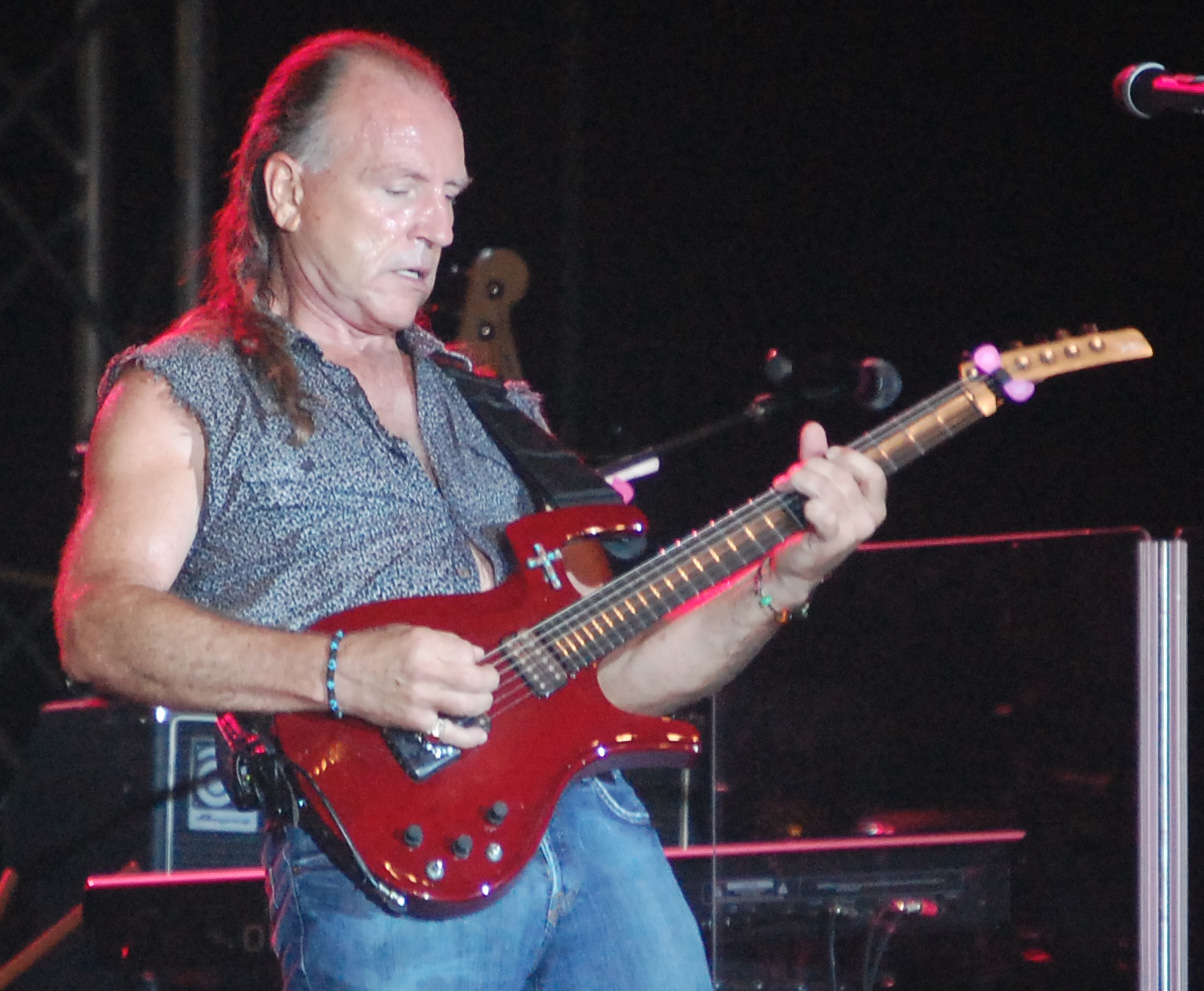
Mark Farner Guitars & Gear: Grand Funk Railroad’s Power Trio Powerhouse Complete Rig
Mark Farner guitars gear — Gibson Les Paul and Marshall Plexi deep-dive for the Grand Funk Railroad power trio guitarist's massive hard rock tone and complete rig.
Chris Muller
Research Mark Farner guitars gear and you find the equipment behind one of American hard rock’s most physically powerful and most commercially undervalued guitarists — the Flint, Michigan-born musician who drove Grand Funk Railroad from their founding in 1969 through a commercial peak that made them one of the biggest-selling American rock acts of the early 1970s, who played with an intensity and physicality that gave their power trio sound its specific overwhelming force, and whose combination of Gibson guitar and Marshall amplification at maximum volume created a wall of sound that could fill baseball stadiums before the technology for doing that reliably existed. Farner was not fashionable — Grand Funk were explicitly derided by critics while selling out stadiums — but he was genuinely powerful, and his guitar playing at its best had the raw, physical authority of someone who understood that rock music’s deepest purpose was to put the audience’s body in contact with organised electrical force.
This guide covers Farner’s equipment: the Gibson Les Pauls and SGs that gave Grand Funk their thunderous guitar sound, the Marshall amplification that powered it to arena-filling levels, the minimal effects chain consistent with his direct, physical approach, and the playing philosophy of a musician who understood that in a power trio, the guitar had to carry everything — melody, harmony, rhythm, and lead — simultaneously at maximum volume. Understanding Mark Farner’s gear is understanding what American hard rock sounds like at its most stripped-back and most physically committed.
Background
Mark Farner was born on September 29, 1948, in Flint, Michigan — the industrial city in central Michigan whose car manufacturing economy gave it a specific working-class character that shaped the direct, unaffected quality of Grand Funk’s appeal. Flint in the 1960s was a city of factory workers and their families, and the music Farner and his colleagues made for that audience had the specific directness and physical power that appealed to people who spent their working lives operating heavy machinery.
Grand Funk Railroad formed in 1968 from the ashes of Terry Knight and the Pack — a regional Michigan act that had achieved limited national success. The initial lineup of Farner (guitar, vocals), Mel Schacher (bass), and Don Brewer (drums) formed a power trio configuration — no keyboards, no second guitarist, no additional instruments — whose simplicity was simultaneously a commercial gamble and a musical statement. The power trio format required each instrument to carry more musical weight than in a conventional four or five-piece band, and Farner’s guitar specifically had to provide both the harmonic foundation and the lead voice without the support that a rhythm guitarist or keyboard player would normally contribute.
Their rapid commercial rise was extraordinary: from formation in 1968 to selling out Shea Stadium in 1971 — breaking the attendance record that the Beatles had set in 1965 — in three years of aggressive touring and recording. This commercial achievement occurred without significant radio airplay or critical support, built entirely on the specific appeal of their live performance to blue-collar American audiences who responded to the music’s direct physical power. The albums Grand Funk (1969), Closer to Home (1970), E Pluribus Funk (1971), Phoenix (1972), and We’re an American Band (1973) documented a band at the commercial and creative peak of a specific kind of American hard rock that has never been as fashionable as its commercial success suggested it deserved to be.
His subsequent career included various Grand Funk reunion projects and solo recording work, maintaining both his Christian faith (which became increasingly central to his public persona after the early Grand Funk years) and his commitment to playing rock music with the physical intensity that had always characterised his approach.
Mark Farner Guitars Gear: The Complete Rig
Guitars
Mark Farner’s guitar choices were consistent with the specific demands of the power trio format in the hardest-rocking commercial context of the early 1970s — instruments chosen for maximum output, sustain, and physical authority rather than for tonal versatility or harmonic subtlety.
His primary guitar through Grand Funk’s commercial peak was a Gibson Les Paul Standard — the late-1950s and early-1960s versions with original PAF humbucker pickups, or the 1960s and early 1970s Les Paul Deluxe with mini-humbuckers, depending on the specific period. The Les Paul’s combination of mahogany body and maple top gave it the specific warmth and sustain that made it the definitive hard rock guitar, and its humbucker pickups — even the lower-output PAF units of the late 1950s examples — drove the Marshall amplification with more force than single-coil alternatives would have produced.
He also used Gibson SG models — the double-cutaway mahogany solid body that Gibson had initially marketed as the “new Les Paul” from 1961 through 1963. The SG’s slimmer, lighter construction compared to the Les Paul gave it a different feel under the fingers — the neck joint was set further into the body, giving extreme upper-register access — and its standard T-Top humbuckers (approximately 7.4k to 7.8k ohms DC resistance, Alnico V magnets) produced a slightly brighter, more aggressive character than the PAF pickups in vintage Les Pauls. For the more aggressive, proto-metal material in Grand Funk’s catalogue, the SG’s harder attack character was sometimes more appropriate than the Les Paul’s warmer, more sustained tone.
Farner often played his guitars with the volume controls at maximum and the tone controls wide open — a maximalist approach consistent with the power trio’s need for every possible decibel of output from the guitar. The full-volume, full-tone approach pushed the Marshall’s input stage harder, increasing the natural overdrive character and the overall saturation of the signal, which suited the Grand Funk sound — always at maximum intensity, always pushed to the limit of what the equipment could deliver.
String gauges ran medium to heavy — typically .011–.052 or similar heavier gauges — consistent with the physical intensity of Farner’s playing approach. Heavy strings sustained better under his aggressive pick attack and provided the string mass and tension that the power trio format required: with no other guitar or keyboard to fill the harmonic space, the guitar’s strings had to produce maximum sonic output from every picked note and every strummed chord.
Amps
Grand Funk’s live sound was defined by the specific approach to amplification that made them one of the loudest bands in America: multiple Marshall stacks at maximum volume, a configuration that had been pioneered by British acts including Cream and Led Zeppelin but that Grand Funk deployed at a scale matched by few American bands of the era.
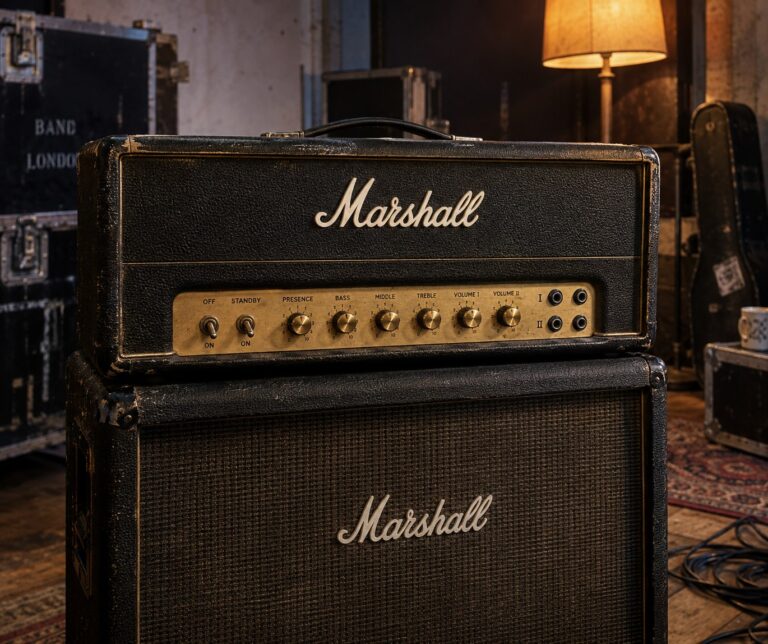
Farner’s primary amplifiers were Marshall Super Lead 100-watt heads — the Plexi-panel and early aluminium-panel variants that ran four EL34 output valves at full power, producing the natural output-stage saturation that was the primary source of his overdriven guitar tone. At the stage volumes Grand Funk played — stadiums and large arenas where the PA systems of the early 1970s were barely adequate for the audience size — the Marshalls had to produce enormous acoustic output before the PA could distribute it, and running multiple 100-watt heads simultaneously was the standard approach for this volume level.
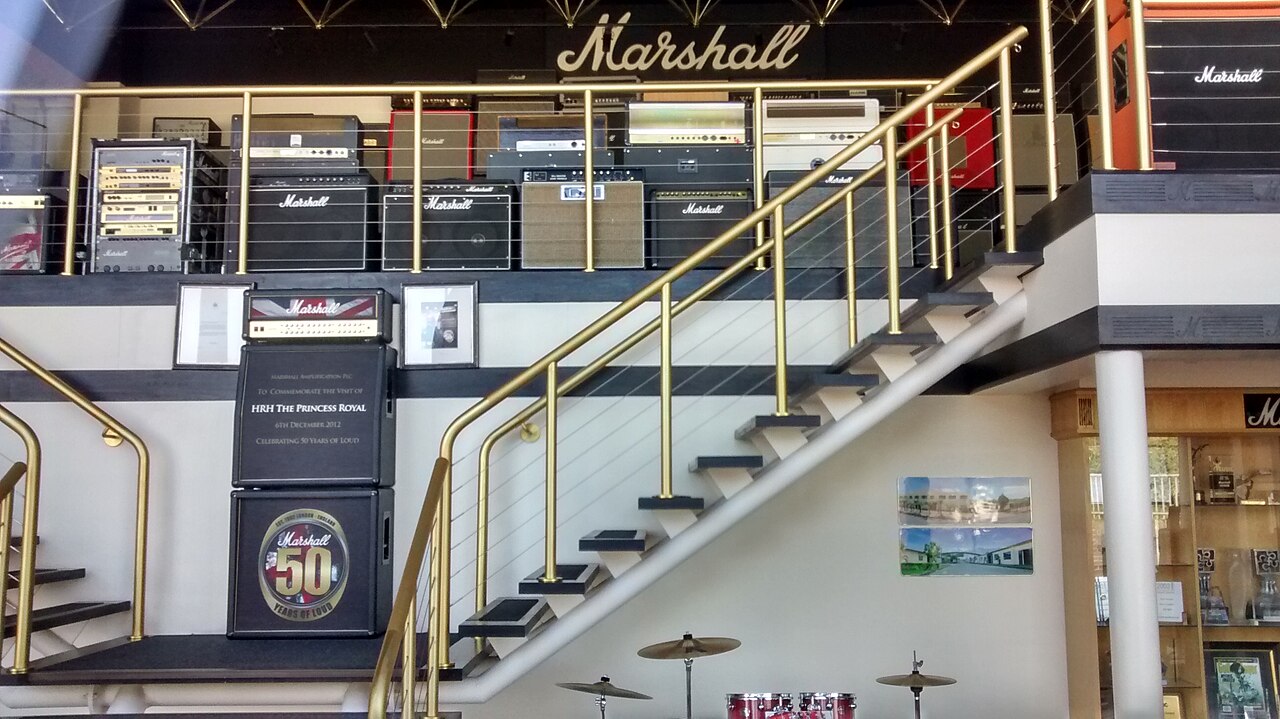
He ran the Marshalls into Marshall 4×12 cabinets loaded with Celestion G12M Greenback speakers — the 25-watt ceramic-magnet Celestion that was standard Marshall cabinet speaker through the early 1970s. Running multiple heads through multiple Greenback cabinets gave Grand Funk’s stage setup its specific visual imposingness — the wall of Marshall stacks that was as much a theatrical statement as a practical sound reinforcement decision — and the acoustic output necessary to fill stadiums before modern PA technology had solved the problem of how to do this reliably with a smaller on-stage rig.
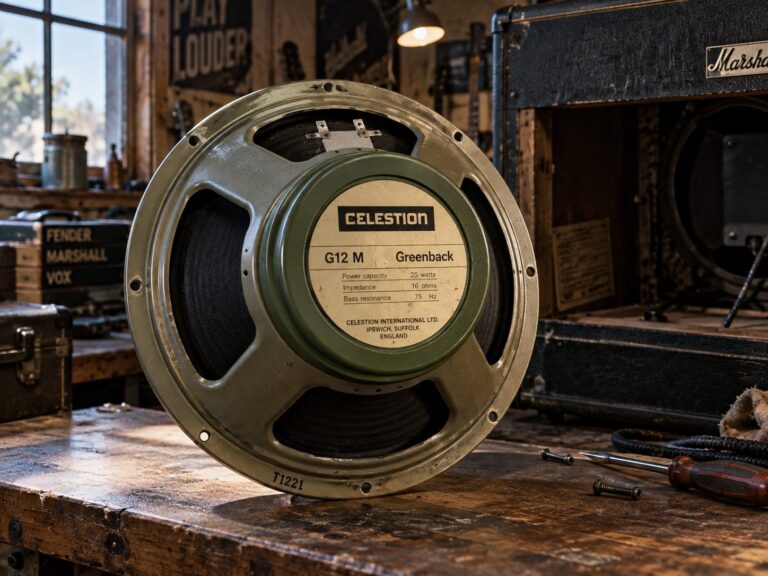
The specific character of the Grand Funk guitar sound — thick, warm, slightly undefined in the low-midrange — reflected the specific interaction between the Greenback speakers and the Marshall Super Lead at extreme volume levels. Greenback speakers at or near their rated power limit produce a specific quality of mechanical compression — the cone’s suspension reaching its range of linear motion and beginning to compress the audio signal’s dynamic range — that gives the sound its specific physical quality. This speaker compression, combined with the EL34 output stage’s electrical compression, produced the characteristic Grand Funk guitar tone: overwhelming in volume and physical presence, less precise in high-frequency definition than modern high-powered systems but with a specific warmth and body that made it perfectly suited to the arenas and stadiums where Grand Funk made their reputation.
Effects
Farner’s effects chain was minimal — consistent with the direct, physical approach to rock guitar that Grand Funk’s music represented. He was not an experimentalist with effects or a player who pursued tonal complexity through signal chain sophistication. His guitar playing was about physical power and direct emotional communication, and effects that complicated or processed the guitar’s direct output conflicted with this approach.
A wah pedal — the Vox or Dunlop Cry Baby type — appeared in his live and studio work for specific lead guitar passages where the swept filter effect added expressiveness. His wah use was direct and rhythmic rather than subtle or atmospheric, reflecting the blues and soul influences that underpinned his lead guitar vocabulary alongside the hard rock energy of the power trio format.
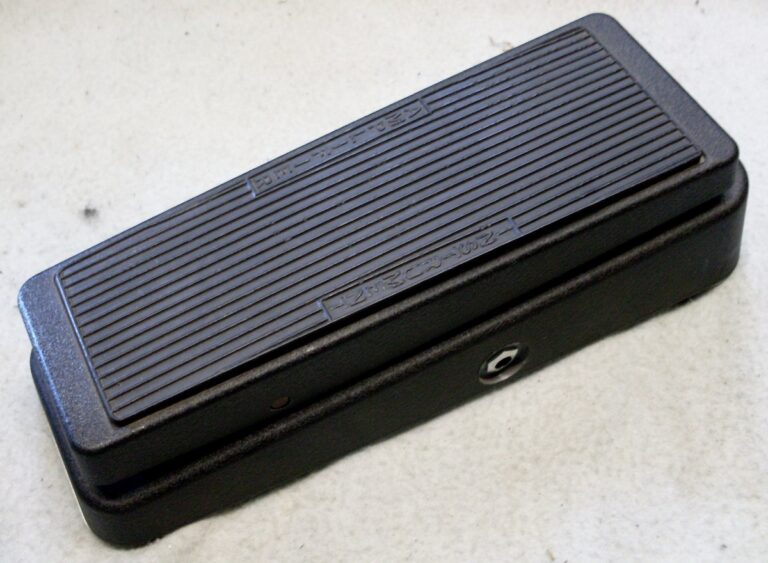
A fuzz pedal — various silicon and germanium transistor units — appeared for specific applications where additional distortion density was required beyond the Marshall’s own natural drive character. At the volume levels Grand Funk played, the Marshall’s natural saturation provided substantial drive without additional gain, but specific passages requiring heavier, more sustained distortion benefited from the fuzz pedal’s additional gain stage.
The primary “effect” in the Grand Funk live sound was volume itself — the specific acoustic phenomenon of multiple Marshall stacks at maximum volume in a large venue, where the sound pressure level was high enough to be felt physically rather than merely heard acoustically. This physical dimension of the Grand Funk live experience — the sensation of the music as much as its musical character — was central to the band’s appeal to their audience and was not achievable through any signal processing but only through the specific physical reality of enormous amplification in the acoustic space of a large venue.
Playing Style & Tone Philosophy
Mark Farner’s playing style is defined by a specific quality of physical commitment — the sense that every note and every chord is struck with total bodily conviction, without the technical calculation that distances playing from feeling. His technique reflected the blues and soul influences of his Flint, Michigan upbringing — the pentatonic vocabulary, the blues bends, the specific rhythmic feel — delivered through the specific physical intensity of someone playing a power trio at maximum volume and understanding that the guitar needed to fill every possible frequency space and every possible emotional register simultaneously.
His rhythm playing was the foundation of Grand Funk’s sound — the driving, chord-based approach that provided the harmonic foundation that the bass and drums required to function without a keyboard or second guitar. His power chords and full chord voicings, strummed with physical authority and pushed through multiple Marshall stacks, created the massive, enveloping sound that gave Grand Funk their specific live experience. This rhythm playing was not sophisticated in the harmonic sense — Grand Funk’s music was not harmonically complex — but it was physically authoritative in a way that required specific technique and specific physical commitment.
His lead playing showed the blues foundation most clearly — the pentatonic vocabulary, the wide bends, the specific rhythmic feel of blues lead guitar deployed in a hard rock context. The lead solos on Grand Funk recordings were not technically elaborate but were emotionally committed and tonally appropriate to the hard rock context — big-interval bends, aggressive vibrato, the specific physical quality of a player who was using the lead guitar as the primary vehicle for emotional expression within the band’s limited instrumental palette.
Tonally, Farner’s philosophy was maximum at all times: maximum guitar volume, maximum amplifier drive, maximum physical presence in the room. This maximalism — the refusal to compromise on the quantity of sound in favour of tonal nuance — was a philosophical position as much as a practical one, and it reflected the Grand Funk aesthetic of music as physical force. The equipment choices — the Les Paul’s maximum humbucker output, the Marshall’s natural output-stage saturation, the multiple stacks at full volume — all served this maximalist philosophy with complete consistency.
How to Sound Like Mark Farner
Guitar Approach
A Gibson Les Paul Standard — volume and tone controls at maximum — is the starting point. Medium-heavy strings (.011–.052) provide the string mass for aggressive picking and strumming at power trio volume levels. The most important technical element is physical commitment: Farner’s sound is partly the product of playing with total bodily conviction, hitting every chord and every note with maximum physical force. The technique is less complex than the sound is massive; developing the physical stamina and the willingness to play with complete physical intensity is as important as any specific technical skill.
Amp Approach
Multiple Marshall Super Lead heads into 4×12 Greenback cabinets — run loud, approaching the EL34 output stage’s natural saturation zone. The combination of the Les Paul’s humbucker output and the Marshall at working volume produces the natural overdrive that is the foundation of the Grand Funk guitar tone without requiring additional gain pedals. The physical volume level is part of the sound — the speaker compression and the acoustic coupling between multiple cabinet arrays at high levels contributes to the characteristic Grand Funk thickness.
| Control | Setting | Notes |
|---|---|---|
| Volume (Input 1) | 8–10 | High volume — EL34 output saturation is the primary tone source |
| Treble | 6–7 | Moderate-high — Les Paul PAFs need treble presence through the Marshall |
| Middle | 7 | High mids — power trio needs midrange authority to fill the acoustic space |
| Bass | 5 | Moderate bass — Les Paul adds warmth, avoid mud |
| Presence | 6 | Moderate presence for note definition at high volume |
| Guitar Volume | 10 (maximum) | Full output into the already-saturated Marshall |
Influence & Legacy
Mark Farner and Grand Funk Railroad’s legacy occupies a genuinely paradoxical position in American rock history — one of the commercially most successful American rock acts of the early 1970s who remained almost entirely critically dismissed throughout their peak years and who have only in recent decades begun to receive serious reassessment. The paradox of Grand Funk — sold-out stadiums and universally contemptuous critical coverage simultaneously — reflects the specific class dimension of American rock criticism, which in the early 1970s was systematically more sympathetic to the arty, sophisticated, and British-influenced than to the direct, working-class, American hard rock that Grand Funk represented.
Their influence on subsequent American hard rock was substantial and often unacknowledged: the specific combination of power trio format, blues-rooted pentatonic vocabulary, and sheer physical volume that Grand Funk brought to American arenas in the early 1970s was absorbed by the generation of American hard rock and metal acts that emerged in the late 1970s and 1980s. The approach of massive amplification deployed by a minimal band lineup — the specific Grand Funk model — influenced the power trios and two-guitar-and-bass configurations that would characterise American hard rock through the next decade.
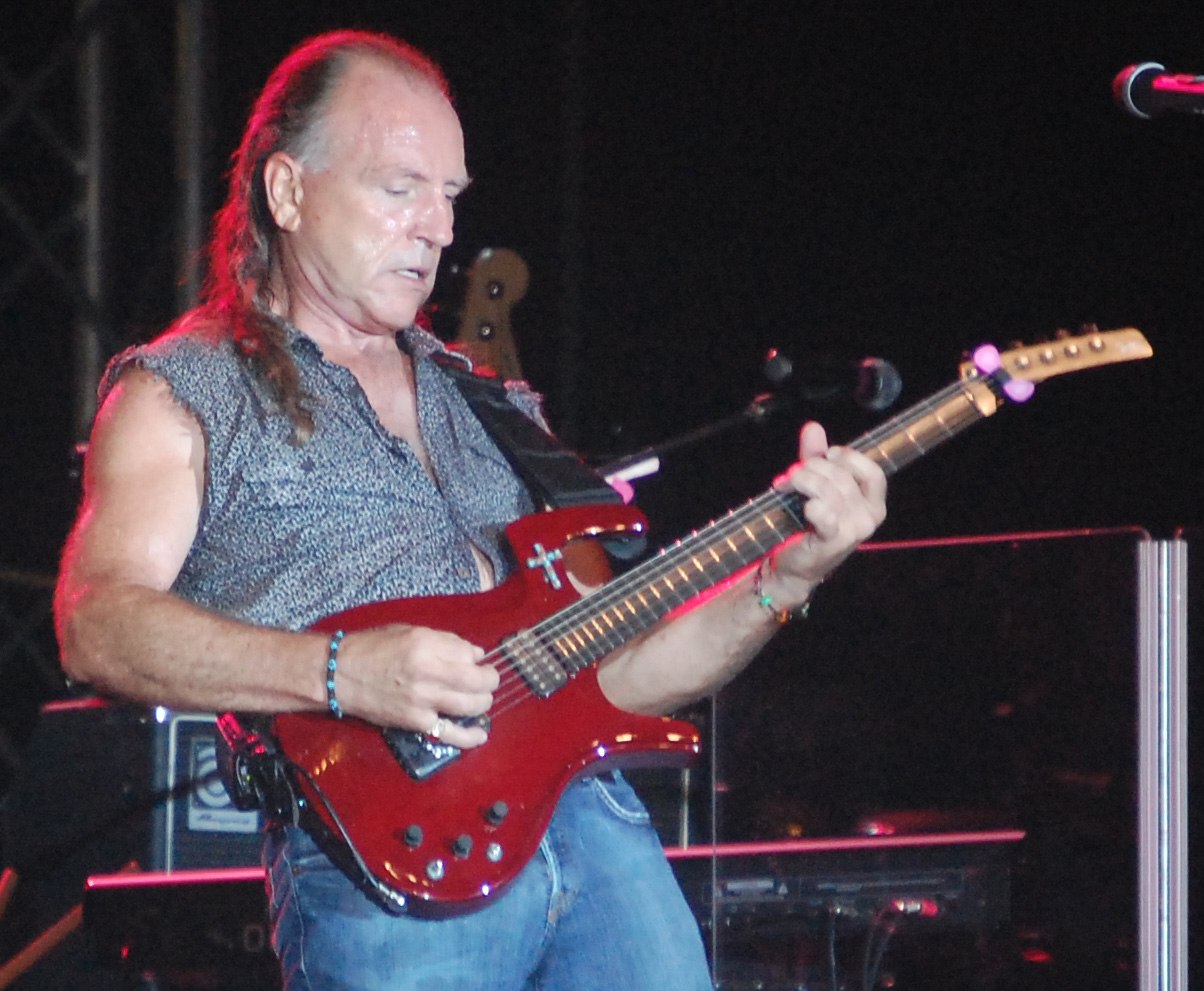
Farner’s specific guitar approach — the Les Paul through Marshalls at maximum volume, played with physical conviction and blues-rooted vocabulary in service of direct emotional communication — was one model for American hard rock guitar that subsequent players absorbed even when they didn’t consciously trace their influences to Grand Funk. The American working-class hard rock tradition that Grand Funk represented is still alive in American music, and every subsequent band that has played directly and physically for audiences who respond to music’s physical force rather than its intellectual sophistication is working in the same tradition.
For players exploring the American power trio and hard rock tradition that Farner helped define, the rigs of Leigh Stephens — whose Blue Cheer work pioneered the extreme-volume power trio approach that Grand Funk brought to commercial success — and Gary Richrath, whose REO Speedwagon work showed how the Midwestern hard rock tradition developed alongside Grand Funk, provide illuminating comparison. The blues foundation that underpins Farner’s playing connects to Willie Johnson‘s Howlin Wolf work, showing how the distorted electric guitar tradition extended from the Chicago blues through the hard rock of the early 1970s.
Shea Stadium 1971: The Sound That Filled a Baseball Venue
Grand Funk’s July 9, 1971 concert at Shea Stadium — where they sold out the 55,000-seat venue faster than the Beatles had in 1965 — is the event that most dramatically documents both the scale of their commercial achievement and the specific physical demands their live performance placed on Farner’s equipment. Understanding what it actually took to produce usable guitar sound in a 55,000-seat outdoor baseball stadium in 1971 — with the PA technology of the era and the stage monitoring systems that existed — illuminates both the equipment choices and the playing approach that made the Grand Funk live experience what it was.
In 1971, stadium-scale PA systems as we understand them now did not exist. The concert touring technology of the era was capable of adequately filling clubs and theatres; arenas were manageable with larger systems; stadiums were genuinely problematic. The sound at the rear of a 55,000-seat stadium, with 1971 PA technology, was often thin, delayed by the distance from the stage, and competitive with environmental noise in ways that indoor venues weren’t. The bands that played stadiums successfully in this era did so partly through the sheer acoustic output of their on-stage amplification — the Marshall stacks that appeared on the stage at Grand Funk performances were not merely visual props but acoustic contributors to the overall sound that audiences heard.
Farner’s multiple Marshall 100-watt heads into multiple 4×12 Greenback cabinets produced acoustic output directly from the stage that complemented whatever the PA system was contributing from the front-of-house speakers. At the distances involved in a stadium performance, this on-stage acoustic output was present in the audience’s experience alongside the PA — not as a delay between the two but as a direct contribution that gave the sound its specific physical presence regardless of the PA’s quality. The combination of on-stage acoustic power and PA reinforcement that characterised Grand Funk’s stadium performances was the specific acoustic solution to the technical limitations of the era’s live sound technology.
The Les Paul’s maximum output into the Marshall’s saturated input stage was not an aesthetic choice in this context but a practical necessity: every decibel of acoustic output the guitar could generate was required for the performance to reach the 55,000 people in the venue with any musical coherence. This practical necessity shaped Farner’s equipment approach throughout the Grand Funk era — maximum guitar volume, maximum amplifier drive, multiple stacks for acoustic reinforcement — and the specific sound that these requirements produced became the aesthetic of the Grand Funk live experience, distinguishing it from the more controlled, technically refined sound of later arena-era rock.
The Power Trio Imperative: Filling Every Frequency with Three People
The power trio format — guitar, bass, drums, nothing else — places specific demands on each instrument that larger band configurations don’t. Understanding these demands in relation to Farner’s guitar approach and equipment helps explain choices that might otherwise appear to be mere maximalism without musical reasoning.
In a standard rock band configuration — two guitars, bass, and drums, or guitar, keyboard, bass, and drums — each instrument occupies a specific portion of the frequency spectrum and fulfils a specific musical function. The rhythm guitar provides harmonic support and rhythmic drive; the lead guitar provides melodic voice; the keyboard provides harmonic richness and specific textural contributions; the bass provides the harmonic foundation. Each instrument can specialise because others cover the functions it doesn’t.
In the power trio, the single guitar must cover all of these functions simultaneously. There is no rhythm guitar to maintain the harmonic foundation while the lead guitar plays a melody; there is no keyboard to fill the harmonic space that the bass and drums leave open; there is no second melodic instrument to share the lead voice. The single guitar — Farner’s Les Paul through his Marshall stacks — had to provide the harmonic foundation (through rhythm chord work), the melodic lead (through solo and lead passages), and the rhythmic drive (through chord rhythm and single-note rhythmic figures) simultaneously within a single performance.
This requirement drove Farner toward the specific equipment choices that defined his sound. The Les Paul’s humbucker pickups — producing more output than single-coil alternatives — were necessary to drive the Marshall hard enough to produce the saturation that gave the guitar its sustain and fullness. The Marshall’s natural overdrive at working volume compressed the guitar’s dynamic range in ways that helped the guitar’s signal maintain presence across the full frequency range without the volume pedal riding that a cleaner approach would have required. The heavy strings sustained more — critical for the guitar to maintain harmonic presence during the brief pauses between picked notes that rhythm playing always involves. Every equipment choice reflected the specific acoustic demands of filling a power trio’s full musical role in large venues with early-1970s technology.
Grand Funk and American Class: The Critical Dimension
The critical reception of Grand Funk Railroad — one of the most hostile and most sustained critical antagonisms in American rock history — deserves examination as context for understanding both the equipment and the music, because the criticism was partly about what the music represented socially and culturally rather than purely about its acoustic properties.
Grand Funk were explicitly working-class in their origins, their aesthetic, and their audience. Flint, Michigan in the late 1960s was the most explicitly working-class city in America — a one-industry town whose entire economy and culture were structured around the automobile manufacturing plants that employed most of its population. The music Grand Funk made reflected this origin: direct, physical, unconcerned with critical approval, appealing to people who responded to music’s physical force rather than its intellectual or aesthetic sophistication.
The rock criticism of the early 1970s — primarily based in New York and San Francisco, primarily written by people of middle-class cultural formation, primarily sympathetic to music that reflected their own aesthetic values — found Grand Funk’s directness and simplicity aesthetically inadequate and culturally threatening in ways they sometimes articulated explicitly. The criticism wasn’t just that Grand Funk’s music was musically simple — which was accurate — but that its simplicity was accompanied by commercial success that bypassed the critical apparatus entirely, suggesting that the critics’ role as cultural gatekeepers was less important than they believed.
The equipment that produced Grand Funk’s sound — the maximum-output Les Paul through multiple Marshall stacks at full volume — was in this context a statement of values as well as a practical tool. The refusal to pursue tonal nuance, the embrace of maximum volume as a primary musical value, the choice of equipment that produced overwhelming physical presence rather than refined sonic character — all of these were consistent with the working-class aesthetic of directness and physical commitment rather than cultural sophistication. Understanding Farner’s equipment in this social and cultural context gives it additional dimensions that purely acoustic analysis misses, and situates it within the specific American cultural moment that produced it and that Grand Funk’s music represented with unusual directness and consistency.
The Celestion G12M Greenback’s specific tonal character — and why it suited the Grand Funk application despite its relatively modest 25-watt power rating — is worth examining as part of the complete equipment picture. The Greenback’s ceramic ferrite magnet structure produces a specific frequency response quite different from either the older alnico-magnet Celestion designs or the later ceramic-magnet 65-watt and 75-watt speakers that replaced it in high-power applications. The Greenback’s midrange peak — centred around 3-4kHz, the frequency range most important for guitar to cut through a dense mix — gave it a specific character of midrange presence that suited the Marshall Super Lead’s own midrange-forward voicing. The two elements — the Super Lead’s EL34 midrange emphasis and the Greenback’s midrange peak — reinforced each other to produce a combined sound of unusual midrange authority that cut through the acoustic environment of large venues with a specific directness and presence that high-powered speakers with flatter frequency response sometimes lacked. Running the Greenbacks at or near their 25-watt power limit — which was inevitable given the volume levels Grand Funk generated with 100-watt heads — added the specific mechanical compression of the speaker operating near its linear limit, a quality of softness and roundness at the top of the dynamic range that distinguished the Greenback-loaded cabinet from modern high-power alternatives. This speaker compression was part of the Grand Funk live sound’s specific character, and it was achievable through these specific speaker and amplifier choices rather than through any post-processing or alternative equipment combination.
Mel Schacher’s bass playing — the specific role of bass in the Grand Funk power trio — was directly shaped by the requirements created by Farner’s guitar approach and equipment choices. When the guitar is simultaneously providing harmonic foundation, rhythmic drive, and melodic lead, the bass must both support the guitar’s harmonic choices and provide the consistent rhythmic anchor that prevents the music from losing its rhythmic coherence during guitar lead passages. Schacher’s specific approach — driving, harmonically supportive, with a specific quality of physical force that matched Farner’s guitar intensity — was the direct result of the musical requirements that the power trio format imposed on the bass in the context of Farner’s specific guitar approach. The amplification Schacher used — equally massive by the standards of the era — was similarly driven by the specific requirement of matching the guitar’s acoustic output in the stadium-scale performance context. Understanding Farner’s guitar equipment in isolation from Schacher’s bass equipment and Don Brewer’s drum setup gives an incomplete picture of how the Grand Funk sound actually worked acoustically; the three instruments were an integrated system whose overall acoustic character reflected the specific combination of all three rather than the sum of individual choices.
Mark Farner’s legacy is ultimately the legacy of music that communicated directly and powerfully with a specific audience without requiring or receiving critical mediation — a legacy that the critical apparatus was poorly equipped to value at the time and that has been incompletely reassessed since. The equipment he used: the Les Paul at full volume into multiple Marshall stacks at maximum power, playing in a power trio format for audiences of tens of thousands who came for the physical experience of the music — was exactly right for exactly this music in exactly this cultural moment. That the music hasn’t received the critical recognition its commercial success suggested it deserved is a fact about the history of rock criticism rather than a fact about the music itself. The Grand Funk Live Album remains one of the most powerful documents of American hard rock in the power trio format, and the equipment that produced it was chosen and used with the specific musical intelligence that understanding and filling a 55,000-seat stadium in 1971 required.
The “We’re an American Band” single (1973) — Grand Funk’s only number-one hit, co-written by Don Brewer — is worth examining as a specific document of how Farner’s guitar approach adapted to a more concise, commercial format without losing its fundamental character. The song’s success — driven partly by the memorable title and partly by a genuine hook and energy that the band’s earlier, more extended rock workouts didn’t always achieve — showed that the Grand Funk approach could work within the three-minute single format that had previously eluded them commercially. Farner’s guitar on the track was more focused and more riff-driven than in the sprawling live performances that had built their reputation: the specific guitar riff that drove the track was immediately memorable in a way that the more extended soloing of their concert repertoire was not. The equipment was the same — Les Paul through Marshall at working volume — but the deployment was more disciplined, the specific riff carrying a melodic content that could be absorbed in a single listening rather than requiring the sustained engagement of a twelve-minute live performance. This adaptation — maintaining the essential equipment and tonal character while adjusting the compositional and performance approach to suit a different format — reflected a musical intelligence that the Grand Funk critical narrative often denied them. The number-one single demonstrated that the commercial failure to break through with shorter material earlier was a compositional and strategic problem rather than an evidence of their inability to operate in that format.
The Gibson Les Paul Deluxe that Farner used during certain periods of the Grand Funk run — the model introduced in 1969 featuring mini-humbuckers (also called “mini-PAFs” or Epiphone-derived humbuckers) rather than the full-size PAF humbuckers of the Standard — had a specific tonal character worth noting. The mini-humbucker, using a narrower bobbin than the full-size PAF, produced a tone between a single-coil’s clarity and a standard humbucker’s warmth — brighter and more articulate than the full PAF, with less hum rejection but also less of the warmth that the larger PAF produced. In the high-volume, high-gain context of the Grand Funk rig, the mini-humbucker’s additional clarity served the goal of note definition at extreme volumes, where the warmth of the full PAF could become indistinct in the complex acoustic environment of a stadium. This specific equipment decision — the choice of mini-humbucker over full-size PAF for certain material — reflected the same practical acoustic reasoning that characterised Farner’s overall equipment approach: not aesthetic preference alone but the specific requirement of making the guitar work effectively in the specific physical context of Grand Funk’s performances.
The Michigan context of Grand Funk’s formation — Flint, the industrial heartland of American automobile manufacturing — shaped not just their cultural identity but the specific practical realities of how they built their career. Flint bands in the late 1960s played the specific working-class bar and club circuit of Michigan and the surrounding Midwest states, performing for audiences whose relationship with music was direct and physical rather than aesthetically mediated. This circuit — similar to the Texas roadhouse circuit that shaped other working-class American rock traditions — developed in its performers a specific quality of direct physical engagement with audiences that the more aesthetically sophisticated New York and San Francisco music scenes didn’t foster in the same way. Farner’s guitar playing at maximum volume for the people of Flint and similar communities was not a calculated commercial strategy but an authentic musical response to the specific audience he was playing for. The equipment — the maximum-output Les Paul, the multiple Marshall stacks, the volume as a primary musical value — was appropriate for this specific performance context in the same way that an acoustic twelve-string through a clean amplifier was appropriate for the Laurel Canyon singer-songwriter context or a vintage Stratocaster through a clean Fender Twin was appropriate for the California soft rock context. Different equipment for different musical and social contexts, each chosen with the authentic understanding of what that specific context required. That authenticity — the equipment and the music genuinely suited to the specific audience and the specific cultural moment — is ultimately what made Grand Funk’s commercial success as legitimate as the critical apparatus found it difficult to acknowledge.
Frequently Asked Questions: Mark Farner Guitars & Gear
What guitars did Mark Farner play?
Mark Farner’s primary guitars were Gibson Les Paul Standards (late-1950s PAF-equipped examples and early-1970s Les Paul Deluxes with mini-humbuckers) and Gibson SG models. He played all his guitars with volume and tone controls at maximum, pushing the Marshall amplifiers’ input stages as hard as possible for maximum natural drive character. His instrument choices were oriented toward maximum output and sustain rather than tonal versatility.
What amp did Mark Farner use?
His primary amplification was Marshall Super Lead 100-watt Plexi heads — multiple heads run simultaneously — into Marshall 4×12 cabinets loaded with Celestion G12M Greenback speakers. Grand Funk’s live stage setup featured multiple Marshall stacks, the acoustic output necessary to fill arenas and stadiums before modern PA technology had made this practical with smaller stage rigs. The EL34 output stage saturation at working volume was the primary source of his overdriven guitar tone.
How did Grand Funk Railroad become so commercially successful?
Grand Funk’s commercial success was built entirely on live performance and word of mouth rather than on radio airplay or critical support — they were consistently dismissed by rock critics throughout their peak years. Their appeal was direct and physical: the specific combination of power trio format, maximum volume, blues-rooted rock energy, and the working-class authenticity of their Flint, Michigan background spoke directly to the audiences they played for. Their 1971 Shea Stadium concert — selling out faster than the Beatles had in 1965 — was the peak of this commercial achievement.
What effects did Mark Farner use?
His effects chain was minimal: a wah pedal (Vox or Cry Baby type) for specific lead guitar expressiveness, and occasional fuzz pedal use for additional gain density. The primary “effect” in his sound was volume itself — the specific acoustic phenomenon of multiple Marshall stacks at maximum level in a large venue, whose physical presence was as much a part of the Grand Funk experience as any processed tonal quality.
What is the power trio format?
A power trio is a rock band configuration using only three instruments: guitar, bass, and drums (with no keyboards or second guitar). Famous power trios include Cream, the Jimi Hendrix Experience, Blue Cheer, ZZ Top, and Rush. The format requires each instrument to carry more musical weight than in a larger band — the guitarist specifically must provide both the harmonic foundation and the lead voice without the support that other configurations provide. Grand Funk’s power trio format placed maximum demands on Farner’s guitar in terms of both harmonic content and volume.
Why were Grand Funk Railroad unpopular with critics?
Grand Funk were one of the most prominent targets of early-1970s rock criticism’s systematic bias against working-class American hard rock in favour of more artistically sophisticated music. Critics found their music simplistic, their image unappealing, and their commercial success — achieved without critical support — an affront to the critics’ authority as gatekeepers of musical taste. The band’s response — publicly challenging critics and pointing out the disconnect between critical opinion and audience response — sharpened the antagonism without resolving it. The subsequent critical rehabilitation of their work has been modest and belated compared to the scale of their commercial achievement.
What are Grand Funk Railroad’s most important recordings?
The live album Live Album (1970) is the most viscerally powerful documentation of Grand Funk at their commercial and performance peak — a double album that captures the specific physical force of their live sound with unusual directness. Closer to Home (1970) and We’re an American Band (1973, their only number-one album) are the strongest studio documents. The hit single “We’re an American Band” (1973) brought them their first number-one and demonstrated a more commercial, concise approach while maintaining the essential Grand Funk character.
Genre:
Hard Rock / Classic Rock
Decades:
1960s | 1970s | 1980s
Image credits
- Top image: Chris Muller, Wikimedia Commons, CC BY-SA 3.0.
- The Marshall Amplification showroom with a staircase and amplifier stacks: Kris1973, Wikimedia Commons, CC BY-SA 4.0.
- Gibson Les Paul Standard: DonnyBurger1974, Wikimedia Commons, CC BY-SA 4.0.
- Marshall 1959 Super Lead Plexi: GuitarGangsters AI-generated reference illustration, not a photograph.
- Dunlop Cry Baby: Roadside Guitars, Flickr, CC BY-SA 2.0.
- Celestion G12M Greenback 12-inch Guitar Speaker: GuitarGangsters AI-generated reference illustration, not a photograph.
- Mark Farner live: Chris Muller, Wikimedia Commons, CC BY-SA 3.0.