Lil Ed Williams Guitars & Gear: Chicago’s Wildest Slide King’s Complete Rig
Lil Ed Williams guitars gear — open-tuned hollow-body and Fender Bassman deep-dive for Chicago's wildest slide king and Blues Imperials complete rig guide.
ceedub13
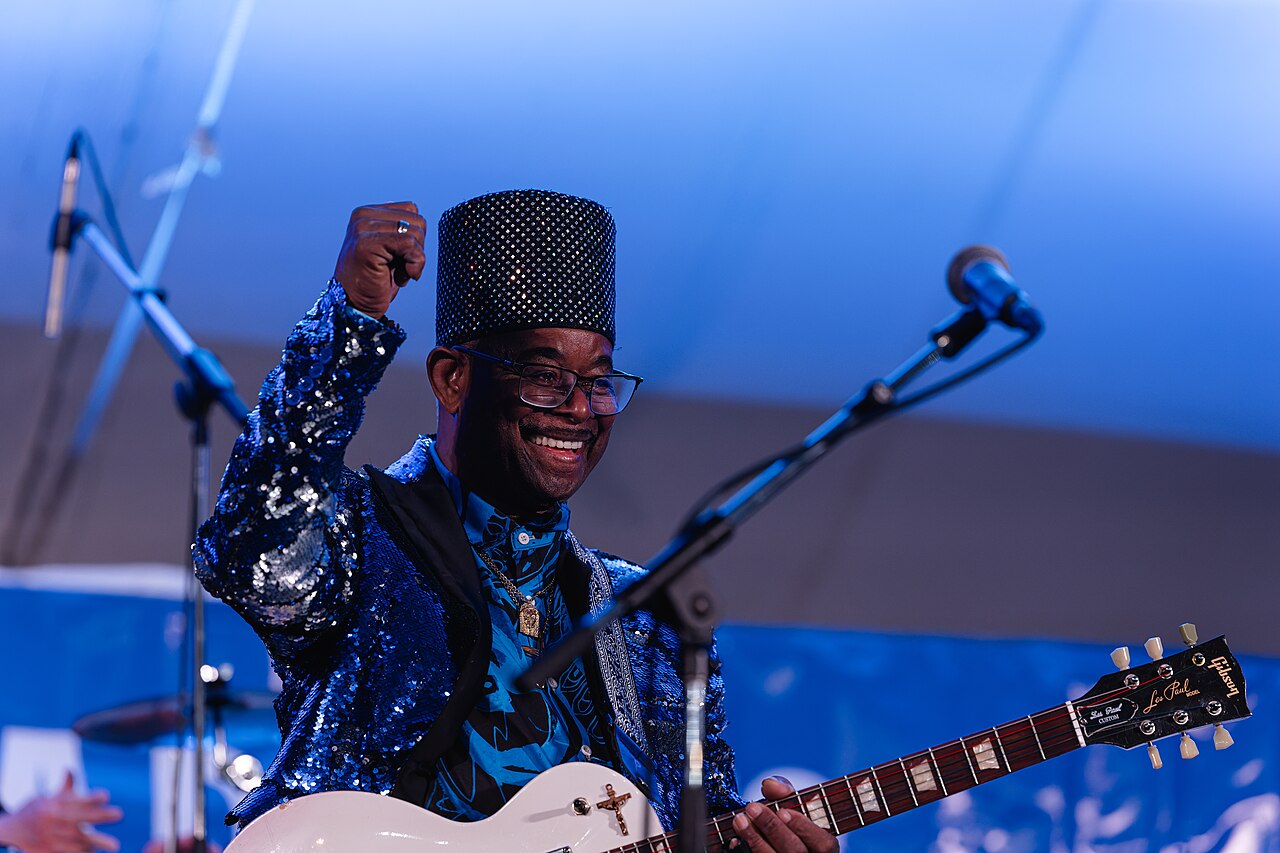
Explore Lil Ed Williams guitars gear and you find the equipment behind one of Chicago blues’ most joyfully unhinged and most genuinely committed contemporary voices — a Chicago-born guitarist whose slide playing, showmanship, and raw emotional directness make him one of the most exciting performers in the living blues tradition, and whose musical lineage runs directly through his uncle, the legendary J.B. Hutto, back to the slide guitar tradition that gave Chicago blues much of its most visceral character. Lil Ed Williams does not play the blues academically or reverently — he plays it the way it was meant to be played: loud, fast, funny, heartbreaking, and completely physical. His slide work on a resonator or electric guitar is the sound of someone for whom the blues is not a historical subject but a living necessity, and his gear reflects the same directness.
The Journey
This guide covers Williams’ complete equipment picture: the guitars that serve his aggressive slide approach, the amplification that gives his playing its raw, driven Chicago sound, his minimal effects chain, and the playing philosophy of a musician who learned from one of Chicago’s slide masters and carries that tradition forward with complete personal commitment. Understanding Lil Ed Williams’ gear is understanding how the blues stays alive through individuals who refuse to let it become a museum piece.
Background
Edward Williams was born on April 8, 1955, in Chicago, Illinois, into a family deeply connected to the Chicago blues world. His uncle was J.B. Hutto — the slide guitarist who had been a key figure in the postwar Chicago blues scene and whose aggressive, energetic slide approach was one of the most physically compelling in the tradition. Growing up in proximity to Hutto’s musical world gave Williams both direct access to the slide guitar tradition from childhood and the specific model of a player who approached the instrument with total physical commitment and zero pretension.
He began playing guitar as a teenager, absorbed slide technique through watching and listening to Hutto and through his own intensive practice of the tradition’s vocabulary, and developed his own approach that retained Hutto’s physical energy while incorporating his specific personality — the showmanship, the humour, the ability to connect directly with an audience. He formed Lil Ed and the Blues Imperials in 1975 — the band that has remained his primary musical vehicle through nearly five decades — and built his following through the Chicago club circuit and through the kind of relentless touring that the blues tradition has always demanded of its practitioners.
His recordings on Alligator Records — the Chicago blues label that has been his primary recording home — documented both his recording approach and his live energy, with albums including Roughhousin’ (1986), Chicken, Gravy & Biscuits (1989), What You See Is What You Get (1992), Get Wild (2009), and others showing an artist who has maintained complete musical integrity while developing and deepening his approach over decades of professional performance.
Lil Ed Williams Guitars Gear: The Complete Rig
Guitars
Lil Ed Williams’ guitar choices reflect the practical wisdom of a working blues musician who plays his instruments hard, tours constantly, and needs equipment that can handle the physical demands of his playing approach while delivering the specific tonal character that Chicago blues slide playing requires.
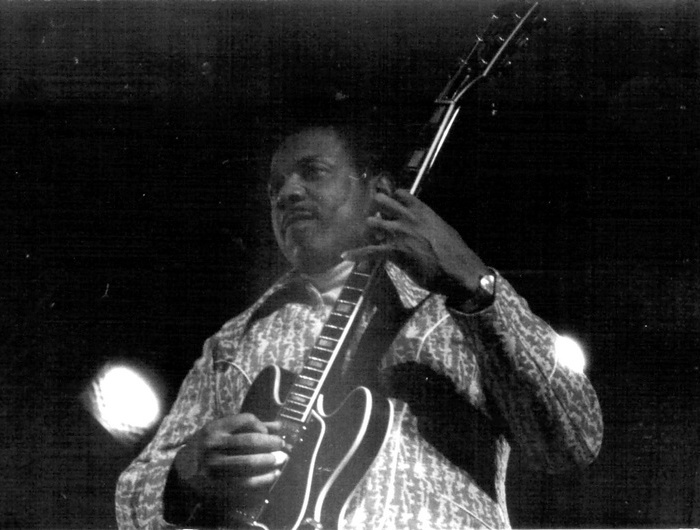
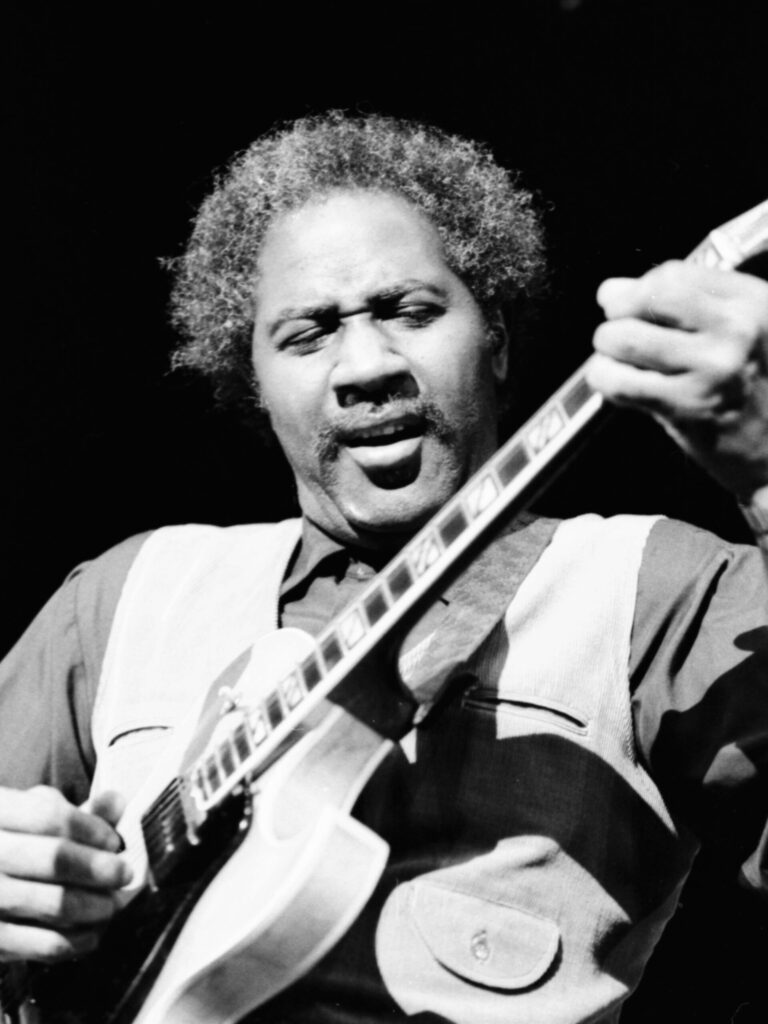
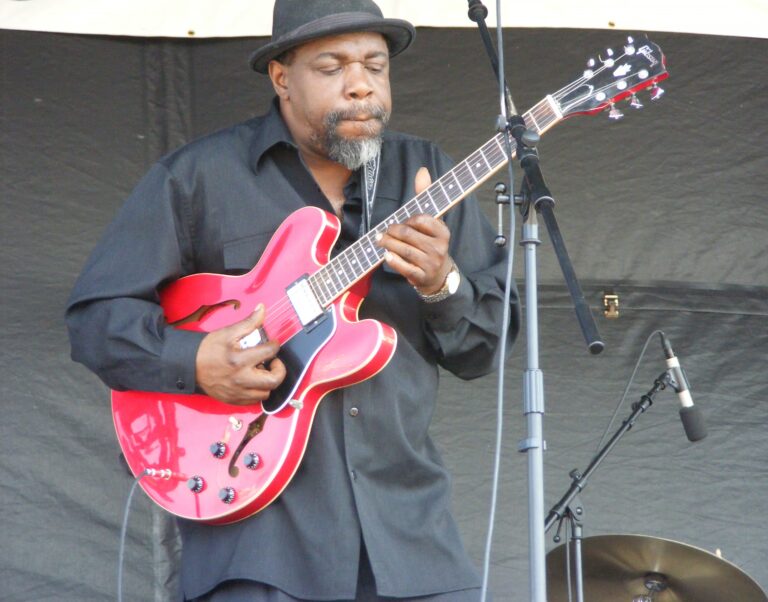
His primary electric guitar is a semi-hollow or hollow-body guitar — typically variants of the Gibson ES-335 or Epiphone Riviera configuration — chosen for the acoustic resonance that hollow or semi-hollow construction adds to slide guitar playing. Slide guitar benefits from the sustain and acoustic resonance of hollow body construction because the slide’s contact with the strings produces a different quality of note than fretted playing — more sustained, more harmonically complex in its upper partials — and the hollow body’s acoustic contribution enhances this quality in ways that solid-body alternatives don’t fully replicate.
He has used a Dobro or National resonator guitar for acoustic slide passages and for specific material where the resonator’s metallic, cutting slide sound was more appropriate than amplified electric slide. The resonator guitar — using a metal cone rather than a soundboard to project the sound — has a specific character in the slide context: louder than a conventional acoustic, with a brighter, more metallic quality that suited the Chicago street blues tradition that preceded electrification.
His guitars were typically set up with high action — string height significantly above the frets — to accommodate the slide guitar technique. High action prevented the slide from contacting the frets (which would produce buzzing and unwanted noise in the sensitive acoustic-electromagnetic environment of slide playing) while also producing slightly higher string tension that gave the slide notes their specific ringing, singing quality. The higher action was a practical necessity of the playing approach rather than a preference for difficult playing feel.
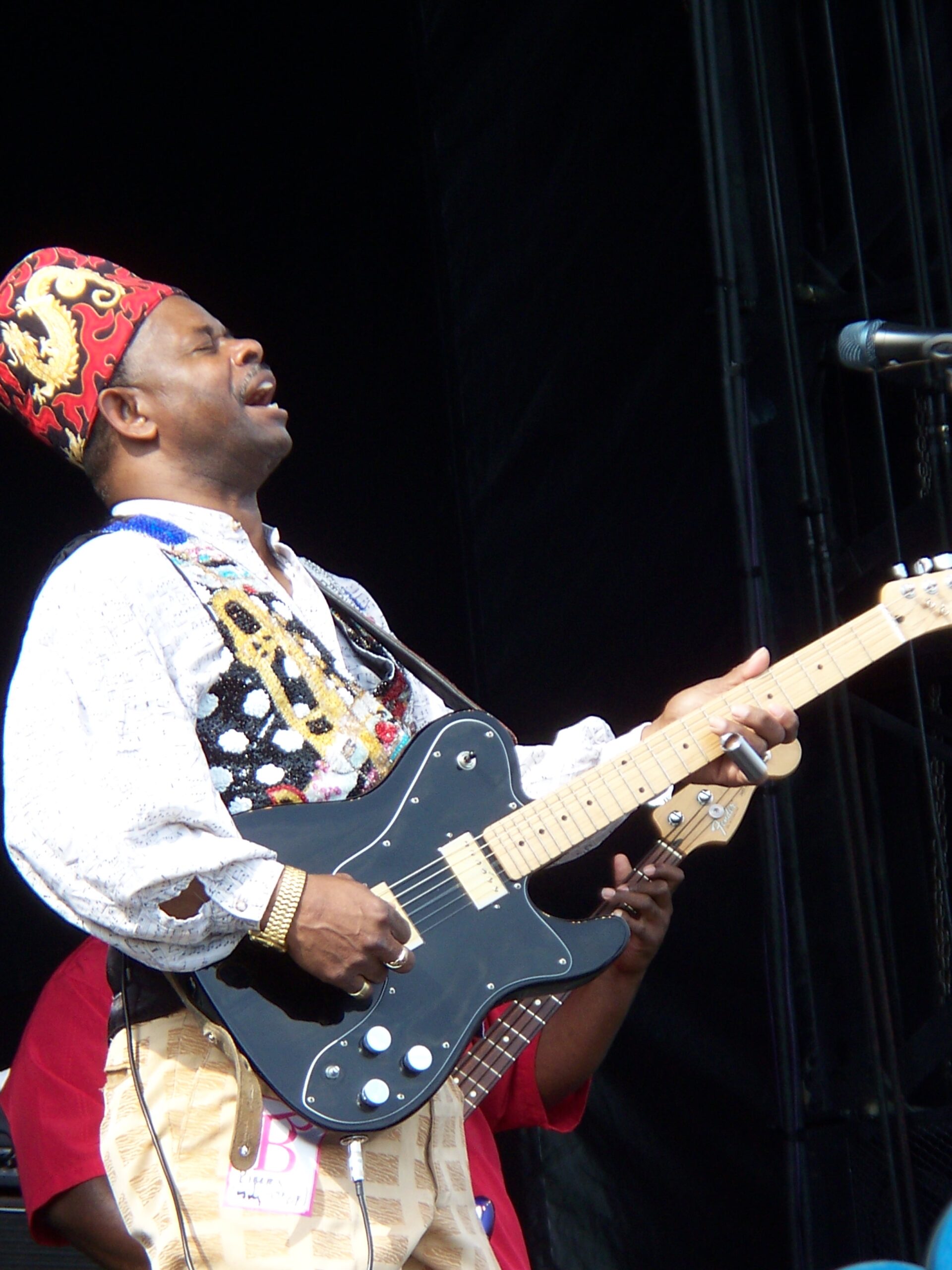
were central to his slide approach — primarily Open D (D-A-D-F#-A-D) and Open G (D-G-D-G-B-D), the standard slide guitar tunings that gave each chord position on the fretboard its full, resonant chord character when the slide covered all strings at once. Open tunings aligned the string pitches to produce a specific chord with the open strings and created multiple octave doublings of the same pitches across the fretboard, giving slide guitar its characteristic rich, resonant chord quality that standard tuning doesn’t produce with the same fullness.
String gauges ran heavy — typically .012–.056 or heavier — providing the string mass and tension that slide guitar technique required. Heavier strings under proper tension sustain more effectively when the slide contacts them, and the increased mass reduced the tendency of lighter strings to “flap” against the frets or the slide during aggressive playing.
Amps
Lil Ed Williams’ amplification was specifically oriented toward the raw, driven Chicago blues sound — the specific character of mid-century American valve amplifiers at working volume that gave classic Chicago blues recordings their characteristic tonal warmth and slight natural saturation.
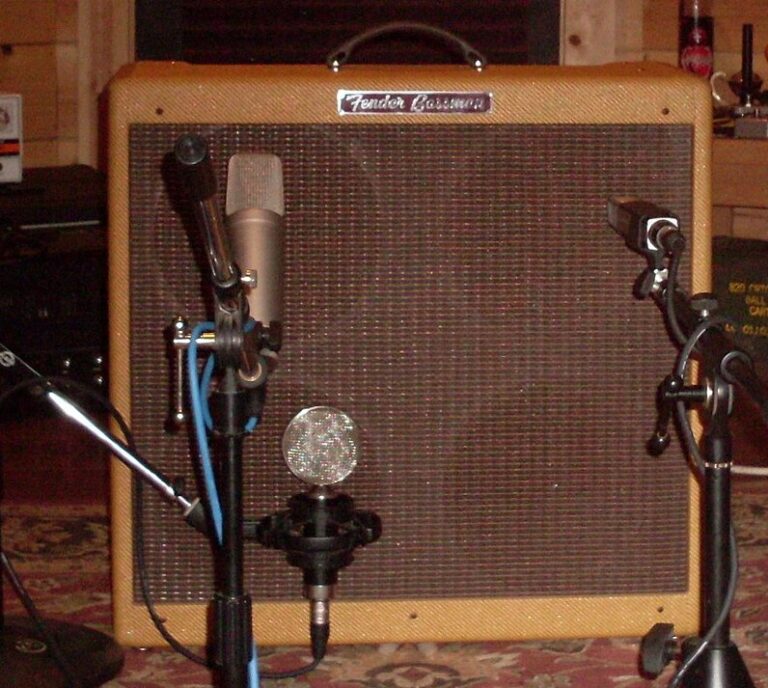
His primary amplifiers included Fender Bassman variants — the amplifier that served as the standard for Chicago blues guitarists through the late 1950s and 1960s and that remains the authentic amplifier choice for players in the tradition. The Bassman’s specific character — the cathode-follower tone stack, the 6L6 output valves, the multiple speaker configuration — produced the warm, slightly compressed sound that defined the amplified Chicago blues guitar sound. Run at working volume where the 6L6s contributed their natural compression and harmonic richness, the Bassman gave slide guitar its specific quality of sustained warmth that suited both the single-note slide lines and the full-chord slide passages.
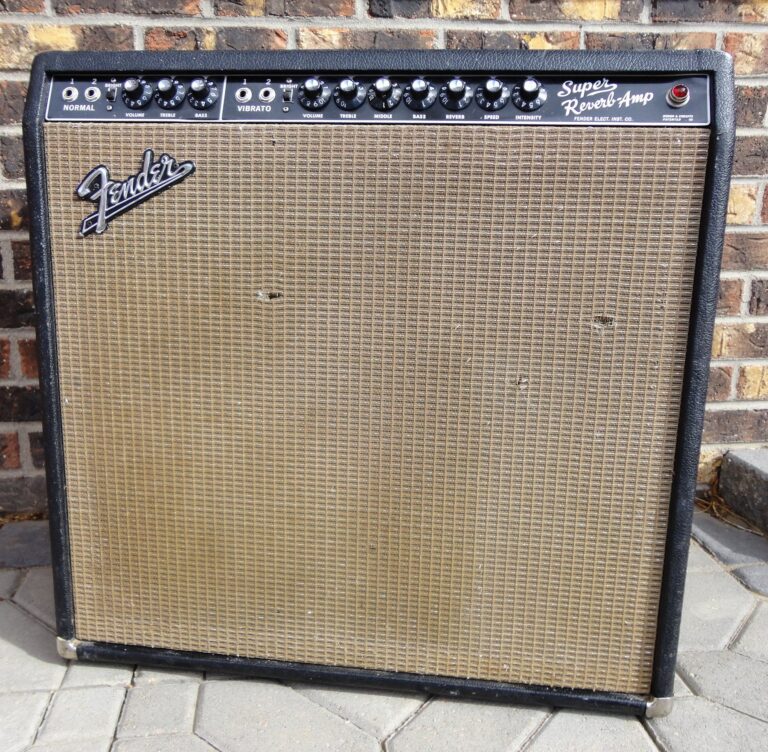
He also used Fender Super Reverb amplifiers — the 4×10 combo that was the evolution of the Bassman circuit into the blackface era — for their similar American character with the additional dimension of the built-in spring reverb that enhanced the atmospheric quality of slide guitar playing. The Super Reverb’s four Jensen P10R speakers gave the amplified slide guitar a specific spread and warmth that suited live performance with the Blues Imperials.
Various other vintage American amplifiers appeared in his touring rig as the practicalities of road use required — the consistent priority was American valve character at working volume, with the natural compression and warmth of the output stage contributing to the slide guitar tone rather than clean headroom being the primary requirement.
Effects
Williams’ effects chain was minimal — consistent with the Chicago blues tradition’s emphasis on direct, unprocessed guitar sound and with the specific tonal requirements of slide guitar playing. The slide’s direct physical contact with the strings produced a sound of specific character — the harmonic complexity of the slide’s movement, the specific quality of the vibrato, the pitch precision issues inherent in the technique — and effects that processed or coloured this sound risked obscuring the specific character that was the point of slide playing in the first place.
A spring reverb — either the onboard reverb of the Fender Super Reverb or a separate reverb unit — gave the slide guitar its appropriate spatial dimension. The spring reverb’s specific character — warmer and less precise than plate reverb, with a specific “drip” quality at high settings — suited slide guitar more naturally than modern digital reverb alternatives, adding atmosphere without removing the rawness that Chicago blues slide required.
Occasional tremolo — either from amplifier-onboard tremolo circuits or from a separate tremolo pedal — appeared for specific material where the pulsing amplitude modulation added appropriate rhythmic and atmospheric dimension. The Fender amplifier’s tremolo circuit — technically amplitude modulation rather than true pitch modulation — had a specific warm, musical character that suited Chicago blues material.
A volume pedal appeared for live performance dynamics management — allowing real-time control of the guitar’s contribution to the ensemble mix in the specific physical demands of a Chicago blues club performance, where the balance between guitar and the Blues Imperials’ rhythm section required active management rather than preset control.
Playing Style & Tone Philosophy
Lil Ed Williams’ playing style is defined by a specific combination of technical accomplishment and physical abandon that characterises the best Chicago blues at its most direct and most alive. His slide technique — absorbing the J.B. Hutto tradition while developing his own specific character — combined the physical energy of Hutto’s approach with a showmanship and a sense of humour that made performances genuinely entertaining as well as musically satisfying.
His slide work was characterised by a specific quality of intonation — not the perfect pitch of classical violin playing but the expressive, blues-idiomatic intonation of a player who used pitch as an expressive tool rather than as a measurement. The slight sharpening of notes, the deliberate approach to target pitches from below, the vibrato that gave sustained notes their singing quality — all of these reflected the specific expressive vocabulary of the Chicago slide tradition that he had absorbed through J.B. Hutto’s example and through his own decades of performance.
His rhythm playing — when not playing lead slide — showed the deep knowledge of the Chicago blues rhythmic tradition: the specific shuffle feel, the specific chord voicings in open tuning, and the physical authority that distinguished genuine blues rhythm playing from technically accurate but emotionally unconvincing imitation. The rhythm and lead dimensions of his playing were equally developed and equally committed — a quality that the Chicago blues tradition required and that less dedicated players often lacked.
Tonally, Williams’ philosophy was the Chicago blues guitarist’s philosophy in its most direct form: the guitar should sound like itself, driven by an appropriate valve amplifier to the point of natural warmth and compression, with the playing rather than the processing providing the emotional content. Every equipment choice served this priority — the hollow-body guitar for slide resonance, the Bassman or Super Reverb for warm American valve character, the minimal effects for specific tonal enhancements rather than for overall sonic transformation.
How to Sound Like Lil Ed Williams
Guitar Approach
A semi-hollow or hollow-body electric guitar — Gibson ES-335, Epiphone Riviera, or similar — set up with high action (at least 3.5mm at the 12th fret bass side) and heavy strings (.012–.056 minimum). Open D or Open G tuning for the full slide chord approach. The slide itself is as important as the guitar: a heavy glass or metal slide gives different tonal characters — glass is warmer and smoother, metal is brighter and more cutting. Practice the J.B. Hutto vocabulary first: absorb the specific melodic phrases, the specific vibrato approach, the specific rhythmic placement that defined the tradition from which Williams’ playing descended.
Amp Approach
A Fender Bassman (4×10, 6L6) or Super Reverb (4×10, 6L6) at working volume — pushed into natural 6L6 compression and warmth rather than kept crystal clean. The spring reverb at a moderate setting adds the appropriate atmospheric dimension for Chicago blues slide. Don’t use excessive reverb: the directness of the playing style requires the sound to be present and unprocessed enough to communicate the physical immediacy that is slide guitar’s specific quality.
| Control | Setting | Notes |
|---|---|---|
| Volume | 6–8 | Working volume — 6L6 natural compression zone for slide sustain |
| Treble | 6 | Moderate treble — slide brightness needs control at this volume |
| Middle | 6 | Present mids for Chicago blues authority in the mix |
| Bass | 5 | Moderate bass for warmth without muddying the slide articulation |
| Reverb | 3–4 | Moderate spring reverb — atmospheric but not washed out |
| Tremolo (if used) | Moderate depth, slow-medium rate | For specific material only — not constant |
Influence & Legacy
Lil Ed Williams’ legacy is the specific legacy of a musician who carries a specific lineage of the Chicago blues tradition — the J.B. Hutto slide guitar approach — forward into the contemporary world with total fidelity and total personal commitment. This is not a small legacy: the specific slide tradition he represents, running from the Delta through the postwar Chicago electrification through Hutto’s specific approach to Williams’ own playing, is one of the most historically significant strands in American guitar music, and its living continuation in his performances and recordings is a genuine cultural contribution.
His work on Alligator Records — spanning nearly four decades of recording with the same label — has given him a documented presence in the contemporary blues world that extends his influence beyond the club circuit where blues music lives most authentically. The Alligator recordings documented the specific character of his playing approach for audiences who might not have access to the Chicago club where his live performances were most powerful, and they served as an introduction to the living slide tradition for players who subsequently developed their own approaches from his example.
His influence on younger Chicago blues guitarists — the generation who have seen him play and who have studied his approach as part of their own development — is direct and continuing. The J.B. Hutto lineage that flows through Williams is one of the most important specific transmission lines in contemporary Chicago blues, and his commitment to maintaining it with total integrity ensures its continuation into future generations of players who will themselves carry it forward.
For players exploring the Chicago blues slide tradition that Williams represents, the rigs of Earl Hooker — whose slide guitar mastery defined the Chicago approach from an earlier generation — and Lurrie Bell, whose Chicago blues work showed how the tradition’s vocal and guitar dimensions could be integrated in the contemporary world, provide essential comparison. The J.B. Hutto connection leads back to Willie Johnson‘s Howlin Wolf work, showing how the aggressive, physically intense end of the Chicago blues tradition developed its specific character.
The J.B. Hutto Legacy: Learning from a Master
James B. Hutto’s specific approach to the slide guitar — the Chicago style he had developed through years of performing on the South Side club circuit — was the primary source material from which Lil Ed Williams built his own musical identity. Understanding what specifically Hutto brought to the slide tradition, and how Williams absorbed and transformed that specific inheritance, is essential for understanding both the musical and the equipment dimensions of Williams’ approach.
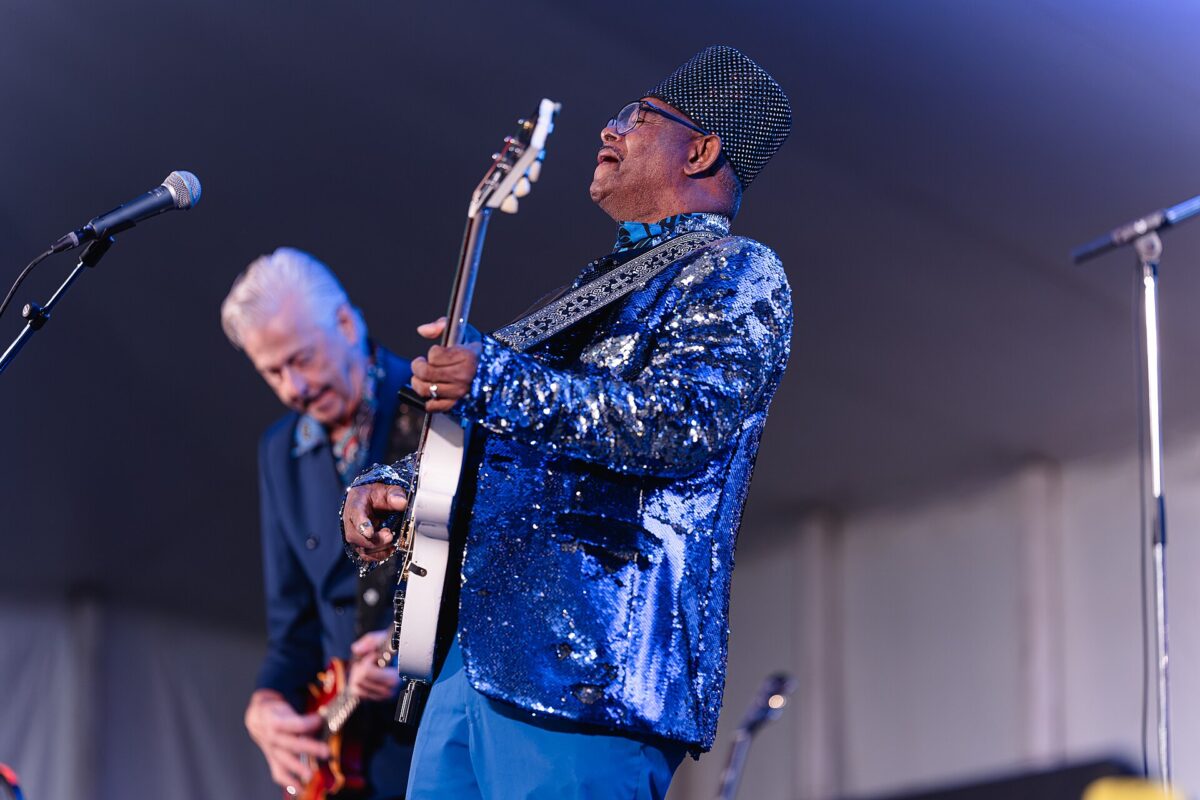
Hutto played with a specific quality of aggressive, attacking energy that distinguished him from the smoother, more restrained slide players in the Chicago tradition. Where Muddy Waters’ slide work had a hypnotic, meditative quality — the slow, deliberate slide movements and the specific Delta-derived pentatonic vocabulary — Hutto’s approach was more energetic, more rhythmically aggressive, and more physically theatrical. He treated the guitar as a prop as much as an instrument — playing it behind his head, lying on his back, working the audience with the physical spectacle of his performance as much as with the musical content — in a performance tradition that traced back to the showmanship of the medicine show and the juke joint.
This theatrical dimension of the Hutto tradition was as central to Williams’ inheritance as any specific guitar technique. The stage presence, the showmanship, the specific connection with an audience that came from performing with complete physical commitment — all of these were part of what Williams absorbed from his uncle’s example alongside the specific slide guitar vocabulary. The equipment that served this theatrical tradition needed to be physically robust enough to survive the demands of performance that took the guitarist well beyond the normal range of guitar playing — instruments that could handle being played behind the head, in unusual positions, with the physical exuberance that Williams’ performances consistently demonstrated.
The Chicago Club Circuit: Live Performance Context
The Chicago blues club circuit — the venues on the North Side and South Side where the blues tradition had been maintained through decades of live performance — provided the primary professional context for Williams’ development and for the specific equipment choices that served his approach. Understanding this context helps explain why his equipment priorities differed in specific ways from those of studio-focused or arena-rock guitarists whose professional contexts imposed different requirements.
The Chicago club environment — typically small to medium rooms with audience members in close physical proximity to the performers — imposed specific acoustic requirements that the concert hall or the recording studio didn’t. The reverberant acoustic of a brick-walled club, the noise level of an engaged Chicago blues audience, and the specific volume levels appropriate for a room of this size required amplification that could deliver authority without the ear-damaging levels appropriate for larger venues. The Fender Bassman or Super Reverb at working volume in a club — the 6L6 tubes contributing natural compression, the Jensen speakers providing the specific warmth of the vintage component combination — was the correct amplification for this context, providing enough power for authority without the excessive volume that larger or more powerful amplifiers would have required.
The specific demands of slide guitar in this live performance context also shaped his equipment priorities. Slide guitar requires precise intonation management — the slide must be placed exactly parallel to the frets and at exactly the right position for each pitch — and the physical demands of performing with the showmanship and energy that Hutto’s tradition required made this intonation management particularly challenging. His setup choices — high action, heavy strings, open tunings, hollow-body construction — all served the slide technique’s specific requirements in ways that also had to be compatible with the physical demands of his performing style.
Open Tuning: Why the Slide Tradition Uses It
The open tuning question — why do slide guitarists use open tunings rather than standard tuning? — deserves specific examination because the acoustic reasons for open tuning’s superiority for slide work are both interesting and illuminating about why Williams’ setup choices were acoustically correct rather than merely conventional.
In standard tuning (E-A-D-G-B-E), placing the slide across all six strings at the same fret position doesn’t produce a musically useful chord — the intervals between the strings in standard tuning don’t align to produce a major or minor chord at any single position. In Open D tuning (D-A-D-F#-A-D), placing the slide across all six strings at any fret position produces a D major chord at that fret — at the fifth fret, an A major chord; at the seventh fret, an E major chord. This means that any single slide position produces a complete, musically useful chord, and the movement between fret positions produces movement between different major chords in simple, physically natural relationships.
For slide guitar specifically, this chord-at-every-position characteristic was essential because the slide’s contact with the strings meant that all six strings sounded simultaneously with the slide’s pitch — in standard tuning, this would produce dissonant intervals between the strings; in open tuning, it produced major chords. The ability to produce complete chords with a single slide position, and to move between chords by simply repositioning the slide, gave the open tuning its specific musical utility for the slide technique.
The specific resonance of open tunings — the multiple octave doublings of the same pitches across the six strings — also contributed to the specific rich, resonant quality of slide guitar that standard tuning didn’t produce. When the open strings of an Open D guitar vibrated sympathetically with notes played higher on the neck, the multiple octave reinforcements of the same pitch (at the first, fourth, and sixth strings in Open D) gave the sound its characteristic fullness and sustain. Williams’ commitment to open tunings was both acoustically correct for the technique and historically authentic to the tradition he was working within.
The Resonator Guitar in the Blues Tradition
Williams’ use of Dobro and National resonator guitars for acoustic slide work — the instruments that amplified guitar sound through a metal resonator cone rather than through a wooden soundboard — reflected both the historical knowledge appropriate to the blues tradition and the specific tonal character that resonator guitars provided for slide work.
The resonator guitar was developed in the late 1920s specifically to provide more acoustic volume than conventional acoustic guitars in the band contexts where amplification wasn’t available — the medicine shows, the juke joints, the dance halls where a louder guitar was a practical necessity. The metal resonator cone’s specific physics — using a mechanical advantage over the wooden soundboard to produce more efficient sound radiation — gave the resonator guitar significantly more volume than a conventional acoustic, and the metal components (either aluminium or steel in different designs) gave the amplified sound a specific bright, metallic character that has been central to the slide guitar tradition from the early 1920s through the present.
For Williams’ acoustic slide work, the resonator’s specific character — the metallic brightness, the specific sustain quality of the cone’s resonance, the visual drama of the chrome-plated National or the wooden-bodied Dobro — served both the acoustic requirements of performance without amplification and the specific historical character of the blues tradition in which he worked. Using a resonator guitar for this acoustic work was not merely an aesthetic choice but an acoustically correct connection to the tradition — the same instruments that had served the acoustic blues tradition in the pre-electrification era, brought forward into contemporary performance with the same functional purpose they had always served.
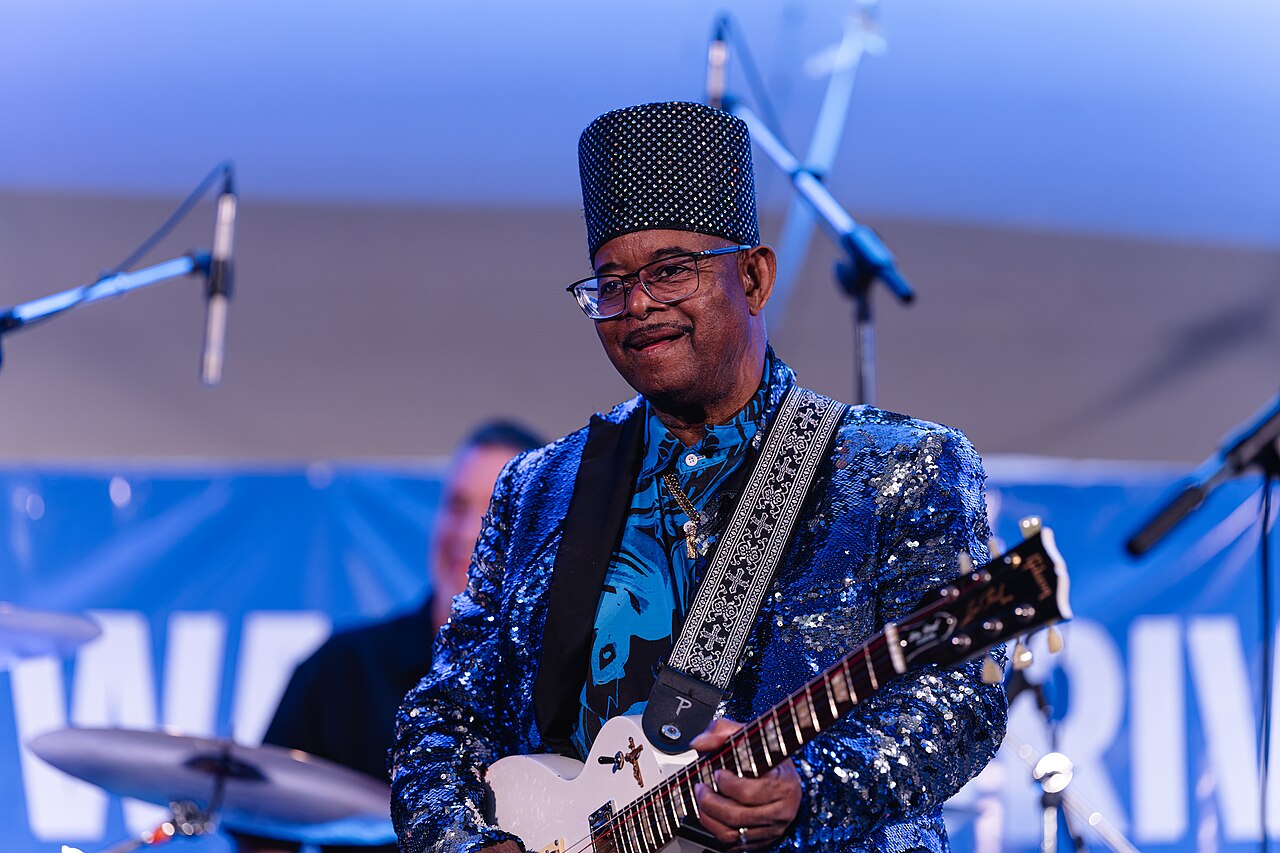
Lil Ed Williams’ career — approaching five decades of playing with the Blues Imperials, maintaining the J.B. Hutto tradition with total personal commitment, and continuing to tour and record with the same enthusiasm and the same directness that has characterised his playing from the beginning — represents one of the living traditions of Chicago blues at its most genuine and most vital. The equipment he uses: the hollow-body electric in open tuning with high action and heavy strings, the Bassman or Super Reverb at working volume, the minimal effects chain that lets the playing rather than the processing carry the musical content — was chosen with the same directness and the same honesty that has always characterised his music. The gear serves the blues; the blues serves the tradition; and the tradition serves the people who need it most. That is the complete Lil Ed Williams gear story.
The specific hollow-body guitars Williams used for electric slide work — the ES-335 style instruments that provided semi-hollow construction rather than the fully hollow archtops of the resonator tradition — reflected a practical compromise between the ideal acoustic properties of slide guitar and the practical requirements of live performance with amplification. A fully hollow archtop guitar provided maximum acoustic resonance for slide work but also maximum feedback susceptibility at the high amplifier volumes required for club performance — the acoustic cavity of the fully hollow body resonated with the amplifier’s sound output, creating feedback loops that were musically destructive rather than musically useful. The semi-hollow ES-335 construction — with its solid centre block running through the body between the two hollow wing sections — reduced feedback susceptibility while maintaining enough acoustic resonance to give the slide notes their characteristic bloom and sustain. This feedback management was a practical necessity for a player who performed with physical exuberance at stage volumes that a fully hollow body couldn’t accommodate without acoustic control issues. The semi-hollow design was acoustically correct for the specific combination of slide technique and live performance volume that Williams’ approach required.
The weight and balance of the instruments Williams used — a practical consideration for a performer whose playing style was as physically demanding as his — reflected the same practical wisdom that characterised every aspect of his equipment choices. Semi-hollow guitars were generally lighter than comparable solid-body instruments, and their balance and ergonomics suited the wide range of playing positions that his stage performance required. Playing a guitar behind the head, or lying on one’s back, or in any of the other positions that the Chicago blues showmanship tradition required, was more manageable with a lighter instrument — the physical demands of the performance required equipment that could handle those demands without adding unnecessary weight or awkwardness to the already physically challenging positions.
The blues, at its most essential, is a music of physical and emotional necessity — a way of expressing experiences that conventional social language couldn’t contain, through the specific physical acts of singing and playing with total commitment. Lil Ed Williams’ playing embodied this necessity more completely than almost any contemporary blues performer — the total physical commitment, the genuine emotional directness, the refusal to treat the blues as an art form to be approached with academic reverence rather than as a living language to be spoken with complete honesty. The equipment that served this approach was chosen with the same directness and the same honesty: the right guitar for the slide technique, the right amplifier for the Chicago blues sound, the minimal effects that served the music rather than obscuring it. Equipment in service of honest music — that is the highest possible purpose for any guitarist’s gear, and Lil Ed Williams has pursued it with complete integrity across five decades of playing the blues in the city where the blues reached its most fully electric form.
The Blues Imperials — the band that has been Williams’ primary musical vehicle for nearly five decades — deserve specific mention as part of the equipment story because the specific interaction between his guitar approach and the band’s rhythm section shaped how his equipment needed to function in the ensemble context. The Chicago blues band format — guitar, bass, drums, with occasional harmonica — placed specific demands on the guitar that the more horn-heavy soul and funk formats or the keyboard-based rock format didn’t. Without a keyboard or horn section to fill the harmonic space above the bass and drums, the guitar in the Chicago blues format had to carry both the melodic lead voice and the harmonic support simultaneously — a requirement that influenced both the choice of instruments (hollow-body for resonance and sustain), tuning (open for full-chord slide positions), and amplification (the specific volume and tonal character that balanced lead and rhythm roles in the specific acoustic environment of a small club).
The Alligator Records recording environment — the specific way Bruce Iglauer’s label documented Chicago blues artists in the studio — also shaped how Williams’ equipment and playing were captured on record. Alligator’s approach to recording blues artists was consistently oriented toward documentary honesty rather than commercial polish: recording the music the way it sounded in the live environment rather than through elaborate studio processing. The specific guitar tones on the Alligator recordings — warm, slightly driven, with the natural reverb of the recording room providing spatial dimension rather than elaborate reverb processing — reflected both Williams’ own equipment choices and the label’s consistent priority of authentic documentation over commercial enhancement. The Bassman or Super Reverb captured direct or through a close-placed microphone, the hollow-body guitar’s acoustic resonance contributing to the recorded sound alongside the amplifier’s character, the minimal effects providing their specific contributions without dominating the overall sound. These recording approaches gave the Alligator recordings their specific character of authenticity and directness that distinguished them from more heavily processed contemporary blues productions.
The spring reverb’s specific acoustic contribution to slide guitar playing — particularly the Fender amplifier’s onboard spring reverb at moderate settings — deserves one more technical note that illuminates why this specific effect suited Williams’ approach better than digital reverb alternatives. The spring reverb’s specific character — its limited high-frequency response, its characteristic “drip” at high settings, its specific decay time determined by the spring’s mechanical resonant properties — produced a warmth and directness that suited the specific character of slide guitar playing. The spring’s limited high-frequency response prevented the reverb from adding artificial brightness to the slide’s already bright character; the mechanical imprecision of the spring’s resonant decay produced a warm, slightly irregular reverb tail that sounded natural rather than processed; and the specific “drip” quality at higher settings added a dimension that suited the Chicago blues aesthetic of raw, direct music with appropriate atmospheric depth. Digital reverb, with its mathematically precise control over every aspect of the reverb character, could produce a technically superior reverb in terms of precision — but the specific imprecisions of the spring reverb were musically appropriate in ways that technical superiority didn’t address. Williams’ use of spring reverb for his slide work reflected this understanding, and it gave his recordings and live performances their specific quality of traditional warmth that more modern processing would have compromised.
The National and Dobro resonator guitars that Williams used for acoustic slide work were not merely historical artifacts but working musical instruments whose specific acoustic properties served genuine musical purposes. The National’s steel body and resonator cone produced a bright, metallic quality that cut through ambient noise in performance environments without amplification — a practical necessity for acoustic performance in the kind of informal settings where acoustic blues has traditionally been played. The Dobro’s wooden body and biscuit resonator cone produced a somewhat warmer character than the steel National, with a different quality of sustain that suited different material in his acoustic repertoire. Having both instruments — and knowing which to reach for in specific musical contexts — reflected the same musical intelligence that characterised his choice of electric instruments and amplification for different performance situations. The resonator guitar tradition was not monolithic but had specific variants with specific acoustic characters for specific applications, and Williams’ engagement with both the National and Dobro traditions reflected genuine knowledge of these distinctions.
Heavy strings’ specific contribution to slide guitar tone — the acoustic reason for using .012–.056 or heavier rather than the lighter gauges that many electric guitarists prefer — lies in the relationship between string mass, fundamental frequency production, and sustain. Heavier strings have greater mass per unit length than lighter strings at the same pitch; at comparable tension levels, this additional mass produces a stronger fundamental frequency relative to the harmonics, giving the note a fuller, more authoritative quality. For slide guitar specifically, where the slide contacts the strings at a specific point along their length rather than pressing them against the frets, the string mass was particularly important: the slide’s contact point divided the string into two sections, with both sections vibrating at different frequencies (the played note on one side, a harmonic series on the other), and the heavier string’s greater mass sustained these vibrations more effectively than a lighter string would have. The result was the specific singing, sustained quality of Williams’ slide notes — the notes that held and decayed in musically meaningful ways rather than dying immediately after the slide contact — that distinguished genuinely skilled slide playing from technically correct but tonally thin alternatives.
The specific vibrato technique that Williams employed — moving the slide slightly along the string while pressing it against the strings to produce pitch variation — was as important to the tonal character of his slide playing as the equipment itself. The blues vibrato on slide guitar was not the precisely metered pitch modulation of a classical violinist but an expressive, irregular, slightly unpredictable pitch variation that gave sustained notes their specific quality of emotional expressiveness. The specific width, speed, and regularity of the vibrato varied with the emotional content of the passage — wider and slower for more mournful passages, tighter and faster for more urgent or aggressive ones. This expressive variation was the most direct expression of the blues musician’s fundamental musical value: the use of technical means to communicate specific emotional content rather than to demonstrate technical facility. The equipment — the heavy strings that sustained the note long enough for the vibrato to develop fully, the hollow-body resonance that gave the vibrated note its dimensional quality, the Bassman’s warm compression that smoothed the vibrato’s amplitude variations — all served this fundamental expressive purpose. The gear served the expression; the expression served the music; and the music served the people who filled the Chicago clubs where Lil Ed Williams has played with complete conviction for nearly five decades.
Frequently Asked Questions: Lil Ed Williams Guitars & Gear
What guitar does Lil Ed Williams play?
Lil Ed Williams primarily plays semi-hollow and hollow-body electric guitars — typically ES-335 style or similar — set up for slide guitar with high action and heavy strings. He also plays Dobro and National resonator guitars for acoustic slide work. All his primary instruments use open tunings (Open D or Open G) and heavy string gauges (.012–.056 or heavier) appropriate for aggressive slide guitar playing.
What amp does Lil Ed Williams use?
His primary amplifiers are vintage-style American valve combos — Fender Bassman (4×10) and Fender Super Reverb (4×10) being the most frequently associated. These amplifiers’ 6L6 natural compression at working volume gives his slide guitar its specific warm, slightly driven quality that suited Chicago blues. He uses spring reverb at moderate settings for appropriate spatial dimension.
Who was J.B. Hutto and why is he important to Lil Ed?
J.B. Hutto (1926–1983) was a Chicago blues guitarist and singer whose slide guitar approach — aggressive, physically committed, with a specific attacking quality and genuine emotional directness — was one of the most distinctive in the postwar Chicago blues scene. He was Lil Ed Williams’ uncle and primary musical influence, providing both the direct example of a slide guitarist working at the highest level and the specific musical vocabulary that Williams absorbed and built upon in developing his own approach.
What open tunings does Lil Ed Williams use?
Williams primarily uses Open D (D-A-D-F#-A-D) and Open G (D-G-D-G-B-D) — the two most common slide guitar tunings in the blues tradition. These tunings give each complete-string slide position its full major chord character, allowing the slide to cover all strings at once and produce complete chords rather than single-note melody lines alone. The open string resonance of these tunings contributes substantially to the rich, resonant character of slide guitar playing.
What effects does Lil Ed Williams use?
His effects chain is minimal: spring reverb (either from the amplifier or a separate unit) for atmospheric dimension, occasional tremolo for specific material, and a volume pedal for live performance dynamics management. His approach to effects was consistent with the Chicago blues tradition’s emphasis on direct, unprocessed guitar sound — the emotional content came from the playing rather than from signal processing.
What is Lil Ed’s relationship with Alligator Records?
Lil Ed and the Blues Imperials have recorded for Alligator Records — the Chicago-based independent blues label founded by Bruce Iglauer in 1971 — since their debut album Roughhousin’ in 1986. The relationship spans nearly four decades and multiple albums, making it one of the longer-running artist-label partnerships in contemporary blues. Alligator’s commitment to recording authentic Chicago blues gave Williams a documented presence in the global blues market that the club circuit alone couldn’t have provided.
What is slide guitar and why is the technique distinctive?
Slide guitar uses a hard object (glass, metal, ceramic, or bone) pressed against the strings and moved along the fretboard to change pitch, rather than the fingers pressing the strings against the frets in conventional guitar technique. The slide produces a continuous pitch change rather than discrete fretted pitches, allowing the specific blues expressive techniques of pitch bending and vibrato to be applied across the full range of the instrument simultaneously. The technique requires high action (to prevent the slide from hitting the frets), open tuning (to allow full-chord slide positions), and heavy strings (for sustain and tone mass). The specific sound of slide guitar — particularly in the Chicago blues tradition — is inseparable from its expressive possibilities.
Genre:
Chicago Blues
Decades:
1970s | 1980s | 1990s | 2000s | 2010s | 2020s
Image credits
- Lil Ed Williams: John Manard, Wikimedia Commons, CC BY-SA 4.0.
- Lil Ed Williams: John Manard, Wikimedia Commons, CC BY-SA 4.0.
- Top image: ceedub13
- Lil’ Ed Williams: photo by John Manard, via Wikimedia Commons, CC BY-SA 4.0.
- Fender Bassman: Roadside Guitars, Wikimedia Commons, CC BY-SA 2.0.
- Fender Super Reverb: GabeMc, Wikimedia Commons, CC BY-SA 3.0.