
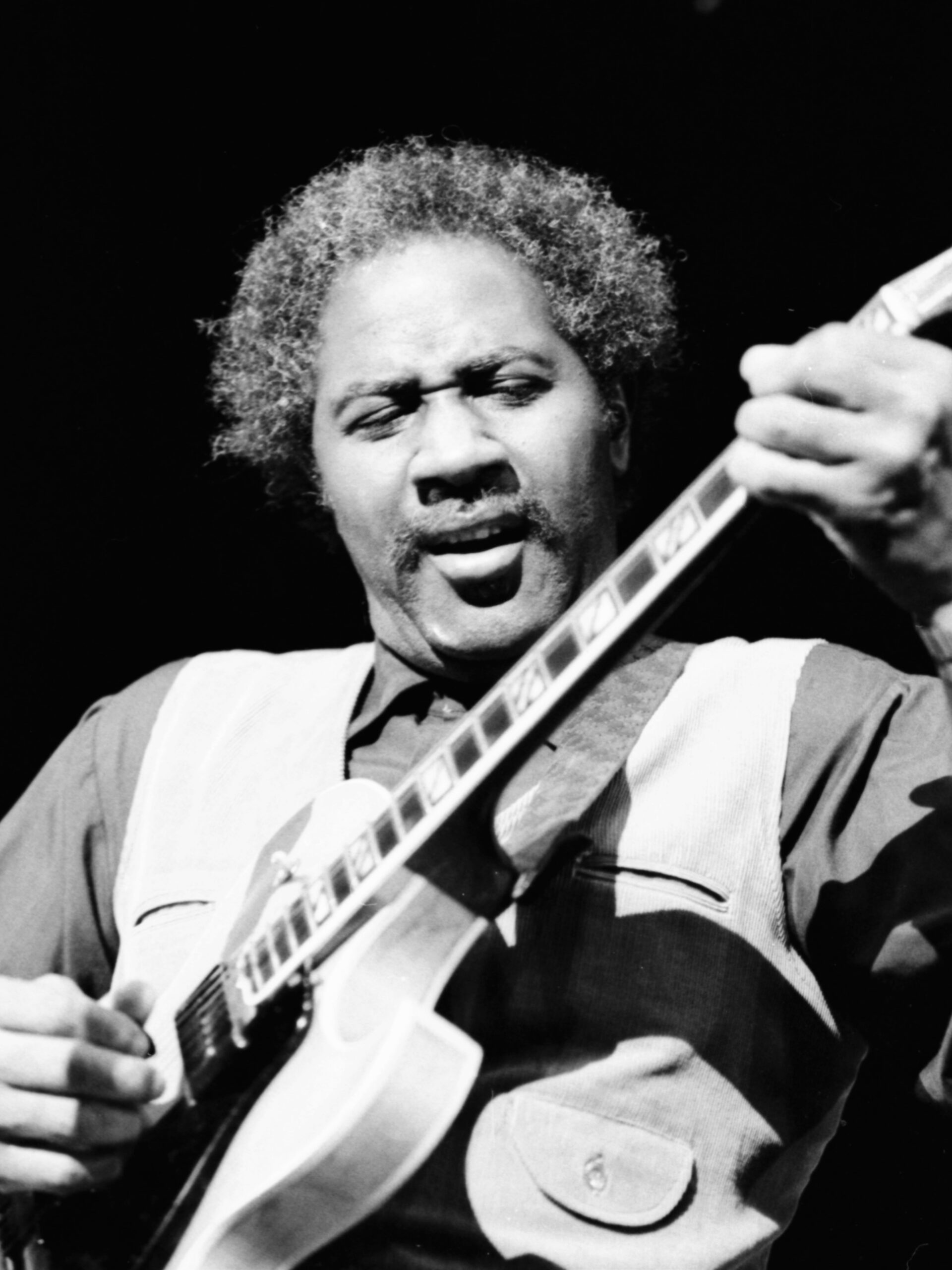
Investigate Fenton Robinson guitars gear and you find the equipment behind one of Chicago blues’ most melodically sophisticated and most musically underappreciated voices — an Arkansas-born guitarist who moved to Chicago in the 1950s and spent the subsequent decades developing a blues guitar approach of unusual harmonic and melodic refinement that placed him somewhere between the raw tradition of the Delta and the harmonic sophistication of jazz, without fully belonging to either. Robinson played with the technical precision of a jazz guitarist and the emotional directness of a blues player, and his recordings — particularly his albums for the Alligator and other Chicago blues labels — showed a musician whose depth of musical knowledge was matched by genuine emotional commitment to the tradition he was working within. He remains one of the most distinctively individual voices in Chicago blues, and his influence on subsequent blues guitarists was disproportionate to his commercial profile during his lifetime.
This guide covers Robinson’s complete equipment picture: the Gibson guitars that defined his specific melodic approach, the amplification that gave his playing its warm, full-bodied Chicago tone, his minimal effects use, and the playing philosophy of a musician who understood that technical sophistication and emotional directness were not merely compatible but inseparable in the best blues guitar playing. Understanding Fenton Robinson’s gear is understanding how jazz harmonic knowledge can serve the blues without diluting it.
Background
Fenton Robinson was born on September 23, 1935, in Minter City, Mississippi, in the Mississippi Delta — the region that produced more significant blues musicians than any other single geographic area in American music history. His early musical formation in the Delta gave him the foundational blues vocabulary — the specific harmonic language, the expressive techniques, the emotional register — that distinguished blues guitar from the other American popular music traditions that were developing simultaneously in the postwar period.
He relocated to Chicago in the late 1950s, part of the Great Migration that was reshaping both Chicago’s cultural landscape and the blues tradition itself. Chicago’s specific musical environment — the electrified, amplified, band-based approach that Muddy Waters, Howlin Wolf, and Little Walter had developed from the acoustic Delta tradition — gave the instrument and the music a new context and new possibilities, and Robinson absorbed these possibilities while maintaining his specific connection to the melodic and harmonic sophistication that distinguished his approach from the rawer, more minimalist end of the Chicago blues spectrum.
His recordings for Checker Records in the late 1950s and early 1960s — including the song “As the Years Go Passing By,” which became one of the most widely covered slow blues songs of the era — documented his specific melodic approach at an early stage of its development. The song’s specific combination of blues feeling and melodic sophistication, and the specific quality of his guitar playing on the recording, showed the distinctive character that would define his career.
His most significant recordings were made for Alligator Records in the 1970s and 1980s, with albums including Somebody Loan Me a Dime (1974) and I Hear Some Blues Downstairs (1977) documenting his guitar approach at its most fully developed. He died on July 25, 1997, leaving a legacy that has been increasingly recognised in the decades since his death.
Fenton Robinson Guitars Gear: The Complete Rig
Guitars
Fenton Robinson’s guitar choices reflected the specific demands of his melodically sophisticated Chicago blues approach — instruments chosen for the warmth, sustain, and harmonic complexity that his specific playing style required.
His primary guitar was a Gibson ES-335 — the semi-hollow thinline archtop that Gibson introduced in 1958 and that became one of the defining instruments of the Chicago blues sound through its use by both blues and soul guitarists through the 1960s and 1970s. The ES-335’s PAF-spec humbucking pickups (7.5k to 8.5k ohms, Alnico II or Alnico V in the early examples) provided the warm, sustained tone that Robinson’s melodic single-note playing required — the sustain giving his sustained notes the singing quality that shorter-duration alternatives couldn’t achieve, and the warmth giving the overall tone the fullness that the Chicago blues aesthetic demanded.
The ES-335’s semi-hollow construction gave the amplified sound an acoustic dimension that solid-body guitars didn’t provide — the hollow wing sections resonating with the strings’ vibration and adding a specific bloom and sustain quality to the amplified signal that enhanced the melodic qualities of his playing. This acoustic resonance was particularly effective for the slow, sustained single-note lines that were a central element of his melodic approach, giving each note the opportunity to develop fully and to sustain into its decay before the next note arrived.
He also used Gibson ES-355 — the stereo-capable ES-335 variant with a more ornate appearance (bound neck, multiple body bindings, split diamond inlay) that provided essentially the same acoustic properties as the ES-335 with additional visual distinction and the Varitone tone control that offered additional tonal options. His use of both the ES-335 and ES-355 reflected the practical musical equivalence of the two instruments rather than a specific preference for one over the other.
His guitars were typically set up with medium strings — .011–.052 or similar — providing adequate string mass and tension for the sustaining, melodic single-note playing that dominated his approach while maintaining playability for the specific chord voicings and jazz-influenced harmonic extensions that his playing incorporated.
Amps
Robinson’s amplification was rooted in the warm American valve tradition that defined Chicago blues guitar amplification from the mid-1950s onward — the specific combination of 6L6 output valves, alnico-magnet Jensen or similar speakers, and the warm, slightly compressed character of working-volume American valve amplification that gave Chicago blues its specific tonal identity.
His primary amplifier was a Fender Super Reverb — the 4×10 combo with four Jensen P10R speakers and 6L6 output valves that became the standard professional amplifier for Chicago blues guitarists of the 1960s and 1970s. The Super Reverb’s specific character — the warmth of the 6L6 output stage at working volume, the four P10R speakers’ combined frequency response and acoustic spread, and the onboard spring reverb for atmospheric dimension — suited Robinson’s melodic approach with specific appropriateness. The four-speaker configuration gave the amplified guitar a broader, more diffuse sound field than a single larger speaker, contributing to the warmth and presence that made his sustained single-note lines audible and beautiful in the Chicago club environments where blues guitar was primarily performed.
He also used Fender Twin Reverb amplifiers for larger venue and specific recording applications — the 85-watt, 2×12 combo providing additional power for larger venues while maintaining the fundamental American valve character that suited his playing approach. The Twin’s cleaner headroom gave his guitar’s natural character more opportunity to come through than the Super Reverb’s earlier saturation onset, which suited specific material where the cleaner response was musically appropriate.
The Fender Bassman — the 4×10 combo that had been the standard amplifier for Chicago blues through the late 1950s — appeared in his earlier career before the Super Reverb became the primary vehicle. The Bassman’s specific character — warm, with the specific quality of early-stage natural saturation that the cathode-follower tone stack produced — was as appropriate for his melodic approach as the Super Reverb’s somewhat cleaner character.
Effects
Robinson’s effects chain was minimal — entirely appropriate for a player whose primary musical value was the melodic and harmonic intelligence of the playing rather than tonal variety or sonic experimentation. Chicago blues in the tradition he worked within was primarily about the emotional content of the playing rather than about sonic processing, and effects that complicated or coloured the guitar’s natural character were generally inconsistent with this value system.
The onboard spring reverb of the Fender Super Reverb or Twin was the primary atmospheric addition to his natural guitar tone — adding the spatial dimension that gave sustained notes their appropriate breathing room in the acoustic environment of live performance and recording. His reverb use was moderate rather than heavy — enough to add dimension without washing out the specific quality of individual notes that his melodic approach required.
A volume pedal appeared for specific dynamic control — particularly useful for the slow, sustained passages in his playing where real-time dynamic management gave specific phrases their expressive quality. Volume pedal technique allowed specific notes to be brought in smoothly from reduced volume, giving them a quality of emergence that pick attack alone didn’t produce.
The natural character of the ES-335 through the Super Reverb at working volume — the specific interaction between the humbucker’s warmth, the semi-hollow body’s resonance, and the 6L6’s natural compression — was the primary tonal statement, and Robinson’s understanding that this natural character was the optimal starting point for his specific musical approach reflected both genuine acoustic knowledge and the same instinctive musical intelligence that characterised every other aspect of his playing.
Playing Style & Tone Philosophy
Fenton Robinson’s playing style was defined by the specific quality of melodic intelligence that distinguished him from both the rawer Chicago blues players and the jazz guitarists working in the same period. His single-note lines showed a harmonic knowledge that went beyond the standard blues pentatonic vocabulary — he moved through jazz chord substitutions, used chromatic passing notes that the strictly pentatonic approach didn’t include, and created melodic phrases of unusual length and harmonic interest that surprised and satisfied in the same moment.
This jazz harmonic knowledge was not applied academically or self-consciously but was fully integrated into his blues musical personality — the harmonic sophistication was in service of the emotional content, not in competition with it. A Fenton Robinson solo line could move through jazz substitution harmonies and arrive at a bent note of pure Delta blues expressiveness without any sense of stylistic contradiction, because both the harmonic intelligence and the emotional directness were genuinely part of the same musical personality.
His vibrato technique — the specific physical movement of the finger that gave sustained notes their pitch variation — was particularly distinctive. Where many Chicago blues players used a wide, aggressive vibrato that emphasised the emotional intensity of sustained notes, Robinson’s vibrato was narrower, more controlled, and more musically precise — reflecting the same quality of melodic refinement that characterised his overall approach. The vibrato added expressiveness to sustained notes without the broader physical commitment that made some Chicago blues vibrato so dramatic; it was blues vibrato filtered through a more controlled musical sensibility.
Tonally, his philosophy was the melodic player’s philosophy: the guitar should have the warmth and sustain that allowed melodic single-note lines to develop fully over their intended duration, and the amplification should reproduce this warmth and sustain faithfully. The ES-335’s semi-hollow warmth through the Super Reverb’s 6L6 natural compression was the specific combination that served his specific approach with optimal appropriateness — every element of the setup in service of the melodic intelligence that was his primary musical quality.
How to Sound Like Fenton Robinson
Guitar Approach
A Gibson ES-335 or equivalent semi-hollow guitar with PAF-spec humbuckers is the authentic starting point. Medium strings (.011–.052) for adequate sustain and warmth. The most important element is the harmonic vocabulary — Robinson’s approach required genuine knowledge of both blues pentatonic language and jazz harmonic extensions. Study the blues tradition (B.B. King, T-Bone Walker, Otis Rush) and the jazz guitar tradition (Wes Montgomery, Grant Green) simultaneously — his approach was genuinely synthesised from both rather than primarily one with elements of the other.
Amp Approach
A Fender Super Reverb (4×10, 6L6) at working volume — pushed into natural 6L6 compression and warmth. Spring reverb at moderate settings for appropriate atmospheric dimension. The warmth and sustain of the ES-335 through the Super Reverb at this volume level provided the specific tonal foundation for his melodic approach. No additional gain or distortion was typically needed — the natural character of the instrument and amplifier combination at working volume was the target sound.
| Control | Setting | Notes |
|---|---|---|
| Volume | 6–7 | Natural 6L6 compression — sustain and warmth for melodic lines |
| Treble | 5 | Moderate — ES-335 humbuckers are warm, treble adds clarity |
| Middle | 6 | Present mids for melodic voice authority in the mix |
| Bass | 5 | Moderate bass for fullness without muddying note definition |
| Reverb | 3–4 | Moderate spring reverb — notes breathe without washing out |
Influence & Legacy
Fenton Robinson’s legacy is the specific legacy of a musician whose depth of musical vision exceeded his commercial recognition during his lifetime — a pattern that has been common in the blues tradition, where genuine artistic depth and commercial success have rarely been perfectly correlated. His influence on subsequent Chicago blues guitarists — particularly those who pursued a similar synthesis of blues emotional directness and jazz harmonic sophistication — was substantial and direct.
His composition “As the Years Go Passing By” — one of the most widely covered slow blues songs of the postwar era — has been recorded by musicians across the full spectrum of blues and rock, from Albert King and Otis Redding through the British blues revival acts who absorbed the song into their repertoire. This song’s specific combination of blues feeling and melodic sophistication embodied the same synthesis that characterised Robinson’s playing approach, making it an ideal vehicle for musicians at the intersection of blues tradition and melodic intelligence.
His Alligator Records recordings — particularly Somebody Loan Me a Dime and I Hear Some Blues Downstairs — remain among the most musically sophisticated documents of the Chicago blues guitar tradition and are essential listening for any guitarist serious about understanding what the tradition’s melodic dimension was capable of at its highest level.
For players exploring the sophisticated end of Chicago blues guitar, the rigs of Otis Rush — whose West Side Chicago sound showed similar harmonic sophistication from a rawer, more emotionally extreme starting point — and Earl Hooker, whose guitar mastery encompassed similar melodic range from a primarily instrumental blues approach, provide illuminating comparison. The jazz connection in his playing reaches toward George Benson‘s guitar work, which shows how similar harmonic sophistication sounds when the jazz rather than the blues tradition is the primary orientation.
Somebody Loan Me a Dime: The Alligator Masterpiece
Somebody Loan Me a Dime (1974) — Robinson’s debut Alligator Records album and one of the most important Chicago blues recordings of the 1970s — documented his guitar approach at its most fully developed and most clearly individual. The album’s title song — a cover of Boz Scaggs’ slow blues that gave the recording its commercial identity — showed the specific combination of melodic sophistication and blues emotional directness that distinguished his playing from both the rawer South Side tradition and the more harmonically abstract jazz guitar.
The guitar tone on the album — the ES-335’s warm humbucker sustain through the Fender Super Reverb at working volume, captured with the direct recording approach that Alligator’s production aesthetic favoured — was a complete and perfect expression of his tonal philosophy. Every note was warm and sustained in exactly the way that his melodic approach required; every phrase had the space to develop fully within the recording’s acoustic environment; and the overall quality of the recorded guitar sound communicated the intelligence and the emotional depth of the playing rather than obscuring it with production complexity.
Bruce Iglauer’s production approach on this and subsequent Alligator recordings — capturing the natural character of the performers in appropriately acoustic environments rather than imposing production sophistication — was as appropriate for Robinson’s specific approach as Lanois’s production had been for Chris Whitley’s National resonator work. The documentary honesty of the Alligator approach gave the recordings a quality of authenticity that suited both the blues tradition’s values and Robinson’s specific musical personality, and the guitar sounds on the recordings reflected this honesty.
The Jazz-Blues Synthesis: A Technical Examination
The specific way Robinson synthesised jazz harmonic knowledge with blues expressive techniques — and the specific guitar and amplifier choices that served this synthesis — deserves detailed examination, because the synthesis was more complete and more musically genuine than the typical description of “jazz-influenced blues” usually suggests.
In standard blues guitar playing, the pentatonic minor scale (a five-note scale using the root, minor third, fourth, fifth, and minor seventh degrees of the underlying chord) provided the fundamental melodic vocabulary. This scale — the same in all keys, transposed to the key of the song — gave the blues its characteristic minor-key expressiveness even over major chords, and the tension between the scale’s minor thirds and the chord’s major thirds was one of the primary sources of the blues’ specific emotional character.
Robinson’s approach extended this vocabulary through jazz harmonic knowledge in specific ways. He used the bebop approach of targeting chord tones on strong beats and using chromatic passing notes to approach those chord tones, giving his melodic lines a more harmonically specific quality than the pentatonic approach produced. He incorporated scale degrees outside the pentatonic vocabulary — the major ninth, the major sixth, the raised fourth — that gave specific melodic passages a jazz-flavoured harmonic interest. And he used jazz chord substitution principles in his improvisation, playing melodies that implied harmonically substituted chords beneath the basic blues progression, creating additional harmonic interest through the implication of chords that weren’t being explicitly played by the rhythm section.
This jazz harmonic knowledge was not applied as an overlay on top of a blues foundation but was genuinely integrated into a blues expressive approach — the jazz harmonics didn’t make the playing less blues, they made it more musically rich without compromising the emotional directness that was the blues’ primary value. The ES-335’s warm, sustaining humbucker character was the ideal instrument for this synthesis: warm enough to give the jazz harmonics their proper harmonic resonance, blues-direct enough to give the expressive bent notes and vibrato their proper emotional weight. The Super Reverb’s warmth and natural compression at working volume completed the picture — amplification that preserved both the harmonic complexity and the emotional directness of the playing.
The T-Bone Walker Influence: Illinois Blues Lineage
Fenton Robinson’s playing, while primarily associated with the Chicago blues tradition, showed significant influence from T-Bone Walker — the Dallas-born guitarist whose elegant, melodically sophisticated approach had been one of the primary templates for jazz-influenced electric blues guitar since the late 1940s. Understanding the T-Bone Walker connection illuminates both the specific technical elements of Robinson’s approach and the broader musical lineage that his synthesis of blues and jazz drew upon.
T-Bone Walker’s specific approach — using jazz chord voicings in a blues context, playing with the melodic sophistication of a jazz soloist while maintaining the emotional directness of the blues, and bringing the specific tonal character of the amplified electric guitar to its first full musical realisation — was as foundational to the electric blues guitar tradition as any single player’s contribution. His influence ran through every subsequent blues guitarist who took the jazz harmonic language seriously, including Robinson, B.B. King, and dozens of other players who absorbed the T-Bone Walker model as the primary template for melodically sophisticated electric blues guitar.
Robinson’s specific absorption of the T-Bone Walker tradition showed in the elegant melodic phrasing, the specific harmonic extensions, and the overall quality of musical refinement that distinguished his playing from the rawer Delta-derived approaches. The ES-335 through the Super Reverb was, if anything, more appropriate for this T-Bone Walker-influenced approach than for the rawer Delta-based tradition — the semi-hollow warmth and the 6L6 compression providing exactly the tonal character that Walker’s original recordings had established as the standard for this specific end of the blues guitar spectrum.
Delta Origins and Chicago Development
Robinson’s origins in the Mississippi Delta — the region that produced Robert Johnson, Son House, and the acoustic slide guitar tradition that gave birth to everything that followed in the electric blues — shaped his musical formation in ways that his subsequent jazz and Chicago influences modified rather than replaced. Understanding the Delta foundation beneath the jazz sophistication gives a more complete picture of how his specific synthesis was achieved and why it was musically coherent rather than merely eclectic.
The Delta blues tradition’s fundamental musical values — the directness of emotional communication, the physical commitment of the performance, the specific expressive techniques of bending, vibrato, and the specific intonation approach that gave the blues its characteristic quality of speaking through the guitar — were transmitted through Robinson’s formation in Mississippi and remained foundational to his approach even as the jazz harmonic knowledge expanded his melodic vocabulary. These foundational values were not abandoned when he absorbed jazz harmony but remained present beneath the additional sophistication as the primary orientation — the jazz was in service of the blues, not the other way around.
His Chicago development — the specific environment of the South Side club scene in the late 1950s and early 1960s, where the electrified, amplified, band-based approach had transformed the acoustic Delta tradition into the electric urban blues — gave the Delta foundation its specific Chicago character. The ES-335 and the Super Reverb were Chicago blues instruments in ways that the National resonator and the Fender Champ were not — they were chosen for their appropriateness to the specific musical environment of the Chicago electric blues rather than for their connection to the acoustic Delta tradition. Robinson’s guitar and amplifier choices were Chicago rather than Delta, even though his musical values remained as rooted in the Delta tradition’s emotional directness as those of any player who had grown up there.
Fenton Robinson’s career demonstrated that the most successful synthesis of jazz and blues was not a compromise between the two but an expansion of the blues through genuine jazz harmonic knowledge that maintained the blues’ primary values. His equipment — the warm, sustaining ES-335 through the naturally compressing Super Reverb — served this synthesis with complete acoustic appropriateness, providing the warmth and sustain that the jazz harmonics required and the directness and presence that the blues emotional content demanded simultaneously. Few guitarists in either tradition played with more genuine musical intelligence, and the recording legacy that documents this intelligence deserves the sustained attention it continues to receive from musicians and listeners who understand what the blues is capable of at its most sophisticated and its most moving.
The PAF humbucker’s specific contribution to Robinson’s melodic approach — and why this pickup type was more appropriate for his jazz-blues synthesis than either Fender single-coils or later high-output humbuckers — deserves specific acoustic examination. The original Gibson PAF (Patent Applied For) humbucker, wound by hand at the Gibson factory in Kalamazoo between approximately 1957 and 1962, produced a specific combination of output level and frequency response that suited jazz-influenced blues playing with unusual specificity. The PAF’s output level (approximately 7.5k to 8.5k ohms DC resistance, depending on the specific example) was high enough to drive a Fender Super Reverb into its natural compression zone at performance volumes without requiring additional gain from pedals, while the specific winding’s frequency response preserved both the warmth of the lower midrange and the clarity of the upper midrange in ways that high-output later humbuckers with their different winding densities and magnet types didn’t always replicate. The Alnico II or Alnico V magnets in the PAF produced a specific magnetic field strength — strong enough to produce adequate output but not so strong as to cause the “string pull” effect that can inhibit sustain in high-magnetic-force pickup designs — that allowed the ES-335’s strings to vibrate freely for their full natural duration, maximising the sustain that Robinson’s melodic single-note approach required. The PAF in the ES-335’s semi-hollow body through the Super Reverb at working volume was the complete acoustic picture that Robinson needed, and his consistent use of this combination reflected genuine understanding of why these specific choices produced the right result for his specific musical purposes.
The specific way Robinson’s guitar cut through the ensemble in a Chicago blues band context — with bass, drums, harmonica, and sometimes keyboards competing for frequency space — reflected his understanding of the ES-335’s specific spectral character in the live performance environment. The semi-hollow ES-335’s combination of humbucker warmth in the lower midrange and acoustic resonance adding bloom to the upper midrange gave the amplified guitar a specific frequency character that occupied different spectral space from both the harmonica (which was primarily mid-heavy) and the bass (which was primarily low-frequency). This spectral positioning allowed Robinson’s guitar to be clearly audible without frequency competition with the other instruments — a practical necessity in the specific acoustic environment of a Chicago blues club, where the guitar’s presence in the mix was as much a function of its frequency content as of its volume level. The specific equipment combination he used — ES-335 through Super Reverb — produced exactly the spectral positioning that the Chicago blues band context required, which was as much an acoustic engineering achievement as a musical one.
The volume pedal’s specific role in Robinson’s setup — providing real-time dynamic control for the slow, sustained passages that were central to his melodic approach — illustrated a technique used by many jazz and blues guitarists of his era but rarely discussed in equipment accounts that focus primarily on instrument and amplifier choices. In the slow blues context, where a single melodic phrase might sustain over two or more bars at a pace that exposed every detail of its development, the ability to shape the volume of individual notes as they sustained — bringing notes in softly, sustaining them at a specific volume level, then releasing the pedal to allow natural decay — gave the melodic playing a quality of dynamic sculpting that pick attack alone couldn’t produce. Robinson’s use of the volume pedal in this specific context reflected the same melodic intelligence that characterised every other aspect of his playing — using a technical tool to serve a specific musical purpose rather than as a generic addition to his signal chain.
Fenton Robinson’s death in 1997 — after decades of making music of genuine quality and genuine originality in a tradition that valued both more than its commercial recognition sometimes reflected — left a gap in the Chicago blues that has not been fully filled. His specific synthesis of blues emotional directness and jazz harmonic sophistication was achieved through genuine musical intelligence and genuine musical commitment rather than through formula or shortcut, and the recordings that document it remain among the most musically rewarding in the Chicago blues tradition. The equipment that served these recordings — the ES-335’s warm sustain, the Super Reverb’s 6L6 compression, the spring reverb’s atmospheric dimension, the volume pedal’s dynamic sculpting — was exactly right for exactly this music, and the music was exactly right for exactly this tradition. The gear served the genius; the genius served the blues; and the blues served the people who needed it most. That is the complete Fenton Robinson gear story.
The Alligator Records label context deserves more examination as part of Robinson’s gear story because the specific recording approach that Alligator developed — and that Bruce Iglauer consistently applied to blues recordings from the label’s founding in 1971 — shaped how his guitar equipment was captured and presented on the records that constitute his primary legacy. Iglauer’s approach was consistently oriented toward documentary authenticity: recording blues musicians in ways that captured their natural performance character rather than enhancing it with studio processing or production sophistication. The recording environments Alligator used — typically small, acoustically appropriate spaces rather than the large recording studios where production sophistication was the standard — gave the recordings an acoustic intimacy that suited the blues tradition’s performance values. The guitar sounds on Robinson’s Alligator recordings — the ES-335 through the Super Reverb, captured with well-placed microphones in an appropriate acoustic environment — had the specific quality of being present rather than processed: the instrument and amplifier sounded like themselves rather than like a production conception applied to them. This documentary honesty, combined with Robinson’s extraordinary guitar playing, produced recordings that remained as revealing and as moving decades after their release as at the moment of their creation. The equipment was recorded as it was because the music was presented as it was — honest, direct, and exactly right.
The ES-335’s role in Chicago blues as a whole — and not just in Robinson’s specific use of it — is worth examining as a broader context for understanding why this instrument became so central to the tradition. The ES-335’s introduction in 1958 coincided with the maturing of the Chicago electric blues as a musical tradition — the period when the amplified electric guitar had fully replaced the acoustic slide guitar as the primary voice of the blues, when the specific combination of electric guitar and amplification had been refined to the point where specific instrument-amplifier combinations produced specific known results, and when the commercial music industry had recognised the blues sufficiently to support professional recording and touring careers for its best practitioners. The ES-335’s specific combination of jazz-style semi-hollow construction with the electric playability and volume of a solid-body guitar suited this specific musical moment perfectly: warm enough for the jazz-influenced sophisticated players, direct enough for the rawer traditional players, versatile enough to serve the full range of the Chicago blues tradition. Robinson, Magic Sam, Otis Rush, and dozens of other Chicago blues guitarists found in the ES-335 the instrument that most completely served their specific musical requirements within the Chicago electric blues tradition, and the instrument’s continued association with that tradition reflects the genuine acoustic appropriateness of that association rather than mere historical accident or marketing success.
The vibrato technique that Robinson employed — narrower and more musically controlled than many of his Chicago blues contemporaries — is worth examining in the context of the ES-335’s specific acoustic properties and how those properties interacted with different vibrato approaches. Vibrato on the electric guitar is produced by the left hand’s movement of the fretting finger along the string while it is pressed against the fret, varying the string’s tension and therefore its pitch. The width and speed of the pitch variation depends on the amplitude and rate of the finger’s movement, and these parameters can be adjusted continuously during a sustained note to produce different expressive qualities. On the ES-335, the semi-hollow body’s resonance added a specific dimension to vibrated notes — the hollow wing sections resonating with the pitch variations of the vibrato, adding harmonic complexity to the sustained note’s decay that gave the vibrated note a specific singing quality distinct from the same vibrato on a solid-body instrument. Robinson’s specific vibrato — narrower and more controlled than some Chicago blues traditions would have required — suited both the jazz harmonic sophistication of his approach (where wide, blues-style vibrato might have obscured the harmonic implications of specific notes) and the ES-335’s specific acoustic properties (which enhanced narrow vibrato with the hollow body’s resonant contribution in ways that suited his melodic style). The interaction between the player’s technique and the instrument’s acoustic properties — producing a combined result that neither could produce alone — is one of the most fundamental principles of guitar playing, and Robinson’s specific vibrato technique on the ES-335 illustrated it with particular clarity.
I Hear Some Blues Downstairs (1977) — Robinson’s second Alligator album — is often cited alongside Somebody Loan Me a Dime as the essential documents of his guitar approach, showing the same melodic intelligence and the same sophisticated harmonic vocabulary in a different recording context and with different supporting musicians. The guitar tones on this second album — still the ES-335 through the Super Reverb, still captured with Alligator’s documentary approach — showed an artist confident in his specific approach and developing within it rather than seeking new tonal territory. This consistency — the willingness to work deeply within an established approach rather than seeking novelty — was one of the marks of Robinson’s artistic maturity, and the equipment’s consistency between the two albums reflected this artistic consistency. The same instruments and amplification served the same musical vision at a deeper level of development, which is ultimately a higher achievement than variety for its own sake. Fenton Robinson’s complete equipment story is a story of acoustic rightness maintained with integrity across a career of genuine musical distinction.
Frequently Asked Questions: Fenton Robinson Guitars & Gear
What guitar did Fenton Robinson play?
Fenton Robinson’s primary guitar was the Gibson ES-335 — the semi-hollow thinline archtop with PAF-spec humbucking pickups that gave his melodic single-note playing its specific warmth, sustain, and harmonic complexity. He also played the Gibson ES-355 (the more ornate ES-335 variant with Varitone tone control) at different periods. His choice of semi-hollow Gibson instruments reflected the specific acoustic properties — warmth, sustain, acoustic resonance — that his melodic approach required.
What amp did Fenton Robinson use?
His primary amplifier was the Fender Super Reverb — the 4×10 combo with Jensen P10R speakers and 6L6 output valves that was the standard professional Chicago blues amplifier of the 1960s and 1970s. He also used Fender Twin Reverb amplifiers for larger venues and specific recording applications. His amplification philosophy prioritised the natural warmth and compression of American 6L6 valve amplification at working volume.
What was “As the Years Go Passing By”?
“As the Years Go Passing By” was a slow blues written and originally recorded by Fenton Robinson in the late 1950s that became one of the most widely covered songs in the postwar blues tradition. Its specific combination of blues emotional content and melodic sophistication made it an ideal vehicle for blues guitarists, and recordings by Albert King, Otis Redding, Freddie King, and many others made the song part of the standard blues repertoire. It remains Robinson’s most performed and most widely known composition.
What made Fenton Robinson’s guitar playing distinctive?
Robinson’s playing was distinctive for its synthesis of blues emotional directness and jazz harmonic sophistication — a combination that was unusual in Chicago blues, where most players worked primarily within the pentatonic blues vocabulary without incorporating the jazz harmonic extensions that Robinson used naturally. His melodic single-note lines incorporated chromatic passing notes and jazz chord substitution harmonies alongside the standard blues vocabulary, giving his improvisations a harmonic interest and a melodic complexity that distinguished them from both straight blues and jazz guitar approaches.
What are Fenton Robinson’s most important recordings?
His most important recordings are the Alligator Records albums from the 1970s — Somebody Loan Me a Dime (1974) and I Hear Some Blues Downstairs (1977) — which document his guitar approach at its most fully developed. His earlier Checker Records recordings, including the original “As the Years Go Passing By,” are equally essential for understanding his formative period and the specific melodic quality that distinguished his approach from the outset of his professional career.
Why is Fenton Robinson not better known?
Robinson represents a pattern common in the blues tradition: musicians whose artistic depth exceeded their commercial success and whose influence was disproportionately large relative to their mainstream recognition. His specific approach — the jazz harmonic sophistication within a blues context — was more appealing to serious musicians and blues enthusiasts than to the broader blues market that responded most strongly to either the rawer traditional approach or the more commercially polished blues-rock crossover. His relative obscurity is a reflection of commercial dynamics rather than of artistic quality.
What was Fenton Robinson’s connection to the West Side Chicago blues sound?
While Robinson spent most of his career on Chicago’s South Side, his specific melodic and harmonic approach shared certain qualities with the West Side Chicago blues sound associated with Otis Rush, Magic Sam, and Buddy Guy — particularly the harmonic sophistication and the attention to melody that distinguished the West Side sound from the more minimalist Delta-rooted approach of the South Side. The specific synthesis of blues and jazz influences that characterised Robinson’s playing was consistent with the West Side’s broader melodic and harmonic range, even though his geographic and social association was more with the South Side tradition.
Genre:
Chicago Blues
Decades:
1950s | 1960s | 1970s | 1980s | 1990s
Related stories
Vernon Reid Guitars & Gear: The Complete Guide to Living Colour’s Guitar Genius’s Rig
Vernon Reid's guitars, amps, and effects — the complete guide. Parker MaxxFly, PRS Vela VR, Mesa Dual Rectifiers, Roland VG-99, Eventide H9, Living Colour gear guide.
Warren DeMartini Guitars & Gear: The Complete Guide to Ratt’s Torch Guitarist’s Rig
Warren DeMartini guitars & gear: Ratt's Torch guitarist. Charvel Bomber, snakeskin, Jose-modded Plexi, Fender Super Champ, RTM pickup, slapback echo — the complete rig.
Warren Haynes Guitars & Gear: The Complete Guide to Gov’t Mule’s Guitar Master’s Rig
Warren Haynes' guitars, amps, and effects — the complete guide. Gibson Les Paul Chester, Soldano SLO-100 modified, Klon Centaur, Emma Discombobulator, and how to nail that Gov't Mule blues-rock tone.