
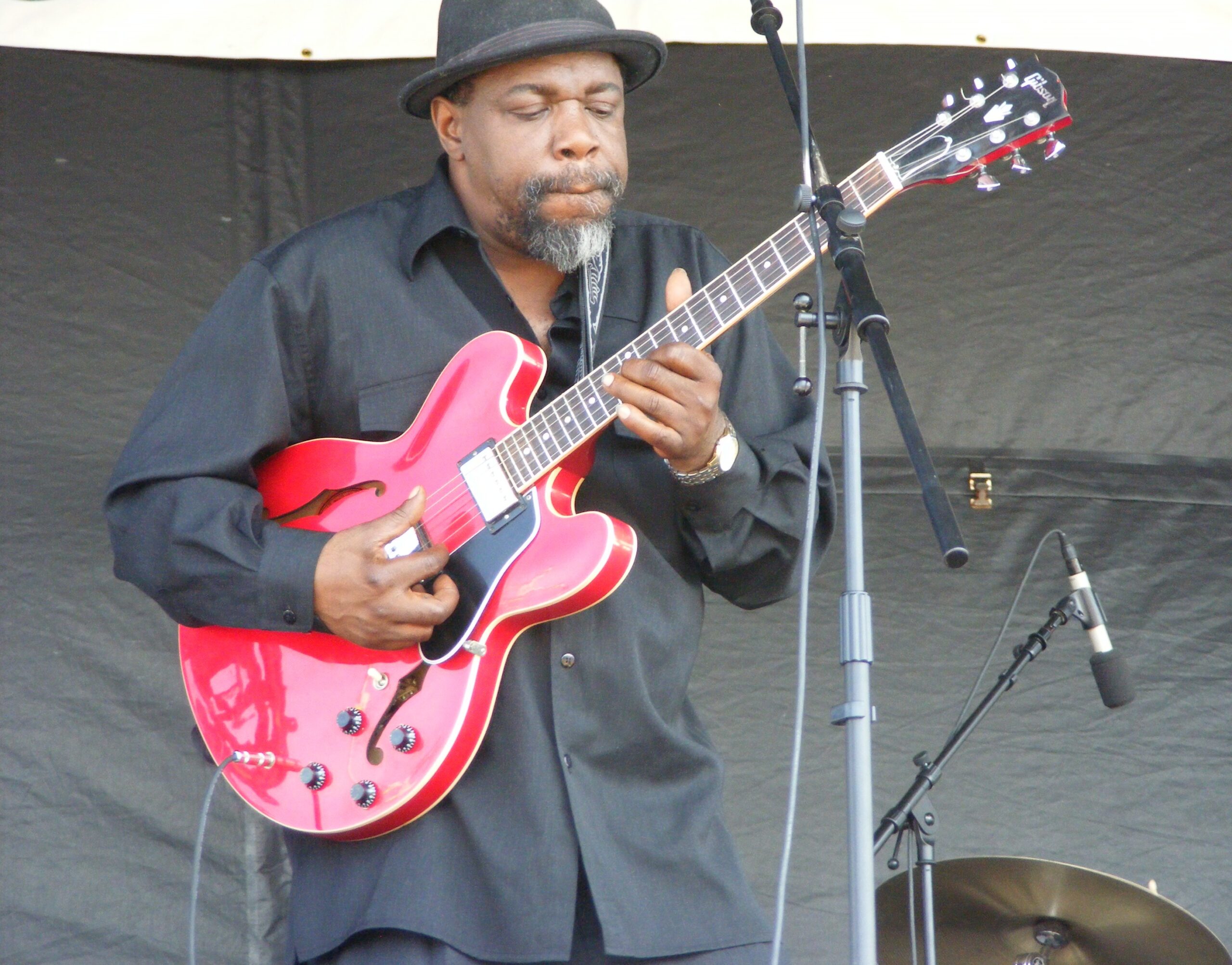
Research Lurrie Bell guitars gear and you encounter the equipment of one of Chicago blues’ most emotionally committed and most dynastically significant guitarists — the son of legendary Chicago blues harmonica player Carey Bell, a musician who grew up literally in the middle of the tradition, absorbed it at the most direct level possible, and who has spent his career both honouring that tradition and bringing to it a raw, physically committed guitar approach that marks him as one of the living tradition’s most urgent and most essential voices. Bell plays with the conviction of someone for whom the blues is not a musical genre but an existential necessity, and his guitar playing — raw, direct, emotionally unguarded — is one of the most honest expressions of the Chicago blues tradition available in contemporary music. His equipment choices reflect the same directness: functional, historically grounded, in service of the emotional content rather than of any tonal sophistication for its own sake.
This guide covers Bell’s complete equipment picture: the Gibson semi-hollow instruments that gave his playing its specific warm, sustained character, the amplification that served the Chicago blues tradition he grew up within, his minimal effects chain, and the playing philosophy of a musician who learned the blues from some of its greatest living practitioners. Understanding Lurrie Bell’s gear is understanding how musical tradition is transmitted through family and community rather than through academic study.
Background
Lurrie Bell was born on December 13, 1958, in Chicago, Illinois, to Carey Bell — one of the most accomplished and most expressive harmonica players in the Chicago blues tradition, who performed and recorded with Muddy Waters, Willie Dixon, and many of the tradition’s founding figures. Growing up in this specific musical household — with the blues not as music heard on the radio but as the professional activity of the parent, with the musicians of the tradition present as regular visitors — gave Lurrie Bell an immersive exposure to the tradition that no formal musical education could replicate.
He began playing guitar as a teenager and developed his approach through direct contact with the musicians of his father’s generation — players including B.B. King, Eddie Taylor, and others who were part of the specific musical community that shaped the Chicago blues tradition from its postwar peak through the contemporary period. This apprenticeship-style musical formation gave him both the specific technical vocabulary of the tradition and the emotional register — the understanding of what the blues was expressing and why — that made his playing immediately authentic rather than technically accomplished but emotionally hollow.
His early professional work included the Sons of Blues — the Chicago group that also featured Billy Branch on harmonica and incorporated blues into a more contemporary musical context while maintaining the tradition’s essential character. The group’s recordings and performances gave Bell his earliest documented professional context and showed his guitar approach at an early stage of its development.
His solo career — sustained through multiple Alligator Records albums and extensive live performance — has produced recordings that are among the most direct and most emotionally unmediated documents of the living Chicago blues guitar tradition. Albums including Merciful Heart (1989), I Am the Blues (2014), and others have shown an artist whose relationship with the blues is as immediate and as personal in maturity as it was in formation.
Lurrie Bell Guitars Gear: The Complete Rig
Guitars
Lurrie Bell’s guitar choices were rooted in the Chicago blues tradition’s specific instrument preferences — the warm, sustaining semi-hollow Gibson instruments that had been central to the Chicago electric blues sound from the late 1950s onward and that gave the amplified guitar its specific character of warmth and presence.
His primary guitar was a Gibson ES-335 — the semi-hollow thinline archtop with PAF-spec humbucking pickups that had been the standard Chicago blues guitar for players from Magic Sam and Otis Rush through Fenton Robinson and beyond. The ES-335’s warm humbucker character and the acoustic resonance of the semi-hollow construction gave Bell’s playing its specific combination of warmth and sustain that suited both the slow blues passages where single notes needed to sustain and develop fully and the more driving blues shuffle material where the fullness of the humbucker character gave the rhythm playing its specific authority.
He also used a Gibson ES-355 — the more elaborate version of the ES-335 with multiple body bindings, split diamond inlay, and the Varitone tone selector — for specific applications where the additional tonal options of the Varitone circuit were useful. The ES-355’s construction was acoustically equivalent to the ES-335, with the Varitone providing additional midrange shaping options that gave access to different tonal characters within the same basic semi-hollow Gibson framework.
His guitars were typically fitted with medium to heavy strings — .011–.052 or heavier — appropriate for the physical playing style and the emotional commitment that his approach to the blues required. Heavy strings under adequate tension sustained more effectively and provided the string mass that gave bent notes their specific singing quality — the bend that kept on giving after the initial attack had passed.
Amps
Bell’s amplification was firmly in the Chicago blues tradition — warm American valve amplifiers that reproduced the specific tonal character of the tradition’s foundational recordings while providing adequate power for the specific acoustic demands of Chicago club performance.
His primary amplifiers included Fender Super Reverb variants — the 4×10 combo that had been the standard professional amplifier for Chicago blues since the early 1960s, with its warm 6L6 character and multiple P10R Jensen speakers providing the specific combination of warmth and spread that suited live Chicago blues performance. The Super Reverb’s natural 6L6 compression at working volume gave the ES-335’s humbucker output its specific sustained, warm quality — the natural compression giving sustained notes their bloom and the 6L6’s harmonic character giving the overall tone its specific warmth.
He also used Fender Bassman amplifiers for their historical authenticity to the specific period of Chicago blues that most directly informed his approach — the late-1950s and early-1960s Bassman sound being as much a part of the specific tonal tradition of Chicago blues as any guitar choice.
Various other vintage American valve amplifiers appeared in his touring and recording work — the consistent priority was warm American valve character at working volume, with the natural compression and warmth of 6L6 or 6V6 output stages contributing to the guitar tone rather than any deliberate drive or distortion.
Effects
Bell’s effects chain was minimal — consistent with the Chicago blues tradition’s emphasis on the direct emotional content of the playing rather than on sonic complexity or tonal variety. The blues tradition he grew up within valued the direct, unmediated communication of the guitar to the listener, and effects that complicated or processed this communication were generally inconsistent with the tradition’s values.
A wah pedal appeared for specific expressive passages where the swept filter effect added appropriate expressiveness to lead guitar lines. His wah use was musical and emotional rather than mechanical — a genuine expressive tool in the blues tradition’s specific vocabulary.
The onboard spring reverb of the Fender amplifiers provided the appropriate atmospheric dimension for Chicago blues guitar — enough spatial dimension to give sustained notes their breathing room without washing out the directness of the playing. His reverb use was moderate and musically appropriate rather than atmospheric to the point of obscuring the specific quality of individual notes.
The natural character of the ES-335 through the Super Reverb or Bassman at working volume was the primary tonal statement — the specific warm, compressed character of this combination at Chicago club volumes providing the guitar’s specific Chicago blues identity without requiring additional processing.
Playing Style & Tone Philosophy
Lurrie Bell’s playing style was defined by the specific quality of emotional directness and physical commitment that characterised the Chicago blues at its most raw and most honest. His guitar playing was not technically spectacular in the conventional sense of the word — it was not harmonically sophisticated, not technically precise in the jazz sense, not stylistically diverse. It was something rarer: completely genuine, completely committed, and completely present in the specific blues emotional register that made the tradition meaningful to its audience.
His bending technique — the specific physical act of pushing or pulling the string to raise its pitch above the fretted note — was characterised by a specific quality of emotional commitment: the bend that didn’t resolve neatly into the target pitch but hovered, strained, yearned toward something not quite reached. This quality of yearning in the bent note was as much a product of the emotional content of the playing as of any specific technical approach to bending, and it was the quality that connected his playing most directly to the Delta and Chicago blues tradition he had absorbed through family and community rather than through academic study.
His vibrato — wide, slow, deeply committed — gave sustained notes their specific character of physical and emotional presence. A Lurrie Bell vibrato was not the controlled, metronomic vibrato of classical guitar technique but the expressive, slightly irregular vibrato of someone communicating an emotional state through the guitar rather than demonstrating a technical skill.
Tonally, his philosophy was the Chicago blues guitarist’s philosophy in its most direct form: the warm, sustaining semi-hollow Gibson through the warm American valve amplifier, at a volume level that allowed the natural character of both instrument and amplifier to contribute to the overall sound. No processing, no complexity, no tonal sophistication — just the specific warm, honest, direct sound of a real guitar played by a real person with real emotional commitment.
How to Sound Like Lurrie Bell
Guitar Approach
A Gibson ES-335 with PAF-spec humbuckers — or a quality modern equivalent — set up with medium to heavy strings (.011–.052) and played with the physical commitment that Bell’s approach required. The most important element is not technical — it is emotional: the willingness to play with complete emotional honesty, to let the blues feeling come through the guitar rather than controlling and managing it. This quality of emotional directness was what Bell had learned from his father and from the musicians of his father’s generation, and it was not a technique that could be learned from an instruction book but only from genuine engagement with the tradition’s values.
Amp Approach
A Fender Super Reverb (4×10, 6L6) at working volume where the natural 6L6 compression contributes to the overall warm, sustained character. Moderate spring reverb for appropriate atmospheric dimension. No additional distortion or gain — the ES-335 into the naturally compressing Super Reverb provided the specific Chicago blues tone without requiring additional processing.
| Control | Setting | Notes |
|---|---|---|
| Volume | 6–8 | Natural 6L6 compression — Chicago blues lives in this zone |
| Treble | 5–6 | Moderate — ES-335 humbuckers provide warmth, treble adds definition |
| Middle | 6–7 | Present mids — Chicago blues authority requires midrange presence |
| Bass | 5 | Moderate bass for warmth without muddiness |
| Reverb | 3–4 | Moderate spring reverb — atmospheric without washing out directness |
Influence & Legacy
Lurrie Bell’s legacy was the specific legacy of a musician who carried the living Chicago blues tradition forward with complete personal commitment and complete emotional authenticity, in a period when the tradition’s survival was as much dependent on individual commitment as on institutional support. His role in the Chicago blues community — as the son of one of the tradition’s great players, as a performing and recording artist, and as a living connection to the tradition’s most important period — was as cultural as it was musical.
His recordings for Alligator Records documented the specific quality of his guitar playing for audiences beyond the Chicago club scene where his music was most directly felt. The Alligator recordings’ consistent commitment to authentic documentation gave these records a quality of directness and honesty that suited both Bell’s specific musical personality and the tradition he represented.
The Sons of Blues connection — the Chicago group that incorporated blues into a contemporary context while maintaining its essential character — showed that the tradition could survive and develop through musicians who were genuinely within it rather than merely observers or imitators. Bell’s role in demonstrating this survival was as significant a contribution as any individual recording or performance.
For players exploring the living Chicago blues tradition that Bell represents, the rigs of Lil Ed Williams — whose slide-based approach showed another dimension of the tradition’s contemporary vitality — and Fenton Robinson, whose more sophisticated melodic approach showed how the tradition could absorb jazz harmonic language without losing its blues identity, provide essential comparison. The family tradition of blues transmission that shaped his formation connects to Jimmy Johnson‘s career, which shows how similar family and community connections shaped another significant Chicago blues guitarist’s development.
The Carey Bell Connection: Blues as Family Heritage
The specific character of Lurrie Bell’s musical formation — learning the blues from within a musical household where the tradition was a living professional practice rather than a historical subject — shaped both his technical approach and his emotional relationship with the music in ways that no external educational path could have replicated. Understanding this formation helps explain why his playing has a quality of emotional immediacy and authentic directness that distinguishes it from players who absorbed the tradition through records and academic study rather than through direct human contact with its carriers.
Carey Bell’s specific musical world — the South Side Chicago blues community of the 1960s and 1970s, with its specific club circuit, its specific professional relationships, and its specific living tradition of musicians who had developed the electric blues from its acoustic Delta roots — was the environment in which Lurrie Bell grew up. The musicians who visited the Bell household, who performed on the South Side circuit, and who interacted with Carey Bell as professional colleagues were the musicians who had made the tradition what it was: players whose specific technical approaches, emotional registers, and musical values were the substance of the tradition rather than its documentation.
This direct contact with the tradition’s living carriers gave Lurrie Bell specific musical knowledge that records alone couldn’t have provided — the specific quality of a vibrato as it was physically produced rather than as it appeared when reproduced through a microphone and a speaker, the specific dynamics of how a guitarist interacted with a harmonica player in the call-and-response tradition that was central to Chicago blues performance, the specific social and emotional function that the blues served in the South Side community that produced it. This contextual knowledge — understanding the blues as a living social practice rather than a musical genre — was the foundation of the emotional authenticity that distinguished his playing from technically accomplished but contextually uninformed blues performance.
The Gibson ES-335 in the Chicago Tradition
The Gibson ES-335’s specific role in the Chicago blues tradition — and why this instrument became so central to the South Side Chicago blues sound that Bell absorbed and carried forward — reflected genuine acoustic appropriateness alongside historical association. The ES-335’s introduction in 1958 coincided with the mature phase of the Chicago electric blues, when the specific combination of electric guitar and amplification had been refined to the point where specific instrument-amplifier combinations reliably produced specific musical results, and the ES-335 was the instrument that most completely served the specific requirements of that tradition.
The PAF humbucker’s specific contribution to this suitability was the primary acoustic factor: the warm, sustained, harmonically complex sound produced by the double-coil winding, the Alnico magnet structure, and the specific loading impedance of the ES-335’s circuit gave the amplified guitar a warmth and fullness that suited both the slow blues passages (where sustained single notes needed to develop and breathe) and the shuffle and boogie material (where the fullness of the humbucker character gave the rhythm playing its physical authority). The semi-hollow construction amplified these qualities through the acoustic resonance of the hollow wing sections — the body’s acoustic contribution adding bloom and warmth to the amplified signal in ways that solid-body alternatives didn’t produce.
Bell’s specific use of the ES-335 — sometimes with neck pickup as primary voice for the warmest, most sustained single-note passages, sometimes with bridge pickup for the more aggressive, driving material — reflected genuine understanding of the instrument’s tonal range and the specific musical purposes each pickup position served. This contextual use of the guitar’s available tonal options, calibrated to the specific emotional and musical requirements of each passage, was as much a product of the tradition’s values as of any abstract technical knowledge.
The South Side Chicago Club Circuit
The specific performance environment of the South Side Chicago blues club circuit — the venues on Chicago’s South Side where Bell came of professional age and where the blues tradition maintained its most authentic living presence — shaped the specific acoustic requirements that his equipment needed to serve. Understanding this environment helps explain why the specific combination of semi-hollow Gibson and warm American valve amplification was acoustically appropriate rather than merely historically conventional.
The South Side blues clubs of the 1970s and 1980s — venues like the Checkerboard Lounge, the Blue Chicago, Biddy Mulligan’s, and the network of bars, supper clubs, and dance halls that constituted the South Side blues circuit — were acoustic environments of specific character. Typically small to medium rooms with brick walls, linoleum floors, and close audience proximity to the bandstand, these venues produced a specific acoustic quality of directness and immediacy that gave the live blues performance its particular character. The guitar needed to be loud enough to fill the room while remaining musical — not overwhelming the audience but filling their physical space with the presence that the tradition required — and the specific amplification choices that served this requirement in these specific rooms were not necessarily the same as the choices that served stadium rock or recording studio contexts.
The Fender Super Reverb’s four-speaker configuration — spreading the acoustic output across a wider angle than a single larger speaker would have produced — gave the guitar a specific acoustic presence in the room that suited the club context: present everywhere in the room rather than projecting from a single acoustic source. This quality of room-filling presence without a single directional focus was appropriate to the specific intimate character of the blues club, where the audience surrounded the bandstand rather than facing it from a single direction.
Emotional Authenticity as Musical Achievement
The specific quality of emotional authenticity that distinguished Bell’s playing from technically accomplished but less genuine blues performance deserves examination as a genuine musical achievement rather than merely a personal characteristic — understanding why emotional authenticity in blues guitar playing required specific technical development and specific musical knowledge illuminates both the value of the quality and the specific ways that his equipment and approach served it.
Emotional authenticity in blues playing was not merely the result of feeling the music strongly — many players who felt the music strongly were unable to communicate that feeling through the guitar in ways that listeners could receive and respond to. The specific techniques that converted personal emotional states into communicable musical content — the specific bending approaches that corresponded to specific emotional qualities, the specific vibrato styles that communicated different emotional registers, the specific harmonic and rhythmic approaches that created the emotional contexts within which the lead lines spoke — required genuine technical development through sustained engagement with the tradition.
Bell’s specific technical approach — the wide, committed vibrato, the bending technique that captured specific emotional qualities, the rhythmic and harmonic vocabulary of the Chicago blues tradition — was the result of years of direct engagement with the tradition and its practitioners, and was as genuinely technical in its demands as any more conventionally prized form of guitar virtuosity. The emotional authenticity that listeners heard in his playing was the product of this genuine technical development rather than of natural gift alone, and the equipment that served it — the warm, sustaining ES-335 through the naturally compressing Super Reverb — provided the acoustic conditions within which this technical development produced its most complete musical expression.
Lurrie Bell’s career — the decades of professional performance, the Alligator recordings, the role within the specific South Side Chicago blues community, and the continuation of a family tradition that connected him directly to the tradition’s most important period — represented one of the most genuine expressions of the living Chicago blues available in contemporary music. His equipment: the warm, semi-hollow Gibson through the naturally compressing American valve amplifier, with minimal processing and with the playing itself rather than the technology providing the emotional content — was chosen with the same directness and the same honesty that had always characterised his music. The gear served the blues; the blues served the tradition; and the tradition served the people of the South Side of Chicago and beyond who had always needed what the blues was for. That is the complete Lurrie Bell gear story.
The specific call-and-response dynamic between guitar and harmonica that was central to the Chicago blues tradition — and that Bell had learned directly through his father’s harmonica playing — shaped the specific way his guitar functioned within the blues band context. In the Chicago blues tradition, the relationship between lead guitar and harmonica was one of the most important musical dialogues: the harmonica player stated a phrase, the guitar responded; the guitar stated a phrase, the harmonica responded. This call-and-response dialogue required the guitar to function not as a solo instrument but as a conversational one — to listen to the harmonica’s specific phrase character and respond with something that completed or extended or commented on what the harmonica had said, rather than simply playing the next phrase in its own melodic sequence. The equipment that served this conversational function needed to be warm and present enough to be clearly audible in the dialogue without overwhelming the harmonica’s own presence — the ES-335’s warm humbucker character and the Super Reverb’s four-speaker spread provided exactly this quality of audible presence without dominance. Bell’s understanding of this conversational guitar role — developed through direct musical engagement with harmonica players including his father — was as important to his specific playing approach as any purely guitar-technical knowledge.
The wah pedal’s specific expressive role in Bell’s blues playing — used for genuine emotional expression rather than as a tonal colour or a rhythmic effect — illustrated the specific way the blues tradition used the wah as a functional extension of the guitar’s expressive vocabulary. In the blues context, the wah’s swept bandpass filter produced a quality of vocal expressiveness — the consonant-vowel quality of the filter’s movement approximating specific speech sounds — that served the tradition’s fundamental value of guitar-as-voice. Bell’s use of the wah for specific lead guitar passages where this vocal expressiveness was musically appropriate — not as a constant colour or a habitual addition but as a specific expressive tool for moments that called for it — reflected both his knowledge of the tradition’s specific vocabulary and his musical intelligence about when that vocabulary served the music and when it didn’t. The wah in his hands was not an effects pedal in the conventional sense but an extension of the guitar’s expressive range into the specifically vocal dimension that the blues had always valued above all others.
The B.B. King influence on Bell’s playing — King being one of the most significant figures in the Chicago blues tradition and one of the musicians whose example shaped Bell’s musical formation — was as much a tonal and equipment influence as a purely musical one. King’s consistent use of Gibson semi-hollow instruments (particularly the ES-355 and his custom Gibson “Lucille” without f-holes) through warm American valve amplification established a specific tonal standard for the tradition’s most emotionally sophisticated lead guitar playing, and Bell’s similar instrument and amplifier choices reflected both his respect for this standard and his genuine understanding of why King’s equipment choices produced the specific tonal character that the emotionally sophisticated end of the Chicago blues tradition required. The ES-335 was not the only guitar available for Chicago blues, but it was the guitar whose acoustic properties — warmth, sustain, acoustic resonance — most completely served the emotional range that the tradition at its most sophisticated required. Bell’s consistent use of semi-hollow Gibson instruments reflected this understanding as much as it reflected specific admiration for King’s example.
The I Am the Blues album (2014) — Bell’s most recent major Alligator Records release at the time of this guide — provided the most comprehensive and most tonally direct documentation of his guitar approach at its most mature and most fully developed. The album’s title — a statement of identity rather than of category — captured the specific quality of his relationship with the blues that distinguished his playing from technically accomplished but personally detached blues performance: the blues was not a genre he worked in but an identity he inhabited. The guitar sounds on the album reflected this identity — the ES-335 warmth and the Super Reverb compression captured with the documentary honesty that Alligator’s recording approach consistently provided — and gave listeners the most complete available document of how his specific equipment combination, played with his specific emotional commitment, produced the specific quality of Chicago blues guitar that the living tradition required at its most honest and most essential.
The mental health challenges that Lurrie Bell faced during parts of his career — well-documented in accounts of his life and acknowledged in the broader blues community’s recognition of his struggles — shaped his musical biography in ways that contributed to the specific emotional intensity that listeners heard in his playing. Music as a vehicle for processing difficult emotional experience — the blues’ most fundamental value — was not merely a theoretical principle in his case but a lived musical practice that gave his guitar playing its specific quality of unguarded emotional directness. The equipment that served this emotional directness — the warm, sustaining ES-335 through the Super Reverb — was in service of an emotional authenticity that had been tested by genuine life experience rather than merely performed as a stylistic choice. Understanding the equipment requires understanding the music; understanding the music requires understanding the life; and understanding the life requires acknowledging that the blues was a genuine cultural response to genuine human difficulty rather than a musical genre that could be separated from its emotional and social context. Bell’s playing was as honest about this connection as any in the living blues tradition.
The Alligator Records relationship that documented the most significant portion of Bell’s recorded career was as important to his legacy as the specific musical qualities that the recordings documented. Bruce Iglauer’s consistent commitment to authentic blues recording — to capturing musicians in their natural performing character rather than through elaborate studio production — gave the Bell recordings their specific quality of honest documentation. The guitar sounds on these records were not the product of sophisticated studio processing but of real instruments played by a real musician in appropriate acoustic environments, captured with the directness that suited both the tradition’s values and Bell’s specific musical personality. This documentary approach — more unusual in contemporary recording than it might appear — gave the records a permanence and an integrity that more heavily processed productions often lacked, because the specific acoustic truth of Bell’s ES-335 through his Super Reverb at working volume was not something that could be exactly replicated through studio processing of a different starting point. The recordings were authentic because the recording approach was authentic, and the authentic recording approach was itself a form of equipment choice — the choice of how to capture the music being as significant to the final result as the physical instruments and amplifiers that produced the sound before the microphones.
The living Chicago blues tradition that Bell represented — not as a historical recreation but as a genuinely living musical practice sustained through family connection and community engagement — was one of American music’s most important cultural resources, and his role in maintaining and extending it through his career was as significant as any more commercially prominent musical achievement. The equipment he used: the warm, semi-hollow ES-335, the naturally compressing Super Reverb, the minimal effects chain that let the playing carry the emotional content — was the appropriate physical expression of the tradition’s values and the appropriate acoustic foundation for the emotional authenticity that made his playing matter. That appropriateness — the equipment being exactly right for exactly this music, this tradition, and this musician — was ultimately the highest standard to which any guitarist’s equipment could aspire, and Lurrie Bell’s career demonstrated it with complete and genuine conviction across six decades of living the blues.
The ES-355’s Varitone selector — the six-position rotary switch that Gibson added to differentiate the ES-355 from the ES-335 — gave Bell additional tonal shaping options beyond the standard humbucker output and tone control of the ES-335. The Varitone worked by switching different capacitors into the signal path, each creating a notch filter at a specific frequency and reducing the guitar signal’s content at that frequency. The six positions produced progressively deeper cuts at different frequencies, ranging from essentially unaffected (position one) through subtle high-frequency reduction to significant midrange notching. For Bell’s playing, the Varitone offered additional voice within the basic ES-335/355 tonal character — a slightly scooped midrange character for specific passages where the standard humbucker’s midrange emphasis was more prominent than the material required, or a darker character for specific slow blues passages where the reduced high-frequency content gave the sustained notes a more intimate, introspective quality. The Varitone was one of those period-specific features that Gibson subsequently discontinued, which meant that the specific tonal options it provided were available only through vintage instruments or custom reproductions of the period-correct design. Bell’s use of the ES-355 with Varitone reflected his willingness to engage with the full tonal range of the instruments in his collection rather than using only the standard settings that the ES-335 provided without modification.
The broader context of Chicago blues family dynasties — of which the Bell family was one of the most significant examples — is worth noting as part of the cultural context for understanding Lurrie Bell’s musical formation and equipment approach. The blues tradition’s transmission through family and community relationships rather than through formal educational institutions gave it a quality of cultural continuity that formal education couldn’t fully replicate. The Bells, the Kings (Albert and B.B. being cousins), the Taylor family (Hound Dog Taylor and Eddie Taylor being part of the South Side community network), and other family and community connections formed a web of musical transmission that sustained the tradition through generational change by ensuring that each new generation had direct access to the knowledge and values of the preceding one. Lurrie Bell’s position within this web — as Carey Bell’s son, as a musician whose formation included direct contact with many of the tradition’s important figures — was as much a cultural inheritance as a personal biography, and the specific guitar approach and equipment choices that resulted from this formation were as much the expression of a cultural tradition as of an individual musical personality. The gear served the person; the person carried the tradition; and the tradition was worth carrying.
The specific way the Fender Bassman’s cathode-follower tone stack produced its characteristic frequency response — different from the later blackface Fender amplifiers’ modified tone stack — is worth noting as part of the complete acoustic picture of Bell’s amplification approach. The early Bassman (tweed versions from the late 1950s) used a cathode-follower configuration before the tone controls, which produced a specific interaction between the tone controls that the later blackface designs didn’t replicate. The bass control in particular had a broader, more musical response in the cathode-follower circuit, producing bass boost that was warm and rounded rather than narrow and tubby. This specific frequency response gave the tweed Bassman a characteristic warmth that suited blues guitar particularly well — full in the low midrange without being muddy, with the specific natural compression of the 6V6 output valves (in smaller Bassman models) or 6L6 (in the larger versions) adding harmonic richness to the sustained notes that bell’s single-note blues playing required. His use of the Bassman for its historical authenticity to the period of Chicago blues that most directly informed his approach reflected genuine understanding of these specific acoustic differences between the Bassman’s circuit and later Fender designs, and his ability to articulate this preference — or to identify it through listening rather than through circuit analysis — reflected the same depth of practical equipment knowledge that characterised the best musicians of the Chicago blues tradition.
Frequently Asked Questions: Lurrie Bell Guitars & Gear
What guitar does Lurrie Bell play?
Lurrie Bell’s primary guitars are Gibson semi-hollow instruments — the ES-335 (semi-hollow thinline with PAF-spec humbuckers) and the ES-355 (more ornate ES-335 variant with Varitone tone control). His instrument choices reflect the Chicago blues tradition’s standard guitar preferences, chosen for the warmth, sustain, and acoustic resonance that his direct, emotionally committed playing approach required. He typically used medium to heavy strings (.011–.052 or heavier) appropriate for the physical playing style.
What amp does Lurrie Bell use?
His primary amplifiers are vintage-style Fender combos — the Fender Super Reverb (4×10, 6L6, Jensen P10R) and Fender Bassman (4×10) that were the standard professional Chicago blues amplifiers of the tradition’s formative period. His amplification philosophy consistently prioritised the natural warmth and compression of American 6L6 valve amplification at working volume, without additional gain or processing.
Who is Carey Bell and what is his connection to Lurrie Bell?
Carey Bell (1936–2007) was one of the most accomplished and most expressive harmonica players in the Chicago blues tradition — a musician who performed and recorded with Muddy Waters, Willie Dixon, and many of the tradition’s founding figures. He was Lurrie Bell’s father, and growing up in Carey Bell’s musical household — with the blues as the professional activity of the parent rather than music heard on the radio — gave Lurrie an immersive early exposure to the tradition that shaped both his guitar playing and his deep personal commitment to the blues.
What effects does Lurrie Bell use?
His effects chain is minimal: a wah pedal (for specific expressive lead guitar passages) and the onboard spring reverb of his Fender amplifiers (for moderate atmospheric dimension). The primary tonal statement was the ES-335 through the Super Reverb or Bassman at working volume — the natural warmth and compression of this combination provided the specific Chicago blues guitar character without requiring additional processing.
What was the Sons of Blues?
The Sons of Blues was a Chicago blues band that featured Lurrie Bell on guitar and Billy Branch on harmonica, performing blues with a more contemporary edge while maintaining the tradition’s essential character. The group’s work in the 1970s and 1980s showed that the Chicago blues tradition could reach younger audiences through musicians who were genuinely within the tradition rather than merely imitating it from the outside.
What are Lurrie Bell’s most important recordings?
His solo albums for Alligator Records — including Merciful Heart (1989) and I Am the Blues (2014) — are the most direct documentation of his guitar approach and his emotional commitment to the blues tradition. These recordings showed both the raw, direct quality of his playing style and the specific character of his guitar setup — the ES-335 warmth through the Super Reverb natural compression — in the most honest acoustic contexts available in the contemporary blues recording world.
How did Lurrie Bell learn the blues?
Bell learned the blues through direct family and community contact with the tradition’s living practitioners — his father Carey Bell’s professional musical activity, the musicians of his father’s generation who visited the Bell household and who performed in the Chicago blues scene Bell grew up within, and the specific apprenticeship-style musical formation that was the tradition’s primary method of transmission. This direct contact with the tradition’s human carriers gave him both the specific technical vocabulary and the emotional register — the understanding of what the blues expressed and why — that distinguished genuinely formed blues musicians from those who learned the tradition through records and instruction alone.
Genre:
Chicago Blues
Decades:
1970s | 1980s | 1990s | 2000s | 2010s | 2020s
Related stories
Yngwie Malmsteen Guitars & Gear: The Complete Guide to the Shred Master’s Rig
Yngwie Malmsteen's guitars, amps, and effects — the complete guide. The Duck Stratocaster, scalloped fretboard, Marshall wall, DiMarzio HS3, and how to nail that neoclassical metal tone.
Sylvain Sylvain Guitars & Gear: The Complete Guide to the New York Dolls’ Gretsch, Les Paul Junior & Automatic Guitar Proto-Punk Rig
Sylvain Sylvain guitars & gear: New York Dolls guitarist. Les Paul Junior 'automatics', Gretsch Golden Anniversary, white Les Paul Custom stolen by Steve Jones — proto-punk tone.

Ted Nugent Guitars & Gear: The Complete Guide to the Motor City Madman’s Byrdland Rig
Ted Nugent guitars & gear: the Motor City Madman's Byrdland rig. 12 vintage Gibson Byrdlands, Fender Twin Reverbs, Peavey 6505, zero effects, and the Stranglehold tone.