Bill Nelson (Be-Bop Deluxe) Guitars & Gear: The Complete Guide to the Art Rock Visionary’s 80-Guitar Collection and Amp-Free Rig
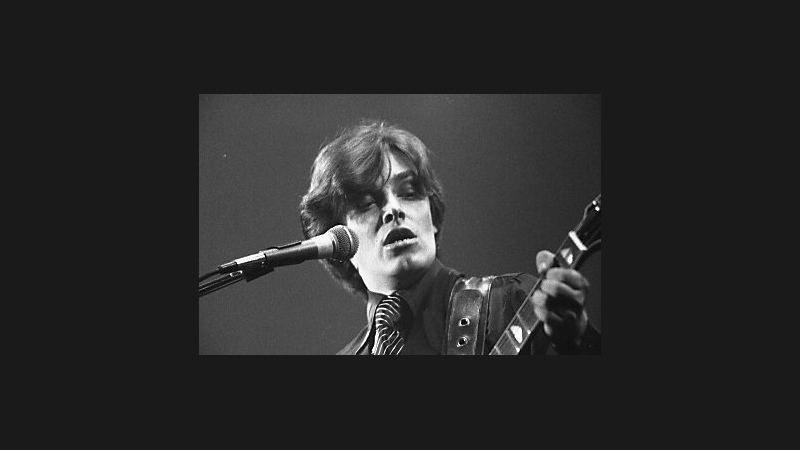
Bill Nelson in a historical performance portrait. Photo: “Bill Nelson, guitarist, Be Bop Deluxe” by Jean-Luc, via Wikimedia Commons, CC BY-SA 2.0 (https://creativecommons.org/licenses/by-sa/2.0/). Original frame retained at native size; neutral background added and JPEG re-encoded. Adaptation: CC BY-SA 2.0. Source: https://commons.wikimedia.org/wiki/File:Bill_Nelson,_guitarist,_Be_Bop_Deluxe.jpg
“A guitarist has a greater purpose.” Bill Nelson said this to Music Republic Magazine — and then elaborated: “There are thousands of players with flashy technique that make music that means nothing and goes nowhere. To be a good guitarist, you have to be able to see beyond the guitar.” The man who said this has eighty guitars. He has not used a guitar amplifier in years. He records direct into a Line 6 POD 2 — “for some reason, I prefer the sound of the early ones” — sometimes supplemented by a Fractal Axe-FX II XL, a Line 6 POD HD500, a Digitech Valve FX, a Zoom 2030S, a Boss ME-50, and a Korg Toneworks AX-10A. The most precious guitar he owns is a Gibson ES-345 that his father bought him in the early 1960s: “My dad bought it for me in the early ’60s and it’s a wonderful guitar, but I rarely take it out of the house.” He has eighty guitars. He records without amplifiers. He sees beyond the guitar. In 1981, he sold Vini Reilly the four-track Teac tape machine that Reilly used to record LC in five hours — one of the most consequential equipment sales in independent British music. The LC album is extraordinary. The Teac tape machine came from Bill Nelson. The eighty guitars are in Wakefield. He is still recording. He always will be.
William Nelson was born on December 18, 1948, in Wakefield, West Yorkshire, England. He formed Be-Bop Deluxe in Wakefield in the early 1970s — a band that released six studio albums (Axe Victim, 1974; Futurama, 1975; Sunburst Finish, 1976; Modern Music, 1976; Live! In the Air Age, 1977; Drastic Plastic, 1978) before disbanding in 1978. Be-Bop Deluxe merged glam rock, art rock, and experimental rock with Nelson’s virtuosic guitar playing — what Guitar World calls “some of the tastiest yet off-kilter shred heroics of the ’70s.” After disbanding Be-Bop Deluxe, Nelson formed Bill Nelson’s Red Noise and pursued an increasingly electronic and ambient direction through dozens of solo albums (Guitar World: “he often drops several albums in a year”). He has been compared to Robert Fripp, Roxy Music, and the broader British art rock tradition within which he exists as one of the most prolific and most consistently visionary figures. He is seventy-six years old. He still has the ES-345. He still uses the POD 2. He still has a greater purpose.
Background: Wakefield Yorkshire, Be-Bop Deluxe 1972-1978, Art Rock Pioneer, Vini Reilly’s Teac Machine, 80 Guitars, No Amps for Years
Be-Bop Deluxe’s specific position in the British art rock tradition is simultaneously foundational and underappreciated — a band that existed in the same creative space as Roxy Music and David Bowie but without the same level of mainstream commercial recognition, whose catalog documents a guitarist of genuine virtuosity applying his skills to compositionally sophisticated, experimentally-oriented art rock. The trajectory from Axe Victim (1974) — which Guitar World characterizes as the beginning of Be-Bop Deluxe’s “guitar-forward” sound — to Drastic Plastic (1978), with its incorporation of newly available synthesizer technology (including the Hagstrom Patch 2000 synth-guitar, one of the first guitar-to-synthesizer interfaces), documents a musician who consistently moved toward the most advanced available technology in pursuit of new musical possibilities.
His Vini Reilly connection is the most historically consequential non-musical event in his career: selling the four-track Teac tape machine that enabled the recording of LC (1981) — the Durutti Column album that Reilly recorded spontaneously in five hours. “I had no real plans for a second album. Then one day, guitarist Bill Nelson sold me a four-track Teac tape machine.” The specific causal chain: Nelson sells Reilly a tape machine → Reilly records LC in five hours → LC becomes “a masterpiece of spontaneous creativity.” Nelson’s equipment sale produced a masterpiece. He may not have known it at the time. He knows it now.
His eighty-guitar collection is the most extensive single musician’s guitar inventory documented in this entire guide. “The most precious guitar I own” (per the Guitar World 2023 interview title context) is the Gibson ES-345 his father bought him in the early 1960s — “I’d never sell it.” The collection includes the Yamaha SG2000 from the Be-Bop Deluxe era, the D’Angelico New Yorker built by the Vestax company in Japan, and dozens of other instruments accumulated across a sixty-year guitar career.
The “no amps for years” position — “he hasn’t used guitar amps for years” (Guitar World 2023 headline) — is the final and most unexpected development in a career of consistent unexpected developments. The man who began with a Rosetti Lucky Seven (3 watts, his “very first amp”), moved to a Vox AC30 (“my first serious amplifier”), used tube amps through the Be-Bop Deluxe period, and then gradually transitioned to direct recording through modeling processors now records exclusively without amplifiers. The Line 6 POD 2’s analog-modeled tones, captured without mic-ing a cab, are his primary recording tool. The early POD 2, specifically: “for some reason, I prefer the sound of the early ones.”
The Rig: Bill Nelson’s Guitars and Equipment
Guitars
Gibson ES-345 (Most Precious Guitar — Father Bought in Early 1960s, “Never Sell It”): Bill Nelson’s most historically significant guitar is the Gibson ES-345 that his father bought him in the early 1960s — before Be-Bop Deluxe, before his professional career, before the eighty-guitar collection. Vintage Guitar confirms: “My ES-345 is still with me and I’d never sell it. My dad bought it for me in the early ’60s and it’s a wonderful guitar, but I rarely take it out of the house.” The Gibson ES-345 is the upgraded version of the ES-335 — semi-hollow, with the Varitone selector switch that provides different frequency-filtering options, and the stereo-capable wiring that the 345 designation indicates. Its specific character: the warm, full-bodied semi-hollow tone of the ES-335 family with the additional tonal variety of the Varitone circuit. A guitar bought by a father for a son in the early 1960s, still in his collection sixty years later, never sold. The most precious guitar, rarely taken from the house.
Yamaha SG2000 (Be-Bop Deluxe Era Primary Electric): The Vintage Guitar interview confirms the Yamaha SG2000 as the Be-Bop Deluxe era primary guitar. The Yamaha SG2000 — a high-quality Japanese solid-body guitar that competed directly with the Gibson Les Paul in the mid-1970s (Tony Iommi also used Yamaha SG2000s as a Les Paul substitute after his original Les Pauls were stolen) — provided the specific combination of warmth, sustain, and tonal versatility that Be-Bop Deluxe’s music required. Its Japanese construction quality (exceptional for the period) and its Les Paul-adjacent tonal character gave Nelson a professional-quality primary electric that served the band’s art rock guitar hero requirements.
D’Angelico New Yorker NYS-33 (Vestax Japan-Built, Mother-of-Pearl Inlays): The Guitar World 2024 “guitar tour” interview documents the D’Angelico New Yorker: “This D’Angelico New Yorker model, which Bill refers to as an NYS-33 designation, was built for the guitarist by the Vestax company in Japan and features decorative appointments including mother-of-pearl inlays on the fretboard and headstock.” The D’Angelico name — originally associated with John D’Angelico, the master New York archtop luthier who produced guitars from 1932 to 1964 — was revived as a production brand; Nelson’s NYS-33 is a Vestax-produced version with the specific ornate appointments (mother-of-pearl inlays on both fretboard and headstock) that reflect the D’Angelico aesthetic tradition. It was used for the recording that the Line 6 POD 2 fixed when the live recording of “Modern Music” had a guitar cable fault.
Hagstrom Patch 2000 Synth-Guitar (Drastic Plastic Album, Early Synth-Guitar Adopter): The Equipboard documentation captures Nelson’s own description of his early technology adoption: “I soon added other synths, including a Solina String Machine and a Yamaha CS70M. I also was an early adopter of drum machine technology and synth-guitars. (I had one of the first Hagstrom Patch 2000 synth-guitars which I used on the ‘Drastic Plastic’ album.)” The Hagstrom Patch 2000 was one of the first commercially available guitar synthesizer interfaces — a system that converted guitar string vibrations to synthesizer control signals, allowing the guitar to trigger synthesized sounds. On Drastic Plastic (1978), Be-Bop Deluxe’s final album, the incorporation of the Hagstrom Patch 2000’s synthesizer textures documents Nelson’s specific positioning at the intersection of guitar virtuosity and the emerging synthesizer technology that would reshape popular music in the early 1980s.
80 Guitar Collection (Total Documented): Guitar World’s 2023 interview headline confirms: “Bill Nelson has 80 guitars.” The specific inventory of all eighty is not available in public sources, but the known instruments — Gibson ES-345, Yamaha SG2000, D’Angelico New Yorker, and the assorted instruments discussed in his various interviews — represent the publicly documented portion of a collection that spans sixty-plus years of guitar acquisition. His guitar collection is the physical record of a career of genuine guitar love: not a curator’s investment strategy but a musician’s accumulation of instruments that have captured his heart, served his music, and remained with him through decade after decade of creative work.
First Amplifiers (Historical)
Rosetti Lucky Seven (Very First Amp, 3 Watts): The Equipboard documentation captures Nelson’s own amplifier history: “BN — well, my first serious amplifier was a Vox AC30, which was back in the ’60s, I wish I still had it now, but it certainly wasn’t powerful enough — before that I had a little Rosetti Lucky Seven amp which was about three watts or something.” The Rosetti Lucky Seven — a British-made 3-watt amplifier associated with the very beginning of British pop music in the late 1950s and early 1960s — is the absolute beginning of his amplification journey: a 3-watt amp for a guitarist who would eventually develop an eighty-guitar collection and then abandon amplifiers entirely.
Vox AC30 (First Serious Amplifier, 1960s — “I Wish I Still Had It”): The Vox AC30 — the British EL84 combo that defines the British Invasion guitar tone — was Nelson’s “first serious amplifier” in the 1960s. His Equipboard quote: “I wish I still had it now, but it certainly wasn’t powerful enough.” The same Vox AC30 that defined the Beatles’ guitar tone, the Rolling Stones’ Telecaster sound, and the entire British Invasion aesthetic was the same amplifier that Nelson used as his transition from the Rosetti Lucky Seven to professional-level amplification. He doesn’t have it anymore. He wishes he did.
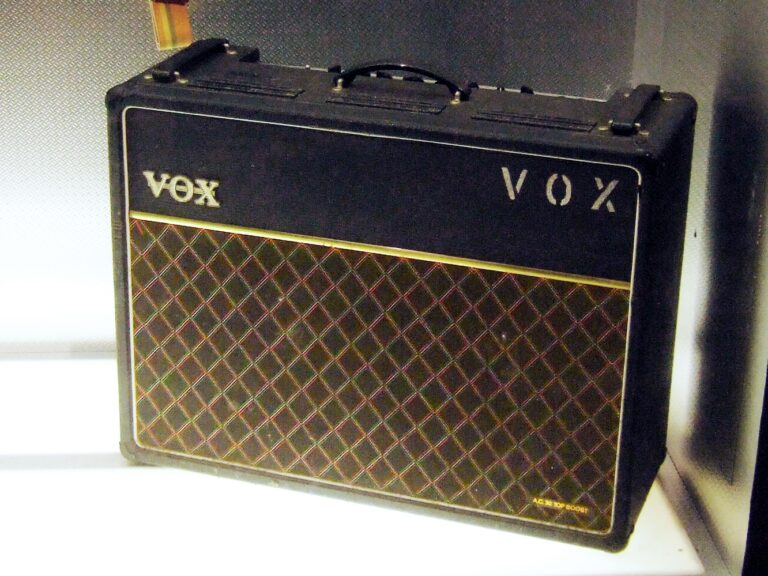
Be-Bop Deluxe Era Tube Amps (70s Period, Pre-Direct Recording): Between the Vox AC30 and his transition to direct recording, Nelson used tube amplifiers through the Be-Bop Deluxe period and into his subsequent solo career. The specific models are not extensively documented, but Guitar World’s characterization of the Be-Bop Deluxe recordings as “guitar-forward… shred heroics of the ’70s” confirms the tube amplifier approach of that era — the guitar-into-amp foundation of British art rock guitar playing.
Current Recording and Effects Rig (No Amps)
“No Guitar Amps for Years” — Line 6 POD 2 as Primary Recording Tool: The Guitar World 2023 headline — “Bill Nelson has 80 guitars, but ditched amps a long time ago” — captures the specific paradox of his current approach: eighty guitars, no amplifiers. His own explanation to Vintage Guitar: “Do you record guitars direct? Yes, without any mic’ing of amps or cabs. I mostly use a Line 6 Pod 2; for some reason, I prefer the sound of the early ones.” The Line 6 POD 2 — the second-generation “bean”-shaped analog modeling processor that was the foundational consumer-accessible digital guitar recording tool of the early 2000s — is his primary recording signal chain. The specific preference for “the early ones” reflects a nuanced evaluation of the POD 2’s different production runs: early units may have had slightly different component specifications that affected the specific character of the modeling.
The proof-of-concept story from Guitar World: “I had to replace five bars of guitar in the middle of the introduction to the song [‘Modern Music’], and I was in the studio but I had no amp with me. There was a little Line 6 unit and a budget Epiphone ES-345. So I dialed up the sound on the Line 6 POD, found the sound and fixed the flaws. And once I was done, you couldn’t tell the difference.” The replacement bars blended seamlessly with the 1977 original recording. This is the specific technology argument for amp modeling: when a guitarist of Nelson’s quality uses a Line 6 POD to fix a 1977 live recording flaw, and the result is indistinguishable from the original tube amp recording, the modeling technology has demonstrated its adequacy.
Complete Current Effects Inventory (His Own Words): The Equipboard documentation captures Nelson’s own complete effects inventory: “I still have and use my Line 6 Pod II but also have a Line 6 Pod HD500, a Digitech Valve FX, a Zoom 2030S, a Boss ME-50, a Korg Toneworks AX-10 A and a Fractal Audio AXE FX II XL guitar processor, plus several stand alone analogue pedals.” This is the most comprehensive self-documented effects inventory in this guide — seven specific named units plus additional standalone pedals. The range from the early-preference Line 6 POD 2 to the professional-grade Fractal Axe-FX II XL documents a musician who has explored the full range of available direct recording and modeling technology and maintained relationships with multiple units for different applications.
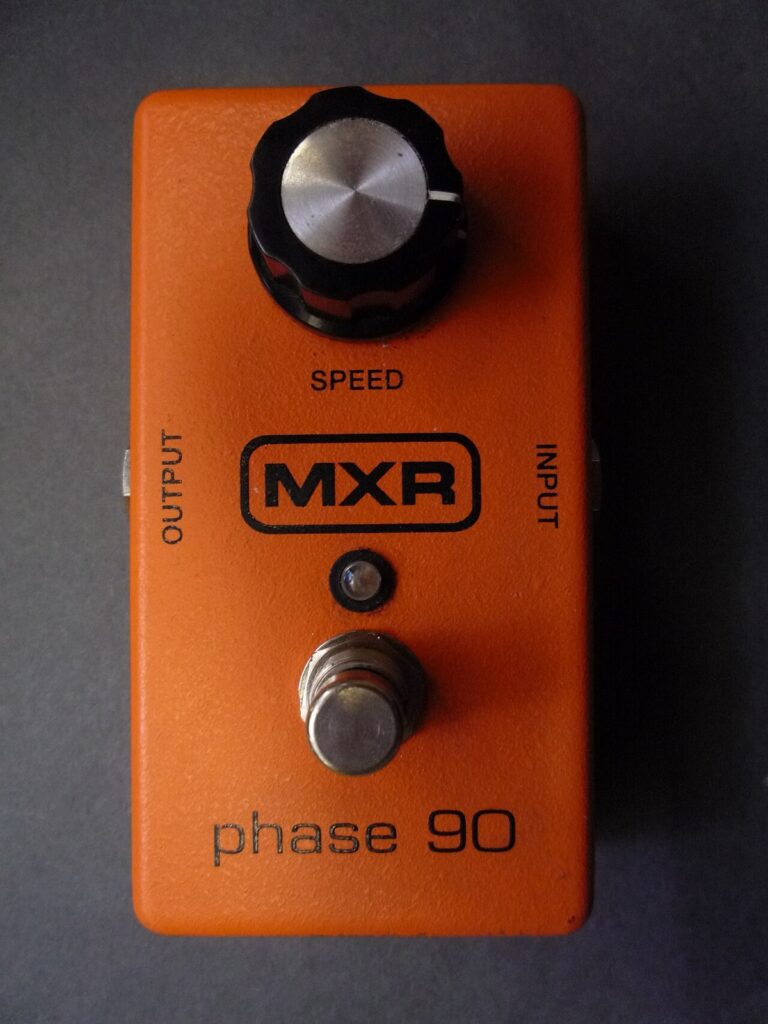
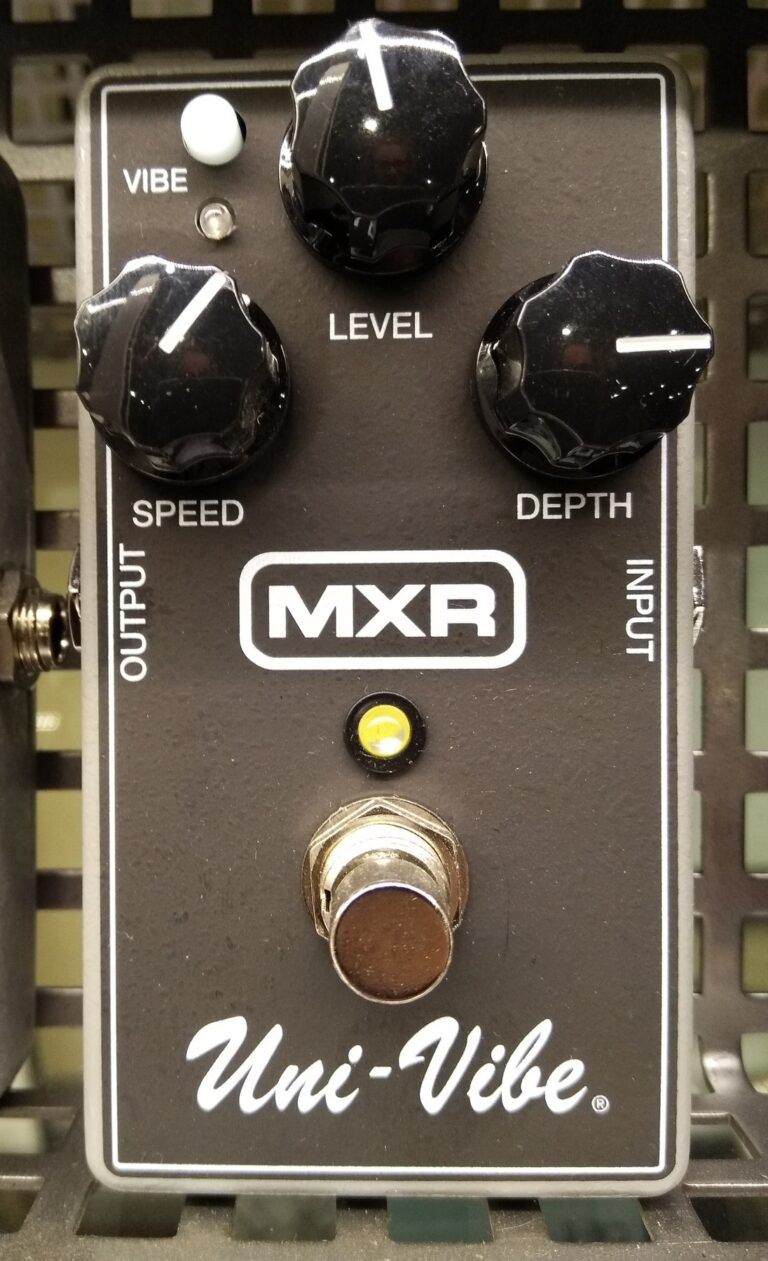
Univibe and MXR Phase 90 (Be-Bop Deluxe Period, “Sister Seagull”): The Equipboard documentation captures his specific memory of the Be-Bop Deluxe period effects: “The modulation effect on ‘Sister Seagull,’ (if I remember back so many long ago years,) was a Univibe and an MXR Phase 90.” The Univibe — the optical phase shifter/chorus developed by Shin-ei in the late 1960s and associated with Jimi Hendrix’s “Machine Gun” and related psychedelic guitar sounds — combined with the MXR Phase 90 (the simple, direct four-stage phaser) produced the specific modulated, swirling character of “Sister Seagull.” His parenthetical “(if I remember back so many long ago years)” reflects the specific quality of guitar memories fifty years after the fact: approximate but specific.
Line 6 M5 (Given by Reeves Gabrels, Ongoing Recording Collaboration): The Vintage Guitar interview documents: “I’ve also recently been using a Line 6 M5 stompbox modeler that Reeves Gabrels gave me. Some of the filters and sequenced tremolo effects in the M5 are interesting. Reeves and I are recording an album together, too.” Reeves Gabrels — the American guitarist associated with David Bowie’s Tin Machine and subsequent collaborations — gifted Nelson the Line 6 M5, and the two are documented as recording collaborators. The M5’s filters and sequenced tremolo are specifically noted as interesting — consistent with Nelson’s lifelong interest in unusual modulation effects.
Solina String Machine and Yamaha CS70M (Early Synthesizer Adoption): “I soon added other synths, including a Solina String Machine and a Yamaha CS70M.” The Solina String Machine — an ensemble keyboard producing lush string pad sounds — and the Yamaha CS70M — a polyphonic synthesizer — document Nelson’s parallel adoption of synthesizer technology alongside his guitar work in the late 1970s. His position as an “early adopter of drum machine technology and synth-guitars” through the Drastic Plastic period reflects the specific creative moment when rock musicians were first encountering the synthesizer technology that would reshape popular music.
Playing Style & Tone Philosophy
Bill Nelson’s playing style is the most philosophically complete in this entire guide — a musician who has articulated a complete theory of what a guitarist should be (“a guitarist has a greater purpose”), what technique is for (“not the be-all and end-all”), and what the goal of guitar playing is (“to be able to see beyond the guitar”). His playing — from the virtuosic, shred-inflected art rock of Be-Bop Deluxe to the atmospheric, ambient, electronic-influenced solo work — consistently reflects the specific application of technical ability in service of musical vision rather than as an end in itself.
His tone philosophy has evolved from the Vox AC30’s British tube warmth (1960s) through the tube amp approach of the Be-Bop Deluxe period (1970s) to the direct recording approach of the Line 6 POD era (2000s to present). The evolution is not abandonment of tone but adaptation: “your sound will evolve, as do other aspects.” The direct recording approach — which he has documented as capable of fixing a 1977 tube amp recording without anyone noticing the substitution — is not a compromise but a discovery: “having an amp is not always essential — even if you’re fixing something that did.”
His connection to Vini Reilly through the Teac tape machine sale is the most specifically documented equipment transaction with musical consequences in this guide. A tape machine exchanged between musicians produced a masterpiece. This is the specific kind of equipment story that this guide exists to document.
How to Sound Like Bill Nelson
Guitar: Gibson ES-345 or ES-335 (semi-hollow, warm, full-bodied — the most precious guitar for good reason). Yamaha SG2000 for the Be-Bop Deluxe period character. Any quality semi-hollow or solid-body guitar that communicates musical intention clearly.
Recording: Line 6 POD 2 (direct, no amplifier — the specific preference for the early units). Fractal Axe-FX II XL for higher-quality studio applications. Record without mic-ing cabs: direct to interface, digital modeling as the complete signal chain.
Recording Settings (Line 6 POD 2 Direct — Art Rock Clean to Driven):
| Component | Setting | Notes |
|---|---|---|
| POD 2 Amp Model | British clean or vintage crunch | Vox- or early Marshall-inspired for the art rock character |
| POD 2 Cabinet | 2×12 or 4×12 British | Match to the amp model for coherent tone |
| Drive | Low to moderate | Art rock values tone and hooks over maximum saturation |
| Modulation | Univibe or Phase 90-style | The “Sister Seagull” character — swirling, organic modulation |
Philosophy: “A guitarist has a greater purpose. There are thousands of players with flashy technique that make music that means nothing and goes nowhere. To be a good guitarist, you have to be able to see beyond the guitar.” This is not a technique guide. This is a vision guide. See beyond the guitar. The eighty guitars are in Wakefield. The purpose is greater.
Influence & Legacy
Bill Nelson’s influence on British art rock, experimental rock, and the broader tradition of the guitar as a compositional and sonic exploration tool is the most sustained in this guide — across sixty years of continuous recording, from Be-Bop Deluxe’s glam-art-rock to the ambient electronic solo work of the present, he has maintained the specific position of a guitarist who sees “beyond the guitar” to the musical vision it serves.
His connection to Vini Reilly — through the Teac tape machine sale that enabled LC — is the most specifically consequential equipment transaction in this guide’s documentation. His connection to Phil Manzanera as a parallel British art rock guitarist of the same generation reflects the shared aesthetic territory of British 1970s art and experimental rock. His connection to the entire tradition documented in this guide is the connection of a musician who has embodied the guide’s foundational principle: that gear is never more than the means by which musical vision is projected into the world. “My soul is my antenna, I am the instrument + the guitar is my amplifier” — Ottmar Liebert’s formulation. “A guitarist has a greater purpose” — Bill Nelson’s. Two different ways of saying the same thing, across two different traditions, in two different countries. The guitar serves the vision. The vision is the music. The music is what remains.
Related reading:
- Vini Reilly of Durutti Column, who received Nelson’s Teac tape machine and recorded LC in five hours
- Phil Manzanera of Roxy Music, a parallel British art rock guitarist of the same generation
- Susanna Hoffs of The Bangles, who shares the same British Invasion foundation that shaped Nelson’s early guitar development
- Barry Melton of Country Joe and the Fish, a fellow veteran rock musician active since the 1960s whose career parallels Nelson’s longevity
Frequently Asked Questions: Bill Nelson Be-Bop Deluxe Guitars & Gear
What guitar does Bill Nelson play?
Nelson has eighty guitars. His most precious is the Gibson ES-345 that his father bought him in the early 1960s: “My dad bought it for me in the early ’60s and it’s a wonderful guitar, but I rarely take it out of the house. I’d never sell it.” Primary Be-Bop Deluxe era guitar: Yamaha SG2000 (confirmed in the Vintage Guitar interview). Also documented: D’Angelico New Yorker NYS-33 (Vestax-built Japan, mother-of-pearl inlays). Early technology: Hagstrom Patch 2000 synth-guitar (Drastic Plastic album, 1978).
What amplifier does Bill Nelson use?
He doesn’t — “he hasn’t used guitar amps for years” (Guitar World 2023 headline). His current primary recording tool is a Line 6 POD 2: “I mostly use a Line 6 Pod 2; for some reason, I prefer the sound of the early ones.” His complete current effects inventory (from Equipboard): “I still have and use my Line 6 Pod II but also have a Line 6 Pod HD500, a Digitech Valve FX, a Zoom 2030S, a Boss ME-50, a Korg Toneworks AX-10 A and a Fractal Audio AXE FX II XL guitar processor, plus several stand alone analogue pedals.” Historical: Rosetti Lucky Seven (3 watts, first amp), Vox AC30 (first “serious” amp, 1960s, “I wish I still had it”).
How does Nelson justify no-amp recording?
He documents the proof: “I had to replace five bars of guitar in the middle of the introduction to the song [‘Modern Music’], and I was in the studio but I had no amp with me. There was a little Line 6 unit and a budget Epiphone ES-345. So I dialed up the sound on the Line 6 POD, found the sound and fixed the flaws. And once I was done, you couldn’t tell the difference.” A 1977 tube amp recording fixed with a Line 6 POD without audible difference provides the specific empirical argument for amp-free recording: “having an amp is not always essential — even if you’re fixing something that did.”
What is Bill Nelson’s connection to Vini Reilly?
“I had no real plans for a second album. Then one day, guitarist Bill Nelson sold me a four-track Teac tape machine, and I started putting a drum machine through an echo unit whilst playing the guitar. I recorded a whole album’s worth of material in five hours” — Vini Reilly’s description of acquiring the tape machine that produced LC (1981), his second Durutti Column album. Nelson sold Reilly the Teac 4-track; Reilly used it to spontaneously record LC in five hours; the album is described as “a masterpiece of spontaneous creativity.” Nelson’s equipment sale catalyzed a masterpiece.
What effects did Bill Nelson use on “Sister Seagull”?
“The modulation effect on ‘Sister Seagull,’ (if I remember back so many long ago years,) was a Univibe and an MXR Phase 90.” “Sister Seagull” appears on Sunburst Finish (1976). The Univibe (Shin-ei optical phase shifter/chorus associated with Hendrix) combined with the MXR Phase 90 (four-stage phaser) produced the specific swirling, organic modulation character of the song.
What was the Hagstrom Patch 2000?
“I also was an early adopter of drum machine technology and synth-guitars. I had one of the first Hagstrom Patch 2000 synth-guitars which I used on the ‘Drastic Plastic’ album.” The Hagstrom Patch 2000 was one of the first commercial guitar synthesizer interfaces — converting guitar string vibrations to synthesizer control signals. On Drastic Plastic (1978), Be-Bop Deluxe’s final album, its use reflects Nelson’s specific positioning at the intersection of guitar virtuosity and the emerging synthesizer technology of the late 1970s.
What does Nelson mean by “a guitarist has a greater purpose”?
Full quote: “There are thousands of players with flashy technique that make music that means nothing and goes nowhere. To be a good guitarist, you have to be able to see beyond the guitar. A guitarist has a greater purpose.” The purpose beyond the guitar is musical vision — the ability to use the guitar as a vehicle for genuine musical expression and communication rather than as a demonstration of technical ability. For Nelson, this has meant consistent compositional and sonic exploration from Be-Bop Deluxe’s art rock through fifty years of solo work, always moving toward the next musical possibility rather than perfecting or repeating the last.
Image credits
- Vox AC30 Top Boost: wetwebwork; existing crop and contrast/color adjustments: Clusternote, Wikimedia Commons, CC BY-SA 2.0.
- MXR Uni-Vibe: Skimel, Wikimedia Commons, CC BY-SA 4.0.
- MXR Phase 90: Roadside Guitars, Wikimedia Commons, CC BY-SA 2.0.