
Hot Rats at 57: Frank Zappa’s October 10 US milestone
Frank Zappa’s Hot Rats was released in the US on October 10, 1969. Mark its 57th anniversary with the music, musicians and a crucial UK-date distinction.
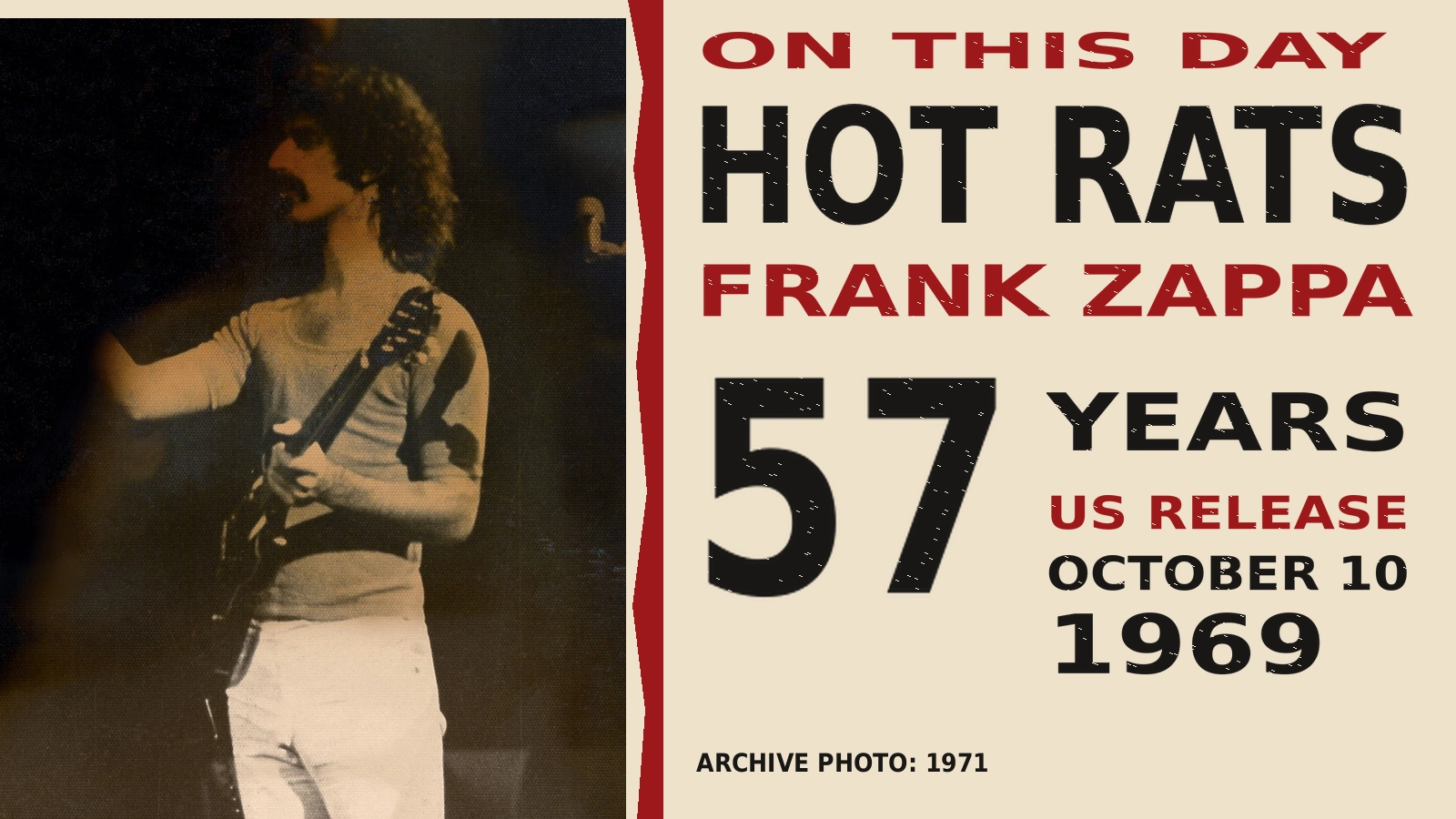
Frank Zappa’s Hot Rats was released in the United States on October 10, 1969. Its 57th anniversary in 2026 is an opportunity to revisit a compact six-track record with room for instrumental exploration.
Why the territory matters
October 10 is the US release anniversary. The UK release followed in February 1970, so treating the date as a simultaneous worldwide launch would flatten an important piece of the record’s history.
Zappa’s estate marked the album’s fiftieth anniversary in a statement datelined October 10, 2019. That retrospective also documents the July 1969 sessions and the multitrack studio work behind the album. The anniversary concerns the original record; the later Hot Rats Sessions box is a separate release.
More than a guitar showcase
Zappa composed, arranged and produced the album and played guitar. Ian Underwood was central to its instrumental palette. Five of the six pieces are instrumental; Captain Beefheart supplies the vocal on “Willie the Pimp.”
“Peaches en Regalia” offers another useful way in, with Shuggie Otis contributing bass. Those credits are a reminder to hear the whole ensemble, rather than reduce the record to a list of guitar solos.
For a focused anniversary listen, start with “Peaches en Regalia” and “Willie the Pimp.” Ask how the guitar changes function between a tightly shaped instrumental piece and a track with a vocal. You do not need to settle a genre argument to make the exercise worthwhile.
Fifty-seven years after its US arrival, Hot Rats remains a rewarding subject for a simple question: what happens when a guitarist thinks like an arranger?
Archive photograph: Frank Zappa at the Fillmore East in 1971, not a Hot Rats recording-session image. “Fillmore East 1971”, photo by Eddie Berman, via Wikimedia Commons, licensed CC BY 2.0. Commons retouched version; cropped and resized with editorial typography added. Original shadows and visible instrument details preserved.
