Fred “Sonic” Smith Guitars & Gear: The Complete Guide to MC5’s Rhythm Guitar Architect’s Rig
Fred Sonic Smith guitars & gear: MC5's rhythm guitar architect. Mosrite Ventures, Vox Super Beatle, Rickenbacker 450, Marshall stacks, and the Kick Out the Jams rhythm tone.
The nickname came from a guitar. Fred Smith was a teenager in Detroit when he bought a Fender Duo-Sonic — the small, short-scale, two-pickup Fender student guitar that existed below the Stratocaster and Telecaster in the company’s range. He played it, and somebody said he played it “sonically,” and the name stuck: Fred “Sonic” Smith. More than twenty years later, Thurston Moore and Kim Gordon would name their band Sonic Youth in honor of him. The circle of influence from a kid’s first electric guitar to the naming of one of post-punk’s most significant bands is the kind of rock genealogy that seems implausible until you trace it. The Duo-Sonic led to the Mosrite. The Mosrite powered Kick Out the Jams. Kick Out the Jams influenced punk rock. Punk rock became Sonic Youth. “Sonic Youth” was named for Fred Smith. One cheap guitar, purchased by a teenager in Detroit, ripples outward across thirty years of American music history.
The Journey
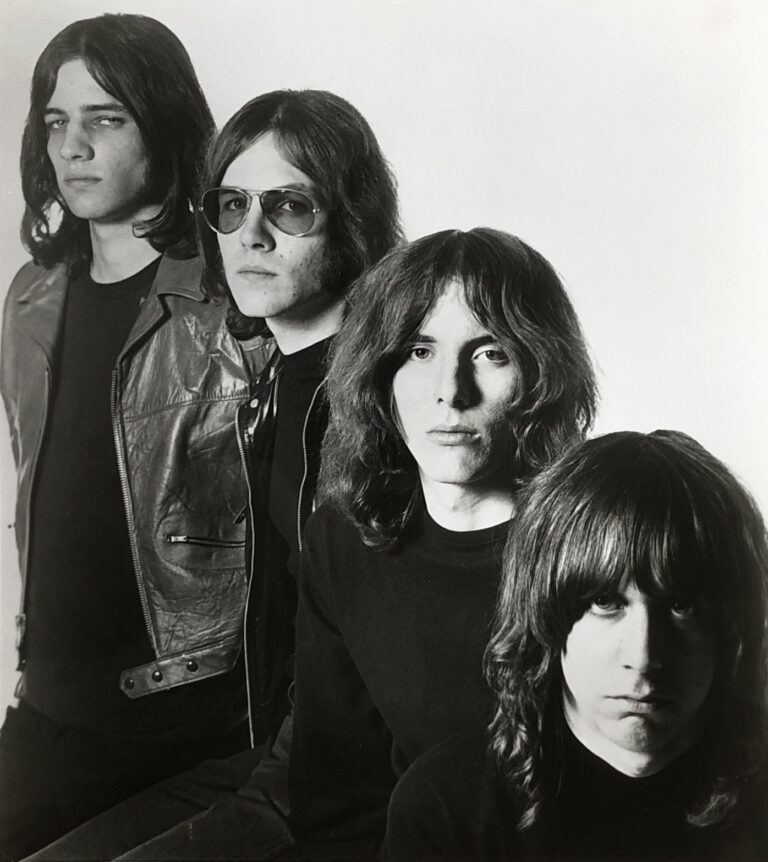
Frederick Dewey Smith was born on September 14, 1948 — some sources give 1949 — in Lincoln County, West Virginia. He was showing an early passion for music by age twelve, playing bongos and guitar, and soon formed his first band, Smith’s Vibratones. The move to Detroit changed everything: the city’s specific energy, its industrial heritage, its racial tensions, its music scene that produced alongside the Stooges and Ted Nugent and Bob Seger a specific quality of rock and roll that felt more urgent and more dangerous than what was coming from either coast. Smith met Wayne Kramer, who was playing in another local group, and the two joined forces to create Motor City Five in 1963, later shortened to MC5. The “5” was a nod to their love of hot rods and the Detroit Dragway — a detail that places these musicians firmly in a specific working-class American cultural moment, where the guitar and the automobile were the two primary vehicles of freedom and identity.
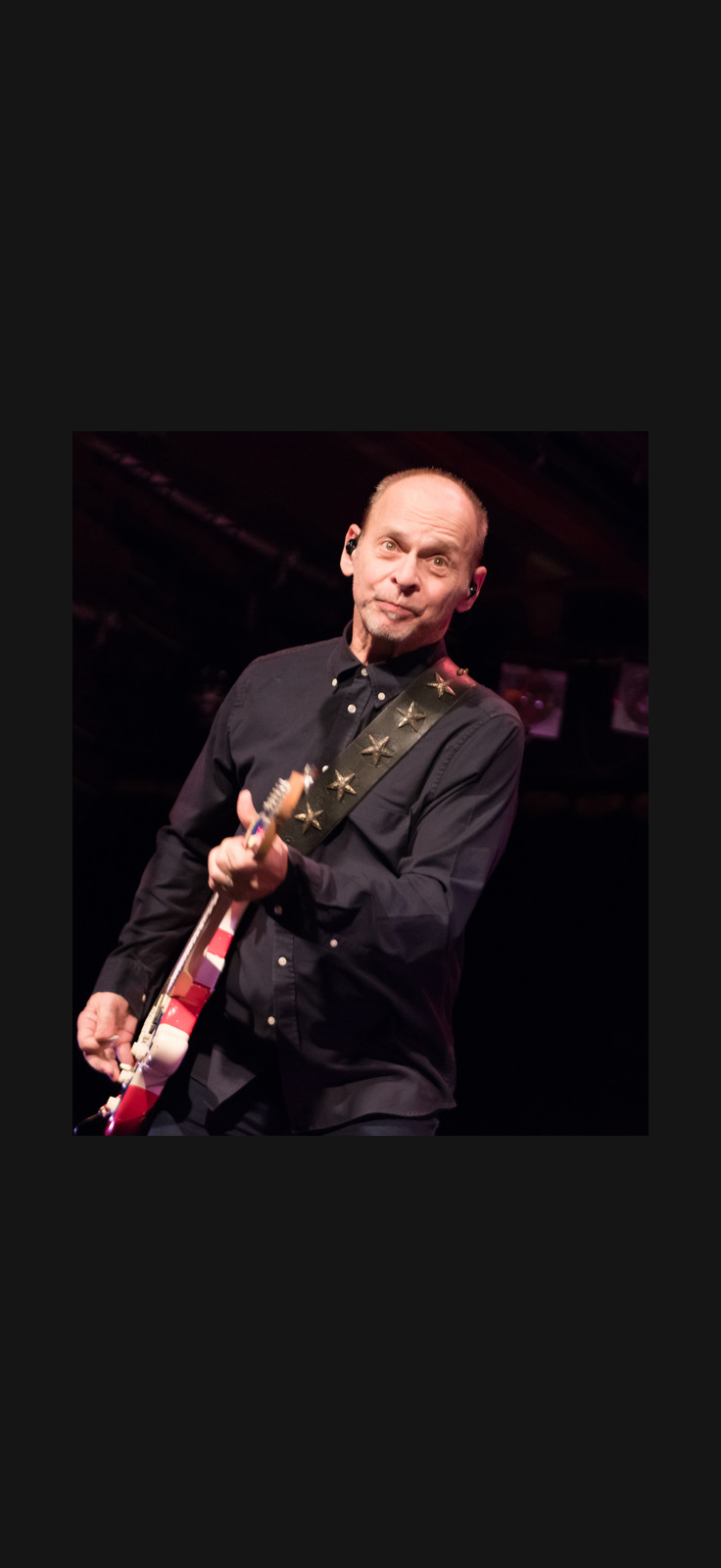
Within the MC5, Smith’s role was nominally the rhythm guitarist — the one whose chording provided the harmonic and rhythmic foundation on which Kramer’s more visually prominent leads operated. But the distinction between rhythm and lead was more fluid in the MC5 than the conventional division of labor would suggest. Contemporary eyewitnesses described “two sparkle-sequined guitarists who traded-off lead in a fervid fusillade of fiery notes and converged the role of rhythm into flesh-tingling licks of backup vibration.” Smith and Kramer, in their sequined jackets and satin pants, doing backbends and knee-drops and arm-raises in choreographed performance, playing a music that was simultaneously hard rock, free jazz, and political manifesto — this is the context in which Smith’s guitar work developed and was performed. The “rhythm guitarist” was also a dancer, also a political revolutionary, also a craftsman of the specific thick, midrange-heavy guitar tone that would characterize his playing across the entire arc of his career.
His nickname inspired Sonic Youth. His marriages to Patti Smith in 1980 — a love story that began at a 1976 performance and ended only with his death — produced two children and a musical collaboration that included his contributions to her album Dream of Life (1988), one of the most personal and intimate rock records of the decade. Patti Smith wrote “Frederick” for him on her 1979 album Wave and mourned him on her 1996 album Gone Again after his death. His influence on her music, and the specific emotional quality she brought to post-MC5 rock, is as much a part of Fred Smith’s legacy as anything recorded under his own name.
He died on November 4, 1994, in Detroit, Michigan, of heart failure. He was forty-six years old — younger than Kramer was when he died, younger than most of the players in this series at their peak commercial moments. Rolling Stone placed him at number 93 on their 2003 list of the 100 Greatest Guitarists of All Time, a ranking that acknowledges his importance while the specific number reflects the recurring reality of Fred Smith’s career: genuinely great, not quite given the full credit. The Fender Duo-Sonic nickname. The Mosrite guitar. The thick midrange tone. Sonic Youth named for him. Patti Smith’s love and grief written into the permanent record. These are the coordinates of a genuinely significant rock guitar life, and they deserve the full accounting this article provides.
Background: The Second Guitar Hero Who Was Also the First
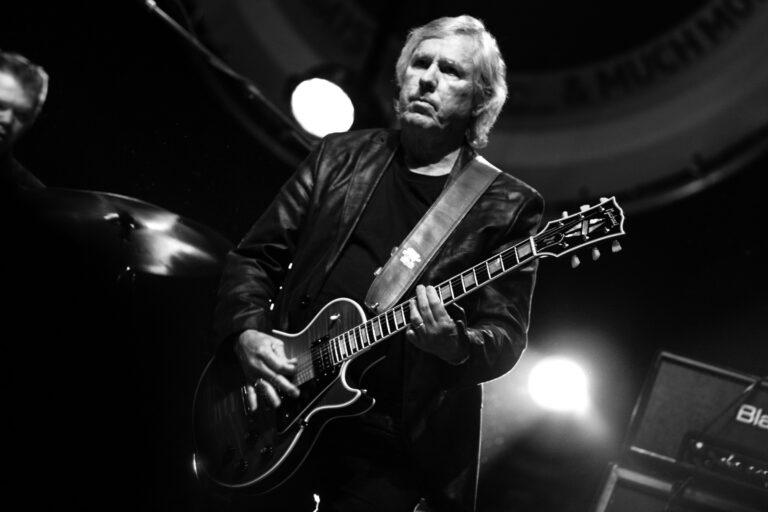
The conventional MC5 narrative positions Wayne Kramer as the guitar hero and Fred Smith as the rhythm player — the lead and the support, the soloist and the architect. Contemporary documentation complicates this picture considerably. The mosriteforum.com archive notes that Smith was delivering “an incredible solo from the song ‘Rocket Reducer No. 65’ where he and Wayne Kramer blast off in an exchange of fiery notes where Fred is panned to the left” — a specific, documented lead guitar performance that matches Kramer in intensity and invention. The Stash Dauber music blog describes him as “one of the best” guitar heroes of the era whose musical legacy is “firmly established,” while acknowledging that within the Five he “always played second banana to the flashier Kramer, even when he was wearing his ‘Sonic Smith’ superhero costume with his face painted silver.” The second banana observation is accurate in terms of public profile; the guitar hero assessment is accurate in terms of musical substance.
The story of how the MC5 acquired its initial professional gear is documented in Wayne Kramer’s account, preserved in the Equipboard archive: “Finally, we got the manager to spring for another bank loan and I got a Gibson ES-335, and Fred Smith got a Gretsch Tennessean, and the bassist, a Fender Precision. Fred Smith and I got 100-watt Vox Super Beatle amplifiers.” This was the early configuration — Gibson and Gretsch through Vox Super Beatle amplifiers that were, by Kramer’s account, genuinely extraordinary for the American market: “Before the Beatles they were just called AC-100s. They were really great; nothing in America had 100 watts. The biggest amps were Fender Dual Showmans at 65 watts with two 15-inch speakers. The Super Beatles were 100 watts with four 12-inch speakers and two high-frequency horns mounted in a tubed frame cabinet you could tilt back.” The Vox Super Beatle’s specific character — British-voiced, powerful, with high-frequency horns adding presence and articulation — gave the early MC5 a different amplification character from the Marshall-dominated sound of their classic period.
The transition from the Gretsch Tennessean to the Mosrite Ventures that became his primary instrument represents the most significant single equipment decision in Smith’s career. The Mosrite Ventures model — designed in collaboration with surf rock icons the Ventures, manufactured by Semie Moseley at his Bakersfield, California workshop — was in many ways an unlikely guitar for the most aggressive proto-punk band in Detroit. Associated primarily with surf instrumentalists like the Ventures themselves, and with country players who valued its specific neck contour and pickup character, the Mosrite’s specific construction gave Smith something he couldn’t get from a conventional humbucker guitar: the specific combination of bright, slightly raw single-coil pickup tone from the Mosrite’s proprietary pickups, the asymmetrical body shape’s particular resonance, and a neck profile that suited his playing approach better than either the Gibson or Gretsch alternatives. The white Mosrite Ventures model became so closely associated with Smith’s visual identity that “Wayne Kramer on Fender guitar and Fred Smith on Mosrite guitar was how the band described the arrangement.”
The Sonic’s Rendezvous Band period — from 1974 to approximately 1988, the vehicle for Smith’s post-MC5 musical vision — produced recordings that are among the more celebrated cult objects in American rock history. The “City Kitty/Sonic’s Rendezvous” single, released on the band’s own label in limited quantities in 1978, became one of the most sought-after records in punk and post-punk collecting circles, its combination of hard rock energy, Detroit rawness, and Smith’s increasingly refined guitar tone making it simultaneously too good for mainstream radio and too uncommercial for major label interest. The thick, midrange-heavy guitar tone that Smith had developed by this period — described by the Stash Dauber blog as reaching its full development in the Sonic’s Rendezvous Band years — is the sound of a guitarist who has arrived at a fully realized personal voice: warm enough for blues feeling, aggressive enough for rock energy, with enough harmonic complexity for the jazz-influenced musical thinking that Smith was increasingly incorporating into his solo work.
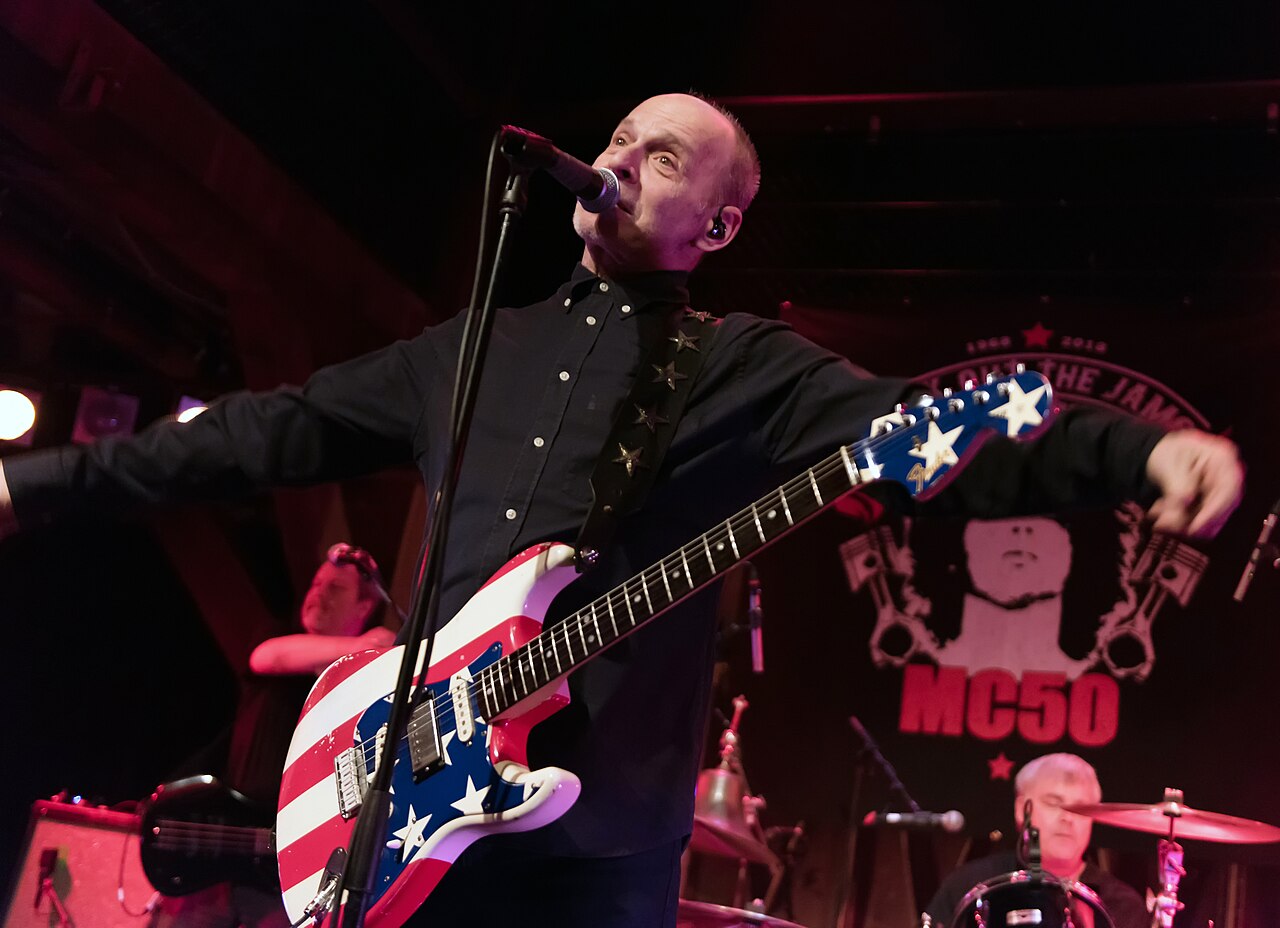
The Rig: Fred “Sonic” Smith’s Guitars, Amps, and Effects
Guitars
The guitar most closely associated with Fred “Sonic” Smith’s primary MC5 period — including, almost certainly, the Kick Out the Jams live recording — was a Mosrite Ventures model, the white version of the surf rock instrument designed in collaboration with the Ventures and manufactured by Semie Moseley. The mosriteforum.com documentation is specific: “From 1968 to about 1969, an original Mosrite Ventures model seemed to be Fred’s guitar of choice. The Kick Out the Jams album was almost certainly recorded with a Mosrite.” The Mosrite Ventures has specific construction characteristics that distinguish it from both Fender and Gibson instruments: an asymmetrical body with a deeper right-side lower bout, a thin, fast, slightly radiused “speed neck” with its distinctive contour, and Mosrite’s proprietary pickups — low-impedance, narrow single-coil designs with a specific bright, cutting character quite different from either Fender’s standard single-coils or Gibson’s humbuckers. The pickup’s lower impedance gives it a cleaner, more defined high-frequency response than standard single-coil pickups, producing a tone that cuts through a dense band mix with aggressive clarity. Through the Vox Super Beatle or Marshall amplification that Smith was using, the Mosrite produced a tone simultaneously brighter and rawer than a Stratocaster equivalent — the specific “buzzing, crackling” quality that makes the MC5’s guitar sound on Kick Out the Jams so immediately aggressive. The white finish made Smith visually distinctive alongside Kramer’s more conventional guitar choices, and the Mosrite’s association with the Ventures’ clean surf instrumentals made its deployment in the rawness of the MC5 context a specific, productive tonal collision. The specific Mosrite acquired by Deniz Tek of Radio Birdman after the MC5’s disbandment in the early 1970s is a documented example of the instrument’s subsequent history — a collector-level acquisition that testifies to the guitar’s significance within the specific musical tradition Smith represented.
After the primary white Mosrite Ventures period, Smith also used a Mosrite that had been significantly modified: a P-90 soapbar pickup in the bridge position and a PAF-style humbucker in the neck position, replacing the original Mosrite pickups. This modification — adding Gibson-style pickups to a Mosrite body — produced a tonal hybrid: the Mosrite body’s specific resonance and playing feel combined with the more familiar warm, complex character of the Gibson pickup family. The P-90 bridge provides aggressive, midrange-present bite; the PAF neck provides warmth and sustain. The combination gave Smith additional tonal range beyond what the stock Mosrite pickups offered, without sacrificing the specific playing feel of the Mosrite neck and body. The mosriteforum.com documentation confirms: “Later it was a Rickenbacker 450 with PAFs and a Mosrite modified with a P-90 in the bridge position and a PAF in the neck as a backup.”
The Rickenbacker 450 — a semi-hollow body instrument with Rickenbacker’s distinctive styling — also entered Smith’s primary guitar rotation in the later MC5 period, modified with PAF humbuckers. The Rickenbacker 450/12 twelve-string version is also documented in his gear history. The standard 450 is a Rickenbacker production model with the company’s characteristic narrow-horned body, through-neck construction, and Rickenbacker’s proprietary single-coil pickups. Smith’s modification of his 450 with PAF humbuckers — similar to the Mosrite modification — reflects his consistent interest in combining the specific feel and resonance of non-Gibson instruments with the tonal character of Gibson’s legendary PAF pickup family. The Rickenbacker 450’s specific construction — through-neck, with a body that combines elements of semi-hollow and solid-body designs — produces its own distinctive resonance that differs from either a Fender or a Gibson equivalent, and Smith’s PAF-modified version occupied a genuinely unusual tonal space: Rickenbacker feel and acoustic character, Gibson humbucker tonal warmth.
The Gretsch Tennessean was Smith’s primary guitar in the early MC5 period, acquired through the band’s manager’s bank loan alongside Kramer’s Gibson ES-335. The Tennessean — Gretsch’s semi-hollow single-cutaway model, associated primarily with George Harrison in the early Beatles period — features Gretsch’s HiLo’Tron or Filter’Tron pickups and the company’s specific semi-hollow construction. Its filter-bright, slightly compressed tonal character is recognizably different from Gibson’s semi-hollow warmth, with a chiming, articulate quality that suits the specific musical needs of both British pop and Detroit garage rock. Smith’s use of the Tennessean in the early MC5 period predates the Mosrite that would become his visual and sonic identity, and represents the band’s first serious equipment upgrade from whatever first guitars they had been using.
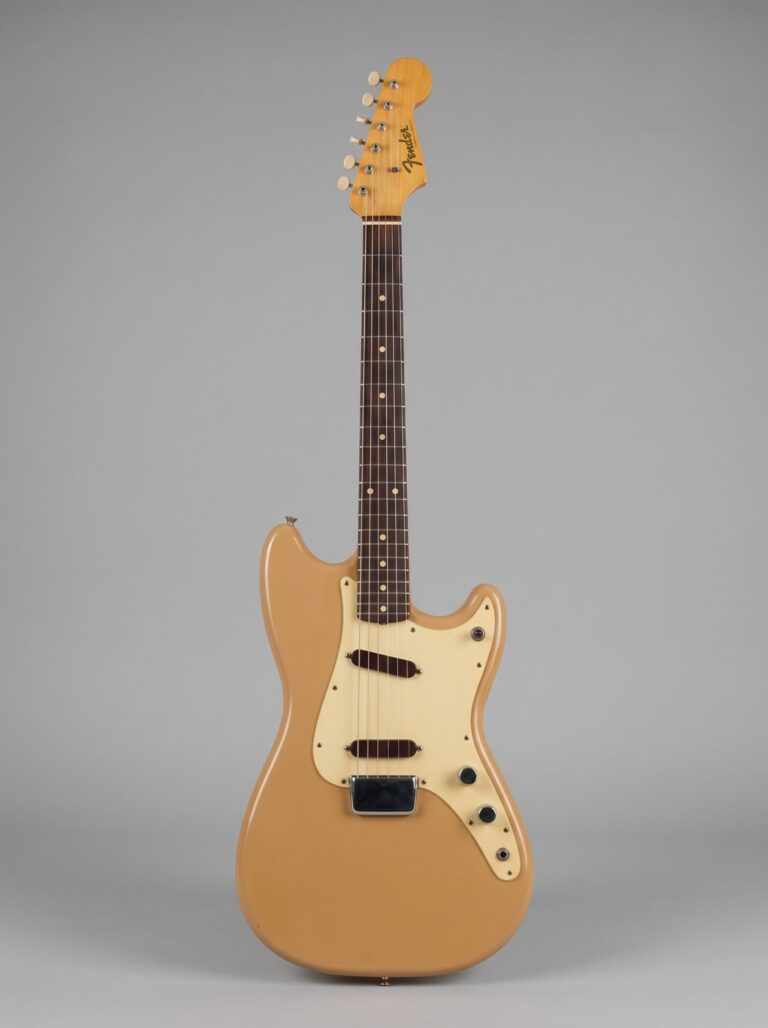
The guitar that earned Fred Smith his nickname was a Fender Duo-Sonic — the small-body, short-scale (22.5-inch) Fender student guitar introduced in 1956 as an accessible option for beginners who found the standard Stratocaster’s 25.5-inch scale challenging. His purchase of this guitar, and the “sonic” quality his playing brought out of it, gave him the nickname that subsequently inspired Thurston Moore and Kim Gordon when they named their band in 1981. The Duo-Sonic’s specific character — two single-coil pickups, a slightly lighter, more resonant body than larger Fender models, and the comfort of a shorter scale length — may have actually shaped Smith’s early technique in ways that persisted into his later work: the short scale’s lower string tension rewards a slightly different picking approach from full-scale guitars, and the two-pickup configuration develops an ear for pickup selection as a tonal tool from an early stage.
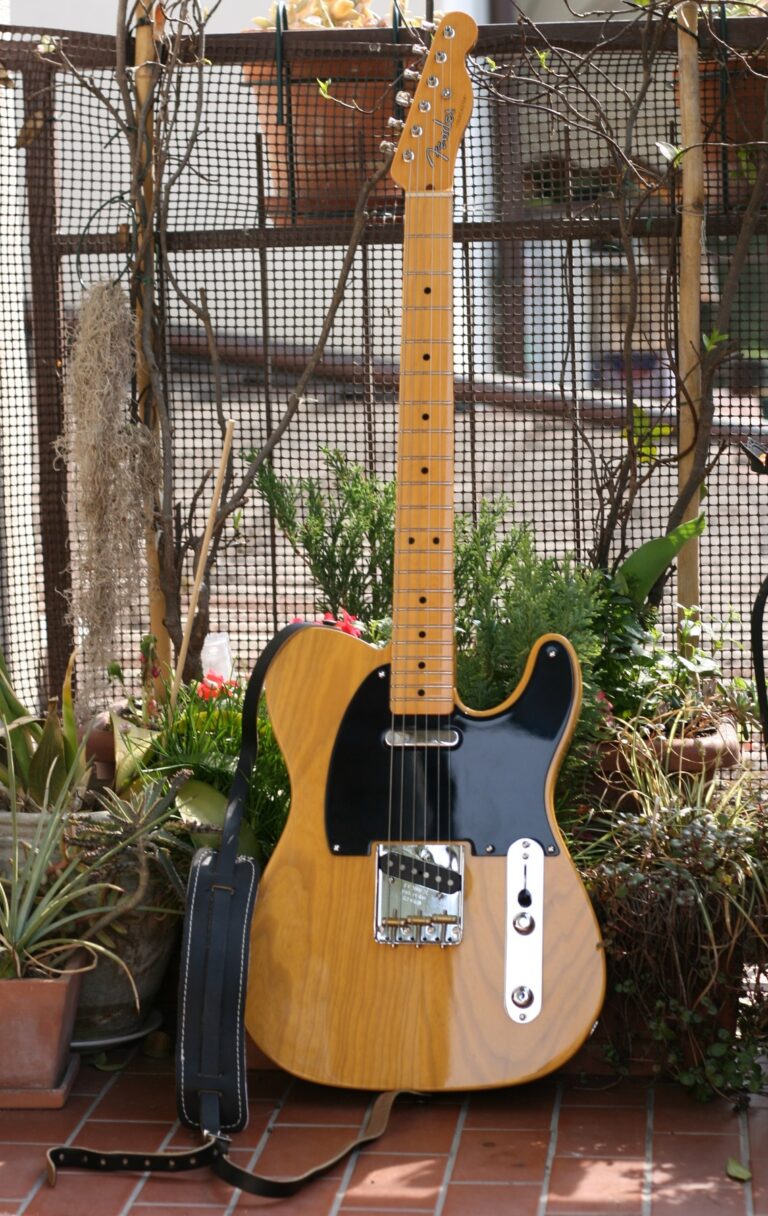
Fender Telecaster guitars also appear in Fred Smith’s documented gear history — Wayne Kramer’s account places Smith with the broader Fender family alongside his own Fender Esquire in the early period. The Telecaster’s bright, cutting single-coil bridge pickup and warm, rounded neck pickup provide a tonal range that Smith used in specific contexts alongside his primary Mosrite and Rickenbacker work.
Amps
The amplification that Wayne Kramer specifically identified as transformative for the early MC5 was the Vox Super Beatle 100W — the British amplifier that Kramer described as revolutionary for the American market of the period: “Nothing in America had 100 watts. The biggest amps were Fender Dual Showmans at 65 watts… The Super Beatles were 100 watts with four 12-inch speakers and two high-frequency horns mounted in a tubed frame cabinet you could tilt back.” The Vox Super Beatle’s character — derived from the EL34-powered British Vox tradition rather than the American 6L6 Fender tradition — produced a specific midrange presence and warmth that was quite different from contemporary American amplification. The high-frequency horns added by Vox for presence and articulation gave the Super Beatle a specific quality of top-end clarity alongside the EL34 warmth. Both Kramer and Smith used these amplifiers in the early MC5 period, and the combination of Vox Super Beatle character with Smith’s Gretsch Tennessean and then his Mosrite provided the specific tonal foundation of the band’s pre-Kick Out the Jams development.
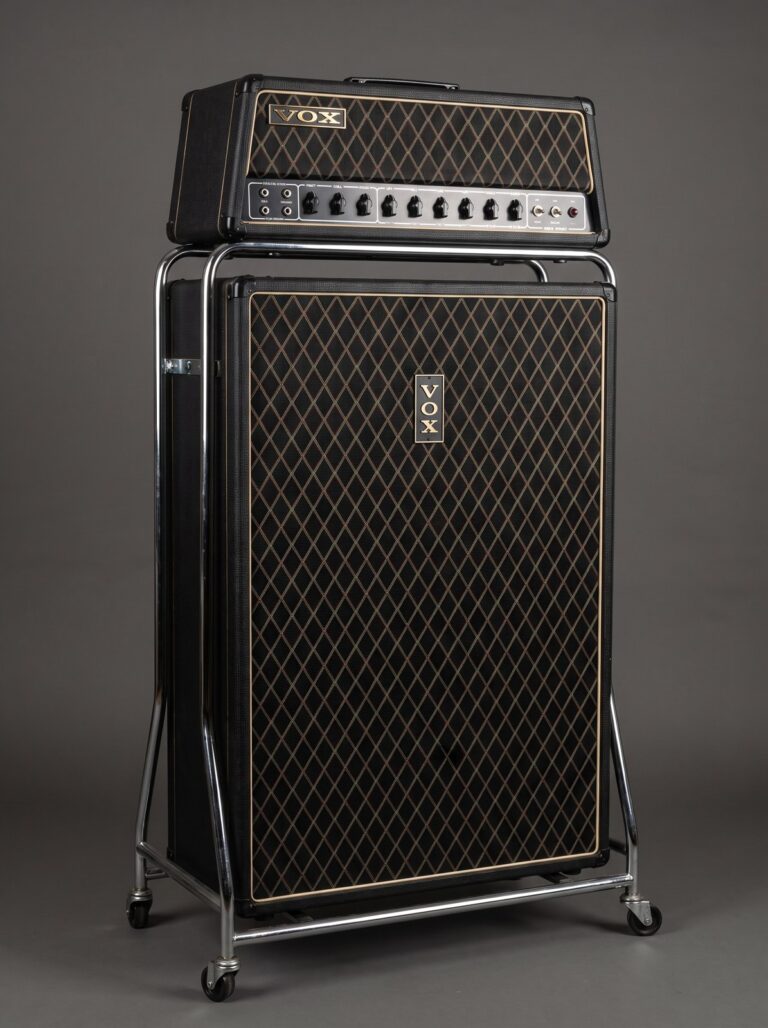
For the peak MC5 performance period that produced Kick Out the Jams and the subsequent back catalog, Marshall amplifiers replaced or supplemented the Vox Super Beatles as Smith’s primary live amplification. The “force barely channeled through Marshall amps” description of the MC5 live experience captures both the specific amplification and the specific quality of barely-controlled intensity that the combination of Smith’s Mosrite and the Marshall stacks produced. The Marshall’s EL34 character — warmer and more midrange-forward than the Fender 6L6, more aggressively saturating than the Vox’s specific version of EL34 power — combined with the Mosrite’s bright, cutting proprietary pickups to produce a tone that was simultaneously raw and powerful, cutting and warm. Both Smith and Kramer running Marshall stacks created the dense, overwhelming two-guitar assault that defined the MC5’s live experience as a physical as well as musical event.
During the Sonic’s Rendezvous Band years (1974–1988), Smith’s amplification setup was less thoroughly documented than the MC5 period’s equipment. The “thick, midrange-heavy tone” he developed by this period — described as reaching its full maturity in the SRB work — required amplification that supported and amplified this specific character rather than fighting it. The SRB’s musical context, with its harder rock energy and more refined compositional approach compared to the MC5’s revolutionary energy, would have required reliable, high-quality amplification appropriate for the band’s club and concert hall touring schedule.
Effects
The single most important tonal element in Fred “Sonic” Smith’s classic MC5 sound is not a pedal or an effect — it is the Mosrite Ventures model’s specific pickup design. Mosrite’s proprietary pickups were low-impedance, narrow single-coil designs with a specific bright, cutting character that distinguished them from both Fender’s standard single-coils and Gibson’s humbuckers. The low impedance gives the pickups a cleaner, more defined high-frequency response — what one analysis describes as the “buzzing, crackling” quality of the Kick Out the Jams guitar sound — while the narrow single-coil format provides the articulation and note-by-note definition that the MC5’s two-guitar assault required for the individual guitar voices to remain audible through the density of the band’s overall sound. The pickup’s specific character was the primary reason Smith chose the Mosrite over more conventional instruments: nothing else produced exactly that combination of brightness, aggression, and definition in the Marshall-and-Marshall dense sonic environment of an MC5 live show.
Fred “Sonic” Smith’s effects approach during the MC5 period was as minimal as the band’s political philosophy was maximalist. The guitar went into the amp, and the amp produced the sound. The Mosrite’s proprietary pickups through a cranked Marshall — or the earlier Gretsch through a Vox Super Beatle — provided all the distortion and character required. There were no documented fuzz pedals, wah pedals, or modulation effects in Smith’s core MC5 signal chain (Kramer used the Triangle Big Muff; Smith’s equivalent processing came from the Mosrite’s own cutting, raw character rather than from pedal-generated fuzz). This is consistent with the MC5’s general approach: maximum volume, maximum commitment, minimum external processing between the player and the amplified sound.
Smith’s systematic modification of his guitars — the Mosrite fitted with P-90 and PAF pickups, the Rickenbacker 450 fitted with PAF humbuckers — represents his primary means of expanding tonal range without adding effects pedals. Where Kramer used a Big Muff fuzz to push his Strat into more aggressive territory, Smith modified his guitars directly at the pickup level to achieve different tonal characters. This approach is more permanent and more fundamental than effects pedal use — it changes what the guitar produces at the signal source rather than processing the signal after it leaves the guitar — and reflects a player who understood tonal architecture at the level of the instrument itself rather than the signal chain.
The Mosrite Ventures model’s short-scale neck (24 inches, the same as the Fender Mustang) means that standard-gauge strings produce lower tension than on full-scale guitars, making the instrument more responsive to Smith’s aggressive picking technique while requiring some adjustment for optimal intonation. The standard Mosrite setup used string gauges appropriate for its specific scale length and construction, and Smith’s specific gauge preferences are not comprehensively documented in available sources. His aggressive, driving playing style implies strings with enough tension to provide resistance for committed rhythmic attack without excessive stiffness for the lead work he also contributed.
Playing Style & Tone Philosophy
Fred “Sonic” Smith played guitar with the commitment of someone who understood that the guitar was not just a musical instrument but a political position made audible. Every documentary description of his MC5 playing emphasizes physicality: the bent-shoulder stance, the fist raised at the end of songs, the choreographed movements with Kramer, the simultaneous roles of guitarist, dancer, political demonstrator, and entertainer. This physical commitment extended to the actual guitar playing: the Mosrite through the Marshall at full volume, driven by the same conviction that drove the rest of the MC5’s performance, produced a tone that was inseparable from the political moment it was expressing.
His lead guitar work — documented in the “Rocket Reducer No. 65” exchange with Kramer and in various other recorded performances — demonstrates a player who was fully capable of meeting Kramer’s lead intensity but who understood that the more valuable contribution was often the rhythmic foundation. “If you can hear it, you can play it,” Smith said — a philosophy of musicianship that emphasizes listening as the primary skill and playing as the response to what you hear. This is blues-based musical thinking at its most fundamental: you don’t play what you know, you play what the music needs in the moment. The specific quality of thickness and midrange presence that characterizes Smith’s mature tone in the Sonic’s Rendezvous Band period reflects decades of listening and responding — a guitar voice that had been refined through performance rather than through practice, shaped by the specific demands of the music he was making rather than by a predetermined tonal goal.
The specific tone he developed — the “thick, midrange-heavy” character described in contemporary analyses — is the product of the Mosrite’s or Rickenbacker’s specific resonance combined with Marshall amplification, without the bright scooping or the extreme high-gain compression that would have obscured the individual note definition his playing required. It is a guitar tone with authority and weight, capable of filling its own space in a dense mix without needing to overwhelm that space — a rhythm guitarist’s understanding of tone even when the specific application was lead playing. The midrange emphasis gives the tone presence and cut; the warmth gives it musical richness; the lack of extreme processing gives it the directness and honesty that the MC5’s entire aesthetic demanded.
How to Sound Like Fred “Sonic” Smith
Capturing Fred Smith’s core Kick Out the Jams tone requires a Mosrite Ventures model (or a quality Mosrite replica) through a Marshall amplifier running with enough preamp and output stage engagement for natural saturation. The Mosrite’s proprietary pickups are the most irreplaceable element — they have a specific character that no other pickup family quite replicates. For the later, more refined Sonic’s Rendezvous Band tone: a Mosrite or Rickenbacker with PAF-style humbuckers through a Marshall, with the mid control up and the treble controlled — that thick, midrange-heavy tone that characterises his most distinctive later work.
| Control | Setting (0–10) | Notes |
|---|---|---|
| Guitar Volume | 10 | Maximum — Smith ran wide open, letting the Mosrite’s natural output drive the amp’s input stage. The Mosrite’s low-impedance pickups have a different output character from standard single-coils; at full volume they push the Marshall input differently, contributing to the specific tonal character of the MC5 recordings. |
| Pickup Selection (Mosrite) | Bridge (aggressive cutting tone) or Neck (warmer lead tone) | The Mosrite’s bridge pickup for the cutting, aggressive rhythm character of the Kick Out the Jams MC5 sound. Neck pickup for the warmer, more sustained quality of the modified later Mosrite (P-90 bridge, PAF neck) or the Rickenbacker 450 with PAFs. |
| Marshall Preamp Volume | 7–8 | The Mosrite’s single-coil pickups need a slightly higher preamp volume setting than a high-output humbucker to achieve comparable input stage drive. The result should be a raw, slightly breaking-up tone rather than smooth high-gain compression — the specific “buzzing, crackling” quality of the Kick Out the Jams guitar sound. |
| Bass | 5–6 | Moderate bass — the Mosrite’s naturally bright character doesn’t need low-end reinforcement. Controlled bass preserves the rhythmic precision and note definition that Smith’s playing requires in the dense MC5 twin-guitar environment. |
| Mid | 8 | High midrange — Smith’s mature tone was specifically described as “thick, midrange-heavy.” The mid control up provides both the warmth and the projection his guitar needed to occupy its specific place in the MC5 sound. The Mosrite’s pickup character combines with a high mid setting to produce a tone that is simultaneously bright and warm. |
| Treble | 5–6 | Moderate treble — let the Mosrite’s natural brightness handle the top end; the amp treble stays controlled to avoid tipping into harshness. The “thick” quality of Smith’s tone requires the treble not to dominate the midrange emphasis. |
| Presence | 5 | Moderate presence for definition without adding harsh upper-frequency emphasis. The Mosrite’s natural cut and the midrange emphasis provide sufficient presence for the guitar to project clearly in a full band context. |
| Master Volume | 7–9 | Push the master for output stage engagement. The “force barely channeled through Marshall amps” quality of the MC5 live sound requires the amplifier to be working at a significant output level — not as an abstraction but as an actual physical requirement for the tone. |
| Effects | None to minimal | Smith’s core MC5 tone had no pedals in the signal chain. The Mosrite through the Marshall, wide open, produced everything required. For the later, modified Mosrite or Rickenbacker tone: potentially a light overdrive boost for added sustain on lead passages, but the fundamental tone was always guitar and amp, direct. |
Influence & Legacy
Fred “Sonic” Smith’s influence on rock guitar operates through several channels simultaneously. Most directly, the MC5’s sonic assault — which Smith co-created and co-performed — established the tonal and attitudinal template for proto-punk and punk rock that every subsequent generation of aggressive rock guitar has drawn from. His nickname, given for a guitar and a playing style, became the name of Sonic Youth — one of the most important American alternative rock bands of the 1980s and 1990s, and an explicit tribute to Smith’s specific contribution to the rock guitar tradition he helped build.
His marriage to Patti Smith — which began at a 1976 performance in Detroit, extended through his contributions to Dream of Life (1988), and ended only with his death in 1994 — produced one of rock’s most documented and mourned creative partnerships, with his influence on her music outlasting his life and being memorialized across multiple subsequent albums. The “Frederick” on Wave and the “Gone Again” album after his death are as much part of his musical legacy as any specific guitar performance, reflecting the way his musical personality permeated everything he was involved with.
The Mosrite Ventures guitar’s association with Smith is a specific contribution to the instrument’s cultural history. The Mosrite had been associated with surf rock through the Ventures’ use of it; Smith’s deployment of it in the rawness of the MC5 context demonstrated that the instrument’s specific character — the bright, cutting, low-impedance pickups and the fast neck profile — served aggressive rock contexts as well as it served surf instrumentals. For more on the MC5’s twin-guitar context and the Detroit rock tradition, see Wayne Kramer’s gear history for the lead guitar perspective on the same band. The broader Detroit rock tradition is explored through Ted Nugent’s parallel development. The post-punk tradition that Smith directly influenced is documented through Thurston Moore’s Sonic Youth work, where the tribute embedded in the band’s name is explored in full.
Rolling Stone’s 2003 ranking at number 93 places him in prestigious company while perhaps underselling the specific foundational importance of his work. The Kick Out the Jams recording is the sound of a specific historical moment — Detroit in 1968, in a band that understood itself as a revolutionary cultural force — and Smith’s guitar is at the center of that sound, providing the rhythmic and tonal architecture that made Kramer’s leads possible and the band’s political energy audible. The Fender Duo-Sonic that earned him his nickname led to the Mosrite that powered the recording that inspired Sonic Youth that named themselves for him. The guitar, always, is the through-line. “If you can hear it, you can play it.” Fred Smith heard it. He played it. And the people who came after could hear what he had played.
Frequently Asked Questions: Fred “Sonic” Smith Guitars & Gear
Why is Fred Smith called “Sonic”?
Fred Smith earned the nickname “Sonic” from a guitar — specifically his purchase of a Fender Duo-Sonic as his early primary instrument. Someone described his playing on the Duo-Sonic as “sonic,” the name stuck, and Fred “Sonic” Smith became his permanent professional identity. The specific guitar that gave him his nickname subsequently inspired the name of one of post-punk’s most significant bands: Thurston Moore and Kim Gordon named their group Sonic Youth specifically in honor of Smith. The Fender Duo-Sonic’s short scale length, two-pickup configuration, and the specific quality of Smith’s playing through it made the instrument and the nickname inseparable. Smith himself acknowledged the tribute: the Sonic Youth naming represents perhaps the most tangible evidence of his specific cultural influence on the musicians who came after him.
What guitar did Fred “Sonic” Smith play on Kick Out the Jams?
The guitar Fred Smith almost certainly used on the Kick Out the Jams live recording was a Mosrite Ventures model — the white surf rock instrument manufactured by Semie Moseley and associated primarily with the Ventures instrumental group. The mosriteforum.com documentation of Smith’s gear is specific: “From 1968 to about 1969, an original Mosrite Ventures model seemed to be Fred’s guitar of choice. The Kick Out the Jams album was almost certainly recorded with a Mosrite.” Contemporary eyewitness accounts of the MC5 live performances confirmed the arrangement: “Wayne Kramer on Fender guitar and Fred Smith on Mosrite guitar was how the band described the arrangement.” The Mosrite’s specific low-impedance pickups produced a bright, cutting, “buzzing, crackling” tonal character through the Marshall amplification that was distinctive and aggressive in the MC5’s twin-guitar context.
What was the relationship between Fred “Sonic” Smith and Sonic Youth?
Sonic Youth — the New York noise rock band formed by Thurston Moore, Kim Gordon, and Lee Ranaldo in 1981 — took their name specifically in honor of Fred “Sonic” Smith. The tribute reflects the MC5’s profound influence on the punk and post-punk generation of the late 1970s and early 1980s: Moore, Gordon, and Ranaldo were part of the New York No Wave scene that drew directly from the MC5’s example of using rock as a cultural and political weapon, and their naming of their band “Sonic Youth” was both an acknowledgment of Smith’s specific contribution and a declaration of the musical lineage they were claiming. Smith was aware of the tribute and lived long enough to see the band become internationally significant — his influence on American alternative rock thus extended through Sonic Youth’s entire catalog.
What amps did Fred “Sonic” Smith use with MC5?
Wayne Kramer’s account documents two distinct amplification periods. In the early MC5, both guitarists used Vox Super Beatle 100W amplifiers — British EL34-powered amplifiers that Kramer described as genuinely transformative for the American market: “Nothing in America had 100 watts” at the time, making the Super Beatles a significant upgrade over the Fender Dual Showman alternatives. The Super Beatles also featured two high-frequency horns in the cabinet, adding presence and articulation to the basic EL34 amplification character. For the classic Kick Out the Jams era, Marshall amplifiers replaced or supplemented the Vox setup — the “force barely channeled through Marshall amps” description captures both the specific amplification and the quality of barely-controlled intensity that the MC5’s live performances embodied. Both guitarists running Marshall stacks created the dense, overwhelming sonic assault that defined the band’s live experience.
Who was Sonic’s Rendezvous Band?
Sonic’s Rendezvous Band was Fred Smith’s primary musical vehicle from the MC5’s dissolution in 1972 through approximately 1988. The band featured Scott Morgan (who had fronted the MC5-contemporary Detroit band Rationals), Gary Rasmussen on bass, and Scott Asheton of the Stooges on drums at various points — a supergroup configuration from the Detroit rock tradition that never achieved mainstream commercial success but produced recordings, particularly the “City Kitty/Sonic’s Rendezvous” single (1978), that became among the most sought-after records in punk and post-punk collecting circles. Smith was developing his guitar approach through this period toward the thick, midrange-heavy tone that contemporary analyses identify as his most fully realized tonal identity. The band’s relative obscurity despite its quality reflects the same recurring pattern in Smith’s career: genuinely excellent music that found devoted audiences rather than mass markets.
What was Fred “Sonic” Smith’s marriage to Patti Smith?
Fred Smith and Patti Smith — no blood relation despite the shared surname — met in 1976 when Fred attended one of Patti’s performances in Detroit. They married in 1980, had two children, and collaborated musically on her 1988 album Dream of Life, which Fred co-produced and played guitar on. Patti Smith wrote “Frederick” as an explicit tribute to him on her 1979 album Wave, and after his death in November 1994, released Gone Again (1996) as a mourning album that addressed both his loss and the deaths of other people close to her from the same period. Fred Smith’s influence on Patti Smith’s music — both in the literal sense of the musical contributions he made and in the broader sense of his presence and personality shaping her songwriting — is as much a part of his legacy as any MC5 recording. His death at forty-six from heart failure cut short what had been an extraordinarily creative and deeply personal artistic partnership.
What was the Mosrite Ventures guitar and why did Fred Smith use it?
The Mosrite Ventures model was an electric guitar designed in collaboration with surf rock icons the Ventures and manufactured by Semie Moseley at his Bakersfield, California workshop, beginning in the early 1960s. The guitar features an asymmetrical body design, a thin fast “speed neck” with a distinctive contour, and Mosrite’s proprietary low-impedance single-coil pickups — narrow-design units with a specific bright, cutting character distinct from either Fender’s standard single-coils or Gibson’s humbuckers. Smith used the Mosrite because its specific pickup character — the “buzzing, crackling” quality that the low-impedance design produces — gave him a distinctive tonal voice within the MC5’s twin-guitar configuration alongside Kramer’s Fender. The white Ventures model became so closely identified with Smith that contemporary accounts specifically describe the band as “Wayne Kramer on Fender guitar and Fred Smith on Mosrite guitar.” He later modified other Mosrites with Gibson-type pickups (P-90 bridge, PAF neck) and used a Rickenbacker 450 modified with PAF humbuckers, but the original Mosrite Ventures model remains the guitar most closely associated with his iconic MC5 recordings.
Image credits
- Wayne Kramer: Frank Schwichtenberg, Wikimedia Commons, CC BY-SA 4.0.
- Fender Telecaster: Massimo Barbieri, Wikimedia Commons, CC BY-SA 3.0.
- Fender Duo-Sonic: GuitarGangsters AI-generated reference illustration, not a photograph.
- Vox Super Beatle: GuitarGangsters AI-generated reference illustration, not a photograph.