

He got his first guitar at Christmas 1996, at age twelve. An Ibanez RX20 electric. “As soon as I got a hold of a guitar, my grades suffered. My parents were telling me, ‘Keep your studies up,’ but I felt I was getting the best education possible down in the clubs.” He was playing the clubs on Austin’s Sixth Street by age sixteen, in the orbit of Antone’s and the specific blues education that Austin’s music scene provides to anyone willing to absorb it. He was managing himself. He had no backup plan. When the poster appeared in Austin that said “Gary Clark Jr. — the new Hendrix,” he had conflicted feelings about it: “Man, you’re not even giving me a chance to be anything but a blues or rock-star guitar player.” But the comparison was being made by people who had heard him play, and the hearing was not wrong.
Gary Clark Jr. was born on February 15, 1984, in Austin, Texas. He is a guitarist, singer, songwriter, and multi-instrumentalist. His Grammy-winning career includes: Blak and Blu (2012), The Story of Sonny Boy Slim (2015), This Land (2019, Grammy Best Contemporary Blues Album), JPEG RAW (2024). He has performed at the White House for President Obama, at the Grammy Awards, with the Rolling Stones, with Eric Clapton, with B.B. King, with Sheryl Crow. Rolling Stone placed him on their 250 Greatest Guitarists list. Guitar World has run multiple cover stories. And the specific quality of his live guitar performance — the feedback-drenched, fully committed blues-rock playing that connects the tradition of Jimi Hendrix and Stevie Ray Vaughan to a twenty-first century artist who has genuinely absorbed it rather than superficially imitated it — has made him one of the most celebrated live guitar performers of his generation.
He bought his red Epiphone Casino in Austin when he went searching for “a hollow body like all the blues greats had.” He couldn’t afford a vintage Gibson — the Chuck Berry, the Eric Clapton, the B.B. King instruments that inspired the purchase — so he bought the Epiphone instead. He has played them ever since. The Epiphone Casino’s fully hollow body, its propensity for feedback at high volume, and its specific tonal character became central to his guitar identity rather than a compromise he was waiting to upgrade away from. The instrument that he bought because he couldn’t afford the real thing became the instrument that defined his sound. “When I got my guitar, school went out the window. I was practicing all day long, all night long.” This is the complete guide to the guitars, amplification, and effects through which he became the musician those Austin nights produced.
Background: From Austin’s Sixth Street to the Grammy Stage
The Austin blues education that Gary Clark Jr. received in his teenage years was one of the richest available in American music. Austin’s Sixth Street music scene — Antone’s specifically, the legendary blues club that hosted B.B. King, Muddy Waters, Albert King, Buddy Guy, and virtually every major blues artist of the second half of the twentieth century — provided a direct connection to the living tradition that few cities outside Chicago could match. Clark absorbed it all: the Texas blues tradition (Stevie Ray Vaughan and Double Trouble, Albert Collins, Freddie King), the Chicago tradition (Muddy Waters, Howlin’ Wolf), and the rock-guitar tradition (Jimi Hendrix, the Yardbirds, the British blues revival) that the Texas blues had directly influenced. By the time he was a teenager playing those clubs, he had the full vocabulary.
His self-management in the early career — refusing the backup plan, managing his own shows, developing his audience through live performance rather than through label infrastructure — reflects the specific independence that the Austin music scene values. The city’s cultural identity as “Live Music Capital of the World” is built on exactly the kind of direct artist-audience relationship that Clark developed on Sixth Street. He was there when the Austin City Limits Music Festival was expanding; he was there when Antone’s was presenting the tradition; and he was there when the major labels and major artist management began looking at Austin as a source of commercially viable musicians with authentic roots credentials. He was the answer to every search query for “authentic blues-rock guitarist from Texas” at the exact moment the market was asking for one.
The Rolling Stones connection — performing with Mick Jagger, Keith Richards, and the band — is one of the more specific validations available in rock guitar history. The Rolling Stones, whose entire existence is built on their authentic engagement with American blues, have been selective about the guitarists they have invited to perform with them. Clark’s invitation documents both his specific standing within the blues tradition that the Stones revere and his specific commercial visibility within the rock world that the Stones occupy. The similar validations from Eric Clapton and B.B. King establish his credibility across all three legs of the blues-rock triangle: the British blues revival tradition (Clapton), the original Delta and Chicago blues tradition (King), and the contemporary rock-and-roll tradition (the Stones).
His lack of formal music education — explicitly acknowledged in interviews — is as important to understanding his playing as any specific technique or equipment choice. “I’d like to have a better understanding of how chords and notes really work together because, quite honestly, I don’t have much of a music education other than, ‘Put your finger here. This makes this chord,’ or whatever. I’ve pretty much just figured out different scales and tunings. I feel like I’ve only really tapped into a small bank of what guitar is really capable of.” This statement — remarkable for its honesty from someone who is cited as one of the greatest guitarists of his generation — reflects the self-awareness of a musician who knows the difference between what he has and what formal training might have given him, and who has been sufficiently self-taught to produce Grammy-winning work while still feeling the limits of that self-teaching. The clubs were the best education available. They were not the only education available.
His Grammy recognition — Best Contemporary Blues Album for This Land (2019), the album whose title track explicitly engaged with American racial politics and his own experience as a Black man in Texas — demonstrates the connection between his guitar playing and his social and political engagement. This Land is not a neutral musical statement; it is a statement about America, about race, about the land and who is welcome on it. The guitar playing on the album — aggressive, feedback-heavy, emotionally raw — is the sonic expression of those themes. The Grammy recognized both the music and what the music was saying.
The “new Hendrix” label that appeared on Austin posters early in his career — which Clark himself described with the phrase “you’re not even giving me a chance to be anything but a blues or rock-star guitar player” — reflects a specific and understandable frustration. The Hendrix comparison, while accurate in documenting a specific level and type of guitar ability, simultaneously limits the artist being compared by placing them within an already-defined category rather than allowing their own specific identity to emerge. Clark’s discomfort with the label is not modesty; it is the working musician’s understanding that genre categories and artist-to-artist comparisons are useful marketing tools and poor descriptions of what music actually is. He is not Jimi Hendrix. He is Gary Clark Jr. The distinction matters.
The Rig: Gary Clark Jr.’s Guitars, Amps, and Effects
Guitars
Clark bought his red Casino in Austin, Texas, when he went searching for “a hollow body like all the blues greats had.” Like Chuck Berry, Eric Clapton, and B.B. King, Gary Clark Jr. was drawn to the shape and striking color of “big red Gibsons,” but in his pre-fame days lacked the money to buy one. Accordingly, he bought a stock Epiphone Casino and has played them ever since. The Casino’s fully hollow body — unlike the semi-hollow ES-335 which has a solid center block — makes the guitar much lighter but prone to feedback when played at high volume or with overdrive. This is not a flaw he manages around; it’s a tonal characteristic he exploits. Like many bluesmen before him, Gary Clark Jr. leans into his guitars’ propensity for feedback, using this squealing effect to add drama and musicality to his blistering lead playing.
The Casino’s pickup configuration — P-90-style single-coil pickups rather than the humbuckers found in most semi-hollow guitars — gives it the specific twangy, slightly nasal midrange character that distinguishes it from the ES-335’s warmer humbucker tone. This pickup character, combined with the fully hollow body’s acoustic resonance and feedback properties, gives Clark’s lead playing its specific biting, immediate quality. Each note begins with the P-90’s attack character and then blooms into the hollow body’s resonance, extending into the controlled feedback that gives his most intense passages their specific dangerous quality.
Gibson Custom has released a Gary Clark Jr. signature ES-355 — a step up from the entry-level Epiphone Casino that launched his career, now at the level of Gibson’s most prestigious custom production. The ES-355 is a fully-appointed version of the ES-335 (semi-hollow body, Varitone switch, stereo electronics, multiple binding layers), and Clark’s signature version features a Cobra Burst finish with Bigsby vibrato. Gibson Custom Debuts the Gary Clark Jr. ES-355 was a Guitar World headline, documenting the formal partnership between Clark and Gibson that his career had clearly been building toward. The ES-355’s specific character — the Varitone’s multiple tone filter positions, the stereo electronics — gives Clark additional tonal options within the hollow/semi-hollow archtop tradition he has always occupied.
At the 2020 Grammy Awards, Gary Clark Jr. performed with a Gibson Flying V configured with three P-90 pickups — an unusual specification that produced the specific aggressive, cutting character of P-90 pickups in the V’s mahogany body. He also used this guitar on his Saturday Night Live performance of “Pearl Cadillac.” The three-P-90 Flying V is a distinctive instrument that combines two classic Gibson identities — the angular, aggressive visual statement of the V and the gritty, immediate tonal character of the P-90 — in a combination that suits Clark’s guitar personality perfectly.
Beyond the original red Casino, Clark has used various Epiphone Casino limited edition models — including black and natural finishes alongside the signature red. Clark bought this guitar in New York around the time he was creating Blak and Blu. The multiple Casinos allow him to maintain different setups — different string gauges, different intonation settings — while maintaining the consistent Casino-type tonal identity that his music requires.
In documented performances of “If Trouble Was Money,” Clark plays a Fender Telecaster in butterscotch blonde finish with a white pickguard. The Telecaster’s specific bright, cutting single-coil character — entirely different from the Casino’s hollow-body resonance — suits specific musical applications where the Casino’s acoustic warmth would be less appropriate.
For the recording of “Numb” from Blak and Blu, Clark played producer Mike Elizondo’s 1968 Gibson ES-335, plugged through a Prescription Electronics Experience pedal overdriven to the max. The 1968 ES-335’s specific character — the transition between the “patent number” and later T-top humbuckers — gave the recording its specific warm, saturated lead tone. The microphonic interference that appears at the beginning of the recording — when Clark kicked on the Experience pedal and the signal went into overload — was kept because producer Elizondo felt it “sets up this feeling of anticipation.”
Amps
Clark’s primary stage amplifier has been the Marshall JTM45 — the British amplifier that is the direct ancestor of the modern Marshall stack, built on the Fender Bassman circuit topology and producing the specific warm, harmonically complex character of the earliest Marshall production. The JTM45 provides the specific British warm overdrive that gives Clark’s most aggressive lead playing its harmonic density — the amplifier’s natural breakup at working volume producing a warmth that later high-gain Marshalls lack.
A silver-face ’68 reissue Princeton appears in Clark’s documented stage setup — the Fender’s small combo format and its specific clean character providing a different tonal option from the Marshall. The Princeton is used for cleaner, more intimate moments in his set, and its small-speaker natural breakup at lower volume suits specific ballad and blues passages where the Marshall’s full-range character would be excessive.
The Fender Vibro-King — Fender’s high-end combo with three ten-inch speakers and the built-in vibrato — appears in Clark’s documented amplifier collection for specific tonal applications. The Vibro-King’s specific American clean character, with the genuine vibrato (true pitch modulation) rather than the tremolo found in most Fender combos, suits specific passages where its spatial quality is appropriate.
A Fender Twin Reverb appears in various Clark touring configurations — the standard professional clean platform that provides the headroom and the spring reverb that blues guitar performance requires.
Effects
“The Tube Screamer is a go-to pedal. I was wondering what Stevie was steppin’ on, and it was one of those green boxes.” Clark’s adoption of the Tube Screamer specifically through his research into Stevie Ray Vaughan’s rig — the standard Austin blues guitar pilgrimage — documents both his absorption of the local Texas blues tradition and the specific pedagogical function of Vaughan’s gear choices for Texas blues guitarists who came after him. The TS808’s specific mild overdrive and midrange boost are as central to his electric blues sound as they were to Vaughan’s.
A round blue Jimi Hendrix Fuzz Face Mini Distortion pedal appears in documented Gary Clark Jr. pedalboard footage — specifically at the moment of performing “Numb,” where the Fuzz Face’s specific silicon transistor fuzz character provides the extreme, aggressive distortion of that song. The Hendrix model Fuzz Face is thematically appropriate given Clark’s specific Hendrix influence and the connection between Austin blues and Hendrix’s own Texas roots.
On the “Numb” recording, Clark used a Prescription Electronics Experience pedal overdriven to the maximum — “plugged in through a Prescription Electronics Experience pedal and overdriven to the max.” The Experience’s specific circuit produces a particular type of extreme overdrive with specific harmonic characteristics that differ from conventional fuzz or distortion designs, and its use on “Numb” is specifically documented in producer Mike Elizondo’s account of the session.
In an interview with Guitar World, Gary Clark Jr. mentions experimenting with and enjoying his Analog Man King of Tone Overdrive pedal. The King of Tone is one of the most celebrated boutique overdrive pedals — a dual-channel unit based on modified Tube Screamer and Blues Breaker topology — and its appearance in Clark’s documented gear reflects the ongoing exploration of overdrive character that characterizes serious blues guitarists’ relationships with their signal chains.
A wah pedal appears in Clark’s live setup for the vocal, expressive quality that blues and rock guitar lead passages benefit from — the swept filter producing the specific rising and falling vowel quality that connects guitar notes to human speech.
The feedback that characterizes Clark’s most intense live guitar moments is not produced by a pedal or a processing unit but by the specific interaction between the Casino’s fully hollow body, the amplifier’s gain level, and the guitar’s distance and angle relative to the speaker. His ability to control feedback — to sustain it musically, to shape it dynamically, to bring it in and out of the performance with precision — is a technique developed over years of live performance experience with the specific instruments and amplifiers he uses. It is the live equivalent of Jimi Hendrix’s controlled feedback on recordings like “Foxy Lady” and “Purple Haze” — the guitar as feedback generator, the player as feedback sculptor.
Playing Style & Tone Philosophy
Gary Clark Jr.’s playing style is the most fully realized modern expression of the Texas blues guitar tradition — the specific combination of Chicago blues influence (absorbed through Austin’s club scene), Jimi Hendrix’s psychedelic rock-blues synthesis, and Stevie Ray Vaughan’s power and passion — applied to a contemporary production aesthetic and a politically engaged songwriting voice. He is not a traditionalist in the sense of performing historically accurate reproductions of older music; he is a traditionalist in the sense of absorbing the tradition so thoroughly that his own music is a genuine extension of it rather than a stylistic reference to it.
The feedback technique is the most physically distinctive element of his playing. Most guitarists manage feedback as a problem — it’s the sound that makes you want to move away from the amplifier, the screaming resonance of the hollow body being excited by its own amplified signal. Clark manages it as an expressive tool. He positions himself relative to the amplifier deliberately to produce or suppress feedback; he varies the guitar’s angle to the speaker cabinet to change which harmonics of the feedback sustain; and he uses the whammy bar (on Casino models equipped with one) to shape the pitch of the feedback note. This is technique in the deepest sense — the specific physical manipulation of a tool to produce specific musical results.
His tone philosophy is captured in the Tube Screamer discovery: “I was wondering what Stevie was steppin’ on.” This is the apprentice’s approach to tone — find what the great players used, understand why it worked, and then use it yourself in your own context. The Tube Screamer into the Marshall is the Texas blues signal chain, and Clark uses it because it produces the specific tonal character of the tradition he is working in. He doesn’t use it ironically or historically; he uses it because it sounds right for the music he is making. The tradition is alive, and the traditional tools remain the right tools for expressing it.
His performance history with major artists — Rolling Stones, Eric Clapton, B.B. King, Sheryl Crow — establishes a specific career context that few contemporary guitarists can match. Each of these collaborations required not just technical ability but the specific musical intelligence to operate within different ensembles, different production contexts, and different repertoires while maintaining the distinctive identity that made those collaborations worth pursuing. You don’t get invited to perform with the Rolling Stones because you’re technically proficient; you get invited because you bring something specific and valuable that the ensemble benefits from having. Clark brought the Texas blues authenticity, the hollow-body tonal character, and the specific physical intensity of his live performance — and the Rolling Stones, who have spent sixty years in pursuit of exactly that combination, recognized it as worth having onstage.
The “Deep Soul Lowdown” Audible production — his self-narrated audio autobiography — represents the specifically contemporary documentation format that his generation uses to share biographical and artistic context. Where older musicians wrote memoirs or participated in authorized biographies, Clark’s choice of an audio format reflects both his comfort with spoken-word performance (as a vocalist who is deeply conscious of how words are delivered) and the specific audience consumption habits that Audible serves. The production’s content — his account of the journey from Ibanez RX20 at twelve to Grammy stage at Grammy time — is the biographical context that makes the guitar playing comprehensible as something more than technique.
His engagement with production aesthetics beyond the blues tradition — the hip-hop influences that appear in his percussion choices, the electronic elements in JPEG RAW (2024), the neo-soul and funk references that characterize Back to Basics and other tracks — documents a musician whose Austin blues education was foundational rather than limiting. The blues vocabulary gave him the technical and emotional foundation; his wider musical curiosity gave him the production intelligence to extend that foundation into twenty-first century contexts. This is the same synthesis that Jimi Hendrix made in the 1960s (blues foundation, psychedelic rock extension) and that Prince made in the 1980s (blues foundation, funk and pop extension). The tradition grows by being genuinely absorbed and then genuinely extended. Clark is genuinely extending it.
How to Sound Like Gary Clark Jr.
Getting Gary Clark Jr.’s tone requires the Casino’s fully hollow body for the feedback characteristics, combined with the Tube Screamer and a vintage-voiced amplifier. The feedback technique requires practice and a specific relationship with the amplifier’s position and volume level.
Guitar: Epiphone Casino (the authentic and most accessible choice — Clark himself uses it as a primary guitar). The P-90-style pickups and the fully hollow body are both essential. A Gibson ES-355 for the signature model approach. Avoid semi-hollow guitars (like the ES-335) for this specific tone — the center block removes the feedback propensity that is central to Clark’s sound.
Amp: Marshall JTM45 or JTM-style amplifier (Bluesbreaker-style circuit) for the primary tone. Fender Princeton or Deluxe as a secondary clean amp. The Marshall should be run at working volume — the JTM45’s natural breakup is part of the tone, not something to avoid.
Amp Settings (Marshall JTM45 or equivalent Bluesbreaker-style amp):
| Control | Setting (0–10) | Notes |
|---|---|---|
| Volume | 6–8 | Working — the JTM45’s natural saturation is the tone |
| Bass | 6–7 | Full — hollow body needs bass support |
| Treble | 6–7 | Present — the Casino’s P-90 brightness needs treble to cut |
| Presence | 5–6 | Moderate — articulation without harshness |
Tube Screamer: Set gain at 4-6 (low-moderate), tone at 5-6 (neutral), volume at 6-7 (boosting the amplifier input slightly). The TS808’s specific role: push the JTM45’s input stage into slightly earlier breakup and add the characteristic midrange boost that gives Texas blues guitar its cut in the mix.
Feedback: Practice with the amplifier at moderate volume (not bedroom levels — feedback requires real volume), holding the guitar at different angles to the speaker cabinet. The fully hollow Casino will begin to sustain notes past their natural decay as the speaker’s sound excites the guitar body. The specific harmonic of the feedback (which overtone sustains) depends on the angle and distance. This is physical practice, not equipment purchase.
Influence & Legacy
Gary Clark Jr.’s influence on guitar playing operates through his specific demonstration that the blues tradition is not a historical artifact but a living, growing, genuinely current music that can engage with twenty-first century politics, production aesthetics, and commercial markets without losing its essential character. His Grammy-winning albums — particularly This Land’s specific engagement with American racial politics — prove that blues guitar can be simultaneously traditional in its technique and contemporary in its engagement.
His profile at the White House performance for Obama, at Grammy performances, at Super Bowl-adjacent events, and in major magazine covers has made him one of the most visible faces of blues guitar in a generation that might otherwise have lost the tradition’s connection to contemporary music culture. This visibility is significant: the guitar world’s blues tradition requires new generations of players and listeners who understand what the tradition is and why it matters. Clark’s specific combination of technical authenticity and commercial visibility provides both the musical example and the cultural platform.
For context on where Clark fits in the Austin blues tradition he directly absorbed, the comparison with Stevie Ray Vaughan’s foundational Texas blues approach shows the direct lineage — Clark researching the green Tube Screamer box that “Stevie was steppin’ on,” the specific Austin club scene that both musicians absorbed, and the Texas blues tradition that connects them. Vaughan was the generation Clark looked up to; Clark is the generation that the next wave of Texas blues guitarists will look up to.
The comparison with Jimi Hendrix’s psychedelic blues-rock approach — the comparison that Austin made with those posters and that Clark had conflicted feelings about receiving — shows both the connection and the distance. Clark absorbed Hendrix as deeply as any guitarist working in the tradition, and his feedback technique and his specific approach to the fully hollow body as a feedback generator are the closest thing to Hendrix’s own approach that any subsequent guitarist has produced. But he is his own musician in ways that the “new Hendrix” label couldn’t accommodate.
And the comparison with B.B. King’s foundational Texas and Chicago blues synthesis — whose performance Clark attended as a young musician, whose tradition he absorbed through Austin’s specific musical environment — shows the root tradition from which his playing emerges. King’s specific approach to the guitar as a singing voice — the vibrato, the bends, the emotional directness — is audible in Clark’s playing in ways that the Hendrix comparison might obscure. Both traditions are present. The Austin synthesis contains both.
Gary Clark Jr. is forty-two years old in 2026. JPEG RAW landed in 2024. The Epiphone Casino is in the case, probably red, definitely hollow. The Marshall JTM45 is in the stage setup. The green Tube Screamer is on the board — the same green box that Stevie was steppin’ on, the one Clark found after wondering what it was. The feedback comes when he stands close enough to the amp. The school went out the window a long time ago. The education in the clubs was the best available. And it still is.
The specific character of his live performances — the intensity, the physical commitment, the way the Epiphone Casino feeds back into the Marshall’s warmth — is documented in dozens of live recordings and in the critical consensus that Gary Clark Jr. is among the finest live guitarists working today. Guitar World has written: “His performances are an unpredictable force of nature, with Clark frequently turning three-minute songs into 10-minute blues epics, with extended improvised passages that capture the raw emotional power of the blues in ways that studio recordings often don’t fully convey.” This is the blues tradition’s foundational gift: the understanding that the live performance is where the music lives, that the recording is a document of what happened rather than the thing itself, and that the relationship between the guitarist and the audience in the moment of live performance is the substance of the tradition. Clark inherited this understanding from B.B. King’s one-note philosophy. He practices it at every show.
The Grammy-winning This Land album’s political engagement — “I Can’t Breathe,” dedicated to Eric Garner and the Black Lives Matter movement; the title track’s exploration of being a Black man in America — is inseparable from the guitar playing that gives those statements their force. Political content in music requires musical power that matches the content’s weight; lightweight music can’t carry heavy content without the mismatch becoming audible. The guitar playing on This Land is heavy enough — the feedback, the power, the physical intensity of the recordings — to match what the words and the concept are saying. The Epiphone Casino through the Marshall, feedback controlled and directed, is the sonic correlative of the album’s moral weight. This is what the instrument is for.
Gary Clark Jr. is forty-two years old in 2026. JPEG RAW has landed. The Epiphone Casino — probably red, definitely hollow — is in the case. The Marshall JTM45 is in the stage setup. The green Tube Screamer is on the board. The feedback comes when he stands close enough to the amp, which he always does. Austin produced him; the clubs educated him; the tradition absorbed him; and he has extended the tradition into political engagement, into production sophistication, and into the specific guitar performances that make people compare him to Hendrix even though they’re “not giving him a chance to be anything but.” He got his first guitar at twelve. He was in the clubs at sixteen. He has been in the clubs, in one sense or another, ever since. The education never stopped. The best education possible doesn’t have graduation requirements.
The Ibanez RX20 at twelve. The red Epiphone Casino in Austin. The green Tube Screamer pedal that Stevie was steppin’ on. The ’68 Gibson ES-335 borrowed for “Numb,” overdriven to the max with the Prescription Electronics Experience. The Gibson Flying V with three P-90s at the Grammys. The Gibson Custom ES-355 signature in Cobra Burst. The Marshall JTM45 at working volume. The feedback, controlled and musical, sustained past the note’s natural decay by the Casino’s hollow body and the amp’s specific response. Each instrument and each piece of equipment is a chapter in the same biography — the Austin teenager who felt he was getting the best education possible down in the clubs, building the voice that Rolling Stone, Guitar World, and the Grammy Academy have confirmed, independently and repeatedly, is one of the finest available in American music today. The tradition is alive. The Casino is hollow. The feedback sustains.
Frequently Asked Questions: Gary Clark Jr. Guitars & Gear
What guitar does Gary Clark Jr. play?
Gary Clark Jr.’s primary guitar is the Epiphone Casino — a fully hollow-body guitar that he bought in Austin, Texas, when searching for “a hollow body like all the blues greats had.” He couldn’t afford a vintage Gibson at the time, so he bought the Epiphone, and it has been his defining instrument ever since. The Casino’s fully hollow body (unlike the semi-hollow ES-335’s center block) makes it prone to feedback at high volume, which Clark uses deliberately as a musical tool. He also plays a Gibson Custom Shop ES-355 signature model (in Cobra Burst with Bigsby), a Gibson Flying V with three P-90 pickups (used at the 2020 Grammy Awards), a Fender Telecaster in butterscotch blonde, and borrowed a ’68 Gibson ES-335 for the recording of “Numb.”
What amplifiers does Gary Clark Jr. use?
Gary Clark Jr.’s primary stage amplifier is the Marshall JTM45 — the early British amplifier built on the Fender Bassman circuit that produces warm, harmonically complex natural breakup at working volume. He also uses a Fender ’68 reissue Princeton, a Fender Vibro-King, and a Fender Twin Reverb for different tonal applications. The JTM45 provides the characteristic British warmth for his most intense blues-rock playing; the Fender amps provide clean platforms for more intimate moments.
What effects does Gary Clark Jr. use?
Gary Clark Jr.’s primary effects include: Ibanez Tube Screamer TS808 or TS9 (which he adopted specifically after researching what Stevie Ray Vaughan used — “I was wondering what Stevie was steppin’ on, and it was one of those green boxes”), Jimi Hendrix Fuzz Face Mini Distortion (documented in “Numb” performances), Prescription Electronics Experience overdrive (used on the “Numb” studio recording, “overdriven to the max”), and Analog Man King of Tone overdrive. He also uses a wah pedal for live expressiveness. His most distinctive “effect” is controlled feedback — a technique rather than a pedal, using the fully hollow Casino’s feedback properties deliberately as a musical tool.
Why does Gary Clark Jr. use a fully hollow Epiphone Casino instead of a semi-hollow guitar?
Gary Clark Jr. uses the fully hollow Epiphone Casino specifically for its feedback characteristics. Unlike the ES-335 and other semi-hollow guitars, which have a solid center block to minimize feedback, the Casino’s completely hollow body allows it to feed back at high volume — a property that Clark deliberately exploits to add drama and musicality to his lead playing. He positions himself relative to the amplifier to control which harmonics sustain, and uses the feedback as a musical element rather than managing it as a problem. This approach connects him directly to earlier blues and rock guitarists (including Jimi Hendrix) who used feedback as an expressive technique.
What is Gary Clark Jr.’s connection to Austin’s blues scene?
Gary Clark Jr. grew up in Austin, Texas, began playing guitar at twelve, and was performing in Austin’s blues clubs on Sixth Street by age sixteen. Austin’s legendary blues scene — centered on Antone’s club, which presented B.B. King, Muddy Waters, Albert King, Buddy Guy, and virtually every major blues artist — provided him with a direct education in the tradition. He describes the clubs as “the best education possible.” Austin’s specific connection to Stevie Ray Vaughan’s legacy also shaped his development; his Tube Screamer adoption came specifically from researching “what Stevie was steppin’ on.” He performed at the White House for President Obama and has collaborated with the Rolling Stones and Eric Clapton, establishing him as the successor to the Austin blues tradition.
What Grammy Awards has Gary Clark Jr. won?
Gary Clark Jr. won Best Contemporary Blues Album at the 2020 Grammy Awards for This Land — an album whose title track explicitly engaged with American racial politics and his experience as a Black man in Texas. This Land was one of the most politically direct blues albums of the decade, and the Grammy recognition documented both the album’s musical quality and its cultural significance. He has received multiple Grammy nominations across his career, including for Best Traditional R&B Vocal Performance and Best Rock Song.
Is Gary Clark Jr. in the Rock and Roll Hall of Fame?
As of 2026, Gary Clark Jr. has not been inducted into the Rock and Roll Hall of Fame. He became eligible in 2037 (twenty-five years after his first commercial release in 2012), making the question premature by current eligibility rules. His commercial and critical achievements — Grammy winner, Rolling Stones touring musician, White House performer, Rolling Stone 250 Greatest Guitarists — establish the foundation for future consideration. The Hall’s representation of contemporary blues-rock guitar has been limited, and Clark’s specific combination of guitar virtuosity and politically engaged songwriting gives him a profile that would merit serious consideration when his eligibility arrives.
Related stories
Wayne Kramer Guitars & Gear: The Complete Guide to MC5’s Proto-Punk Guitar Insurrectionist’s Rig
Wayne Kramer guitars & gear: MC5's proto-punk guitar insurrectionist. Star-spangled Strat, Big Muff Triangle, Marshall stacks, MXR Jail Guitar Doors Drive — the complete rig.
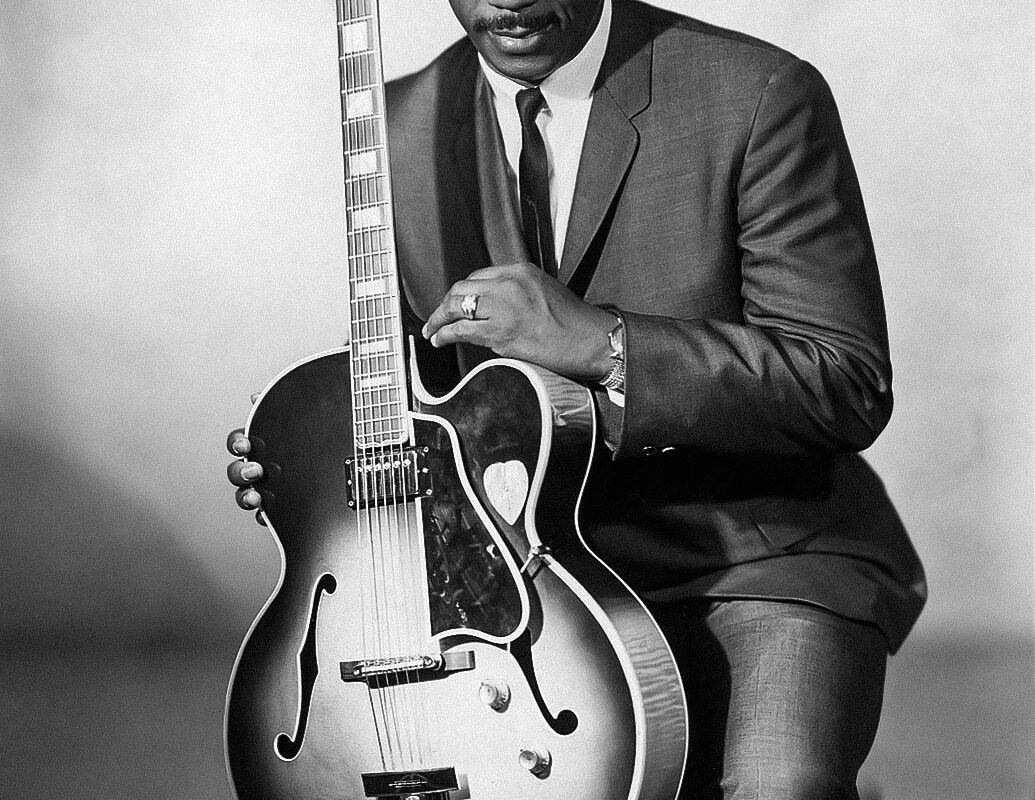
Wes Montgomery Guitars & Gear: The Complete Guide to the Jazz Master’s Rig
Wes Montgomery's guitars, amps, and effects — the complete guide. Gibson L-5 CES, Standel amps, thumb picking technique, flatwound strings, and how to nail that warm jazz tone.
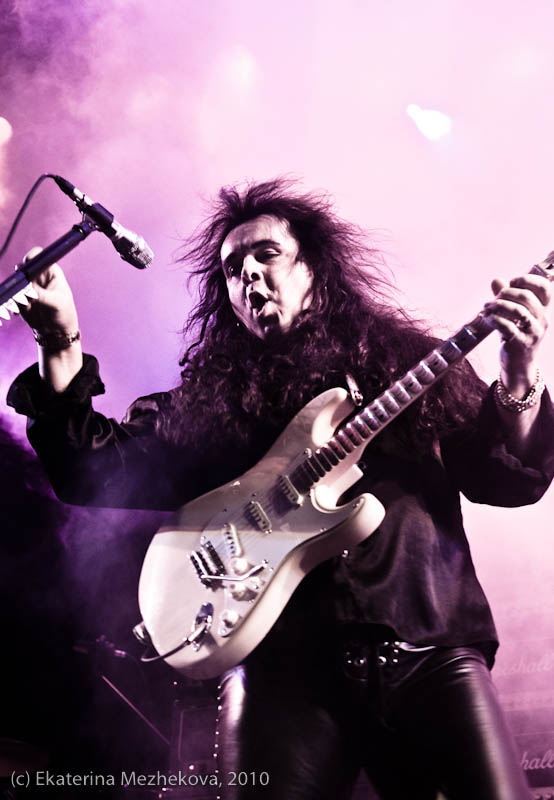
Yngwie Malmsteen Guitars & Gear: The Complete Guide to the Shred Master’s Rig
Yngwie Malmsteen's guitars, amps, and effects — the complete guide. The Duck Stratocaster, scalloped fretboard, Marshall wall, DiMarzio HS3, and how to nail that neoclassical metal tone.