Gary Holt Guitars & Gear: The Complete Guide to the Godfather of Thrash’s Exodus & Slayer Rig
Gary Holt guitars & gear: the Exodus and Slayer thrash metal architect's rig. ESP GH-600, Silver Jubilee, ENGL Savage, KHDK Paranormal signature pedal, EMG actives.
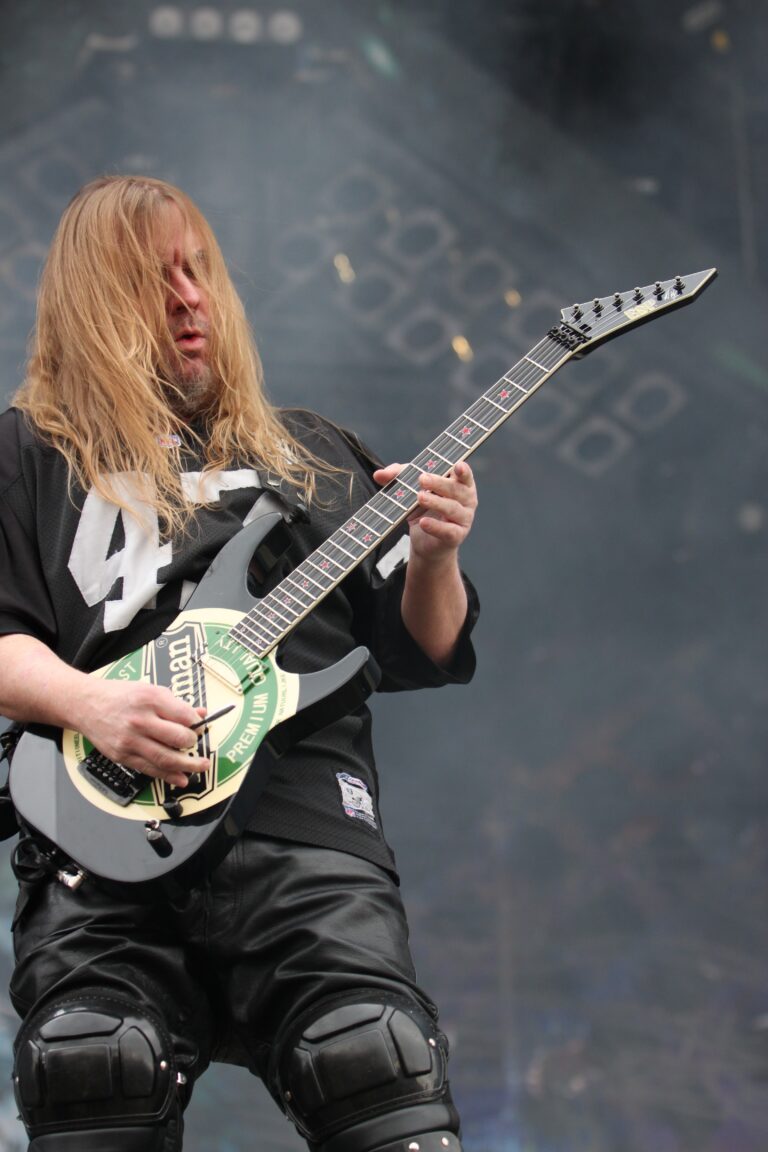
Stefan Brending / CC BY-SA 3.0 DE
In 1981, a teenager named Gary Holt joined a band called Exodus in the San Francisco Bay Area. Also in that band was another teenager named Kirk Hammett, who would leave the following year to join a band in Los Angeles called Metallica — taking with him the specific set of musical ideas about what aggressive, fast, technically demanding guitar music could be that he and Holt had developed together in Exodus’s early rehearsals. Metallica became the biggest metal band in the world. Exodus became the most respected and the most musically relentless of the Bay Area thrash bands — the band that the musicians knew was doing the thing the most honestly, at the highest level, without compromise, even as the commercial spotlight moved to their alumnus in Los Angeles. Gary Holt stayed. He has been in Exodus for over forty years. He is the longest-serving member of the band, its primary songwriter, its musical engine, and — in the specific, technically demanding vocabulary of Bay Area thrash metal — one of the most influential guitarists in the history of the genre. He also filled in as live guitarist for Slayer for several years after Jeff Hanneman’s illness and death, playing in both bands simultaneously. At one point, Gary Holt was performing live with both Exodus and Slayer in the same general touring period. That is the specific kind of career that the godfather of thrash metal deserves.
The Journey
Gary Holt was born on August 3, 1964, in Concord, California — the East Bay of the San Francisco area that would prove to be the specific geographic origin point of Bay Area thrash. His guitar influences are a revealing mix of classic rock authority and emerging metal aggression: Angus Young, Tony Iommi, Michael Schenker, and Randy Rhoads. The combination of Young’s riff instinct, Iommi’s heaviness, Schenker’s melodic lead sophistication, and Rhoads’s classical-inflected technical ambition maps directly onto what Holt developed in Exodus: riffs that are rhythmically precise and groove-driven (Young/Iommi), lead lines that are melodically coherent (Schenker), and technical execution that aspires to real classical sophistication (Rhoads). The four influences are not contradictory; they are the four quadrants of a complete heavy metal guitar vocabulary.
The Exodus debut album Bonded by Blood (1985) — recorded in 1984, delayed due to label issues, finally released when the thrash scene it helped define was already commercially established — is the foundational document of Bay Area thrash guitar. Its combination of breakneck tempo, palm-muted rhythmic precision, technically demanding lead work, and the specific quality of aggressive musical intelligence that distinguishes serious metal from simple speed for its own sake established the template for the genre in ways that remain audible across four decades of subsequent thrash. “The Toxic Waltz,” “A Lesson in Violence,” “Strike of the Beast” — these are thrash metal guitar writing at its most complete, and Holt has been building on that foundation ever since through nine additional studio albums that consistently demonstrate his ability to develop the template without compromising it.
The Slayer chapter of his career deserves specific treatment because it was not a replacement or a step-down from Exodus duty — it was a simultaneous second engagement at the highest possible level of the genre he had helped create. When Jeff Hanneman became ill with necrotizing fasciitis in 2011 and was unable to perform, Slayer asked Holt to fill in as live guitarist. He did so — learning Hanneman’s parts, joining Slayer’s touring schedule, and playing night after night to Slayer’s audience — while continuing to write and record with Exodus. After Hanneman’s death in May 2013, Holt continued with Slayer through the band’s final tour in 2018–19, appearing on the band’s final live recordings. He began this assignment using Jeff Hanneman’s actual touring rack — the equipment his predecessor had built and used, deployed by Holt out of both practical necessity and genuine respect for the man whose role he was temporarily filling. He subsequently developed his own Slayer-specific rig, most notably centered on the Marshall Silver Jubilee 2555X, which remains his primary live amplifier for that context.
The gear philosophy Holt has developed across forty-plus years is specific, practically oriented, and consistent: EMG active pickups in everything, always — “EMG pickups were a defining sound in thrash metal” and Holt has used them for forty years across every guitar configuration; ESP guitars since the late 1990s after earlier work with Jackson, Ibanez, and BC Rich; Marshall Silver Jubilee or ENGL Savage 120 for amplification depending on the band context; and a signal chain optimized for the specific demands of thrash metal rhythm playing — palm-muted, down-picked, precise, and capable of sustaining that precision across a full concert at extreme tempo. He is, in the Premier Guitar description, a “pioneering thrasher” whose rig is “designed for heavy, thrash tones” in every specific detail.
Background: Bay Area Thrash, Kirk Hammett, and the Forty-Year Commitment to Exodus
The specific musical environment that produced Gary Holt and Exodus — the San Francisco Bay Area in the early 1980s — is one of rock music’s more carefully documented origin stories, primarily because its commercial success (through Metallica) made the documentation valuable after the fact. The key elements: a working-class audience in the East Bay who had absorbed punk rock’s energy and aggression and wanted that energy applied to more technically demanding music; a local club scene centered on venues like The Old Waldorf and later The Stone where bands competed for audiences with increasing intensity and speed; and a loose collection of musicians who shared equipment, ideas, and band members with a fluidity that made the scene feel like a single creative community rather than competing commercial operations.
Holt joined Exodus in 1981, replacing original guitarist Tim Agnello. Kirk Hammett was already in the band, and the Holt-Hammett guitar partnership in early Exodus was the specific musical relationship that shaped both players’ development — Holt developing the rhythmic precision and compositional intelligence that would define Exodus for forty years, Hammett developing the lead approach and sense of melodic adventure that would serve him in Metallica. When Dave Mustaine was fired from Metallica in April 1983 and Hammett was asked to replace him, it was Holt who recommended Hammett for the position — a piece of music industry generosity that helped build Metallica’s commercial juggernaut while Exodus remained in the Bay Area, working, recording, and maintaining the musical standards that made their reputation.
The Bonded by Blood delay is one of thrash metal’s bitterest ironies. The album was recorded in 1984 — before Metallica’s Ride the Lightning had fully established thrash as a commercially viable category, before Megadeth’s debut, before the genre’s commercial wave was clearly visible. The album was ready for release in late 1984 or early 1985, but label and distribution issues delayed it until October 1985 — by which point Metallica’s Ride the Lightning and Master of Puppets were establishing the commercial parameters of the genre and Exodus’s foundational contribution was arriving after the template it had helped establish. The album’s reputation has been thoroughly rehabilitated in subsequent decades — it is now understood as one of the founding documents of Bay Area thrash — but the timing remained a source of genuine frustration for a band that deserved to have arrived earlier.
His forty-plus-year tenure with Exodus represents one of the more remarkable demonstrations of commitment and consistency in the history of heavy metal. Most bands of Exodus’s generation either disbanded, achieved massive commercial success, or made significant stylistic compromises to remain commercially relevant. Exodus did none of these: they continued making technically demanding, uncompromised thrash metal across eleven studio albums, finding new ways to develop the template without abandoning it, and maintaining the musical standards that had made them the Bay Area scene’s most critically respected band. Holt is the constant — the songwriter, the guitarist, the musical intelligence that has kept Exodus’s output at a consistently high level through lineup changes, industry changes, and the entire arc of heavy metal’s commercial history from underground phenomenon to global industry.
The Rig: Gary Holt’s Guitars, Amps, and Effects
Guitars
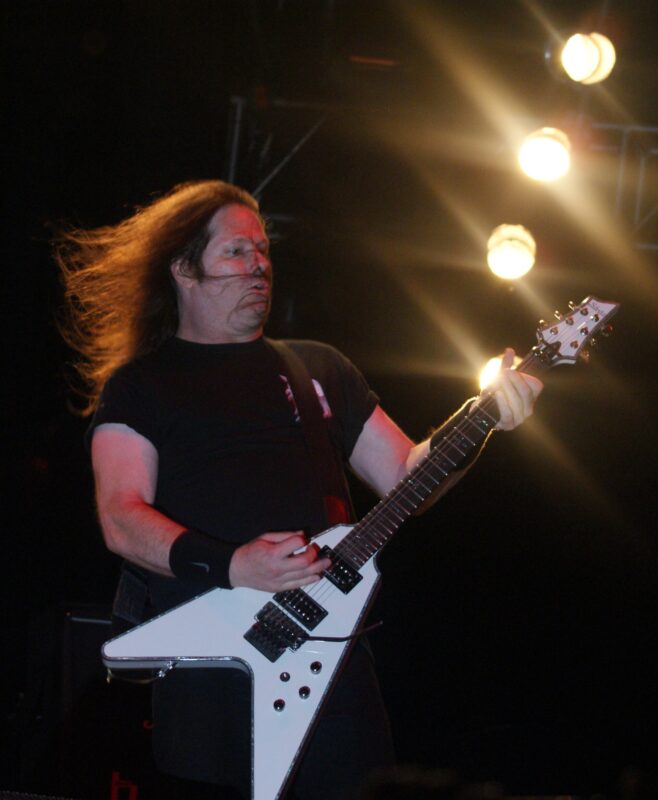
Gary Holt’s signature ESP GH-600 is based on the ESP Eclipse — the single-cutaway Les Paul-influenced body shape that ESP produces as a premium alternative to the standard LP design. The GH-600 features a mahogany body and three-piece mahogany neck with a Macassar ebony fretboard, 22 extra-jumbo frets, EMG 81R and 89R active pickups, and a Floyd Rose 1000 Series tremolo. The specific example documented by Premier Guitar’s most recent Rig Rundown is the custom-shop goldtop version — a gold-finished Eclipse that Holt calls “Goldy” — which was his primary Slayer touring guitar during the years he filled in for Jeff Hanneman and has continued as a central touring instrument for Exodus. The FU-Tone performance hardware components have been installed as upgrades — FU-Tone is a company specializing in Floyd Rose-compatible parts with improved sustain and tuning stability characteristics. The EMG 81R in the bridge and 89R in the neck are the specific active pickup combination Holt has settled on: the 81R is the active rail-pickup version of the industry-standard EMG 81, and the 89R is a dual-mode pickup that can function as either a single-coil or a full humbucker via a push/pull coil-split control. The Eclipse body shape — single-cutaway, set-neck, Les Paul proportions — provides the mahogany warmth and resonance that the EMG active pickups then amplify with their characteristic high-output, high-headroom character.
In addition to the Eclipse-body GH-600, Holt’s ESP signature range includes a Rhoads-style asymmetrical V variant — the angular, offset V shape that Randy Rhoads popularized in his Ozzy Osbourne work and that has remained a visual and tonal signature of technical metal guitar. The Rhoads V configuration provides a different resonance character from the Eclipse body — the angular shape’s wood mass distribution produces different sustain characteristics and a different acoustic voice from the single-cutaway design — while maintaining the same EMG active pickup configuration and Floyd Rose tremolo that characterise the primary GH-600.
The ESP LTD production range includes the GH-600 and GH-200 — the more accessible versions of Holt’s signature designs, built to the same basic specifications as the custom-shop instruments but at production prices with appropriate quality tier adjustments. The LTD GH-600 is described as built to handle “the most aggressive, fast, and powerful” playing demands of the thrash metal context; the GH-200 uses bolt-on construction and basswood body for the most accessible price point. The ESP documentation confirms Holt as “known as the godfather of thrash metal” — a title the company clearly considers well-earned enough to put in their product descriptions.
Before his long-term ESP relationship, Holt used the superstrat-style instruments that were standard for aggressive metal guitarists in the 1980s. Jackson, Ibanez, BC Rich, and Yamaha all appear in his documented pre-ESP arsenal — the standard configuration of hot-rodded superstrat bodies with high-output pickups and Floyd Rose or comparable floating tremolo systems. The BC Rich Warlock, Ibanez RG series, and Jackson King V or Soloist variants were all appropriate tools for Bay Area thrash in the 1980s, providing the combination of aggressive ergonomics, high-output pickups, and tuning-stable tremolos that the specific technical demands of thrash metal rhythm playing required. The transition to ESP represented both an upgrade in instrument quality and the development of the long-term signature relationship that produced the GH-600.
Gary Holt has been using EMG active pickups for forty years — a consistency that spans the entire arc of his career from early Exodus through the Slayer period and back to the current Exodus configuration. The 81R and 89R pairing represents his mature active pickup specification: the 81R in the bridge for the high-output, tight-bass, aggressive-midrange character needed for the palm-muted thrash rhythms and precision lead work; the 89R in the neck for the versatility of the coil-split function that allows either humbucker warmth for sustaining lead passages or single-coil clarity for cleaner, more articulate tones. Both pickups are powered by batteries at 9 volts in standard configuration, with the option of the 18-volt series wiring modification that Glenn Tipton used with his EMG GTX pickups for additional headroom — Holt’s specific battery configuration is not documented with the same precision as Tipton’s, but the forty-year EMG commitment confirms that the active pickup’s specific character — high headroom, low noise, consistent output across guitar-to-guitar variation — is fundamental to his tonal approach.
Amps
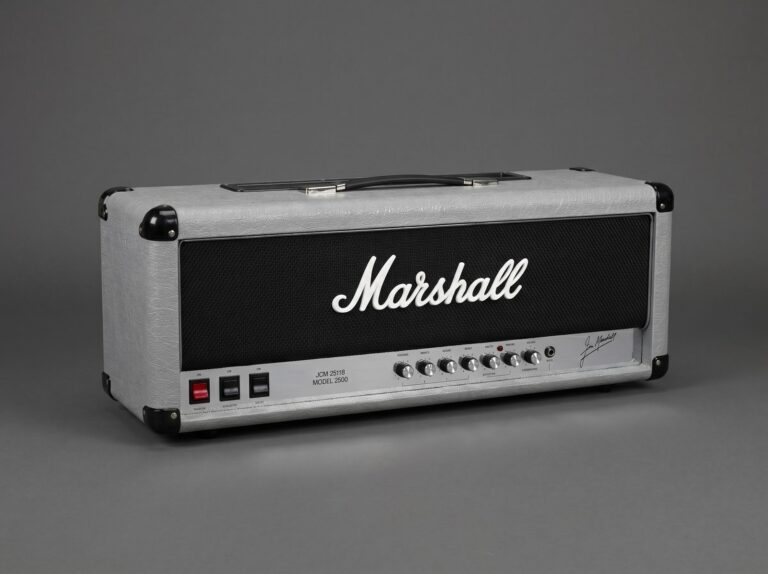
The Marshall Silver Jubilee 2555X is Gary Holt’s primary live amplifier for both his Slayer-era work and his current Exodus touring. The original Silver Jubilee was produced in 1987 to commemorate Marshall’s 25th anniversary — a limited production run of an amplifier with a specifically modified gain circuit that produces a tonally distinctive, harmonically rich overdrive character. The 2555X is the 2018 reissue of the same design, maintaining the original circuit topology and the specific valve character that made the original Silver Jubilee one of the most sought-after Marshall amplifiers of the late 1980s period. The Jubilee’s gain character is different from the JCM800 — more harmonically complex, with a different quality of saturation that many players describe as more musical and less compressed than the 800’s famously aggressive character. For thrash metal rhythm playing, the specific quality of the Jubilee’s gain provides both the aggression required for fast palm-muted riffing and the harmonic complexity needed for the chords and lead passages to retain their musical character at high gain levels. Holt uses this amplifier boosted with either a Maxon OD-9 or a KHDK Paranormal overdrive pedal before the input — pushing the already-gainy Jubilee into the specific high-gain territory required for Bay Area thrash at arena volume.
For Exodus specifically — particularly in studio contexts — Holt uses an ENGL Savage 120: “For Exodus I still use the Engl Savage 120, which is probably the best-sounding amp in the world right now,” he told Guitar World. The ENGL Savage 120 is a German-made high-gain amplifier known for its “thick, brutally powerful sound” — described as having a natural, organic overdrive character that suits the specific demands of tight, precise thrash metal rhythm playing. Its four-channel architecture allows clean, crunch, and two different high-gain configurations, with a sophisticated built-in effects loop and MIDI-controllable channel switching. The ENGL’s European high-gain character differs from the Silver Jubilee’s British character, and Holt’s use of different amplifiers for different band contexts reflects a nuanced understanding of how amplifier character serves different musical purposes.

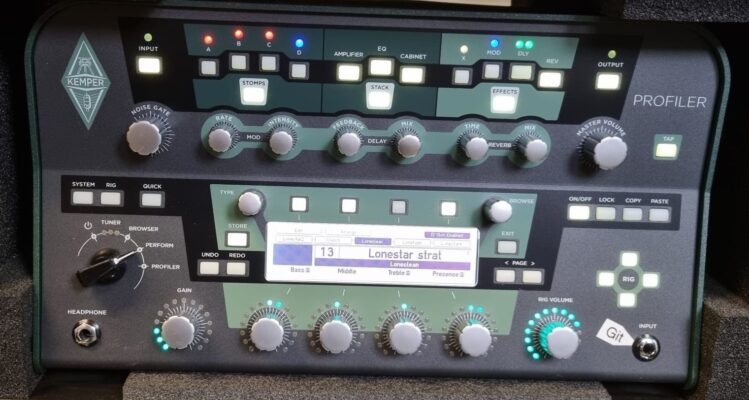
Holt has “wholeheartedly embraced the Kemper amp profiler” for studio applications and touring flexibility. The Kemper Profiling Amp allows the guitarist to profile (capture the tonal character of) any physical amplifier and then reproduce that captured profile at any volume level. For a guitarist who uses specific amplifiers — the Silver Jubilee for Slayer, the ENGL for Exodus — the Kemper provides the flexibility to access either profile without physically carrying both amplifiers to every session or performance. His Equipboard documentation captures his description of running the Kemper through the effects returns of JCM800s: “Kemper runs through the effects returns of the JCM 800’s, simply put, this rig is my favorite tone I’ve ever had. Just straight up CRUNCHY AND CRUSHING! Amazing how big this shit sounds!” The JCM800’s power amp stage, driven by the Kemper’s pre-profiled amplifier capture, produces a hybrid system that combines digital flexibility with analogue EL34 power stage character.
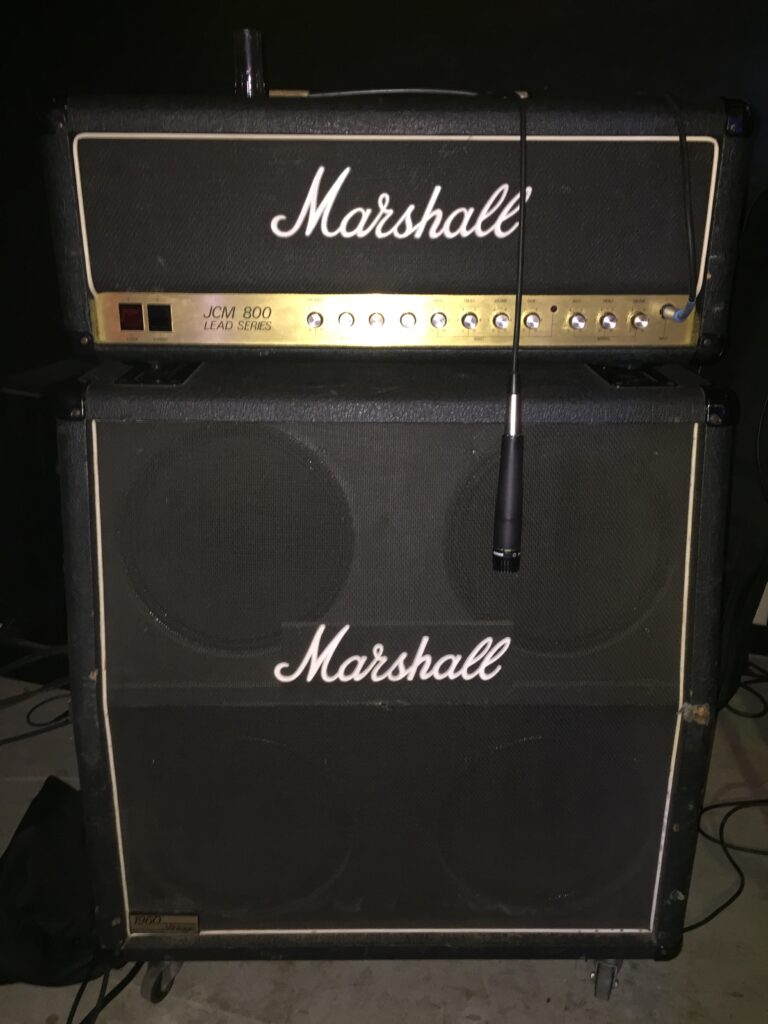
The Marshall JCM800 appears in Holt’s early Exodus equipment — described as a “modified Marshall JCM800” — consistent with the Bay Area thrash scene’s standard amplification approach in the mid-1980s. The JCM800 was the dominant high-gain Marshall of the period, and the Bay Area thrash bands used it extensively, typically with front-loaded boost or overdrive pedals to push the preamp into more extreme gain territory than the stock JCM800 could naturally achieve. Holt’s modification of his JCM800 would have been aimed at the same goal — more gain, tighter bass response, more aggressive midrange character for the specific demands of thrash rhythm guitar.
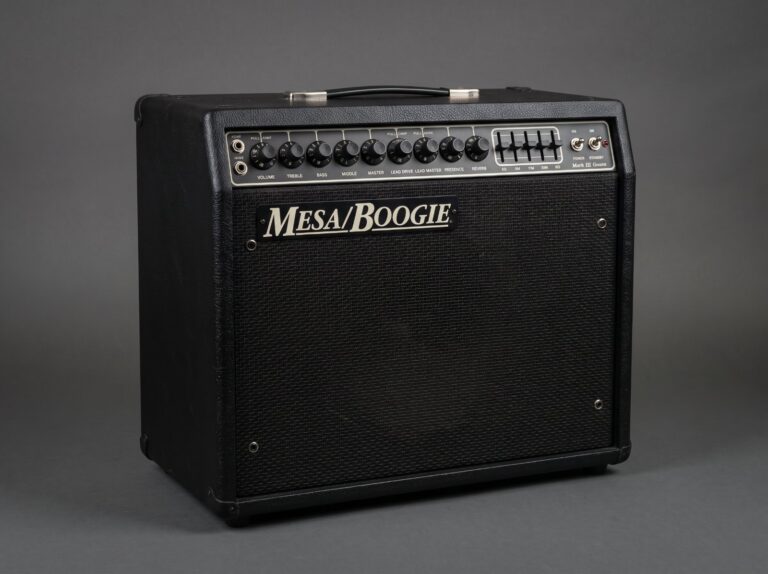
A Mesa/Boogie Mark III also appears in Holt’s documented early career amplification — the American high-gain amplifier that was the most common alternative to Marshall in the Bay Area thrash scene and that provided a different quality of high-gain distortion (more compressed, more mid-forward, with the specific Mesa/Boogie character of complex harmonic saturation). The Mark III’s presence in the early Exodus rig reflects the same practical eclecticism — using whatever amplifier provided the right combination of gain, tone, and reliability for the specific musical context.
Gary Holt has a signature 4×12 speaker cabinet made by boutique American cabinet manufacturer Arachnid Cabinets — loaded with Celestion Vintage 30 speakers. The Arachnid signature cabinet represents Holt’s most specific contribution to the amplification side of his rig, going beyond simple brand endorsement to a specifically designed enclosure built to his requirements. The Celestion Vintage 30 speakers — a 30-watt ceramic magnet speaker with a distinctive mid-forward frequency response — are one of the most widely used speakers in professional rock and metal touring, and their specific character (more aggressive, more mid-present than the G12T-75) suits Holt’s heavy midrange approach well.
Effects
The KHDK Gary Holt Paranormal overdrive — produced by Kirk Hammett’s boutique effects company KHDK Electronics, founded by Hammett’s audio engineer David Karon — is Gary Holt’s signature drive pedal and one of the more historically resonant pieces of gear: a signature pedal from Kirk Hammett’s company, designed for the guitarist who was in Exodus with Hammett before Hammett joined Metallica. The Paranormal is described as a high-gain overdrive designed specifically for the thrash metal context — its circuit was developed with Holt’s specific tonal requirements in mind, providing the aggressive midrange boost and gain increase needed to push the Silver Jubilee or ENGL into the extreme high-gain territory required for modern thrash at arena volume. The Paranormal II is the updated version with additional control options. Holt uses this pedal as a boost in front of the amplifier — engaging it for passages requiring maximum intensity while using the amp’s natural character for the baseline thrash rhythm tone.
The Maxon OD-9 — a high-quality Japanese overdrive pedal closely related to the Ibanez TS9 Tube Screamer (Maxon was the OEM manufacturer of the TS9 before Ibanez’s circuit was redesigned) — appears in Holt’s Slayer-era documented equipment as a boost pedal for the Silver Jubilee. The OD-9’s warm, midrange-boosting overdrive character is specifically useful for pushing an already high-gain amplifier into more extreme territory without the harsh top-end that some overdrive pedals introduce. Used at low drive settings, the OD-9 functions primarily as a mid-frequency boost and signal level increase, pushing the Silver Jubilee’s input harder while adding warmth rather than harshness.

A Boss SD-1 appears in Holt’s documented effects chain — the same pedal documented in Dave Murray’s rig — used as a drive and boost option. The SD-1’s asymmetric clipping adds a specific midrange-forward drive character, and its simple two-control interface makes it a reliable, consistent tool for the specific boost function it serves in the high-gain thrash context.

The MXR Bass Octave Deluxe appears in Holt’s documented rig — an unusual pedal for a guitar player, being primarily designed for bass guitar applications. Its use in a guitar context produces a thickened, sub-bass-augmented guitar signal that adds physical weight and low-end authority to the already-aggressive thrash rhythm sound. For the specific demands of thrash metal bass-register riffing — palm-muted, downpicked, at extreme tempo — the additional low-end depth from the Bass Octave Deluxe can add the specific physical weight needed for the rhythm guitar to cut through a full thrash band mix at arena volume.

The Goop Tech Mod — for “low-end resonance” — is a custom tonal modification device used by Holt to control the low-frequency resonance of his signal chain. This type of resonance control allows the guitarist to fine-tune the low-frequency content of the signal in ways that standard amp EQ controls don’t precisely address, particularly for the tight, controlled bass response that thrash metal rhythm guitar requires. Loose or flabby low-end in a thrash guitar signal is immediately audible and problematic — the precision of palm-muted downpicking at extreme tempos requires tightly controlled bass response that doesn’t blur or bloom.
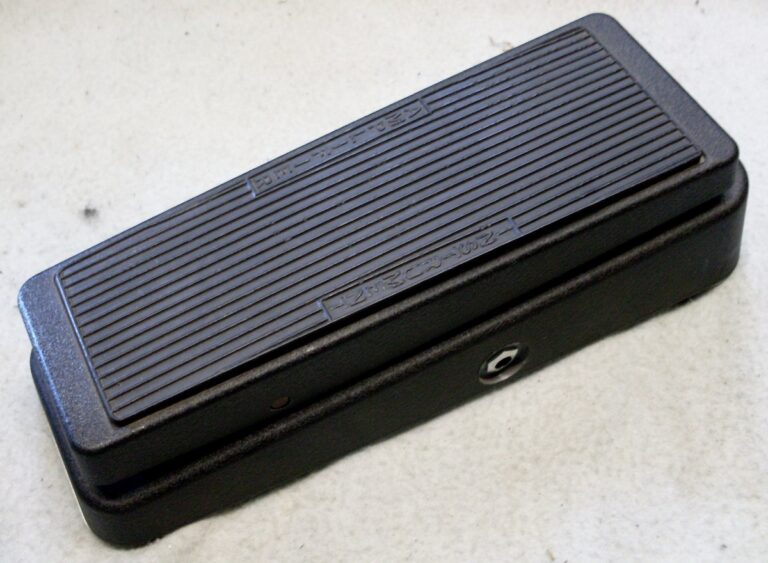
A Dunlop Crybaby wah appears in Holt’s documented effects chain — used for specific lead passages where the vocal, sweeping quality of the wah effect adds expressiveness to extended solo work. In the context of Holt’s primarily rhythm-guitar-focused approach, the wah is a relatively rare effect used for specific musical moments rather than as a constant tonal presence.
The Voodoo Lab GCX is an audio switching system that allows individual effects pedals and amp channels to be selected via MIDI commands — providing the same programmable recall capability that Janick Gers’s Marshall JMP-1 preamp provides, but applied specifically to the effects pedal chain rather than the amplifier. The GCX allows Holt to program specific combinations of pedals for different songs, engaging them precisely at the right moments via MIDI foot controller without manually stepping on multiple switches during performance.
Holt alternates between two signature string sets from Von Frankenstein Monster Gear — the Toxic Rocks (.009–.052w) and Collateral Damage (.009–.060w) — developed in collaboration with Doyle of the Misfits. The range of gauges between the two sets (specifically the wound string end: .052w vs .060w) allows Holt to choose the tension and tonal character appropriate for different tunings and playing contexts. Heavier wound strings provide more tonal weight and sustain for lower-tuned passages; lighter ones provide more flexibility for standard-tuning lead work. The co-development with Doyle of the Misfits — another legendary punk/metal guitarist with specific string requirements for aggressive playing — represents a collaboration of genre heavyweights with complementary technical needs.
Playing Style & Tone Philosophy
Gary Holt plays thrash metal guitar with the precision and physical commitment of a craftsman who has been perfecting the same specific set of techniques for forty years. The palm-muted, downpicked rhythm approach that defines Bay Area thrash — the specific quality of controlled, percussive aggression that distinguishes the style from both conventional heavy metal and from punk rock — is executed by Holt with a physical accuracy and musical intelligence that makes even the most extreme tempos feel inevitable rather than hectic. The riffs on Bonded by Blood are not fast because speed is the goal; they are fast because the specific emotional and musical content they express requires that tempo to feel right. This is the difference between music that uses speed as a quality and music that is simply quick.
His lead work — which receives less attention than his rhythm playing in the standard critical account of Exodus — demonstrates the same technical ambition combined with genuine musical purpose that the rhythm work embodies. The lead guitar on “A Lesson in Violence,” “The Toxic Waltz,” and the extended compositional showcases of later Exodus albums is fast and technically demanding, but the individual phrases are musically coherent, the solos have structure and development, and the overall approach reflects the Randy Rhoads and Michael Schenker influences he has consistently cited — both players who combined technical accomplishment with genuine musical thinking.
The EMG active pickup commitment — forty years without deviation — reflects a specific understanding of what active pickups provide for the thrash metal context that passive pickups don’t match. The EMG’s low noise floor is essential for the pauses between palm-muted attacks: in a thrash metal performance, the silence between riff notes is as important as the notes themselves, and 60-cycle hum from passive pickups fills that silence with unwanted noise. The EMG’s consistent output across guitar-to-guitar variation means that multiple guitars used in a single performance will have the same fundamental signal character, ensuring that tone changes don’t occur inadvertently when switching instruments. And the EMG’s high headroom — its ability to remain undistorted at high input levels, leaving the distortion generation to the amplifier and pedals where it can be precisely controlled — provides the specific quality of attack and note definition that thrash metal rhythm playing requires.
How to Sound Like Gary Holt
The Holt thrash tone requires: an EMG-equipped guitar (the GH-600 or any EMG 81-equipped instrument); a high-gain amplifier in the Silver Jubilee or ENGL Savage family; a midrange overdrive boost (Paranormal or Maxon OD-9) in front of the amp; and the specific physical technique of palm-muted downpicking executed with precision and commitment. The gear without the technique produces distorted guitar at high gain. The technique and the gear together produce Bay Area thrash.
| Control | Setting (0–10) | Notes |
|---|---|---|
| KHDK Paranormal / Maxon OD-9 (Boost Before Amp) | Drive: 3; Level: 7; Tone: 5 | Used as a mid-boost and input-level increase rather than primary distortion source. Low drive preserves the amp’s character; higher level pushes the amp input harder. The boost tightens the low end and adds midrange punch — essential for the precise, defined quality of thrash rhythm guitar at high gain levels. |
| Silver Jubilee Gain | 8 | The Jubilee’s gain circuit produces a harmonically rich, organic saturation at high settings. At 8, combined with the OD-9/Paranormal boost in front, the resulting gain level is extreme but retains musical character — individual notes in fast runs are audible, chords have specific harmonic content, not just compressed noise. |
| Bass | 5–6 | Controlled, tight bass — the EMG 81’s tight bass response means the amp doesn’t need to add low-frequency weight. Excessive bass at high gain creates the flabby, loose character that makes palm-muted thrash riffs sound indistinct. Tight, controlled bass preserves rhythmic precision. |
| Mid | 7 | Present midrange — the heart of the thrash tone. The EMG 81’s mid character combined with the amp’s mid at 7 produces the aggressive, present, defined quality that makes fast palm-muted riffs cut through a full band mix. Never scoop. Mid is everything in thrash. |
| Treble | 7 | High treble for attack definition — each downpicked note needs a sharp, defined attack transient to convey the rhythmic precision of thrash playing. Moderate-to-high treble provides this without the ice-pick harshness that excessive treble can introduce at high gain levels. |
| Presence | 7 | High presence for cut and definition at arena volume. Thrash guitar has to cut through one of the densest sonic environments in rock — bass, two guitars, drums, vocals — and presence at 7 provides the high-frequency definition needed for the guitar to maintain its rhythmic and melodic clarity in that environment. |
| Master Volume | 7–9 | EL34 output stage engagement is essential for the Jubilee’s specific character. Low master volume loses the specific power-amp warmth and compression that distinguishes the Jubilee’s tone from a flat digital approximation. As loud as the situation permits. |
| Palm-Muting Technique | Precise; committed; rhythmically exact | The palm of the picking hand rests on the strings just behind the bridge saddles — enough to dampen the string vibration while allowing pitch to speak, but not so much that the strings are completely muted. The exact muting position determines the tone quality: too far from the bridge produces a thuddy, over-muted character; too close produces insufficient muting. Find the spot where the string speaks with controlled aggression and practice keeping it consistent at high tempos. |
| Downpicking vs. Alternate Picking | Downpicking for rhythm; alternate for leads | Thrash metal rhythm guitar is primarily downpicked — every note struck with a downward pick motion rather than alternating down-up. Downpicking produces a more aggressive, percussive attack character than alternate picking, and the rhythmic uniformity of all-downstroke patterns contributes to the driving, locked-in quality of thrash rhythm guitar. The physical demands of downpicking at thrash tempos are substantial; this is a technique that requires specific conditioning over time. |
Influence & Legacy
Gary Holt’s influence on thrash metal guitar is as foundational as it is sometimes underacknowledged. Bonded by Blood is a co-founding document of Bay Area thrash — it helped establish the specific grammar of the genre’s guitar vocabulary that Kirk Hammett and everyone else who came through the scene had already been absorbing in rehearsal form before it was officially released. The idea that you can play guitar with a mathematician’s rhythmic precision and a musician’s harmonic intelligence simultaneously — that aggression and sophistication are not mutually exclusive in heavy metal — is a specific Exodus contribution, and Holt has maintained it across eleven studio albums and forty-plus years of playing.
The Slayer period added a different dimension to his legacy: the demonstration that a player of Holt’s caliber could step into the most demanding possible substitute role — learning Jeff Hanneman’s parts for one of the most important and intensely scrutinized bands in metal history — and perform them with the respect and precision they deserved while maintaining his own band commitments in parallel. It is a demonstration of professionalism, physical endurance, and musical intelligence that speaks to the depth of his technical development. For the broader context of Bay Area thrash and how Exodus fits into it, the connection to Kirk Hammett’s Metallica work provides the most direct comparative reference. The NWOBHM influence that flows into Holt’s approach — particularly the Iommi and Schenker influences he has cited — connects to Michael Schenker’s Flying V work and to the broader tradition of British heavy metal from which American thrash drew its technical ambitions. The EMG active pickup philosophy that has defined Holt’s tone for forty years connects to Glenn Tipton’s 18-volt EMG GTX approach — two guitarists in different metal subgenres who arrived at the same fundamental conclusion about active pickup advantages.
The KHDK connection — Gary Holt’s signature pedal produced by Kirk Hammett’s company — is perhaps the most elegant possible summary of the relationship between these two guitarists who started together in Exodus in 1981. One went to Metallica. The other stayed in Exodus. Both became legends. Forty years later, Hammett is producing Gary Holt’s signature overdrive pedal. The Bay Area thrash scene’s specific generosity and mutual recognition — the awareness that everyone in the scene was part of something together, not competing against each other — is preserved in that specific commercial and creative collaboration. The godfather of thrash and the Metallica lead guitarist, still collaborating. The riffs continue.
Frequently Asked Questions: Gary Holt Guitars & Gear
What guitar does Gary Holt play?
Gary Holt’s primary signature guitar is the ESP GH-600 — based on the ESP Eclipse single-cutaway body shape, with a mahogany body and three-piece mahogany neck, Macassar ebony fretboard, 22 extra-jumbo frets, EMG 81R and 89R active pickups, and a Floyd Rose 1000 Series tremolo with FU-Tone hardware upgrades. His most famous example is “Goldy” — a custom-shop goldtop version that was his primary Slayer touring guitar during his years filling in for Jeff Hanneman. The ESP GH-600 range also includes a Rhoads-style asymmetrical V variant, and the ESP LTD production range offers GH-600 and GH-200 versions at more accessible price points. Before his ESP signature relationship, Holt used superstrat-style instruments from Jackson, Ibanez, BC Rich, and Yamaha.
What amps does Gary Holt use for Exodus versus Slayer?
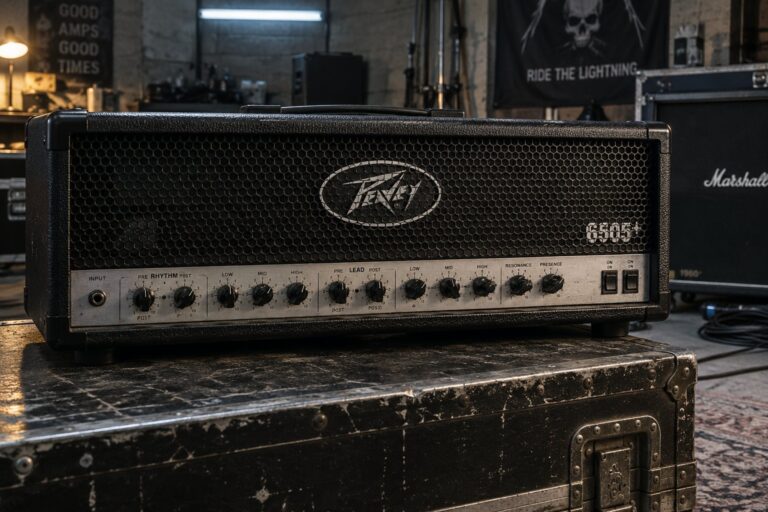
Holt maintains different amplifier setups for the two band contexts. For Slayer work (and now increasingly for Exodus live work), he uses the Marshall 2555X Silver Jubilee Reissue — boosted with either a KHDK Paranormal or Maxon OD-9 at the input. For Exodus in studio contexts and earlier live work, he has used the ENGL Savage 120, which he described to Guitar World as “probably the best-sounding amp in the world right now.” He has also “wholeheartedly embraced” the Kemper Profiling Amplifier for its flexibility — running captured amp profiles through the effects return of JCM800 heads to use the Marshall power amplifier stage with digitally captured preamp tones. Earlier in his career he used a modified Marshall JCM800, Mesa/Boogie Mark III, Marshall JVM, and Peavey Triple XXX.
What is the KHDK Gary Holt Paranormal pedal?
The KHDK Gary Holt Paranormal is a signature overdrive pedal produced by KHDK Electronics — the boutique effects company founded by Kirk Hammett and his audio engineer David Karon. The Paranormal was developed specifically for Holt’s thrash metal tonal requirements: a high-gain overdrive that provides the aggressive midrange boost and gain increase needed to push a high-gain amplifier like the Silver Jubilee into the extreme gain territory required for modern thrash at arena volume. The Paranormal II is an updated version with additional control options. The KHDK connection represents a full-circle moment in rock music history: Holt and Hammett were both in Exodus in 1981 before Hammett left to join Metallica, and forty-plus years later, Hammett’s company is producing Holt’s signature drive pedal.
What was Gary Holt’s connection to Jeff Hanneman and Slayer?
When Jeff Hanneman contracted necrotizing fasciitis in January 2011 and was unable to perform, Slayer asked Holt to fill in as live guitarist. He began this role using Jeff Hanneman’s actual touring rack, continuing with his own rig centered on the Silver Jubilee as his time with Slayer extended. Hanneman died in May 2013, and Holt continued with Slayer through their 2018-2019 Final World Tour, appearing on the band’s final live recordings. Throughout this period, he maintained his commitments with Exodus — writing, recording, and continuing to tour with his primary band while simultaneously performing with one of thrash metal’s founding acts in its farewell run.
Why has Gary Holt used EMG pickups for forty years?
Holt has cited multiple reasons for his long-term EMG commitment. Active pickups have an extremely low noise floor — essential for the silences between palm-muted attacks that are as important as the notes themselves in thrash metal. They have consistent output across guitar-to-guitar variation, ensuring that switching instruments during a performance doesn’t create inadvertent tone changes. Their high headroom allows the distortion generation to be precisely controlled by the amplifier and pedals rather than by pickup saturation, providing the attack definition and note clarity that fast thrash rhythm playing requires. And their specific tonal character — tight bass, aggressive midrange, consistent output — suits the demands of the genre he has been playing for forty years.
How did Kirk Hammett’s departure from Exodus affect Gary Holt’s career?
Hammett left Exodus in April 1983 to join Metallica, and Holt recommended him for the position. The specific effect on Holt’s career was to make him the primary creative force in Exodus — no longer sharing creative leadership with Hammett, but carrying the full compositional weight of the band’s development from that point forward. This transition produced the Bonded by Blood album’s specific guitar approach, which is entirely Holt’s: the precision riffing, the structured lead work, the compositional intelligence that distinguishes Exodus’s thrash from its faster but less musical contemporaries. Commercially, Hammett’s departure meant that Exodus’s commercial trajectory diverged from Metallica’s — the band that included Hammett became one of the biggest in the world, while the band Hammett left remained a critical standard-bearer. Holt has maintained the creative standards of Exodus across forty-plus years, producing eleven studio albums of uncompromised thrash metal that collectively constitute one of the genre’s most impressive catalogs.
What are Gary Holt’s main guitar influences?
Holt has consistently cited Angus Young, Tony Iommi, Michael Schenker, and Randy Rhoads as his primary guitar influences — four players who represent different but complementary aspects of heavy rock and metal guitar. Young brings riff instinct and blues-rock energy; Iommi brings the fundamental heaviness and the power of simple, well-chosen notes; Schenker brings melodic lead sophistication and harmonic awareness; and Rhoads brings the classical-influenced technical ambition and compositional intelligence that aspires to genuine formal musical development within a metal context. These four influences map directly onto the qualities that distinguish Holt’s playing: rhythmically precise and groove-driven riffing (Young/Iommi), harmonically coherent lead lines (Schenker), and technical execution that aims at real musical accomplishment rather than mere speed (Rhoads).
Image credits
- Gary Holt: photo by Medellín Digital, via Wikimedia Commons, CC BY 2.0.
- Marshall JCM800: John2112, Wikimedia Commons, CC BY-SA 4.0.
- Boss SD-1 Super OverDrive: GuitarGangsters AI-generated reference illustration, not a photograph.
- Dunlop Cry Baby: Roadside Guitars, Flickr, CC BY-SA 2.0.
- Kemper Profiler: Vonvon, Wikimedia Commons, CC0.
- Mesa/Boogie Mark III: GuitarGangsters AI-generated reference illustration, not a photograph.
- Maxon OD-9: GuitarGangsters AI-generated reference illustration, not a photograph.
- Marshall 2555X Silver Jubilee: GuitarGangsters AI-generated reference illustration, not a photograph.
- ENGL Savage 120: GuitarGangsters AI-generated reference illustration, not a photograph.
- MXR Bass Octave Deluxe: GuitarGangsters AI-generated reference illustration, not a photograph.