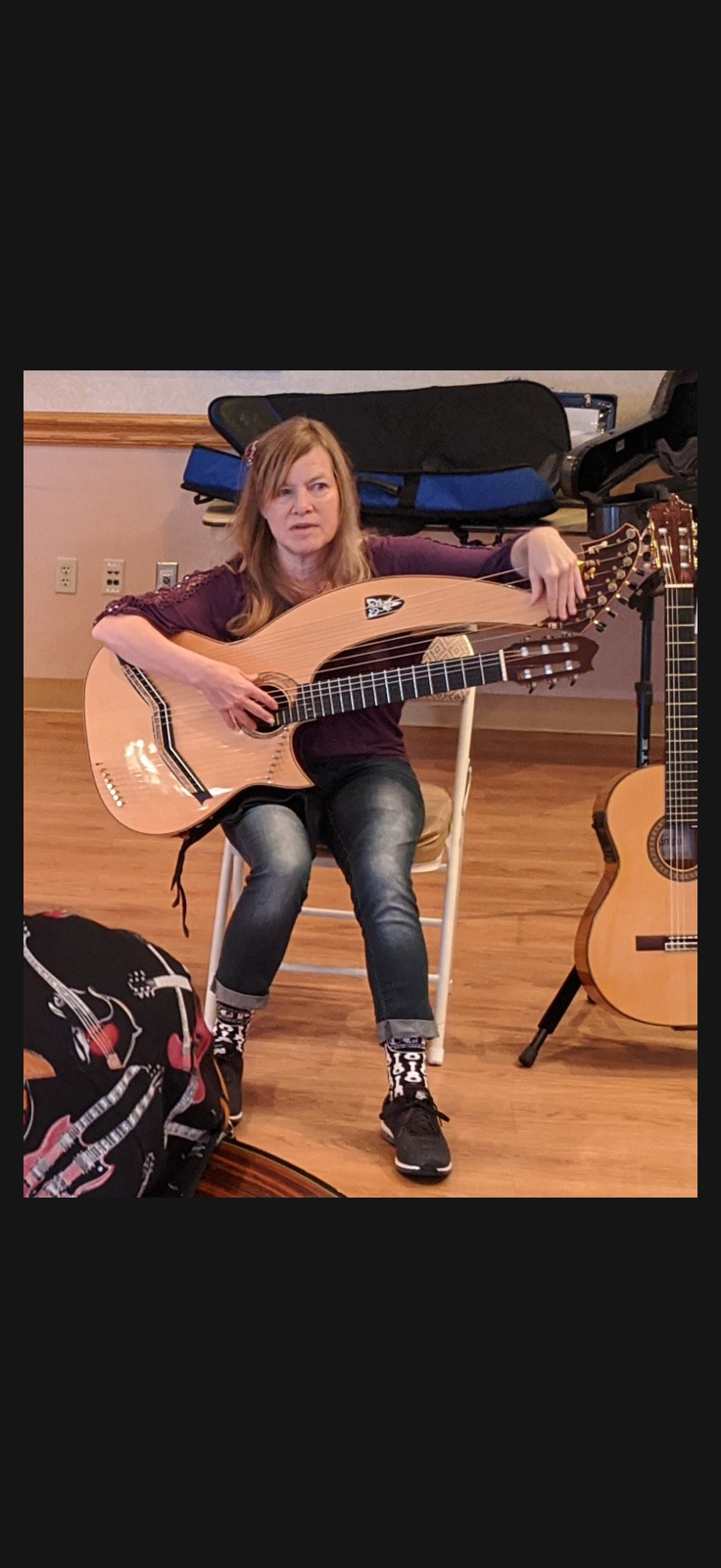
Ramirez 1a: The Guitar That Changed What a Classical Guitar Was Allowed to Sound Like
The Ramirez 1a story: the cedar top accident, Segovia's documented 1969 guitar, the fake Segovia Model label, specs, tone recipes and buying advice.
There is a short list of instruments that didn’t just serve the music of their era but actively rewrote it. A 1959 Les Paul Standard. A pre-CBS Stratocaster. And, in a world that rarely gets mentioned in the same breath as either of those, a big-bodied Spanish nylon-string with a reddish-brown cedar top and a string length long enough to make a modern player’s left hand file a formal complaint: the José Ramírez 1a.
This isn’t a review. It’s the story of how a Madrid workshop founded in 1882 ended up building the instrument that Andrés Segovia carried through the last two decades of his concert career — and how, in the process, it dragged the entire classical guitar world away from small-bodied spruce instruments toward something louder, darker, and more theatrical. It’s also the story of one of the most persistent pieces of misinformation in the classical guitar market, the so-called “Segovia Model” gold label, which turns out to have been invented by a distributor without permission and which José Ramírez III himself put in writing that he never approved.
Both of those stories are true at the same time, and the tension between them is the most interesting thing about this guitar.
Madrid, 1882: A Dynasty Before There Was a Model
The Ramírez name predates the 1a by roughly eight decades. José Ramírez I set up shop in Madrid in 1882, at a moment when the Spanish guitar was still consolidating around the design language Antonio de Torres had established a generation earlier. What Ramírez I built was a workshop culture as much as a guitar: a place where journeymen were trained, where apprentices worked their way up, and where the instruments carried a house voice rather than a single pair of hands.
His brother Manuel Ramírez split off and built his own reputation, and it’s Manuel who owns the single most famous anecdote in the family history. In 1912, a young and largely unknown Andrés Segovia walked into Manuel Ramírez’s Madrid shop intending to rent a guitar for a concert. Manuel listened to him play, and instead of renting him an instrument, gave him one. Segovia played that guitar for decades. It is the origin point of the entire Ramírez–Segovia relationship, and it happened half a century before the 1a existed.
That distinction matters, because a great deal of loose writing about this guitar collapses the two events into one. Manuel Ramírez gave Segovia a guitar in 1912. José Ramírez III — Manuel’s great-nephew, running the José Ramírez workshop — built the instruments Segovia used in the 1960s and 1970s. Different maker, different workshop, different guitar, seventy years of Spanish luthiery in between.
The Accident That Made the Sound
The 1a as the world came to know it is a product of the late 1950s and early 1960s, when José Ramírez III began pushing the classical guitar toward larger dimensions, longer string length, and — most consequentially — a Western red cedar soundboard instead of the spruce that had been near-universal.
Amalia Ramírez, José III’s daughter and the current head of the company, tells the origin of the cedar top as pure serendipity. Her father sent an apprentice out to buy cedar for guitar necks. The apprentice came back with cedar suitable for soundboards instead — a mistake. Rather than sending it back, José III looked at the grain, thought it resembled spruce closely enough to be worth an experiment, thicknessed a piece down to soundboard dimensions, and left it overnight on a sheet of metal to see whether it would warp. In the morning it hadn’t moved. He built a guitar with it.
The result changed the instrument permanently. Cedar responds faster than spruce, sounds “open” from the first day rather than requiring years of playing-in, and brings a darker, warmer, more immediately colorful voice. It also generates volume more readily under a moderate right hand — which, in the pre-amplification concert-hall era, was not a cosmetic advantage. Within a decade, cedar had spread from Ramírez to workshops across Spain and eventually into the steel-string world too. Nearly every cedar-topped nylon-string guitar built since, at every price point, traces back to that apprentice’s shopping error.
Paired with the cedar top, Ramírez III enlarged the body and stretched the string length out to 664mm — significantly longer than the 650mm that had become the Spanish standard. Longer string length at a given pitch means higher tension, and higher tension means more energy driving the top. More volume, more sustain, more separation between voices in a contrapuntal texture. The 1a was engineered, deliberately, to fill a hall.
The “Segovia Model” That Ramírez Never Built
Here is where the market’s version of the story and the documented version part company, and where anyone shopping for a vintage 1a needs to pay close attention.
Walk through the vintage classical market and you will repeatedly encounter Ramírez guitars advertised as “Segovia Model,” identified by a gold label inside the soundhole. The implication — usually left unstated, occasionally stated outright — is that this designates a tier above the standard 1a, a special-order instrument built to Segovia’s personal specification.
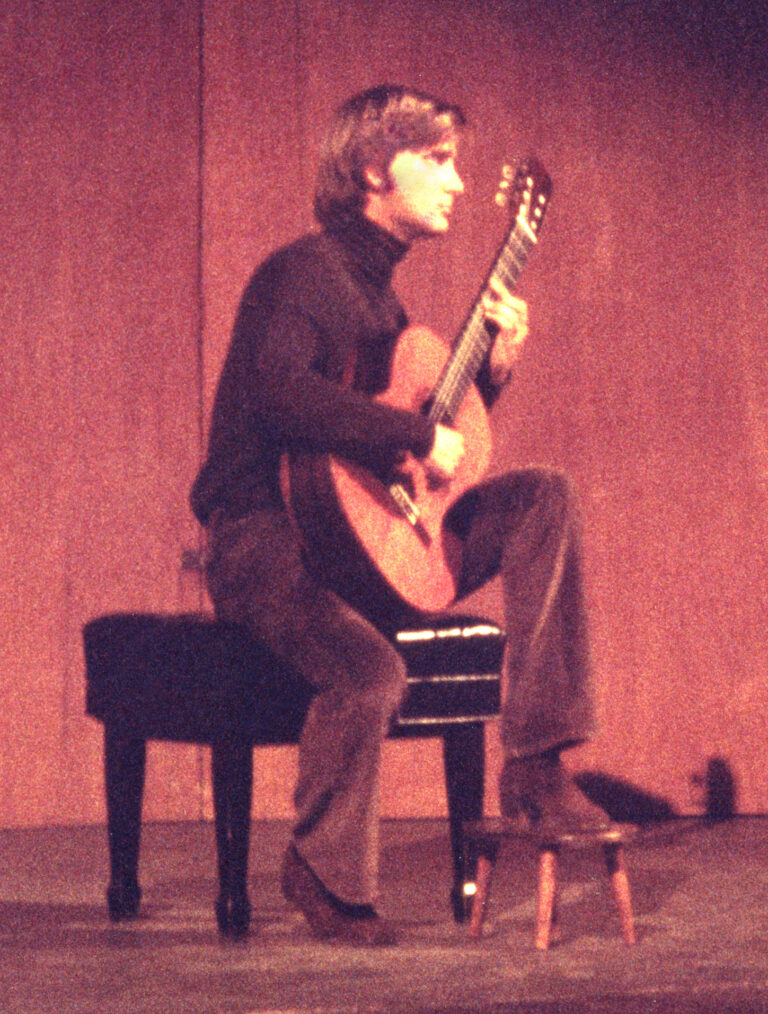
It doesn’t. According to a letter dated 24 May 1983 from José Ramírez III to George Dauphinais, the Ramírez distributor in the 1980s, the “Segovia Model” was the creation of Jim Sherry, Ramírez’s previous US distributor, during the 1970s. Sherry applied a gold “Segovia Model” label over part of the existing Ramírez label. Ramírez III’s letter states plainly that he never built or approved such a model.
Worse, from Ramírez III’s point of view, the gold label was applied to both of the models he was exporting at the time. During the late 1960s and through the 1970s the workshop exported two principal grades: the 1a, or first-class guitar, with a blue label, and the 2a, or second-class guitar, with a red label. Ramírez III’s own account is that the 2a used inferior back and sides material — that was the basis of the grading. The gold “Segovia Model” sticker went over both. It concealed exactly the information a buyer needed.
Guitar Salon International’s David Collett, who has handled more of these instruments than almost anyone alive, has written that in his experience the “Segovia Model” guitars are indistinguishable from the actual 1a and 2a instruments — because that is precisely what they are. The gold label was a marketing device, full stop.
The practical takeaway for a buyer: a gold “Segovia Model” label tells you nothing about grade. If you’re looking at a vintage Ramírez being sold on the strength of that label, the label is the one part of the guitar you should ignore. Look under it, or have a specialist look under it, for the blue-versus-red distinction. Judge the instrument on its wood, its build, and how it sounds.
Who Actually Built Your 1a
The second great myth attached to these guitars is “made by the old man himself.” Almost never true, and understanding why is a small education in how Spanish workshops actually functioned.
From the 1950s onward, José Ramírez III operated as the maestro of his shop — setting the design, approving the materials, setting the standard, signing the label. The hands-on construction was done by journeymen. Of the celebrated Ramírez guitars played by Segovia and his students in the 1960s, very few if any were built start to finish by José Ramírez III. That was simply not how the workshop worked, and it is not a knock on the instruments. If anything it’s a compliment to the design: a specification that can be executed to a consistent standard by a rotating cast of skilled hands over 20,000 instruments is an extraordinary piece of industrial and artistic engineering.
The workshop stamped maker initials on the interior heel block, and among collectors those two letters carry real weight. Two names dominate the desirable period:
- MT — Mariano Tezanos. Guitars stamped MT developed a cult following in the 1960s. Christopher Parkening’s celebrated “Bach guitar,” used on Parkening Plays Bach and a string of other recordings, was a 1967 Ramírez built by Tezanos.
- AM — Antonio Martínez. The other name that collectors chase from the same era. Segovia’s documented 1969 Ramírez carries an AM stamp.
A third name worth knowing is Paulino Bernabé, who worked in the Ramírez shop before establishing his own workshop and becoming one of the most respected Spanish builders of the late twentieth century in his own right. The Ramírez shop of that era functioned, in effect, as the finishing school for a generation of Spanish luthiery.
One caution on the initials: they are the real initials of the maker, not a code. Spanish naming convention gives a person their father’s surname followed by their mother’s, so a builder could legitimately stamp either combination — Paulino Bernabé Almendáriz could be PB or PA. Some workshop luthiers used first name plus mother’s surname. There’s a persistent theory that this was a deliberate obfuscation scheme; it wasn’t. It was either personal preference or a way of avoiding collisions between journeymen with identical initials.
Specifications
Because the 1a spans roughly six decades of production, no single spec sheet covers it. Below are two reference points: Segovia’s documented 1969 instrument, which represents the classic export-era 1a, and the current production model, which Ramírez now sells under the name Tradicional.
| Specification | 1969 Ramírez 1a (Segovia’s, “AM”) | Current Ramírez Tradicional |
|---|---|---|
| Top | Western red cedar | Solid cedar (spruce available to order) |
| Back & sides | CSA (“Central South American”) rosewood | Solid Indian rosewood |
| Interior | Traditional Ramírez construction | Cypress double sides |
| Neck | Spanish cedar with ebony reinforcement | Cedar |
| Fingerboard | African ebony | Ebony |
| Bridge | CSA rosewood, maple and bone inlays | Indian rosewood |
| Scale length | 664 mm | 650 mm |
| Nut width | 54 mm | 52.5 mm |
| Nut & saddle | Bone | Cow bone |
| Tuners | Gold-plated Fustero | Aparicio |
| Finish | Catalyzed urethane | Polyurethane |
| Rosette | Geometric flower meander, rope border | Varies by build |
| Electronics | None | None |
| Approx. current price | Vintage market — varies enormously | Around $16,300 USD |
Two numbers deserve a second look. The 664mm string length and 54mm nut width on the vintage instrument are both substantially larger than modern norms, and together they define the physical experience of playing a period 1a. Notably, the modern Tradicional has come back to 650mm and 52.5mm — Ramírez responding to sixty years of players quietly admitting that the original dimensions were a lot of guitar.
Famous Players — What Actually Holds Up
The Ramírez 1a attracts more sloppy attribution than almost any classical guitar, largely because “every great guitarist of the era played one” is a claim that’s approximately half true and gets repeated as if it’s entirely true. Here’s what survives scrutiny.
Andrés Segovia — confirmed, with documentation
This is the real one, and it’s better documented than most gear legends. Segovia acquired a Ramírez 1a new in 1969. There is documentation in José Ramírez III’s own hand stating that Segovia “habitually” played that instrument in concert from 1969 to 1980 — an eleven-year run covering the final major phase of the most influential concert career the classical guitar has ever had. The guitar went back to the Ramírez shop afterward for a neck refinish, passed through three owners between 1980 and 1994, entered Russell Cleveland’s historic guitar collection, and was acquired by Guitar Salon International in 2015 as part of the 63-instrument Cleveland collection. Scott Tennant subsequently recorded an album of Segovia’s own compositions on it.
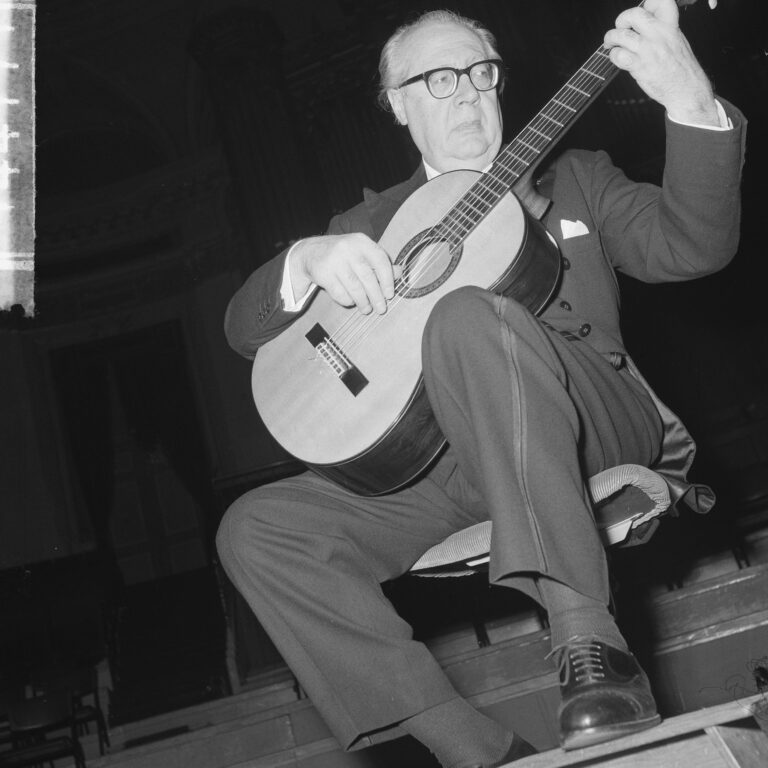
That’s a chain of custody, a written statement from the builder, and an independent institution holding the instrument. It’s about as good as gear provenance gets. What can’t be confirmed is whether Segovia actually recorded with this specific guitar, and GSI is admirably careful to say so. Photographs from the period show Segovia with an instrument bearing the same rosette pattern, but the same rosette was used across many guitars, so the photos prove nothing on their own.
Segovia also used earlier Ramírez instruments — the relationship, and the enthusiasm, dated back to the early 1960s cedar experiments. Amalia Ramírez’s account is that when her father finished the first cedar-topped guitar in 1963 he took it to Segovia, who played it for a long period; Ramírez III later traded it back and kept it in the family collection, where it remains.
Christopher Parkening — confirmed
Parkening, who studied with Segovia and became the leading American classical guitarist of his generation, recorded much of his defining catalogue on Ramírez instruments from the mid-1960s — most famously a 1967 MT (Mariano Tezanos) guitar known as the “Bach guitar” for its use on Parkening Plays Bach. A 1966 MT is also associated with him. That’s a genuine, specific, verifiable connection to a particular workshop hand and a particular instrument, not a brand-level generality.
The Romero family — confirmed at the workshop level
The Romeros — Celedonio and his sons Celin, Pepe, and Angel — were among the players who made MT and AM Ramírez guitars sought after in the 1960s. This is documented in the same specialist sources that establish the Parkening and Segovia connections.
Julian Bream — this one does not hold up
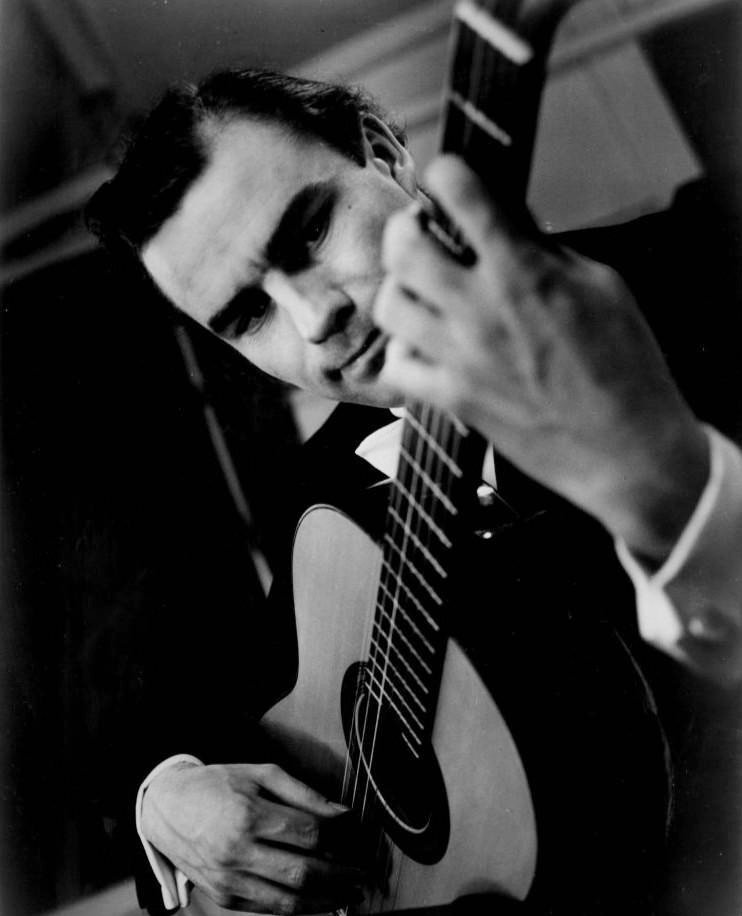
Bream appears constantly in lists of Ramírez 1a players, and the attribution is weak. Bream’s career-defining instruments were a Hauser and, above all, guitars by the Spanish-English maker José Romanillos — he concertized and recorded extensively on his 1973 Romanillos, and the Bream–Romanillos partnership is routinely compared to Segovia’s with Ramírez precisely because they were parallel, separate relationships. Bream did own a 1968 Manuel Ramírez, which is a different maker and a different lineage entirely, and is very likely the source of the confusion. If you see a vintage 1a advertised with a Bream association, ask for the evidence.
John Williams — mostly a different story
Williams studied with Segovia at the Accademia Musicale Chigiana in Siena and is frequently swept into the Ramírez roster on that basis. His career-defining instruments, though, were Fleta and later Greg Smallman. Attributing his sound to a Ramírez 1a is, at best, a claim about a brief early period rather than the body of work anyone actually knows him for.
The honest summary: the 1a was the dominant professional concert instrument of the 1960s and 1970s, and a very large number of serious players owned one. But “dominant” is not “universal,” and the two most-cited counterexamples in the literature — Bream and Williams — are exactly the players who defined their sound on something else. That’s not a knock on the guitar. It’s a reminder that the era’s best players had strong opinions and acted on them.
Tone Recipes: Getting the Ramírez Voice
The concert-hall Segovia sound
High-tension strings, plain nylon trebles, and a right hand that plays predominantly over the area between the soundhole edge and the bridge. Nail-and-flesh contact rather than pure nail — the flesh contact is what produces the round, slightly furred attack that reads as “warm” rather than “clicky.” Rest strokes for melody, free strokes for accompaniment, and a genuinely wide dynamic spread. The 1a’s headroom is its defining trait; playing it politely wastes the instrument.
The recorded, intimate sound
Normal or medium tension, right hand shifted toward the fingerboard end of the soundhole (sul tasto), and lighter nail contact. On cedar this produces something close to a flute tone, with the fundamental dominant and the upper partials pulled back. Cedar’s fast response means you don’t have to dig in to get the note to speak, which is exactly what you want with a microphone two feet away.
The bright, articulate sound for dense counterpoint
Carbon or composite trebles instead of plain nylon, right hand moved back toward the bridge (ponticello), and a steeper nail angle. Ramírez’s own current string sets include a carbon third, which is telling — the plain nylon third string is historically the weakest link in any classical set, prone to sounding dull and thick relative to the first and second. A carbon third alone will noticeably clean up a cedar-topped guitar in Bach.
Microphone placement
For a single-mic setup, a small-diaphragm condenser roughly 30–45 cm out, aimed at the 12th fret rather than the soundhole, is the standard starting point. Aiming at the soundhole on a big-bodied cedar guitar gives you a boomy low-mid buildup that no EQ move fully repairs. For a stereo pair, one mic at the 12th fret and one over the bridge, matched for distance, captures the separation between bass and treble registers that the 1a does so well.
Humidity — this is a tone control
A solid-wood Spanish guitar at 30% relative humidity is a different instrument than the same guitar at 50%. Dry, the action drops, the top goes tight and thin, and buzzing appears where it didn’t before. Overly humid, the top swells, the action rises, and the sound goes muddy and slow. Anyone who tells you their vintage 1a “lost its voice” is describing a humidity problem far more often than a structural one.
Nylon-string tone is set almost entirely by strings, right-hand technique, and where in the room the microphone sits. There is no gain stage to hide behind. What follows are practical starting points for the Ramírez cedar-and-rosewood character, whether you’re on a vintage 1a, a modern Tradicional, or trying to push a lesser cedar-topped guitar in that direction.
How the 1a Compares
Against Fleta and Hauser
These are the three great post-war concert guitars, and they represent three genuinely different philosophies. Hauser (the German lineage Segovia used before the Ramírez era) is the Torres-derived ideal: refined, transparent, beautifully balanced, comparatively modest in raw output. Fleta, the Barcelona workshop John Williams chose, is famous for strength, sustain, and a singing lyrical treble. Ramírez is the darkest and biggest of the three — the most orchestral, with the most low-end weight and the most dramatic dynamic range, at the cost of some of the crystalline clarity the other two offer. If you want a guitar that sounds like a small piano, Ramírez. If you want one that sounds like a voice, Fleta. If you want one that sounds like a perfectly proportioned Spanish guitar, Hauser.
Against the modern lattice-braced concert guitar
Greg Smallman’s lattice-braced instruments, which Williams moved to, essentially solved the volume problem the 1a was attacking — but by different means, using a very thin top supported by a carbon-fiber lattice. Modern lattice guitars are dramatically louder than a 1a and more even across the neck. What they generally don’t have is the 1a’s specific dark, complex, slightly-uneven character. Plenty of players consider that unevenness the point.
Against the accessible end of the classical market
It’s worth putting the 1a in perspective for anyone reading this while shopping in a normal price bracket. A guitar like the Alhambra 4P is a solid-cedar-topped Spanish-built conservatory instrument at a fraction of the cost — a genuinely good tool for students and teachers, and the sensible starting point for most people. Step up to something like the Córdoba C10 CD and you’re into all-solid construction with a real concert-guitar voice. Neither is a Ramírez 1a, and neither pretends to be. But the tonal DNA — cedar top, rosewood body, Spanish construction — descends directly from what José Ramírez III did in the early 1960s. Every cedar-topped nylon-string guitar in every shop in the world is downstream of that experiment.
Against the flamenco tradition
Ramírez has always built flamenco instruments alongside its classical line, and the modern catalogue includes cypress and rosewood flamenco models plus the Serranito and Tablao signature instruments. The 1a is not one of them. A concert classical guitar of this type — deep body, high action, heavy bass, no tap plate — is the wrong tool for the percussive, aggressive, close-to-the-strings demands of flamenco. The great flamenco players built their sound on lighter cypress instruments from a different set of workshops; anyone coming to this article from the flamenco side should read our features on Paco de Lucía and Sabicas, both of whom made their names on guitars with a completely different design brief.
Buying Guide
Vintage versus current production
These are two different purchases. A current-production Ramírez Tradicional is a made-to-order instrument at roughly $16,300, built from woods that have air-dried for between 20 and 70 years, with solid Indian rosewood back and sides, cypress double sides, a 650mm scale, and a handmade Manzano case. It’s customizable — spruce top, alternative back-and-side woods, and 6-, 8-, or 10-string variants are all available. You know exactly what you’re getting, it’s covered by a warranty, and it will be set up correctly.
A vintage 1a is an entirely different transaction. Prices swing enormously based on year, maker initials, condition, wood, and how well the specific instrument has aged — and the answer to “how well did this particular guitar age” is genuinely unpredictable. Ramírez produced roughly 20,000 instruments across the relevant decades. They are not all good.
The 60s-versus-90s myth
Conventional wisdom holds that the great Ramírez guitars are 1960s instruments, or at least pre-1974. The specialists who handle the most of them don’t agree. Collett’s position — from an inventory perspective that spans hundreds of these guitars — is that he has seen mediocre Ramírez guitars from the 1960s and excellent ones from the 1990s, and vice versa; that in blind comparison the eras are very hard to distinguish; and that a stronger case could be made for the pre-1960s workshop instruments, which were lighter and smaller with more individual personality. Buy the specific guitar, not the decade.
What to inspect
- String length. Confirm it before anything else. A 664 or 665mm scale is a serious physical commitment, especially for players with smaller hands or anyone coming from a 650mm instrument. Stretches that are routine on a modern guitar become genuinely difficult. This is the single most common reason people sell vintage Ramírez guitars.
- Nut width. 54mm is very wide. Combined with the long scale, it’s a lot of real estate.
- Neck angle and action. Spanish guitars of this vintage frequently need a neck reset, which is expensive. Check the saddle height — if there’s almost no saddle left above the bridge, the top has likely bellied and the action has been lowered as far as it can go.
- Top cracks and repairs. Nearly inevitable on a sixty-year-old cedar top. Properly cleated and stable repairs are not a dealbreaker and should be reflected in the price. Open or actively moving cracks are.
- Label and heel stamp. Blue label = 1a. Red label = 2a. Gold “Segovia Model” label = a distributor sticker that may be covering either. The heel stamp tells you who built it.
- Finish. Catalyzed urethane was standard on concert-era Ramírez guitars, so a hard, glossy finish is period-correct and not a sign of a refinish. Refinished necks do exist — Segovia’s own 1969 instrument had its neck refinished at the Ramírez shop.
- CITES. Brazilian and CSA rosewood on a vintage instrument means international sale and travel are legally complicated. Get documentation before money moves, not after.
Who this guitar is for
A vintage 1a suits a serious classical player with large hands and specific taste for a dark, powerful, orchestral voice, who is buying an instrument to play rather than an artifact to hold. It also suits a collector who understands they’re buying a piece of twentieth-century music history. It does not suit an intermediate player looking to upgrade — that player will be better served by a modern all-solid instrument at a fraction of the price, and will find the 664mm scale a daily obstacle rather than a romance.
Ownership Notes
Humidity control is not optional. Keep a solid-wood Spanish guitar in its case with a humidifier, targeting 45–55% relative humidity, and buy a hygrometer you actually trust rather than the free one in the case pocket. Cracks on these instruments are overwhelmingly a dryness problem, and they’re preventable.
Nylon strings stretch dramatically for the first day or two and then settle. On a long-scale instrument, the initial stretch is more pronounced, and new owners sometimes misread this as a tuner problem. Vintage Fustero machines can develop backlash but are generally serviceable; replacing them with modern equivalents is a decision to make carefully on a collectible instrument, since originality carries value.
String tension deserves thought on a vintage top. A sixty-year-old cedar soundboard has already spent decades under load. High-tension strings on a long scale produce substantially more pull than a modern 650mm guitar with normal tension, and if the top already shows belly, dropping to normal tension is cheap insurance.
Find a luthier who specialises in classical instruments before you need one. Spanish construction — the neck-and-block integral heel, the specific bracing patterns, the French-polish-versus-urethane distinction — is not the same discipline as steel-string repair, and a well-meaning generalist can do expensive damage.
Finally: play it. These instruments were built to be worked. A concert guitar that lives in a case under a bed goes quiet in a way that has nothing to do with wood chemistry and everything to do with a player never learning what it can actually do.
Frequently Asked Questions
Did Andrés Segovia really play a Ramírez 1a?
Yes, and it’s unusually well documented. Segovia acquired a Ramírez 1a new in 1969, and there is documentation in José Ramírez III’s own hand stating that Segovia habitually played it in concert from 1969 to 1980. That instrument is now in the hands of Guitar Salon International, having come through Russell Cleveland’s historic guitar collection. What isn’t confirmed is whether he recorded with that specific guitar.
What is the “Segovia Model” Ramírez, and is it better than a 1a?
It isn’t a model at all. According to a 1983 letter from José Ramírez III, the gold “Segovia Model” label was created by Jim Sherry, a US distributor, during the 1970s and applied over part of the existing Ramírez label without permission — on both 1a and 2a guitars. Ramírez never built or approved it. Treat the gold label as a marketing sticker that tells you nothing about grade.
How do I tell a Ramírez 1a from a 2a?
During the export era, the 1a carried a blue label and the 2a a red one. Ramírez III’s own account is that the 2a used inferior back and sides material. If a gold “Segovia Model” label has been applied over the original, you’ll need a specialist to determine what’s underneath.
What do the initials stamped inside a Ramírez mean?
They’re the actual initials of the workshop luthier who built the guitar — not a code. The two most sought-after from the 1960s are MT (Mariano Tezanos) and AM (Antonio Martínez). Paulino Bernabé also worked in the shop before founding his own. José Ramírez III’s signature on the label means the guitar met his standard, not that he built it himself.
What is the scale length of a Ramírez 1a?
Classic export-era instruments are typically 664mm, with some at 665mm, and nut widths around 54mm — both notably larger than modern norms. The current production model, the Tradicional, has moved to a 650mm scale and a 52.5mm nut.
Is the Ramírez 1a still made?
Effectively yes, under a different name. The current handmade flagship is called the Tradicional — solid cedar top (spruce available), solid Indian rosewood back and sides, cypress double sides, cedar neck, ebony fingerboard, 650mm scale — made to order at around $16,300, with 8- and 10-string variants available.
Why is cedar such a big deal on this guitar?
Because the Ramírez workshop popularised it. Before the early 1960s, spruce was near-universal for classical soundboards. José Ramírez III’s cedar experiment — the result of an apprentice buying the wrong wood — produced a warmer, darker, faster-responding top that sounds mature immediately rather than needing years of playing-in. Cedar spread across Spanish luthiery and then into steel-string building, and it started here.
Are 1960s Ramírez guitars better than later ones?
Not reliably. Specialists who handle these instruments in volume report seeing mediocre 1960s examples and excellent 1990s ones, and say the eras are hard to distinguish in blind comparison. Some argue the strongest Ramírez instruments are actually the lighter, smaller pre-1960s workshop guitars. Judge the individual instrument.
Image credits
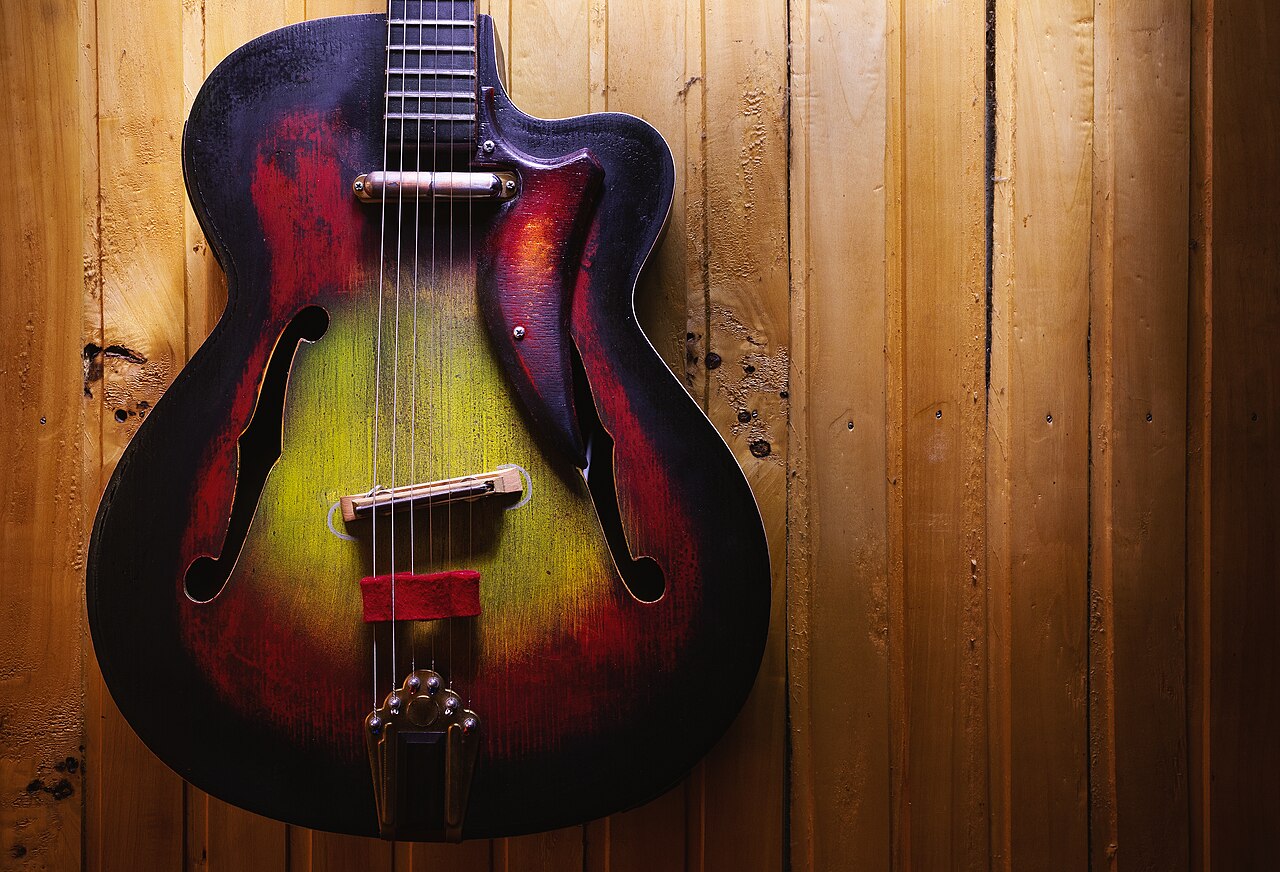
- A colourful archtop acoustic guitar: Dejan Krsmanovic, Wikimedia Commons, CC BY 2.0.
- Julian Bream: S. Hurok, concert promoter/photographer Becker/Beacher/Bencher?, New York, Wikimedia Commons, Public domain.
- Andrés Segovia: Jack de Nijs for Anefo, Wikimedia Commons, CC0.
- Christopher Parkening: Mark Westling, Wikimedia Commons, CC BY-SA 3.0.
Latest News
Related



On This Day
Tuesday 10 November
From this week: