The Whole Rig in a Lunchbox: How the Line 6 HX Stomp Rewrote What a Pedalboard Can Do
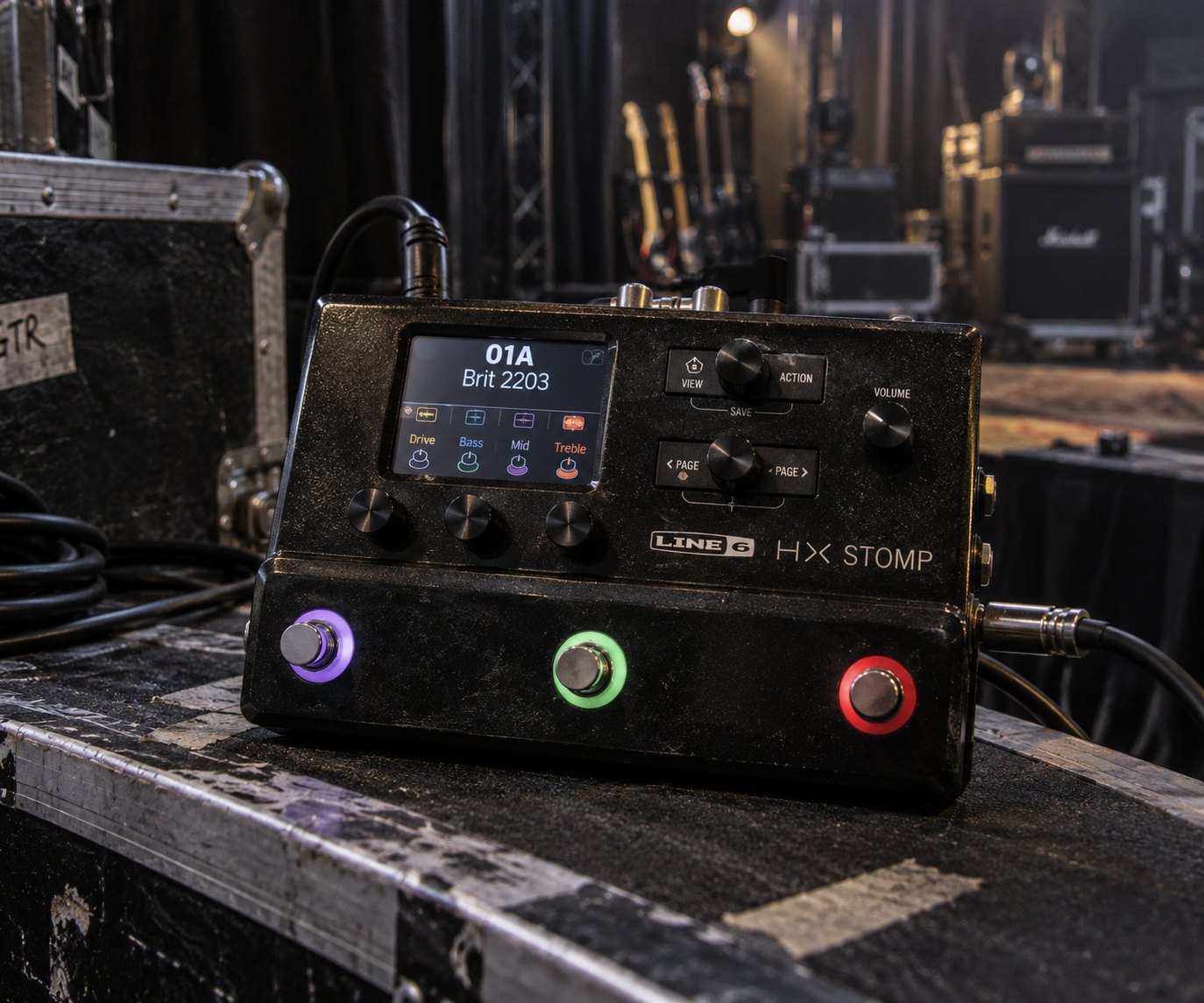
Line 6 HX Stomp Guitar Processor. AI-generated reference illustration, not a photograph.
The Line 6 HX Stomp packs the full Helix HX modeling engine into a three-switch box. Here's what it does, who uses it, and how to dial in great tones.
Bill Kelliher has been building guitars since he was a teenager in Georgia. He has toured with Mastodon through arenas, festivals and three continents’ worth of venue loading docks. He has shipped full Marshall stacks, lugged Friedman heads and wrestled racks through airports. And then, somewhere around 2021, he started telling interviewers he was building “the world’s smallest fly rig.” The centrepiece was not a new boutique amplifier or a custom switching system. It was a three-switch box the size of a paperback book. The Line 6 HX Stomp.
Kelliher was not alone. Across genre lines — heavy metal, progressive rock, jazz fusion, country — players who had spent careers hauling tube amps discovered that the HX Stomp could put every amp model, every cabinet simulation and every effect from Line 6’s flagship Helix system into a unit that fits in a carry-on bag. Not a compromised version of those models. The same SHARC processor, the same 24-bit/96kHz converters, the same HX modelling engine. Just six footswitches fewer and a screen about two-thirds the size. That is the entire pitch, and for a very large number of working guitarists, it turned out to be sufficient.
Line 6: From the Pod to the Helix Family
Line 6 was founded in 1996 in Agoura Hills, California, by Michel Doidic and Marcus Ryu. The company’s initial focus was on a radical proposition: that digital signal processing had advanced to the point where a device could convincingly model the behaviour of tube amplifiers, not just approximate their frequency response. The Pod — launched at Winter NAMM 1998 in its now-iconic kidney-bean shape — proved the point. It was ugly, it was plastic, and it sold in enormous quantities because it let anyone record a convincing Plexi tone through a USB cable and a set of headphones.
Through the 2000s, Line 6 built out the Pod family, the DL4 Delay Modeler, the DM4, FM4 and MM4 stompboxes, and the floor-based M-Series processors. These products established Line 6 as the company that understood amp modelling as an engineering discipline rather than a marketing strategy. Yamaha Guitar Group acquired Line 6 in 2014, giving the company access to Yamaha’s manufacturing relationships and capital base without materially changing its R&D direction.
The Helix Floor arrived in late 2015 and represented a generational step up. Line 6 had licensed the Analog Devices ADSP-21469 SHARC DSP chip — the same processor family used in professional audio workstations — and built an entirely new modelling engine around it. The Helix’s amp models were constructed from measurements of specific real amplifiers using what Line 6 calls Impedance Response Modelling, capturing not just the frequency curve of an amp but its dynamic response to guitar pickups and playing dynamics. The Helix became the benchmark against which every subsequent modeller was measured.
The HX Stomp followed in late 2018, priced at $499.99. The brief was simple: the Helix engine, without the Helix footprint. Three capacitive-sensing footswitches instead of twelve. One colour LCD screen instead of the Helix’s larger display. Up to six processing blocks per preset instead of thirty-two. But the same SHARC chip, the same modelling, the same audio quality. Every amp model, cabinet model, microphone model and effect in the Helix library — including the legacy models from the old M-Series and Pod units — available on a device that weighs under a kilogram. Street price subsequently rose to $599.99 as component costs increased across the industry.
Line 6 released the HX Stomp XL in 2020, adding two additional footswitches (five total) and a larger chassis while keeping the same processing core. The original three-switch HX Stomp remained in production as the more pedalboard-friendly option. A significant firmware update (version 3.0, released in March 2021) raised the HX Stomp’s processing block limit from six to eight, addressing the most common criticism of the original hardware without any hardware change.
Specifications
| Parameter | Spec |
|---|---|
| DSP | Analog Devices ADSP-21469 SHARC (same as Helix) |
| A/D Conversion | 24-bit / 96 kHz |
| Dynamic Range | 123 dB |
| Processing Blocks | Up to 8 (post-firmware 3.0; originally 6) |
| Presets | 126 (42 banks × 3 presets per bank) |
| Snapshots per Preset | 3 |
| Model Count | 300+ amps, cabs, effects, mics and IRs (Helix + Legacy combined) |
| Footswitches | 3 capacitive-sensing (HX Stomp); 5 (HX Stomp XL) |
| Knobs | 6 (3 multifunction parameter knobs + 3 dedicated) |
| Inputs | L/R stereo ¼” (guitar/instrument level) |
| Outputs | L/R stereo ¼” (line level); ¼” headphone |
| FX Loop | Stereo send/return (¼”) |
| MIDI | In + Out/Thru (5-pin DIN) |
| Expression | ¼” dual jack (2× EXP pedals, 2× footswitches, or one of each) |
| USB | Type-B; multi-channel audio interface + HX Edit software |
| USB Audio | Up to 6-in / 6-out (Mac/Windows, class-compliant) |
| IR Support | User-loadable impulse responses (up to 128 IR slots) |
| Current Price | ~$599.99 USD (street) |
| Dimensions | approximately 163 × 92 × 55 mm |
| Weight | ~0.97 kg |
The Engine Under the Hood
The specification that matters most in the HX Stomp is the one that is hardest to see: the ADSP-21469 SHARC processor. This is not a cost-reduced version of the Helix chip. It is the same device. The practical consequence is that every amp model in the HX Stomp runs through the same computational path as the Helix Floor, with the same Impedance Response Modelling approach. When Line 6 models a Friedman BE-100 or a Vox AC30 or a Bogner Ecstasy, the resulting algorithm is identical whether you are accessing it through a $1,699 Helix Floor or a $599.99 HX Stomp. The block count limits what you can chain together in a single preset, but it does not degrade the quality of each individual model.
The 24-bit/96kHz conversion at 123dB dynamic range means that the HX Stomp operates at a technical standard above most professional recording equipment manufactured before 2010. In practical terms, this headroom matters most when you are sending the signal directly to a PA system or a recording interface — the two scenarios where digital artefacts and converter coloration become audible in ways they do not through a speaker cabinet. The HX Stomp’s clean signal path is genuinely clean.
The unit functions as a multi-channel USB audio interface simultaneously with all its other duties. You can record directly from the HX Stomp into a DAW, use it as a monitoring device for playback, and re-amp previously recorded DI signals through new presets — all without additional hardware. For players working in home studios, this eliminates a separate audio interface purchase.
Impulse response loading is supported up to 128 user IR slots. This matters because third-party IRs — from companies like Celestion, Ownhammer and York Audio — can substantially improve upon the stock cabinet models for specific use cases. A player wanting a vintage Greenback 4×12 simulation that was measured from a specific 1968 cabinet can load that IR and use it in any preset. The HX Stomp’s IR engine runs at the same quality as the Helix’s, which is the same quality used by working engineers for professional productions.
Famous Players: What the Research Actually Shows
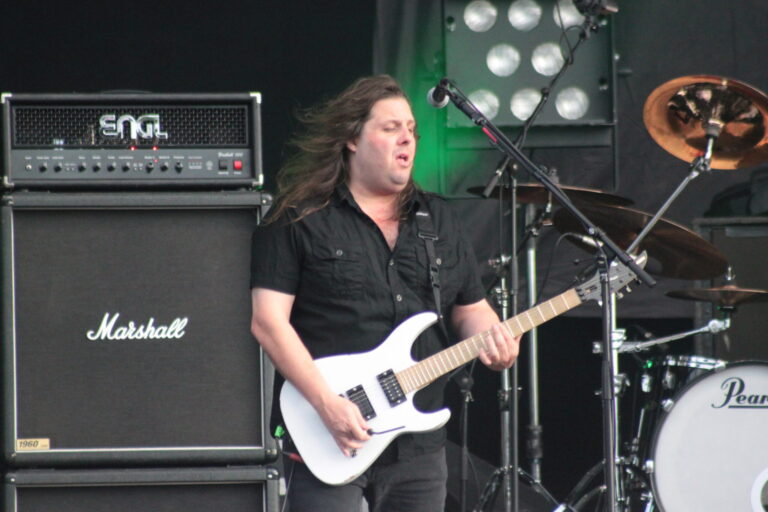
The claimed artists for this model are Bill Kelliher, Vernon Reid, Nita Strauss, John Browne and Steve Stevens. Verifying each of these claims against primary sources reveals a mixed picture that is worth being precise about.
Bill Kelliher (Mastodon) is the strongest verified connection. Kelliher became a Line 6 Helix user for his home studio and fly-rig work, and in a 2023 interview with Thomann he explicitly mentioned running “Line 6 Helix and HX Stomp modelers” as part of the compact touring setup he was developing — his stated goal being “the world’s smallest fly rig.” His primary modeller is the Helix Floor, which handles the switching and routing for the signal chain that runs through a Victory Duchess pedal-preamp and a Friedman BE-OD into a small power amp. The HX Stomp appears in this rig as the more portable option for fly dates. Kelliher also published a free preset — the REVV PURPLE, built around the Revv Gen Purple amp model — via Line 6’s Model Citizens blog, where he described his approach to tone shaping in detail. His favourite Helix amp models are the Placater Clean and Placater Dirty (both based on the Friedman BE-100) and the Revv Gen Red and Revv Gen Purple. He described the Scream 808 overdrive block in front of the amp model as essential: “Without the 808, the sound is what might be called rounder, and I like more of a square sound.” This is a genuine and documented connection, with the caveat that the HX Stomp is secondary to the Helix Floor in his primary setup.
John Browne (Monuments) is also genuinely connected to the HX Stomp. Line 6 partnered with Browne and Ola Englund for HX Stomp content, and Browne appears on the Line 6 artist roster in direct connection with this product. Monuments makes technically demanding progressive metal with complex rhythmic structures and sustained tonal definition requirements — exactly the application where the HX Stomp’s high-headroom conversion and precise amp modelling pay dividends. The connection is substantiated by Line 6’s own documentation.
Nita Strauss is not documented as an HX Stomp user. Her verified live rig, documented on Equipboard and in a 2022 Premier Guitar interview, is built around a Boss GT-1000 going direct to front of house. Her session work has used Kemper Profilers. She is a high-profile modeller user, which presumably explains how her name appeared in the claimed artist list, but the specific SKU connection is not supported by any primary source. The HX Stomp claim for Strauss appears to be brand-category association rather than evidence of a specific product in use.
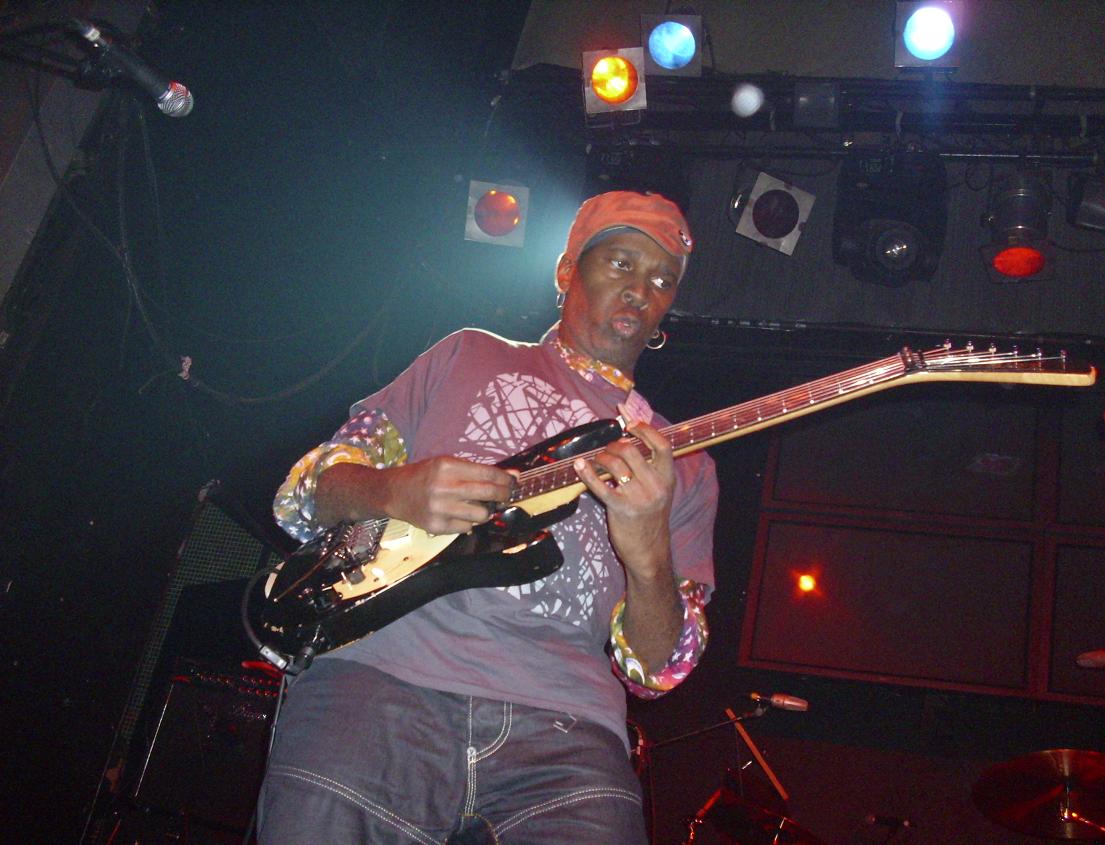
Vernon Reid of Living Colour is one of the most technology-engaged guitarists working in rock — his rig is famously elaborate, mixing MIDI-controlled switching, multiple Eventide H9 units, Roland VG-99 guitar synthesis, boutique stompboxes and custom signal routing. His documented Line 6 gear, per a 2016 Premier Guitar Rig Rundown, is the M9 Stompbox Modeler (modified by JVH3 Audio) — an earlier-generation product from a different Line 6 line entirely. More recent documentation shows him using a DOD expression pedal, Strymon CloudBurst, Red Panda Tensor and Rainger-FX units. No primary source places an HX Stomp in Reid’s rig. He is worth discussing in any article about the modeller-as-platform philosophy, but not as an HX Stomp owner.
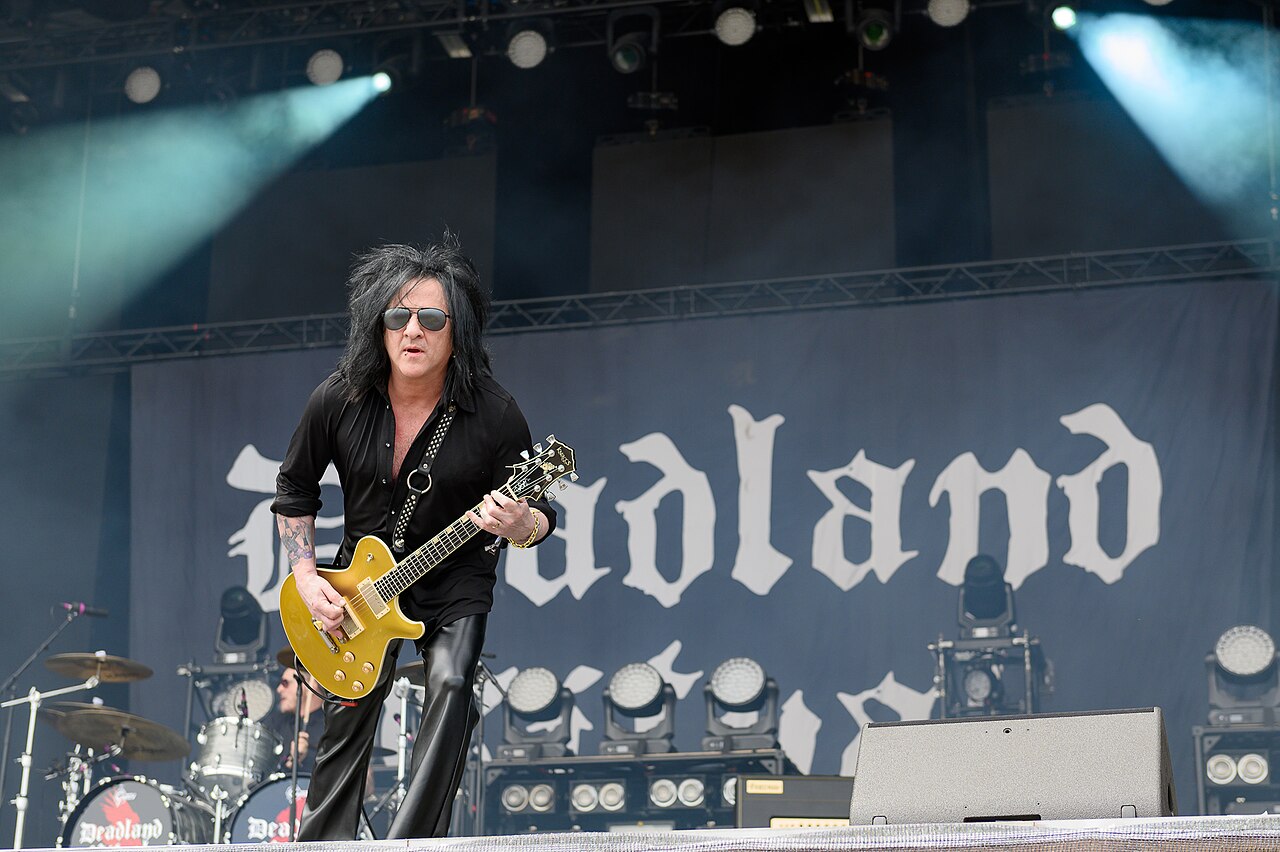
Steve Stevens (Billy Idol) is a Line 6 user — but the product is the HX Effects, not the HX Stomp. These are different units from the same HX generation: the HX Effects is an effects-only device with no amp modelling, designed to run in the effects loop of a real amplifier (Stevens runs his through a Friedman SS100DLx). The HX Stomp includes amp and cab modelling and is designed to function as a complete rig without an external amplifier. Stevens’ older rig, documented in a 2013 Premier Guitar Rig Rundown, used a rack-mounted Line 6 Mod Pro and Echo Pro from a previous generation. The HX Stomp does not appear in any primary-source documentation of his current setup.
Five Tone Recipes
1. Kelliher-Style Crushing Rhythm (Heavy Metal, D Standard)
Start with the Placater Dirty amp model (Friedman BE-100 simulation). Add a Kinky Boost or Scream 808 overdrive block before the amp model with the drive set to zero — this tightens the low end without adding gain, transforming a round sounding bottom into a percussive square-wave attack. Cabinet: 4×12 Greenback 25 IR, dynamic mic at close distance. Gate block at the end of the chain. Keep mid-frequency EQ between 400–600 Hz to prevent the scooped low-mid hollowness common in digital metal tones. The goal is every palm mute sounding like a punch, not a blur.
2. FRFR Clean Platform (Country / Worship / Session)
Use the Litigator (Dumble-style) amp model with the drive at minimum and the volume high. A Kinky Boost before it adds shimmer without drive. Cabinet: 1×12 US Deluxe IR or a third-party Celestion Gold 12″ IR. Run into a full-range flat-response monitor or PA speaker. This is the approach that makes the HX Stomp a stage tool for clean-tone specialists: the amp model responds to pick attack the way a real amp does, so rolling the guitar volume back cleans up the tone and pushing it into single notes produces the natural compression of a clean amp at moderate volume. Add a Room Reverb block with a 1.2-second decay at 20% mix for acoustic-style depth.
3. Browne-Style Djent / Prog Metal (8-String, Drop A)
Amp: Archetype Lead (Mesa Mark IV / Rectifier simulation) with the high gain channel, bass rolled back slightly at the amp model, treble at 60%. Before the amp: a Scream 808 with gain at 0 and level at 60% for definition. After the amp model, before the cab: a High/Low Cut block set to high-pass at 100 Hz and low-pass at 8 kHz. Cabinet: 4×12 Mesa-style IR with a condenser mic simulation at slight distance. The key for extended-range guitars is the two-stage low-end management: the 808 tightens, the high/low cut block removes the sub-rumble that muds up a live mix at low frequencies. A Noise Gate early in the chain (threshold around -55 dB) handles the string noise inherent in very low tunings.
4. FRFR Dry-to-PA Rock Rhythm (Classic Rock Stage Rig)
Use the Placater Clean (Friedman BE-100 clean channel) into a 4×12 with a 57 Dynamic at 1″ distance. Before the amp: a Minotaur (Klon-style boost/overdrive) at medium drive. The three-switch layout means you will want to set up Snapshots rather than switching individual blocks: Snapshot 1 is clean (Minotaur bypassed), Snapshot 2 adds the drive. Assign the switches to snapshot selection rather than individual effects for more practical live use. This is the setup that convinces tube amp loyalists: the dynamic response of the Placater model under a Klon-style drive faithfully reproduces the way a real BE-100 responds to a boost on its input.
5. Studio Swiss Army Knife (Recording / Home Studio)
Build a preset with the HX Stomp’s USB multi-out capability: Path A runs an amp + cab model to USB outputs 1/2 for the “produced” tone; Path B sends a dry DI signal to USB outputs 3/4 for re-amping later. Add a Room Reverb on Path A at a very low mix (8–12%) — just enough for the amp to breathe in the mix without washing. A Poly Capo block on the dry path lets you pitch-shift the re-amp signal in post if the key changes. Kelliher explicitly described this two-path recording approach in his Line 6 interview: “I record the processed Helix sound using the left XLR output and the unprocessed DI signal from the right. That way, when I go to the big studio, if I like the part but want a different tone, I can re-amp it.”
Comparisons
The HX Stomp’s natural competitors are the other compact multi-platform modellers in the $500–$800 range. The relevant comparisons are to its own family members and to the current class of competitors.
The Line 6 Helix Floor is the most direct comparison. The Helix Floor adds twelve footswitches (vs. three), a larger and easier-to-read display, up to 32 processing blocks (vs. 8 post-firmware update on the HX Stomp), four separate DSP paths, and a much more navigable hardware editing experience. It costs roughly $1,699 street — nearly three times the HX Stomp’s price. For players who do all their editing via HX Edit software and only need to switch presets or snapshots live, the HX Stomp is a rational choice. For players who need to build and edit presets on stage or at rehearsal without a laptop, the Helix Floor’s dedicated knobs and larger interface are meaningfully better.
The Neural DSP Quad Cortex competes at a higher price point (roughly $1,499) and targets a different capability: on-device neural capture of real amplifiers and pedals, building a profile of a specific physical amp rather than modelling an idealised version. Players who want to digitally archive their own touring amplifiers will prefer the Quad Cortex. Players who want access to a large library of pre-built, immediately usable amp models and don’t need to capture their own hardware will find the HX Stomp’s library (Helix + Legacy models combined) more immediately practical.
The Kemper Profiler operates on the same profiling principle as the Quad Cortex but in a floor or rack/head form factor. Kemper’s profiling system has a longer track record and a very large commercial Rig Exchange library of user-generated profiles. It is, however, a significantly larger and heavier unit than the HX Stomp and costs considerably more.
The Fractal Audio Axe-FX III is the professional studio standard for full-scale modelling — the rig Metallica’s James Hetfield and Kirk Hammett adopted for touring after their 2013 Antarctica expedition made amplifier transport impractical. The Axe-FX III’s processing depth, IR management and routing flexibility exceed the HX Stomp considerably, as does its price ($2,099+). It is aimed at engineers who want complete control over every parameter. The HX Stomp is aimed at working musicians who need a great-sounding rig in a small box, right now, with a learning curve measured in hours rather than weeks.
For players who primarily want the HX Stomp as a pedalboard effects processor in front of a real tube amp, the Fender Deluxe Reverb represents the alternative philosophy: a tube amplifier with its own character and reverb, paired with individual stompboxes selected for tone rather than Swiss-army functionality. The two approaches suit different players. Players who tour internationally, record at home and travel frequently lean towards the HX Stomp. Players who play regionally with a fixed backline, who want the feel and responsiveness of a specific tube amp under their hands, and who do not record frequently, lean towards the real amp approach.
Buying Guide
The HX Stomp is available new at $599.99 from Sweetwater, Guitar Center and major music retailers. The used market on Reverb runs from roughly $350 to $480 depending on condition and included accessories. The HX Stomp XL sells new for around $799.99 and used from roughly $450 to $600.

Key things to verify on used units: the firmware version (update to the latest; version 3.0 or higher unlocks the 8-block processing capability — earlier units will show a maximum of 6 blocks), the condition of the three footswitches (the capacitive-sensing design is generally reliable but can develop contact issues after extended use), and whether the original USB cable is included (the unit uses a standard Type-B USB cable, easily replaced).
The two most commonly reported used-market issues are preset loss (the unit ships with factory presets; if a previous owner did not back up and restore, you may receive a unit with a customised preset bank and no factory presets — this is corrected by a factory reset, not a hardware fault) and the rubber foot pad coming loose on the underside (a cosmetic issue, easily reattached with contact cement). The unit does not have a battery; it requires external power at 9V DC, 2000mA minimum. Most quality pedalboard power supplies provide sufficient current.
Buying new is recommended for first-time HX platform users who plan to install the HX Edit software and do significant preset building. Buying used makes strong sense for experienced Helix users who know what firmware they need and can verify the unit’s condition on the spot.
Ownership Notes
The HX Stomp is one of the more software-dependent instruments on the market. The HX Edit application (free, Mac and Windows) is significantly better than the hardware interface for building and organising presets. Plan to do most of your programming via the software and treat the hardware knobs and screen as live-use controls rather than primary editing tools.
The three-footswitch layout is the principal operational constraint. In its default configuration, switches act as effects blocks toggles, which is useful but limited for live performance. A more powerful approach: set Mode to Snapshot Control per preset, which maps the three switches to three independently configurable amp/effect states within a preset without changing presets. A Snapshot can change amp model parameters, effect parameters, block bypass states and output levels simultaneously with a single switch press — functionally equivalent to having a switching system in a conventional rig. This requires preset design with snapshots in mind rather than as an afterthought.
Expression pedal connectivity is via the ¼” dual jack on the rear panel. Mission Engineering and Line 6 make purpose-built expression pedals for the HX platform. Two expression pedals can be connected simultaneously using a TRS Y-cable splitter, adding considerable live control. Common assignments: Expression 1 to wah block (spring-loaded toe switch toggles the wah on/off), Expression 2 to delay feedback or reverb mix for live swells.
IR loading is the most consistently impactful upgrade available within the existing hardware. The stock Line 6 cabs are usable but a good third-party IR collection — particularly for specific vintage cabinet types — improves the realistic character of amp models that already sound strong. Recommended starting points: York Audio, OwnHammer, and Celestion’s official IR library for their own speakers.
The headphone output is genuinely good — not an afterthought. At 123dB dynamic range through quality headphones, the HX Stomp is a capable late-night practise rig. The cab models and room simulation options make headphone playing feel less clinical than most digital options in this price range.
FAQ
What is the difference between the HX Stomp and the Helix Floor?
Same DSP chip, same HX modelling engine, same amp and effect libraries. The Helix Floor has twelve footswitches, a larger display, up to 32 processing blocks, four independent processing paths, and easier hardware editing. The HX Stomp has three footswitches, a smaller display, up to 8 processing blocks (post-firmware 3.0), and fits on a pedalboard or in a carry-on bag. The Helix Floor costs roughly $1,699; the HX Stomp costs roughly $599.99. The quality of each individual amp model or effect block is identical between the two.
How many effects blocks can I use at once?
Up to 8 blocks per preset as of firmware 3.0 (released March 2021). Before that update, the limit was 6 blocks. A block can be an amp model, a cabinet/IR, a microphone simulation, a single effect, or an input/output routing block. A typical practical preset might use: input > noise gate > wah > overdrive > amp model > cab IR > delay > reverb. That is eight blocks — the current maximum used right up to the ceiling for a conventional signal chain.
Can I use the HX Stomp in front of a real amplifier?
Yes, in multiple ways. You can use it as a traditional effects pedal (guitar > HX Stomp > amp input), using only effects blocks and no amp/cab models. You can use it in 4-Cable Method (guitar > HX Stomp > amp input, then amp effects send > HX Stomp return > HX Stomp send > amp effects return), which allows precise placement of effects before and after the amp’s preamp stage. Or you can run it through the amp’s effects loop return only (bypassing the preamp entirely) and use the HX Stomp’s amp models as the preamp section. Steve Stevens uses the related HX Effects unit in a similar loop-return application with his Friedman amplifier.
Does the HX Stomp work as a USB audio interface?
Yes. It provides up to 6 inputs and 6 outputs via USB when connected to a Mac or Windows computer. It is class-compliant on Mac (no driver required) and requires the Line 6 driver on Windows. Inputs include the processed stereo signal, a dry DI signal and the effects loop returns. This allows the simultaneous recording of the modelled tone and a re-ampable dry signal in a single take — the workflow Kelliher described for his Mastodon home studio sessions.
Is the HX Stomp good for bass guitar?
Genuinely yes, and this is not a marketing claim. Line 6 included a complete selection of bass amp models and cabinet simulations in the HX Stomp, including models of the Ampeg SVT, the Gallien-Krueger 800RB, the Fender Bassman and others. The 24-bit/96kHz conversion at 123dB dynamic range handles the low-frequency content of bass guitar without the artefacts that affect lower-specification converters. The Bass Magazine review of the HX Stomp was positive specifically about the bass-specific models. This is a genuinely dual-instrument device.
What is the HX Stomp XL and should I get it instead?
The HX Stomp XL (2020) adds two additional footswitches for a total of five, along with a slightly larger chassis. It costs roughly $200 more than the standard HX Stomp. The same DSP chip and processing capability applies to both. The XL makes more sense for players who want to switch snapshots or effects without an external footswitch. The original HX Stomp makes more sense for players who are weight-and-space constrained (it fits on a crowded pedalboard more easily) or who will do all their live switching via an external MIDI controller or expression pedal.
Can I load third-party impulse responses?
Yes. The HX Stomp supports up to 128 user-loaded IR slots, each accepting standard .wav or .ir files. These can be managed via the HX Edit software. IRs can replace or supplement the built-in cabinet models. Commercial IR collections from York Audio, OwnHammer, Celestion, and others are widely compatible. Each IR slot supports mono or stereo IRs. Loading a quality third-party IR for a specific speaker and cabinet type is the most impactful single upgrade available for the unit’s standard amp tones.
What external footswitch do I need for live use?
The Line 6 EX-1 expression pedal (approximately $60) connects to the rear ¼” jack and adds volume, wah or parameter assignment. The Line 6 HX Stomp supports up to two footswitches or expression pedals via that single jack using a TRS splitter cable. For players who want more than three switches for live preset or snapshot changes, the recommended option is a small MIDI footswitch controller (such as the Morningstar MC6 or MC3) connected via the HX Stomp’s MIDI input — this allows external control of presets, snapshots, and individual block bypass states far beyond what the three onboard switches allow.
Image credits
- Nita Strauss: Sven Mandel, Wikimedia Commons, CC BY-SA 4.0.
- Vernon Reid: Mario, Wikimedia Commons, CC BY 2.0.
- Steve Stevens: Stefan Brending (2eight), Wikimedia Commons, CC BY-SA 4.0.
- Top image: GuitarGangsters AI-generated reference illustration, not a photograph.
Latest News
Related
On This Day
Tuesday 10 November
From this week: