Ronnie Montrose Guitars & Gear: The Complete Guide to America’s Hard Rock Pioneer’s Rig
Ronnie Montrose's guitars, amps, and effects — the complete guide. Sunburst Gibson Les Paul Montrose band, 1958 Les Paul Standard, Fender Stratocaster Space Station No 5, Fender Esquire Open Fire sold to Carlos Santana, EHX Big Muff Pi, Ampeg V4 stacks, Fender Tweed Bandmaster, Lab Series L5, 'I'm not into flash', Denver Colorado San Francisco, died 2012, and America's hard rock pioneer's complete rig.
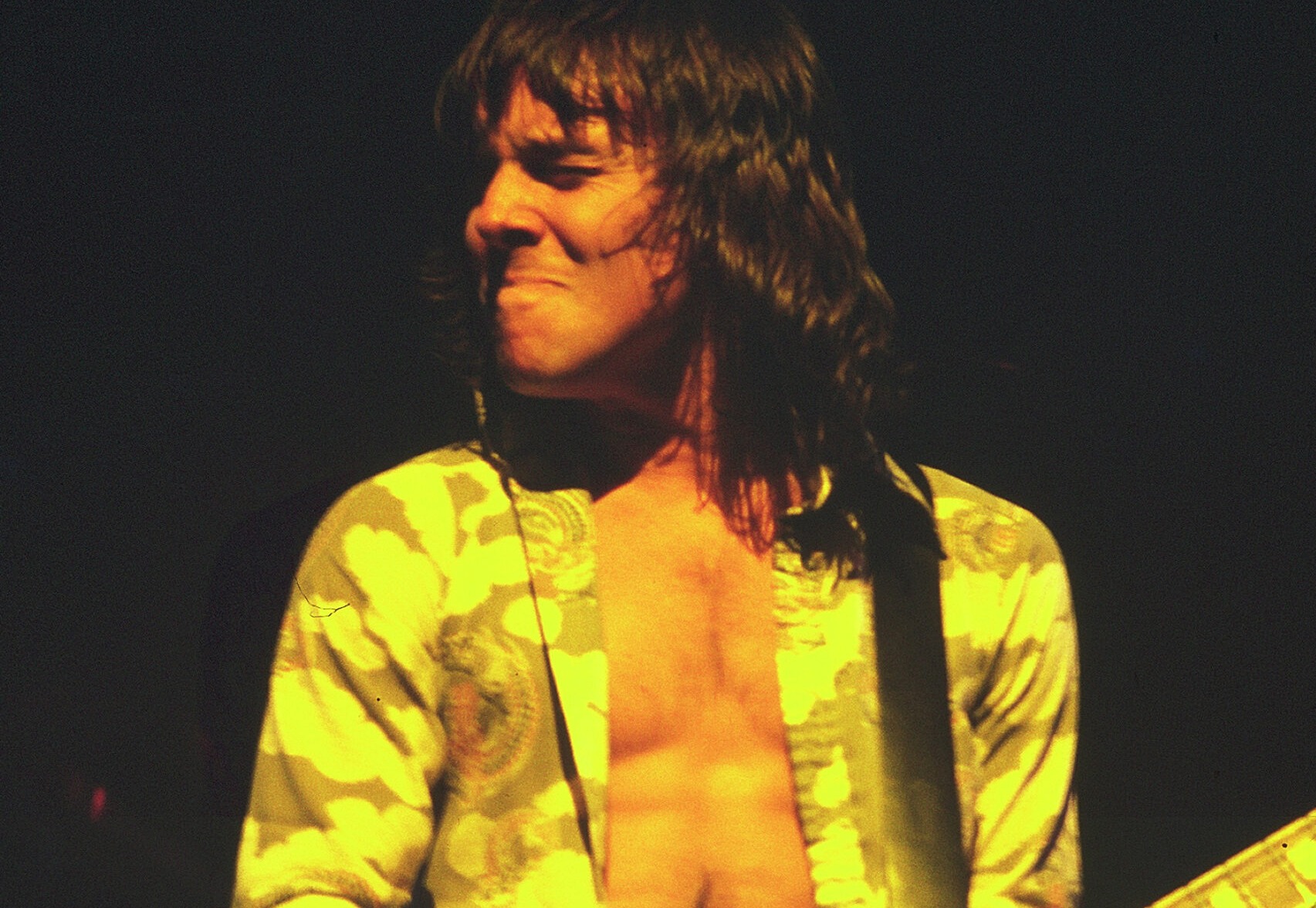
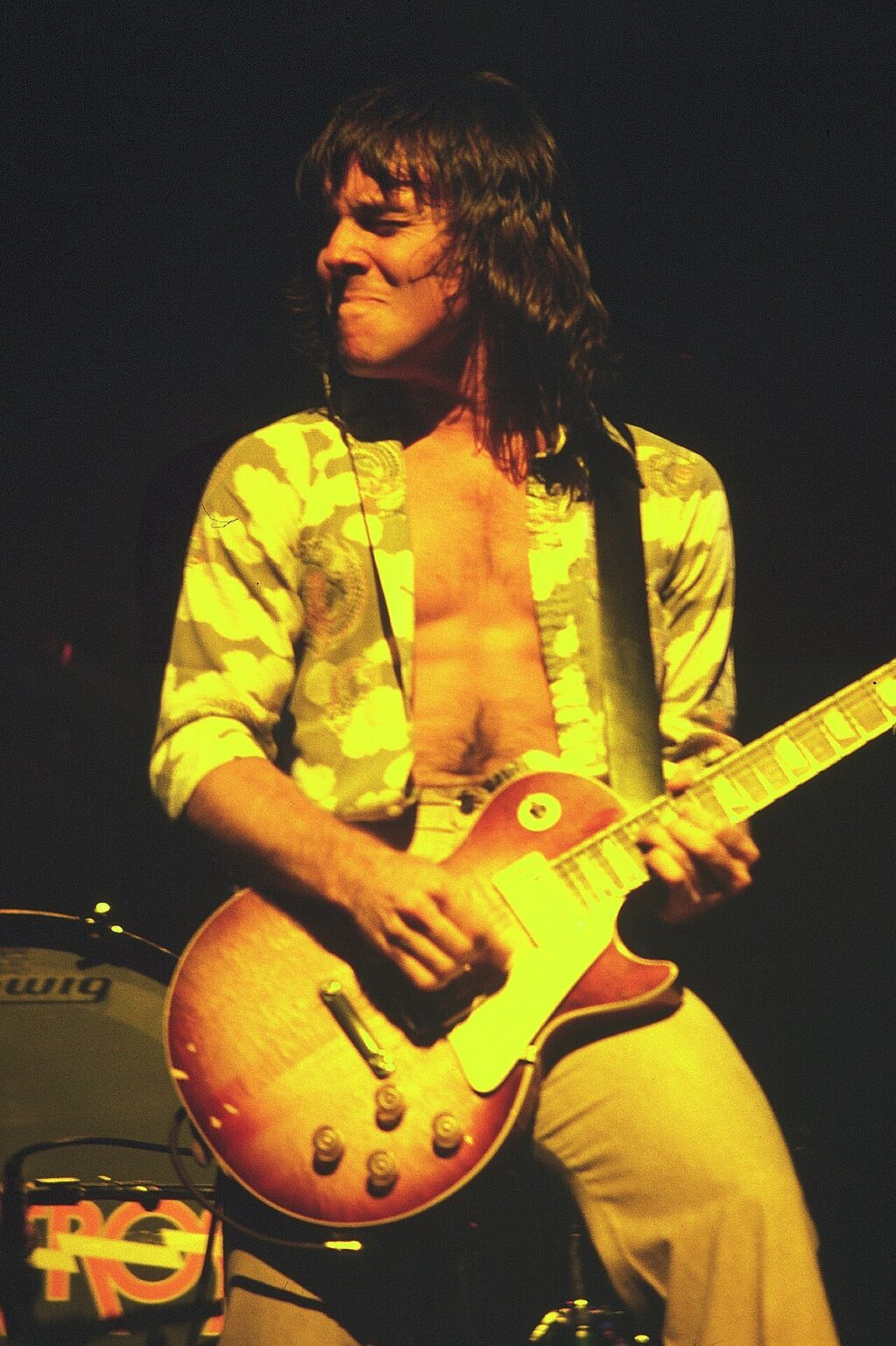
Photo by Jim Summaria, licensed under CC BY-SA 3.0 (https://commons.wikimedia.org/wiki/File:Ronnie_Montrose_4_-_Montrose_-_1974.jpg)
Gear Timeline
“On my solo LP I just used a little amp and a fuzz (tone). The main instrument I used was a Fender Esquire that I just sold to Carlos Santana.” Ronnie Montrose said this in the March 1980 issue of International Musician and Recording World, and then added the two words that summarize his entire approach to gear: “I’m not into flash.” He had just sold the guitar he used to record Open Fire — his celebrated 1978 instrumental album — to Carlos Santana. Not because it wasn’t a great guitar, but because he was a working musician who used the right tool for the right job and moved on when the job was done. A little amp and a fuzz. The Fender Esquire sold to one of the most celebrated guitarists in rock. Not into flash. He was also the guitarist whose playing on the Montrose self-titled debut (1973) — recorded with a sunburst Gibson Les Paul into a wall of Ampeg and Marshall power — had defined what American hard rock sounded like before Van Halen and before anyone had coined the term “heavy metal” for what he was doing. Vintage Guitar describes his signature riffs: “Many of the signature riffs heard throughout his career are made of power dyads which he bent and vibrated with fingers not a whammy bar.” The whammy bar is flash. The fingers, bending a power dyad, pushing it sharp and releasing it back with controlled vibrato — that is technique in service of expression. He was not into flash. He was into music. He died on March 3, 2012, of prostate cancer. He was sixty years old.
Ronnie Montrose was born on November 29, 1947, in Denver, Colorado. He grew up in Denver and began playing guitar as a teenager, influenced by Mike Bloomfield and Elvin Bishop on Paul Butterfield Blues Band’s East West album, by Eric Clapton’s blues-rock on Fresh Cream, and by Jimi Hendrix’s “futuristic exploits on Are You Experienced.” He relocated to San Francisco, where he began his professional career as a session guitarist. His session career led him to Edgar Winter’s White Trash and then to the landmark Edgar Winter Group, where he played on “Frankenstein” and “Free Ride” on They Only Come Out at Night (1972) — produced by Bill Szymczyk. Winter’s encouragement to “play heavier” led Montrose to form his own band. Montrose (the band, with Sammy Hagar on vocals) formed in 1973, releasing the self-titled debut that Vintage Guitar characterizes as “one of the first true heavy metal albums by an American band.” After Montrose dissolved, he formed Gamma (1979-1982) with Glenn Letsch, Denny Carmassi, and Mitchell Froom, incorporating synthesizer textures into hard rock. He released multiple solo albums across his career. He died on March 3, 2012. He was not into flash.
Background: Denver Colorado, San Francisco, Van Morrison Sessions, Edgar Winter “Frankenstein,” Montrose Band 1973, Sammy Hagar, Gamma, San Francisco
Montrose’s career trajectory — from teenage guitarist in Denver through San Francisco session work through the Edgar Winter connection through the founding of one of the most significant American hard rock bands of the 1970s — is one of the cleaner meritocracy stories in American rock. He was good enough to get sessions, good enough to get the Edgar Winter gig, and Winter’s encouragement to “play heavier” pointed him toward the direction that produced the Montrose debut. The album’s specific historical importance: released in 1973, it predates Aerosmith’s debut, predates Van Halen’s formation, and is contemporaneous with Led Zeppelin IV — it arrived at the exact moment when the harder rock direction that would become American hard rock was being defined, and it is one of the defining documents of that moment.
His Edgar Winter connection is the most specific gear-adjacent biographical fact: “Encouragement from Winter to ‘play heavier’ led Montrose, then a journeyman session guitarist, to pursue a harder rock direction, harnessing the power of high-decibel amplification.” This is the specific moment when amplification became conceptually central to his approach: high-decibel amplification as a musical tool, not just as a delivery mechanism. The guitar sounds different when the power amplifier is running at high power through a large speaker cabinet in a large room. It has saturation, it has physical presence, it has the specific dynamic interaction between guitar and amplifier that only happens at volume. Montrose understood this from the Edgar Winter experience and built his approach around it.
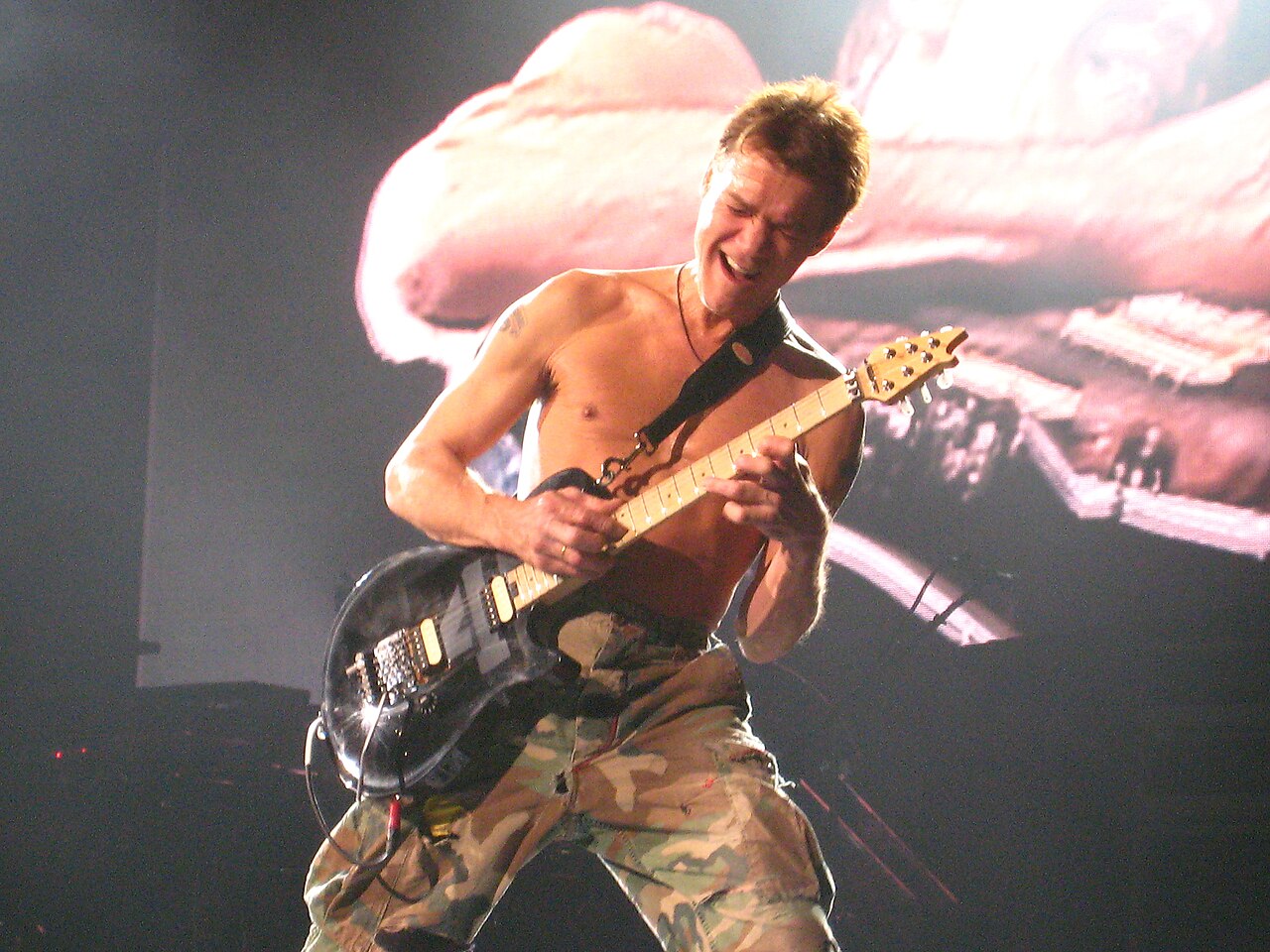
His influence on Van Halen is frequently noted: Sammy Hagar has described Eddie Van Halen calling him to say he had been listening to Montrose and was inspired by it; Van Halen’s 1978 debut bears specific acoustic and conceptual similarity to what the Montrose debut had established five years earlier. David Lee Roth, Sammy Hagar’s predecessor as Van Halen’s vocalist, is reported to have auditioned for Montrose. The specific sonic template that Montrose established — the Gibson Les Paul through high-powered American amplification, the “beefier than Page’s tone” quality that Dinosaur Rock Guitar characterizes, the specific combination of melodic accessibility and raw power that defines the best American hard rock — shaped what came after it in ways that are audible across the history of American heavy rock.
The Rig: Ronnie Montrose’s Guitars, Amps, and Effects
Guitars
Ronnie Montrose’s primary guitar during the Montrose band period — the recordings and performances that defined his signature sound — was a sunburst Gibson Les Paul Standard. The Dinosaur Rock Guitar documentation establishes this clearly: “Early on, Ronnie’s tone in the band Montrose was usually an overdriven Les Paul tone (though there’s some Strat too). For the first years of his career, Ronnie was associated with a sunburst Les Paul (shown top).” The sunburst Les Paul Standard’s specific character — the mahogany body and neck with maple cap, the PAF-style or PAF-replica humbuckers of the early 1970s vintage, the 24.75-inch Gibson scale — produces the specific “beefier than Page’s tone and had more bite than Scott Gorham’s tone” quality that Dinosaur Rock Guitar identifies as the distinguishing characteristic of Montrose’s Les Paul sound. The distinction between “beefier than Page” and “more bite than Gorham” captures the specific tonal position he occupied: heavier than Led Zeppelin’s more blues-oriented approach, more aggressive than Thin Lizzy’s more melodic dual-guitar approach.
The Vintage Guitar magazine documentation provides specific dates for his relationship with a vintage Les Paul: “A 1958 Les Paul Standard. He purchased it in 1977, and retired it after seven years.” The 1958 Les Paul Standard is one of the most historically significant electric guitars in rock — the original “Sunburst” Les Paul of the “Burst” era (1958-1960) that has been the most sought-after electric guitar in the vintage market since their specific tonal qualities were recognized in the late 1960s. Montrose’s seven-year relationship with this instrument (1977-1984) spans his solo recording period and the Gamma band years — the specific transition from the raw Montrose hard rock to the more sophisticated, electronica-influenced direction of his later work. That he eventually “retired” it — set it aside rather than sold it — reflects a specific protective relationship to a historically significant instrument.
The Montrose Equipboard band page confirms the Fender Stratocaster alongside the Les Paul: “Ronnie Montrose’s use of the Fender Stratocaster Electric Guitar, combined with the searing tones of the Electro-Harmonix Big Muff Pi fuzz pedal, produced a distinct” character on the Montrose recordings. The Strat is documented specifically for “Bad Motor Scooter,” “Make It Last,” and “Rock Candy” on the debut album. The Strat’s specific character — brighter, twangier, with the single-coil’s characteristic clarity and pick attack — provides tonal variety from the Les Paul’s warmer humbucker approach and suits certain specific tracks better than the heavier Les Paul character.
The most specifically documented instrument in Montrose’s career history is the Fender Esquire used for the Open Fire album (1978) — because he sold it to Carlos Santana immediately afterward. The International Musician and Recording World quote: “On my solo LP I just used a little amp and a fuzz (tone). The main instrument I used was a Fender Esquire that I just sold to Carlos Santana.” The Fender Esquire is the single-pickup version of the Telecaster — one pickup (bridge), no pickup selector, simplified control layout — and its specific character (the Telecaster bridge pickup’s aggressive, focused attack) suited the specific demands of the Open Fire instrumental album. That he subsequently sold it to Santana — arguably the most celebrated guitarist in San Francisco music history at that time — and mentioned it so casually (“I just sold to Carlos Santana”) reflects the “not into flash” philosophy applied to instrument ownership: good guitars are for playing, not for preserving.
The Equipboard documentation describes his primary acoustic guitar: “Ronnie Montrose’s main performance acoustic guitar, a 2003 Taylor 712-CE flattop cutaway. It has a natural finish, Sunrise pickup, added input jack, an extra strap button hole, and no truss rod cover.” The Taylor 712-CE — a Grand Concert cutaway acoustic with electronics — represents the acoustic dimension of his career that existed alongside his electric work. The Sunrise magnetic pickup and the added input jack reflect the professional acoustic-electric performance requirements for live acoustic playing.
The Gemtracks documentation references “the Ronnie Montrose 1943 Gibson J-45 ‘The Old Boy'” — a wartime-era Gibson acoustic with the specific character of pre-war construction and aged tonewoods. The J-45 is a dreadnought acoustic associated with the folk and country-folk tradition; a 1943 example represents the earliest period of J-45 production, with the specific tonal character of 80-plus-year-old tonewoods.
Amps
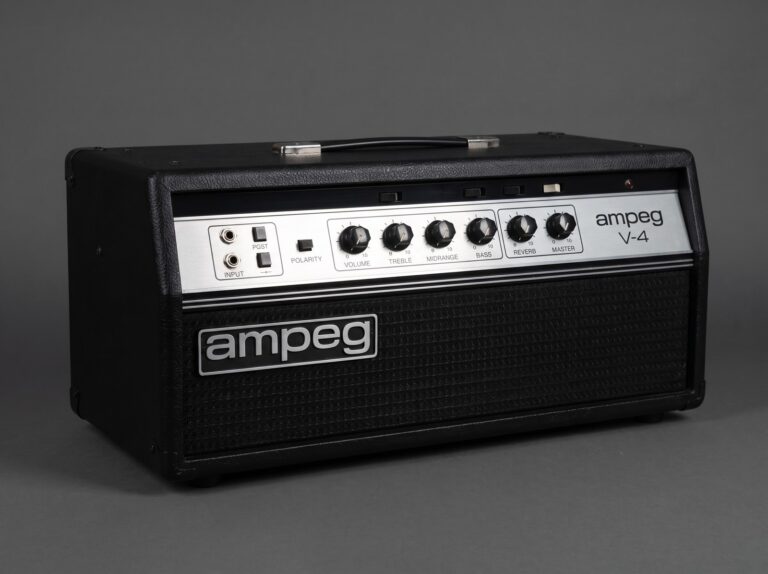
The Dinosaur Rock Guitar documentation is specific: “A rare live photo of Hagar-era Montrose shows Ronnie him in front Ampeg V4 stacks (7027A tubes).” The Ampeg V4 — a 100-watt all-tube head using 7027A power tubes (a specific tube type rather than the more common 6L6 or EL34) — provides the specific American amplifier character that gives the Montrose recordings their particular quality. The 7027A is a tetrode power tube with a specific warm, powerful, slightly compressed character — different from the EL34’s British warmth and from the 6L6’s American clarity. The V4’s specific sound, combined with the Les Paul’s PAF humbuckers, produces the “beefier than Page, more bite than Gorham” quality that defines the Montrose hard rock tone.
The Circus magazine 1982 Equipboard documentation provides his studio amp preference: “Ronnie’s chosen amp for the past three years has been an old single cabinet tweed Fender Bandmaster with three 10′ speakers.” The Fender Tweed Bandmaster — a late-1950s/early-1960s Fender tube combo with three 10-inch speakers — is a dramatically different amplifier choice from the Ampeg V4 stacks. The Bandmaster’s specific character: the warm, relatively clean American tube response of the late-1950s Fender tweed series, with natural breakup at moderate volumes. Its three 10-inch speakers provide a specific midrange-forward response different from 12-inch speakers. “He has used the Marshalls on a few tracks, but their volume makes them difficult to work with when other band members are recording in the same room” — the Bandmaster’s lower volume ceiling makes it more practical for studio recording where volume needs to be controlled.
The Equipboard Open Fire album documentation: “In a vintage promotional advertisement for the album ‘Open Fire,’ guitarist Ronnie Montrose is depicted using the Lab Series L5 guitar amplifier.” The Lab Series (produced by Music Man, later Gibson) were transistor hybrid amplifiers — combining solid-state power sections with some tube elements — known for their specific clean, precise, professional character. The Lab Series L11 (also documented in the Gemtracks profile) is the higher-powered version. Their use for the Open Fire era reflects his ongoing exploration of different amplification approaches as he moved beyond straightforward hard rock toward more experimental instrumental territory.
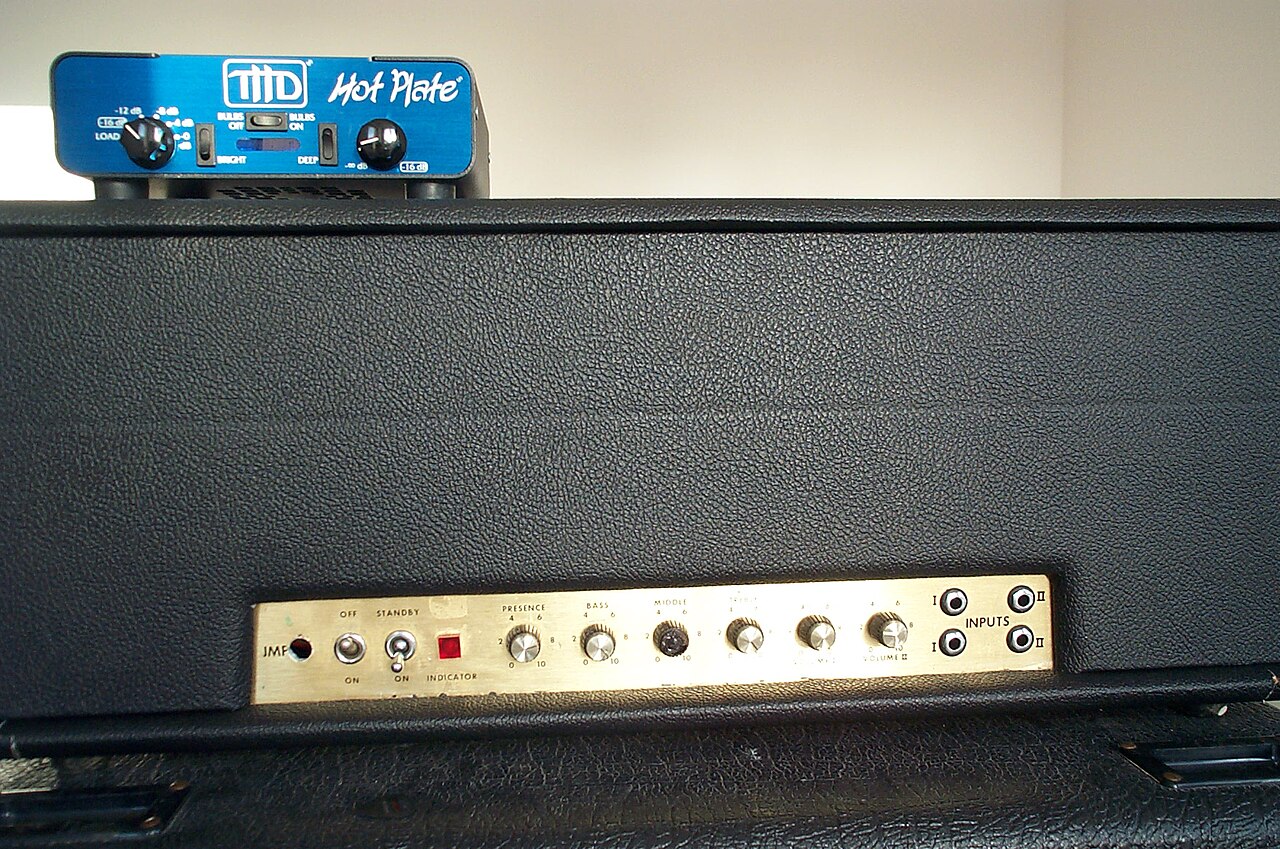
The Fretlounge documentation confirms Marshall JMP use alongside his other amplifiers: “His aggressive hard rock tone was largely achieved using Marshall amplifiers, specifically a Marshall JMP head, often paired with Fender amps for clean tones and added dimension.” The Marshall JMP’s specific character — British EL34-powered tube saturation — provides a different harmonic character from the Ampeg V4’s 7027A American tone. The pairing of Marshall for driven tones and Fender for clean tones is the specific multi-amp approach that gives the best recorded hard rock tones their dimensional, layered character.
The Equipboard auction documentation confirms: “Ronnie Montrose’s Mesa Boogie 20/20 DynaWatt EL84 all tube stereo power amp with a black nylon case.” The Mesa Boogie 20/20 — a stereo power amplifier using EL84 tubes (the smaller British tube associated with Vox amplifiers) — reflects his later-career exploration of different power amplifier characters. EL84 tubes produce a specific harmonic richness and saturation character that differs from the 6L6 and EL34 of conventional rock amplification.
Effects
Ronnie Montrose’s primary studio effect is the Electro-Harmonix Big Muff Pi fuzz — documented in the 1982 Circus magazine quote: “The stage is free of pedals because, the artist maintains, they always ‘screw up,’ but in the studio he does use a Big Muff fuzztone and an Ampeg Scrambler (the former built into a heavy-duty box).” The specific detail — the Big Muff built into a heavy-duty box rather than in its stock Electro-Harmonix housing — reflects the professional working guitarist’s practical modification: the stock EHX housing is not road-rugged, and a guitarist who doesn’t trust pedals on stage needs the studio fuzz to be reliable when he does use it. The Equipboard documentation adds a specific historical note: “The ‘Triangle’ Big Muff was phased out for the ‘Ram’s Head’ in 1973, the year that Montrose was recorded, ambiguating the version used” — whether the debut album used the Triangle or Ram’s Head circuit variant is historically uncertain, but both belong to the early-1970s Big Muff lineage.
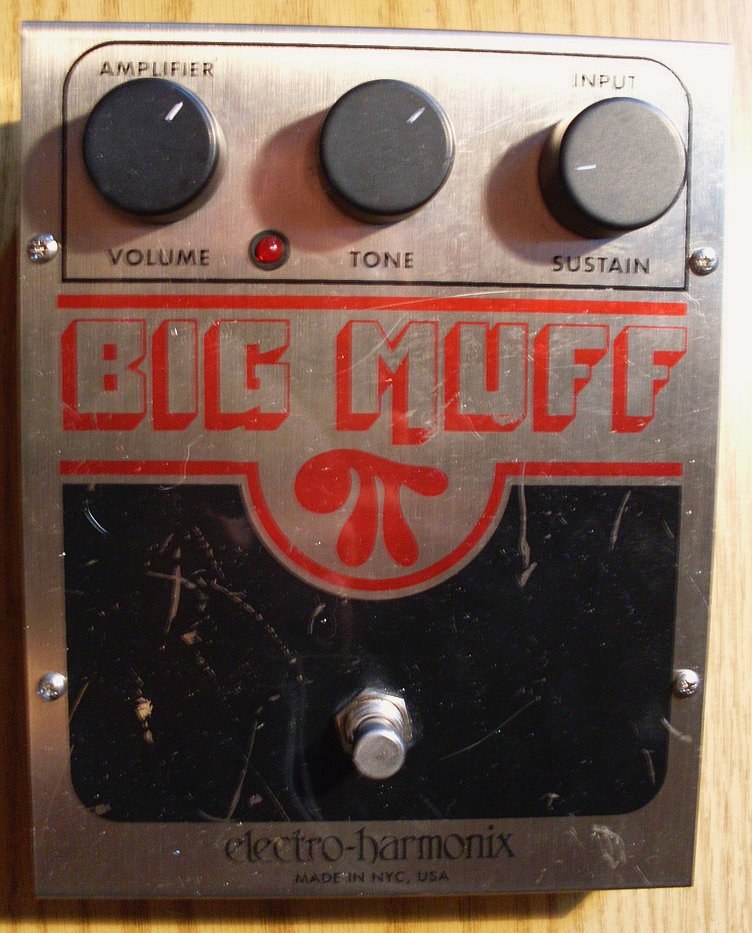
The Circus 1982 documentation confirms the Ampeg Scrambler alongside the Big Muff: “he does use a Big Muff fuzztone and an Ampeg Scrambler.” The Ampeg Scrambler is a specific transistor-based fuzz/overdrive circuit from Ampeg’s effects line — known for its aggressive, biting, somewhat asymmetric clipping character that differs from the Big Muff’s more sustaining, violin-like fuzz. Using both simultaneously or switchably provides two distinct fuzz characters for different recording applications.
The Circus 1982 quote captures Montrose’s live effects philosophy completely: “The stage is free of pedals because, the artist maintains, they always ‘screw up.'” This is the working professional’s rejection of effects pedals for live performance — not a philosophical anti-effects position (he uses them in the studio) but a practical reliability assessment. Effects pedals fail at inopportune moments. A guitarist who has experienced a pedal failure mid-performance understands the appeal of running guitar directly into amplifier where the only failure points are the guitar, the cable, and the amp. His live tone came from the guitar-into-Ampeg-V4 interaction at high power, not from pedal processing.
The Equipboard auction documentation notes “two Bogner RM pedals” in the collection of electronics he built or modified — Bogner’s RM (Rack Module) pedal line providing high-quality preamp tones in pedal format. Their presence in his late-career collection documents his ongoing experimentation with different tone-shaping tools even as his primary live approach remained pedal-free.
The most important “effect” in Ronnie Montrose’s live playing was not a pedal but a technique: “Many of the signature riffs heard throughout his career are made of power dyads which he bent and vibrated with fingers not a whammy bar.” A power dyad is a two-note chord — typically a root and a fifth, or root and a fourth — played simultaneously and bent/vibrated as a unit. The specific physical technique of bending both strings simultaneously with the fretting fingers, maintaining the interval relationship while changing the pitch, produces a specific sound that a whammy bar (which changes all strings’ pitch uniformly) cannot replicate. This is the specific technique that gives Montrose’s riffs their characteristic wide, powerful, slightly unpredictable character: the human hand’s specific pressure and release produces a vibrato that is subtly, musically inconsistent in the most expressive possible way.
Playing Style & Tone Philosophy
Ronnie Montrose’s playing style is the most specifically American in the hard rock tradition — the approach of a guitarist who was influenced by the Chicago blues players (Bloomfield, Bishop), the British Invasion’s application of blues (Clapton’s Cream, Hendrix’s psychedelic exploration), and who synthesized these into a specifically American hard rock vocabulary that was rawer and more physically powerful than the British models it drew from. His Vintage Guitar “Fretprints” characterization: “A dedicated eclectic, Ronnie reconciled hard rock with power pop, electronica, and orchestral aspirations.” This breadth — from the pure hard rock of the Montrose debut to the synthesizer-influenced Gamma material to the orchestral aspirations of solo work — reflects the curiosity of a musician who was genuinely interested in musical possibilities beyond what any single genre could provide.
His tone philosophy is the “let the hands and arrangement do the work, not the pedals” philosophy — consistent with his “stage is free of pedals” live approach, his “not into flash” self-description, and the specific simplicity of his most celebrated recording contexts (Fender Esquire through a little amp and a fuzz for Open Fire; Les Paul through Ampeg V4 stacks for Montrose). The hands, the amplifier, and the arrangement are the tools. Everything else is flash, and he was not into flash.
His death from prostate cancer in 2012 — at sixty years old, after years of battling the disease, having continued working on new material up to the end — is the loss of a musician who had not finished what he wanted to do. The Aracom Amps connection documented in his final months — preparing to use a specific boutique amp on the road, “so he could take his tone with him” — is the final gear-related biographical fact: still thinking about tone, still working on the sound, still not into flash. Just the right amp. Just the music.
How to Sound Like Ronnie Montrose
Guitar: Gibson Les Paul Standard (sunburst, PAF-era or PAF-replica humbuckers) for the primary Montrose band tone. Fender Stratocaster for the brighter, twangier alternative. The specific technique: power dyads (root-fifth or root-fourth two-note chords) bent with the fretting fingers — no whammy bar. The bend vibrates both notes simultaneously, maintaining their interval relationship as the pitch rises and falls. This is the specific physical source of the Montrose riff character.
Amp: Ampeg V4 (7027A tubes) for the specific live Montrose tone — or any powerful American tube head pushed into natural power-amp saturation. Marshall JMP for British-voiced alternative. Fender Tweed Bandmaster for studio/smaller-room work.
Amp Settings (Ampeg V4 / American Tube Stack — Montrose Hard Rock Tone):
| Control | Setting (0–10) | Notes |
|---|---|---|
| Volume | 8–10 | HIGH — “harnessing the power of high-decibel amplification” |
| Bass | 6–7 | Full — “beefier than Page’s tone” |
| Mid | 5–6 | Present — the Les Paul’s PAF character needs midrange presence |
| Treble | 5–6 | “More bite than Gorham’s tone” — enough treble for attack |
| Presence | 5 | Moderate — power amp distortion, not preamp overdrive |
Studio approach: Add EHX Big Muff Pi (or heavy-duty boxed version) for the specific sustaining fuzz character of the Open Fire era. Dinosaur Rock Guitar: “It’s a 70s hard rock, poweramp distortion sound, featuring much less gain than what came in the 80s and later. If you’re using a newer amp, roll back the preamp gain and let the power tubes get cooking.” The power-amp saturation approach — low preamp gain, high volume, natural power-tube saturation — is the specific 1970s hard rock sound that Montrose helped define.
Influence & Legacy
Ronnie Montrose’s influence on American hard rock is foundational — specifically as the guitarist who established the template for American heavy rock guitar one to two years before Van Halen, Aerosmith, and the subsequent developments that the mainstream associates with American hard rock. The Montrose self-titled debut (1973) is the specific document: the Les Paul through high-powered amplification, the melodically accessible hard rock songs, the power dyad riffs bent with the fingers, the specific combination of blues roots and rock aggression that would define American hard rock for decades.
His connection to Peter Frampton as a parallel figure in 1970s British/American hard rock — both musicians who built significant careers from the early 1970s and whose specific tonal approaches (Frampton’s three-humbucker Les Paul with talk box versus Montrose’s sunburst Les Paul through Ampeg V4) defined different dimensions of 1970s hard rock guitar — reflects the shared cultural moment. His connection to Steve Marriott as a parallel figure in the development of proto-heavy metal reflects the shared tradition of blues-rooted, amplification-powered hard rock that both musicians contributed to from opposite sides of the Atlantic. His connection to the Eddie Van Halen tradition — the specific debt that Van Halen’s debut bears to the Montrose sound — is the most consequential single influence relationship in American hard rock.
Frequently Asked Questions: Ronnie Montrose Guitars & Gear
What guitar did Ronnie Montrose use with the Montrose band?
Montrose’s primary guitar during the Montrose band period was a sunburst Gibson Les Paul Standard — “For the first years of his career, Ronnie was associated with a sunburst Les Paul.” He also used a Fender Stratocaster on certain Montrose tracks, specifically documented for “Bad Motor Scooter,” “Make It Last,” and “Rock Candy.” He purchased a 1958 Gibson Les Paul Standard in 1977 and retired it seven years later in 1984. His Fender Esquire — used for the Open Fire album (1978) — was sold to Carlos Santana shortly after recording.
What amplifier did Ronnie Montrose use?
The Montrose band’s live sound used Ampeg V4 stacks with 7027A power tubes, documented in photographs of the Sammy Hagar-era lineup. For studio recording circa 1979-1982, his primary amp was “an old single cabinet tweed Fender Bandmaster with three 10-inch speakers.” He also used Marshall JMP heads and, for the Open Fire period, the Lab Series L5 (and L11) amplifiers. His late-career collection included a Mesa Boogie 20/20 DynaWatt EL84 power amp.
Why did Montrose sell his guitar to Carlos Santana?
In the March 1980 issue of International Musician and Recording World, Montrose described selling the Fender Esquire he used for Open Fire to Santana: “The main instrument I used was a Fender Esquire that I just sold to Carlos Santana.” He offered no specific reason beyond the matter-of-fact presentation of the sale — consistent with his “I’m not into flash” philosophy. He was a working musician who used instruments for specific purposes and moved on when the purpose was served.
What effects did Ronnie Montrose use?
Live: “The stage is free of pedals because, the artist maintains, they always ‘screw up.'” His live tone came from guitar into amplifier — no effects pedals. Studio: EHX Big Muff Pi fuzz (built into a heavy-duty box for reliability) and an Ampeg Scrambler fuzz/overdrive. The Open Fire album used “a little amp and a fuzz tone” as its primary tonal approach. His primary expressive tool was not an effect pedal but the technique of bending power dyads (two-note chords) with his fretting fingers rather than a whammy bar.
What is the connection between Montrose and Van Halen?
The Montrose self-titled debut (1973) is widely acknowledged as a foundational document of American hard rock, predating Van Halen’s 1978 debut by five years. Sammy Hagar (Montrose vocalist) has described Eddie Van Halen calling him and expressing admiration for the Montrose recordings. David Lee Roth reportedly auditioned for Montrose. The specific sonic template that Montrose established — Les Paul through high-powered American amplification, melodically accessible hard rock, power dyad riffs — is directly audible in what Van Halen developed from it.
How did Ronnie Montrose develop his distinctive riff style?
Vintage Guitar’s Fretprints characterization: “Many of the signature riffs heard throughout his career are made of power dyads which he bent and vibrated with fingers not a whammy bar.” A power dyad is a two-note chord (typically root and fifth, or root and fourth). Bending both notes simultaneously with the fretting fingers — rather than using a whammy bar — produces a specific physical, human vibrato character. This technique was his signature approach and distinguishes his riffs from contemporaries who used similar chord shapes but different expressive techniques.
When did Ronnie Montrose die and what was the cause?
Ronnie Montrose died on March 3, 2012, at the age of sixty. He had been battling prostate cancer for years. Guitar gear blog Guitar Gear reported: “He had been battling cancer for years, and it is believed he finally succumbed to the disease.” In the months before his death, he had been working on new material and connecting with boutique amp maker Aracom, planning to use their amplifiers on the road. He was actively working up to the end.
Image credits
- Eddie Van Halen: Anirudh Koul, Wikimedia Commons, CC BY 2.0.
- Marshall JMP Super Lead: germanium, Wikimedia Commons, CC BY 2.0.
- Top image: by Jim Summaria, Wikimedia Commons, CC BY-SA 3.0.
- Electro-Harmonix Big Muff Pi: Roadside Guitars, Flickr, CC BY-SA 2.0.
- Ronnie Montrose live: Jim Summaria, Wikimedia Commons, CC BY-SA 3.0.
- Ampeg V-4 head: GuitarGangsters AI-generated reference illustration, not a photograph.