Jeff Waters (Annihilator) Guitars & Gear: The Complete Guide to Canada’s Metal One-Man Army’s Annihilation-V Rig
Jeff Waters's guitars, amps, and effects — the complete guide. Epiphone Annihilation-V signature custom JWT JWR pickups kill switch Floyd Rose FRX, Gibson Flying V Gothic live, Gibson SG LP Fender Strat 1994, Hamer Vector 90s, Marshall JCM 800 50W '50W completely different animal 100W', EVH 5150 III 'sounded like me but better', Hughes Kettner Coreblade, 'lot of it in the amp and in the playing', Ottawa Ontario Canada 1984, Alice in Hell Never Neverland, plays bass himself, ranked 3 Joel McIver 100 Greatest Metal Guitarists, and Canada's metal one-man army's complete rig.
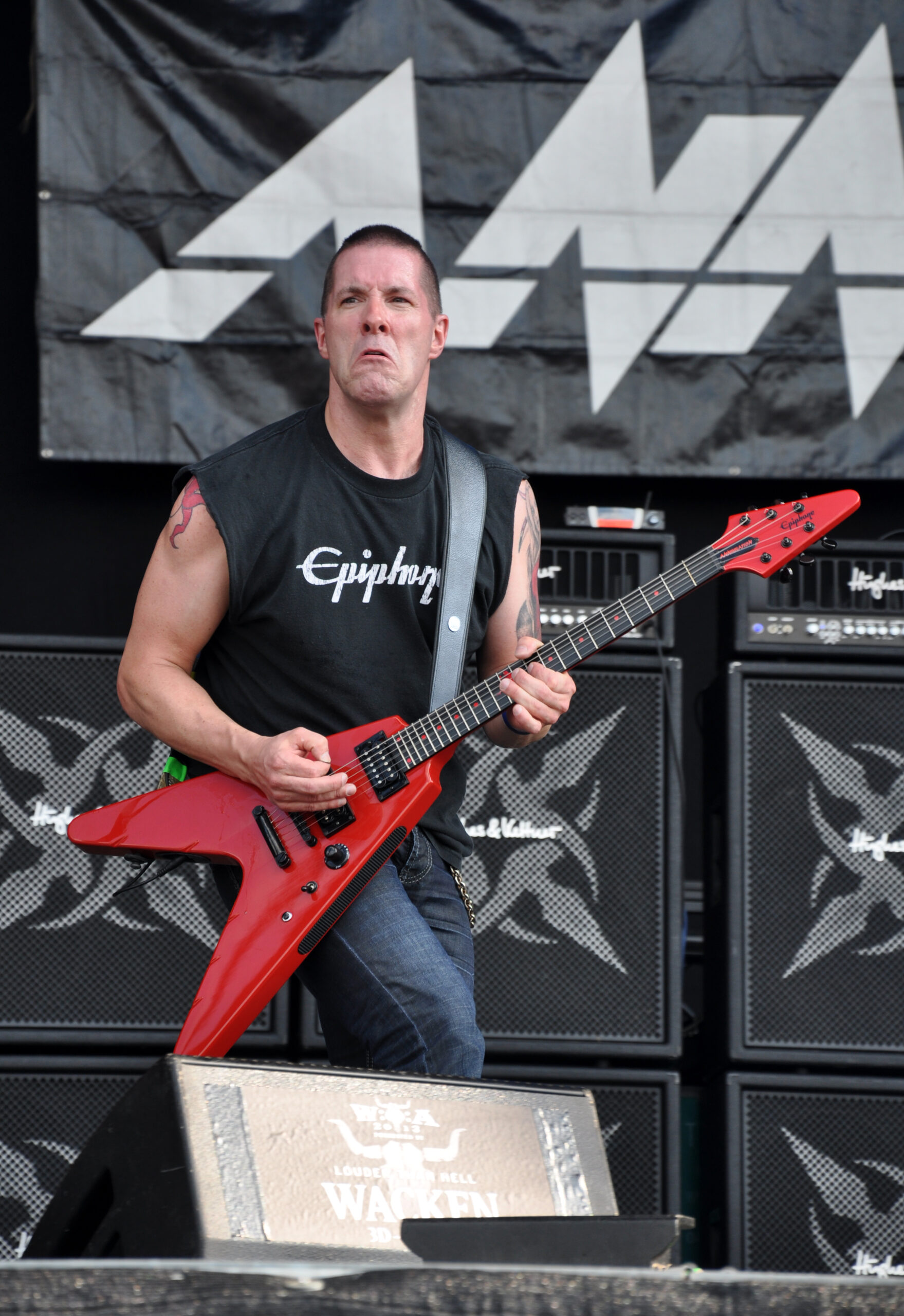
Photo by Jonas Rogowski, licensed under CC BY-SA 3.0
“When I plugged into that 5150 III, it sounded like me, but better. That’s how I look at it. For me, it’s really simple. Despite all the effects and pedals that you can use, this just sounds great when you plug it in. I can’t wait to use this thing on stage.” Jeff Waters said this to EVH in 2012 — and the specific quality of the endorsement is characteristic: not “this sounds unlike anything I’ve heard before” but “it sounded like me, but better.” Waters already knew what he sounded like. The 5150 III made it better. This is the approach of a musician who has been obsessively refining the same fundamental thrash metal guitar sound since 1984 — the same year he founded Annihilator in Ottawa, Ontario, as a solo project that would become one of the most consistently respected and most underheralded acts in the history of technical metal. Premier Guitar’s description: “Ranked an impressive #3 in Joel McIver’s 2009 book The 100 Greatest Metal Guitarists.” He records his own bass parts in the studio (hiring professionals only for touring). He is his own producer. He fires his own guitar techs when they don’t meet his standards. He built Annihilator essentially alone across sixteen-plus albums and four decades. His primary signature guitar: the Epiphone Annihilation-V, with his own custom JWT (Jeff Waters Treble) and JWR (Jeff Waters Rhythm) pickups, a kill button, and a Floyd Rose FRX tremolo. Live primary: the Gibson Flying V Gothic. Marshall JCM 800 50-watt for live: “Jeff used the 50 watt 800’s on tour live, as the 100 watts are a completely different animal, and would have to be insanely loud to get that gain he needs.” Same rig. Completely different animal to the 100W. Canada’s most technically accomplished metal guitarist. The Annihilator. The one-man army.
The Journey
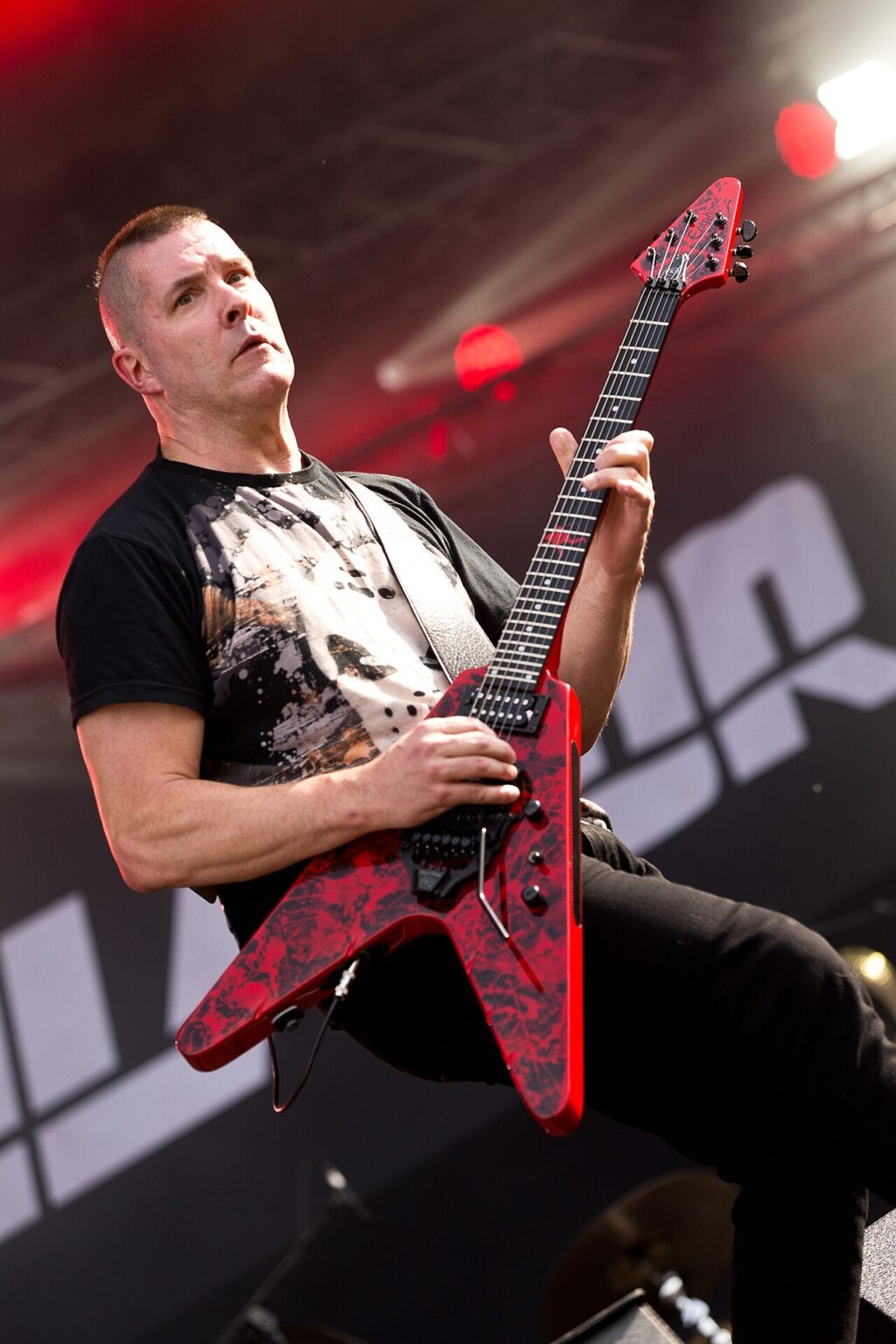
Jeffrey Carl Waters was born on November 6, 1966, in Ottawa, Ontario, Canada. He began playing guitar as a teenager, strongly influenced by KISS, and formed Annihilator in Ottawa in 1984 as essentially a solo project — writing the songs, playing the guitar, and looking for musicians to fill the other roles. The debut Alice in Hell (1989, Roadrunner Records) and Never, Neverland (1990) established Annihilator as one of the most technically sophisticated acts in the thrash metal tradition, with Waters’s specific ability to write melodic hooks within extreme technical passages distinguishing his approach from straightforward shred or brutality. He has remained the sole constant member across Annihilator’s entire history. He produces the band’s recordings himself. He records bass lines in the studio himself. He has covered lead vocal duties at various periods. He is ranked #3 in Joel McIver’s The 100 Greatest Metal Guitarists (2009). He is fifty-eight years old. Annihilator continues.
Advertisements
Background: Ottawa Ontario Canada, KISS Influence, Annihilator 1984 Solo Project, Alice in Hell 1989, Never Neverland 1990, Plays Bass Himself, Self-Produces, #3 Joel McIver 100 Greatest Metal Guitarists, Canada’s Best-Selling Metal Band
Waters’s specific creative position within Annihilator — the sole constant member, producer, guitarist, occasional bassist, occasional vocalist — makes him one of the most literally solo “band leaders” in metal history. The revolving lineup that has accompanied him across forty years reflects both the high standards he maintains and the specific challenges of sustaining a technically demanding metal band over such a long period. Premier Guitar: “Jeff Waters is the driving force behind the band Annihilator… Ranked an impressive #3 in Joel McIver’s 2009 book The 100 Greatest Metal Guitarists, Waters also lays down the band’s bass parts (hiring pros to cover touring duties), is the band’s chief producer, and covered lead vocal duties between 1994-97.”
His guitar playing style reflects the specific combination of influences that produced the Annihilator sound: the KISS influence (the specific hook-driven, theatrical approach to hard rock) providing the melodic accessibility that gives Annihilator’s songs their catchiness within the technical thrash context; the technical thrash tradition (Metallica, Megadeth, the speed metal scene of the mid-1980s) providing the rhythmic aggression and compositional complexity. Wikipedia: “Waters is well respected in the metal community for his technical skill and versatility on the guitar. In Annihilator, he plays passages on rhythm guitar, lead guitar, bass guitar, acoustic guitar, and classical guitar. Even when he is playing challenging material, he does so with speed, fluidity and precision.”

The MusicRadar characterization of Annihilator’s position: “Canada’s under-the-radar heavy heroes.” This is the specific paradox of his career — the #3 ranking in a 100 Greatest Metal Guitarists list, the twenty-plus albums of consistently high-quality technical metal, the critical respect from within the metal community, coexisting with mainstream obscurity outside the dedicated metal audience. Waters himself is aware of this: “serving as Canada’s under-the-radar heavy heroes” is an accurate characterization of both the achievement and the relative commercial position.
The Rig: Jeff Waters’s Guitars, Amps, and Effects
Guitars
Jeff Waters’s current signature guitar is the Epiphone Annihilation-V — a Flying V-shaped instrument with specific custom modifications. The Premier Guitar documentation of the Annihilation-V: “solid mahogany body and neck with deep set Flying V neck joint for upper fret access… The SlimTaper neck has a D profile and a 24-fret phenolic fingerboard. The guitar’s pickups were designed specifically for Waters by Epiphone engineers and made by Gibson USA’s pickup division.” The JWT (Jeff Waters Treble) bridge humbucker features a Ceramic-8 magnet “for the right combination of crunch and growl without ever losing its enhanced lows and crystal clear highs.” The JWR (Jeff Waters Rhythm) neck humbucker features an Alnico-II magnet “that provides vintage tone with great sustain and clarity along with the right combination of power and warmth.” His own assessment of the pickups: “They’re more of 80s, 70s, bluesy sounding pickups.” The Annihilation-V also includes a push-pull volume control for coil-splitting and a momentary “kill button” for rhythmic stuttering effects. Available in Pitch Black satin or Annihilation Red gloss.
The Equipboard documentation: “In a 2001 solo clip from Annihilator’s official YouTube channel, Jeff Waters is seen playing a Gibson Flying V Gothic guitar during a live performance.” The Gibson Flying V Gothic — the Flying V in the specific Gothic finish and configuration (typically ebony finish, specific pickup and hardware configuration) — was his primary live instrument for an extended period. The Flying V’s specific character (through-neck sustain, the angular body’s specific resonance, the visual impact of the V on stage) is consistent with his technical playing approach.
Wikipedia: “Around 1994, he began to experiment with other guitars and over the next few years used classic models such as a Gibson SG and Gibson Les Paul to achieve the diversity of sounds in Annihilator’s music during this time period. He would also use a Fender Stratocaster from time to time in the studio.” The 1994-onward period represents a specific tonal diversification — moving beyond the Flying V primary to incorporate the SG’s mahogany character, the Les Paul’s warmer humbucker sustain, and the Stratocaster’s single-coil brightness for different studio applications.
The Equipboard documentation: “Jeff Waters had Hamer make custom Vectors in various finishes in the 90’s which he used sporadically throughout his career.” The Hamer Vector — Hamer’s Explorer-shaped body design (the angular, pointed shape reminiscent of the original Gibson Explorer) — appears in Waters’s documented 1990s guitar collection as a custom-made instrument in multiple finishes.
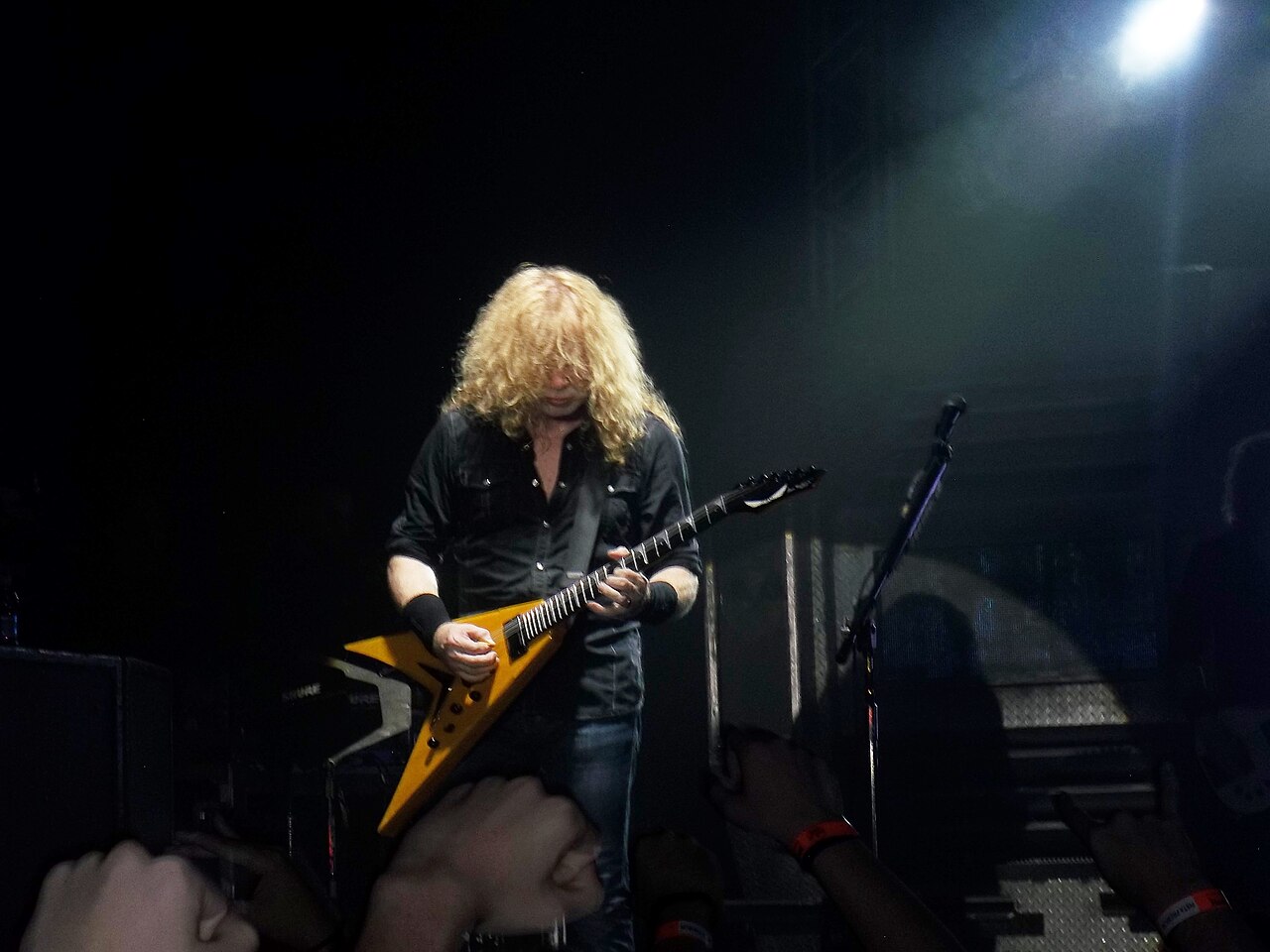
Wikipedia: “Waters has been known to use an ESP Dave Mustaine signature Flying V that he owns and it was this guitar that he used to record Schizo Deluxe as mentioned in the video section of annihilatormetal.com.” Using Dave Mustaine’s ESP signature Flying V for an Annihilator studio recording is the specific cross-endorsement detail — the Megadeth connection within the technical thrash tradition reflected in using Mustaine’s instrument for Waters’s album.
The Equipboard documentation: “At the 2 minute mark you can see Jeff Waters utilizing of a Gibson SG as warm-up band practice backstage before a show.” The Gibson SG used specifically for backstage warm-up — a different instrument from his stage primary — documents the practical use of an alternative guitar for the physical warm-up exercises before performance.
The Equipboard documentation: “In the provided image, Jeff Waters is pictured with an Epiphone Dave Navarro Signature Acoustic guitar. This is the guitar jeff used to record crystal ann as well as every other acoustic guitar part of any annihilator song.” The Epiphone Dave Navarro acoustic guitar — used for every Annihilator acoustic guitar part — documents his practical approach to acoustic recording: use a reliable, consistent instrument for the specific acoustic textures in the Annihilator catalog.
Amps
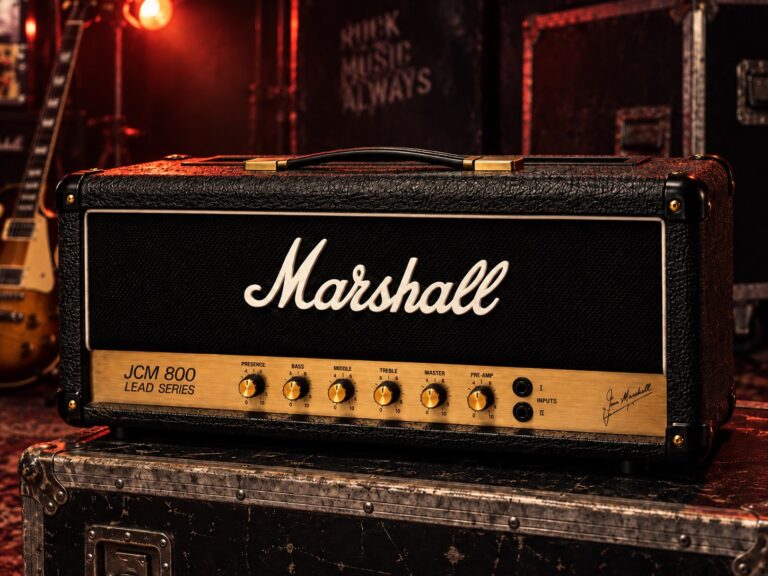
The Equipboard documentation: “At 4:19 Waters himself says he used a JCM 800…. Jeff used the 50 watt 800’s on tour live, as the 100 watts are a completely different animal, and would have to be insanely loud to get that gain he needs.” The Marshall JCM 800 50-watt — a crucial distinction from the 100-watt 2203 — is his live primary amplifier. The 50-watt JCM 800 achieves its natural tube saturation at lower overall volume levels than the 100-watt version, making it the practical choice for achieving the specific JCM 800 gain character without requiring the full-volume operation of the 100-watt model. “It’s also not meant to be a distortion pedal, its a gain boost that brings out the JCM 800’s character” — referring to the specific boost pedal approach of driving the 50-watt JCM 800’s input harder.
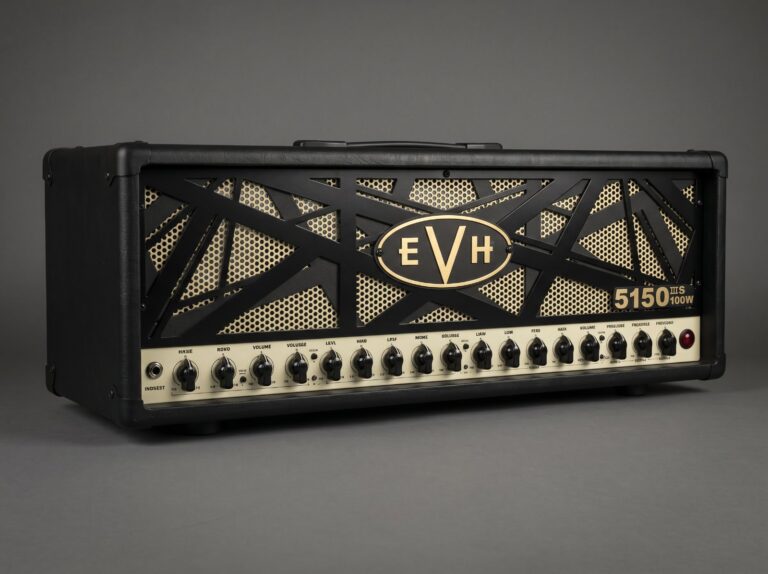
The Equipboard documentation of the 2012 EVH interview: “When I plugged into that 5150 III, It sounded like me, but better. That’s how I look at it. For me, it’s really simple. Despite all the effects and pedals that you can use, this just sounds great when you plug it in. I can’t wait to use this thing on stage.” The EVH 5150 III — the same amplifier lineage as the Peavey 5150 (documented for multiple guitarists throughout this guide) in its EVH-branded version — provided the specific tight, high-gain American tube character that Waters’s description suggests improved upon his existing sound.
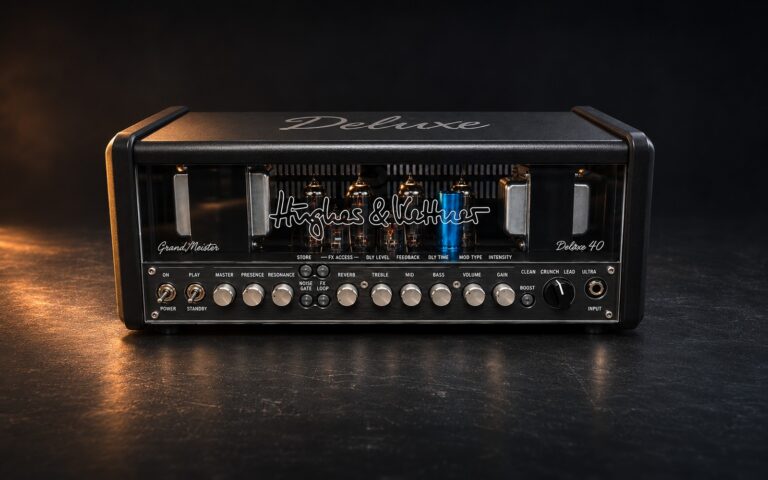
The Equipboard Annihilator band page: “Amplification plays a crucial role, with the Hughes & Kettner Coreblade 100W Head and Marshall JCM800 2203 delivering the powerful and dynamic sound that defines their live and studio performances.” The Hughes & Kettner Coreblade — a high-gain, four-channel tube head from the German amplifier company — appears in the band’s documented live amplification alongside the Marshall JCM 800.
Effects
The Wikipedia characterization captures the foundational approach: “Even when he is playing challenging material, he does so with speed, fluidity and precision.” His most essential “effect” is his specific playing technique — the alternate picking at extreme speed, the precise palm muting for the aggressive Annihilator rhythm approach, and the specific legato/tapping combination for lead passages. MusicRadar: “analysing the band’s late-’80s blend of speed and melody to rekindle the fire of their early output” — the specific Annihilator balance between pure speed and melodic hook is the defining technical feature of his approach.
His EVH 2012 interview quote extends beyond the amp endorsement to a broader philosophy: “You’re just trying to get his sound. I’m like, ‘A lot of it is in the amp, and a lot of it is in the playing.'” This is the direct, amp-and-technique-centered philosophy documented for multiple guitarists in this guide — the recognition that effects pedals are secondary to the fundamental combination of the right amplifier and the right playing technique.
The Annihilation-V’s built-in “kill button” — a momentary switch that silences the signal when engaged — provides a specific rhythmic stuttering effect used in certain Annihilator passages. The kill switch technique (made famous by Tom Morello) applied to the specific Annihilator technical thrash context.
The Equipboard documentation implies a specific boost pedal approach: “its a gain boost that brings out the JCM 800’s character.” The standard professional approach of using a boost or overdrive pedal before a 50-watt JCM 800 to achieve maximum natural tube saturation at practical live volumes — the same approach documented for Jeff Hanneman (Marshall JCM 800 + Boss EQ boost), Tom Scholz (Marshall Super Lead + MXR Equalizer), and other Marshall-primary guitarists.
Playing Style & Tone Philosophy
Jeff Waters’s playing style is the most technically comprehensive in the Canadian metal tradition — “Waters is well respected in the metal community for his technical skill and versatility on the guitar. In Annihilator, he plays passages on rhythm guitar, lead guitar, bass guitar, acoustic guitar, and classical guitar.” The specific range from classical guitar passages to extreme thrash metal rhythm guitar — all in the context of a single band — is the unique multi-instrumental breadth of his contribution. His tone philosophy is the “amp and playing” philosophy: “A lot of it is in the amp, and a lot of it is in the playing.” The right amplifier (50-watt JCM 800, EVH 5150 III) combined with the specific technical precision of his playing produces the Annihilator guitar sound without extensive effects processing.
Advertisements
How to Sound Like Jeff Waters
Guitar: Epiphone Annihilation-V (Flying V shape, custom JWT/JWR pickups, Floyd Rose FRX, kill switch) for the current Waters signature character. Gibson Flying V Gothic for the classic early Annihilator live character. Gibson SG, Les Paul, or Fender Strat for specific studio tonal variety applications.
Amp: Marshall JCM 800 50-watt (not the 100W — “completely different animal”). EVH 5150 III for the “sounds like me but better” contemporary character. Hughes & Kettner Coreblade for additional channel-switching flexibility.
Amp Settings (Marshall JCM 800 50W — Annihilator Canadian Thrash):
| Control | Setting (0–10) | Notes |
|---|---|---|
| Preamp Gain | 7–9 | High — the 50W achieves saturation more readily than the 100W |
| Bass | 5–6 | Present — the Flying V’s through-neck warmth needs low-end support |
| Mid | 6–7 | Forward — the Annihilator melodic hooks need midrange presence |
| Treble | 6–7 | Bright — alternate picking articulation requires treble definition |
| Presence | 6 | Natural — projects the technical runs clearly in the mix |
Boost pedal before amp: A transparent or slight-midrange-boost overdrive (Tube Screamer-style) before the 50-watt JCM 800 input for additional gain staging. Kill switch on the guitar for specific rhythmic stuttering. “A lot of it is in the amp, and a lot of it is in the playing.”
Influence & Legacy
Jeff Waters’s influence on technical metal and thrash metal guitar is the most specifically Canadian in this guide — as the primary creative force behind the most significant Canadian contribution to technical metal across four decades. His influence is particularly documented within the metal community (the #3 McIver ranking reflects guitarist-community respect) and within the specific tradition of technical thrash metal that values the balance between melody and aggression.
His connection to Akira Takasaki as a fellow highly technical metal guitarist of the same generation whose precise alternate picking and compositional balance between melody and aggression parallels his approach reflects the shared technical-metal tradition. His connection to Michael Romeo as a fellow technical metal guitarist of the next generation — Symphony X representing a more progressive direction from the same technical foundation — reflects the shared technical metal tradition. His connection to Jeff Hanneman as a fellow thrash metal guitarist of the same generational moment reflects the shared historical period of 1984-1990 thrash metal’s foundational recordings.
Frequently Asked Questions: Jeff Waters Annihilator Guitars & Gear
What guitar does Jeff Waters use?
Waters’s current primary signature guitar is the Epiphone Annihilation-V — a Flying V-shaped instrument with custom JWT (Jeff Waters Treble, Ceramic-8 magnet) bridge humbucker and JWR (Jeff Waters Rhythm, Alnico-II magnet) neck humbucker, a push-pull volume for coil-splitting, a momentary “kill button,” and Floyd Rose FRX tremolo. Available in Pitch Black satin or Annihilation Red gloss. His live primary has been the Gibson Flying V Gothic. He has also used Gibson SG, Gibson Les Paul, Fender Stratocaster (studio), Hamer Vector (custom 90s), and ESP Dave Mustaine signature Flying V (used to record Schizo Deluxe).
What amplifier does Jeff Waters use?
Live: Marshall JCM 800 50-watt — “Jeff used the 50 watt 800’s on tour live, as the 100 watts are a completely different animal, and would have to be insanely loud to get that gain he needs.” EVH 5150 III (endorsed from 2012): “When I plugged into that 5150 III, it sounded like me, but better.” Hughes & Kettner Coreblade 100W (documented live use). His philosophy: “A lot of it is in the amp, and a lot of it is in the playing.”
Why does Jeff Waters prefer the 50-watt JCM 800 over the 100-watt?
“Jeff used the 50 watt 800’s on tour live, as the 100 watts are a completely different animal, and would have to be insanely loud to get that gain he needs.” The 50-watt JCM 800 achieves its natural tube saturation at lower overall volume levels than the 100-watt version — the power tubes reach their natural saturation point sooner, producing the specific compressed, harmonically rich JCM 800 character at practical live volumes without requiring the full-volume operation the 100-watt model needs.
What is the Annihilation-V guitar?
The Epiphone Annihilation-V is Waters’s signature guitar — “The Ultimate Metal Guitar” per his own description. Features: solid mahogany body and neck, deep-set Flying V neck joint, SlimTaper D-profile neck, 24-fret phenolic fingerboard, custom JWT (Ceramic-8 bridge) and JWR (Alnico-II neck) humbuckers designed by Epiphone engineers using Gibson USA’s pickup division, push-pull volume for coil-splitting, three-way toggle, momentary kill button, Floyd Rose FRX tremolo. Available in Pitch Black satin or Annihilation Red gloss with “Annihilation Devil” fingerboard graphics.
Why is Jeff Waters considered one of the greatest metal guitarists?
Premier Guitar: “Ranked an impressive #3 in Joel McIver’s 2009 book The 100 Greatest Metal Guitarists.” Wikipedia: “Waters is well respected in the metal community for his technical skill and versatility on the guitar. In Annihilator, he plays passages on rhythm guitar, lead guitar, bass guitar, acoustic guitar, and classical guitar. Even when he is playing challenging material, he does so with speed, fluidity and precision.” He also records the band’s bass parts himself, self-produces the albums, and has sustained Annihilator’s creative quality as the sole constant member across forty years and twenty-plus albums.
What are Annihilator’s most celebrated albums?
The debut Alice in Hell (1989, Roadrunner Records) and Never, Neverland (1990) are widely considered Annihilator’s most critically acclaimed recordings and the foundational documents of the Canadian technical thrash tradition. MusicRadar: “Annihilator remain a potent force in thrash and the wider world of metal, serving as Canada’s under-the-radar heavy heroes.” Waters himself has analyzed the band’s “late-’80s blend of speed and melody” as the target aesthetic to “rekindle the fire.”
Does Jeff Waters play bass in Annihilator?
Yes. Premier Guitar: “Waters also lays down the band’s bass parts (hiring pros to cover touring duties).” He records all Annihilator bass lines in the studio himself, then hires professional bassists to cover the touring duties. He also covered lead vocal duties between 1994-1997. This multi-instrumental studio role — guitarist, bassist, vocalist, and producer on all recordings — makes him one of the most specifically self-sufficient recording artists in metal history.
Image credits
- Dave Mustaine: Jhonesilverio, Wikimedia Commons, CC BY-SA 4.0.
- Top image: by Jonas Rogowski, CC BY-SA 3.0.
- Jeff Waters: photo by V-spectrum, via Wikimedia Commons, CC BY-SA 4.0.
- Jeff Waters live: S. Bollmann, Wikimedia Commons, CC BY-SA 4.0.
- Marshall JCM800 2203: GuitarGangsters AI-generated reference illustration, not a photograph.
- EVH 5150 III: GuitarGangsters AI-generated reference illustration, not a photograph.