Jeremy Spencer Guitars & Gear: Fleetwood Mac’s Slide Savage Complete Rig Guide
Jeremy Spencer guitars, amps & effects — Gibson ES-125, Marshall Bluesbreaker, Delta blues slide deep-dive for Fleetwood Mac's wildest guitarist.
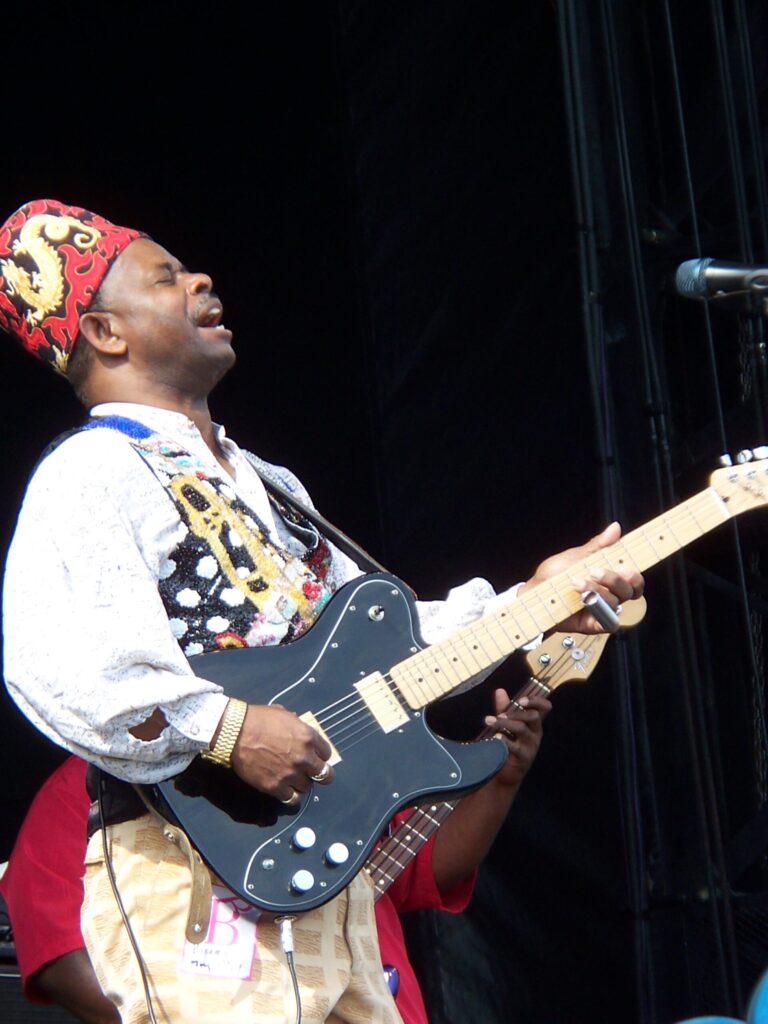
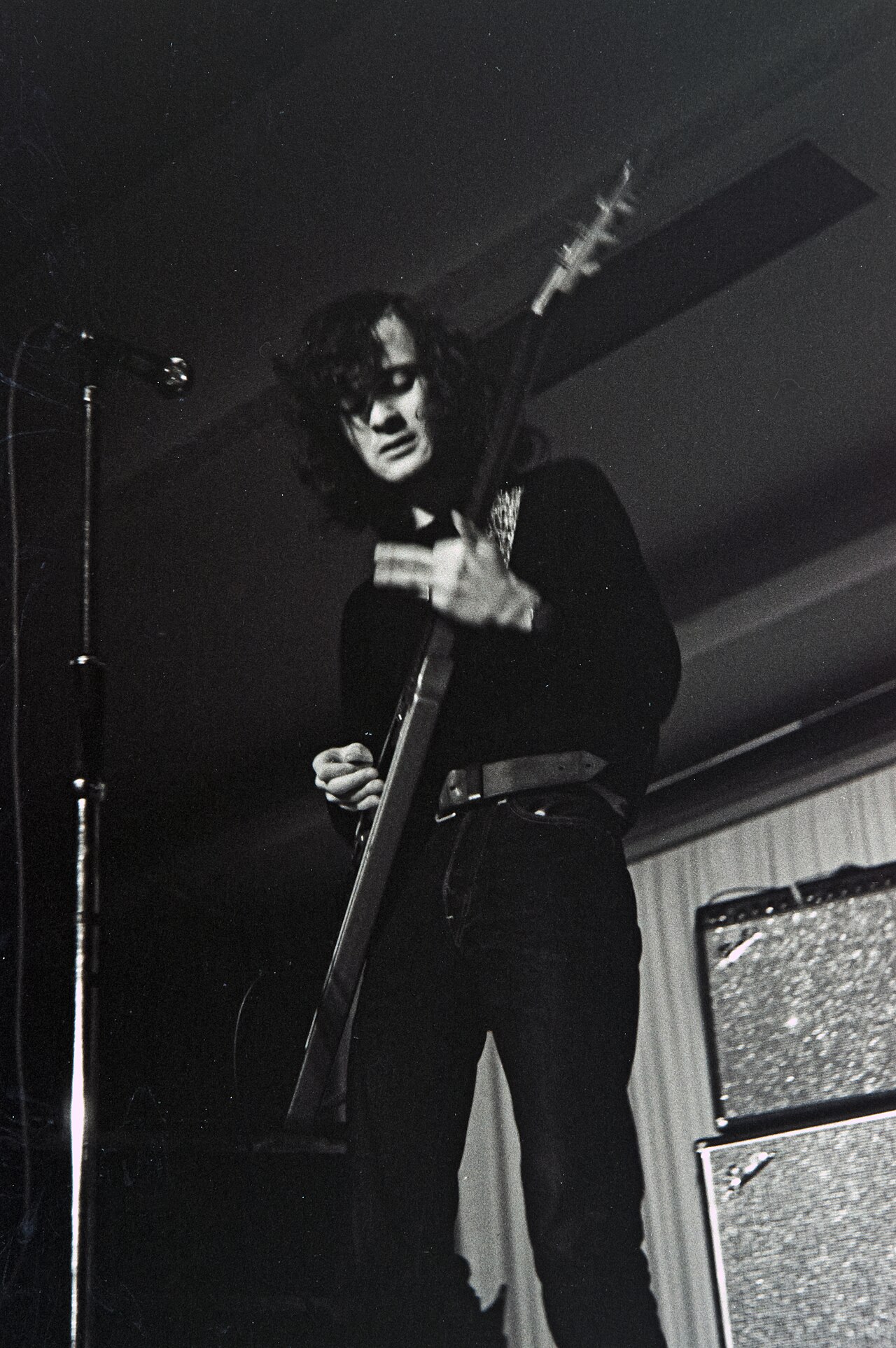
Photo by Nubiatech, licensed under CC BY-SA 3.0
Before Fleetwood Mac was a California soft-rock institution selling out arenas on the back of “Go Your Own Way” and “Dreams,” it was a ferocious British blues band with a slide guitarist who played like a man possessed by the spirit of Elmore James — and in Jeremy Spencer’s case, that is barely a metaphor. Spencer didn’t merely admire Elmore James. He absorbed him at a cellular level, internalised the entire vocabulary, and reproduced it with a fidelity and fury that left audiences slack-jawed. In a band already boasting Peter Green — one of the greatest blues guitarists Britain has ever produced — Spencer held his own by being the most raw, most primal, most uncompromising slide player in the room. Which is saying something extraordinary.
Gear Timeline
His departure from Fleetwood Mac in February 1971 — he walked out during a Los Angeles tour and joined the Children of God religious cult, never to return — is one of rock history’s great vanishing acts. But the records he left behind, from the debut Peter Green’s Fleetwood Mac (1968) through Kiln House (1970), document a slide guitarist operating at a level of intensity and authenticity that the entire British blues revival produced precious few examples of. His gear was simple, vintage, and brutally effective. This is the full breakdown.
Background
Jeremy Spencer was born on July 4, 1948, in Hartlepool, County Durham, in the northeast of England. He grew up in the West Midlands and came to the guitar through an obsessive focus on American blues and rock’n’roll records that the British music press was beginning to take seriously as art rather than mere entertainment. Where most of his contemporaries were drawn to the Chicago electric blues of Muddy Waters and Buddy Guy, Spencer developed an almost exclusive fixation on Elmore James — the Mississippi-born slide guitarist whose electrified Delta blues, recorded for Trumpet and Modern Records in the early 1950s, represented one of the rawest, most emotionally direct forms of electric guitar playing ever committed to tape.
Elmore James’s music is built on a foundation of slide guitar played with enormous physical commitment — the “Dust My Broom” riff, based on Robert Johnson’s original acoustic version, was James’s calling card, and Spencer learned it so thoroughly that he could reproduce not just the notes but the specific tonal and dynamic character of James’s playing with uncanny accuracy. This was not mere mimicry; it was scholarship of the highest order, the kind of deep immersion in source material that separates players who truly understand a tradition from those who merely borrow its surface features.
Peter Green heard Spencer playing at a local gig in 1967 and was immediately struck by his slide playing’s authenticity and power. When Green was forming Fleetwood Mac — with Mick Fleetwood on drums, John McVie on bass, and himself as the primary lead guitarist — he specifically recruited Spencer to provide the raw, Delta-informed slide counterpoint to his own more refined, Chicago-influenced electric blues approach. The contrast was deliberate and electrifying: Green’s cool precision against Spencer’s incandescent chaos.
The debut album Peter Green’s Fleetwood Mac (Blue Horizon Records, 1968) established the dynamic immediately. Spencer’s tracks — including his arrangement of the Elmore James standard “Shake Your Moneymaker” and the original “My Heart Beat Like a Hammer” — are among the most viscerally exciting performances on the record, capturing a twenty-year-old guitarist playing with the confidence and authority of someone twice his age. The follow-up Mr. Wonderful (Blue Horizon, 1968) continued in the same vein, with Spencer’s slide work providing the most overtly Delta-blues element in the band’s increasingly sophisticated sound.
The Reprise Records period — beginning with Then Play On (1969) and continuing through Kiln House (1970) — saw Spencer’s contributions shift slightly as the band’s sound evolved away from pure blues under Green’s increasingly experimental influence. Then Play On is primarily Green’s album, but Spencer’s presence is felt; Kiln House, recorded after Green’s departure in May 1970, is in many ways Spencer’s album — he wrote the majority of the material, which demonstrated an unexpected breadth of influence including 1950s rock’n’roll pastiche and Elmore James homage. It is a genuinely good record, and it demonstrated that Spencer had musical dimensions beyond the pure slide blues context in which he had been primarily operating.
His departure in February 1971 — during a Fleetwood Mac tour of America, he walked out of the group’s Los Angeles hotel and was subsequently found in a Children of God commune having shaved his head and renounced his former life — ended one of British rock’s most remarkable brief careers. He has remained associated with the Children of God (later renamed The Family International) ever since, recording occasional gospel-influenced material under the organisation’s auspices and making very rare public statements about his musical past. He was inducted into the Rock and Roll Hall of Fame as a member of Fleetwood Mac in 1998.
The Rig: Jeremy Spencer’s Guitars, Amps, and Effects
Guitars
The Gibson ES-125 is the instrument most closely and most accurately associated with Jeremy Spencer’s Fleetwood Mac slide work — the guitar that produced the specific tone heard on the early Blue Horizon albums and on live recordings from 1968–1970. The ES-125 is a full hollow-body non-cutaway archtop — Gibson’s budget-range instrument introduced in 1941 and produced through 1970, positioned below the ES-175 and ES-330 in the Gibson hollowbody lineup. The mid-to-late-1950s ES-125 specification: a fully hollow laminated maple body with no cutaway, in either a full-depth body (the standard ES-125) or a thinline body (the ES-125T variant introduced in 1956), a 24.75-inch scale length mahogany neck with a rosewood fretboard and dot inlays, and a single Gibson P-90 soapbar single-coil pickup in the neck position. The P-90 in the ES-125 is wound to approximately 7.5k–8.5k ohms DC resistance with an Alnico V bar magnet (the P-90 uses a bar magnet under the coil rather than the rod magnets of the humbucker, giving a different flux pattern and tonal character), producing a broad, harmonically rich single-coil sound with pronounced midrange presence and a slight roughness at the top end that is entirely absent from humbucker-equipped instruments. The fully hollow body contributes significant acoustic warmth and a natural resonance that amplifies the P-90’s tonal character — the ES-125’s combined acoustic-electric quality gives the guitar a three-dimensional bloom on sustained notes that solid-body instruments simply cannot replicate. For slide playing — which Spencer performed with a metal slide on the ring finger of his right hand, playing in open tunings — the ES-125’s hollow body produced the acoustic sustain and natural feedback characteristics that Delta slide technique demands. The guitar’s relatively high action (set deliberately for slide clearance) and the P-90’s broad, forward-midrange character gave Spencer’s slide tone its characteristic rawness and presence.
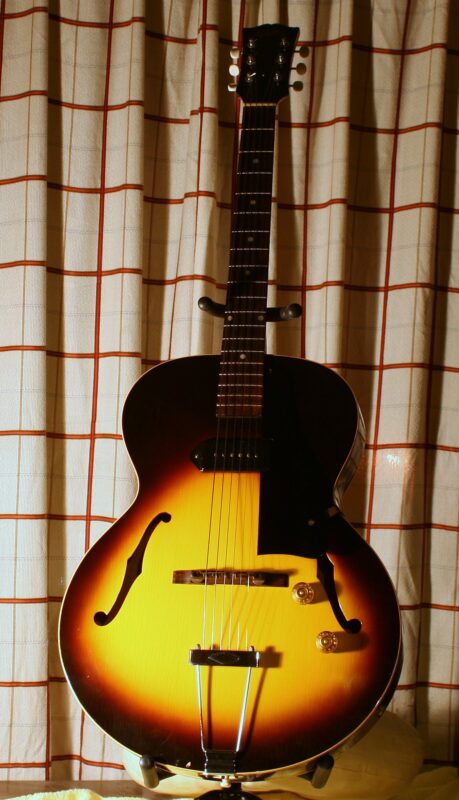
The ES-125T — the thinline version of the ES-125, with a shallower body depth of approximately 1.75 inches compared to the standard ES-125’s approximately 3.25-inch depth — also appears in documentation of Spencer’s instruments. The thinline body reduces the acoustic hollowbody resonance somewhat compared to the full-depth model, giving a slightly tighter, more controlled tone that is less prone to feedback at high volume — a practical consideration for a live performance context where Spencer was working with cranked British valve amplifiers. The P-90 specification remains the same as the full-depth ES-125.
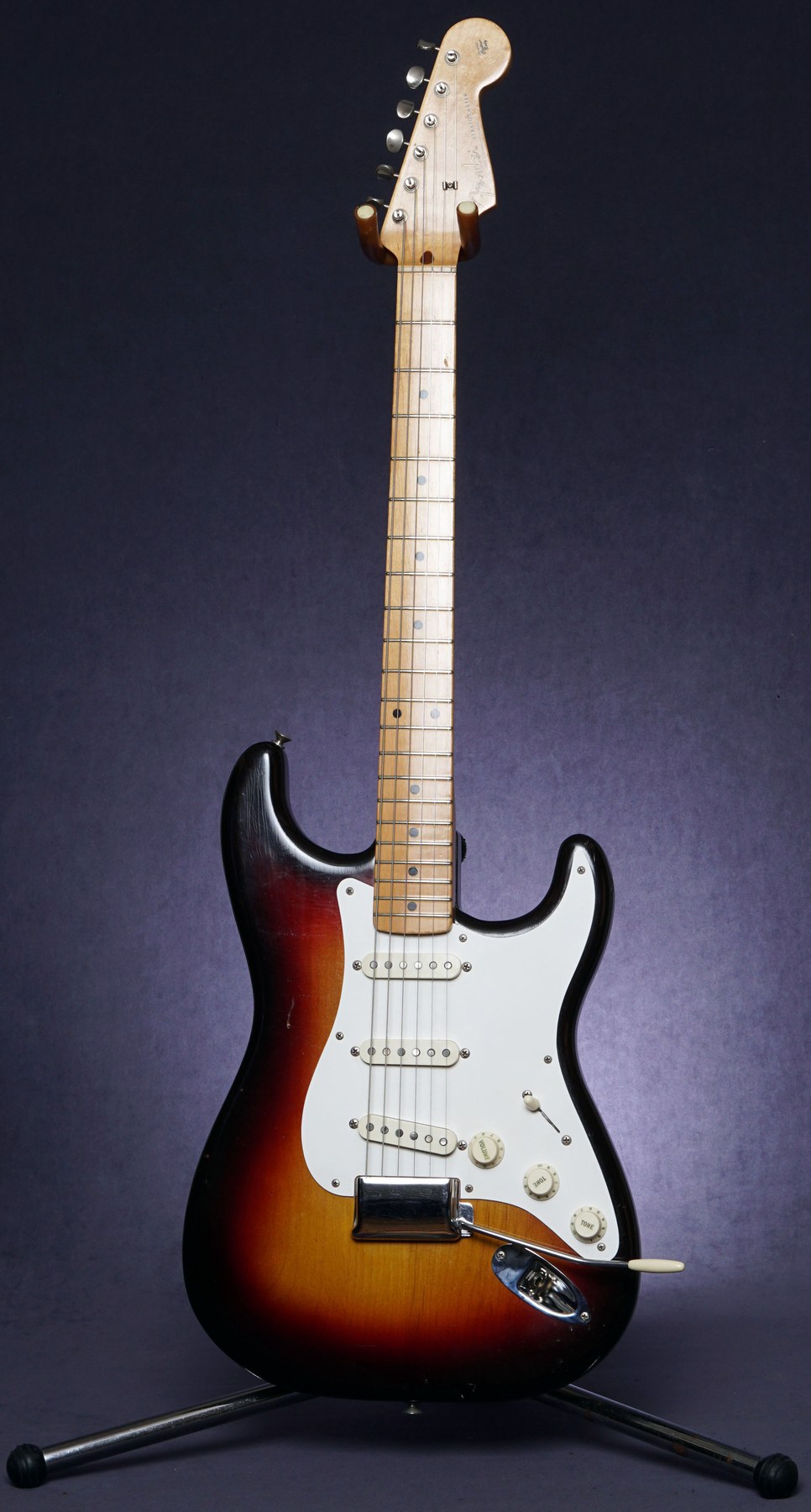
Vintage Fender Stratocasters appeared in Spencer’s setup alongside the ES-125, providing a completely different tonal palette for non-slide electric work. Early-to-mid-1950s Stratocasters — the slab-body, two-tone sunburst examples from 1954–1958 — used Alnico V staggered-pole single-coil pickups wound to approximately 5.8k ohms DC resistance on the neck and middle positions, with a slightly hotter bridge pickup at approximately 6.4k ohms to compensate for the position’s naturally lower output. The 1954–1958 Strat specification includes an ash body (brighter, more pronounced grain than the alder used on most post-1956 examples), a maple neck with a V-shape profile (the distinctive “Vee” neck of early Fenders, transitioning to a softer C-shape by 1957–1958), a single-ply white pickguard (eight-screw on 1950s examples), and the original three-saddle bridge with the “bent-steel” saddle design. The 1950s Strat’s tone — particularly the neck pickup — has a warm, almost hollow quality that comes from the Alnico V poles’ interaction with the ash body’s resonant characteristics, quite different from the brighter, more aggressive character of later ceramic-pole examples.
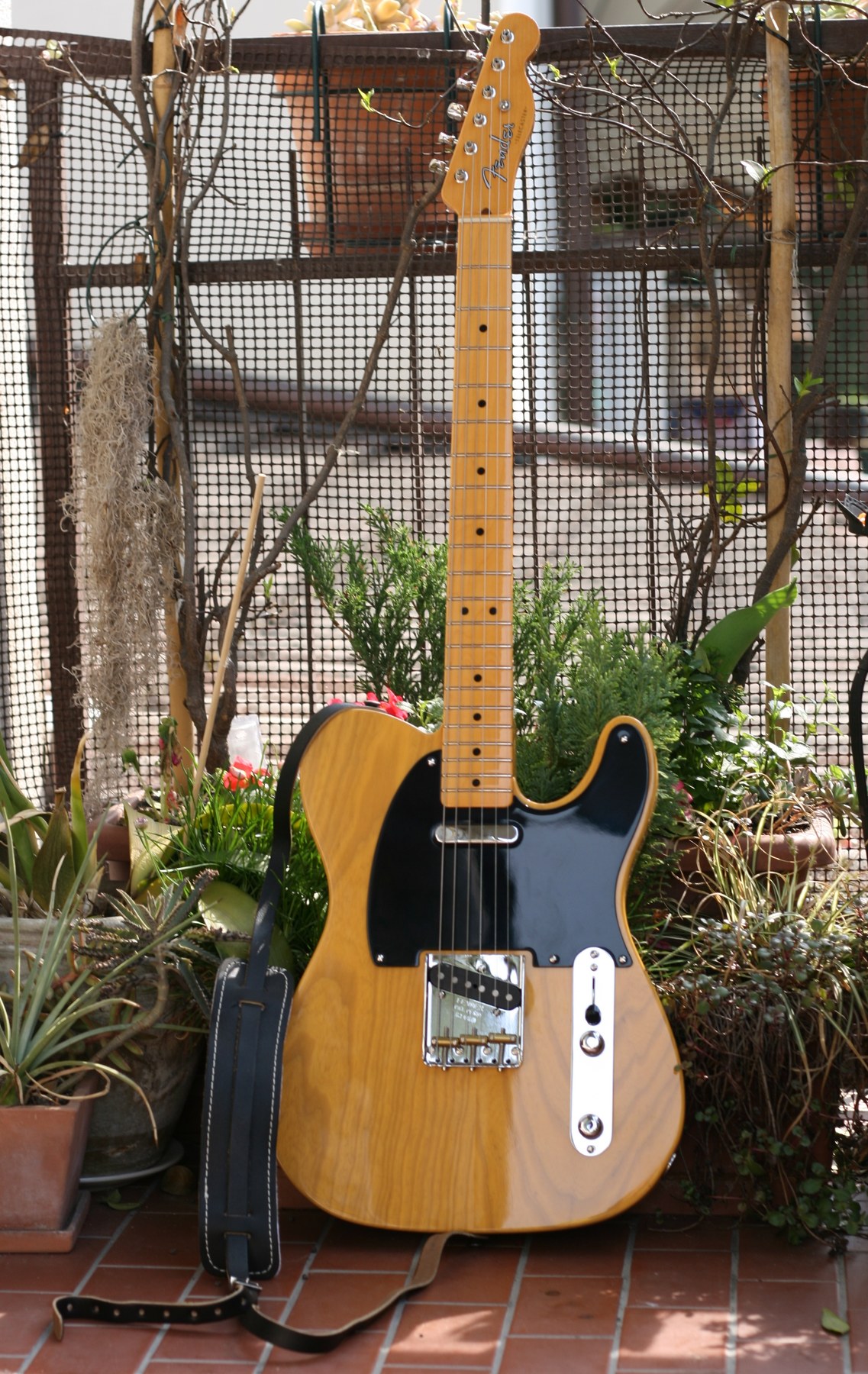
Telecasters — specifically early-to-mid 1950s examples with the original “blackguard” (black Bakelite pickguard) configuration — appeared in Spencer’s setup for the more rock’n’roll-influenced material, particularly the 1950s pastiche tracks on Kiln House. The original “blackguard” Telecaster specification: swamp ash body, maple neck with the original “skunk stripe” truss rod routing (Fender’s distinctive method of routing the truss rod from the back of the neck, filling it with a contrasting walnut strip), a single-ply black Bakelite pickguard, the original Fender No-Caster/Telecaster three-saddle bridge with two brass saddles (three strings each), and the original single-coil pickups. The bridge pickup on a 1950s Tele — wound to approximately 7.0k–7.5k ohms with Alnico III or Alnico V magnets depending on year — produces the most purely percussive, attack-forward electric guitar tone of any mass-produced instrument of the era, and its character is essential to the rockabilly and early rock’n’roll sounds Spencer was referencing on Kiln House.
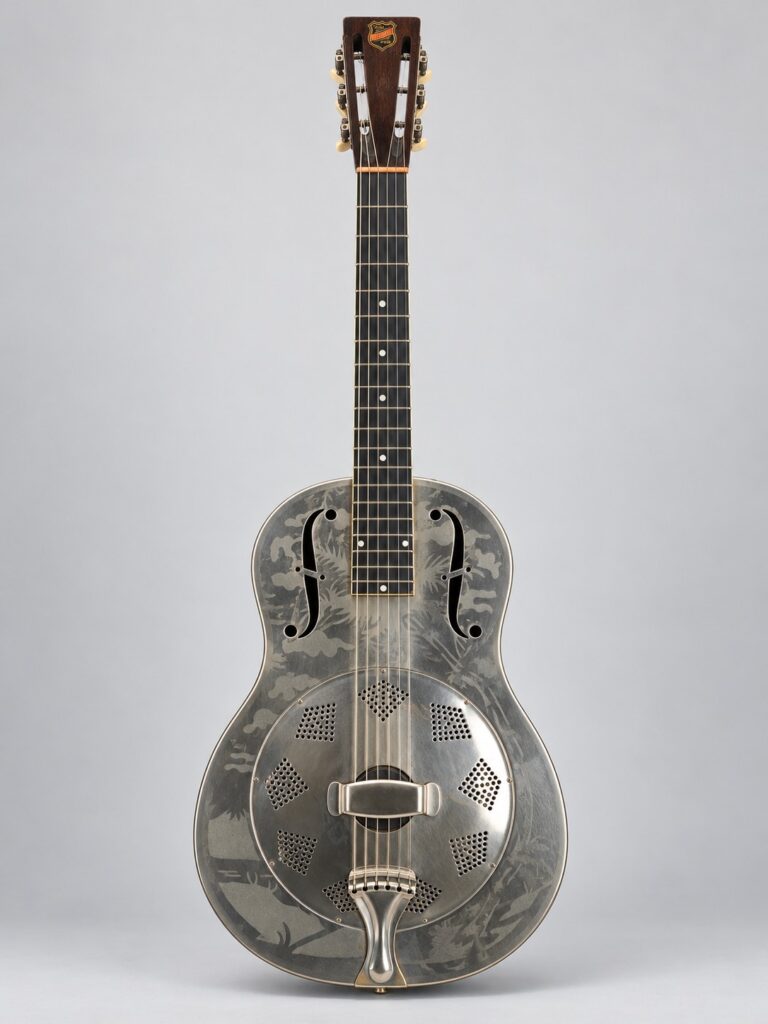
For acoustic Delta blues slide work — both in the studio and in performance contexts where an amplified electric was inappropriate — Spencer used a National Style O single-cone resonator guitar. The National Style O specification: a fully metal body (nickel-plated brass on most production examples, steel on some variants) with an engraved chrysanthemum pattern on the body and F-holes, a biscuit-bridge single-cone resonator system (a single spun-aluminum cone with a wooden biscuit bridge sitting at its apex), a 12-fret neck joint, and a 24.75-inch scale length. The biscuit-bridge resonator system produces the characteristic National sound: a loud, metallic, percussive tone with a pronounced high-frequency component and a strong, penetrating midrange that cuts through acoustic environments without amplification. The fully metal body adds sustain and a bright, singing quality to slide notes that wood-bodied guitars cannot replicate. The National Style O was the instrument of the original Delta blues players — Robert Johnson, Son House, Tampa Red — and Spencer’s use of it for acoustic slide work was an act of genuine historical reconnection rather than mere affectation.
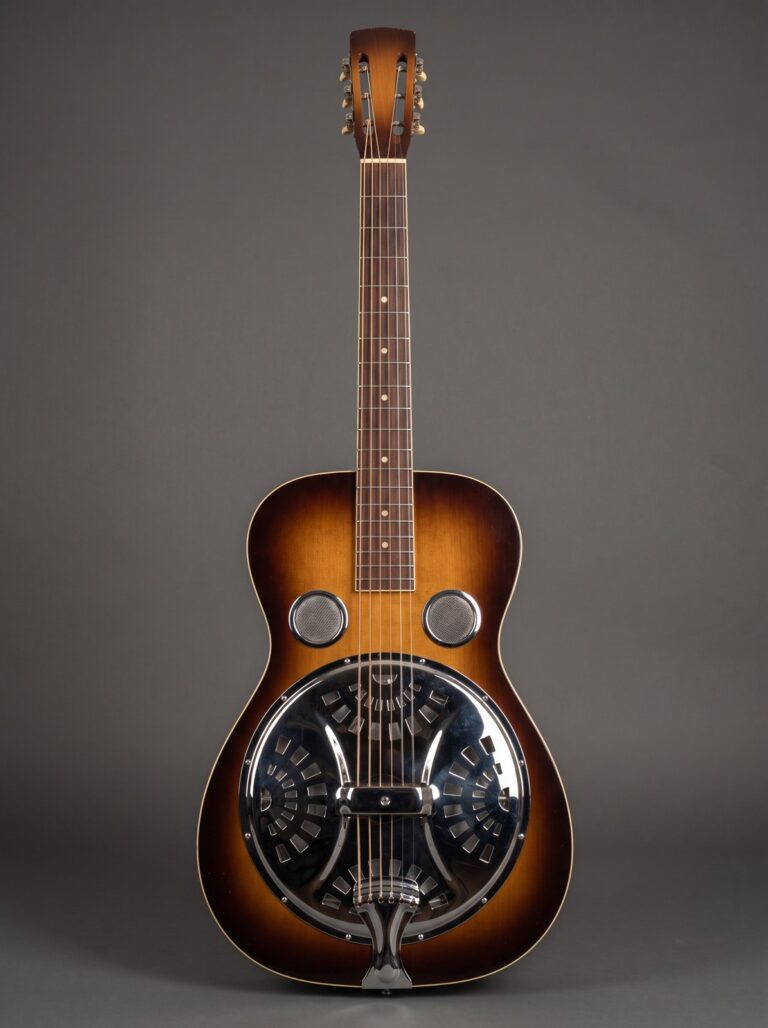
Wood-body Dobro resonator instruments — specifically the Model 27 with its spruce top, mahogany back and sides, and spider-bridge resonator system (the Dobro’s characteristic design, using a spun-aluminum cone with a cast aluminum “spider” bridge that contacts the cone at eight points rather than the National’s single biscuit contact point) — also appeared in Spencer’s acoustic slide setup. The spider-bridge resonator system produces a warmer, more acoustic-sounding tone than the National’s biscuit-bridge system — less metallic attack, more fundamental warmth, with a characteristic woody resonance from the wood body. The Model 27’s tone is the sound of the country blues and pre-war gospel slide tradition, and Spencer used it when that specific tonal quality was appropriate.
Standard dreadnought acoustic flat-tops — likely Martin or Gibson examples from the 1960s — appeared in Spencer’s setup for rhythm playing and songwriting, particularly for the acoustic-influenced passages on the Reprise-era Fleetwood Mac records.
Spencer used metal slides — specifically cylindrical steel or brass tube slides worn on the ring finger of his right hand — for his electric slide playing. The choice of metal slide material significantly affects tone: steel slides produce a brighter, more aggressive slide sound with greater high-frequency content; brass slides are slightly warmer and heavier, producing more sustain. Spencer’s approach favoured a heavier slide for maximum sustain and the physical authority that Elmore James’s playing demanded. For the National resonator work, a glass slide (or heavy brass) was used, consistent with the Delta blues tradition in which bottle necks were the original slide material.
Spencer worked primarily in open A (E-A-E-A-C#-E, low to high) and open E (E-B-E-G#-B-E) tunings for slide playing — the same tunings favoured by Elmore James and the broader Delta blues tradition. Open A is one semitone lower in tension than open E (which uses the same chord shape but a step higher), giving slightly different string tension characteristics that affect the slide tone. He also used open G (D-G-D-G-B-D) for specific material. Standard tuning on the Strat and Tele for non-slide work.
For slide playing, Spencer used medium-to-heavy gauge strings — likely .012–.056 or .013–.056 — to provide the string tension and mass needed for clean slide intonation and to prevent the slide from pushing the strings too easily off the fretboard. Heavy strings on a high-action setup are essential for authentic Delta-style slide tone: the added mass produces more fundamental, more sustain, and better note separation between strings. For standard tuning on the Strat and Tele, lighter gauges (.010–.046 or .011–.049) were used.
Amps
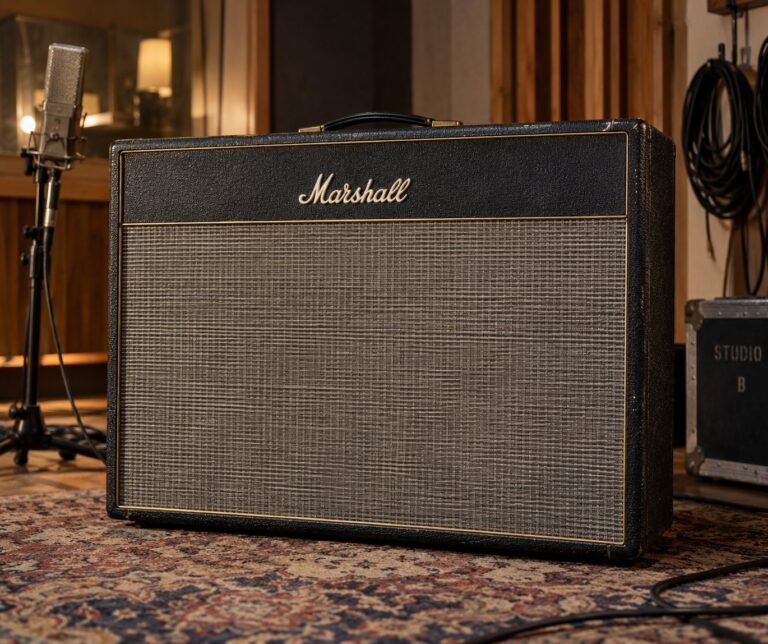
The Marshall 1962 — known universally as the “Bluesbreaker” combo after its association with John Mayall’s Bluesbreakers and Eric Clapton’s Beano album — was Spencer’s primary amplification for his ES-125 slide work. The 1962 combo specification: JTM45 circuit (based on the Fender Bassman 5F6-A topology with British modifications), KT66 or EL34 output tubes producing approximately 35–40 watts RMS, a GZ34 rectifier tube providing a slightly saggy, compressed feel compared to solid-state rectification, two 12-inch Celestion speakers (either the original T652 alnico-magnet model or the later ceramic Celestion G12-20, depending on production year). The JTM45 circuit’s tonal character — long-tailed pair phase inverter, cathode-follower tone stack, the characteristic warmth and natural compression of KT66 tubes — was perfectly matched to Spencer’s ES-125 and P-90 combination. The hollow-body ES-125’s acoustic resonance interacting with the JTM45’s warm, harmonically complex overdrive at high input levels produced a tone of extraordinary richness and three-dimensional quality — the specific sound of Delta blues amplified through the finest British valve technology of the 1960s.
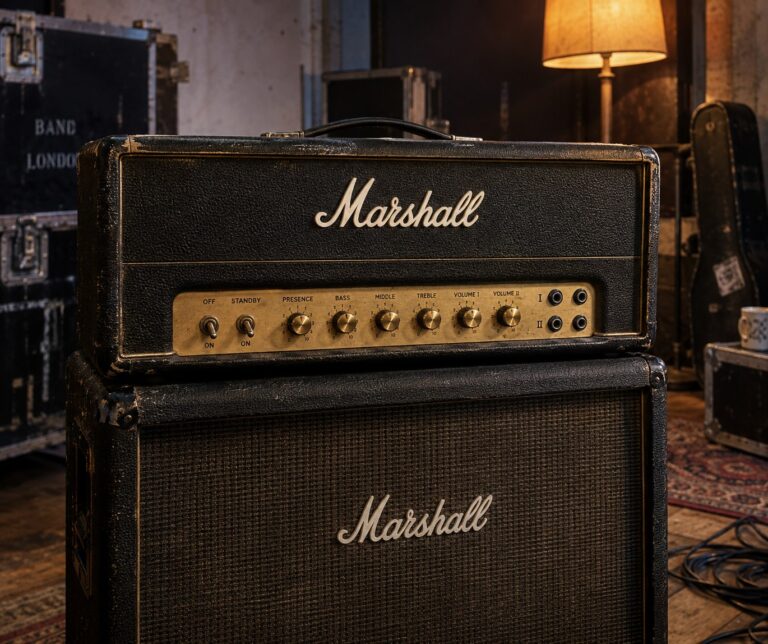
For larger live performance contexts where the 1962 combo’s 35–40 watts were insufficient, Spencer used the Marshall 1959 Super Lead 100-watt Plexi head — four EL34 output tubes, three ECC83 preamp tubes, long-tailed pair phase inverter, Perspex front panel on pre-1969 examples — into Marshall 4×12 cabinets with Celestion G12M Greenback 25-watt speakers. The 100-watt Plexi’s higher output stage voltage (approximately 480V on the output tube plates compared to the JTM45’s approximately 410V) gives a different compression and saturation characteristic: harder, more aggressive, with a more immediate attack transient than the JTM45’s softer, more rounded feel. For Spencer’s most aggressive, feedback-driven slide work, the Plexi’s higher output and less compressed character gave the slides additional cutting power and sustain.
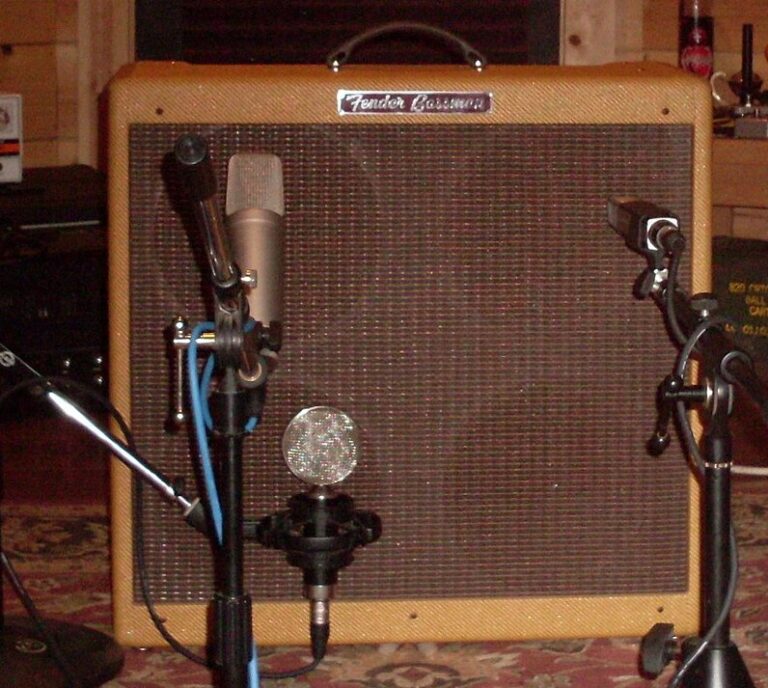
The original tweed Fender Bassman — four Jensen P10R 10-inch speakers, 4x6L6 output tubes at approximately 45–50 watts, cathode-biased output stage producing its characteristic touch sensitivity and natural compression — appeared in Spencer’s studio setup. The Bassman’s American tonal character — bright, open, less compressed than the British JTM45 at comparable volume settings — gave the ES-125’s P-90 pickup a different flavour for specific studio requirements, pushing the hollow-body’s acoustic warmth into a slightly brighter, more present register. The 5F6-A circuit’s touch sensitivity made it ideal for the dynamic variation between quiet verse passages and full-volume chorus attacks that characterises Delta blues arrangement.
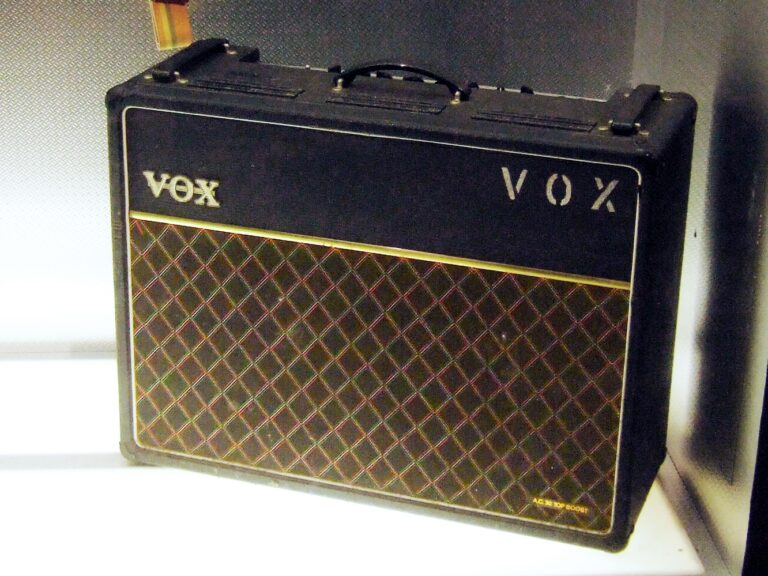
The JMI-era Vox AC30 Top Boost — 30 watts from four EL84 output tubes in fixed-bias push-pull configuration, Top Boost channel with independent treble and bass controls, two Celestion Blue (T530) alnico 12-inch speakers at 15 watts each — provided Spencer with a cleaner, more chimey alternative for specific textural requirements. The AC30’s EL84 output tubes, combined with the Celestion Blue’s alnico magnet and its characteristic “chime” quality in the upper midrange, produced a sound with more top-end complexity and less low-end weight than the Marshall alternatives — useful for the lighter, more rock’n’roll-influenced passages in Spencer’s playing and for the 1950s rock pastiche material that characterised much of Kiln House.
British-made Selmer amplifiers — specifically the Truvoice Stadium, a 15–17 watt combo using EL84 output tubes with a single 12-inch speaker — appeared in Spencer’s early setup before the Marshall Bluesbreaker became his primary tool. The Selmer Truvoice was a budget-range British amplifier of considerable character: its EL84 output section produces a characteristic compression and harmonic saturation at relatively low volumes, and its simple tone controls (treble and bass only) give a direct, unprocessed relationship between input and output that suits blues playing well. Many early British blues players used Selmer amplifiers before the Marshall became universally dominant, and the Selmer’s tone has a raw, primitive quality that actually complements pre-war and early electric blues material quite effectively.
Effects
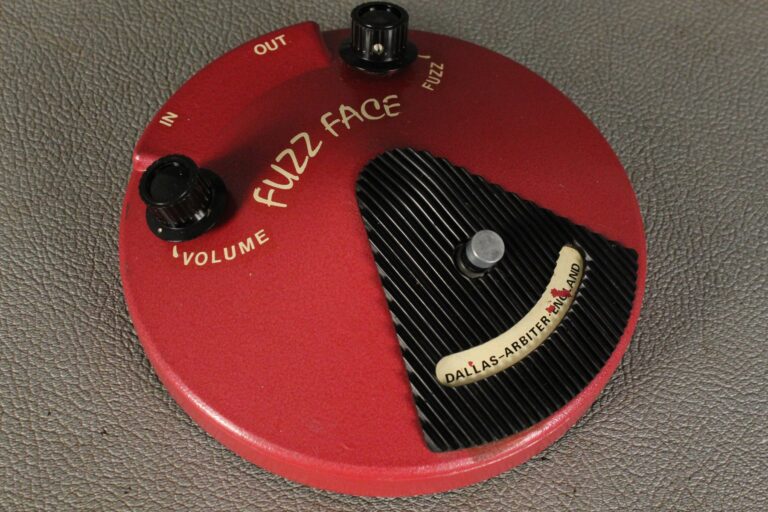
The original Dallas Arbiter Fuzz Face — chrome enclosure, NKT275 PNP germanium transistors, two-transistor series feedback topology with a 470 ohm emitter resistor on Q1, a 33k base bias resistor on Q2, and a 100µF output capacitor — was present in Spencer’s signal chain for specific applications. His use of the Fuzz Face with the ES-125 hollow-body was notably different from its application on solid-body instruments: the hollow body’s acoustic resonance and the P-90’s broader, more complex frequency response interacted with the Fuzz Face’s clipping character to produce a more complex, less saturated fuzz tone than the same pedal through a Les Paul, with more of the guitar’s natural character preserved within the fuzz texture. The NKT275’s characteristic warm, cleaning-up-with-volume response meant Spencer could use the guitar’s volume pot to dial between fuzz and clean while the pedal remained engaged — a crucial operational characteristic for a player working in a dynamic blues context.
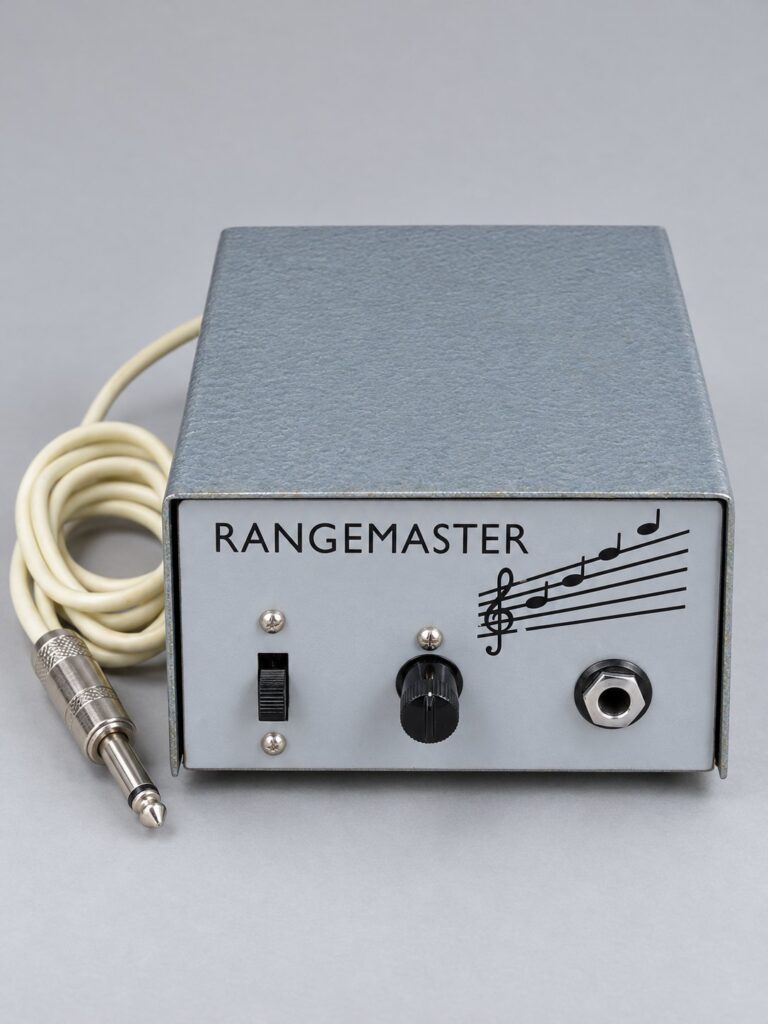
The Dallas Electronics Rangemaster Treble Booster — OC44 PNP germanium transistor, common-emitter configuration, 68k base bias resistor, 470µF bypass capacitor producing the characteristic high-pass filter at approximately 2.3kHz, input impedance approximately 470k ohms — appeared in Spencer’s signal chain ahead of the Marshall amplifiers. The Rangemaster’s frequency-selective boost — it primarily pushes the upper midrange and treble rather than providing a full-range boost — compensated for the ES-125’s naturally warm, mid-forward character by adding upper-frequency energy that would otherwise be masked by the hollow body’s acoustic warmth. Through the JTM45 circuit, the Rangemaster + ES-125 combination produced the harmonically saturated, cutting slide tone that is audible on the early Fleetwood Mac recordings.
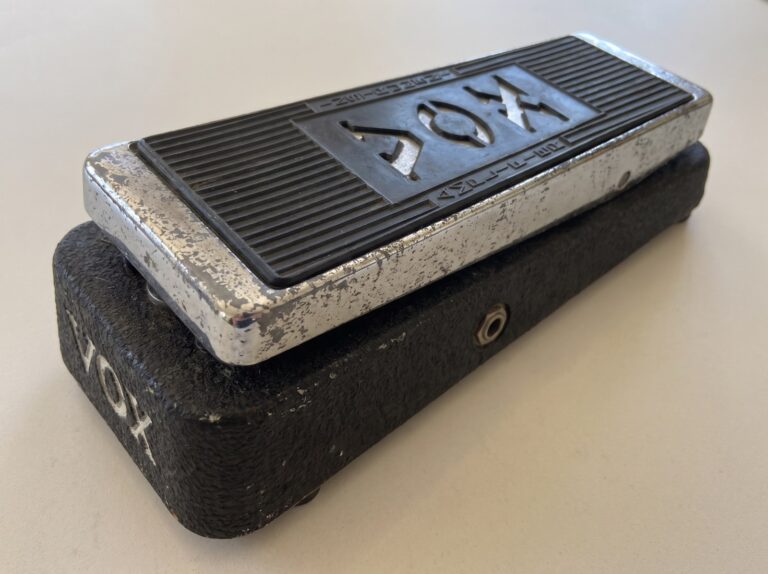
The Vox V846 wah — Fasel hand-wound inductor, 100k audio taper pot, BC109C silicon transistor (1967-onward production), sweep from approximately 450Hz (heel down) to 1.6kHz (toe down) — appeared selectively in Spencer’s live setup. His wah use was relatively sparse — the raw, unprocessed character of his Delta slide approach didn’t require the vocal filter character that the wah provides — but for specific passages requiring that expressive frequency modulation, the V846’s warm Fasel-inductor sweep gave the most musical result. The Fasel inductor’s handwound construction meant individual units had slightly different resonant peak characteristics, giving each pedal a unique tonal character — original Fasel-equipped wahs are considerably more sought-after than later Halo-inductor replacements.
The Sola Sound Coloursound Tonebender MkIII — distinct from the earlier germanium MkI and MkII models, using silicon BC108C transistors rather than OC75 or OC81D germanium devices — appeared in Spencer’s later Fleetwood Mac setup. The silicon Tonebender MkIII’s character is quite different from germanium Tonebender models: silicon transistors produce a brighter, harder, more aggressive fuzz with greater gain and less of the warm “bloom” of germanium. The MkIII uses three BC108C transistors in a modified topology producing a sustained, harmonically complex fuzz with good note separation but more “buzziness” than the warmer germanium alternatives. For Spencer’s most aggressive, full-volume slide work, the silicon Tonebender’s harder edge cut through the mix more effectively than the germanium Fuzz Face’s warmer character.
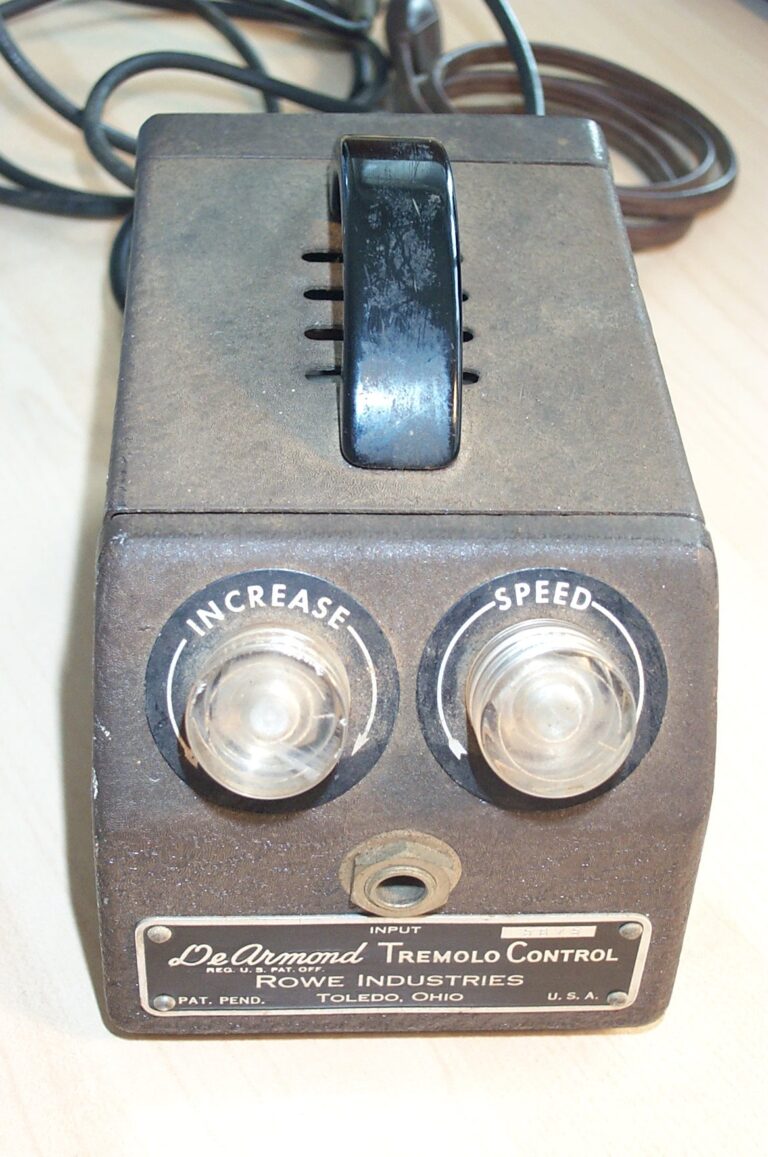
The DeArmond Model 601 Tremolo Control — one of the earliest production guitar effects pedals, introduced in the mid-1950s and continuously produced through the 1960s, using a motor-driven variable resistor (a spinning disc with conducting and non-conducting sections interrupting the signal path) for amplitude modulation — provided Spencer with a vintage tremolo effect. The motor-driven mechanical tremolo of the DeArmond 601 produces a more irregular, less perfectly metronomic modulation than electronic LFO-based tremolos, giving a slightly “breathing” quality to the effect that complements acoustic and vintage blues material. The 601’s depth and speed controls allow a wide range of tremolo intensities from gentle shimmer to choppy, almost sounding gating. This effect was used by Spencer for atmospheric rhythm passages and for certain lead passages requiring the tremolo’s distinctive pulsing quality.
For live performances featuring the National Style O resonator, Spencer required no electronic amplification — the National’s volume projection was sufficient for club-level performance. For larger venues, a simple microphone (likely a Shure SM57 or similar dynamic microphone, positioned at the resonator cone) into the PA system provided amplification without the tonal alteration that running a resonator through a guitar amplifier would produce.
Playing Style & Tone Philosophy
Jeremy Spencer is one of the great obsessives of British rock guitar — a player who found one specific musical tradition, went so deep into it that he could reproduce its finest details from memory, and then gave absolutely everything he had to communicating it to audiences who in many cases had never heard the original source material. Elmore James was his north star, his musical bible, his entire world as a guitarist, and the intensity of that focus produced playing of tremendous power and authenticity.
His slide technique was rooted in the Delta blues tradition in its most fundamental aspects. He played with a metal slide on the ring finger of his right hand — an unusual choice, since most slide players wear the slide on the ring or little finger of the fretting (left) hand, allowing the other fingers to fret notes between slide passages. Spencer’s right-hand slide placement meant he was exclusively a slide player when the slide was in use — he couldn’t simultaneously fret and slide — which gave his slide passages an all-or-nothing commitment that contributed to their impact. When he was in slide mode, he was fully in slide mode.
The open tunings he used — primarily open A and open E — gave the guitar a naturally resonant, piano-like quality on open strings that the Delta blues tradition exploited brilliantly. The I chord (tonic) requires no fretting at all in open tuning; the IV chord (subdominant) is a simple barre at the fifth fret; the V chord (dominant) is a barre at the seventh. This harmonic simplicity frees the player to focus entirely on the expressive qualities of the slide — the vibrato (produced by rapid small movements of the slide along the string length), the approach (sliding up to a note from below, the classic blues move), and the damping (using the fretting hand’s unused fingers and the picking hand’s palm to control sustain and prevent unwanted string noise). Spencer’s command of all these elements was exceptional; his vibrato in particular — wide, slow, and deeply expressive — had a physical quality that made it sound like the strings were actually in pain.
His tone philosophy was, in the most essential sense, anti-modern. He was not interested in the processed, effects-heavy approach that some of his contemporaries were developing; he wanted to sound like Elmore James records from 1952, and he pursued that goal with single-minded determination. The ES-125 hollow-body gave him the acoustic warmth and natural resonance that solid-body guitars couldn’t provide. The P-90 single-coil gave him the forward midrange character of James’s own pickup configurations. The Marshall Bluesbreaker combo at high volume gave him the warm, naturally overdriving tube tone that the early electric blues records had captured in their Chess and Modern Studios recording environments. Everything was in service of one goal: the most authentic possible reproduction of a specific musical tradition, played with the kind of conviction that makes authenticity feel like invention.
He was also, when the material called for it, an excellent rhythm guitarist in the 1950s rock’n’roll tradition — the Telecaster-driven performances on Kiln House demonstrate a player completely at home in the Chuck Berry/Scotty Moore vocabulary, with the same rhythmic authority and tonal precision that characterised his blues work. This stylistic range — from pre-war acoustic Delta blues to 1950s rock’n’roll to British electric blues — was considerably wider than his focused, specialist reputation suggests, and Kiln House remains an underheard demonstration of his full range.
The tragedy of Spencer’s departure is that he was clearly on the verge of developing into something more than a brilliant Elmore James recreationist. The original compositions on Kiln House — including “This Is the Rock” and “Jewel Eyed Judy” — show a songwriter developing his own voice. The slide playing on those records shows a player beginning to move beyond pure homage toward something more personal. What might have come next is genuinely unknowable, and that unknowability is its own kind of sadness.
How to Sound Like Jeremy Spencer
Guitar Approach
The ES-125 is the essential starting point, and fortunately it remains one of the more affordable vintage Gibsons — mid-1960s examples can be found for considerably less than equivalent-era ES-335 or Les Paul models, and they reward the investment handsomely. A vintage ES-125 or ES-125T with its original P-90 pickup is the correct instrument for Spencer’s core tone; if a vintage example is beyond reach, a Gibson ES-125 reissue or a Guild Starfire I (similar single-pickup hollowbody configuration) with an aftermarket P-90 (Lollar P-90 Soapbar, Fralin P-90, or Rio Grande Dirty Harry) will get you close.
Set the guitar’s action high for slide playing — string height at the 12th fret of approximately 4mm (bass strings) to 3mm (treble strings) for electric slide, higher still for resonator work. This prevents the slide from inadvertently fretting notes and ensures clean intonation. Use heavy strings (.012–.056 minimum) for slide: the added mass gives better note definition, more sustain, and better resistance to the slide’s lateral string pressure. Tune to open A (E-A-E-A-C#-E) or open E (E-B-E-G#-B-E) — these were Spencer’s primary slide tunings, both consistent with the Elmore James tradition.
Pick technique matters: Spencer picked with a heavy, authoritative downstroke for rhythm playing and used both upstrokes and downstrokes for lead slide passages, with the picking hand providing most of the damping. Practice muting unused strings with the underside of the pick-hand fingers — unwanted string noise is the primary beginner slide challenge, and damping technique takes months to develop properly. The metal slide itself: a Dunlop 220 or 222 (medium or large steel slide) gives the closest approximation to Spencer’s tone; for resonator work, a Jim Dunlop 928 heavy glass slide reproduces the Delta blues tonal quality more authentically.
Amp Approach
A Marshall 1962 Bluesbreaker combo — or a quality reissue or clone — is the single most important piece of the Spencer tone puzzle after the ES-125 itself. The JTM45 circuit’s warmth, the KT66 or EL34 output tubes’ natural compression, and the 2×12 Celestion configuration give a tonal intimacy and three-dimensional quality that no other amplifier configuration quite matches for this application. If the original 1962 combo is out of reach, the Marshall 1962HW reissue (hand-wired, KT66 tubes) or a Ceriatone JTM45 2×12 combo are the best alternatives. The two-speaker configuration distributes the speaker excursion across two cones, giving a slightly different compression and frequency response than a single-speaker combo.
| Control | Setting (0–10) | Notes |
|---|---|---|
| Input Volume (Marshall JTM45/1962) | 8–10 | Crank it — the JTM45 circuit’s natural overdrive at high volume is the sound. Don’t be timid. |
| Bass | 5–6 | The ES-125 hollow body has plenty of low-end warmth — don’t exaggerate it |
| Middle | 7–8 | Forward mids are the spine of P-90-into-JTM45 Delta blues tone |
| Treble | 5–6 | Enough for slide note clarity; higher for more aggressive attack on open chord strums |
| Presence | 4–5 | Moderate — adds articulation without brittle top end |
| Rangemaster Treble Booster | Full (single control) | OC44-type booster ahead of amp — harmonic density and upper-mid focus for slide notes |
| Fuzz Face (for leads) | Sustain 6–7, Volume unity | NKT275 germanium — warm, singing fuzz. Roll guitar vol back to 6–7 for semi-clean |
| Reverb (if using Fender/Vox) | 3–4 | Light reverb for spatial depth — Spencer’s core tone was relatively dry |
Keep the signal chain simple — Spencer’s power came from source, not processing. ES-125 → Rangemaster → Marshall 1962 is the essential chain. Add the NKT275 Fuzz Face (Analogman Sunface NKT275, Dunlop FFM2, or a PNP germanium DIY build with selected matched transistors) for maximum-sustain slide leads. The DeArmond-style tremolo (or a modern equivalent like the Fulltone Supa-Trem or the Caroline Somersault) for the rhythmic tremolo passages on slower Delta-style material. Nothing more is needed. The power is in the playing.
Influence & Legacy
Jeremy Spencer’s influence on British blues and rock is of a very specific and very important kind: he was the player who proved that you could take Elmore James’s pre-war Mississippi Delta vocabulary and not merely translate it into a British rock context but perform it with sufficient conviction and technical command that it became something genuinely new. This is not the same as copying — it is what all the great blues-influenced British players were doing, each in their own way, and Spencer’s particular version of it was the most radical and most faithful simultaneously.
His influence on subsequent slide players in the British and European traditions is real but diffuse — the players who took the Delta slide tradition seriously enough to pursue it with Spencer’s level of dedication are a relatively small and self-aware community, but within that community his work with Fleetwood Mac is canonical. The raw, no-compromise approach to amplified slide blues that Spencer exemplified — hollow-body guitar, cranked British combo, open tuning, metal slide, complete commitment to the tradition — remains the benchmark for that specific approach.
The most direct comparison is with Peter Green, his bandmate and the player whose departure ultimately accelerated Spencer’s own creative expansion in Fleetwood Mac. Green and Spencer represented two fundamentally different approaches to the blues tradition: Green’s was the Chicago electric approach, sophisticated, nuanced, harmonically complex; Spencer’s was the Delta acoustic-electric approach, raw, primal, and emotionally overwhelming. Together they gave the early Fleetwood Mac a range of blues expression that few British bands of the era could match. The broader context of the British blues revival places Spencer alongside players like Rory Gallagher — another player whose commitment to the source material was total and whose technical command of it was extraordinary — as a demonstration of what happens when a musician goes genuinely, obsessively deep into a tradition rather than merely borrowing its surface features. And the connection to Danny Kirwan — the third guitarist who completed the remarkable original Fleetwood Mac guitar triumvirate — shows how three completely different approaches to the instrument, all rooted in some aspect of the blues, could coexist in a single band and produce something that was greater than any of its constituent parts.
Frequently Asked Questions: Jeremy Spencer Guitars & Gear
What guitar did Jeremy Spencer play in Fleetwood Mac?
Jeremy Spencer’s primary guitar throughout his Fleetwood Mac tenure was a Gibson ES-125 — a fully hollow-body non-cutaway archtop equipped with a single P-90 soapbar single-coil pickup in the neck position. The ES-125’s hollow-body construction and P-90’s broad, forward-midrange character gave Spencer the specific acoustic warmth and tonal rawness required for authentic Delta blues slide playing. Mid-to-late-1950s examples with the original P-90 (Alnico V bar magnet, approximately 7.5k–8.5k ohms DC resistance) are the historically correct instruments. He also used vintage Fender Stratocasters and Telecasters for non-slide work and 1950s rock’n’roll material.
What amplifier did Jeremy Spencer use?
Spencer’s primary amplification was the Marshall 1962 “Bluesbreaker” combo — the 35–40 watt, JTM45-circuit, 2×12 combo that gets its nickname from the Eric Clapton/John Mayall’s Bluesbreakers association. The JTM45 circuit used KT66 or EL34 output tubes and a GZ34 rectifier, producing warm, saggy, natural valve overdrive at high input levels that suited Spencer’s P-90 ES-125 perfectly. For larger venues, he used the Marshall 1959 Super Lead 100-watt Plexi head into 4×12 cabinets with Celestion G12M Greenback speakers.
How did Jeremy Spencer approach slide guitar technique?
Spencer wore his metal slide on the ring finger of his right (picking) hand — an unusual configuration that made him exclusively a slide player when using it, unable to fret notes simultaneously. He tuned primarily to open A (E-A-E-A-C#-E) and open E (E-B-E-G#-B-E), consistent with the Elmore James tradition he was working within. His vibrato — wide, slow, produced by rapid small movements of the slide along the string axis — was his most identifiable technical characteristic. Heavy strings (.012–.056) on high action gave him the clean intonation and physical sustain that Delta-style slide technique demands.
What is the connection between Jeremy Spencer and Elmore James?
The connection is total and deliberate. Spencer modelled his entire slide guitar approach — tuning, technique, phrasing, tone, repertoire — on Elmore James, the Mississippi-born slide guitarist whose recordings for Trumpet and Modern Records in the early 1950s represent one of the rawest, most emotionally direct forms of electric slide guitar ever captured. Spencer didn’t merely cover Elmore James songs; he absorbed and reproduced the specific tonal and technical character of James’s playing with a fidelity that went far beyond normal musical influence. His ES-125 hollow-body with P-90, played through a cranked Marshall Bluesbreaker in open A tuning, was a specifically constructed recreation of the amplified Delta blues sound that James had pioneered.
Why did Jeremy Spencer leave Fleetwood Mac?
Spencer left Fleetwood Mac in February 1971 during an American tour — he walked out of the band’s Los Angeles hotel and was subsequently found to have joined the Children of God, a religious cult (later renamed The Family International). He has remained associated with the organisation ever since, making occasional appearances at religious events and releasing gospel-influenced music under their auspices. His departure was sudden and total — he left without notice, taking no instruments or personal effects, and did not contact the band for several days. The circumstances of his joining the Children of God have been a subject of considerable discussion over the years regarding the organisation’s recruitment methods.
What records best represent Jeremy Spencer’s guitar playing?
The debut Peter Green’s Fleetwood Mac (Blue Horizon, 1968) captures Spencer’s raw early energy at its most uncompromising — the Elmore James covers and original material on that album are essential documents of authentic British Delta blues slide playing. Mr. Wonderful (Blue Horizon, 1968) continues in the same vein with additional material. Kiln House (Reprise, 1970) — recorded after Peter Green’s departure with Spencer as the primary creative force — demonstrates his wider range, from Delta blues slide to 1950s rock’n’roll pastiche, and represents his most complete and varied recorded statement. The first solo album Jeremy Spencer (Reprise, 1970) also contains strong performances.
Did Jeremy Spencer use any unusual effects or signal chain components?
Spencer’s signal chain was deliberately minimal and vintage-appropriate for the tradition he was working in. The Dallas Arbiter Fuzz Face (NKT275 germanium transistors) and Dallas Rangemaster Treble Booster (OC44 germanium transistor) were his primary processing tools — both germanium-transistor devices that interact with the guitar’s pickups and the amplifier’s input stage in a musically organic way quite different from silicon or opamp-based alternatives. The DeArmond Model 601 tremolo — a motor-driven mechanical device rather than an electronic LFO — provided authentic vintage tremolo for specific material. Beyond these, Spencer was not an effects user; the power in his playing came from the instrument, the amplifier, and the tradition rather than from signal processing.
Image credits
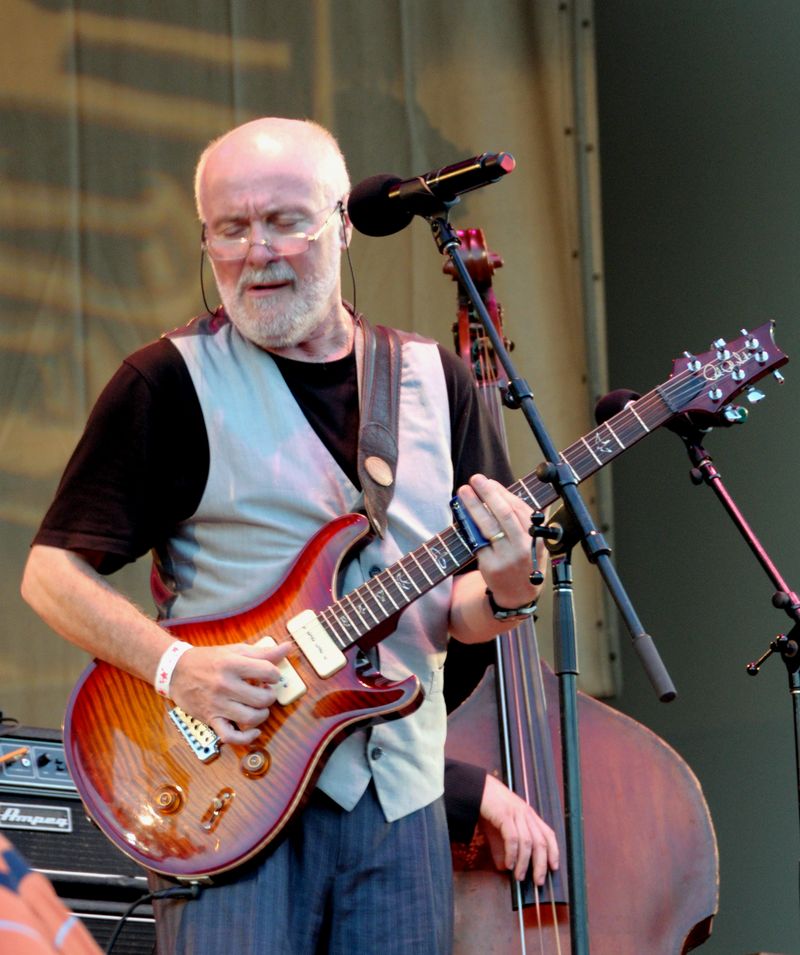
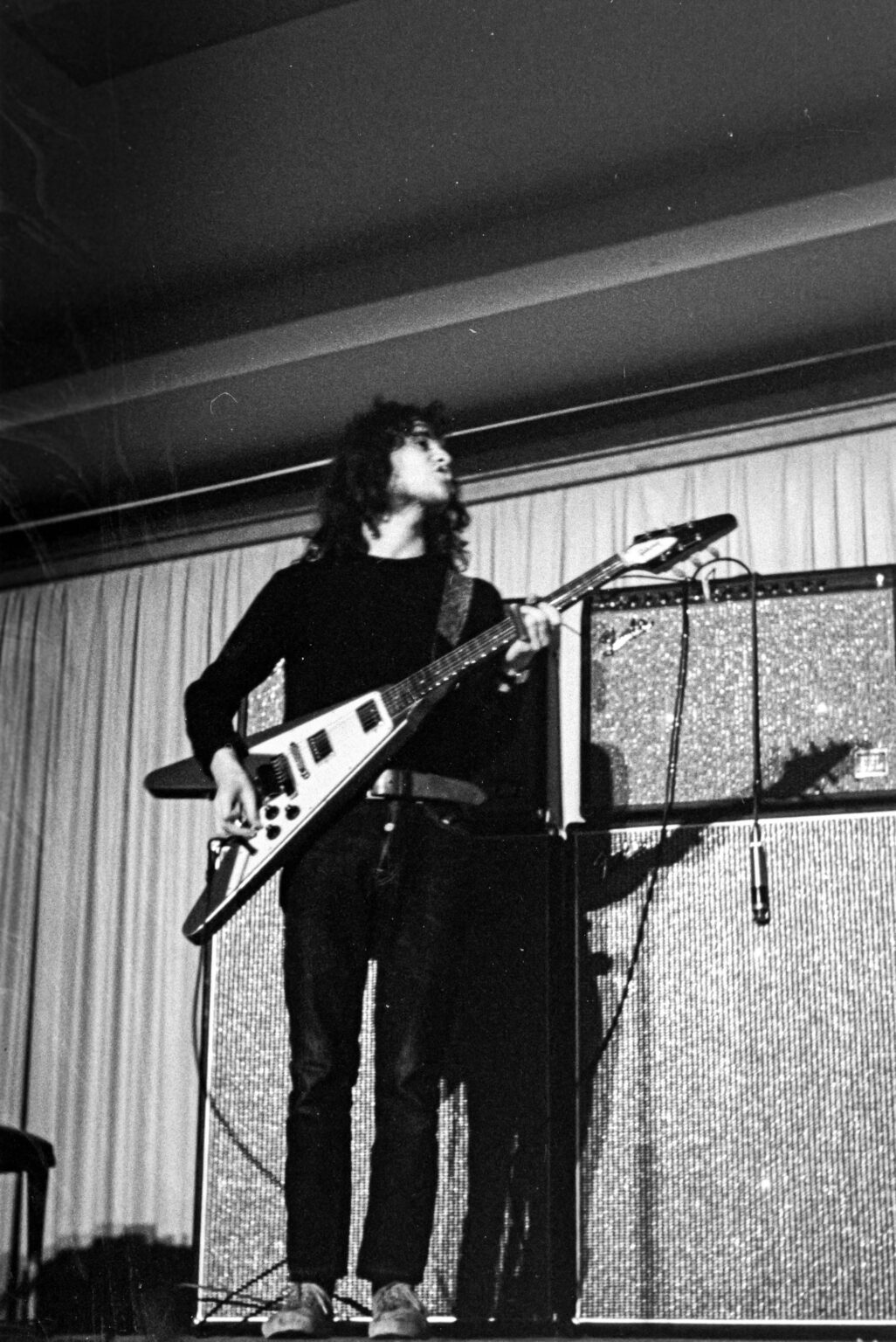
- Jeremy Spencer: Herbert Weber, Hildesheim, Wikimedia Commons, CC BY-SA 4.0.
- Fender Telecaster: Massimo Barbieri, Wikimedia Commons, CC BY-SA 3.0.
- Fender Stratocaster: Lightburst, Wikimedia Commons, CC BY-SA 4.0.
- Top image: by Nubiatech, CC BY-SA 3.0.
- Marshall 1959 Super Lead Plexi: GuitarGangsters AI-generated reference illustration, not a photograph.
- Vox AC30 Top Boost: wetwebwork; existing crop and contrast/color adjustments: Clusternote, Wikimedia Commons, CC BY-SA 2.0.
- Dallas Arbiter Fuzz Face: sploshette, Wikimedia Commons, CC BY 2.0.
- Marshall 1962 Bluesbreaker: GuitarGangsters AI-generated reference illustration, not a photograph.
- Jeremy Spencer live: W.W.Thaler – H. Weber, Hildesheim, Wikimedia Commons, CC BY-SA 3.0.
- Fender Bassman: Roadside Guitars, Wikimedia Commons, CC BY-SA 2.0.
- Vox V846 Wah-Wah: GuitarGangsters AI-generated reference illustration, not a photograph.
- National Style O: GuitarGangsters AI-generated reference illustration, not a photograph.
- Gibson ES-125: matanao, Wikimedia Commons, Public domain.
- Dobro Model 27: GuitarGangsters AI-generated reference illustration, not a photograph.
- Dallas Rangemaster Treble Booster: GuitarGangsters AI-generated reference illustration, not a photograph.
- DeArmond Tremolo Control: Johann from Munich, Germany, Wikimedia Commons, CC BY 2.0.