
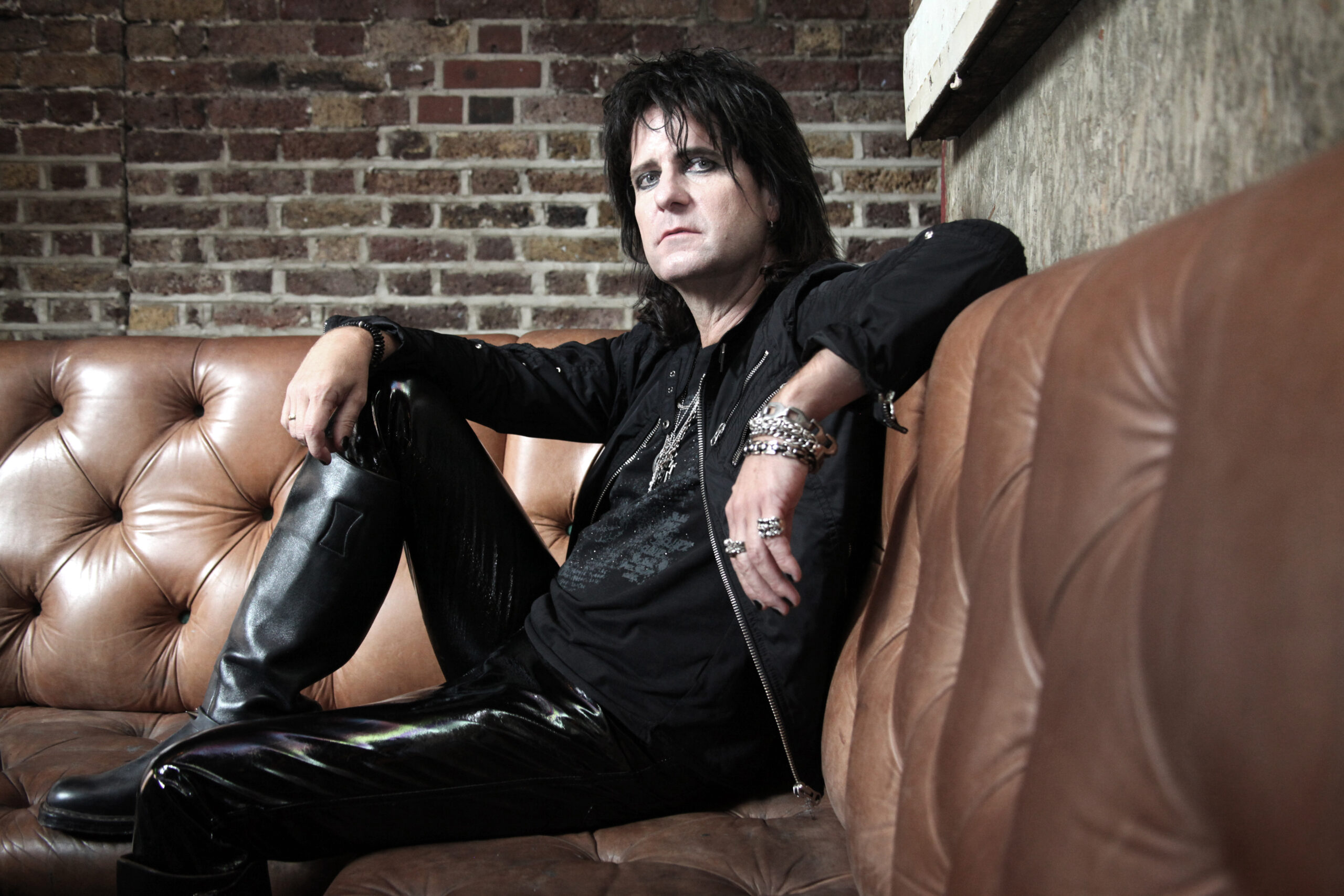
Kee Marcello guitars gear is the story of a player who stepped into one of the most unenviable positions in hard rock history — replacing John Norum in Europe just as the band was about to release the most commercially successful song in their catalogue — and who not only survived the comparison but went on to record two more Europe albums and a remarkable series of solo records that stand completely on their own musical merits. Marcello joined Europe in 1986 for The Final Countdown album, and his guitar work on that record and its follow-ups Out of This World (1988) and Prisoners in Paradise (1991) gave him a profile that belied the “replacement guitarist” narrative that lesser players in similar positions never escape.
The Journey
His approach to the guitar is more overtly influenced by the American melodic rock and shred traditions than Norum’s British blues-rock roots, which gave the late-Europe period a different sonic character without being a lesser one. He is faster, more technically ambitious in the conventional shred sense, and more willing to deploy the full vocabulary of late-1980s hard rock guitar technique — but always in service of the song rather than as technical display for its own sake. His post-Europe solo career, particularly the albums Shine On (2008), Redux (2014), and Scaling Up (2017), demonstrated a player of genuine versatility and continued development. This is the complete breakdown of Kee Marcello guitars gear, technique, and tonal philosophy.
Background
Kee Marcello — born Kjell Lövbom on September 3, 1960, in Stockholm, Sweden — developed as a guitarist in the Swedish rock scene of the late 1970s and early 1980s, absorbing the dual influences of American hard rock and melodic rock on one hand and the British metal and blues-rock tradition on the other. He played with various bands in the Swedish scene before joining Easy Action — a Stockholm-based glam/hard rock band that gave him professional recording and touring experience before the Europe opportunity presented itself.
His recruitment to Europe in 1986 came at a moment of maximum commercial opportunity and maximum scrutiny. The band’s deal with Epic Records required a guitarist who could deliver the kind of melodic, technically accomplished lead work that the international commercial market expected from a hard rock album — and Marcello’s combination of technical facility, melodic instinct, and professional competence made him the right choice for a band that was about to become one of the biggest acts in the world. Whether he was the right artistic choice for the band’s long-term direction is a different and more complex question, but for the commercial objectives of the 1986–1991 period, his contribution was effective and musically solid.
After Europe’s dissolution in 1992, Marcello pursued a solo career with the same professionalism he had brought to the band context. His early solo albums were less commercially successful than his work with Europe but demonstrated a player with broader musical interests and deeper guitar vocabulary than the band format had fully exposed. His later solo work — particularly from 2008 onward — has been critically well-received within the AOR and melodic rock communities, and his reputation has grown considerably among guitarists who have investigated his work beyond the Europe context.
He has also had a parallel career as a producer and songwriter for other Swedish and international artists, work that reflects the musical intelligence and professional competence that have characterised his guitar playing throughout his career. His story is one of professional achievement without the mythology that posthumous reassessment sometimes adds — a working musician who has consistently produced quality work across four decades without the dramatic narrative arc that some careers acquire.
Kee Marcello Guitars Gear: The Complete Rig
Guitars
The ESP Horizon — ESP’s double-cutaway high-performance guitar in neck-through configuration, with mahogany or alder body, rosewood or ebony fretboard, and Floyd Rose Original double-locking tremolo — was Marcello’s primary instrument during the Europe period and through much of his early solo career. His specific Horizon instruments were configured to his requirements at ESP’s custom shop: neck profile suited to his specific playing technique, pickup configuration tailored to the melodic hard rock context of Europe’s music, and the Floyd Rose for the tremolo arm technique he used selectively in his lead playing. The neck-through construction’s exceptional sustain suited both the melodic lead work of The Final Countdown and Out of This World and the more technically demanding passages of his own compositional work.
ESP produced Kee Marcello signature instruments reflecting his specific preferences. These signature models typically featured the Horizon body shape with Marcello-specific modifications — neck profile, pickup selection, and aesthetic features reflecting his input. The signature models were available in ESP Custom Shop and LTD production configurations, with the Custom Shop examples most closely matching his personal instruments.
Gibson Les Paul Standards — both vintage examples with PAF humbuckers and modern production instruments — appeared in Marcello’s documented setup alongside the ESP instruments. In the Europe context, where Norum’s Les Paul-centric approach had established a specific tonal reference point, Marcello’s occasional Les Paul use gave certain passages a connection to the band’s previous guitar voice while his ESP-based primary setup gave a different, more modern character. His Les Paul use was selective — deployed when the specific humbucker warmth and sustain of the Les Paul suited the material better than the ESP’s more modern, high-performance character.
Vintage and modern Fender Stratocasters appeared in Marcello’s setup for clean and semi-clean applications where the Strat’s single-coil transparency gave a completely different tonal palette from his humbucker-equipped primary instruments. His Strat use demonstrated the same versatility that characterised his overall approach — using the right instrument for each musical context rather than forcing a single instrument to serve all applications equally.
Hamer USA guitars — the American manufacturer’s professional instruments, typically featuring set-neck or neck-through construction, humbuckers, and a range of body shapes from Les Paul-style to Super-Strat-influenced — appeared in Marcello’s documented setup at various points. Hamer’s US-made instruments offered Gibson-comparable construction quality with different aesthetic and tonal characteristics that suited specific recording and performance contexts.
DiMarzio passive humbuckers appeared as Marcello’s primary pickup configuration in the ESP Horizon instruments. His specific DiMarzio choices evolved over time: the DiMarzio Super Distortion (DP100, approximately 13.7k ohms, high-output, Alnico V/ceramic combination) for the bridge position in the heaviest hard rock contexts; the DiMarzio Fred (DP153, approximately 14.5k ohms, Alnico V, designed to give humbucker output with more harmonic complexity and mid-forward character); and the DiMarzio PAF Pro (DP151, approximately 8.3k ohms, Alnico V, vintage-voiced) in the neck position for the warmest, most melodic lead tones. His pickup choices varied between instruments and recording periods, reflecting the pragmatic approach to tonal choice that characterised his overall gear philosophy.
Seymour Duncan pickups — specifically the JB (SH-4, approximately 16.4k ohms, high-output, Alnico V with ceramic base plate), the ’59 (SH-1, approximately 7.4k ohms, Alnico V, PAF-spec vintage character), and the Custom (SH-5, approximately 13.9k ohms, Alnico II, slightly warmer than the JB) — appeared in Marcello’s documented pickup configurations across different instruments and periods. His use of Seymour Duncan alongside DiMarzio reflected a pragmatic approach to pickup selection: choosing the specific pickup that gave the best result for each instrument and application rather than committing exclusively to a single manufacturer’s product line.
Marcello used GHS Boomers (.010–.046) or Ernie Ball Regular Slinky (.010–.046) on his primary electric instruments — consistent with the standard light-gauge approach of the melodic hard rock tradition. The light gauge on the ESP Horizon’s 25.5-inch scale gave the bending ease required for the expressive lead work of the Europe material while maintaining sufficient string mass for the tonal authority that high-gain amplification rewards.
Amps
The Marshall JCM800 Model 2203 — 100 watts, four EL34 output tubes, cascaded high-gain preamp — was Marcello’s primary live amplification during the Europe period, consistent with its dominant position as the professional hard rock amplifier of the era. His JCM800 use was more overtly high-gain than Norum’s moderate approach — Marcello pushed the preamp gain higher (7–9) to achieve the sustained, saturated tone that the melodic hard rock context of The Final Countdown-era material required. Run into Marshall 4×12 cabinets with Celestion speakers, the JCM800 gave the combination of high sustain and tonal definition that his lead playing required.
The Marshall JCM900 SL-X — an evolution of the JCM800 topology with additional gain staging and the characteristic JCM900 preamp refinements — appeared in Marcello’s setup during the Prisoners in Paradise period and his early solo career. The JCM900’s higher preamp gain and the SL-X designation’s additional gain stage gave a more modern, more aggressively saturated tone than the JCM800, appropriate for the slightly heavier direction that Europe’s final studio album and Marcello’s own heavier solo material took.
The Bogner Ecstasy has become central to Marcello’s more recent setup, consistent with its adoption by hard rock players seeking a more refined high-gain character than the Marshall alternatives provide. The Ecstasy’s smooth, harmonically complex Lead channel gave his more recent solo recordings a tonal quality more appropriate to the mature playing and harmonic sophistication of the post-Europe work than the more aggressive Marshall character that suited the band context of the 1980s.
The Mesa/Boogie Dual Rectifier — four 6L6GC output tubes, two rectifier tubes, tight low-end character — appeared in Marcello’s studio setup for specific heavy rhythm applications. The Rectifier’s “chunk” quality in palm-muted rhythm work gave specific recording passages the physical authority that the more refined Bogner or Marshall alternatives did not produce with equal effectiveness.
The blackface Fender Twin Reverb appeared in Marcello’s setup for clean and semi-clean applications where the Fender’s transparent, clean American character gave a completely different tonal quality from the Marshall or Bogner high-gain alternatives. His Fender use was selective — deployed for the cleanest, most dynamically open passages in his solo recordings where the American clean tone suited the musical context better than any degree of tube overdrive.
Marcello runs his amplifiers into Marshall 4×12 cabinets loaded with Celestion Vintage 30 speakers for the Bogner and certain Marshall applications, and Greenback 25-watt speakers for the more vintage Marshall Plexi-influenced applications. The speaker choice follows the same principles documented in the previous articles: V30 for tighter, more defined high-gain character; Greenback for warmer, more compressed vintage character.
Effects
The Boss GT series — GT-6, GT-8, GT-10, GT-100 across different periods — provided comprehensive live rig management for Marcello’s touring and live performance work. The GT’s preset system gave complete, repeatable signal chain configurations for different songs, and its effects processing (reverb, delay, modulation, dynamics) provided the spatial and textural enhancements his playing required. His use of the GT series reflected the same pragmatic professionalism that characterised his entire gear approach — the GT’s comprehensive capability and operational reliability making it the most practical solution for touring across different musical contexts.
The Fractal Audio Axe-Fx appeared in Marcello’s more recent documented setup as either a supplementary processing unit or a primary tone source for live performance. The Axe-Fx’s models of his physical amplifiers (Bogner Ecstasy, Mesa/Boogie Dual Rectifier) gave consistent, repeatable tone at every performance, and the comprehensive effects processing gave him complete signal chain management from a single digital unit. For the practical demands of touring as a solo artist with a smaller production budget than the Europe years, the Axe-Fx’s combined amp modelling and effects processing gave significant practical advantages.
The Boss NS-2 in muting loop configuration gave noise management for Marcello’s high-gain signal chain. His DiMarzio or Seymour Duncan passive pickups through the JCM800 or Bogner high-gain circuits required effective noise gating, and the NS-2’s threshold was calibrated to eliminate background hiss and hum during silent passages while allowing natural sustain on lead notes.
The Tube Screamer at low drive settings provided the standard midrange boost into the Marshall or Bogner for lead passages. His TS application was consistent: Drive at 2–4, Level at 6–7, using the pedal’s mid-emphasis to give lead tones additional presence over the rhythm backing.
Chorus effects — both the Boss CE-2 BBD-based analog chorus and TC Electronic digital alternatives — appeared in Marcello’s setup for specific clean and semi-clean chord passage textures. His chorus use was restrained — light modulation for dimensional width rather than obvious chorus effect — consistent with the professional discretion that characterised his effects approach throughout the Europe period and his solo career.
The MXR Phase 90 appeared selectively for specific atmospheric phase modulation on chord passages and specific lead lines. At slow speed settings, the Phase 90’s sweep added dimensional movement appropriate to certain passages in Marcello’s more expansive solo compositions.
Digital delay units provided spatial enhancement for lead passages — 200–350ms, one to two repeats, 15–20% mix level for depth without clutter. His delay use was moderate and selective, consistent with the professional approach to effects that prioritised the guitar and amplifier combination over effects processing.
Wah pedals — both the Dunlop Cry Baby and the Vox V846 at different periods — appeared in Marcello’s setup for expressive wah-filtered lead work. His wah use was musically committed and technically controlled — using the wah as an expressive lead filter for specific passages rather than as a constant tonal modifier.
The DigiTech Whammy appeared in Marcello’s setup for specific dramatic pitch effects in live performance — the real-time pitch transposition giving the whammy arm-like pitch swoops that his tremolo arm technique complemented rather than duplicated.
Playing Style & Tone Philosophy
Kee Marcello is a guitarist whose playing sits at a specific and productive intersection between the American melodic rock tradition’s commitment to hook-driven, memorable lead guitar and the European hard rock tradition’s technical sophistication and harmonic depth. His solos in the Europe context — particularly on Out of This World and Prisoners in Paradise — demonstrated a player who understood the demands of radio-friendly melodic rock while bringing genuine technical accomplishment to his execution of those demands. The solos are memorable, melodically accessible, technically impressive, and perfectly calibrated to the commercial context of the music.
His technique draws from the American shred tradition more directly than Norum’s British blues-rock focus: faster alternate picking, more extensive use of legato runs, more use of the Floyd Rose for dramatic tremolo arm effects, and a wider harmonic vocabulary that incorporated the neoclassical and pentatonic elements of the American instrumental guitar scene of the late 1980s. At the same time, his melodic instinct — his ability to find the singable, memorable phrase within the technically demanding context — gave his playing a musical quality that purely technical shred playing often lacks.
His vibrato — compared to Norum’s wide, blues-derived wrist rotation — is faster and narrower, reflecting the American rock guitar tradition from which he drew more directly. This difference in vibrato character is one of the most audibly distinct ways in which the two Europe guitarists occupy different stylistic territories: Norum’s vibrato is blues-derived and emotionally expansive; Marcello’s is more classically rock-guitar in its faster, narrower oscillation. Neither is objectively superior; they are different expressive tools serving different musical functions.
His compositional approach on his solo albums showed a broader musical range than the Europe context allowed. The solo records demonstrated engagement with jazz-influenced harmony, acoustic guitar technique, and more complex song structures that the commercial imperatives of a major-label hard rock band prevented. His solo work is where the full range of Kee Marcello guitars gear and musical intelligence is most completely on display — without the commercial constraints of serving a band’s established identity, he produced music of genuine depth and variety.
Tonally, his evolution from the JCM800-based high-gain approach of the Europe period toward the Bogner Ecstasy’s more refined character in his solo career reflects the same development documented in previous articles for players whose musical maturation outgrows the purely aggressive high-gain character of their early professional context. The Bogner’s smooth, harmonically complex saturation gives his melodic lead lines the singing quality that his compositional approach now requires more completely than the JCM800’s harder, more uniform character. His DiMarzio and Seymour Duncan passive pickup configurations maintained the dynamic responsiveness that allows his playing’s expressive variation to communicate through the amplification without the active pickup’s characteristic uniform output.
The DiMarzio Fred (DP153) pickup — one of Marcello’s bridge-position alternatives to the Super Distortion — has a specific design philosophy worth examining in the Kee Marcello guitars gear context. The Fred was designed by Steve Vai and DiMarzio in collaboration as a bridge pickup that delivered high output while retaining more harmonic complexity and mid-forward character than the purely ceramic-magnet designs that dominated high-output passive pickups in the early 1990s. The Fred uses an Alnico 5 magnet structure (rather than the ceramic-assisted design of the Super Distortion) wound to approximately 14.5k ohms — giving very high output from the Alnico 5 alone through careful winding design rather than magnet strength augmentation. The consequence is a high-output pickup with Alnico V’s characteristic smoother, warmer harmonic structure rather than ceramic’s brighter, more aggressive character. For Marcello’s melodic lead approach in the bridge position, the Fred’s combination of high output (for sustained lead tone) and Alnico warmth (for musical harmonic complexity) gave a more tonally complete result than the more aggressive Super Distortion or the JB for certain applications. His ability to distinguish between these specific pickup characteristics and select the most appropriate for each instrument and recording context reflected the same systematic tonal thinking that characterised every other aspect of his gear approach.
The Hamer USA guitars that appeared in Marcello’s setup represent an interesting departure from the ESP and Gibson platforms that formed the core of his instrument collection. Hamer USA guitars — built in Arlington Heights, Illinois through most of the company’s history — offered construction quality comparable to Gibson’s best production while giving different aesthetic and tonal characteristics that suited specific applications. The Hamer Standard (a Les Paul-style single-cutaway with mahogany body, maple top, set maple or mahogany neck, and Seymour Duncan humbuckers) gave a tonal character similar to a Les Paul but with Hamer’s specific construction variations — different neck profiles, different wood selection approaches, and Hamer’s own setup standards — that gave individual instruments a recognisable character distinct from the Gibson originals they drew from. For recording sessions where the specific Hamer tonal character suited the material better than either the ESP’s more modern character or the Gibson’s classic character, Marcello’s use of Hamer instruments reflected a sophisticated awareness of how subtle construction and component differences affect the final recorded tone.
The specific challenge of the “replacement guitarist” position in a successful band context deserves examination beyond the brief discussion in the legacy section, because understanding this challenge illuminates the specific qualities that Kee Marcello guitars gear and professional approach had to demonstrate. A replacement guitarist in a major rock band faces a specific credibility challenge: they must be demonstrably capable of performing the predecessor’s parts with fidelity (establishing competence and respect for the band’s history), while also being demonstrably their own musician with their own voice (establishing artistic legitimacy rather than mere imitation). Marcello’s solution — technically different from Norum, stylistically complementary rather than competitive, serving the band’s commercial requirements while bringing his own specific musical personality — is a textbook example of how to navigate this challenge successfully. His ability to learn and perform the Europe back catalogue in live performance, while contributing new compositional and guitar work to the band’s studio albums that bore his own musical stamp, demonstrated the dual competence that the position required. The fact that Europe’s commercial peak coincided with his tenure — The Final Countdown became the band’s biggest album with Marcello on guitar — meant that the market ultimately validated his contribution, whatever the inevitable comparisons with his predecessor’s different and equally valid approach.
His parallel career as a music producer and songwriter — less publicly visible than his guitar playing but equally reflective of his musical intelligence — also gave Marcello a broader perspective on what role guitar playing serves within a complete recorded production. A guitarist who produces records for other artists develops a different relationship with the instrument than a guitarist who only performs: the producer’s perspective requires hearing the guitar as one element of a complete sonic picture rather than as the primary expressive vehicle, and this perspective tends to make the guitar playing within productions more purposeful and less self-indulgent. The discipline of serving other artists’ visions as a producer translated back into his own guitar playing as a greater awareness of what each note, each phrase, and each tone contributed to the complete musical context. Kee Marcello guitars gear, in this dimension, was not merely equipment chosen for its own merits but a toolkit for serving specific musical visions — his own and others’ — as effectively as possible.
How to Sound Like Kee Marcello
Guitar Approach
An ESP Horizon or similar neck-through Super-Strat (ESP LTD H-1001, Jackson Soloist, Ibanez RG with neck-through) with DiMarzio Super Distortion (bridge) or Seymour Duncan JB (bridge) and DiMarzio PAF Pro (neck) or Seymour Duncan ’59 (neck) passive humbucker configuration, plus Floyd Rose Original or equivalent double-locking tremolo, is the foundation for Kee Marcello guitars gear tone. Use GHS Boomers or Ernie Ball Regular Slinky (.010–.046) strings. Set the bridge pickup at moderate height (approximately 3mm on the bass side, 2.5mm on the treble side at the 12th fret) for the tonal balance between output and dynamics that Marcello’s approach requires.
For the more melodic, accessible lead style of the Europe period: prioritise melodic, singable phrase construction over technical complexity. Each lead passage should have a clear melodic shape — a recognisable contour that a listener can follow and remember — rather than being primarily a demonstration of technical facility. The technique serves the melody; the melody is the point.
Amp Approach
Marshall JCM800 2203 (or DSL100H) for the Europe-period high-gain tone; Bogner Ecstasy (or Friedman BE-100) for the more refined solo career character. Both configurations use 4×12 cabinets with Celestion Vintage 30 speakers. The Fractal Axe-Fx (loaded with both JCM800 and Bogner profiles) gives the most practical approximation of his full tonal range in a single unit for players who can’t maintain multiple physical amplifiers.
| Control | Setting (0–10) | Notes |
|---|---|---|
| JCM800 Preamp Volume (Europe period) | 7–9 | Higher gain than Norum’s approach — saturated, sustained melodic hard rock lead tone |
| Bass (JCM800) | 5 | Neutral — sufficient warmth without obscuring note definition |
| Middle (JCM800) | 7 | Forward — melodic lead presence in the ensemble mix |
| Treble (JCM800) | 6–7 | Bright — note definition and pick attack clarity |
| Presence (JCM800) | 5–6 | Moderate — adds edge without harshness |
| Master Volume | 6–7 | EL34 output compression for sustain character |
| Bogner Ecstasy Lead Gain (solo career) | 6–8 | Smooth high-gain — three-dimensional Bogner character for mature melodic leads |
| TS808 Drive (lead boost) | 3–4 | Low drive — midrange boost into JCM800 or Bogner input |
| TS808 Level | 6–7 | Above unity — drives amplifier harder for lead presence |
| Boss DD-3 Delay | 250ms, 1 repeat, 15% mix | Subtle spatial depth on lead lines — melodic dimension without clutter |
The TS808 or TS9 at low drive as lead boost. Boss NS-2 in muting loop for noise control. Boss CE-2 or TC Electronic digital chorus at light settings for specific clean chord textures. Phase 90 at slow speed for atmospheric passages. Boss DD-3 or TC Electronic delay for lead spatial depth. Boss GT-series or Fractal Axe-Fx for comprehensive live rig management. Keep the effects chain professional and purposeful — Marcello’s Europe-period recordings were made in a commercial context that demanded professional results, and the effects choices reflected that standard.
Influence & Legacy
Kee Marcello’s legacy is inseparable from, but also extends beyond, his Europe tenure. His contribution to the band’s commercial peak period — the guitar work on The Final Countdown, Out of This World, and Prisoners in Paradise — is heard by millions of listeners worldwide who may not know his name but who have internalised the specific melodic hard rock guitar approach he brought to those recordings as part of the fabric of late-1980s rock. Within the AOR and melodic rock communities, his solo work has given him a separate and more specifically guitar-focused reputation that recognises the breadth of his musical abilities beyond the Europe context.
His successful navigation of the “replacement guitarist” position — one of music’s most professionally challenging situations — demonstrated a professionalism and musical intelligence that the guitar community respects even when the broader music audience doesn’t recognise the specific challenge that was overcome. The ability to step into a guitarist-with-strong-identity position and make it work without merely imitating the predecessor or obviously trying to be different from them requires both genuine musicianship and considerable professional maturity.
The comparison with John Norum — his direct predecessor in the Europe guitar position — is essential and unavoidable. The two players represent genuinely different aesthetic approaches to the same position: Norum’s blues-derived emotional directness versus Marcello’s American-influenced technical sophistication. Neither approach is objectively superior; they are different expressions of what melodic hard rock guitar can be, and the Europe catalogue benefits from having both on record. The connection to K.K. Downing — the Judas Priest guitarist whose melodic, technically accomplished lead approach within a commercial heavy metal context paralleled Marcello’s in important ways — illuminates the tradition of professional commercial metal lead guitar that Marcello worked within. And the parallel with Neal Schon — the Journey guitarist whose similarly polished, melodically accessible hard rock lead work in a commercial band context shared Marcello’s combination of technical facility and audience-focused musical priorities — places Kee Marcello guitars gear and musical approach in the broader tradition of skilled professional melodic rock guitarists who have served their bands’ commercial requirements while maintaining genuine musical standards.
Frequently Asked Questions: Kee Marcello Guitars & Gear
What guitar does Kee Marcello play?
Kee Marcello’s primary guitar throughout the Europe period and early solo career was the ESP Horizon — ESP’s double-cutaway neck-through guitar with mahogany or alder body, rosewood or ebony fretboard, Floyd Rose Original double-locking tremolo, and DiMarzio or Seymour Duncan passive humbucker pickups. ESP produced Kee Marcello signature models capturing his specific preferences. He also uses Gibson Les Paul Standards for specific humbucker warmth applications and Fender Stratocasters for clean single-coil tones. His pickup configurations have included DiMarzio Super Distortion, Fred, and PAF Pro, alongside Seymour Duncan JB, ’59, and Custom models in various combinations.
What amplifier does Kee Marcello use?
Marcello’s primary live amplification during the Europe period was the Marshall JCM800 Model 2203, run at higher gain settings than Norum’s more moderate approach to give the saturated, sustained tone appropriate to the commercial melodic hard rock context. The Marshall JCM900 SL-X appeared in his later Europe-era setup. His current primary amplification is the Bogner Ecstasy, whose smooth high-gain character suits the more mature melodic approach of his solo work. The Mesa/Boogie Dual Rectifier appears for specific heavy rhythm studio applications, and the Fractal Audio Axe-Fx for live touring consistency.
How did Kee Marcello join Europe?
Marcello joined Europe in 1986 following John Norum’s departure before the recording of The Final Countdown. He was recruited for his combination of technical guitar facility, melodic rock experience (from his work with Easy Action and other Swedish bands), and professional competence in commercial hard rock contexts. His ability to deliver the kind of technically accomplished, melodically accessible lead guitar work that the international commercial market expected from a major-label hard rock album made him the appropriate choice for a band that was about to release its breakthrough commercial record. He remained with Europe through three studio albums (The Final Countdown, Out of This World, Prisoners in Paradise) before the band’s dissolution in 1992.
How does Marcello’s playing style differ from Norum’s?
The most audible differences between Marcello’s and Norum’s guitar styles are in vibrato character, harmonic vocabulary, and technical approach. Norum’s vibrato is wide, slow, and blues-derived — the full wrist rotation of the British blues-rock tradition. Marcello’s vibrato is faster and narrower, reflecting the American rock guitar tradition he absorbed more directly. Norum’s harmonic vocabulary is more firmly rooted in the pentatonic-with-blues approach of the classic rock tradition; Marcello incorporates more of the neoclassical and extended-scale vocabulary of the late-1980s American shred scene. Marcello is technically faster with more extensive use of legato technique and tremolo arm effects; Norum’s technical sophistication is directed toward expressive control rather than speed.
What is Kee Marcello’s most important guitar recording?
For the Europe period: the album Out of This World (1988) is arguably the best showcase for his guitar playing within the band context — the arrangements gave his lead work more space and compositional development than the more hook-driven The Final Countdown. The solo on “Open Your Heart” is particularly representative of his melodic approach. For his solo career: the album Shine On (2008) is the essential document — a hard rock record of considerable quality that demonstrated the full range of his guitar playing and compositional abilities without the commercial constraints of the Europe format.
What makes the Europe guitarist position challenging?
The Europe guitarist position is challenging for several interconnected reasons. First, the band’s association with a globally recognisable hit song (“The Final Countdown”) means that any guitarist is permanently evaluated in relation to the recording that made the band famous — a recording made during a specific commercial moment that may not be the best representation of what the band can do artistically. Second, John Norum’s departure before that song’s release created a guitarist legacy that is both prominent (Norum’s playing on the earlier albums) and absent from the commercial peak (the later Marcello-era recordings). Third, the melodic hard rock genre’s demand for both technical accomplishment and commercial accessibility creates a specific balance challenge that requires genuine musicianship to navigate successfully. Marcello navigated this challenge professionally and effectively across three studio albums and extensive international touring.
Is Kee Marcello still performing and recording?
Yes — Kee Marcello has continued recording and performing throughout the decades following his Europe tenure. His solo albums from the 2000s and 2010s — particularly Shine On (2008), Redux (2014), and Scaling Up (2017) — have maintained his professional activity and demonstrated the continued development of his guitar playing and songwriting. He has toured as a solo artist and in various collaborative contexts, and his parallel career as a producer and songwriter for other artists has given him ongoing professional activity beyond his own performing career. His reputation within the AOR and melodic rock communities has grown considerably as those communities have developed the historical perspective to evaluate the complete Europe catalogue and his solo work on their own musical merits.
The Easy Action background that preceded Marcello’s Europe tenure gives useful context for understanding his specific guitar approach and Kee Marcello guitars gear philosophy. Easy Action — a Stockholm hard rock and glam-influenced band active in the early 1980s — operated in a Swedish musical environment that was simultaneously absorbing American melodic rock (the Journey, Foreigner, Boston tradition), British metal (the NWOBHM bands), and the Swedish pop sensibility that gave the Scandinavian musical environment its distinctive commercial awareness. Playing in this context gave Marcello experience with the specific demands of commercial melodic rock guitar — the balance between technical accomplishment and hook-driven accessibility, the relationship between lead guitar and vocal melody, and the professional standards of Swedish rock production — that made him immediately deployable in the commercial Europe context when the opportunity arose. His Easy Action work is rarely discussed in the context of his guitar development, but it was the professional environment in which his mature approach crystallised.
The Seymour Duncan JB (SH-4) that appeared in Marcello’s pickup configurations deserves specific comparison with the DiMarzio Super Distortion it sometimes replaced, because the two pickups represent different high-output philosophies with different tonal consequences. The Super Distortion uses Alnico V rod magnets augmented by a ceramic base plate — the ceramic magnet adds field strength while the Alnico V poles give a softer, more gradual magnetic field at the pole tip. The JB uses Alnico V rod magnets throughout but with an additional ceramic base plate of its own — a “ceramic bar and Alnico 5 pole” design whose specific interaction gives the JB its characteristic character. The JB’s DC resistance (approximately 16.4k ohms) is higher than the Super Distortion’s (approximately 13.7k ohms), giving more output but also more of the compression and harmonic modification that comes with higher-resistance windings. The JB’s tonal character is typically described as having a pronounced upper-midrange peak (giving it a specific “nasal” or “honky” quality in the critical upper-midrange frequency range around 2–4kHz) that the Super Distortion lacks — this upper-mid character gives the JB excellent note definition and presence in a band mix but can sound harsh at extreme high-gain settings. For Marcello, the choice between these two pickups in different instruments and recording contexts reflected a genuine tonal evaluation: the Super Distortion’s slightly warmer, more balanced character for passages requiring tonal richness; the JB’s more defined, present character for passages requiring maximum cut and definition. Both are high-quality tools serving different aspects of the complete Kee Marcello guitars gear tonal picture.
One dimension of Kee Marcello guitars gear that reflects his commitment to professional standards throughout his career is his approach to instrument maintenance and setup consistency. Professional touring guitarists who use Floyd Rose systems — as Marcello did throughout the Europe period — must maintain these instruments to a level of precision that casual players rarely encounter: the springs must be correctly tensioned, the knife edges must be free of damage, the locking nut inserts must be clean and properly torqued, the fine tuners must be at mid-travel (allowing adjustment in both directions without running out of range), and the entire system must be calibrated for the specific string gauge and tuning of each performance. Any failure at any point in this chain produces tuning instability that compromises the performance quality — a professional liability that Marcello clearly recognised and managed through the systematic setup discipline that serious Floyd Rose use demands. His consistency as a live performer — maintaining intonation and tuning stability across full-length shows in varying environmental conditions — reflected the physical maintenance discipline that the Kee Marcello guitars gear setup required, and that he applied with the same professional thoroughness as his musical preparation.
Related stories
Vernon Reid Guitars & Gear: The Complete Guide to Living Colour’s Guitar Genius’s Rig
Vernon Reid's guitars, amps, and effects — the complete guide. Parker MaxxFly, PRS Vela VR, Mesa Dual Rectifiers, Roland VG-99, Eventide H9, Living Colour gear guide.
Warren DeMartini Guitars & Gear: The Complete Guide to Ratt’s Torch Guitarist’s Rig
Warren DeMartini guitars & gear: Ratt's Torch guitarist. Charvel Bomber, snakeskin, Jose-modded Plexi, Fender Super Champ, RTM pickup, slapback echo — the complete rig.
Warren Haynes Guitars & Gear: The Complete Guide to Gov’t Mule’s Guitar Master’s Rig
Warren Haynes' guitars, amps, and effects — the complete guide. Gibson Les Paul Chester, Soldano SLO-100 modified, Klon Centaur, Emma Discombobulator, and how to nail that Gov't Mule blues-rock tone.