Dave Rawlings Guitars & Gear: Americana Archtop Complete Rig Guide
Dave Rawlings guitars gear — 1935 Epiphone Olympic archtop, vocal-harmony tone deep-dive for the Americana guitarist's collaborative duo and solo work.
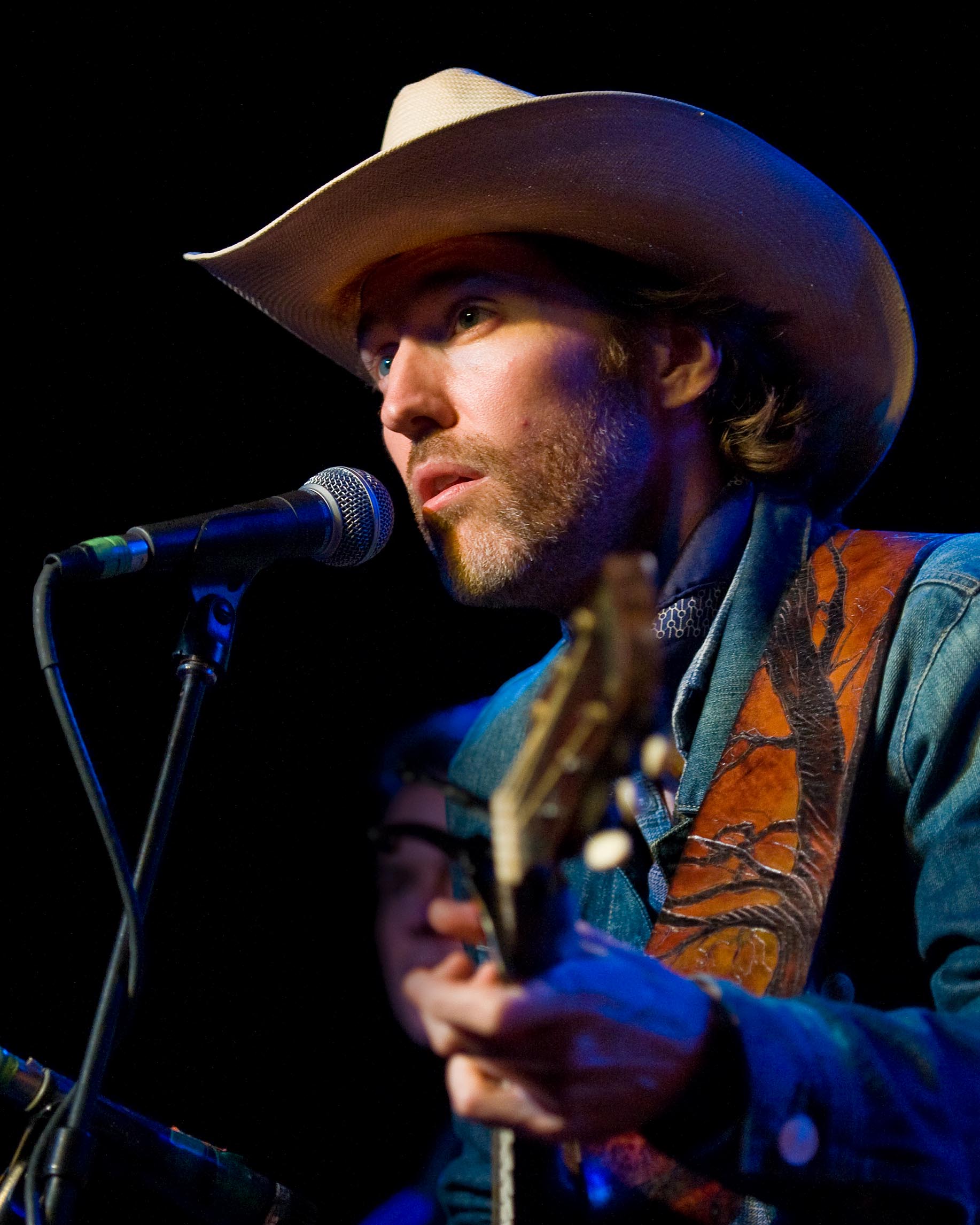
Photo by KirkStauffer, licensed under CC BY-SA 3.0 (https://commons.wikimedia.org/wiki/File:Dave_Rawlings_performs_on_February_14%2C_2010_at_the_Showbox_Market_in_Seattle%2C_Washington.jpg)
Dave Rawlings guitars gear is the subject of one of contemporary Americana music’s most distinctive instrument-and-approach combinations — the equipment and approach of a guitarist whose extensive collaborative work with Gillian Welch (in a musical partnership extending across decades) and whose own subsequent work fronting Dave Rawlings Machine represents a significant presence within Americana’s broader landscape, with Rawlings’ specific instrument choice — a small-bodied archtop guitar, genuinely distinctive within the broader acoustic guitar landscape this series has documented extensively across its recent run of acoustic-focused articles — representing a tonal choice this article will examine in detail.
His specific position — primarily known through a sustained collaborative musical partnership (with Welch) rather than as a solo artist from the outset, a career shape this series has examined in various forms (sideman careers, twin-lead collaborative pairings) but here representing yet another specific variation: a duo partnership where both members’ individual identities remain visible (unlike, say, a “sideman” supporting a more prominently-featured artist) while the collaborative output represents the primary creative unit — gives this article an opportunity to examine duo partnerships as their own specific career/creative structure, complementing this series’ broader examination of various collaborative structures (twin-lead pairings, sideman roles, founding partnerships). This is the complete breakdown of Dave Rawlings guitars gear, technique, and tonal philosophy.
Background
David Rawlings was born on July 30, 1969, in Rhode Island, United States, with his early career including meeting Gillian Welch while both were students, beginning a musical partnership that would extend across decades of subsequent collaborative recording and performance.
His collaborative work with Welch — across numerous albums credited to Welch with Rawlings’ essential instrumental and vocal-harmony contributions, within the broader Americana/alt-country landscape that developed significant prominence from the 1990s onward — represented a sustained creative partnership where Rawlings’ guitar work and high-harmony vocals provided essential complementary elements to Welch’s own songwriting, lead vocals, and guitar/banjo work, with the duo’s combined sound representing neither “Welch as primary artist with Rawlings as support” nor “equal co-billing” in any simple sense, but something genuinely specific to their particular collaborative chemistry.
His subsequent work fronting Dave Rawlings Machine — representing Rawlings stepping into a more directly lead-artist role, while reportedly continuing collaborative work with Welch in various configurations — gave Rawlings a body of work where his own songwriting, lead vocals, and guitar work became more directly foregrounded, complementing rather than replacing his ongoing Welch collaboration.
His specific instrument — a 1935 Epiphone archtop guitar (the “Olympic” model, a small-bodied archtop from Epiphone’s pre-Gibson-acquisition era, this article will examine in detail in the gear section below) — represents a longstanding and distinctive equipment choice that, combined with his specific playing approach, contributes substantially to the recognisable sonic character of his recorded work, both with Welch and with Dave Rawlings Machine.
Dave Rawlings Guitars Gear: The Complete Rig
Guitars
Dave Rawlings’ primary instrument is reportedly a 1935 Epiphone Olympic — a small-bodied archtop acoustic guitar from Epiphone’s catalogue prior to Gibson’s subsequent acquisition of the Epiphone brand (Epiphone operated as an independent manufacturer, competing directly with Gibson, before this acquisition; this article won’t attempt to fully detail Epiphone’s complete corporate history beyond noting this pre-acquisition-era instrument’s relevance). The Olympic represented one of Epiphone’s smaller and more affordable archtop models during this era — meaning Rawlings’ primary instrument represents, within archtop guitar’s broader landscape (which this series discussed in relation to Peter Banks’ ES-175, a considerably later and larger archtop model), a genuinely different specific point: a small-bodied, vintage, originally-budget-tier archtop, rather than the larger, more tonally “full” archtop models (like the ES-175) this series has previously discussed.
A small-bodied archtop’s tonal character differs from both larger archtops (fuller, warmer, more resonant in lower registers, as the ES-175 discussion suggested) and from flat-top steel-string acoustics (this series’ more typical acoustic-guitar subject across its recent run of articles) — small archtops tend toward a brighter, more midrange-focused, somewhat “boxy” or percussive character, with less low-end fullness than either larger archtops or many flat-top acoustics, but with a specific cutting/articulate quality that can serve specific musical functions (cutting through a mix, providing rhythmic definition) that fuller-bodied instruments’ more resonant character might not provide as directly.
For Rawlings’ specific musical context — extensive vocal harmony work with Welch, where guitar needs to provide rhythmic/harmonic foundation without competing for sonic space with two simultaneous vocal lines — a brighter, more midrange-focused, less bass-heavy guitar tone (as the small archtop provides) might represent a genuinely functional choice: leaving more sonic “room” for vocal harmonies (which often occupy midrange-to-upper-midrange frequency territory) than a bass-heavier instrument might leave, while still providing sufficient rhythmic/harmonic presence through the archtop’s percussive, articulate character.
Amps
Consistent with the broader acoustic-instrumental aesthetic this series has documented for various acoustic-focused guitarists (Bensusan, Phillips, among others), minimal amplification — likely microphone-based for live performance, direct or microphone-based for recording — preserving the small archtop’s natural tonal character (rather than processing/colouring this character through amplifier-based tone-shaping, the more typical approach for electric guitar contexts this series has more frequently documented) represents Rawlings’ foundational approach.
Effects
Minimal effects processing, letting the small archtop’s specific tonal character and Rawlings’ playing represent the primary sonic interest.
Playing Style & Tone Philosophy
Dave Rawlings represents this series’ opportunity to examine duo-partnership careers as their own specific structure — distinct from both the “sideman” pattern this series examined for Snowy White (where one musician’s individual voice travels across multiple higher-profile artists’ contexts) and from the twin-lead collaborative pairing pattern this series examined extensively for Wishbone Ash (where two guitarists’ individual contributions merge into joint harmonised musical statements). Rawlings’ partnership with Welch represents yet another collaborative structure: two musicians (one primarily known for songwriting/lead-vocals/some-instrumental-work, the other for complementary-instrumental-work/vocal-harmony) whose combined output represents a recognisable joint artistic identity, with both individual members’ identities remaining visible (unlike a “sideman” whose individual identity might be less visible relative to the artist they support) even as the collaborative output represents more than either member’s individual work alone.
This duo structure — both members visible, combined output as primary creative unit — represents a genuinely common structure across popular music history, with specific examples across various genres representing different balances/divisions-of-labour between duo members (songwriting splits, lead-vocal splits, instrumental-role splits). For Rawlings/Welch specifically, the apparent division — Welch’s prominence in songwriting/lead-vocals, Rawlings’ prominence in guitar work/vocal harmony, per this article’s background section — represents one specific instance of how duo partnerships can divide creative labour, with Rawlings’ subsequent Dave Rawlings Machine work (per the background section) representing an interesting development: a duo-partnership member subsequently taking on more of the “primary artist” role (songwriting, lead vocals) within a different project, while (reportedly) continuing the original duo partnership in some form — meaning Rawlings’ career represents both “duo partnership member” and “subsequent primary-artist-in-own-right”.
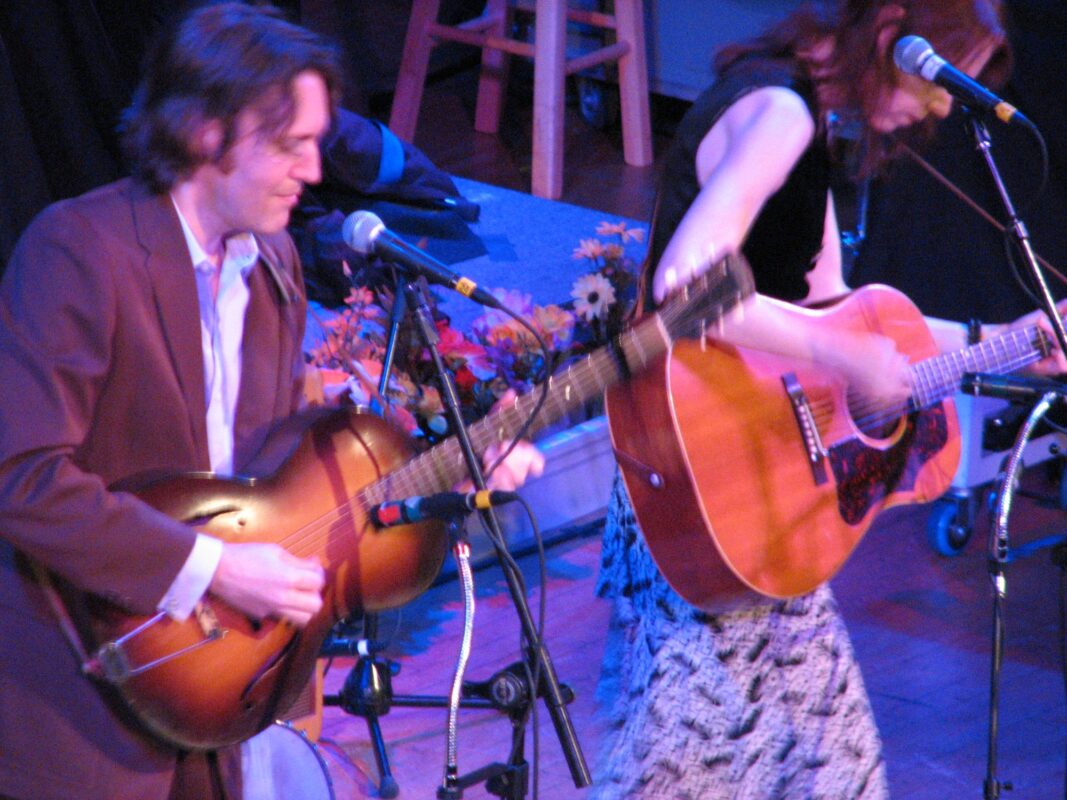
The small archtop’s role within this duo context — as this article’s gear section discussed, potentially representing a functional choice for vocal-harmony-centred music (leaving sonic room for vocal harmonies via the instrument’s brighter, less bass-heavy character) — connects to a broader principle this series has touched on in various forms: equipment choices serving an artist’s specific musical context’s specific needs, rather than representing context-independent “best” choices. A small archtop might represent, in some absolute sense, a “smaller-sounding” or “less full” instrument than larger acoustic guitars this series has documented — but within Rawlings’ specific context (vocal-harmony-centred duo music), this “smaller” character might represent exactly the right choice, leaving room for the vocal harmonies that represent (per this article’s background section) a central element of the Rawlings/Welch sound. This represents context-dependent equipment evaluation — an instrument’s “rightness” depending on its specific musical context’s specific needs, rather than on context-independent notions of “fuller is better” or similar absolute evaluative frameworks.
Rawlings’ specific playing approach — beyond instrument choice — likely incorporates the kind of rhythmic, articulate playing the small archtop’s tonal character suits: rhythmic guitar work providing harmonic/rhythmic foundation for vocal harmonies, with whatever lead/melodic guitar contributions Rawlings makes (within Dave Rawlings Machine specifically, where his more foregrounded role might include more substantial lead guitar work than his role within the Welch-fronted material might more typically involve) likely also reflecting the small archtop’s specific tonal character — brighter, more midrange-focused, articulate rather than warmly sustained (as larger archtops or solid-body electrics with longer sustain, this series’ more typical electric-guitar subjects, might provide).
Tonally, Dave Rawlings guitars gear philosophy was built on the 1935 Epiphone Olympic small archtop’s bright, midrange-focused, articulate character through minimal amplification/effects — an instrument choice serving his specific musical context (vocal-harmony-centred duo work with Welch, subsequently extended into his own more foregrounded work with Dave Rawlings Machine) by leaving sonic room for vocal harmonies while providing rhythmic/harmonic definition through the archtop’s percussive character, representing context-dependent equipment evaluation in action: not “the best guitar” in any absolute sense, but the right guitar for what Rawlings’ music specifically needs.
Rhode Island, United States, is Rawlings’ birthplace. For Rawlings specifically, whatever specific regional musical environment Rhode Island provided during his formative years represents part of his background — though the more directly significant biographical element this article’s background section emphasised is Rawlings’ meeting with Welch during their student years, representing the genesis of the collaborative partnership that subsequently defined much of his career, a meeting whose specific circumstances (which institution, what specific musical context brought them together) this article doesn’t have detailed information about, but which represents the kind of “formative meeting” that, in retrospect, can take on considerable significance — two musicians whose subsequent collaborative work would extend across decades, meeting initially as students, presumably without either party knowing at the time what this meeting would lead to.
The broader phenomenon of musical partnerships originating from student-era meetings represents a pattern that recurs across popular music history more broadly — musicians meeting during formative years (school, university, or other student contexts), before either has established significant individual reputation, with whatever collaborative chemistry develops during this formative period sometimes proving foundational for subsequent career-spanning partnerships. For Rawlings and Welch, a student-era meeting preceding either’s significant individual reputation means their subsequent partnership developed without either party bringing pre-existing individual fame into the collaboration — both developing their reputations substantially through and via the partnership itself, rather than one party’s pre-existing reputation shaping the partnership’s subsequent reception (as might be the case if, say, an already-famous artist subsequently formed a partnership with a previously-unknown collaborator). This “both parties developing reputation through the partnership itself, from a pre-fame starting point” pattern represents its own specific dynamic — the partnership itself, rather than either individual’s prior standing, represents the foundational creative/professional unit from the outset, a dynamic that may contribute to the kind of sustained, decades-long collaborative chemistry this article’s background section described, since neither party’s involvement represents “joining” a pre-existing more-prominent individual’s project, but rather both parties co-developing a shared project from comparable starting points.

How to Sound Like Dave Rawlings
Guitar Approach
A small-bodied archtop acoustic guitar (1930s-era Epiphone models, or similar small archtops from this general era/category, for those without access to an actual vintage instrument) represents the foundational Dave Rawlings guitars gear instrument.
The stylistic approach: develop rhythmic, articulate acoustic guitar playing suited to vocal-harmony-centred contexts — playing that provides harmonic/rhythmic foundation without competing for sonic space with vocal lines, taking advantage of a small archtop’s brighter, midrange-focused character (which naturally occupies different sonic territory than vocal harmonies’ typical range, per this article’s discussion) to achieve this “leaving room for vocals” quality more naturally than a bass-heavier instrument might achieve. Beyond rhythmic playing, lead/melodic contributions (more prominent within Dave Rawlings Machine-type contexts, per this article’s discussion) would similarly reflect the small archtop’s articulate, percussive character rather than aiming for the longer-sustained, warmer lead-guitar character this series has more frequently documented for electric-guitar contexts.
Amp Approach
Minimal amplification (microphone-based for live performance) or direct/minimal-processing recording, preserving the small archtop’s natural bright, articulate character.
| Element | Approach | Notes |
|---|---|---|
| Guitar | Small-bodied archtop (1930s Epiphone-type) | Brighter, midrange-focused, percussive |
| Amplification | Minimal/direct, microphone-based for live | Preserves natural archtop character |
| Rhythmic role | Harmonic/rhythmic foundation | Leaves sonic room for vocal harmonies |
| Lead/melodic role | Articulate, percussive (not long-sustain) | More prominent in Dave Rawlings Machine context |
| Career structure | Duo partnership plus subsequent own-project | Distinct from sideman or twin-lead patterns |
| Equipment philosophy | Context-dependent rightness | Small archtop ideal for THIS music, not “best” absolutely |
Small-bodied archtop acoustic through minimal amplification/effects. The defining elements are the small archtop’s bright, articulate, midrange-focused character (genuinely distinct from both larger archtops and flat-top acoustics this series has more typically documented) and its specific functional fit within vocal-harmony-centred duo music — leaving sonic room for vocals while providing rhythmic definition, representing this article’s central “context-dependent equipment evaluation” principle in concrete form.
Influence & Legacy
Dave Rawlings’ influence operates substantially within contemporary Americana’s broader landscape — his and Welch’s sustained collaborative partnership, and his small-archtop tonal signature specifically, represent recognisable elements within Americana’s broader sonic palette, with the small archtop’s specific character (distinct from more commonly-used flat-top acoustics within Americana/folk contexts more broadly) representing a specific tonal signature within this broader landscape.
His broader significance — demonstrating both duo-partnership as a sustained creative structure (decades of collaborative work with Welch) and small archtop guitar’s viability within contemporary Americana (a context where flat-top acoustics, per this article’s discussion, might represent the more “default” choice) — represents a model for both collaborative career structures and context-dependent equipment choices, the two main themes this article has examined.
The comparison with Pierre Bensusan — whose own acoustic-instrumental work, documented several articles ago, represented DADGAD tuning’s “vocabulary extension” within fingerstyle/instrumental acoustic contexts — provides a point of contrast: where Bensusan’s innovation involved tuning/harmonic vocabulary extension within a more solo-instrumental context, Rawlings’ “innovation” (if that’s the right framing) involves instrument-choice (small archtop, genuinely distinct within Americana’s broader acoustic landscape) within a duo/ensemble vocal-harmony context — both representing acoustic-guitar-related distinctiveness, but within genuinely different musical structures (solo-instrumental versus duo-vocal-harmony) and involving genuinely different specific elements (tuning/vocabulary versus instrument-choice/tonal-character). The parallel with Jesse Cook — whose own work, documented several articles ago, represented genre-synthesis (rumba flamenco plus jazz plus loop-based production) within instrumental contexts — shows a different kind of “distinctive within broader landscape” pattern than Rawlings’ more straightforwardly “specific instrument choice within an otherwise-recognisable genre context (Americana)” pattern; Cook’s distinctiveness involves genre-synthesis itself, while Rawlings’ distinctiveness involves a specific equipment choice within Americana’s otherwise-recognisable broader landscape. And the connection to Kelly Joe Phelps — another guitarist this series will document in upcoming articles, working within roughly comparable acoustic/Americana-adjacent territory — extends this series’ continuing exploration of acoustic guitar’s many specific manifestations within the broader Americana/folk/acoustic landscape this series is now exploring across its final stretch of articles, with Rawlings’ small-archtop signature representing one specific point within this landscape’s genuine diversity.
Frequently Asked Questions: Dave Rawlings Guitars & Gear
What guitar does Dave Rawlings play?
Dave Rawlings’ primary instrument is reportedly a 1935 Epiphone Olympic — a small-bodied archtop acoustic guitar from Epiphone’s pre-Gibson-acquisition catalogue. This represents a genuinely distinctive choice within Americana’s broader acoustic landscape, where flat-top steel-string acoustics more typically represent the “default” instrument category.
What is Dave Rawlings’ musical relationship with Gillian Welch?
Rawlings and Welch have maintained a sustained collaborative musical partnership across decades, with numerous albums credited to Welch featuring Rawlings’ essential guitar and vocal-harmony contributions. This duo partnership represents a structure where both members’ individual identities remain visible while the combined output represents a recognisable joint artistic identity — distinct from a “sideman” relationship where one member’s identity might be less individually prominent.
How does a small archtop guitar differ tonally from a flat-top acoustic or a larger archtop?
Small archtops tend toward a brighter, more midrange-focused, somewhat percussive or “boxy” character, with less low-end fullness than either larger archtops (like the Gibson ES-175) or many flat-top steel-string acoustics. This brighter, less bass-heavy character can leave more sonic room for other elements (like vocal harmonies) within a mix than a fuller-bodied instrument might leave.
What is Dave Rawlings Machine?
Dave Rawlings Machine represents Rawlings stepping into a more directly lead-artist role — his own songwriting, lead vocals, and guitar work more directly foregrounded than within the Welch-fronted material. This represents Rawlings’ career extending beyond the original duo partnership while (reportedly) not replacing it, giving his career both “duo partnership member” and “subsequent primary artist” dimensions.
Why might a small archtop guitar suit vocal-harmony-centred duo music specifically?
Vocal harmonies often occupy midrange-to-upper-midrange frequency territory. A guitar with less low-end fullness and a brighter, more midrange-focused character (like a small archtop) might leave more sonic “room” for these vocal harmonies than a bass-heavier instrument, while still providing rhythmic/harmonic foundation through the archtop’s articulate, percussive character — representing a context-dependent equipment choice suited to this specific musical structure.
What does “1935 Epiphone” tell us about the instrument’s historical context?
This dates the instrument to Epiphone’s era as an independent manufacturer competing directly with Gibson, prior to Gibson’s subsequent acquisition of the Epiphone brand. Epiphone’s Olympic model represented one of the company’s smaller, more affordable archtop models during this era — meaning Rawlings’ primary instrument represents a vintage, originally-budget-tier instrument whose specific tonal character (small archtop brightness) happens to suit his specific musical context particularly well.
How does Rawlings’ career structure compare to other collaborative patterns?
Rawlings’ “duo partnership member who also fronts own project” structure differs from Snowy White’s “sideman across multiple higher-profile artists plus own separate solo project” pattern (White’s sideman work and solo work represent more separate contexts) and from Wishbone Ash’s twin-lead collaborative pairings (where both guitarists’ contributions merge into joint harmonised lines within one band). Rawlings’ structure represents a more direct extension — skills and identity developed within the Welch partnership extending into his own more foregrounded subsequent project, rather than representing entirely separate collaborative and solo contexts.
The “leaving room for vocal harmonies” principle this article has emphasised for Rawlings’ small-archtop choice connects to a broader principle about how instrumental accompaniment relates to vocal content across genuinely varied musical contexts. For vocal-centred music generally — and Rawlings/Welch’s work, with its emphasis on vocal harmony specifically, represents vocal-centred music in a fairly direct sense — instrumental accompaniment’s role often involves exactly this kind of “supporting without competing” function: providing harmonic/rhythmic content that supports vocal lines without occupying the same sonic territory those vocal lines need to occupy clearly. Different instruments/instrument-configurations achieve this “supporting without competing” function differently: a small archtop’s brighter, less-bass-heavy character (per this article’s discussion) represents one approach — occupying different frequency territory than vocals more directly. Other approaches might include rhythmic/timing considerations (instrumental parts that are rhythmically active during vocal pauses, less active during vocal phrases) or arrangement considerations (instrumental density that varies to leave more “space” during vocally-prominent passages). For Rawlings specifically, this article has primarily examined the instrument-choice dimension (small archtop’s frequency-territory characteristics) of this “supporting without competing” principle — but the broader principle likely operates through multiple simultaneous dimensions (instrument choice, rhythmic/arrangement choices, and others) working together to achieve vocal-harmony-centred music’s specific accompaniment requirements, with instrument choice representing one significant but not necessarily sole contributing factor.
For guitarists interested in exploring small archtop guitars following Rawlings’ general approach, the practical accessibility considerations differ somewhat from this series’ more typical recommendations: vintage 1930s-era small archtops (like Rawlings’ specific 1935 Epiphone Olympic) represent collectible vintage instruments whose availability/cost may differ considerably from more commonly-available contemporary instruments this series has more frequently recommended. For guitarists without access to an actual vintage small archtop, contemporary small archtop models (various manufacturers produce smaller archtop guitars, even if not replicating the exact specifications of 1930s Epiphone models specifically) might represent a more accessible starting point for exploring small archtop’s general tonal territory (brighter, midrange-focused, percussive) without requiring access to the specific vintage instrument Rawlings plays. This represents a general consideration this series hasn’t always explicitly addressed: some guitarists’ specific instrument associations (vintage instruments, custom-built instruments, or otherwise less broadly accessible equipment) mean that “sounding like” that specific guitarist might more realistically involve “exploring the general tonal/stylistic territory that guitarist’s specific equipment represents” rather than “acquiring the literally identical equipment” — with contemporary equivalent-category instruments (small archtops generally, rather than specifically 1935 Epiphone Olympics) representing a practical approximation that captures the general tonal character (small archtop brightness) even without replicating the specific vintage instrument’s exact characteristics.
The “duo partnership” structure this article has examined for Rawlings/Welch raises a broader question about how such partnerships’ creative labour actually gets divided in practice, beyond the general “songwriting/lead-vocals versus instrumental/harmony” division this article’s background section suggested. In practice, creative labour within sustained partnerships often involves more fluid/overlapping contributions than a simple division-of-labour framing might suggest — a partner primarily associated with “instrumental/harmony” contributions might also contribute to songwriting (even if not primarily credited for it), arrangement decisions, or other creative dimensions beyond their most visibly-credited role; similarly, a partner primarily associated with “songwriting/lead-vocals” might also contribute to instrumental arrangement decisions beyond their own direct instrumental performance. This more fluid/overlapping reality — actual creative collaboration often involving more genuinely joint decision-making across multiple dimensions than simplified “who does what” descriptions might suggest — represents a point this series has made in various forms for other collaborative contexts (the previous articles’ discussion of twin-lead harmony’s genuinely joint, non-decomposable nature represents perhaps the most direct prior parallel, even though twin-lead harmony and songwriting-duo partnerships represent quite different specific collaborative structures). For Rawlings/Welch specifically, whatever the actual specific division of creative labour involves beyond this article’s general “songwriting/lead-vocals versus instrumental/harmony” framing represents detail this article doesn’t have access to — but the general point (sustained creative partnerships often involve more fluid/overlapping contributions than simplified divisions-of-labour suggest) represents a useful caveat to this article’s own necessarily-simplified framing of the Rawlings/Welch partnership’s creative structure.
The relationship between Americana as a contemporary genre category and the various earlier American roots-music traditions (blues, country, folk, and others) this series has documented across its full run deserves brief examination, since “Americana” as a genre label represents a relatively recent categorisation (emerging substantially from the 1990s onward, per this article’s background section) for music that often draws on and combines elements from these earlier traditions. This means Rawlings/Welch’s work, and contemporary Americana more broadly, represents a kind of “synthesis of earlier traditions” in a general sense — similar in structure to, though differing in specific content from, the various other “synthesis” patterns this series has documented (Jesse Cook’s rumba-flamenco-plus-jazz, for instance, or the broader “jazz as universal additional layer” pattern appearing across numerous specific contexts). For Americana specifically, the synthesis involves combining elements from American roots traditions (blues, country, folk, gospel, and others this article won’t attempt to fully enumerate) into a contemporary genre category whose specific combination/balance of these elements can vary considerably across different Americana artists — meaning “Americana” as a category encompasses considerable internal diversity, with Rawlings/Welch’s specific combination (vocal-harmony-centred, with Rawlings’ small-archtop tonal signature) representing one specific point within this broader category’s internal diversity, rather than representing “the” Americana sound in any singular sense. This internal diversity — a genre category encompassing considerable variation in how its constituent earlier-tradition elements get combined — represents a pattern this series has noted for various other genre categories too (progressive rock’s internal diversity across Genesis’, Yes’, and Wishbone Ash’s quite different specific approaches, for instance), with Americana representing this pattern’s most recent instance within this series’ now eighty-one-article documentation of genre categories’ internal diversity across genuinely varied specific musical approaches.
In summary, Dave Rawlings guitars gear represents a 1935 Epiphone Olympic small-bodied archtop through minimal amplification/effects — an instrument choice whose bright, midrange-focused, percussive character serves a specific functional purpose within Rawlings’ vocal-harmony-centred duo partnership with Gillian Welch: leaving sonic room for vocal harmonies while providing rhythmic/harmonic foundation, representing context-dependent equipment evaluation in clear, concrete form. This article has used Rawlings’ case to examine duo-partnership as its own collaborative career structure — both members visible, combined output as primary creative unit, originating from a pre-fame student-era meeting, with Rawlings’ subsequent Dave Rawlings Machine work representing a direct extension of partnership-developed identity into a more foregrounded individual context, rather than a separate “sideman plus solo career” structure. For guitarists and listeners interested in either small archtop guitars’ specific tonal territory (genuinely distinct from both larger archtops and flat-top acoustics) or in contemporary Americana’s internal diversity (as one specific point within a broader genre category synthesising multiple earlier American roots traditions), Rawlings’ work — both with Welch and via Dave Rawlings Machine — represents a genuinely informative case study.
For listeners wanting to hear Rawlings’ small-archtop tonal signature directly, comparative listening — Rawlings/Welch recordings alongside recordings featuring more typical flat-top-acoustic-centred Americana/folk instrumentation — represents a useful approach to isolating what specifically distinguishes the small archtop’s character within this broader genre context: listening for the brighter, more midrange-focused, percussive quality this article has discussed, and for how this quality interacts with vocal harmonies (whether it does indeed seem to “leave room” for vocal content in the way this article has theorised, or whether other factors might be equally or more significant in achieving the Rawlings/Welch sound’s specific vocal-harmony-friendly character). This kind of comparative listening — testing this article’s theoretical claims against actual listening experience — represents the kind of engaged, critical listening this series has consistently encouraged throughout its run, rather than simply accepting written analysis (this article’s, or any other’s) as a substitute for direct musical engagement.
A final thought worth carrying forward: somewhere in the Rawlings/Welch catalogue, a small archtop guitar strums a rhythmic figure, bright and percussive, while two voices rise together in close harmony above it — and the specific reason that guitar sounds the way it does, rather than sounding like a fuller, bassier flat-top, traces back to a choice (whether deliberate or simply “this is the guitar Rawlings happened to have and happened to like”) that turned out to fit the music’s actual needs remarkably well. Whether this fit was the product of careful deliberation or happy accident — and this series has, across its many articles, encountered both deliberate development and incidental discovery as genuine sources of musical “rightness” — the result is the same: an instrument, a player, and a musical context that all fit together, producing something genuinely distinctive within Americana’s broader landscape. That’s Dave Rawlings guitars gear, and that’s where this article, eighty-one entries into this hundred-article journey, comes to rest.
Image credits
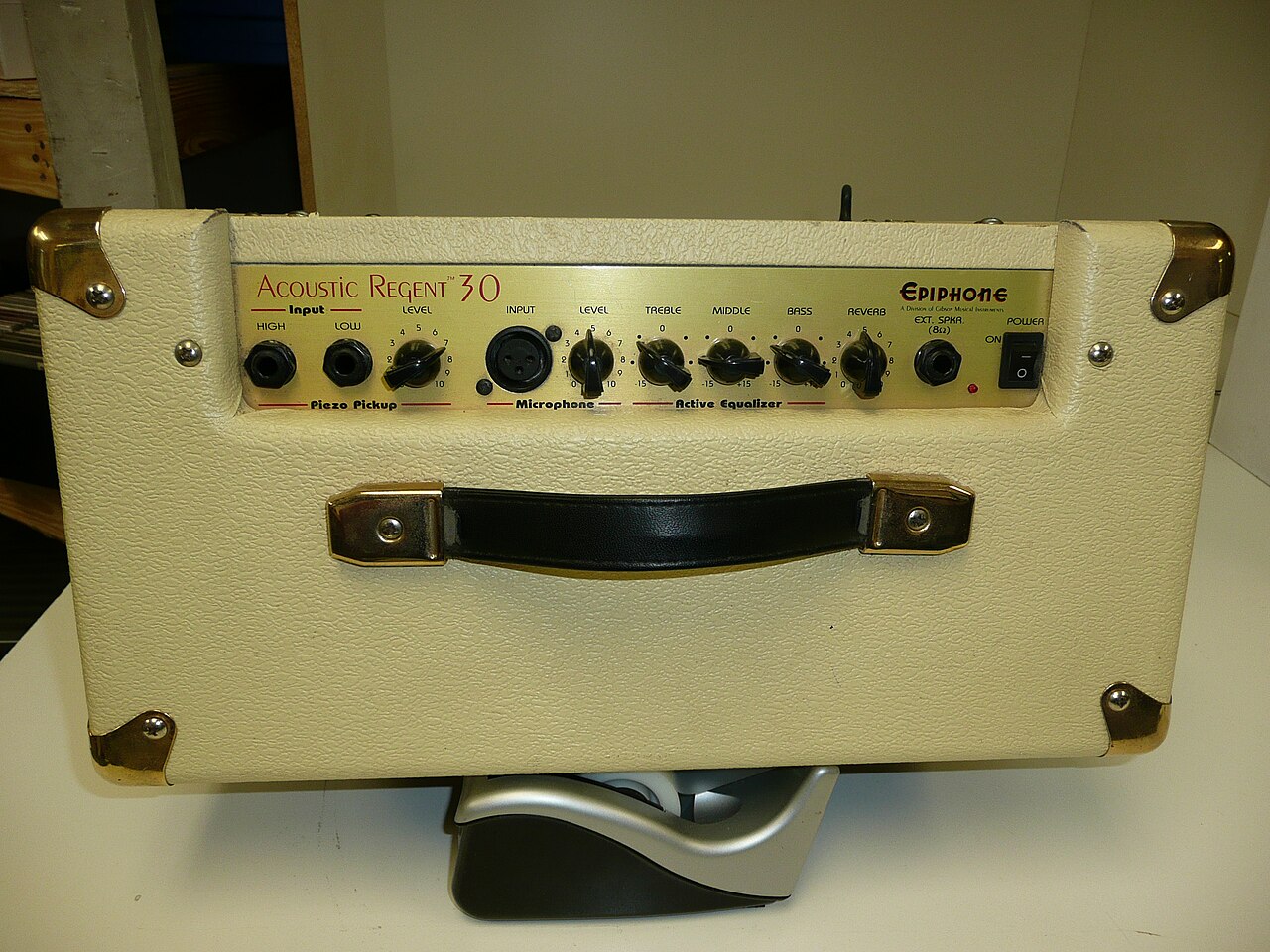
- A panel view of an Epiphone Acoustic Regent 30 amplifier: Picasa: Tim Russell, Wikimedia Commons, CC BY 3.0.
- Top image: by KirkStauffer, Wikimedia Commons, CC BY-SA 3.0.
- David Rawlings and Gillian Welch: photo by William Wallace from Austin, TX, USA, via Wikimedia Commons, CC BY 2.0.
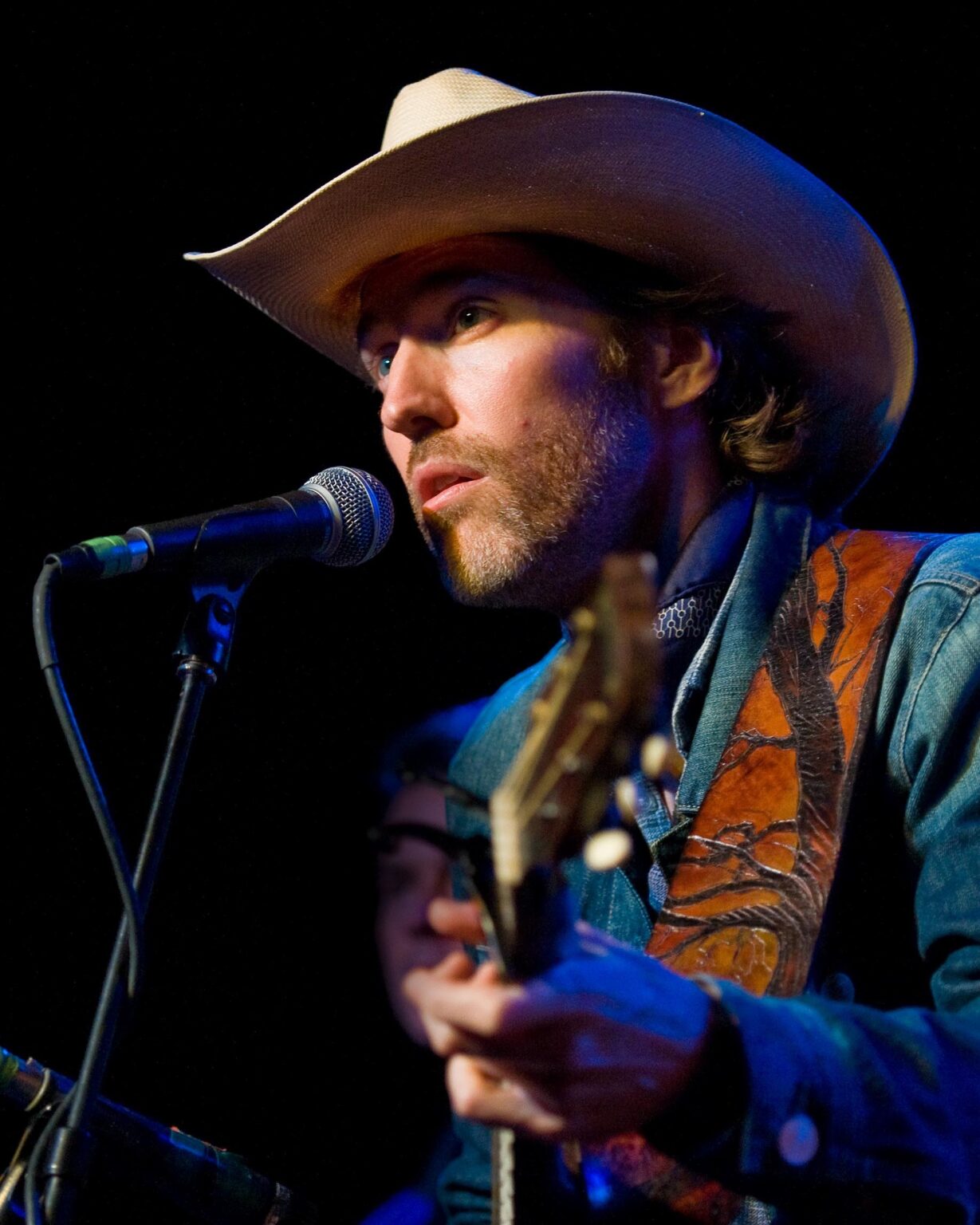
- Dave Rawlings live: Yaffa, Wikimedia Commons, CC BY-SA 2.0.
- Dave Rawlings live: KirkStauffer, Wikimedia Commons, CC BY-SA 3.0.