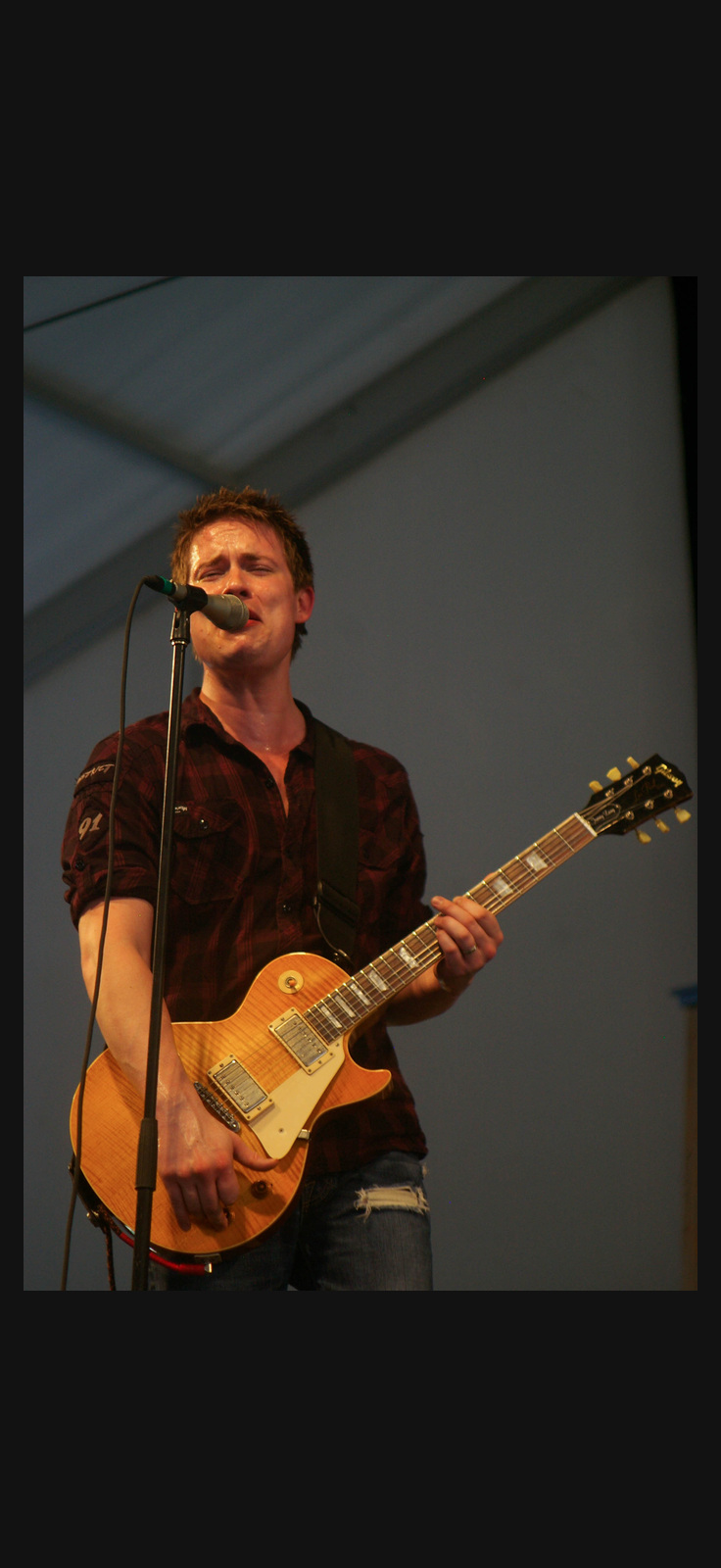
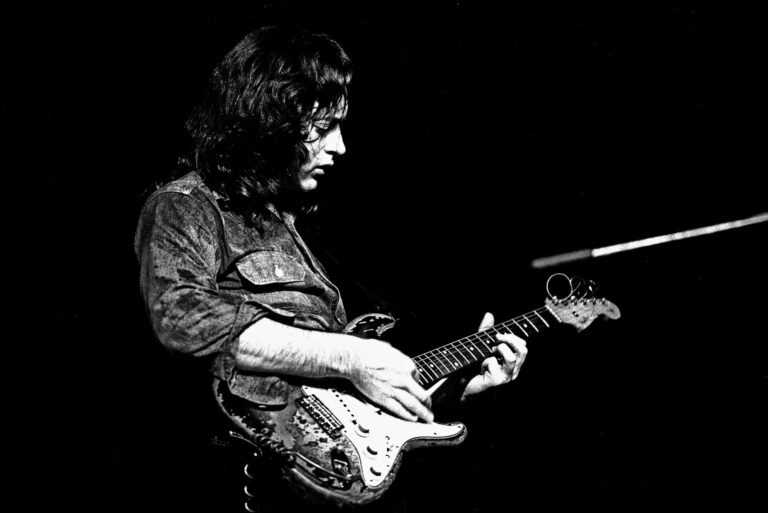
Mick Abrahams Guitars & Gear: The Blodwyn Pig Bluesman’s Complete Rig
Mick Abrahams guitars gear — Les Paul and Marshall Bluesbreaker deep-dive for the Jethro Tull and Blodwyn Pig blues legend's raw tone and complete effects chain.
Dig into Mick Abrahams guitars gear and you find one of the great what-ifs of British rock — a guitarist who co-founded Jethro Tull, played on their landmark debut album This Was, and then walked away over a creative disagreement that sent both his career and the band’s in radically different directions. What Abrahams left behind and what he built next with Blodwyn Pig revealed a player of genuine blues authority, rooted in the Chicago and electric blues tradition with a directness and authenticity that made him one of the most respected guitarists of the British blues boom without ever approaching the mainstream fame that contemporaries like Clapton or Green achieved.
The Journey
This guide covers Abrahams’ complete equipment picture: the Gibson guitars he favoured throughout his career, the amplification that gave him his characteristically warm, driven sound, the effects he used sparingly and purposefully, and the playing approach that made him distinctive within a crowded field of British blues guitarists. If you’ve ever wondered what Jethro Tull might have sounded like had Abrahams stayed, or simply want to understand how a deeply blues-committed approach to the electric guitar translates into a British rock context, this is the essential account.
Background
Mick Abrahams was born on April 7, 1943, in Luton, Bedfordshire — a working-class town north of London whose musical heritage is modest but whose contribution to British rock through the musicians it produced is disproportionately significant. He began playing guitar as a teenager in the early 1960s, drawn immediately to the American blues and skiffle that were circulating through British youth culture at the time, and developed rapidly through the practical education of playing in various local bands and working groups through the mid-1960s.
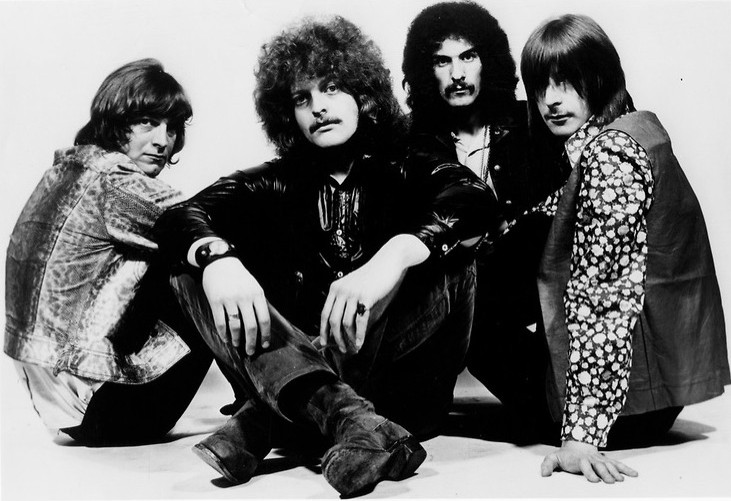
By the mid-1960s Abrahams was playing with a Luton-based group called McGregor’s Engine, which eventually evolved into the formation that would become Jethro Tull. He was a founding member of Tull alongside vocalist and flautist Ian Anderson, and the band’s debut album This Was (1968) is a remarkable document of two very different musical personalities attempting to coexist: Anderson’s eclectic, folk-and-jazz-influenced approach pushing against Abrahams’ committed blues orthodoxy, with results that were sometimes electric and sometimes tense. The album contained some of the finest British electric blues guitar playing of the era, and tracks like “Cat’s Squirrel” — a reworking of the Cream arrangement of Doc Watson’s version of the traditional blues — showed Abrahams as a player fully conversant with the blues vocabulary and capable of deploying it with genuine authority.
The creative tension between Abrahams and Anderson reached its breaking point over the band’s direction. Abrahams wanted to remain committed to blues; Anderson was already moving toward the more eclectic, progressive approach that would define Tull’s subsequent career. Abrahams departed in late 1968, immediately after the recording of This Was, and formed Blodwyn Pig — named with the kind of perverse whimsy that was common in British rock band nomenclature of the era. The new band, featuring a saxophone alongside Abrahams’ guitar in the front line, released two albums — Ahead Rings Out (1969) and Getting to This (1970) — that showed a slightly broader musical palette than the strict blues focus of his Tull work but remained fundamentally rooted in the blues tradition.
After Blodwyn Pig’s commercial failure to match the critical reception of their debut, Abrahams pursued a varied career that included solo work, session contributions, and occasional reformations of Blodwyn Pig with different lineups. He experienced significant health problems in the 1990s and early 2000s — including heart surgery that curtailed his performing activities for several years — but returned to active playing and recording, releasing new solo material and continuing to perform live with the commitment to blues authenticity that had defined him from the beginning.
His reputation among fellow musicians remained consistently high throughout all of this. Players who came up in the British blues scene consistently cite Abrahams as a formative influence, and the specific combination of technical accomplishment and emotional directness that characterised his best work continued to attract serious attention from guitarists who cared more about feel than fashion. He is, in the fullest sense, a musician’s musician — valued most by those who understand what he was actually doing, which required more than casual listening to appreciate fully.
Mick Abrahams Guitars Gear: The Complete Rig
Guitars
Mick Abrahams is fundamentally a Gibson player, and his guitar choices throughout his career reflected a consistent preference for the warmth, sustain, and midrange character that Gibson instruments provide — qualities that suit the blues tradition he was working within far better than the brighter, more articulate Fender alternatives favoured by some of his contemporaries.
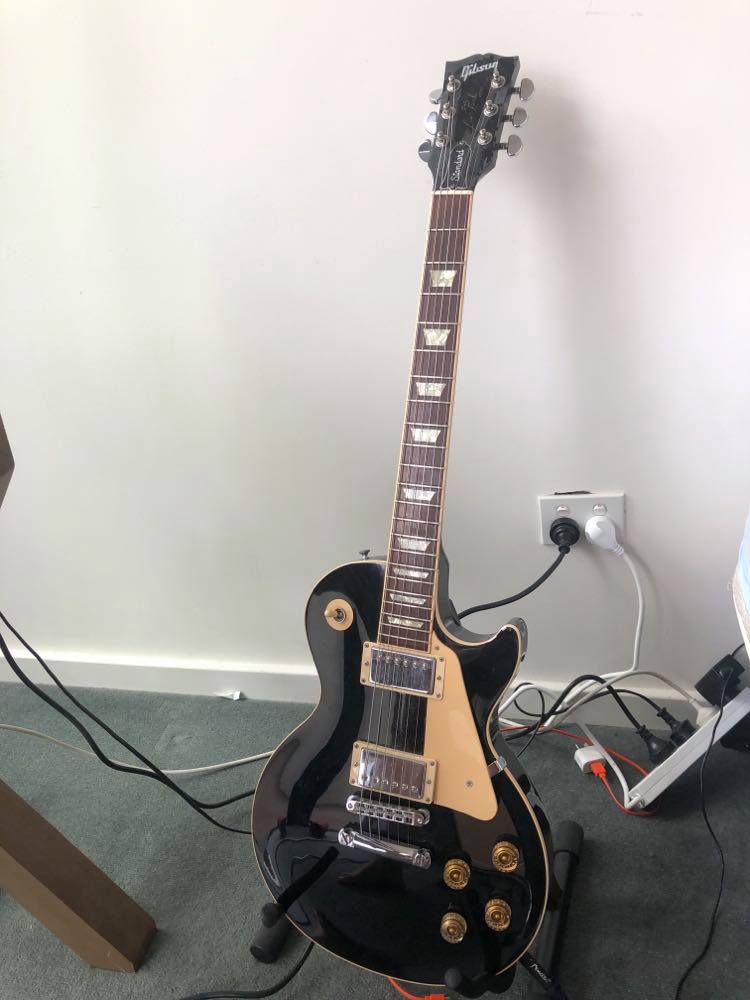
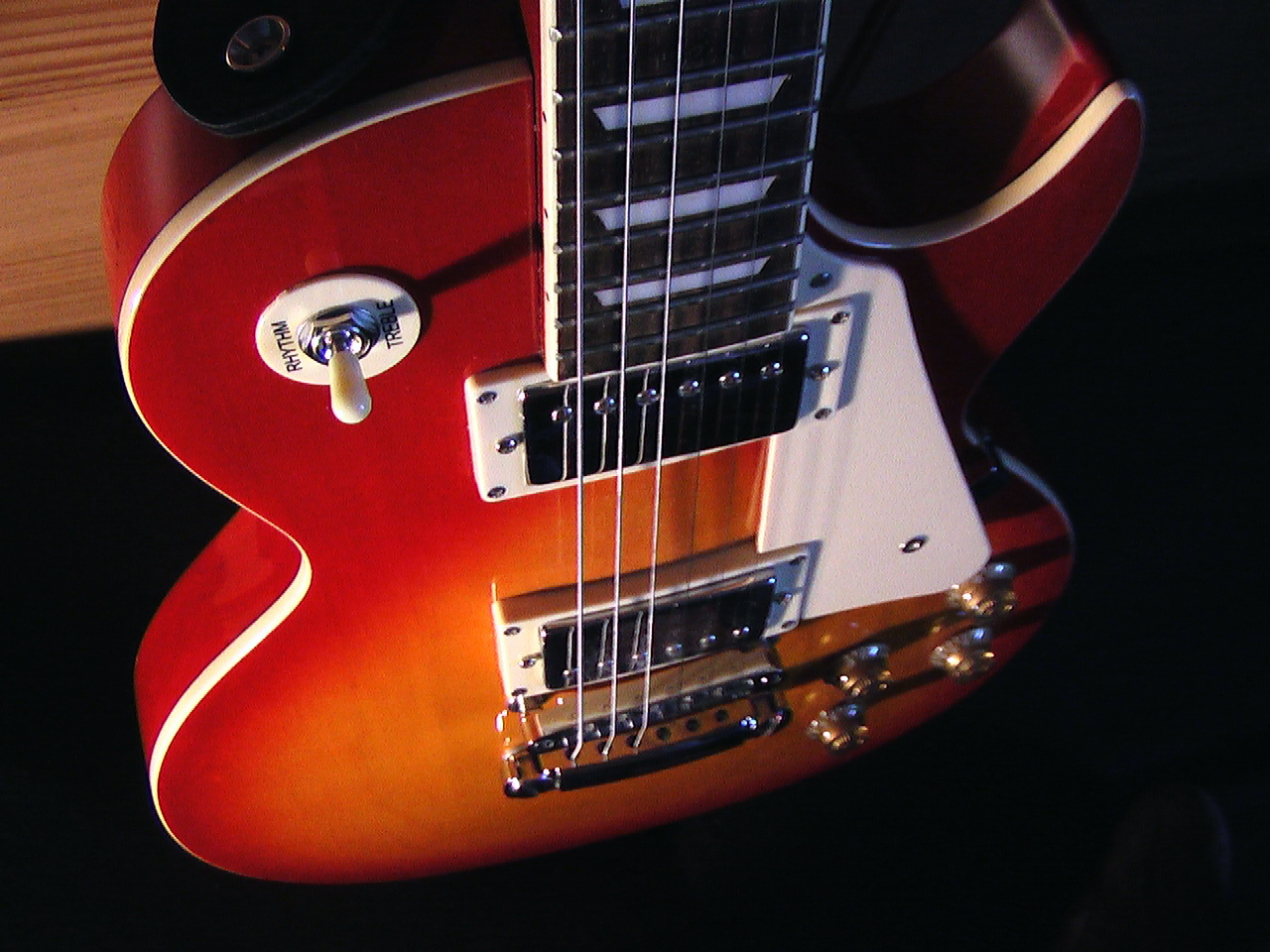
His primary instrument during the Jethro Tull and Blodwyn Pig period was a Gibson Les Paul Standard — specifically late-1950s examples or early-1960s variants with PAF or early patent-number humbuckers. The PAF humbucker in the late-1950s configuration typically measures 7.5k to 8.5k ohms DC resistance, wound with plain enamel wire on Alnico II or Alnico V rod magnets. These pickups are characterised by their dynamic response — they are sensitive to pick attack in a way that higher-output replacements aren’t, allowing the amplifier to respond to the physical energy of the playing rather than simply processing a uniformly hot signal. For a blues player whose expression depends heavily on the relationship between touch and amplifier response, this dynamic sensitivity is not a detail but a fundamental requirement.
The Les Paul Standard’s mahogany body and neck, combined with the carved maple top, produce the specific combination of warmth, sustain, and upper harmonic content that has made the instrument the choice of blues and blues-rock players since the late 1950s. Abrahams’ playing on the Jethro Tull and Blodwyn Pig records has the characteristic Les Paul warmth — notes that sustain naturally without becoming muddy, a midrange that speaks with authority in a band mix, and a top end that is present without being harsh.
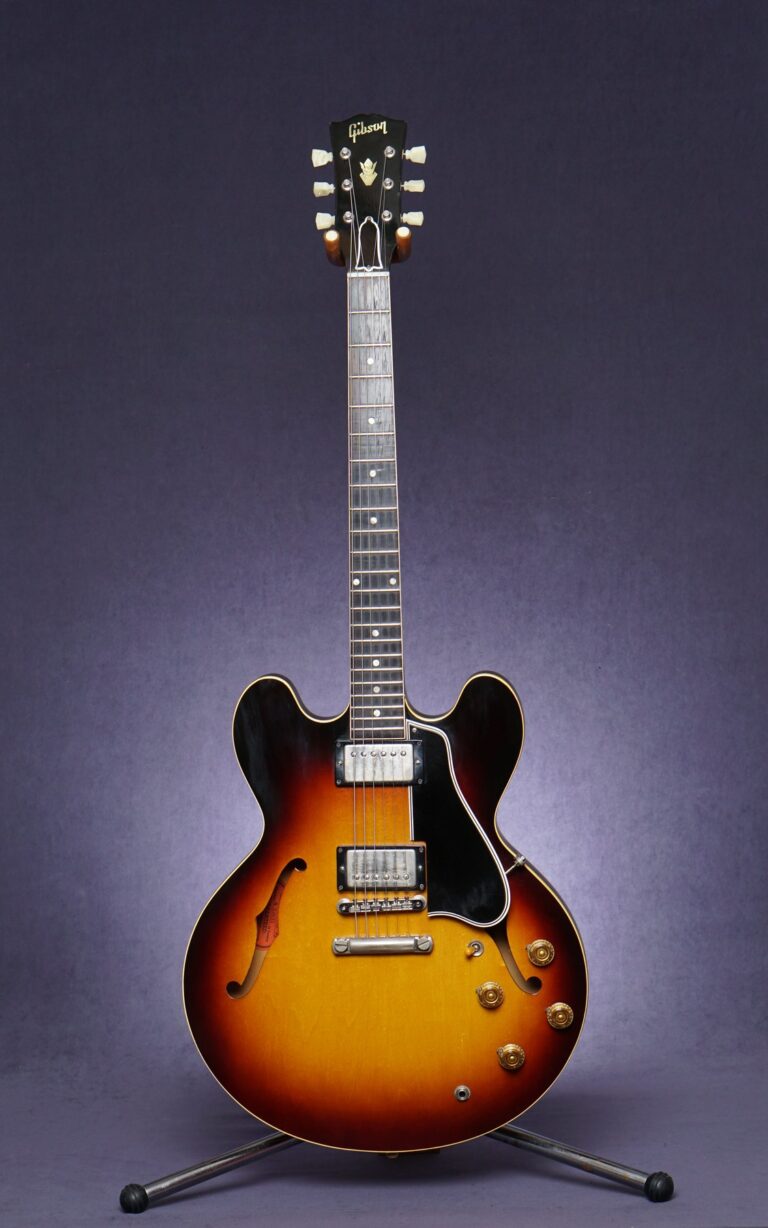
He also used a Gibson ES-335 at various points — the semi-hollow thinline guitar that Gibson introduced in 1958, using a laminated maple body with a solid maple centre block that runs the full length of the instrument. The ES-335 with original Patent Applied For humbuckers produces a tone that sits between the full-body archtop’s jazz warmth and the solid body’s focused sustain — slightly airier and more resonant than a solid Les Paul, with a characteristic midrange bloom when played through a driven amplifier. For specific blues contexts where a slightly warmer, more vintage sound was required, the semi-hollow construction of the 335 offered a tonal alternative that Abrahams exploited effectively.
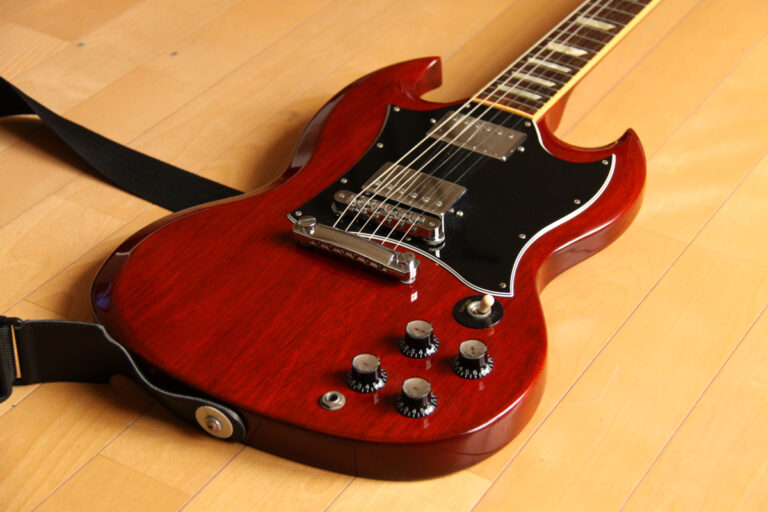
A Gibson SG Standard also appeared in his arsenal — the double-cutaway solid body guitar that Gibson produced alongside the Les Paul from 1961, initially marketed as the “new Les Paul” before reverting to the SG name after Les Paul himself objected to the association. The SG’s lighter weight and different neck join angle — the neck joins the body at the 19th fret rather than the Les Paul’s 16th — gives it a different tonal character: slightly brighter in the upper register, with more treble presence and a different resonance character in the body. For live use where the lighter instrument was practically preferable, and for specific musical contexts where the SG’s brighter voice suited the material, it was a useful alternative to the Les Paul’s denser, warmer character.
Abrahams’ string preferences ran to medium gauge — typically .010–.046 sets — which provided the string tension and sustain his technique required without the additional physical challenge of heavier gauges. He used a medium-thickness pick, the kind of celluloid or nylon medium that gives a warm attack without the harshness of very stiff picks or the flabbiness of thin materials. This pick choice, like all of his equipment decisions, was in service of a specific sound: the warm, fat blues tone that he had absorbed from American records and was translating through British equipment and sensibility.
Amps
Mick Abrahams’ amplifier choices during his most productive period were rooted in the British valve tradition — specifically Marshall — with occasional use of other British designs for specific tonal requirements. His approach to amplification was consistent with his approach to the guitar: use what sounds right for the music, understand why it sounds right, and resist the temptation to change for change’s sake.
His primary amplifier was a Marshall 1962 Bluesbreaker combo — the 2×12 combo that had become associated with Clapton’s famous Beano album tone, using a pair of EL34 output valves at approximately 35 watts into two 12-inch speakers. The Bluesbreaker’s character is notably different from the later Marshall heads: less preamp gain, more output stage warmth, a rounder and more blues-appropriate attack than the higher-gain Super Lead. Running a Les Paul with PAF humbuckers into a Bluesbreaker at working volume produces a tone that sits at the intersection of clean and driven in exactly the right way for blues playing — responsive to pick attack, sustaining naturally, and saturating harmonically when pushed without losing note definition.
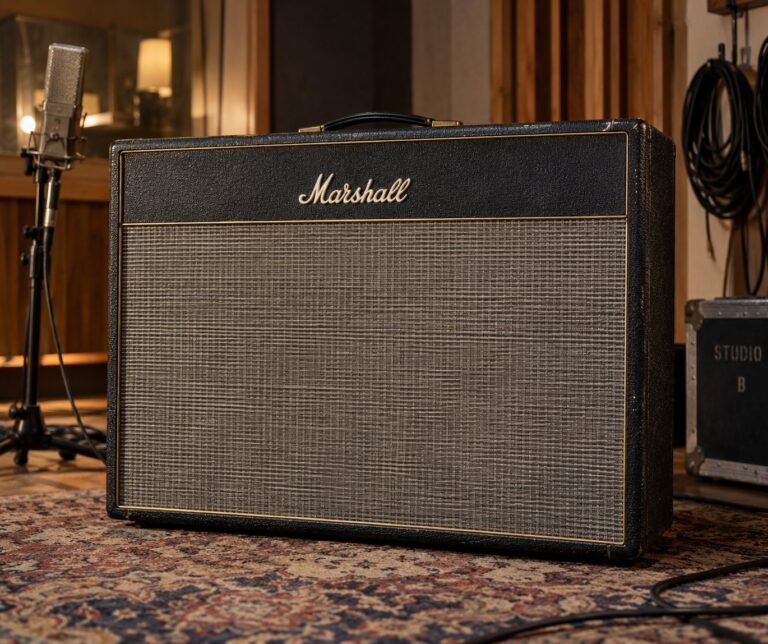
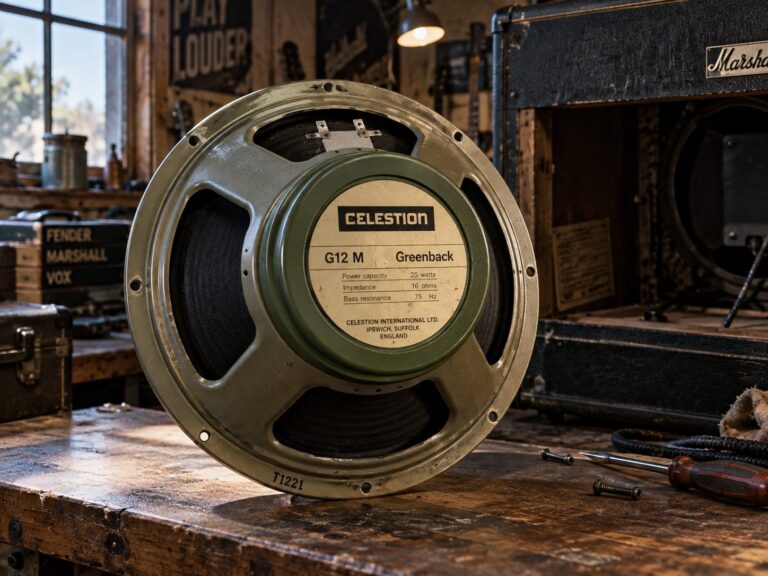
The speakers in the Bluesbreaker are critical to the character. Original examples used Celestion G12M Greenbacks — the 25-watt, ceramic-magnet Celestion that was the standard speaker for Marshall combos and cabinets through the late 1960s and early 1970s. The Greenback’s resonant frequency of approximately 75Hz, its sensitivity of around 98dB/1W/1m, and its characteristic midrange emphasis and natural compression at working volumes made it the perfect match for EL34 amplification and PAF humbucker-equipped Gibson guitars. The combination — PAF Les Paul, EL34 output stage, Greenback speakers — is one of the most thoroughly validated tone combinations in the history of electric guitar, and Abrahams was using it at a time when it was simply the available equipment rather than the revered vintage combination it has since become.
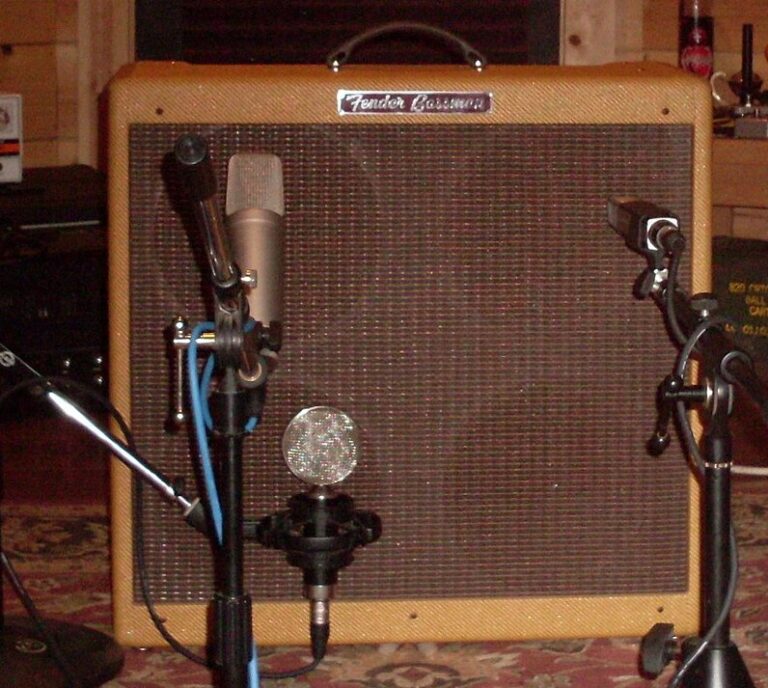
He also used Marshall JTM45 amplifiers — the original Marshall design, introduced in 1962 and based on the Fender Bassman circuit but modified significantly with British components. The JTM45 uses KT66 output valves rather than the American 6L6 that the Bassman employed, and the difference in tube character is significant: KT66s have a warmer, rounder sound than 6L6s, with more midrange presence and a different compression character when pushed. The JTM45 at working volume produces a sound that predates the higher-gain Marshall designs by several years and has a blues authenticity that the later more aggressive designs don’t replicate.
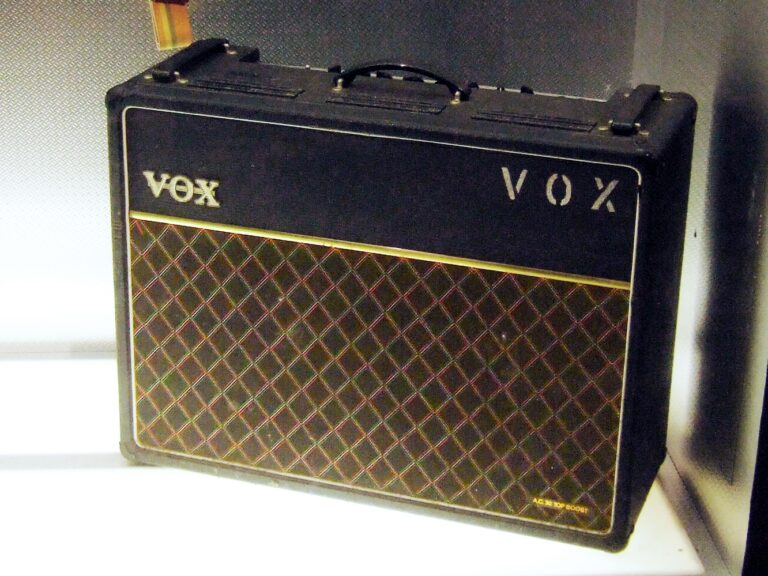
For recording, Abrahams occasionally used a Vox AC30 — the 30-watt EL84-driven combo that was ubiquitous in British rock recording of the era. The AC30’s different tonal character — chimey, compressed, with a particular midrange sweetness that the EL34 Marshall doesn’t produce — was useful for specific tonal applications in the studio, particularly for cleaner, more transparent passages where the Marshall’s natural warmth was heavier than required.
Effects
Abrahams’ effects use was minimal by any standard — he was a guitarist who believed profoundly that tone came from the interaction between hands, guitar, and amplifier, and that effects were embellishments rather than foundations. This was not a limitation but a philosophy, and it was consistent with the blues tradition he was working within, where the same austere approach had produced some of the most powerful and enduring guitar music ever recorded.
The most significant effect in his chain was a Dallas Rangemaster treble booster — the germanium OC44-transistor circuit that cut bass frequencies while boosting treble and midrange, pushing the amplifier’s input stage into saturation while adding presence and cut to the signal. The Rangemaster was designed to compensate for the inherent darkness of Les Paul humbuckers and British valve amplifiers when played in large rooms, and it fulfilled that function precisely: it added the clarity and presence that allowed Abrahams’ playing to cut through a loud band mix without losing the warmth that was fundamental to his tone. The germanium transistor circuit adds its own mild tonal character — a slight softness and warmth that silicon transistors don’t replicate — which integrates with the valve amplifier in a way that sounds like a natural extension of the signal chain rather than an effect added to it.
A wah pedal — typically a Vox or Cry Baby variant — appeared in his chain for specific lead passages where the swept filter effect added expressiveness to a solo line. Abrahams used the wah with the restraint typical of his effects philosophy: when it appeared, it served a clear musical purpose rather than being a default setting for all lead work. The swept wah effect, used judiciously over a blues lead line, adds a vocal quality that complements the bending and vibrato of blues phrasing rather than competing with it.
He used essentially no other effects in his standard rig — no chorus, no delay, no reverb beyond the natural room ambience and whatever spring reverb the amplifier provided. This austerity, which some players might experience as a limitation, functioned as a discipline that concentrated all of his expressive resources in his hands. Everything that varied in his sound — the warmth or brightness of a note, the amount of sustain on a held chord, the aggressiveness or gentleness of an attack — came from the playing, not from signal processing. It is an approach that requires both physical control and musical confidence, and Abrahams had both.
Playing Style & Tone Philosophy
Mick Abrahams’ playing style is defined by an unswerving commitment to the blues tradition combined with a technical accomplishment that makes that commitment musically substantial rather than merely reverential. He is not a player who performs the gestures of blues playing while lacking the underlying understanding; he is a player who absorbed the vocabulary, the phrasing, the rhythmic feeling, and the emotional communication of the blues at a deep enough level that his playing reflects genuine understanding rather than imitation.
His vocabulary is rooted in the Chicago electric blues tradition — the school of Muddy Waters, Little Walter, Howlin Wolf, and the players associated with Chess Records in the late 1950s and early 1960s. This means a pentatonic vocabulary inflected with chromatic approach notes, a strong rhythmic sense that integrates with the rhythm section rather than floating above it, a use of dynamics that mirrors the music’s emotional content rather than maintaining a uniform level of intensity, and a vibrato that communicates emotion directly without being applied as a technical ornament.
His pick attack is firm and direct — not aggressive in the hard rock sense but grounded and authoritative, the kind of attack that comes from a player who knows exactly what sound he wants to produce and has the physical control to produce it consistently. This directness of attack gives his notes a clarity and presence that more hesitant playing doesn’t achieve, and it translates particularly well through valve amplification, where the amplifier’s response to the initial transient of the pick attack shapes the character of the note in ways that a more uniform playing dynamic obscures.
His approach to blues phrasing — the specific placement of phrases within the rhythmic structure, the way he builds tension over several bars before releasing it, the strategic use of silence — reflects genuine understanding of the form rather than mechanical application of patterns. Blues phrasing at its most sophisticated is a conversation between the guitar and the rhythm section, with each phrase proposing something that the next phrase responds to, and Abrahams engages in this conversation naturally rather than mechanically. It is the quality most valued by other musicians and least visible to casual listeners, and it is what separates Abrahams’ playing from technically similar players who lack the underlying musical understanding.
Tonally, his philosophy was direct: the guitar should sound like itself through the amplifier, and the amplifier should do what valve amplifiers do when driven appropriately. Effects were additions to this foundation, not substitutes for it. He believed — and his playing demonstrates — that a guitarist who truly commands the instrument and understands the amplifier has access to a range of sounds that most players pursue through effects without understanding that the source material isn’t rich enough to make the processing worthwhile.
How to Sound Like Mick Abrahams
Guitar Approach
A late-1950s-spec Les Paul Standard with PAF-style humbuckers — Alnico II in the neck for warmth, Alnico V in the bridge for presence — is the correct starting point. The mahogany body and neck are non-negotiable for his specific warmth: maple-body or ash-body Gibsons don’t have the same fundamental character. Use .010–.046 strings set up with a medium action — not so low that bends choke, not so high that the instrument is unnecessarily difficult. Play with a medium pick, not too heavy, and develop your attack: the authority in Abrahams’ tone comes from how he strikes the strings, not from the amplifier settings.
Study his phrasing specifically — not just the notes but the rhythmic placement, the use of space, the way phrases resolve. The difference between a blues guitarist and a rock guitarist playing blues scales is almost entirely in the phrasing, and Abrahams’ phrasing is the result of absorbing the blues tradition at a deep level. Listen to the Chess Records catalogue — Muddy Waters, Howlin Wolf, Buddy Guy — before you listen to Abrahams, so you understand where his vocabulary comes from.
Amp Approach
A Marshall 1962 Bluesbreaker or JTM45 is the ideal amplifier — the earlier, lower-gain Marshall designs that sit closer to the blues tradition than the higher-gain Super Lead. Run it at a volume where the EL34s or KT66s are starting to compress and sing, with a Dallas Rangemaster or equivalent treble booster in front to push the front end and brighten the inherently warm Les Paul/Marshall combination. Keep the amplifier’s EQ relatively flat — the Rangemaster handles the brightening, and the Greenback speakers add their own midrange emphasis naturally.
| Control | Setting | Notes |
|---|---|---|
| Volume (Normal channel) | 7–8 | Push EL34s into natural compression — this is where the tone lives |
| Treble | 6–7 | Moderate — Rangemaster adds brightness before the amp |
| Bass | 4–5 | Controlled bass — Les Paul adds bottom naturally |
| Rangemaster (before amp) | On, full boost | Germanium OC44 unit — essential for presence and front-end drive |
| Guitar volume (Les Paul) | 7–10 | Vary for clean-to-driven range without touching amp |
| Wah (optional) | As needed | Sweep for lead lines — use sparingly |
Influence & Legacy
Mick Abrahams occupies a specific and important place in the history of British blues rock — the place of the player who maintained orthodox blues commitment when his contemporaries were beginning to move toward the more eclectic and commercially successful territory of progressive rock. His decision to leave Jethro Tull rather than compromise his blues orientation is, in retrospect, both musically admirable and commercially costly, and it defined the trajectory of his subsequent career in ways that are inseparable from understanding his legacy.
Within the British blues community he has remained a respected and influential figure throughout his career. Players who came up through the British blues scene in the 1970s consistently cite Abrahams as a significant influence, and the specific quality of his playing — the authentic blues grounding, the technical command, the restraint and feel — continues to attract serious guitarists who value those qualities. He is one of the relatively small number of British guitarists whose blues playing stands comparison with American originals without sounding merely derivative, and that achievement is recognised within the musical community even when it goes unacknowledged in broader cultural commentary.
The Jethro Tull connection has been both a blessing and a burden for his legacy. It has ensured that his name appears in rock history accounts and that the This Was album remains in print and accessible, but it has also created the false impression that Abrahams was a sideman in someone else’s story rather than a major artistic force in his own right. His work with Blodwyn Pig — particularly Ahead Rings Out, which is genuinely one of the finest British blues rock records of the late 1960s — deserves to stand on its own merits rather than being understood primarily as a footnote to the Tull narrative.
For players wanting to understand the broader British blues tradition that Abrahams represents, the rigs of Michael Bloomfield — whose American blues rock provided much of the inspiration for Abrahams and his generation — and Micky Moody, whose later career explored similar blues-in-rock-context territory, provide essential context. The influence of the broader British blues scene is illuminated by examining Frank Marino‘s approach, which drew on the same tradition from across the Atlantic and reveals how universally the combination of Gibson guitars, Marshall amplification, and blues vocabulary defined a particular era of electric guitar playing.
This Was: Capturing the Tull Blues Period
The Jethro Tull debut album This Was, recorded in 1968 and released that October, is the primary document of Abrahams’ playing at its most fully realised within a band context. The record is a remarkable artefact of British blues rock at a specific transitional moment — before the genre had fully diverged into the hard rock, progressive, and folk directions that would define it in the 1970s, when the raw energy of the blues influence was still present without having been processed through commercial or artistic refinement into something more polished but less vital.
Abrahams’ guitar work on the album is technically accomplished without being technically flashy — the playing is in service of the songs and the emotional content rather than of displaying what the player can do. “My Sunday Feeling” opens the album with a blues-rock directness that sets the tone; “Some Day the Sun Won’t Shine for You” shows his slide and conventional playing in equal measure; “Cat’s Squirrel” demonstrates his ability to sustain energy and intensity over a longer instrumental workout without the playing becoming repetitive or mechanical. These performances were recorded live in the studio to a significant extent, which explains both their energy and their occasional rough edges — they sound like a band playing together, not like parts assembled independently.
The guitar tone on the album — Les Paul through the Bluesbreaker, captured with a microphone at working volume in a studio space — has the organic warmth and physical presence that direct-injection or low-volume-with-processing recording doesn’t replicate. You can hear the amplifier breathing, the room adding a slight natural reverb, the pick attack giving each note a physical weight. These are the qualities that make the record sound vital fifty-plus years after it was made, and they are qualities that come directly from the equipment choices and the recording approach rather than from post-production processing.
Anderson’s influence is also audible, of course — his arrangements and the presence of flute in the front line give the record a character that is not purely blues. But Abrahams’ contributions ground the music in its blues foundation in a way that Anderson’s subsequent work with replacement guitarist Martin Barre did not maintain. The tension between Anderson’s eclecticism and Abrahams’ orthodoxy produced a creative friction that resulted in something more interesting than either approach alone would have generated, which makes the departure of either party a musical loss even if it was a commercial and artistic liberation for the band that remained.
Ahead Rings Out: The Blodwyn Pig Statement
If This Was documents Abrahams in a creative partnership that constrained his blues commitment, Ahead Rings Out — the Blodwyn Pig debut from 1969 — shows what he could do with greater artistic freedom. The record is a significant British blues rock document that has never received the recognition it deserves, partly because the band that made it never achieved commercial success commensurate with the quality of the music, and partly because its critical moment coincided with the period when the music press was pivoting away from blues-rooted rock toward the progressive and glam directions that would dominate the early 1970s.
The guitar tone on Ahead Rings Out is notably more open and direct than on the Tull record — Abrahams’ playing sits more prominently in the mix, given more space by the different band configuration and by the production’s decision to let the guitars occupy their natural frequency range without compression or heavy processing. The combination of Les Paul, Bluesbreaker, and Rangemaster produces the warm, sustaining blues tone that Abrahams had been developing for years, and the recording captures it with the directness it deserved.
The album’s musical range — from driving blues rock to more introspective material, with the saxophone of Jack Lancaster adding a jazz dimension that the straight guitar-bass-drums format of most blues rock didn’t include — gave Abrahams space to demonstrate the full range of his playing. His rhythm work, often overshadowed by the lead guitar contributions in discussions of the album, is equally strong: he understood the guitarist’s role as a rhythmic force within the band as clearly as his role as a melodic soloist, and the rhythm tracks on Ahead Rings Out demonstrate that understanding with every bar.
The album deserves to be heard by anyone interested in British blues rock as a primary document of the form at its most authentically realised — not as background to the better-known Jethro Tull story, but as a major work in its own right by a major guitarist who happened to be somewhat underserved by commercial fortune. Abrahams’ playing throughout is exactly what British blues rock should sound like, and the equipment that produced it was exactly right for the music it was used to make.
What both albums share — and what connects them to Abrahams’ broader legacy — is a consistent tonal identity that reflects clear equipment choices made in service of specific musical goals. The Les Paul’s warmth and sustain, the Bluesbreaker’s responsive output-stage drive, the Rangemaster’s ability to add presence without adding artificial harshness, the Greenback speakers’ natural compression and midrange character — these choices fit together with a musical logic that reveals a player who understood not just what his equipment sounded like but why it sounded that way and how to use that understanding in practice. That level of equipment intelligence, combined with the genuine blues depth of his playing, is what distinguishes Abrahams from technically similar players who used the same equipment to less effect. The gear was right. The playing was right. And the combination produced music that still sounds right today.
In the history of British blues rock guitar, Mick Abrahams deserves a higher position than he typically receives. The accident of his Jethro Tull tenure — giving him a connection to a major band without benefiting from that band’s subsequent success — and the modest commercial performance of Blodwyn Pig have conspired to keep him in a second tier of recognition that his playing doesn’t justify. Among guitarists who know the music, the assessment is very different: a player of genuine authority, real blues depth, and a specific tonal identity that remains immediately recognisable across decades of work. That is, ultimately, what the equipment in service of the music was always supposed to achieve, and in Abrahams’ case it achieved it fully.
His continued performing and recording activity in recent decades — despite the health challenges that interrupted his career — reflects the commitment of a musician for whom playing is genuinely vocational rather than merely professional. The later recordings maintain the standards of the early work and in some respects surpass them in maturity of expression, even if the voice is sometimes a little more weathered and the technical edge a little less sharp than in the prime years. That is the deal that time makes with all musicians, and Abrahams has accepted it with the same lack of pretension that characterised his approach to the guitar from the beginning. The music is what matters. The gear serves the music. Everything else is commentary.
The Equipment in Context: Why These Choices Made Sense
Stepping back from the individual components and looking at Abrahams’ rig as a system helps explain why it worked so consistently and why it remains a reference point for players seeking the British blues rock tone. Every element was chosen — whether consciously or intuitively — to serve the same musical goal: the honest, direct transmission of blues feeling through electric guitar amplification with minimum interference between the player’s hands and the listener’s ears.
The Les Paul Standard with PAF humbuckers was the correct instrument because it provided the warmth and sustain that blues phrasing requires — the ability to sustain a bent note until the vibrato has fully expressed the emotion contained in the phrase, the bottom-end solidity that supports chord work in a band context, the midrange presence that allows single notes to speak clearly without boosting from the amplifier. The specific PAF specification — Alnico magnets, plain enamel wire, moderate output — was correct because it preserved the dynamic range that responsive playing requires. A high-output replacement pickup would have been technically louder but musically quieter, because it would have removed the dynamic variation that gives the playing its expressiveness.
The Marshall Bluesbreaker was correct because it sat at the intersection of clean and driven in a way that suited blues playing specifically. The Bluesbreaker’s output-stage drive character — warm, responsive, with a compression that enhances rather than limits the playing — is different from the preamp drive of later high-gain amplifiers, and that difference matters enormously for how blues phrasing translates through amplification. A preamp-driven amplifier produces a more consistent saturation that doesn’t respond as sensitively to pick attack; an output-stage-driven amplifier like the Bluesbreaker maintains the dynamic variation between soft and loud playing that blues expression depends on.
The Dallas Rangemaster was correct because it solved a specific problem: the natural warmth and darkness of Les Paul humbuckers through a British valve amplifier, which could produce a tone that was too thick and undefined in a loud band context. By brightening the signal before the amplifier without adding artificial harshness, the Rangemaster allowed Abrahams to maintain the warmth of his fundamental tone while ensuring that notes remained defined and articulate at the volumes required for live performance. It is a solution to a specific technical problem that has been rediscovered by every generation of blues rock guitarists since, and it remains the most effective solution available.
The Celestion Greenback speakers in the Bluesbreaker completed the chain by adding their own midrange emphasis and natural compression — a compression that is frequency-dependent in the way that electronic compression is not, giving a different quality to the dynamics of the amplified sound. The Greenback at working volume is not simply loud; it is responsive to the signal in a way that contributes to the overall musical result, adding character without imposing a character that isn’t already present in the signal. The whole chain — hands, pick, strings, pickups, cable, Rangemaster, Bluesbreaker preamp, output transformer, speaker voice coil, speaker cone — functions as a single instrument, and every element of it contributes to the musical result. Abrahams understood this intuitively, and his consistent equipment choices reflect that understanding across a career of several decades.
One practical note for players attempting to recreate Abrahams’ sound: the relationship between the Rangemaster and the amplifier volume is critical and must be calibrated by ear rather than by setting numbers. The Rangemaster’s boost pushes the amplifier’s input harder, which means that the amplifier’s volume control needs to be set lower than it would be without the boost to achieve a similar output level. The tonal sweet spot — where the Rangemaster’s presence-adding quality combines with the Bluesbreaker’s output-stage compression to produce the warm, sustaining drive that characterises Abrahams’ tone — requires finding the right balance between boost level and amplifier volume, which varies with the specific germanium transistor in the Rangemaster and the specific valve complement in the amplifier. There is no substitute for patient experimentation, which is itself a form of education in how these components interact and why the combination produces the specific result it does.
Frequently Asked Questions: Mick Abrahams Guitars & Gear
What guitars did Mick Abrahams play?
Mick Abrahams’ primary instrument was a Gibson Les Paul Standard — late-1950s and early-1960s examples with original PAF or early patent-number humbuckers. He also played a Gibson ES-335 semi-hollow and a Gibson SG Standard at various points. His consistent preference for Gibson instruments reflected the warmth, sustain, and midrange character that the blues tradition he was working within required, as opposed to the brighter, more articulate character of Fender instruments.
What amp did Mick Abrahams use?
Abrahams’ primary amplifiers were the Marshall 1962 Bluesbreaker combo — the 2×12, 35-watt EL34 combo associated with Clapton’s Beano album — and the Marshall JTM45, the earlier KT66-based design that predated the higher-gain Super Lead. Both were run into Celestion G12M Greenback speakers. He occasionally used a Vox AC30 for studio work requiring a different tonal character.
Why did Mick Abrahams leave Jethro Tull?
Abrahams left Jethro Tull in late 1968 over a fundamental creative disagreement with Ian Anderson about the band’s musical direction. Abrahams wanted to remain committed to blues; Anderson was already developing the more eclectic, folk-and-jazz-influenced approach that would define Tull’s subsequent career. Rather than compromise his blues commitment, Abrahams departed and formed Blodwyn Pig, which pursued the blues-rock direction he had wanted for Tull.
What is Blodwyn Pig?
Blodwyn Pig was the band Mick Abrahams formed after leaving Jethro Tull in 1968. The band featured a front line of guitar and saxophone — an unusual combination for British rock — and released two albums, Ahead Rings Out (1969) and Getting to This (1970), both of which received strong critical responses. The debut in particular is considered one of the finest British blues rock albums of the era, featuring Abrahams’ guitar playing at its most authoritative.
What effects did Mick Abrahams use?
Abrahams’ effects use was minimal: a Dallas Rangemaster treble booster before his amplifier was the most significant element, used to add presence and push the front end of his Marshall. A wah pedal appeared for specific lead passages. Beyond these, he used essentially no effects — his tonal variety came from the guitar volume and tone controls and from his picking attack rather than from signal processing.
How does Mick Abrahams compare to other British blues guitarists of his era?
Within the crowded field of late-1960s British blues guitarists, Abrahams stands out for the depth of his blues authenticity — he absorbed the tradition at a level that goes beyond the vocabulary to include the phrasing, rhythm, and emotional communication that define genuine blues expression. Compared to contemporaries like Clapton (who pursued a broader rock direction) or Peter Green (who developed a more idiosyncratic personal style), Abrahams remained most consistently committed to the blues form itself, which limited his commercial appeal but gave his best work an authority that more fashion-conscious approaches lack.
What is Mick Abrahams’ best recorded work?
His finest recorded work is split between the Jethro Tull debut This Was (1968), which captures his blues playing in the context of Anderson’s more eclectic arrangements, and the Blodwyn Pig debut Ahead Rings Out (1969), which shows what his blues vision sounded like given freer rein. The live performances captured on various bootlegs and official releases from the Blodwyn Pig period demonstrate his playing at full intensity in the context where it was most at home.
Genre:
Blues Rock
Decades:
1960s | 1970s
Image credits
- Mick Abrahams: A&M Records press photo, Wikimedia Commons, Public domain.
- A close view of a Gibson Les Paul body: Delhovlyn, Wikimedia Commons, CC BY-SA 3.0.
- Gibson Les Paul Standard: DonnyBurger1974, Wikimedia Commons, CC BY-SA 4.0.
- Gibson ES-335: Lightburst, Wikimedia Commons, CC BY-SA 4.0.
- Gibson SG Standard: Sonya, Wikimedia Commons, CC BY-SA 4.0.
- Vox AC30 Top Boost: wetwebwork; existing crop and contrast/color adjustments: Clusternote, Wikimedia Commons, CC BY-SA 2.0.
- Marshall 1962 Bluesbreaker: GuitarGangsters AI-generated reference illustration, not a photograph.
- Celestion G12M Greenback 12-inch Guitar Speaker: GuitarGangsters AI-generated reference illustration, not a photograph.
- Fender Bassman: Roadside Guitars, Wikimedia Commons, CC BY-SA 2.0.