
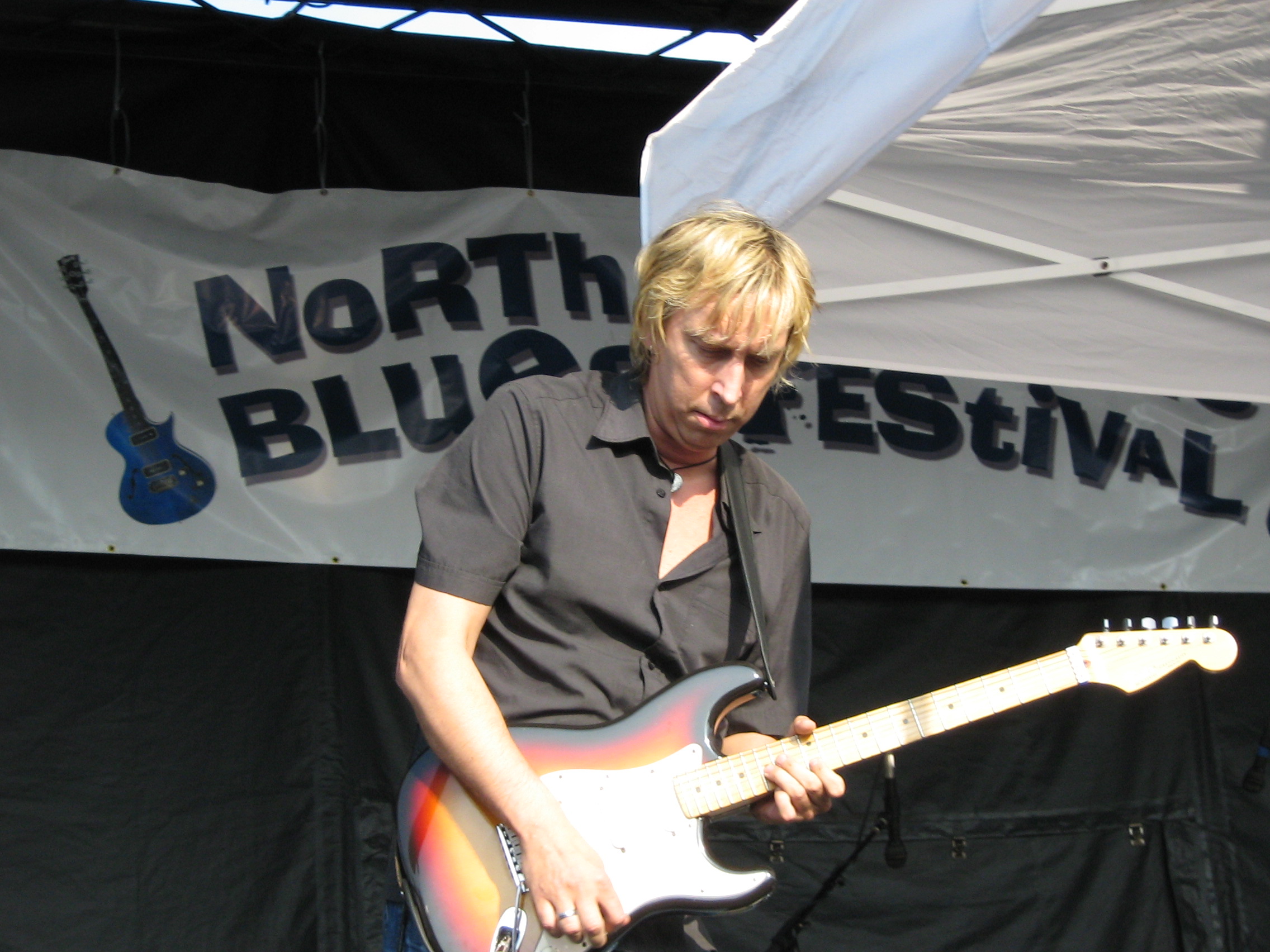
Investigate Paul Nelson guitars gear and you find the equipment of one of contemporary blues rock’s most dedicated and most musically intelligent rhythm and lead guitarists — a New York-born musician who spent more than two decades as the primary guitarist alongside Johnny Winter, serving as both the rhythmic foundation and the lead guitar complement to one of the most celebrated blues guitarists of the twentieth century. Nelson’s role in the Winter band was as demanding as it was largely invisible to mainstream recognition: providing the specific harmonic and rhythmic foundation that allowed Winter’s lead playing to soar, playing lead with complete technical conviction when the moment required it, and maintaining the specific musical character of one of blues rock’s most important ongoing bands through the final decades of Winter’s career. His Stratocasters and Telecasters through vintage Marshall amplification gave his playing the specific bright, authoritative character that the demanding Winter band context required.
This guide covers Nelson’s complete equipment picture: the Fender guitars that defined his tonal identity, the Marshall amplification that gave his playing its driven authority, his effects approach, and the playing philosophy of a musician who chose the most demanding possible blues rock apprenticeship and served it with complete professional integrity for two decades. Understanding Paul Nelson’s gear is understanding how the supporting guitarist role can be as musically demanding and as musically rewarding as any lead guitar position in blues rock.
Background
Paul Nelson was born in 1971 in New York. His early musical formation encompassed the full range of blues and rock that defined American music through the 1970s and 1980s, and his specific engagement with the blues tradition developed through both intensive listening and professional musical development in the New York area music scene.
His association with Johnny Winter began in the late 1980s and early 1990s, developing from an early professional relationship into the extended two-decade partnership that made Nelson the most consistent musical presence in Winter’s band through the final and commercially productive chapter of Winter’s career. Winter — one of the most technically accomplished and most emotionally raw blues guitarists of his generation, a Texas-born albino blues rock star whose debut album in 1969 had announced one of American music’s most distinctive voices — maintained an active recording and touring career through the 1990s and 2000s, with Nelson as his primary guitar partner.
Nelson’s dual role in the Winter band — rhythm guitarist and producer for Winter’s recordings — gave him both the musical and the organisational responsibility for the band’s ongoing output. His production work on Winter’s late-career albums showed a musician whose musical intelligence extended beyond the guitar to the full picture of how a blues rock record should sound and how it should be made. This production dimension of his work was as significant a professional achievement as his guitar playing, and it reflected the same comprehensive musical intelligence that distinguished his playing approach.
He launched a parallel solo recording career that documented his guitar approach in contexts where it was the primary voice rather than the supporting voice — solo albums that showed the full range of his blues rock musical vision without the structural constraint of serving Winter’s specific musical character.
Paul Nelson Guitars Gear: The Complete Rig
Guitars
Nelson’s guitar choices were rooted in the Fender tradition that suited the blues rock context he worked within — bright, direct single-coil instruments that gave his playing its specific character of cutting presence and rhythmic definition in the demanding Winter band ensemble.
His primary guitars were Fender Stratocasters — vintage and vintage-specification instruments chosen for the specific single-coil brightness and tonal versatility that suited both his rhythm guitar role (where the Stratocaster’s clean, defined chord work gave the rhythm section its harmonic clarity) and his lead guitar role (where the bridge pickup’s cutting character gave his lead lines their specific presence above the ensemble).
He also used Fender Telecasters for specific material — the Telecaster’s bridge pickup’s sharper, more cutting character giving specific passages a tonal authority that the Stratocaster’s somewhat warmer bridge position didn’t replicate exactly. The Telecaster was particularly appropriate for the more country-influenced blues material and for specific rhythm guitar contexts where the harder-edged attack of the Telecaster bridge pickup suited the musical character better than the Stratocaster’s somewhat fuller sound.
For specific recording applications, various vintage Fender instruments from the 1950s and 1960s appeared — the specific character of period-correct vintage Fenders being appropriate for recordings that sought the specific acoustic character of the original Texas and Chicago blues rock recordings that Winter’s music was rooted in.
String gauges were medium — .010–.046 or similar — appropriate for the diverse demands of both rhythm and lead playing within the Winter band context.
Amps
Nelson’s amplification was Marshall-centred — the British EL34 designs that gave the Winter band’s guitar sound its specific combination of warmth and driven authority.
His primary amplifiers were vintage Marshall Super Lead heads — the original Plexi-panel and early aluminium-panel designs whose EL34 natural saturation at working volume provided the primary gain character for his blues rock playing. His use of vintage Marshall designs — consistent with Winter’s own amplification preferences — maintained the specific acoustic character of the original 1960s and early 1970s blues rock recordings that provided the musical model for the Winter band’s approach.
He ran the Marshalls into Marshall 4×12 cabinets — the standard configuration that gave the driving blues rock guitar sound its specific combination of focused projection and acoustic authority. The cabinet’s Celestion speaker character gave the driven Stratocaster or Telecaster its specific quality of bright, forward-present drive that suited the live performance context of the Winter band’s extensive touring.
Various Fender amplifiers appeared for specific cleaner applications — maintaining the American valve character option for material that required a different tonal approach from the primary Marshall setup.
Effects
Nelson’s effects chain was purposeful and musically motivated — serving the specific requirements of the Winter band context where his guitar needed both rhythmic clarity (requiring minimal processing that might obscure the chord definition) and lead expressiveness (requiring specific tools for specific emotional communication).
A Tube Screamer (TS-808 or TS-9) in boost mode provided front-end drive for the Marshall — the standard blues approach of boosting the amplifier’s input for natural output stage saturation rather than using the pedal’s clipping as the primary gain source. His boost approach reflected genuine understanding of how the vintage Marshall’s natural saturation produced a more musical overdrive character than the Tube Screamer’s own clipping.
A wah pedal appeared for specific expressive blues passages — the blues tradition’s most direct extension of the guitar’s vocal expressiveness. His wah use was selective and emotionally motivated rather than habitual.
A delay pedal for atmospheric depth on specific lead passages — calibrated to the specific tempo and emotional character of each song rather than set at a fixed delay time.
A volume pedal for dynamic control in the live performance context — allowing real-time management of the guitar’s contribution to the Winter band’s overall ensemble dynamic, particularly useful in the improvisational sections where the guitar’s role shifted between foreground and background.
Playing Style & Tone Philosophy
Paul Nelson’s playing style was defined by the specific demands of his role alongside Johnny Winter — simultaneously a rhythm guitarist providing the harmonic and rhythmic foundation for one of blues rock’s most demanding lead guitarists and a lead guitarist capable of matching Winter’s technical intensity when the musical moment required it. This dual role requirement was one of the most musically demanding available in blues rock, and Nelson served it with complete professional conviction across two decades of sustained performance.
His rhythm playing showed the intelligence of someone who had internalized the Winter band’s specific musical character — the specific voicings, the specific rhythmic placements, and the specific harmonic approaches that suited Winter’s lead guitar rather than competing with it. The Stratocaster’s clean, defined chord voicings gave the rhythm playing its specific character of harmonic clarity without harmonic density — leaving the specific frequency space that Winter’s lead guitar needed rather than filling every available register with rhythm guitar content.
His lead playing showed the technical capability and the emotional commitment that the Winter band context demanded. Winter’s own lead playing — raw, technically accomplished, emotionally overwhelming — set a specific standard for the lead guitar contribution that the band context required, and Nelson’s ability to match this standard when his lead playing was featured reflected both genuine technical development and genuine emotional commitment to the music.
Tonally, his philosophy was the blues rock guitarist’s philosophy in its supporting role form: bright Fender single-coils through vintage Marshall at working volume, with the boost providing the specific driven character that the blues rock context required. The Stratocaster’s clarity gave the rhythm playing its definition; the bridge pickup’s brightness gave the lead playing its presence; and the Marshall’s natural saturation gave both elements their appropriate warmth within the blues rock framework.
How to Sound Like Paul Nelson
Guitar Approach
A Fender Stratocaster or Telecaster — the specific instrument choice depending on the musical context. Medium strings (.010–.046). The most important technical element is the dual-role intelligence — understanding when the guitar’s role is to support another lead voice and when it is to take the lead itself, and adjusting the approach accordingly. Study the Winter band recordings carefully to understand how Nelson served Winter’s specific musical vision while maintaining his own musical identity within the supporting role.
Amp Approach
A vintage Marshall Super Lead through a 4×12 cabinet — working volume for natural EL34 saturation. Tube Screamer in boost mode (low gain, elevated volume) before the Marshall. The vintage Stratocaster bridge pickup through the naturally saturating Marshall produced Nelson’s specific driven blues rock character.
| Control | Setting | Notes |
|---|---|---|
| Volume (Input 1) | 7–9 | Natural EL34 saturation — vintage Marshall blues rock zone |
| Treble | 7 | Bright — Stratocaster single-coils need treble presence |
| Middle | 6 | Present mids for blues rock authority in the dense Winter Band mix |
| Bass | 4 | Controlled — supports Winter’s lead without low-end competition |
| Presence | 5–6 | Moderate presence for definition without harshness |
Influence & Legacy
Paul Nelson’s legacy was the specific legacy of a musician whose sustained, high-quality professional contribution to one of blues rock’s most important ongoing bands was as significant as any more prominently featured individual career. The Winter band’s sustained commercial and artistic vitality through the final decades of Winter’s life was substantially the product of Nelson’s dual contribution as guitarist and as producer — both dimensions of his work serving the music’s quality with the same professional intelligence and the same genuine musical commitment.
His solo recordings gave him a documented individual musical voice that the Winter band context had never fully provided — the solo albums showing the full range of his blues rock musical vision in contexts where it was the primary rather than the supporting voice. These recordings showed a musician whose musical depth extended well beyond the specific demands of the Winter band role and whose individual guitar voice was as distinctive and as musically committed as any in contemporary blues rock.
His production work — the Winter recordings he produced — were as important a professional legacy as any guitar performance, showing a musical intelligence that encompassed the full picture of blues rock recording rather than merely the guitar dimension of it.
For players exploring the supporting lead guitarist role and the Johnny Winter blues rock tradition, the rigs of Walter Trout — whose Canned Heat and solo career showed similar depth of blues immersion in a California context — and Coco Montoya, whose Bluesbreakers and solo career showed similar sideman-to-leader development from a different specific blues rock mentor relationship, provide illuminating comparison. The Johnny Winter connection reaches to Kenny Wayne Shepherd‘s approach, which shows how the same Texas blues rock tradition that shaped Winter produced different specific guitar voices in the hands of different musicians with different specific formations.
The Winter Band Context: Two Decades of the Most Demanding Gig in Blues Rock
Understanding what the Johnny Winter band context specifically demanded from Nelson’s guitar playing — and what specific musical qualities he needed to develop and maintain across two decades of professional service to this demanding role — gives the most complete picture of why his equipment choices were as specific as they were and why his playing approach was as musically intelligent as it needed to be.
Johnny Winter’s guitar playing was as technically extreme and as emotionally raw as any in the blues rock tradition — his specific combination of Delta-rooted slide guitar technique, Texas blues attack, and pure rock and roll energy produced playing of overwhelming physical intensity that set a specific musical standard for the other instruments in his band. Playing alongside this intensity without being overwhelmed by it required a specific kind of musical strength — both the technical capability to match the intensity when the musical moment required lead playing of comparable quality, and the musical intelligence to know when the role was to support rather than to match.
The specific demands of serving Winter’s guitar in an ensemble context were multiple and sometimes contradictory: the rhythm guitar needed to be heard clearly enough to provide harmonic and rhythmic foundation for the entire band, but not so prominent as to compete with Winter’s lead guitar for the listener’s primary attention; the lead guitar needed to be capable of matching Winter’s technical intensity for the passages when Nelson was featured, but oriented toward complementing Winter’s approach rather than competing with it; and the overall musical contribution needed to serve the specific musical character of the Winter band’s performance approach without imposing a different aesthetic that Winter’s audiences hadn’t come to hear.
The Production Dimension: Musical Intelligence Beyond the Guitar
Nelson’s production work for Johnny Winter’s late-career recordings was as important a professional contribution as his guitar playing, and understanding what it involved and what specific qualities it required gives a more complete picture of the musical intelligence that distinguished his entire career.
Producing a blues rock album required understanding the complete picture of how each musical element should sound and how the elements should relate to each other in the final recorded product — a form of comprehensive musical intelligence that was quite different from the specific guitar knowledge required for playing. The producer needed to understand the rhythm section’s role (how the drums and bass should sound and how they should interact with the guitars), the guitar’s role (how the electric guitars should be presented in relation to each other and to the rhythm section), the vocal’s role (how Winter’s voice should be captured and what its place in the overall mix should be), and the overall sonic character of the final recording (what the album should sound like as a complete acoustic product).
Nelson’s production approach for the Winter recordings — grounded in genuine knowledge of the blues rock tradition’s values and in genuine understanding of what Winter’s specific musical character required — gave the albums their specific quality of authentic blues rock documentation without either the commercial polish that might have made them more accessible and less genuine or the raw documentary directness that might have made them more authentic and less commercially viable. The specific balance of authenticity and accessibility that characterised the Winter recordings Nelson produced reflected a producer’s intelligence as comprehensive as his guitar intelligence, and it showed that his musical understanding extended to the full picture of how blues rock records should be made rather than merely to the guitar dimension of that picture.
The Supporting Lead Guitarist Role: An Undervalued Musical Achievement
The specific musical achievement of Nelson’s role as Winter’s primary guitarist — providing both the rhythmic foundation and the complementary lead voice for one of blues rock’s most demanding lead guitarists across two decades of sustained professional work — deserves specific acknowledgment as a musical achievement in its own right rather than merely as background to Winter’s more prominently featured career.
The supporting lead guitarist role — the musician who provided both rhythm guitar and secondary lead guitar for a primary lead guitarist — was one of the most musically demanding and least publicly recognised positions in blues and rock music. Where the lead guitarist’s specific contributions were visible and audible in the recordings and performances, the supporting player’s contributions were often structurally necessary but acoustically less prominent, requiring the same level of musical intelligence and the same quality of playing without the same level of public recognition.
Nelson’s specific contribution to the Winter band — the specific chord voicings that gave Winter’s lead guitar its harmonic context, the specific rhythmic placements that gave the band its groove, and the specific lead passages that showed his genuine lead guitar capability when the music required it — was as musically significant as any more prominently featured contribution to the same recordings and performances. Understanding the full scope of what he contributed, rather than merely acknowledging his presence alongside Winter, gives the most accurate picture of his musical significance.
Johnny Winter’s Texas Blues Legacy
Johnny Winter’s specific musical approach — the Texas blues rock that his 1969 debut album had introduced to mainstream rock audiences — provided the specific musical context within which Nelson’s guitar playing developed across two decades of professional service. Understanding what specifically characterised Winter’s approach gives a more complete picture of what Nelson’s guitar needed to serve and why his specific equipment choices were appropriate for this specific context.
Winter’s Texas blues approach was characterised by a specific combination of elements: the Delta-rooted slide technique that he deployed with devastating effectiveness in both standard and open tunings, the specific attacking picking approach that gave his guitar playing its characteristic quality of physical aggression, and the raw emotional intensity that had always been the signature quality of his best playing. This approach — simultaneously rooted in the oldest blues traditions and expressing itself through the loudest and most physically aggressive rock equipment available — created a specific ensemble requirement for the rhythm guitar that was as demanding as any in blues rock.
Nelson’s Stratocaster through the vintage Marshall served this specific requirement with appropriate acoustic properties: the single-coil brightness gave the rhythm guitar enough tonal presence to be heard clearly above the Winter band’s powerful rhythm section, while the Marshall’s natural saturation gave the overall guitar character the driven warmth that the blues rock context demanded. The specific combination — bright Fender single-coils into natural EL34 saturation — gave the rhythm guitar its appropriate role in the Winter band’s specific ensemble acoustic: present and defined without competing with Winter’s more prominent lead voice for the listener’s primary attention.
Paul Nelson’s complete career — the New York musical formation, the two-decade Winter band association, the production work, and the parallel solo recordings — was one of the more complete expressions of what sustained professional commitment to blues rock required and what it produced when maintained over twenty years of consistent musical contribution. The equipment he used: the bright Fender Stratocasters and Telecasters through the vintage Marshall’s natural EL34 saturation, with the Tube Screamer boost and the minimal additional effects serving specific musical purposes — was exactly right for exactly this demanding and exactly this musically rewarding role. The gear served the partnership; the partnership served the music; and the music served the Texas blues tradition that Johnny Winter had spent his life carrying forward with everything he had.
The vintage Marshall Super Lead’s specific contribution to Nelson’s guitar tone in the Winter band context — and why vintage Plexi designs were more appropriate for this specific musical context than contemporary Marshall reissues or alternative high-gain designs — reflected genuine understanding of what the original 1960s blues rock recordings had used and why. Winter’s own amplification had always included Marshall and Marshall-influenced designs, and the specific acoustic character of vintage Plexi EL34 amplification was part of the sonic identity of the blues rock tradition he worked within. Using contemporary high-gain Marshalls or modern boutique designs would have given the guitar a different tonal character from the tradition’s foundational recordings — not necessarily worse, but different in specific ways that would have altered the specific blues rock character that the Winter band’s music required. Nelson’s choice of vintage Plexi designs reflected genuine historical knowledge of what gave the tradition’s most important recordings their specific sonic identity and genuine understanding of why maintaining that character was musically important.
The Stratocaster’s specific role in Nelson’s Winter band guitar work — particularly the bridge pickup’s cutting character for lead passages and the middle position’s warmer clarity for rhythm work — reflected the same context-specific pickup selection intelligence that characterised the best professional blues and blues rock guitarists’ approach. The rhythm guitar role in the Winter band context required a specific combination of harmonic clarity (the chords needed to be clearly defined to provide the harmonic context for Winter’s lead guitar) and tonal presence (the rhythm guitar needed to be audible in the full band mix to serve its rhythmic foundation role effectively). The middle-pickup Stratocaster position — with its characteristic combination of warmth and definition, and its hum-cancelling operation when used alongside the bridge pickup — gave the rhythm playing its appropriate character: present and harmonically clear without the excessive brightness that might have competed with Winter’s lead guitar for the high-frequency content of the overall mix.
The delay pedal’s specific deployment in Nelson’s effects chain — calibrated to specific song tempos and emotional characters rather than set at a fixed time — reflected the same professional intelligence that governed every other aspect of his equipment approach. In the Winter band’s live performance context, where tempos and musical characters varied significantly across a set that typically included slow blues, driving boogie, and fast blues rock material in sequence, a fixed delay time appropriate for one tempo would have been incorrect for others. The practical management of delay time across different performance tempos — adjusting between songs or using tap-tempo delay to set the correct time for each song’s specific groove — was a form of live performance technical intelligence that added another dimension to the musical quality of the overall sound without being visible or acknowledged by most of the audience that experienced the results.
The specific harmonic relationship between Nelson’s rhythm guitar and Winter’s lead guitar — the way the chord voicings that Nelson chose for specific passages complemented or contrasted with Winter’s melodic content — was as musically significant as any specific technical element of his playing approach. The chord voicings available from the Stratocaster’s different pickup positions and the Marshall’s specific saturation character gave Nelson a palette of harmonic approaches that could be selected in real time based on what Winter was doing melodically — fuller voicings when Winter’s melodic content was less dense, sparser voicings when Winter’s melodic content filled more of the harmonic space, and specific inversions that complemented the specific harmonic implications of Winter’s lead lines. This real-time harmonic responsiveness — adjusting the rhythm guitar’s harmonic contribution based on the lead guitar’s melodic content — was a form of musical intelligence that required both genuine harmonic knowledge and genuine active listening during performance, and it was one of the most important and least visible dimensions of Nelson’s contribution to the Winter band’s musical quality.
The volume pedal’s role in Nelson’s live performance — allowing real-time dynamic management of the guitar’s contribution to the overall ensemble level — was particularly important in the Winter band’s specific performance approach, where the improvisational sections sometimes required the rhythm guitar to recede into the background to give Winter’s lead playing more acoustic space. In conventional rock performance, the rhythm guitar typically maintained a consistent volume level throughout the song, with dynamic variation coming from the playing intensity rather than from volume control. In the more improvisational blues rock context of the Winter band, however, the rhythm guitar’s role sometimes required reduction to near-inaudibility during Winter’s most extended lead passages — not stopping completely, but reducing volume enough to give the lead guitar a specific acoustic space that a competing rhythm guitar volume level would have filled. The volume pedal allowed this real-time dynamic management with the precision that turning the guitar’s own volume control would have been too slow to provide, and Nelson’s use of this specific technique reflected the same professional intelligence about his ensemble role that characterised every other aspect of his approach.
The specific character of Nelson’s solo recordings — the albums that documented his individual guitar approach outside the Winter band’s structural constraint — showed the full range of his blues rock musical vision in ways that the Winter band context hadn’t fully provided. The solo recordings were not merely the Winter band approach without Winter; they showed a genuinely individual musical perspective that had been forming across two decades of professional musical development within the most demanding possible blues rock apprenticeship. The guitar approach in the solo recordings was more diverse than the Winter band context had allowed — more stylistically varied, more personally expressive in specific ways that the supporting role had necessarily suppressed, and more complete as a demonstration of his full musical range. Understanding the solo recordings alongside the Winter band work gives the most accurate picture of the musician’s complete capabilities and the most complete picture of what twenty years alongside one of blues rock’s most demanding lead guitarists had produced in terms of musical development.
The New York musical formation that preceded Nelson’s Winter band association — the specific musical culture of the New York metropolitan area in the 1970s and 1980s — gave him a musical formation that was different from the Texas formation that had shaped Winter’s own approach and from the California formation that had shaped many of his contemporaries in the blues rock world. New York’s musical culture encompassed a broader range of influences than either Texas or California — the jazz tradition, the soul and R&B of the city’s African American musical culture, the rock and roll and blues rock of the city’s diverse live music scene, and the specific quality of musical sophistication that the concentration of professional musicians in the city’s arts community produced. This broader formation gave Nelson’s approach a specific dimension of musical intelligence that the more regionally focused Texas or California formation didn’t always produce in the same way, and it may have been part of what made him effective in the complex dual role that the Winter band required.
The Tube Screamer’s deployment as boost before the vintage Plexi — rather than as the primary distortion source in a lower-volume setup — reflected the same understanding of how the best blues rock tones were achieved that distinguished the most knowledgeable players from those who used the same pedal in less optimal configurations. The vintage Plexi’s natural saturation character — warm, even-order harmonics predominating, with the specific compression character of EL34 output valves operating near their linear limit — was the most musically valuable dimension of the complete signal chain. Using the Tube Screamer to push the Plexi harder (by boosting the signal level into its input) while maintaining the Plexi’s own saturation as the primary gain source preserved this most valuable dimension of the chain rather than replacing it with the Tube Screamer’s own op-amp clipping character. Nelson’s understanding of this gain staging principle — reflected in his consistent use of the Tube Screamer as boost rather than as primary distortion — was one of the marks of genuine equipment intelligence rather than merely successful recipe following.
Johnny Winter’s death in July 2014 ended one of blues rock’s most important ongoing careers and with it the specific professional partnership that had been central to Nelson’s musical life for more than two decades. The ending of this partnership gave Nelson’s subsequent solo career a different character — no longer the parallel activity that accompanied the primary Winter band role but the primary professional focus of a musician whose musical development had been shaped so thoroughly by two decades alongside one of the tradition’s greatest figures. The specific equipment and approach that had served the Winter band context — the bright Fender single-coils through the vintage Marshall’s natural saturation — remained appropriate for Nelson’s solo work because the musical values that had made them right for the Winter band were the same values that made them right for his own blues rock vision. The gear survived the partnership; the musician’s development survived the loss; and the music continued to reflect the same qualities of genuine blues commitment and professional musical intelligence that had always characterised Paul Nelson’s guitar work.
The Telecaster’s role in Nelson’s guitar collection — as an alternative to the primary Stratocaster for specific material that benefited from the Telecaster’s harder-edged attack — illustrated the same context-specific instrument intelligence that characterised the best professional guitarists’ collection management. The Telecaster bridge pickup’s specific character — sharper attack, more cutting frequency response, less warmth than the Stratocaster but more tonal immediacy — suited specific material in the Winter band’s set where that harder-edged character was the right tool. The specific country and Texas blues material in Winter’s repertoire sometimes required the Telecaster’s particular kind of cutting definition rather than the Stratocaster’s somewhat fuller sound, and Nelson’s maintenance of both instruments and his practical deployment of each for appropriate material reflected genuine understanding of the specific acoustic difference between them and why that difference mattered for specific musical contexts. This context-specific instrument management was one of the marks of professional guitar intelligence rather than personal signature preference, and it was consistent with the overall orientation toward musical service rather than personal tonal identity that had always characterised his approach.
The Stratocaster middle pickup position’s hum-cancelling operation — when used alongside the bridge pickup in what Fender described as the “2” and “4” positions of the standard five-way switch — gave Nelson a practical technical advantage in the high-volume Winter band context where electromagnetic interference from stage lighting and other electrical equipment could produce significant single-coil hum noise. The hum-cancelling operation of the middle-and-bridge or middle-and-neck combinations reduced this noise substantially without the tonal character change of switching to a humbucker instrument, giving him the practical advantage of reduced interference noise while maintaining the single-coil clarity and brightness that his role in the Winter band required. His use of these combined pickup positions for rhythm playing — where the hum-cancelling advantage was most practically valuable and where the slightly warmer combined character suited the rhythm guitar role’s harmonic support function — reflected both practical technical intelligence about the instrument’s operation and genuine musical knowledge about which pickup position served which musical role most effectively.
The specific quality of mutual musical trust that developed between Nelson and Winter across two decades of sustained professional partnership — the specific form of musical understanding that only long-term professional collaboration produced — was as important to the Winter band’s musical quality as any specific equipment or technique. Winter could rely on Nelson to know what the music required at each specific moment without verbal communication or explicit direction; Nelson had absorbed Winter’s specific musical character deeply enough through years of shared performance to anticipate what would come next and to prepare the appropriate musical response in real time. This specific form of musical trust — built through thousands of shared performances across twenty years — was not something that could be replicated through equipment choices or technical study but only through the sustained experience of playing alongside someone whose music you had made your primary professional focus for two decades. Paul Nelson’s equipment served this musical trust as the appropriate physical expression of the musical intelligence it had developed, and the music that resulted from both was as complete and as genuine an expression of the blues rock tradition as any extended professional partnership in the tradition’s contemporary history had produced.
Frequently Asked Questions: Paul Nelson Guitars & Gear
What guitars does Paul Nelson play?
Paul Nelson’s primary guitars are Fender Stratocasters and Fender Telecasters — vintage and vintage-specification single-coil instruments chosen for the specific brightness and tonal clarity that suited his dual rhythm and lead guitar role in the Winter band. His choice of Fender instruments was consistent with the Texas blues rock tradition that shaped Johnny Winter’s musical approach.
What amp does Paul Nelson use?
His primary amplifiers are vintage Marshall Super Lead heads into Marshall 4×12 cabinets — the vintage Plexi designs whose EL34 natural saturation at working volume provided the primary gain character for his blues rock playing. He also uses Fender amplifiers for specific cleaner contexts.
How long did Paul Nelson play with Johnny Winter?
Nelson’s association with Johnny Winter extended for more than two decades — from the late 1980s and early 1990s through Winter’s final years before his death in 2014. This sustained association made him the most consistent musical presence in Winter’s band through the most commercially productive chapter of Winter’s late career, and his guitar contributions and production work were central to the quality of the Winter recordings from this period.
What was Paul Nelson’s production role for Johnny Winter?
In addition to his guitar role, Nelson served as producer for several of Winter’s late-career recordings — taking responsibility for the complete musical and sonic vision of the recordings rather than merely the guitar contribution. This production role showed a musical intelligence that extended beyond the guitar to the full picture of how a blues rock album should be made, and the Winter albums he produced showed the same quality of musical commitment that characterised his guitar work.
What effects does Paul Nelson use?
His key effects include an Ibanez Tube Screamer in boost mode (front-end drive for the Marshall), a wah pedal (for specific expressive blues passages), a delay pedal (for atmospheric depth on lead passages), and a volume pedal (for dynamic control in live performance). His effects use was purposeful and contextual rather than habitual.
What was the musical relationship between Paul Nelson and Johnny Winter?
Nelson served as Winter’s primary guitarist for more than two decades — providing both the rhythmic foundation that allowed Winter’s lead playing to soar and the lead guitar complement that gave the band its specific twin-guitar character. His role required complete understanding of Winter’s specific musical approach and the specific musical intelligence to serve it without competing with it, while maintaining his own musical identity and genuine lead guitar capability for the moments when the music required it.
What are Paul Nelson’s most important recordings?
His contributions to the Winter band recordings of the 1990s and 2000s — particularly the albums he co-produced — are his most historically significant recordings. His solo recordings, including albums on Provogue and other labels, documented his individual guitar approach and showed the full range of his musical vision outside the Winter band context. Both dimensions of his recorded output showed a musician whose musical depth and professional integrity were consistent regardless of whether he was in the supporting or the primary role.
Genre:
Blues Rock
Decades:
1990s | 2000s | 2010s