Ozielzinho Guitars & Gear: Brazil’s Forró Guitar Genius and Fusion Virtuoso’s Complete Rig
Ozielzinho guitars gear — Fender Stratocaster and clean amp deep-dive for Brazil's forró fusion guitar genius's rhythmic northeastern tone and complete rig guide.
Investigate Ozielzinho guitars gear and you find the equipment behind one of the most genuinely original and most technically extraordinary guitarists to emerge from Brazil’s extraordinarily rich musical culture — a Pernambuco-born musician whose roots in forró, the northeastern Brazilian dance music tradition, gave his guitar playing a rhythmic vitality and a melodic directness that no amount of jazz or fusion training alone could have provided, and whose technical development of the electric guitar in this specific cultural context produced a playing approach that was simultaneously rooted in Brazil’s deepest folk traditions and completely fluent in the harmonic and technical language of contemporary fusion guitar. Ozielzinho was not a fusion guitarist who happened to have Brazilian influences — he was a forró and northeastern Brazilian guitarist who had absorbed the full range of contemporary guitar technique and deployed it in service of his specific musical roots. His Stratocasters and his specific amplification approach served a musical vision that was as genuinely original as any available in contemporary guitar music.
This guide covers Ozielzinho’s complete equipment picture: the electric guitars that gave his playing its specific tonal character, the amplification that served his diverse musical approach, his effects use, and the playing philosophy of a musician who understood that genuine musical originality came from deep roots rather than from the accumulation of diverse influences without a specific cultural centre. Understanding Ozielzinho’s gear is understanding how the most specific possible cultural roots produce the most genuinely original guitar voice.
Background
Oziel Zinho (commonly known simply as Ozielzinho) was born in Pernambuco, in the northeastern region of Brazil — the specific geographic and cultural heartland of forró, the northeastern Brazilian dance music that combined European accordion and percussion instrumentation with African rhythmic complexity and Indigenous melodic inflections to produce one of Brazil’s most vitally rhythmic and most culturally distinctive popular music traditions. Pernambuco was also the birthplace of Luiz Gonzaga, the legendary musician who had taken forró from regional northeastern Brazil to national consciousness in the 1940s and whose specific approach to the music gave it its definitive character.
His early musical formation was within this specific forró tradition — the specific rhythmic feel, the specific melodic vocabulary, and the specific cultural character of northeastern Brazilian music that was as different from the Rio de Janeiro bossa nova and MPB traditions as country music was from jazz in the American context. The forró tradition’s specific contribution to his guitar approach was primarily rhythmic: the specific syncopated rhythmic feel of baião, xote, and forró, the specific relationship between the melody and the underlying rhythmic pattern, and the overall orientation toward music as dance music — as something that moved the body as well as the emotions.
He subsequently developed the technical range of contemporary fusion guitar — the harmonic vocabulary, the technical velocity, and the electric guitar’s full expressive range — within and alongside this forró foundation, producing a guitar approach that was simultaneously rooted in the northeastern Brazilian tradition and capable of the full technical and harmonic complexity of contemporary instrumental guitar.
Ozielzinho Guitars Gear: The Complete Rig
Guitars
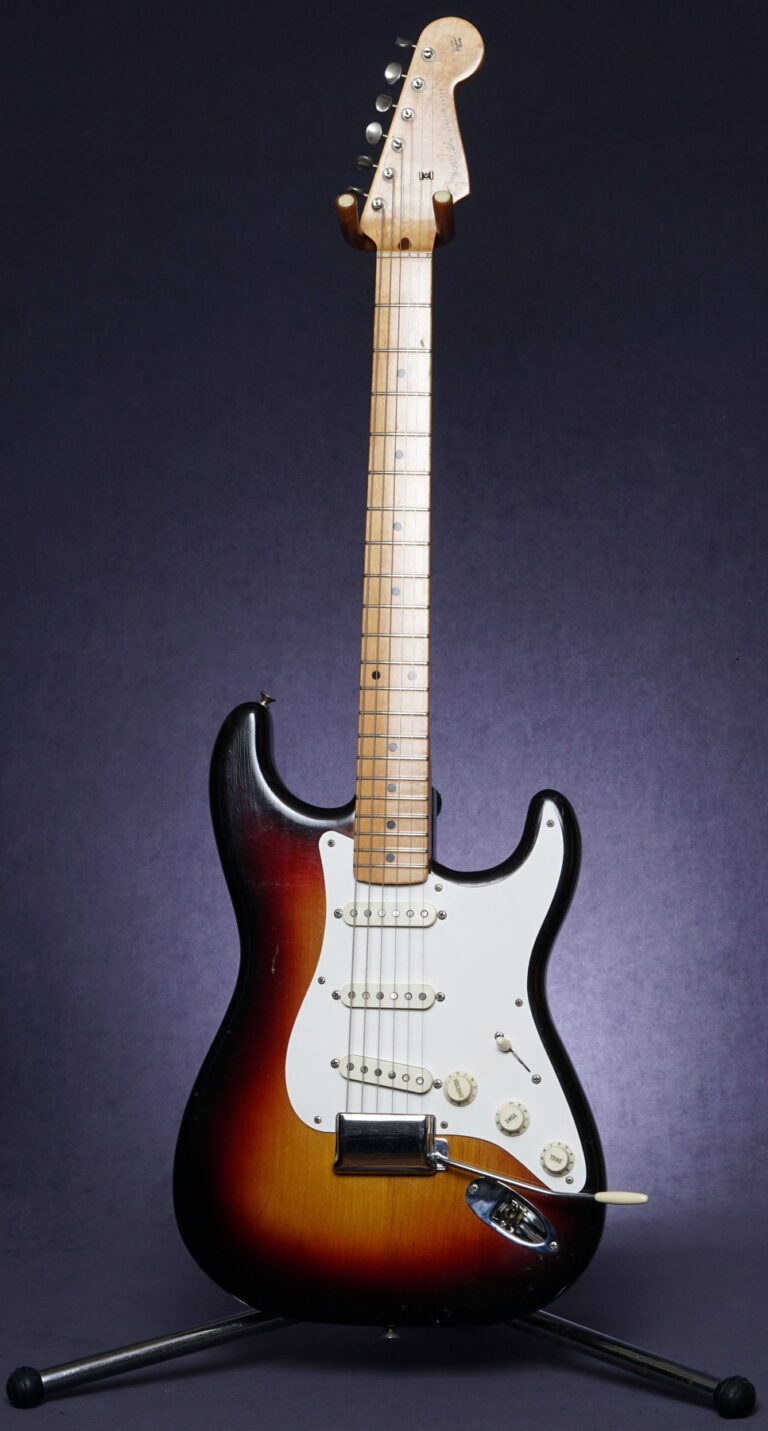
Ozielzinho’s primary electric guitar was the Fender Stratocaster — the instrument that served his diverse musical approach across the full range of forró-influenced fusion guitar, from the most rhythmically driving dance material to the most harmonically sophisticated fusion passages. The Stratocaster’s three-pickup configuration gave him the tonal range appropriate for this diversity — the neck pickup for warmer, more sustained melodic passages; the middle position for balanced rhythm playing; and the bridge pickup for the more attacking, brighter character of the most rhythmically driving forró material.
He also used various other electric guitars for specific applications — different instruments for different specific musical contexts where the Stratocaster’s particular character was less appropriate than alternatives. His practical approach to instrument selection reflected the same musical intelligence that governed his complete approach to the guitar.
The single-coil pickups of his primary Stratocasters gave the playing its specific brightness and definition that suited the rhythmically complex forró-influenced material — the single-coil’s attack clarity giving each rhythmic note its appropriate definition against the dense rhythmic background of the forró ensemble.
String gauges were medium — appropriate for the diverse technical demands of his playing across both the rhythmically precise forró-influenced material and the more sustained melodic fusion passages.
Amps
Ozielzinho’s amplification was warm and relatively clean — consistent with the musical values of the forró tradition and with the fusion guitar’s preference for harmonic clarity over driven aggression.
His primary amplifiers included Fender valve combos — clean American designs that gave the Stratocaster playing its appropriate warmth and definition for the diverse musical contexts his approach encompassed. The clean American character suited both the rhythmically precise forró material (where note definition was essential for the rhythmic complexity to be clearly heard) and the more harmonically complex fusion passages (where harmonic clarity required clean amplification).
Various other amplifiers appeared across his recording and performing career for specific applications, reflecting the same practical approach to instrument and amplifier selection that characterised the best working guitarists.
Effects
Ozielzinho’s effects use was contextually motivated — serving the specific musical requirements of the diverse forró-fusion approach with specific tools for specific purposes.
An overdrive pedal for specific driven passages — light to moderate overdrive that gave the playing its appropriate emotional intensity for specific musical moments without the aggressive driven character of high-gain rock amplification.
A delay pedal for atmospheric depth on specific passages — calibrated to the specific tempo and emotional character of each piece.
Various other effects for specific applications — his effects use reflecting the musical intelligence that identified what each specific musical context required rather than maintaining a consistent personal effects signature.
Playing Style & Tone Philosophy
Ozielzinho’s playing style was defined by the extraordinary combination of northeastern Brazilian rhythmic vitality and contemporary guitar technical accomplishment that gave his approach its specific character of being simultaneously deeply rooted and technically comprehensive. The forró rhythmic foundation — the specific syncopated feel of baião, the specific melodic relationship between the guitar and the other forró instruments, and the overall orientation toward music as something that moved the body — gave his playing its most distinctive single quality: a rhythmic life and a physical energy that purely technically developed guitarists without this specific cultural foundation rarely achieved.
His technical development of the guitar — the harmonic vocabulary, the technical velocity, and the electric guitar’s full expressive range — was not separate from the forró roots but genuinely integrated with them. The fastest technical runs had the forró rhythmic feel embedded in their rhythmic placement; the most harmonically sophisticated chord voicings showed the northeastern Brazilian melodic orientation toward simplicity and directness within sophistication; and the overall character of the playing showed the complete integration of cultural formation and technical development rather than the superficial addition of one to the other.
Tonally, his philosophy was the fusion guitarist’s approach oriented toward the specific acoustic requirements of northeastern Brazilian music: warm single-coil brightness appropriate for the rhythmic clarity of forró, clean amplification that served the harmonic complexity of the fusion passages, and minimal effects that preserved the directness of the musical communication rather than adding electronic layers between the player and the listener.
How to Sound Like Ozielzinho
Guitar Approach
A Fender Stratocaster for the primary electric approach — the single-coil brightness and definition appropriate for the rhythmically complex forró-influenced material. The most important element is the rhythmic formation: understanding and genuinely absorbing the specific rhythmic feel of forró, baião, and northeastern Brazilian music is as essential as any specific guitar technique. Listen deeply to the forró tradition alongside Ozielzinho’s recordings to understand where the rhythmic feel comes from and how it shaped his specific guitar approach.
Amp Approach
Clean Fender valve amplification — the warm American character appropriate for both the rhythmic forró material and the harmonically complex fusion passages. Light overdrive for specific driven passages. Minimal additional processing.
| Control | Setting | Notes |
|---|---|---|
| Volume | 5–6 | Clean warmth — forró rhythmic complexity needs note definition |
| Treble | 6 | Moderate-high — single-coil brightness for rhythmic clarity |
| Middle | 5 | Neutral — let the music’s specific character define the midrange |
| Bass | 4 | Controlled — rhythmic clarity requires managed bass |
| Reverb | 3 | Light spring reverb for atmospheric dimension |
Influence & Legacy
Ozielzinho’s legacy was the specific legacy of a musician who demonstrated that the most genuine musical originality came not from the broadest possible accumulation of diverse influences but from the deepest possible roots within a specific cultural tradition combined with the comprehensive technical development needed to give those roots their fullest possible musical expression. His forró-rooted approach showed how the northeastern Brazilian musical tradition could serve as a foundation for contemporary guitar playing of the highest technical level, and his international recognition gave that tradition visibility in the global guitar community that it had rarely achieved through more conventionally commercially oriented approaches.
His influence on subsequent Brazilian guitarists — particularly those from the northeastern region who saw in his approach a model for how their specific regional musical formation could be honoured and extended rather than replaced by more internationally prestigious musical traditions — was direct and substantial. His success showed that the forró tradition’s specific musical values were not merely regional characteristics to be transcended on the path to international recognition but were genuine musical resources that could form the basis of an internationally distinctive guitar voice.
For players exploring the diverse tradition of Brazilian guitar that Ozielzinho represented, the rigs of Mateus Asato — whose Rio de Janeiro formation showed how a different specific Brazilian regional musical culture gave a different but comparably distinctive individual guitar voice — and Lari Basilio, whose São Paulo fusion approach showed yet another distinctive Brazilian guitar voice from yet another specific regional formation, provide illuminating comparison. The forró northeastern Brazilian connection reaches toward Luiz Gonzaga’s musical legacy, which shows how the same northeastern Brazilian musical tradition that formed Ozielzinho had been developed across an earlier generation into one of Brazil’s most important and most culturally distinctive popular music forms.
Read our guide to the Fender Stratocaster.
Forró: Brazil’s Most Rhythmically Vital Dance Music
Forró — the northeastern Brazilian dance music that formed the cultural centre of Ozielzinho’s musical formation — was as distinctive and as culturally important a regional music tradition as any in the Americas, and understanding what specifically made it distinctive gives the most complete picture of how it shaped his specific guitar approach in the ways that made that approach genuinely original rather than merely technically impressive.
The forró tradition developed in the interior of Brazil’s Nordeste region — the dry, economically challenging sertão that was as far geographically and culturally from the coastal cities of Rio de Janeiro and São Paulo as it was possible to be within a single country. The specific instrumentation of traditional forró — the sanfona (accordion), the zabumba (bass drum), and the triangle — created a specific ensemble character that was immediately rhythmically driving and melodically accessible: the accordion carrying the melody and the harmonic content, the zabumba providing the driving bass pulse, and the triangle adding the rhythmic complexity and the brightness that gave the ensemble its specific dancing energy.
Luiz Gonzaga — the accordionist and composer from Exu in Pernambuco who brought forró from regional northeastern Brazil to national consciousness in the late 1940s — gave the tradition its definitive character through specific compositions and specific performances that showed the full range of the northeastern Brazilian musical culture: the baião’s specific syncopated rhythm, the xote’s slower melodic beauty, and the forró’s driving energy. His specific approach to the accordion and to the melody gave the tradition its specific character of combining European harmonic language with African rhythmic complexity and northeastern Brazilian cultural identity.
The Baião Rhythm: Guitar’s Most Demanding Dance Groove
The baião — the specific rhythm that was the foundational groove of northeastern Brazilian music and the specific rhythmic pattern that most directly shaped Ozielzinho’s guitar feel — was as rhythmically complex and as physically engaging a groove as any in Brazilian music, and understanding what specifically it required of a guitarist given its specific rhythmic character gives the most complete picture of why forró formation produced such specific rhythmic vitality in guitar players who genuinely absorbed it.
The baião’s specific rhythmic character was built around a particular relationship between the zabumba’s bass drum pattern and the triangle’s high-register rhythmic pattern — the bass drum emphasising the first and third beats in a four-beat pattern while the triangle provided continuous sixteenth-note subdivision with specific accents that created the groove’s characteristic forward momentum. Playing guitar within this specific rhythmic framework required understanding the specific relationship between the guitar’s melodic and rhythmic content and the underlying rhythmic pattern in ways that a musician who had not genuinely absorbed the tradition couldn’t replicate through technical study of the rhythm alone.
Ozielzinho’s guitar playing showed this baião formation most clearly in the specific rhythmic placement of his notes — the specific way he placed melodic notes against the underlying groove, the specific accents that gave his playing its forró rhythmic vitality even in the most harmonically sophisticated fusion passages. This rhythmic character was not something he added to his playing; it was something that had been formed through years of musical immersion in the tradition and that expressed itself naturally in everything he played regardless of how far from the traditional forró context he had ventured harmonically or technically.
The Electric Guitar in Forró: Innovation Within Tradition
The deployment of the electric guitar within the forró tradition — replacing or complementing the traditional accordion in specific contemporary forró approaches — gave Ozielzinho a specific musical challenge and a specific musical opportunity: how to bring the electric guitar’s full technical and tonal range to a tradition that had developed its specific aesthetic around different specific instruments, without losing the tradition’s specific character in the translation. Understanding how he navigated this specific challenge gives the most complete picture of why his approach was as genuinely innovative as it was authentically traditional.
The accordion’s specific contribution to forró’s character was both melodic and rhythmic — the bellows’ physical action gave the accordion’s melody a specific breathing quality, and the instrument’s specific attack character gave forró’s melodic passages their particular feel. Translating this specific character to the electric guitar required not merely learning the melodic content of forró but genuinely absorbing what the accordion’s specific physical operation contributed to the music’s character, and finding the specific guitar techniques that gave the electric guitar’s melodic passages a comparable quality of rhythmic breathing and attack character within the different physical constraints of the plucked string instrument.
The Stratocaster’s specific character served this translation task with particular appropriateness: the single-coil’s attack clarity gave the melodic notes their specific individual definition that the baião’s rhythmic complexity required, and the instrument’s range of pickup positions gave access to the different tonal characters appropriate for different specific forró musical situations. The neck pickup’s warmth gave the slower, more melodic passages their appropriate vocal quality; the bridge pickup’s brightness gave the more rhythmically driving passages their appropriate attack energy. This specific within-instrument tonal flexibility was as important to his forró guitar approach as any specific melodic or technical element.
Three Brazilian Guitarists, Three Brazilian Worlds
The comparison between Ozielzinho, Mateus Asato, and Lari Basilio — three contemporary Brazilian guitarists who had each achieved international recognition through the digital music distribution channels of the social media era — illuminated how Brazil’s extraordinary regional musical diversity produced genuinely different individual guitar voices even when the technical range and the contemporary guitar vocabulary were comparable across all three. Understanding the specific differences between the three approaches, all rooted in different specific Brazilian regional formations, gives the most complete single picture of how geographic and cultural formation shaped individual guitar voice.
Asato’s Rio de Janeiro formation — the specific R&B, soul, and participatory dance music culture of Rio — gave his playing its specific warmth and physical directness, its specific orientation toward immediate emotional communication, and its specific quality of music as natural human social expression rather than specialised artistic performance. The Telecaster through the Princeton, the minimal signal chain, and the extraordinary vibrato all served this specific quality of direct human emotional communication.
Basilio’s São Paulo formation — the specific jazz and fusion culture, the formal music education environment, and the broader international musical awareness that São Paulo’s cosmopolitan character made available — gave her playing its specific harmonic sophistication and its specific quality of technically accomplished melodic expression within the jazz tradition’s harmonic framework. The Stratocaster through the clean Twin, the careful harmonic construction of melodic lines, and the Brazilian melodic warmth within the jazz fusion vocabulary all expressed this specific formation.
Ozielzinho’s Pernambuco/Nordeste formation — the specific forró tradition, the baião rhythmic groove, and the cultural character of northeastern Brazil’s most vital dance music — gave his playing its specific rhythmic vitality and its specific quality of physically engaging energy that moved the body as well as the emotions. The Stratocaster through clean amplification, the forró rhythmic feel embedded in even the most technically sophisticated passages, and the genuine integration of northeastern Brazilian tradition with contemporary guitar technique all expressed this specific formation.
Together, the three illustrated that Brazilian guitar was not a single tradition but a collection of genuinely different regional musical cultures, each producing genuinely different individual guitar voices through genuinely different specific formations. The equipment each used — similar in its fundamental character (Fender Stratocasters through relatively clean Fender amplification) but different in specific details and in the specific musical purposes each element served — reflected the same quality of instrument appropriateness for each specific musical vision that the best musicians always demonstrated. The gear served the tradition; the tradition shaped the musician; and the musician expressed what the tradition had given him in the most genuine and most technically complete way available.
Ozielzinho’s complete career — the Pernambuco formation within the forró tradition, the technical development of contemporary guitar within this specific cultural context, and the international recognition that followed from the genuine originality of combining these two complete musical worlds — was one of the most genuinely original guitar careers available in the contemporary international guitar scene. Not derivative of any single dominant American or European guitar tradition, not superficially Brazilian in its surface characteristics while being fundamentally imitative in its deeper musical values, but genuinely rooted in one of the most rhythmically vital and most culturally distinctive musical traditions in the Americas while being technically comprehensive enough to give those roots their fullest possible expression. The gear was right; the roots were deep; and the music that came from both was as genuinely original as anything available in contemporary guitar playing.
The specific way that forró’s rhythmic complexity translated to guitar technique — and why this translation required not merely learning the rhythmic pattern but genuinely absorbing the physical experience of playing within it — was as important a dimension of understanding Ozielzinho’s approach as any specific equipment or technical vocabulary. The baião rhythm’s specific relationship between the bass drum pattern and the triangle’s high-register accents created a specific forward momentum — the feeling that the music was constantly propelling itself forward into the next beat — that gave forró its characteristic quality of being simultaneously driving and joyful, simultaneously complex and danceable. Playing guitar within this rhythmic framework required the specific quality of rhythmic placement that could only be developed through actual immersion in the music as a living practice: playing alongside other musicians who carried the tradition in their bodies, dancing to the music in the social contexts where it was primarily experienced, and internalising the rhythmic feel through the accumulated experience of hundreds of hours of genuine engagement with the tradition.
The northeastern Brazilian musical community that gave Ozielzinho his specific formation — the specific professional and social environment of Pernambuco’s music scene, with its concentration of forró musicians, its specific music education traditions, and its specific cultural valuation of the northeastern musical tradition — was as important a formative context as any individual teacher or specific musical influence. Musical traditions were transmitted through community engagement rather than through individual instruction, and the specific quality of rhythmic feel that distinguished forró musicians from musicians who had studied the tradition from outside was primarily a product of community immersion rather than technical study. His specific Pernambuco formation gave him this quality of genuine community immersion rather than outside engagement with a recorded tradition, and the specific rhythmic vitality that resulted was as central to his individual musical identity as any subsequent technical development.
The Stratocaster’s three-pickup configuration gave Ozielzinho specific practical advantages in the forró fusion context that were different from the advantages the same configuration gave Asato and Basilio in their different specific musical contexts. For Asato’s soul-R&B approach, the neck and bridge pickup positions served the primary contrast between warm melodic passages and brighter rhythmic attack. For Basilio’s fusion approach, the neck and middle positions served the primary tonal range for harmonically complex melodic and chord playing. For Ozielzinho’s forró fusion approach, all three pickup positions served specific functions in the diverse musical contexts his playing encompassed: the bridge pickup’s attack clarity for the most rhythmically driving forró passages, the neck pickup’s warmth for the more sustained melodic passages, and the middle position’s balanced character for the general-purpose rhythm playing that gave forró performances their musical foundation. This specific three-position utility — each position serving a genuinely different specific musical function across the diverse forró-fusion range — made the Stratocaster the right instrument for his specific musical approach in a way that was as acoustically specific as any of the other Brazilian guitarists’ instrument choices.
The fusion harmonic vocabulary that Ozielzinho deployed within the forró tradition — the extended chord vocabulary, the specific approach to melodic development over complex chord progressions, and the overall harmonic sophistication that distinguished his approach from more straightforwardly traditional forró guitar — was not a foreign element imposed on the tradition but a natural extension of the tradition’s own harmonic development. Forró had always absorbed influences from outside the northeastern Brazilian cultural context — the accordion’s European harmonic language, the influence of choro and other Brazilian urban music traditions, and the general musical sophistication that the tradition’s most accomplished practitioners had always brought to its specific cultural character — and Ozielzinho’s fusion harmonic vocabulary was a contemporary continuation of this tradition of absorption and integration rather than a departure from it. The tradition was extended rather than abandoned, and the specific musical result showed how genuine cultural roots could support the most comprehensive technical development rather than limiting it.
The Pernambuco guitar music tradition that preceded and informed Ozielzinho’s specific approach — including the electric guitar’s specific history within the forró recording and performance context, the specific musicians who had brought the electric guitar to forró before his generation, and the broader northeastern Brazilian guitar tradition that included specific regional styles not widely known outside Brazil — was as important to understanding his specific approach as the more internationally prominent forró stars whose music was more widely available internationally. The specific local history of guitar in Pernambuco gave his approach its specific regional character that distinguished it from both the national Brazilian guitar traditions and from the international fusion guitar vocabulary that formed his technical framework. Understanding the specific local musical history as part of the complete picture of his formation gives the most accurate understanding of what made his approach as genuinely original as it was and why the specific combination of regional cultural depth and technical comprehensiveness produced such genuinely distinctive musical results.
The international recognition of Brazilian guitar culture through musicians like Ozielzinho, Asato, and Basilio — and how the social media era had given genuinely accomplished musicians from non-Anglophone musical cultures direct access to global audiences without the mediation of the Anglophone music industry’s gatekeeping functions — was as significant a development in the international guitar world as any specific musical or technical innovation. Before the social media era, Brazilian guitarists could achieve international recognition primarily through the specific commercial channels of the Brazilian music industry (which had significant but geographically limited international reach) or through the specific commercial channels of the jazz and classical music industries (which valued Brazilian guitar primarily within the bossa nova and classical traditions rather than within the forró or regional Brazilian traditions). The social media era’s direct audience access allowed Brazilian guitarists working in traditions that didn’t fit neatly into any of these conventional commercial channels to reach genuinely global audiences through the specific quality of their music alone, giving traditions like Ozielzinho’s forró-fusion approach their first genuinely global audience.
The clean amplification philosophy that governed Ozielzinho’s approach — consistent with both the forró tradition’s orientation toward natural acoustic character and the fusion guitar’s preference for harmonic clarity — reflected the same acoustic principle that had informed both Asato’s and Basilio’s approaches from different specific musical starting points. The clean Fender amplification’s specific transparency gave the guitar playing its maximum possible acoustic directness — the forró rhythmic feel, the fusion harmonic language, and the individual note character of the specific playing approach all presented to the listener as directly as the signal chain allowed. Any additional electronic processing between the guitar and the amplifier would have added its own specific character to the signal, potentially blurring or obscuring the specific qualities that made the approach genuinely distinctive. The decision to maintain the signal chain’s clarity was as much a practical acoustic decision as a philosophical one, and the specific musical results it enabled — the directness, the rhythmic clarity, and the harmonic purity that gave the forró-fusion approach its specific engaging character — showed the practical wisdom of the acoustic simplicity.
The accordion’s specific influence on Ozielzinho’s melodic approach — even though he played guitar rather than accordion — was as interesting a dimension of his formation as the direct forró rhythmic influence. The accordion’s specific melodic character — the bellows-driven breathing quality, the specific phrasing that the instrument’s physical operation produced, and the overall melodic orientation of forró toward the accordion’s specific expressive vocabulary — had shaped what melodic expression in the forró tradition meant over multiple generations of the tradition’s development. Ozielzinho’s guitar melodies showed this accordion influence not through technical imitation of specific accordion techniques (which would have been mechanically impossible on a guitar) but through the specific quality of melodic breathing and phrasing that gave his melodic lines their particular character of being simultaneously guitar-native in their technical execution and forró-native in their specific melodic character. This specific integration of accordion-tradition melodic phrasing within guitar-native technique was one of the more interesting and less commonly discussed dimensions of his specific originality.
The online guitar community’s specific reception of Ozielzinho’s approach — and how his specific combination of regional cultural depth, technical comprehensiveness, and genuine musical originality was received by guitarists who came to his music from diverse backgrounds — illustrated the specific quality of global musical communication that the social media era had made possible at scale for the first time. Guitarists in Europe and North America and Asia who had never encountered forró music heard in his playing a quality of rhythmic vitality and melodic warmth that was immediately engaging regardless of any knowledge of the specific cultural tradition from which it came. The universality of the musical impact — reaching listeners across the cultural and linguistic boundaries that had historically limited Brazilian regional music’s international reach — showed that genuine musical depth, regardless of its specific cultural origins, was as globally communicative as any more deliberately internationally oriented musical approach. The gear was simple; the music was deep; and the depth communicated across every boundary that separated the listener from the specific cultural world in which the music was rooted.
The sanfona’s specific role in forró — the three-row button accordion that was the tradition’s central melodic and harmonic instrument — gave the tradition a specific harmonic character that was different from both the piano-based harmony of jazz and the guitar-based harmony of most rock and fusion music. The accordion’s specific voicing of chords — the simultaneous push and pull of the bellows activating specific chord configurations — gave forró harmony its specific character of full, sustained chord voicings rather than the more arpeggiated or broken chord textures of guitar-based music. Ozielzinho’s guitar approach showed accommodation of this specific harmonic character in specific ways — the sustained chord voicings he sometimes used for harmonic passages reflecting the accordion’s specific chordal character, and the overall harmonic language of his playing reflecting the tradition’s specific harmonic orientation rather than the more jazz-guitar-specific approach that a purely fusion-influenced formation would have produced. The accordion’s harmonic character gave his playing its specific quality of harmonic fullness even in passages where the technical vocabulary was most explicitly fusion-influenced.
The zabumba’s specific role in forró — the large, deep-toned bass drum that provided the forró ensemble’s primary rhythmic foundation — gave the tradition a specific quality of low-frequency rhythmic grounding that was different from the drum kit’s more high-pitched and more individually complex rhythmic contribution. The zabumba’s deep, round bass drum tone gave the baião its characteristic quality of rhythmic weight — the sense that the beat had genuine physical mass behind it — that the drum kit’s bass drum, for all its technical versatility, didn’t produce in exactly the same way. Playing guitar within the zabumba’s specific rhythmic context required understanding the specific relationship between the guitar’s higher-frequency attack and the zabumba’s lower-frequency pulse, and calibrating the guitar’s rhythmic placement accordingly. This specific awareness of how the guitar’s rhythmic content related to the zabumba’s specific rhythmic character was as important a dimension of Ozielzinho’s forró formation as any melodic or harmonic influence, and it showed most clearly in the specific quality of his rhythmic placement in the most explicitly forró-rooted passages of his playing.
Ozielzinho’s complete career story — the Pernambuco formation within the forró tradition, the technical development that gave those roots their most complete contemporary expression, and the international recognition that showed how genuinely original music reached genuinely global audiences in the social media era regardless of its specific cultural origins — was one of the contemporary guitar world’s more genuinely encouraging stories. In a guitar culture that sometimes valued the accumulation of diverse influences over genuine depth within any single tradition, his success showed that the opposite approach — the deepest possible roots within the most specific possible cultural tradition, combined with the comprehensive technical development needed to give those roots their fullest expression — was as viable a path to genuine originality and genuine international impact. The equipment was appropriate; the roots were deep; and the music that came from both was as genuinely original and as genuinely engaging as anything the contemporary guitar world had produced.
The triangle’s specific role in forró — the small, high-pitched struck percussion that provided the rhythmic subdivision and the bright upper-register accent character that gave the forró ensemble its specific quality of bright rhythmic complexity alongside the zabumba’s deep pulse — gave the tradition a specific acoustic texture that was unlike any other Brazilian or international popular music ensemble. The triangle’s specific sound — bright, sustained, and with a specific cutting quality that projected clearly above both the accordion’s melody and the zabumba’s low-frequency pulse — gave forró its characteristic quality of simultaneous rhythmic driving and melodic brightness, and this specific acoustic texture shaped what the guitar needed to contribute in the forró ensemble context: not competing with the triangle’s brightness but complementing it, and not competing with the zabumba’s rhythmic foundation but sitting precisely within it. Ozielzinho’s guitar playing showed this specific awareness of the forró ensemble’s acoustic texture in the way his Stratocaster’s single-coil brightness complemented the triangle’s similar frequency range while his rhythmic placement related precisely to the zabumba’s specific pattern. Equipment and rhythm, together in service of the most culturally specific and most rhythmically vital of Brazil’s diverse musical traditions.
Frequently Asked Questions: Ozielzinho Guitars & Gear
What guitar does Ozielzinho play?
Ozielzinho’s primary guitar is the Fender Stratocaster — the instrument whose single-coil brightness and three-pickup tonal range served the diverse requirements of his forró-influenced fusion approach. The single-coil attack clarity was particularly important for the rhythmically complex forró material where each note’s individual definition was essential for the rhythmic complexity to be clearly heard.
What amp does Ozielzinho use?
His primary amplification is clean Fender valve designs — Twin Reverb and similar warm American combos that gave his Stratocaster playing the appropriate warmth and harmonic clarity for both the rhythmic forró material and the more sophisticated fusion passages. Clean amplification was essential for the harmonic clarity of the fusion passages and for the rhythmic definition of the forró-influenced material.
What is forró?
Forró was the northeastern Brazilian dance music tradition that combined European accordion and percussion instrumentation with African rhythmic complexity and Indigenous melodic inflections. Developed in the rural interior of the Nordeste region and brought to national prominence by Luiz Gonzaga in the 1940s, forró encompassed several specific rhythmic sub-styles including baião (the foundational rhythm), xote (slower and more melodic), and forró itself (faster and more driving). The tradition’s specific combination of European, African, and Indigenous elements gave it a unique rhythmic vitality and melodic character that was as culturally distinctive as any regional music in Brazil.
How did forró influence Ozielzinho’s guitar playing?
The forró tradition’s influence on his playing was primarily rhythmic: the specific syncopated feel of baião and related rhythms gave his guitar playing a specific rhythmic vitality and a specific physical energy that was different from musicians formed within the more harmonically oriented bossa nova, MPB, or jazz traditions. The orientation toward music as dance music — as something that moved the body as well as the emotions — gave his playing its specific physical energy even in his most harmonically sophisticated fusion passages.
What effects does Ozielzinho use?
His effects use was contextually motivated: light to moderate overdrive for specific driven passages, delay for atmospheric depth on specific passages, and minimal additional processing. His general approach prioritised the direct connection between guitar and amplifier, consistent with the forró tradition’s emphasis on the naturalness of the musical communication.
Where is Ozielzinho from?
Ozielzinho was born in Pernambuco, in the northeastern region of Brazil — the specific geographic and cultural heartland of forró and the birthplace of Luiz Gonzaga. Pernambuco’s specific cultural character gave his musical formation its distinctive quality of deep forró tradition immersion alongside the broader Brazilian and international guitar influences that shaped his technical development.
What makes Ozielzinho’s approach distinctive from other Brazilian guitarists?
Where Lari Basilio’s approach was rooted in São Paulo’s jazz and fusion scene and Mateus Asato’s in Rio de Janeiro’s soul and R&B culture, Ozielzinho’s approach was rooted in the forró tradition of Brazil’s Nordeste region — a fundamentally different and fundamentally more rhythmically oriented musical culture that gave his playing a different specific physical energy and a different specific melodic character. His approach showed how Brazil’s regional musical diversity produced genuinely different individual guitar voices from different regional formations, even when the technical range and the contemporary guitar vocabulary were comparable across all three.
Genre:
Brazilian Guitar / Fusion
Decades:
2010s | 2020s
Image credits
- Fender Stratocaster: Lightburst, Wikimedia Commons, CC BY-SA 4.0.