Steve Cropper Guitars & Gear: The Complete Guide to the Stax Soul Architect’s Fender Esquire & Harvard Rig
Steve Cropper guitars & gear: Stax Records soul guitar architect. Fender Esquire, 1963 Telecaster, Harvard amp, Super Reverb — Green Onions, Soul Man, Dock of the Bay tone guide.
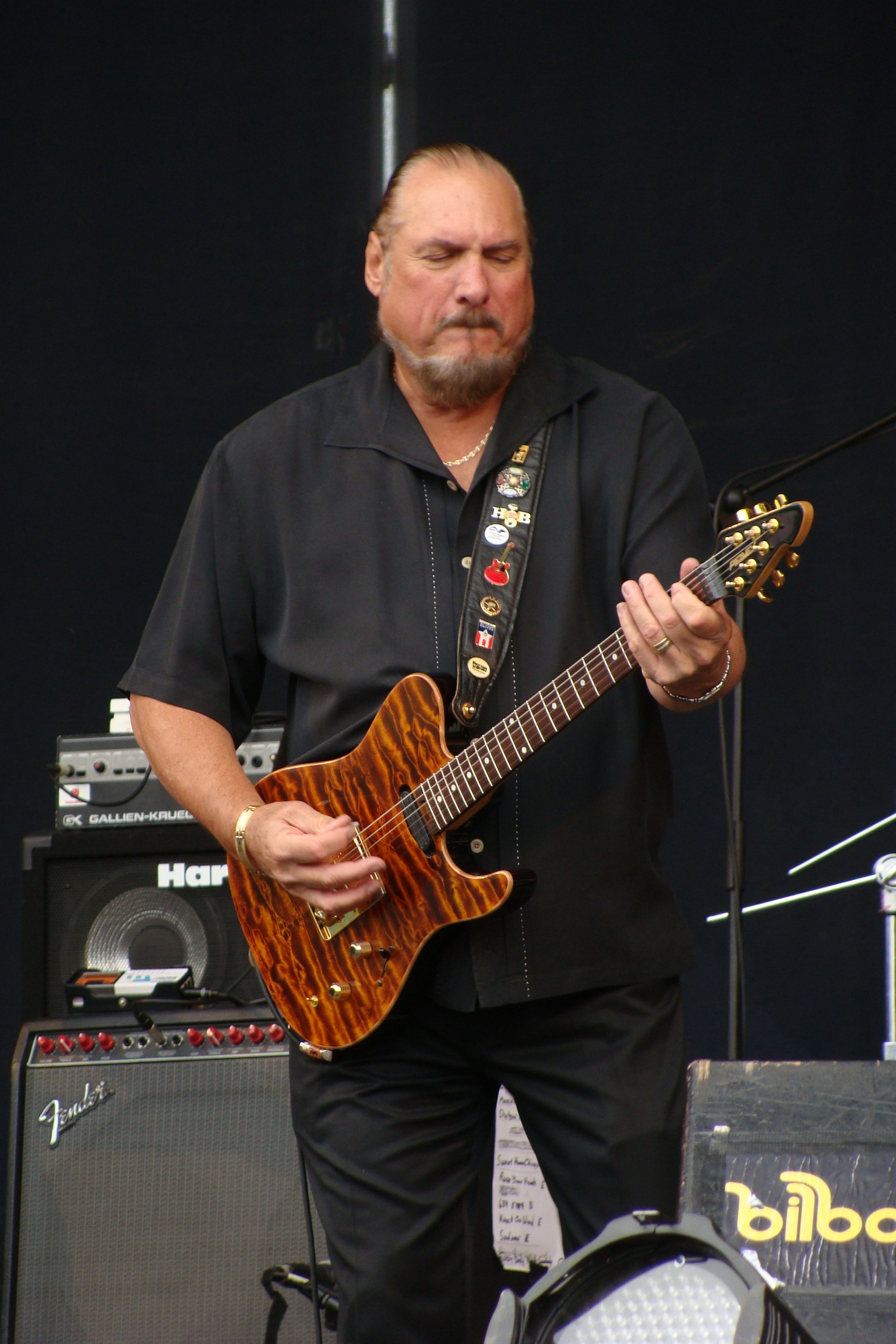
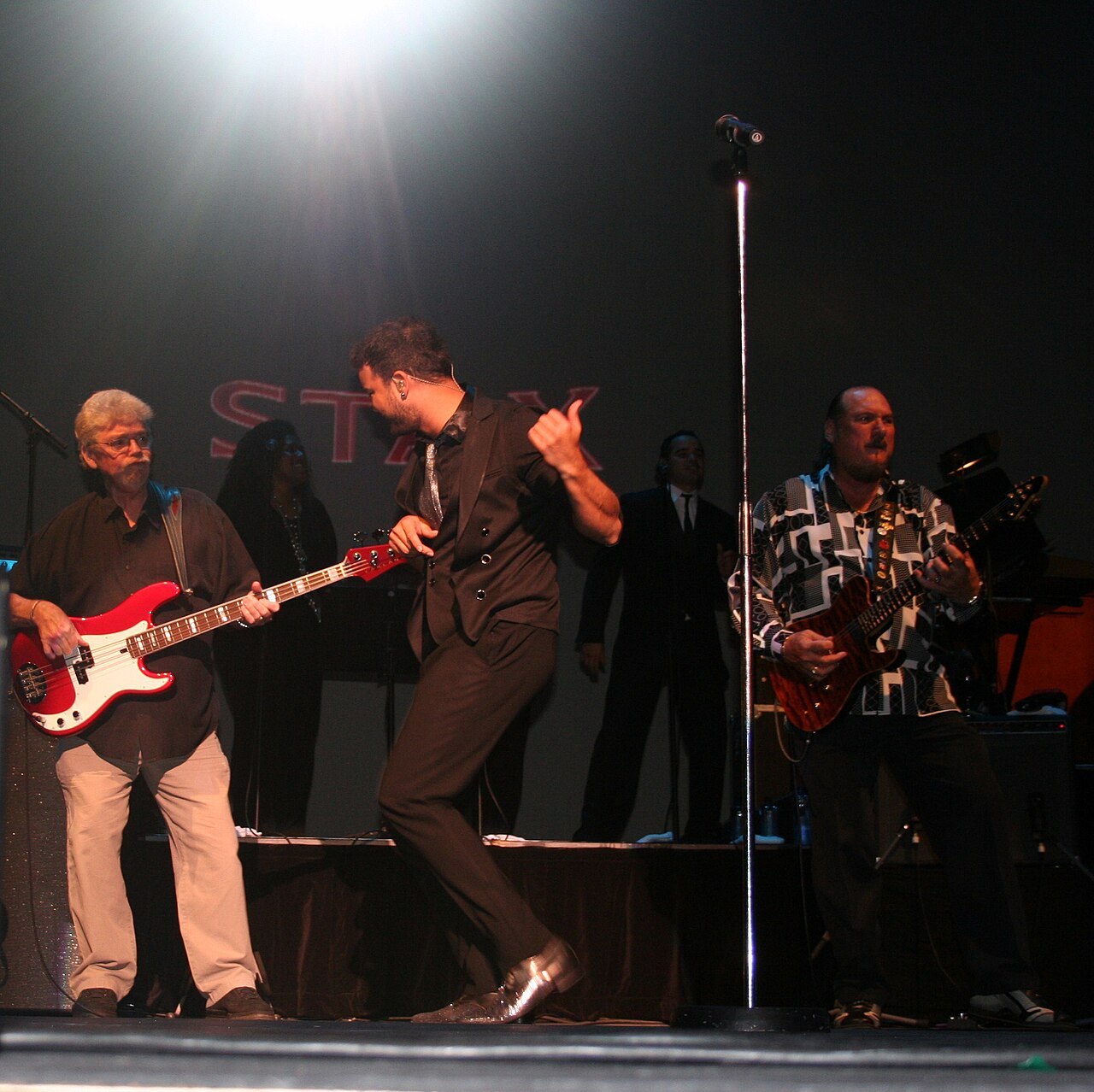
Photo by Alberto Cabello, licensed under CC BY 2.0 (https://commons.wikimedia.org/wiki/File:Steve_Cropper_Bilbao_BBK_Live_2008.jpg)
Gear Timeline
The recording equipment was left on by accident. Jim Stewart — the co-founder of Stax Records, operating the studio’s old Ampex 150 mono machine — hit record during what everyone in the room thought was an informal blues jam. Nobody was trying to cut a record. Booker T. Jones, Steve Cropper, and the other musicians were goofing off between sessions, playing around with a riff that Booker had shown Cropper a couple of weeks earlier. Stewart listened to the playback and said it was pretty cool. Three takes later, they had “Green Onions.” “Green Onions” went to number one on the R&B chart and number three on Pop in 1963, launched Booker T. & the MGs as the soul era’s definitive house band, and initiated the Stax Records run of recordings that produced “Soul Man,” “In the Midnight Hour,” “Knock on Wood,” “(Sittin’ On) The Dock of the Bay,” and the broader catalog that defined the Memphis soul tradition as one of American music’s most concentrated periods of creative excellence. The guitar on “Green Onions” was a Fender Esquire through a little Fender Harvard amp. The guitar on “Soul Man” and most of the subsequent Stax recordings was a 1961 Fender Esquire or a 1963 Fender Telecaster through a Fender Super Reverb. The Neumann U-67 was the microphone. The recording was always at Stax, always in the same spot, always with the same equipment. And the recording equipment was almost left off. The jam almost wasn’t recorded. “Green Onions” was almost a B-side that nobody heard.
Steve Cropper was born on October 21, 1941, in Dora, Missouri, the son of a farmer who moved the family to Memphis when Steve was a child. Memphis in the 1950s was the specific musical environment that produced the intersection of blues, R&B, country, and gospel that defined the early rock and roll era — the same city that had already produced Elvis Presley’s Sun Records recordings, that contained the blues tradition of Beale Street, and that would produce the Stax Records soul tradition that Cropper would help create. He played in local Memphis bands through his high school years, developing the specific style of rhythm guitar playing that became the foundation of the Stax sound: not a lead player in the conventional sense, not a showcase guitarist, but a rhythm guitarist of extraordinary precision and musical intelligence whose licks and fills were always in the service of the song and the singer rather than in competition with them.
His guitar philosophy — the philosophy that Rolling Stone recognized when they placed him at number 39 on their list of the 100 greatest guitarists of all time — is fundamentally different from the virtuoso approach that dominates most of this series. Where the majority of the guitarists documented in these pages are primarily identified by their lead guitar work, their tonal character, and their technical accomplishment in the conventionally understood sense, Steve Cropper is primarily identified by his restraint, his precision, and his specific understanding of what the guitar needs to do in a soul recording context to make the song as powerful as possible. “While other guitarists have made their bones on speed and flash, Cropper’s preference to be part of the larger picture instead of its focus has made his few signature licks — the quick, surgical stabs on ‘Green Onions’ and the pleading, choking high G notes in the chorus of Sam & Dave’s ‘Soul Man’ — stand out even more.” The “surgical stabs” and the “pleading, choking high G notes” — these are not the vocabulary of virtuoso guitar playing. They are the vocabulary of a musician who has identified exactly what the music needs and provided it with complete precision.

His specific contribution to “Dock of the Bay” deserves particular documentation because it reveals both the creative process and the specific gear decision that produced one of the most recognized guitar figures in American music. Cropper and Otis Redding wrote the song together, with Redding recording the acoustic guitar and vocal demo with the horns. “I just played acoustic guitar on the session with him. We cut it as kind of a demo, but with the horns. Then I overdubbed the piano, electric guitar, and the waves and seagulls.” Otis Redding died in a plane crash on December 10, 1967, before the overdubs were added — he never heard the finished recording. For the electric guitar overdub, Cropper “brought my old Harvard back to play the licks.” The Fender Harvard that had recorded “Green Onions” was returned to service for the overdub on the song that would become, posthumously, Otis Redding’s biggest commercial success and one of the most frequently radio-played songs in American music history. The same small amplifier. The same guitar. Played after the man who wrote the song with him was gone.
The 1961 Fender Esquire that played those licks is now at the Smithsonian Institution’s National Museum of American History. The Fender Harvard amp that played “Green Onions” is also at the Smithsonian — donated because the guitar itself wasn’t available for the specific Esquire that played “Green Onions,” so Cropper gave them the amp instead. Two pieces of Stax Records equipment in the Smithsonian. The specific guitar and amplifier that produced some of the most celebrated recordings in American soul music, now in the national collection of American cultural artifacts. This is the correct outcome.
Background: Memphis, Stax, and the Accidental Recording That Built an Institution
The Stax Records story is one of American music’s more remarkable institutional histories: a small Memphis record label founded by Jim Stewart and his sister Estelle Axton (the “St” and “Ax” of Stax) in a converted movie theater on McLemore Avenue, using recording equipment of modest technical specification, that produced between 1961 and 1975 one of the most concentrated bodies of American soul recordings ever created. The specific combination of circumstances — the converted theater’s unique acoustic character, the specific house band of Booker T. Jones, Steve Cropper, Duck Dunn (later replacing Lewis Steinberg on bass), and Al Jackson Jr. on drums, the roster of vocalists that included Otis Redding, Sam & Dave, Wilson Pickett, Carla Thomas, Eddie Floyd, and others — produced a creative environment of extraordinary fertility. The MGs (short for Memphis Group) were the rhythmic and harmonic foundation on which all of these vocalists built their most celebrated performances.
Cropper’s role was specifically the guitarist — but also, as documents from the era confirm, producer, co-writer, and creative partner to the vocalists who recorded at Stax. He co-wrote “Dock of the Bay” with Otis Redding. He co-wrote “In the Midnight Hour” with Wilson Pickett. He co-wrote “Knock on Wood” with Eddie Floyd. These are not credits added after the fact; they represent the specific creative contribution of a guitarist who understood the songs as compositions in need of development, not just as tracks in need of a guitar part. The “hammer licks” that he described creating for “Soul Man” — “I got my guitar and went down to the piano and asked him to play something from his song. I immediately went to the ‘hammer licks’ — that’s what I call them — and that’s all it is on the third and the first strings” — were developed in real time as a creative response to what he heard. This is the improvised creative intelligence of a musician who is simultaneously listening to the song and composing the guitar part that will define it.
Isaac Hayes — who would later become one of soul music’s most celebrated figures — was present at the “Soul Man” recording and provided the specific creative collaboration that produced the intro. “Isaac Hayes came back when I was mixing and said, ‘I know I’m not supposed to bother you, but David Porter and I have written a hit for tomorrow’s session in the head. I can’t come up with an intro.’ So I got my guitar and went down to the piano.” The guitar intro to “Soul Man” — one of the most recognizable figures in soul music — was improvised on the spot when Isaac Hayes couldn’t come up with what the song needed. Steve Cropper reached for the guitar, listened to what Hayes had, and gave him the hammer licks on the third and first strings that became the definitive sound of the song. This is what it looks and sounds like when a great rhythm and soul guitarist is at work.
His post-Stax career has been as extensive as the Stax period was concentrated: the Blues Brothers Band (both the original Belushi/Aykroyd films and the ongoing touring band), the RCO All Stars with Levon Helm, various session and production work, and solo recordings. The Blues Brothers connection placed his specific tonal identity — the Telecaster or Esquire, the precise soul guitar lick, the rhythm player’s understanding of where the guitar belongs in the ensemble — in the context of a broader pop culture identity that introduced him to audiences who might not have sought out the Stax catalog independently. Jake and Elwood Blues, with Steve Cropper on guitar. The guitar sounds like the guitar on “Soul Man” because it is the same guitarist using the same approach, which is to say it is always exactly what the music needs and nothing more.
The Rig: Steve Cropper’s Guitars, Amps, and Effects
Guitars
Steve Cropper’s primary guitar through the classic Stax recording period — including “Dock of the Bay” — was a 1961 Fender Esquire. The Esquire is the single-pickup Telecaster-format guitar: the same ash body, maple neck, and Telecaster bridge pickup as the standard Telecaster, but with only the bridge pickup and none of the neck pickup, giving the guitar a consistent bright, twangy bridge character without the tonal switching capability of the standard two-pickup Telecaster. “I pulled out an Esquire to do those guitar licks on it. That 1961 Fender Esquire is now at the Smithsonian National Museum of American History.” The 1961 Esquire’s specific tonal character — the ash body’s specific warmth-with-clarity, the single bridge pickup’s consistent bright attack — is the foundational guitar voice of the Stax soul tradition. The single pickup removes the tonal decision of pickup selection; what the guitar produces is what the guitar produces. Cropper has described giving the Smithsonian “the next best thing — the amp that I played through on ‘Green Onions'” since the specific guitar used on “Green Onions” wasn’t available for donation.
Steve Cropper bought two identical 1963 Fender Telecasters — one for himself and one for Otis Redding. Redding’s was tuned to open E because Otis couldn’t play barre chords, and the open tuning allowed him to play the chord shapes he needed across the fret positions. The two identical 1963 Telecasters are among the more specifically documented guitar purchases in Stax Records history: Cropper’s choice to buy a backup instrument for Redding in the same specification as his own primary guitar reflects both the practical touring consideration of having a backup available and the specific collaborative generosity of a musician who understood that the singer needed a proper guitar. The 1963 Telecaster’s specific character — the transition period between the original 1950 design’s earliest examples and the CBS-era changes that would come later — is the tonal identity of the classic Telecaster at perhaps its most refined: the three-saddle brass bridge, the maple neck, the two single-coil pickups, the specific Fender-formula combination that has defined twangy, clean, precise guitar tone for seventy years.
Cropper’s earliest Stax studio guitar was a Fender Esquire — “I found a couple of interviews where Steve mentions using a Fender Esquire” — the single-pickup Telecaster predecessor whose tonal character is the foundational voice of the “Green Onions” recording. The distinction between the Esquire used on the early recordings and the 1961 Esquire at the Smithsonian is not definitively established in available sources, but the consistent Fender Esquire family across the early Stax period is clear. “Green Onions” was played on a Fender Esquire through the Fender Harvard amp; the combination of the single-coil bridge pickup’s bright, precise attack and the Harvard’s small-amplifier warmth is the specific tonal formula of one of the most recognizable guitar sounds in American popular music.
In his later career, Cropper has been associated with Peavey Guitars alongside the continued Fender Telecaster use. The Guitar World 2024 interview references his “Peavey vs Telecasters” as a contextual frame — confirming that both instrument families appear in his modern playing. The Peavey connection is consistent with his practical approach to equipment: what works for the music, in the hands of the player who needs to deliver the specific performance, is the right choice regardless of brand prestige.
Amps
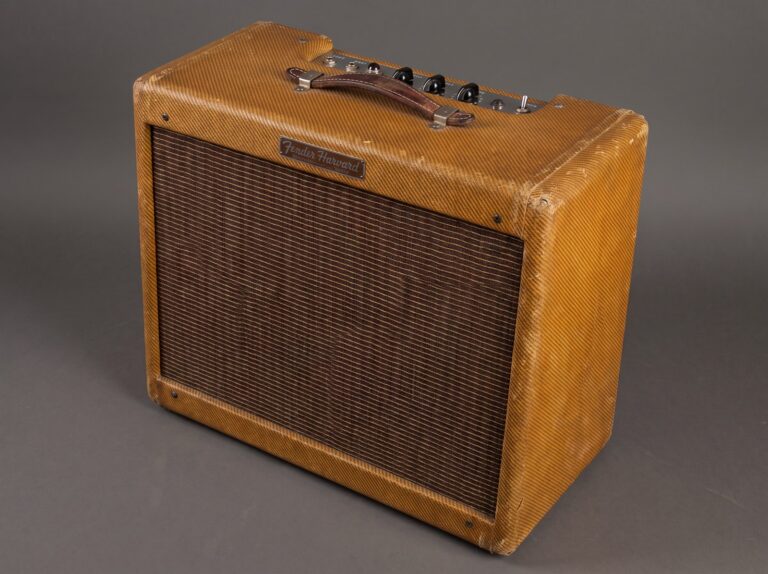
The Fender Harvard is the specific amplifier that recorded “Green Onions” and returned to service for the electric guitar overdub on “Dock of the Bay.” “Some of the earlier stuff, if you go back to ‘Green Onions,’ I used a little Fender Harvard amp.” The Harvard is a small, low-powered Fender combo from 1956-1961 — ten watts, one ten-inch speaker, a tweed-covered chassis with the early Fender circuit that produces the specific warm, slightly gritty tone of the small-amplifier tradition. “I couldn’t give them the guitar that was on ‘Green Onions,’ so I gave them the next best thing — the amp that I played through on ‘Green Onions.’ That amp was also used on two or three of the Otis songs, too.” This amp is now at the Smithsonian alongside the 1961 Esquire — two pieces of the foundational Stax recording equipment in the national cultural institution. The Harvard’s specific character — warm, small, with natural saturation at low volumes from the modest output stage — produces the specific intimacy and warmth of “Green Onions”‘ guitar tone that larger amplifiers cannot quite replicate. The small amp is often the right amp for the song.
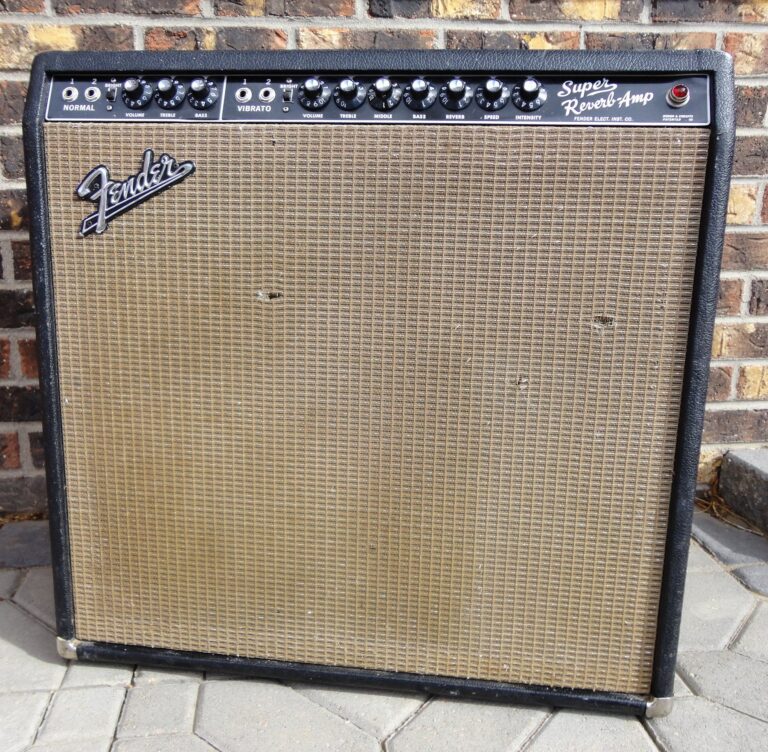
Cropper’s progression from the Fender Harvard to the Fender Super Reverb — “Later I moved up to a Super Reverb, and I think the mic was a Neumann U-67. That’s on all kinds of stuff, like ‘Soul Man'” — reflects both the natural amplifier evolution of a professional musician and the specific requirements of the evolving Stax recording context. The Super Reverb is a significantly more powerful amplifier than the Harvard: 45 watts, four 10-inch speakers, with the built-in spring reverb and tremolo circuits that give it its name. The Super Reverb’s specific combination of high clean headroom (the four-speaker configuration produces clear, full sound at volumes where smaller amps would saturate) and the built-in spring reverb’s natural spatial dimension provides the specific sound of the mid-to-late Stax recordings. The Neumann U-67 condenser microphone — one of the most respected studio microphones in professional recording history — captured the Super Reverb’s character for the multi-track recordings that produced “Soul Man,” “Knock on Wood,” and the broader late-1960s Stax catalog.
Effects
The “hammer licks” that Steve Cropper created for “Soul Man” — described by him as “all it is on the third and the first strings” — are not a pedal or a rack effect but a specific picking technique applied to specific string intervals. The technique involves hammering the pick against the strings in a rapid, percussive motion that produces the specific rhythmic, choking, syncopated quality of the “Soul Man” intro guitar figure — a sound that is as immediately recognizable as any guitar effect in the soul repertoire, achieved without any signal processing equipment. The “hammer licks” are executed on the guitar’s strings in a way that produces a sharp, percussive attack with the specific pitches of the first and third strings (E and G) producing the specific interval quality of the soul guitar figure. No pedal produces this. It is technique, applied to strings, producing the specific effect that the music required.
The “pleading, choking high G notes in the chorus of ‘Soul Man'” — described by the Reverb.com profile as one of Cropper’s signature moments — are another technique-based effect rather than a hardware one. The choking or muting of a sustained note — pressing the string to the fretboard with slightly more pressure than is needed for clean sustain, or releasing the pressure slightly to allow the note to partially mute — produces the specific vocal, crying quality of the soul guitar’s most expressive moments. This technique, applied to the high G note on the Esquire or Telecaster through the Super Reverb with minimal or no reverb engaged, produces the specific sound of the “Soul Man” chorus guitar that has been analyzed and imitated by every student of soul guitar playing since 1967. It is not a complex technique. It requires complete understanding of what the note needs to do and the physical control to make it do that thing.
The “Dock of the Bay” original recording session used acoustic guitar — “I just played acoustic guitar on the session with him. We cut it as kind of a demo, but with the horns.” The acoustic guitar’s specific warm, resonant character on the demo recording of “Dock of the Bay” provided the foundation that Cropper subsequently built upon with the electric guitar, piano, and environmental sound effects (waves and seagulls) overdubs. The acoustic-then-electric approach — using the acoustic for the compositional work and the live session, then adding the electric character in post-production — is documented as Cropper’s specific process for this particular recording.
Steve Cropper’s effects philosophy is the minimal possible: guitar, amplifier, microphone. The specific Stax recording approach — documented in his interview comments as “at Stax we were always in the same spot, playing my same equipment every day” — involved maintaining a consistent, minimal signal chain that the room’s own acoustic character and the microphone’s specific placement around the amplifier then contributed to. No pedals, no rack effects, no elaborate signal routing. The guitar’s tone, the amplifier’s natural character, and the Neumann U-67’s specific microphone capture. This is the recording philosophy of someone who understood that the specific combination of guitar, amplifier, and microphone placement that produces the desired sound is the complete signal chain, and that additional processing is an impediment to rather than an enhancement of the sound you are trying to achieve.
The waves and seagulls that conclude “(Sittin’ On) The Dock of the Bay” — the specific environmental sound that gave Otis Redding’s most celebrated composition its atmospheric conclusion — were produced and overdubbed by Cropper after Redding’s death. They are listed in the recording credits and they are part of the deliberate sonic vision of the finished recording rather than an incidental production choice. Their presence in the gear documentation of a guitar-focused article reflects the specific truth of how “Dock of the Bay” was made: the guitar, the piano, the waves and the seagulls are all Steve Cropper’s contribution to a recording that Otis Redding never heard in its finished form. The specific environmental authenticity of the waves and seagulls — recorded sound rather than synthesized — gives the song’s conclusion the quality of genuine place rather than studio simulation. This matters. The song is about sitting on the dock, watching the waves, wasting time. The waves and seagulls are real. The dock is real. The song is real.
Playing Style & Tone Philosophy
Steve Cropper plays guitar in service of the song and the singer rather than in service of the guitar playing itself — and this specific priority is the foundational philosophical difference between his approach and the approach of the majority of guitarists in this series. The soul guitar tradition that Cropper defines at its highest level is fundamentally a collaborative tradition: the guitarist’s role is to provide what the singer and the song need, and what the singer and the song need is almost never a technical demonstration of what the guitarist can do. It is the “hammer licks” at precisely the right moment, the “choking high G notes” that amplify the emotional content of the vocal, the “surgical stabs” on “Green Onions” that provide rhythmic punctuation without ever competing with the track’s primary voice — the Hammond organ.

The “same equipment every day” approach — maintaining a consistent, minimal signal chain in the Stax studio room — is the physical expression of this philosophical priority. Rather than changing the guitar and amplifier configuration for different songs and seeking different tonal options, Cropper maintained consistency and allowed the musical content to provide the variation. The Esquire or Telecaster through the Harvard or Super Reverb sounds the same every day; what changes is what Cropper plays through that consistent setup, and what he plays is specifically determined by what the specific song and the specific singer need in the specific moment. This is the most technically demanding approach to guitar playing available: not developing a vast tonal palette to offer different options, but developing the musical intelligence to know exactly what is needed and the technical precision to execute it perfectly.
His co-writing credits — the songs he wrote with the vocalists rather than simply providing guitar parts for — confirm that this musical intelligence extends beyond guitar technique into compositional understanding. You cannot co-write “Dock of the Bay” with Otis Redding without understanding the song as a compositional entity, understanding what the melody needs, understanding how the verse and chorus relationship works, and understanding what the musical content communicates about the human experience the song is describing. Cropper understood all of this. The guitar parts he wrote for the recording reflect this understanding; the electric overdubs he added after Redding’s death — the guitar licks, the piano, the waves and seagulls — are the completion of a compositional vision that the two of them had developed together, executed with the full creative intelligence of a musician who understood what the song needed even in the absence of the man who had started it with him.
How to Sound Like Steve Cropper
The Steve Cropper soul guitar tone requires: a Fender Telecaster or Esquire (single-coil bridge pickup — no humbuckers); a modest-power Fender amplifier (Harvard for the warmest small-amp character, Super Reverb for the more powerful clean tone of the mid-Stax period); a good condenser or dynamic microphone on the amplifier; and the musical understanding that the guitar’s role is to serve the song rather than to display the guitarist. No pedals are needed. The technique — the hammer licks, the choking notes, the precise rhythmic punctuation — is the primary expressive vehicle.
| Control | Setting (0–10) | Notes |
|---|---|---|
| Fender Harvard (Green Onions / Dock of the Bay Tone) | Volume: 7–8 (natural saturation) | Push the Harvard’s modest 10 watts toward natural saturation. The small amp’s specific character — warm, slightly gritty at the working point — is the foundational “Green Onions” tone. The warmth comes from the small output transformer working at its limits. This amp must be played relatively loud to achieve this character. There is no quiet version of the Harvard tone that sounds like “Green Onions.” |
| Fender Super Reverb (Soul Man Era) | Volume: 5–6; Treble: 7; Bass: 5; Mid: 6; Reverb: 2 | The Super Reverb’s four 10-inch speakers provide clean headroom at higher volumes than the Harvard can manage. Set volume at 5–6 for the specific clarity and warmth of the mid-Stax recordings — loud enough for the natural tube character, not so loud as to saturate. Minimal reverb — just enough for natural spatial dimension. The specific Stax room sound is not achieved through reverb but through the actual room. |
| Fender Telecaster / Esquire Bridge Pickup | Volume: 10; Tone: 7 | Bridge pickup always — the soul guitar’s bright, precise, attacking character comes from the bridge single-coil. The tone control at 7 takes off some of the extreme treble without removing the presence and attack that define the style. Full volume on the guitar; the amp controls the level. |
| Hammer Licks Technique | Third and first strings; percussive attack; rhythm-precise | “That’s all it is on the third and the first strings.” Pick the third string (G) and first string (E) in rapid succession with a hammering, percussive attack — not strumming but striking. The rhythm must be precise: the soul music tradition depends on the guitar’s rhythmic role being as exact as the drummer’s. Any rhythmic imprecision is immediately audible as wrong. |
| Choking High Notes | Partial mute; sustain then release; emotional inflection | For the “Soul Man” chorus and similar passages: sustain a high note (G or similar) with the left hand, then slightly release the finger pressure to allow the note to choke — the pitch drops slightly and the sustain is interrupted in a vocal, crying manner. The specific pressure that produces choking without silencing is developed through practice. Too much release and the note dies; too little and the choke doesn’t happen. |
| Effects Pedals | None | No effects pedals. The Steve Cropper signal chain: guitar → amplifier → microphone → recording desk. What you hear on the records is what that minimal chain produces. The technique provides all the tonal variation required. The song provides all the emotional content. The guitar and amp amplify both. |
Influence & Legacy
Steve Cropper’s influence on guitar playing is the influence of the ensemble musician who understood service — the specific, demanding, underappreciated discipline of playing exactly what the music needs and nothing more. He is Rolling Stone’s 39th greatest guitarist of all time, which is both a recognition and an underestimation: the list rewards the identifiable lead guitar voice, the technical accomplishment, the solo that defines a recording. Cropper’s specific genius is the lick that defines a recording without ever dominating it — the “surgical stabs” on “Green Onions,” the “hammer licks” on “Soul Man,” the guitar part on “Dock of the Bay” that Otis Redding never heard. These are not less important than a lead guitar showcase because they are less visible. They are more important, because without them the songs are not the songs they are.
His co-writing contributions — “Dock of the Bay,” “In the Midnight Hour,” “Knock on Wood” — confirm that the musical intelligence behind the guitar parts was compositional as well as performative. These are not guitar parts added to existing songs; they are creative contributions to the songs themselves, the kind of contribution that a session guitarist who understands their role as purely supportive cannot provide. Cropper provided the guitar parts and the songs, which is the complete creative contribution available to a musician in his specific position at Stax Records.
The two Smithsonian instruments — the 1961 Fender Esquire and the Fender Harvard amplifier — are the specific acknowledgment that the recordings they produced were not just commercially successful but culturally foundational. When the national cultural institution places your guitar and amplifier in its permanent collection, the question of influence and legacy is settled by the institution that is specifically charged with making such determinations. The soul guitar tradition is represented in the Smithsonian by a Fender Esquire and a small Fender combo amplifier. For the broader R&B and soul guitar tradition that connects to Cropper’s Stax work, see George Thorogood’s blues-rock approach — a guitarist who absorbed the same American roots music tradition from a different angle. The Fender Telecaster family that is Cropper’s primary instrument runs through Ron Wood’s 1952 Telecaster work. And the philosophy of the ensemble musician who serves the song rather than showcasing the guitar connects to Gary Rossington’s “guitars as tools” approach in the Southern rock context.
The recording equipment was left on by accident. Three takes later, they had “Green Onions.” The guitar was a Fender Esquire. The amp was a little Fender Harvard. The microphone was whatever was in the room. The waves and seagulls were overdubbed after the man who wrote the song was gone. The 1961 Esquire is in the Smithsonian. The Harvard is in the Smithsonian. The songs are everywhere, on every station, in every bar, in the cultural memory of everyone who has ever heard American soul music. Steve Cropper played them. He is number 39 on the list. He should probably be higher.
Frequently Asked Questions: Steve Cropper Guitars & Gear
What guitar did Steve Cropper use at Stax Records?
Steve Cropper’s primary Stax studio guitars were Fender single-pickup and two-pickup instruments from the Telecaster family. His earliest Stax work used a Fender Esquire — the single-pickup Telecaster-format guitar. The 1961 Fender Esquire that he used for “Dock of the Bay” and other Stax recordings is now at the Smithsonian Institution’s National Museum of American History. He also used 1963 Fender Telecasters — buying two identical examples, one for himself and one for Otis Redding (tuned to open E since Redding couldn’t play barre chords). In later career contexts he has used Peavey guitars alongside continuing Telecaster work.
What amplifier did Steve Cropper use on “Green Onions”?
“Green Onions” was recorded through a little Fender Harvard amp — Cropper’s own words from a Vintage Guitar Magazine interview. The Fender Harvard is a small, low-powered Fender combo from 1956-1961 producing approximately ten watts through a single ten-inch speaker. “I couldn’t give them the guitar that was on ‘Green Onions,’ so I gave them the next best thing — the amp that I played through on ‘Green Onions.'” The Harvard amp is now at the Smithsonian alongside the 1961 Fender Esquire. Cropper later moved to a Fender Super Reverb — used on “Soul Man” and subsequent Stax recordings, with a Neumann U-67 as the microphone.
How was “Green Onions” recorded?
“Green Onions” was recorded at Stax Records essentially by accident. During an informal jam session between Booker T. Jones, Steve Cropper, and other musicians, Jim Stewart — Stax’s co-founder — left the recording equipment running on an old Ampex 150 mono machine. After playing back the informal recording, Stewart suggested they develop it further. Three takes later, they had “Green Onions,” which became a number one R&B and number three pop hit. The guitar was a Fender Esquire through the Fender Harvard amp. The recording was mono, on the old Ampex machine, in a converted movie theater on McLemore Avenue in Memphis.
What happened with “Dock of the Bay” and Otis Redding?
Steve Cropper and Otis Redding wrote “(Sittin’ On) The Dock of the Bay” together. The recording session featured Cropper playing acoustic guitar with Redding — “I just played acoustic guitar on the session with him. We cut it as kind of a demo, but with the horns.” Otis Redding died in a plane crash on December 10, 1967, before the overdubs were added. Cropper subsequently overdubbed the electric guitar licks (using the original Fender Harvard amp), piano, and the waves and seagulls that conclude the song — environmental sounds that give the recording its specific atmospheric conclusion. Redding never heard the finished version. The song became his biggest commercial success, reaching number one on both the pop and R&B charts posthumously.
What is Steve Cropper’s guitar philosophy?
Steve Cropper’s guitar philosophy is fundamentally about service to the song and the singer rather than about individual guitar expression. “While other guitarists have made their bones on speed and flash, Cropper’s preference to be part of the larger picture instead of its focus has made his few signature licks stand out even more.” His approach involves playing exactly what the music needs — no more, no less — with the specific precision that soul music requires. His signal chain was minimal: guitar, amplifier, microphone, with no effects pedals. He maintained the same equipment in the same spot in the Stax studio every day, allowing consistency of tone while the musical content of each recording provided the variation.
What is the “hammer lick” technique on “Soul Man”?
The “hammer licks” on “Soul Man” are Steve Cropper’s term for the percussive picking technique he developed for the song’s intro, improvised on the spot when Isaac Hayes brought the song to Cropper and couldn’t come up with an intro. “I got my guitar and went down to the piano and asked him to play something from his song. I immediately went to the ‘hammer licks’ — that’s what I call them — and that’s all it is on the third and the first strings.” The technique involves striking the third string (G) and first string (E) in rapid succession with a hammering, percussive picking motion that produces the sharp, rhythmic figure that defines the beginning of “Soul Man.” The technique requires no effects processing — it is purely a picking technique applied to specific strings at precise rhythmic points.
What songs did Steve Cropper co-write at Stax?
Steve Cropper co-wrote some of American soul music’s most celebrated recordings during his Stax years. His co-writing credits include “(Sittin’ On) The Dock of the Bay” with Otis Redding (posthumously Redding’s biggest commercial success), “In the Midnight Hour” with Wilson Pickett, and “Knock on Wood” with Eddie Floyd — three songs that are among the most frequently radio-played recordings in American music history. He also co-wrote additional Stax recordings with various artists across the label’s peak years. These co-writing credits represent the specific creative contribution of a musician who understood the songs as compositional entities and provided musical ideas that shaped what the songs became, not just guitar parts added to existing compositions.
Image credits
- Steve Cropper: Alberto Cabello from Vitoria-Gasteiz, Spain, Wikimedia Commons, CC BY 2.0.
- Top image: by Alberto Cabello, Wikimedia Commons, CC BY 2.0.
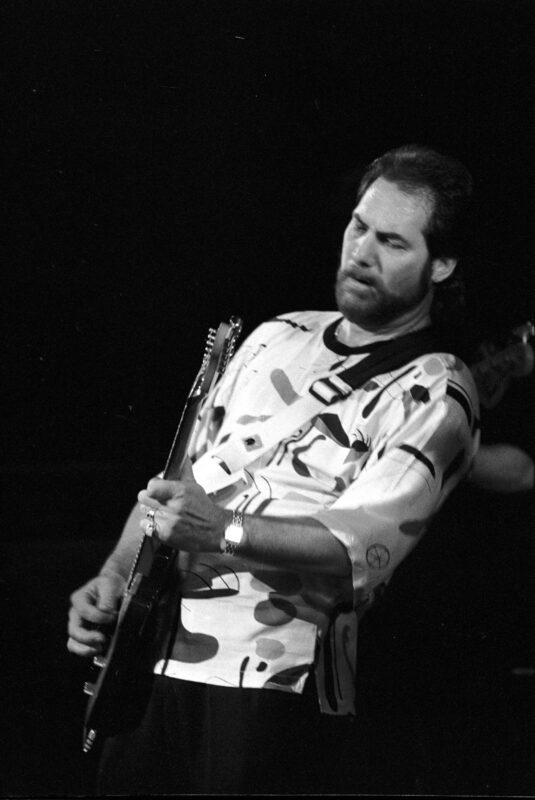
- Steve Cropper: photo by Roland Godefroy, via Wikimedia Commons, CC BY-SA 3.0.
- Fender Super Reverb: GabeMc, Wikimedia Commons, CC BY-SA 3.0.
- Steve Cropper live: DianeSunshineCoast, Wikimedia Commons, CC BY-SA 3.0.
- Steve Cropper live: DianeSunshineCoast, Wikimedia Commons, CC BY-SA 3.0.
- Fender Harvard tweed: GuitarGangsters AI-generated reference illustration, not a photograph.