Steve Hillage Guitars & Gear: The Complete Guide to Gong’s Psychedelic Glissando Guitarist’s Strat, Les Paul & Echo Space Rig
Steve Hillage guitars & gear: Gong and solo psychedelic guitarist. Stratocaster, Les Paul, echo, Eventide H910, glissando technique — Fish Rising and L complete tone guide.
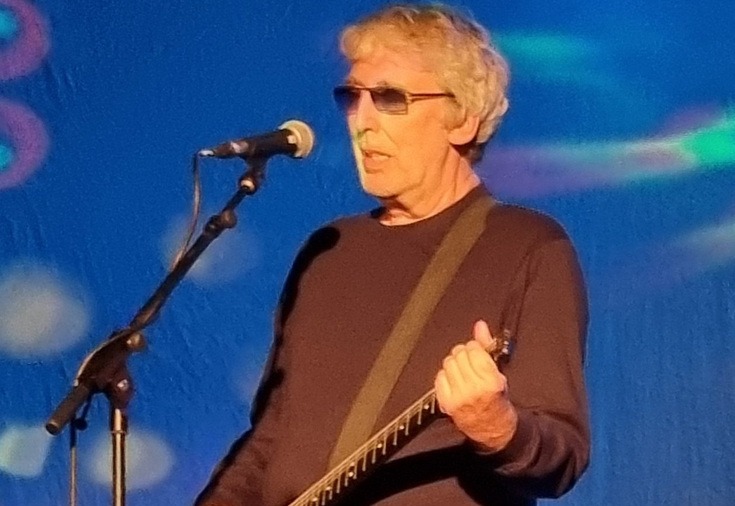
Steve Hillage. Photo: Steve Knight (kitmasterbloke) (https://www.flickr.com/people/kitmasterbloke/). Steve Hillage Live in Cambridge 210323 - 52764182566.jpg. CC BY 2.0: https://creativecommons.org/licenses/by/2.0/. Source: https://commons.wikimedia.org/?curid=129889288. Changes: Cropped to a tall portrait isolating Steve Hillage at the left of the original band photo, retaining full head, both hands and his guitar; resized without upscaling. No generative edits, retouching or color changes.
Echo gave Steve Hillage an “instant sense of space and psychedelic dreamscape adventure.” He added: “It became an inseparable part of my own sound, and remains so.” This is the foundational gear statement of one of psychedelic rock’s most consistently visionary guitarists — the specific identification of the effect that defined the sonic territory in which his guitar playing has operated across fifty years of professional music. Echo is not an optional addition to the Hillage signal chain; it is the primary compositional environment that the guitar inhabits, the space that the glissando guitar lines slide through, the dreamscape that the Stratocaster or Les Paul’s specific tonal character is amplified into. The echo makes the music sound like it is happening somewhere larger than the room it is being recorded in — somewhere cosmic, somewhere psychedelic, somewhere that the specific guitar technology of the early 1970s could only gesture toward but that Hillage’s specific technical and musical intelligence assembled into a coherent sonic world. Fish Rising (1975), L (1976, produced by Todd Rundgren), Motivation Radio (1977), Green (1978): four solo albums in four years, each one a document of the specific guitar-and-echo psychedelic space that Hillage developed from his years with Gong’s Radio Gnome Invisible trilogy and refined into something simultaneously more structured and more individually expressive. “But my style is also about scales, modes, and phrasing,” Hillage added — the specific qualification that identifies his approach as disciplined rather than merely atmospheric: the echo provides the space, but the scales and modes and phrasing provide the content. The psychedelic dreamscape is not random; it is organized. The glissando guitar technique is not undisciplined; it is deliberate. The Stratocaster stripped to its natural wood is not merely an aesthetic choice; it is the physical expression of the same commitment to taking the paint off — removing the surface artifice to find what the instrument actually is underneath. This is the Steve Hillage guitar approach.
Steve Hillage was born on August 2, 1951, in London, England. He received his first guitar — a Spanish acoustic — at the age of nine, and learned Lonnie Donegan songs on it in the early 1960s. His first electric guitar was a white Fender Stratocaster that his father bought for him after Hillage won a scholarship to the City of London School — a significant academic achievement that his father rewarded with the specific purchase that launched the professional career. Hillage stripped the white paint off the Stratocaster and left it in natural wood finish: the same aesthetic decision that he would later apply to the black Gibson Les Paul, having the paint taken off to reveal the natural wood beneath. The paint-stripping impulse is the consistent physical expression of the Hillage aesthetic: remove the cosmetic surface to find the authentic material underneath. The guitar is wood and metal and wire; the paint is a commercial decision. The music lives in the wood and metal and wire.
The musical path from the City of London School Stratocaster through the early bands Uriel and Khan, through the Kevin Ayers band, through the Gong Radio Gnome Invisible trilogy, to the solo Fish Rising debut is the specific creative development that the Searching for the Spark career-spanning boxed set traces: “how I developed from teenage psychedelic guitarist to record producer and eventually dance music in the late ’80s.” The specific stop on that path that produced the most celebrated Hillage music — the Gong years of 1972-1975, the Radio Gnome Trilogy (Flying Teapot, 1973; Angel’s Egg, 1973; You, 1974) — established both his psychedelic guitar reputation and the specific echo-and-glissando approach that became his primary technical and compositional identity. Gong gained cult status during Steve’s tenure with them in the early ’70s — also an era that established him as one of the most gifted guitarists of the time. The gifted guitarist with the paint stripped off his guitars and the echo providing the dreamscape.
The Todd Rundgren production of L (1976) — recorded at The Secret Sound studio in New York with musicians from Rundgren’s own Utopia band — produced what multiple reviewers cite as the peak of the Hillage solo catalog: a record that combined Gong-informed psychedelic space rock with progressive rock arrangements and a melodic sophistication that the Fish Rising debut had established as the template. The covers on L — Donovan’s “Hurdy Gurdy Man,” the Beatles’ “It’s All Too Much” (George Harrison), and the traditional Hindu mantra “Om Nama Shivaya” — document both the specific influences (the 1960s British psychedelia of Donovan and the late Beatles) and the spiritual dimension (the Hindu mantra tradition) that gave Hillage’s psychedelic approach its specific cosmological orientation. The glissando guitar technique and the echo effects, applied to “It’s All Too Much” in the specific Hillage way, produced the most celebrated guitar performance of the L album and the most concentrated available expression of what “psychedelic dreamscape adventure” sounds like when a technically disciplined guitarist with a commitment to scales, modes, and phrasing inhabits it fully.
Background: London, Gong, the Radio Gnome Trilogy, and the Glissando Electric Gypsy
The City of London School scholarship that earned Hillage his first Stratocaster is the specific biographical detail that establishes the specific combination of academic intelligence and musical ambition that his career embodies. The City of London School is one of the more prestigious independent schools in England; winning a scholarship to it requires the specific combination of intellectual capability and examination performance that the “O Levels” represent. The scholarship was the academic credential; the Stratocaster was the reward; the paint-stripping was the aesthetic statement; and the music that followed was the creative consequence of all three combined with the specific cultural moment of London in the late 1960s, where the psychedelic movement was producing the specific fusion of Eastern philosophy, Western rock guitar, and hallucinogenic culture that would eventually produce the specific Gong universe.
Gong — the French-based psychedelic space rock band founded by Australian Daevid Allen — was the specific musical environment that shaped Hillage’s mature guitar approach. Hillage is renowned for his contributions to Gong’s heyday from 1972-1975 in which he recorded the band’s seminal Radio Gnome Trilogy which included the albums Flying Teapot, Angel’s Egg and You. The Radio Gnome Trilogy’s specific creative context — the communal house in the French countryside south of Paris, the specific psychedelic culture that Allen and the Gong collective had developed, the Virgin Records context that placed Gong alongside Mike Oldfield and other early Virgin signings — is the environment in which Hillage’s echo-and-glissando approach found its first fully realized expression. Gong was quite chemically fueled and psychedelics were all part of the fun. The chemical fueling and the psychedelics are part of the specific cultural context of the Radio Gnome Trilogy, but they are not the creative substance: the substance is the specific guitar approach that the context enabled and that Hillage brought to the recording with the scales, modes, and phrasing discipline that his academic intelligence and self-taught guitar development had assembled.
The Kevin Ayers connection — the Canterbury scene figure whose band Hillage was in before joining Gong — places the Hillage development in the specific Canterbury-adjacent musical context that also produced Andy Latimer’s Camel approach. Hillage and Latimer represent two different Canterbury-influenced trajectories: Latimer’s more contained, melodically restrained approach and Hillage’s more expansive, psychedelically adventurous approach, both growing from the same Canterbury-scene roots but developing in different directions. The Hillage direction — more influenced by the cosmic, planetary, Eastern-philosophical dimension of the late-1960s British psychedelia — produced the specific Gong universe and the solo Fish Rising/L/Motivation Radio/Green period that constitutes his most celebrated work.
His connection to Mike Oldfield is documented in the Vintage Guitar interview: He also played on a 1973 live rendition of “Tubular Bells” by label mate Mike Oldfield. “I was his replacement in the Kevin Ayers band before I joined Gong. He’d left Kevin to work on the album that became Tubular Bells.” The specific biographical chain — Kevin Ayers to Mike Oldfield to Steve Hillage, each replacing the previous at a critical moment in their respective careers — places all three in the same Canterbury-and-Virgin Records creative network, and confirms the specific connected universe of the early 1970s British progressive and psychedelic rock tradition from which multiple streams developed simultaneously.
The Rig: Steve Hillage’s Guitars, Amps, and Effects
Guitars
The first top electric guitar Hillage owned was a Strat he acquired in ’67, when he was 15. It was white, but he took the paint off and left it natural. The white Stratocaster stripped to natural wood is the foundational instrument of the Hillage guitar career — the first serious electric guitar, the physical embodiment of the aesthetic principle that would recur throughout his gear history (strip the cosmetic surface to find the authentic material), and the instrument that appears on the cover of Motivation Radio. The Stratocaster’s three single-coil pickups, contoured body, and Fender American character provide the primary tonal foundation of the early solo period: the specific single-coil clarity and bell-like in-between positions that suit the glissando technique’s need for clear, articulate note definition through the echo-drenched signal chain.
In 1974, he got a Les Paul and an SG. The Les Paul was black, but again he had the paint taken off. He got the Gibsons while preparing his Fish Rising album while he was in Gong. The black Gibson Les Paul, stripped of its black finish to reveal the natural mahogany and maple beneath, is the primary recording guitar of the Fish Rising and early solo period. The paint-stripping motif — repeated on the Les Paul as on the Stratocaster — is the consistent aesthetic commitment: the authentic material of the instrument, revealed by the removal of the cosmetic finish. The Les Paul’s warm, sustaining humbucking character provides a different tonal foundation from the Stratocaster’s single-coil clarity: thicker, warmer, with more harmonic complexity in the sustained notes that the echo effect multiplies into the psychedelic dreamscape. Both guitars appear across the Gong and solo recordings; the choice between them reflects the specific tonal requirement of each passage.
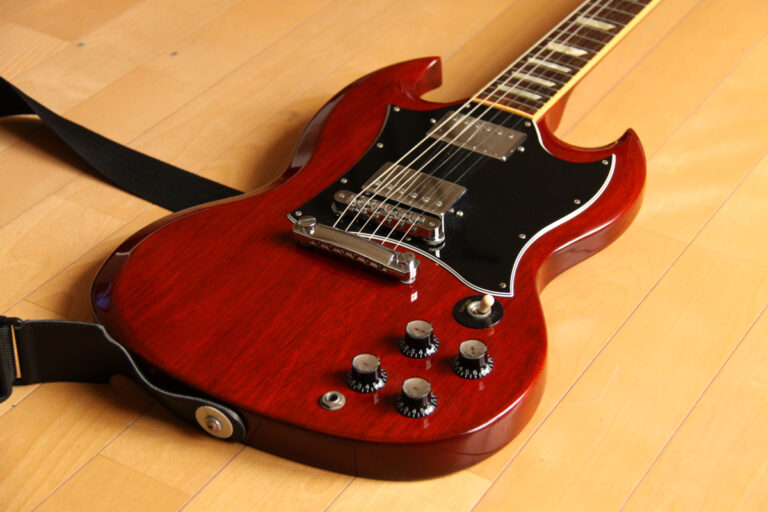
The Gibson SG was acquired alongside the Les Paul in 1974 — a third electric guitar option that provides the SG’s specific double-cutaway, lightweight, mahogany body character. The SG’s brighter, more aggressive character compared to the Les Paul’s warmer sustain adds a third tonal option to the Hillage guitar vocabulary: neither the Stratocaster’s single-coil sparkle nor the Les Paul’s full humbucker warmth but the SG’s specific combination of humbucker output and the lighter body’s different resonance character.
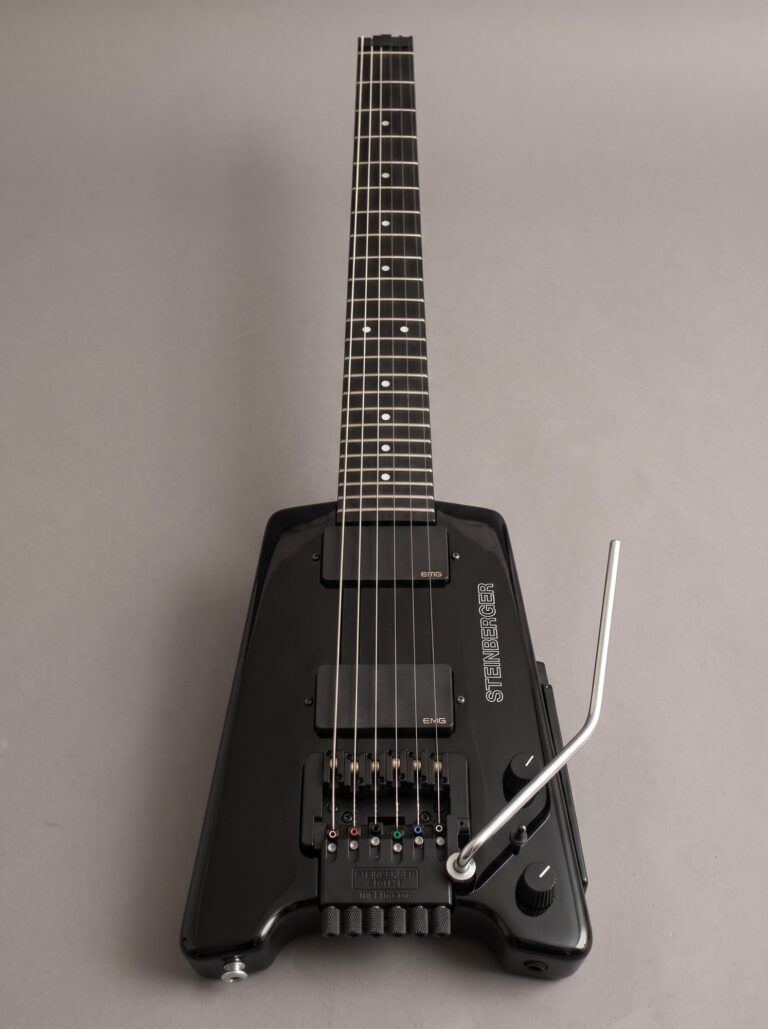
With Gong and the Steve Hillage Band, he uses a Steinberger GL2T guitar. The Steinberger GL2T — the headless, compact, composite-body guitar from Steinberger Sound — is as radical a departure from the vintage Strat and Les Paul as the System 7 electronic dance music is from the Fish Rising psychedelic rock. The Steinberger’s specific character: the composite body’s different resonance profile, the headless design’s improved tuning stability and different physical weight distribution, the EMG active pickups’ high-output, noiseless character. The adoption of the Steinberger for the modern Gong and Steve Hillage Band work reflects the practical requirements of contemporary touring: the Steinberger’s reliability, durability, and specific tonal character serving the modern performance context.
Amps
With Gong and the Steve Hillage Band, he uses a Fender Twin FSR Amp. The Fender Twin FSR (Factory Special Run) — a specific Fender Twin variant — provides the clean, high-headroom American amplification that the echo-and-effects-heavy Hillage signal chain requires: enough clean headroom for the multiple delay repeats and modulation effects to develop without the amplifier adding unwanted coloration to the processed signal. The Fender Twin’s specific American character is the correct amplification platform for the Hillage approach: transparent enough to let the effects’ specific character speak clearly, powerful enough to fill the stage volumes that live psychedelic rock performance requires.
The specific amplifiers of Hillage’s 1970s Gong and early solo period are not comprehensively documented across available sources, but the Gear Page forum community’s investigation of the period documents the echo and effects as the primary recorded character, with the amplification providing the clean platform that the effects processed. The tape delay, the Eventide harmonizer, and the other effects dominate the sonic character of the Fish Rising and L recordings; the amplifier is the transparent foundation rather than the active tonal shaper in the Hillage signal chain.
Effects
Echo gave him “instant sense of space and psychedelic dreamscape adventure,” and became an inseparable part of his own sound. The echo is the foundational Hillage effect — the specific spatial and temporal processing that defines the Hillage guitar sound more than any other single element of the signal chain. The specific “dotted semiquaver and dotted-quaver echo” that Hillage describes in the Innerviews interview — he does some very tight rhythmic playing, as well as using dotted semiquaver and dotted-quaver echo live — is the specific rhythmic application of the echo effect that distinguishes his approach from the simple atmospheric echo delay: the echo is set to rhythmic subdivisions that create a specific polyrhythmic interplay between the dry guitar signal and the wet echo repeats. The dotted semiquaver is three-sixteenth notes (a dotted eighth note = three-sixteenths); the dotted quaver (dotted eighth note) is slightly longer. Both create specific rhythmic echo patterns that interact with the guitar’s melodic lines to produce the specific Hillage psychedelic rhythmic texture.
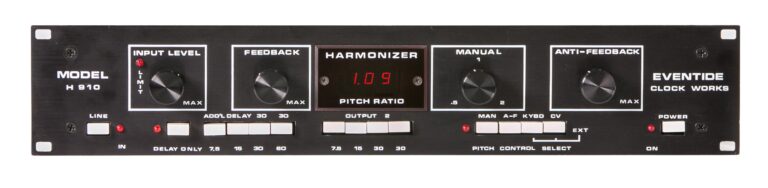
The Gear Page forum community’s investigation of Hillage’s 1970s gear identifies the Eventide H910 harmonizer as a documented effects unit — he gives Eventide some credits in one of the LPs (L, Green, Motivation Radio, Fish Rising). The Eventide H910 Harmonizer — one of the first commercially available digital pitch-shifting units, introduced in 1975 — produced the specific pitch-harmonization and detuning effects that are audible in the Fish Rising and L recordings. The H910’s ability to add specific intervals of pitch-shifted guitar above or below the dry signal creates the specific “infinite harmonics” quality of the Hillage psychedelic guitar — the sensation that the guitar is simultaneously playing multiple pitches from a single note, spreading upward into the echo-drenched dreamscape.
The Gear Page forum community identifies the MuTron III as the source of the swell/attack effects in Hillage’s recordings — the swell/attack effect is from the MuTron III. The MuTron III envelope filter — the auto-wah unit that tracks the guitar signal’s amplitude and produces filter modulation in proportion to the pick attack — produces the specific swell quality of notes that open up after the initial attack, the guitar signal expanding from the pick’s initial bite into the full resonance of the sustained note. In the Hillage context, the MuTron III’s swell character combined with the echo’s spatial repetition produces the specific sensation of notes blooming in space — the pick attack initiating a sound that then develops and expands into the echo-drenched psychedelic environment.
The glissando technique — the slide from one pitch to another along the string’s length, producing a smooth, continuous pitch transition rather than the discrete interval of a standard note change — is the most technically distinctive element of Hillage’s guitar playing. His style is about scales, modes, and phrasing as well as the echo effect. The glissando’s specific contribution to the psychedelic guitar approach: the smooth pitch transition creates the sensation of continuous melodic movement rather than discrete note statements, suiting the “dreamscape adventure” quality of the echo-drenched environment. The glissando between notes — when the guitar seems to pour from one pitch to the next rather than jumping between them — is what gives the “electric gypsy” (one of Hillage’s album titles) quality its specific non-Western, non-discrete-interval character.
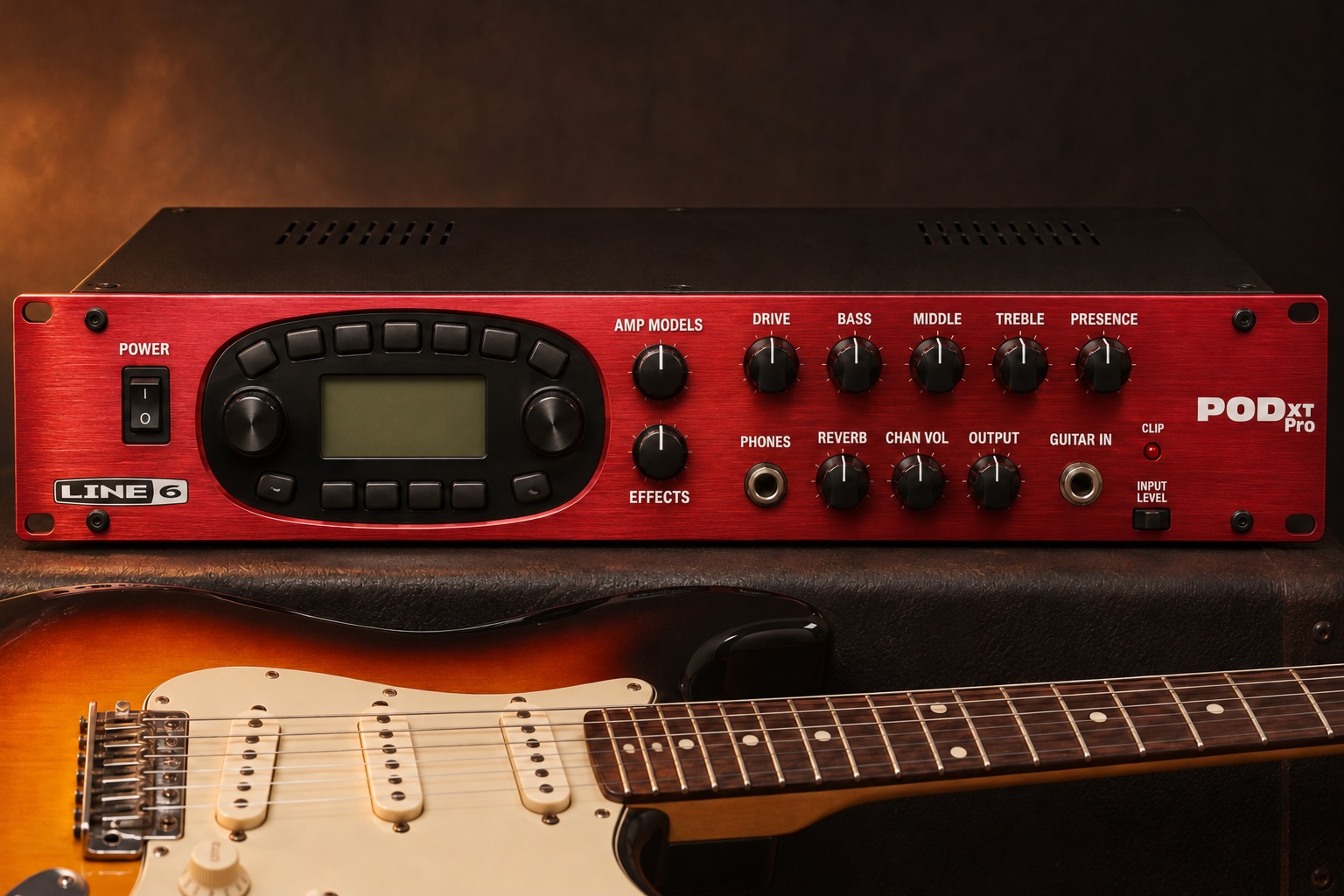
With Gong and the Steve Hillage Band, he uses a Line 6 PODxt Pro rack unit with a Line 6 pedal board. The Line 6 PODxt Pro provides digital multi-effects processing for the modern performance context — the contemporary equivalent of the vintage echo, Eventide harmonizer, and MuTron III that defined the 1970s Hillage sound, now available in a single rack unit with precise digital control and performance reliability. The PODxt Pro’s specific capabilities — digital echo, pitch-shifting, modulation, and amp modeling — allow the Hillage echo-and-effects approach to be executed in the modern touring context without the maintenance requirements and reliability challenges of vintage analog gear.
In System 7, his current duo with longtime partner Miquette Giraudy, the guitarist takes the echo effects that have been part of his sound since the invention of tape units and syncs their digital versions to programmed beats and synth arpeggios for music best described as “guitar meets EDM.” The System 7 approach — syncing the guitar’s echo effects to programmed electronic beats rather than to the organic pulse of a live rhythm section — is the specific evolution of the echo-as-dreamscape approach into the electronic dance music context. The echo’s dotted rhythmic subdivisions, originally played against a rock rhythm section, become the specific quantized rhythmic grid of the EDM context; the guitar’s glissando lines slide through the electronic beats in the same psychedelic way that they slid through Gong’s live rock performances. The dreamscape adapts to the available technology; the guitar approach remains consistent.
The specific 1960s London psychedelic moment that produced Hillage’s foundational musical commitments is worth documenting more precisely because it is the specific cultural formation that differentiated the British psychedelic tradition from the concurrent American psychedelic tradition. The American psychedelia of the Grateful Dead, Jefferson Airplane, and Hendrix was rooted primarily in the blues and country traditions, filtered through the specific San Francisco Bay Area counterculture. The British psychedelia of Hillage, Syd Barrett’s Pink Floyd, and the late Beatles was rooted in the English folk tradition, the art school intellectual culture, and the specific Eastern philosophy (the Hindu mantra tradition that appears in both “Within You Without You” and Hillage’s “Om Nama Shivaya” on L) that the British counterculture absorbed from the Indian music scene of the late 1960s. Hillage’s psychedelic approach is more cosmologically oriented, more philosophically structured, and more explicitly connected to the Eastern modal scales that the Indian influence brought into the British rock context. The glissando technique’s fluid pitch movement and the specific modal scales that Hillage inhabits both reflect this Eastern influence: the guitar moving between pitches in a way that Western discrete-interval notation doesn’t fully capture, inhabiting the space between notes that Indian classical music makes available. The echo provides the space. The modal scales provide the framework. The glissando provides the movement between pitches. The dreamscape is cosmological.
His connection to Gong’s specific cosmic mythology — the Radio Gnome Invisible trilogy’s narrative of Pot Head Pixies and the Planet Gong, the Octave Doctors and the invisible cosmic pyramid — is part of the philosophical context that gave the Hillage echo-and-glissando approach its specific orientation. The Gong universe is not merely aesthetic; it is cosmological, in the sense that it makes explicit claims about the nature of reality, consciousness, and the relationship between music and cosmic structure. Playing guitar in that specific context — where the music is understood as a literal vehicle for cosmic communication — gives the echo’s dreamscape quality a specific intentional weight that purely aesthetic psychedelia wouldn’t have. Hillage absorbed this cosmological orientation from the Gong universe and applied it to his solo career, where the Fish Rising, L, Motivation Radio, and Green sequence represents the specific individual expression of the cosmic guitar approach that the Gong collective had established as the shared framework. The fish rising from the cosmic ocean. The electric gypsy in the psychedelic dreamscape. The scales and modes organizing the cosmic communication. The echo making it sound like somewhere beyond the room.
Playing Style & Tone Philosophy
Steve Hillage plays guitar as a psychedelic visionary whose primary creative identity is the specific combination of the echo-drenched spatial environment and the technically disciplined scales-modes-and-phrasing approach that the “instant sense of space and psychedelic dreamscape adventure” requires as a structure. The dreamscape is not chaos; it is organized. The glissando technique is not imprecision; it is control. The echo is not atmospheric decoration; it is the primary compositional environment. Despite complex arrangements and swirling synths, Hillage’s music has never been your typical prog. The “not typical” quality is the specific contribution of the psychedelic dimension: the Canterbury-influenced melodic intelligence combined with the specific Eastern-philosophical, cosmologically oriented approach that Gong’s universe embodied, producing music that is simultaneously prog rock (in its complexity and ambition) and psychedelic (in its specific relationship to altered consciousness and expanded perception).
The paint-stripping aesthetic — removing the cosmetic finish from both the Stratocaster and the Les Paul to reveal the natural wood — is the physical expression of the Hillage guitar philosophy: the authentic material, not the commercial surface. The echo provides the space; the scales and modes provide the structure; the glissando technique provides the fluidity; and the natural-wood guitar provides the specific authentic resonance of the instrument as material rather than as commodity. The black paint taken off the Les Paul. The white paint taken off the Stratocaster. The psychedelic dreamscape assembled from the authentic material of the guitar’s wood and wire and the authentic acoustic physics of the echo’s magnetic tape.
How to Sound Like Steve Hillage
The Steve Hillage tone requires: a Fender Stratocaster (natural wood preferred — strip the paint if you feel strongly) or Gibson Les Paul (similarly natural); a Fender Twin or equivalent clean, high-headroom tube amplifier; dotted-rhythmic-subdivision echo (tape or digital, set to dotted eighth or dotted sixteenth note divisions at the song’s tempo); an Eventide harmonizer or equivalent pitch-shifting unit for the “infinite harmonics” quality; the MuTron III or envelope filter for the swell/attack character; and the glissando technique applied to scales and modes with the specific phrasing discipline that Hillage identifies as the content of the psychedelic space.
| Control | Setting (0–10) | Notes |
|---|---|---|
| Fender Twin (Clean — Echo Platform) | Volume: 6; Treble: 6; Bass: 5; Mid: 5; Reverb: 2 | The clean amplification platform for the echo-and-effects signal chain. Enough volume for the effects to develop fully in the frequency space without the amplifier adding unwanted tonal coloration. Minimal reverb — the echo effect provides all the spatial dimension required. The Twin’s American clean character is the transparent foundation. |
| Echo / Tape Delay (Dotted Rhythmic Subdivisions) | Time: dotted-eighth at song BPM; Repeats: 3–5; Mix: 40–50% | “Instant sense of space and psychedelic dreamscape adventure.” Set the delay time to a dotted eighth note at the song’s tempo (dotted eighth = 1.5 × eighth note duration). This creates the specific rhythmic echo pattern that interacts with the guitar’s melodic lines. Multiple repeats at 40–50% mix creates the specific Hillage spatial texture. The echo is the primary compositional environment, not a subtle enhancement. |
| Eventide Harmonizer (Pitch-Shifting — Infinite Harmonics) | Interval: +5th or +octave at low mix (10–15%) | The Eventide H910 contribution: a pitch-shifted copy of the dry signal at a fifth above or an octave above, mixed at low levels (10–15%) beneath the dry signal. The result: the guitar sounds like it contains extra harmonic overtones, the “infinite harmonics” quality of the Hillage psychedelic guitar approach. The subtle pitch-shifted layer adds the sensation of harmonic richness beyond what the guitar’s natural overtone series provides. |
| MuTron III (Envelope Filter — Swell/Attack) | Sensitivity: 5; Peak: 6; Mode: LP | The swell/attack effect: the envelope filter opens as the pick attack drives the signal’s amplitude, producing the note-blooming quality of the guitar expanding from the initial pick bite into full resonance. In low-pass mode, the filter sweeps from dark to bright as the amplitude increases, creating the swell quality. Combined with the echo, each note blooms and then its echo repeats also bloom — the psychedelic expansion of each musical gesture. |
| Glissando Technique | Slide between notes; smooth; continuous pitch | The primary physical technique: slide the fretting finger along the string between notes rather than lifting and replacing for discrete intervals. The continuous pitch transition suits the echo-drenched environment — the glissando blends into the echo repeat of the previous note, creating the specific fluid, pouring quality of the Hillage melodic approach. Practice with scales in pentatonic and modal frameworks, using glissandos between adjacent and non-adjacent notes to develop the vocabulary. |
| Scales, Modes, and Phrasing | Disciplined; organized; not random chaos | “My style is also about scales, modes, and phrasing.” The psychedelic space is organized by scale and modal content, not generated by random note selection. The Dorian mode, the Lydian mode, and the pentatonic scales provide the specific harmonic frameworks that the Hillage melodic lines inhabit. The phrasing — the rhythmic organization and dynamic arc of each melodic statement — provides the structure within the dreamscape. The echo provides the space; the scales and modes provide the map. |
Influence & Legacy
Steve Hillage’s influence on psychedelic and progressive rock guitar is the influence of the specific individual who demonstrated that the echo effect was not merely an atmospheric decoration but the primary compositional environment of a specific guitar approach. The “instant sense of space and psychedelic dreamscape adventure” that echo gave him became the specific tonal template for a generation of guitarists who heard the Fish Rising and L recordings and understood that the guitar’s expressive capabilities extended into the specific cosmic, planetary, Eastern-philosophical dimension that Hillage had developed. Hillage is considered one of the pioneers of progressive rock. The pioniering was specifically in the direction of the psychedelic guitar’s spatial and atmospheric possibilities, in the direction of the glissando technique’s fluid non-discrete-interval approach, and in the direction of the philosophical cosmology that gave the psychedelic approach its specific content beyond mere atmospheric decoration.
The System 7 evolution — the application of the echo-and-guitar approach to the electronic dance music context — is the specific demonstration that the Hillage guitar philosophy is not genre-bound: the echo that provided the dreamscape in the Gong and Fish Rising context provides the same dreamscape quality when synced to programmed EDM beats. This is viewed by Hillage as part of a natural progression. The progression from the 1970s tape echo through the Eventide digital pitch-shifting through the modern Line 6 digital rack unit is the technological evolution of the same fundamental approach: guitar in echo-drenched psychedelic space, organized by scales and modes and phrasing.
For the Canterbury scene connection that shaped Hillage’s musical context, see Andy Latimer’s Camel entry — a parallel Canterbury-influenced development that took the same foundational musical sensibility in a more restrained melodic direction. The Gong connection to the French avant-garde and the specifically cosmic, planetary dimension of the Radio Gnome Trilogy reflects the broader late-1960s British psychedelic tradition that also influenced Robert Smith’s atmospheric approach — both guitarists using echo and reverb as primary spatial tools, though in completely different emotional and philosophical contexts. And the glissando technique that distinguishes Hillage’s approach from the more discrete-interval approach of most rock guitarists connects to the broader exploration of non-Western scales and modes documented across the series’ prog and fusion guitarists.
The paint stripped off the white Strat. The paint stripped off the black Les Paul. The echo providing the instant sense of space and psychedelic dreamscape adventure. The scales and modes providing the map. The glissando technique providing the fluid motion through the space. The dotted rhythmic subdivisions organizing the echo’s repeats. The Eventide harmonizer adding the infinite harmonics. The MuTron III making each note bloom. Fish Rising. L. Motivation Radio. Green. Gong’s Radio Gnome Trilogy. System 7 with Miquette Giraudy. Steve Hillage, born August 2, 1951, London. Still pushing the sonic limits of rock guitar. Still in the psychedelic dreamscape. The echo is still inseparable.
Frequently Asked Questions: Steve Hillage Guitars & Gear
What guitars did Steve Hillage use?
Steve Hillage’s primary guitars were a white Fender Stratocaster (stripped of its white paint to natural wood finish, acquired at age 15 when his father bought it after Hillage won a school scholarship) and a black Gibson Les Paul (also stripped of its paint to natural wood, acquired in 1974 while preparing the Fish Rising album). He also used a Gibson SG acquired at the same time as the Les Paul. From the modern period, he uses a Steinberger GL2T with Gong and the Steve Hillage Band. The paint-stripping of both the Stratocaster and the Les Paul is a consistent aesthetic motif: removing the cosmetic surface to reveal the authentic material.
What is the key element of Steve Hillage’s guitar sound?
Echo. “Echo gave him an instant sense of space and psychedelic dreamscape adventure,” and became “an inseparable part of my own sound, and remains so.” The echo is not an optional atmospheric addition but the primary compositional environment — the space that the glissando guitar lines inhabit, the dreamscape that the guitar’s acoustic character is amplified into. Hillage adds: “But my style is also about scales, modes, and phrasing” — the echo provides the space, but the scales, modes, and phrasing provide the disciplined content within it. The specific “dotted semiquaver and dotted-quaver echo” that Hillage uses creates rhythmic polyrhythmic interplay between the dry signal and the echo repeats.
What is the glissando technique and how does Hillage use it?
Glissando is the technique of sliding the fretting finger along the string between notes, producing a smooth, continuous pitch transition rather than the discrete interval of a standard note change. In the Hillage context, the glissando creates the specific fluid, pouring quality of melodic movement — the sense that the guitar is continuously in motion between notes rather than jumping between them. Combined with the echo’s spatial repetition of each glissando, the result is the specific “electric gypsy” quality of the Hillage melodic approach, simultaneously disciplined (organized by scales and modes) and fluid (expressed through continuous glissando movement).
What was Steve Hillage’s role in Gong?
Steve Hillage was the lead guitarist of Gong from 1972 to 1975, recording the band’s seminal Radio Gnome Invisible trilogy: Flying Teapot (1973), Angel’s Egg (1973), and You (1974). These albums — released on Virgin Records — established Gong’s cult status and Hillage as one of the most gifted guitarists of the era. The specific Gong recording context — the communal house in France, the psychedelic culture, the cosmic-philosophical concept album framework — was the environment in which Hillage’s echo-and-glissando approach found its first fully realized expression. He left Gong in 1975 to pursue his solo career, beginning with Fish Rising.
What are Steve Hillage’s most important solo albums?
Hillage’s four classic solo albums of the mid-to-late 1970s are Fish Rising (1975), L (1976, produced by Todd Rundgren at The Secret Sound in New York), Motivation Radio (1977), and Green (1978). L is widely regarded as the peak: a record combining Gong-informed psychedelic space rock with progressive rock arrangements, including covers of Donovan’s “Hurdy Gurdy Man,” the Beatles’ “It’s All Too Much” (George Harrison), and the Hindu mantra “Om Nama Shivaya.” The Searching for the Spark career-spanning boxed set (22 discs) documents the complete Hillage career from early bands through the solo period to System 7.
What is System 7 and how does it connect to Steve Hillage’s guitar work?
System 7 is Steve Hillage’s ongoing duo project with longtime partner Miquette Giraudy, in which he takes the echo effects that have been part of his guitar sound since the invention of tape units and syncs their digital versions to programmed beats and synth arpeggios for music described as “guitar meets EDM.” The System 7 approach is viewed by Hillage as a natural progression from the psychedelic rock context: the echo that provided the dreamscape in the Gong and Fish Rising context provides the same quality when synced to EDM beats. The guitar approach remains consistent across the genre shift; only the rhythmic foundation changes from live rock to programmed electronic.
Who influenced Steve Hillage and who did he influence?
Hillage’s primary influences include Jimi Hendrix (the electric guitar pioneer whose specific relationship to the instrument as a psychedelic tool was the foundational reference), the British psychedelic tradition of the late 1960s (Donovan, the later Beatles, Pink Floyd), and the Canterbury scene’s jazz-rock fusion approach (Kevin Ayers, Robert Wyatt). His own influence extends to the subsequent generation of psychedelic and progressive rock guitarists who absorbed the specific echo-and-glissando approach from the Gong and solo recordings. His evolution into System 7’s electronic dance music also influenced a generation of electronic musicians who encountered his specific way of integrating live guitar into electronic production contexts.
Image credits
- Line 6 PODxt Pro (Modern): GuitarGangsters AI-generated reference illustration, not a photograph.
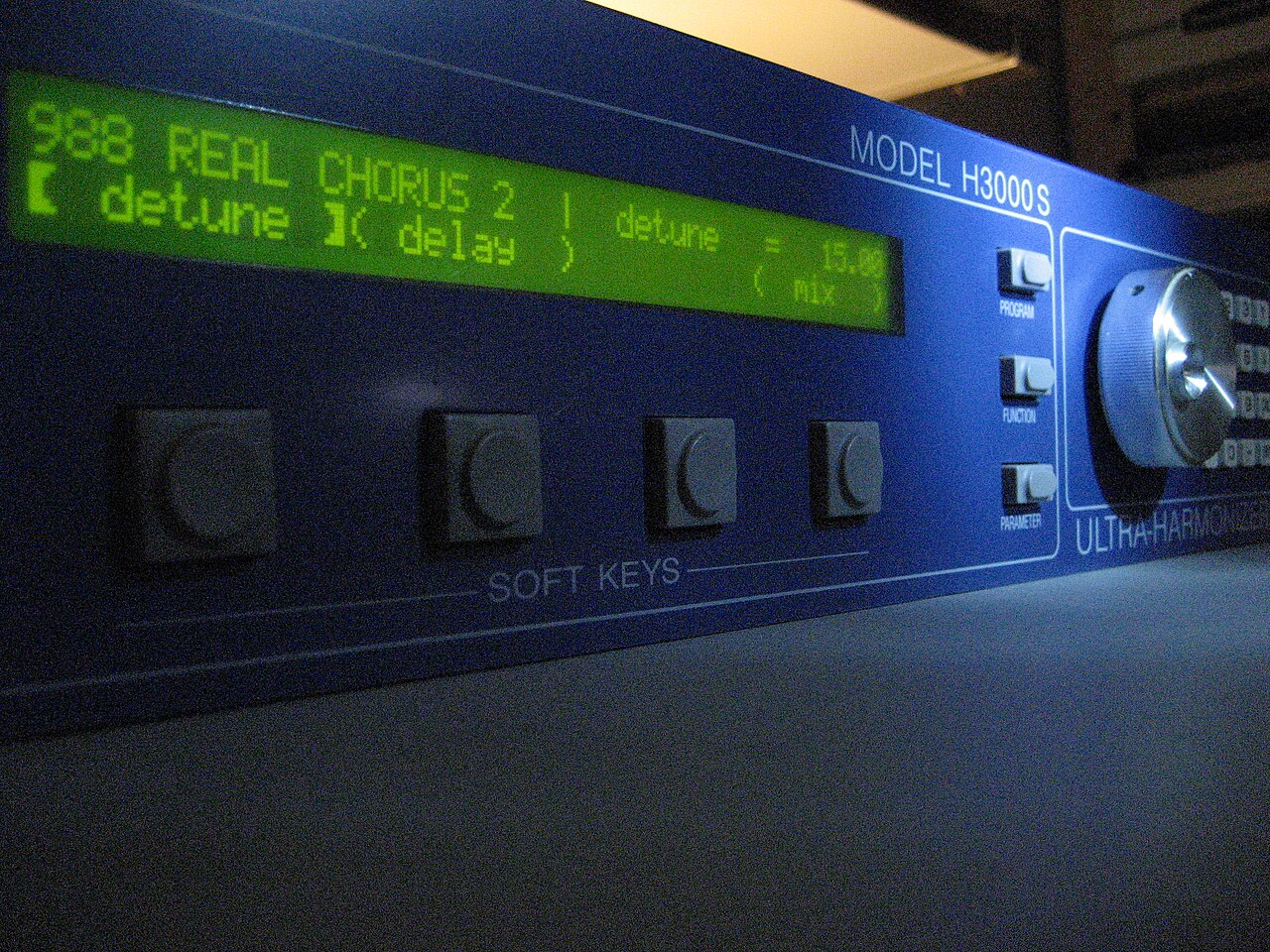
- An Eventide H3000 SE Ultra-Harmonizer seen from the side: John R. Southern, Wikimedia Commons, CC BY-SA 2.0.
- Top image: Steve Knight, Wikimedia Commons, CC BY 2.0.
- Gibson SG Standard: Sonya, Wikimedia Commons, CC BY-SA 4.0.
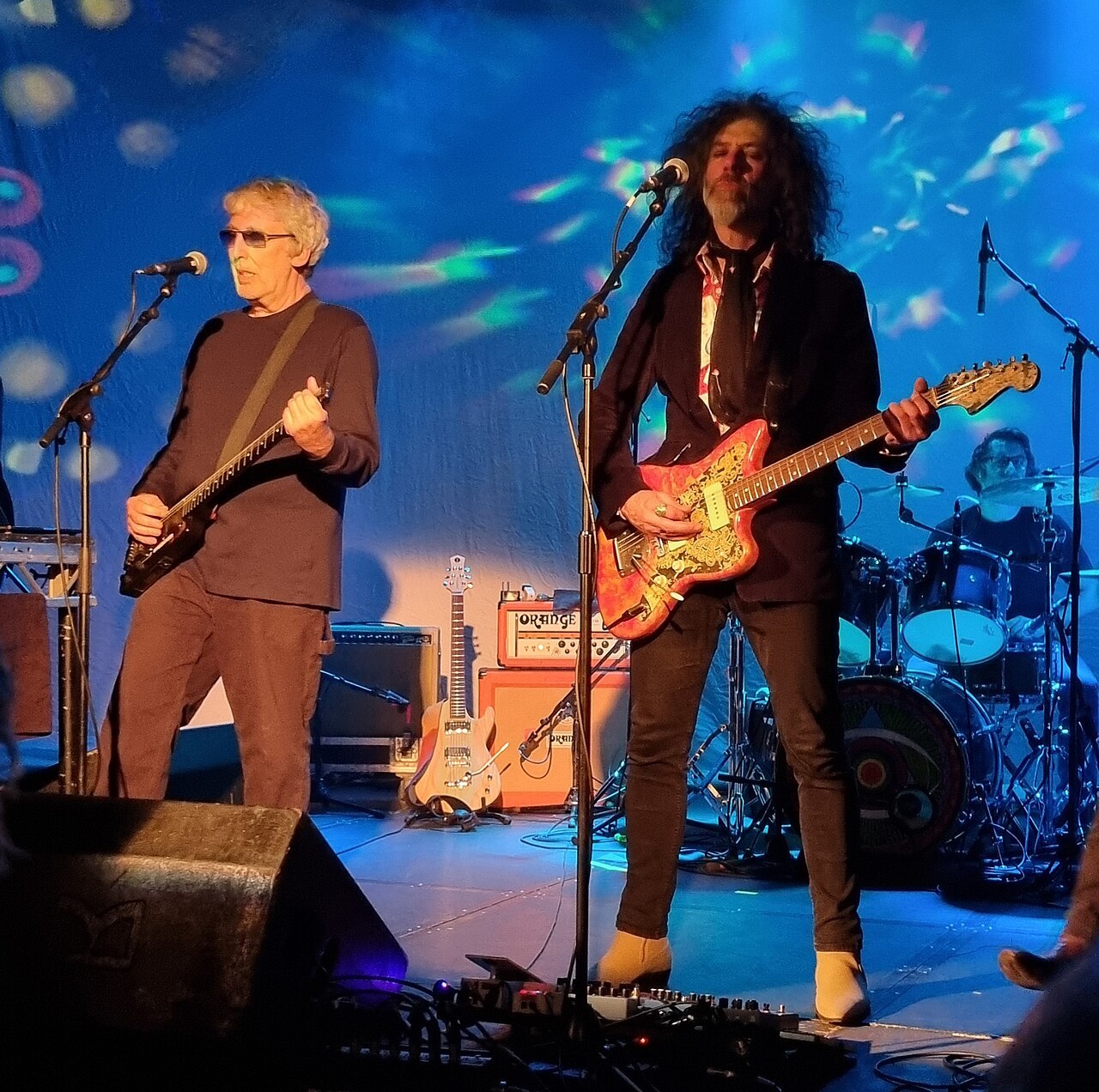
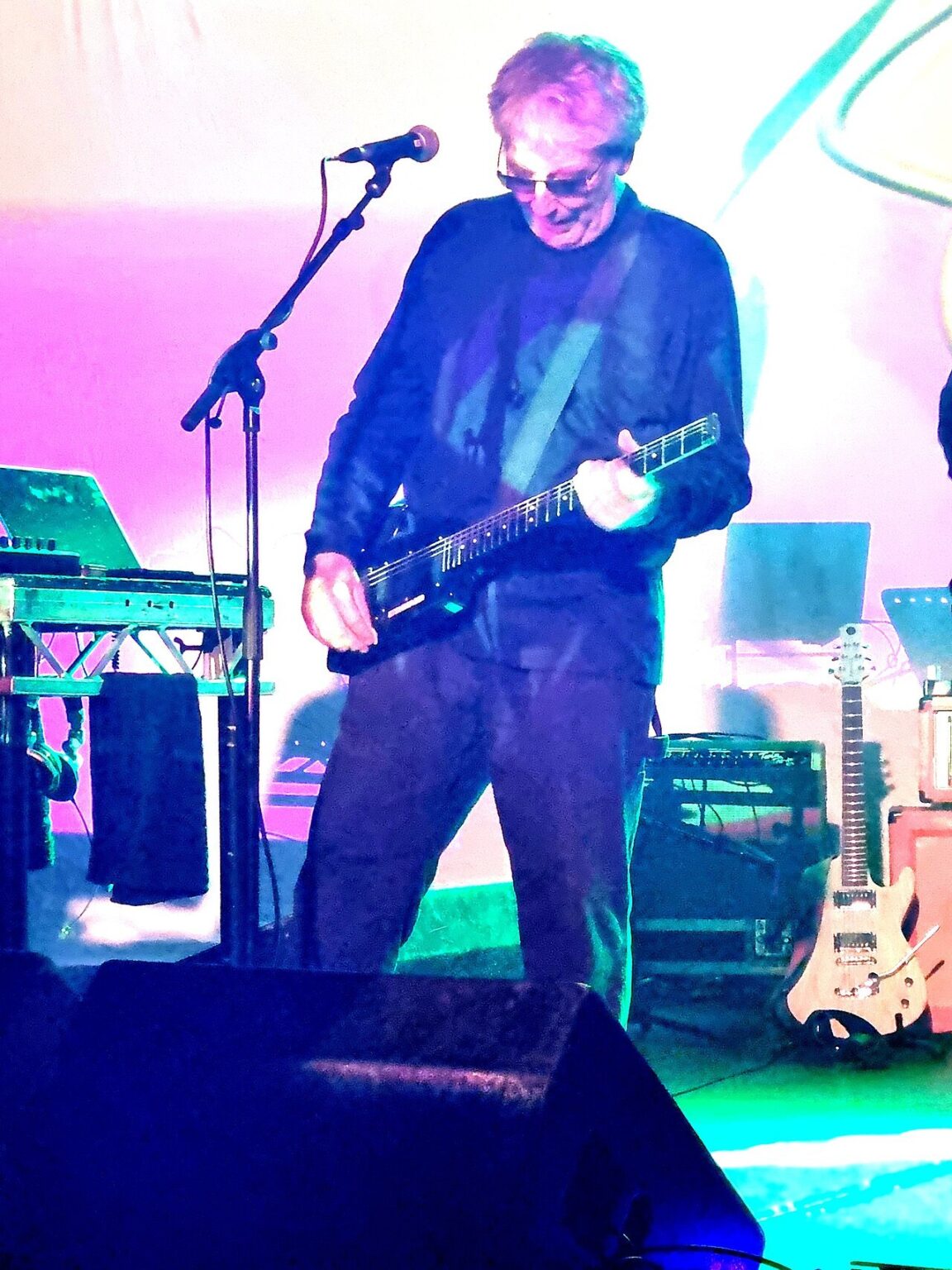
- Steve Hillage live: kitmasterbloke, Wikimedia Commons, CC BY 2.0.
- Steve Hillage live: kitmasterbloke, Wikimedia Commons, CC BY 2.0.
- Steinberger GL2T: GuitarGangsters AI-generated reference illustration, not a photograph.
- Eventide H910 Harmonizer: Nalzatron, Wikimedia Commons, CC BY-SA 4.0.