Thirty Years of Marshall Mods, Poured Into One Head: The Bogner Helios 100
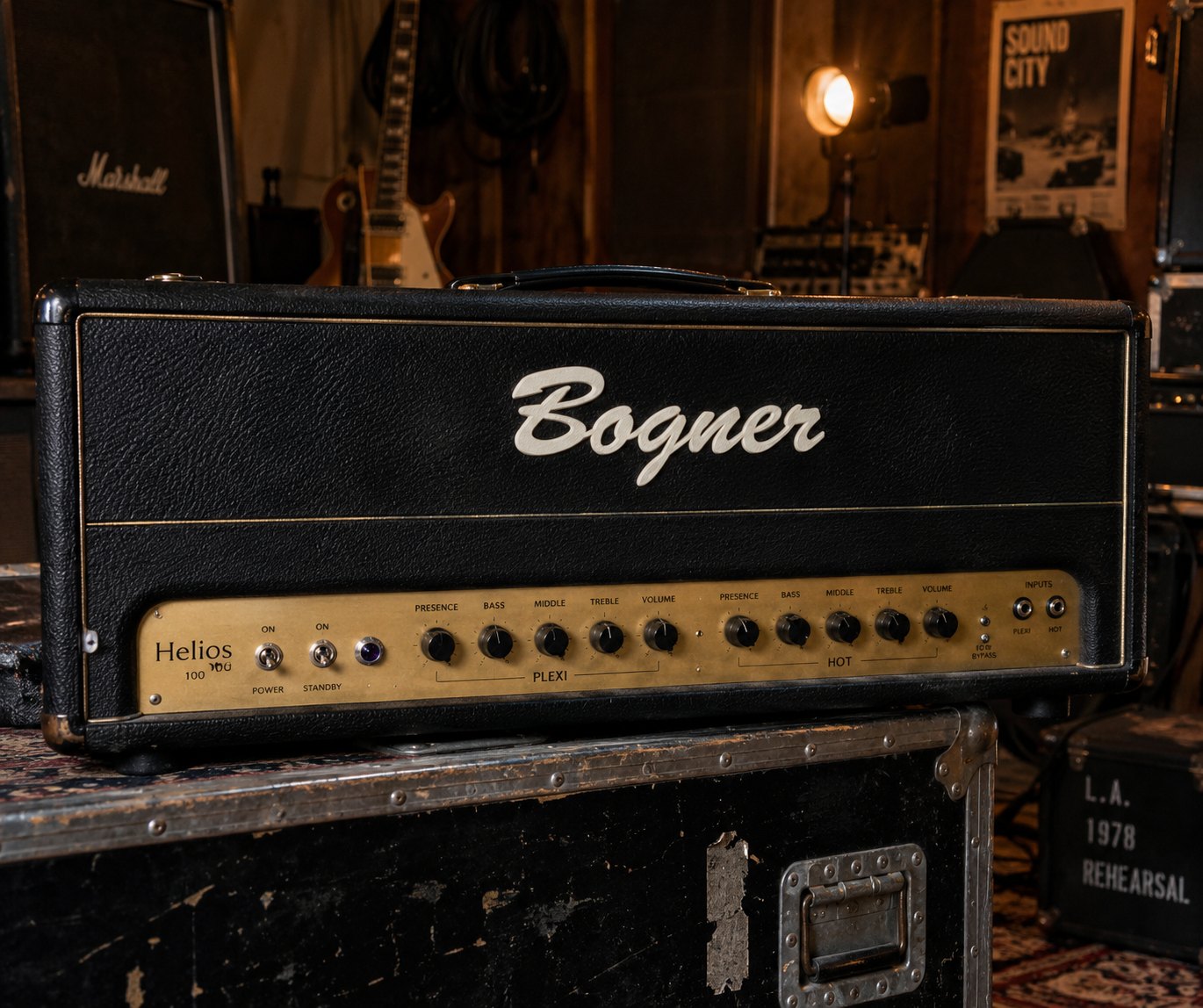
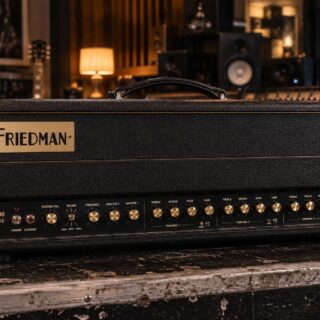
Bogner Helios 100 Head. AI-generated reference illustration, not a photograph.
Bogner Helios 100 reviewed: the 100W/30W handwired EL34 head that distills 30 years of Marshall Plexi modifications into one boutique head.
In the late 1980s, a young German technician named Reinhold Bogner arrived in Los Angeles with a soldering iron, a notebook full of circuit annotations, and a reputation for doing things to Marshall amplifiers that their designers never imagined. He rewired power sections, rebuilt EQ stacks, swapped transformers, and adjusted bias points until the results stopped sounding like any Plexi or JMP that had ever left Hanwell. His first major clients — Eddie Van Halen, Steve Stevens, Jerry Cantrell, George Lynch, Michael Landau — were the people who needed more from a Marshall than Marshall was willing to give them, and Bogner’s work on their specific instruments shaped the sound of hard rock through the 1990s in ways that are still being felt today.
Twenty-five years later, in late 2013, Bogner released the Helios: a hand-wired two-channel EL34 head built explicitly to crystallise everything he had learned from three decades of Plexi modification work. Not a high-gain boutique machine in the Ecstasy’s vein. Not another take on the JCM800. The Helios is Bogner’s considered answer to the question of what a modded Plexi actually sounds like when you apply every insight from a quarter-century of doing it for the world’s most demanding guitarists and do it right from the ground up, with no constraints imposed by the original Marshall chassis or component selection.
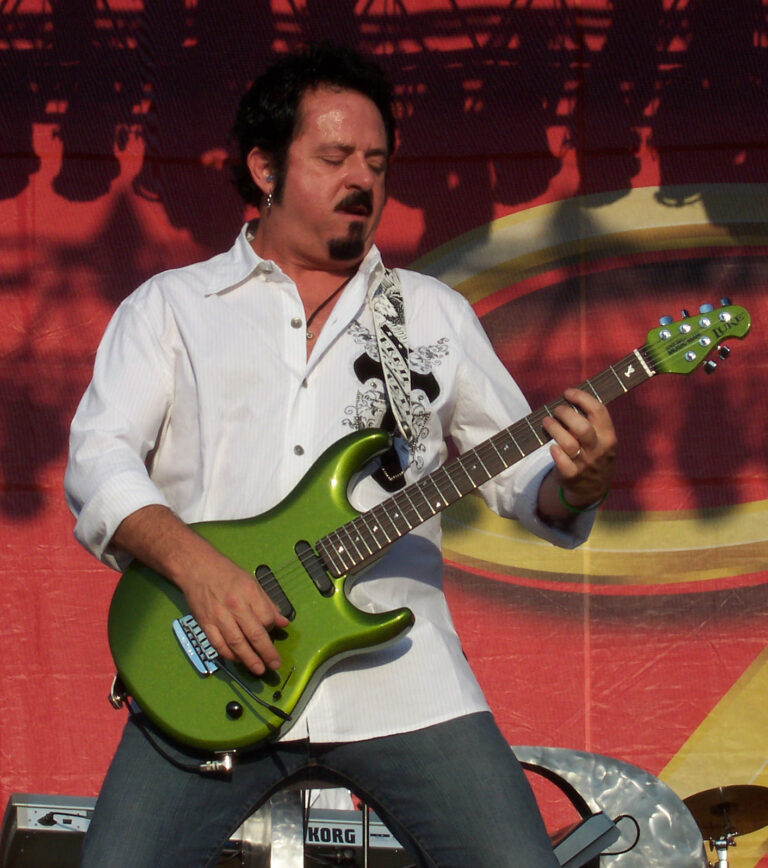
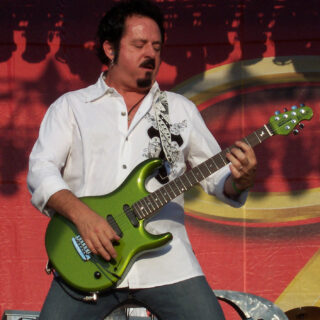
That the Helios became Steve Lukather‘s primary touring amp — three heads on the road with Toto, documented in Premier Guitar’s 2016 Ryman Auditorium rig rundown and with full amp settings published in Guitar World — is both a logical outcome and the strongest possible endorsement the amp could receive. Luke spent decades in the rack universe before deciding the Helios was the simplest, most honest thing he had ever plugged into.
A Brief History of the Modded Plexi Business
Reinhold Bogner’s entry into Los Angeles’s boutique amp ecosystem is one of the more colourful origin stories in the gear world. He had grown up repairing tube radios in Bavaria, developed a deep understanding of the interaction between transformers and output stages, and had begun modifying his own amplifiers as a teenager. After relocating to LA at 18, he connected with the city’s working guitarist network through Rich Williams of Kansas and through gear-rental specialist Andy Brauer, who introduced him to a circle of session players and touring artists who needed more from their backlines than any catalogue amp could deliver.
The work was circuit-level modification of Marshall amplifiers — principally the late-1960s and early-1970s Plexi and JMP designs that had become the default rock backline but were increasingly modded by serious players. Van Halen’s technique of running his Marshall at reduced voltage via a Variac had become legend by the late 1980s; Bogner understood exactly what that voltage reduction did to the power-section dynamics and how to replicate or improve on the effect through proper circuit design rather than mains-voltage manipulation. His Triple Giant preamp (approximately 25 units, 1989–1990) and Fish preamp — which became associated with the Megadeth/Slayer/Anthrax circle and with Cantrell’s early Alice in Chains recordings — were Bogner’s first standalone products, but the Plexi modification work continued throughout the 1990s alongside the Ecstasy’s own development.
The Bogner Ecstasy, introduced around 1992 and revised in 1997 as the 101B, answered the high-gain market: a complex three-channel amp with its own sophisticated EQ and voicing system that owed more to Bogner’s original design philosophy than to any specific Marshall ancestor. It became one of the defining boutique heads of the 1990s and 2000s. But it was not a Plexi. And for Bogner — who had spent his entire career thinking about what made Plexi-era Marshalls work, and how to make them work better — there was still a specific project left undone.
The Helios, released in late 2013 to mark the company’s 25th anniversary, was that project. Bogner revisited three decades of documented notes from Marshall modifications carried out for specific clients and distilled the results into a single hand-wired design. The front panel’s unmistakable Plexi-era aesthetic — chicken-head knobs, rectangular layout, the familiar two-input topology — is not nostalgia. It is a statement about what kind of amplifier this actually is: the boutique world’s most considered response to the question that Bogner’s entire career has been built on answering.
Specs at a Glance
| Feature | Specification |
|---|---|
| Power | 100 watts (JMP-100W mode) / 30 watts (JTM-30W mode), switchable |
| Power Tubes | 4× EL34 |
| Preamp Tubes | Multiple 12AX7, hand-wired point-to-point |
| Channels | 2 (plus dual input, effectively 4 voices) |
| Inputs | Plexi / Hot (Plexi-style or hot-rodded gain staging) |
| Channel 1 Controls | Volume, 3-way Bright switch |
| Channel 2 Controls | Gain, Bass, Middle, Treble, Volume |
| Shared / Global Controls | Presence, Pre EQ switch (Plexi Bright/Normal/Bright), 70/80 voicing switch, EQ Bypass |
| Back Panel | Bottom control, Punch switch, tube-buffered series FX loop (with Return level control), JMP-100W / JTM-30W mode switch |
| Speaker Outputs | 4Ω / 8Ω / 16Ω |
| Footswitch | Channel select + FX loop/boost (footswitch included) |
| Construction | Hand-wired point-to-point, made in USA |
| Price (current) | Approximately $3,099 (when in stock at authorised dealers) |
| Used Market | $2,000–$2,500 in excellent condition (Reverb, 2024–2026) |
The Circuit: Four Voices From Two Channels
The Helios’s two-input design is its most distinctive feature and the primary source of its tonal range. The Plexi input feeds Channel 1 with a clear, open clean tone and delivers classic Plexi-style crunch on Channel 2. The Hot input adds an additional gain stage before the channel circuitry, pushing Channel 1 into clean-to-Plexi crunch territory and Channel 2 into the kind of hot-rodded high-gain structure that Bogner spent the late 1980s building into modified Marshalls for specific touring clients. The result is four distinct voices — Clean (Plexi/Ch1), Classic Crunch (Plexi/Ch2), Crunch-to-Lead (Hot/Ch1), and High-Gain Lead (Hot/Ch2) — without any digital switching or programmable memory. The catch, noted by every reviewer, is that you cannot switch between Plexi and Hot inputs via footswitch: that requires an A/B box between guitar and amp, or a manual cable change.
Within Channel 2, the 70/80 voicing switch is the most significant single control on the amp. The 70 position produces a dynamic, punchy character with more harmonic complexity and cleaner low-end definition — the mid-1970s British rock sound that occupies the space between hard rock and heavy metal, responsive to picking dynamics in a way that compressed gain stages are not. The 80 position adds gain and compression for a sound that, as Mixdown Magazine noted in their 2015 review, “is adaptable for everything up to thrash metal, especially when you use the Hot input for maximum gain.” The difference between the two settings is substantial: the 70 mode breathes and responds to dynamics, the 80 mode saturates and sustains. For rhythm players working at band volumes who need note separation, 70 is the more musical choice; for lead work that demands compression and sustain, 80 is the map.
The EQ Bypass switch on the front panel removes the tone stack from the signal path entirely, sending the preamp’s output directly to the power amp. Mixdown’s reviewer described the result as “super loud and punchy, great for blues-rock or if your band is called AC/DC” — which captures accurately what happens when you strip away the midrange shaping and let the raw output stage do all the work. In Bypass, the amp’s inherent midrange weight comes forward in a way that is very different from the EQ-engaged sound, and the volume increase is significant enough that it is most useful as a solo boost rather than a general working tone.
On the back panel, the Bottom control and Punch switch address the low-frequency response independently of the main EQ. Bottom is a continuous control that adjusts bass extension below the main EQ’s frequency range; Punch switches in an additional low-end response curve that sharpens the transient character of the low frequencies, making rhythm playing more percussive at high gain settings. These back-panel controls interact usefully with the JMP/JTM mode switch: in JMP-100W mode, the four output tubes run at full voltage for the familiar large-transformer 100W Plexi feel; in JTM-30W mode, the output stage runs at reduced plate voltage, introducing earlier compression and a softer, more yielding low-end response that sits closer to the original small-transformer JTM designs of the early 1960s. The designation is deliberate: JMP references the later high-power Marshall Job Master series heads, JTM references the original Jim Marshall/Terry Marshall/Ken Bran series that established the circuit topology. Bogner’s 25 years of client notes informed which operating points worked best at each voltage.
Famous Players: Claims vs Reality
Of the four players linked to this amp – Steve Lukather, Jerry Cantrell, Eddie Van Halen, and Steve Vai – three connect to Bogner amplifiers that are definitively not the Helios.
Steve Lukather — Confirmed Primary Source
Steve Lukather is the genuine Helios 100 story, and it is documented from multiple independent primary sources. The Premier Guitar Rig Rundown published August 31, 2016 (John Bohlinger, Nashville’s Ryman Auditorium), tags Bogner explicitly in the Toto coverage and establishes the Helios as Lukather’s touring platform during that era. Bogner Amplification’s own Facebook page posted confirmation separately: “Steve Lukather using his Helios 100s on tour with Toto!” — plural, three heads. And Guitar World’s Chris Gill published Lukather’s exact Helios settings in a feature article dated July 9, 2021, documenting his tone on the I Found the Sun Again solo album track “Along for the Ride”:
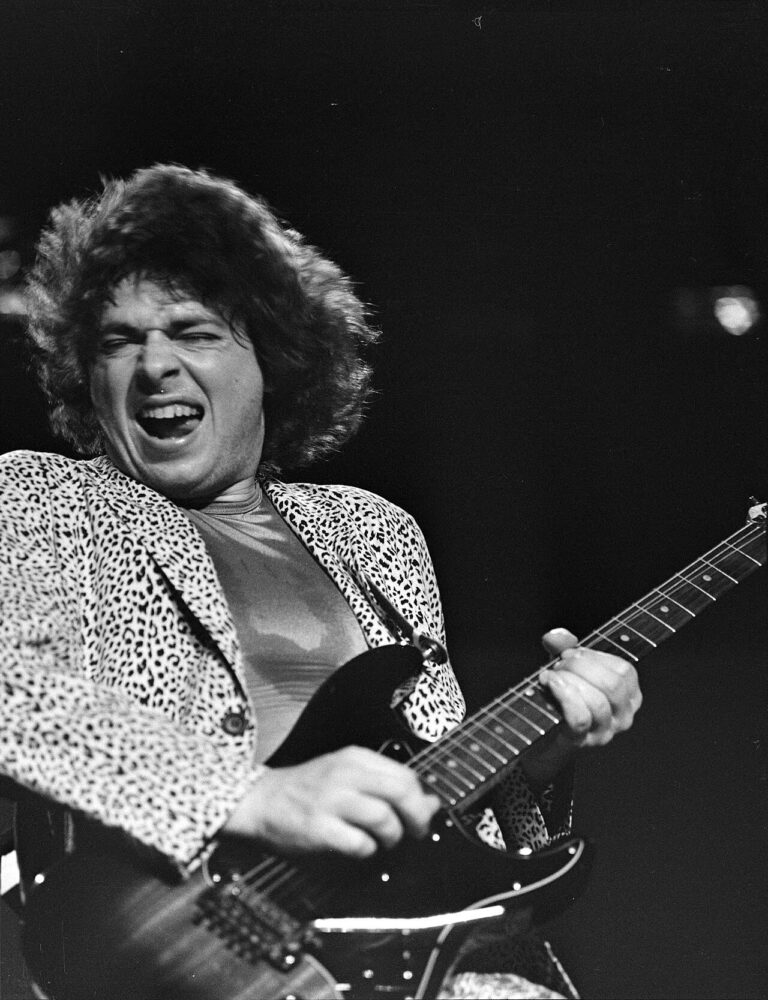
Bogner Helios 100, Hot input: Presence 4, Bass 5, Mid 5.5, Treble 5.5, Volume II 3, Gain II 9, Volume I 3, EQ In, 70/80: 80, CH1 Bright: Normal, Channel 1/2: 2, Pre EQ: Normal, Bottom 3, Punch switch: On, JMP100/JTM30 switch: 100. Into Bogner 4×12 with Celestion Vintage 30 speakers.
Those settings repay careful reading. Lukather uses the Hot input for maximum available gain, pushes Gain II to 9 (near the control’s ceiling), engages the 80 voicing for modern compression, keeps the EQ relatively balanced with nothing dramatically boosted or cut (bass and treble at 5, mids at 5.5), and engages the Punch switch for percussive low-end attack. The master EQ is engaged rather than bypassed. The result is the kind of rich, full-bandwidth overdriven tone he deploys for rhythm and lead work alike on Toto’s touring rig — a fundamentally simple setup that depends on the amp’s own character rather than extensive external gain staging. Guitar World’s Gill noted that Lukather “used to rely on a sophisticated rack setup to access a wide variety of studio-quality tones, but more recently he’s adopted a much simpler approach, relying on his versatile Ernie Ball Music Man Luke signature guitars, classic Marshall-style Bogner Helios 100 half-stacks and an assortment of stomp boxes.” The Helios is the anchoring element of that simpler approach. Three of them, on standby rotation, confirm the level of commitment.
Jerry Cantrell — Not a Helios Player
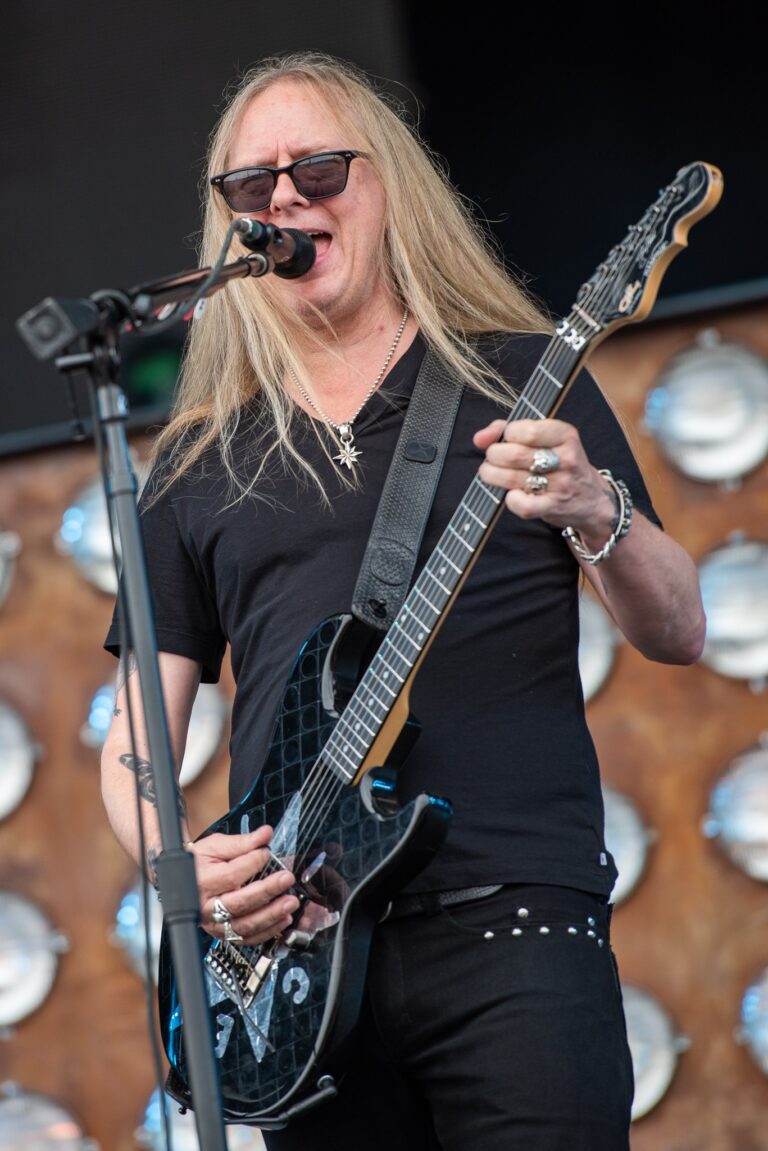
Jerry Cantrell‘s relationship with Bogner is real but predates the Helios by decades and involves a completely different amp. As established from Cantrell’s own words and a 2024 Premier Guitar Rig Rundown, his Bogner connection is the Fish preamp — his own statement: “The first couple records we did, Facelift and Dirt, was basically a Marshall modified by Bogner, then I started using the Fish for many years.” His current touring rig centres on the Bogner Fish All Tube Preamp and Fryette power amplifiers, alongside his Friedman JJ-100 signature amp. The Helios is not in that rig. Cantrell is a Bogner brand connection in the deepest historical sense — he was one of Reinhold’s early clients, and the modified Marshall that drove Facelift is part of the amp’s origin story — but that is a relationship with Bogner’s modification work in the late 1980s, not with the Helios head introduced in 2013.
Eddie Van Halen — Pre-Helios by 24 Years
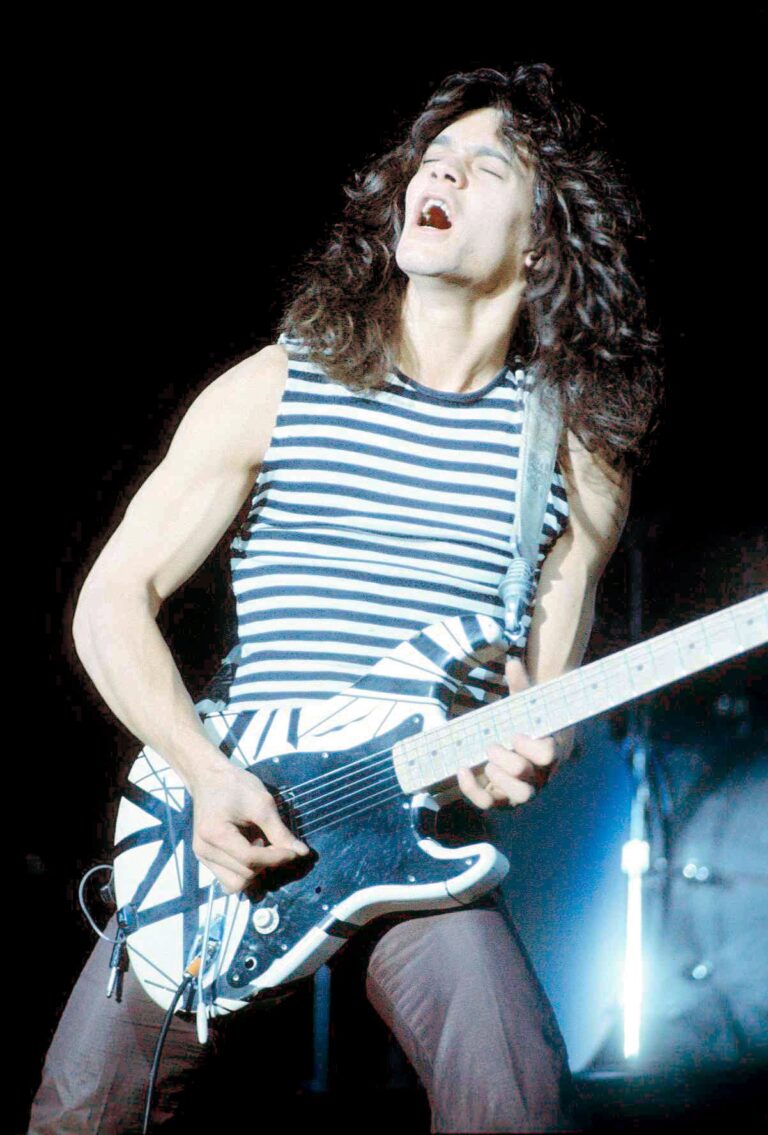
Eddie Van Halen was one of Reinhold Bogner’s first clients, ordering custom Marshall modifications in approximately 1989–1990 — work that predates the Helios 100 by twenty-four years. By the time the Helios was announced in late 2013, Van Halen’s touring and recording sound had been defined by the Peavey 5150 and the EVH 5150III for over two decades. Van Halen died in October 2020, six years after the Helios’s commercial release. There is no primary source placing him on a Helios at any point. The Helios’s JTM-30W power mode is a conceptual nod to the voltage-reduction technique he made famous — lowering plate voltage to get earlier power-tube compression, exactly what Variac operation achieves — but conceptual acknowledgment of a technique is not the same as documented use of a specific amplifier.
Steve Vai — Ecstasy 100A, Not Helios
Steve Vai‘s Bogner connection is the Ecstasy 100A — a loaner used for the Sex & Religion and Alien Love Secrets era in the mid-1990s, running its preamp section into a VHT 2150 power amp rather than the Ecstasy’s own output stage. That connection is documented; Vai on a Helios is not. The Helios did not exist until 2013, by which point Vai’s rig had moved through several other configurations. His presence on Bogner’s artist roster reflects the brand relationship established in the Ecstasy era, not a Helios-specific connection.
Lance Lopez — Equipboard-Level Evidence
Lance Lopez, the Texas blues-rock guitarist, appears on Equipboard’s Bogner Helios 100 listing and is associated with the amp through Bogner Amplification’s own artist programming, including a studio video on Bogner’s channel. No Premier Guitar Rig Rundown or instrument-specific interview has been located that confirms the connection to this specific SKU against photo or video evidence. Lopez plays a recognisably Plexi-influenced style that suits the Helios perfectly — the amp was essentially designed around the sensibility his music represents — and his listed connection is the most contextually plausible undocumented story in the Helios’s player roster. Treated as probable brand-level association pending stronger primary-source confirmation.
How It Sounds: Tone Analysis
The Helios occupies a specific tonal register that is distinct from both the Ecstasy and the stock Marshalls it references. Where the Ecstasy 101B is dense, EQ-sculpted, and capable of sustaining high-gain tones that Plexi-era circuits cannot approach, the Helios is rawer, more open, and more physically responsive to how hard the strings are struck. Mixdown Magazine’s 2015 review captured something real about its character: “the spirit of a heavily modded Marshall but with the individuality to help you find your own tone.” The amp does not try to be the most gain-dense boutique head in the room. It tries to be the best version of what a Plexi can be when every component interaction is optimised from the outset rather than discovered via serial modification after the fact.
The frequency character is broadly mid-forward in the way that all Plexi-derived circuits are, but the tone stack’s interactivity means that small adjustments produce disproportionately large tonal results. The presence of the back-panel EQ Bypass reveals how much work the tone stack is doing: engaged, it gives the classic scooped British EQ shape with pronounced high-mids and managed low-mids; bypassed, the amp’s inherent midrange weight comes forward in a way that is very different from the tweaked EQ-in sound and substantially louder. Working players who need to cut in a live band will find the EQ Bypass position useful for specific solo moments — particularly for boosted lead tones where the extra volume is needed and additional presence sculpting is counterproductive.
The Punch switch’s effect on the low end is more musically useful than many similar switches on competing amps. It does not simply add bass weight — it sharpens the transient response of the low frequencies, which makes the difference between a blurred rhythm guitar and a percussive one at high band volumes. Combined with the Bottom control at moderate settings (Lukather uses 3 of 10 in his documented configuration), it provides a low-end profile that translates to a full mix without fighting the bass guitar or losing note-to-note definition at maximum gain.
Tone Recipes
Classic Plexi Crunch (Plexi Input / Channel 2 / 70 Mode)
Plug into the Plexi input. Channel 2: Gain 6, Bass 5, Mid 7, Treble 5, Volume 5. 70/80: 70. Presence 5. Bottom 2, Punch off. JMP-100W mode. EQ In. This is the amp at its most historically grounded — the mid-1970s British hard rock sound with more articulation and dynamics than a stock Plexi of the era ever delivered in practice. Roll the guitar’s volume back to 6 for clean tones; push it to 10 for the full crunch. The 3-way Bright switch on Channel 1 adjusts clean tone character if you switch channels for solo passages.
Lukather Live (Hot Input / Channel 2 / 80 Mode)
Settings sourced from Guitar World, Chris Gill, July 9, 2021. Hot input. Presence 4, Bass 5, Mid 5.5, Treble 5.5, Volume II 3, Gain II 9, Volume I 3. EQ In. 70/80: 80. Pre EQ: Normal. Bottom 3, Punch On. JMP-100W mode. Into Bogner 4×12 with Celestion Vintage 30 speakers. This is a high-output modern rock tone with enough compression to sustain lead lines and enough note-to-note definition to keep a Toto rhythm part intelligible in a large-venue PA. The 80 voicing’s compression is the key to the sustain; the Punch switch is the key to the attack. The balanced EQ (Bass 5, Mids 5.5, Treble 5.5) avoids the scooped character that can make hot-rodded amps lose clarity in the low mids. A ToneConcepts-style boost pedal with level high and drive low for solos only.
JTM Mode Blues-Rock (Plexi Input / Channel 2 / 70 Mode / JTM-30W)
Switch to JTM-30W mode. Plexi input. Channel 2: Gain 7, Bass 5, Mid 8, Treble 4. Presence 6. Bottom 4, Punch off. 70 mode. EQ Bypass. At medium volume through a closed-back 2×12, this produces a harmonically rich, slightly saggy dynamic lead tone with earlier power-tube compression than the JMP mode. The midrange emphasis of the bypassed-EQ setting combined with the JTM power section’s softer low end produces the kind of tone associated with British blues rock of the late 1960s — Clapton-era Bluesbreaker or early Cream — with considerably better reliability than a vintage amp and without the voltage-dependent inconsistency of actual Variac operation.
Hot-Rodded High Gain (Hot Input / Channel 2 / 80 Mode)
Hot input. Channel 2: Gain 8, Bass 4, Mid 6.5, Treble 4. Presence 7. Bottom 3, Punch on. 80 mode. EQ In. JMP-100W mode. With a transparent boost pedal (level high, drive zero) in front of Channel 2 on Hot input, this produces saturated but articulate high-gain rhythm tones in the region of late-period Van Halen or Lynch Mob records — the same tonal territory that Mixdown’s reviewer referenced with the George Lynch description of Channel 1 Hot in the published review. Keep Treble at 4 to avoid top-end brittleness at maximum gain; the Presence control handles air and cut without introducing harshness in the way a high Treble setting does.
EQ Bypass Blues (Hot Input / Channel 1 / EQ Bypass)
Hot input, Channel 1. Volume I at 7. EQ Bypass engaged. Presence 5. Bottom 0, Punch off. 70 mode. JTM-30W mode. This is the amp’s most raw configuration — guitar into a single gain stage and the power section, with no tone-shaping beyond Presence. Harmonically complex, dynamics-responsive, physically loud. The tone Mixdown described as “great for blues-rock or if your band is called AC/DC.” Works best with PAF-era humbuckers or single-coils; a clean Tube Screamer (drive at zero, level at maximum) in front firms up the attack without adding synthetic compression.
Comparisons
Against the Marshall 1959 Super Lead Plexi, the Helios offers everything the original cannot: switchable wattage, modern construction quality, a back-panel section for low-frequency control, a tube-buffered effects loop, and a Channel 2 that delivers gain levels the original 1959 can only approach via external pedals or Variac manipulation. The vintage Super Lead’s appeal — the specific feel of original transformers and NOS tubes that have decades of use in them — remains beyond any new amp’s reach, and at comparable used prices the original still wins for pure vintage authenticity. For touring reliability and studio repeatability at Plexi tones, the Helios is not close to losing that comparison.
Against the Marshall JCM800 2203, the Helios is more complex and considerably more expensive but covers different ground. The JCM800’s compressed, singing single-channel lead tone is its signature; the Helios is more dynamic, more tonally flexible, and more versatile across clean and crunch territory. A used JCM800 at $1,200–1,800 against a used Helios at $2,000–2,500 is a real-world market question, and the JCM800 is the rational answer for many players. The Helios wins on headroom, on the 70-mode articulation, and on the back-panel low-frequency control, which gives it an edge in modern recording and live mixing contexts.
Against the Bogner Ecstasy 101B, the Helios is a different amp from the same manufacturer. The Ecstasy is denser, higher-gain, EQ-rich, and three-channel; it is a modern boutique head that happens to use Plexi-era transformer and tube topology. The Helios is leaner, rawer, more vintage in dynamic feel, and prioritises responsiveness over maximum gain. Comparing them is like comparing a JCM800 to a 1969 Super Lead — related but not interchangeable. Players who want gain density and EQ precision go to the Ecstasy; players who want dynamic vintage response at boutique build quality go to the Helios. Running both in stereo is the answer for players who genuinely need both.

Against the Soldano SLO-100, the comparison is between two Plexi-derived designs with very different personalities. The SLO-100 is tighter, more linear, and more optimised for high-output American-adjacent lead playing; the Helios is more dynamically variable and more British in feel. Both are broadly derived from Plexi circuit topology, but the SLO’s power section produces a tighter, more defined low end where the Helios’s EL34s produce a more complex, midrange-heavy character. Players wanting American-tightened Plexi sounds gravitate toward the SLO-100; players wanting British vintage character with modern reliability gravitate toward the Helios.
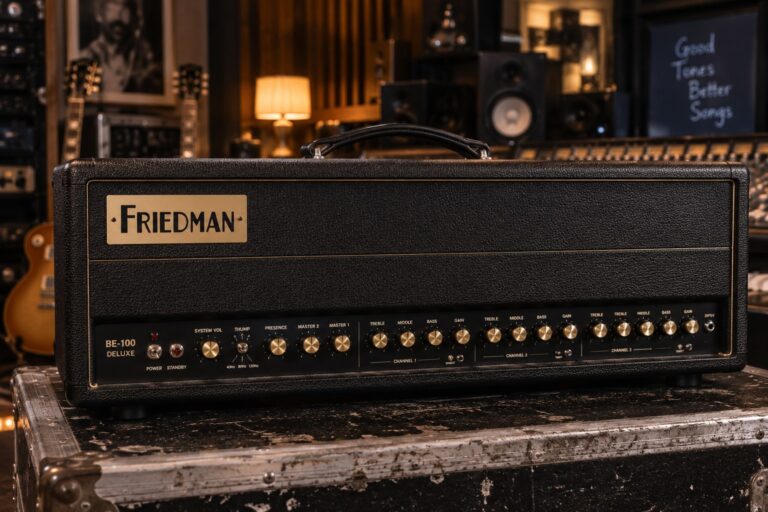
Against the Friedman BE-100 Deluxe, the comparison is between two premium US-built boutique heads rooted in Plexi ancestry. Dave Friedman worked alongside Bogner in the early 1990s, and the BE circuit shares some design DNA with the Bogner approach to Plexi modification. In practice the BE-100 Deluxe is more versatile (three independent channels, more aggressive high-gain character on its HBE channel) and more expensive at $3,999 vs $3,099. The Helios is simpler and more focused; the BE-100 Deluxe is more comprehensive. They rarely appear in direct competition because they appeal to players with different priorities — the BE-100 Deluxe to players who need multiple independent EQ’d channels, the Helios to players who want the most focused and purist expression of the modded-Plexi concept.
Buying Guide
The Bogner Helios 100 lists at approximately $3,099, consistent across Guitar Center, Gbase, and independent dealer inventory that still carries stock. It is a US-built, point-to-point hand-wired amplifier produced in limited quantities, which means availability fluctuates with Bogner’s production schedule. When a dealer has one in stock at that price, it is fair market value for what the amp is. On the used market, Reverb and eBay listings consistently show examples trading in the $2,000–2,500 range in excellent condition, occasionally lower for cosmetically worn examples.
The Helios 50 (50W, two EL34 power tubes, Variac mode instead of the JMP/JTM mode switch) trades at roughly $400–500 less used and covers most of the same tonal ground at lower volumes. The 50W power section breaks up earlier and produces slightly more compression at studio recording levels, which many players prefer; the Variac mode’s voltage reduction produces a different power-section feel from the JTM-30W mode on the 100 — both simulate lower-voltage operation but the mechanism and outcome differ slightly. The Helios Eclipse is a further variant with different voicing — more detailed high-mid character, slightly less bottom weight — suited to players who want the Helios’s dynamic response with a brighter top end. All three variants are regularly available on the used market; the 100 commands the highest prices.
What to check on used examples: the four EL34 output tubes are the first consumable. A matched quartet running at 100W needs rebias and likely replacement every two to four years of heavy gigging use. Ask when the tubes were last replaced and whether the amp was correctly biased for those specific tubes. The point-to-point wired board is repairable by any competent vintage-amp technician — component replacement is straightforward because every part is accessible. The original transformers are the irreplaceable element; ask whether the amp has ever been dropped or had its chassis disturbed significantly.
Ownership Notes
At full JMP-100W output, the Helios 100 is one of the louder amplifiers in the boutique market. In a rehearsal context or small venue, the JTM-30W mode is the practical working setting. It preserves the amp’s full dynamic character while bringing the output to a manageable level, and crucially the power reduction is genuine — the output stage runs at reduced plate voltage rather than a simple master-volume attenuation, so the power-tube compression characteristics change meaningfully between modes. The transition from JMP to JTM is audible as a different feeling amp, not just a quieter one.
Speaker matching matters more here than with most boutique amps. Bogner pairs the Helios with Vintage 30-loaded 4×12 cabinets, and Lukather’s documented rig confirms Celestion V30s. The Helios’s natural midrange emphasis can interact unfavourably with speakers that have a particularly heavy V30-style mid peak; in those cases, a G12M-65 Creamback or G12H-30 Anniversary offers a more balanced response. For recording, the most practical high-quality configuration is Channel 2 on Hot input at JTM-30W mode, close-miked: full power-tube character at levels that allow microphone placement within comfortable distance of the speaker cone without committing the neighbours.
FAQ
What does the 70/80 voicing switch actually do?
It adjusts the gain and compression character of Channel 2 to emphasise either 1970s-style dynamic punch (70) or 1980s-style compressed gain (80). The 70 mode is more responsive to picking dynamics and has cleaner low-end definition; the 80 mode adds gain and compression for a thicker, more sustained distortion sound. Most players use 70 for rhythm work and switch to 80 for high-gain leads, though Lukather runs 80 mode throughout his live set in his documented configuration.
What is the difference between Plexi and Hot inputs?
The Plexi input is a Plexi-style gain stage — classic, full-bandwidth, neutral. The Hot input adds an additional gain stage before the channel circuitry, giving Channel 2 a significantly higher-gain character and pushing Channel 1 into light crunch territory. There is no footswitch between inputs; switching inputs requires an A/B box between guitar and amp, or a manual cable change. Most players commit to one input for a performance and adjust channel gain accordingly.
Is the Helios 100 currently in production?
As of mid-2026, the Helios remains on Bogner’s active roster, though availability is constrained by the amp’s hand-wired construction and Bogner’s limited production capacity. Dealer stock is sporadic. Direct orders through authorised dealers are the most reliable path to a new example, and wait times of several months are normal. The used market via Reverb is the most reliable source for immediate availability.
How does the Helios relate to the Ecstasy?
They are very different amplifiers from the same manufacturer. The Ecstasy is a three-channel high-gain boutique head built on a modern platform with extensive EQ and voicing controls; the Helios is a two-channel modded-Plexi design built on a vintage platform with focused, minimal controls. The Ecstasy has more channels, more EQ control, and more gain density; the Helios has more vintage dynamics, a simpler signal path, and a more focused tonal range. They complement each other in stereo use but do not substitute for each other.
Can the Helios do metal?
In 80 mode with the Hot input and Channel 2 gain near maximum, the Helios delivers saturated high-gain tones that cover hard rock and lighter metal genres convincingly. Mixdown Magazine’s review noted it is “adaptable for everything up to thrash metal” in that configuration. It does not approach the gain density of a Mesa Dual Rectifier or a Friedman BE-100 Deluxe on their most extreme settings, and it does not produce the scooped-mid character associated with modern death metal or djent. For vintage heavy metal and classic hard rock it is genuinely capable; for extreme modern metal it is not the right amp.
What speakers work best with the Helios 100?
Celestion Vintage 30s are the documented pairing — Lukather uses them in Bogner 4×12 cabinets and that is Bogner’s own cab of choice. The G12M-65 Creamback is a softer alternative that reduces top-end brightness and adds lower-mid warmth. For home recording, the G12H Anniversary (30W) in a 2×12 provides a controlled, defined response that transfers well to a close-miked recording position. High-wattage ceramic speakers with very forward high-mids can turn the Helios’s natural brightness into harshness at higher gain settings.
What is the JTM-30W mode actually doing?
The JTM designation references the Marshall JTM-series transformers of the early 1960s, which had smaller iron and lower headroom than the JMP-series 100W transformers that followed in the late 1960s. In practice, the switch reduces plate voltage to the output tubes, lowering maximum power to approximately 30W and introducing earlier power-section compression. The result feels different from a master-volume attenuated 100W signal: the output tubes are working harder relative to their operating point, producing harmonic saturation and a more responsive dynamic feel rather than clean attenuation. The 50W Helios’s Variac mode achieves a similar voltage reduction via a different mechanism.
Why does Steve Lukather use three Helios 100 heads on tour?
Redundancy and wet/dry/wet configuration. One head drives the center wet signal through time-based effects, one drives the dry signal, and the third is on standby as an immediate backup if either fails mid-set. This is the standard professional touring approach for any backline-critical touring guitarist: if one head goes down, the stage crew switches to the backup without an audible gap. The fact that Lukather committed to three identical Helios heads — all requiring the same maintenance schedule and EL34 replacement cycle — says something specific about his confidence in the platform’s consistency from unit to unit, which is only possible because of the hand-wired construction’s repeatability.
Image credits
- Steve Lukather: Eva Rinaldi, Wikimedia Commons, CC BY-SA 2.0.
- Top image: GuitarGangsters AI-generated reference illustration, not a photograph.
- Steve Lukather: Kåre Eide, Wikimedia Commons, CC0.
- Jerry Cantrell: Stefan Brending (2eight), Wikimedia Commons, CC BY-SA 4.0.
- Eddie Van Halen: Carl Lender, Wikimedia Commons, CC BY 2.0.
Latest News
Related
On This Day
Monday 9 November
From this week: