Tom Morello Guitars & Gear: The Complete Guide to the Man Who Made a Guitar Sound Like a DJ
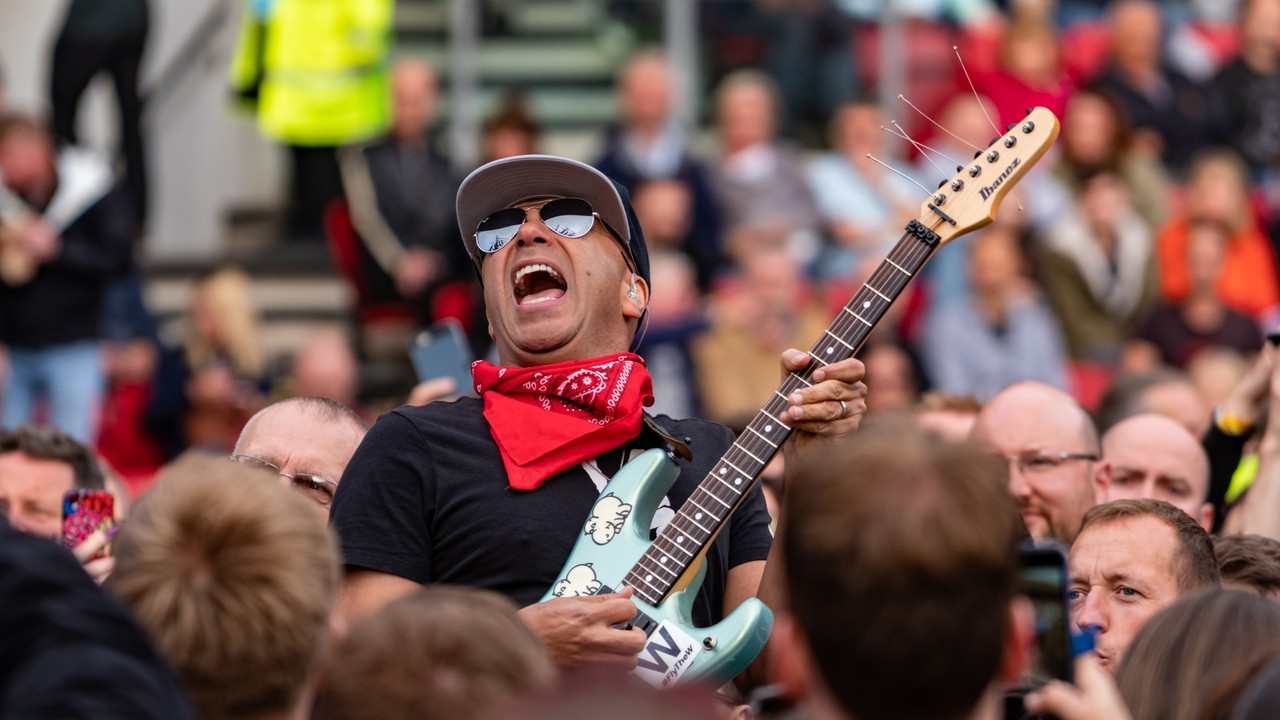
Tom Morello performing in Bristol, England, on 5 June 2019, as support for Muse. Photo: Tom Morello - MuseBristol 050619-10 (48035910042).jpg by Raph_PH, via Wikimedia Commons, CC BY 2.0 (https://creativecommons.org/licenses/by/2.0/). Cropped to 16:9, resized and re-encoded for web. Source: https://commons.wikimedia.org/wiki/File:Tom_Morello_-_MuseBristol_050619-10_(48035910042).jpg License: https://creativecommons.org/licenses/by/2.0/
At the age of twenty-something, Tom Morello went to see two cover bands play a throwaway gig. Both bands had shredders of what he called “Yngwie Malmsteen-level” technical ability. They were playing scales for eight hours a day. They could do everything he couldn’t.
He watched them and had the clearest possible creative insight of his career.
“So, rather than being a musician, I concentrated on being an artist. Instead of trying to be famous, I made music that was completely authentic.”
The result of that reorientation — away from technical competition and toward authentic expression — was the guitar playing on Rage Against the Machine’s debut album (1992), which made a guitar sound like a DJ scratching vinyl, a police siren, falling bombs, a malfunctioning machine, and a weapon. Nobody confused the sounds for anything other than a guitar; nobody had heard those sounds from a guitar before.
The guitar that made them: the “Arm the Homeless” Frankenstrat. The only part of it that survived from the original custom-build was the body. The neck came from a bin of used parts at a store called Nadine’s — a graphite knockoff neck he described as “an off brand, knockoff neck that just felt right to me.” The pickups are EMG active units. The bridge is an Ibanez Edge. The whammy bar is a Floyd Rose variant. The artwork — four smiling hippos, “ARM THE HOMELESS” scrawled in red paint, hammer and sickle — was added by Morello in the tradition of Woody Guthrie’s “This Machine Kills Fascists.”
It was “the worst guitar I’d ever played” when he commissioned it in 1986. “I spent all my money making it. I was stuck with it. So I started writing songs.”
The Grammy-winning song “Tire Me” was recorded on a $40 plywood guitar. The most iconic sounds on Rage’s debut were made with this worst guitar. The lesson learned: “Musicianship isn’t about gear but rather the way we use it.”
He learned the lesson better than almost anyone in this series.
Background: Libertyville, Harvard, and the Man Who Decided to Be an Artist
Thomas Baptist Morello was born May 30, 1964, in Harlem, New York City, and grew up in Libertyville, Illinois. His father was Ngethe Njoroge, Kenya’s first ambassador to the United Nations; his mother was a teacher from a small Italian-American family in Libertyville. He grew up largely without his father, raised by his mother in what he has described as a predominantly white small-town environment, developing both his musical interests and his political consciousness simultaneously.
His first guitar was a $50 Kay SG copy. He also had a Gibson Explorer as a teenager. By his own account, his early guitar approach was conventionally oriented toward the 1980s heavy metal tradition — he was attempting to sound like Randy Rhoads and Nuno Bettencourt, practicing scales with the intention of becoming a technically impressive shredder. The two-cover-band epiphany changed that direction.
He attended Harvard University, graduating in 1986 with a Bachelor of Arts degree in Social Studies — a degree focused on understanding society, politics, and economics. At Harvard he became involved in political activism while continuing to develop musically. After graduation, he moved to Los Angeles to pursue music.
The pre-Rage bands: Electric Sheep (his high school band, which also included a young Adam Jones who would go on to form Tool); Lock-Up (his first California band). These bands were not commercially successful, but they provided the foundation for what followed.
Rage Against the Machine formed in 1991 with Morello, vocalist Zack de la Rocha, bassist Tim Commerford, and drummer Brad Wilk. Their self-titled debut album (1992) was one of the most politically and sonically radical mainstream rock albums ever released. “Killing in the Name of,” “Bombtrack,” “Know Your Enemy,” “Bulls on Parade” — these songs used Morello’s guitar as a political instrument as explicitly as Woody Guthrie used his acoustic guitar.
After Rage dissolved in 2000, Morello formed Audioslave with Chris Cornell and the rest of Rage. He has also released solo material as The Nightwatchman (acoustic folk-political), toured with Bruce Springsteen and the E Street Band, formed the supergroup Prophets of Rage, and continued solo work into the 2020s.
Tone note: He majored in Social Studies at Harvard. The guitar playing on Rage Against the Machine’s debut is Social Studies made into sound: the scratching-record technique on “Bulls on Parade” is hip-hop aesthetics applied to heavy metal guitar; the political slogans on the guitar’s body are Woody Guthrie’s tradition applied to a Frankenstrat. Everything he learned at Harvard about society, power, and resistance went directly into the music. The guitar was the instrument; the politics was the content.
The Rig: Tom Morello’s Guitars, Amps & Gear
Guitars: Two Primary Instruments and Their Stories
“Arm the Homeless” Custom Frankenstrat — The Primary Standard-Tuning Guitar
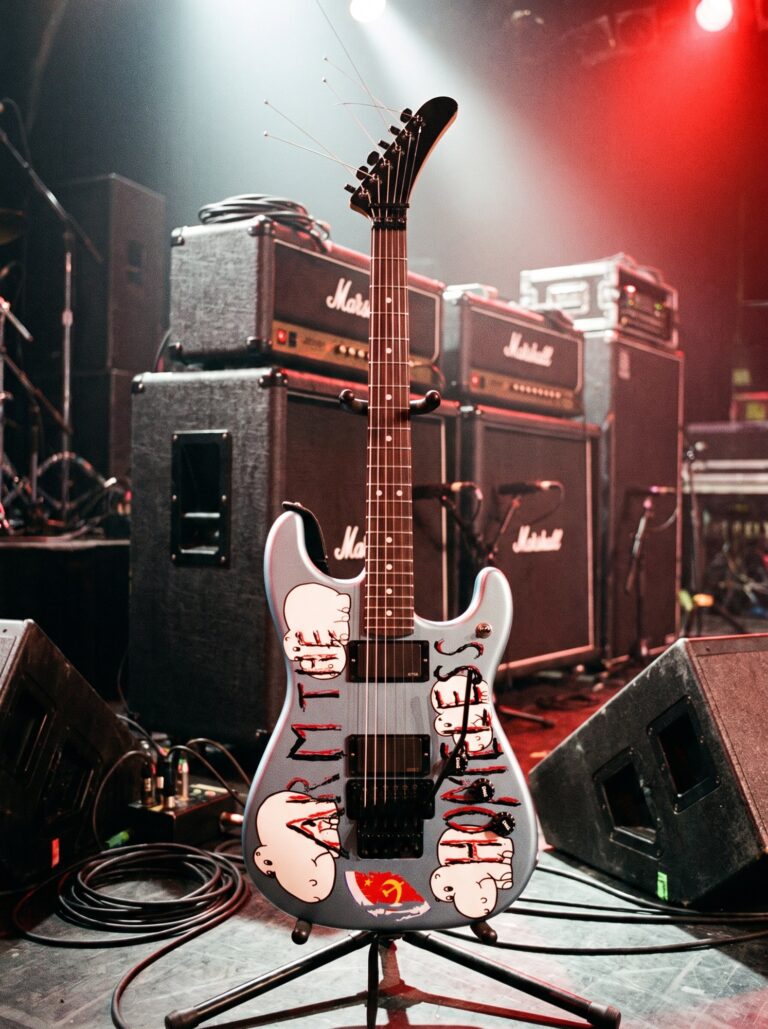
The “Arm the Homeless” guitar is the most famous Frankenstrat in rock music since Eddie Van Halen’s “Frankenstrat” — an instrument built from parts, modified beyond recognition, and defined by the artwork its owner applied rather than by any manufacturer’s design.
Its complete documented history:
1986 — The Original Commission: After moving to Los Angeles, Morello commissioned a custom guitar from Performance Guitar USA, a Hollywood shop whose owner Kenny Sugai had previously built guitars for Frank Zappa and Steve Vai. The specs were based on a Fender Stratocaster body, because Morello’s heroes at the time were players like Yngwie Malmsteen who used Stratocasters. The result was, in Morello’s own words, “the worst guitar I’d ever played. It was super disappointing. It was unplayable. It sounded absolutely terrible.”
1987-1989 — The Complete Rebuild: “Over the next year or two, it went through more than a dozen pickup swaps, several different vibrato bridges, ranging from Kahler to Floyd Rose, and three or four necks. The only original part of the guitar that remains today is its wood body.” Morello tried to make the guitar sound like Randy Rhoads and Nuno Bettencourt. He failed. In late 1988 or 1989, he gave up: “I’m going to stop whining, and I’m going to start creating. I’ve spent all my money on making this guitar. I had no more money left. This just has to be my guitar. I’m stuck with it.”
The Final Configuration:
- Body: Alder Stratocaster-style body — the only surviving original component
- Neck: Graphite knockoff Kramer neck found in a bin at Nadine’s Music Store — “an off brand, knockoff neck that just felt right to me.” Fender needed “20-25 iterations” to replicate this neck for the 2025 signature model because no specification existed for it
- Bridge: Ibanez Edge double-locking tremolo system
- Pickups: EMG H (single coil in humbucker housing) in the neck position; EMG 85 (active humbucker) in the bridge position
- Killswitch: The three-way toggle switch used as a killswitch — “Morello turns one pickup down or off and then switches between the middle and silent pickup to create the killswitch effect”
- Tuning: Standard tuning (E A D G B E)
- Strings: Ernie Ball Hybrid Slinkys .009-.046
The artwork was added over time. The hippos were drawn on years before the Whisky a Go Go gig: “We were set to play at the Whisky and, just before going over to soundcheck, I scrawled ‘Arm the Homeless’ on the guitar. I liked the juxtaposition of that kind of provocative and militant situationist slogan with those four smiling hippopotamuses all facing in one direction.”
The “Arm the Homeless” text was added in homage to Woody Guthrie, who wrote “This Machine Kills Fascists” on his acoustic guitar. The hammer and sickle followed. The political guitar as tradition, updated for the 1990s.
The front pickup’s specific contribution: “The bounce that’s in my contribution to the riffs of Rage Against the Machine have a lot to do with that front pickup.” The EMG H in the neck position — described as “a single-coil pickup disguised as a humbucker” — provides the specific articulate, bouncy character of the Rage rhythm riffs rather than the thicker, compressed character of a full humbucker. Morello confirmed: “One of the things that I find, that’s attributed to the ‘heaviness’ of my riffs, is a lot of them are played on a single-coil pickup.”
Tone note: He spent all his money making it. It was the worst guitar he’d ever played. He couldn’t afford to replace it. He gave up trying to make it sound like something else and started writing songs with the sounds it actually made. The result was the guitar sound on Rage Against the Machine’s debut album. This is not a lesson about finding the right gear. It is a lesson about what happens when you can’t change the gear and have to change yourself instead.
1982 Fender Telecaster (“Sendero Luminoso”) — The Drop-D Guitar
Tom Morello’s second primary guitar — used for all Drop-D songs in RATM’s catalog — is a 1982 Fender Telecaster that he acquired by trading his roommate a Marshall amp head. The roommate needed the head; Morello needed a guitar that could go into drop-D tuning without the complications of a locking nut.
Wikipedia confirmed the specific exchange: “He traded his roommate (he was in a band called Liquid Jesus). He needed a Marshall head and I needed a guitar that I could tune down, play grunge-worthy heavy riffs with.” Songs written and recorded with this guitar: “Killing in the Name,” “Freedom,” “Testify” — the Drop-D tuned riff monuments of Rage’s catalog.
The Telecaster’s specific setup: completely stock except for stickers. The “Sendero Luminoso” text (after the Peruvian communist guerrilla group) was painted on. For Drop-D material, he uses Ernie Ball Regular Slinkys .010-.046 rather than the .009 Hybrid Slinkys on the Arm the Homeless — slightly heavier to maintain appropriate tension in the Drop-D configuration.
Premier Guitar confirmed the trade and Morello’s framing: he gave up a 50-watt Marshall for the Telecaster. At the time, that was a significant gear sacrifice. The result was “Killing in the Name of” — one of the most played rock songs of the 1990s. The sacrifice had good ROI.
Tone note: He traded a Marshall 50-watt head for a Telecaster to have a guitar he could tune to Drop D. He gave up the amplifier for the instrument. “Killing in the Name” is in Drop D on the Telecaster. The specific song that opened Rage Against the Machine’s commercial career — the song that ends with “Fuck you, I won’t do what you tell me” repeated sixteen times — was written on the guitar that cost him a Marshall head. The trade was worth it.
Other Key Guitars
- “Soul Power” Stratocaster (Audioslave era) — Essentially a modified US Aerodyne Stratocaster; Floyd Rose-style tremolo; Seymour Duncan Hot Rails in bridge; custom toggle killswitch; used for most Audioslave material; features “Soul Power” text (Tom Morello’s Twitter persona)
- Gibson Les Paul Standard (cherry red, 1992) — Confirmed via Instagram; used in studio contexts
- Ibanez Talman (Kenyan flag finish) — Custom-made; maple neck/rosewood fretboard; three single-coil “lipstick” pickups; Ibanez Lo-Pro Edge tremolo; killswitch; Kenyan flag finish as homage to his father’s Kenyan heritage
- James Trussart steelcaster — Perforated hollow metal body; used during Rage reunion tour and with Bruce Springsteen; Hot Rails bridge, Alnico Pro II neck
- $40 plywood “St. George” Goya Rangemaster copy (Toronto) — Used to record Grammy-winning “Tire Me”; the lesson: cheap guitar, great result
- $50 Kay SG copy — First guitar
- Gibson Explorer (teenage) — Used frequently as a teenager before the Harvard and LA period
- Ibanez GA60SCE acoustic — Primary acoustic for Nightwatchman material
- Custom acoustic (black, flags + hammer and sickle) — Main Nightwatchman steel-string acoustic; features Kenyan, Italian, and American flags along with hammer and sickle symbols

Complete Guitar List (Key Instruments)
- “Arm the Homeless” Frankenstrat (1986/1988-89 rebuilt) — Standard tuning; EMG H neck + EMG 85 bridge; knockoff Kramer neck; Ibanez Edge trem; killswitch toggle; hippos + “Arm the Homeless” slogan; Ernie Ball Hybrid Slinkys .009-.046; primary for all standard-tuning RATM/Audioslave material
- 1982 Fender Telecaster (“Sendero Luminoso”) — Drop D tuning; completely stock; “Killing in the Name,” “Freedom,” “Testify”; traded for Marshall head; Ernie Ball Regular Slinkys .010-.046
- “Soul Power” Strat (Audioslave era) — Modified Aerodyne; Floyd Rose; Seymour Duncan Hot Rails; killswitch
- Ibanez Talman (Kenyan flag) — Lipstick pickups; Lo-Pro Edge; killswitch
- James Trussart steelcaster — Reunion tour and E Street Band
- $40 plywood “Tire Me” guitar — Grammy winner on a $40 instrument
Amps: One Marshall, Acquired by Accident, Used for Everything
Marshall JCM800 2205 (50-watt) — The Only Live Amp
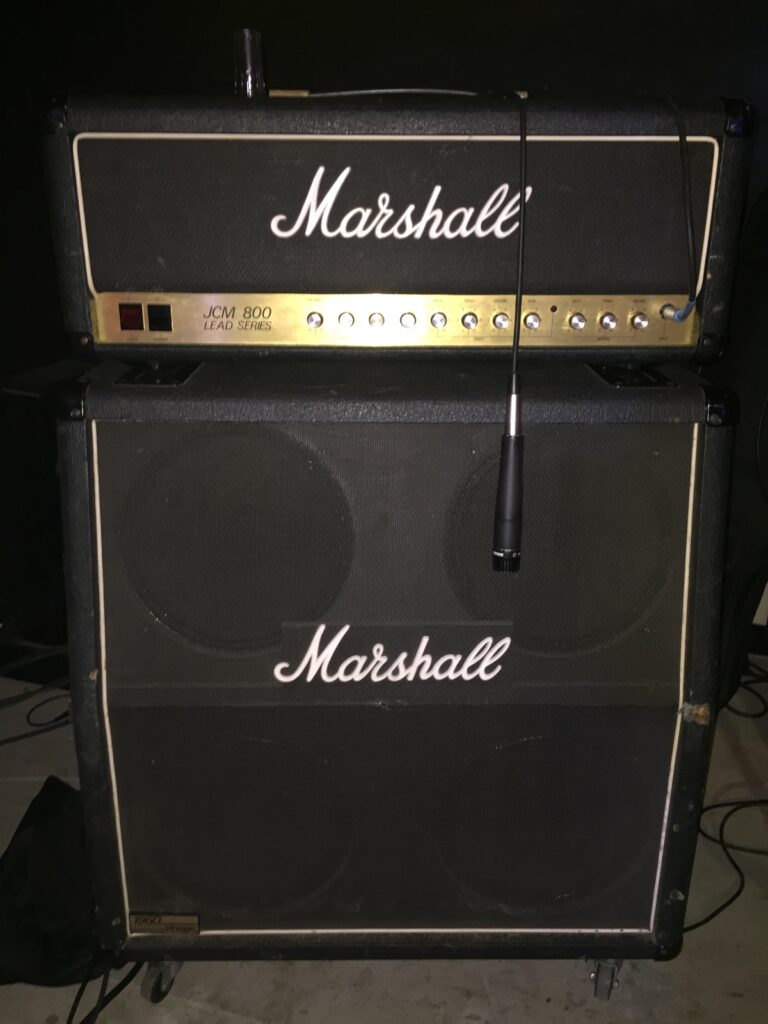
Tom Morello uses a single Marshall JCM800 2205 50-watt head for essentially all of his live and recording work with Rage Against the Machine. Wikipedia documented the acquisition: “He acquired the setup after his previous amp was stolen from his van.” The stolen amp was not replaced with something better; he bought the JCM800 as a replacement and has used it ever since.
The specific JCM800 model: the 2205 is a two-channel version that included both a clean and an overdrive channel. Morello uses only the overdrive channel — confirmed in multiple sources: “Tom only uses the overdrive channel.” The Marshall 4×12 Peavey cabinet completes the live rig.
Guitar Gear Finder confirmed: “Tom has used a 50 watt Marshall JCM800 2205 head throughout his entire RATM and Audioslave career. While you can see in the earlier video that he does have different amps in his studio, when it comes to live use, it’s always a JCM 800.”
The cabinet: a Peavey straight-front 4×12 cabinet — an unusual pairing with a Marshall head, chosen for its specific character.
Other amps used in recording contexts: Fender Bassman head, Vox AC30 — both documented in Wikipedia. The “Tire Me” recording used a 20-watt solid-state amp with the $40 plywood guitar: “The Grammy award-winning song ‘Tire Me’ was recorded on a 20-watt solid state amp with a cheap no-name guitar.”
Tone note: His amp was stolen from his van. He bought the JCM800 as a replacement. He has used it for thirty-plus years through all of Rage Against the Machine and Audioslave. The amp wasn’t a deliberate aesthetic choice — it was a practical replacement. “Killing in the Name,” “Bulls on Parade,” “Like a Stone,” and “Be Yourself” were all made through this replacement amp. The stolen amp created one of the most distinctive guitar tones in 1990s rock. Things that are taken from us sometimes produce better things in their absence.
Pedals: The Whammy and the Killswitch Are Everything
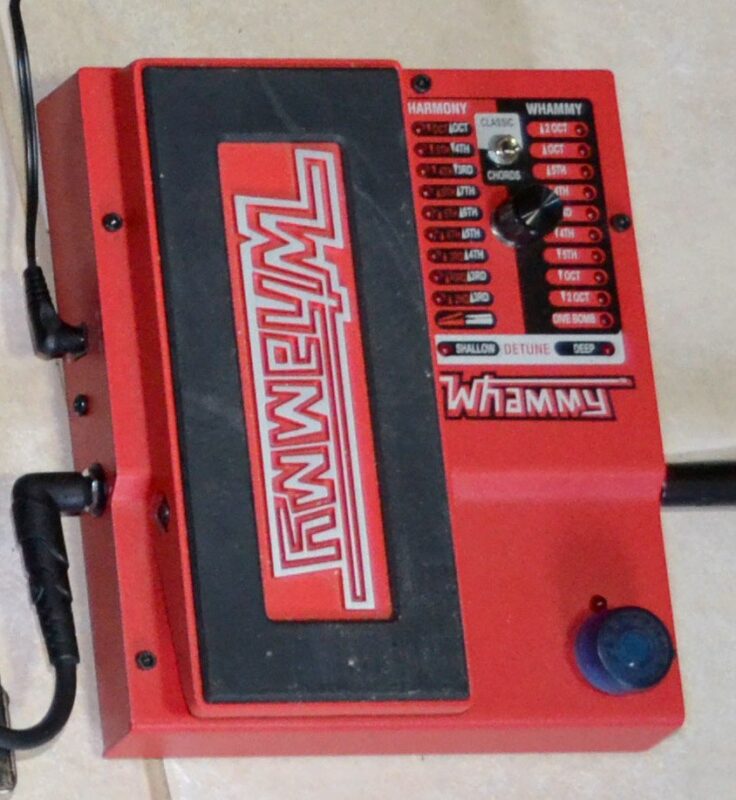
Tom Morello uses remarkably few effects pedals for the range of sounds he produces. Guitar World summarized it as “a molotov cocktail of killer riffs, Whammy pedal abuse and toggle switching.” The complete pedalboard, which has barely changed since the early 1990s:
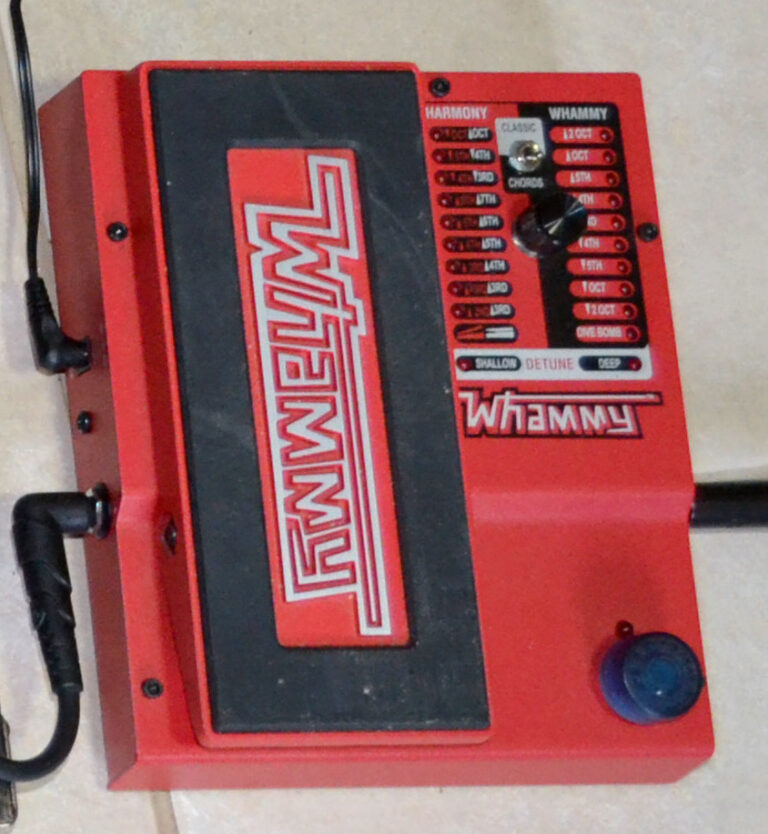
The DigiTech Whammy WH-1 — The Revolutionary Pedal
The DigiTech Whammy is the single most important external effect in Morello’s setup. He told Ground Guitar: “The whammy pedal for me was a great invention because I never had the patience to read all the manuals… So when I heard there was a harmonizer in a stompbox, I thought I gotta get me one of those… with very simple manipulations, with a very simple pedal, all of the sudden the guitar for me was finding a lot of very new sonic possibilities.”
The Whammy allows real-time pitch shifting — up or down by specific intervals — controlled by a rocker pedal. Morello uses it for:
- The “Know Your Enemy” solo — Whammy set for pitch shifting over specific intervals, creating the rising and falling vocal-like pitch sweeps
- “Bullet in the Head” solo — Whammy creates the specific electronic-sounding pitch manipulations
- “Killing in the Name” feedback harmonics — Whammy combined with feedback for the harmonic content at specific points
- DJ scratching emulation — Whammy combined with wah creates the turntable-scratch character of “Bulls on Parade”
- “Testify” — “Testify is my Tele in dropped D tuning with a slapback delay, through a Whammy pedal set to a [flat 7]. I’m rocking a wah pedal back and forth to give it a tornado sound. As I go through the sweep of the wah it creates all these overtones that make the sound pretty hectic.”
He uses the original DigiTech WH-1 Whammy — the first production version of the pedal, released 1989-1993, before DigiTech changed the internal chip. The original WH-1’s specific pitch-shifting algorithm produces a different character from subsequent versions; Morello has accumulated multiple backup units.
The Killswitch Technique
The killswitch is not a pedal — it is the guitar’s pickup selector switch used as an on/off switch. Morello described the method: “Morello turns one pickup down or off and then switches between the middle and silent pickup to create the killswitch effect.”
On the “Arm the Homeless” guitar, the three-way toggle switch cuts the signal when flipped to the “empty” position (the pickup whose volume is turned to zero). Rapidly toggling the switch creates the staccato stuttering effect heard in “Know Your Enemy” and other songs — the guitar’s output interrupted rhythmically, creating a percussive pattern of silence and sound.
Wikipedia confirmed: “By the early days of Rage Against the Machine, Morello said he had begun to identify as a DJ, using his guitar to imitate scratching (as on ‘Bulls on Parade’) and working his guitar’s pickup selector toggle as a ‘kill switch’ that could be used rhythmically (as on ‘Know Your Enemy’).”
Complete Pedalboard (Largely Unchanged Since Early 1990s)
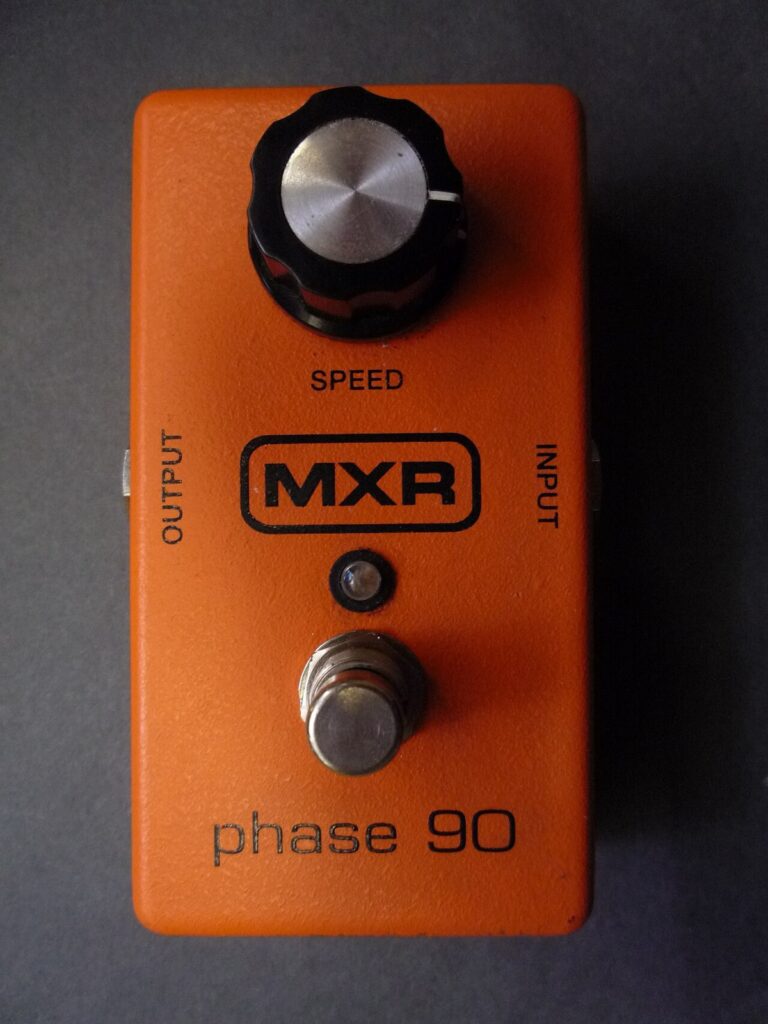
- MXR Phase 90 — Phase shifting; used on various songs for the swirling modulation
- DOD FX40B Equalizer — EQ for frequency shaping
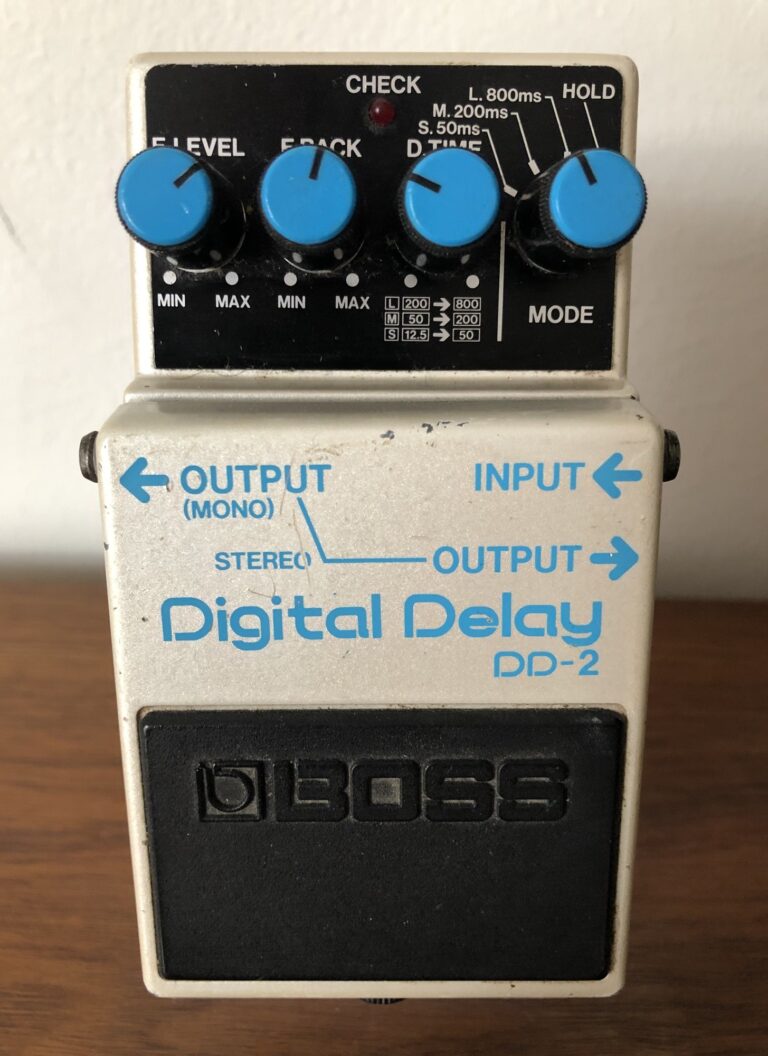
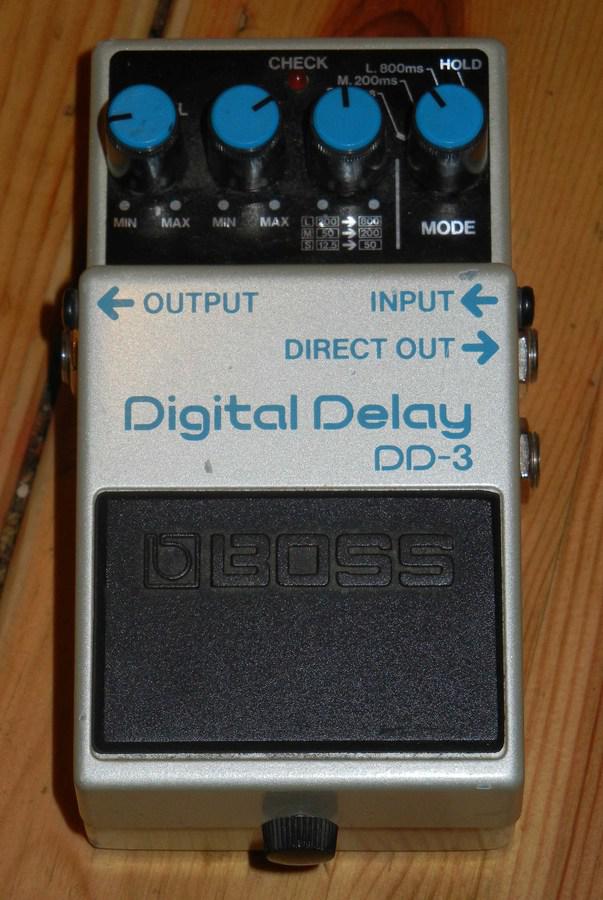
- Boss DD-2/DD-3 Digital Delay (×2) — Two units: one set longer for solos, one set tighter for rhythmic slapback (“Testify” slapback delay); “Tom has one of his DD-3s set for a longer delay, and the other for a shorter one”
- DigiTech WH-1 Whammy (original) — The central effect; see above
- Dunlop GCB95 Crybaby Wah — Combined with Whammy for scratching effects and “tornado sounds”
- Boss TR-2 Tremolo — Occasional tremolo effects
- DigiTech XP300 Space Station — “In the mid ’90s, DigiTech basically tried to steal all of my sounds and put them in a pedal and called it the Space Station. I got one of those and I started stealing some of their sounds back.” A multi-effect unit that appeared after RATM’s debut and that Morello incorporated into his toolkit
- Voodoo Lab Pedal Power 2 Plus — Powers all pedals
- Boss TU-3 Tuner (×2) — One for electric, one for acoustic
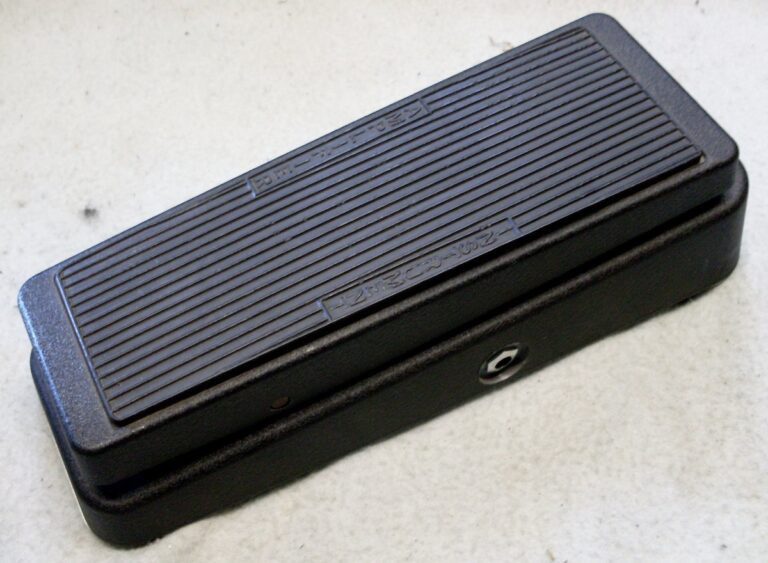
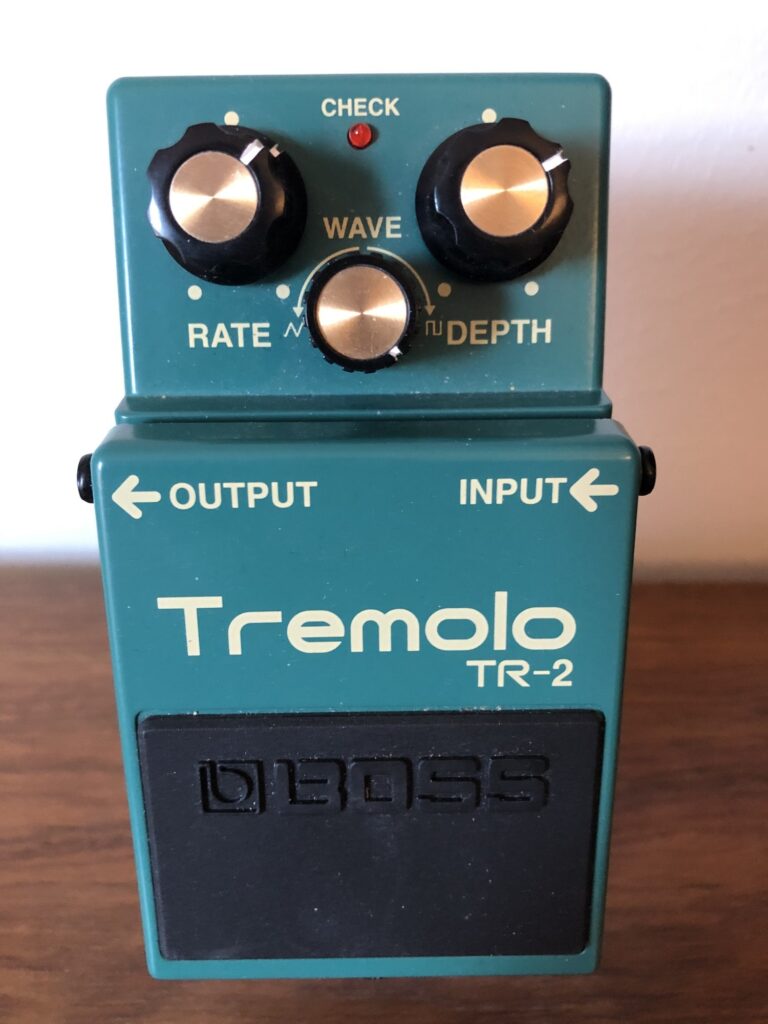
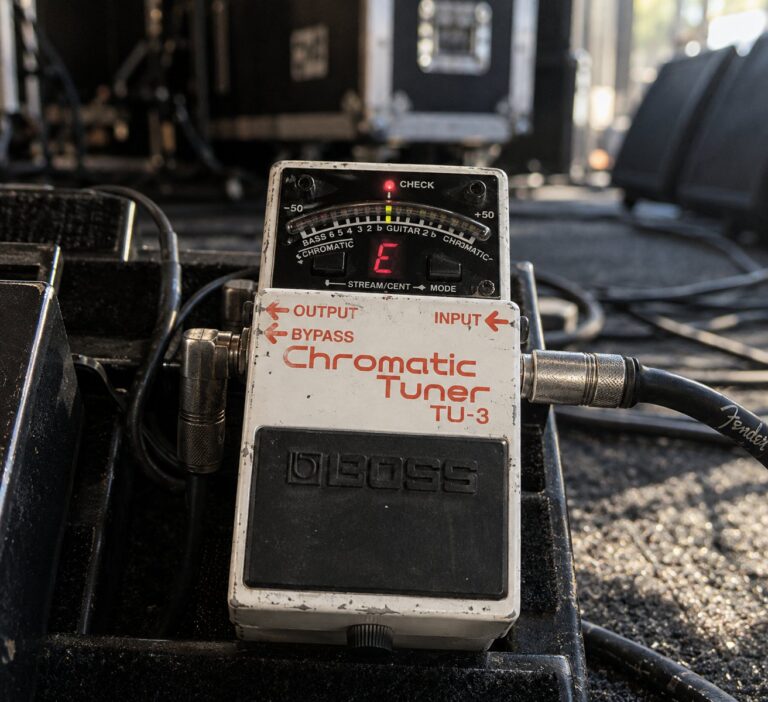
Tone note: “DigiTech basically tried to steal all of my sounds and put them in a pedal.” This is one of the most self-aware gear observations in this series — the acknowledgment that his guitar sounds had become so distinctive and recognizable that a major effects company produced a product specifically designed to emulate them. His response: buy the pedal and use it to produce more sounds. The imitator becomes a new tool for the original.
The Extended Techniques — Guitar as Object
Morello extends his guitar’s sonic range through physical objects and unconventional playing positions:
- Wrench across the strings — “Scraping the guitar strings with a wrench or pencil, as on ‘People of the Sun'” (Wikipedia); the metal object produces specific overtones and scraping sounds
- Tapping a pickup with the unplugged cable connector — “As on ‘Bullet in the Head'” (Wikipedia); the electromagnetic tap on the pickup coils produces a thud/click captured and amplified through the amp
- Turntable scratching emulation — Combining the Whammy, wah, and killswitch techniques to produce the rhythmic scratch sound of hip-hop DJs; “Bulls on Parade” is the canonical demonstration
Strings, Picks & Setup
Strings (Arm the Homeless and tremolo-equipped guitars): Ernie Ball Hybrid Slinkys .009-.046 — confirmed in Premier Guitar Rig Rundown. He does not cut the ends of his strings, leaving them hanging loosely. This has a story: in an early band, he was mocked by a musician friend for not cutting the strings (“cut your damn strings, what do you think you are, you think you’re in the baddest band in town?”). He cut his strings. Years later, in Rage Against the Machine, he said: “I WAS in the baddest band in town, so I left my strings go.” The hanging string ends are now part of his visual identity.
Strings (Telecaster/fixed bridge guitars): Ernie Ball Regular Slinkys .010-.046 — slightly heavier for the Drop-D tuning on the Telecaster.
Picks: Dunlop Tortex Jazz III — confirmed in Premier Guitar Rig Rundown. The Jazz III is a small, pointed, relatively thick pick that provides precise attack for rapid killswitch-style techniques and the aggressive picking of Rage’s rhythm parts.
Playing Style & Tone Philosophy: The Guitar as DJ Equipment
Tom Morello’s playing philosophy is the most explicitly stated in this series: “Rather than being a musician, I concentrated on being an artist. Instead of trying to be famous, I made music that was completely authentic.” This decision — made after watching technically superior players play scale exercises at a cover band gig — reoriented his entire approach from imitation to invention.
The DJ Identity
Wikipedia confirmed: “By the early days of Rage Against the Machine, Morello said he had begun to identify as a DJ.” This identification — as a DJ rather than a guitarist — explains both the specific techniques (scratching, pitch manipulation, killswitch stuttering) and the conceptual framework: DJs use turntables as instruments, not as playback devices. Morello uses the guitar as a sound-manipulation instrument, not as a chord-and-melody device.
The specific DJ-derived techniques: the Whammy’s pitch manipulation mirrors the turntablist’s pitch control; the killswitch’s stutter mirrors the hand-muting technique on a turntable; the wah-and-Whammy combination creates the specific timbre sweep of a vinyl scratch. All of these sounds come from a guitar through a Marshall amp with a six-pedal board. None of them require a turntable, a laptop, or digital production tools.
The Political Guitar Tradition
Morello explicitly places his guitar in the tradition of Woody Guthrie’s “This Machine Kills Fascists” — the folksinger who wrote a political slogan on his acoustic guitar as a statement that music could be a weapon. “Arm the Homeless” is the Rage-era version of the same gesture: the guitar as political instrument, the slogan as musical context.
Guitar World described his sound as “a molotov cocktail of killer riffs, Whammy pedal abuse and toggle switching.” The “molotov cocktail” is not incidental — it’s the specific metaphor for the combination of heavy riffing and sonic experimentation that defines RATM’s guitar sound. A weapon made of fire and music simultaneously.
The Constraint Philosophy
Morello’s relationship to gear constraints is one of the most philosophically developed in this series. Having been forced to work with the guitar he could not afford to replace, he developed a philosophy from that necessity: “Musicianship isn’t about gear but rather the way we use it.” The $40 plywood guitar produced “Tire Me.” The stolen amp replacement became the only amp he ever needed. The worst guitar he’d ever played became the most famous guitar he ever played.
This isn’t anti-gear minimalism — he is a careful and specific gear user. It is the specific wisdom that comes from having had no choice and discovering that no choice produced the right result.
How to Sound Like Tom Morello: The Rage Against the Machine Guitar Tone
Morello’s core tone is genuinely achievable: any guitar with a killswitch or toggle switch that can be used as one, a Marshall or Marshall-voiced amp, and a DigiTech Whammy. The techniques — killswitch timing, Whammy manipulation, wah-and-Whammy combination — require practice but are learnable.
The Guitar
- Fender Tom Morello “Arm the Homeless” Signature — The production replica; EMG pickups, knockoff neck replica, killswitch, Gotoh locking tremolo; the official version after “20-25 iterations” to get the neck right
- Any superstrat with a killswitch installed — The killswitch can be installed in any guitar with a three-way toggle switch that has one pickup turned to zero; or install a dedicated momentary killswitch button
- Fender Telecaster (for Drop-D material) — Standard stock Telecaster; tune low E to D
The Amp
Marshall JCM800 (any version) on the overdrive channel. No other amp has been used live throughout his career.
| Control | Setting | Notes |
|---|---|---|
| Channel | Overdrive only | “Tom only uses the overdrive channel” |
| Gain | 7–8 | High but not maximum; articulate riffs require note clarity |
| Treble | 6 | Present but not harsh; the EMG pickups are already bright |
| Middle | 5–6 | The JCM800’s midrange character; keep it present for riff clarity |
| Bass | 4–5 | Controlled; the Drop-D and heavy riffs don’t need excessive bass |
| Presence | 5–6 | Adds definition to the attack; suits the percussive killswitch technique |
The Essential Pedals
- DigiTech WH-1 Whammy (original) or current WH5/WH7 — The central effect; essential for solos and the DJ-scratch sounds
- Dunlop Crybaby Wah — Combined with Whammy for the “tornado” and scratch effects
- Boss DD-3 (×2) — One longer delay for solos; one slapback for rhythmic use
- MXR Phase 90 — For the swirling modulation passages
The Killswitch Technique
If your guitar has a three-way toggle and separate volume knobs per pickup: turn one pickup’s volume to zero. The toggle now has an “active” and a “silent” position. Flip it rapidly and rhythmically. The stuttering percussive effect of “Know Your Enemy” is this technique at speed. Start slowly — count the rhythm first — then build speed until the flipping is automatic and rhythmically precise.
Alternative: install a momentary push-button killswitch. When pressed, the signal cuts; when released, it resumes. Press rhythmically for the same stutter effect.
Budget vs Authentic
Budget:
- Guitar: Any Strat-style guitar; install killswitch; tune to E standard
- Guitar 2: Standard Telecaster for Drop-D material
- Amp: Marshall DSL40 (overdrive channel)
- Pedals: DigiTech Whammy (any current version) + Dunlop Crybaby + Boss DD-3
- Strings: Ernie Ball Hybrid Slinkys .009-.046; don’t cut the ends
Authentic:
- Guitar: Fender Tom Morello “Arm the Homeless” Signature
- Guitar 2: 1982 Fender Telecaster (or equivalent Telecaster) in Drop-D
- Amp: Marshall JCM800 2205 (50-watt); Peavey 4×12 straight cabinet
- Pedals: Original DigiTech WH-1 Whammy + Dunlop Crybaby + Boss DD-3 (×2) + MXR Phase 90 + DigiTech Space Station
The Whammy-and-Wah “Tornado” Technique
From Morello’s own description of “Testify”: Telecaster in Drop-D tuning, slapback delay, Whammy set to flat 7, rocking the wah pedal back and forth while playing. “As I go through the sweep of the wah it creates all these overtones that make the sound pretty hectic.” This is the complete recipe for one of Rage’s most distinctive guitar sounds: three pedals (delay, Whammy, wah) interacting simultaneously while the guitar is played in a non-standard tuning. The hectic quality is the correct result.
Influence & Legacy: The Guitarist Who Became a DJ
Tom Morello’s influence on guitar playing is the influence of the artist who redefined what the instrument is. Before Morello, DJs and guitarists were different roles in rock music; after Morello, they could be the same role. The specific techniques he developed — killswitch, Whammy-and-wah scratching, unconventional object use — expanded the vocabulary of electric guitar in ways that are now documented and taught in guitar instruction programs as “Morello techniques.”
The documented direct influences:
- Every guitarist who has installed a killswitch — The technique was not invented by Morello (Jonny Greenwood of Radiohead famously also used a killswitch), but Morello’s specific application of it — as the central rhythmic technique of his playing — made it famous and widely adopted
- Every guitarist who has used a Whammy pedal as a melodic instrument — The Whammy was available before Rage but Morello defined what it could do when used as the primary melodic voice rather than a special effect
- Serj Tankian and Daron Malakian (System of a Down) — Absorbed the political-rock-as-sonic-experimentation approach
- Adam Jones (Tool) — Morello’s Electric Sheep bandmate; both went on to define heavy alternative guitar in the 1990s from different directions
- Heavy alternative rock broadly — The Rage Against the Machine approach to combining metal riffing with hip-hop aesthetics was the specific synthesis that defined a large portion of the late 1990s and early 2000s heavy music landscape
Rolling Stone ranked him 26th on their 100 Greatest Guitarists list. BBC voted him fifth greatest guitarist of the past 30 years in 2010. He attended Harvard. The “Tire Me” Grammy was won with a $40 plywood guitar.
He said: “Rather than being a musician, I concentrated on being an artist.” The artist’s approach to his worst guitar produced the most iconic guitar sounds of the 1990s. The lesson has been learned by generations of guitarists since.
Tone note: He left the strings uncut because he decided he was in the baddest band in town. He scrawled “Arm the Homeless” on the guitar before a gig at the Whisky a Go Go in Magic Marker. He traded a Marshall head for the Telecaster. He bought the JCM800 because his previous amp was stolen from his van. Every piece of Tom Morello’s gear arrived through accident, constraint, or improvisation. The resulting sound — the specific sonic identity of Rage Against the Machine — is what those accidents and constraints produced. Which is to say: the gear was never the point. The artist was always the point.
In 1986, Tom Morello spent all his money having a guitar built in Hollywood. It was the worst guitar he’d ever played. He couldn’t afford to replace it. He spent two years changing every part of it. The only thing that survived from the original was the body. He gave up trying to make it sound like Randy Rhoads. He found a knockoff neck in a bin at Nadine’s Music. He scrawled “Arm the Homeless” in Magic Marker before a gig.
His amp was stolen from his van. He bought a Marshall JCM800 50-watt as a replacement. He has used it for every live show with Rage Against the Machine and Audioslave since. He traded his roommate a Marshall head for a Telecaster to have a guitar that could go into Drop D. “Killing in the Name” was written on that Telecaster. “Tire Me” was recorded on a $40 plywood guitar and won a Grammy.
“Rather than being a musician, I concentrated on being an artist.”
The Arm the Homeless Frankenstrat. The Sendero Luminoso Telecaster. The JCM800. The DigiTech Whammy. The killswitch. The wah. Two Boss delays.
He didn’t cut his strings. He was in the baddest band in town.
If Tom Morello’s guitar-as-weapon approach — the Whammy, the killswitch, the political Frankenstrat — has you exploring the 1990s heavy alternative tradition, check out our complete guide to Jerry Cantrell’s guitars and gear — whose parallel development of detuned heavy guitar riffing at Alice in Chains came from a completely different direction but defined the same era’s heavy music.
And for the guitarist who was in Morello’s first band — Electric Sheep in Libertyville, Illinois — before going on to create Tool’s own branch of heavy alternative music, don’t miss our breakdown of Adam Jones’s complete gear guide, the next guitarist in this series.
FAQ: Tom Morello Guitars & Gear
- What is the “Arm the Homeless” guitar?
- Tom Morello’s primary guitar — a Frankenstrat assembled from mismatched parts after years of failed modifications. In 1986, he commissioned a custom guitar from Performance Guitar USA in Hollywood that he described as “the worst guitar I’d ever played.” Over 1987-1989, he replaced every component — pickups, neck, bridge — multiple times trying to sound like Randy Rhoads and Nuno Bettencourt. He eventually gave up and accepted the guitar as it was: alder body (original), knockoff Kramer graphite neck from a bin at Nadine’s Music, EMG H (neck) and EMG 85 (bridge) active pickups, Ibanez Edge tremolo. The “Arm the Homeless” text was scrawled in Magic Marker before a gig at the Whisky a Go Go; the hippos were drawn on years earlier. Fender released a signature model in 2025 requiring 20-25 iterations to replicate the neck.
- What is Tom Morello’s killswitch technique?
- Morello uses his guitar’s three-way pickup selector toggle as a killswitch: one pickup’s volume is turned to zero, so toggling between the active and “silent” pickup positions interrupts the signal rhythmically. Rapidly toggling the switch creates the stuttering, staccato percussive effect heard in “Know Your Enemy.” Wikipedia confirmed: “Morello turns one pickup down or off and then switches between the middle and silent pickup to create the killswitch effect.” He described himself as a DJ using the guitar — the killswitch technique is the guitar equivalent of hand-muting on a turntable.
- What amplifier does Tom Morello use?
- A Marshall JCM800 2205 50-watt head, acquired after his previous amp was stolen from his van. He has used this amp for all live performances with Rage Against the Machine and Audioslave. He uses only the overdrive channel — never the clean channel. The cabinet is a Peavey straight-front 4×12 (an unusual pairing with a Marshall head). He has recorded with other amps including a Fender Bassman head and Vox AC30, and the Grammy-winning “Tire Me” was recorded on a 20-watt solid-state amp with a $40 plywood guitar.
- What is the Sendero Luminoso guitar?
- A 1982 Fender Telecaster that Tom Morello acquired by trading his roommate a Marshall 50-watt head — the roommate was in a band called Liquid Jesus and needed the amp; Morello needed a guitar he could tune to Drop D. Wikipedia confirmed: songs recorded with this guitar include “Killing in the Name,” “Freedom,” and “Testify” — all Drop-D tuned Rage Against the Machine songs. The Telecaster is completely stock except for the “Sendero Luminoso” text (named after the Peruvian Maoist guerrilla group) painted on. He uses Ernie Ball Regular Slinkys .010-.046 on it.
- How does Tom Morello make the DJ scratching sound on “Bulls on Parade”?
- By combining the DigiTech Whammy pedal with the Dunlop Crybaby Wah — rocking the wah pedal back and forth while manipulating the Whammy’s pitch. He described the approach for “Testify”: Telecaster in drop-D with slapback delay, Whammy set to flat 7, rocking the wah pedal: “As I go through the sweep of the wah it creates all these overtones that make the sound pretty hectic.” On “Bulls on Parade,” similar technique creates the specific turntable-scratch sound without an actual turntable. Wikipedia confirmed he “began to identify as a DJ” in the early Rage days.
- Why didn’t Tom Morello cut his guitar strings?
- He leaves the string ends hanging loose after stringing because he was mocked for doing so early in his career. In Electric Sheep, a musician friend told him: “Cut your damn strings, what do you think you are, you think you’re in the baddest band in town?” He cut them. Years later, in Rage Against the Machine: “I WAS in the baddest band in town, so I left my strings go.” The hanging string ends became part of his visual identity. Premier Guitar confirmed: “Tom also does not cut the ends of his strings but keeps them hanging around loosely.”
- How do I get Tom Morello’s guitar tone?
- Any guitar with a killswitch (or a toggle switch with one pickup turned to zero). Standard tuning for “Arm the Homeless” material; Drop-D on a Telecaster for “Killing in the Name,” “Freedom,” and “Testify.” Marshall JCM800 (or Marshall-voiced amp) on the overdrive channel: gain 7-8, moderate EQ. DigiTech Whammy (original WH-1 for authenticity; current WH5 or WH7 as alternatives), Dunlop Crybaby Wah, two Boss DD-3 delays (one longer for solos, one slapback for rhythms), MXR Phase 90. The killswitch: one pickup volume to zero, toggle rapidly to cut the signal rhythmically. The Whammy-and-wah combination: rock the wah while the Whammy shifts pitch for the “tornado” and scratch sounds. Ernie Ball Hybrid Slinkys .009-.046; don’t cut the string ends.
Image credits
- Top image: Tom Morello – MuseBristol 050619-10, Wikimedia Commons, CC BY 2.0.
- Gibson Explorer: Guitarpimp, Wikimedia Commons, CC BY 3.0.
- Marshall JCM800: John2112, Wikimedia Commons, CC BY-SA 4.0.
- DigiTech Whammy: marcelodonati, Wikimedia Commons, CC BY 2.0.
- Boss DD-3 Digital Delay: JuandiLOL, Wikimedia Commons, CC BY-SA 3.0.
- Dunlop Cry Baby: Roadside Guitars, Flickr, CC BY-SA 2.0.
- BOSS TU-3 Chromatic Tuner: GuitarGangsters AI-generated reference illustration, not a photograph.
- MXR Phase 90: Roadside Guitars, Wikimedia Commons, CC BY-SA 2.0.
- Tom Morello’s Arm the Homeless: GuitarGangsters AI-generated reference illustration, not a photograph.
- Boss DD-2 Digital Delay: Kuriosatempel, Wikimedia Commons, CC BY-SA 4.0.
- BOSS TR-2 Tremolo: Kuriosatempel, Wikimedia Commons, CC BY-SA 4.0.