The Amp That Britt Daniel Lugged to Radio Stations — and Then Used to Make an Album
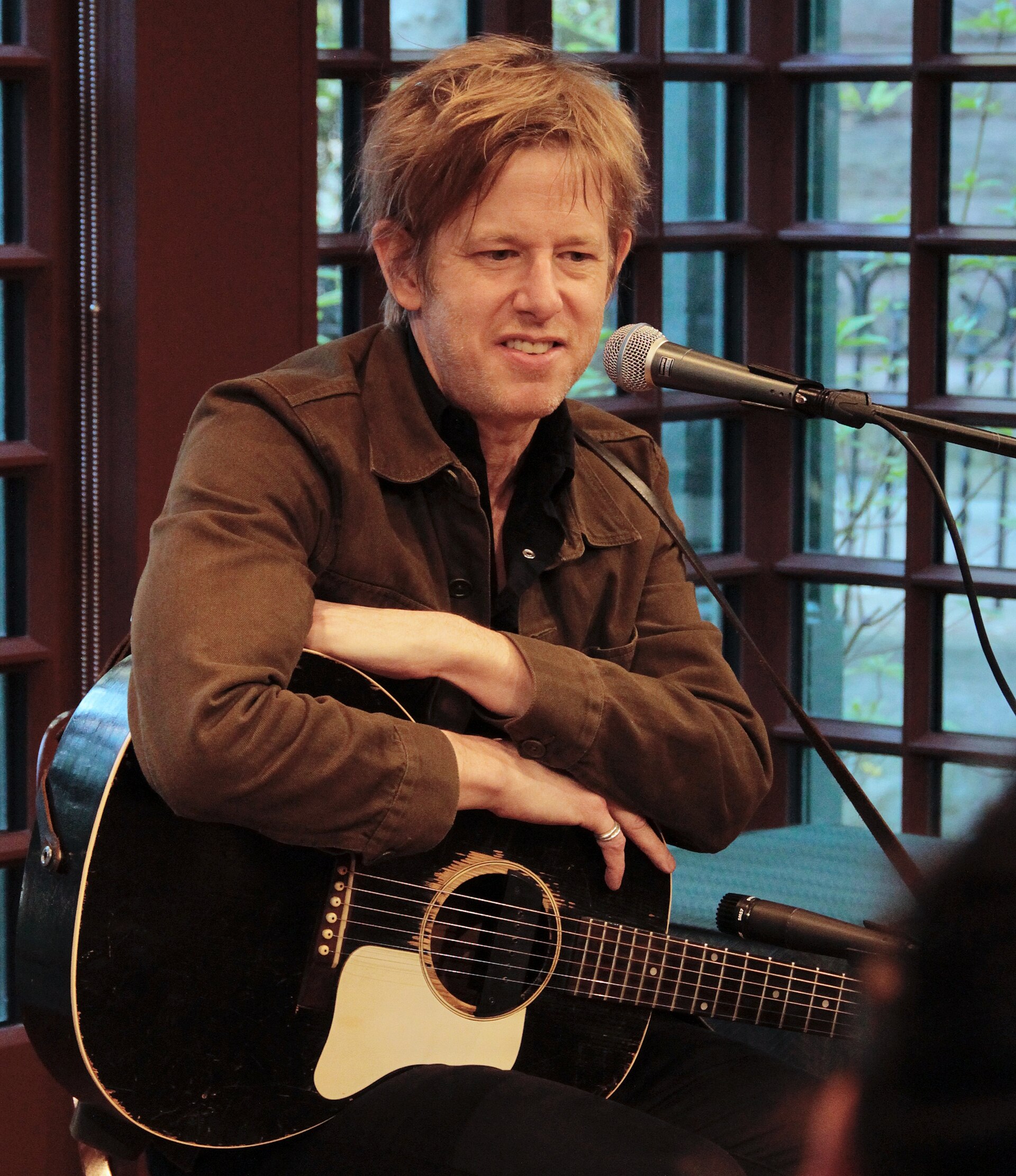
Britt Daniel singing with an acoustic guitar. Photo: kellywritershouse, CC BY 2.0, via Wikimedia Commons.
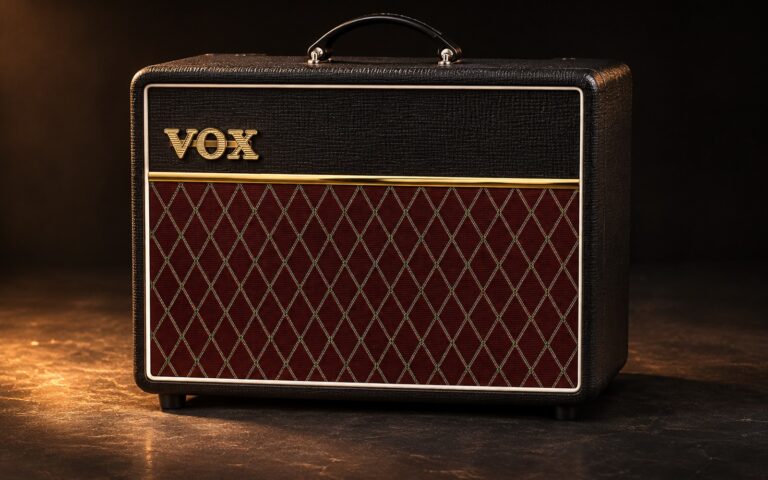
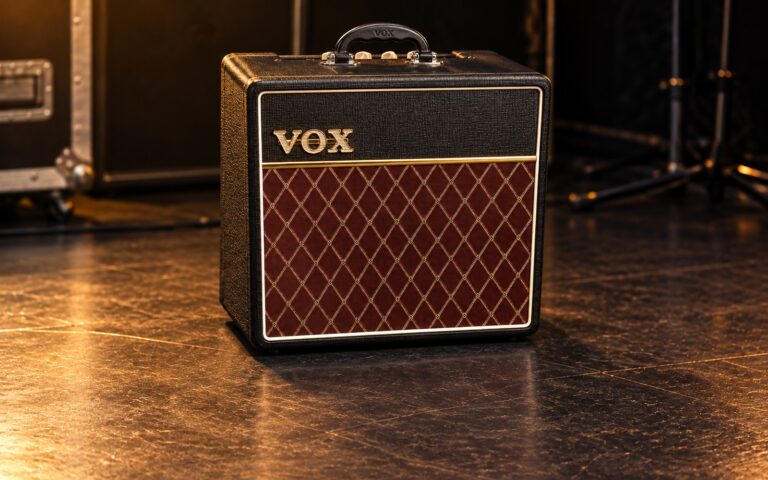
The Vox Pathfinder 10 is a 10-watt solid-state combo that Britt Daniel used to record Lucifer on the Sofa. Classic British chime in a sub-$100 package.
There’s a specific kind of gear snobbery that says a great rock record needs a great studio rig: a vintage Plexi, a tweed Bassman, something with enough history and wattage to justify the microphone placement. And then there’s Britt Daniel, who made Lucifer on the Sofa — Spoon’s hardest, most ferocious album — running his Fender Thinline Telecaster into a Vox Pathfinder 10. Not as a novelty. As the primary amp. For the whole record.
“It’s got a great sound,” Daniel told Guitar World in February 2022. “You would never know that it’s coming from that tiny little amp.”
The Vox Pathfinder 10 is a 10-watt solid-state combo with a 6.5-inch speaker that retails new for around $99. It weighs 10.58 pounds. You can pick one up used for $50. It fits in a backpack with room left over. It is, depending on who you ask, either the best practice amp ever made or proof that “best” is the wrong word for anything at this price point.
It is also, as Daniel demonstrated and Nick Zinner confirmed on British television, genuinely capable of holding its own in the hands of a serious guitarist who knows what it’s for. The Pathfinder 10 doesn’t pretend to be a stage amp. It pretends to be a Vox — and on that count, it largely succeeds.
Six Decades of the Pathfinder Name
The Vox Pathfinder has a longer and more complicated lineage than most people realize, because the modern V9106 sold in every guitar shop since 2008 shares a name with a family of instruments going back to 1965 but almost nothing else.
The original Pathfinder V-1 was introduced in late 1965 by Thomas Organ, the American company that had acquired the Vox brand for US distribution. It was conceived as a domestically built replacement for the British JMI Vox AC-4 — an all-tube combo that had reached production in the early 1960s. The V-1’s circuit used four tubes: two ECC83 preamp valves, one EL84 in the output stage (cathode-biased, like the AC-4), and one EZ80 rectifier. The preamp borrowed a slight variation on the “top boost” circuit from the AC-30. The speaker was an 8-inch Vox Gold Bulldog, manufactured by the Oxford Speaker Company in Chicago. The 1965 retail price was $92.40 — approximately $700 in today’s money, adjusted for inflation.
In 1966, Thomas Organ introduced the solid-state Pathfinder V101 and its variant the V1011. The control panel functions were identical to the tube version, but the output section moved to two germanium power transistors rated at 12 watts RMS. The Bulldog speaker stayed. So did the basket-weave aesthetic. The price — also $92.40 — stayed too, which says something about how efficiently solid-state circuitry was being manufactured by the mid-1960s.
These amps are vintage collectibles now. They are not the guitar you’re reading this article to learn about.
The modern story picks up in 2008, when the Korg-era Vox operation reintroduced the Pathfinder as a fully contemporary solid-state practice combo. The inspiration, according to Gary Hahlbeck of North Coast Music (the most authoritative private Vox historian in North America, writing at VoxShowroom.com), was likely the 1980s Vox Escort — a battery/mains combo that had become a cult object among street musicians and Vox collectors, with working examples selling for upwards of $400. The Pathfinder 10 is nearly identical to the Escort in size and proportions. It launched at an MSRP of $99, with a street price around $69. In 2026, new units sit between $94 and $109 depending on the retailer, with used examples commonly changing hands for $49–$75 on Reverb.
The V9106 has been in continuous production for nearly two decades with no significant circuit changes. That kind of longevity at the entry price point is unusual. It suggests the amp works — or at minimum, that enough people keep buying it to justify keeping it on the line.
Specifications
What the Controls Actually Do
The Pathfinder 10’s control layout is four knobs and a switch, which is not minimalism as a design philosophy so much as minimalism as a price constraint. The four knobs are Gain, Bass, Treble, and Volume. The switch toggles between Clean and Overdrive modes.
In Clean mode, the Gain knob shapes the input sensitivity rather than adding obvious distortion — roll it back for glassy headroom, push it up for a gentle compression that starts to break up around two-thirds. The Treble and Bass controls are not a full three-band EQ: there is no dedicated midrange knob. The midrange sits where it sits, which tends to be slightly scooped at moderate treble and bass settings and slightly honky when both are pushed — a consequence of the budget tone stack topology rather than a deliberate voicing choice. Volume sets output level independently of gain structure, which means you can get a cranked-gain sound at low volume, or a clean signal at whatever volume the room requires.
The Overdrive mode adds gain before the output stage. The character of this gain has divided players for as long as the amp has existed. Some find it useful and musical; others find it grainy and thin. The honest answer is that the Pathfinder’s overdrive is a solid-state clipping circuit that doesn’t have the asymmetric harmonic character of a tube stage — it does not feel or respond the way tube breakup does. At moderate settings it works for classic rock rhythm parts without drawing attention to itself. At high settings it can become buzzy and compressed in ways that sit awkwardly in a mix.
The well-documented solution is the LED mod: desoldering two LEDs inside the circuit on the drive channel. Players who have done this consistently report that it opens up the overdrive character, reduces the artificial compression, and makes the amp more responsive to pick dynamics. The mod requires basic soldering competence and costs nothing beyond the time. It is documented extensively on forums and Reddit’s r/GuitarAmps community. If you own a Pathfinder 10 and find the overdrive dissatisfying, this is the first thing to do before reaching for a drive pedal.
The headphone/line output mutes the internal speaker when a jack is inserted, making the Pathfinder genuinely useful as a silent recording interface or a late-night practice tool. The line-out signal is taken after the preamp stage, which means it carries the amp’s tone shaping rather than being a raw bypass.
Famous Players — Verified, Not Borrowed
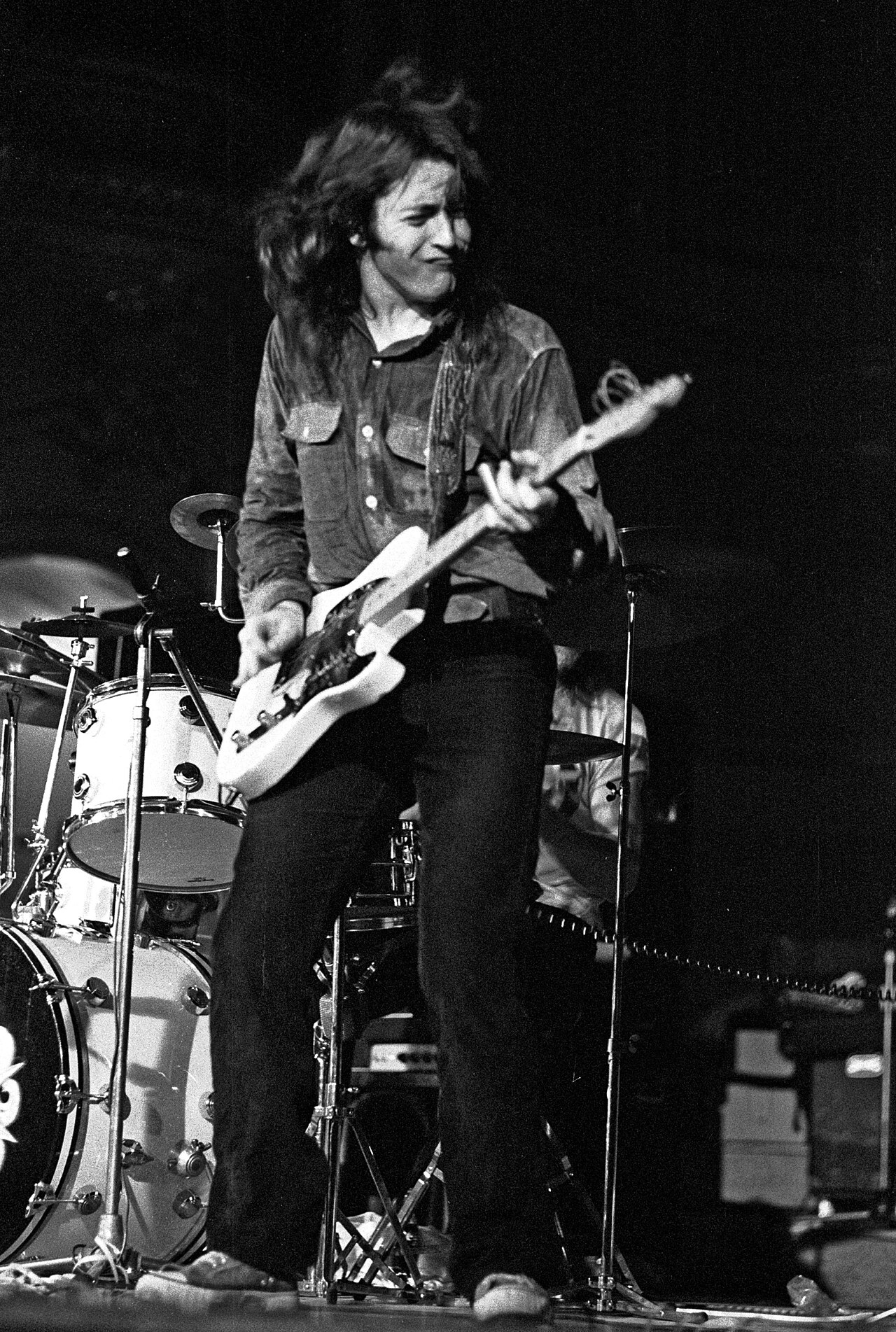
The Pathfinder 10 is listed with a generic Vox brand roster: Brian May, The Edge, George Harrison, Tom Petty, Rory Gallagher. The logic is that famous people have played Vox amplifiers, therefore they have played this Vox amplifier. This does not hold.

George Harrison died in November 2001. The Pathfinder 10 was introduced in 2008. The calendar makes the claim impossible by seven years — the same impossibility documented for the Night Train NT15H, the AC4HW1, and the AC4C1-12. Rory Gallagher died in June 1995. Thirteen years. The same pattern, the same debunk.
Brian May’s amplifier of record is the AC30 Normal channel boosted by a Dallas Rangemaster Treble Booster — a specific, documented, repeatedly verified combination that defines his sound. His Vox signature product is the MV50-BM NuTube head. There is no primary source placing him on a Pathfinder 10. The Edge plays modified AC30 combos; his rig is among the most documented in rock. Tom Petty’s “old brown AC30” — the vintage combo associated with his Heartbreakers-era clean tone — is a different amplifier from a different era and a different price bracket. Petty died in October 2017, so the 2008–2017 window would technically permit a connection, but no primary source documents it.
The genuine Pathfinder 10 story is more interesting than the recycled one, and it’s grounded in primary sources.
Billie Joe Armstrong (Green Day) appears on Equipboard’s Pathfinder 10 page with YouTube and photo sources. The context is backstage use — the Pathfinder functioning exactly as Vox designed it to, as a compact warm-up and practice amp that can be carried without a crew. Armstrong’s primary stage and studio rigs are Marshall stacks and Fender amplifiers; the Pathfinder 10 is the backstage companion, not the recording signal. This is a legitimate use-case story even if it’s not an album-production one.
Nick Zinner (Yeah Yeah Yeahs) brought a Pathfinder 10 to a 2003 BBC performance on Later… with Jools Holland, where it can be seen positioned to the left of a Fender Blues DeVille. The evidence is video; the source is Equipboard with a YouTube citation. What makes this documented use interesting is the context: a television performance, alongside a much larger amplifier, suggests the Pathfinder was mic’d as part of a blended signal — a small amp providing the bite and presence that a 60-watt American combo could not on its own. It’s a studio-thinking trick applied to a TV stage.
Britt Daniel (Spoon) is the strongest-sourced player on this page, and the use case is the most substantive. In a February 2022 interview with Guitar World (published 11 February 2022, by Gregory Adams), Daniel described how the Pathfinder became the primary recording amp for Spoon’s tenth album, Lucifer on the Sofa:
“It’s a good portable amp. When we would go to radio stations to do performances, I’d always bring one because it’s easy to carry. I have a ton of them sitting around the house. When I was working on the songs at home I would usually be playing through the Vox. [When] we were recording, I would have to separate it; we’d put it in a different room because it’s not as loud as the other amps. There was that hump to get over, but it’s got a great sound. You would never know that it’s coming from that tiny little amp.”
The guitar was his Fender Thinline Telecaster signature model — “That’s the main one on this record, and there’s a lot of it.” The amp was the Pathfinder, for most of the album. A secondary amplifier on the sessions was a Benson Vinny 1-Watt, which Daniel described as “kind of like the Vox Pathfinder in a way, because it’s so small, but it has a different tone to it.”
Lucifer on the Sofa was released 11 February 2022 on Matador Records. It is the band’s most critically acclaimed record of the 2020s. The amp cost less than a set of good strings and a cable.
The Guitar World interview is a primary source with a direct quote.
Five Tone Recipes
Recipe 1: The Jools Holland Jangle (Clean Chimey Mid)
Plug in a semi-hollow or a Rickenbacker 360/12. Gain at 10 o’clock. Bass at 12 o’clock. Treble at 2 o’clock. Volume to taste. Clean mode only. The Pathfinder’s midrange honk sits perfectly for jangly British pop — it approximates the AC4 character without the tube warmth, but at bedroom levels the difference is academic. Play near the bridge pickup for the bite, roll to the neck for body.
Recipe 2: The Spoon Thinline Setting
Telecaster, preferably a Thinline. Gain at noon. Bass at 10 o’clock (cut it — the 6.5-inch speaker doesn’t have bass authority anyway, and cutting tightens the response). Treble at 2 o’clock. Volume at whatever the room takes. Clean mode for rhythm work; bump to Overdrive for leads but keep the gain low. Mic the speaker off-axis to the right of the dust cap if recording. A second amp blend helps but isn’t necessary — Daniel isolated the Pathfinder in a separate room and let it do the work.
Recipe 3: The Radio Session (Portable, Acoustic-Adjacent)
This is exactly what Daniel and Armstrong used it for. Gain at 9 o’clock. Bass at noon. Treble at noon. Clean mode. Output low. The Pathfinder’s headphone/line out lets you run it into a mixing board for broadcast without the mic placement questions. For radio sessions where you need something that sounds like a real amp without requiring a soundcheck, this is the amp to bring. Pair it with an Epiphone Casino or anything with single coils for a sound that reads as “electric guitar, mid-budget indie rock, no nonsense.”
Recipe 4: The Mod Shop Overdrive (Post-LED Mod)
If you’ve done the LED mod: Gain at 2 o’clock. Overdrive mode. Bass at 10 o’clock. Treble at 1 o’clock. Volume at whatever. The overdrive becomes more musical after the mod — it still isn’t a tube amp, but the clipping is less compressed and responds better to playing dynamics. Works well with a Fender Telecaster bridge pickup for classic rock chunk. For extra push, run a clean boost or an Electro-Harmonix Big Muff Pi in front — the Pathfinder’s input handles it.
Recipe 5: The Delay Trail (Late Night Headphones)
Volume at 2 o’clock with headphones inserted (mutes the speaker). Gain at noon. Clean mode. Run an Electro-Harmonix Deluxe Memory Man or any analog delay before the input. Treble at 11 o’clock to compensate for headphone brightness. This is the Pathfinder’s stealth use case: a genuine practice tool that gives you the amp’s real tone character through headphones, with spatial depth from the delay. At 11pm in an apartment building, this is what the amp was built for.
How It Compares
Against the rest of the Vox line: the Vox AC10C1 (10W, 1×10″, Class A tubes, EL84 power stage) is the tube alternative at roughly five to six times the Pathfinder’s price. The AC10 sounds like a tube amp — which the Pathfinder does not — and gives you tremolo and reverb that the Pathfinder doesn’t have. The justification for the Pathfinder over the AC10 is entirely about portability and price. If you need a tube amp, buy the AC10. If you need something that fits in a backpack and costs less than a microphone cable, buy the Pathfinder. The Vox AC4C1-12 sits between them — a single-ended EL84 with a 12-inch speaker that delivers genuine tube compression and even-harmonic distortion at the cost of some portability and considerably more money (used ~$250–$350). Against the Vox Night Train NT15H, the comparison is almost categorical: the Night Train is a professional 15-watt EL84 head; the Pathfinder is a $99 solid-state box. They coexist in the Vox lineup without competing.
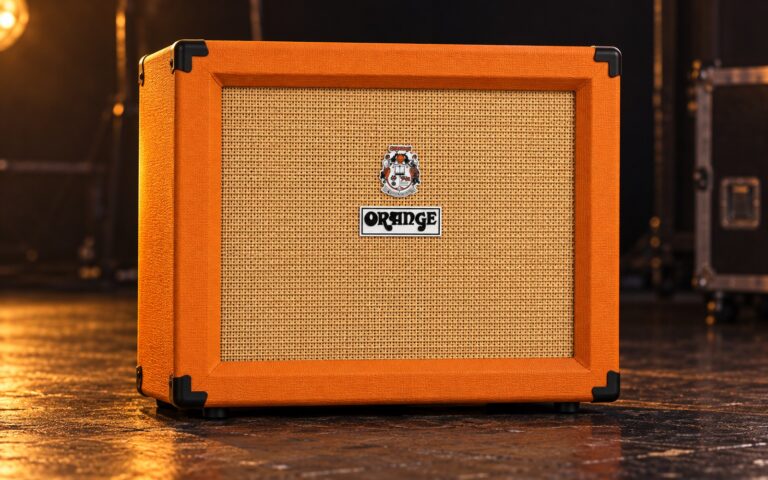
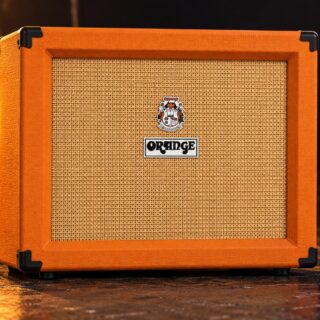
Against the non-Vox field at similar prices: the Boss Katana Mini (7W, DSP modelling) offers more tonal flexibility and better built-in effects but sounds digital in ways the Pathfinder doesn’t. The Orange Crush 12 (12W, 1×6″) is a reasonable direct competitor with a more British-voiced solid-state overdrive. The Fender Blues Junior IV (15W, 1×12″, EL84 tube) is not a real competitor on price — it’s five to six times more expensive — but it’s the amp people compare when they’re asking whether the Pathfinder is “good enough.” For recording purposes, Britt Daniel’s Spoon evidence answers that question.
Buying Guide
The Pathfinder 10 is a current production amp available new from most major retailers at $94–$109. The MSRP is $99. There is no meaningfully “better” version of this amp — the V9106 has been essentially unchanged since 2008, and the market is thin enough that you won’t find a grey-market variant with superior components. Buy new if the cost difference between new and used is small; the warranty is worth having on solid-state gear in this price bracket, and used examples sometimes have the headphone jack worn from heavy use.
Used examples cluster at $49–$75 on Reverb (as of August 2026). Inspect the Clean/Overdrive switch, which is a tactile toggle that can develop intermittent contact after heavy use. Check the headphone jack — if it fails to seat properly, the speaker won’t mute when needed, which breaks the silent-practice use case. The speaker is a 6.5-inch driver in an 8-ohm, 10-watt configuration; it’s replaceable with any 6.5-inch 8Ω driver, and a Celestion or Eminence upgrade is occasionally discussed in modding circles, though the cabinet’s small volume limits how much a speaker swap can change the fundamental character.
For the LED mod on the overdrive channel: search Reddit’s r/GuitarAmps for the thread “NGD this vox pathfinder 10 is way better than it” (published January 2021) and the associated r/GuitarAmps comment thread from November 2023 — both document the mod with photographic detail. The mod involves desoldering two LEDs from the drive circuit. Basic soldering experience required; most players report ten to thirty minutes of work. The result is consistently described as opening up the drive character significantly. This is the single best free upgrade available for the amp.
Ownership Notes
The 6.5-inch Vox Bulldog speaker is the amp’s primary sonic limitation and its primary portability asset simultaneously. It has no meaningful low-end extension below about 150Hz, which is fine for practice but means the amp always sounds slightly thin in a mix context — exactly why Daniel had to isolate it in a different room during recording. The solution is not a larger speaker (you can’t meaningfully upgrade without a new cabinet) but rather mic placement and EQ: position the mic slightly off-axis, add a gentle boost around 3kHz, and high-pass everything below 120Hz to remove the room resonance that the small driver makes audible.
The basket-weave vinyl and diamond grille cloth are genuinely period-correct Vox aesthetics — the amp looks like a Vox, and this matters if you’re using it for television appearances, which is literally what Nick Zinner was doing in 2003. The white piping and gold beading are accurate enough to the JMI era that the amp photographs well alongside vintage instruments.
There is no effects loop, which is a meaningful constraint if you want reverb or modulation after the amp’s gain stage rather than before it. Run reverb and delay pedals in front of the amp’s input — they work fine there. Modulation (chorus, tremolo, vibrato) can go before or after the gain stage depending on preference; the Pathfinder’s Clean channel is clean enough at low gain settings that pre-gain modulation sounds natural.
The headphone jack is genuinely useful and the speaker-mute function is genuinely implemented. This is not a feature that exists as a spec-sheet bullet and then sounds terrible in practice. The headphone output carries the amp’s tone character, not a bypass, and is the reason this amp has a life as a late-night and travel tool that more expensive amps sometimes don’t.
For transport: the amp weighs 4.8kg / 10.58 pounds and measures 380mm wide. It fits in a standard tote bag. It does not need a case. This is not a selling point on a spec sheet but it explains why Britt Daniel has “a ton of them sitting around the house” and why it ends up at radio stations: when portability is zero friction, the amp shows up in places that a heavier amp simply doesn’t.
Frequently Asked Questions
Is the Vox Pathfinder 10 a tube amp?
No. The Pathfinder 10 is entirely solid-state. The original 1965–1966 Thomas Organ Pathfinder V-1 was a tube amp (two ECC83, one EL84, one EZ80 rectifier), but the modern V9106 introduced in 2008 uses no valves. The Clean mode approximates Vox’s top-boost character through analog solid-state circuitry. If you need a tube amplifier at 10 watts, the Vox AC10C1 is the direct tube alternative at a higher price.
Why did Britt Daniel use a Pathfinder to record an album?
Because he already had several of them — they were his radio station and home-practice amps — and when he started writing at home before going into the studio, the sound was already there. The transition from “practice amp I’m writing with” to “recording amp I’m tracking with” is often as simple as deciding the sound is right. Daniel described putting it in a separate room during sessions because it couldn’t compete for volume with the other amplifiers. The recording chain that results — close-mic’d 6.5-inch speaker in a small room — produces a specific compressed, intimate character that worked for what Lucifer on the Sofa was trying to do.
What’s the LED mod and should I do it?
The LED mod is a reversible circuit modification that involves desoldering two LEDs from the overdrive channel’s clipping section. The effect is a more open, responsive overdrive character with less artificial compression. Whether to do it depends on whether you find the stock overdrive satisfying — many players use the amp in Clean mode only and find the overdrive irrelevant. If you want better overdrive from the Pathfinder, the mod is the cheapest and most effective option. It requires basic soldering skills and the willingness to open the amp. Detailed photo instructions are available on Reddit’s r/GuitarAmps.
Can I use it for a gig?
With a microphone, yes. Unmic’d, the Pathfinder 10 will be buried by a drummer at any practical volume. The amp is a practice and recording tool, not a stage amp. For small café or open-mic contexts with a PA, mic’ing the Pathfinder is a legitimate approach — which is exactly what Nick Zinner appears to have done on the Jools Holland stage in 2003, running it alongside a larger amp. Unmic’d performance at anything above quiet acoustic-guitar-in-the-room volume is not the design intent.
How does it compare to the Orange Crush 12?
They’re close enough in price that the comparison is worth making. The Orange Crush 12 (12W, 1×6″) has a slightly more scooped, British-voiced solid-state overdrive that many players prefer to the stock Pathfinder overdrive. It also has CabSim headphone output that processes the signal to sound more like a mic’d cabinet. The Pathfinder’s advantage is the Vox aesthetic, the slightly smoother clean tone, and the more iconic look — for visual and tonal context purposes, the Pathfinder reads as “British chime” more distinctly than the Crush 12’s generic “small amp” character.
Does it have reverb?
No. No reverb, no tremolo, no effects loop. Four knobs and a switch. If you want reverb, run a reverb pedal in front of the amp’s input — the Clean channel at low gain settings handles it transparently. The Fender ’65 Princeton Reverb Reissue has onboard spring reverb if that feature matters enough to spend six times more on an amp.
Is the Vox logo just branding on a generic Chinese practice amp?
Substantially, yes — and also no. The circuit is a Chinese-made analog solid-state design optimized for a price point, not a handcrafted heirloom. But the voicing decisions — the top-boost-adjacent clean character, the midrange contour, the response to single-coil guitars — reflect genuine Vox design intentions rather than generic practice-amp compromise. The basket-weave and diamond-grille aesthetics are period-accurate rather than generic. The result is that the amp sounds more like a Vox — in the non-technical, market-meaningful sense — than a comparably priced amp from a brand without that legacy would. Whether that’s worth the brand premium over an Orange Crush 12 depends on what you’re buying the amp for.
What does “Bulldog” mean on the speaker spec?
Vox Bulldog is Vox’s house speaker designation, applied to various driver manufacturers and specifications across different amplifier lines. In the original 1960s Pathfinder, the Bulldog was made by the Oxford Speaker Company in Chicago. In the modern V9106, the Bulldog designation refers to a budget-tier 6.5-inch driver manufactured to Vox/Korg’s spec. It is not the same driver as the Celestion Greenback in the AC4HW1 Hand-Wired. The 6.5-inch format limits frequency extension compared to a 10- or 12-inch driver; the tradeoff is the portability that makes the amp what it is.
Image credits
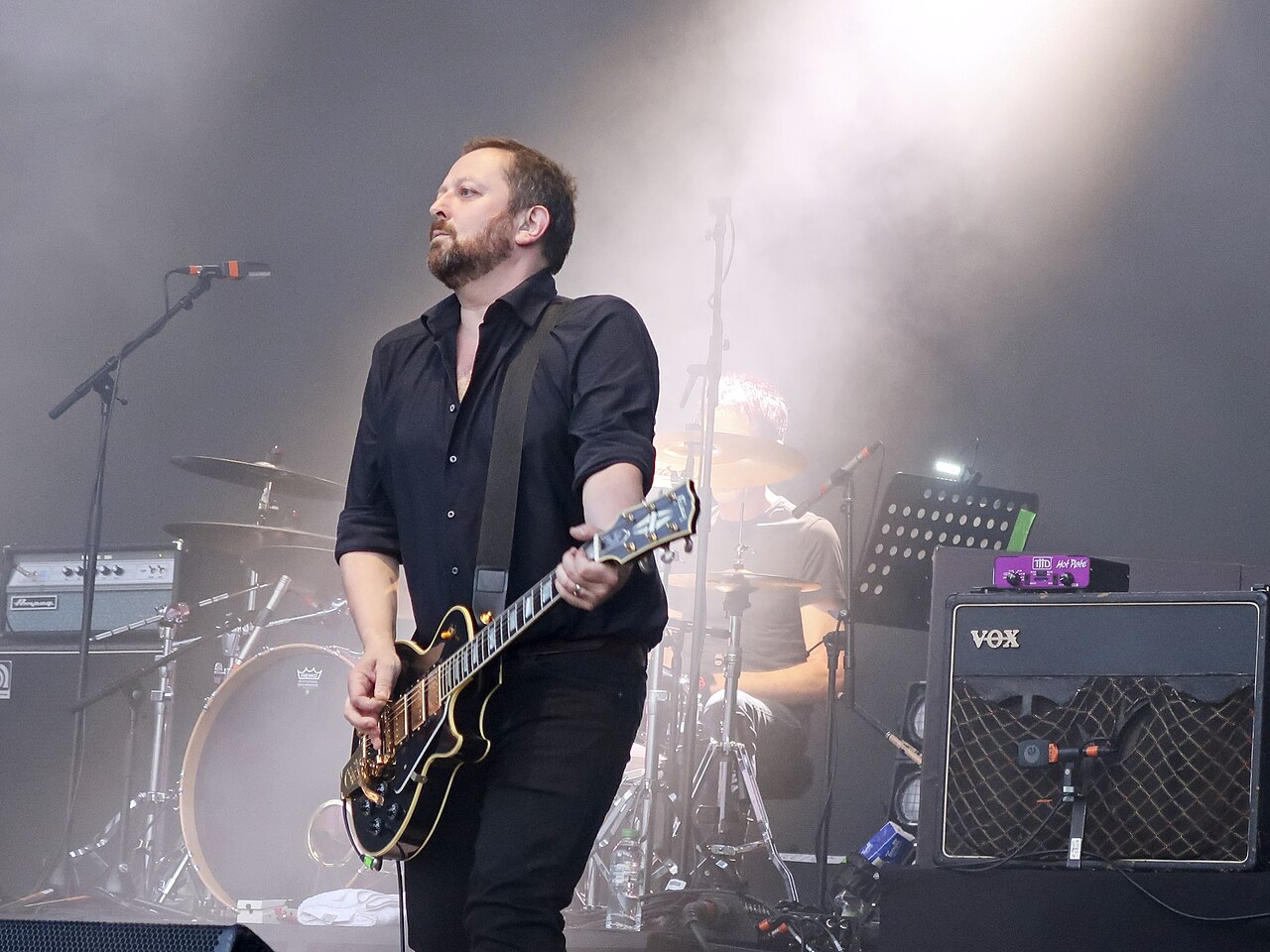
- A guitarist playing on stage in front of an amp: Bex.Walton, Wikimedia Commons, CC BY 2.0.
- Rory Gallagher: Heinrich Klaffs, Wikimedia Commons, CC BY-SA 2.0.
- The Edge: iinchicore, Wikimedia Commons, CC BY-SA 4.0.
- Top image: Britt Daniel singing with an acoustic guitar, kellywritershouse, Wikimedia Commons, CC BY 2.0.
Latest News
Related
On This Day
Friday 13 November
From this week: